Saturday, May 22, 2021

Secretary of Defense Austin Remarks for the U.S. Military Academy Graduation Ceremony

 May 22, 2021

Secretary of Defense Lloyd J. Austin III

SECRETARY OF DEFENSE LLOYD J. AUSTIN III:  Thank you so much General Williams and thank you for that warm introduction.  You know, it's always tough to spend behind General Williams.  He's such a -- such a great speaker.  Every time I come back here it feels like I'm coming home.  By the way General, what do you call this group of fine men and women that I see assemble on the field in front of us? 

GENERAL ANTHONY WILLIAMS, SUPERINTENDENT OF WEST POINT:  (inaudible) Warriors Mr. Secretary.

SEC. AUSTIN:  OK.  “Soup” says he calls you warriors.  I'm going to call you Lieutenants.  Is that OK with you? 

(Laughter.)

(APPLAUSE)

This is a big deal guys.  I want your Secretary of Defense to be the first to call you Lieutenant.  So – Hooah.

(APPLAUSE)

It is great to see Senator Reid and his classmates from the class of 1971.  Congressman Womack, Acting Secretary Whitley, General McConville and so many others of the supporters of this -- this exceptional academy.  And let me again thank General Williams and Sergeant Major Coffey and all the faculty and staff here at West Point for all that you do and all that you have done to uphold the traditions of this extraordinary place and for all that you have done for the newest officers in our United States Army, and that brings me to the Class of 2021.  You know, the next time that I see your Commander-in-Chief and I see him often.  I will report to him some very good news and that good news is that reinforcements are on their way.

(APPLAUSE)

Let me give a shout -- a quick shout out to your First Captain, Lieutenant Reilly McGinnis. 

(APPLAUSE)

I am particularly proud that this year senior cadets from West Point, the Air Force Academy and the Naval Academy are all women. 

(APPLAUSE)

Lieutenants, I hope that you're feeling proud of yourself because we are certainly proud of you.  Your graduating under exceptionally tough circumstances but you fought through from R-day to today and you fought through to take your place in the "Long Gray Line" so congratulations. 

(APPLAUSE)

You know this isn't just your day.  It also belongs to the families and loved ones who have done so much to get you here.  Amid the pandemic when so many families have suffered aching losses, it's particularly powerful to have all of you here with us today.  Your families have worried and sacrificed and told you to call your mother.  They're not going to stop worrying about you now but they're also not going to stop being proud of you.  They've given their love and been your biggest cheerleader so let's take a second to turn that around.  Everyone, let's give it up for your families.

(APPLAUSE)

See some proud families up there waving and you should be waving.  You've done well.  Lieutenants it doesn't seem like that long ago that I was sitting where you're sitting.  So I'm congratulating you not just as the Secretary of Defense but also as a member of the Class of 1975.  You know, I think it's finally safe to -- to admit that for much of high school I never really considered West Point, and still my family has a strong tradition of military service.  My father served proudly in World War II as a truck drive in the Army Air Corps, and I can still remember seeing pictures of him in his uniform as a young Corporal.  And one of my uncles was the first African-American Green Beret that I ever saw, you know, he came home wearing that green beret.

(APPLAUSE)

Yes, he came home wearing that green beret and those jump boots and I said, you know, I -- I got to do that.  I got have some of that.  So -- so I grew up wanting to serve at some point.  But I also grew up being Catholic and fascinated with the idea of going to Notre Dame and joining the Fighting Irish.  And I wound up getting into Notre Dame on a scholarship as well as being offered a place at West Point.  So my father called me in one day and he said, let's talk our way through this.  This is a pretty important decision.  He said listen, if you go to Notre Dame, even with that scholarship, it's still going to cost me some money.

(Laughter.)

But if you go to West Point, it would be quite an honor.

(Laughter.)

And not only will it not cost me money, but they'll also pay you every month. 

(Laughter.)

And you'll get an opportunity to do something that very few people in life get to do.  You know, you can always go to graduate school at Notre Dame but you only get one chance to go to West Point. 

(APPLAUSE)

So we talked some more and then my dad asked me, he said, OK, so son?  What do you want to do?  I said that's easy dad.  I want to go to Notre Dame.

(Laughter.)

And he said, OK son, let's try this conversation again tomorrow. 

(Laughter.)

And I guess you can tell how that played out.  You know, dad's looking pretty smart about right now.  I'd never set foot on West Point when I started out here.  I'd never been to the state of New York.  In fact, the furthest that I'd ever been, north I had ever been was north Georgia.  I paid for my own flight to get here from Georgia and -- and it was the first airplane that I ever flew on.  I landed in New York City in 1971 and let me tell you, it wasn't just different from my hometowns in Georgia and Alabama.  It was another planet.  And so the next day I got on a bus and I headed up here and this academy on the Hudson looked like my second new planet in two days. 

It was unlike any place that I've ever seen in my life.  The grounds were perfectly groomed and they seemed to be filled with perfect people.  You know, I still remember the rising seniors who gave us our first instructions.  They were athletic and brilliant.  They spoke flawlessly with no pauses or stumbles.  I don't think they ever even blinked.  So they made quite a first impression on us, and I found myself thinking, there is no way that I can ever be that good.  And like many of you, my goal was just to make it through the first day and then to the next day and the next week and the next month.  I sometimes wondered what good could possibly come out of all of this intensity, and I remembered being given just a few minutes to read the newspaper in the morning and then being prepared to discuss the items in the newspaper with the upperclassmen.

And I thought, how does that matter?  How can that possibly make me a better officer?  And now, as Secretary of Defense, I find myself with a stack of intelligence assessments and -- and international news clippings that I race through every morning and as I do I think of West Point and I chuckle.  That's just one of the skills that I learned here and it turned out, by the way, that the upperclassmen who gave us such a fine impression on that first day had actually been rehearsing for weeks.  And that taught me a lifelong lessons in the importance of serious preparation.  I learned the -- I learned that focus and discipline are really important.  I learned the importance of mastering your trade, and above all I learned the importance of being -- of becoming a team member.

Lieutenants, on challenging -- challenging deployments, you will have to work together with your teams to survive and succeed, and this institution excels at instilling exactly that spirit.  You've learned how to follow with loyalty.  You've learned how to lead with honor.  You've learned how to question with rigor.  You know, looking out at all of you I see the vanguard of a generation.  I see patriotic, committed young people coming of age at a hinge in history, who grew up never knowing anything other than a nation at war.  And so now, you're about to graduate into a changing country and a changing world where many of the old ways of doing business don't hold up anymore.  You're seeing raw divisions at home and the painful aftermath of the pandemic.

You may also have heard some of America's competitors claim that the future belongs to a model that promises wealth as it stamps out freedom.  You're watching as America's longest war winds down, and you're seeing technology change the character of war itself.  And even as big and rising powers jostle and compete, you're seeing new threats from pandemics to terrorism, to cyber weapons, and you're seeing those threats race across borders like a gale.  You know, I might -- I just might have a bit of insight into what you're facing.  A democracy under strain, economic fall out, painful issues of racism and discrimination, social tensions and the end of a long and controversial war.  Well, that all sounds pretty familiar to those of us from the Class of 1975.

So let me assure you of something, and this is from very personal experience.  No matter how strong the headwinds, West Point will keep you on course.  It worked for my class and it will work for yours.  Some things change, but the skill set taught here is made to last because it teaches you to adapt.  It teaches you to stick with it as your class model says until the battle is won.  Lieutenants you --

(APPLAUSE)

Lieutenants, you are ready.  In this young century, adaptation is the name of the game.  Leadership is the name of the game, and West Point has given you what you need to tackle any whether channel -- challenge to embrace any honorable mission.  So yes, you are graduating in extraordinary circumstances but let's be clear, extraordinary circumstances are what the United States Army does. 

(APPLAUSE)

On the face of it, there may -- may -- may seem not to be much in common between the forces that George Washington led along the Hudson and between the units that I've led in the Middle East.  But when we are at our best, we are true to our founding values and we don't fight for a tribe or for a political leader or for conquest or for plunder.  No, when we're at our best, we fight to defend our republic.  We fight to defend our democratic ideals. 

(APPLAUSE)

We fight to defend human rights, human dignity, human liberty.

(APPLAUSE)

Take it from someone who spent 41 years in an Army uniform.  I've seen the problems but just like the nation it defends, the United States military strives to be a more perfect version of itself.  And I will take that over our competitors any day. 

(APPLAUSE)

You know, you serve a country that sees the use of force as a last resort.  You serve a country that loves liberty.  You serve a country that rejects bullying and aggression and that seeks a world rooted in rules that favor the advance of freedom.  That stands for democracy and decency at home or abroad.  You serve a country that works hand and hand with our old allies and new partners.  That cherishes the rich tapestry of the backgrounds of its citizens.  That strives to grow and to man and to reach the better angels of our nature.  You serve a country that knows, as our president has said, that we are strongest when the power of our example matters more than the example of our power. 

(APPLAUSE)

So since becoming Secretary of Defense, I've worked hard with my team to put those principles into place.  We're working urgently to help bring this global pandemic -- help bring this global pandemic to an end.  We've focused on the security challenges presented by China.  We're working hand and hand with our allies and partners to strengthen a rules based international order that advances a cause of human freedom.  And we are driving hard to ensure that we have the right capabilities and the right operational concepts and weaving them together in new and network ways to produce a truly integrated 21st century vision of deterrence.  And we're doing all of this while making sure that we take care of all of our people, to grow and to develop the talent that we need for the -- for the future and to ensure that everyone who serves can do so in an environment that's free of hate and harassment and discrimination.

(APPLAUSE)

And that ladies and gentlemen is not just a matter of national principle, it is a matter of national security.  And I --

(APPLAUSE)

You know I learned all of this at this great institution.  This great engine of leadership and I kept learning from West Point long after I graduated.  I lived through a lot between my last day here and my first day as a general officer but there wasn't a day when I didn't draw on my years here at West Point.  And you're time here will serve you incredibly well over the decades to come as well.  You know, most of all, I still -- I still depend on the values that I learned at West Point.  I still believe that leadership demands character.  I still believe in telling the truth.  I still believe in treating people with dignity and respect.  I still believe in serving your country and I still believe in the tenets of our democracy and the words of our Constitution. 

(APPLAUSE)

Those -- those values are the lasting -- lasting legacy of West Point.  They are the guideposts that will steer you right when you face the hardest decisions of your lives and some of you 2nd Lieutenants will have to -- will have to make life and death calls.  Those values will see you through.  Those values will guide you home.  And you know what?  You're prepared to make those decisions.  You may not know it yet, but you are ready to be leaders.  The values that we uphold are the values that will hold us up, and the Department of Defense is committed to doing everything in its power to support you when you serve and when you deploy and when you come back.  And we're also to help your families on the home front because we know that when a soldier deploys their loved ones are on the front lines too.

Now, one word of advice.  Hold on to your academy friends.  They're a huge part of what you'll carry forward.  My West Point buddies and I still remember going into New -- into New York City on the very few weekends that we could get off post.  Back in those disco days of 1975, we were surrounded by bell bottoms and big hair and wide collars.  And I can tell you up front, just for the record, that I never wore any of those.

(Laughter.)

Obviously, just kidding.  We still laugh about those times but there was plenty that we didn't laugh about.  We didn't laugh about the struggles of getting through ranger school or airborne school or the strains on the home front of a life of serving your country.

But through it all, we always knew that the friends that we made here were the kinds of people that you'd want to be in a fox hole with, and I can promise you that we're going to need your courage and your commitment in the future.  You know when I graduated, Vietnam ended and my classmates and I went for a long time, which -- in which many of us weren't involved in any kind of a major conflict.  But after September 2001, this country found itself in a continuous fight for almost 20 years and I wound up commanding troops in combat at the one star, two star, three star and four star levels.  Now, America's goal is to always lead with diplomacy and to deter conflict whenever we can, but if we are forced to defend ourselves, we will win and we will win decisively. 

(APPLAUSE)

Lieutenants, our job is to fight and win our nation's wars and that means that nothing that you have learned here is solely academic.  Because I can pretty much guarantee you that something that we're not anticipating is going to happen -- happen on your watch because we live in an imperfect world.  One in which patriotic young men and women still learn the ways of war and volunteer proudly to keep their fellow citizens safe, and we're grateful to all of you for standing up and standing tall.  Now we don't get to choose our times but we do get to shape our times.  And in our democracy, that isn't just a job for those at the top, it is the responsibility for every citizen and it is a mission for every soldier in the United States Army. 

Lieutenants, your hour will come and when it does the eyes of the nation will turn again to the men and women of West Point and our entire military.  In the course of the republic and the depth of our security will be shaped again by you and by your teammates in the other services until the battle is won. 

(APPLAUSE)

Yes.  Those who came before you are so proud to see you sitting here today and we believe in you, in each and every one of you.  And we know that you will prevail and we know that you will make us proud for democracy, for liberty, for the Constitution and for duty, for honor, for country.  Thank you and congratulations again Class of 2021.

(APPLAUSE)

Friday, May 21, 2021

Navy Volleyball Player, Corpsman Is Proud of Her Samoan Roots

 May 21, 2021 | BY David Vergun , DOD News

Asian Americans and Pacific Islanders have shaped the history of the United States and have had their lives dramatically influenced by moments in its history. Every May the Defense Department joins the rest of the nation in celebrating Asian American Pacific Islander Heritage Month.

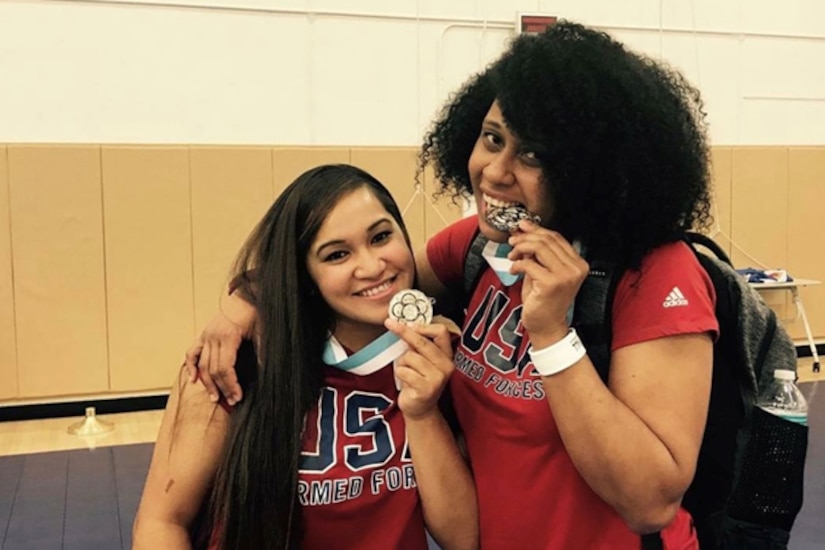
Navy Petty Officer 2nd Class Denise ''Tolo'' Atualevao was born in Honolulu. Her mother, Koroseta Ululima Atualevao, and father, Tafale Atoa Atualevao, are both from American Samoa.

Two athletes show off their medals as they pose for a photo.

Atualevao's mother grew up in the villages of Nua and Se'etaga and her father in the village of Leone.

"I am a proud full-blooded Samoan teine," she said, noting that teine means girl in Samoan.

Although she was born in Hawaii, Atualevao grew up in San Diego.

However, Atualevao said she was fortunate to have been able to visit American Samoa twice a year during summer and winter breaks, every year in college until 2014, when she graduated from Graceland University.

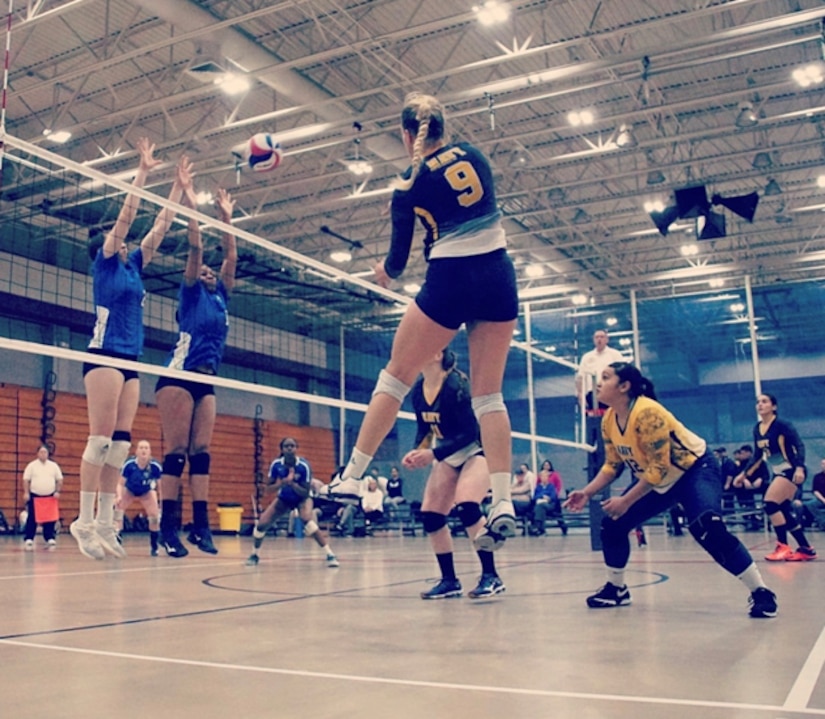
A woman prepares to hit a volleyball.

Atualevao said she is fluent in the Samoan language and is knowledgeable about the history and culture of the island.

Since enlisting in the Navy six years ago, Atualevao has worked as a hospital corpsman, stationed for her first two years at Naval Hospital, Pensacola, Florida, then three years on the USS Blue Ridge, an amphibious command ship, homeported in Yokosuka, Japan. She is currently working at Naval Medical Center Point Loma Clinic in San Diego.

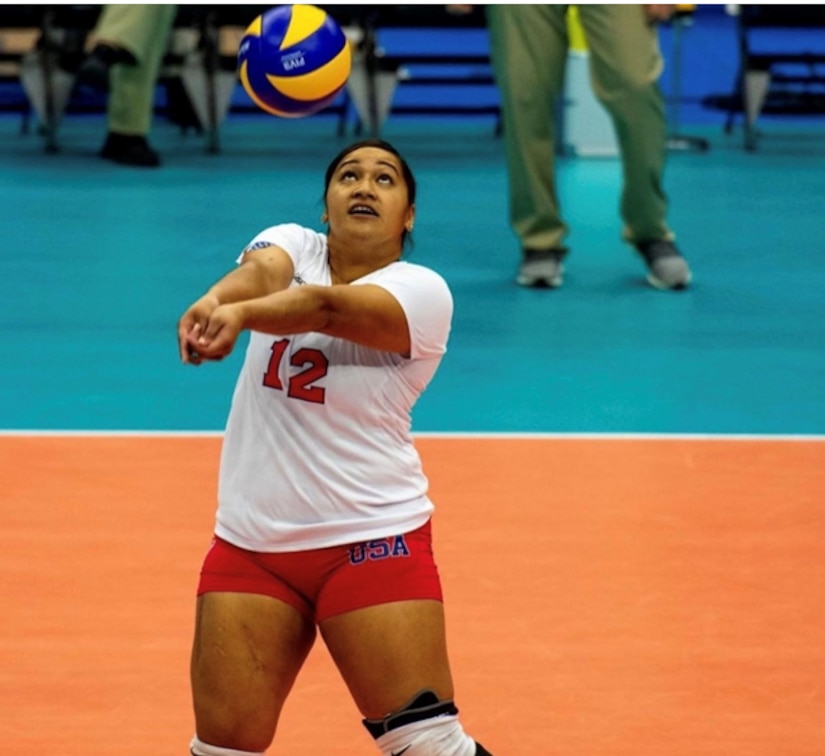
Besides working as a corpsman, Atualevao is also a member of the All-Navy Women's Volleyball team.

A woman prepares to hit a volleyball.
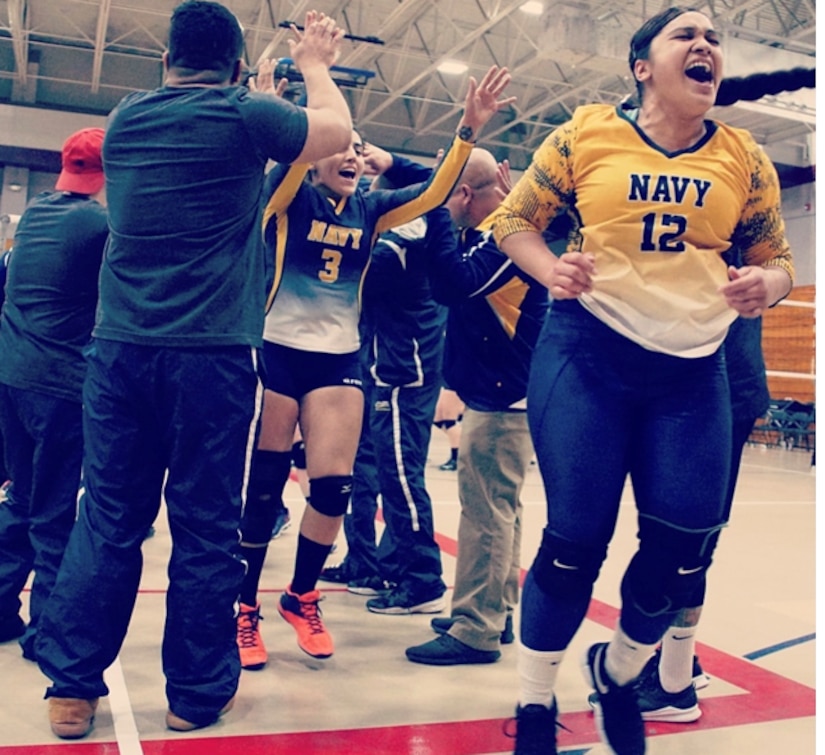
Two women in volleyball uniforms cheer.

Playing volleyball has given her an added boost in competitiveness, teamwork, leadership and confidence — attributes that are so important to have in the Navy, she said.

"Being one of the team captains has definitely helped build my leadership skills and to not be afraid of whatever adversity we might face together," she said.

Making the cut for the team wasn't too difficult, because Atualevao said she's been playing volleyball continuously ever since she was in the third grade.

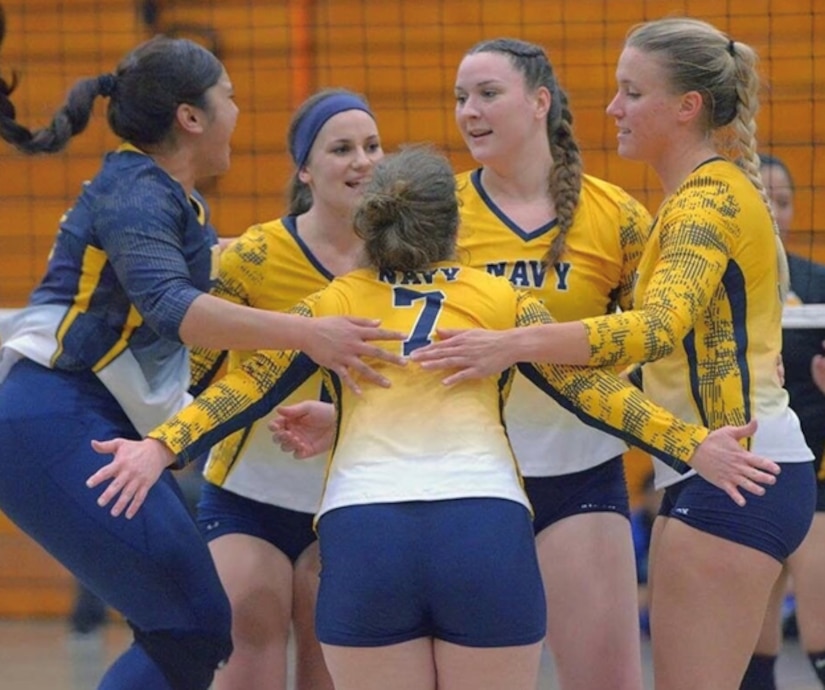
Five members of the All-Navy women's volleyball team huddle on the court during a match.

Since her team plays against other teams from around the world, Atualevao said she's made a lot of friends in other countries.

Atualevao said her future goal is becoming a health care administrator as a civilian, a Reserve naval officer as a health care administrator, and opening a club for Polynesian volleyball players.

Secure Swim

A soldier jumps into a pool while carrying a weapon to prepare for a jungle operation training course at Schofield Barracks, Hawaii, May 14, 2021.

Plane Pushers


Sailors push a T-45C Goshawk toward the runway to prepare for takeoff aboard the aircraft carrier USS Abraham Lincoln in the Pacific Ocean, May 16, 2021.

Angels in the Air


The Blue Angels, the Navy’s flight demonstration squadron, perform the low break cross maneuver during a training flight at Naval Air Facility El Centro, Calif., Feb. 26, 2021.

Navy to Commission Littoral Combat Ship USS Mobile

 May 21, 2021


The Navy will commission its newest Independence-variant littoral combat ship, the future USS Mobile (LCS 26), at 10:00 a.m. CDT, Saturday, May 22 in Mobile, Ala.

Due to public health and safety concerns related to the novel coronavirus (COVID-19) pandemic, the commissioning ceremony is private with a limited audience.

Mr. James “Hondo” Geurts, performing the duties of under secretary of the Navy, and Vice Adm. John Mustin, Chief of Naval Reserve, will provide remarks.  Mrs. Rebecca Byrne, the President and Chief Executive Officer of The Community Foundation of South Alabama and wife of former U.S. Representative from Alabama Bradley Byrne, is the ship’s sponsor. The ceremony will observe a time-honored Navy tradition when Mrs. Byrne gives the order to “man our ship and bring her to life!”

U.S. Senator Tommy Tuberville of Alabama will deliver the commissioning ceremony's principal address.

Cmdr. Christopher W. Wolff, a third-generation naval officer, is the ship’s commanding officer and leads a crew of 70 officers and enlisted Sailors.

“It has been an amazing experience to get to know our namesake city so well, while having the opportunity to live, work, and commission the ship right here in Mobile, where she was built,” said Wolff. “We have definitely felt welcomed into the community, and have created a strong connection to the area that I am confident will last. Mobile bills itself as a city that is born to celebrate and the crew has really adopted that philosophy as we celebrate our shipmates every day.”

The ship is 421 feet in length, has a beam of 103 feet, and a navigational draft of 15 feet.  It is powered by two gas turbine engines, two main propulsion diesel engines, and four waterjets to speeds up to 40-plus knots.

Built by Austal USA in Mobile, Ala., Mobile was christened Dec. 7, 2019 and delivered to the Navy on Dec. 9, 2020.

Mobile, the fifth ship to bear the name, is a fast, agile, mission-focused platform designed to operate in near-shore environments while capable of open-ocean tasking and winning against 21st-century coastal threats such as submarines, mines, and swarming small craft. LCS are are capable of supporting forward presence, maritime security, sea control, and deterrence.

USS Mobile will homeport at Naval Base San Diego, California.

The event will be live streamed at https://allhands.navy.mil/Media/Live-Stream/ to offer viewing by the general public. The link becomes active approximately ten minutes prior to the event (9:50 a.m. CDT).

Green Scene


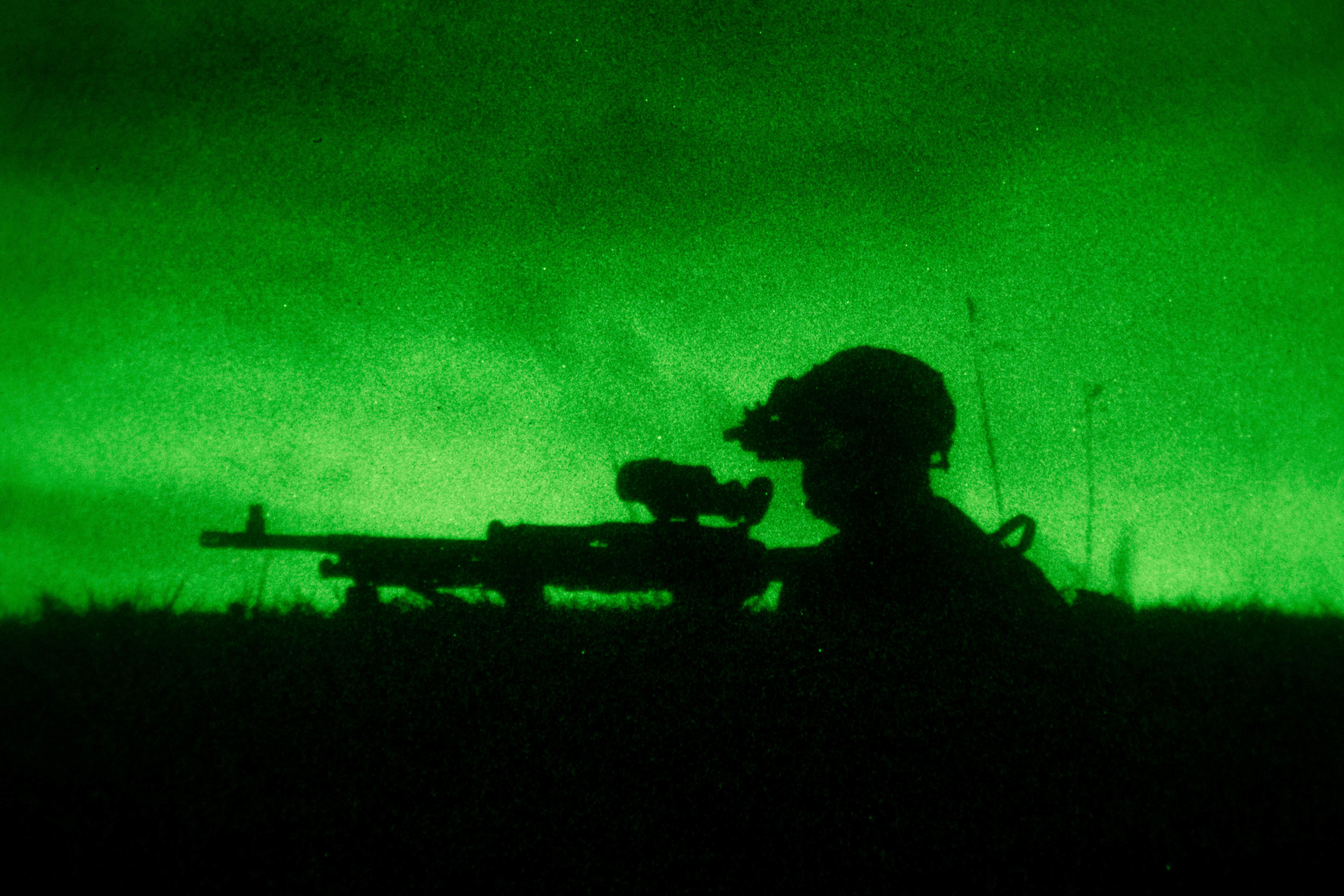
A Marine aims an M240 Bravo light machine gun during a night raid rehearsal at Kin Blue Training Area, Okinawa, Japan, May 14, 2021.

Sunlit Sail


USS Curtis Wilbur conducts routine operations in the South China Sea, May 20, 2021.

Community Care


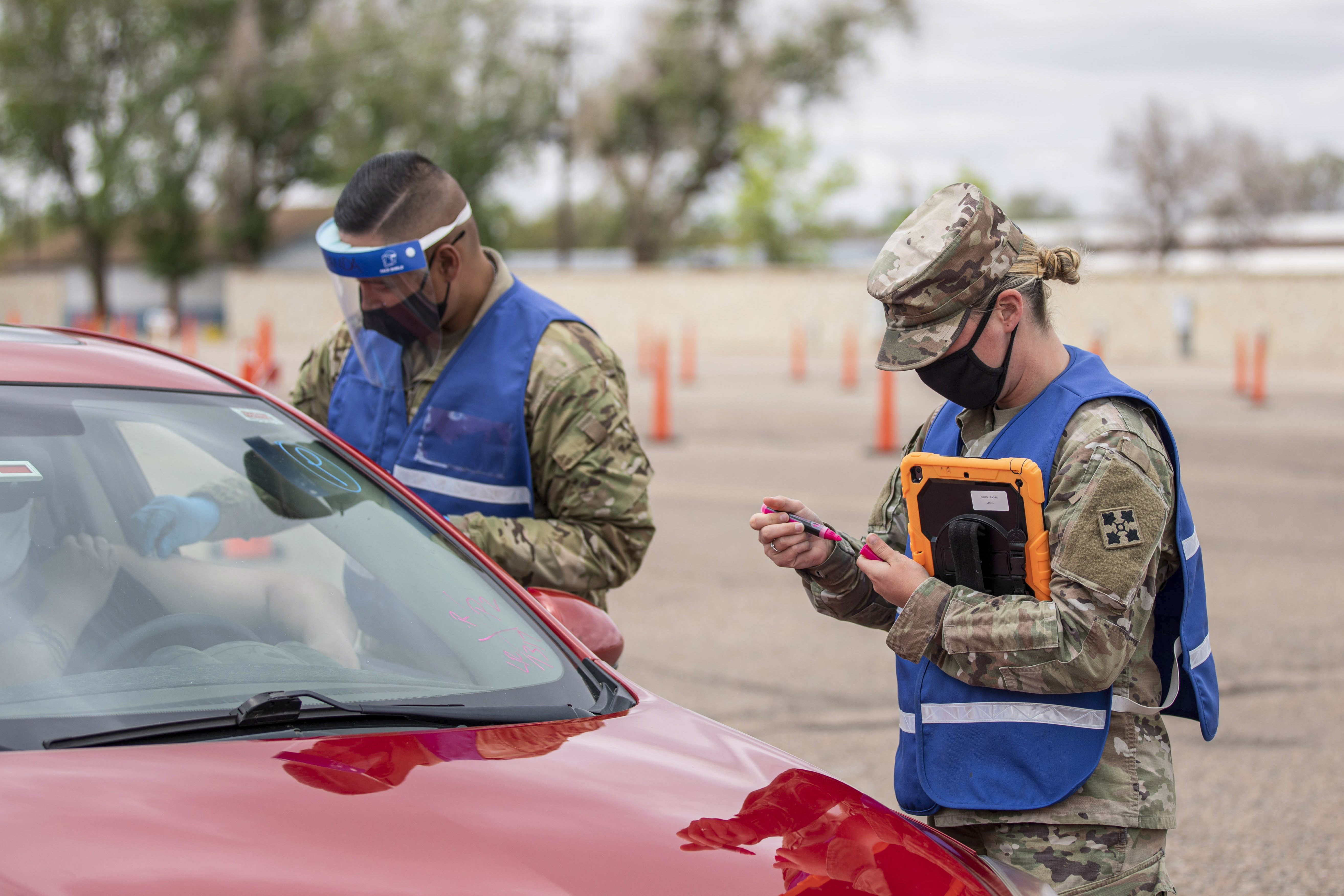
Army Sgt. David Miranda, left, and Spc. Kerri Jepson, both combat medics, work to vaccinate a patient at the Community Vaccination Center at the Colorado State Fairgrounds in Pueblo, May 12, 2021.

Raid Rehearsal


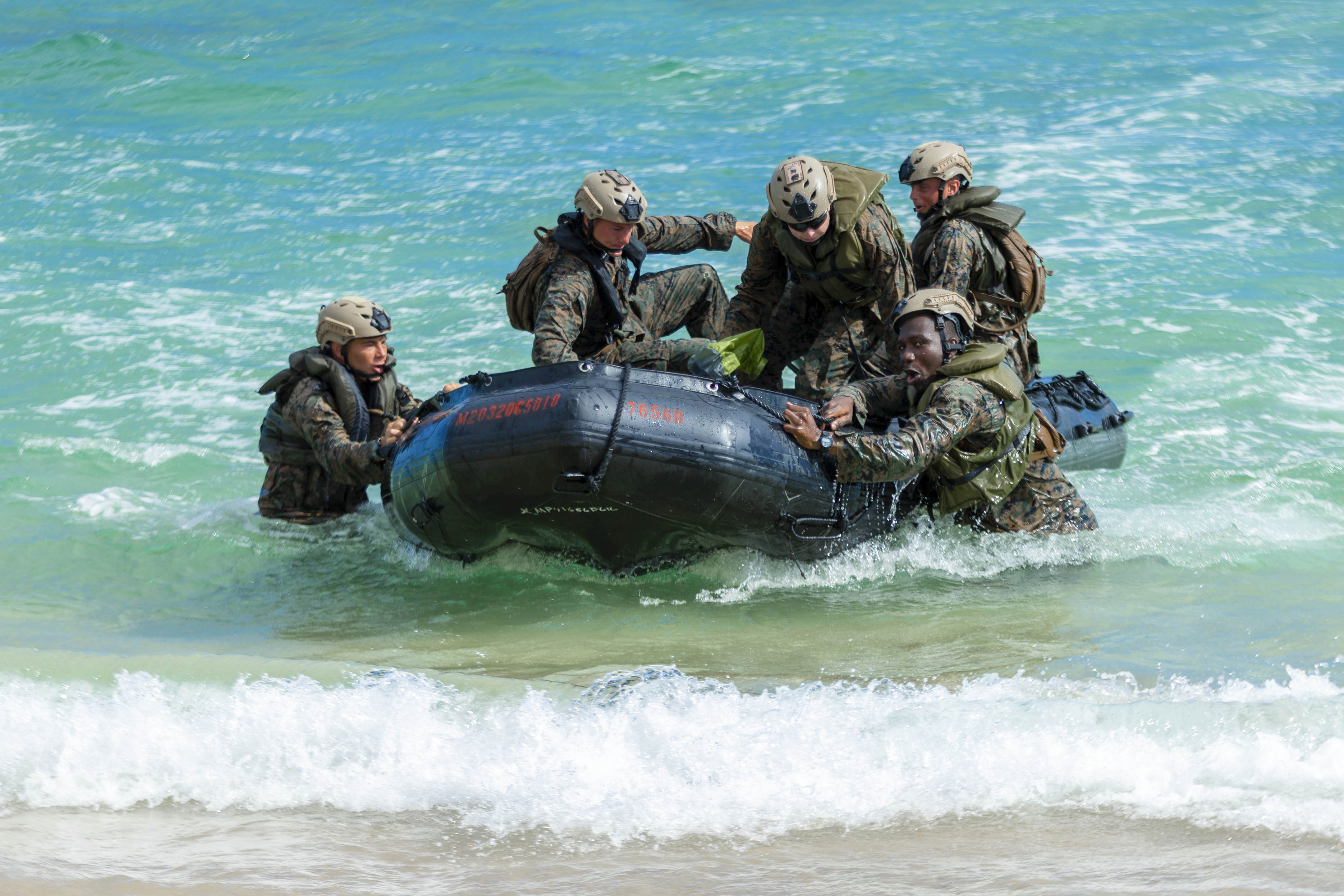
Marines complete an amphibious raid rehearsal at Kin Blue training area in Okinawa, Japan, May 13, 2021.

Maritime Fire


Navy Petty Officer 2nd Class Zavala Marcos fires a machine gun on a Humvee during training in Long Beach, Calif., May 12, 2021.

Ready Response


Alaska National Guard Sgt. Anthony Luiken and Staff Sgt. Jonathan Ramos respond to a simulated incident at the Anchorage Fire Training Center, Alaska, May 19, 2021, during Orca, a chemical, biological, radioactive and nuclear threats response exercise.

Courageous Survivors, Leaders Are the Cornerstone of Sexual Assault Reform

 May 21, 2021 | BY Terri Moon Cronk , DOD News

Survivors of sexual assault and sexual harassment in the military are an important voice in building a culture that supports victims and holds perpetrators accountable. The DOD's Independent Review Commission on Sexual Assault in the Military wants to hear from those survivors.

The IRC is in the midst of a 90-day mission to collect information and present recommendations to President Joe Biden and Secretary of Defense Lloyd J. Austin III to prevent and respond to sexual assault and harassment in the military. Through survivors, IRC members want to get to the heart of common themes and experiences. 

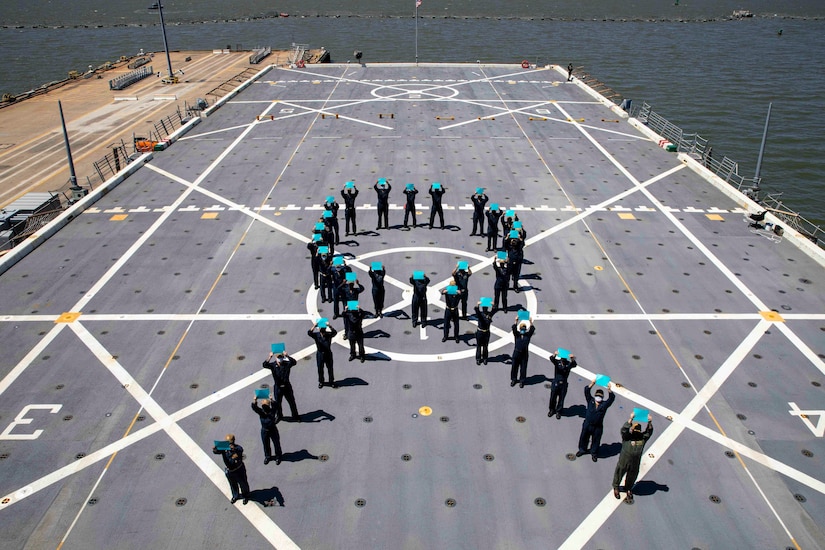
Sailors hold up pieces of teal paper while standing in a formation on the deck of a ship.

"The words and experiences shared with us by survivors underscore the importance of the opportunities created by the secretary of defense when he directed immediate actions and chartered this commission," Neil Irvin with IRC's prevention effort, said. "Sexual assault and harassment are preventable and are central to the opportunities for this commission, highlighted by survivors, to address DOD's enterprise-wide efforts to stop sexual assault and harassment before it occurs," he added.

We are indebted to all the survivors who have come forward with their candid assessments and ideas, and we hope they will continue to do so."
Kris Rose, Independent Review Commission on Sexual Assault

IRC members are identifying potential gaps to inform targeted recommendations that can lead to systemic change. Recommendations will focus on four lines of effort: accountability; prevention; climate and culture; and victim care and support. Survivors — veterans, reservists and active duty are encouraged to anonymously share their experiences and suggestions here. The feedback form opened on March 24, the day the IRC officially began, and closes on June 2.

Kris Rose, who co-leads the victim care and support effort, explained that survivors provide the depth, context and reality of sexual harassment and sexual assault that's often missing when examining policy and practice. "We are indebted to all the survivors who have come forward with their candid assessments and ideas, and we hope they will continue to do so. We couldn't do this work without them," she said.

IRC members particularly want to hear from junior enlisted service members about their experiences. Statistically, they are the most impacted by sexual assault; they are also tomorrow's leaders who hold the key to long-term, sustained change.

Teal and blue colored pinwheels in the ground.

As climate and culture in the military are concerned, IRC expert Army Lt. Col. Bridgette Bell said, "We are listening to these service members to understand how the climate of their unit affects their ability to feel safe and supported."

In addition to online feedback, members of the IRC are visiting installations — large and small, and speaking with troops overseas and stateside to connect with members of all the military services, including the National Guard and Reserves.

"Hearing from survivors of sexual harassment and sexual assault allows us to better understand diverse experiences, including with their coworkers, chain of command and the military justice system," Sasha Rutizer with the accountability line of effort emphasized.

The IRC will make recommendations in late June.

Flag Folders



Airmen fold the American flag during a National Police Week retreat ceremony at Yokota Air Base, Japan, May 14, 2021.

Naming Commission Chair Details Progress, Way Ahead

 May 21, 2021 | BY David Vergun , DOD News

The Commission on the Naming of Items of the Department of Defense that Commemorate the Confederate States of America or Any Person Who Served Voluntarily with the Confederate States of America, is more often referred to as the Naming Commission.

Retired Navy Adm. Michelle Howard, the chair of the Naming Commission, spoke to the press today about their mandate and the work they have been doing and what they will do in the future.

As to the work done thus far, Howard said they developed an initial charter to guide the process. They are currently developing the renaming criteria, which will include a meeting with local stakeholders to develop procedures and criteria to incorporate local opinions in regards to renaming assets.

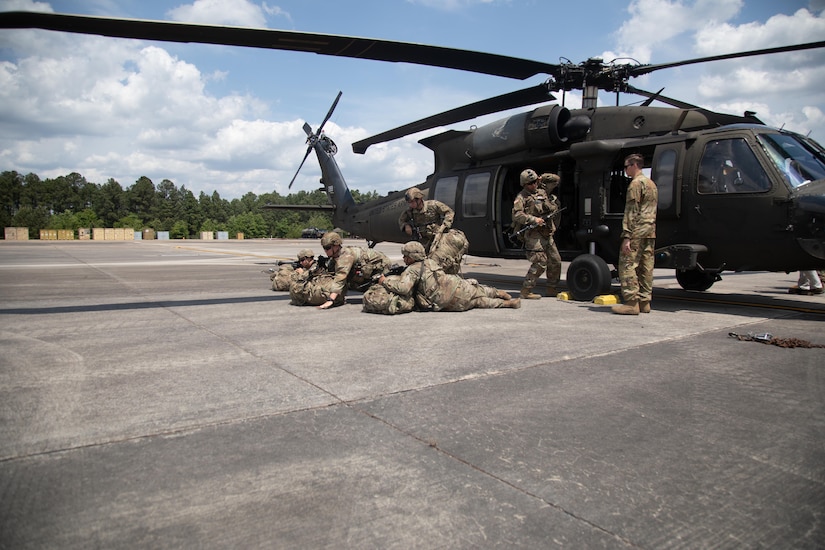
Troops practice drills next to a helicopter.

The commissioners, she said, will also meet with installation leadership. "Many of them have already taken some level of planning, and, so we're looking forward to hearing about their work and their local assessments."

Their mandate, Howard said, includes assigning, modifying or removing anything that commemorates the Confederate States of America or any person who served voluntarily with the Confederacy. 

Currently, the services are developing and refining the inventory of what meets that criteria for assets such as names of installations, ships, streets and buildings, she said.

Initial focus throughout the summer and fall, she said, is going to be visiting the nine Army installations named, mostly, for those who voluntarily served in the Confederacy. They are: Fort A.P. Hill, Fort Bragg, Fort Lee, Fort Rucker, Fort Benning, Fort Gordon, Fort Hood, Fort Polk, Fort Belvoir and Fort Pickett. 

Fort Belvoir was not named for a Confederate general like the others, but was named for a plantation that existed there with slaves that possibly commemorates the Confederacy. It was previously called Camp A. A. Humphreys, named for Civil War Union Army Gen. Andrew A. Humphreys.

"We have to look at when and where the installation or asset was named, and then what was the purpose behind the naming," she explained, in the instance of Fort Belvoir.

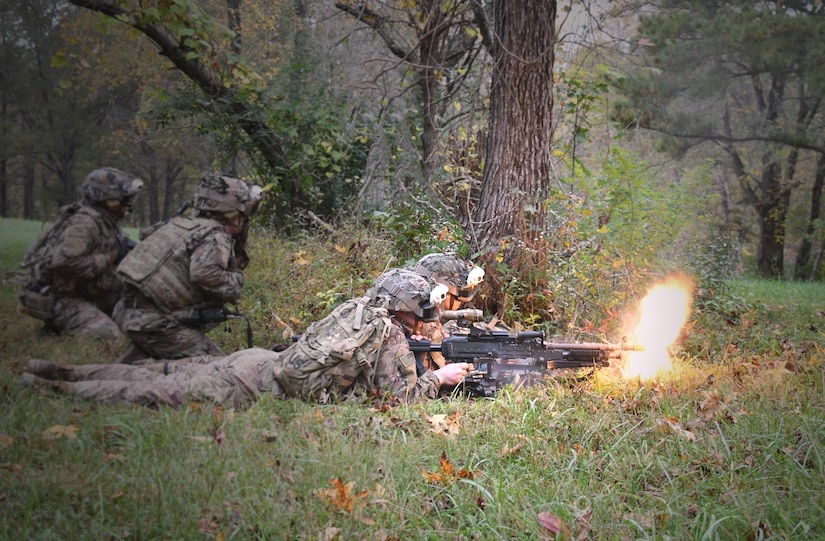
Soldiers in the woods fire weapons.

For an example of a ship, Howard said the USNS Maury, an oceanographic survey ship, will be looked at. It was named for Navy Cdr. Matthew Fontaine Maury, who resigned from the U.S. Navy to sail for the Confederacy.

The scope of the commission's mandate does not include items outside the Confederacy naming period, Howard said. For example, the aircraft carrier USS Carl Vinson was named for a legislator who was a staunch segregationist. That is outside the scope. Camp Beauregard, an Army National Guard installation named for a Confederate general, is also outside the scope because it belongs to the state of Louisiana, rather than the DOD. 

The commission will brief the secretary of defense on its progress and recommendations. The commission will also brief the House and Senate Armed Services Committees on its progress by Oct. 1. Then on Oct. 1, 2022, the commission will present a final briefing and written report to the HASC and SASC.

More About the Naming Commission

The Naming Commission was mandated by Congress under Section 370 of the 2021 National Defense Authorization Act.

Four of the commissioners were appointed by the secretary of defense and four were appointed by the chairs and ranking members of the HASC and SASC. All eight commissioners were sworn in on March 2. They meet biweekly.

Portland Arrival


Marines disembark from air-cushioned landing craft upon arriving aboard the USS Portland during training in the Pacific Ocean, May 11, 2021.

Flight of Four


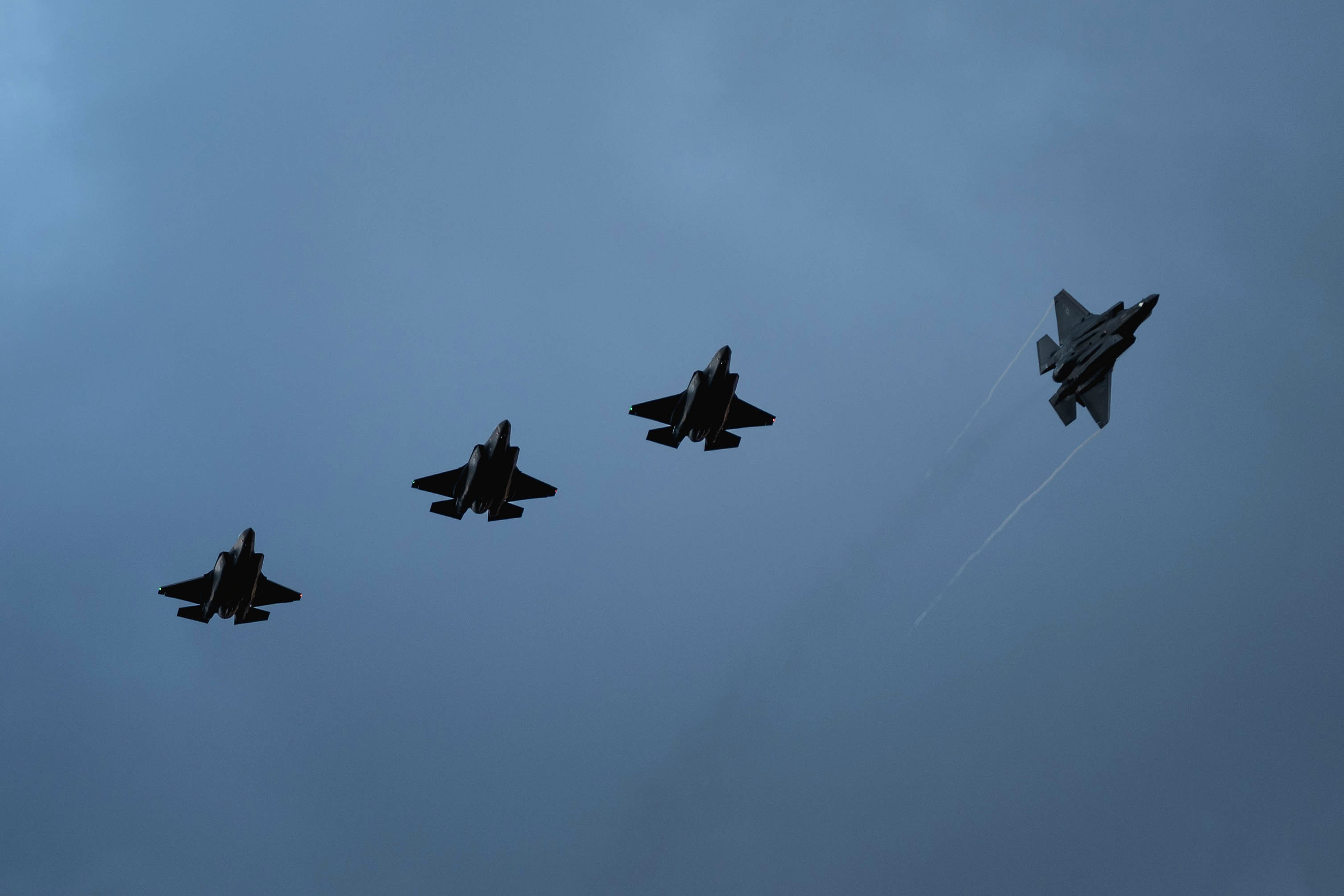
Four U.S. Air Force F-35A Lightning II aircraft fly over Mont-de-Marsan Air Base, France, May 10, 2021. Aircraft and crew participated in multiple events, including Atlantic Trident 21, underscoring the steadfast U.S. commitment to the region and enhancing interoperability with NATO allies and partners.

DLA Ships Pfizer Vaccines Overseas for DOD Youth

 May 21, 2021 | BY Beth Reece , Defense Logistics Agency

The Defense Logistics Agency has shipped first and second doses of the Pfizer COVID-19 vaccine for 12-to-17-year-olds in the U.S. European, Central and Indo-Pacific Commands areas of responsibility.

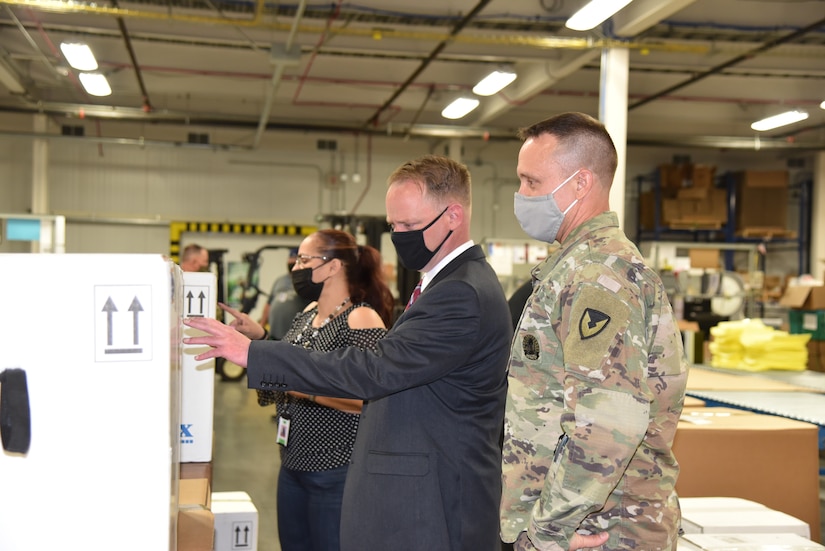
This is the agency's first handling of the minus 80 degrees Celsius vaccine, which is now included in the Federal Drug Administration's emergency use authorization for adolescents. Employees at the DLA distribution center in Susquehanna, Pennsylvania, packed and shipped more than 46,800 doses on May 14 to 10 service-operated distribution centers in Europe, Japan, Korea and Bahrain. DLA Distribution's Navy Cmdr. Chuck Mielkie said the centers were chosen based on proximity to dependent youth populations and cold-storage handling capability.

A woman and two men look into a box.

"Some already had the minus 80 degrees [Celsius] freezers and others had to procure them, but each site is best suited to further distribute to smaller [administrative] sites and treatment facilities," he said.

DLA has already shipped almost 600,000 doses of the minus 20-degrees Celsius Moderna and 2-to-8 degrees Celsius Johnson & Johnson vaccines for adults outside the continental U.S. or deployed on Navy ships.

"The intent is to provide a safe, authorized and viable vaccine to protect the adolescent population before the fall school year begins. We had a short timeline to get this done, faster than our normal process for flu vaccines or the other two COVID-19 vaccines," said Army Col. Anthony Bostick, head of DLA's operational planning team for COVID-19 vaccine operations. 

DLA and Defense Health Agency officials have worked since fall 2020 to plan and distribute Moderna and J&J vaccines to the services with DLA being responsible for shipping doses for Defense Department populations overseas and the Navy fleet. Both agencies have teamed with the services and combatant commands since spring to identify the number of dependent youth who would need the vaccine and assess cold-storage capabilities for Pfizer's version at DLA and military facilities.

Material handlers were also trained on special packing procedures for the Moderna and Pfizer vaccines, Mielkie said, noting that the agency has distributed 2-to-8 degrees Celsius vaccines like J&J's version of the COVID-19 vaccine and annual flu vaccines for more than 20 years.

A forklift drives a pallet of packages onto the back of a truck.

An April 30 tabletop exercise involving more than 250 participants from DLA, DHA, the combatant commands, distribution facilities and administration sites helped finalize the DOD's overseas Pfizer distribution plan, Bostick added. The agency used its long-standing partnerships with organizations like U.S. Transportation Command to ensure contracted carriers like FedEx and UPS understood the special handling requirements, as well.

"DHA looked to DLA heavily to coordinate the process of getting all the vaccines overseas," he said. "We've also played a large role working with combatant commands to ensure they've been ready to receive and redistribute doses."

Mielkie said initial vaccine shipments to overseas DOD locations are almost complete, and operations will soon move from a push-to-pull-logistics model in which the services order from the available inventory.

"We're going to stop pushing vaccines forward because we're near saturation where the majority of folks [who are] willing to get the vaccines have already done so," he said. "The new approach will be for services to place weekly orders for folks who basically change their minds about receiving the vaccine or for new arrivals who haven't yet received it."

Thursday, May 20, 2021

Readout of Secretary of Defense Lloyd J. Austin III's Phone Call With Israeli Minister of Defense Benjamin "Benny" Gantz

 May 20, 2021


Pentagon Press Secretary John Kirby provided the following readout:

Secretary of Defense Lloyd J. Austin III spoke this afternoon with Israeli Minister of Defense Benjamin “Benny” Gantz.  Secretary Austin welcomed the Israeli Cabinet’s decision to agree to a ceasefire, and shared Minister Gantz’s hope that there will be a complete restoration of calm.  Both parties agreed on the importance of Israel having the capabilities it needs to defend itself from rocket and missile attacks.

Mission Ready


Air Force Senior Master Sgt. Jennifer Bowen, a KC-135R boom operator with the 141st Air Refueling Squadron, locks down gear before a training mission at Joint Base McGuire-Dix-Lakehurst, N.J., May 19, 2021.