Showing posts with label operation deep freeze. Show all posts

Wednesday, March 18, 2026

National Guard Airlift Wing Completes 38th Year of Antarctic Support

The New York Air National Guard's 109th Airlift Wing concluded its 38th year supporting American scientific research in Antarctica during the 2025–2026 Operation Deep Freeze season, March 11.
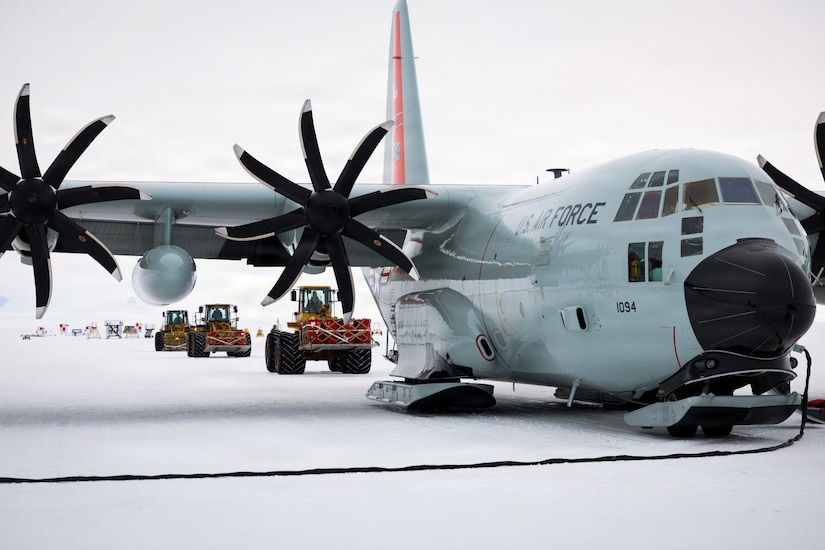
Three people driving large pieces of construction equipment with cargo attached drive toward a military aircraft sitting on a snowy tarmac. There is a long power cord attached to the aircraft.

The airlift wing deployed roughly 200 airmen throughout the season in support of Operation Deep Freeze, the War Department's annual mission to sustain the U.S. Antarctic Program. 

The wing operates the ski-equipped LC-130H Hercules, the largest aircraft in the world capable of landing on snow and ice using skis. This unique capability allows the 109th to deliver heavy airlift to remote locations across Antarctica.
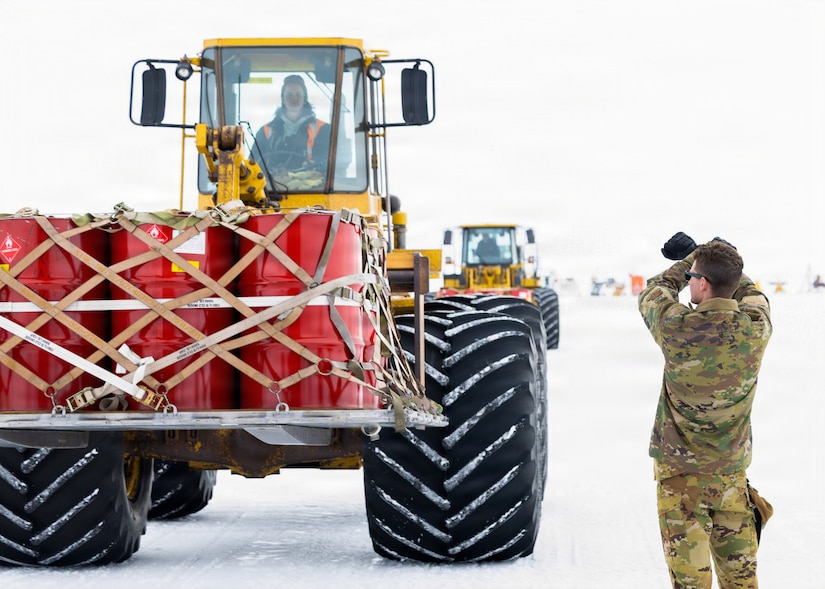
A man in a camouflage military uniform signals for a person driving a large piece of construction equipment with cargo attached to stop on a snowy tarmac. There is another piece of equipment with cargo in the background.

Aircrews and support personnel operated primarily from McMurdo Station, the largest of the U.S. year-round stations and the largest station on the continent. It is the central logistical hub for the U.S. Antarctic Program, supporting research on the continent and at the National Science Foundation's Amundsen-Scott South Pole Station. The station was established Dec. 18, 1955, and opened in 1956 as part of Operation Deep Freeze. 

During the season, the wing flew 63 missions to Amundsen-Scott South Pole Station and 17 missions to the West Antarctic Ice Sheet Divide in support of continued scientific operations and camp drawdown activities. Aircrews also conducted nine aeromedical evacuation missions to Christchurch, New Zealand. No airdrop missions were conducted this season.
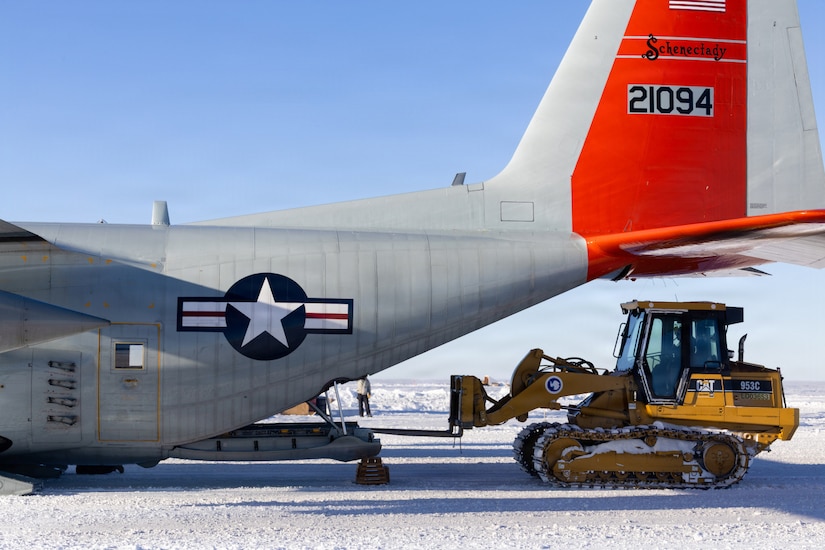
A person uses a large piece of construction equipment to load cargo onto a military aircraft sitting on a snowy tarmac.

LC-130H aircraft flew over 900 hours on the continent, with an additional 130 hours supporting deployment and redeployment operations. 

Throughout the season, the 109th transported 1,086 passengers, delivered 1 million pounds of fuel and moved 2.6 million pounds of cargo in support of the operation. Missions focused primarily on sustainment operations at the South Pole and the ice sheet divide camp drawdown.
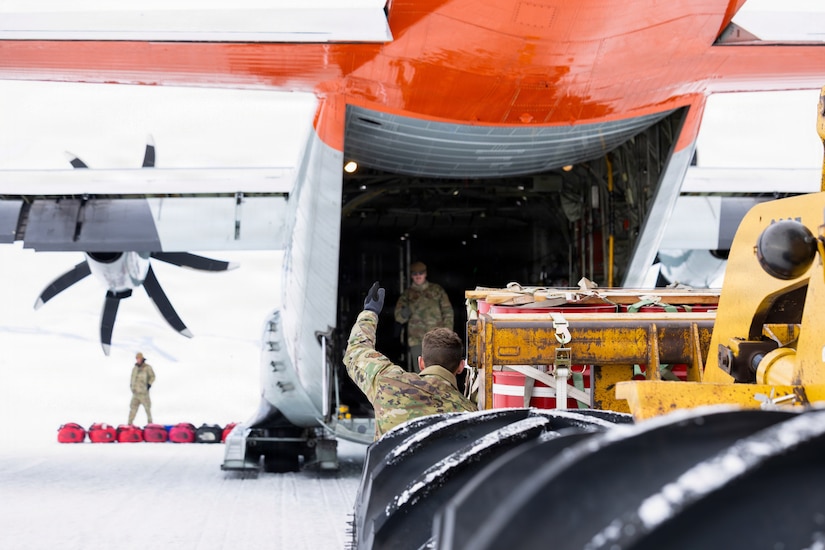
A man in a camouflage military uniform guides a loader with cargo into the back of a military aircraft sitting on a snowy tarmac. There is another man in similar attire standing in the aircraft.

"The success of this season reflects the dedication and professionalism of our airmen,” said Air Force Col. Steven Slosek, commander of the 109th Airlift Wing. "Operating in one of the most challenging environments requires teamwork, precision and adaptability. Their efforts ensured the successful completion of this year's Operation Deep Freeze mission." 

The operation remains one of the War Department's most demanding recurring missions. The airlift wing continues to provide the only heavy airlift capability in the world able to conduct tactical landings on snow and ice, enabling year-round scientific research operations throughout Antarctica. 

Thursday, January 29, 2026

Coast Guard Cutter Polar Star Marks 50 Years of Service, Begins Operation Deep Freeze

The U.S. Coast Guard cutter Polar Star began icebreaking operations in the Southern Ocean in support of Operation Deep Freeze 26 and marked its 50th year of commissioned service Jan. 17 by freeing and escorting a cruise ship trapped in a pack of ice.

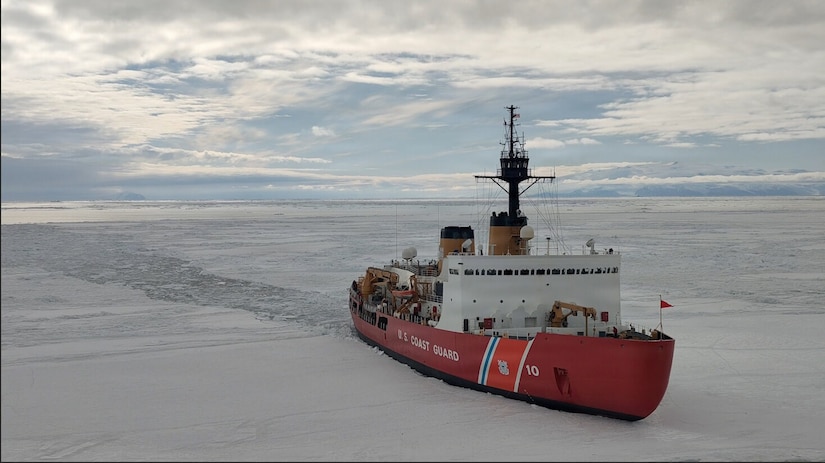
A large ship with the words, “U.S. Coast Guard” written on the side, sails through icy water, leaving a trail of broken ice and open water behind it.

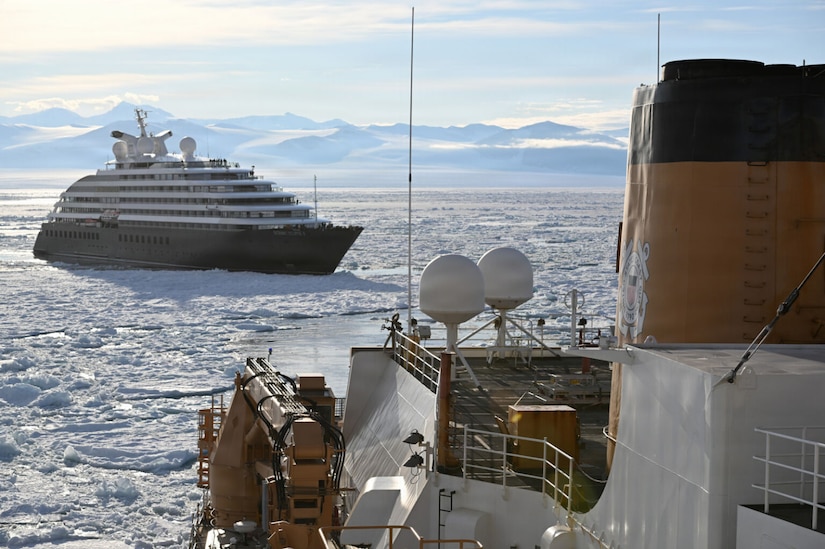
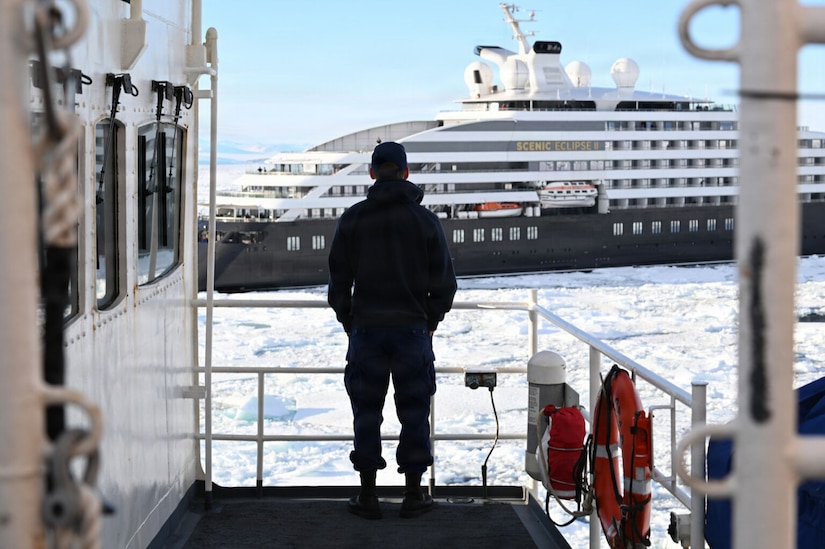
The Australian-owned cruise ship contacted the Polar Star at approximately 11 p.m., local time, Jan. 16, after becoming beset in a pack of ice roughly eight nautical miles from McMurdo Sound, Antarctica. The Polar Star's crew conducted two close passes to break the vessel free, then escorted it approximately four nautical miles to open water. 

The Polar Star departed Seattle in November for its 29th deployment to Antarctica in support of Operation Deep Freeze. 

The operation provides logistical support for the U.S. Antarctic Program, which is managed by the National Science Foundation. The mission includes strategic and tactical airlift, airdrop, aeromedical evacuation, search and rescue, sealift, seaport access, bulk fuel supply, cargo handling and other transportation requirements.

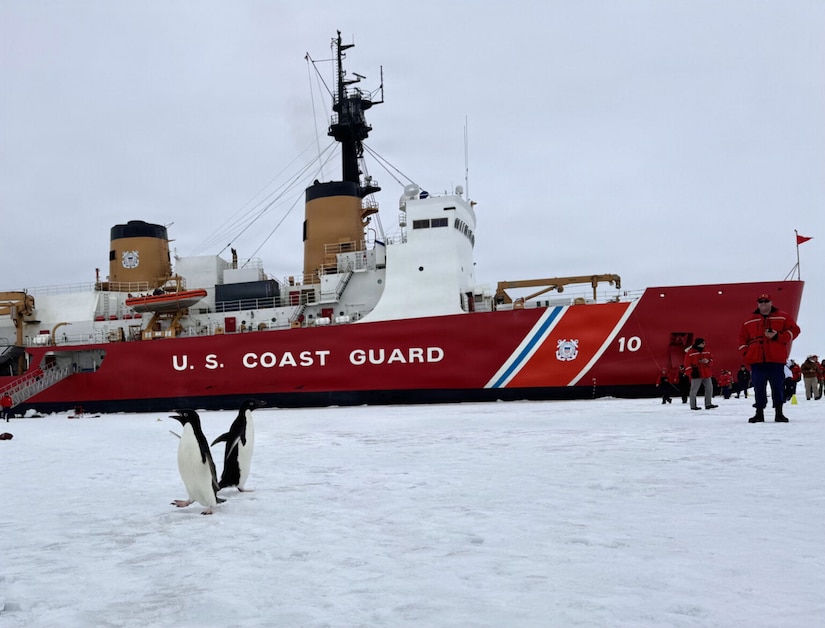
Dozens of people in winter attire and two penguins walk on ice as a large ship is docked in the background with the words, “U.S. Coast Guard,” written on the side.

These efforts enable critical scientific research in one of the most remote regions on Earth. The ship's role in Operation Deep Freeze includes breaking a navigable channel through miles of dense Antarctic ice to allow fuel and cargo deliveries essential for sustaining research stations and operations.

Commissioned Jan. 17, 1976, the Polar Star is the nation's only active heavy icebreaker and has served as a cornerstone of the U.S. presence in the polar regions. For five decades, the cutter has executed missions including Antarctic resupply, search and rescue, environmental protection and national defense. 

As the cutter transits the Southern Ocean en route to Antarctica, its crew reflected on a half-century of service defined by resilience, adaptability and dedication.

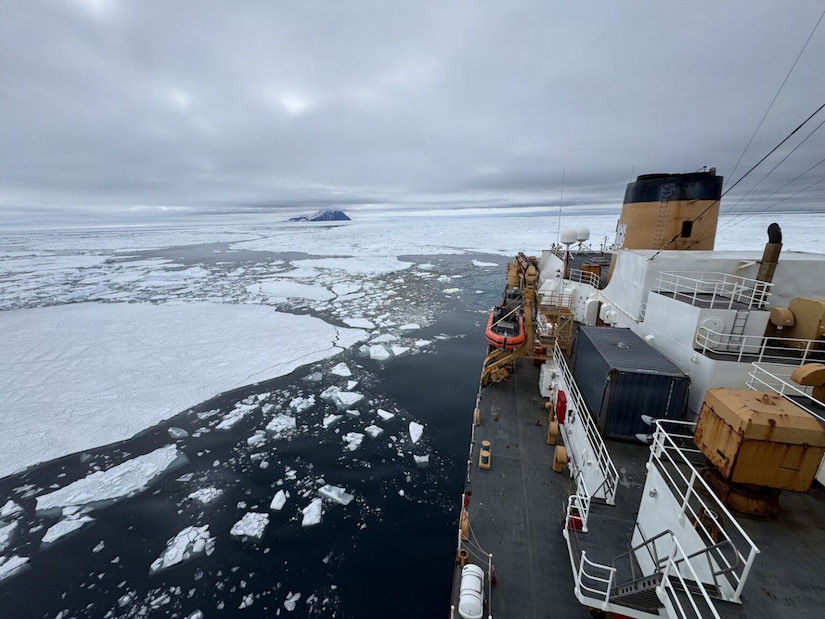
A large ship sails through icy water. There is a trail of broken ice behind the ship.

"I am constantly amazed at this crew's tremendous energy and enthusiasm," said Coast Guard Capt. Jeff Rasnake, CGC Polar Star commanding officer. "Despite the many challenges associated with getting and keeping this ship on mission, they remain eternally positive and committed to meeting the high standards we've set for ourselves."

Throughout its service life, the Polar Star has completed dozens of Operation Deep Freeze missions and numerous Arctic deployments, defending U.S. sovereignty, securing critical shipping lanes, protecting energy and mineral resources, and countering adversarial presence in the polar regions. Despite its age, the cutter continues to demonstrate unmatched heavy icebreaking capability, routinely operating in conditions few vessels can navigate.

A large ship sails through icy water as a cruise ship follows close behind. There are snow-covered mountains in the background.

"At 50 years old, [the] Polar Star remains the world's most capable non-nuclear icebreaker," said Coast Guard Cmdr. Samuel Blase, the ship's executive officer. "That's a testament to the crews that have maintained it over the decades. With years of service left to give, [the] Polar Star will continue to guide the way in the high latitudes well into the future." 

As the cutter undertakes another demanding deployment, its 50th anniversary underscores both the ship's enduring capabilities and the professionalism of its crew.

A person in winter attire stands on the deck of a ship looking across icy water at a cruise ship.

"While the term 'historic' has lost meaning through overuse, there is no doubt that this is an amazing ship," Rasnake said. "[The] Polar Star's 50 years of service in the polar regions puts it in the discussion with other great Coast Guard icebreakers." 

As the Polar Star presses south through freezing seas and thickening ice, the crew carries forward a proud tradition of service. The 50th anniversary serves as both a celebration of the past and a reminder of the cutter's ongoing role at the forefront of U.S. polar operations. 

Tuesday, December 02, 2025

Coast Guard Heavy Icebreaker Departs Seattle for Antarctic Deployment

The Coast Guard cutter Polar Star departed Seattle, Nov. 27, commencing its 29th deployment to Antarctica in support of Operation Deep Freeze.

The operation is an annual joint military mission to resupply the U.S. Antarctic stations in support of the National Science Foundation, the lead agency for the U.S. Antarctic Program. Historic investment in the "One Big Beautiful Bill" of nearly $25 billion includes $9 billion specifically for icebreakers and infrastructure in the Arctic and Antarctic. This massive investment in icebreakers will secure U.S. access, security and leadership in the polar regions.  

As the Coast Guard prepares to revitalize its icebreaking fleet, the Polar Star remains the only U.S. vessel capable of breaking a navigable channel through the ice to reach McMurdo Station, the largest Antarctic station and the logistics hub of the U.S. Antarctic Program.  

Each year, the cutter serves a vital role in ensuring surface access for fuel and supply ships through the Ross Sea to resupply U.S. Antarctic bases. The Polar Star's mission directly protects the security, freedom and prosperity for the U.S., our allies and partners.

"[The] Polar Star's crew does remarkable work maintaining and operating this ship," said Coast Guard Capt. Jeff Rasnake, commanding officer of the ship. "Each year brings unique challenges, and I'm proud to say this crew has risen to meet them all. The way we've come together over the course of maintenance, and our logistical preparations is exciting as we enter the operational phase of our annual deployment cycle."

Commissioned in 1976, the Polar Star is 399 feet long and weighs 13,500 tons with a 34-foot draft. Despite reaching nearly 50 years of age, it remains the world's most powerful nonnuclear icebreaker with the ability to produce up to 75,000 shaft horsepower.

The continuous effort the crew commits to maintaining the aging cutter ensures the nation's access to the continent and the economic, environmental and national security interests in the polar regions. The Polar Star will continue to support Operation Deep Freeze until new polar and Arctic security cutters enter service in the coming decade.

Since 1955, members of the Coast Guard, Air Force, Navy and Army have proudly supported the U.S. Antarctic Program by providing supplies to McMurdo Station. 

Thursday, September 24, 2015

Annual Operation DEEP FREEZE to commence Sept. 28

by Headquarters Pacific Air Forces Public Affairs

9/24/2015 - JOINT BASE PEARL HARBOR-HICKAM, Hawaii  -- The U.S. military will kick off the 2015-2016 season of Operation DEEP FREEZE, the Department of Defense's support of the U.S. Antarctic Program and the National Science Foundation, with operations commencing Sept. 28.

This support is provided by Joint Task Force-Support Forces Antarctica, led by Pacific Air Forces at Joint Base Pearl Harbor-Hickam, Hawaii. JTF-SFA coordinates strategic inter-theater airlift, tactical deep field support, aeromedical evacuation support, search and rescue response, sealift, seaport access, bulk fuel supply, port cargo handling and transportation requirements.

Active duty, National Guard and Reserve personnel from the U.S. Air Force, Navy, Army and Coast Guard work together as part of JTF-SFA. This team proudly continues the tradition of U.S. military support to the USAP and demonstrates the United States' commitment to a stable Pacific region.

Airlift for Operation DEEP FREEZE involves active duty and Reserve C-17 Globemaster III support from Joint Base Lewis-McChord, Washington, LC-130 Hercules support from the New York Air National Guard, sealift support from the U.S. Coast Guard and Military Sealift Command, engineering and aviation services from U.S. Navy Space and Naval Warfare Systems Command, cargo handling from the U.S. Navy and public health and veterinary services support from the U.S. Army.

Christchurch International Airport, New Zealand, serves as the staging point for deployments to McMurdo Station, Antarctica, a key research and operations facility for the USAP.

Operation DEEP FREEZE is unlike any other U.S. military operation. It is one of the military's most difficult peacetime missions due to the harsh Antarctic environment. The U.S. military is uniquely equipped and trained to operate in such an austere environment and has therefore provided support to the USAP since 1955.