Thursday, April 30, 2020

Navy Provides Medical Care to Sailors Aboard USS Kidd


April 30, 2020

As part of the Navy's aggressive response to the COVID-19 outbreak aboard the guided-missile destroyer USS Kidd, the ship arrived at Naval Base San Diego on April 28 to receive medical care for its sailors and to clean and disinfect the ship.

"Sailors have called San Diego home for many years, and we're especially thankful for that relationship now," Navy Vice Adm. Richard A. Brown, commander of Naval Surface Forces, U.S. Pacific Fleet, said. "Taking care of our sailors and cleaning this ship is a team effort, and we're fortunate that the partnership between the Navy and the city of San Diego is allowing us to focus on that mission."

USS Kidd was at sea participating in counternarcotics operations in the U.S. Southern Command area of responsibility, when several sailors began exhibiting influenza-like illness symptoms. One sailor was medically evacuated to the United States on April 22 after experiencing shortness of breath.

U.S. Pacific Fleet redirected the amphibious assault ship USS Makin Island — with its robust medical facility that includes an intensive care unit, ventilators, and additional testing capability — to rendezvous with the Kidd. On April 23, eight medical personnel boarded the Kidd with an Abbott machine to begin testing the crew for COVID-19.

USS Kidd's executive officer, Navy Cmdr. Matt Noland, released a letter via social media to friends and family April 24. In it, Noland wrote, "The Navy pulled out all the stops — specialist doctors have already arrived from the United States to test and help care for our shipmates."

As Navy leadership solidified plans to return the ship to port, sailors who warranted closer observation were transported to Makin Island, out of caution for their health and the health of the sailors still aboard, while an additional sailor was medically evacuated to the United States. Meanwhile, the ship's crew began intensive cleaning efforts while still underway.

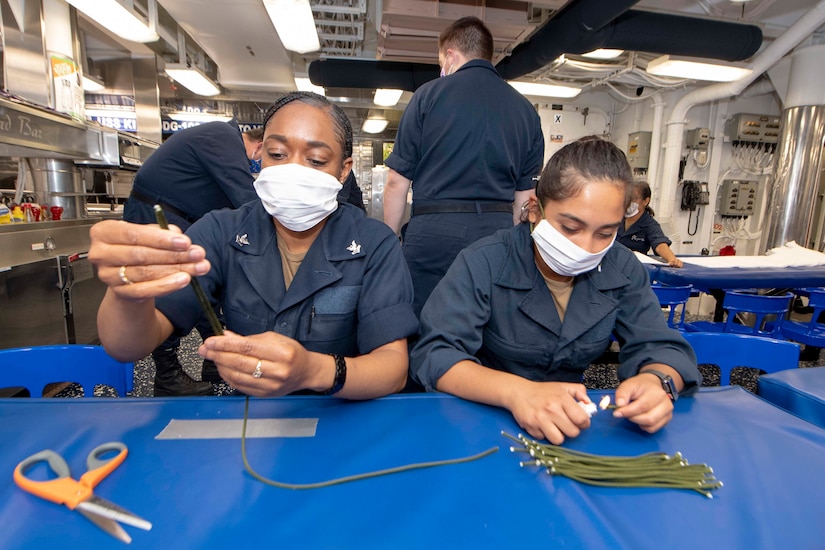
All sailors will be isolated off-ship with medical screenings conducted twice a day. Crew members who have tested negative will enter a period of quarantine to be monitored by military health professionals for symptoms. Finally, a small contingent of negative tested sailors will remain on the ship for essential services and deep-cleaning. These sailors will be outfitted with appropriate personal protective equipment, and will maintain social distancing in accordance with the Centers for Disease Control and Prevention's guidance.

"San Diego may not be USS Kidd's home port, but we are definitely being made to feel at home," Navy Cmdr. Nathan Wemett, the ship's commanding officer, said. "I am personally grateful to know that we have such a strong bond with our Navy communities. It's the strength of those bonds that helps us work together in challenging situations."

In addition to caring for the sailors' physical health, the Navy is providing a resilience counselor and a team of chaplains and psychologists to care for the mental and spiritual health of the sailors in isolation and quarantine. The Navy has also established a 24-hour roving patrol to ensure that sailors who are sequestered off-ship are adhering to all public health and safety policies.

USS Kidd sailors have been instructed to immediately report any influenza-like illness symptoms to help prevent spread of the virus — an important lesson the Navy learned from USS Theodore Roosevelt sailors who were quarantined in Guam. Sailors who were screened for quarantine were asymptomatic, with several initially testing negative. Upon later developing symptoms, those sailors were able to be isolated and treated appropriately.

While in San Diego, the ship will undergo a strategic deep-cleaning regimen that balances decontamination while preventing damage to the ship's critical systems. The cleaning process begins with spaces being vacated for seven days — four days longer than the minimum recommended by the CDC. The ship will be cleaned room by room, with access to each space restricted. The process is expected to take about two weeks, at which time the confirmed healthy sailors will return to the ship, and the off-going sailors will begin their quarantine.

(Courtesy of Naval Surface Force, U.S. Pacific Fleet.)

Certain Victory: A-10 Pilots Persevere During COVID-19


April 30, 2020 | BY AIR FORCE STAFF SGT. GREG NASH

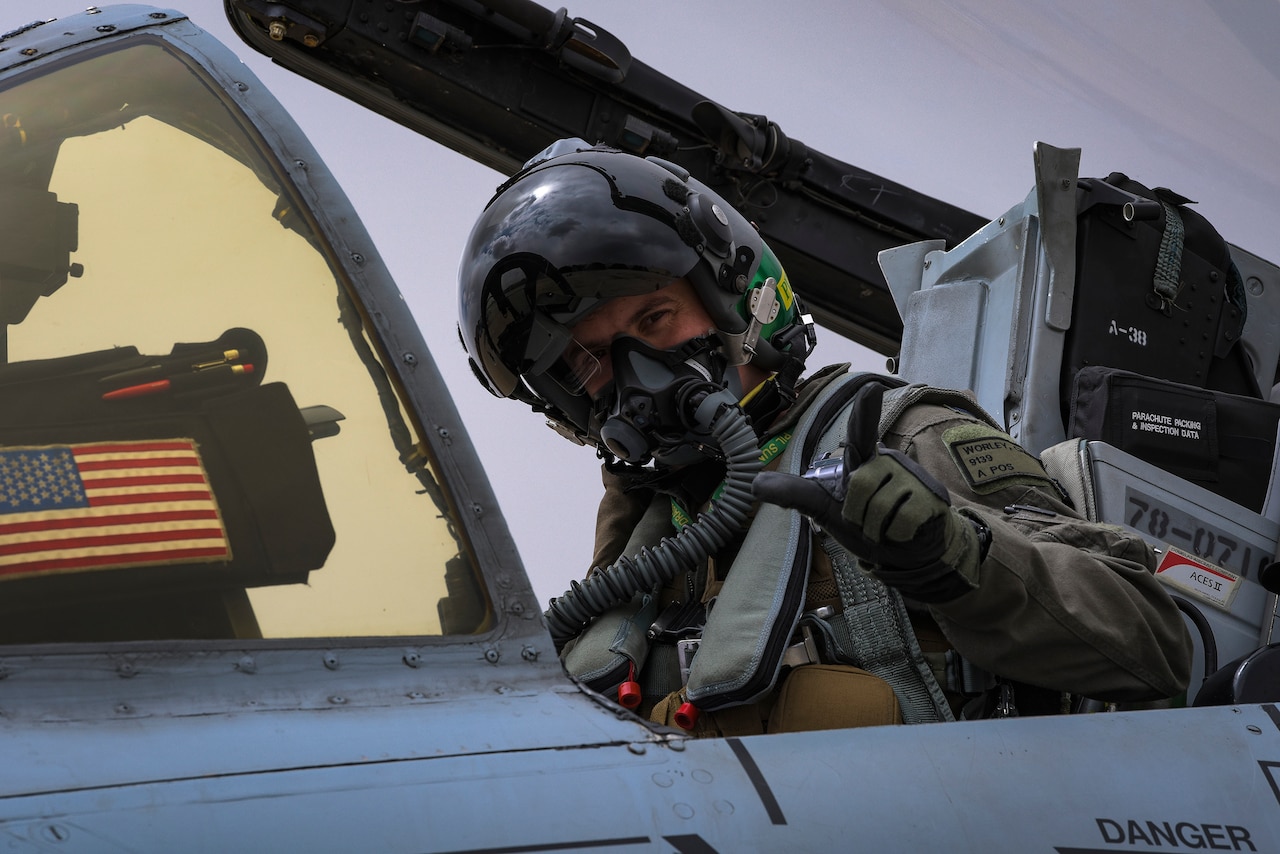
Since the early days of World War II, the will to win has been an unmatched factor for the pilots of the 25th Fighter Squadron. Whether flying over the Himalayan Mountains in the 1940s or staying mission-ready today, the Korean Peninsula's premier close air support fighter squadron known as the ''Assam Draggins'' carry on a legacy that epitomizes their Korean motto, ''Pil Sung,'' or ''Certain Victory.''

Now, the Sons of Pil Sung look to add another victory to the win column by persevering through the COVID-19 global pandemic. With COVID-19 mitigation measures affecting many things, they have not stopped the squadron from being ''Fight Tonight'' ready.

''The 'always ready' mindset reminds us that no matter what is going on, we must always be ready to perform our job and 'Attack!''' said Air Force 1st Lt. Matthew Dorsey,  a pilot with the 25th Fighter Squadron. ''It also emphasizes the importance of following the applicable mitigation measures to ensure that we keep ourselves healthy, and everyone we come in contact with is safe.

''The biggest reward of our sustained operations through COVID-19 has been taking the A-10s to the Pil Sung range and shooting the gun,'' Dorsey continued. ''There isn't a better sound than hearing the A-10 cannon's 'Brrrrrtttttt' after you spent all weekend social distancing. The professionalism and expertise in the squadron has sustained our operations and allowed us to be flexible. Flexibility is the key to airpower.''

The squadron embraces this flexibility, but with a twist. While balancing risk mitigation with maintaining the ''Fight Tonight'' attitude, members of the squadron follow the strict guidelines set by U.S. Forces Korea and the Centers for Disease Control and Prevention by greeting each other with elbow bumps and encouraging ''25 Pil Sung-second'' hand washing techniques.

Within the Draggins, Dorsey explained, finding ways to insert the squadron's number, 25, into normal conversation and activities is considered a demonstration of witty intelligence. Failure to use them in any circumstance is lightheartedly considered poor form.

Whether huddling during weather briefs, stepping to their jets or strafing over the Pil Sung Range, the Draggins never miss an opportunity to sustain their identity, vision, and commitment toward continually claiming certain victory.

(Air Force Staff Sgt. Greg Nash is assigned to the 51st Fighter Wing.)

Wednesday, April 29, 2020

DLA Expands Manufacturing Tool in Fight Against COVID-19


April 29, 2020 | BY Michael Molinaro

A tool being developed by the Defense Logistics Agency, can consolidate the Defense Department's technical data into packages for advanced manufacturing, making it a new weapon in the battle against COVID-19.

The military services are already using the Joint Additive Manufacturing Model Exchange, or JAMMEX, to access dozens of models for critical items such as face shields and surgical masks.

Still in development by DLA in conjunction with the National Institutes of Health and the military services, JAMMEX lets users download and print models from multiple sources through a single system, said Tony Delgado, an additive manufacturing program manager with the DLA Information Operations Research and Development Division.

"The value proposition is that JAMMEX can be the authoritative source for DOD [additive manufacturing] stakeholders," he added, "because behind the scenes, DLA is making sure that models that go on JAMMEX are approved models, regardless of origin."

Work on the additive manufacturing portal began two years after the Office of the Secretary of Defense directed DLA to facilitate the exchange of data between the services. DLA information technology experts and logisticians met with industry and academia representatives in 2018 to gain insight into the technological landscape critical to the system's design. 

DLA's technology accelerator team worked with DLA functional experts and military users to turn best practices into a prototype. The prototype is now in development by America Makes, a public-private partnership with member organizations from industry, academia, government and non-government agencies, and workforce and economic development resources.

Despite ongoing development, the services have used JAMMEX to print spare parts such as anti-reflection devices, door handles, drone parts and brackets that would otherwise cost more and take longer to procure. 

JAMMEX has the potential to reduce readiness risks, improve responsiveness and decrease costs by providing alternate sources for hard-to-procure and obsolete parts, said Catrina Murphy, a DLA additive manufacturing program manager.

"Accelerating the adoption of the military services to load their approved models to JAMMEX, as well as investigating the feasibility of loading vendor-offered proprietary designs to JAMMEX for the military services' organic manufacturing base, are the next steps in propelling JAMMEX to be the DOD AM model authoritative source," she added.

(Michael Molinaro is assigned to the Defense Logistics Agency.)