
Air Force F-16 Fighting Falcons fly over a high school football game during a POW/MIA ceremony in Niceville, Fla., Sept. 24, 2021.
Providing up-to-date information, news and original content on American Military issues.
Air Force F-16 Fighting Falcons fly over a high school football game during a POW/MIA ceremony in Niceville, Fla., Sept. 24, 2021.

Air Force Col. Greg Young hugs a fellow airman after returning from a deployment to the Horn of Africa at Dyess Air Force Base, Texas, Sept. 26, 2021.

Army Sgt. Matthew Vela, a respiratory therapist at Fort Hood, Texas, inputs data after treating a COVID-19 patient at the University of Arkansas for Medical Sciences Hospital in Little Rock, Ark., Sept. 25, 2021.
Sept. 30, 2021
On this final day of September, National Suicide Prevention Month, I am reflecting on the brave men and women we have lost to suicide. I feel these losses personally and mourn alongside the families and loved ones of those we have lost. Each suicide sends forth wave after wave of pain and grief. One such tragedy is too many.
Today, the Department of Defense has released our Annual Suicide Report for Calendar Year 2020. The findings are troubling. Suicide rates among our service members and military families are still too high, and the trends are not going in the right direction.
This is a paramount challenge for our Department. We must redouble our efforts to provide all of our people with the care and the resources they need, to reduce stigmas and barriers to care, and to ensure that our community uses simple safety measures and precautions to reduce the risk of future tragedies. We will continue to work swiftly and urgently, in close collaboration with our partners at the Department of Veterans Affairs.
I know that these are difficult days for many people in our Department of Defense workforce, for our military communities, and for my fellow veterans. If you find yourself contemplating suicide or simply feel that you could use a helping hand, please immediately seek support from a mental-health professional, reach out to your family, friends, a clergy member, or talk to a trained professional at the Veterans and Military Crisis Line or Military OneSource.
As I have said, mental health is health—period. We must all do more, at every level, to end the stigma against getting help. We all need counsel, community, and connection. Reaching out is a sign of strength and resilience.
We cannot bring back those we have lost, but we hope that we can in some way honor their memory by doing more—right now—to prevent future tragedies from suicide among our wider DOD family.
Please visit www.militaryonesource.mil, call 800-342-9647, or chat online with the Veterans and Military Crisis Line: www.veteranscrisisline.net, call 800-273-8255 (press 1) or text 838255. Confidential support is available 24/7.
Sept. 30, 2021 | BY C. Todd Lopez , DOD News
Ensuring the U.S. military's continued access to critical materials to enable the nation's defense is a priority of the Defense Department. But the dependability of America's supply chain doesn't just affect the military, it's a concern for the entire U.S. government, said Jesse Salazar, the deputy assistant secretary of defense for industrial policy.
"President Biden’s executive order on America's supply chains ... distinctly focused on changes in policies and processes geared toward a new approach for 21st century supply chains," Salazar said during remarks at ComDef2021. "Building on the work of prior efforts, the conversation of industrial base security and resiliency has expanded beyond the Department of Defense to a whole-of-government effort."

At DOD, Salazar is responsible for development of policies for the maintenance of the United States defense industrial base.
In Executive Order 14017, published in February, the president asked for a 100-day supply chain review, where the Department of Energy would report on high-capacity batteries; the Department of Commerce would report on semiconductors; the Department of Health and Human Services would report on pharmaceuticals; and the DOD report would identify risks in the supply chain for critical minerals and other identified strategic materials, including rare earth elements.

Those four reports together, Salazar said, provide a clear outline of our approach to tackling supply chain resiliency from a whole-of-government perspective.
The department's own report laid out a set of recommendations to ensure the U.S. has continued access to strategic and critical minerals needed for economic security, addressing the climate crisis and national defense.
The recommendations in the department's report are focused on developing and fostering new sustainability standards for strategic and critical, material-intensive industries; expanding sustainable domestic production and processing capacity, including non-traditional mining and recycling; strengthening U.S. stockpiles; and working with allies and partner nations while promoting greater global transparency.
The president's executive order also requires DOD and five other federal agencies to submit within one year a report on supply chains in their sectors of the economy. The DOD report will focus on the defense industrial base. That report must also identify areas where civilian supply chains are dependent upon competitor nations. Salazar said development of this report is in progress now; its expected release date is in February.
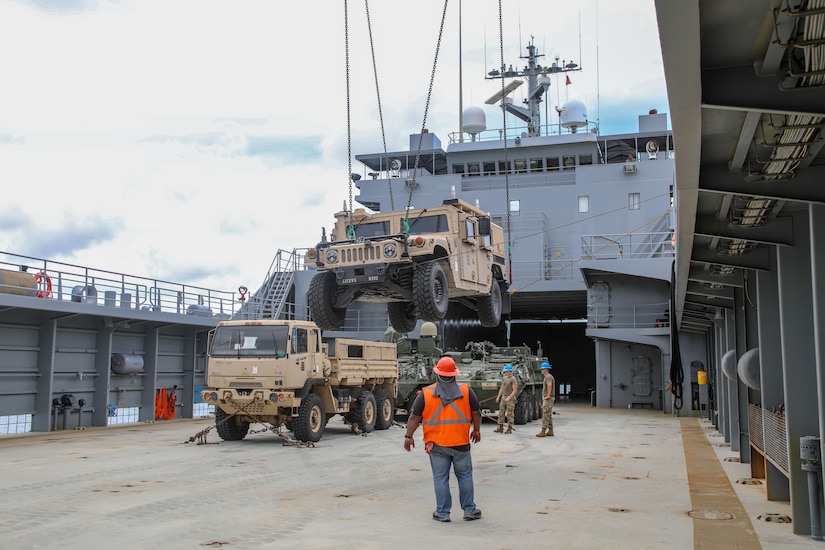
Salazar also said a supply chain resiliency working group was established in August to address systemic barriers limiting supply chain visibility, conduct resilience assessments and develop effective mitigation assessments.
"The two-year effort will leverage work already being performed around supply chain resiliency across the department and interagency," Salazar said. "Initial findings will be included in the one-year report, as well."
Central to ensuring the reliability of America's supply chain is working closely with allies and partners, Salazar said.
"Our supply chains are — and continue to be — global and complex," he said. "It is only with support from our allies and partners, many of whom provide key components and expertise for our weapons systems, that we will be successful."
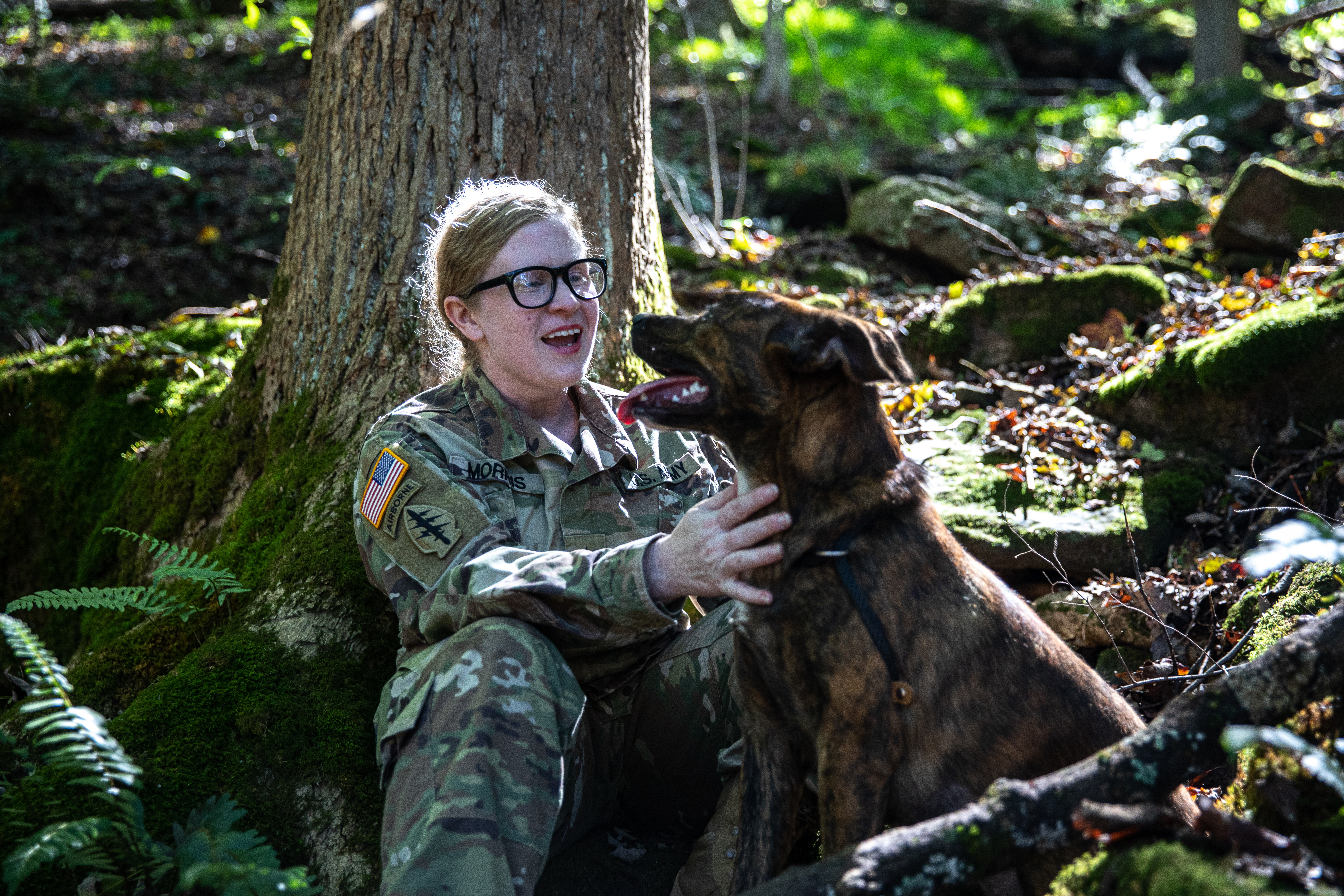
West Virginia Army National Guardsman Sgt. Zoe Morris takes a break during a walk with Oakley, a rescue dog, in Charleston, W. Va., Sept. 24, 2021.
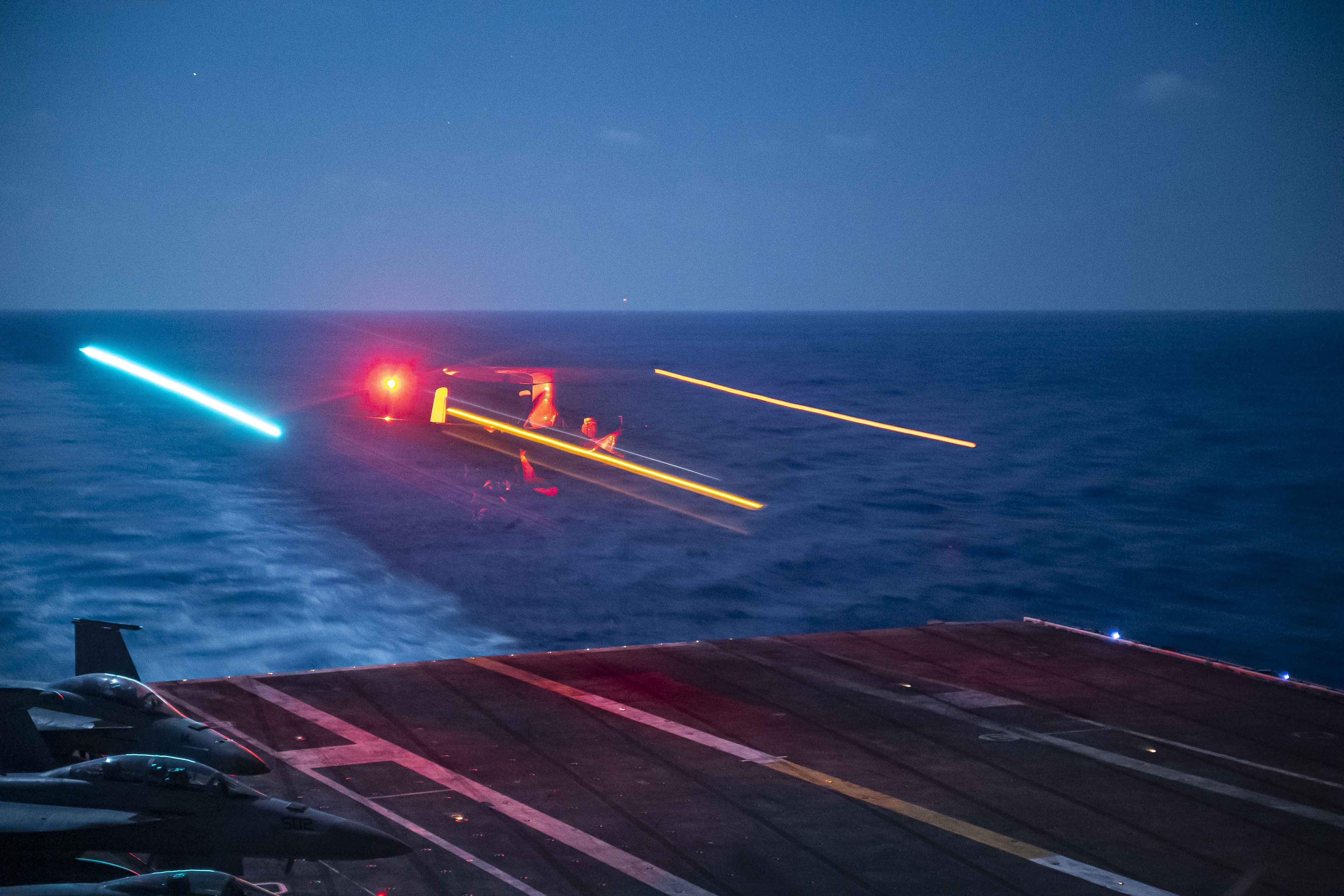
An E-2D Advanced Hawkeye recovers on the flight deck of the aircraft carrier USS Carl Vinson during operations in the Philippine Sea, Sept. 18, 2021.
Sept. 30, 2021
Today, the Department of Defense (DOD) released the Calendar Year (CY) 2020 Annual Suicide Report (ASR). We continue to take action to prevent suicides while supporting our military members and their families. Every death by suicide is a tragedy. The CY 2020 ASR presents recent suicide data for Service members and their families, and describes current and future efforts underway to combat suicide.
“Although our Service members constantly show the ability to achieve the seemingly impossible, for some of our brothers and sisters in arms, they experience challenging times just as many other Americans do,” said Major General Clement S. Coward, Acting Executive Director, Office of Force Resiliency. “Getting this right is personal for all of us at the Department. Yet, prevention can be complex. As the scientific research about suicide prevention continues to evolve, we continue to do everything possible to stop these tragedies. No two individuals are identical, and no two life experiences are identical. So we are working to address a range of risk factors and enhance protective factors for members of our Armed Forces.”
Dr. Karin Orvis, Director of the Defense Suicide Prevention Office, added, “Suicide remains a serious public health issue in our Nation and military. Our efforts must address the many aspects of life that impact suicide. The Department is engaged in implementing a comprehensive public health approach to suicide prevention and is providing tailored resources to mitigate the impacts of the COVID-19 pandemic. There is much more work ahead of us, and we will not relent in our efforts to provide the care and support our Service members and their families need and deserve.”
While suicide rates are not going in the desired direction, the Department did not see a statistical change in suicide rates between CY 2020 and CY 2019 or CY 2018 that would indicate a COVID-19-related increase. We recognize the impact of COVID-19 on the well-being of our force and our Nation. During this time, we continue our efforts to educate and support the force, promote a variety of resources such as mental telehealth resources and financial counseling, and emphasize social connectedness.
“The military community – while resilient – is not immune from the same challenges that impact the Nation,” said Dr. Orvis. “We are continuing to collaborate with federal and non-federal partners to change the conversation around mental health and suicide, increase help-seeking for mental health challenges and everyday stressors such as relationship and financial challenges, and educate about key suicide misconceptions with facts. We’re in this together, and now more than ever we need leaders, Service members, family, and friends to connect and to reach for support for yourself and loved ones,” said Orvis.
Data from the CY 2020 ASR
In CY 2020, there were 580 Service members who tragically died by suicide. The ASR for CY 2020 shows that the suicide rate for the Active Component statistically increased from CY 2015 to CY 2020. There was no statistically significant increase or decrease for the Reserve and National Guard from CY 2015 to CY 2020. In the near-term for the Reserve, the CY 2020 rate was statistically comparable to both CY 2019 and CY 2018; the National Guard rate had statistically decreased from CY 2018 to CY 2019, returning to a comparable level in CY 2020.
We see continued risk for young and enlisted members. The CY 2019 military suicide rates for the Active Component, Reserve, and National Guard were comparable to the U.S. population, after accounting for age and sex. With respect to CY 2020, the most recent U.S. population suicide data available is for CY 2019. Accordingly, the data needed to compare for CY 2020 are not yet available.
The Department uses both internal and civilian data sources to determine military family member suicide deaths. The ASR includes CY 2019 data, as that is the most recent annual civilian source data available. In CY 2019, 202 military family members tragically died by suicide. The suicide rates for military spouses and dependents in CY 2019 were statistically comparable with CY 2017 and CY 2018, and to the U.S. population rates, except for male spouses, which was higher.
Prevention Efforts
Based on the findings from this year’s report, the Department will focus on addressing perceived barriers to seeking help and encourage use of support resources, especially among young and enlisted members. For example, the Department is expanding a promising help-seeking focused training pilot to geographically-isolated Service members and those outside the continental United States.
For military families, the Department is increasing screening of military families for depression and suicide risk, supporting an outreach campaign to normalize relationship help-seeking, and expanding safety and safe storage of lethal means, such as firearms and medications. The Department is also exploring ways to better understand help-seeking behaviors, perceived barriers to care, and suicide thoughts and behaviors among military spouses.
The CY 2020 report includes Fiscal Year 2020/2021 National Defense Authorization Act reporting requirements, and represents the department’s continued commitment to provide transparency, accountability, and timely information on this critical issue.
The CY 2020 ASR will be available at https://www.dspo.mil/ASR/.
Service members and veterans who are in crisis or having thoughts of suicide, and those who know a service member or veteran in crisis, can call the Veterans/Military Crisis Line for confidential support available 24 hours a day, seven days a week, 365 days a year. Call (800) 273-8255 and Press 1, text to 838255 or chat online at VeteransCrisisLine.net/Chat.
Because suicide is a public health issue and scientific research indicates that certain types of reporting can negatively impact vulnerable individuals, reporters covering this issue are strongly encouraged to visit www.ReportingOnSuicide.org for important guidance on how to communicate about suicide.
Any reference to non-federal entities, and the appearance of external hyperlinks does not constitute an endorsement of the United States Department of Defense of any organization, the linked websites, or the information, products, or services contained therein.
Sept. 29, 2021
Department of Defense Spokesperson Lt. Col. Martin Meiners provided the following readout:
Dr. Michael Chase, Deputy Assistant Secretary of Defense for China, conducted a secure video conference with Major General Huang Xueping, Deputy Director of the People's Republic of China's (PRC) People's Liberation Army Office for International Military Cooperation to co-host virtually the 16th U.S.-PRC Defense Policy Coordination Talks, September 28 and 29, 2021.
The meeting is an important component of the Biden-Harris Administration’s ongoing effort to responsibly manage the competition between the U.S. and the PRC by maintaining open lines of communication with the PRC.
During the talks, the two sides held a frank, in-depth, and open discussion on a range of issues affecting the U.S.-PRC defense relationship. Both sides reaffirmed consensus to keep communication channels open. The U.S. side also made clear our commitment to uphold shared principles with our allies and partners in the Indo-Pacific region.
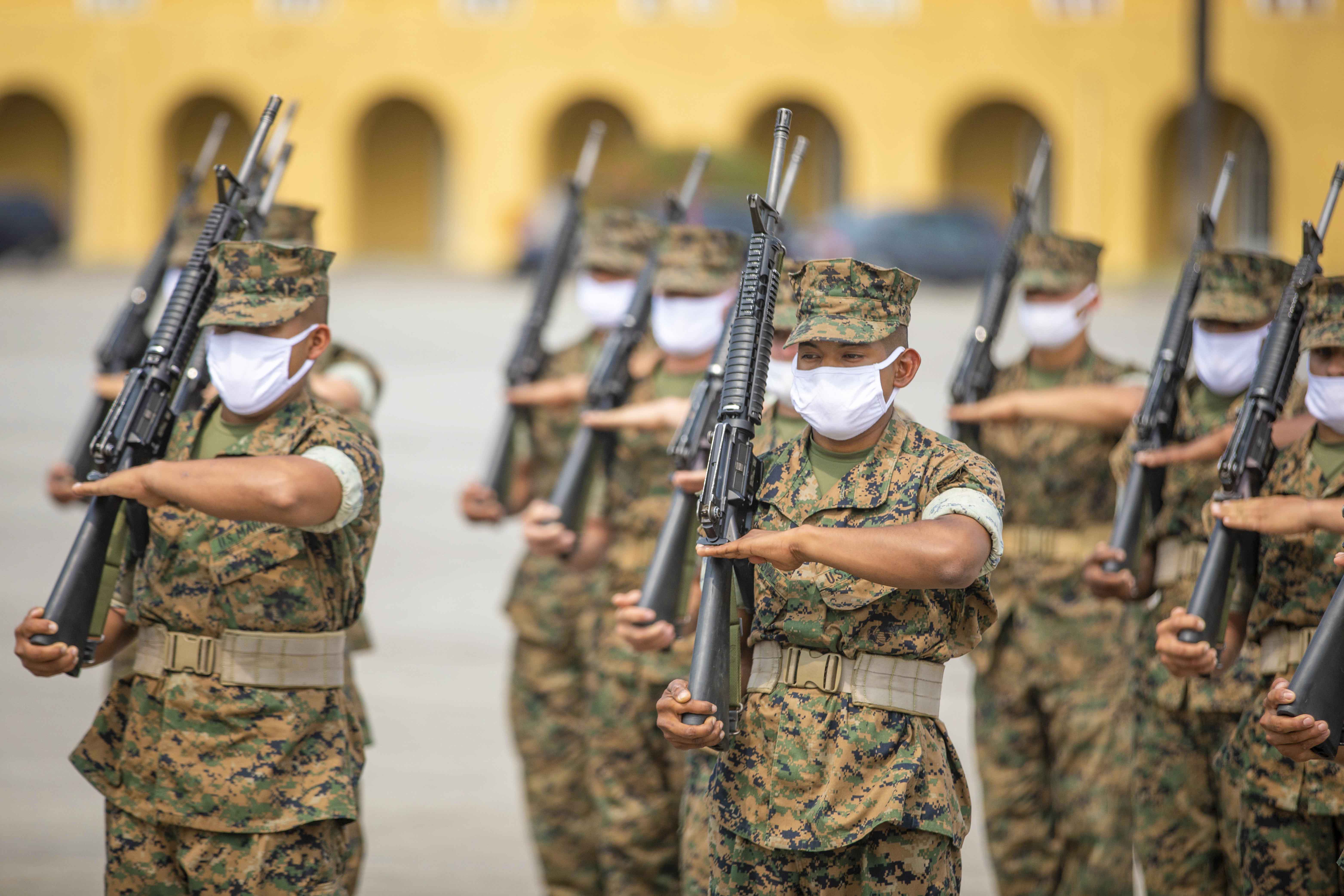
Marines conduct a final drill evaluation at Marine Corps Recruit Depot San Diego, Sept. 24, 2021.

Navy Petty Officer 2nd Class Joshua Curlee provides security during an at sea training evolution aboard the USS Arlington in the Atlantic Ocean, Sept. 27, 2021.

A Navy F/A-18E Super Hornet recovers on the flight deck of the USS Carl Vinson in the Philippine Sea, Sept. 27, 2021.
Sept. 29, 2021
The chief of staff of the Army announces the following general officer assignments:
Army Reserve
Maj. Gen. Joseph J. Heck, commander (Troop Program Unit), 807th Medical Command (Deployment Support), Salt Lake City, Utah, to deputy surgeon general for mobilization and readiness (Individual Mobilization Augmentee), Office of The Surgeon General, Falls Church, Virginia.
Maj. Gen. Martin F. Klein, director of strategic operations (Individual Mobilization Augmentee), Office of the Deputy Chief of Staff, G-3/5/7, Washington, D.C., to commander (Troop Program Unit), 75th Innovation Command, Houston, Texas.
Maj. Gen. Tracy L. Smith, deputy surgeon general for mobilization and readiness (Individual Mobilization Augmentee), Office of The Surgeon General, Falls Church, Virginia, to commander (Troop Program Unit), 807th Medical Command (Deployment Support), Salt Lake City, Utah.
Brig. Gen. Robert E. Guidry, deputy commander (Troop Program Unit), 75th Innovation Command, Houston, Texas, to commanding general (Troop Program Unit), 86th Training Division, Fort McCoy, Wisconsin.
Brig. Gen. Michelle A. Link, deputy commander (Troop Program Unit), 416th Theater Engineer Command, Darien, Illinois, to executive director (Individual Mobilization Augmentee), Operational Contract Support, Office of the Under Secretary of Defense for Acquisition and Sustainment, Washington, D.C.
Army National Guard
Maj. Gen. Wendul G. Hagler II, senior defense official and defense attaché, U.S. Defense Attaché Office, Kingdom of Saudi Arabia, to deputy commanding general, U.S. Army Central, Shaw Air Force Base, South Carolina.
Sept. 29, 2021
The secretary of the Navy and chief of naval operations announced today the following assignments:
Rear Adm. David A. Goggins will be assigned as program executive officer, Attack Submarines (PEO SSN), Washington, D.C. Goggins is currently serving as program executive officer for Submarines, Washington, D.C.
Rear Adm. Troy M. McClelland will be assigned as program executive officer, Shipyard Infrastructure Optimization (PEO SIOP), Washington, D.C. McClelland is currently serving as deputy commander, Naval Facilities Engineering Systems Command, Washington, D.C.
Rear Adm. Scott W. Pappano will be assigned as program executive officer, Strategic Submarines (PEO SSBN), Washington, D.C. Pappano is currently serving as program executive officer, Columbia, Washington, D.C.
Rear Adm. (lower half) Edward L. Anderson will be assigned as program executive officer, Undersea Warfare Systems (PEO UWS), Washington, D.C. Anderson is currently serving as commander, Undersea Warfare (NAVSEA 07), Washington, D.C.
Pentagon Spokesman Eric Pahon provided the following readout:
Deputy Secretary of Defense Dr. Kathleen H. Hicks visited U.S. Cyber Command (CYBERCOM) and the National Security Agency (NSA) today to meet with General Paul M. Nakasone, Commander, U.S. Cyber Command; and Director, National Security Agency / Chief, Central Security Service; to discuss department initiatives and operations to enhance DoD network security strategic competition with China and Russia, and joint CYBERCOM/NSA efforts to defend the nation.
Dr. Hicks visited NSA’s Cybersecurity Collaboration Center to observe and discuss inter-agency and Defense Industrial Base cooperation to detect and mitigate cybersecurity threats.
The Deputy Secretary also discussed the missions and capabilities of USCYBERCOM and NSA/CSS to support strategic competition, intelligence, cybersecurity, cyber operations, and partnerships.

Members of the U.S. Air Force Honor Guard commemorate the Air Force’s 74th birthday at the Intrepid Sea, Air and Space Museum in New York City, Sept. 18, 2021.
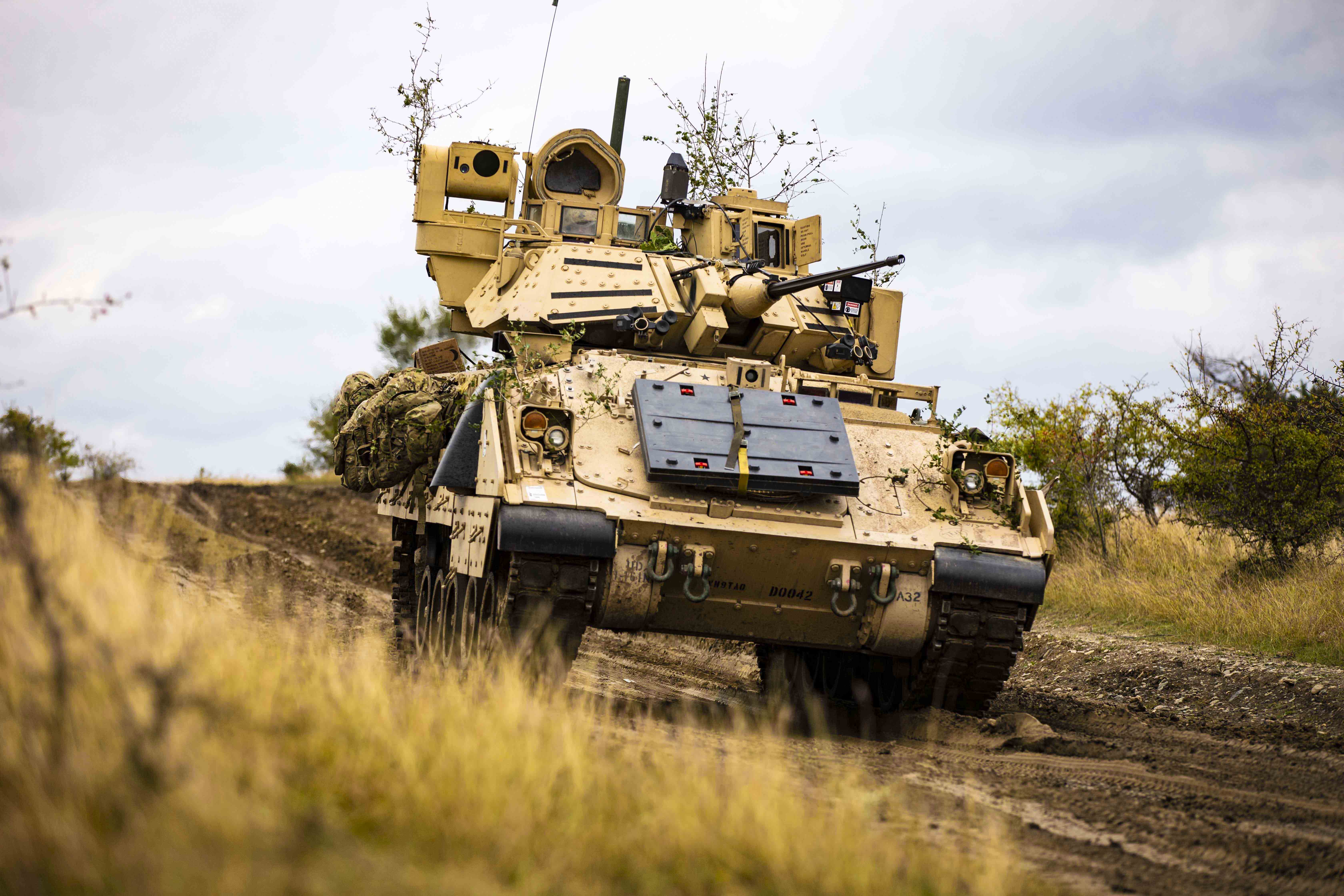
Soldiers move an Army M2 Bradley Fighting Vehicle toward an objective during a multinational situational training exercise in Cincu, Romania, Sept. 23, 2021.
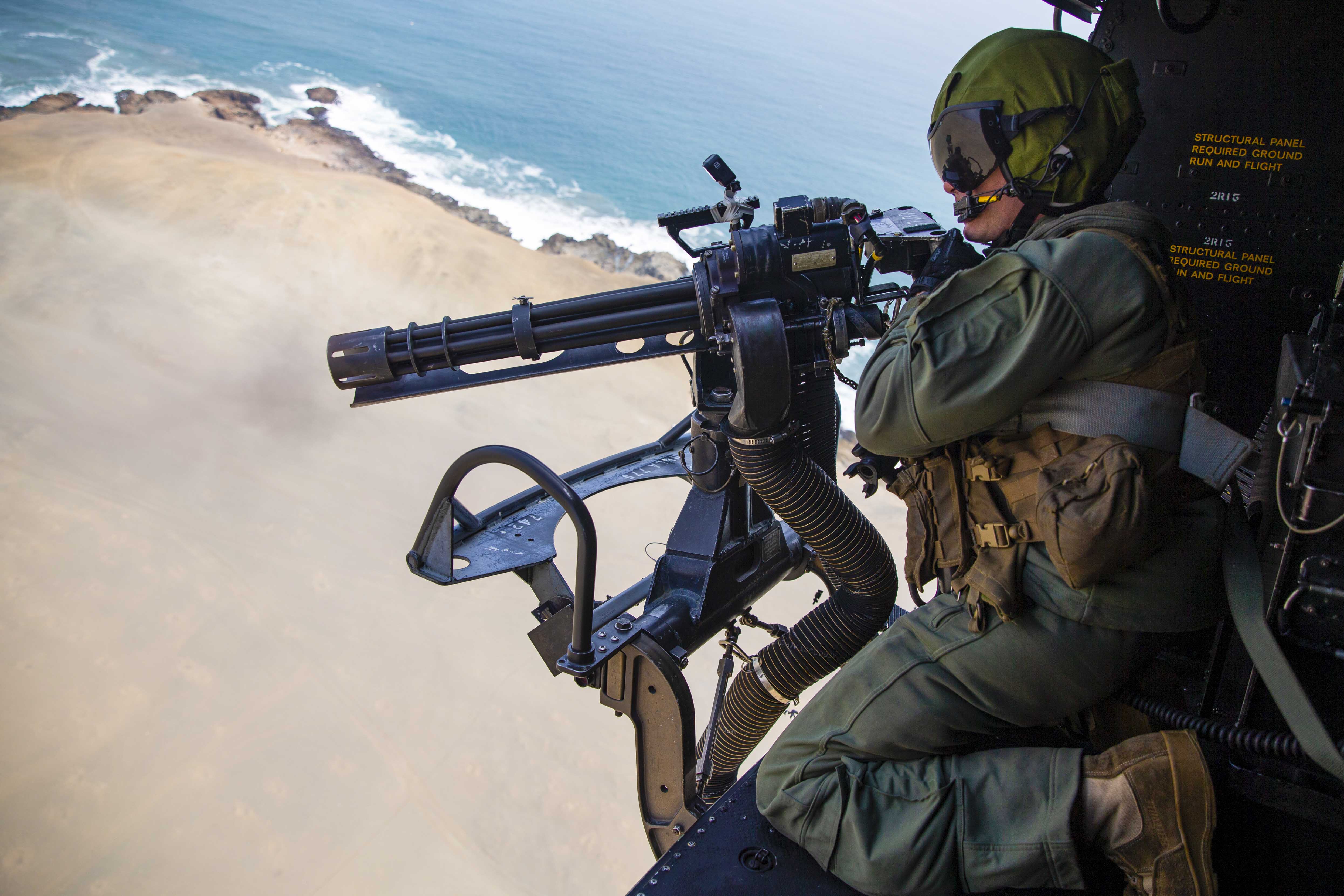
Marine Corps Sgt. Christophe J. Stump fires a GAU-17 minigun in Lima, Peru, Sept. 28, 2021, during UNITAS LXII, the world's longest-running annual multinational maritime exercise.
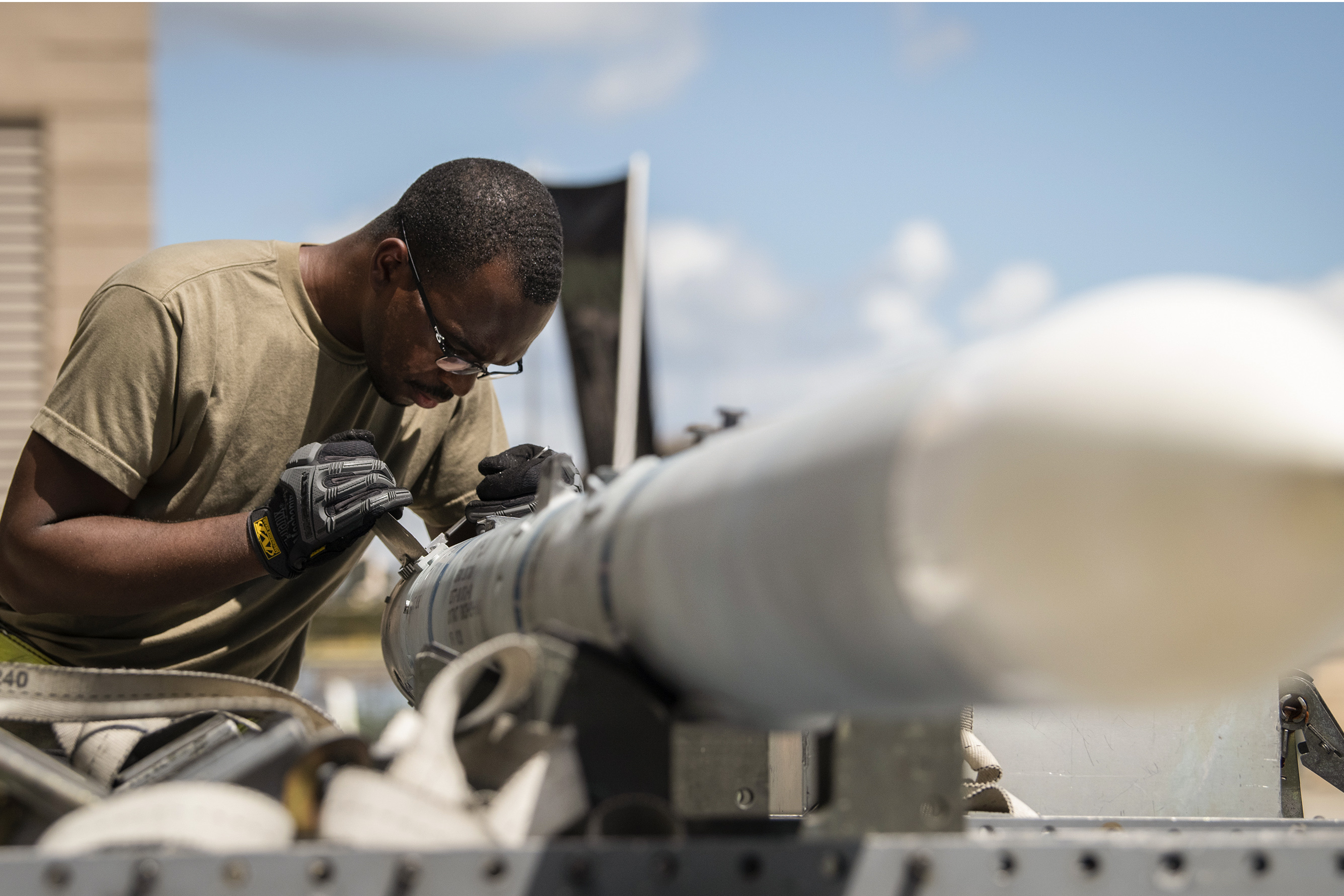
Air Force Senior Airman Taye-Anthony Bennett secures fins to an AIM-120 during a weapons load competition at Eglin Air Force Base, Fla., Sept. 21, 2021.




 Posts

