Wednesday, December 10, 2025

From Quadcopters to Micro-UAS: The Aircraft Used at DOW's Drone School

The increasing prevalence of drones on the modern battlefield means it's crucial for our service members to be familiar with the various systems they might encounter, which is why at the Joint Counter-Small Unmanned Aircraft Systems University at Fort Sill, Oklahoma, students learn the ins and outs of about two dozen of these aircraft.  
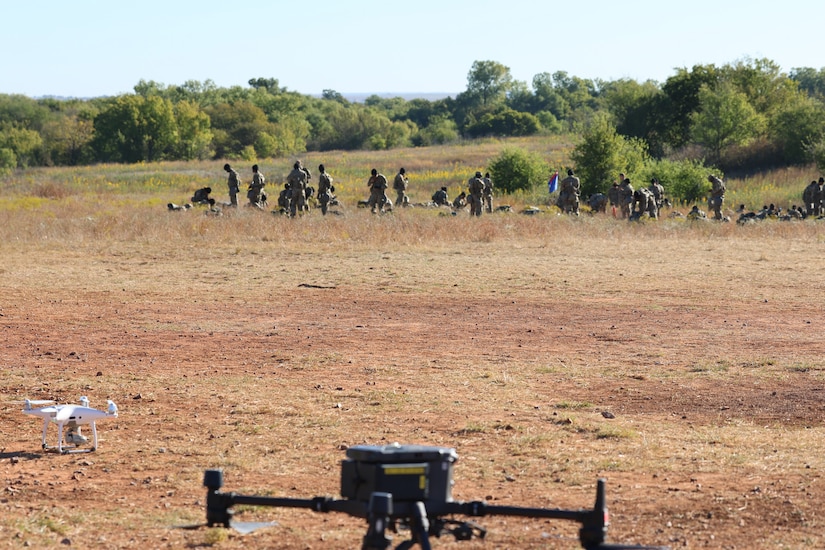
Two drones sit on a dirt patch. In the distance, several soldiers mill around.

The JCU is the War Department's only joint training center aimed at countering the growing number of aerial threats U.S. troops face across the world.  It teaches service members of every branch how to operate drone equipment, plan counter-small UAS strategies and train others to defend installations.   

During the courses, students get to know 24 types of commercial off-the-shelf small UAS that they may see downrange, from "blue air" drones that are considered friendly to "red air" drones that are used by our adversaries.  

The types of aircraft the JCU trains students on range from commercial quadcopters to tiny micro-UAS and custom-built foam drones that can mimic real threats. Here are the highlights of a few of them:   
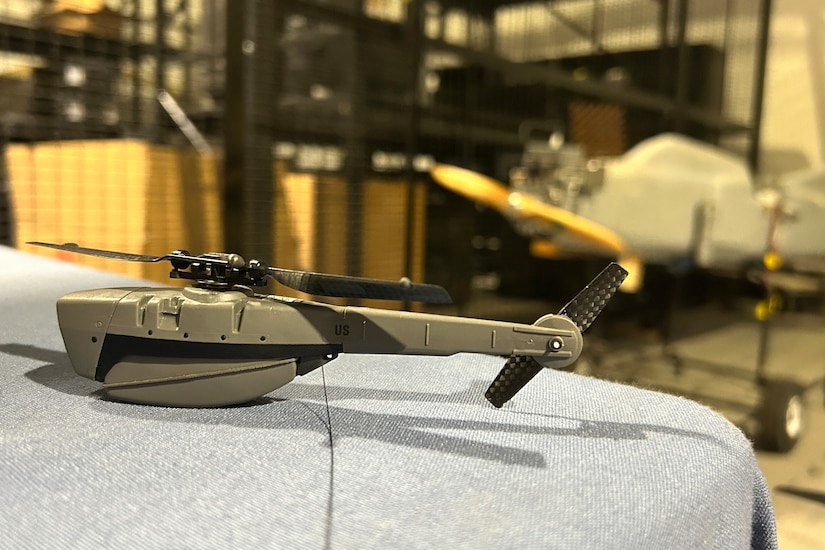
A small drone sits on a table.
 

The Black Hornet:  

The Black Hornet is the smallest drone currently used by the JCU. Developed under Special Operations Command, this tiny, covert drone does close intelligence, surveillance and reconnaissance — it can even be used inside buildings for hostage rescues. It includes an enhanced thermal camera and is small enough for service members to carry on their utility belts.  
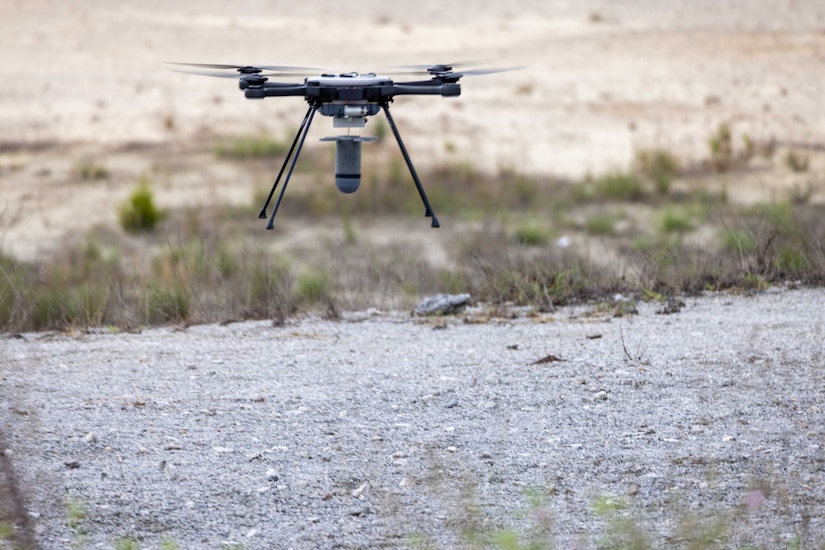
A quadcopter drone hovers a few feet above gravel.

R80D SkyRaider:  

Developed exclusively for DOW and other federal agencies, the R80D SkyRaider is a vertical takeoff and landing quadcopter that's agile and can carry and deliver multiple payloads up to 7.7 pounds. It has one of the fastest, most powerful embedded artificial intelligence computing devices available for small UAS. It can also thrive in GPS- or communications-denied environments.  

A wide-winged drone with two propellers sits upright.

WingtraOne Gen II:  

The WingtraOne Gen II is one of the fastest mapping and surveillance small UAS on the planet. This fixed-wing drone has multiple cameras and a light detection and ranging — LiDAR — option, which can create precise 3D models of objects and environments. It can go about 36 mph and works well in high winds.  
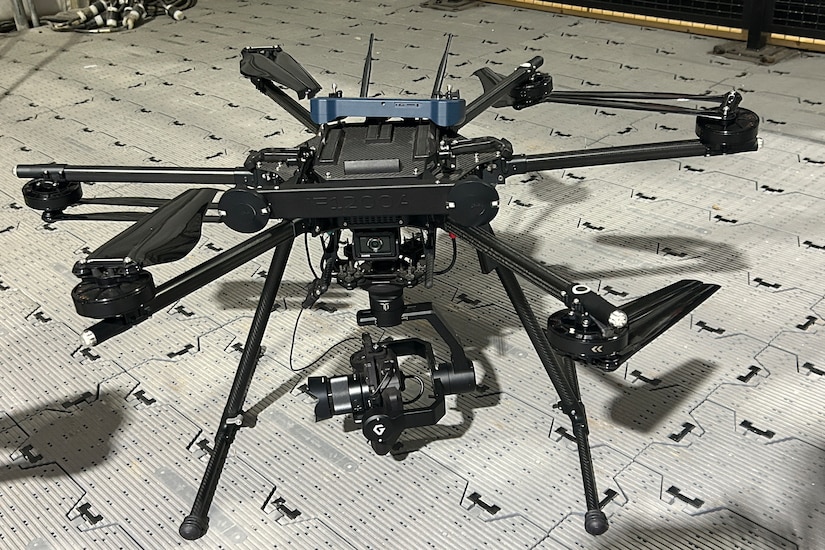
A quadcopter drone sits on the ground.

IF 1200:  

Weighing between 21 and 55 pounds, the IF 1200 electric hexacopter is the most aggressive small UAS the school has, and it's mostly used for detection, said JCU Air Boss Jacob Cameron. The IF 1200 can adapt to any requirement set and can be used with LiDAR, radiation detection sensors, electro-optical/infrared sensors and delivery capabilities. It can travel up to 70 mph, carry up to 35 pounds and stay in the air for up to 45 minutes. 

"That drone can do flips," Cameron said. "You think it'd be slow and clunky, but that is probably the fastest hexacopter drone that we have, and it's the most capable."  
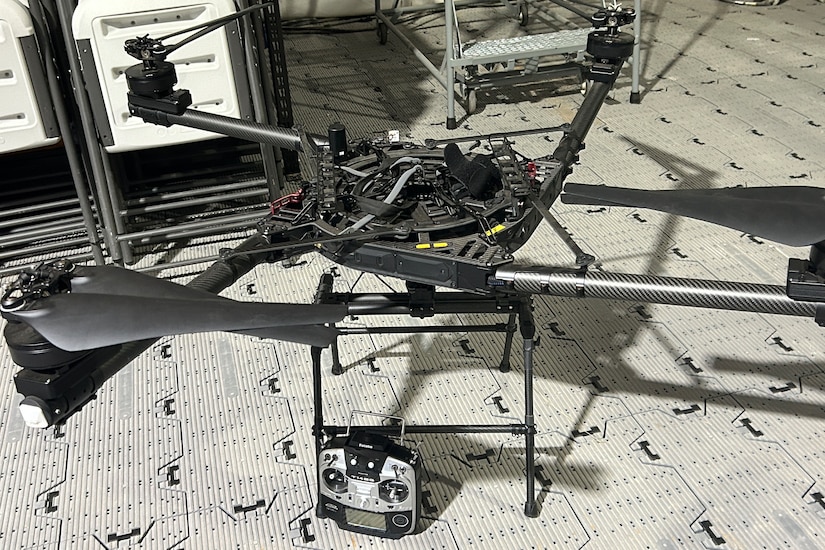
A quadcopter drone sits on the floor.

Alta X:  

The IF1200's larger counterpart, the Alta X, is the school's largest quadcopter, even though it's significantly quieter than the JCU's other drones. The all-electric Alta X is also mostly used for detection and can carry up to 40 pounds. It flies best when it's got a heavy payload. The Alta X can fold down to half its size in 20 seconds and can accommodate many sensors and third-party payloads, such as EO/IR, mapping and LiDAR. 
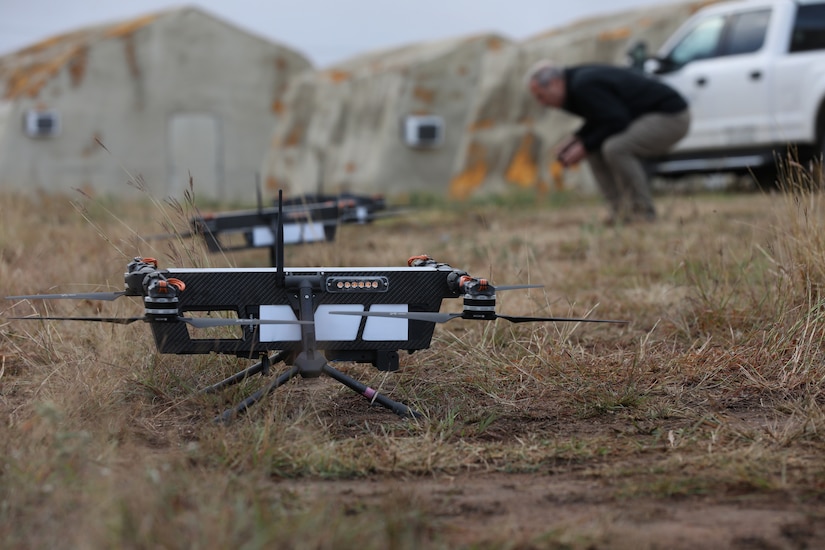
A small quadcopter drone sits on grass. In the background, another drone sits, and a man bends over to look at it.

TSM-800:  

Produced by the Army Threat Systems Management Office, this drone is designed for threat simulation and is capable of swarming up to 150 systems from a single ground control station. Each drone can carry a payload of 8 pounds. Three bomblets can be carried per drone. It is Wi-Fi compatible or can be used on a private LTE tower, Cameron said.  
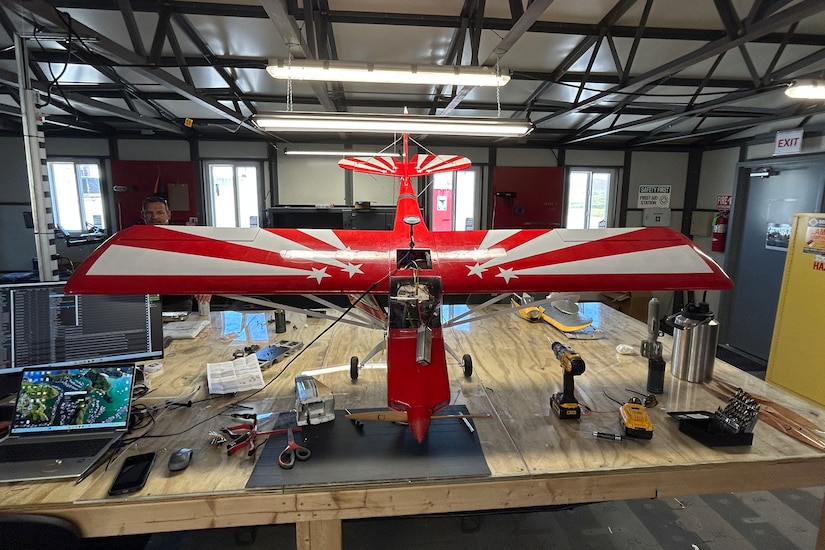
A large drone that looks like a small airplane sits atop a wooden table.
 

Super Decathlon: 

The "Super D" is a larger aircraft that has a gas engine and can be used for autopilot and manual missions. It's primarily used for detection and identification in the JCU's operator's course, as well as for loitering munition demonstrations for the planner's course. 

If an enemy tries to electronically jam it while it's on autopilot, the Super D can still fly through that area without being affected, Cameron said. It's completely autonomous, can carry large payloads over long distances, and can fly up to 70 miles. Cameron said it's great for student practice because its size makes it easier to find on radar signatures.  
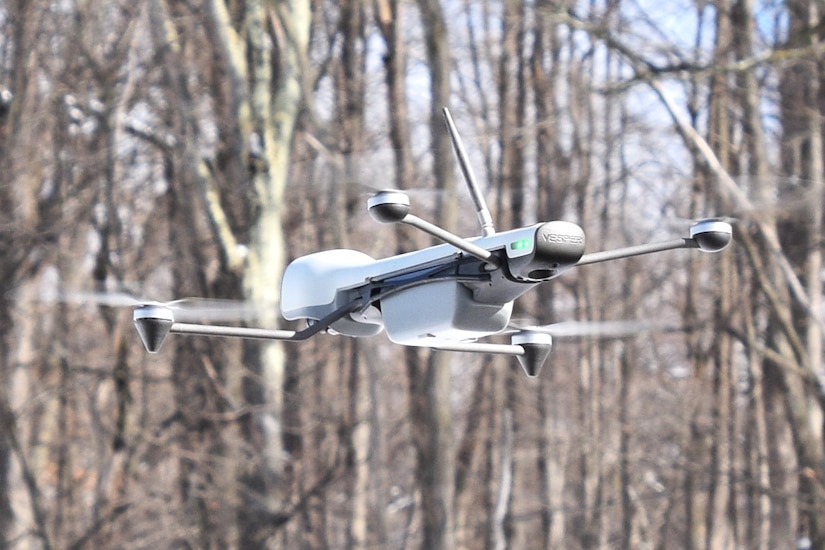
A quadcopter drone flies in the air amid a backdrop of leafless trees.

Vesper:  

The small Vesper quadcopter provides intelligence, surveillance and reconnaissance. At 2.2 pounds, it's light and easily portable. It has an EO/IR camera and can top out at 45 mph for about 50 minutes of flight time. It has low-light capabilities, extended endurance and stealth capabilities.  
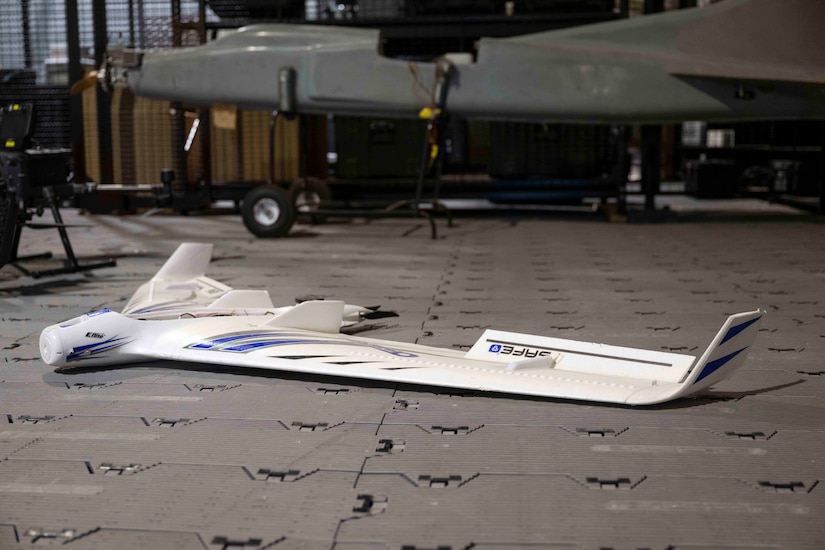
A small, white drone sits on the floor. A larger drone sits on wheels in the background.

Opterra:  

The lightweight Opterra has multiple camera mounting stations and is predominantly used as a target drone. 

"The Opterra is outstanding for being shot at because it's foam, and bullets will pass straight through it unless you hit specific small components on it, like the engine itself," explained Army Maj. Dennis "Chip" Stanford, JCU's executive officer. "It can be shot a lot." 

The JCU also teaches students on the CarbonCub, Skywalker X8, Vector-Scorpion, Osprey, IF 800 and the JTAC24, a JCU-designed and 3D printed target drone, as well as a few others.  

U.S. Army Europe, Africa Launches First Drone Warfighter Competition

Ten teams are competing in the inaugural U.S. Army Europe and Africa Best Drone Warfighter Competition at the 7th Army Training Command's Grafenwoehr Training Area, Germany, Dec. 8-10.

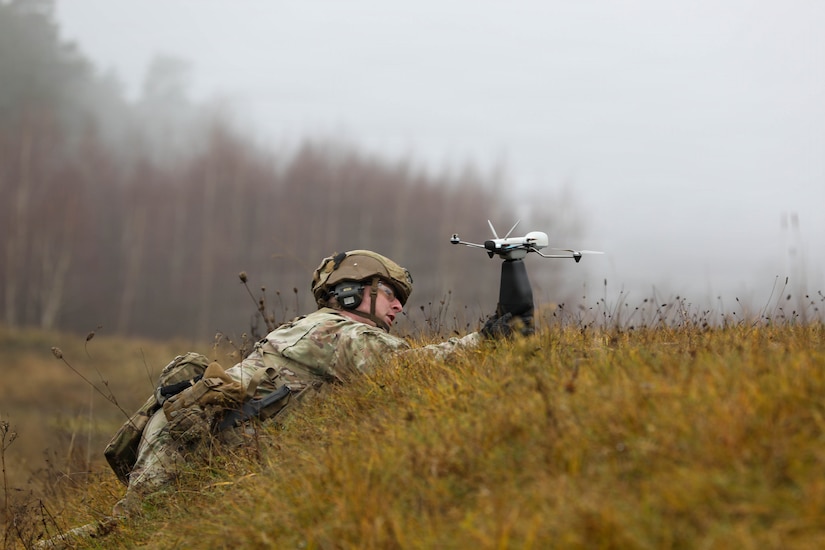
A soldier wearing a camouflage military uniform lies in a grassy field and prepares to launch a small drone on a cloudy day.

The multinational competition is designed to test and showcase unmanned aerial system operator capabilities and to serve as a visible culmination of experimentation, readiness and transformational warfighting initiatives, ensuring that participating U.S., allied and partner soldiers are trained, tested and ready to deploy modern UAS capabilities in complex operational environments. 

"It's pretty exceptional that although we're competing, we're friends, we're partners, we're allies," said Army Brig. Gen. Terry Tillis, 7ATC commander, during the opening ceremony.

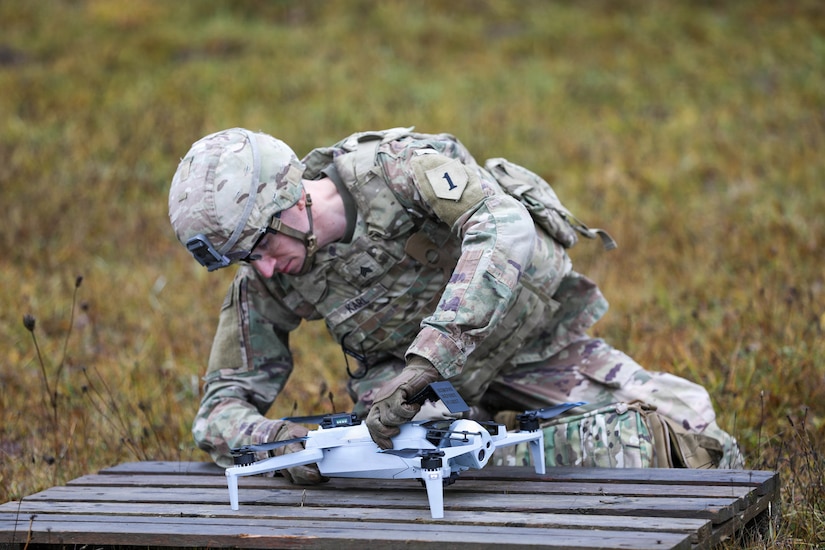
A soldier wearing a camouflage military uniform steadies a small drone on a wooden table outside and prepares it for launch.

"There's a larger picture," Tillis added. "It's not just about flying UAS. It's about utilizing the UAS as integrated enablers to achieve desired effects. It's about UAS facilitating the combined arms maneuvers of our ground forces into a position of advantage so they can seize and hold terrain." 

Army units permanently stationed in Europe and competing in the drone warfighter competition include the 1st Battalion, 4th Infantry Regiment, Joint Multinational Readiness Center, 7ATC; 173rd Infantry Brigade Combat Team, U.S. Army Southern European Task Force, Africa; 2nd Cavalry Regiment, V Corps; and 5th Battalion, 4th Air Defense Artillery, 52nd Air Defense Artillery Brigade, 10th Army Air and Missile Defense Command.

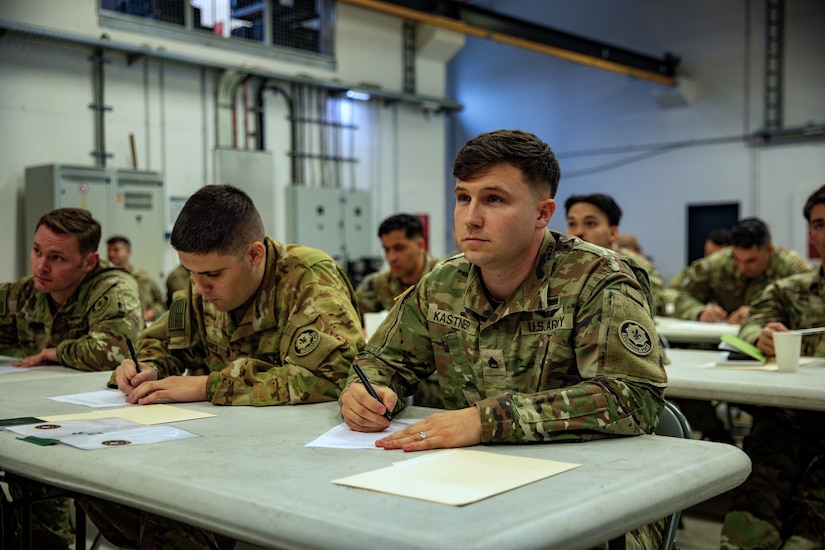
Three soldiers in camouflage military uniforms write on pieces of paper while seated at a table. Several other soldiers in similar attire, doing the same thing, are seated at a table in the background.

Other units rotationally deployed to the European theater under V Corps that are also competing include the 1st Armored Brigade Combat Team, 1st Infantry Division; 3rd Brigade Combat Team, 1st Cavalry Division; and 3rd Combat Aviation Brigade, 3rd Infantry Division. 

International teams from Italy and Spain are also competing. Each team has two to six soldiers, including a short-range reconnaissance drone team and a first-person-view drone team. 

Teams are scored over three days of graded activities, including a written UAS knowledge exam and two training scenarios conducted on a variety of soldier skills within a time limit. 

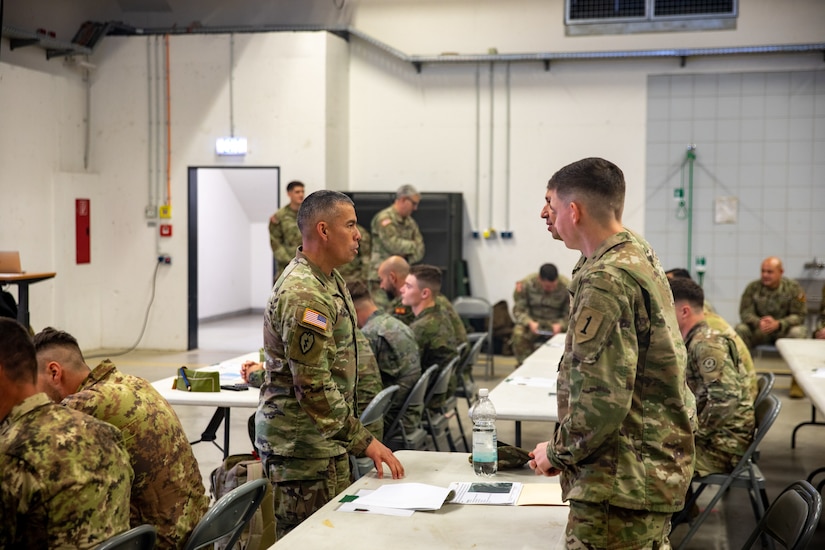
A soldier in a camouflage military uniform stands in front of a table while talking to two soldiers in similar attire standing across from him. Several other people in similar attire are seated at tables around the room.

One area focuses on their tactical abilities to carry out an aerial reconnaissance and a strike mission using a variety of small UAS platforms against an enemy force in an urban environment, including establishing camouflage and security. 

The second scenario tests aerial land navigation, accuracy and maneuverability of a first-person-view drone through an obstacle course to clear and secure a trench, as well as team cohesion and decision-making during a call-for-fire mission. 

Teams are using a variety of issued and self-built drones. 

The top Army team will be announced at the end of the competition and go on to compete in the 2026 Army Best Drone Warfighter Competition.

Operation Christmas Drop: DOW's Longest-Running Humanitarian Mission in Pacific

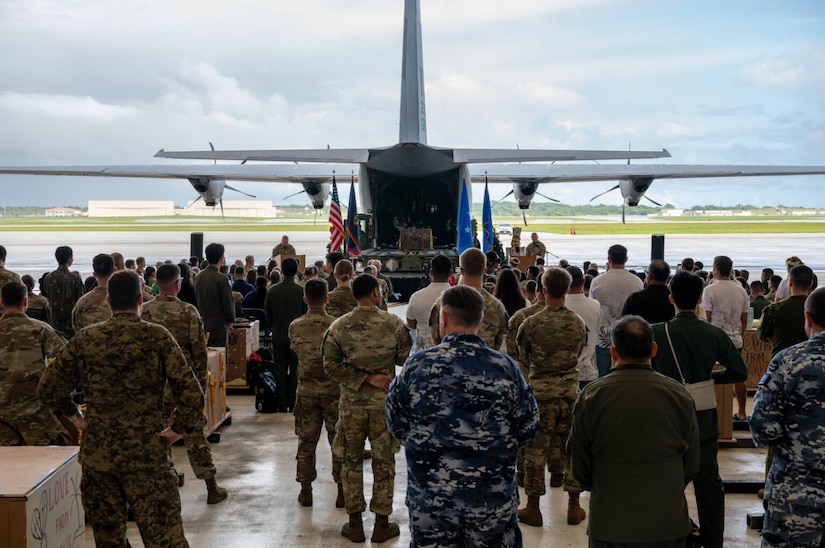
Leaders from the U.S. Air Force, partnering nations and community members gathered for a traditional "push ceremony," marking the official beginning of Operation Christmas Drop 2025 at Andersen Air Force Base, Guam, Dec. 8, 2025.

A group of service members and civilians stand behind an open military aircraft in a hangar.
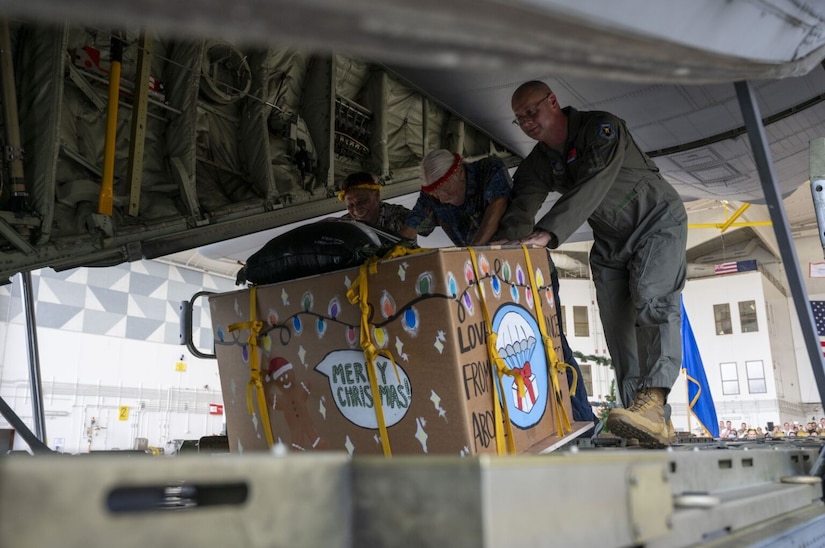
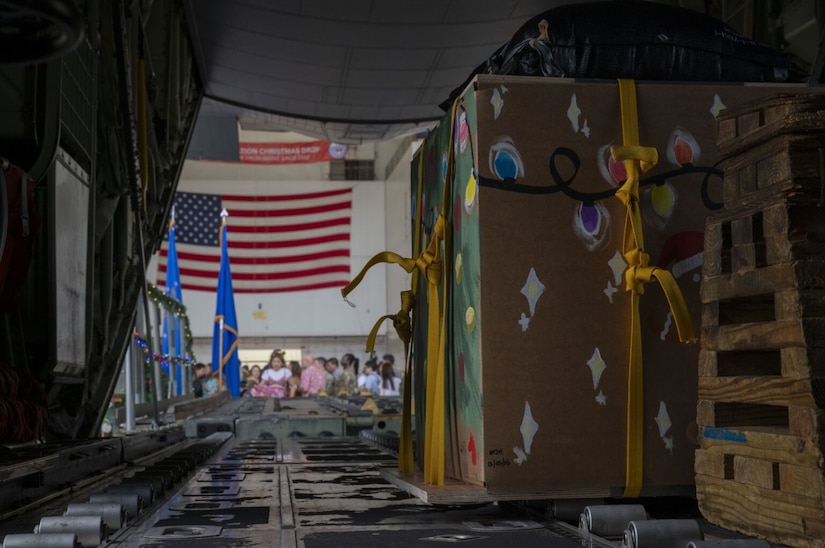
Three men push a large box down the back of a military aircraft.
The event served as the symbolic opening for the 74th iteration of the operation, the War Department's longest-running humanitarian airlift mission. It began in 1952 after an Air Force B-29 crew flying near Guam spotted islanders waving from below and dropped supplies as an act of goodwill.
 
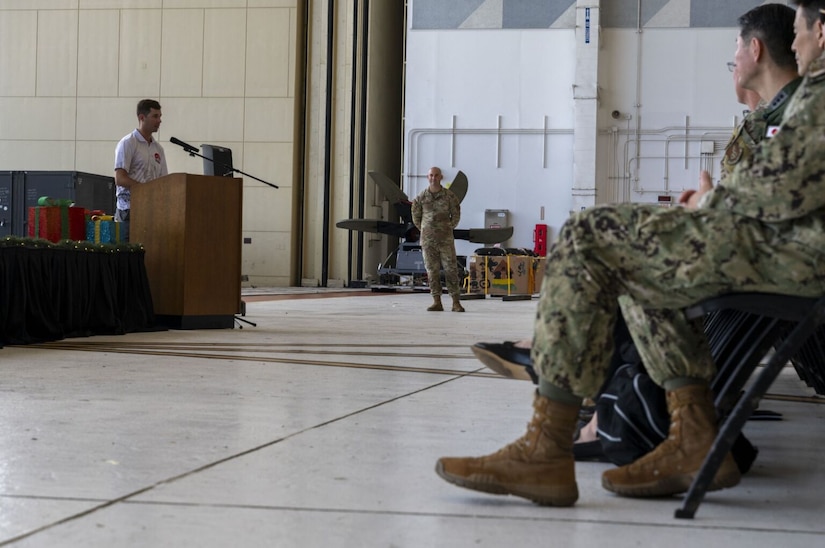
"Operation Christmas Drop delivers more than just supplies," said Aren Palik, vice president of the Federated States of Micronesia. "It delivers hope, connection and the reassurance that even across a vast ocean, we remain part of one family. It is an accomplishment that speaks to the steadfast commitment of the United States and its Pacific partners to care for our people and our communities."

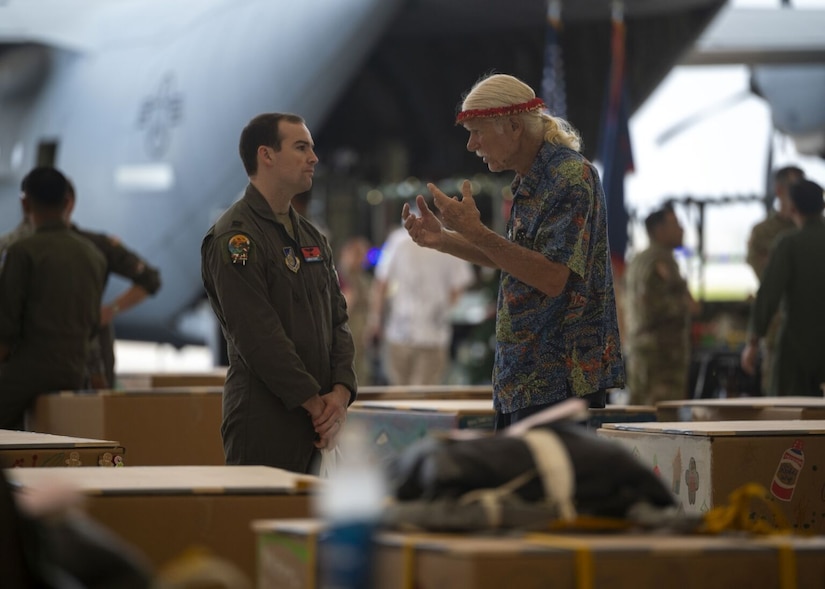
Two men, one a service member and the other a civilian, chat amongst a sea of supply boxes in an aircraft hangar. A military aircraft is in the background.

 
The ceremony concluded with Palik, Bruce Best — known at Operation Christmas Drop as "Brother Bruce" — and Air Force Col. Richard McElhaney, 374th Airlift Wing commander, loading the first official bundle into the cargo bay of a C-130J Super Hercules assigned to the 36th Airlift Squadron, operating under the 374th Expeditionary Wing.
 
"These bundles supply 56,000 people across 59 islands each year, but I don't think we can truly grasp that impact until we see the families wave and jump up and down in excitement as we fly by," McElhaney said. "While this is an amazing humanitarian mission, it's also an invaluable training event for participating aircrews. This training, and the work we do here, matters and translates to our readiness."

A man stands at a lectern and gives a speech to a seated crowd of civilians and service members inside an aircraft hangar.
Large boxes sit inside the back of a military aircraft.
Throughout the remainder of the operation, the Air Force and partnering nations will airdrop a total of 270 bundles filled with critical supplies to remote communities across the Pacific, delivering humanitarian assistance while simultaneously conducting valuable low-level flight, precision-airdrop and logistical coordination training — skills that strengthen the ability to execute rapid global airlift missions across the Indo-Pacific region.
 
"The people of the Federated States of Micronesia extend our deepest gratitude," Palik said. "Beyond the food, tools, fishing gear, school supplies and gifts, you deliver something far more valuable: the spirit of compassion that defines this Christmas season." 

Monday, December 08, 2025

Medal of Honor Monday: Army Sgt. Ray McKibben

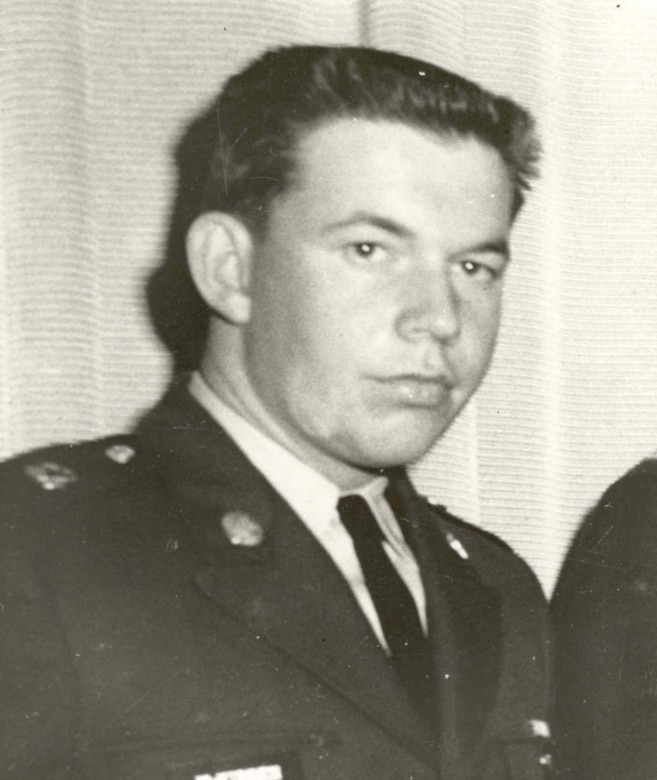
On his third deployment to Vietnam, Army Sgt. Ray McKibben went after the enemy on numerous occasions when his unit was unable to do so themselves. McKibben didn't survive his tour of duty, but his courage and dedication to the mission led him to receive a posthumous Medal of Honor. 

A man in a military dress uniform looks stoic for a photo.

McKibben was born Oct. 27, 1946, in Felton, Georgia, to Albert and Dottie McKibben. He had an older brother named AJ.

Little has been published about McKibben's childhood, but he attended Buchanan High School before following in his brother's footsteps by joining the Army in the early 1960s.

According to a 1970 article in The Atlanta Constitution newspaper, McKibben had been in the Army for five years and was on his third tour of duty in Vietnam when he gave his life to save his comrades.

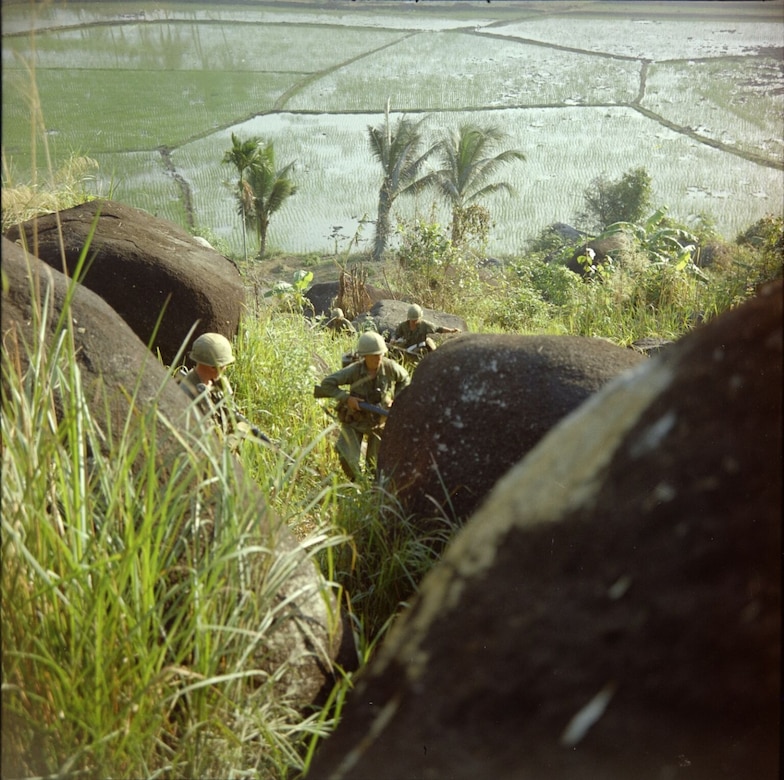
On Dec. 8, 1968, McKibben led a unit at the head of a reconnaissance patrol of Troop B of the 7th Squadron, 17th Cavalry Regiment, 1st Aviation Brigade. They were in enemy territory near Song Mao in southeast Vietnam, where the U.S. Army had a base.

As McKibben led his team along a well-traveled trail, they came under heavy automatic-weapons fire from a fortified bunker, forcing them to take cover. McKibben appraised the situation before charging through bamboo and heavy brush toward the position, killing its gunner and securing the weapon before directing his patrol to keep moving forward.

Men in combat gear move up a rocky, grassy slope.

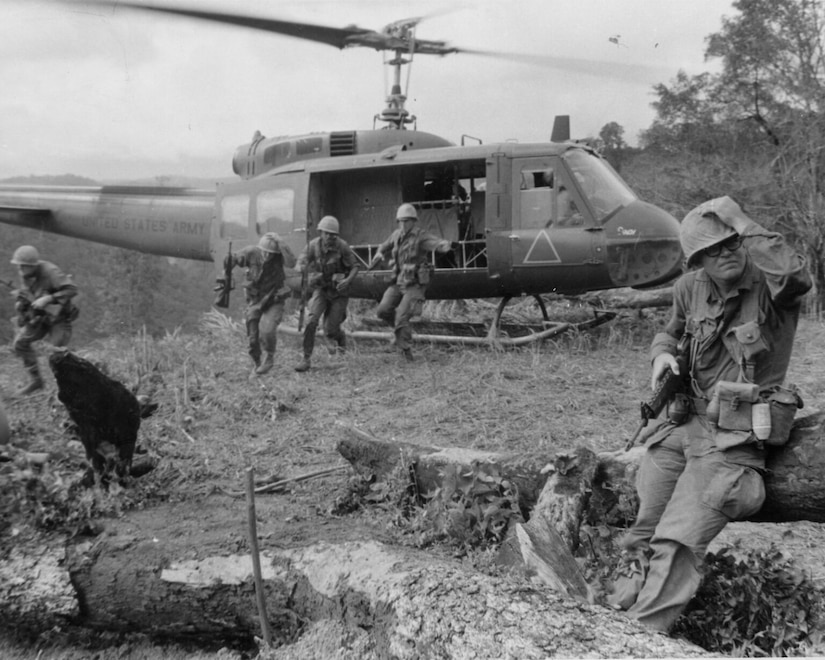
As his men continued on, McKibben noticed enemy movement to the patrol's flank. He quickly called in a helicopter gunship for close-air support to neutralize the threat.

When the patrol rounded the bend of a river, they were hit by heavier automatic-weapons fire, this time from camouflage bunkers. When one soldier fell wounded, McKibben ignored the intense gunfire all around him and ran to the man's side, pulling him to safety behind a rock before giving the soldier rudimentary first aid.

McKibben then noticed more of his fellow soldiers were pinned down and unable to take out the enemy bunkers. So, he went on a one-man mission to take them out himself. McKibben charged through the brush amid a hail of gunfire to get to the first bunker, where he killed the enemy inside with his rifle before securing its weapon.

McKibben then charged the next bunker, using his rifle and the captured enemy gun as he went. When both weapons ran out of ammunition, he finished the bunker off with hand grenades.

Reloading his rifle, McKibben provided cover for his fellow soldiers as they continued moving. When he noticed yet another bunker blocking their advance, he once again took it upon himself to assault the position.

Sadly, his luck had run out. As McKibben got close, he was hit by gunfire and didn't survive. However, he was able to shoot one final burst from his weapon, once again killing the enemy inside.

Four men wearing military combat gear move away from a helicopter hovering just off the ground. In the forefront, another man in similar attire sits on a log.

McKibben's courage and commitment helped save the lives of his fellow soldiers and allowed them to finish their mission.

On April 7, 1970, McKibben's widow, Anna, received the Medal of Honor on his behalf from President Richard M. Nixon during a White House ceremony. Twenty other fallen Vietnam soldiers also received the nation's highest medal for valor that day.

McKibben is buried at the Center Baptist Cemetery in his Georgia hometown, where he has not been forgotten. A portion of Highway 120 near where he grew up was renamed in his honor in the 1990s.

The military continues to honor his sacrifice as well. In 1984, a renovated building was renamed McKibben Hall at the now-closed Fort Gillem, Georgia. In 2008, the 7th Squadron that he was once a part of dedicated a conference center and a memorial to him at the unit's new headquarters at Fort Campbell, Kentucky. 

Friday, December 05, 2025

Marine Corps Magazine Outlines History, Trends, Future

The Marine Corps, founded Nov. 10, 1775, marked its 250th birthday by publishing a comprehensive magazine introducing readers to foundational knowledge of the service branch.

A profile view of a Marine wearing a helmet.

Designed for Marines of all ranks, service members from other branches, civilians and anyone interested in gaining a clear understanding of the Marine Corps, the magazine highlights the service's history, structure and global presence. It opens with an accessible overview of the mission and major campaigns and battles — tracing the evolution of Marine Corps warfighting from its origins to modern-day operations.

It examines the Marine Corps' worldwide network of bases and installations, illustrating how forward-deployed forces enable rapid responses and sustained readiness. Readers are guided through the Marine Corps rank structure and organizational framework, which offer insights into how Marines are trained, led and employed across the Fleet Marine Force.

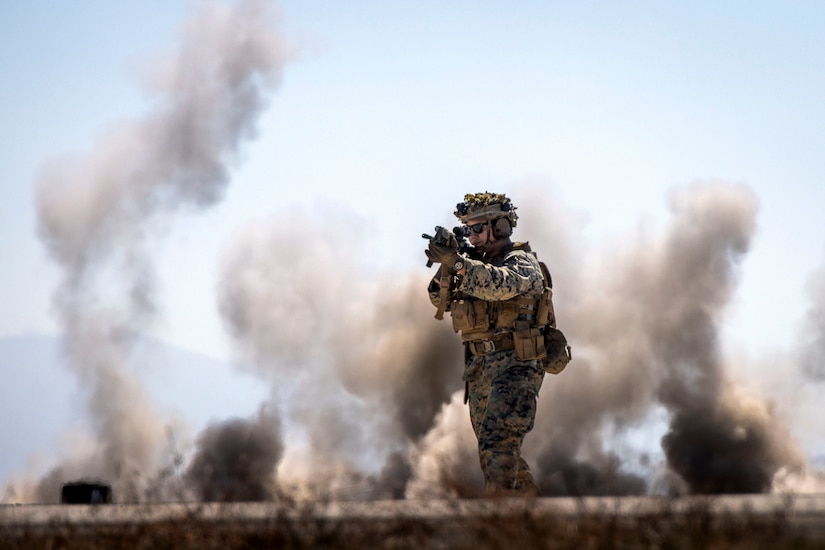
A Marine in tactical gear stands in front of columns of smoke during the day and aims a service weapon.

The magazine also reflects current Marine Corps demographic trends, showcasing how roughly 200,000 Marines serve today, as well as the path forward outlined by Gen. Eric M. Smith, the 39th commandant of the Marine Corps.

18th Wing Airmen Strengthen Kadena Air Base's Foundation for Airpower

Airmen assigned to the 18th Operations Support Squadron and the 18th Civil Engineer Squadron are teaming up to tackle one of Kadena Air Base's most ambitious airfield repair projects of the year in Okinawa, Japan. The project will strengthen the flight line that keeps airpower moving across the Indo-Pacific. 

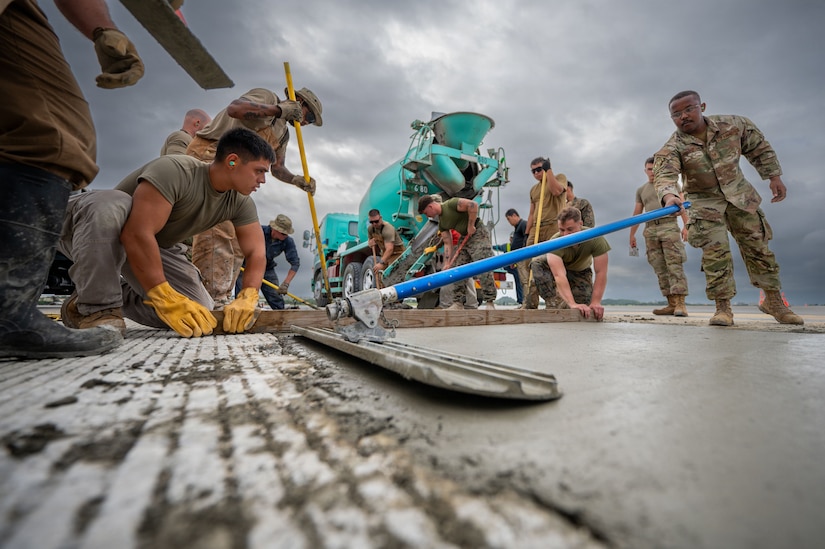
Airmen dressed in military camouflage uniforms spread concrete on a runway.

The joint effort brings together airfield management and engineering specialists to replace worn pavement and upgrade vital runway sections, a job typically reserved for contracted construction crews. This time, the entire project is being completed in-house. 

"From the moment the first truck arrived, our team had to be precise," said Air Force Master Sgt. Maria Atondo, 18th OSS airfield management supervisor. "Every minute matters when you're working with materials that set fast. The planning, timing and teamwork have been outstanding." 

The operation requires careful coordination between airmen managing aircraft operations and those handling heavy equipment on the ground: balancing mission demands with safety and precision. 

"Asphalt and concrete work demand accuracy," said Air Force Master Sgt. Brock Butshke, 18th CES pavements and equipment section chief. "Every step impacts the runway's performance. Our goal is to make sure it's strong, smooth and ready for anything the mission requires." 

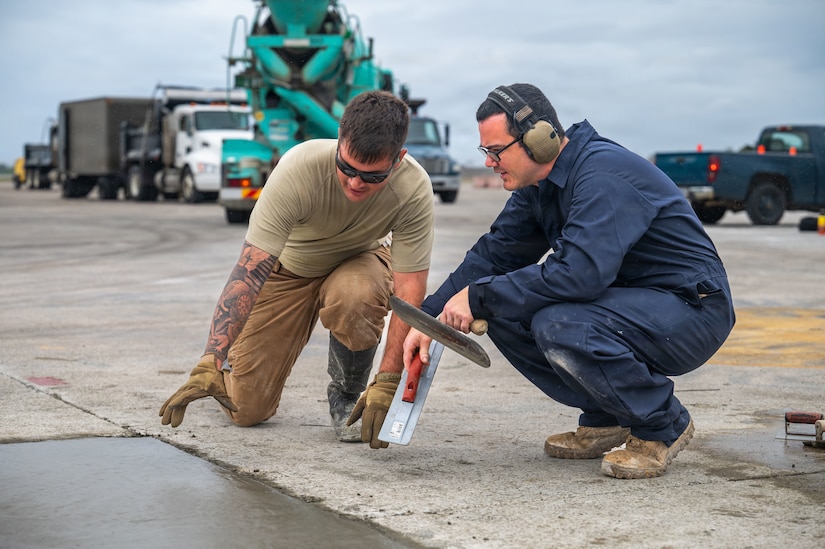
A man on the left wearing sunglasses, a tan T-shirt and pants, and rubber boots kneels next to a freshly poured patch of concrete while speaking to a man to his right who is also kneeling and wearing blue coveralls, hearing protection and glasses.

Once complete, the improved runway will enhance long-term durability and reduce the need for future repairs — ensuring Kadena Air Base remains a critical launch point for Air Force operations throughout the region. 

"It's been a challenge, but our airmen are proving once again they can deliver results," Atondo said. "When this project wraps up, we'll know that every inch of this runway was built by the hands of our own team." 

This collaboration highlights the base's commitment to maintaining mission readiness and the 18th Wing's ability to innovate and sustain airpower from the ground up. 

Air Force Celebrates 75 Years of Honor Guard Drill Team Excellence

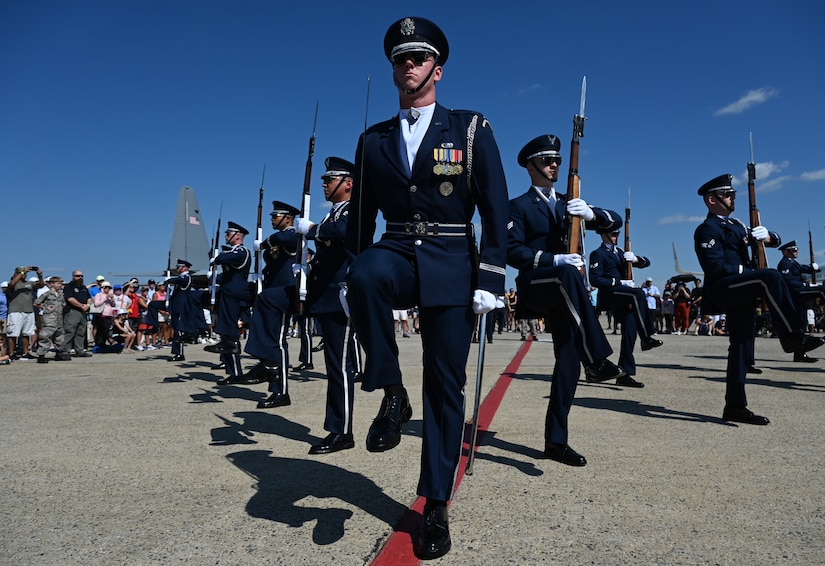
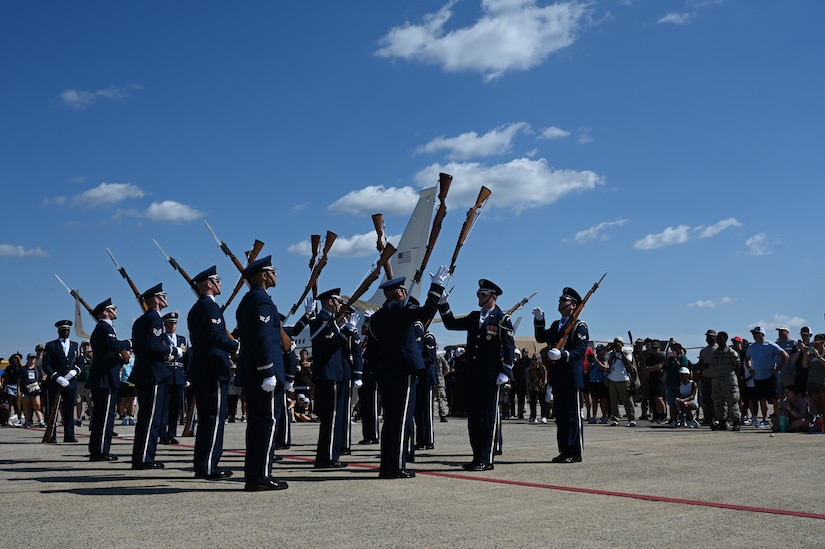
For 75 years, the U.S. Air Force Honor Guard Drill Team has represented the discipline, precision and professionalism of the service to audiences around the world. 
 
Founded in 1950 to perform ceremonial honors in the National Capital Region, today the drill team operates from Joint Base Anacostia-Bolling, Washington, and performs more than 100 exhibitions each year across the globe. 
 
The team's legacy of precision has been built by seven and a half decades of airmen who refined every crisp movement to reflect the Air Force's commitment to excellence.

Airmen dressed in honor guard uniforms perform in a letter V formation. Several of the service members are holding rifles. There are people in casual attire observing in the background.

 
"We have been the living embodiment of that commitment," said Air Force Capt. Andrew Paquin, honor guard flight commander of ceremonial operations. "The core theme has been the same since the beginning. It's the relentless pursuit of perfection." 
 
Each member trains full time to master the team's seven-minute routine. Behind every public performance are thousands of hours of repetition and technical correction. 
 
"We break down every movement into its smallest components until the sequence becomes muscle memory," Paquin said. 
 
That dedication to excellence was evident during the 2025 Royal Edinburgh Military Tattoo in Scotland, where the team performed alongside international partners during driving rain and heavy winds. 
 
"Seeing the team perform in those conditions was a reminder of their resilience and ability to adapt and push through discomfort," Paquin said. "Being there on the ground with them created a bond built on mutual trust." 
 
That standard of excellence extends to mentorship and development within the team.  
 
"The main mission [of the honor guard] is to honor the individuals being buried at Arlington [National Cemetery]," said Air Force Senior Airman Richard Miles, honor guard drill team trainer. "Drill is the traveling component of that mission, the part that connects the public to who we are and what we represent." 
 
Miles wanted to join the unit after seeing a drill team performance during his time in Air Force technical training. After he was accepted, he spent more than a year working to become a trainer. 

Airmen dressed in honor guard uniforms pass their rifles to each other during a performance on a tarmac. There are people in casual attire observing in the background.

 
"I failed my first evaluation," he said. "I passed my second and from then on spent a lot of extra hours practicing by myself after group training ended." 
 
The extra hours he spent training paid off when he earned the position of drill team trainer and that perseverance now guides how he trains others. 

 
"We have a big-brother, big-sister program, where experienced drillers mentor new members," Miles said. "As a trainer, the best part is seeing people accomplish what they once thought they couldn't. It's about being a hands-on leader who sets the tone for excellence." 
 
The perfection that audiences see during drill team performances directly reflects the accountability and trust built in training. 
 
"We train to perform under fatigue, stress and pressure, because that's where excellence becomes habit," Paquin said. 
 
That high standard is recognized by symbols on each member's white ascot; the most advanced level of competency is represented by two stars. 
 
"The stars represent the best of the best," Miles said. "You can't earn them through just drills. You have to be the airman that leadership knows they can rely on, no matter what." 
 
While the uniforms, movements and routines have undergone changes during the 75-year history, the mission to represent the Air Force with honor remains steadfast. 

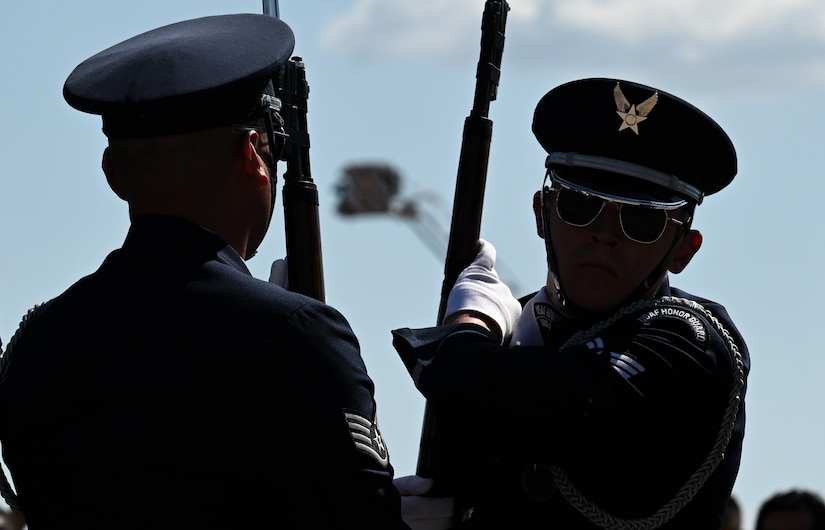
Two Airmen dressed in honor guard uniforms hold rifles while performing.

 
"When the team arrives at a performance, they're impressive, but the real magic happens afterward with the crowd interaction," Paquin said. "People see that the airmen behind the uniforms are young men and women from towns just like theirs. That's what builds trust with the American public." 
 
In an age of rapidly evolving technology, the human element is what continues to keep the drill team relevant. As the team looks ahead to its next major milestone, a centennial in 2050, Paquin said the focus will stay the same. 
 
"The Air Force Honor Guard Drill Team is needed now more than ever," he said. "It humanizes the Air Force mission, builds trust with the American public, and inspires future generations." 

Hegseth Presents Purple Heart to Soldier, Emphasizes Honoring Heroes

Secretary of War Pete Hegseth presented a soldier with the esteemed Purple Heart during a brief ceremony attended by just under two dozen service members and civilians in an aircraft hangar at the Dominican Republic's San Ysidro Air Base, Nov. 27.

A man in civilian attire pins a medal on a woman in a camouflage military uniform inside an aircraft hangar. The Secretary of War flag is next to the woman, and the nose of a fighter aircraft is in the background.

Army Master Sgt. Amy Vreeland qualified for the award as a result of a mild traumatic brain injury she suffered while deployed to Afghanistan in 2019. However, an administrative backlog resulted in her not receiving the award until January 2023 — roughly three and a half years after she sustained her injury. 

To make matters worse, the award was mailed to her instead of being presented.  

Prior to pinning the Purple Heart on Vreeland, Hegseth made clear that such stories are very relatable to him.  

He then spoke about an Army infantry leader of his in Iraq years earlier who, despite having shown great bravery and valor in combat, received his award — a Silver Star — in the mail, much like Vreeland. 

"And I remember how much that kind of stung him. … And it stuck with me," Hegseth said. 

He then explained that, since assuming the top leadership role at the Pentagon in January, his philosophy is that all awards based on valor should be presented in person, regardless of the unit the awardee is attached to or where in the world they are stationed.

A man in civilian attire and a woman in a camouflage military uniform stand inside an aircraft hangar holding an award certificate. The American flag and the Secretary of War flag are behind them

"Wherever you are, someone [should take] the time. It doesn't have to be a big ceremony; it could be something intimate like this," Hegseth said, noting that what's most important is that commands take the time to "recognize heroism [and] recognize excellence" in person.  

"Thank you, sir, for being here today; it's truly an honor that you have … taken your Thanksgiving to be here," Vreeland told Hegseth after he presented her with the Purple Heart. "I am truly humbled that you would take time out of your day to come here and recognize me. Thank you very much."   

Hegseth noted that the origin of the decoration — the oldest military device still given to military members — dates back to George Washington and the Revolutionary War. 

"So, it's as old as our country," Hegseth said of the Purple Heart, before reemphasizing the importance of presenting the decoration to Vreeland in person. 

"And I hope you'll do the same in your units," he told those in attendance. 

Vreeland continues to serve on active duty after 20 years of service despite ongoing complications from her injury. 

Hegseth Directs Task Force to Oversee Department-Wide Barracks Improvement

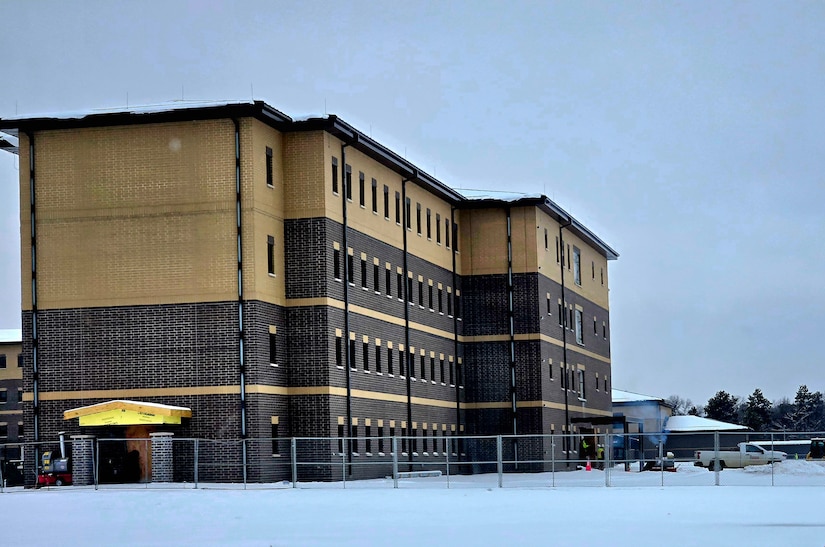
Secretary of War Pete Hegseth directed in an Oct. 6 memorandum that a barracks task force be stood up to develop a departmentwide investment plan for barracks improvements and report its progress to him within 30 days. 

A four-story two-tone barrack is shown with snow on the ground.

"For far too long, this department has failed too many of our warfighters. Every member of our joint force deserves housing that is clean, comfortable and safe," he said in a Nov. 25 video posted to department social media sites. 

Too often, barracks are shabby and without basic modern amenities, Hegseth said. 

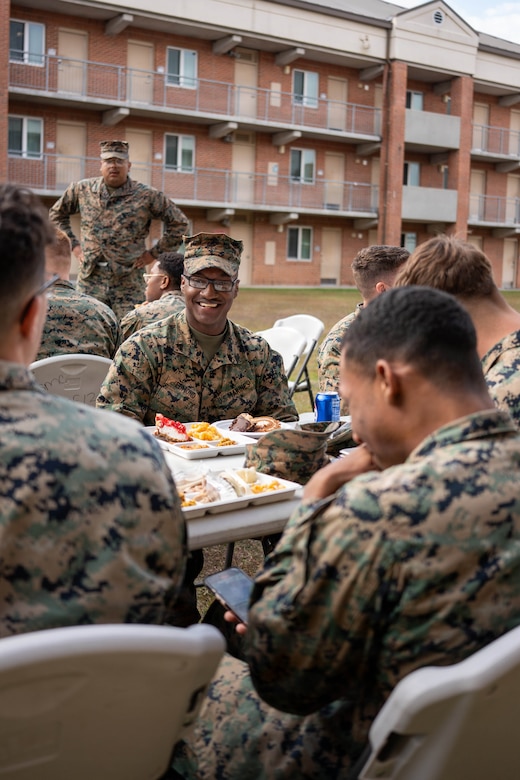
Troops in camouflage uniforms are seated at a table eating outside in front of a building.

"But this isn't just about creature comforts. This impacts morale, readiness and our ability to recruit and retain the best warriors. Quality of life for our warriors is a critical component of reviving the warrior ethos and rebuilding our military," he added.
Barracks are where warriors live, rest and recover, Hegseth said. 

"How can we expect them to be ready for anything on the battlefield when their own living space is a constant source of stress and frustration? That all ends now," the secretary said. 

The barracks task force includes representatives from across the War Department, including experts in contracting, leaders from military installations, and experts in personnel, readiness and finance. 

Hegseth expects the task force to deliver results and cut through the bureaucracy to bring immediate solutions, as well as a long-term plan to keep barracks at the standard warriors deserve. 

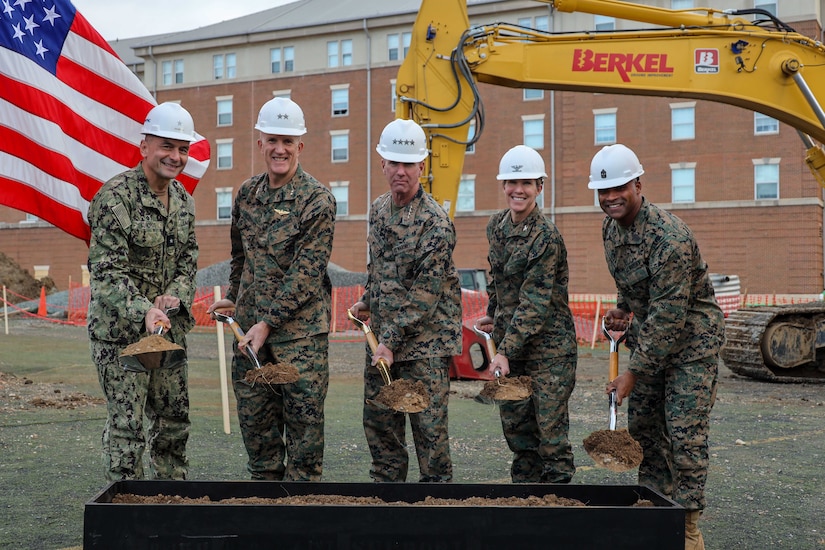
Five troops in camouflage uniforms and white hardhats smile as they hold shovels of dirt.

"No delays, no excuses, and no more business as usual. The standards will be enforced, and accountability will be nonnegotiable. This is not just another study over the course of years," he said. Items the task force will expedite include, he said.

  • Leverage the expertise of private industry to deliver innovative technologies and contracting strategies that accelerate construction and renovation.  
  • Consolidating, when possible, contracts for maintenance, services and equipment.  
  • Empowering unit commanders and senior enlisted leaders to fix issues at their level without having to wait on Pentagon bureaucracy. 
  • Working across the federal government to gather even more tools that will help ensure this happens quickly.  
  • Working with the Office of Management and Budget on new solutions to renovate and maintain barracks to the standards that warriors deserve. 
  • Where possible, using the kinds of rapid processes found in the private industry. 

The Office of Acquisition and Sustainment; Office of Energy, Installations and Environment; Office of Personnel and Readiness and others are involved in planning and execution of the secretary's directive.  

Tuesday, December 02, 2025

NY National Guard Volunteers Give Lift to Trees for Troops

Seven New York National Guard soldiers and airmen joined local veterans Dec. 1 to load 150 Christmas trees onto a truck at Ellms Family Christmas Tree Farm in Ballston Spa, New York. 

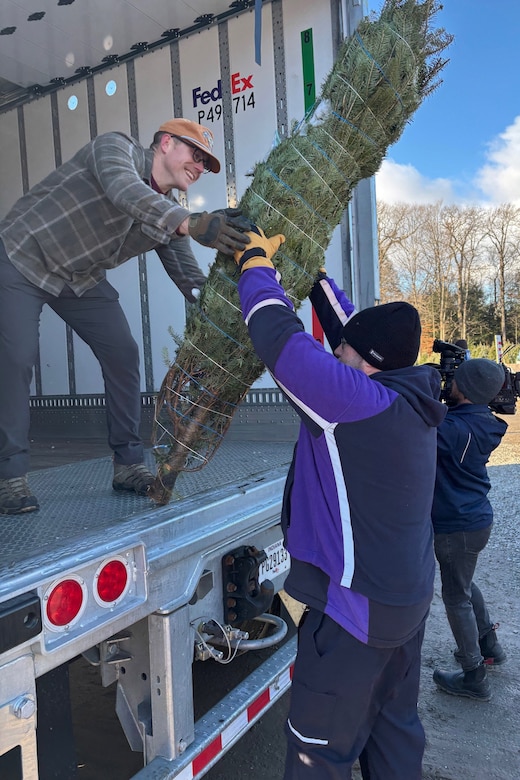
A man, standing in the back of a delivery truck, hands a tree to another man.
This was the 21st year that tree farmers in the area donated to the Trees for Troops program. The donated trees are destined for service members and their families around the country. 
 
This year, soldiers of the New York Army National Guard's 42nd Infantry Division Headquarters, based in Troy, New York, and the Air National Guard's 109th Airlift Wing, Stratton Air National Guard Base, Scotia, New York, pitched in to help load the trees. 
 
Five hundred and fifty members of the 42nd Infantry Division are deployed to the Middle East and 200 airmen assigned to the 109th are deployed in support of Operation Deep Freeze, a National Science Foundation research mission in Antarctica. 
 
The volunteers made loading the trees easy, said Garth Ellms, owner of the Ellms Family Farm. 

Two men unload a tree from a delivery truck.
"We have a lot of troops that come in and so they work fast," Ellms said. "FedEx handles actually all the trucking of the trees for free throughout the entire country." 
 
For some volunteers, showing up was a way to pay back for receiving trees in the past. 
 
"The first time I did it, it was in 2021, and it was a great experience," said New York Air National Guard Staff Sgt. Mitchell Mihalko, a recruiter assigned to the 109th Airlift Wing. "How could I say no to an opportunity like this?" 
 
"2022, the winter of that holiday season, I was deployed, [and] I received a tree while I was deployed," Mihalko said. "So, to be on both ends of the spectrum, to see the start and the finished product, it made me feel like I had a duty to come back and to return the favor." 

Three men unload trees from a delivery truck.
In New York, trees will be delivered in December to military families at Fort Drum, West Point, the Niagara Falls Air Reserve Station and the U.S. Coast Guard Sector in New York City, along with other deliveries to 88 other military sites around the country. 
 
Fresh-cut Christmas trees are gathered at regional farms and retail lots, then picked up and processed through distribution centers for delivery to military bases. 
 
The movement and the morning load out of trees included members of the FedEx shipping team who volunteered to be part of the Trees for Troops event. 
 
Getting an opportunity to sign up for the event was easy for Mark Burby, a FedEx employee who said he has volunteered to be on the load-out team five times. 
 
"I'm a veteran, and I'm the senior guy," Burby said. "It's about helping out other vets." 

A man, standing in the back of a delivery truck, hands a small tree to a woman.
Since 2005, Trees for Troops has provided 326,273 Christmas trees to military families and troops in the United States and overseas. 
 
Military volunteers from the National Guard turn out each year to load and unload the trees, knowing they will be delivered to other military families. 
 
It is a very satisfying feeling to be part of that, said Air National Guard Tech. Sgt. Elizabeth Felix. 
 
"I'm happy to be here; it's such an honor," Felix said. "This is great support for the troops and that's why I'm here to give my time." 
 
Trees are expected to be delivered to military bases next week for distribution.  

DOW Awards $55 Million Grant for Nathan F. Twining Elementary & Middle School at Grand Forks Air Force Base, North Dakota

The Department of War's Office of Local Defense Community Cooperation awarded Grand Force Air Force Base Public School District No. 140 a $55,249,082 grant as the federal share of a larger $69,061,352 project to construct a new Nathan F. Twining Elementary/Middle School at Grand Forks Air Force Base, North Dakota. 

This project will address facility capacity and condition deficiencies that placed Nathan F. Twining Elementary and Middle School at 70th on the 2019 Deputy Secretary of Defense "Public Schools on Military Installations Priority List" (Priority List).  Upon completion, 500 pre-kindergarten through eighth-grade students will be supported through the project.

Funding for this grant is provided under the Department's Public Schools on Military Installations Program.  In making these funds available, the Office of Local Defense Community Cooperation must give priority consideration to military installations that have schools with the most serious capacity and facility condition deficiencies, as determined by the Priority List. 

A multi-disciplined Federal Evaluation Team, with representatives from the Assistant Secretaries of the Air Force, Army, Navy, and the Office of Local Defense Community Cooperation reviewed the school project to ensure the award appropriately addresses the noted capacity and facility condition deficiencies.

In correcting the identified facility condition and capacity issues at the Nathan F. Twining Elementary and Middle School, this grant keeps faith with service members, improves the quality of education for defense-connected students, aids in the recruitment and retention of vital skills at Grand Forks Air Force Base, and enhances partnerships between the community and the installation.

Hurricane Hunters Wrap Up 2025 Season After Flying Into Three Category 5 Storms

The 2025 Atlantic hurricane season officially ended Nov. 30, closing another demanding chapter for the Air Force Reserve's 53rd Weather Reconnaissance Squadron, known as the Hurricane Hunters. 

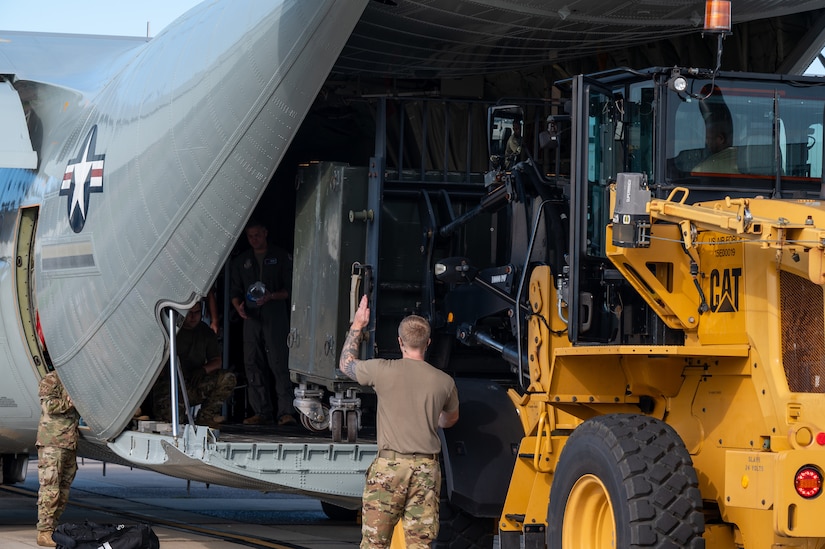
A man in a camouflage military uniform guides equipment from a forklift into the back of a military aircraft.

 
The squadron flew 927.9 hours this year across the Atlantic, eastern Pacific and central Pacific basins, collecting critical data that improved forecasts, saved lives and once again demonstrated the unit's no-fail mission. 
 
From their first flight into Hurricane Erick, June 18, to their final mission into Hurricane Melissa, Oct. 30, the 53rd WRS crews faced one of the most intense storm seasons in recent memory. This year's taskings included three Category 5 hurricanes and the second sub-900 millibar storm the squadron had flown into in as many years. 
 
The Hurricane Hunters kicked off the season when a WC-130J Super Hercules aircrew departed Keesler Air Force Base, Mississippi, for Hurricane Erick in the eastern Pacific. That marked the first operational flight of the 2025 season and the start of what forecasters predicted would be an active year for tropical systems. 

A graphic with numbers from the 2025 hurricane season is displayed over an image of tropical storms around the Caribbean and Atlantic Ocean.

 
"Our job is to fly directly into the storm and collect vital information such as wind speeds, pressure, temperature and humidity," said Air Force 1st Lt. Mark McCoy, 53rd WRS aerial reconnaissance weather officer. "While satellites provide a significant amount of information, the data we gather within the storm is unique and cannot be captured from space. That information helps the National Hurricane Center refine forecasts and gives people more time to prepare."
 
The squadron, assigned to the 403rd Wing, is the only War Department unit that flies into tropical systems to gather real-time atmospheric data. Using a fleet of 10 WC-130J Super Hercules aircraft, the squadron operates year-round and is prepared to support 24-hour operations during the peak of hurricane season. Data from its flights is transmitted in real time to the National Hurricane Center and shared with the National Oceanic and Atmospheric Administration, the Navy and other domestic and international forecasting agencies. 
 
"Every time we fly into a storm, we're collecting data that can directly impact how communities prepare and respond," said Air Force Lt. Col. Steve Burton, 53rd WRS director of operations and the deployed detachment commander. "We train all year for this. What we do helps save lives and property."
 
According to Warren Madden from the National Hurricane Center, the squadron's 2025 missions were defined not by quantity, but by intensity.

In the Atlantic basin, the squadron flew into Hurricanes Barry, Chantal, Erin, Fernand, Gabrielle, Humberto, Imelda, Jerry and Melissa, as well as an early August flight in the northern Gulf of America and another in late August near the Windward Islands. In the eastern Pacific, crews flew into Hurricanes Erick and Lorena, and in the central Pacific, they supported missions into Hurricane Kiko. 

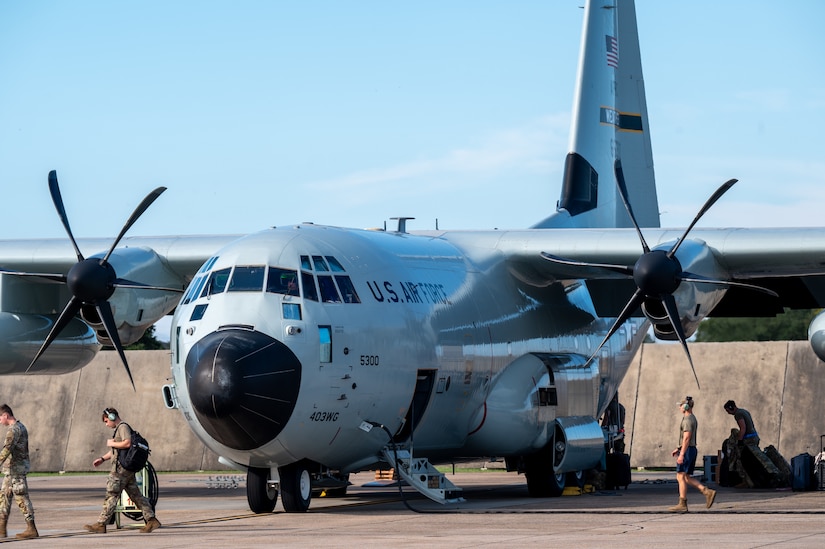
Several people in military camouflage uniforms walk around a large gray military aircraft sitting on a tarmac.

 
"What was unusual this year was the overall lack of activity in both the Gulf and in the Caribbean," Madden said. "We only flew one named storm in the Gulf — Barry — along with two northern Gulf [flights]. Chantal was the only system that produced direct wind impacts to the continental U.S., and Melissa was the only storm we flew in the Caribbean." 
 
What stood out was the strength of several storms. 
 
"Three of the systems — Erin, Humberto and Melissa — reached Category 5 strength, and Melissa became the second sub-900 millibar storm we've flown [into] in as many seasons," Madden said, referencing 2024's Hurricane Milton. "That level of intensity in consecutive years is rare."
 
The Hurricane Hunters' most demanding mission of 2025 came late in the season, when Tropical Storm Melissa rapidly intensified over the Caribbean. On Oct. 21, the 53rd WRS deployed aircraft to a forward operating location in Curaçao, positioning closer to the system as it strengthened into a Category 5 hurricane. Over a seven-day period, the squadron flew 17 missions and 170 flight hours into Melissa, conducting around-the-clock operations to support National Hurricane Center forecasts. 

An aerial view of the inside of a hurricane from a military aircraft, with a wall of clouds going around in a circle.

 
Flying Super Hercules aircraft at roughly 10,000 feet, the crews penetrated Melissa's eye two to four times per mission, releasing equipment that measured temperature, humidity, wind speed and direction, and barometric pressure from the aircraft down to the ocean surface. 
 
"That information was delivered directly to the National Hurricane Center to improve forecast accuracy as Melissa intensified," Burton said. 
 
The deployment took place during a federal government shutdown, which complicated travel, funding and coordination. 
 
"Despite the administrative hurdles, our Hurricane Hunters continued operations uninterrupted, ensuring forecasters received the critical data needed to protect lives," said Air Force Col. Jaret Fish, 403rd Wing commander. "Our airmen demonstrated the flexibility and dedication that make the reserve force vital to the nation's readiness." 
 
Burton said the shutdown only underscored the team's professionalism and focus. 
 
"Even with the challenges, our crews stayed focused," Burton said. "We knew communities were already feeling Melissa's impact. Every data point we gathered fed into forecasts that helped officials make lifesaving decisions. That's why we do this mission." 
 
Hurricane Melissa devastated the Caribbean with 185-mph winds, torrential rain and flooding, with Jamaica being the hardest hit and suffering widespread destruction and infrastructure failures. The United Nations and U.S. State Department estimate $6 billion to $7 billion in damage to Jamaica, deadly flooding and landslides in Haiti, coastal flooding in Cuba, and at least 90 deaths across the region, including 45 in Jamaica, where Melissa made landfall near New Hope, Oct. 28. 
 
By staging out of Curaçao, the Hurricane Hunters reduced flight time to the storm's center, enabling more frequent eye penetrations and higher-density equipment coverage during Melissa's peak intensity. That increased cadence provided near real-time data that helped forecasters and emergency managers issue more accurate warnings and evacuation guidance. 

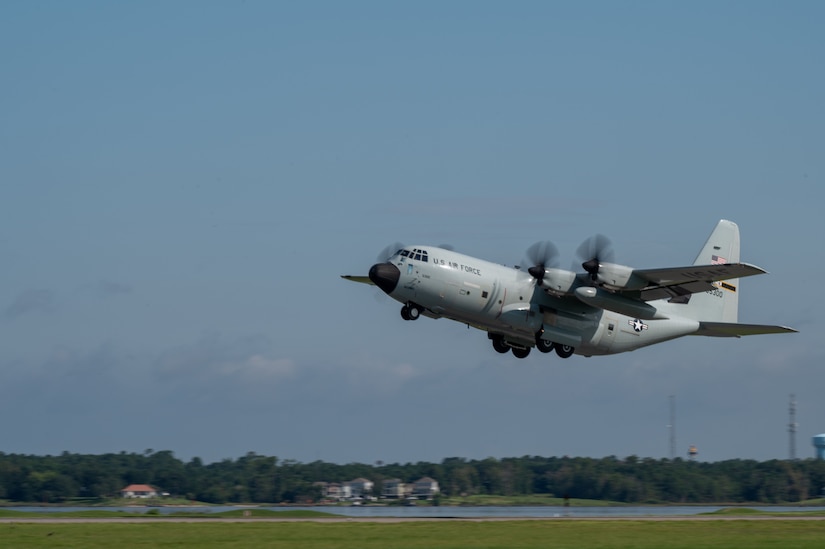
A large gray military aircraft takes off from a runway during daytime.

 
With the last scheduled hurricane mission completed Oct. 30, the Hurricane Hunters spent November transitioning to winter storm reconnaissance operations in support of the National Winter Season Operations Plan. These atmospheric river missions collect data over the Pacific Ocean to help predict heavy rainfall and flooding events that affect the western U.S. 
 
"The hurricane season may be over, but our mission never really stops," Fish said. "Whether it's tropical cyclones or atmospheric rivers, our airmen deliver data that directly supports national preparedness and disaster response."
 
From the first flight into Erick to the last eyewall penetration of Melissa, the 53rd WRS's 2025 season reaffirmed the critical role of manned reconnaissance in weather forecasting. 
 
Fish said the crews flew through some of the most intense storms on record, noting, "their work saves lives, protects property and provides the science that forecasters rely on every day. We're proud of what they accomplished."

Coast Guard Heavy Icebreaker Departs Seattle for Antarctic Deployment

The Coast Guard cutter Polar Star departed Seattle, Nov. 27, commencing its 29th deployment to Antarctica in support of Operation Deep Freeze.

The operation is an annual joint military mission to resupply the U.S. Antarctic stations in support of the National Science Foundation, the lead agency for the U.S. Antarctic Program. Historic investment in the "One Big Beautiful Bill" of nearly $25 billion includes $9 billion specifically for icebreakers and infrastructure in the Arctic and Antarctic. This massive investment in icebreakers will secure U.S. access, security and leadership in the polar regions.  

As the Coast Guard prepares to revitalize its icebreaking fleet, the Polar Star remains the only U.S. vessel capable of breaking a navigable channel through the ice to reach McMurdo Station, the largest Antarctic station and the logistics hub of the U.S. Antarctic Program.  

Each year, the cutter serves a vital role in ensuring surface access for fuel and supply ships through the Ross Sea to resupply U.S. Antarctic bases. The Polar Star's mission directly protects the security, freedom and prosperity for the U.S., our allies and partners.

"[The] Polar Star's crew does remarkable work maintaining and operating this ship," said Coast Guard Capt. Jeff Rasnake, commanding officer of the ship. "Each year brings unique challenges, and I'm proud to say this crew has risen to meet them all. The way we've come together over the course of maintenance, and our logistical preparations is exciting as we enter the operational phase of our annual deployment cycle."

Commissioned in 1976, the Polar Star is 399 feet long and weighs 13,500 tons with a 34-foot draft. Despite reaching nearly 50 years of age, it remains the world's most powerful nonnuclear icebreaker with the ability to produce up to 75,000 shaft horsepower.

The continuous effort the crew commits to maintaining the aging cutter ensures the nation's access to the continent and the economic, environmental and national security interests in the polar regions. The Polar Star will continue to support Operation Deep Freeze until new polar and Arctic security cutters enter service in the coming decade.

Since 1955, members of the Coast Guard, Air Force, Navy and Army have proudly supported the U.S. Antarctic Program by providing supplies to McMurdo Station. 

Monday, December 01, 2025

Medal of Honor Monday: Marine Corps Staff Sgt. William Windrich

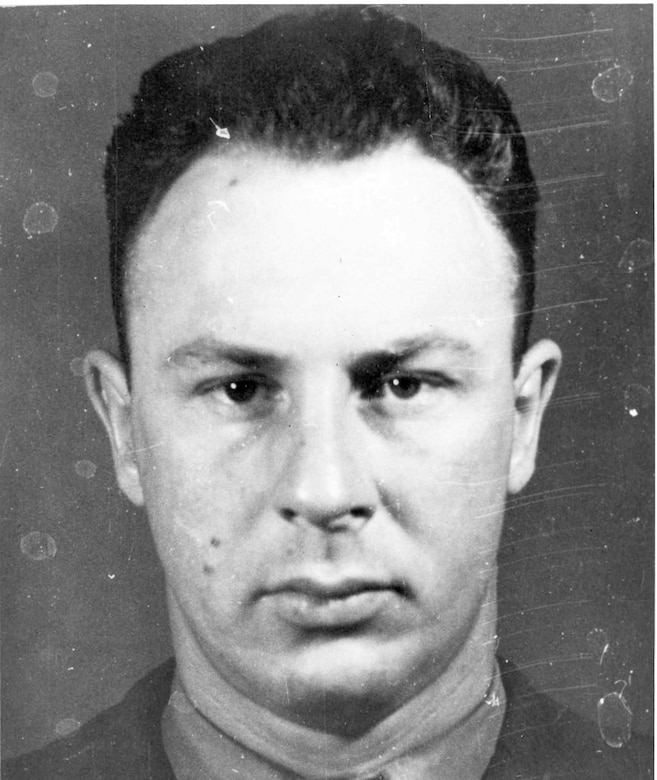
Marine Corps Staff Sgt. William Gordon Windrich was only in Korea for a short time, but the skills he'd honed during World War II helped him lead his cold, dirty and disheveled comrades to freedom during one of the most savage battles in modern military history.  

A man poses stoically for a photo.

Windrich didn't survive the Battle of Chosin Reservoir to tell his own story, but his heroics led him to posthumously receive the Medal of Honor.  

Windrich was born May 14, 1921, in Chicago to World War I veteran Herman Windrich and his wife, Marguerite. He had a sister named Virginia. 

When Windrich was young, the family moved to nearby Hammond, Indiana, where their father worked as a foreman at the city's only oil refinery.  

Windrich attended several public schools before dropping out and enlisting in the Marine Corps Reserve in June 1938. By November 1940, he was called up to active duty. 

During World War II, "Windy," as he was called, spent nearly two years in the South Pacific as a machine-gunner, seeing action during the Battle of Tarawa in the Gilbert Islands. He was discharged soon after the war ended and, after returning home, earned his GED diploma. At some point, he married his hometown girlfriend, Margaret. They had a daughter named Alita.  

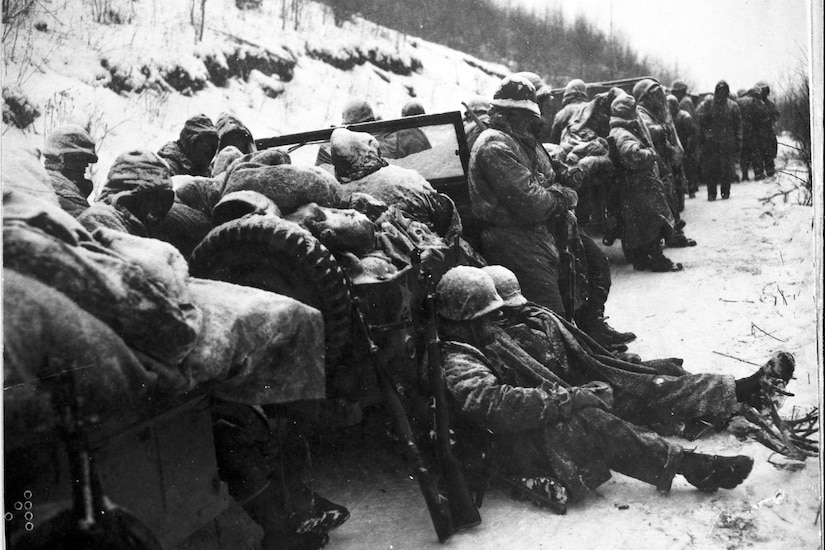
Dozens of men in cold-weather gear lounge near a line of military vehicles in the snow.

Civilian life didn't suit Windrich, however. So, in February 1946, he reenlisted in the Marine Corps. That summer, while serving aboard the USS Mount McKinley, Windrich took part in the atomic bomb testing at Bikini Atoll. In the years that followed, he served in positions in around Washington and in China.  

Windrich was on military police duty at Camp Pendleton, California, when the Korean War broke out in the summer of 1950. As part of the 1st Provisional Marine Brigade, he was one of the first Marines to see action in the conflict. He took part in the Inchon landing and the capture of Seoul before being transferred to Company I of the 3rd Battalion, 5th Marines, 1st Marine Division.  

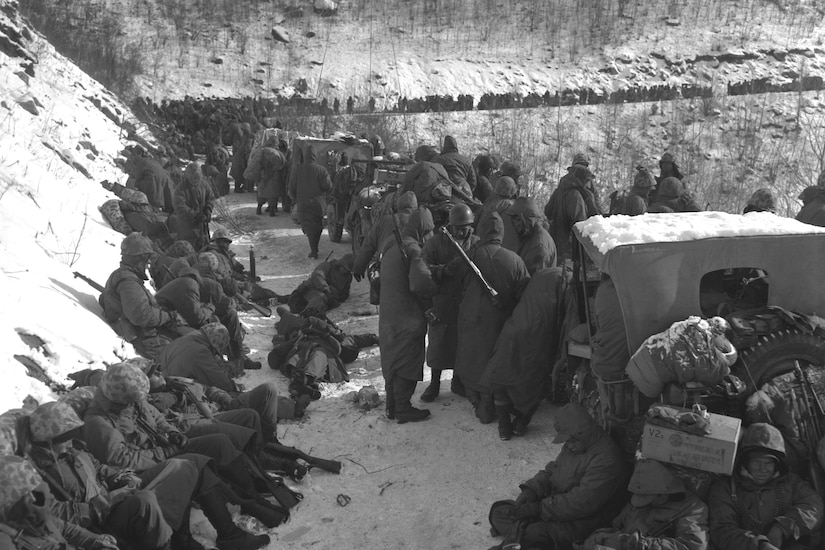
Windrich was the company's platoon sergeant during the infamous Battle of Chosin Reservoir, where about 30,000 troops from the United Nations, many of whom were U.S. Marines and soldiers, chased defeated North Korean army soldiers up the Korean Peninsula to try to force them over the border into China. When they reached the Chosin Reservoir, however, about 120,000 Chinese troops surged south over the border instead, ambushing U.N. troops and cutting them off from their main supply route.  

The nearly three-week battle was one of the most brutal in military history, waged in below-zero temperatures, heavy snow and frigid winds.  

Hundreds of men in cold-weather gear sit and stand alongside a line of military vehicles on a mountainside in the snow.

On the night of Dec. 1, 1950, the enemy launched a sudden attack on the forward elements of Company I's position on Hill 1520. As Marines fell, Windrich organized a group of men and spearheaded an assault toward the top of the hill to confront the enemy forces.  

Despite intense enemy automatic weapons, mortar and grenade fire, the group was able to effectively hold back the attackers while the remaining troops withdrew to safer ground. However, the assault group was decimated in the process. Most of the men were either wounded or killed, including Windrich, who suffered a head wound from a bursting grenade.

Windrich fell back to where his company had repositioned themselves. After refusing medical attention, he organized a new group of volunteers to evacuate the fallen Marines on the frozen hillside.  

Windrich then placed the rest of the troops on the left flank of the defensive sector as the enemy attacked again. Windrich was severely wounded in the leg and couldn't stand, but he refused to leave the fight, shouting words of encouragement and directing his team's fire until the attack was pushed back. Even then, he continued to direct his platoon to set up defensive positions. Eventually, Windrich succumbed to the bitter cold and excessive blood loss.  

"He allowed himself to be placed on a stretcher, and as he lay down, he told one of the men carrying him that he just wanted to go to sleep. Then he died," read a 1985 article on Windrich in his hometown newspaper, The Times. 

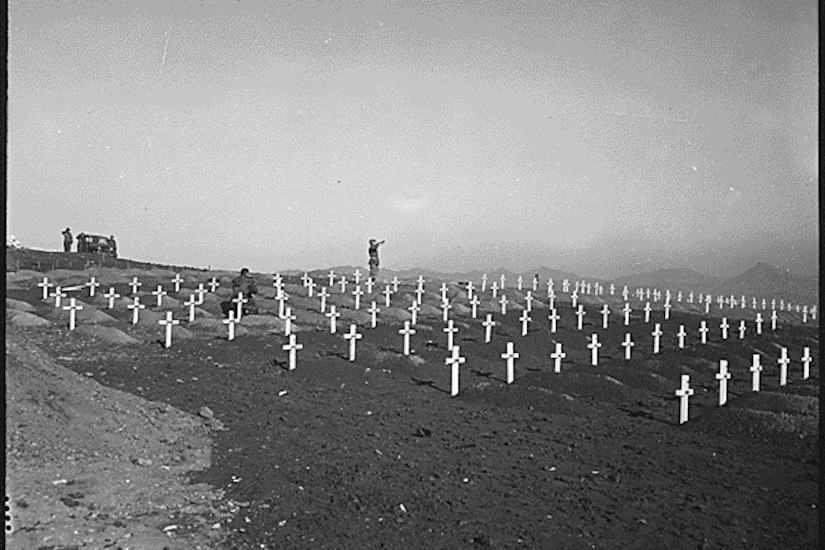
A man plays a bugle in the middle of a graveyard full of white crosses.

Windrich's bravery and devotion to duty inspired the men around him to hold the line despite the tremendous odds against them. Eventually, they were able to fight their way south to freedom. But the battle took its toll. The U.S. reported more than 12,000 casualties, including more than 3,000 dead. 

Windrich's fellow Marines weren't able to carry his body down the 70 miles of mountainous terrain, so he was left behind with the promise from commanders that they would come back for all the fallen Americans when they could.  

Windrich is one of 17 men who received the Medal of Honor for valiant actions during the battle. On Feb. 8, 1952, his widow and daughter received the nation's highest honor for valor on his behalf during a Pentagon ceremony.  

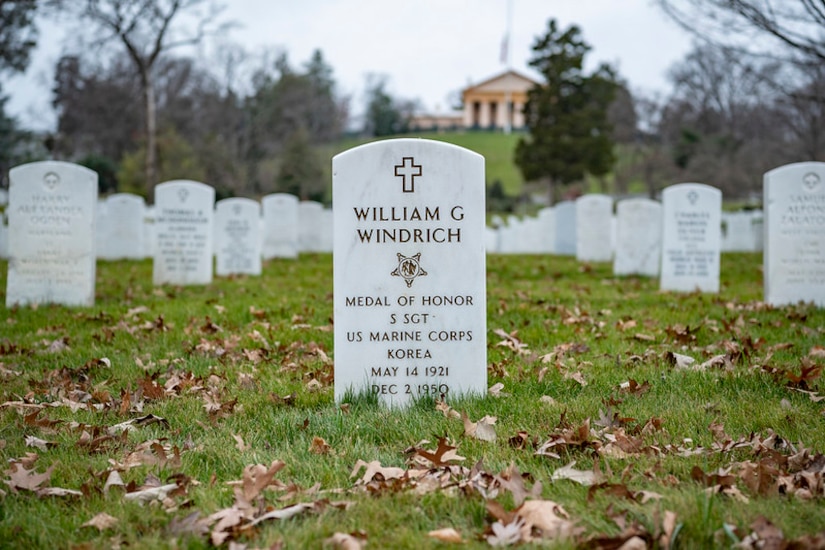
A grave marker is highlighted prominently among a field of other matching grave markers.

More than four years after the Battle of Chosin Reservoir ended, the promise to bring Windrich's body home was fulfilled, and his remains were repatriated. On July 29, 1955, he was buried in Arlington National Cemetery, Virginia. 

Near his hometown in Lake County, Indiana, residents and visitors can read about Windrich's heroics on a section of the Korean War veterans memorial that's dedicated to him. The National Museum of the Marine Corps in Triangle, Virginia, has also erected a Chosin Few Battle Monument in honor of those who fought there.