by Christina Carmen Crea
Northwest Guardian
8/26/2015 - JOINT BASE LEWIS-MCCHORD, Wash. -- Joint
Base Lewis-McChord's Commander Col. Daniel S. Morgan calls participants
of the JBLM Warrior Care Adaptive Sports Camp the "toughest warriors
out there."
"I can't think of a better reason to come together and overcome
adversity," Morgan said. "The people out here today are warriors...we
asked them to do things in battle that might wound themselves and they
had no fear. And today, they are out here being competitive -- they
don't want free chicken, they're here to win. They have overcame things
most people haven't."
The Warrior Care Camp runs August 25-28 here and is a partnership
between the Air Force Wounded Warrior program, Madigan Army Medical
Center and the Warrior Transition Battalion supported by the Western
Regional Medical Command, and JBLM's Family and Morale, Welfare and
Recreation
The event is an opportunity for all wounded, ill and injured service
members to engage in friendly competition. Wounded Warriors from JBLM
and veterans from the northwest region were invited to participate in
the camp events on McChord Field and on Lewis Main.
The events include cycling on McChord Field's Perimeter Road and
wheelchair basketball and seated volleyball at the McChord Fitness
Center. There is also swimming at Soldiers Field House, archery and air
rifle shooting at the MWR tent, and track and field at Cowan and
Memorial Stadiums, all on Lewis Main.
Sixty percent of the participants have combat-related injuries and 40
percent have noncombat related injuries. Some participants are
experienced adaptive sport athletes, while others are experiencing a
Warrior Care Camp for the first time.
Marsha Gonzales, deputy chief of the Air Force Personnel Warrior and
Survivor Care Division, said it's the first time they've been to JBLM.
"We picked the right location to support our wounded Airmen and we hope
to make this an annual event here in the northwest region," Gonzales
said. "There are 90 Air Force and 35 Army participants here for this
event."
Technical Sergeant Ryan Pinney, who was in the Air Force from 2000-2014,
said adaptive sports has "given him another mission in life."
"This is my second year being involved, and this has opened my eyes and
given me another mission because when we get hurt, we lose our
missions," Pinney said. "I'm a cyclist and...by doing that, I realized I
could still do something despite my spinal cord injury."
Pinney said he feels a real sense of community at these events.
"You know you can call the people you meet here whenever you need to and
we share similar injuries and problems in life," Pinney said. "When I
got my injury, I wondered 'How am I going to be able to care for my wife
now?' -- but there are other people who have been through it and it has
helped strengthen my recovery."
Pinney has won several gold medals in cycling in other competitions and plans to keep competing.
It was Sgt. Cherry Maurice's first time competing in a cycling event.
"I think adaptive sports is inspirational," Maurice said. "I saw a
friend do this and thought, 'If they can do it, so can I. I also love
the challenge of it...they said I would never walk again, but here I am,
surrounded by people motivating and pushing me no matter what my
injuries are."
Maurice has paralysis from her lower back to her feet after wear and
tear on her body from two Afghanistan tours. Once she finished her first
race today, she was laughing, smiling and said she was having a lot of
fun.
Maurice is currently still on active duty in the Warrior Transition Battalion at Fort Carson, Colo., and has served since 2011.
Senior Airman Griselda Calderon, who served from 2011-2014, said it's
"nice to be able to express yourself and not be an outcast here."
"This is my first time doing this, and I've become friends with these
people...they are closer than family," Calderon said. "They're more
helpful than family because your family often times want the old you
back...but you're not the same person after a serious injury."
Calderon was hit by a drunken driver and said it's hard to walk, and she suffers memory loss, too, and is almost always in pain.
"I have good days and I have bad days...but I do feel lucky to be alive," Calderon said.
Staff Sgt. Carlos Delgado, 3rd Brigade, 2nd Infantry Division, who is a
JBLM volunteer at the event, said he wanted to use his 26-day leave
wisely.
"When I was in Hawaii as a flight medic, I picked up a lot of wounded
Soldiers, and because I've seen so much of that, I wanted to come here
and see Soldiers who were getting back on their feet and getting on with
their life," Delgado said. "Although I don't know these Soldiers prior
to this, it gives me hope. I also have a brother with Down syndrome, so
even before I was a medic, I knew how to be patient. I think everyone
should be treated with equality no matter what disability they have."
Wednesday, August 26, 2015
New Horizons medical personnel provide emergency assistance in mass casualty
by Capt. David Murphy
1st Combat Camera Squadron
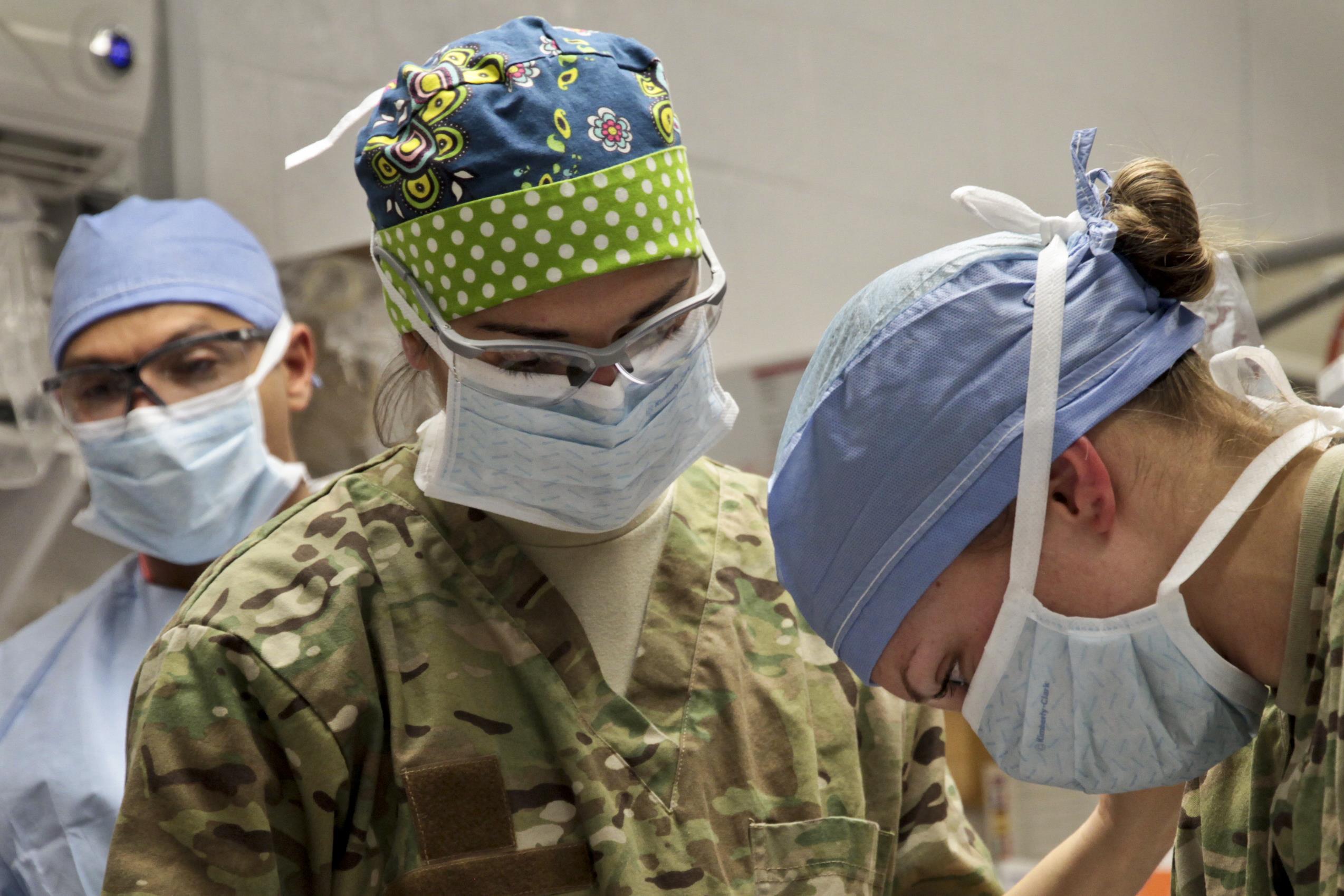
8/21/2015 - TRUJILLO, Honduras -- U.S. Air Force medical personnel treated mass causality incident victims at the Dr. Salvador Parades Hospital in Trujillo, Honduras, Aug. 10, 2015.
The incident involved 14 Honduran army soldiers from the 15th Battalion who were injured in an explosion at their base said a Honduran army official.
The medical personnel, who were in country to provide support for the New Horizons Honduras 2015 training exercise, performed surgery on one injured soldiers and treated 10 others. One of the soldiers died on the scene while two others, who had injuries that couldn't be treated locally, were flown to a hospital in Tegucigalpa, Honduras.
The U.S. Air Force Airmen who responded to the incident were Maj. Ryan Jones, 56th Medical Operations Squadron general surgeon out of Luke Air Force Base, Ariz., Maj. Frederick Grois, 779th Medical Operations Squadron anesthesiologist out of Joint Base Andrews, Md., and Maj. Chol Kim, 88th Aerospace Medical Squadron physician assistant out Wright-Patterson Air Force Base.
"The patient who appeared to be the most severe was triaged and taken to the operating room and received an exploratory laparotomy and as well as an exploration of the femoral vessel," said Jones.
The medical team, which had recently ended regular work at the hospital and were waiting to head back to the U.S., performed more than 100 surgeries, both routine and emergency, on local Hondurans throughout the duration of the New Horizons exercise.
"We do a head to toe examination, evaluation of the patient, in doing this we are trying to decipher who is the most critical patient, who needs the attention first," said Jones, "it needs to be done quickly, but it also needs to be complete. This differs from seeing someone in the clinic where patients are being referred and you are able to do a good work up and diagnose the problem and schedule the surgery electively, for a time that works best for the patient and the doctor. We approach it a little differently... but [during] triaging we do a complete physical exam."
The exact cause of the incident is still under investigation at this time.
New Horizons was launched in the 1980s and is an annual joint humanitarian assistance exercise that U.S. Southern Command conducts with a partner nation in Central America, South America or the Caribbean. The exercise improves joint training readiness of U.S. and partner nation civil engineers, medical professionals and support personnel through humanitarian assistance activities.
1st Combat Camera Squadron
8/21/2015 - TRUJILLO, Honduras -- U.S. Air Force medical personnel treated mass causality incident victims at the Dr. Salvador Parades Hospital in Trujillo, Honduras, Aug. 10, 2015.
The incident involved 14 Honduran army soldiers from the 15th Battalion who were injured in an explosion at their base said a Honduran army official.
The medical personnel, who were in country to provide support for the New Horizons Honduras 2015 training exercise, performed surgery on one injured soldiers and treated 10 others. One of the soldiers died on the scene while two others, who had injuries that couldn't be treated locally, were flown to a hospital in Tegucigalpa, Honduras.
The U.S. Air Force Airmen who responded to the incident were Maj. Ryan Jones, 56th Medical Operations Squadron general surgeon out of Luke Air Force Base, Ariz., Maj. Frederick Grois, 779th Medical Operations Squadron anesthesiologist out of Joint Base Andrews, Md., and Maj. Chol Kim, 88th Aerospace Medical Squadron physician assistant out Wright-Patterson Air Force Base.
"The patient who appeared to be the most severe was triaged and taken to the operating room and received an exploratory laparotomy and as well as an exploration of the femoral vessel," said Jones.
The medical team, which had recently ended regular work at the hospital and were waiting to head back to the U.S., performed more than 100 surgeries, both routine and emergency, on local Hondurans throughout the duration of the New Horizons exercise.
"We do a head to toe examination, evaluation of the patient, in doing this we are trying to decipher who is the most critical patient, who needs the attention first," said Jones, "it needs to be done quickly, but it also needs to be complete. This differs from seeing someone in the clinic where patients are being referred and you are able to do a good work up and diagnose the problem and schedule the surgery electively, for a time that works best for the patient and the doctor. We approach it a little differently... but [during] triaging we do a complete physical exam."
The exact cause of the incident is still under investigation at this time.
New Horizons was launched in the 1980s and is an annual joint humanitarian assistance exercise that U.S. Southern Command conducts with a partner nation in Central America, South America or the Caribbean. The exercise improves joint training readiness of U.S. and partner nation civil engineers, medical professionals and support personnel through humanitarian assistance activities.
Women’s Equality Day Commemorates History, Bridges Future Leaders
By Amaani Lyle DoD News Features, Defense Media Activity
WASHINGTON, August 26, 2015 — Today, Women’s Equality Day
not only commemorates the ratification of the 95th anniversary of the 19th
Amendment -- which solidified women’s voting rights -- but it also coincides
with current milestones for women in service, a Pentagon official said in an
Aug. 24 DoD News interview.
Officer and Enlisted Personnel Management Director Juliet
Beyler, who oversees department-wide policies that include promotions,
assignments, separations, force management, and awards and decorations, said
casting a wider net for talent and diversity across the force is critical.
“Remembrance and recognition of the 19th Amendment serves as
a reminder of the need for gender equality,” Beyler said. “Keeping our eye on
it will only help ensure that our women continue to have opportunities to go as
far as their talents will take them.”
Women in Service Review
As the Defense Department primes to announce its Women in
Service Review final integration decisions for remaining closed positions and
any potentially approved exceptions to policy in January 2016, once-prohibited
occupations in armor, artillery, infantry and special operations can emerge as
unprecedented career options for women, who comprise at least 14 percent of the
military, she said.
The Women in Service Review stems from the 2013 decision by
former Defense Secretary Leon Panetta to rescind the 1994 direct ground combat
definition and assignment rule, Beyler explained, and, since 2013, the DoD has
worked closely with the services to implement the decision which, to date, has opened
more than 110,000 positions to women.
The move signifies sweeping progress from less than a
century ago, an era that predated women’s voting rights and spurred advocates
such as Susan B. Anthony, Elizabeth Cady Stanton and Ida B. Wells to dedicate
decades of effort to affect equality.
But Beyler noted progression often builds upon previous
strides, and the 19th Amendment is no exception.
Building on Achievements
“Hopefully, the women in uniform today will continue to
build on those achievements and future leaders will continue to look to the
past for lessons learned,” she said. “By removing those old, outdated,
gender-based barriers to service [we can] strengthen the total force and enable
us to select the best service members for the job.”
The DoD, Beyler added, has also rolled out other initiatives
to help service members with work-life balance, including the career
intermission program and the recent Navy announcement of extended maternity
leave.
Beyler recounted that one of her roles as joint officer
policy oversight manager entails the exploration of factors that help develop
senior leaders in a modern force.
“We need to mature our thinking; we need joint-qualified
acquisition officers, cyber officers, logistics and intelligence officers,”
Beyler said, noting that the breadth of skills can only improve the joint
force.
Beyler said her decision to join the Marine Corps at age 17
gave her the sense of purpose, discipline and direction she would carry
throughout her career and higher education endeavors.
Army Ranger School Graduates
And notably, from both a policy and personal perspective,
Beyler said the two recent Army Ranger school graduates represent a major
milestone for women in uniform.
“It’s a significant step for the Army because we’re leading
up to the final recommendations … and it’s part of the larger effort to
validate the standards for all of our occupations but I think we just cannot
ignore that milestone we saw last week.”
The director expressed personal pride in the Army’s
retention of its high Ranger School standards and conveyed confidence that the
women graduates met the rigors of the course. “Nobody associated with the
effort -- women or men -- wanted to see a standard reduced, so I think we’re
all very proud of their achievement.”
With some 30 years of military and civilian experience under
her belt, Beyler shared that a multitude of role models inspired her drive, but
perhaps her most significant influences were also the most genuine and
successful not in spite of their personalities, but because of them.
“They knew who they were and they knew what they wanted to
do,” she said. “When I was a young corporal and sergeant, I thought that in
order to succeed I had to be like everybody else.”
Over time, however, Beyler said she not only learned that
being herself held the key to her long-term success, but the landscape is
evolving, which offers a much broader spectrum of choices for women to do what
they love as they serve.
Don’t Fear Taking Risks
“It’s important not to be afraid to take risks,” Beyler
said. “It’s good to have a career plan … but don’t be so wedded to your plan
that you miss an opportunity that may open three or four more doors down the
road.”
Ultimately, Beyler asserts that diversity and inclusion
extend far beyond gender, race or ethnicity.
“For me it’s broader than that -- it’s diversity of thought,
ability, background, language, culture and all of those things,” she said.
“Having people with diverse backgrounds -- not just personal backgrounds, but
experiences -- will give us that strategic advantage as we continue to try and
maintain a high state of readiness.”
Honduran air force members glean valuable knowledge from NDI technicians
by Tech. Sgt. Heather R. Redman
12th Air Force (Air Forces Southern) Public Affairs
8/20/2015 - DAVIS-MONTHAN AFB, Ariz. -- Five members from the Honduran air force teamed up with 12th Air Force (Air Forces Southern) and the 355th Equipment Maintenance Squadron for a subject matter expert exchange from Aug. 16-22, 2015.
The exchange focused primarily on a variety of nondestructive inspections lab processes.
"The NDI lab helps to ensure the structural integrity of the aircraft is maintained by unobtrusively looking for issues within the aircraft," said U.S. Air Force Master Sgt. Leandrea Walker, 355th EMS NDI lab superintendent.
"By identifying microscopic defects in the aircraft we can prevent catastrophic events, like aircraft crashes, from occurring," added U.S. Air Force Tech. Sgt. Diana Dunn, 355th EMS NDI lab assistant superintendent.
According to the U.S. Air Force Nondestructive Inspection Office, NDI labs use a range of different processes to find flaws within air and space equipment without causing damage to the equipment itself. Some of the processes that the 355th EMS NDI team covered were the use of eddy currents, magnetic particles, penetrants, ultrasonic testing, and radiographic abilities to discover defects in a variety of different materials.
"This exchange has given us clear ideas of how to implement the different NDI processes in order to establish and uphold an acceptable maintenance program," said Honduran air force Master Sgt. Josué Molina.
Along with going over the processes of discovering defects, the 355th EMS NDI team also stressed the importance of safety in the work center.
"The biggest thing that I've learned during this exchange is the importance that is given to the safety of personnel on the job and how critical it is to maintain an organized facility," added Molina.
Maintaining an enforceable safety standard is critical to ensuring a productive work environment.
"This exchange is important because it focuses on safety and emphasizes the importance of knowing and understanding industry hazards," said U.S. Air Force Master Sgt. Roberto Vasquez, superintendent of 12th AF (AFSOUTH) Plans, Requirements, and Programs section. "These are issues that need to be communicated to their leadership so the Honduran air force can safely perform these tasks and stand up their own NDI process."
Safety in the work center is one of the top priorities for the U.S. Air Force. According to the Air Force Safety Center, the Air Force Ground Safety Division manages safety standards and interprets Department of Labor and industry standards for implementation throughout the Air Force. It is also responsible for the development as well as oversees ground safety policy, programs and procedures to provide a safe work environment to help maintain combat capability and readiness.
Subject matter expert exchanges like NDI exchange provide useful information that is helpful to the leaders within U.S. Southern Command's partner nations.
"Exchanges like this help provide a large amount of information between these two groups of experts," said Honduran air force Sgt. Jose Lopez. "This is providing our subject matter experts with the information they need to approach their leadership and make recommendations to improve their work center."
Working hand in hand with USSOUTHCOM partner nations, such as Honduras, helps solidify relationships and allows us to work as one team with the shared goal of increasing inter-operability.
As part of USSOUTHCOM, 12th AF (AFSOUTH) is prepared to conduct joint and combined full-spectrum military operations within the USSOUTHCOM area of responsibility, in order to support U.S. national security objectives and interagency efforts that promote regional security cooperation.
"By helping our partner nations build themselves up, we are helping them become more independent and as a result increase our inter-operability so we are able to train and execute future missions together," said Vasquez.
Building up USSOUTHCOM partner nation capacity is an integral part of 12th AF (AFSOUTH) missions.
According to USSOUTHCOM, bilateral exchanges with partner nations improve staff planning and operations, promote interoperability, and support national security objectives. Educational programs help ensure USSOUTHCOM and partner nations are better prepared to respond to shared security challenges posed by transnational organized crime, terrorism, and natural disasters.
12th Air Force (Air Forces Southern) Public Affairs
8/20/2015 - DAVIS-MONTHAN AFB, Ariz. -- Five members from the Honduran air force teamed up with 12th Air Force (Air Forces Southern) and the 355th Equipment Maintenance Squadron for a subject matter expert exchange from Aug. 16-22, 2015.
The exchange focused primarily on a variety of nondestructive inspections lab processes.
"The NDI lab helps to ensure the structural integrity of the aircraft is maintained by unobtrusively looking for issues within the aircraft," said U.S. Air Force Master Sgt. Leandrea Walker, 355th EMS NDI lab superintendent.
"By identifying microscopic defects in the aircraft we can prevent catastrophic events, like aircraft crashes, from occurring," added U.S. Air Force Tech. Sgt. Diana Dunn, 355th EMS NDI lab assistant superintendent.
According to the U.S. Air Force Nondestructive Inspection Office, NDI labs use a range of different processes to find flaws within air and space equipment without causing damage to the equipment itself. Some of the processes that the 355th EMS NDI team covered were the use of eddy currents, magnetic particles, penetrants, ultrasonic testing, and radiographic abilities to discover defects in a variety of different materials.
"This exchange has given us clear ideas of how to implement the different NDI processes in order to establish and uphold an acceptable maintenance program," said Honduran air force Master Sgt. Josué Molina.
Along with going over the processes of discovering defects, the 355th EMS NDI team also stressed the importance of safety in the work center.
"The biggest thing that I've learned during this exchange is the importance that is given to the safety of personnel on the job and how critical it is to maintain an organized facility," added Molina.
Maintaining an enforceable safety standard is critical to ensuring a productive work environment.
"This exchange is important because it focuses on safety and emphasizes the importance of knowing and understanding industry hazards," said U.S. Air Force Master Sgt. Roberto Vasquez, superintendent of 12th AF (AFSOUTH) Plans, Requirements, and Programs section. "These are issues that need to be communicated to their leadership so the Honduran air force can safely perform these tasks and stand up their own NDI process."
Safety in the work center is one of the top priorities for the U.S. Air Force. According to the Air Force Safety Center, the Air Force Ground Safety Division manages safety standards and interprets Department of Labor and industry standards for implementation throughout the Air Force. It is also responsible for the development as well as oversees ground safety policy, programs and procedures to provide a safe work environment to help maintain combat capability and readiness.
Subject matter expert exchanges like NDI exchange provide useful information that is helpful to the leaders within U.S. Southern Command's partner nations.
"Exchanges like this help provide a large amount of information between these two groups of experts," said Honduran air force Sgt. Jose Lopez. "This is providing our subject matter experts with the information they need to approach their leadership and make recommendations to improve their work center."
Working hand in hand with USSOUTHCOM partner nations, such as Honduras, helps solidify relationships and allows us to work as one team with the shared goal of increasing inter-operability.
As part of USSOUTHCOM, 12th AF (AFSOUTH) is prepared to conduct joint and combined full-spectrum military operations within the USSOUTHCOM area of responsibility, in order to support U.S. national security objectives and interagency efforts that promote regional security cooperation.
"By helping our partner nations build themselves up, we are helping them become more independent and as a result increase our inter-operability so we are able to train and execute future missions together," said Vasquez.
Building up USSOUTHCOM partner nation capacity is an integral part of 12th AF (AFSOUTH) missions.
According to USSOUTHCOM, bilateral exchanges with partner nations improve staff planning and operations, promote interoperability, and support national security objectives. Educational programs help ensure USSOUTHCOM and partner nations are better prepared to respond to shared security challenges posed by transnational organized crime, terrorism, and natural disasters.
Historic fighter squadron celebrates 98th birthday
by Staff Sgt. Ciara Gosier
633rd Air Base Wing Public Affairs
8/25/2015 - JOINT BASE LANGLEY-EUSTIS, Va. -- One of America's oldest fighter squadrons celebrated its 98th birthday at Langley Air Force Base, Virginia, Aug. 20.
The 94th Fighter Squadron, which dates back to World War I, was originally organized at Kelly Field, Texas, before being reassigned to Langley in June 1975. The squadron is also known as the unit in which aerial ace, Capt. Edward Rickenbacker, belonged to and for its famous emblem, "The Hat in the Ring."
Rickenbacker was a fighter pilot, who with 26 aerial victories was America's most successful fighter ace during World War I. He also commanded the squadron for a short period during that time.
Today, the unit's mission is to provide air superiority for the United States and allied forces by engaging and destroying enemy forces, equipment, defenses or installations worldwide on short notice as part of the 1st FW.
Another one of America's oldest squadron is the 27th Fighter Squadron, just two doors down from the 94th at Langley.
"You can't talk about the birth of the United States Air Force without addressing the 27th and the 94th [fighter squadrons]," said Joshua Lashley, 1st Fighter Wing historian. "Those two squadrons and the accomplishments they completed in World War I and World War II, and the [initial] development of any fighter aircraft the Air Force bought came to these squadrons."
The squadron was home to some of the first fighter jets and also today's fifth generation, F-22 Raptor.
"In this squadron, this is the beginning of airpower," said U.S. Air Force Chief Master Sgt. Jonathan Veal, 94th Aircraft Maintenance Unit superintendent. "It's quite fitting to have a fifth generation [aircraft] now if you look at the heritage."
The unit traces its lineage of Air Power back to the first world war, where the 94th flew the first patrol flown by an all-American squadron in France, flying the Nieuport 28. The unit is also credited with the last aerial victory of the war on Nov. 10, 1918, one day before the Armistice.
"It's kind of awe-inspiring, the things they had to go through," said Veal. "With [a] lack of technical guidance and [still] achieve such great results is impressive."
Over the years, the unit has seen numerous deployments during periods of international tension, such as the Cuban Missile Crisis in 1962 and the Pueblo Incident in 1969. In 1979, a presidential tasking sent the squadron to Saudi Arabia in a show of support.
December 16, 2005, marked another historic occasion for the 94th FS with the final flight of the F-15 Eagle at Langley and the transition to the F-22A.
"I think it's important that every Airman that comes into the AMU, know what it means to be a part of a family," said Lashley. "A 98-year-old family and how this unit is literally one of the building blocks of what we know as the Air Force."
633rd Air Base Wing Public Affairs
8/25/2015 - JOINT BASE LANGLEY-EUSTIS, Va. -- One of America's oldest fighter squadrons celebrated its 98th birthday at Langley Air Force Base, Virginia, Aug. 20.
The 94th Fighter Squadron, which dates back to World War I, was originally organized at Kelly Field, Texas, before being reassigned to Langley in June 1975. The squadron is also known as the unit in which aerial ace, Capt. Edward Rickenbacker, belonged to and for its famous emblem, "The Hat in the Ring."
Rickenbacker was a fighter pilot, who with 26 aerial victories was America's most successful fighter ace during World War I. He also commanded the squadron for a short period during that time.
Today, the unit's mission is to provide air superiority for the United States and allied forces by engaging and destroying enemy forces, equipment, defenses or installations worldwide on short notice as part of the 1st FW.
Another one of America's oldest squadron is the 27th Fighter Squadron, just two doors down from the 94th at Langley.
"You can't talk about the birth of the United States Air Force without addressing the 27th and the 94th [fighter squadrons]," said Joshua Lashley, 1st Fighter Wing historian. "Those two squadrons and the accomplishments they completed in World War I and World War II, and the [initial] development of any fighter aircraft the Air Force bought came to these squadrons."
The squadron was home to some of the first fighter jets and also today's fifth generation, F-22 Raptor.
"In this squadron, this is the beginning of airpower," said U.S. Air Force Chief Master Sgt. Jonathan Veal, 94th Aircraft Maintenance Unit superintendent. "It's quite fitting to have a fifth generation [aircraft] now if you look at the heritage."
The unit traces its lineage of Air Power back to the first world war, where the 94th flew the first patrol flown by an all-American squadron in France, flying the Nieuport 28. The unit is also credited with the last aerial victory of the war on Nov. 10, 1918, one day before the Armistice.
"It's kind of awe-inspiring, the things they had to go through," said Veal. "With [a] lack of technical guidance and [still] achieve such great results is impressive."
Over the years, the unit has seen numerous deployments during periods of international tension, such as the Cuban Missile Crisis in 1962 and the Pueblo Incident in 1969. In 1979, a presidential tasking sent the squadron to Saudi Arabia in a show of support.
December 16, 2005, marked another historic occasion for the 94th FS with the final flight of the F-15 Eagle at Langley and the transition to the F-22A.
"I think it's important that every Airman that comes into the AMU, know what it means to be a part of a family," said Lashley. "A 98-year-old family and how this unit is literally one of the building blocks of what we know as the Air Force."
Dover Airman and K-9 recognized at War Dog Memorial
by Airman 1st Class William Johnson
436th Airlift Wing Public Affairs
8/25/2015 - DOVER AIR FORCE BASE, Del. -- An Airman and his K-9 counterpart have been through it all together including a deployment where they were awarded the Bronze Star Medal for their support of Army Special Operations forces during their deployment to Afghanistan in 2013.
But in the distant future, long after each of their Air Force careers have ended, their memories and faces will remain a part of the first state. An image of Staff Sgt. Jason Spangenberg, 436th Security Forces Squadron military working dog handler and trainer, and his MWD, Rico, was engraved into a new memorial that was unveiled at the War Dog Memorial Dedication event Aug. 22, 2015, at the Kent County Veterans Memorial Park in Dover, Delaware.
The memorial is a 5-foot black granite stone from India and is engraved with an image of Spangenberg kneeling next to Rico. The memorial honors both MWDs and their handlers and can now be viewed at the memorial park.
"This is not only a tribute to the highly trained K-9s that have saved so many lives, but it is also recognition of their handlers from all branches and in all conflicts," said Joe Startt Jr., Vietnam Veterans of America Kent County Chapter 850 president.
Spangenberg, along with several other Delaware Law Enforcement officers and their K-9s, were present at the unveiling and he said it was privilege for him and Rico to be on the first War Dog Memorial in Delaware.
"There is nothing else like this in the state," said Spangenberg. "To have it here at Dover and have myself or any of the guys from the kennels on something like this is just awesome and it just shows what we've done as handlers."
The Vietnam Veterans of America Chapter 850 in Kent County made contact with Tech. Sgt. Jessica Johnson, 436th SFS kennel master, to have one of the handlers and their K-9 pose for the photo to be used on the memorial. Johnson said she could not think of a more deserving handler and k-9 than Spangenberg and Rico.
"I'm beyond honored and proud of them," said Johnson. "At first I think they [Vietnam Veterans of America] wanted just an image, but what they got are actual war heroes."
The event also featured a guest speaker, Bob Bliss, Vietnam War Veteran and former MWD handler who served with the Army's 212th Military Police Sentry Dog Company in Long Binh and Vinh Long, Vietnam between 1968 and 1970. Bliss spoke about his experiences in Vietnam and how his K-9, King, brought him comfort and safety in a time of uncertainty. He credits MWDs for saving numerous lives during the Vietnam War.
"If it weren't for the military working dogs that served in Vietnam, there would be many, many more names and very likely more panels added to the Vietnam Memorial Wall," he said when concluding his speech.
Spangenberg, in humbling manner, said the memorial means a lot more to him not just because he is on it, but because it represents all handlers, past, present and future.
"I'm not really about the accolades and the awards and the plaques, we just went out there to do our job," said Spangenberg. "However, I am honored that Rico and I are on it because it is something that will be here forever for the Dover kennels and future handlers to see."
436th Airlift Wing Public Affairs
8/25/2015 - DOVER AIR FORCE BASE, Del. -- An Airman and his K-9 counterpart have been through it all together including a deployment where they were awarded the Bronze Star Medal for their support of Army Special Operations forces during their deployment to Afghanistan in 2013.
But in the distant future, long after each of their Air Force careers have ended, their memories and faces will remain a part of the first state. An image of Staff Sgt. Jason Spangenberg, 436th Security Forces Squadron military working dog handler and trainer, and his MWD, Rico, was engraved into a new memorial that was unveiled at the War Dog Memorial Dedication event Aug. 22, 2015, at the Kent County Veterans Memorial Park in Dover, Delaware.
The memorial is a 5-foot black granite stone from India and is engraved with an image of Spangenberg kneeling next to Rico. The memorial honors both MWDs and their handlers and can now be viewed at the memorial park.
"This is not only a tribute to the highly trained K-9s that have saved so many lives, but it is also recognition of their handlers from all branches and in all conflicts," said Joe Startt Jr., Vietnam Veterans of America Kent County Chapter 850 president.
Spangenberg, along with several other Delaware Law Enforcement officers and their K-9s, were present at the unveiling and he said it was privilege for him and Rico to be on the first War Dog Memorial in Delaware.
"There is nothing else like this in the state," said Spangenberg. "To have it here at Dover and have myself or any of the guys from the kennels on something like this is just awesome and it just shows what we've done as handlers."
The Vietnam Veterans of America Chapter 850 in Kent County made contact with Tech. Sgt. Jessica Johnson, 436th SFS kennel master, to have one of the handlers and their K-9 pose for the photo to be used on the memorial. Johnson said she could not think of a more deserving handler and k-9 than Spangenberg and Rico.
"I'm beyond honored and proud of them," said Johnson. "At first I think they [Vietnam Veterans of America] wanted just an image, but what they got are actual war heroes."
The event also featured a guest speaker, Bob Bliss, Vietnam War Veteran and former MWD handler who served with the Army's 212th Military Police Sentry Dog Company in Long Binh and Vinh Long, Vietnam between 1968 and 1970. Bliss spoke about his experiences in Vietnam and how his K-9, King, brought him comfort and safety in a time of uncertainty. He credits MWDs for saving numerous lives during the Vietnam War.
"If it weren't for the military working dogs that served in Vietnam, there would be many, many more names and very likely more panels added to the Vietnam Memorial Wall," he said when concluding his speech.
Spangenberg, in humbling manner, said the memorial means a lot more to him not just because he is on it, but because it represents all handlers, past, present and future.
"I'm not really about the accolades and the awards and the plaques, we just went out there to do our job," said Spangenberg. "However, I am honored that Rico and I are on it because it is something that will be here forever for the Dover kennels and future handlers to see."
NAVSUP WSS Hosts NAE Supply Summit
By Jenae Jackson, NAVSUP WSS Office of Corporate
Communications
PHILADELPHIA (NNS) -- Senior leaders from the aviation
community recently gathered in Philadelphia for the Naval Aviation Enterprise
(NAE) Supply Summit.
More than 150 Naval Aviation Enterprise leaders were in
attendance for the first NAE summit organized by NAVSUP Weapon Systems Support
(NAVSUP WSS).
"This is the first time we had this level of engagement
focused on aviation sustainment issues," said NAVSUP WSS Commander, Rear
Adm. Paul Verrastro. "It is an honor for us to host this summit in an
effort to gain a higher level of understanding of fleet challenges and join
forces to solve them."
The summit provided the opportunity to discuss key focus
areas such as funding, allowancing and forecasting, partnership
solutions/contracts and sustainment. Discussions centered on how the NAE can
commit to improve readiness, attack root causes and foster better decisions
that benefit naval aviation as a whole.
The summit also served as an opportunity for the fleet to
present availability challenges and to develop collaborative approaches to
solving pressing sustainment issues.
In addition to Verrastro, key stakeholders in attendance
included Vice Adm. Mike Shoemaker, commander, Naval Air Forces, commander,
Naval Air Force, U.S. Pacific Fleet; Vice Adm. David Dunaway, commander, Naval
Air Systems Command; Lt. Gen. Jon Davis, deputy commandant for Aviation,
Headquarters Marine Corps; Rear Adm. Jonathan Yuen, commander, Naval Supply
Systems Command, and 47th Chief of Supply Corps, among other executive leaders.
The summit concluded with confidence in future readiness and
decision making, both of which will better produce warfighting readiness in the
most cost effective manner.
A field activity of the Naval Supply Systems Command, NAVSUP
Weapon Systems Support (NAVSUP WSS) is the U.S. Navy's supply chain manager
providing worldwide support to the aviation, surface ship, and submarine
communities. NAVSUP WSS provides Navy, Marine Corps, joint and allied forces
with products and services that deliver combat capability through logistics.
There are more than 2,000 civilian and military personnel employed at its two
Pennsylvania sites. The NAVSUP WSS Philadelphia site supports aircraft, while
its Mechanicsburg site supports ships and submarines.
Subscribe to:
Posts (Atom)