Showing posts with label unmanned systems. Show all posts

Friday, August 14, 2026

Centcom Launches First-Ever Multinational Attack Drone Task Force

U.S. Central Command announced efforts to establish the first multidomain, multinational attack drone task force yesterday.

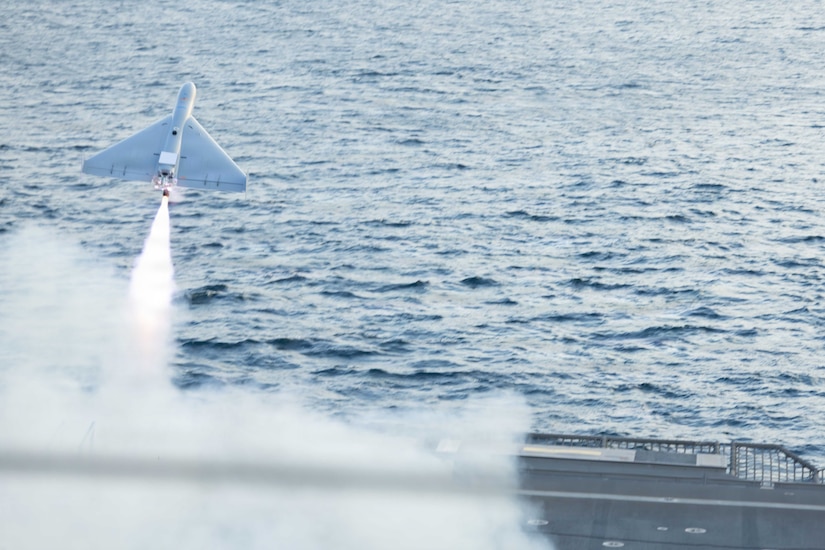
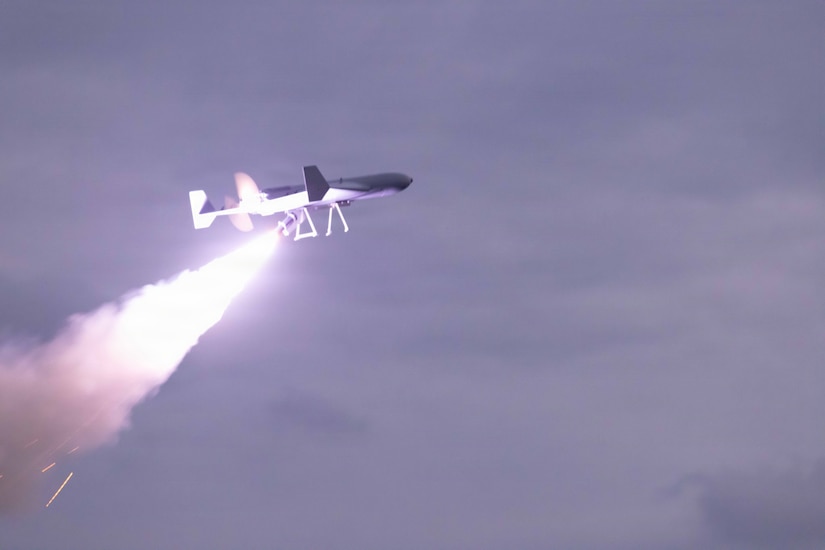
A drone takes off from the deck of a ship at sea.

The unit, called Task Force Falcon Strike, will employ one-way attack drones consisting of unmanned systems from above, on and below the sea, operated by military support staff from the United States and regional partners.

Falcon Strike's launch occurs nine months after Centcom established Task Force Scorpion Strike, the U.S. military's first dedicated one-way attack drone squadron in the Middle East.

Scorpion Strike rapidly achieved key operational milestones, including the first launch of an aerial attack drone from a Navy warship last December. The squadron also employed one-way unmanned aerial systems during Operation Epic Fury and during strikes on Iranian port facilities in July using unmanned attack vessels at sea.

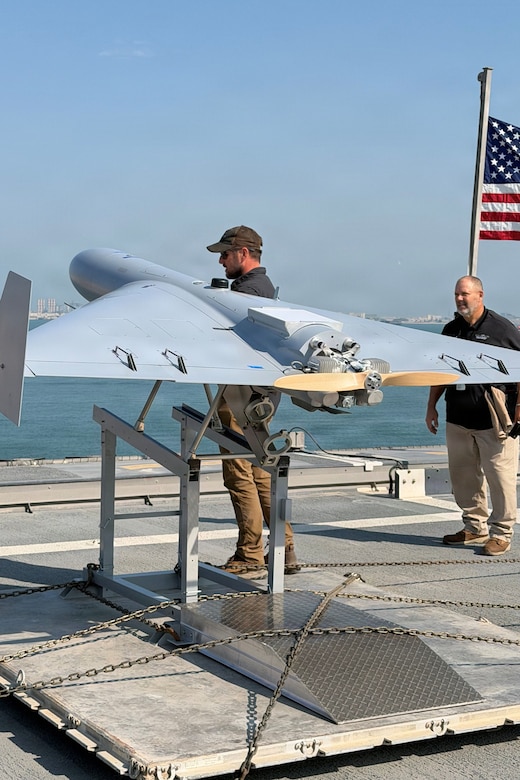
A man wearing casual attire, a baseball cap and sunglasses works on a drone as another man in similar attire looks on. They are both standing on the deck of a ship at sea.

"Task Force Falcon Strike will expand on Scorpion Strike's success given the tremendous innovation happening among our regional allies and partners," said Navy Adm. Brad Cooper, Centcom commander. "Integrating and deploying our new capabilities together will help us rapidly realize the new possibilities that are on the horizon."

Centcom has initiated consultations with official invitations to regional partners. As regional partners formally join, Task Force Falcon Strike will scale attack drone capabilities across the Middle East into a unified multidomain, multinational deterrent.

"The United States military has a lot of strong partnerships and friends in the region," Cooper said. "We are collectively stronger when we integrate and deploy new capabilities together."

Personnel from U.S. Special Operations Command Central, which launched Scorpion Strike, will lead Falcon Strike's staff of U.S. and regional representatives.

A drone takes off from the deck of a ship at sea.

Wednesday, July 29, 2026

Fort Rucker's Unmanned Advanced Lethality Course Ramps Up Tactical Drone Training

The Unmanned Advanced Lethality Course at Fort Rucker, Alabama, is pushing forward with a series of updates aimed at strengthening tactical proficiency and meeting student expectations, said Army Staff Sgt. Mario Rostran, the course's noncommissioned officer in charge, and Army Chief Warrant Officer 3 Robert Gatta, the course manager.

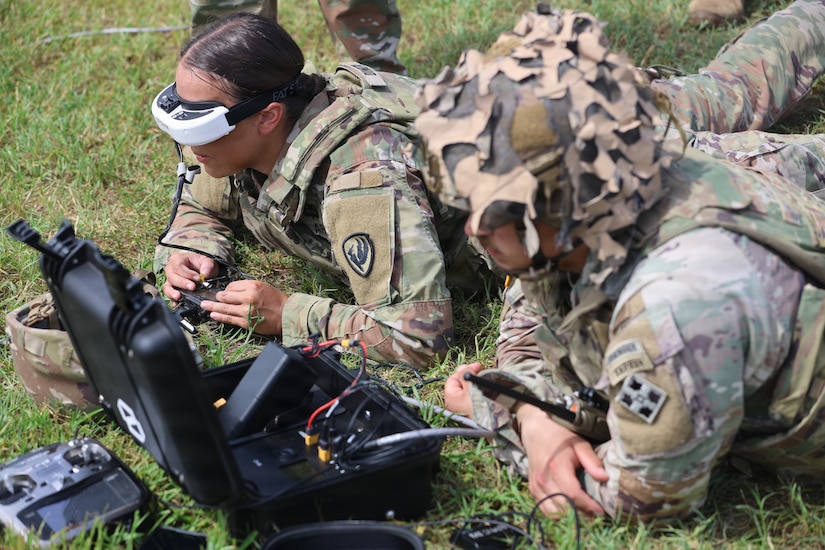
A woman wearing a camouflage military uniform and a tactical headset is lying in the grass in the prone position while a man in similar attire and a helmet looks at a computer screen.

Rostran said the leadership team is focused on refining instruction in response to student feedback to ensure the course delivers the advanced-level rigor it promises.

"We're continuing to improve the course," he said. "We're taking comments as we go and making sure [that] we're meeting the standards students expect. The goal is to make this the advanced course it claims to be."

Working alongside the team, Gatta is helping expand hands-on training and strengthen tactical application throughout the program.

"The most significant update is increasing the amount of physical, kinetic engagements from five to 12," he said. "We have been working to refine the overall course to run smoother and provide the most up-to-date data."

To meet the demand for advanced instruction, the course is shifting to a more tactical framework. Gatta noted the class will complete a culminating exercise this week at the drone training facility in Daleville, Alabama, marking a new experience for the students.

"This exercise will demonstrate a more real-world tactical environment and incorporate a close-quarters battle level of training, whereas previous emphasis has been heavily placed on outdoor live flights," he said. "Our current goal is to make the training more tactical in nature. I believe we have several solid plans to build on moving forward."

During this iteration of the course, students conducted live-engagement training using a purpose-built attributable system, the Shank 1.0, and C-4, a versatile plastic explosive. The event allowed students to apply lessons learned by flying the system, coordinating altitude and executing tactical employment against a designated target.

Army Sgt. 1st Class Riley Watts, assigned to Company A, 1st Battalion, 14th Aviation Regiment, spent months trying to enroll in the course. He said attending has given him a clearer view of how unmanned aircraft systems fit into the future of Army aviation.

"This is a great course to keep you relevant in today's force," Watts said. "Seeing how UAS is being implemented and utilized in today's Army is eye-opening, and it shows you how important it is to understand these systems."

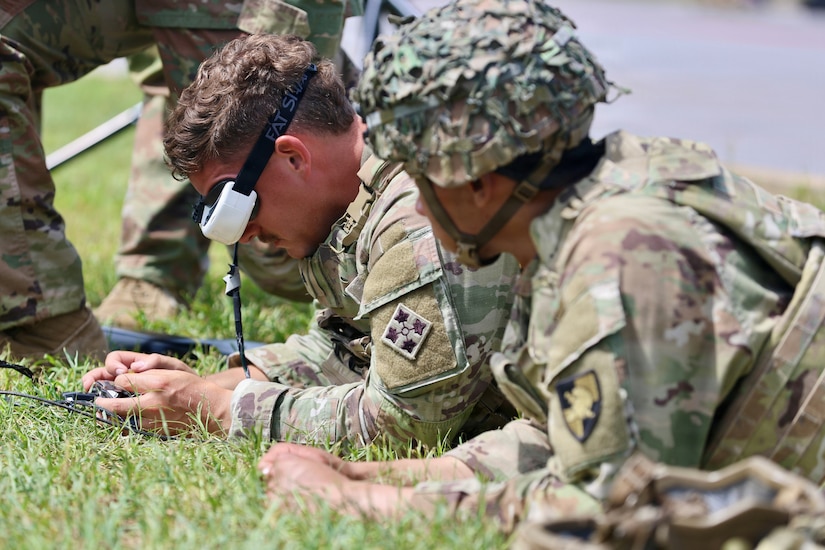
A man wearing a camouflage military uniform and a tactical headset operates a controller while lying in the grass alongside another man in similar attire who is watching.

Matthew Baldwin, a civil engineering major at the U.S. Military Academy, is attending to take tactical drone employment strategies back to the academy's future applied systems and tactics team. His leaders pushed to send two cadets to the course to expand their understanding of drone employment and to share that knowledge when they return.

Baldwin, who hopes to commission into the air defense artillery branch, said the course offers a perspective that will be important to future Army operations.

"One of the big questions is how to counter drones effectively," he said. "You're talking about sending a very expensive rocket to take out a cheap drone. Understanding drones from the operator's side, how they fly, what they look for, helps you understand how to counter them."

Although he arrived with limited tactical flying experience, he said the hands-on instruction has significantly boosted his confidence.

"I didn't know how to tactically fly. It's a completely different flying style," Baldwin said. "I feel better flying them, and now we're trying to develop a training program to help build other pilots on our team."

Beyond flying, Baldwin highlighted the value of the course's mission-planning segments.

"I've really appreciated the planning side, [the military decision-making process], troop-leading procedures, what goes into reconnaissance," he said. "I hadn't learned a lot of that yet. Going into my [fundamentals of small-unit operations] class and eventually into the Army, my knowledge base is definitely better now."

The Unmanned Advanced Lethality Course runs six times per fiscal year, providing recurring opportunities for soldiers seeking advanced UAS training. Upcoming course dates are Sept. 14-Oct. 2, and Nov. 2-20.
Saturday, July 04, 2026

Department of War Establishes Direct Reporting Portfolio Manager for Unmanned Systems to Ensure American Drone Dominance

The Department of War today announced the comprehensive consolidation of all Unmanned and Autonomous Systems (UxS) under a newly established, direct-report position to the Deputy Secretary of War. This strategic priority aims to rapidly accelerate the development, procurement, and fielding at scale of autonomous capabilities, which are essential to maintaining the United States' decisive military advantage.

"This structural reorganization directly implements a series of decisive actions taken by the administration. Drones and autonomous systems represent the most consequential battlefield innovation of this generation," said Chief Pentagon Spokesman Sean Parnell. "Adversaries collectively produce millions of unmanned systems each year across all domains. While global military production has skyrocketed over the last three years, the United States must move at the speed this moment demands to field these capabilities at scale and secure our tactical and strategic edge."

Last year, President Donald J. Trump signed Executive Orders directing the reform of the Department's acquisition processes to ensure the United States Military possesses the most lethal warfighting capabilities in the world, "Unleashing American Drone Dominance," which directed the DoW to procure, integrate, and train using low-cost, high-performing drones manufactured in the United States, and "Restoring American Airspace Sovereignty," establishing critical authorities to counter growing adversary unmanned threats. Following these directives, Secretary Hegseth issued an implementing memorandum on July 10, 2025, committing the Department to bolstering the domestic drone manufacturing base, arming combat units with low-cost unmanned systems, and training the joint force to fight and win with these capabilities.

To establish an immediate operational baseline and consolidate specialized expertise, the DRPM- UxS will provide direct oversight and direction for all unmanned activities, functions, and associated programmatic funding lines currently assigned to the Department of War to include Services Components, Joint Interagency Task Force 401, the Defense Innovation Unit, and the Defense Autonomous Warfare Group.

The Secretary of War's memorandum can be found here.