Paratroopers assigned to the 82nd Airborne Division recently took part in the inaugural training event with the Bumblebee V2 counter-drone system April 22, marking the first operational test of the prototypes purchased by Joint Interagency Task Force 401 earlier this year.
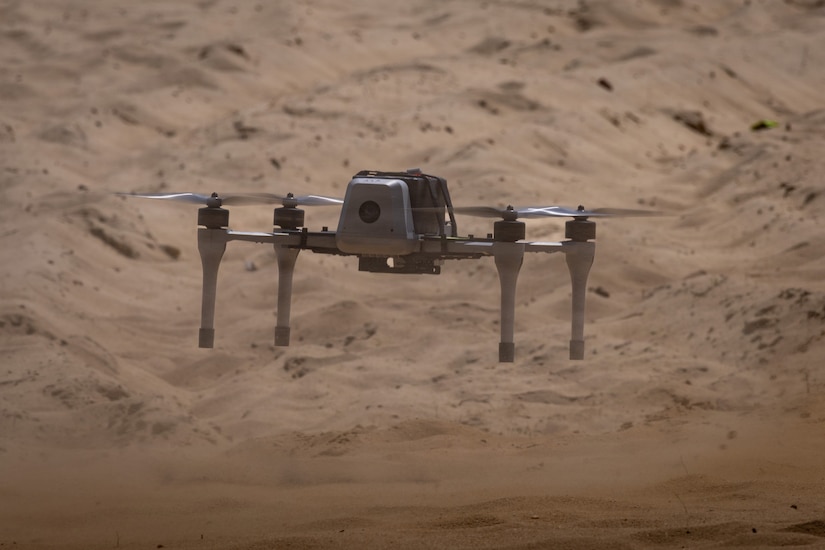
Held on the Salerno drop zone at Fort Bragg, North Carolina, the
event served as a practical exercise for 20 young paratroopers to engage
directly with the system and provide real-time feedback. The
acquisition of the new system represented a rapid technology transfer
from the battlefields of Europe, giving soldiers hands-on experience
with critical tools to increase counter-drone capability across the
joint force.
"The [Bumblebee] V2 is a major leap forward because it doesn't rely
solely on the skill of the drone operator," said Army Sgt. Maj. Kellen
Rowley, Joint Interagency Task Force 401 senior enlisted advisor to the
director. "Its automated target recognition allows the drone to lock on
and engage an adversary drone autonomously, letting soldiers focus on
situational awareness and tactics."
Paratroopers practiced fundamentals essential to both using and
defending against unmanned aerial systems. Soldiers learned to interpret
sensor, radar and camera data and make split-second decisions about
when to launch counter-drone interceptors. Training events like these,
in coordination with the services, help ensure every soldier is prepared
to face the rapidly evolving aerial threats on the modern battlefield.
"Just as every soldier is trained in basic rifle marksmanship before
handling live rounds, we want to ensure that they can master the
fundamentals of UAS operation and employment of passive countermeasures
before expecting them to operationally employ an air-to-air
interceptor," Rowley said.
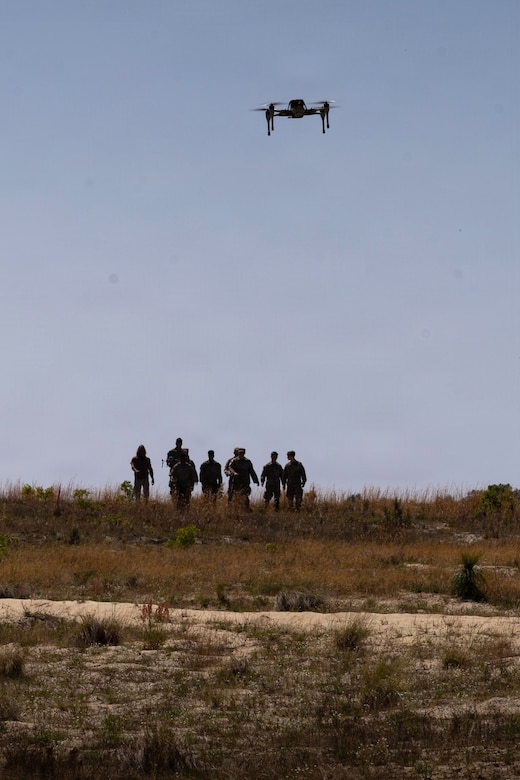
"We are seeing prototypes of the V2, with updated cameras, sensors and software for automated target recognition. Its ability to operate all the system's components simultaneously gives us the tools to develop tactics, techniques and procedures in real time," Army Lt. Col. Alex Morse, task force acquisition lead, said regarding the platform's operational flexibility.
The new system was first deployed in March as part of JIATF 401's initiative to accelerate the delivery of top-tier technology to warfighters. Counter-drone systems, like the Bumblebee, will soon be considered core battlefield tools, able to be utilized by soldiers with little to no prior drone experience.
Army Brig. Gen. Matt Ross, director of JIATF 401, said his team has one measure of effectiveness: to rapidly deliver counter-drone capabilities to warfighters at home and abroad.
"The Bumblebee V2 provides a cost-effective, reliable interceptor that can neutralize threats without endangering our own forces or surrounding infrastructure," Ross said. "On the modern battlefield, where drones are a constant threat, having a low-collateral kinetic option is not just an advantage, it is increasingly becoming essential for protecting our forces."


 Posts
Posts


No comments:
Post a Comment