Monday, September 29, 2025

Medal of Honor Monday: Army 1st Lt. Frank Luke Jr.

Aviation was in its infancy during World War I, but Army 1st Lt. Frank Luke Jr. took to it like a duck to water. Earning the nickname the "Arizona Balloon Buster" for the high number of enemy observation balloons he shot down, Luke was known as the most spectacular air fighter of the war. He didn't make it home, but his heroics in the sky made him the first Army aviator to receive the Medal of Honor.  

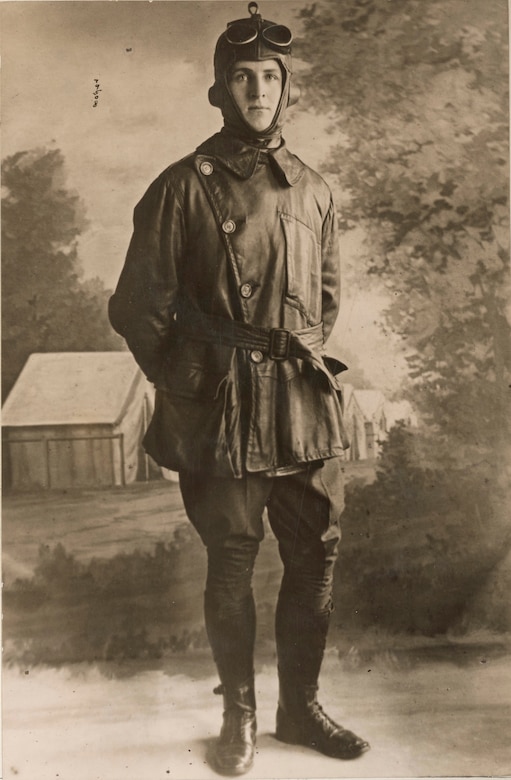
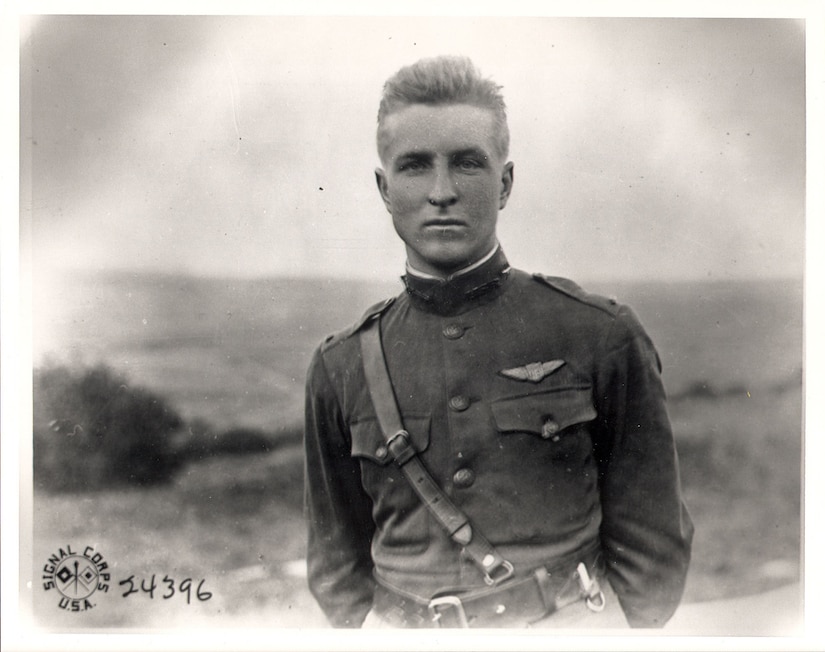
A man in a military dress uniform poses stoically for a photo.

Luke was born May 19, 1897, in Phoenix. He was the fifth of nine children born to his parents, Tillie and Frank Luke Sr.  

Luke grew into a strong young man. He was known as one of the best athletes at Phoenix Union High School, where he was the track team captain and a member of the basketball and football teams. According to a speaker at his Medal of Honor ceremony, one time he even saved the life of a friend who was struggling to cross a stream when they went camping.  

In September 1917, a few months after the U.S. entered World War I, Luke enlisted in the Army Signal Corps' Aviation Section, which transformed in April 1918 to the Army Air Service. Luke learned to fly aircraft at Rockwell Field in San Diego, receiving his wings and a commission to second lieutenant in January 1918.  

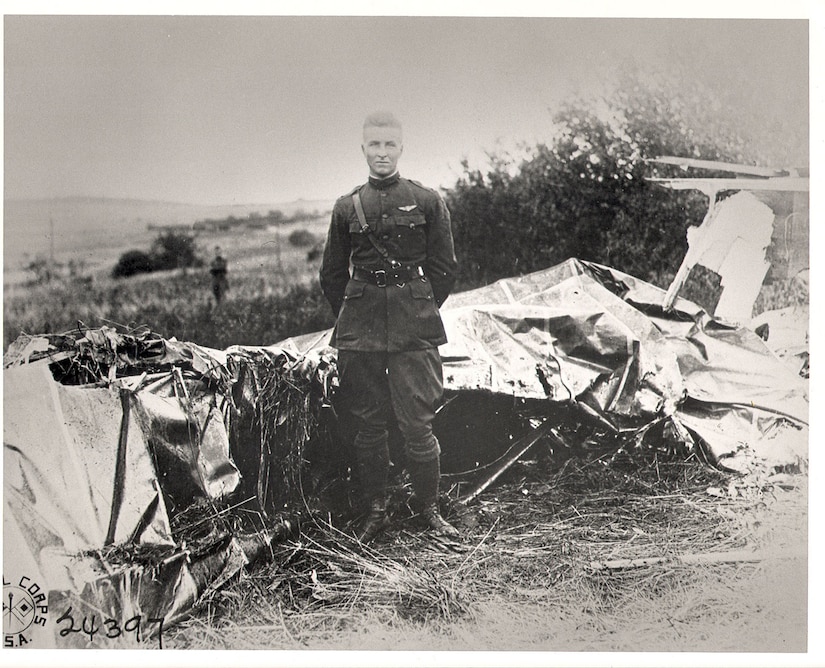
A man dressed in a military uniform stands stoically in front of a crumpled pile of metal.

Soon after, Luke was sent to France for additional combat training, which he completed in May 1918. From there, he went to Cazaux, France, to serve on the Western Front with the 1st Pursuit Group, 27th Aero Squadron. On Aug. 16, 1918, Luke took down his first enemy aircraft in combat.  

In the short amount of time Luke spent overseas, he earned the reputation of being a bit of a loner who occasionally ignored orders and sought to destroy the enemy on his own. He did, however, team up with a friend, Army 1st Lt. Joseph Wehner, during the mid-September St. Mihiel Offensive. During that time, Luke shot down three aircraft, and the pair destroyed five German observation balloons, which Luke attacked frequently.  

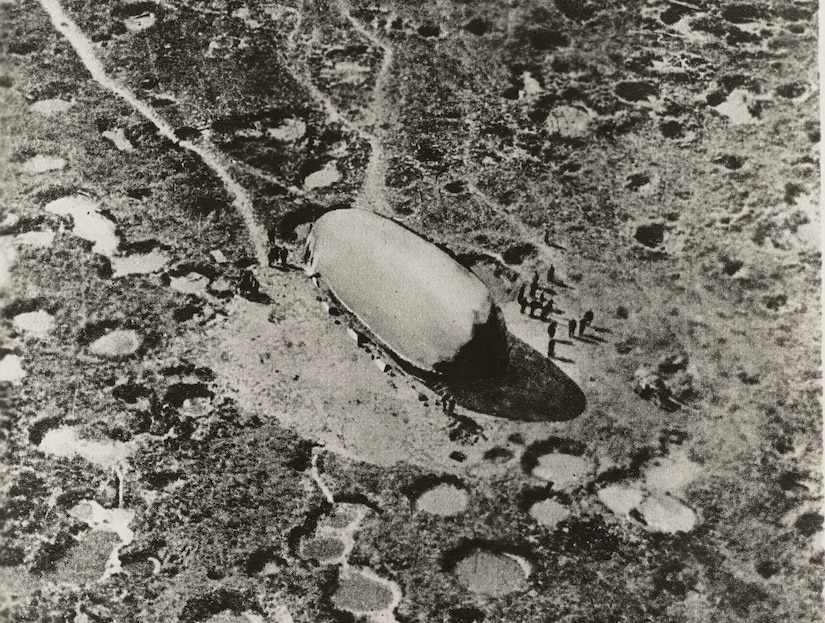
While tethered balloons don't sound like a difficult target, they were one of the toughest any pilot could face during World War I. The hydrogen-filled balloons were critical to the war's trench warfare environment, serving as observation posts that enabled both sides to look deep behind enemy lines. Observers in the balloons communicated with their leaders and adjusted artillery fire on the ground in real time to increase accuracy.  

A massive balloon sits on the ground with craters scattered around it. About a dozen people stand beside the balloon.

Because the balloons had such great tactical value, most were protected by heavy antiaircraft gun batteries, and there were often squadrons of airplanes ready to pursue anyone who considered going after them. Pilots who continually targeted the balloons were considered to have a death wish, historians said.  

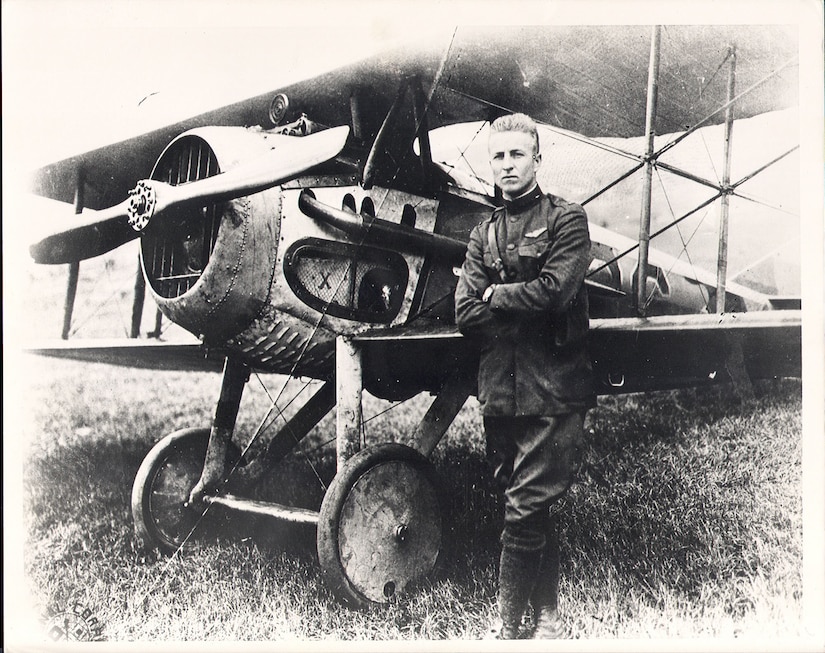
Luke's last flight — and his most valiant — happened on Sept. 29, 1918, near Murvaux, France. That day, he took to the skies in a French-built Spad XIII aircraft to go after enemy observation balloons, even though he hadn't received the proper permission, according to Air Force historians.  

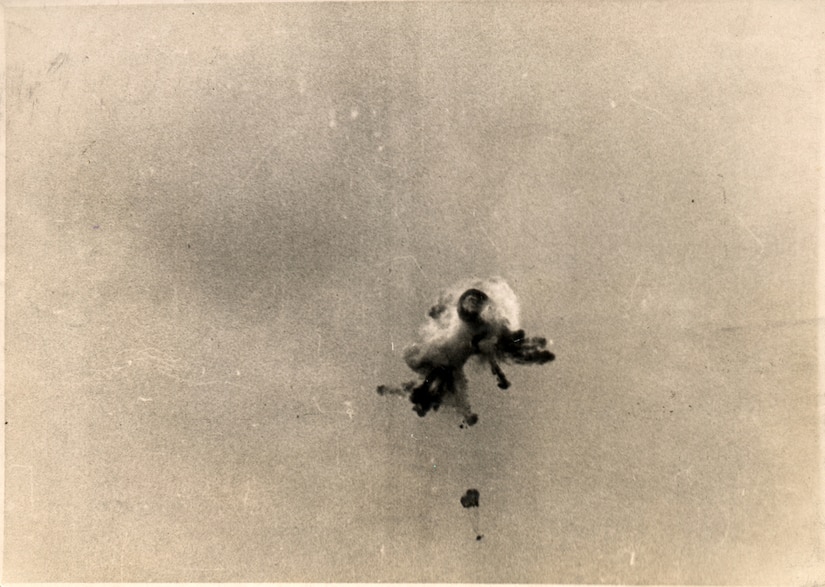
When Luke neared the enemy balloon line, eight German planes that were protecting it came after him. Despite the heavy fire he took from those planes and the ground batteries below, Luke didn't hesitate to attack back, shooting down three balloons. He then descended to within 50 meters of the ground and, with at least a dozen villagers watching, opened fire on enemy troops, killing six and wounding many more.  

Smoke and debris hang in the sky. A small parachute can be seen below the debris.

During the melee, Luke was also hit and severely wounded in the right shoulder. He was then forced to make an emergency landing in hostile territory. Surrounded by German forces on all sides who called on him to surrender, Luke refused. Instead, he drew his automatic pistol and fought back until he was killed.  

In Luke's brief career, he took down four airplanes and 14 balloons. His record of 18 "kills" stands second only to Army Capt. Eddie Rickenbacker's 26, according to the National Museum of the U.S. Air Force.  

Aside from the French villagers who made a sworn affidavit to what they saw Luke do that day, the fallen aviator's comrades also couldn't say enough about his bravery.  

A man in a World War I-era flight suit poses for a photo.

"No one had the sheer contemptuous courage that boy possessed. He was an excellent pilot and probably the best flying marksman on the Western Front," said Army Maj. H.E. Hartney, Luke's commander. "We had any number of expert pilots, and there was no shortage of good shots, but the perfect combination — like the perfect specimen of anything in the world — was scarce. Frank Luke was the perfect combination." 

On May 29, 1919, Luke's father received the Medal of Honor on his son's behalf from Army Brig. Gen. Howard R. Hickok. Luke, who also received two Distinguished Service Crosses, was then posthumously promoted to first lieutenant.  

Rickenbacker also received the Medal of Honor for his actions during the war, but it wasn't awarded to him until 1930.  

Luke was initially buried by the Germans in the area where he fell; however, he was later moved and buried in a grave in the Meuse-Argonne Cemetery in Romagne-sous-Montfaucon, France.  

His Medal of Honor was donated to the National Museum of the U.S. Air Force at Wright-Patterson Air Force Base, Dayton, Ohio.  

A man wearing a military uniform with his arms crossed over his chest stands in front of a propeller aircraft.

Luke's valor has certainly not been forgotten. On Armistice Day in 1930, before it became known as Veterans Day, a statue of his likeness was unveiled at the grounds of the Arizona State Capitol building in Phoenix. Luke Avenue on Joint Base Elmendorf-Richardson, Alaska, was also named for him.  

But perhaps his best-known namesake would be the one right near where he grew up: Luke Air Force Base outside of Phoenix was named in his honor in 1949. 

Sunday, September 28, 2025

The History of Military Awards and Decorations: Global Traditions and the American Experience

Throughout history, societies have sought ways to honor those who demonstrated courage, loyalty, and sacrifice in battle. Military awards and decorations serve as visible tokens of recognition, bestowed upon soldiers not only to commemorate their actions but also to inspire others and reinforce collective identity. They range from medals for valor to badges of service and campaign ribbons that chronicle a soldier’s career.

While the practice of honoring warriors is ancient, the form and meaning of military decorations have evolved with political systems and cultural values. Monarchies tied awards to nobility and fealty, empires used them to solidify loyalty, and modern republics adapted them to reflect merit, inclusivity, and service. This essay surveys the global history of military awards and decorations with emphasis on the United States. By tracing their origins, comparing different nations’ practices, and examining the purposes and critiques of such honors, we can see how decorations mirror the societies that create them.


Origins of Military Awards in Antiquity

The earliest recognizable military decorations can be found in ancient civilizations. In Greece, victorious athletes and warriors received laurel wreaths, symbols of honor tied to civic pride (Poliakoff, 1987). The Romans systematized decorations into a complex hierarchy of crowns, such as the corona civica (oak crown) awarded for saving the life of a fellow citizen, and the corona muralis (wall crown) given to the first man to scale an enemy wall (McDonnell, 2006). These honors were not ornamental; they were highly prestigious, often granting lifelong privileges, including seats of honor at public games.

Outside the Mediterranean, Chinese dynasties bestowed courtly titles, robes, and banners on distinguished generals, while Islamic caliphates often rewarded service with khil‘a—robes of honor symbolizing favor and legitimacy. In all cases, the decorations underscored values of courage, loyalty, and service to the state or ruler.


Medieval and Early Modern Traditions

During the Middle Ages, military awards took the form of chivalric orders, many of which survive today as ceremonial institutions. King Edward III of England founded the Order of the Garter in 1348, granting it to loyal nobles and distinguished knights (Risk, 1965). In Burgundy, Philip the Good established the Order of the Golden Fleece in 1430, intertwining military honor with dynastic prestige.

The Ottoman Empire used jeweled weapons and symbolic garments to mark service, while in Renaissance Europe medals emerged as standardized objects. By the 16th century, monarchs were issuing portable decorations that could be worn on the body or uniform, signaling a shift toward recognizability and universality. These awards were both political tools and instruments of hierarchy, reinforcing fealty while publicly displaying royal gratitude.


18th–19th Century Developments: The Birth of Modern Decorations

The 18th and 19th centuries marked the true emergence of modern military honors. In Prussia, Frederick the Great created the Pour le Mérite in 1740, often awarded for acts of courage and leadership. France under Napoleon broke with aristocratic exclusivity by establishing the Legion of Honor in 1802. This decoration could be granted to soldiers of any class, symbolizing the revolutionary ideal of meritocracy (Werlich, 1974).

Britain’s Victoria Cross, instituted in 1856 during the Crimean War, further democratized valor awards. Its plain bronze design emphasized equality: it could be awarded regardless of rank. Across the Atlantic, the young United States experimented with its own traditions. George Washington established the Badge of Military Merit in 1782, a purple cloth heart awarded for “instances of unusual gallantry” or meritorious service. Although awarded only three times, it set a republican precedent for merit-based recognition (Kerrigan, 2006).

During the Civil War, Congress authorized the Medal of Honor (1861 for the Navy, 1862 for the Army). Initially awarded liberally, it became the cornerstone of U.S. military decorations, representing the nation’s highest recognition for valor. This period solidified decorations as permanent, structured elements of military culture.


The United States: Building a System of Recognition

Revolutionary Roots and the Civil War

The Badge of Military Merit embodied Washington’s vision of a republic that valued service over aristocratic privilege. Although it lapsed after the Revolution, the concept resurfaced in the 20th century with the revival of the Purple Heart in 1932, linking contemporary sacrifice to the nation’s founding ideals (Kerrigan, 2006).

The Medal of Honor, by contrast, became the preeminent U.S. award during the Civil War. Initially given to more than 1,500 soldiers for actions ranging from valor to simple service, its prestige was diluted. In the early 20th century, review boards rescinded many awards, tightening standards to preserve its significance (Borch, 2013).

World Wars and Expansion

World War I catalyzed the creation of additional awards to fill the gap between the Medal of Honor and lower service recognitions. The Distinguished Service Cross, Distinguished Service Medal, and Silver Star emerged, recognizing acts of gallantry and meritorious service short of the highest award. The Distinguished Flying Cross honored aviators, reflecting new domains of warfare (Borch, 2013).

In 1932, the Purple Heart was formally reestablished to honor those wounded or killed in action, directly connecting modern soldiers to Washington’s original badge. World War II saw further expansion, including the Bronze Star and a range of campaign and service medals to recognize broad participation in theaters of war. The Good Conduct Medal honored enlisted service members for discipline and dedication.

Cold War and Modern Conflicts

During the Cold War, the U.S. created Joint Service awards to reflect inter-branch cooperation, as well as humanitarian and achievement medals for non-combat contributions. The Vietnam War introduced the Combat Action Ribbon and other decorations tailored to new types of conflict.

In recent decades, operations in Iraq and Afghanistan led to new campaign medals and continued refinement of criteria for valor. Unit citations and multinational medals (such as NATO awards) reflected coalition warfare. At the same time, controversies arose over recognition disparities, leading to posthumous upgrades of awards for minority veterans long overlooked (Smith, 2017).

The modern U.S. system balances combat valor, meritorious service, and inclusivity, with ribbons and medals collectively forming a visible résumé of a service member’s career.


Comparative Perspectives: Other Nations

Although the United States has developed a distinctive system, its traditions parallel those of other countries.

  • United Kingdom: The Victoria Cross remains Britain’s highest award for valor, granted sparingly. Other honors, such as the Distinguished Service Order and Military Cross, fill the hierarchy. British culture emphasizes gallantry and individual courage (Duckers, 2004).

  • France: The Legion of Honor continues as both a military and civilian award, symbolizing republican ideals. The Croix de Guerre, established in World War I, specifically honors combat bravery.

  • Russia and the Soviet Union: Tsarist Russia created the Order of St. George in 1769, while the Soviet Union established the Hero of the Soviet Union award in 1934. Post-Soviet Russia continues with the Hero of the Russian Federation.

  • Japan: The Order of the Rising Sun, established in 1875, recognized distinguished service, while modern Japanese awards reflect postwar pacifism.

  • China: The People’s Liberation Army maintains a system of honors, including the Order of August 1st and the Medal of the Republic, reflecting socialist ideology and revolutionary continuity.

These comparative examples show that while the form of awards differs, their purpose—to embody national values and reward sacrifice—remains constant.


Purposes and Critiques of Military Awards

Military awards serve multiple purposes. They recognize individuals, boost morale, encourage continued service, and serve as tools of propaganda and diplomacy. Ceremonies confer legitimacy upon governments and bind soldiers to institutions.

Yet awards are not without controversy. Some critics argue that the proliferation of medals dilutes their meaning. Others highlight inequities: women and minority service members historically received fewer awards, often corrected only decades later (Smith, 2017). Political considerations sometimes influence decisions, leading to disputes over fairness. In the United States, the 2005 Stolen Valor Act highlighted concerns about fraudulent claims, underscoring the symbolic power decorations still hold.


The Symbolism of Decorations

Beyond practical recognition, military awards function as symbolic language. Ribbons and medals worn on uniforms act as visible biographies, telling the story of where a soldier has served and what they achieved. A rack of ribbons is not merely decoration but a portable record of honor, sacrifice, and identity. Ceremonial presentations reinforce values of service and continuity, making awards both personal and institutional symbols.


The Future of Military Awards

As warfare evolves, so too must the systems of recognition. Cyber warfare, remote drone operations, and hybrid conflicts raise questions about how to honor nontraditional combat roles. Similarly, humanitarian missions, peacekeeping, and disaster relief increasingly dominate military activity, requiring awards that capture these contributions. Debates over modernization, inclusivity, and global coalition recognition will shape future systems. What remains unchanged is the need to honor those who serve.


Conclusion

From Roman crowns to modern medals, military awards have always mirrored the values of their societies. They have served as tools of loyalty, honor, and remembrance. The United States, drawing on republican ideals, created a system that prizes merit and inclusivity while adapting to modern warfare. Compared with global traditions, the American system reflects both continuity and innovation.

Ultimately, decorations are more than metal and ribbon. They are cultural texts, embodying sacrifice and service across generations. As new challenges emerge, the practice of honoring soldiers will remain vital—not merely for individuals but for the societies that send them into harm’s way.


References

Borch, F. L. (2013). Medals for Soldiers and Airmen: Awards and Decorations of the United States Army and Air Force. McFarland.

Duckers, P. (2004). British Military Medals: A Guide for the Collector and Family Historian. Shire Publications.

Kerrigan, M. (2006). Military Medals of the United States. Chartwell Books.

McDonnell, M. (2006). Roman Manliness: Virtus and the Roman Republic. Cambridge University Press.

Poliakoff, M. (1987). Combat Sports in the Ancient World. Yale University Press.

Risk, J. C. (1965). The History of Orders and Decorations. Swan Sonnenschein.

Smith, T. E. (2017). Honor, Service, and Valor: A History of Military Decorations in the United States. University Press of Kansas.

Werlich, R. (1974). Orders and Decorations of All Nations: Ancient and Modern, Civil and Military. Quaker Press.

National Park Service. (2025). Military Awards and Honors: Historical Resources. U.S. Department of the Interior.ards (from the Badge of Military Merit to modern campaign medals) to accompany the essay?
Saturday, September 27, 2025

U.S. and UAE Conduct 9th Joint Military Dialogue

 Sept. 27, 2025

From September 25-26, senior delegations from the United Arab Emirates (UAE) and the United States (U.S.) convened in Abu Dhabi for the 9th U.S.-UAE Joint Military Dialogue (JMD).  The UAE delegation was led by Assistant Under Secretary for Policy & Defense Communication His Excellency Ali Al Ahmed and the U.S. delegation was led by Assistant Secretary of War for International Security Affairs, The Honorable Daniel Zimmerman.

The JMD is the preeminent bilateral forum for advancing the U.S.-UAE defense partnership, providing an opportunity to review common security concerns, develop joint approaches, and advance shared goals in support of a more secure and prosperous UAE and broader Middle East region. 

The delegations discussed a range of bilateral and regional defense issues, including integrated air and missile defense, military cooperation, foreign military sales, and emerging capabilities development. The JMD provided an opportunity for delegations to build out the newly announced partnerships between the U.S. Defense Innovation Unit (DIU) and the UAE's Tawazun Council, as well as the UAE and the Texas National Guard under the State Partnership Program.

The United States and the UAE reaffirmed their commitment to a strong and mutually beneficial bilateral defense relationship, and to enhancing military-to-military cooperation, joint capability development, and long-term defense alignment between the two nations. As Major Defense Partners (MDP), the two sides agreed to deepen their cooperation across multiple domains to advance shared objectives, including a commitment to sign a Special Operations Forces Statement of Intent in the near future. The UAE is one of two countries that was designated by the United States as an MDP. The United States and UAE will continue to invest in this critical partnership on the basis of mutual respect, common interests, and a shared vision of peace through strength.

Friday, September 26, 2025

Maritime Medical Response: 129th Rescue Wing Stabilizes Mariner 700 Nautical Miles Offshore

Sept. 25, 2025 | By Air Force Master Sgt. Joseph Prouse, 129th Rescue Wing

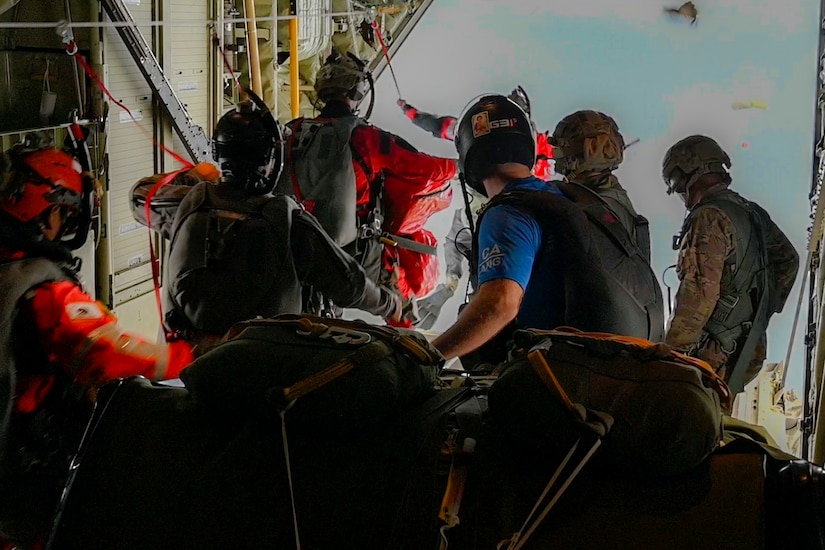
A Guardian Angel pararescue team assigned to the 129th Rescue Wing, California Air National Guard, stabilized a Filipino mariner aboard the Panamanian-flagged cargo ship Grand Vega after reports of stroke-like symptoms during a two-day search and rescue operation approximately 700 nautical miles off the California coast. 

Four people stand at the door of an open aircraft and prepare to jump.

U.S. Coast Guard District 11 relayed the alert in coordination with the Air Force Rescue Coordination Center. The Grand Vega was crewed primarily by Filipino mariners. 

The wing launched an HC-130J Combat King II on Sept. 18, carrying five Guardian Angel team members — pararescuemen and a combat rescue officer — to plan for various sea state contingencies and ensure the team could access the ship upon arrival. Pre-mission planning emphasized multiple insertion options for varying sea states to ensure patient care would not be delayed by conditions. 

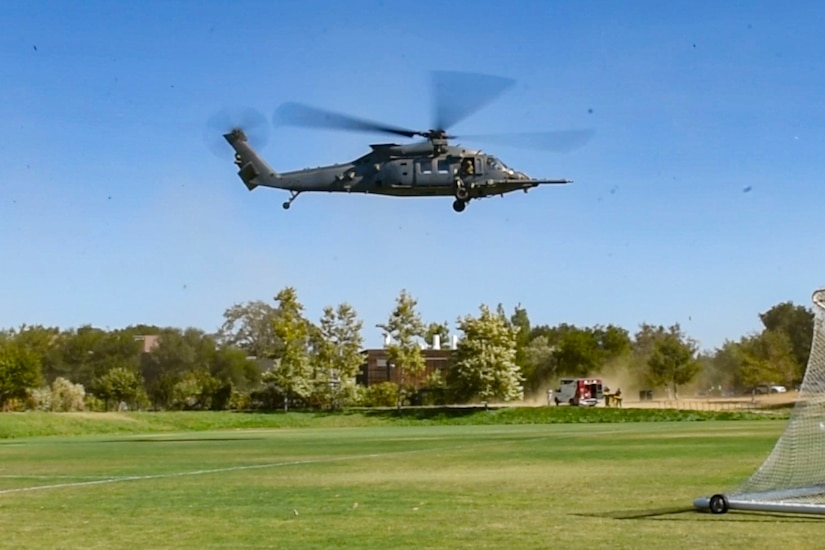
Four pararescuemen conducted a maritime parachute insertion with a boat package, accessed the vessel, and moved below deck to assess and stabilize the patient for transfer. A follow-on recovery package launched from Moffett Air National Guard Base the next morning. The package included one HH-60G Pave Hawk and one HH-60W Jolly Green II, while an additional HC-130J provided command-and-control and air-to-air refueling support. 

A helicopter hovers in a blue sky over a grassy field with trees in the background and a soccer goal in the foreground.

"This mission demonstrates disciplined planning, swift insertion and expert patient care at an extreme distance," said Air Force Maj. Coda Brown, 129th Operations Group. "Our Guardian Angel teams, rotary-wing crews and HC-130J aircrews integrate seamlessly with the U.S. Coast Guard to save lives when both minutes and miles matter."  

Brown noted that interagency cooperation is critical to maritime safety and security in the Pacific region. 

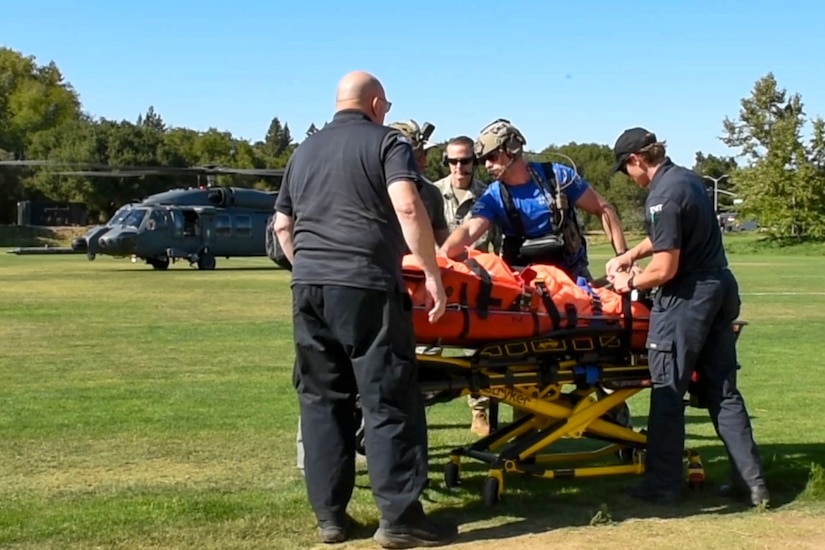
The patient was hoisted to a helicopter and transported to Stanford Hospital, where local paramedics were staged at the landing zone to complete the handoff for a higher level of care. Officials said the rapid transfer is expected to improve the patient's outcome. 

"I am incredibly grateful to be part of this mission, but most importantly, I am happy the patient received the care he needed, and all members returned home safely," said a pararescueman with the 131st Rescue Squadron. 

Unit officials said the operation is recorded as the wing's first life saved with the HH-60W and possibly the final life saved with the HH-60G, marking a conversion milestone for the 129th Rescue Wing. Unit leaders said this achievement underscores the wing's ongoing commitment to modernizing its fleet and maintaining high operational readiness, adding that the response reinforces the 129th Rescue Wing's enduring ties with key partner nations and allies, including the Philippines, and demonstrates the unit's commitment to saving lives. The mission's strategic effects build Pacific proficiency and validate the wing's vital role in the region. 

Five people secure a person to a medical transport stretcher in a grassy field with a helicopter behind them.

Behind the scenes, maintainers, weather and intelligence professionals, aircrew flight equipment specialists, logistics personnel, communications experts, command post staff and medical specialists enabled the response. 

The 129th Rescue Wing provides worldwide combat search and rescue, as well as civil search and rescue capabilities. The wing operates HH-60G/HH-60W helicopters, HC-130J aircraft and Guardian Angel teams in support of joint and interagency partners, including the Coast Guard. 

The mission marks the wing's 1,169th life saved.


Security Forces in Alaska Take Part in Specialized Training

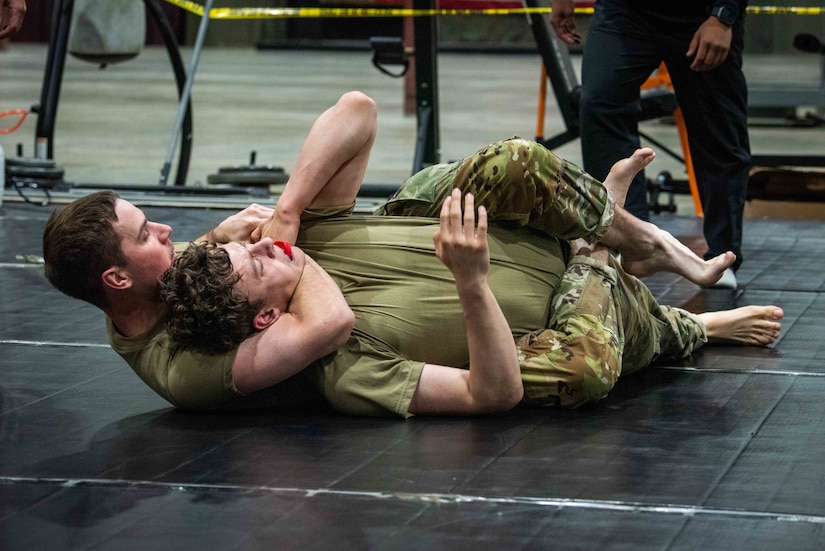
Eight airmen assigned to the 673rd Security Forces Squadron participated in a Fly Away Security Team training course at Joint Base Elmendorf-Richardson, Alaska, Sept. 15-19.

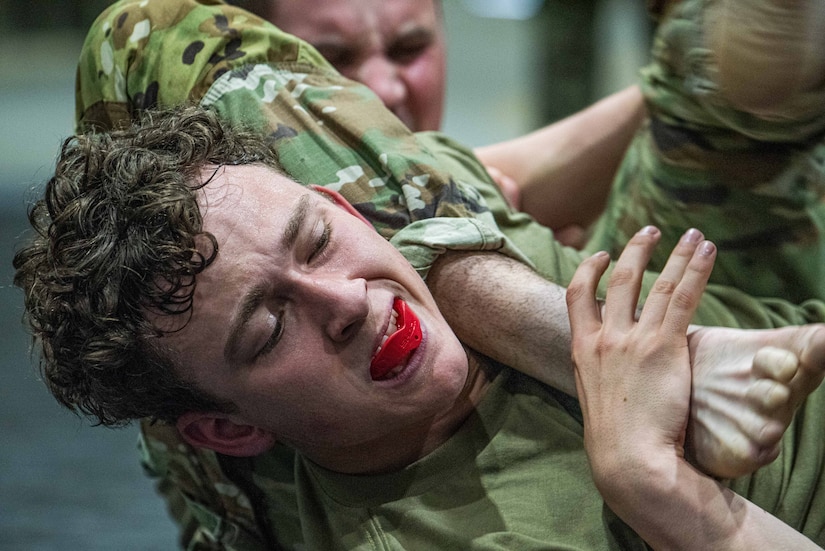
Two men dressed in camouflage military uniforms wrestle during combatives training. One man has a red bite guard in his mouth.

 
Fly Away Security Team training is a five-day, 40-hour course that challenges airmen physically and mentally to enhance their lethality while protecting aircraft, aircrew, cargo and distinguished visitors during operations on austere airfields. 
 
They aid in humanitarian missions and War Department operations; their missions typically involve providing a security perimeter around aircraft at unsecured, foreign airfields.

Two men wearing camouflage military uniforms wrestle during combatives training. One man has a red bite guard in his mouth.

 
"Fly Away Security is a certification that should carry a lot of weight — it is not for your average security forces member," said Air Force Staff Sgt. Taylor Davis, 673rd Security Forces Squadron noncommissioned officer in charge of small unmanned aircraft systems. "Here at [Joint Base Elmendorf-Richardson], we hold the FAST to a higher standard, and we train them at a higher standard; we train them to win." 
 
During the course, students undergo combat and hands-on training. They work through real-world simulations, demonstrating skills they have learned throughout the week. Some of the training included peer-on-peer wrestling, baton evaluation and flightline training with a C-17 Globemaster III assigned to the 517th Airlift Squadron.

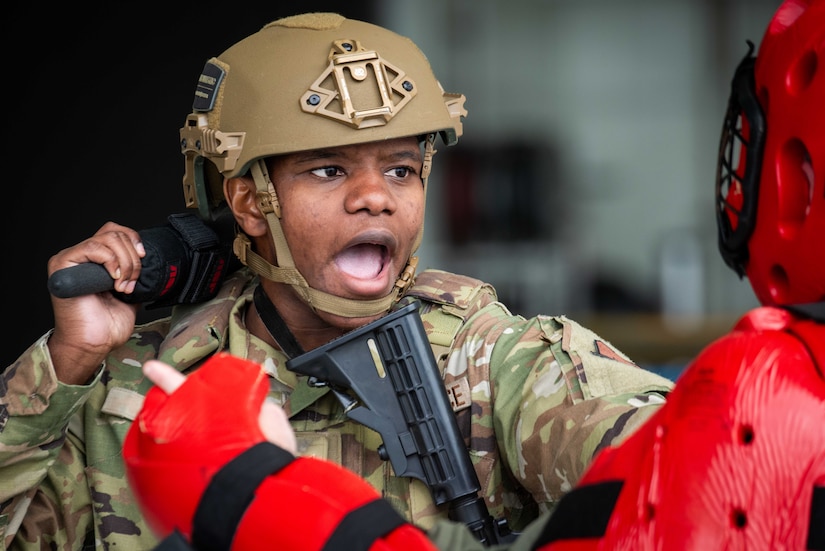
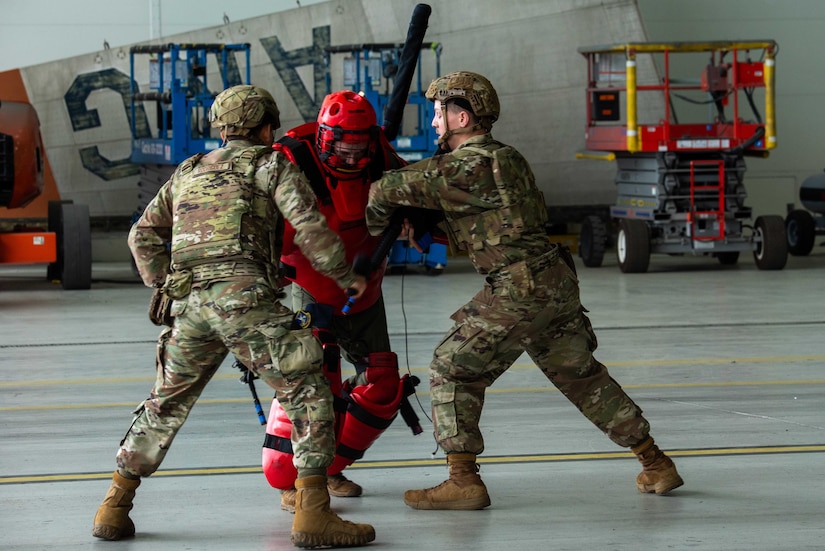
A man wearing an advanced combat helmet and camouflage military uniform swings a baton at a person wearing a red padded suit during baton combatives training.
Two men wearing advanced combat helmets and camouflage military uniforms push a person dressed in a red padded suit and helmet during combatives training.
"We train our members to go out to these austere locations or airfields that do not have adequate security," said Air Force Tech. Sgt. Adam Stanley, 673rd Security Forces Squadron base defense noncommissioned officer in charge. "They have been trusted in protecting personnel and assets to provide a safer environment within their area of responsibility." 
 
The 673rd Security Forces Squadron conducts FAST training courses multiple times a year, not only for its own members but also for other Air Force units. They plan to expand the program to enhance security for airfields and aircraft.

Green to Gold: Alaska Guardsman Embarks on Path to Leadership

The leaves aren't the only thing changing in Alaska this fall. For Cadet Gabriel Gravel, an Alaska National Guardsman attending the University of Alaska Anchorage, transformation is also happening on his journey from enlisted soldier to officer candidate through the Army's Green to Gold program.

Gravel joined fellow ROTC cadets from his school, as well as the University of Alaska Fairbanks, for the annual joint fall field training exercise at Joint Base Elmendorf-Richardson, Alaska, Sept. 17-20. During the multiday event, cadets were challenged with land navigation, patrolling and obstacle courses, all while developing the leadership traits needed to earn a commission. 

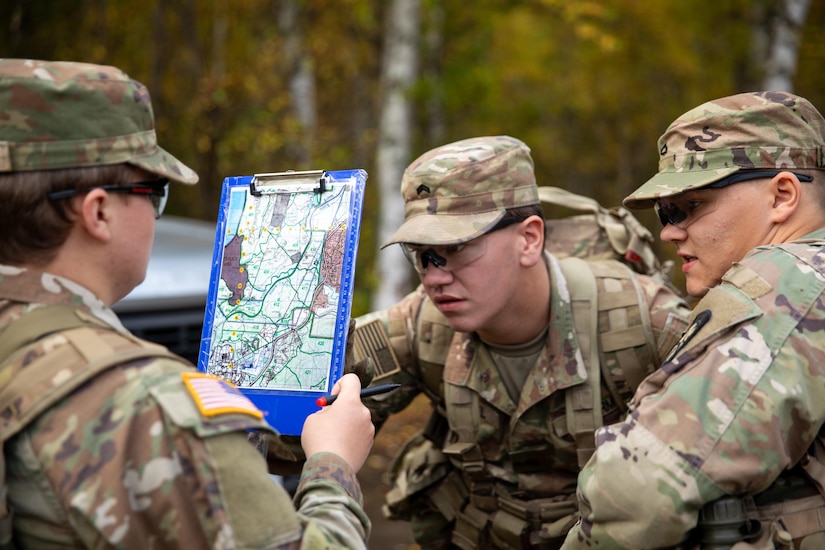
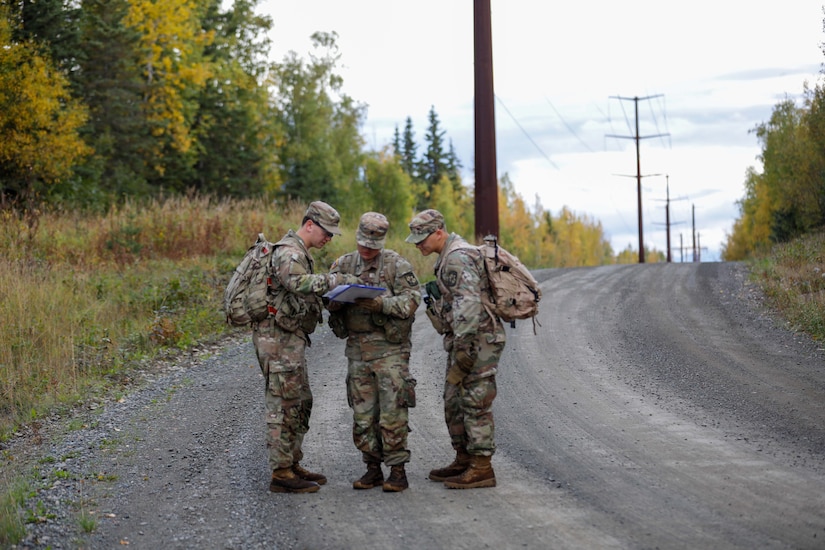
Two soldiers wearing camouflage military uniforms look at the back of a clipboard, while another soldier in similar attire holds it up while looking at a map attached to the clipboard.

The Green to Gold program provides enlisted soldiers with the opportunity to pursue a college degree while preparing to become Army officers. For Gravel, the transition builds on years of exposure to the Army, first in Junior ROTC, then as an enlisted soldier before stepping into the cadet role. 

"When I was in JROTC, I talked to senior and retired officers — lieutenant colonels and majors," he said. "I picked their brains, and it led me toward something I wanted to do." 

Additionally, Gravel said his enlisted experience provides an advantage in ROTC training and defines the type of officer he wants to become.

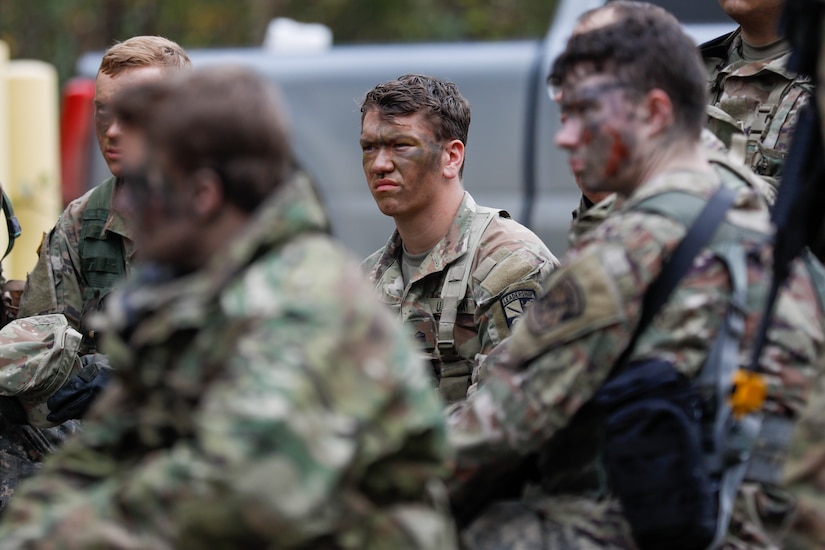
A group of soldiers wearing camouflage military uniforms and face paint, sits and listens to a person not pictured.

"I want to be a humble officer [who] can work together with [noncommissioned officers]," he said. "Overall, officers' knowledge complements NCOs' skills." 

That perspective guided him through the field training exercise as he leaned on lessons learned from the enlisted side of the Army. The exercise reminded Gravel that leadership is about teamwork, not individual achievement.

Three soldiers wearing camouflage military uniforms and backpacks stand on the side of a gravel road looking at a map attached to a clipboard.

"No matter how you think — it should end up with one common goal and you're all going to get it done together," he said. 

Gravel credits his peers for building his confidence, even when facing obstacles like the rope climb. 

"By the end of the [exercise], I was way more confident," he said. "Everybody trusted me more than I trusted myself." 

Looking back, Gravel said the experience reinforced both humility and resilience. He encourages other cadets to embrace the challenge. 

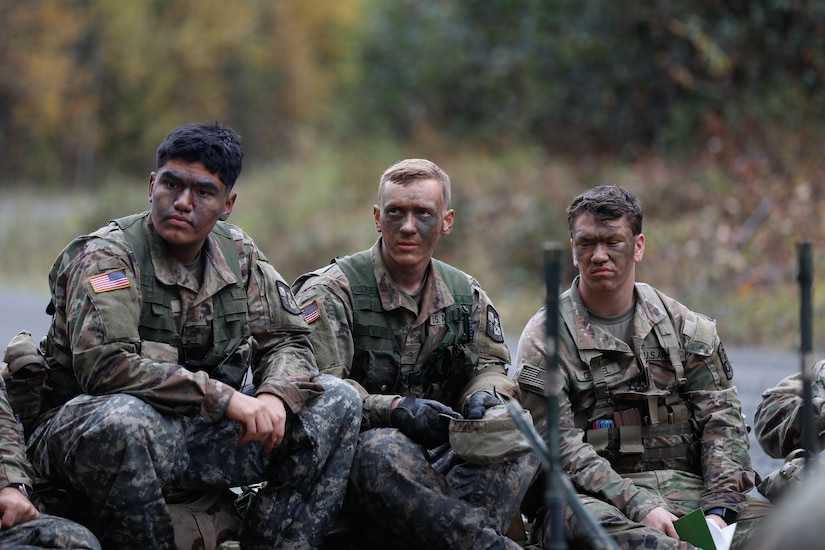
Three soldiers wearing camouflage military uniforms and face paint sit while looking to their left.

"Don't be afraid to embrace the suck," he said. "It might be raining, it might be 120 degrees, but the best thing is that you're doing it with other cadets next to you." 

Ultimately, for Gravel, the Green to Gold program is more than a path to a commission. It is a journey where lessons from enlisted service meet the challenges of officer training, shaping a leader who values trust, teamwork and courage. 

"They are going to rely on me, so I have to believe in myself to achieve the mission," he said. "No matter what, I'll always do what's necessary for both me and my battle buddies to accomplish our mission." 

U.S. Navy to Christen Future USS Louis H. Wilson Jr.


SEPT. 26, 2025 The U.S. Navy will christen the future USS Louis H. Wilson Jr. (DDG 126), during a ceremony at General Dynamics Bath Iron Works (BIW) on Saturday, September 27, at 10:30 a.m. (EST).

The principal address will be delivered by Commandant of the Marine Corps, Gen. Eric Smith; Additional speakers include Governor of Maine, Janet Mills; U.S. Senator of Maine Angus King; Assistant Secretary of the Navy for Research, Development, and Acquisition, Jason Potter; Deputy Chief of Naval Operations for Integration of Capabilities and Resources, Vice Adm. Brad Skillman; Medal of Honor Recipient, Col. Harvey C. Barnum, Jr.; and President of General Dynamics Bath Iron Works, Chuck Krugh.

In a time-honored tradition, ship sponsors Janet Wilson Taylor, daughter of the namesake and Susan J. Rabern, former Assistant Secretary of the Navy for Financial Management and Comptroller, will christen the ship by breaking a bottle of sparkling wine across the bow.

The ship is named after Gen. Louis Hugh Wilson Jr., a World War II and Vietnam War veteran who was awarded the Medal of Honor for his heroism during the Battle of Guam. Following his service in Vietnam, he served as the 26th Commandant of the Marine Corps from 1975 to 1979.

The christening of DDG 126 symbolizes the Navy's 250-year commitment to innovation and maritime dominance. From seabed to space, the Navy delivers power for peace – always ready to fight and win. This milestone marks the Navy's enduring legacy and commitment to shaping the future of maritime power.

Arleigh Burke-class Flight III destroyers feature the AN/SPY-6(V)1 Air and Missile Defense Radar and incorporate upgrades to the electrical power and cooling capacity plus additional associated changes to provide enhanced warfighting capability to the fleet. Future destroyers Harvey C. Barnum Jr. (DDG 124), Patrick Gallagher (DDG 127), William Charette (DDG 130), Quentin Walsh (DDG 132), John E. Kilmer (DDG 134), Richard G. Lugar (DDG 136), and J. William Middendorf (DDG 138) are also in production at BIW.

Media may direct queries to the Navy Office of Information at (703) 697-5342.


Wednesday, September 24, 2025

VA Awards $84 Million in Grants to Aid Homeless and At-Risk Veterans

 September 24, 2025

WASHINGTON — In a major push to address veteran homelessness, the U.S. Department of Veterans Affairs (VA) is allocating $84 million in grants to 176 nonprofit and community organizations nationwide. 

The funding is evenly split: $42 million is earmarked for legal services, while another $42 million is dedicated to case management.


Legal Services: Preventing Evictions, Resolving Disputes

The legal services grants will be channeled through the VA’s Legal Services for Homeless Veterans and Veterans At-Risk for Homelessness Grants program.  Veterans will receive support in areas such as:

  • Landlord-tenant disputes to prevent eviction

  • Family law matters (child support, custody proceedings) and estate planning

  • Securing state and federal benefits

  • Legal defense in criminal proceedings (e.g. warrants, fines, driver’s license issues)


Case Management: Supporting Housing Stability

The case management portion of the grants is administered via the VA’s Grant and Per Diem (GPD) program, which focuses on helping formerly homeless or at-risk veterans maintain stable housing. 

Approximately 100 new case manager roles will be funded. These professionals will:

  • Assist veterans in identifying and securing suitable housing

  • Conduct home visits to monitor housing stability and service needs

  • Support veterans’ access to education and empowerment resources 


Context and Reaction

VA Secretary Doug Collins emphasized the urgency of the initiative:

“No one who served our nation in uniform should go without shelter. These grants will provide crucial support and services to help thousands of Veterans on their journey back to self-sufficiency.” 

The announcement arrives amid signs of progress: a 2024 VA point-in-time count reported 32,882 veterans experiencing homelessness — a record low and a 7.5 percent decline from 2023 levels. ) The decline is part of a long-term trend: since 2010, veteran homelessness has dropped by more than half, according to analysis cited by Newsweek.

Advocacy groups such as the National Coalition for Homeless Veterans (NCHV) have long pushed for stronger legal aid and wraparound support for veterans, noting that legal troubles and unstable housing often go hand in hand.


What Veterans Can Do

Veterans experiencing homelessness or at risk of losing housing can:

  • Call the National Call Center for Homeless Veterans at 1-877-4AID-VET (1-877-424-3838) 

  • Visit the VA Homeless Programs website for eligibility information, grant awardee lists, and other support resources


This funding round joins a broader VA effort: recently the department awarded $818 million to support veteran homelessness through similar programs in fiscal year 2026.

Department of War Approves $90 Million in Grants Under the Defense Community Infrastructure Program

Today, the Department of War awarded ten Defense Community Infrastructure Program (DCIP) grants from the Office of Local Defense Community Cooperation, totaling approximately $90 million. DCIP is a competitive program for states, territories, and communities to undertake infrastructure enhancements to support military value, the training of cadets at independent "covered educational institutions," installation resiliency, and/or family quality of life that benefits their local installations.

On August 15, the Assistant Secretary of War for Energy, Installations, and Environment instructed the Office of Local Defense Community Cooperation to invite grant applications for ten projects based on a competitive ranking of all proposed projects in response to a May 27, 2025, DCIP Notice of Funding Opportunity.  

These awards derive from Fiscal Year 2025 appropriated funding and leverage an additional $59.9 million in non-federal funding, for a total investment of approximately $150 million. 

"Enhanced partnerships with state and local communities are critical to the success of our installations and their missions," said Mr. Dale Marks, Assistant Secretary of War for Energy, Installations, and Environment. "The Defense Community Infrastructure Program continues to play a vital role in building and maintain these successful partnerships. This year's program continues to build on the Department's efforts to invest in critical infrastructure with our defense communities to enable the readiness and lethality of our installations." 

The Fiscal Year 2025 grant awards are as follows: 

$14 million federal grant to North Slope Borough, Alaska, to undertake a $23.5 million project to install high-speed fiber optic telecommunications infrastructure to Point Barrow Long Range Radar Site. The project supports the readiness and lethality of Joint Base Elmendorf-Richardson.

$2.6 million federal grant to Golden Valley Electric Association, Inc., Alaska, to undertake a $2.7 million project to install critical electrical infrastructure to the Murphy Dome Long Range Radar Site. The project supports the readiness and lethality of Joint Base Elmendorf-Richardson.

$13 million federal grant to Golden Valley Electric Association, Inc., Alaska, to undertake a $13.3 million project to construct a new switching substation, upgrade an existing substation, and improve communication systems. This project supports the readiness and lethality of Eielson Air Force Base. 

$7 million federal grant to North County Fire Protection District, California, to undertake a $13.9 million project to construct a fire station that will enhance emergency response resources and mitigate impacts of wildfires on training and mission readiness. The project supports the readiness and lethality of Marine Corps Camp Pendleton and Naval Weapons Station Seal Beach, Detachment Fallbrook.

$5.7 million federal grant to the Southeastern Connecticut Council of Governments, Connecticut, to undertake a project to replace 11,700 linear feet of a water main to enhance water supply infrastructure. This project supports the readiness and lethality of Submarine Base New London.

$4.8 million federal grant to the Port Authority of Guam to undertake a $6.9 million project to execute near-term structural and safety upgrades to stabilize the pier, extend its operational life, and maintain critical functionality. The project supports the readiness and lethality of Joint Region Marianas.

$10 million federal grant to the Oklahoma Department of Transportation, Oklahoma, to undertake a $35.8 million project to reconstruct a segment of US-69 and replace the Peaceable Creek bridge. The project supports the readiness and lethality of McAlester Army Ammunition Plant.

$11.9 million federal grant to the City of Chesapeake, Virginia, to undertake a $29.9 million project to construct a waterline. The project supports the readiness and lethality of Naval Support Activity Hampton Roads.

$20 million to Kitsap County Public Works, Washington, to undertake a $40 million project to construct a 1.4 million gallon per day anaerobic digester, yard piping, and a digester control building. The project supports the readiness and lethality of Naval Base Kitsap.

$300,000 federal grant to the City of Everett, Washington, to undertake a $800,000 project to construct a police boathouse facility. The project supports the readiness and lethality of Naval Station Everett.

Groundbreaking on these projects may commence once all environmental requirements have been met.  

The Defense Community Infrastructure Program is authorized under 10 U.S. Code § 2391.

National Guard Exceeds 2025 Recruiting Goals

Amid a historic surge in military recruiting, the National Guard exceeded its fiscal year 2025 goals, reflecting a broader trend of robust enlistment across the U.S. military. 

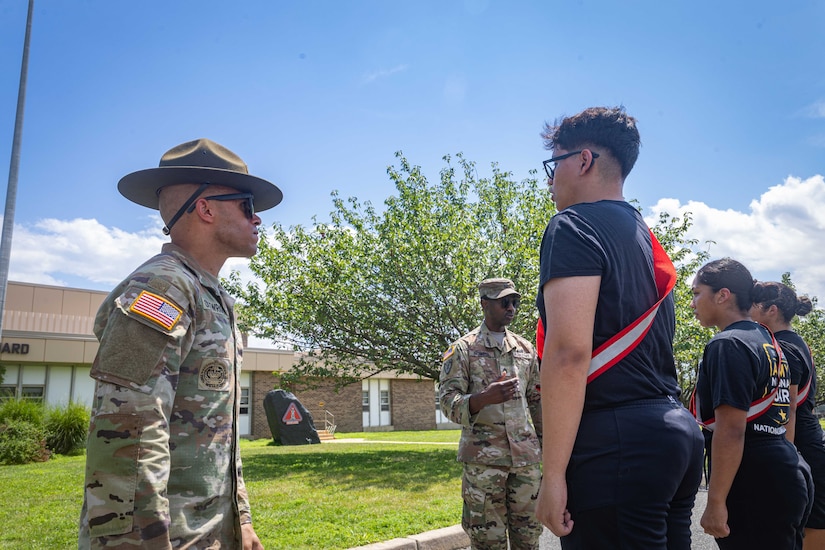
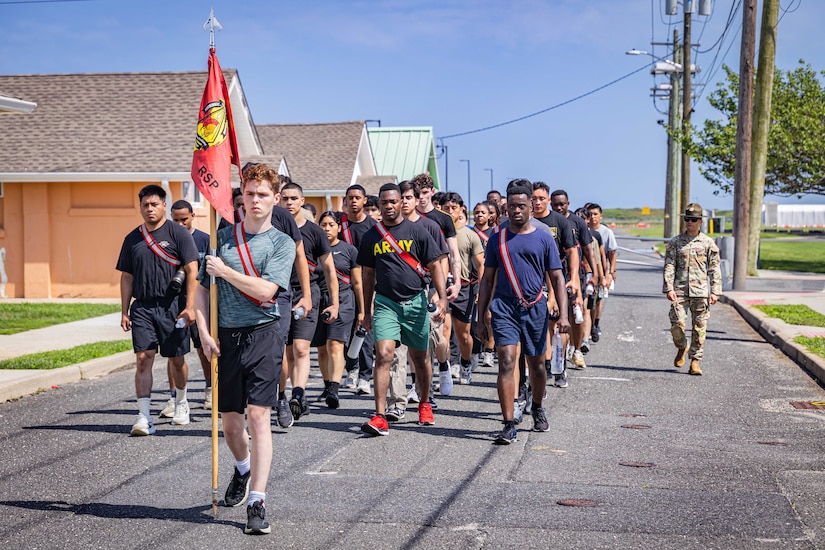
A man wearing a camouflage military uniform and sunglasses stares at a man dressed in civilian attire while standing in formation. In the background, another man, wearing a camouflage military uniform, gestures to two women in civilian attire who are also standing in formation.

Since November 2024, the War Department has achieved its strongest recruiting performance in 30 years, with fiscal year-to-date accessions as of the end of August reaching 106% of active-duty targets.  

The Army National Guard and the Air National Guard have combined to enlist almost 50,000 new members this fiscal year as of this month, bringing total National Guard end strength to over 433,000, surpassing each component's goals and marking one of the most successful recruiting years in over a decade. 

"Young Americans are eager to serve," said Air Force Gen. Steve Nordhaus, National Guard Bureau chief. "Today's recruits are seeking long-term value, and the National Guard delivers through career training and hands-on, practical experience in more than 200 career specialties. 

A group of men and women, all dressed in civilian attire, march in formation as a man in civilian attire leads the group, carrying a flag attached to a pole. A man wearing a camouflage military uniform marches to the right of the formation.

"The guard provides a path to service that offers balance with civilian careers and allows our soldiers and airmen to live locally and serve globally," he said. "We're not just preparing new recruits to serve; we're preparing them to lead and succeed." 

Nordhaus emphasized the guard's value, providing 20% of the joint force at 4% of the DOW budget, and its core missions — defending the homeland, supporting the fight, building partnerships and supporting warfighters and their families — which demand wide-ranging skill sets. He noted that the National Guard aligns with the Interim National Defense Strategy Guidance, which prioritizes homeland defense, deterrence in the Indo-Pacific region and burden sharing with allies and partners. 

"The guard is central to President [Donald J.] Trump's vision of peace through strength and Secretary [Pete] Hegseth's focus on restoring the warrior ethos, rebuilding the military and reestablishing deterrence," Nordhaus said. "Recruits are proving they're energized to contribute to that." 

In March, the Army National Guard launched a new marketing campaign to attract young people to part-time service. The campaign, "Uncommon is Calling," highlights the dual lives of guardsmen, who balance civilian careers with essential roles during emergencies and national crises. It emphasizes the unique opportunities for personal and professional growth available within the guard. 

Striking the civilian-military balance is exactly what attracted Army Spc. Bruno DaSilva, who is assigned to the 1060th Transportation Company of the Massachusetts National Guard. 

"Outside of the National Guard, I have my own company … I'm in the insurance business," DaSilva said. "In the National Guard, I can serve my country and run my business at the same time." 

The Army National Guard has focused most of these marketing ads online and on digital streaming services, with some spots airing on traditional television. 

Army Col. Timothy Smith, chief of the Army National Guard's Strength Maintenance Division, said the campaign has helped deliver new awareness of the opportunities of serving in the Army National Guard. 

"The branding refresh of 'Uncommon is Calling' brings a fresh perspective to the unique dual mission of the Army National Guard," he said. "The campaign highlights the most uncommon, exciting and meaningful part-time job out there: serving in the Army National Guard." 

Army Pvt. Ethan Walling enlisted in the Virginia National Guard this summer to serve as a motor transport operator. He said serving in the guard fulfills a lifelong dream. 

"It has always been my dream to be in the military," Walling said. "Since I was 7 years old, I would play with my miniature Army men, and I would always tell my mom that I was going to join one day. After talking with a National Guard recruiter and hearing that I could receive federal and state benefits, I knew that the guard was my calling." 

Walling said the guard has given him "purpose, pride and opportunity," and he is excited to see how the journey shapes his future. 

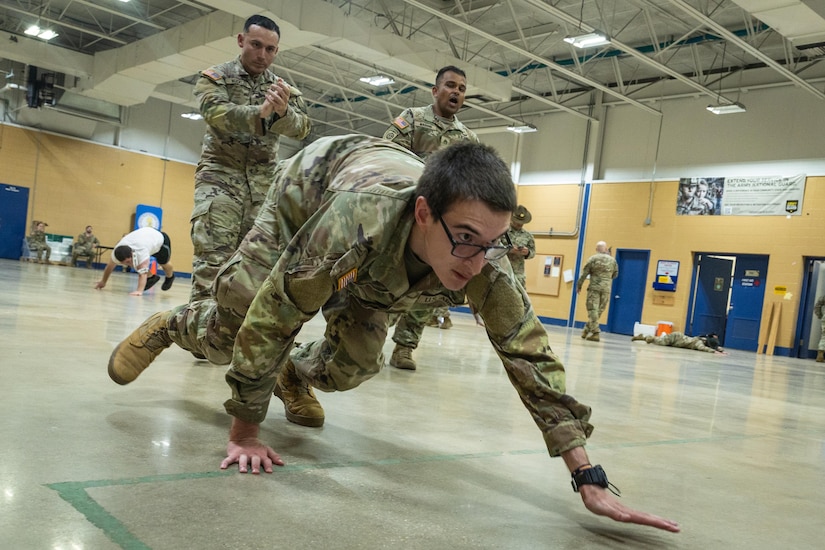
A man wearing glasses and a camouflage military uniform crawls across a gym floor as two other men, also dressed in camouflage military uniforms, yell at him.

"The National Guard has been nothing short of a family since the beginning, and I believe I have finally found the perfect balance between serving my country, supporting my community and pursuing my personal goals," he said. 

In addition to the marketing campaign, Smith also credits the recruiters in every state, three territories and Washington — collectively known as "the 54." 

"Our recruiters' dedication across the 54 drives this success," he said. "Their hard work is the bedrock of our readiness. The organization has made recruiting and end strength priorities because if you can't fill your end strength, you can't be ready; they're tied together. Our readiness starts with our recruiters." 

The Army National Guard has surpassed 328,000 soldiers in end strength — the total number of authorized service members needed to meet mission requirements. Smith highlighted the Army's Future Soldier Preparatory Course as another initiative that has also helped the Army National Guard attract potential soldiers. 

Through the course, the Army provides focused academic and fitness instruction for those who have the desire to work hard to achieve Army standards. The program is a bridge to basic training and, ultimately, assignment to a unit. To date, nearly 7,000 Army National Guard recruits have successfully entered basic training through the future soldier course. 

In March, Nordhaus and Senior Enlisted Advisor John Raines visited the future soldier course at Fort Jackson, South Carolina, to meet with National Guard cadres and trainees. 

"We're a team of teams," Raines told a group of trainees who had completed the program. "And we need every committed American who wants to serve, even if they aren't meeting the standards when they make that decision. This program helps them reach their potential and ensures we have high-quality soldiers in our formations, because the standards won't change." 

Raines also praised the Army National Guard's Recruit Sustainment Program, established in the mid-2000s to reduce attrition and prepare recruits for basic combat training and follow-on advanced individual training. Army National Guard recruiting and retention battalions operate sustainment program sites in every state, territory and Washington. 

"Everybody has a place in the National Guard," he said. "We will find you a place where you can serve your community, your state, your territory or district and our nation." 

The Air National Guard also beat its fiscal year recruiting goals and is on track to surpass 105,000 airmen by the end of the fiscal year. Air Force Col. Daniel Curtin, Air National Guard Recruiting and Retention director, said recent Air National Guard recruiting success is driven by numerous indicators. 

"It's a lot of things," Curtin said. "We've had 19 consecutive months of year-over-year increases in new accessions. The recruiting environment is strong … and we have worked diligently to establish a culture of excellence and opportunity that appeals to potential recruits. The results are evident." 

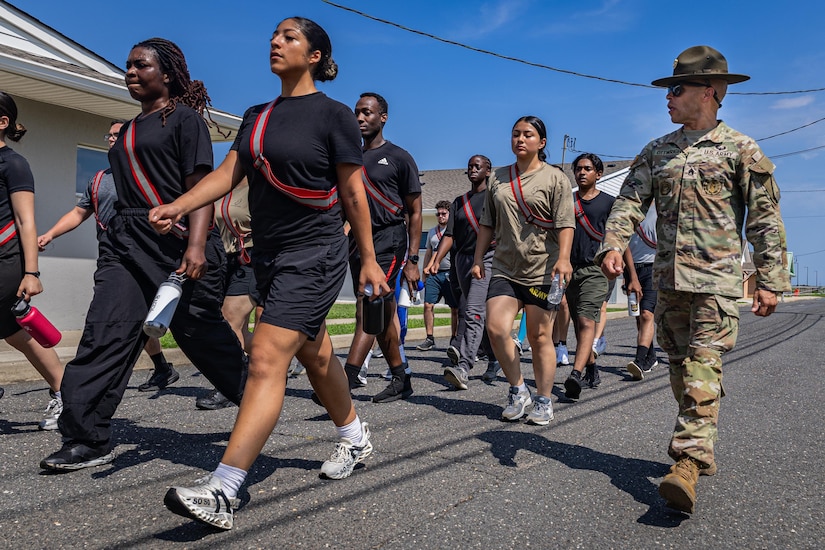
A group of men and women dressed in civilian attire marches in formation, with a man wearing a camouflage military uniform and sunglasses marching alongside the formation.

Curtin explained that the Air National Guard is working to centralize recruiting efforts within each state, territory and Washington. Previously, Air National Guard recruiting operational alignment varied. Some operated under a wing, or a force support squadron, while others worked under a state's joint forces headquarters. Now, Air National Guard recruiting headquarters will operate as separate flights or squadrons, dedicated solely to recruiting and retention. 

"The biggest thing we are trying to do is create a structure where you have a single officer that is responsible for the recruiting force in that state or territory," Curtin said. "It is a formally appointed commander responsible for recruiting. That's probably the most important thing that we're driving out of this, because that allows us to do a lot of other things." 

Curtin added that he believes that the most important initiative in FY25 was the strategic investment in personnel and infrastructure, specifically the funding of 150 temporary recruiting support positions and 210 temporary unit manning document positions.  

"These roles have been critical in enhancing recruiting operations, including production activities, marketing, medical support, training, and administrative efficiency. By bolstering the recruiting command structure and providing targeted resources, the [Air National Guard] has created a robust framework that directly supports its historic accession achievements." 

Nordhaus said he is excited about this year's recruiting numbers and emphasized that the National Guard needs to maintain this momentum. 

"The source of our strength is the fearsome deterrence of our warfighter talent — the men and women of the National Guard," he said. "While we exceeded our goals with historic levels of recruiting this year, we cannot take our foot off the accelerator. We must continue recruiting the next generation of elite warfighters while retaining our most skilled and talented soldiers and airmen."