by Senior Airman Nathan Maysonet
47th Flying Training Wing Public Affairs
2/20/2013 - LAUGHLIN AIR FORCE BASE, Texas -- Using
the Air Force's Smart Operations for the 21st Century Program, members
from the 47th Maintenance Directorate and 47th Operations Group
developed a plan to trim hours required to maintain Laughlin's aging
fleet of T-38 Talon aircraft.
The eight-member team spent last week using AFSO 21's multi-step,
continuous process improvement system to review how the T-38 is
maintained from start to finish when new inspection guidelines were
added risking impact to Laughlin's mission of training world-class
pilots.
"This was the perfect opportunity to put a team together and further
advance our innovative Team XL culture to improve our processes," said
Col. Tom Murphy, 47th Flying Training Wing Commander.
"Adopted by the Air Force and based on private sector Knowledge, AFSO 21
is geared at finding wasted efforts in how organizations work and
developing innovative means of improving those processes," explained
Robert Wade, 47th MX Chief of Data Management and AFSO 21 Facilitator.
AFSO 21's innovative process was critical in confronting an issue facing
Laughlin maintainers. The T-38 fleet is more than 40 years old, and age
breeds problems that can impede pilot training.
"As an aircraft flies through the air, its frame flexes," said Philip
Pulliam, 47th MX Strategic Plans and Programs Manager and AFSO 21 Team
Leader. "The metal begins to harden as it ages and becomes brittle and
begins to crack. With no replacement on the horizon for the T-38, a
solution had to be found."
"To keep Laughlin's current fleet operational, the T-38 is required to
undergo an inspection every 450 hours. At the Air Force's busiest
airfield, this number is quickly hit," said Pulliam.
New inspection requirements mandated by new technical data to counter
the airframe problems growing in the aging fleet were tacked on to
Laughlin's current periodic inspections and that's when the maintainers
hit a snag.
"The minor periodic inspections can be simple and take only seven to
eight days. However, more comprehensive, periodic inspections require
the T-38 to be grounded for close to a month. The additional inspections
added close to 45 days of work to the already time-consuming periodic
inspections, making it impossible for the maintainers to fully support
the wing's T-38 flying-hour requirements," said Pulliam.
That's when Michael Johnson, 47th FTW Director of Maintenance, called
for the AFSO 21 event to find a way to complete the inspections while
ensuring pilot training went unaffected.
"I directed this AFSO 21 event to solve an equation consisting of
unequal parts of workload, manpower, and time. The new inspection
increased the amount of time and workload without providing for
additional manpower to complete these inspections on our T-38 aircraft,"
said Johnson. "The AFSO 21 process is perfectly suited to examine in
detail all elements of that equation and balance them to where we can
once again fully support the T-38 flying mission."
The team met together on Jan. 18 and 25, for two preliminary meetings
before officially beginning their week-long rapid improvement event.
Pulliam explained that the initial events allowed the team members, who
each play a part in maintaining the T-38, to see the complete process
from beginning to end.
"We looked at the plane from 'chock to chock'," said Pulliam. "From when
the aircraft lands until it was ready for another mission, we looked at
everything to find the best way to implement. The wheels were turning
and the team saw where things were working and where they weren't."
From Feb. 4-8, on a long sheet of paper stretching from wall to wall,
the team began placing countless little yellow sticky notes detailing
each individual process in the T-38 maintenance chain, which provided
the members a vivid and daunting picture, explained Pulliam.
The team reviewed each step, discussed the strengths and weaknesses of
each and brainstormed ideas on how to make them better. What they found
was a lot of waste that could be trimmed from the process and procedures
that could be improved by simply shuffling the order in the chain, said
Pulliam.
"The process identified areas where there was no value added, meaning
non-production time on the aircraft," said Pulliam. "Things like waiting
around for paint and sealant to dry which can take 12 to 18 hours, or
moving the aircraft from one location to another when you could simply
consolidate the pieces in one location."
With each new idea the long sheet of notes began to shift and shorten,
numbers were written indicating hours saved by each shift in the
process. And when all was said and done they had made an impact.
The overall process had cut nearly in half, from more than 600 hours to about 300; a 48 percent improvement, explained Pulliam.
Already, changes are being put in place to revitalize T-38 maintenance
with the final pieces scheduled to be in place by August. Hanger Two
will become the focal point for T-38 inspections; the structural
inspection will be kept separate from the regular T-38 periodic
inspections, new tools will be purchased reducing time spent on removing
paints, sealants and fasteners, and numerous work steps were ordered,
helping to reduce unproductive time, explained Pulliam.
Wade, who hosted several AFSO 21 events in the past, commended the group
for their work, how smoothly the event went and their quick
implementation of recommended ideas.
"This team did some amazing things and kept moving to logical and
interesting countermeasures to the problem," said Wade. "The team tested
many ideas during the week to see if their ideas could meet reality.
They were enthusiastic."
AFSO 21 did more than just reduce maintenance time. The team's work
potentially saved Laughlin and the Air Force countless dollars in line
with the Air Force's Cost Conscious Culture, explained Pulliam.
"This defined the kind of innovation we need in today's environment and
we are challenging every unit to make sure they are doing everything in
the most efficient and effective way possible," said Col. Murphy.
The AFSO 21 Team showcased Laughlin's level of ingenuity and resolve needed in today's fiscal climate.
"By thinking outside of the box and examining how we use our resources
to be most effective, the team managed to reduce the time in half to
complete the new inspection requirements," said Johnson. "They are to be
commended for putting aside their preconceptions, looking at the
process with fresh perspectives, and working together to solve this very
difficult problem."
Monday, February 25, 2013


Battle drills the Arctic Defender way

821st Air Base Group
2/25/2013 - THULE AIR BASE, Greenland -- Over the past several years, installation security has evolved from air base defense, to integrated base defense, to integrated defense. The Arctic Defenders of the 821st Security Forces Squadron at Thule Air Base have embedded integrated defense within our actions and everyday thinking.
As an installation, we grasp the concepts and functions of integrated defense and have taken continuous stringent practices to implement perfected procedures in the Arctic region. Through developed training methods, technology and base operations, we have applied advanced measures to deter, detect and defeat any potential threat by acting rather than reacting and thereby making the installation a harder target for potential terrorist threats.
The goal and standard of integrated defense training is to increase readiness and provide opportunities to better prepare us for worst-case scenarios. The 821st SFS has created realistic training scenarios that apply to our local threat and our facilities to better handle any situation we may be faced with and must overcome.
More specifically, we have initiated the use of battle drills. Battle drills are basically minimal orders from leaders applied to a small unit repetitively to ensure sequential actions become a trained response. Battle drills, most commonly utilized prior to combat operations in a deployed environment, provide standardized operating procedures and allow Airmen to train to "what if" scenarios. Additionally, Airmen train by the use of instinct and constant rehearsal which maximizes proficiency and minimizes exertion of force. Staff Sgt. Joseph Cull, 821st SFS flight sergeant, took the lead and volunteered to design the battle drills due to his extensive knowledge in security.
"Battle drills are a way to have a plan in advance for different security situations so everyone knows their role and the role of the defender next to them," Cull said. Battle drills have allowed the Airmen to tailor training to a hands-on and mission specific approach to ready Airmen and heighten security measures.
The battle drill concept was initiated using the crawl-walk-run system. The concept started at a flight sergeants meeting where potential scenarios were discussed and the concept of drills quickly took off. The scenarios included active shooter, duress, alarm response and unauthorized individual drills. The battle drills exercise any situation the responding patrols may encounter such as a downed defender, barricaded subject or downed communications. In the past, these types of responses were typically incorporated into quarterly Condor Crest, short sprint and flight level exercises. They have now become a daily part of operations. Whether it is a terrorist attack, an insider threat, or a large scale disaster, we are all susceptible. This battle drill approach provides junior Airmen an opportunity to learn invaluable leadership and communications skills in an environment that also hones their tactics, techniques and procedures.
Never content with current progress, Cull and the other flight sergeants continue to expand their efforts by integrating new scenarios into each facet of our integrated defense.
"The best thing about battle drills is that they can continue to be improved," Cull said. His enthusiasm is infectious and almost every day, he is approached by a fellow defender offering to assist with new ideas on how to respond to different incidents. He continues to improve established drills, to apply the validated upgrades, and to provide valuable training so all personnel remain technically proficient and stay on a constant paralleled regiment. These battle drills encourage constant innovation which enhances the entire team as we maintain an ever-present security footprint.
"It Takes the BEST...to Defend the REST" is the 821st SFS motto. It's an honor Defenders there truly believe and carry with them every day. Battle drills allow the Airmen to be the best and defend Thule Air Base as well as its host nation. Never being satisfied and continuing to find a better way of training, use of technology and implementing future base operations is crucial to defending the base.
The austere environment and conditions at Thule Air Base require its Airmen to be ready both as an individual and as a team. Challenges like these make readiness even more important. Battle drills keep the 821st SFS Airmen motivated, focused, trained and prepared for anything.
Royal Saudi AF's top training leader sees 'inspiration' at Sheppard

82nd Training Wing Public Affairs
2/21/2013 - SHEPPARD AIR FORCE BASE, Texas -- The Royal Saudi Air Force's top training leader visited here Feb. 21 for a first-hand look at the 82nd Training Wing and the facilities used by the Kingdom of Saudi Arabia's Airmen-in-Training.
Maj. Gen. Saeed Muedh Alzahrani, commander of the RSAF Technical Studies Institute, led the Saudi delegation during the visit. The Technical Studies Institute is responsible for all RSAF basic and technical training.
The number of Saudi airmen-in-training at U.S. air bases increased after last year's completion of a $29.4 billion Foreign Military Sales agreement for the purchase of 84 F-15SA fighter aircraft, as well as upgrading RSAF's fleet of 70 F-15S aircraft to the SA model.
Saudi airmen train directly with personnel from other services during their time here and the visit gave the RSAF delegation a chance to see the overall training life of Airmen-in-Training, regardless of country, while at the base.
"He (Alzahrani) was very interested in every aspect of our operations," said Brig. Gen. Michael Fantini, 82nd Training Wing commander. "Tthe 'inspire' piece of our wing mission statement was one of the key peices of our training that he was excited about."
Incorporating the inspiration aspect to training and making sure the RSAF Airmen are exposed to every element of the training environment was high on the priority list for the RSAF, Fantini said.
Another strong area of interest during the visit was the professional development training offered by the Air Force.
"The RSAF were very impressed with our NCO Academy," said Chief Master Sgt. Eric Johnson, 82nd TRW command chief. "Developing every aspect of their force continues to be a focal point for them."
After breakfast at the Tumbleweed dining facility and an office call with Fantini that included a wing mission briefing, the visitors were shown RSAF training areas in the 361st, 362nd and 363rd Training Squadrons.
This included apprentice course training in F-15 tactical aircraft maintenance, F-15 aircraft armament systems, munitions systems and propulsion systems.
RSAF students also got the opportunity to attend an all-call with Alzahrani at the Solid Rock Café for a question and answer session about the student experience at Sheppard.
Later in the day, the delegation viewed the RSAF dorm areas before heading to the 82nd Training Wing conference room for a round-table discussion on overall program operations.
Brig. Gen. Mohammed Abdullah Alghamdi, F-15 project officer and director of procurement, along with Brig. Gen. Abdullah Saleh Alqahtani, base training and KKT commander, were also part of the RSAF delegation.
Sunday, February 24, 2013
Commander: Public, Family Support Vital to Deployed Forces
By Donna Miles
American Forces Press Service
WASHINGTON, Feb. 22, 2013 – As U.S. forces continue to draw down in Afghanistan and the December 2014 deadline for the end of combat operations there draws steadily closer, a senior commander wrapping up his year-long deployment emphasized the importance of continued support from military families and the American public.
“You may not read about it so much anymore in the news or hear it on TV, but we out here believe that America is still strongly behind us,” Marine Corps Maj. Gen. Charles “Mark” Gurganus, commander of the International Security Assistance Force’s Regional Command Southwest, told American Forces Press Service in a telephone interview yesterday.
Gurganus and his fellow 1st Marine Expeditionary Force Marines are scheduled to return to Camp Pendleton, Calif., during the first week of March following a deployment to Afghanistan’s Helmand and Nimroz provinces. The region is among the most challenging in Afghanistan.
What sustained his forces, Gurganus said, was the bond they developed as brothers and sisters in arms, and confidence in the support of the people they left behind. That support is evident wherever they serve, he said, from encouraging emails and snail-mail letters to care packages brimming with thoughtful treats and mementos.
“The support of the American people is just huge to these Marines,” Gurganus said. “They really do want to know that people care about them and about what they are doing.”
The most important support of all, he said, comes from military families themselves.
Traveling around his battle space to bid goodbye to the forces serving there, Gurganus said, he asked them to make a point to extend thanks to their families from “the old gray-haired guy out here.”
“I just couldn’t tell the families ‘thank you’ enough,” he said. “I would never be able to express my true gratitude to the support we have gotten from them.”
It’s been a major factor, not just in troops’ sense of well-being, but in their ability to do their mission, Gurganus said.
“You can’t account for how much the support of their loved ones goes to strengthen the guy’s will to do what he is doing,” he said. “If these guys out here know they’ve got support, and the families back there are providing that support, it really does allow them to keep their minds on what they are doing out here.”
This, in turn, helps them to perform their duties better and safer -- a measure that protects them and their fellow Marines, the general explained.
Reflecting on the key role families play in mission success, Gurganus said they’re the ones who pay the biggest toll during a deployment.
“We’re trained for what we do,” he said of military members. “We train for a long time to get ready to come here. We know pretty much what is expected of us when we get here, and we have a team, … so we have somebody to lean on.”
Not so with families -- despite what Gurganus acknowledged has grown to become an extensive support network. “Nobody is standing right next to them every day,” he said. “Their world has a lot of uncertainty in it when we are gone.”
Yet their continued support will remain vital, even as U.S. forces draw down, and until the last U.S. service member returns home from Afghanistan, Gurganus said.
“So I really want to thank and admire the families for continuing to provide that level of support,” he added.
Pentagon to honor Westover Airmen Family Readiness Center March 1

439th Airlift Wing Public Affairs
2/22/2013 - WESTOVER AIR RESERVE BASE, Mass. -- Air Force Reserve Command officials announced the Westover Airman and Family Readiness Center staff won the 2012 Department of Defense Reserve Family Readiness Award in late January.
We are thrilled to carry on the outstanding legacy of the Westover Airman and Family Readiness Center, with our third win in the last five years," said Cheryl Kirkwood, center director. "We are extremely proud of the dedication and professionalism of our reservists, Key Spouses, and volunteers and all we were able to accomplish as a team in 2012."
The center won the readiness award in 2008 and 2010.
"This is further evidence of the wonderful job the entire center staff and key spouse volunteers are doing in order to take care of our Airmen, sister service members and their families," said Lt. Col. Kelly Hosey, 439th Force Support Squadron operations officer.
Westover is among the Reserve component units listed below that will receive recognition March 1 at the 2012 Department of Defense Reserve Family Readiness Awards presentation.
The Patriot Wing's family center was selected for their exemplary care of reserve families while maintaining outstanding unit readiness. The presentation will be held in the Pentagon Hall of Heroes, hosted by Richard O. Wightman, Jr., acting principal deputy assistant Secretary of Defense (Reserve Affairs).
Winning Units:
· U.S. Air Force Reserve - 439th Airlift Wing, Westover Air Reserve Base, Mass.
· Army National Guard - 842nd Engineer Company, Spearfish, S.D.
· U.S. Army Reserve - Headquarters and Headquarters Detachment, 79th Sustainment Support Command, Los Alamitos, Calif.
· U.S. Marine Corps Forces Reserve - 2d Battalion, 23d Marines, 4th Marine Division, Pasadena, Calif.
· U.S. Navy Reserve - Navy Operational Support Center Tucson, Ariz..
· Air National Guard - 147th Reconnaissance Wing, Houston, Texas
· U.S. Coast Guard Reserve - Port Security Unit 305, Fort Eustis, Va
The Reserve Family Readiness Award recognizes one National Guard and Reserve unit from each of the seven Reserve components. The winners are those units with the best programs to support their families. Representatives from each of the winning units will receive a commemorative plaque and framed certificate from Mr. Wightman. Each unit will also receive a certificate and cash award from the Military Officers Association of America. The cash award is to be used to further enhance the unit's family support programs.
The DoD Reserve Family Readiness Awards Program was established in 2000 to recognize the top unit Family Readiness program in each of the Reserve components. Family readiness programs are particularly important as the United States relies on significant numbers of reservists to serve in critical locations worldwide. Family readiness has proven to be a key component of mission readiness. Robust Family Readiness Programs have enhanced the deployability of Guard and Reserve units and they represent a vital link in the support networks for reserve families.
Reserve pararescueman aims to climb Mt Everest

920th Rescue Wing Public Affairs
2/22/2013 - PATRICK AIR FORCE BASE, Fla. -- Staff Sgt. Nicholas Gibson has spent most of his life in Florida, one of the flattest states in the nation with its highest natural point reaching 345 feet -- the lowest high point of any state in the U.S. While he loves the sunshine state and calls it home, Gibson has always had a desire to reach higher ground.
As a teenager, Gibson said he began reading books about mountaineering, an activity he could only imagine doing at the time.
"I think you always want to dream about things that are out of the ordinary for you, so I always wanted to go to the mountains and explore something different," said Gibson, who has spent most of his life living near beaches.
Now a pararescueman with the 308th Rescue Squadron, part of the 920th Rescue Wing at Patrick, Gibson's former idea of something "different" has become almost ordinary for him. As a pararescueman, or PJ, it is part of Gibson's job to be skilled at mountain climbing, plus SCUBA diving, skydiving, and providing life-saving paramedic aid in any environment.
Aiming high
Gibson has always been someone who sets high standards and goals for himself. His next goal is the highest of them all -- 20,035 feet high to be exact. Gibson will be using his mountaineering and medical skills to climb Mt. Everest with a team of Airmen from various bases across the nation in May. The team, which consists of five active duty Air Force officers and Gibson, will attempt to summit the world's highest peak as part of the U.S. Air Force Seven Summits Challenge.
"The vision of our Challenge is for U.S. Air Force members to carry the American and USAF flags to the highest point on each continent, ending atop the highest point on Earth. In doing so, we will be the first team of active duty American military members to reach the summit of Mt. Everest and the first team of military service members from any nation to reach all of the famed seven summits," according to the USAF Seven Summits Challenge website.
Gibson has not participated in any of the previous climbs on each continent, which included Mt. Elbrus, Europe; Mt. Kilimanjaro, Africa; Mt. Aconcagua, South America; Mt. McKinley, North America; Mt. Vinson, Antarctica; and Mt. Kosciuszko, Australia. The sum of summit altitudes is a whopping 104,367 feet. The final peak on Mt. Everest, Asia, is an extremely challenging climb for even the most experienced mountaineers. At this point, the highest summit Gibson has reached is approximately 14,500 feet.
"What I'm bringing to the table is not altitude experience; my background brings other things to the table," said Gibson, who is currently attending a master's program to become a physician assistant. "I feel comfortable in the mountains, and I feel good with my technical rescue work."
Gibson is a bit of an anomaly on the team that will be climbing Everest; he is the team's first and only Reservist and enlisted member, the oldest Airman in the group and only member with formal, high-level mountain medical training. Because of his medical background, he will serve as the team medic for the trip. Maj. Rob Marshall, USAF Seven Summits team lead, said the team is ever changing as due to members' deployments, temporary duty assignments, and other scheduling or funding conflicts. He said he is proud to have Gibson on the team for this final and most arduous challenge.
"As a PJ, (Gibson) knows how to tough through bad weather, rapidly changing conditions, and other obstacles and not give up," Marshall said. "His training makes him an asset."
Marshall said That Others May Live Foundation is working to raise funds to send three wounded warriors -- two PJs and one combat rescue officer -- to trek up to base camp with the Seven Summits team. He said the team plans to depart for the Everest base camp on April 1, and he hopes they will reach the summit by May 15. During that journey, Gibson will be one of the only first responders. There are medical personnel at base camp called "Everest ER", but Gibson will be addressing most of the team's medical issues, especially above the 17,600-foot base camp.
"PJs tend to be fit, outdoorsy, they excel in any environment, and they have that grit and determination," Marshall said. "(Gibson) has all of those traits, plus his (physician assistant) background. He's comfortable with hands-on medical, ropes, mountain rescue ... hopefully we don't need that but it's nice to have. We're glad he's on the team."
Discovering a new path
Gibson's medical background runs deeper than his PJ and physician assistant schooling; he comes from a family of healthcare professionals. Both his parents started out as active duty Air Force medical officers, switched to the Reserve, and practiced medicine as civilians. Also, Gibson's older sister recently completed her doctorate in physical therapy.
"I'm very proud of my parents, proud of what they did and the sacrifices they made," Gibson said. "It's a good feeling to carry on a family tradition like that."
Initially, however, Gibson wasn't particularly interested in medicine or the military.
"Actually I always said I would never go into the military," Gibson said. "At the time I wanted to forge my own path, and I did, and it led to the Air Force."
At one point he thought geology was his true calling, and he thought he might pursue a Ph.D. in it. While he was working on his undergraduate degree at Central Washington University, he had second thoughts about spending his life studying volcanoes. He had been following his dream of mountaineering in Washington and was a talented collegiate swimmer. He said he wanted to use those skills do something to help others, but he couldn't think of a career that would bring it all together. Thankfully, the old adage 'father knows best' rang true.
"My dad asked me what I wanted to do with my life, and I said I wanted to do something that has extreme training ... I wanted to use my abilities for something that helps people, that has an intensity to it, that few people can do. He said, 'sounds like you want to do pararescue.' It was hard for me to imagine my father could know from one conversation what I wanted to do with the rest of my life," Gibson recalled.
Answering the call
At the time his father first mentioned it, Gibson did not know much about what pararescue entailed and what PJs did. After doing some research, he became more interested in becoming a PJ, but it took a world-changing event to help him make his final decision. On Sept. 11, 2001, he made his decision.
"I was still going back and forth on joining (the Air Force), and then I just felt like when 9/11 happened, that was a call to our nation and I wanted to answer it," Gibson said.
After earning his bachelor's degree he answered that call, and he started the long road to becoming a PJ, a road that entailed approximately three years of training. After an initial assignment at Hurlburt Field, Florida, his second assignment brought him to one of the best places to learn new mountain skills -- Joint Base Elmendorf Richardson, Alaska.
Although he did not realize it at the time, the search-and-rescue and mountain skills training Gibson did with his unit in Alaska -- specifically in the Alaska Range, home to Mt. McKinley, also called Denali -- would help prepare him for one of the most challenging tasks he will face: climbing Everest. Although he did not reach the summit of McKinley, Gibson is confident his training in the mountains of Alaska will serve him well as he makes his way up the highest peak in the world.
Raising awareness
Bring part of the first all-military team to summit Everest is a big deal, but Gibson remains modest and makes an effort to shift the focus away from himself. As a PJ -- and eventually physician assistant when he graduates in December -- Gibson strives to help others. This occasion is no different. Gibson sees his upcoming adventure as a once in a lifetime opportunity, but he is not doing it for fame or accolades; he sees it as a means to raise awareness about medical problems plaguing his brothers and sisters at arms, especially after deployments.
"We lost more veterans and military members to suicide than we lost in Afghanistan last year," Gibson said. "We are fighting battles still back here whether that war is still going on or not."
Gibson said as he started to become aware of veterans healthcare issues -- specifically severe depression, post traumatic stress, traumatic brain injuries and suicide ideation -- he wanted to make a difference and make others aware of the problems that need to be addressed in order to effectively help veterans facing these issues. As a PJ, Gibson is trained to treat life-threatening physical injuries. Oftentimes, many emotional or mental wounds are left undiscovered and untreated.
"We're rescuing people, but we, as a nation, have to follow through," Gibson said. "We still have a lot of work to do helping guys deal with what they've had to see, deal with or experience ... having the civilian practitioners recognize these problems and know where they're coming from, know the kinds of questions to ask and know the kind of help is extremely important."
That others may live
Gibson said his Reserve unit, university, friends and family have been very supportive of his goal. He said he is still raising funds for his journey and has been very appreciative of the donations he has received. He plans to spend some time training in Colorado and New Mexico to prepare him for his voyage up the world's highest peak.
As Gibson climbs Everest, he will not be thinking about seeing his picture in the newspaper. He will not be thinking about getting his name engraved on a plaque. He will be focusing on keeping himself and his teammates safe during the journey, and even as he descends from the highest point on the planet, he will continue to aim high in all he does. In both his military and civilian careers, he lives true to the pararescue motto and continue to do the things he must do, that others may live.
Maintainers earn additional black-letter accolades

302nd Airlift Wing Public Affairs
2/22/2013 - PETERSON AIR FORCE BASE, Colo. -- A designation that rarely happens during the lifetime of an airframe is occurring regularly at the Air Force Reserve Command's 302nd Airlift Wing. As of February 2013 there have been 15 instances of a black-letter designation since June 2011 for nine different aircraft. A black-letter on the inspection form means the aircraft has zero discrepancies.
"It's exciting," said Master Sgt. Vic Cowan, dedicated crew chief for aircraft 323. "Kudos to the team, because it is a total team effort. If you get one [black-letter] in a lifetime you are doing something."
Along with "323", "322" and "324" were also designated black-letter aircraft Feb. 5.
"It's easy to take this kind of an achievement for granted here within the 302 Airlift Wing, as it has become almost common place," said Col. James Van Housen, 302nd Maintenance Group commander. "But in reality, a perfect, discrepancy-free aircraft is an extreme rarity in the Air Force. It's a major accomplishment and something to celebrate. Before coming here, I'd never heard of a black-letter aircraft. I'm amazed at what we've been able to achieve."
According to Van Housen, before June 2011, it had been 30 years since the 302nd AW had seen a black letter aircraft. And the recent success is even more impressive because many of the airframes are nearly 20 years old.
"There's no one secret to generating aircraft with no discrepancies. It's all attitude and desire. Every maintainer, and every aircrew member, both Reserve and Active Duty, all take pride in our fleet of outstanding aircraft. We want everyone around the world to know that the "CR" on our tails is short for InCRedible," said Van Housen.
27 SOCES named Outstanding Civil Engineer Unit
by Senior Airman Alexxis Pons Abascal
27th Special Operations Wing Public Affairs
2/22/2013 - CANNON AIR FORCE BASE, N.M. -- The 27th Special Operations Civil Engineer Squadron was presented with the Air Force's Outstanding Civil Engineer Unit Award at Cannon Air Force Base, N.M., Feb. 11.
Maj. Gen. Timothy A. Byers, Air Force Civil Engineer, and Chief Master Sgt. Jerry Lewis, AFCE chief of enlisted matters, ventured to the 27th Special Operations Wing to hand-deliver the award to Cannon's stellar Air Commandos.
The 27th SOCES is credited with executing the largest military contracting program for 2012, estimated at $1.29 billion. Cannon's civil engineers maintain and repair more than 2,000 facilities and roughly 92,000 acres of land -- a whopping $2.9 billion worth of infrastructure.
"Since the beginning of 2012, the 27th SOCES completed 61 construction and renovation projects using in-house military and Department of Defense civilian labor," said Lt. Col. Anthony Figiera, 27th SOCES commander. "The projects, totaling $2.28 million, provided critical skills to our military workforce -- skills they can use when they deploy overseas to support special operations missions. By completing the projects with in-house labor, the base saved approximately $600,000 in taxpayer dollars over the cost of having completing with a contract."
Col. Buck Elton, 27th SOW commander, tasked the 27th SOCES with one of the largest morale projects in 2012 -- the reconstruction of Liberty Pool. The $4.5 million dollar tasking was accomplished 90 days ahead of schedule.
In addition to the pool, engineers worked diligently in 2012 to revamp Cannon's aging fitness center, which included designing and constructing Air Force Special Operations Command's first combat fitness facility. The 27th SOCES was awarded $1.3 million and completed repairs three months ahead of schedule, keeping Air Commandos fit to fight.
"Maj. Gen. Byers and Chief Lewis were impressed with their visit to Cannon," Figiera added. "Chief Lewis explained to the 27th SOCES team that he'd join us at Cannon in a heartbeat. He went on to say we have a great mission, motivated team and great leadership. His final words for the team were to keep up the great work."
AF releases criteria for new combat medal

The DWM will be awarded to honor individuals for single acts of extraordinary achievement, not involving acts of valor, that directly impact combat or other military operations approved by the secretary of defense.
Unlike other combat-related medals, service members may be awarded the DWM for actions completed from either in or outside an actual combat zone.
The action must include hands-on employment of a weapons system, including remotely controlled assets, or any other activity, in any domain, that had a direct and immediate on-site effect on an engagement or operation against a target.
The domain is expansive in scope and includes air, land, maritime, space and cyberspace, according to Air Force Personnel Center guidance.
"In modern warfare, one individual can have a truly 'extraordinary' impact on combat operations, whether they are located on the front lines, elsewhere in the (area of responsibility) or half way around the world," said Lt. Gen. Darrell Jones, the Air Force deputy chief of staff for manpower, personnel and services. "DOD has authorized the DWM, allowing the services to recognize their members, in our case Airmen, whose single act of extraordinary achievement directly and significantly impacts critical combat operations."
Though involvement in a combat operation is required, the medal will not be awarded for acts of valor under any circumstances. Actions involving valor should be considered for other decorations.
Valor is defined as "an act or acts of heroism by an individual above what is normally expected while engaged in direct combat with an enemy with exposure to enemy hostilities and personal risk," said Senior Master Sgt. Diana Gonzalez, the AFPC awards and recognition chief.
The criteria needed to be considered for the medal requires that the extraordinary achievement must result in an accomplishment so exceptional and outstanding as to clearly set the individual apart from comrades or others in similar situations. The approval chain sets the bar high as to what meets the criteria.
"The approval level (service secretary), in our case the Secretary of the Air Force, testifies to the importance of this award and the importance of the action on combat operations," Jones said.
For Airmen, the final approval authority for the medal is the secretary of the Air Force. One step of the approval chain rests with the commander of air forces in the respective area of responsibility.
For an Airman nominated for action taken from outside the combat zone, the commander of Air Force forces will verify the direct impact of the action on the combat operation.
The DWM will immediately follow the Distinguished Flying Cross in order of precedence. Enlisted Airmen who earn the medal will receive five promotion points.
Eligibility for the medal is retroactive to Sept. 11, 2001.
Nominations for currently-serving Airmen will be processed through their respective chain of command.
"Former Airmen who have since retired or separated can contact us for information on how to submit the medal request," Gonzalez said. "The medal can also be presented posthumously, so family members can query us as well."
For more information and full eligibility criteria, go to the myPers website at https://mypers.af.mil and enter "DWM" in the search window.
Face of Defense: Sergeant Continues Harmonious Tradition
By Air Force Airman 1st Class Jacob Eckhardt
375th Air Mobility Wing
SCOTT AIR FORCE BASE, Ill., Feb. 22, 2013 – Nearly a quarter century after he accepted his father’s invitation to join him in his barbershop quartet, Air Force Staff Sgt. Steven Martin continues to uphold the family tradition that began with his grandfather.
|

Barbershop music is sung in four-part harmony with no instrumental accompaniment. Martin sang with his father for 10 years, even while he attended community college. After two years of college, he said, he decided to join the Air Force.
After arriving here in 2002, Martin joined a local group called the "Sounds of Harmony." The group has 30 to 35 active members who range in age from 25 to 75, and its musical repertoire includes a variety of songs from the 1920s, 1930s, 1950s and 1960s.
"My dad used to be stationed here, and he sang with a guy in the chorus, so he called the guy and said, 'Hey, my son's going to be stationed there. Could you show him all the choruses around?'" Martin said.
To satisfy his dream of singing competitively, Martin said, he sang with the "Ambassadors of Harmony" from St. Charles, Mo., in 2004.
"I got to compete in an international competition and won a gold medal," he said. "My father was there when I won. It made the moment more special to me."
Even though his group sings older songs, Martin said, he enjoys a variety of music.
"It's interesting, because I have the barbershop stuff, which is an older style, but then I listen to a lot of more current bands, like Motorhead," he said.
Martin said he keeps singing purely for the passion for it.
"It's all about dedication and a love for singing," he said. "If you come into this loving to sing, then you really don't need anything else."
Support Veteran Status for Air America Personnel
The
Secretary of the Air Force has accepted an application from the Air America
Association for veteran status for those employees working in Laos from 1959 to
1974
Under
the provisions of Section 401, 95 and DoD Directive 1000.20, the Department of Defense
Civilian/Military Service Review Board has accepted an application on behalf of
a group known as: “U.S. and Foreign Employees of Air America, Inc. who operated
fixed wing or helicopter aircraft in support of U.S. Army Special Forces in
Laos as part of Operation Hot Foot and Operation White Star from 1959-1963; and
the U.S. and Foreign Employees of Air America, Inc., who operated fixed wing
and helicopter aircraft in direct support of the U.S. Air Force operating in
Laos in the Steve Canyon Program (Ravens), SAR and direct support for the Site
85 operation, High Altitude Relay Project (HARP), Photo Reconnaissance
collaboration with 7th/13th Air Force and CIA, and with the Search and Rescue
(SAR) Operations for U.S. Military flight crews from 1964 through 1974, who
were necessary to support those missions and held supervisory positions.”
We
Need Your Support
Persons
with information or documentation pertinent to the determination of whether the
service of this group should be considered active military service to the Armed
Forces of the United States are encouraged to submit such information or documentation
within 60 days to the DoD Civilian/Military Service Review Board, 1500 West
Perimeter Road, Suite 3700 Joint Base Andrews NAF, MD 20762-7002. Direct
contact can be accomplished through Mr. Bruce T. Brown, Executive Secretary,
DoD C/MSRB, at 240-612-5364, bruce.brown@afncr.af.ml Copies of documents or
other materials submitted cannot be returned.
Information
about Air America can be found on our web site www.air-america.org The Association
encourages members and the public in general to support this endeavor to the fullest
extent possible. Air America was a government owned corporation that performed military
duties in Laos that included search and rescue of downed military aviators.
Many employees were wounded and killed in action performing services for the
U.S. government. For the most part recognition would provide an intangible
benefit at very little cost to the public and with minor expense to the VA
since most employees were former military personnel. Recognition would correct
the record of accomplishment to a unique group that deserve more than what they
have been characterized by movie spoofs and erroneous information.
Further
information about Air America can be obtained by contacting the current Air
America
Association president Bob Noble at noble2505@comcast.net
Air Force 'grease monkey' is also jumpmaster
by Air Force Staff Sgt. William Banton
JBER Public Affairs
2/21/2013 - JOINT BASE ELMENDORF-RICHARDSON, Alaska -- On any given day, more than 100 Army airborne paratrooperss may be lined up in the back of a C-17 Globemaster III awaiting a final safety inspection before being cleared to exit the aircraft toward a drop zone thousands of feet below.
The important job of ensuring the safety, proficiency and qualifications of all military parachutists exiting belongs to jumpmasters.
The jumpmaster is a position which usually brings to mind Army paratroopers or
Air Force tactical air control party members, but rarely the image of an Air Force mechanic.
Air Force Staff Sgt. Ashley Windle, a vehicle and vehicular equipment specialist with the 3rd Air Support Operations Squadron, has the unique experience of being both an Air Force vehicle mechanic and a jumpmaster.
"I had always wanted to do the pararescue, combat controller, TACP thing, but I had bad hearing," Windle said. "So it was kind of luck as well that I got this job. I had to get a waiver, and it took a while to get that."
Windle, a veteran parachutist since 2008 who has performed more 50 jumps, is still able to recall his first jump.
"It was easy, it was with my supervisor and he was doing his jumpmaster upgrade, so it was pretty much he and I," Windle said.
For Windle, one aspect of jumping never changes.
"Even now, I mean I have 50 jumps, but I always have that little bit of nervousness and ask what I forgot," Windle said. "Especially now as a jumpmaster, because [I'm] responsible for those five, six, or ten Airmen."
Usually on Army posts, the vehicle maintenance jump position Windle fills is intended to help maintain the mechanical needs for the respective brigades by providing on ground support.
"As a vehicle mechanic, we are supposed to deploy in the contingency environment as a whole package," Windle said. "Like when [we] went to Iraq or Afghanistan, they usually took every body, so they would have a base for what to do."
With encouragement and support of his leadership and the perseverance to continue after failing the jumpmaster school the first time, Windle began the process to turn standard parachutist position into something more.
"I failed it the first time, because I just couldn't get the Jumpmaster Parachutist Inspection portion," Windle said. "But the second time I went, I tested out the first day."
The JMPI is the process in which the jumpmaster ensures the parachutist is rigged up properly and there are deficiencies in the chute itself before the jump.
As jumpmaster, Windle's job begins when the jump is scheduled.
"I'm coordinating with the air crew and going to briefings making sure that they understand what our training objectives are and making sure we can work with them on theirs," Windle said. "Then I'm scheduling all the support we need, medical and all the additional support we need on the DZ."
The jumpmaster also helps coordinate the prejump, which is hosted up to a day before the actual jump.
During the pre-jump, the jumpers are briefed on everything from reviewing a mockup to discussing the safety and emergency procedures.
On the day of the jump, the jumpmaster inspects the aircraft checking to make sure the cable and seating are set up correctly.
They also inspect the floor of the aircraft, checking to make sure no obstructions exist and the aircrew has all of their gear strapped down.
The process for Windle is a very meticulous and exciting process.
"The excitement's there because I'm a vehicle mechanic doing this and the responsibility of being about to put a couple of people out of a plane," he said.
"If they exit and they get away from the aircraft fine, OK, good, but there is always that doubt of 'what if the chute wasn't rigged right.'
"There is a lot of responsibility on your shoulders and that's what's awesome about it," Windle continued. "I like the 'here's your responsibility, you get these ten guys out.'"
Airmen demonstrate evacuation capabilities

374th Airlift Wing Public Affairs
2/22/2013 - YOKOTA AIR BASE, Japan -- The 374th Airlift Wing continued training during a readiness week Feb. 22, 2013, with a simulated U.S. Noncombatant Evacuation Operation in the Taiyo Community Center at Yokota Air Base, Japan.
The exercise scenario required Yokota to provide a temporary in-transit staging area for simulated evacuees until flights were made available to safely deliver them from the Pacific theater to the U.S.
"This facility (Taiyo Community Center) is designed to be our reception center should the Department of State to issue an order for people to evacuate," said Steven Mayfield, NEO reception center director. "People come in and our job is to receive them, safe guard them and make them as comfortable as possible while they are awaiting follow-on transportation to a destination (typically the States)"
Upon arriving at Yokota, simulated evacuees were transported to the Taiyo where they were welcomed and briefed by Mayfield. He told them about the exercise situation, informed them of the accommodations provided and answered any questions or concerns.
Airman & Family Readiness center staff, along with members throughout the 374th Force Support Squadron and base augmentees, ensured people were comfortable during their stay.
"We have a NEO augmentation team of 24 dedicated individuals from squadrons throughout the wing. Some of them who are new to the process were trained last week and this exercise gave them a great opportunity to put that training to the test while familiarizing themselves with the process," Mayfield added.
All simulated evacuees filed through a registration line that offered hands-on assistance from base organizations such as finance, personnel and the Red Cross. Food, water and shelter were also provided.
Staff Sgt. Alicia Davis, an evacuee role player, was part of the simulated NEO and processed through the registration line.
"Everyone was friendly and effective," Davis said. "It was fast and they got us from point A to point B in a timely manner. If a real-world situation ever required the same response, I feel like Yokota would handle the situation well."
Command Post tests Yokota's recall ability during Readiness Week

374th Airlift Wing/Public Affairs
2/22/2013 - YOKOTA AIR BASE, Japan -- The sun was still hours away from rising when Senior Airmen Jesus Calderon, 374th Airlift Wing Command Post emergency action controller and Tucson, Arizona native, picked up the phone and began to dial.
A minute later, he was talking with Yokota's wing commander, a man responsible for maintaining the 12,000-person installation which serves as the sole U.S. airlift hub in the Western Pacific. The command post had received an urgent message, Calderon said; the boss would need to come review it--and soon.
So began day two of Yokota's readiness week, a nine-day stretch from Feb. 21 - March 1, 2013, designed to test the wing's ability to respond to the unexpected in its ongoing task of providing professional airlift while defending and maintaining "the best wing in the Pacific."
This particular event simulated a classified message coming down from a higher headquarters off base, prompting wing leadership to initiate an early-morning recall, confer and determine the base's defensive posture.
"We will be the first to know," said Senior Master Sgt. Donald Hoobler, 374 AW/CP superintendent, regarding urgent messages coming from off base.
"From that point, we take the commander's direction and funnel it up--all the way to the president, if needed," he said. During Hoobler's 21-year career, this has happened more than once.
As the information node not only for the 374 AW but also for 5th Air Force, Yokota's CP is responsible for relaying urgent messages across Japan.
"We have a big responsibility," said Maj. Ricardo Lopez, 374 AW/CP chief, "but our Airmen handle it with professionalism."
For Calderon, who had the task of notifying the wing's senior leader of the incoming message, this wasn't his first significant challenge. While recently deployed to Kyrgyztan, he helped run the command post during a drawdown of 33 thousand U.S. forces from the region, he said.
The job entailed "flight following" every inbound and outbound aircraft and responding to alerts, all on top of his normal duties as an emergency action controller. "We kept busy," Calderon said.
Tech. Sgt. Kinnard Woods, 374 AW/CP non-commissioned officer in charge of console operations and manager for the morning's recall, spoke highly of the Airman under his watch.
"Calderon has good experience and can anticipate," he said.
"Such experience and anticipation are a boon to any command post," said Hoobler, "where timeliness and smart decision making are key."
Saturday, February 23, 2013
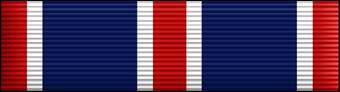
51st FW receives 2012 Air Force Outstanding Unit Award
51st Fighter Wing Public Affairs
2/21/2013 - OSAN AIR BASE, Republic of Korea -- Earlier this month, the Pacific Air Forces commander, Gen. Herbert Carlisle, announced the 51st Fighter Wing has earned the 2012 Air Force Outstanding Unit Award for the period of Oct. 1, 2010 to Sept. 30, 2012.
The 51st FW is the most forward deployed wing in the world, providing combat ready forces for close air support, air strike control, counter air, interdiction, theater airlift, and communications in the defense of the Republic of Korea. The wing executes military operations to beddown, maintain and employ follow-on forces for the combined arms base that includes three major flying tenants and large multiservice fighting units. The mission here is Defend Osan, execute combat operations, and receive follow-on forces; Ready to fight and win, tonight.
"I'm incredibly proud of the Airmen and what they have done and continue to do every day," said Col. Patrick McKenzie, 51st FW commander. "Team Osan has worked tirelessly throughout this past year and I couldn't be happier to see all their hard work recognized."
This award is given to units that have distinguished themselves by exceptionally meritorious service or outstanding achievement that clearly sets the unit above and apart from similar units, Air Force Personnel Center stated.
All active duty assigned to the 51st during that time period is eligible to wear the ribbon.
The Military Personnel Flight will add the decoration to personnel currently assigned to the wing; however, personnel who have since had a Permanent Change of Station or Permanent Change of Assignment and are entitled to share in the approved unit award should report to their servicing Force Support Squadron for assistance. Veterans should report to their local Veterans Administration offices for assistance. Air Force civilian employees should report to their servicing Civilian Personnel Section to have the award documented in the Defense Civilian Personnel Data System, and receive the appropriate lapel pin, Carlisle said.
3rd Wing E-3 Sentries fl y south to Guam for COPE NORTH

JBER Public Affairs
2/21/2013 - JOINT BASE ELMENDORF-RICHARDSON, Alaska -- Continually, military members are called upon to participate in exercises at home or abroad, but to what end?
Ex-er-cise: something performed or practiced in order to develop, improve or display a specific capability or skill.
Exercises are more than a chance for Airmen to practice the mission; an exercise also represents an opportunity to showcase abilities and develop working relationships, which extend beyond cultures, backgrounds and languages.
During the last two weeks, the 3rd Wing's 962d Airborne Air Control Squadron from JBER has been developing, improving, and integrating capabilities alongside other U.S. Air Force, Australian and Japanese assets during Cope North 2013 at Andersen Air Force Base, Guam.
Cope North is a tri-lateral large-force exercise hosted by Pacific Air Forces to promote regional security and stability of the region by increasing combat readiness and interoperability of U.S. Forces, Australian Defence Force, and the Japan Air Self-Defense Force.
"Here in Alaska we are a part of the air defense mission, and we support the capability of crisis and threat response in the Pacific Theater of Operations," said Air Force Lt. Col. Michael Erickson, 962d AACS commander. "During Cope North, we are able to facilitate an environment, in coordination with our international partners, which allows us to share information to decision makers. This provides those on the ground and in the air the best possible situational awareness. "
The 962d AACS members who are participating in the exercise said there is clear communication with everyone involved.
"Our folks will be working hard to maintain a clear picture with all of the friendly forces which include Pacific U.S. Air Force, Australian and Japanese assets," said Air Force Capt. Walter Goss, 962d AACS navigator/assistant director of operations. "That support will extend throughout the exercise from the humanitarian portion and combined training missions."
During the humanitarian portion, the operations-focused squadron honed their communication practices with the other participants.
"Cope North is a great test of our interoperability, which is extremely important in the Pacific," Erickson said. "Joining with our sister squadron from Kadena Air Base, [Okinawa, Japan] and our international partners in the region, we are working together as one team... comparing tactics, techniques and procedures."
Goss explained this exercise provides an opportunity to exercise capabilities used during the unit's wartime mission.
"In wartime, we feed a picture to the Combined Air and Space Operations Center," Gross said. "This provides coordination between all of our partners as we work de-confliction and additional radar coverage. Our wartime mission is dynamic, so we strive to maintain proficiency, especially within our core competencies."
Whether in an exercise abroad like Cope North or a home station one like Red Flag-Alaska, the 962d AACS has to accomplish a number of things before the squadron's E-3 Sentry Airborne Warning and Control System can get to work.
"When we send our Airmen out to a large exercise, we check their readiness as if it were a real world mission tasking," Erickson said. "It takes a lot to get a team ready to go out the door while still maintaining the readiness of the squadron for a real contingency. Our mobility folks do an outstanding job."
Members of the mobility staff "coordinated the mandatory training, processed information to the Joint Mobility Center and completed Installation Deployment Readiness Center processes for approximately 30 Airmen from the squadron," said Staff Sgt. Eric Mackey, 962d AACS mobility noncommissioned officer.
Goss also explained an aircrew executes scenario-specific training to prepare them for their upcoming missions.
"The aircrew completes simulator missions prior to leaving for a deployment to replicate likely scenarios and enhance crew coordination," Goss said.
All of that work culminates in a prepared crew, but what about the plane?
"The maintenance intensity here is remarkable. The maintainers want the planes to fly as badly as the aircrew does," Goss said.
"Our maintainers are always on top of things, installing new software updates that allow us to communicate with even the newest systems," Erickson said. "962d [Aircraft Maintenance Unit] maintainers work hard to keep these very complex 35-year-old aircraft flying, and my hat goes off to those men and women."
"These men and women work through location restraints and remain extremely operations focused," Goss said. "In our squadron there is no division when it comes to the mission. There is no 'us and them,' it's we, and it's an amazing environment to work in."
Global Strike helps set bar for new service-wide base support standards
Air Force Global Strike Command Public Affairs
2/22/2013 - BARKSDALE AIR FORCE BASE, La. -- The Air Force recently launched the Air Force Common Output Level Standards program, or COLS, to normalize services across Air Force Bases.
This program will standardize the delivery of installation support services so Airmen and other customers will have common experiences and expectations from base to base, said Maj. Jennifer Phelps, Air Force COLS program manager at the Pentagon.
"The goal here is consistency," she said. "We want a standard, uniform level of support provided to Airmen at every location."
The program launched in October 2012, with fiscal 2013 installation support service standards set for 40 functions, ranging from the chaplain corps and public affairs to finance and family services.
The immediate local impact of the program should be minimal.
For fiscal year 2013, the program is taking a baseline measurement to assess how services are being provided at the local level.
"Seventy-five percent of the data is already being collected in some shape or form," said Christine Fiske, Command Support Contract Engineer AFGSC Civil Engineering Operations. "HAF [Headquarters Air Force] is simply trying to gather the data for these 40 support functions they feel are important to an Airman's quality of life in one place."
Fiske added that bases will likely not make any major immediate changes based on the COLS, but should keep operating as usual. The Air Force will use current operations as a baseline for their analysis.
This baseline year will take a look at missions, resources, budgets and products to determine how well they are meeting AF-established service standards.
Although data will be initially collected from only 66 bases, including all five Global Strike Command bases, the intent is for all Air Force locations to meet these standards for any installation support services provided.
During subcommittee testimony on Capitol Hill in April 2012, Assistant Secretary of the Air Force for Installations, Environment, and Logistics Terry Yonkers testified that the AF COLS program is all about using smarter management practices and instituting better standards.
"We must ensure that we have right-sized and efficient infrastructure that enables our most valuable resource, our Airmen, to perform their duties, while ensuring responsible stewardship of fiscal resources," Yonkers said.
Identifying those fiscal resources and budget constraints will be a big part of AF COLS, Phelps said.
"Right now, there is no easy way to calculate the risk that comes with budget cuts for many of our installation support services," she said. Every fiscal year, senior leadership goes to Congress to discuss budget specifics. The goal is that in the future, senior leadership will be armed with AF COLS metrics and better able to communicate requirements and impacts of budget cuts. They'll be able to show exactly what that means to Airmen and families.
"They'll be able to look at the data and see exactly what programs will be impacted most in a situation like that," she said. "On the flip side, they'll also be able to identify areas or functions that need more resources, and will be able to better advocate for that."
She also pointed out that AF COLS will help define exactly what is expected from particular functions.
Phelps emphasized that while AF COLS representatives will be responsible for providing data about their bases and units, the impact will be a great benefit to everyone.
"Currently, there is no one approved level of services," she said. "What Airmen and their families experience at Base X may not be what they experience at Base Y. With this first phase, we're setting the standard."
Editor's Note: Tech. Sgt. Julie Weckerlein, Air Force Public Affairs Agency, Christine Fiske, AFGSC Support Contract Engineer and Joseph Murray, AFGSC Public Affairs, contributed to this article.
Army Releases January 2013 Suicide Information
The Army released suicide data today for the month of
January 2013. During January, among active-duty soldiers, there were 19
potential suicides: two have been confirmed as suicides and 17 remain
under investigation. For December 2012, the Army reported seven
potential suicides among active-duty soldiers; however, subsequent to
the report, another case was added bringing December’s total to eight:
five have been confirmed as suicides and three are under
investigation.
During January, among reserve component soldiers who were not on active duty, there were 14 potential suicides (six Army National Guard and eight Army Reserve): One has been confirmed and 13 are still under investigation. For December 2012, among that same group, the Army reported 15 potential suicides; since the release of that report, one case has been added for a total of 16 (11 Army National Guard and five Army Reserve): nine have been confirmed and seven cases remain under investigation.
Soldiers and families in need of crisis assistance can contact the National Suicide Prevention Lifeline. Trained consultants are available 24 hours a day, seven days a week, 365 days a year and can be contacted by dialing 1-800-273-TALK (8255) or by visiting their website at http://www.suicidepreventionlifeline.org .
Army leaders can access current health promotion guidance in newly revised Army Regulation 600-63 (Health Promotion) at: http://www.army.mil/usapa/epubs/pdf/r600_63.pdf and Army Pamphlet 600-24 (Health Promotion, Risk Reduction and Suicide Prevention) at http://www.army.mil/usapa/epubs/pdf/p600_24.pdf .
The Army's comprehensive list of Suicide Prevention Program information is located at http://www.preventsuicide.army.mil .
Suicide prevention training resources for Army families can be accessed at http://www.armyg1.army.mil/hr/suicide/training_sub.asp?sub_cat=20 (requires Army Knowledge Online access to download materials).
Information about Military OneSource is located at http://www.militaryonesource.com or by dialing the toll-free number 1-800-342-9647 for those residing in the continental United States. Overseas personnel should refer to the Military OneSource website for dialing instructions for their specific location.
Information about the Army’s Comprehensive Soldier Fitness Program is located at http://www.army.mil/csf/ .
The Defense Center for Excellence for Psychological Health and Traumatic Brain Injury (DCoE) Outreach Center can be contacted at 1-866-966-1020, via electronic mail at Resources@DCoEOutreach.org and at http://www.dcoe.health.mil .
The website for the American Foundation for Suicide Prevention is http://www.afsp.org/ and the Suicide Prevention Resource Council site is found at http://www.sprc.org/index.asp .
Africa Command Deploys 100 Service Members to Niger
By Jim Garamone
American Forces Press Service
WASHINGTON, Feb. 22, 2013 – President Barack Obama notified congressional leaders today that the last of 100 U.S. military specialists have deployed to Niger to support intelligence efforts in the region.
The move is done with Niger’s full consent and cooperation and the troops -- mostly Air Force specialists -- are working out of Niamey, officials said.
Forty troops moved to the area on Feb. 20. “This deployment will provide support for intelligence collection and will also facilitate intelligence sharing with French forces conducting operations in Mali, and with other partners in the region,” Obama wrote in his letter to congressional leaders.
The troops will provide their own force protection and security.
U.S. Africa Command recommended placing unarmed remotely piloted aircraft in Niger to support a range of regional security missions and engagements with partner nations. Last month, the United States and Niger signed an agreement on the status of American forces in Niger.
Al-Qaida and other extremist groups have been operating in neighboring Mali. The deployment is designed to promote regional stability in support of U.S. diplomacy and national security, and to strengthen relationships with regional leaders committed to security and prosperity, Pentagon officials said.
The Air Force intelligence, surveillance and reconnaissance assets provide vital capabilities to the United States, African partners and other partners in the region. The unarmed UAVs “provide an unrivaled capability to harness information and make it useful to commanders,” officials said.
F-35s Grounded as Precaution After Crack Found in Engine Blade
By Jim GaramoneAmerican Forces Press Service WASHINGTON, Feb. 22, 2013 – All F-35s have been grounded as a precaution after a routine engine inspection revealed a crack on an engine blade, Defense Department officials said here today. Officials call this a “cautionary suspension of flight.” The Air Force, Navy and Marine Corps fly F-35s. Inspectors found the crack in an F135 engine installed in an F-35A Lightning II aircraft at Edwards Air Force Base, Calif. This is the conventional take-off and landing version of the joint strike fighter. Officials are shipping the engine and its associated hardware to Pratt & Whitney’s engine facility in Middletown, Conn., to conduct more thorough evaluation and root cause analysis. Officials said the grounding is precautionary. All F-35 flight operations have been suspended until the investigation is complete, officials said, and it is too early to know the fleetwide impact. “The F-35 Joint Program Office is working closely with Pratt & Whitney and Lockheed Martin at all F-35 locations to ensure the integrity of the engine, and to return the fleet safely to flight as soon as possible,” a Defense Department news release said. |
Maintaining our commitment to excellence in the nuclear enterprise
Air Force Global Strike Command Public Affairs
2/22/2013 - BARKSDALE AIR FORCE BASE, La. -- On Feb. 15, Air Force officials announced the split of the space and missile career field to ensure more focused development for officers performing these critical missions.
The change affects approximately 3,100 officers Air Force wide coded as either "Space Operations" or "Nuclear and Missile Operations" within the former 13S career field, officials said. Those officers previously coded as "Space Operations" will remain in the 13S career field and those officers previously coded as "Nuclear and Missile Operations" will have their AFSCs changed to 13N.
"Space and Missile Operations have become more and more technical in application and execution--each in their own unique ways," said Col. Joseph Prue, career field manager for space operations officers. "This split will enable each career field to continue cultivating technical expertise via separate, yet equally important, avenues in order to be more effective and efficient in meeting current and future AF needs."
Within Air Force Global Strike Command, an estimated 844 13S positions will be converted to 13N.
This change will allow the Air Force to further strengthen the nuclear enterprise, said Col. Zannis Pappas, the new career field manager for "Nuclear and Missile Operations," or AFSC 13N.
"For several years, a portion of 13S officers have been designated for nuclear duty. This formalizes a distinction that already exists, but giving us our own career field to focus on nuclear expertise and leadership development," said Maj. William Weiford III, executive officer to the director of operations, AFGSC.
Those selected for the 13N career field will develop the leadership and nuclear technical competency required to lead the nation's ICBM nuclear forces.
Affected officers should contact their career field managers or MAJCOM functional managers for more information about how the change will affect them.
"The transformation of the career field will give space and missile officers opportunities to develop the depth and breadth they need for command, as well as the opportunity for career-long development in specific mission areas," Prue said.
Editor's Note: Capt. Karen Mock, AFGSC Public Affairs, contributed to this article, with background information provided by the office of the Secretary of the Air Force for Public Affairs.
Air Mobility Command Headquarters garners Organizational Excellence Award
from Air Mobility Command Public Affairs
2/22/2013 - SCOTT AIR FORCE BASE, Ill. -- The Air Force has awarded the Air Force Organizational Excellence Award to Headquarters Air Mobility Command for global air mobility operations from Jan. 1, 2010 through Dec. 31, 2011.
"This award recognizes the Airmen of Air Mobility Command who provide global support to our joint partners, allied nations and fellow Americans in need," said Gen. Paul Selva, AMC commander. "I'm humbled to be a part of this great organization."
The award citation notes the command's success in planning, coordinating and managing Operation Unified Protector in Libya and the successful relief to victims of two hurricanes, an earthquake in Haiti, Pakistan flood relief, and assistance to Japan after a tsunami.
"This award recognizes the selflessness of our Airmen and the commitment to always answer the call of those in need," said Chief Master Sgt. Andy Kaiser, AMC command chief.
Throughout the award period, Air Mobility Command Airmen moved 1.4 million passengers and 818,000 tons of cargo and delivered 2.2 billion pounds of fuel to 171,000 aircraft in support of Operations Enduring Freedom in Afghanistan and New Dawn in Iraq.
AMC also reduced flying training requirements by 83,000 hours and recommended changes to Air Force policy producing total fuel cost avoidance of $267 million.
Personnel assigned or attached to headquarters AMC for at least one day between Jan. 1, 2010 and Dec. 31, 2011, who directly contributed to the mission and accomplishments of the unit, are authorized the AFOEA ribbon.
Subscribe to:
Posts (Atom)


 Posts

