Showing posts with label army air forces. Show all posts

Monday, August 24, 2026

Medal of Honor Monday: Army Air Forces Maj. Ralph Cheli

Army Air Forces Maj. Ralph Cheli, a bomber pilot, was posthumously presented with the Medal of Honor for conspicuous gallantry during World War II.

Cheli was born to Robert Alfred Cheli, an Italian immigrant, and Julia Cheli, Oct. 29, 1919, in San Francisco. He was an only child.
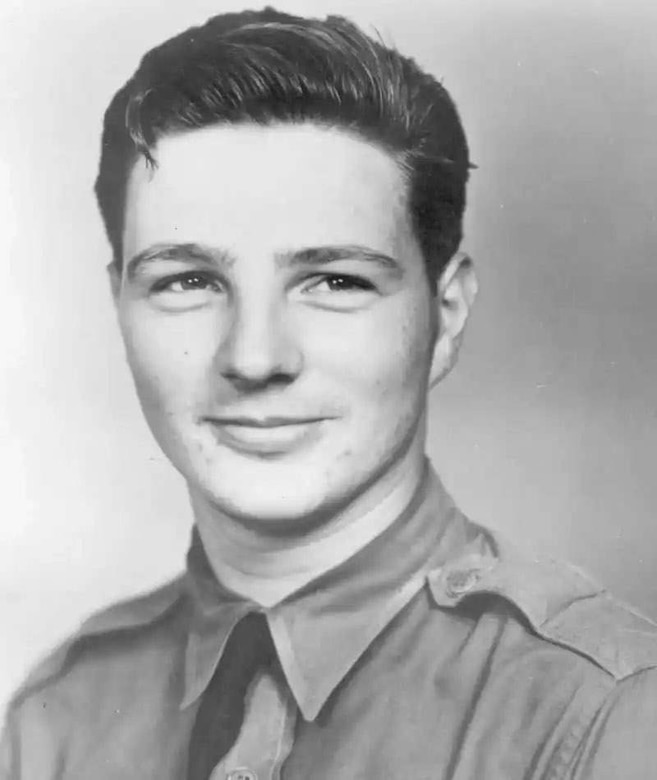
A black and white photo of a man posing for a photo while wearing a military uniform.
He dropped out of Lehigh University in Bethlehem, Pennsylvania, to enlist as a flying cadet in the Army Air Corps in early 1940. He trained at Randolph Field and Kelly Field, both in Texas. He was commissioned as a second lieutenant in November 1940. 

He married Geraldine Reilly, and they had a son, Ralph Cheli Jr. 

Following his tour at Kelly Field, he flew B-17 Flying Fortress bombers for the 21st Reconnaissance Squadron at MacDill Field, Florida. He then attended chemical warfare school at Edgewood Arsenal, Maryland.  

Following his promotion to first lieutenant in February 1942, Cheli joined the 43rd Bombardment Squadron and flew B-17s on reconnaissance and antisubmarine patrols in the Caribbean. 

In June 1942, he joined the 405th Bombardment Squadron at Barksdale Field, Louisiana. In August 1942, he flew from Hamilton Field, California, to Breddan Aerodrome in Queensland, Australia, in a B-25 Mitchell bomber and in October 1942, he flew to Durand Airfield in Port Moresby, Papua New Guinea, where he took command of the 405th Bombardment Squadron, 38th Bombardment Group, 5th Air Force. 

He was promoted to major in February 1943, making him one of the youngest commanders in the Army Air Forces. 

Cheli led 39 combat missions during the Battle of the Bismarck Sea in March 1943, attacking Japanese shipping. These missions earned him the Distinguished Flying Cross and the Air Medal.
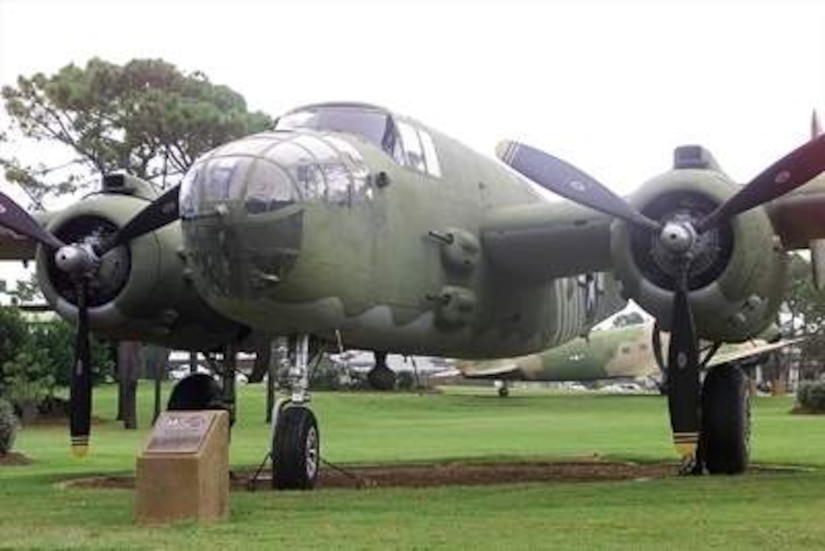
An airplane is displayed in a grassy field.

On Aug. 18, 1943, while he was flying a B-25D-1 Mitchell bomber near Wewak, Papua New Guinea, and leading the 405th in an attack of the heavily defended Dagua Airfield, he was intercepted by enemy aircraft. They centered their fire on his plane, causing it to burst into flames while still 2 miles from the objective. 

His speed would have enabled him to gain the necessary altitude to parachute to safety, but this action would have left his formation disorganized and exposed to the enemy.  

Although a crash was inevitable, he courageously elected to continue leading the attack in his blazing plane, an action that led to him posthumously receiving the Medal of Honor. From a minimum altitude, the squadron made a devastating bombing and strafing attack on the target. With the mission completed, Cheli instructed his wingman to lead the formation and then crashed his bomber into the sea. 

After impact, Cheli and the surviving crew members were captured by the Japanese and held at Rabaul, a town on the island of New Britain in Papua New Guinea, and later at Tunnel Hill Prisoner of War Camp. Records indicate he was treated harshly and beaten for refusing to provide any information beyond his name, rank, service number and birth date. 

Cheli and other POWs were executed in the Tunnel Hill Massacre, March 6, 1944, and buried in a mass grave. The Japanese falsely claimed the POW deaths were caused by Allied bombings. After the war, investigators found mass graves using confessions of those who had committed the war crimes. 

His probable remains and those of other executed POWs were transferred to the Jefferson Barracks National Cemetery in St. Louis, and buried together, March 21, 1950. Beneath the group grave marker at the burial site is a dedicated marker commemorating Cheli with a gold inlay of the Medal of Honor and an inscription with his name, rank and date of death. 

"I wish he had gone down with the plane, unfortunately," said his great niece, Janet Bizjak, in a 2020 interview with The Morning Call newspaper in Allentown, Pennsylvania.
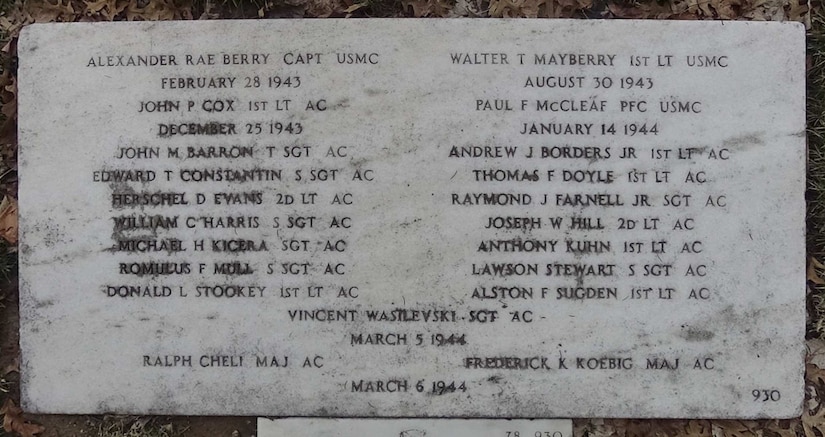
A grave marker with many names.

His widow was presented the Medal of Honor by President Franklin D. Roosevelt, Oct. 28, 1943. Cheli was also posthumously awarded the Distinguished Flying Cross, Air Medal, Purple Heart and Prisoner of War Medal. 

Cheli Air Force Station in Los Angeles was named for him in 1947, and was closed in 1961. Also, the Cheli School Age Care on Misawa Air Base, Japan, bears his name. 

In 1968, a painting of him was unveiled in a ceremony and hung in Grace Hall at Lehigh University. The chapter of the Arnold Air Society at Lehigh was named in his honor.

Wednesday, August 12, 2015

Airman Missing From World War II Accounted For


The Department of Defense POW/MIA Accounting Agency (DPAA) announced today that servicemen, missing from World War II, have been accounted for and their remains are being returned to their families for burial with full military honors.

Army Air Forces 1st Lt. William P. Cook of Alameda, California; Flight Officer Arthur J. LeFavre of Red Bank, New Jersey; Staff Sgts. Maurice J. Fevold of Chicago, Frank G. Lane Jr. of Cleveland and Ward C. Swalwell Jr. of Chicago; and Sgt. Eric M. Honeyman of Alameda, California, have been accounted for and will be buried with full military honors. Cook was buried Oct. 18, 2014, in Oakland, California. Fevold was buried Oct. 20, 2014, in Ft. Dodge, Iowa, and Lane was buried May 2 in Willoughby, Ohio. Honeyman was buried on June 22 in Trail, British Columbia, Canada. LeFavre will be buried on Aug. 18 in Arlington National Cemetery. The group representing the crew will be buried on Aug. 18 in Arlington National Cemetery. Swalwell will be buried on Aug. 20 in Arlington National Cemetery.

On Dec. 23, 1944, Cook along with five other B-26G Marauder crewmembers took off from Saint Quentin, France, on a mission to bomb an enemy-held bridge in Eller, Germany. The aircraft was shot down by enemy anti-aircraft fire near Seffern, Germany, near the Belgium border.

Following World War II, the Army Graves Registration Command (AGRC) conducted extensive field investigations and was unable to locate the aircraft and the crew. In May 1949, AGRC concluded the crew members were unrecoverable.

In 2006, a group of researchers from Airwar History Working Group Rhine-Moselle and History Flight -99th Division MIA Project located the wreckage of a B-26G associated with the loss of this crew, near Allmuthen, Belgium and notified the U.S. Army Mortuary Affairs Activity – Europe. In 2007, a Department of Defense (DoD) team investigated the site and recommended it for excavation.

In 2012 and 2013, another DoD team excavated the crash site and recovered human remains, aircraft wreckage, and personal effects.

To identify Honeyman’s remains, scientists from DoD and AFDIL used circumstantial evidence and forensic identification tools including, partial Y-Chromosome Short Tandem Repeat (Y-STR) DNA, which matched Honeyman’s paternal-line cousins.

To identify Cook’s remains, scientists from DoD and the Armed Forces DNA Identification Laboratory (AFDIL) used circumstantial evidence and forensic identification tools, including mitochondrial DNA, which matched Cook’s maternal-line cousins.

To identify LeFavre’s remains scientists from DPAA and the Armed Forces DNA Identification Laboratory (AFDIL) used circumstantial evidence and forensic identification tools, including, mitochondrial DNA, which matched LeFavre’s maternal-line niece and grandniece.

To identify Lane’s remains, scientists from DPAA and AFDIL used circumstantial evidence and forensic identification tools including, partial Y-Chromosome Short Tandem Repeat (Y-STR) DNA, which matched Lane’s paternal-line nephew.

To identify Fevold’s remains, scientists from DoD and AFDIL used circumstantial evidence and forensic identification tools including, mitochondrial DNA, which matched Fevold’s maternal-line niece.

To identify Swalwell’s remains scientists from DPAA and the Armed Forces DNA Identification Laboratory (AFDIL) used circumstantial evidence and forensic identification tools, including, mitochondrial DNA, which matched Swalwell’s maternal-line sister and niece.