Showing posts with label Team Army. Show all posts

Monday, June 22, 2026

Team Army Competitor Brings 'Never Give Up' Spirit to Warrior Games

For Army Capt. Vanessa Munro, arriving at the 2026 Warrior Games already feels like a victory. Before the first event began and before scores were posted, Munro's presence with Team Army was a reminder of how far recovery can reach when determination, support and purpose come together.
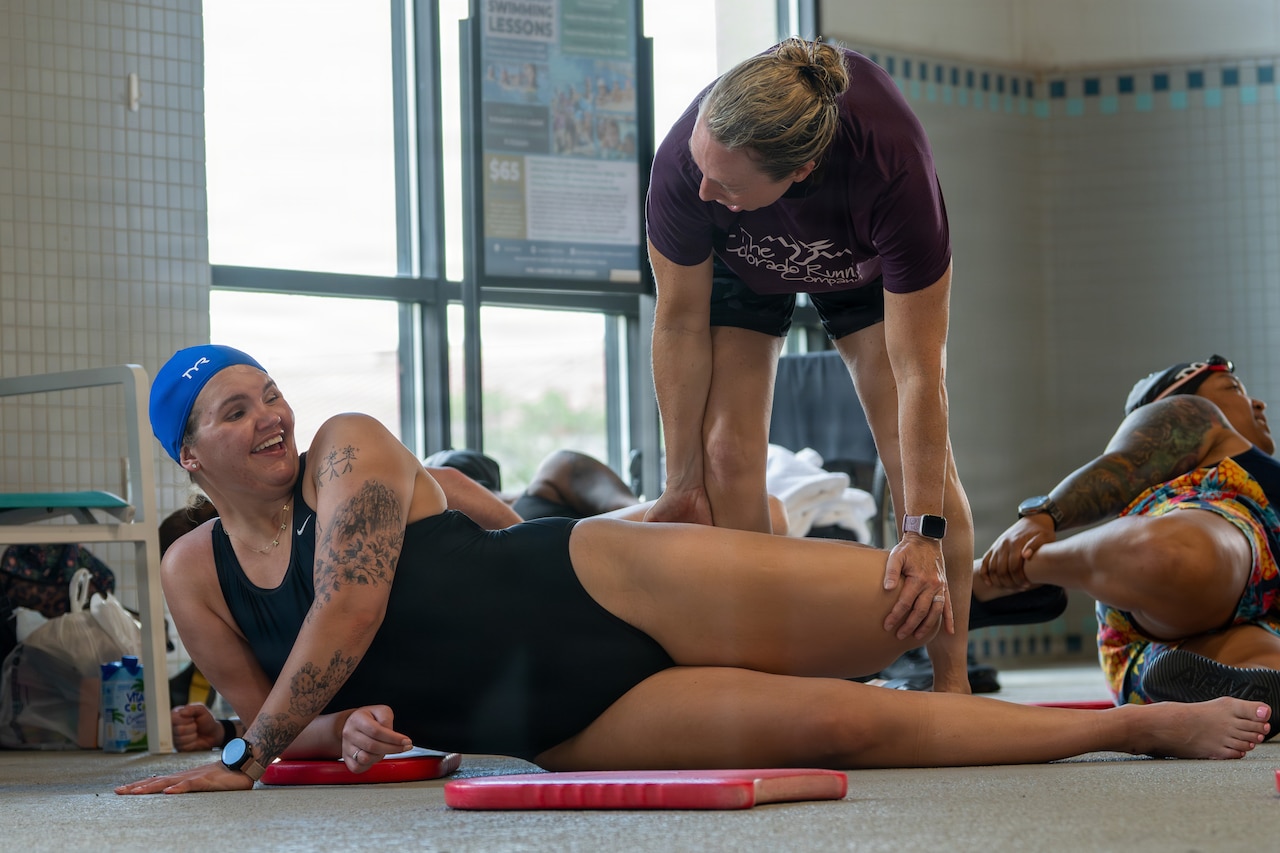
A woman wearing a black bathing suit and swim cap lies on a floor as she is being assisted by another woman in casual attire in an exercise that is lifting her left leg. There is a person also exercising to the right of the women.

Munro's victory is being part of a team again. After a tragic car accident in 2023 resulted in a severe traumatic brain injury, brain surgery and an extended coma, the road back has included months of hospitalization, intensive rehabilitation and daily work to regain strength, confidence and independence.

Now competing with Team Army, Munro is reconnecting with something she's missed: the camaraderie, joking, banter and shared support that come with being part of a team.

Munro's mother, Heidi, shared that the Warrior Games has given her daughter an opportunity to be surrounded by athletes and coaches who see her.

"She loves how everyone supports one another and how people treat her as capable, not disabled," Heidi said.

Munro was commissioned as a field artillery officer in 2018 after completing ROTC at the University of Washington. After four years in her branch, she was selected for the Army's Interservice Physician Assistant Program. Before the accident, she was also an elite athlete and Ironman competitor. Her soldiers often called her "The Iron Ma'am." After the accident, a new nickname emerged.

Heidi said as friends came in and out of Munro's inpatient room with Starbucks, sushi, cute clothes and colorful head coverings, they helped bring light into a difficult season. They bedazzled her wheelchair and walker, decorated her room and made sure her nails were painted. Before long, Munro became known as "The Bougie TBI Girl," a moniker she carries now that captures both parts of her story.

For Heidi and Kailee, Munro's childhood best friend and caregiver, that moniker is more than a phrase. It reflects how Munro has approached recovery from the beginning.

Even in a semiconscious state, Munro didn't want to be seen as disabled. Once she could walk, she refused to use the wheelchair. Then she refused the walker. About six months after the accident, she began walking a mile a day. The pace was slow, and the walks required breaks, but Munro kept asking to go.

On days when Heidi and Kailee were exhausted, Munro would look at them and say, "Outside time." From the beginning, they said, she refused to give up.
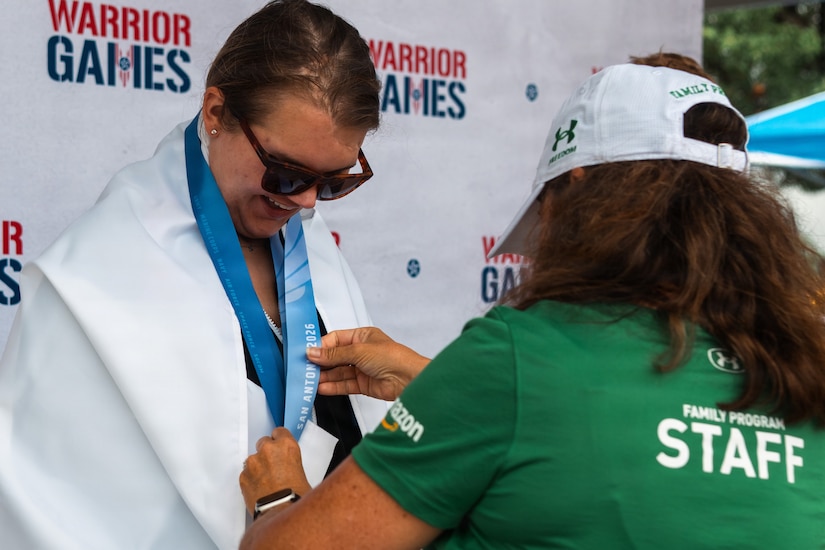
A woman wrapped in a white flag and wearing sunglasses receives a medal on a ribbon from another woman wearing casual attire.

Adaptive sports became another part of her recovery. Munro's first adaptive sport was skiing, which made her feel alive and free again. Her confidence grew after that first ski trip. Swimming came next, and once she connected with an adaptive swim coach, the pool became a place where she could focus on what she could do rather than what she couldn't do.

The adaptive triathlon later reintroduced Munro to competition, wearing a uniform, supporting others and being supported by a team.

Participation in various sports activities, plus the Warrior Games, has helped Munro reconnect with the athlete she was before her injury while continuing to discover who she is now.

Kailee said what people see during competition is only part of the story.

"What I've witnessed isn't just physical recovery; it's resilience," Kailee said. "I've watched Vanessa choose to keep showing up when it would have been easier not to. I've watched her rebuild pieces of herself one day at a time. The Warrior Games are incredible, but it's just the visible part of a recovery that's been happening every single day for years."

For Heidi, watching Munro compete has been deeply emotional. Two years ago, doctors told the family Munro would never walk or talk again. Seeing her at the Warrior Games just 30 months into recovery has filled her with hope.
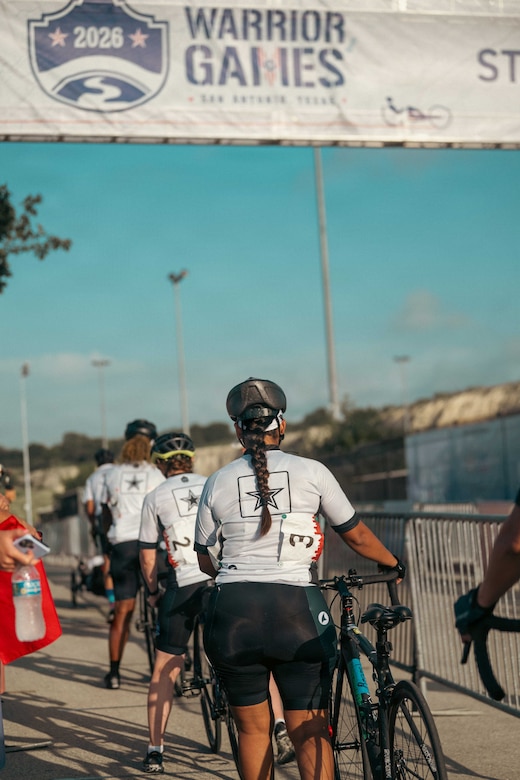
People wearing sports gear and helmets push their bikes to the starting line of a race.

"The real work has taken place in countless therapy sessions, difficult mornings, bouts of depression, setbacks and small victories that most people never see," Heidi said.

One of the most powerful moments came on the track.

"I cried at the track," Heidi said. "I watch her struggle to walk every day always afraid she'll trip over her own foot. I've never seen her run, so to watch her run the 200, with obvious difficulty and exhaustion, and to finish it to a standing ovation and the entire crowd cheering for her, that was the highlight of Warrior Games for me."

When Munro was shown videos of herself walking for the first time after her injury and asked what she thought about herself from the beginning of recovery until now, she chose three words: "Surprised. Excited. Inspired."

For Kailee, the hope is that Munro sees what those closest to her have seen all along.

"Recovery hasn't been about finding her way back to the exact person she was before," she said. "It's been about discovering who she is now, the same fierce, determined, funny, stubborn and compassionate person who inspired people before the accident."

Kailee said Munro's path looks different today, but her strength has never left her.

For Munro, her journey isn't about becoming less than she was before. It's about continuing to move forward, reclaiming pieces of herself and proving, one step and one competition at a time, that "never give up" is more than a motto.

It's how she got here.

Editor's note: Because Munro is still in recovery, some responses and additional context for this story were provided through her mother, Heidi, and her childhood best friend and caregiver, Kailee.

Thursday, June 18, 2026

Team Army Opens 2026 Warrior Games With Eight Powerlifting Medals

Team Army opened the first day of competition at the 2026 Warrior Games in San Antonio with wins in powerlifting, earning eight medals while demonstrating that the greatest victories often extend far beyond the podium. 

The powerlifting medalists included: 1st Lt. Jani Merritt, gold; Staff Sgt. Chelsea Scott, gold; Staff Sgt. Nate Mateo, gold; Sgt. Tukiau Salanoa-Tuioti, gold; Capt. Channda Mitchell, gold; Capt. Jake Malven, silver; retired Sgt. 1st Class Valerie Watkins, bronze and retired Capt. Tony Smith, bronze. 

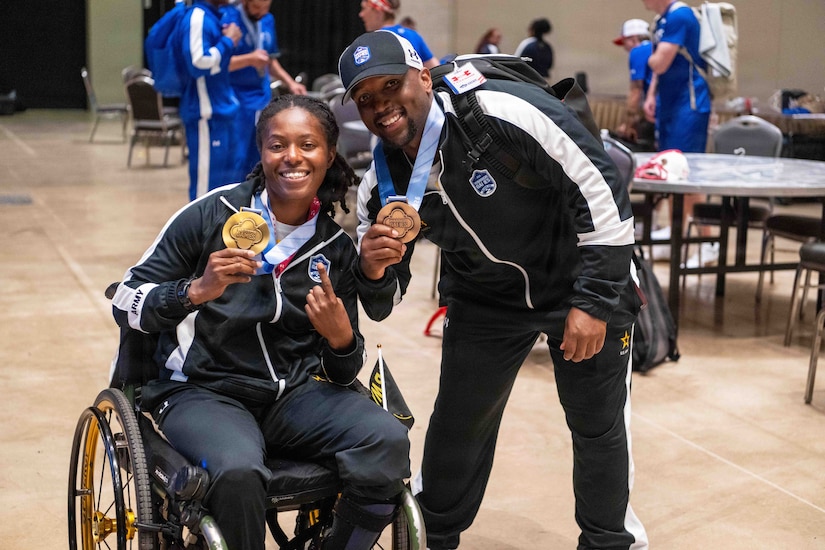
A woman in athletic attire sits in a wheelchair holding a medal around her neck while a man in similar attire leans next to her, also holding a medal, as they pose for a photo.

While the medals reflected exceptional performances on the platform, the stories behind them highlighted the perseverance, support and sense of community that define the Warrior Games experience as well as the Army Recovery Care Program's commitment to helping wounded, ill and injured soldiers recover and thrive. 

Mateo, a second-time Warrior Games competitor, said he shares his gold medal with family, who traveled nearly 24 hours from Saipan to cheer him on in San Antonio. He said seeing his family and friends in the stands served as a powerful reminder that recovery is rarely a journey taken alone.   

"My wife, Regina, and my family have been with me from the start," Mateo said. "I wouldn't have been where I am today if it wasn't for her. She’s been keeping me in the right state of mind and reminding me of all we have accomplished together through this journey." 

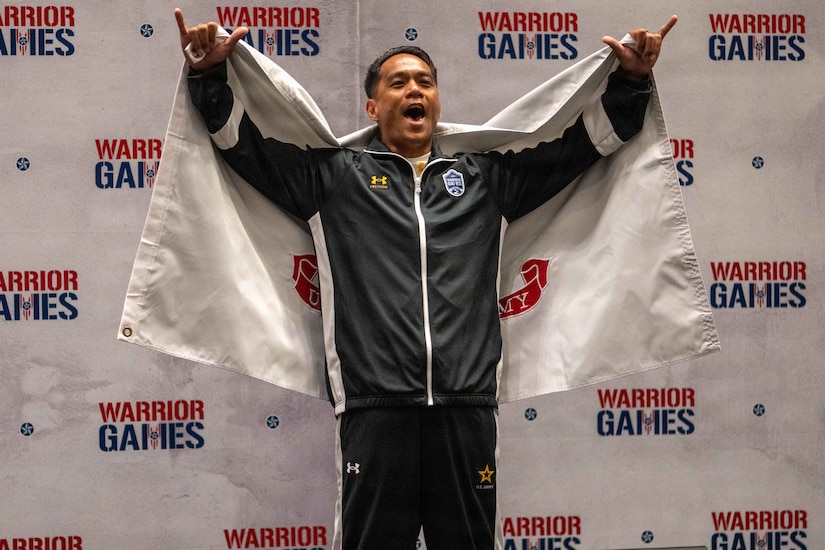
A man wearing athletic attire and an award medal lifts his arms in celebration while holding a service flag around his shoulders,

Returning to the Warrior Games with another year of training and experience behind him, Mateo said the lessons from coaches and teammates have prepared him mentally and physically while inspiring him to pay that support forward. 

"Everything I learned and experienced last year followed me into this year," he said. "This year, my goal is to return that favor by encouraging, mentoring and supporting everyone on Team Army." 

For first-time competitor Scott, a gold medal was meaningful, but the relationships forged throughout recovery proved even more valuable. 

"Winning a gold medal at my first Warrior Games is something I'm incredibly proud of, but what this experience represents goes far beyond the medal itself," she said. "Recovery can sometimes feel isolating, but being part of this team continuously reminds me that I'm not alone." 

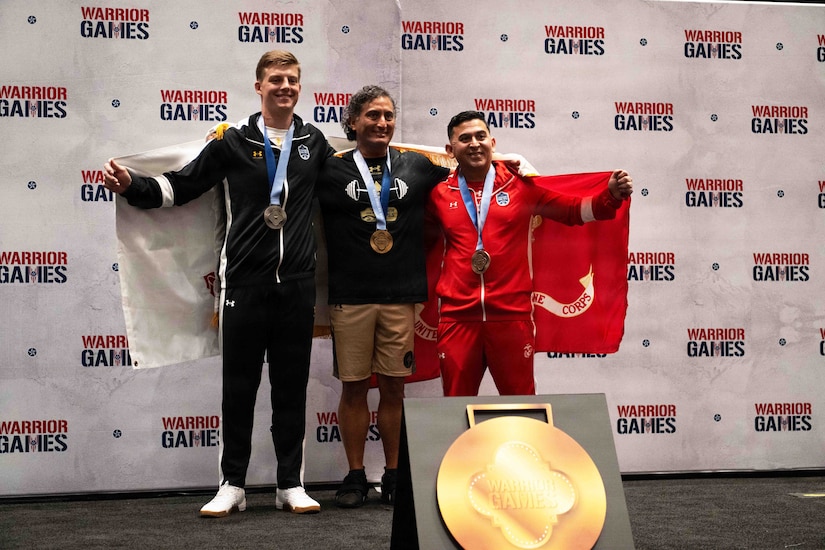
Three men wearing athletic attire and award medals hold service flags around their shoulders while standing and smiling for a photo.
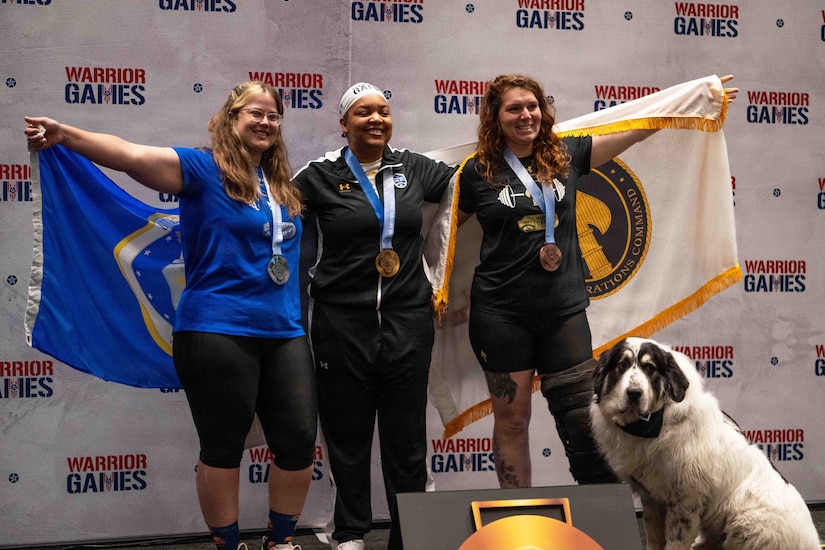
Three women wearing athletic attire and award medals hold service flags around their shoulders while smiling for a photo; a service dog is also posing with them.
Scott credits adaptive sports and the Army Recovery Care Program with helping her regain confidence and discover new ways to challenge herself as she navigates recovery. 

"They showed me that recovery is not just about healing, and it's certainly not linear," she said. "It's about finding new ways to grow, push your limits and continue doing the things you love." 

Smith also made his Warrior Games debut June 13, earning a bronze medal after overcoming doubts and trusting the preparation that brought him to the platform. 

"I was excited, but I was also nervous," he said. "After losing a significant amount of weight over the past few months, I was the lightest competitor in my division. There were definitely moments of doubt, but I trusted my training, my coaches and the support system that helped me get there." 

Looking beyond the medal itself, Smith said the Warrior Games reinforced lessons that will remain with him long after the competition ends. 

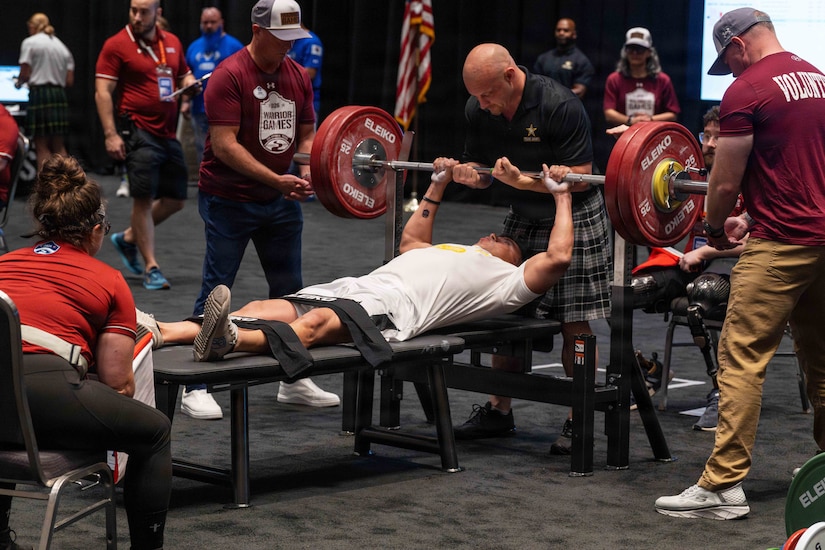
A man in athletic attire lies on a weight bench and grips a barbell, while three people in similar attire assist and a woman sits in a chair to observe; in the background, people in similar attire do similar activities.

"This journey taught me that recovery is a process, not an event," he said. "More than anything, I learned the importance of community. None of us accomplish things alone. While I'm proud of the bronze medal, I'm even more grateful for the lessons this experience has reinforced: trust the process, lean on your support system and never count yourself out." 

The Army Recovery Care Program uses adaptive sports and reconditioning activities to assist wounded, ill and injured soldiers build confidence, resilience and community throughout their recovery journeys. On the opening day of competition, Team Army's powerlifting performance reflected not only athletic achievement but also the determination to keep moving forward despite injury, illness and adversity. 

As the 2026 Warrior Games continue throughout the week, Team Army competitors will carry that same united spirit into every event, proving that while medals are earned on the field of play, recovery itself is the greatest victory.