Showing posts with label Army hero. Show all posts

Monday, September 21, 2026

Medal of Honor Monday: Army Cpl. Luther H. Story

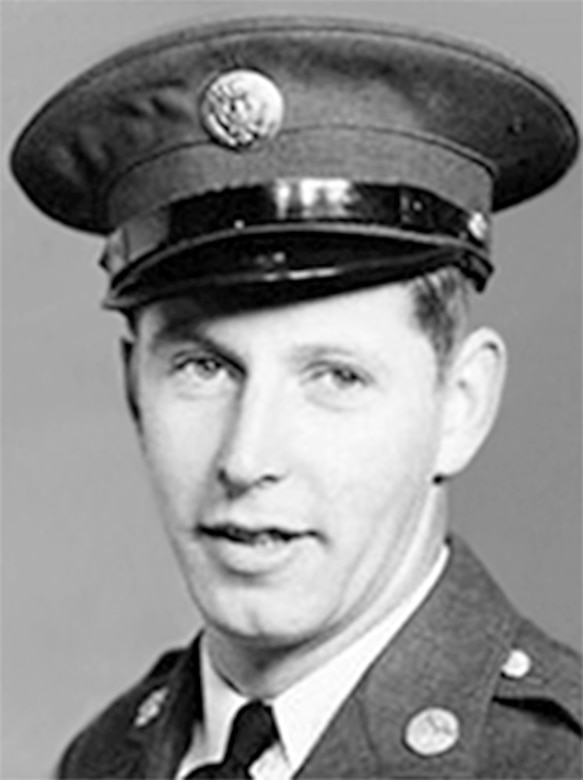
Army Cpl. Luther H. Story, an infantryman, posthumously received the Medal of Honor for his heroic actions during the Korean War.

A man, wearing a military dress uniform, smiles.

Story was born July 20, 1932, in Buena Vista, Georgia. His parents were Mark and Florence, both sharecroppers in Plains, Georgia, on land owned by James Earl Carter Sr., the father of future President Jimmy Carter. 

The family later moved to Americus, Georgia, where Story attended Americus High School. He left school during his sophomore year in 1948 when he was only 16 to enlist in the Army. His mother falsified his birthdate so he could join.  

Story completed basic training at Fort Jackson, South Carolina, and his first duty station was Fort Lewis, Washington, where he was assigned to Company A, 9th Infantry Regiment, 2nd Infantry Division.

A ship with two smokestacks sails the sea.

His unit departed Seattle, July 17, 1950, aboard the troop transport ship USNS General John Pope and arrived in Busan (formerly Pusan), South Korea, July 23, 1950. The Korean War had started June 25, 1950, just a month earlier.  

Pfc. Luther Story was a squad leader. On Sept. 1, 1950, the date of his Medal of Honor valorous action, his company was near Agok, a village on the Nakdong River, during the Battle of Yongsan. 

His citation notes that the 9th Infantry Regiment was attacked by three divisions of the North Korean People's Army. 

Company A fought off several banzai attacks but was bypassed and in danger of being cut off and surrounded.  

Story was heavily engaged in stopping the early attacks and had just moved his squad to a position overlooking the Nakdong River, when he observed a large number of enemy soldiers crossing the river to attack his company.  

Seizing a machine gun from his wounded gunner, he used it to kill or wound an estimated 100 enemy soldiers, according to his citation. Facing certain encirclement, the company commander ordered a withdrawal.  

During the withdrawal, Story noticed an enemy truck approaching, loaded with troops and towing an ammunition trailer. Alerting his comrades to take cover, he fearlessly stood in the middle of the road, throwing grenades into the truck.

When he ran out of grenades, he crawled to his squad, gathered additional grenades and attacked the vehicle again. The company was attacked by superior numbers and forced to deploy into a rice field. Story was wounded in this action, but, disregarding his wounds, rallied his men, who repelled the attack.  

Realizing that his wounds would hamper his comrades' movements, he refused to retire to the next position, remaining to cover the company's retreat, which was successful. When last seen, he was firing every weapon available and fighting off another hostile assault. It was assumed he died at his position. 

On June 21, 1951, General of the Army Omar Bradley presented the Medal of Honor to Story's father at the Pentagon. Story was posthumously promoted to corporal. 

For decades, Story's remains were unaccounted for. The Army issued a presumptive finding of death Sept. 1, 1953, and his remains were determined to be nonrecoverable. 

In October 1950, 11 sets of remains were recovered near Sangdepo, South Korea, and eight sets were identified. One set of remains was thought to be Story, but investigators at the Central Identification Unit in Kokura, Japan, did not have enough identifying data to identify him positively. Those unknown remains were later buried at the National Memorial Cemetery of the Pacific, also known as the Punchbowl, in Honolulu. 

On April 6, 2023, the Defense POW/MIA Accounting Agency announced that Story's remains had been identified. 

To make the identification, DPAA scientists used dental and anthropological analysis. Additionally, Armed Forces Medical Examiner System scientists used mitochondrial DNA analysis obtained from relatives.

A soldier salutes and six others hold an American flag over a coffin.

Story was buried at Andersonville National Cemetery in Andersonville, Georgia, May 29, 2023. Army Maj. Gen. Thomas Carden, adjutant general of the Georgia National Guard, spoke at the funeral.  

"Cpl. Story left us a legacy that we must honor and uphold if we hope to remain the most free and prosperous nation on Earth," Carden said. "Today is a physical demonstration that America never forgets its heroes."  

Story's Medal of Honor is displayed at the National Infantry Museum in Columbus, Georgia, just outside the United States Army Maneuver Center of Excellence at Fort Benning, Georgia. 

President Joe Biden and South Korean President Yoon Suk Yeol attended a ceremony April 25, 2023, at the Korean War Veterans Memorial in Washington, and met with Story's relatives. 

Monday, September 14, 2026

Medal of Honor Monday: Army Capt. Daniel W. Lee Sr.

Army Capt. Daniel W. Lee Sr. was a platoon leader during World War II. He earned the Medal of Honor for valorous action in southeast France in 1944, during Operation Dragoon. 

Lee was born June 23, 1919, in Alma, Georgia. His parents, Daniel M. Lee and Ida Hyres, were farmers. Lee and his six siblings grew up working on the family farm.

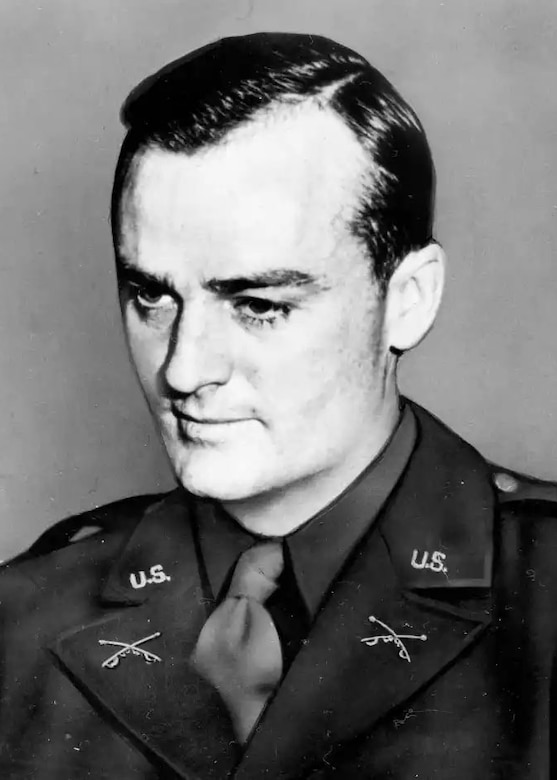
A man wearing a formal military uniform poses for a portrait.

After graduating from Alma High School in 1937, Lee attended the University of Georgia, paying his way by working odd jobs; he worked for a professor, typed papers for fellow students and surveyed crops. He graduated in 1941 with a bachelor's degree in agriculture and began his career in soil management. 

In December 1942, Lee married Sallie Davis, and they had three children after his service ended in World War II: Daniel W. Lee Jr., James and Elizabeth. 

Shortly after being denied entry into the Air Force because he was colorblind, Lee was drafted into the Army in March 1942. He was commissioned a second lieutenant later that year, and his unit, the 117th Cavalry Reconnaissance Squadron, shipped to England for training. They arrived in northern Algeria in 1943, but by then, the enemy had already surrendered. His unit then engaged in combat during the Italian Campaign, from May to August 1944. 

On Sept. 2, 1944, Lee was the leader of Headquarters Platoon, Troop A, 117th Cavalry Reconnaissance Squadron, 7th Army in Montrevel, France, when his Medal of Honor valor occurred. 

According to the medal citation, the Germans had mounted an hourslong attack against the outnumbered Americans when Lee organized a patrol to knock out their mortars.  

He led his men to the edge of town, neutralizing enemy riflemen on a ridge. Atop the ridge, he observed seven Germans manning two large mortars near an armored half-track about 100 yards down the slope.  

Armed with a rifle and grenades, Lee left his men on the high ground and crawled to within 30 yards of the mortars, where the enemy discovered him and unleashed machine-gun fire — shattering his right thigh.

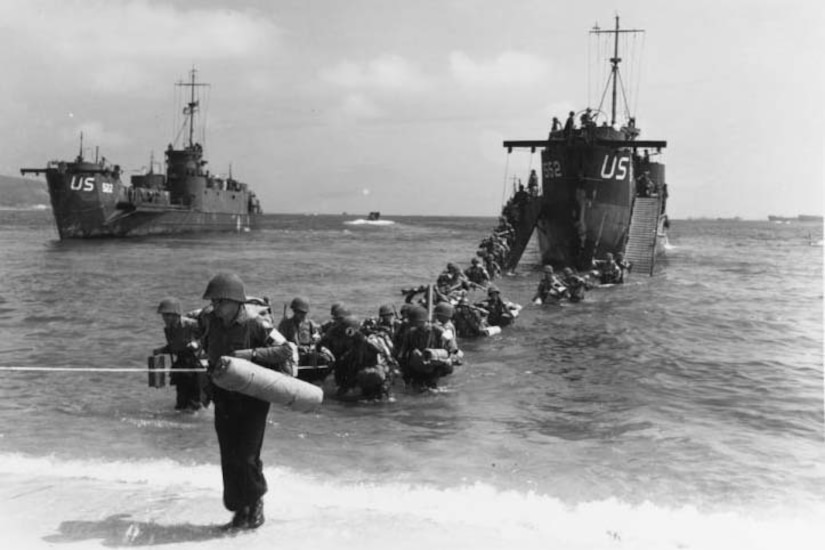
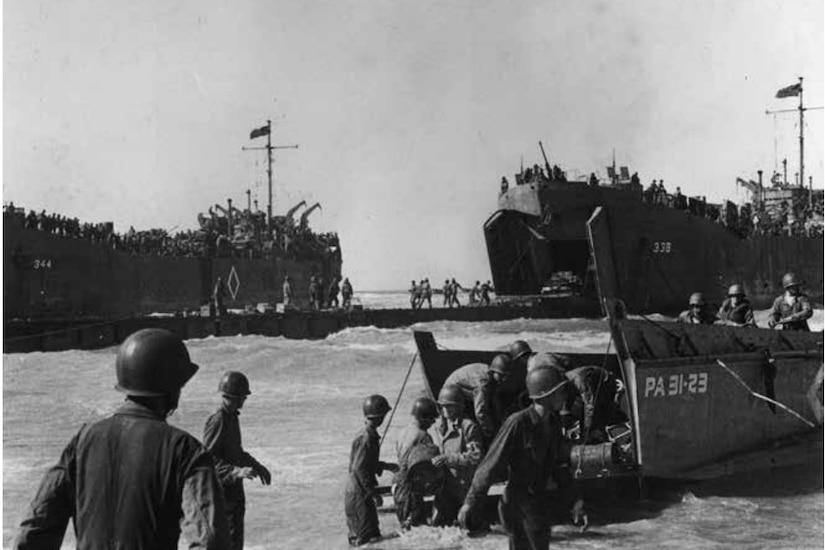
Soldiers wade from ship to beach.

"Scorning retreat, bleeding and suffering intense pain, he dragged himself relentlessly forward," the citation reads. 

Lee killed five Germans with rifle fire, and the others fled before he reached their position. While being fired on by an armored car, he took cover behind the German military vehicle and used a discarded German antitank weapon to neutralize the threat.  

"Despite his wounds, he inched his way toward the car through withering machine-gun fire, maneuvered into range and blasted the vehicle with a round from the rocket launcher, forcing it to withdraw," the citation reads.  

Lee struggled back to his men, where he collapsed from pain and loss of blood.  

During a 2022 interview, Lee's daughter provided further details. Outnumbered, Lee's platoon surrendered, and the Germans took many of the American soldiers but left Lee because of his injuries. 

"Dad told my brother that a German soldier made the decision to leave him there rather than kill him or take him, as he would not have made it. Dad was forever grateful," Beth Lee von Mersveldt said. 

Lee was promoted to first lieutenant, and despite his severe wounds, chose to remain in the military. He transitioned to the Army Reserve, then known as the Organized Reserve Corps. 

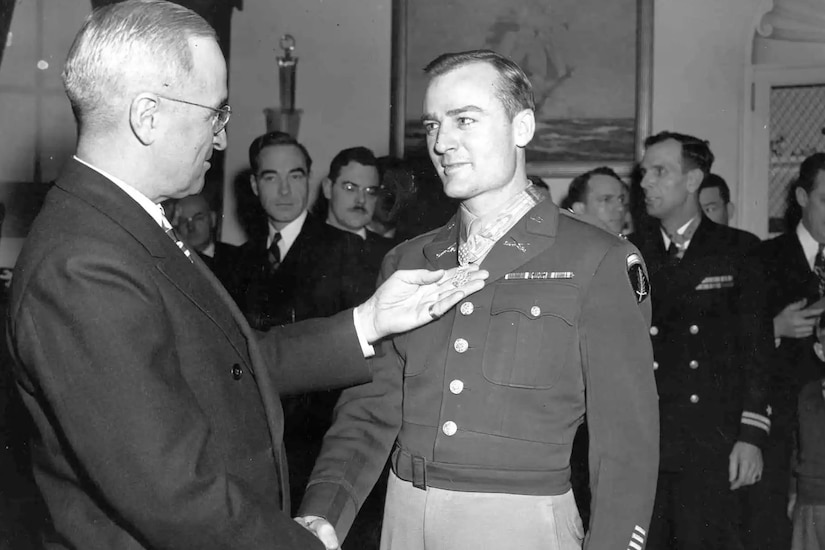
A man wearing business attire shakes hands with a man in a formal military uniform.
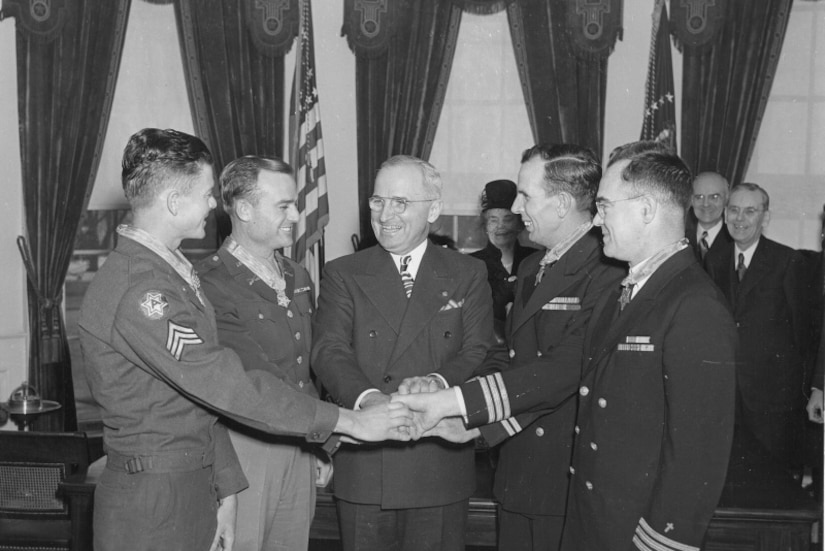
Four men wearing formal military uniforms and wearing medals around their necks, form a circle and join hands with a man in business attire.
President Harry S. Truman presented the Medal of Honor to Lee in a White House ceremony, Jan. 23, 1946. During the ceremony, Truman reportedly told Lee and three others receiving the same award, "I would rather have that medal — the Congressional Medal of Honor — than to be president of the United States." 

After his recovery, Lee worked for the Veterans Administration in Valdosta, Georgia, assisting returning veterans with accessing healthcare, education and other benefits. 

He was recalled to service at the start of the Korean War in June 1950. He was promoted to captain and served as a combat training officer at Fort Knox, Kentucky, until 1952. Lee returned to civilian life, rising to the position of senior vice president of the Southwest Region of Military Service Company, the oldest division of EBSCO Industries. 

Lee died Jan. 22, 1985, at the age of 65, and is buried in Rose Hill Cemetery in Alma. His wife, Sallie, eventually remarried; she died Oct. 1, 2016. 

In April 1996, a bridge near his hometown was dedicated as the Daniel Warnell Lee Memorial Bridge. 

Tuesday, September 08, 2026

Medal of Honor Monday: Army Cpl. Freddie Stowers

Army Cpl. Freddie Stowers served as an infantryman during World War I and was posthumously awarded the Medal of Honor more than 70 years after his heroic actions in France in September 1918.

Stowers was born Jan. 12, 1896; he was one of Wylie and Annie Stowers' 12 children. His father was a farmer, and his mother was a laborer. Stowers grew up in Sandy Springs, South Carolina, and worked on the family farm.

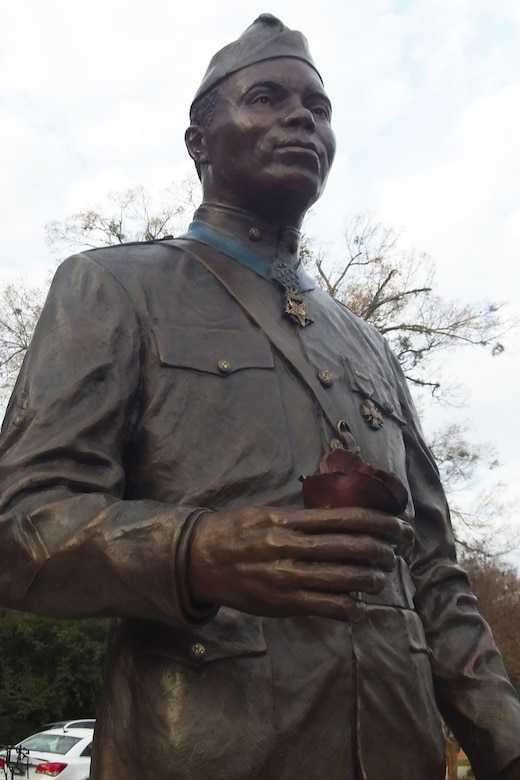
A bronze statue of a man in a World War I-era uniform and wearing a Medal of Honor stands outside.

In October 1917, Stowers was 21 when he was drafted into the Army and sent to basic training at Camp Jackson, now Fort Jackson, South Carolina. His wife, Pearl, and their daughter, Minnie Lee, named for one of his sisters, stayed in Sandy Springs, which was nearly two hours away.

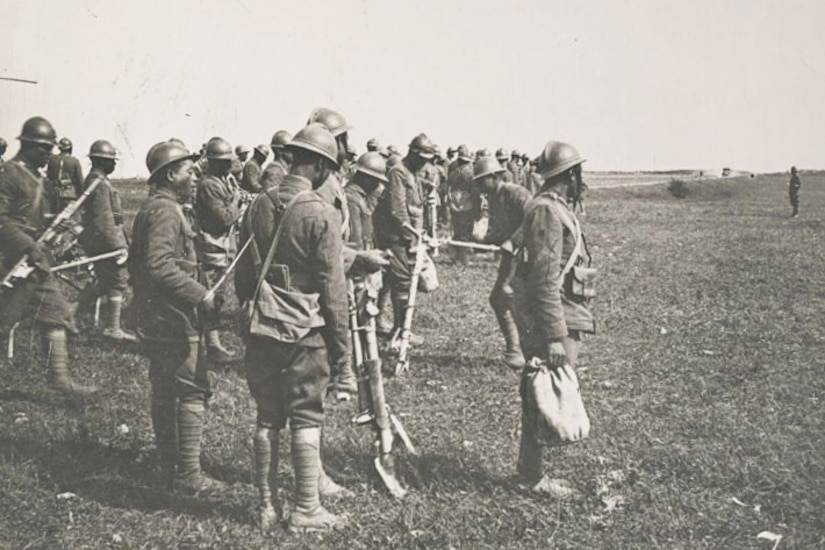
Demonstrating his leadership early on, Stowers was promoted to private first class within two months and then to corporal upon arriving in France in April 1918. He was assigned to Company C, 371st Infantry Regiment, 93rd Infantry Division — one of two buffalo soldier, all-Black divisions — which was ordered to support the 157th French Army.

On Sept. 28, 1918, while serving as a squad leader, Stowers' company came under attack on Hill 188, in the Champagne-Marne Sector of northeastern France. Shortly after the attack began, the Germans ceased firing and climbed onto the parapets of the trenches, holding up their arms as if to surrender. However, it was a trap. As the American forces advanced and reached within about 100 meters of the trench line, the Germans jumped back into their trenches. They opened fire with machine guns and mortars, killing or wounding half of Stowers' company, including his lieutenant and senior noncommissioned officers.

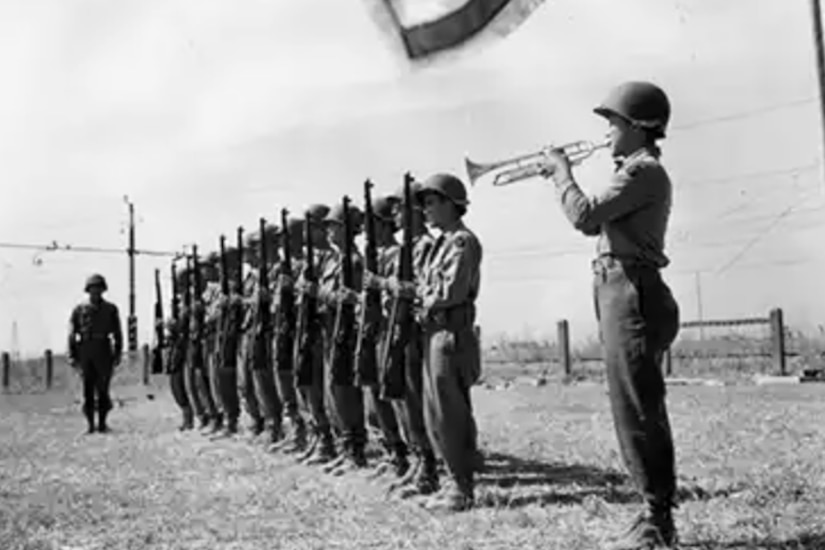
More than a dozen Black men in World War I-era uniforms and helmets hold weapons outside in a grassy field.

With complete disregard of personal danger and under devastating fire, Stowers took command, crawled forward and led his squad toward the enemy machine-gun nest. After fierce fighting, it was destroyed.

While crawling forward and urging his men to continue the attack on a second trench line, Stowers was hit. Although mortally wounded, he continued to lead his troops and pressed forward, urging the members of his squad until he died.

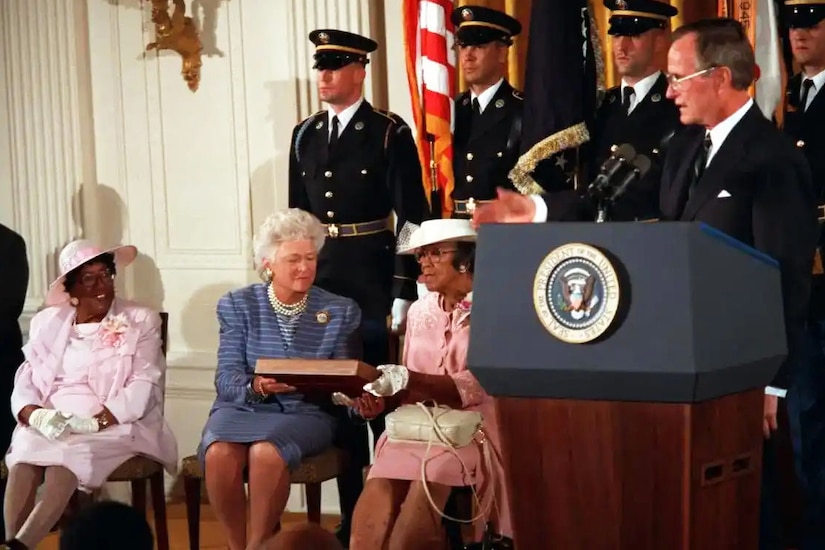
A man in business attire stands at a lectern and speaks into a microphone as three women sit in chairs. The middle woman hands a wooden award case to the woman on her left; four men in formal military uniforms stand at attention in the background.

Inspired by his heroism and display of bravery, the company continued the attack against incredible odds, contributing to the capture of Hill 188 and causing heavy enemy casualties.

After the war, Stowers' commanding officer recommended him for the Medal of Honor, but it was never processed. After a records review in the early 1990s, the recommendation was found, and President George H.W. Bush posthumously presented the Medal of Honor to Stowers. Two of his sisters, Georgiana Palmer and Mary Bowens, accepted the medal on behalf of the family during a White House ceremony held April 24, 1991.

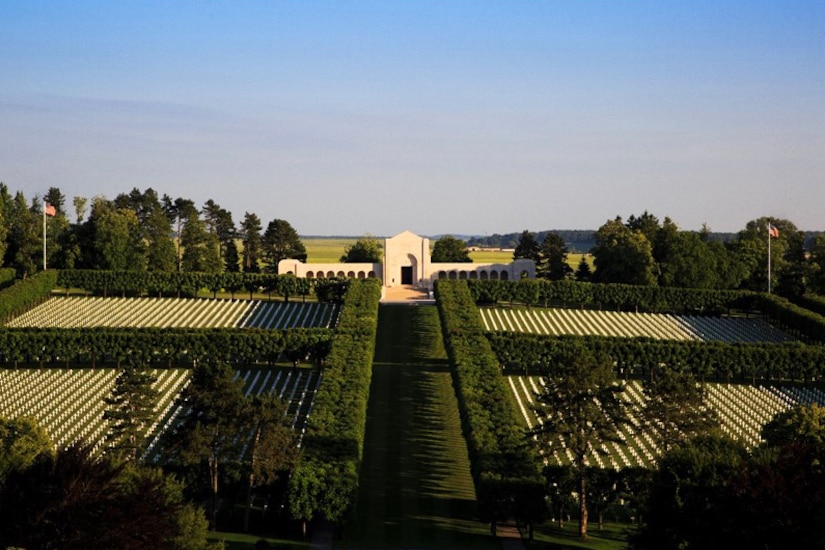
An aerial view of a cemetery with thousands of tombstones, trees and greenery under a blue sky; American flags wave from poles in the distance.

Stowers is buried in the Meuse-Argonne American Cemetery in Meuse, France.

A bronze statue of him was unveiled Nov. 10, 2015, on the campus of Anderson University in Anderson, South Carolina, a few miles from his birthplace.

There's a Stowers Elementary School at Fort Benning, Georgia, and a Freddie Stowers Single Soldiers Complex at Fort Jackson, South Carolina, as well as a Freddie Stowers Veterans Memorial in Anderson County, South Carolina.


Monday, July 20, 2026

Medal of Honor Monday: Army 2nd Lt. Robert Craig


A man in a formal military uniform.

Army 2nd Lt. Robert Craig was an infantryman during World War II. He posthumously received the Medal of Honor for his heroic actions in Sicily during Operation Husky. 

Craig was born in Scotland on June 7, 1919, to William Craig Sr. and Jane Montgomery Craig. He had an older brother, William, and a younger sister, Jane. 

When he was 4 years old, Craig's family left Scotland and eventually settled in Toledo, Ohio. Growing up, he played baseball, football and golf, and, according to a May 1944 press release from the War Department, "spent much of his time tinkering with cars and radios." 

After graduating from Libbey High School, Craig worked as a stock clerk at a grocery store in Toledo. He joined the Army in February 1941, and was commissioned Dec. 1, 1941, just six days before the attack on Pearl Harbor, Hawaii. 

In January 1942, Craig deployed to Europe with L Company, 15th Infantry Regiment, 3rd Infantry Division and six months later, he was part of the July 1943 landings in Sicily, known as Operation Husky. 

Troops in landing boats disembark and move through shallow water toward a beach.

On July 11, 1943, the 15th Infantry was advancing near Favarotta, Sicily, when it was stopped by enemy machine-gun fire. Despite failed attempts by three other soldiers, Craig and Army Cpl. James E. Hill volunteered to leave their position to locate and destroy the hidden gunner.  

Craig located the gun and came within 35 yards of the hostile position before being discovered. 

Hill said Craig "ran head-on through the machine-gun fire … reached the gun position miraculously unhurt, and, standing over the crew, killed all three of them with his carbine," according to the War Department press release. 

Now that the hidden machine-gunner was gone, the company moved forward. However, as it moved down the forward slope of a ridge, Craig and his platoon encountered approximately 100 enemy soldiers. With utter disregard for his own safety, Craig elected to sacrifice himself so that his platoon could continue. 

His Medal of Honor citation states, "He ordered his men to withdraw to the cover of the crest while he drew the enemy fire to himself. With no hope of survival, he charged toward the enemy until he was within 25 yards of them. He killed five and wounded three enemy soldiers. While the hostile force concentrated fire on him, his platoon reached the cover of the crest.  

"Craig was killed by enemy fire, but his intrepid action so inspired his men that they drove the enemy from the area, inflicting heavy casualties on the hostile force." 

Army Maj. Gen. Alan W. Jones, 106th Infantry Division commander, presented the Medal of Honor to Craig's father May 26, 1944, during a ceremony at Camp Atterbury, Indiana. 

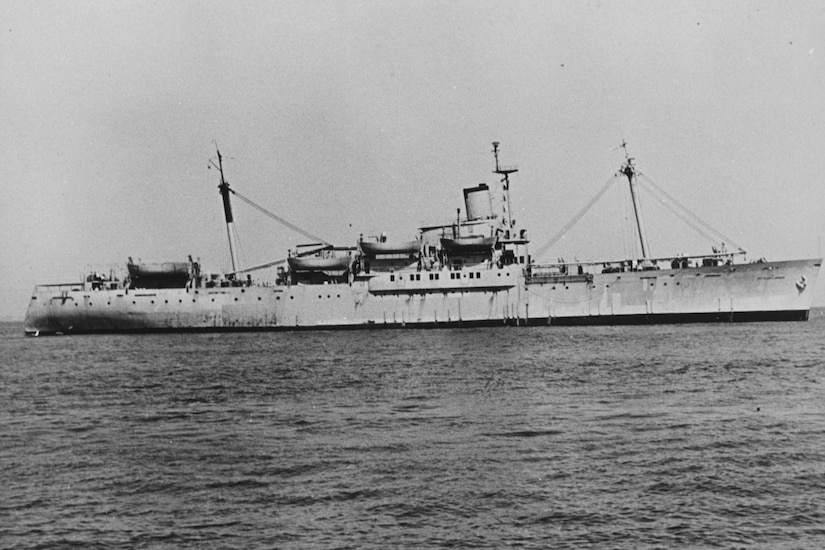
In July 1946, the cargo ship Bowling Green Victory, operated by the War Shipping Administration, was transferred to the Army Transportation Service and renamed the Lt. Robert Craig. In 1950, the ship was transferred from the Maritime Commission to the Navy and remained in service until 1973. 

In 1957, Craig's hometown dedicated the Robert Craig Memorial Bridge to him. According to the Toledo Gazette, more than 2,000 people attended the ceremony on a cold January day, including Craig's parents and siblings. 

Craig is buried in Toledo Memorial Park Cemetery in Sylvania, Ohio, near his parents.   

Monday, July 13, 2026

Medal of Honor Monday: Army Pfc. William Kenzo Nakamura

Army Pfc. William Kenzo Nakamura was a World War II hero. He received the Medal of Honor for risking his life to save his platoon during combat in Italy, July 4, 1944.

Nakamura was born in Seattle, Jan. 21, 1922, and grew up with a brother and a sister. His parents worked as barbers in Seattle after immigrating from Japan.

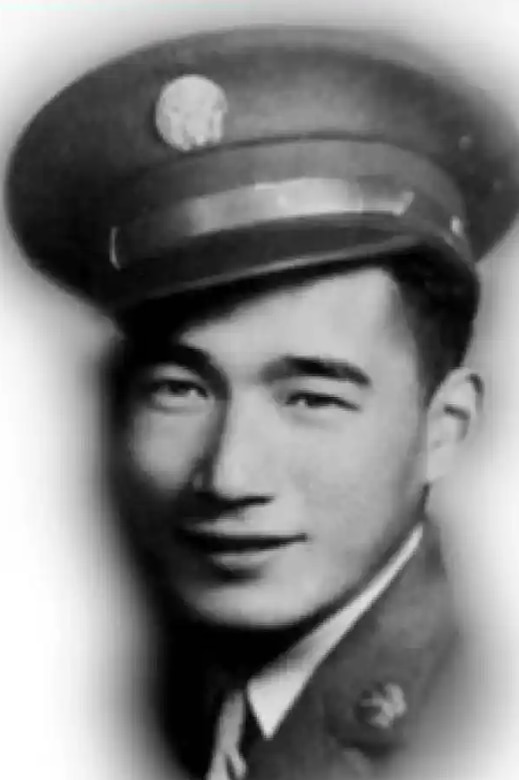
A black and white photo of a man wearing a military dress uniform and hat posing for a photo.
After graduating from Garfield High School in 1939, he attended the University of Washington.

His mother died of cancer in January 1942, two months before Japanese Americans living in the Puget Sound area were moved to relocation centers.

Nakamura and the rest of his family arrived at the Minidoka War Relocation Center in Jerome County, Idaho, Aug. 21, 1942, according to the final accountability roster from the War Relocation Authority.

His father and sister remained in the center until 1945, but Nakamura and his brother left the center for military service in July 1943.

On the day of his Medal of Honor action, Nakamura was assigned to Company G, 442nd Regimental Combat Team, in the hilly countryside near Castellina, Italy.

According to his Medal of Honor citation, his platoon became pinned down by enemy machine-gun fire from a concealed position during a firefight. On his own, he crawled 20 yards toward the hostile position with enemy machine-gun fire barely missing him.

After getting within 15 yards of the enemy, he threw four grenades, killing or wounding at least three of them. With their weapons silenced, Nakamura crawled back to his platoon, which was able to continue its advance thanks to his courageous action.

Later, his company withdrew from their position so a mortar barrage could occur. However, Nakamura remained in position to cover his comrades' withdrawal.

While moving toward the safety of a wooded area, his platoon again became pinned down by machine-gun fire. Nakamura acted quickly, crawling to a point where he could fire on the enemy. He engaged and pinned them down, allowing his platoon to withdraw safely.

Nakamura was not so lucky, he was killed during this heroic stand.

In the years after the war, only one Japanese American soldier received the Medal of Honor: Army Pfc. Sadao Munemori, who died in battle. Nakamura instead posthumously received the Distinguished Service Cross, the nation's second-highest military award for valor.

During the war, the approximately 14,000 Japanese American soldiers who served in the 442nd received 18,143 awards, including seven Presidential Unit Citations.

In 1996, legislation sponsored by Sen. Daniel Akaka of Hawaii led to an official review of the many Distinguished Service Crosses received by Japanese Americans for their heroics during World War II, despite the discrimination they faced at the time. The review resulted in the military upgrading 19 of the 52 Distinguished Service Crosses to Medals of Honor, as well as one Silver Star Medal.

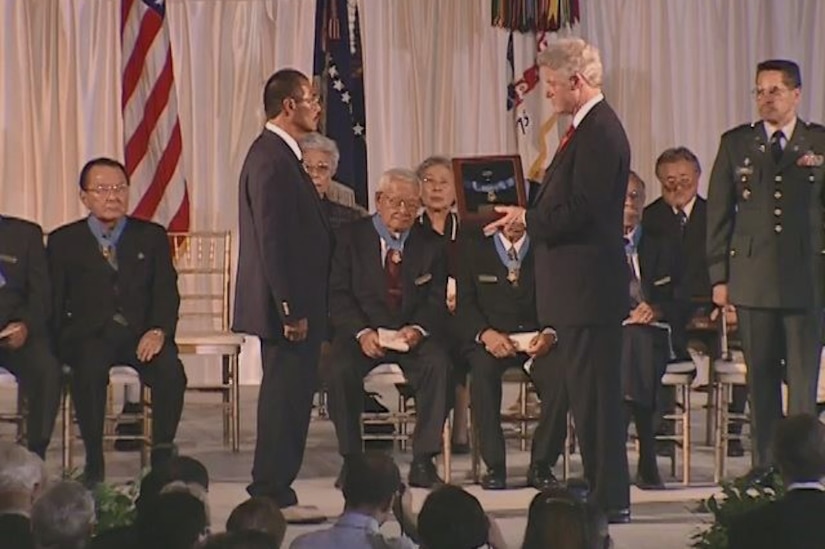
The Medal of Honor was awarded to several Japanese American soldiers assigned to the 100th Infantry Battalion and the 442nd Regimental Combat Team during a June 21, 2000, White House ceremony.

June Oshima, Nakamura's sister, was at the ceremony to accept the medal on his behalf from President Bill Clinton.

She gave an interview to the Longview Daily News newspaper, which was published in the May 29, 2000, issue.

They, Nakamura and his brother, "thought if they joined, they could get rid of the prejudice," she said. "They wanted to show that Japanese Americans were not the enemy. It makes me sad to think of it."

Decades since Nakamura's brave actions, tributes have continued. In 2000, Congress voted unanimously to pass legislation officially naming the Seattle federal courthouse the William Kenzo Nakamura United States Courthouse. There's also a memorial for him at the University of Washington.

Nakamura is buried at Evergreen Washelli Memorial Park in Seattle.

Monday, June 29, 2026

Medal of Honor Monday: Army Pvt. Elden Harvey Johnson

Army Pvt. Elden Harvey Johnson fought in the 1944 Italian Campaign of World War II as an infantryman and was posthumously awarded the Medal of Honor for his extraordinary heroism.

A man smiles and poses for a photo.

Johnson was born in Bivalve, New Jersey, Feb. 13, 1921, and grew up in East Weymouth, Massachusetts.

He enlisted in the Army in April 1943, at age 22, shortly after the United States entered World War II. Later that year, after completing basic training, he shipped out to Italy as a replacement soldier assigned to Company H, 15th Infantry Regiment, 3rd Infantry Division.

Johnson was part of the Rome-Arno Campaign, which began Jan. 22, 1944, and lasted until Sept. 9, 1944.

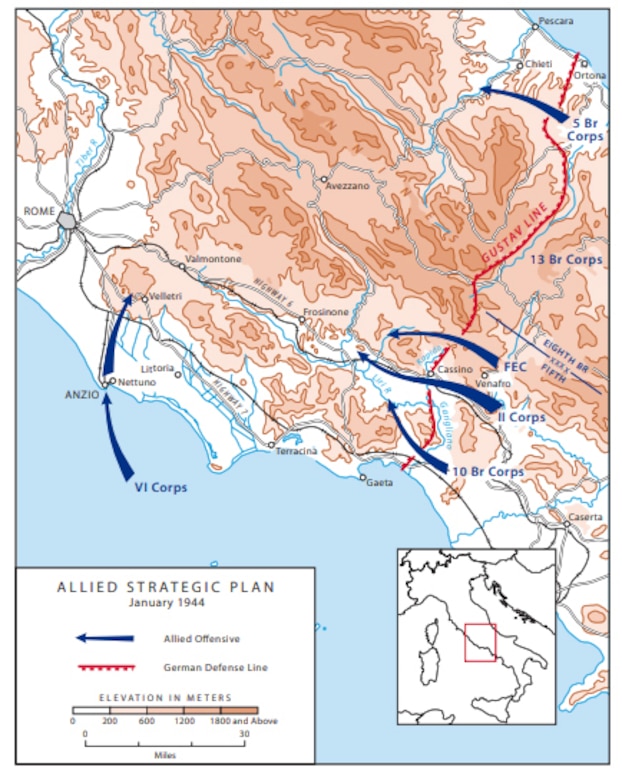
While on patrol June 3, 1944, his unit was attacked near Valmontone, Italy, about 30 miles southeast of Rome — three days before the D-Day invasion of Normandy, France.

It was night, but the area was brightly illuminated by enemy flares. Despite the enemy fire directed at him, Johnson advanced beyond the enemy in a slow, deliberate walk. He fired his rifle from his hip, distracting the enemy enough for 12 of his fellow soldiers to escape. Once he was within about 5 yards of the German machine gun position, Johnson killed the crew.

A map depicts terrain and military movements during World War II. The key in the corner reads, "Allied Strategic Plan, January 1944."

His Medal of Honor citation reads in part:

"Johnson elected to sacrifice his life in order that his comrades might extricate themselves from an ambush. Braving the massed fire of about 60 riflemen, three machine guns and three tanks from positions only 25 yards distant, he stood erect and signaled his patrol leader to withdraw."

Standing in full view of the enemy, Johnson reloaded, turned to the riflemen to the left and fired directly into their positions.

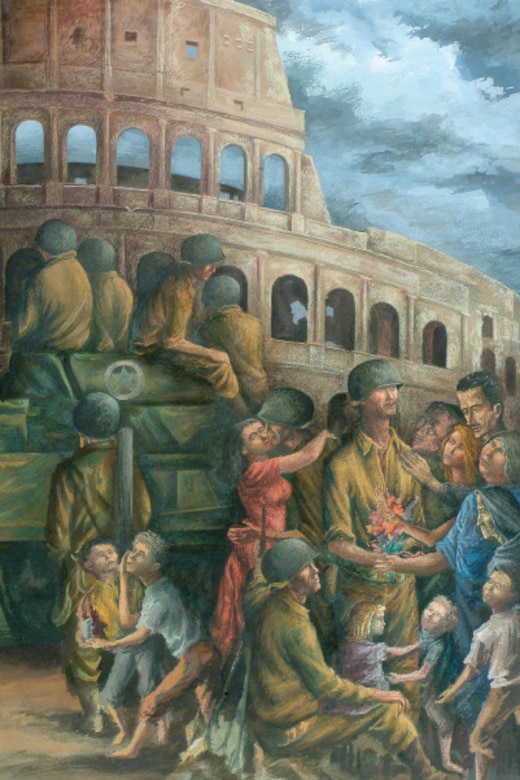
A painting depicts World War II-era soldiers near the Coliseum in Rome.
"He either killed or wounded four of them. A burst of machine-gun fire tore into Johnson, and he dropped to his knees. Fighting to the very last, he steadied himself on his knees and sent a final burst of fire crashing into another German. With that, he slumped forward dead," the citation states, noting that Johnson's acts of valor were an inspiration to the entire command.

Army Gen. Sherman Miles presented Johnson's Medal of Honor to his mother, Althea Bernice Johnson, May 30, 1945, in Boston.

Johnson was buried at Union Cemetery in Scituate, Massachusetts.

The former transport ship USS Pinkney was transferred to the U.S. Army Transportation Service in 1946 and recommissioned as the USAT Private Elden H. Johnson in 1947. The ship was reacquired by the Navy in 1950 and placed in service as the USNS Private Elden H. Johnson under the Military Sea Transportation Service. It went out of service in 1957.

For nearly 50 years, Johnson Barracks in Fürth, Germany, was named for him. The Army installation housed the 16th Engineer Battalion, quartermaster offices and other administrative and support functions. The installation was sold back to the Germans in the early 2000s and is now a business park. Additionally, Weymouth is the only town in the U.S. with five Medal of Honor recipients: Johnson, Thomas W. Hamilton, William Seach, Frederick C. Murphy and Ralph Talbo.

A large ship sails in the ocean.

On May 26, 2025, the city dedicated five bronze statues to honor them at the Ralph Talbot Amphitheater in Weymouth, which is adjacent to a veterans memorial wall that lists the names of city residents who have served during times of war.