Tuesday, January 06, 2026

Department of War Establishes New Acquisition Model to More than Triple PAC-3 MSE Production in Partnership With Lockheed Martin

The Department of War (DoW), working in partnership with Lockheed Martin, today announced the signing of a landmark framework agreement that establishes a transformative new acquisition model to expand munitions production and procurement—one that delivers long-term demand certainty, incentivizing industrial investment to increase production, cut lead times, drive supply chain management efficiencies, while reducing upfront government facilitization and capacity investments.

This seven-year framework agreement with Lockheed Martin is a direct outcome of the Department's new Acquisition Transformation Strategy, as unveiled by Secretary of War Pete Hegseth in his Arsenal of Freedom speech at Fort McNair in November. As the Secretary stated, "We will stabilize demand signals. We will award companies bigger, longer contracts for proven systems so those companies will be confident in investing more to grow the industrial base that supplies our weapons systems more and faster."  

Under the framework agreement, Lockheed Martin will increase annual production of the PAC-3 Missile Segment Enhancement (MSE) interceptor from approximately 600 to 2,000, aligning industrial capacity to the long-term demand required by U.S. forces, allies and partner nations. The agreement also aligns the interests of Lockheed Martin, the government, and taxpayers, with Lockheed Martin supporting investments to scale the required production increases, while benefitting from the certainty of long-term, growing demand for the PAC-3 MSE. 

"This framework agreement marks a fundamental shift in how we rapidly expand munitions production and magazine depth, and how we collaborate with our industry partners," said Michael Duffey, Under Secretary of War for Acquisition and Sustainment. "Lockheed Martin's willingness to help pioneer this transformative acquisition model is a win-win for the taxpayer, our national security, and the rebuilding of the industrial base needed for the Arsenal of Freedom."

The framework agreement establishes the basis for negotiating a seven-year supply contract, subject to Congressional authorization and appropriations, that would increase PAC-3 MSE production to approximately 2,000 missiles per year, up from approximately 600 today. The agreement also provides for strict delivery accountability and allows both the Department of War and Lockheed Martin to share in any enhanced profitability resulting from new equipment and volume efficiencies. This facilitization strategy will be applied to multiple munitions procurement contracts over the next year, pending Congressional appropriations, to replenish our stockpiles, rebuild our military, reestablish deterrence and strengthen and grow our defense industrial base. 

The Department of War recognizes that supply chain facilitization is also required to support production capacity increases. As part of the framework agreement, the DoW will work with key suppliers of PAC-3 MSE to deliver seven-year subcontracts to ensure facilitization investments and the production capacity of components also expand to meet the increased demand for all-up-rounds.  

The PAC-3 MSE framework agreement advances the Department's acquisition transformation priorities and reflects the execution-focused work of the Department's Munitions Acceleration Council, as well as the strong partnership with Lockheed Martin. The Council was established to rapidly identify and remove structural barriers to scaling weapons production and to translate urgent operational demand into executable, long-term industrial capacity.  

Medal of Honor Monday: Army Air Corps Brig. Gen. Kenneth Walker

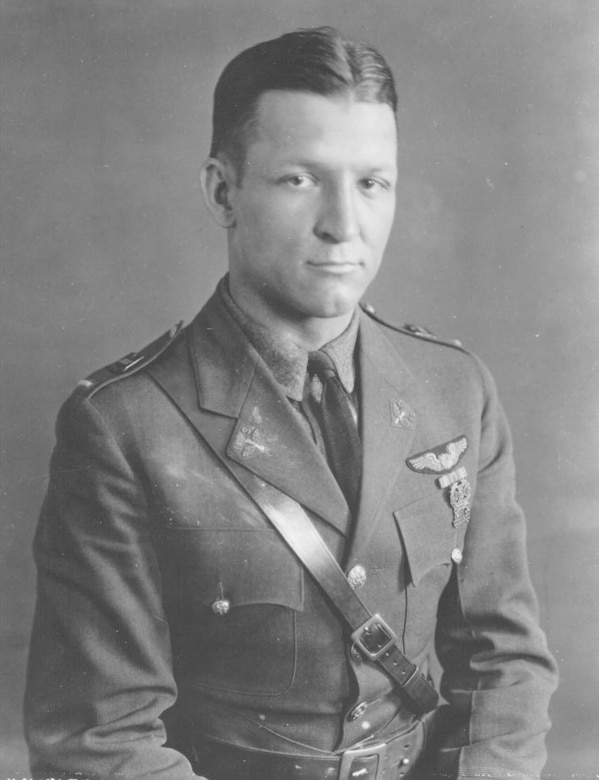
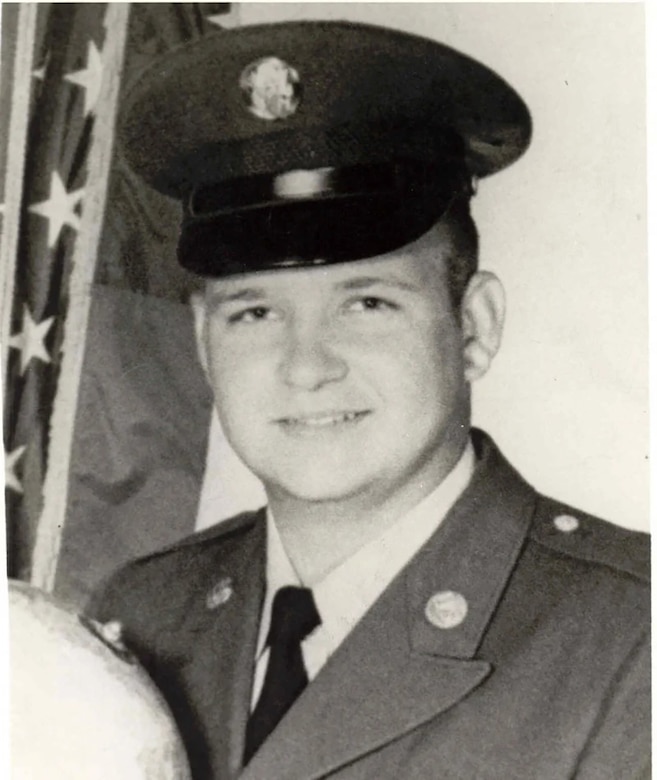
Army Air Corps Brig. Gen. Kenneth Newton Walker participated in dangerous bombing missions alongside his air crews during World War II because he wanted to understand how to beat the enemy. Walker never came home from his last mission. He received a posthumous Medal of Honor and is credited with helping to create the blueprint for the modern Air Force.

A man in uniform poses for a photo.

Walker was born July 17, 1898, in Cerrillos, New Mexico, to Wallace and Emma Walker. His parents separated shortly after he was born, so Walker's mother raised him alone. At some point in his youth, the pair moved to Denver, where Walker became a Boy Scout and took an interest in several sports, including football, wrestling and boxing.

According to Air University Press author Martha Byrd, Walker's maternal grandparents lived in Omaha, Nebraska, so Walker also lived there for a few years before graduating from Omaha High School of Commerce in 1915. However, by 1917, he had returned to Denver, eventually enlisting in the Army on Dec. 15 of that year. He remained in the service for the rest of his life.

Walker became a pilot just as aerial warfare was being established. He trained at the University of California, Berkeley, School of Military Aeronautics and then at Mather Field, California, earning his commission and his wings in the Army Air Service in November 1918. He received a commission in the regular Army July 1, 1920.

Over the next few years, Walker served as a flying instructor in Texas, then in Oklahoma, where he met Marguerite Potter in 1920. The pair married in 1922 and eventually had two sons, Kenneth Jr. and Douglas.

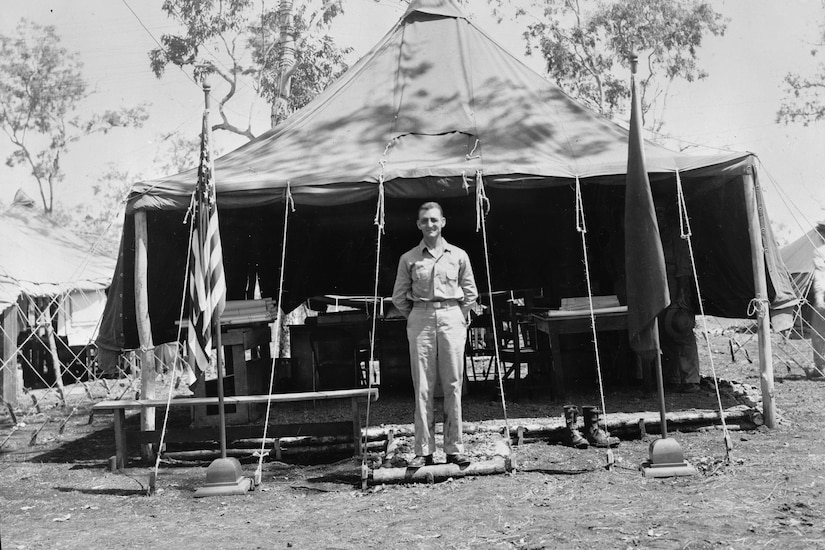
A man stands in front of an open tent with an American flag posted out front.

That same year, Walker graduated from the Air Service Operations School before being sent to the Philippines to command the Air Intelligence Section at Camp Nichols. When he returned to the U.S. in 1925, he continued his education and rose through the ranks, serving as an operations officer, bomb squad commander and instructor at various installations.

By January 1941, then-Maj. Walker found himself serving in Washington in the high-level position of assistant chief of the Air War Plans Division. Prior to the Pearl Harbor attacks, Walker was one of four Army Air Corps officers who created the blueprint of how to attack Japan and Germany from the air, according to a 2017 profile of Walker in the San Angelo Standard-Times. That strategy was later considered a key component of the Allied victory.

In July 1942, as the war raged, Walker was promoted to brigadier general and sent to the Pacific Theater. Shortly after his arrival, he was appointed as the commanding general of the Air Force's 5th Bomber Command.

From September 1942 to January 1943, Walker repeatedly went on bombing missions deep into enemy-held territory with his air crews. According to the San Angelo Standard-Times, he also went on bombing missions alone — something few generals did. His desire to take part in the danger earned him great respect from his subordinates. The lessons he learned from those missions helped him develop a highly efficient technique for bombing in the face of enemy aircraft and antiaircraft fire, according to his Medal of Honor citation.

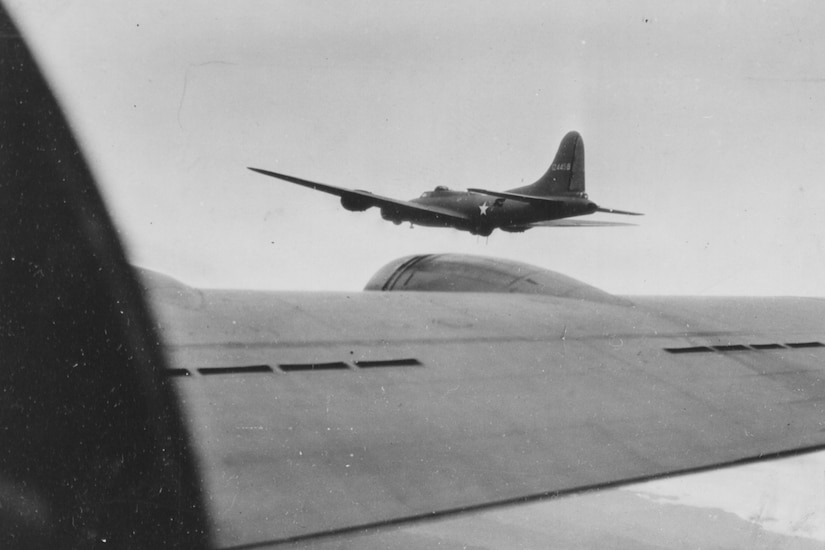
An aircraft is seen from the wing of another aircraft.

On Jan. 5, 1943, Walker joined several air crews on one of those dangerous missions. Six B-17 Flying Fortresses and six B-24 Liberators were sent on a daytime bombing mission over the Japanese-held harbor at Rabaul on the island of New Britain in Papua New Guinea. The attack was a success in that direct hits were scored on nine enemy ships. However, the bombers didn't get away before enemy fighters and antiaircraft fire came after them.

Walker was flying as an observer on a B-17 nicknamed the San Antonio Rose, which came under heavy attack. The aircraft was last seen with one engine on fire and several fighter aircraft on its tail. Evidence collected later showed that two of the aircraft's crew members were able to bail out; however, all 11 crew members were eventually declared dead.

On March 25, 1943, Walker's oldest son, Kenneth Jr., received the Medal of Honor on his father's behalf from President Franklin D. Roosevelt during a White House ceremony. Walker was the highest-ranking Army official to be reported missing during the war.

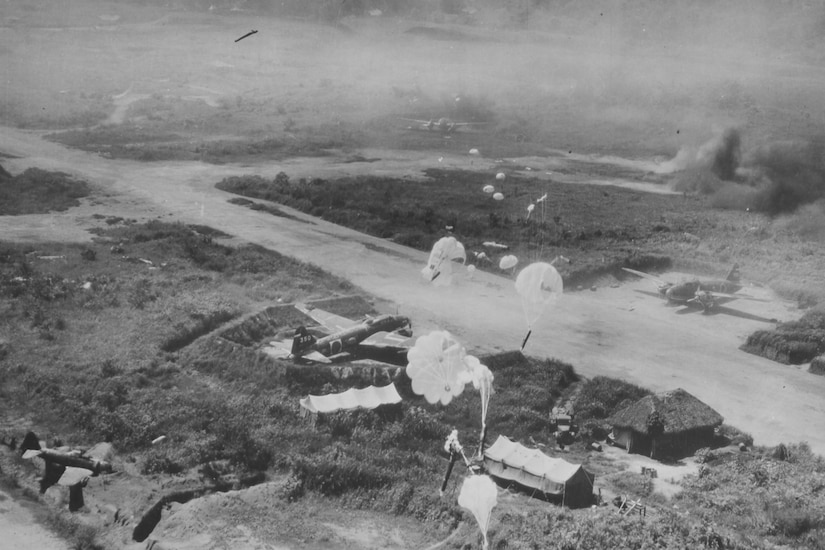
An aerial view of an island airstrip as parachutes drop on it.

Well before his death, Walker and a few other Air Corps Tactical School instructors were invited by a federal commission to testify in support of creating a separate military air organization that wasn't subordinate to any other branches. Thanks to his work with this commission and the air war plan used during World War II, Walker is considered one of the forefathers of the modern Air Force.

Walker has been remembered in many ways, including on the Wall of the Missing at the Manila American Cemetery in the Philippines.

In January 1948, Roswell Army Air Field in Roswell, New Mexico, was redesignated as Walker Air Force Base in honor of the fallen general. At Maxwell Air Force Base, Alabama, the home of the College of Aerospace Doctrine Research and Education, Walker Hall was also named for him.

Every year, a small number of papers written by field-grade officers in the Air Force Fellows program are selected to be published online. Those papers are known as the Walker Papers. The chosen officers attend civilian universities and organizations for a year to study national security strategy and serve as military ambassadors to prestigious institutions.

Friday, January 02, 2026

Face of Defense: Marine on Faith, Family and the Silent Drill Platoon

Marine Corps Gunnery Sgt. Zackary Cox stands at the edge of the parade deck at Marine Barracks Washington, watching rifles spin through the air in perfect arcs. The Marines of the U.S. Marine Corps Silent Drill Platoon move as one, every step measured and every motion deliberate.  

To the public, their precision appears effortless. To Cox, it is the result of exhaustion, repetition and a refusal to settle for "good enough." 

"When you watch the shows, you see perfection," Cox said. "But to these Marines, being perfect isn't perfect. They'll drill one mistake until it's gone. That discipline, that mindset, that's what sets them apart."

Marine Corps Gunnery Sgt. Zackary Cox
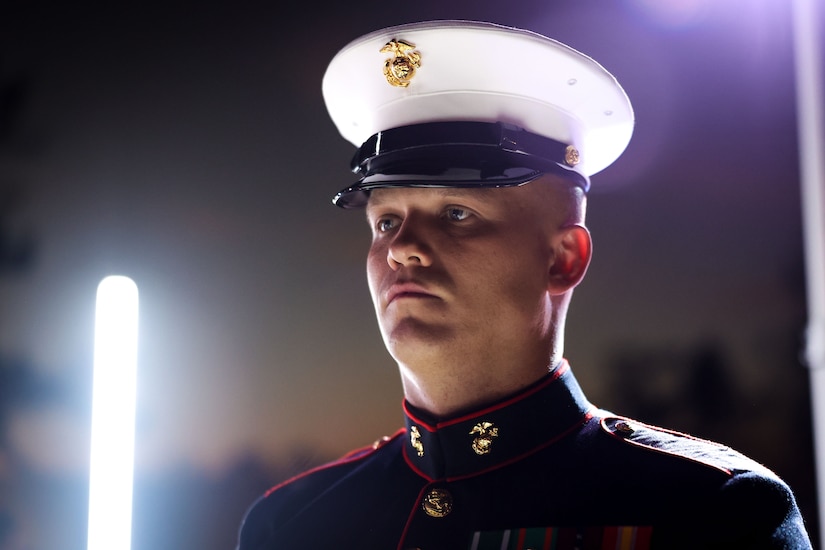
A Marine in formal silent drill platoon attire stands under a fluorescent light at night.
Job: Platoon Sergeant
Stationed: Marine Barracks Washington
Unit: U.S. Marine Corps Silent Drill Platoon
Hometown: San Bernardino, Calif.
Cox paused for a moment with his eyes fixed on the Marines crossing the deck. "It's humbling," he said. "These Marines live this life. They carry the weight of representing the Marine Corps every single time they step out there." 

Roots of Service 

Unlike many Marines, Cox didn't grow up in a long line of military service. His reasons for joining were personal. Raised in a large family without a steady father figure, he felt a need to step up for his younger brothers. 

"I wanted to be more than just a big brother," he said with a smile. "I wanted to be someone they could actually look up to." 

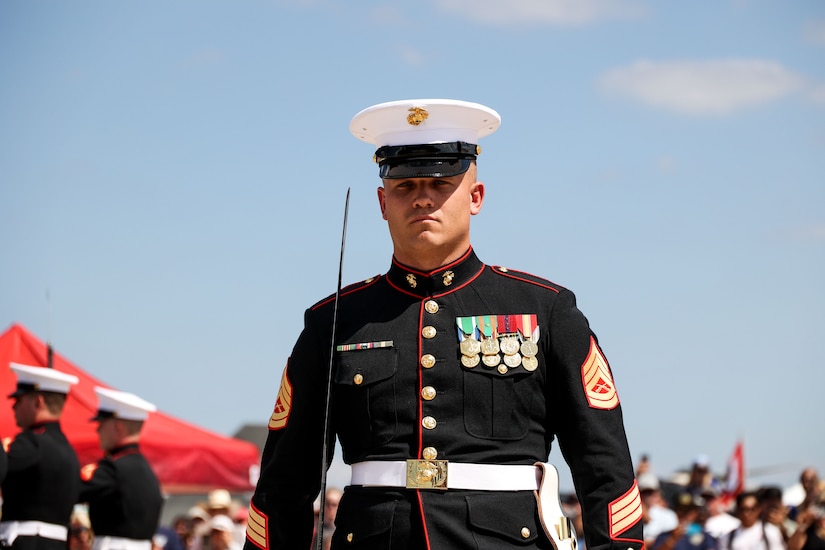
A Marine wearing formal black attire and a white cap stands at attention outside during the day.

That sense of responsibility deepened when he and his wife, Iris, started their own family and welcomed three sons. 

"There was a point where I thought about getting out," Cox admitted. "But fatherhood changes things. The Marine Corps wasn't just a career path anymore. It became the best way I could provide stability for my wife and kids. It was the right choice for all of us." 

Throughout his career, Cox has drawn inspiration from leaders who left a lasting mark. Marine Corps Sgt. Maj. Sean Blue was one of the first. What began as a professional relationship developed into something closer to family. 

"He's like the older brother or father figure I never had," Cox said. "He gave me patience, something I didn't have as a young sergeant. He taught me to slow down and see the big picture." 

Cox credits his wife for keeping him grounded and Marine Corps 1st Sgt. Mia Moffett for reminding him that professionalism and joy can coexist. 

"She taught me you can have fun while still doing your job right," he said. "That stuck with me. Sometimes Marines forget to breathe." 

Faith, he said, has carried him through it all. "I'm a God-fearing man," Cox said quietly. "Without Him, I wouldn't be where I am today. He lays the path. My job is to walk it." 

The Humanity Behind Precision 

By the time Cox arrived at the Silent Drill Platoon, he had served as a drill instructor, water survival instructor, force fitness instructor and infantry leader. None of it, he said, fully prepared him for this role. 

"You can hear stories, talk to the Marines who did the job before you," Cox said. "But nothing prepares you for the grind until you're standing there with them. It's like a whole different world inside the Marine Corps." 

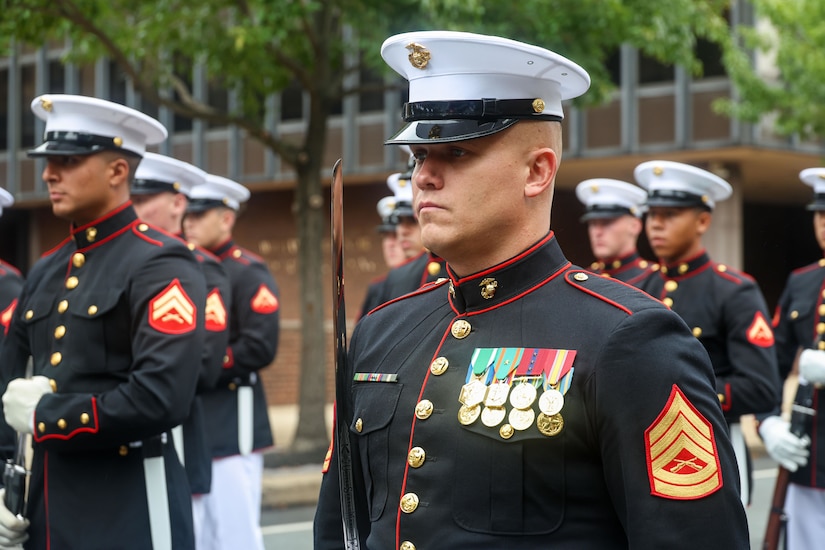
A Marine wearing black formal attire and a white hat stands at attention among other Marines outdoors.

The Silent Drill Platoon, known for its rifle drill precision without verbal cadence or commands, serves as one of the Corps' most visible symbols of discipline. Bearing is everything, and mistakes are rarely tolerated. Yet, Cox said, what the public doesn't always see is the humanity behind the precision. 

He pointed to Marine Corps Lance Cpl. Avery Nix as an example. When Nix first arrived, he wasn't part of the elite "Marching Twenty-Four," the core performers of the platoon. However, through persistence and discipline, he earned his place. 

"Now, he's on the deck, and he embodies what this platoon is about," Cox said. "That drive, that refusal to give up, watching him grow has been one of the best parts of this job." 

Pride, Every Single Time 

Cox initially turned down the opportunity to join the Silent Drill Platoon. When Marine Corps 1st Sgt. Brandon Pizano first suggested it, Cox thought staying with his infantry unit would be better for his career. But Pizano persisted, calling him repeatedly until Cox reconsidered. 

The selection call came unexpectedly while Cox was bowling in Okinawa, Japan. On the other end of the line was Marine Corps Sgt. Maj. Jimmy Richard from Marine Barracks Washington.

"He asked me who I'd been talking to, and why I wanted the billet," Cox said. "Then he told me I'd been selected. I was speechless. That moment will always stay with me." 

Being the platoon sergeant for one of the Marine Corps' most visible units comes with pressure, but Cox describes it as a different kind of weight than in the fleet. 

"With an infantry platoon, maybe five percent of the time is calm," he said. "Here, it's closer to half. The Marines are so disciplined and self-driven that I've been able to find peace here in a way I didn't expect." 

Still, the emotions run high every time the platoon performs. Cox compared the feeling to watching his sons play sports. 

"When my son scored his first goal, I felt this rush of pride," he said. "That's exactly what I feel when I see these Marines perform, every single time. It never gets old." 

Even if the performance misses the perfect standard the platoon trains to, Cox said the Marines handle it with bearing and professionalism. During a performance in Atlanta, one Marine dropped his rifle mid-routine. 

"To the audience, it looked like part of the show," Cox said. "That's how much control they have. They can make an error look intentional. That's professionalism." 

Cox doesn't dwell on legacy in terms of rank or position. For him, leadership comes down to one simple thing: caring. 

"Years from now, I just want the Marines I served with to say Gunnery Sgt. Cox was humble, that he cared," he said with pride. "Not just about their careers, but about them as people." 

That kind of leadership, he believes, lasts beyond service.

"At the end of the day, I want them to be good people," Cox said. "Good people make good Marines, and good Marines make the Corps stronger. If I've done my part to push them in that direction, then I've done my job." 

As he looks across the parade deck, watching the rifles rise and fall under the spotlight, Cox smiles. 

"They're the standard," he said. "What they do is magical, and I'm just grateful I get the chance to be part of it."

449th AEG Airmen Test Readiness During Exercise Pale Serpent

Airmen assigned to the 449th Air Expeditionary Group, in conjunction with Army, Marine Corps and Navy partners, conducted readiness training at Camp Lemonnier, Djibouti, during Exercise Pale Serpent, Dec. 26–29, 2025.

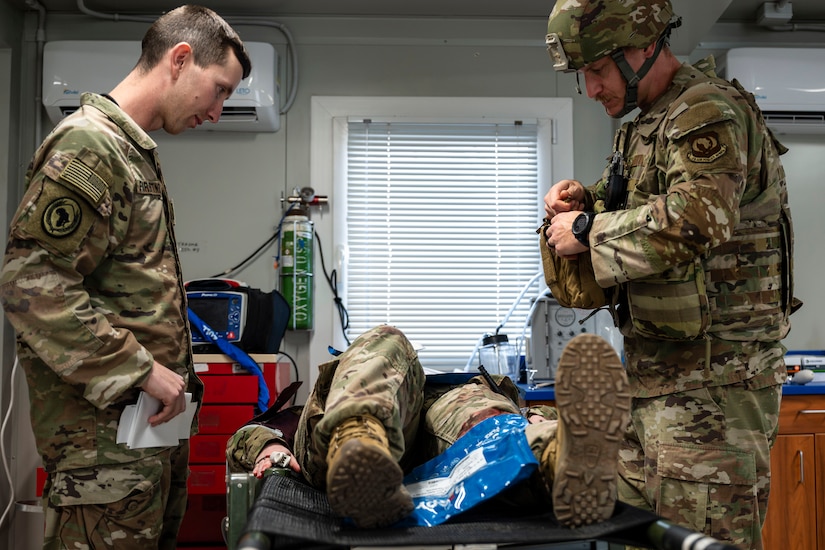
Two soldiers look down at a soldier lying on a medical bed.

The joint exercise prepared units to respond to real-world contingencies across East Africa. 

The exercise placed different 449th elements into parallel training scenarios designed to test how each mission set could operate in a high-tempo environment, from trauma care to aeromedical evacuation. 

At Chabelley Airfield, Djibouti, Air Force medical personnel assigned to the 776th Expeditionary Air Base Squadron treated simulated casualties inside the installation's medical treatment facility alongside partner medical teams, practicing trauma care, triage and patient stabilization. 

"Triage took place outside, and then we were assigning casualties into the appropriate rooms," said Air Force Tech. Sgt. Gracie Livengood, 776th Expeditionary Air Base Squadron, aerospace medical service technician. "The most immediate patients came into the trauma bay, and we treated them while delayed and minimal patients were handled in the other bays." 

The scenario forced medics to manage multiple patients at once while working through limited space, equipment and personnel, requiring constant communication and rapid decision-making across the treatment teams.

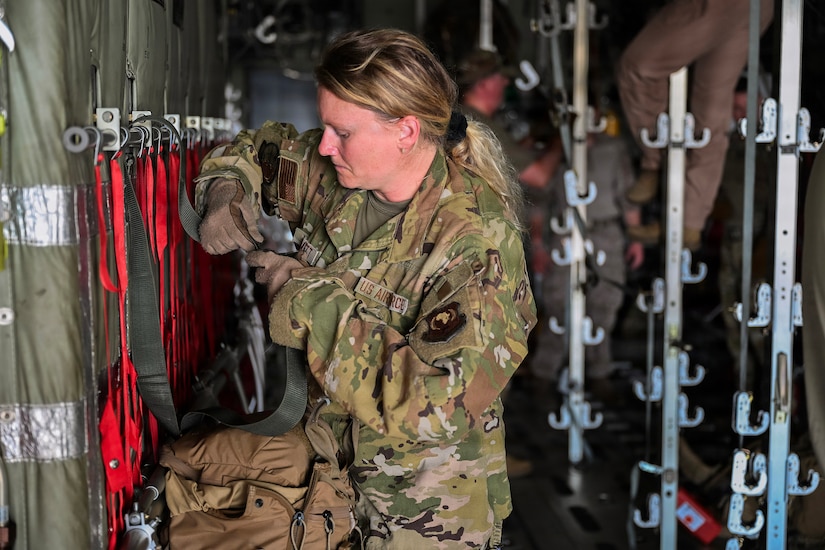
An airman works on adjustable wall fixtures as fellow service members work in the background.

"This training helps us get prepared if an actual emergency happens," Livengood said. "It ensures our skills are up to date, that we're doing everything properly and that we have the equipment we need to provide the best quality of care." 

Livengood said the exercise also highlighted the importance of teamwork in high-stress medical situations. 

"There are always challenges, especially when we're relatively short-staffed for a mass-casualty exercise," Livengood said. "But everyone did really well, helping each other out, moving from bed to bed and making sure people were taken care of." 

While medical teams trained at Chabelley, aeromedical evacuation personnel assigned to the 10th Expeditionary Aeromedical Evacuation Flight conducted parallel readiness training at Camp Lemonnier, preparing to move patients from the expeditionary medical facility to higher levels of care. 

During Pale Serpent, the 10th EAEF employed its full aeromedical evacuation capability, including a critical care air transport team consisting of a physician, critical care nurse and respiratory therapist, along with two flight nurses and four aeromedical technicians.

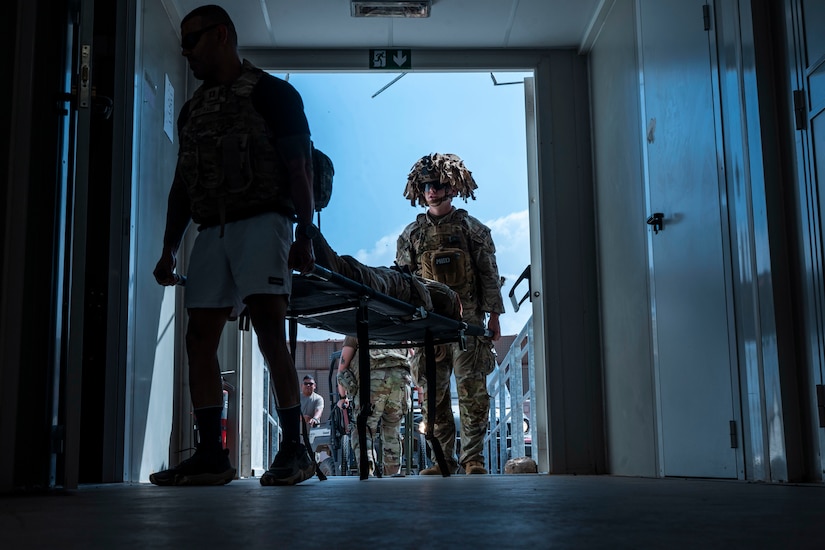
Two soldiers bring a person into a building on a gurney.

"Having aeromedical evacuation capabilities in this region is important so we can quickly move patients to a higher echelon of care," said Air Force Maj. Christina Newby-Martinez, 10th EAEF commander. "We're trained to provide the capability to rapidly move large numbers of patients by air during mass casualty events, which ensures timely redistribution of casualties to appropriate medical facilities." 

When this capability is integrated with critical care air transport teams specialized in transporting critically ill patients who require advanced, intensive and continuous medical care en route, there is a seamless transition of care across the full spectrum of patient acuity, Newby-Martinez explained. 

Exercises like Pale Serpent are essential for preparing crews to operate under pressure. 

"Training like Pale Serpent tests how quickly our teams can respond, pushes them to work outside of their normal crew complement and forces them to be ready for the unknown injuries that could arrive on an aircraft," Newby-Martinez said. "It also helps us see where we need to improve communication when we're working in a multi-service environment." 

Although 449th AEG elements trained in different locations, their efforts strengthened their ability to respond immediately and effectively to mass-casualty emergencies, reinforcing crisis readiness at one of U.S. Africa Command's most operationally critical hubs in East Africa. 

Wednesday, December 31, 2025

Army Surgery Resident Develops Groundbreaking Life Support System, Named to Forbes '30 Under 30 Healthcare 2026' List

In the ever-evolving landscape of health care, few stories resonate with the promise of innovation and dedication quite like that of Army Capt. Bradley Pierce.  

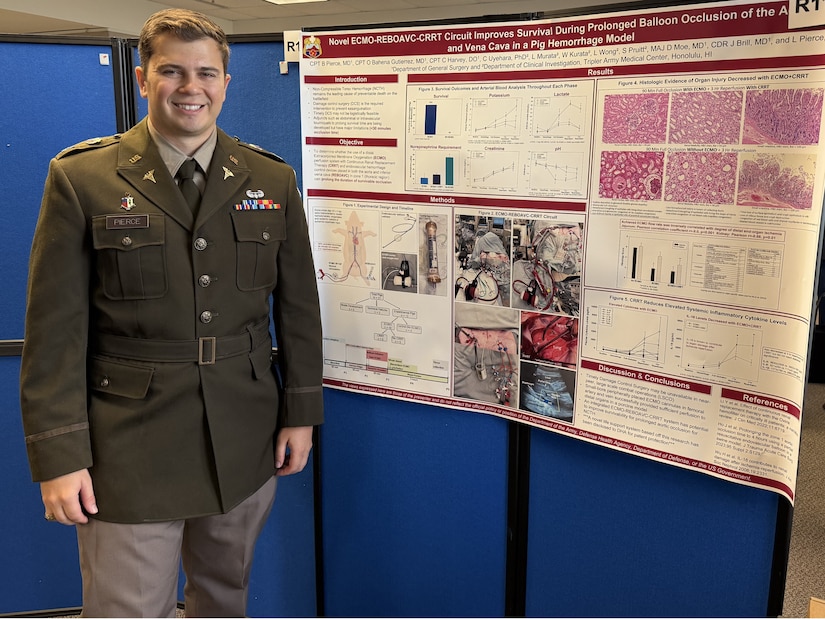
A man wearing an Army dress uniform smiles as he stands next to a display board.

Pierce is a general surgery resident at Tripler Army Medical Center in Honolulu who was recently recognized on the Forbes "30 Under 30 Healthcare 2026" list for his groundbreaking development of a life support system to enhance patient survival rates following traumatic abdominal hemorrhage. This pioneering system holds significant potential for application in emergency rooms and rural treatment facilities, demonstrating how military medicine can lead the way in health care innovation. 

A Journey Rooted in Service and Science  

His upbringing profoundly influenced Pierce's journey into health care. Growing up with an Army physician father and a scientist mother, he was immersed in the world of medicine and science from an early age. 

"Health care always felt familiar," Pierce said. 

His father's career showcased the human side of medicine, emphasizing its mission-driven nature, while his mother's scientific background instilled in him a passion for analytical thinking and problem-solving. This unique blend of experiences naturally steered Pierce toward military medicine, a field that combines clinical care with service in challenging environments. 

A pivotal moment that solidified his path occurred during high school when he shadowed physicians and surgeons. Witnessing the intricate balance of technical skill and calm decision-making in high-stakes situations illuminated the profound impact of medicine. 

"Those experiences clarified that I wanted a career where I could think critically, work with my hands and directly improve outcomes for people in vulnerable moments," Pierce explained. 

Mentorship and Inspiration  

Throughout his career, Pierce has been fortunate to have mentors who have guided him. One of his most significant role models is Dr. Thomas Fogarty, a pioneering figure in medical innovation known for inventing the Fogarty balloon catheter. Pierce admires Fogarty's courage to innovate, despite skepticism, and his ability to transform concepts into practical solutions that enhance patient care. 

"Learning from him has been inspirational on how to persevere through uncertainty," Pierce said.

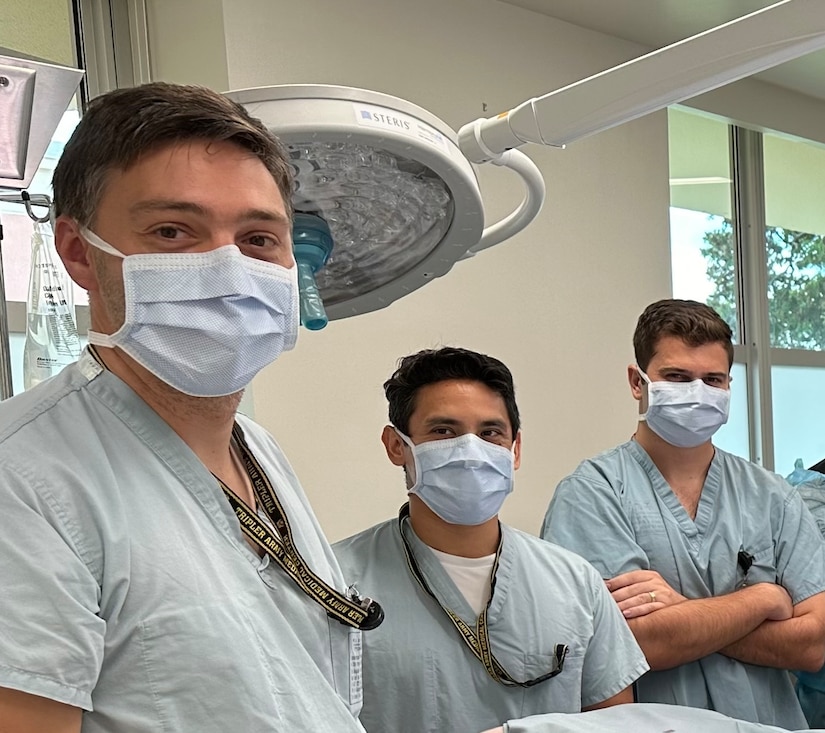
Three doctors wearing face masks pose for a photo in an operating room.

Achievements and Future Aspirations  

Among Pierce's proudest accomplishments is the completion of initial preclinical testing for a novel heart-lung-kidney life support system designed to treat internal bleeding, a project now submitted for patent protection. 

"This milestone reflects over a decade of deliberate preparation," said Pierce, crediting the support of his colleagues and the Department of Clinical Investigations at Tripler for their collaborative efforts that led to this breakthrough. 

Pierce measures the impact of his work by its potential to improve patient outcomes, particularly in high-stakes situations where timely intervention is critical. He emphasizes that success is not solely determined by traditional metrics, but by the meaningful differences made in patients' lives. 

"The ultimate measure of success is lives improved or saved once they reach patients," Pierce said. 

The Army upholds a robust regulatory framework that ensures exceptional standards of operations and accountability, exceeding those generally established in civilian sectors, such as the Health Insurance Portability and Accountability Act for patient privacy and the Occupational Safety and Health Administration for workplace safety. Furthermore, the Army adheres to War Department guidelines and Army-specific regulations that emphasize readiness and preventive medicine. 

The Future of Health Care: Challenges and Innovations  

As Pierce looks to the future, he identifies pressing challenges in health care, including the growing mismatch between demand and capacity. 

"Patient populations are increasing in size and complexity, while health care systems are being asked to do more with fewer resources," Pierce said. 

Addressing these challenges will require innovative solutions that enhance care delivery without adding complexity. 

Pierce believes that technology will play a crucial role in shaping the future of health care. He envisions a landscape where thoughtfully designed technologies can extend clinicians' capabilities, automate routine tasks and facilitate complex care outside traditional hospital settings. 

"The future will be defined by how well we integrate digital intelligence with practical, deployable medical devices that can act when patients need care the most," Pierce said. 

Advice for Aspiring Health Care Leaders  

Pierce advises aspiring young professionals who want to make a difference in health care to seek out strong mentors and focus on areas in need of improvement. He underscores the importance of staying close to clinical realities and challenging assumptions. 

"Progress in health care is often incremental, but sustained curiosity, humility and persistence can lead to changes that truly improve how care is delivered," he said. 

As he continues his surgical residency and works on advancing his current projects, Pierce remains committed to building solutions that address real clinical needs. 

"My primary goal is to complete surgical residency and ensure that each project remains grounded in practical, scalable and clinically relevant solutions," he said. 

A Legacy of Innovation and Teamwork  

Pierce's journey exemplifies the intersection of military service and health care innovation. His commitment to improving patient outcomes through technology, alongside a deep appreciation for mentorship and collaboration, positions him as a leader in the field.  

As he envisions his work evolving over the next five years, Pierce is determined to bridge the gap between innovative ideas and real-world impact, ensuring that the future of health care is not only innovative but also accessible and effective for all patients. 

Tuesday, December 30, 2025

Vietnam-Era 'Donut Dolly' Continues Service With Red Cross in Poland

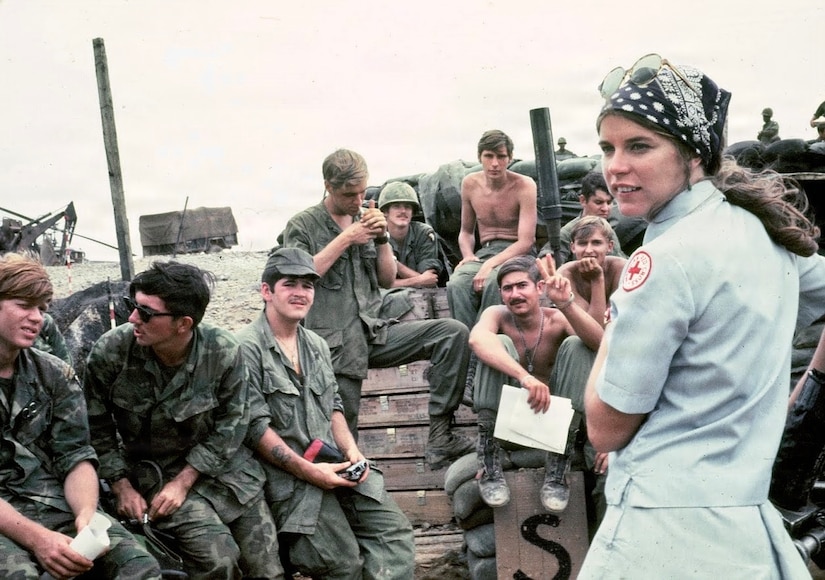
Dorner Carmichael grew up in rural Georgia with a curiosity about the world beyond her hometown. As the Vietnam War escalated and the draft loomed over her male classmates, she graduated from college determined to see more of the world and take part in the events shaping her generation. 

An American Red Cross volunteer stands to the right. She is surrounded by soldiers in various states of dress in this Vietnam War-era photo.

Carmichael learned about the Red Cross "Donut Dollies" while volunteering in college, teaching first aid with her local chapter. Drawn by a mix of adventure, curiosity and a desire to participate in history rather than watch it from a distance, she volunteered for service in Vietnam despite opposition from her mother and skepticism from friends. 

The term "Donut Dolly" originated during World War II as an affectionate nickname for Red Cross women who staffed club mobiles. Those vehicles were outfitted with coffee and donut machines and phonographs to bring comfort and a sense of home to service members in Europe, North Africa, India and the Pacific.  

Although the nickname carried into Vietnam, the mission evolved. Carmichael notes that during her tour, she never actually saw a donut.  

Assigned forward, Carmichael lived close to combat operations. At first light, she and other Donut Dollies boarded Huey helicopters carrying hot breakfasts to remote firebases. After serving the meals, they moved between artillery, mortar and infantry positions, running fast-paced recreation programs designed to give soldiers a break from the stresses of war. 

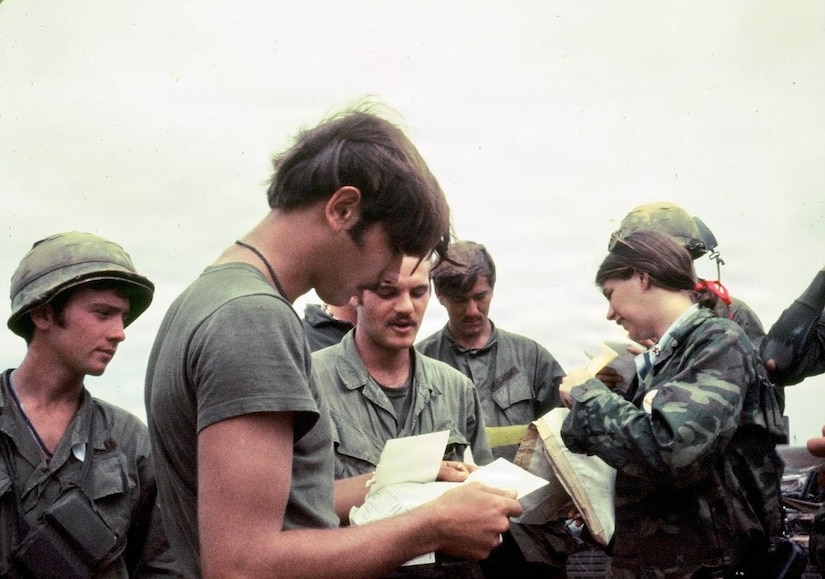
A woman wearing a military camouflage jacket distributes mail to soldiers in various states of dress in this Vietnam War-era photo.

Programs ranged from game-show-style contests focused on baseball, football and basketball to paper airplane competitions and improvised challenges meant to spark laughter and engagement. One program ended with a mechanical challenge that required a member of each team to assemble a carburetor she had checked out from the motor pool. 

There was always a quiet mechanic in the back; the others called forward. One such soldier later greeted Carmichael on different bases for months, each time asking if she remembered him. She did. 

By midday, Carmichael and her partner often boarded another helicopter to reach a different base or shifted to jeep runs, adjusting plans as the tactical situation changed within the area of operations. 

Some of Carmichael's most vivid memories are not of combat, but of faces. She recalls arriving with another Donut Dolly, Pam, on a firebase shortly after a soldier had been killed in a firefight. The men stood in small clusters, silent and withdrawn. 

Pam approached one group, introduced herself and asked if anyone was from Georgia. When no one responded, she continued talking until a soldier quietly said he was from Kansas. Pam seized the moment, talking about cornfields and "The Wizard of Oz." Slowly, others joined in, naming their home states. 

Within minutes, the men began looking up, sharing photos of dogs, homes and plans for life after the war. In that moment, Carmichael saw how simple human connections could restore a sense of normalcy. 

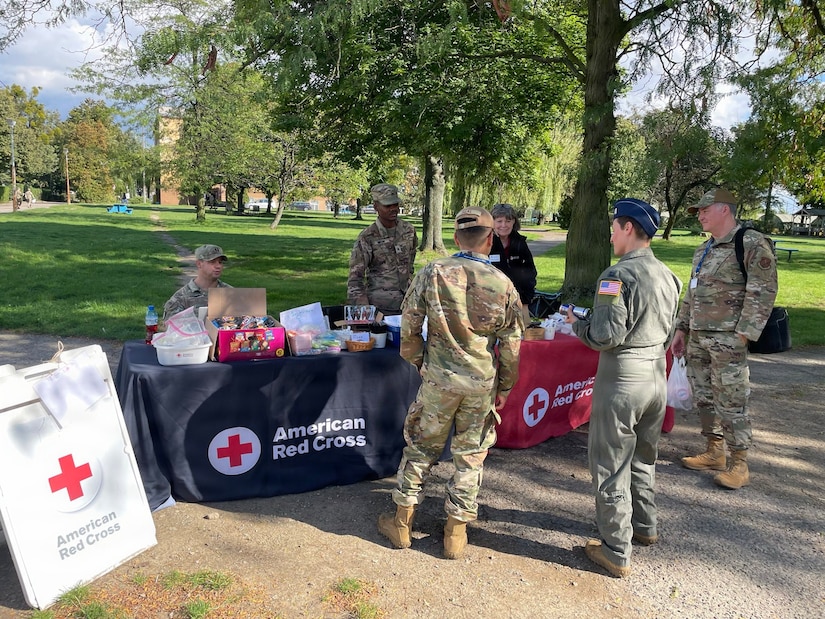
A woman stands at a table covered with snacks she is surrounded by men and women wearing military uniforms.

Carmichael served as the war wound down, a period marked by declining morale, widespread drug use and increased tension after college deferments ended in 1971. Many of the soldiers she remembers were barely out of their teens. 

Those experiences shaped her understanding of service, sacrifice and community, concepts she says she could not fully grasp before Vietnam. 

Decades later, at a Red Cross convention, a filmmaker asked Carmichael to participate in a documentary about the 627 women who served as Donut Dollies in Vietnam. After years of limited public attention, she agreed. 

Revisiting those memories on camera was difficult, forcing her to confront experiences she had long buried. She believes those stories matter precisely because they are rarely told. 

Today, Carmichael continues to serve with the Red Cross in Powidz, Poland. Her work includes delivering emergency messages between service members and their families, supporting resiliency efforts and helping create spaces for rest, education and connection. 

While she notes that nothing compares to life in a combat zone, the underlying mission remains the same. Showing up when people need support. 

Carmichael hopes younger generations remember the Donut Dollies as part of a broader history of women's service, including both those who traveled to war zones and those who served quietly at home caring for families. She believes many of those contributions have gone unrecognized. 

She encourages service members stationed in Powidz to view their tour as a fixed window of opportunity, offering experiences and perspectives they may not encounter elsewhere. 

To Carmichael, service is not limited to uniforms or deployments. A meaningful life, she believes, is grounded in compassion and service to others. Even small acts of kindness matter, whether it is a conversation in a grocery store, checking in on a neighbor or offering quiet support. 

"You don't have to travel far to serve," she said. "You just have to start." 

Monday, December 29, 2025

Tinker Firefighters Train for Speed, Precision, Real-World Operations

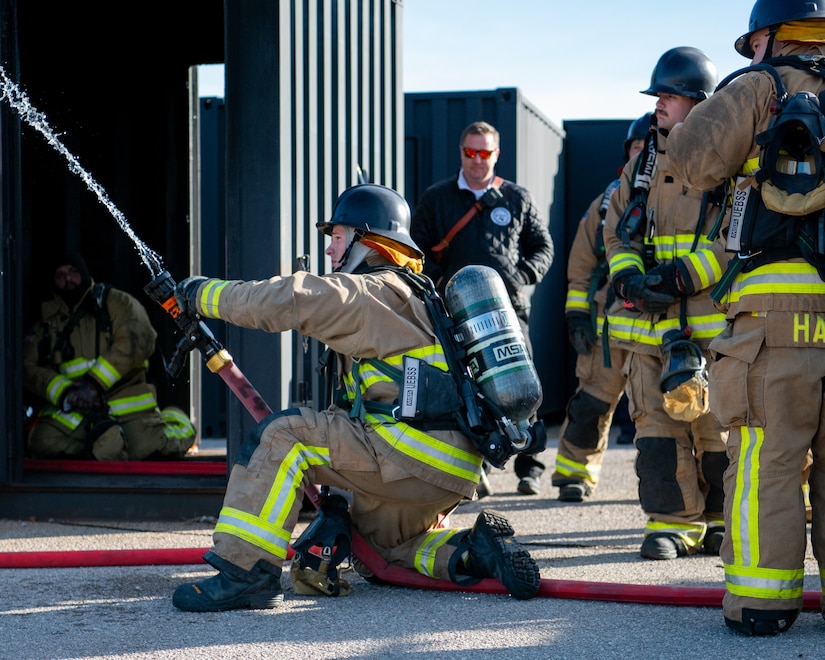
Firefighters at Tinker Air Force Base, Oklahoma, recently completed an intensive training course focused on rapid intervention, advanced search techniques and fire ground survival skills tailored to the unique mission environment at one of the Air Force's largest installations.

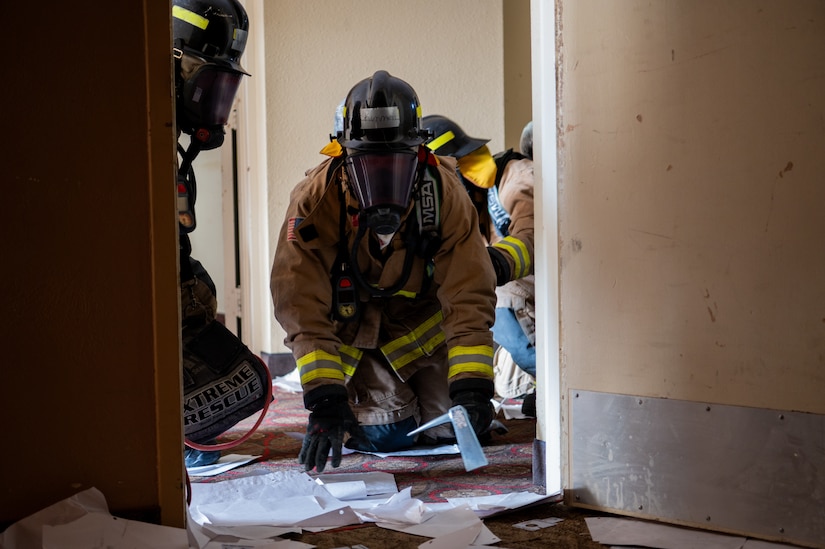
A firefighter crouches down while holding a water hose and sprays a building. A group of other firefighters stand behind him while a man stands in the background to observe.

 The training centered on a 10-day orientation course designed specifically for new military and civilian firefighters, including recent graduates from the fire academy assigned to the 137th Air Refueling Wing at Will Rogers Air National Guard Base, Oklahoma. The course serves as a critical bridge between initial certification and real-world operations at Tinker Air Force Base, which presents unique challenges. 
 
With massive warehouses, aircraft hangars and thousands of confined spaces, firefighters at Tinker Air Force Base must be prepared to operate in low-visibility, high-risk environments where speed and precision can mean the difference between life and death. 

Firefighters crouch down at the entryway to a room.

 
During the course, firefighters trained using blackout masks to simulate zero-visibility conditions while learning how to search large buildings effectively and quickly. Scenarios emphasized communication, accountability and rapid decision-making while operating under physical and mental stress. 
 
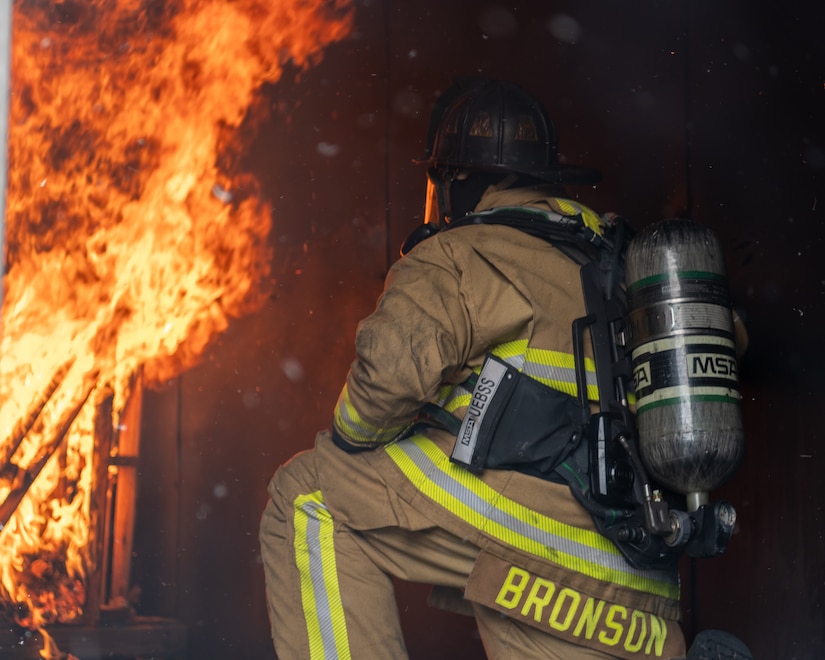
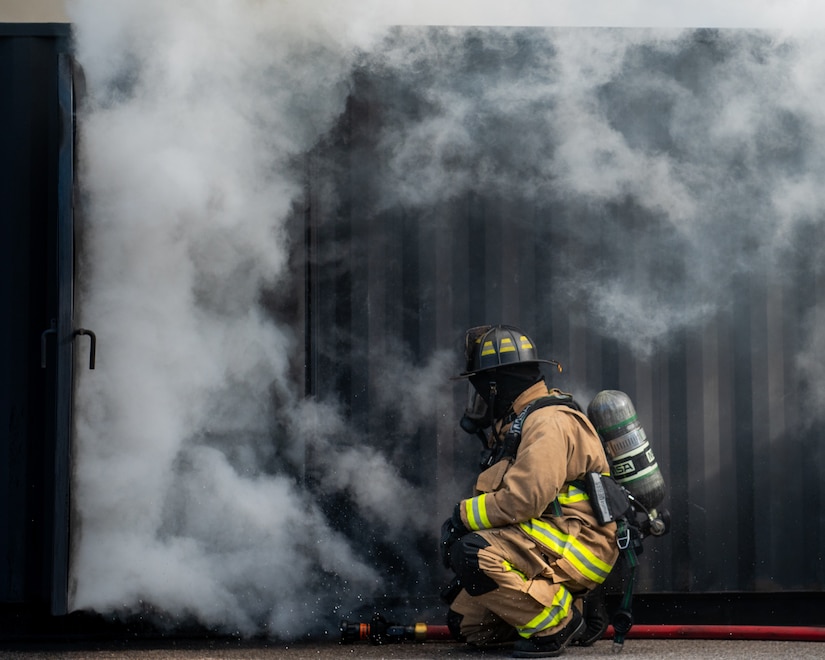
A key component of the training was the Rapid Intervention Team operations that prepare firefighters to locate those trapped inside a burning structure. These drills involved long, physically demanding simulations that tested endurance, teamwork and problem-solving skills. They also completed flashover fire training, a critical evolution that allows airmen to recognize warning signs of rapidly changing fire behavior. 

A firefighter kneels while facing a raging fire.

 
The course incorporated aircraft and wing simulations to practice maneuvering around airframes, navigating tight spaces and executing rescues in scenarios unique to an installation supporting aircraft maintenance, depot operations and flightline activity. 

A firefighter kneels before a smokey building.

 
More than 27,000 military and civilian personnel at the installation are protected by Tinker Air Force Base Fire and Emergency Services. The group also assists civilian emergency services when needed. Through the training, the fire department achieved a first in the Air Force by earning the International Organization for Standardization's Class 1 distinction.

Medal of Honor Monday: Army Pfc. David Nash

Dec. 29, 2025 | By Katie Lange, Pentagon News

Army Pfc. David Paul Nash had only been in the military for about eight months when he gave his life in Vietnam so his fellow soldiers could live. Nash's devotion to the mission and his comrades led him to receive a posthumous Medal of Honor.

A man in a cap and military dress uniform smiles for a photo.

Nash, who was known throughout his life as Paulie, was born Nov. 3, 1947, in Whitesville, Kentucky, to Ishmael and Stella Nash. He had six brothers and a sister, served as a Catholic altar boy and attended St. Mary's High School in his hometown.

Nash loved to fish and hunt and, as the second oldest sibling, wasn't afraid of hard work to help support his family. During his teens, he worked at a filling station and raised a tobacco crop with one of his older brothers, his mother told the Owensboro, Kentucky, newspaper the Messenger-Inquirer in 2001. Two of his younger brothers said they liked to help him work on his 1957 Chevy up until the time he was drafted in May 1968.

After basic training, Nash was assigned as a grenadier to Company B, 2nd Battalion, 39th Infantry Regiment, 9th Infantry Division. By that October, he found himself in Vietnam.

According to a 1999 Messenger-Inquirer article, just days before his Medal of Honor actions, Nash took a photo of his bunker's Christmas tree, wrote a letter to his family and dropped it in the mail. It was a letter to which they would never be able to reply.

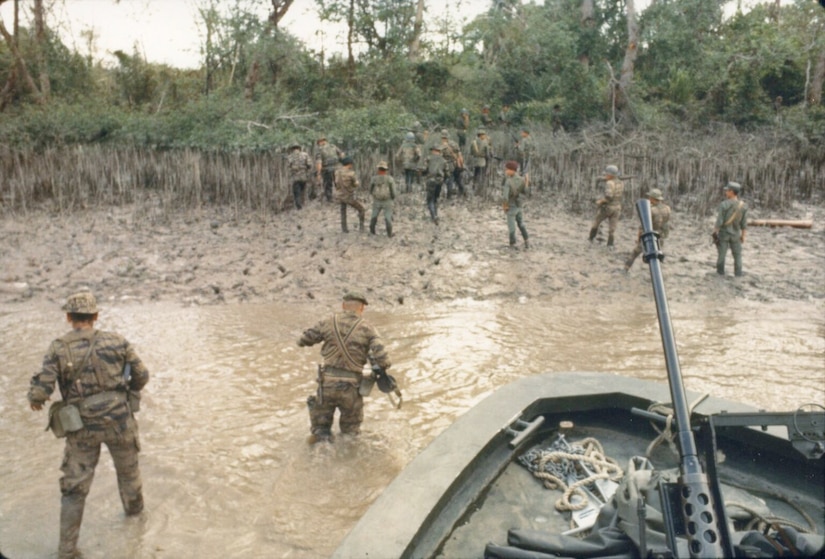
Two men in military camouflage uniforms wade through shallow water to get to a shore from a small boat. Others in similar attire are on the beachhead.

On Dec. 29, 1968, Nash's company was on an ambush patrol in the Mekong Delta, a swampy area with flooded fields and dikes, when they were suddenly attacked by the Viet Cong. Nash was the first to return enemy fire. Despite being exposed, he managed to suppress the bombardment with a quick series of rounds from his grenade launcher, which enabled U.S. artillery fire to be adjusted onto the enemy.

After the combatants fled, a small element of Nash's company continued to the ambush site, where he and three fellow soldiers set up an overnight position along a narrow dike. Other squads of men set up in similar positions nearby.

Shortly after midnight, as Nash and a comrade kept watch while the two other soldiers slept, an enemy grenade went off in an adjacent position, wounding two soldiers. Seconds later, Nash saw another grenade land feet from his position.

Nash could have rolled down the other side of the dike to escape the explosion, but he didn't. Instead, he shouted a warning to his fellow soldiers and threw himself on top of the grenade. His body absorbed the explosion, saving the lives of the three men with him.

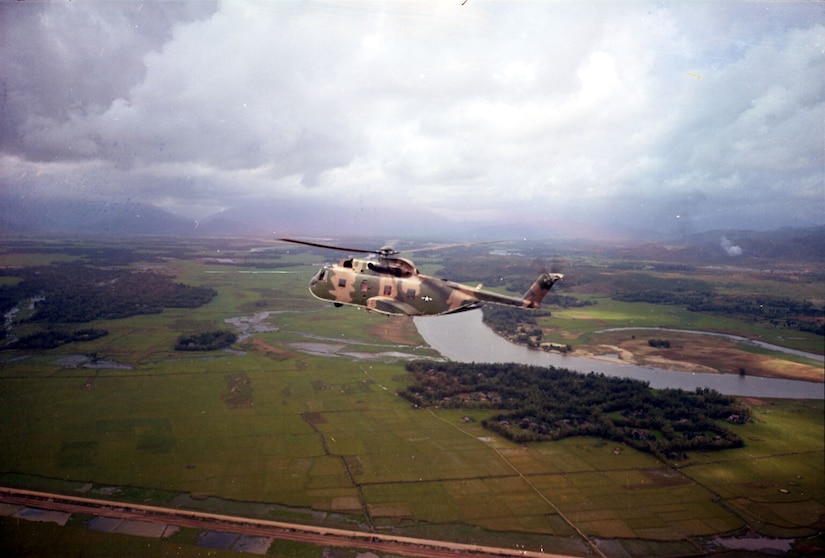
A military helicopter flies over green flatlands and a river.

Few were surprised by his actions. According to congressional testimony, a friend later said of Nash, "He was always quiet, but he made you feel good about yourself. He was the kind of guy you wanted next to you when you went on patrol. You trusted him. You knew he would do the right thing and cover you. When I heard what happened, I wasn't surprised. He was that kind of guy."

For making the ultimate sacrifice, Nash's family received the Medal of Honor on his behalf from President Richard M. Nixon, April 7, 1970, during a White House ceremony. The families of 20 other fallen Vietnam soldiers received the same high honor that day.

Nash is buried at St. Mary of the Woods Cemetery in his hometown.

His memory has not been forgotten. In the 1990s, Whitesville erected a memorial in his honor in its city park. In 2004, a section of highway in Daviess County, Kentucky, was unveiled as "Pfc. David Paulie Nash Memorial Highway" to memorialize him. Several veterans who served with Nash attended the ceremony. 

Sunday, December 28, 2025

The Battleship That Refused to Retire: USS New Jersey and America’s Long Naval Memory

On December 28, 1982, the USS New Jersey (BB-62) was recommissioned, marking a remarkable new chapter in the life of one of the most storied warships in United States naval history. Already a veteran of World War II, the Korean War, and the Vietnam War, the battleship’s return to active service reflected both the enduring value of naval firepower and the shifting strategic priorities of the Cold War.

Commissioned in 1943, USS New Jersey was the fastest of the Iowa-class battleships and quickly proved her worth in the Pacific Theater during World War II. She served as a flagship for Admiral William “Bull” Halsey and provided heavy naval gunfire support during key operations, while also escorting aircraft carriers that projected American air power across the Pacific. By war’s end, New Jersey symbolized industrial strength, naval dominance, and the ability to bring overwhelming force to distant shores.

The ship was decommissioned after World War II but returned to service during the Korean War in 1950. There, her massive 16-inch guns delivered sustained bombardment along the Korean coastline, demonstrating that battleships still held tactical value even in an era increasingly dominated by air power. After Korea, she was again laid up, seemingly a relic of an earlier age.

Yet history was not finished with USS New Jersey. She was recommissioned once more in 1968 for service in the Vietnam War, where her guns provided long-range fire support unmatched by other surface combatants. Her presence underscored a recurring theme in U.S. naval history: when the nation required reliable, decisive firepower, the old battleship could still answer the call.

By the early 1980s, the Cold War had entered a renewed period of tension. The Reagan administration pursued a 600-ship Navy to counter Soviet maritime expansion, and this strategy revived interest in the Iowa-class battleships. On December 28, 1982, USS New Jersey was recommissioned for the final time, modernized with advanced radar, electronic warfare systems, and Tomahawk cruise missiles. This transformation blended World War II-era armor and guns with late-20th-century precision strike capabilities, turning the ship into a symbol of technological continuity and adaptation.

New Jersey’s final deployment in the 1980s included operations off the coast of Lebanon, where she provided naval gunfire support during a volatile and politically sensitive conflict. Her presence was both a military asset and a strategic signal, reminding adversaries that the United States could project power from the sea with overwhelming force.

The recommissioning of USS New Jersey in 1982 highlighted more than nostalgia for battleships. It reflected an evolving understanding of deterrence, flexibility, and modernization. The ship’s repeated returns to service demonstrated how military assets, when thoughtfully adapted, can remain relevant across radically different eras of warfare.

Today, USS New Jersey rests as a museum ship, preserved not merely as steel and machinery but as a living chronicle of American naval history. Her recommissioning on December 28 stands as a reminder that military power is shaped as much by strategic necessity as by tradition, and that some symbols of strength endure long after their original era has passed.

Wednesday, December 24, 2025

Home at Last: Honoring the Return of a Flying Tiger

For years, there was only a name and a legacy his family never let fade. On the afternoon of Dec. 14, family members and uniformed service members moved toward a granite headstone at a cemetery in Greenville, South Carolina, that had stood for more than eight decades without the man it was meant to honor. 

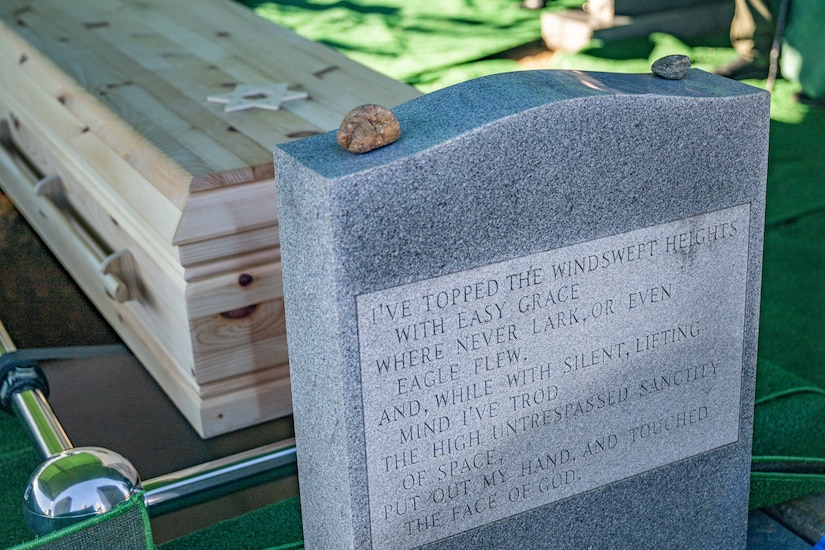
A headstone is shown with an engraving on it and a casket behind it.

On this day, that changed. The memorial finally met its purpose. 

Army Air Forces 1st Lt. Morton Sher was killed in action Aug. 20, 1943, when he crashed the P-40 Warhawk fighter-bomber aircraft he was piloting during a combat mission over Hunan, China, during World War II. Sher's remains were finally accounted for this summer. What had once been an empty marker became a place of return, bringing closure to his family and community. A name once lost to history is spoken aloud again. He is accounted for, remembered and finally home. 

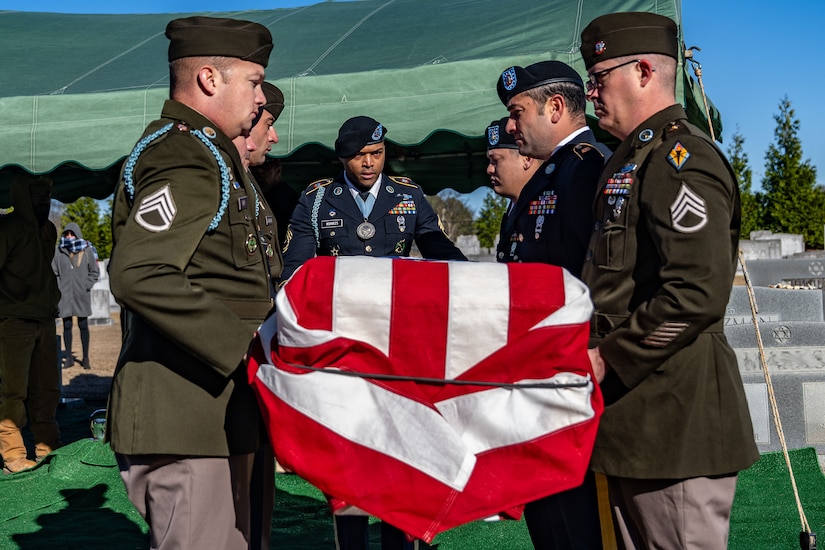
Seven service members in military dress uniforms lower a casket draped with the American flag into a grave.

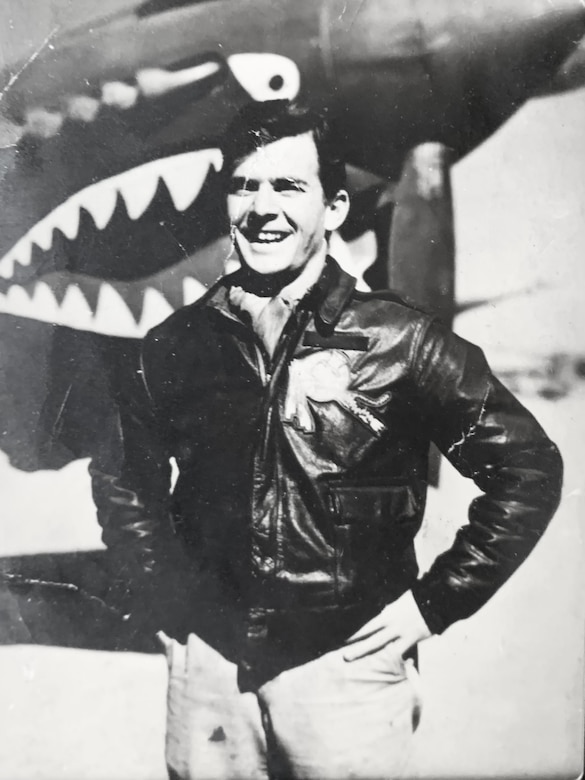
Sher, a Greenville native, was a 22-year-old fighter pilot in the Army Air Forces. He was assigned to the 76th Fighter Squadron, 23rd Fighter Group, 14th Air Force, the unit that carried on the legacy of the famed Flying Tigers. Sher flew combat missions during World War II as part of the Allied air effort in China, and like many of his generation, he entered the war at a young age, trained for a dangerous role and left behind a life and a future still just beginning. 

Sher's time in China wasn't only about the mission that would end his life, but it was also marked by moments that revealed both the dangers he faced and the connections he made along the way. Flying a P‑40 Warhawk, he escorted bombers and flew hazardous combat missions in the China‑Burma theater.  

During an October 1942 mission, engine damage forced him down in a Chinese village, where villagers welcomed him with food and celebration. The villagers, grateful for U.S. protection from Japanese forces, celebrated Sher as a hero with a feast. He entertained 15,000 with songs and a story, received a silk banner for his missions and was warmly escorted through nearby mountain villages back to his base.  

A man in military pilot uniform poses for a photo in front of a military aircraft. The man is smiling and has his hands on his hips.
Sher later recounted the experience in an Army newsletter that the Associated Press picked up: "I sang a few American songs for them, and they were highly pleased," he said. "The banquet turned out to be one of the biggest surprises of the trip." 

Through his letters and interviews, Sher consistently conveyed that he was where he was meant to be, fully committed to his duty and the people he served alongside. That sense of purpose and vitality has left a lasting impression on his family. 

"We never knew Morton, but he was larger than life in the stories our family told us, his photos and his writings," said Bruce Fine, Sher's nephew. "He was certainly a man who filled his pages of life with meaning, and he lived every day to its fullest. In fact, the day before he died, on Aug. 19, 1943, he wrote a letter home telling his parents, 'I let another pilot take that instructing job, for I find things too exciting here to leave right now,' and the very next day, he was gone." 

His dedication wasn't just in words, but it was also evident in the choices he made every day in the air. 

"Lt. Sher was shot down on Oct. 25, 1942, and returned to the 76th Fighter Squadron to fly, fight and win another day," said Mark Godwin, 23rd Wing historian. "He had an opportunity to return home and become an instructor pilot but chose to stay and continue the fight. He personified the last two core values: service before self and excellence in all we do." 

In the summer of 1943, Sher's service placed him directly in combat. He was killed during a mission near Hengyang City, China, when his aircraft crashed and burned in a rice paddy in Xin Bai Village.  

The local villagers honored his bravery by placing a memorial stone at the crash site. He was posthumously awarded the Purple Heart in September 1943, presented to his mother, Celia, at the family home in Greenville. Despite a postwar U.S. search and recovery effort, a board of review concluded on Sept. 8, 1947, that his remains had been destroyed in the crash and officially classified him as killed in action and unrecoverable. 

Even in that brief time, Sher left a lasting impact. 

"Sher spent just over a year in China during World War II," Godwin said. "He racked up three aerial victories before his untimely death. ... He gave his life to protect his fellow Flying Tigers. He should forever be remembered for his courage and sacrifice." 

Decades later, that same courage and sacrifice inspired a renewed effort to bring him home. In 2012, a private citizen contacted the Defense POW/MIA Accounting Agency with a photo of his memorial site in China. The agency visited the site in 2019 but found no remains. A more extensive search in 2024 recovered the plane wreckage and Sher's remains, which were positively identified through DNA testing using his nephew's samples after the remains were returned to a lab in Hawaii. 

After more than eight decades, Sher finally returned home to his family. The successful return of Sher's remains reflected a shared commitment that transcended borders, with the Chinese government, local civilians, DPAA personnel and his family working together to bring him home. 

"This was through team effort," said Air Force Col. Brett Waring, 476th Fighter Group commander. "The teams that continue to scour the earth for our missing and KIA are beyond impressive. They're part of that American commitment to individuals that endures across generations." 

Waring said even though the security landscape has evolved and the War Department must meet pacing challenges, moments like these when people work together for a common purpose should be treasured. 

"We understand that Morton fought for the Chinese people in that war and theater, and when he was shot down, the local populace protected him when he survived the first [crash], and then prevented the enemy from taking his aircraft and body when he was killed in action," he said. "That speaks to the humanity that connects us all, even when other circumstances point towards adversarial actions." 

This is a personal connection that transcends politics and nationalities, Waring continued.  

"It's a respect that allows us to understand that, should we ever be the ones at the focus of such a search, there are incredible teams that work tirelessly to ensure that we all come home," he said. "That commitment and purpose remain foundational to every crew member associated with the combat search and rescue mission as well." 

Sher was welcomed home by his family and community during a memorial that reflected the significance of his sacrifice. From remarks delivered by his nephew to the precision of the honor guard and a flyover conducted by the 476th Fighter Group, each moment underscored a long-awaited homecoming.  

A man in winter attire speaks in front of a podium to dozens of people in similar attire gathered at a cemetery.

What began as a name etched into stone more than 80 years ago became, at last, a place of remembrance, closure and honor for a pilot who gave his life in service to his country and was never forgotten. 

Sher's homecoming not only honored his sacrifice but also connected past and present generations of service members. 

"The legacy that we're honored to carry on today was started by that generation of warriors who left home to fight for another country in a cause that they absolutely believed in," Waring said. "It was a level of commitment that we are challenged with maintaining. It's a legacy that goes beyond painted teeth on an airplane or a patch on our shoulder. It's history, it's heritage and it's a legacy that we're proud to carry on through our generations." 

The bond of commitment to one another is enduring between all service members, Waring continued. 

"None of us knew Morton Sher; we didn't know his name until recently, but as soon as we learned of his coming home, we leapt at the opportunity to honor him and support his family," he said. "From the maintainers coming in to generate sorties, to public affairs researching facts about him, to the wing historian finding additional media and stories, to the pilots who flew the jets emblazoned with the same shark's teeth that the 76th [Fighter] Squadron dominated the skies in 1943 with, it emphatically states that the bond that we share never dies, and no one is left behind or ever forgotten." 

For years, Sher's story existed in fragments through letters, photographs and a name carved into stone. Now, those pieces had come together, allowing his journey to move forward at last. The pilot who once left Greenville to serve his country was finally returning, not as a memory, but as a son brought home. 

Sher's homecoming closed one long chapter, but it also points to a story still unfolding. Across battlefields and oceans, thousands of service members remain unaccounted for, their families holding onto the same hope that guided Sher's return and the same promise that continues to drive the mission to bring them home. For pilots like Sher, that hope and dedication are echoed in the skies themselves. 

A woman in winter attire holds a folded American flag in one hand as she hugs another woman in similar attire with her other arm. There are several other people in similar attire standing around them.

As family and friends poured dirt from Israel and the surrounding ground onto Sher's grave, the memorial was finally made whole. What once stood as a marker of loss now stands as a place of return, where absence gave way to remembrance, and sacrifice to honor. 

Sher loved what he did and created a legacy that endures. His story, once unfinished, now stands a complete testament to service, sacrifice and a nation's promise to remember those who gave everything. That enduring legacy, woven from history, heroism and personal courage, continues to inspire both the families who remember him and the generations who follow. 

"There's no limit to the commitment that we share with the generations that formed the legacy that we carry," Waring said. "Up until a few months ago, I may never have known of Lt. Morton Sher. Now, I'll never forget his name, and I know that's the same for every member of the 476th that heard his story over the last few months. They say that a warrior dies two deaths: one physical, and the second when their name is forgotten. If that's true, then Morton lives on in the hearty laughter and boisterous camaraderie that flows from the 76th Fighter Squadron today." 

A man in a military dress uniform salutes a woman seated in a chair. The woman has a blanket covering her body and a folded American flag in her lap. There are three people in winter attire gathered around the woman.

His heroism is not only preserved in his family's memories but also carried forward by those who follow in his footsteps, ensuring that his name and story remain alive. 

"Our family tree produced a real hero," Fine said. "The kind you read about and see on the big screen, except he was real. We hope his bravery and his courage will inspire the family members who follow us to believe anything you can dream can be truly possible if you're willing to commit to it and work hard to achieve it."

U.S. Space Forces Japan Celebrates First Year of Activation

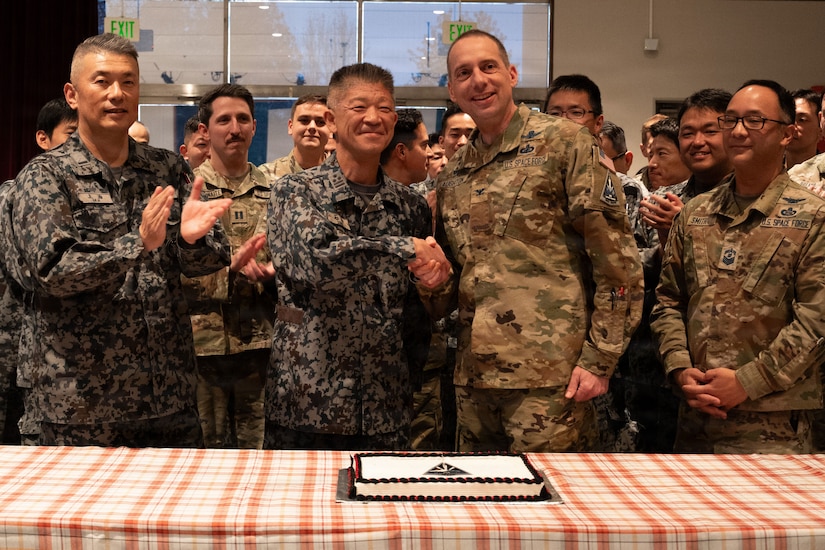
U.S. Space Forces Japan celebrated its first year of activation at Yokota Air Base, Japan, Dec. 4.  

Two men in military camouflage uniforms shake hands while standing behind a table with a cake on it. They are surrounded by other service members in similar attire, who are clapping.

As the newest independent service in the War Department and a newly activated component in the Indo-Pacific region, this small but essential team of guardians advances space expertise for Japan and joint partners.  

U.S. Space Forces Japan is the second component under U.S. Space Forces Indo-Pacific, following the activation of U.S. Space Forces Korea in 2022. The subcomponent supports the rapidly developing Japan Ministry of Defense space organizations and capabilities, and the need for robust space expertise to support U.S. forces in Japan 

"I am proud and honored to have been chosen to lead this organization," said Space Force Col. Ryan Laughton, commander of U.S. Space Forces Japan. "It's exciting to be able to come in and craft a component into something that's never been done before, but ultimately it's been a team effort." 

Over the last year, the component has experienced significant growth in expertise, manpower and operational capabilities. This includes building out directorates, establishing robust processes and developing strong relationships with counterparts at U.S. Forces Japan, other service components, U.S. partners and U.S. Space Forces Indo-Pacific. 

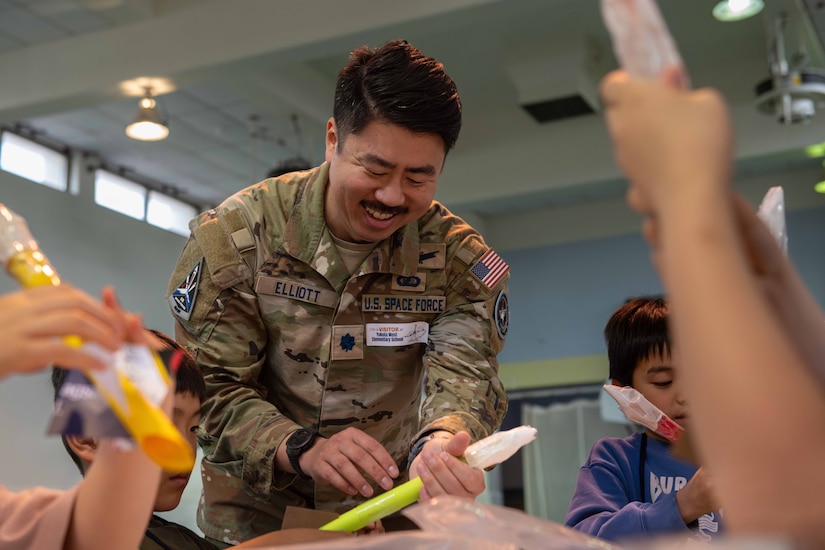
A man in a military camouflage uniform smiles while holding a model rocket. He is standing at a table with children as they put together model rockets.

The activation ensures space forces can plan, integrate, coordinate and execute efforts in Japan on behalf of U.S. Space Forces Indo-Pacific to best support the U.S. partnership agreements with Japan, deepen integration with Japanese space counterparts, and meet dynamic regional challenges to ensure a free and open Indo-Pacific.  

"It's incredibly rewarding," said Space Force Capt. Rafael Fermin, chief of engagements at U.S. Space Forces Japan, "It comes with significant responsibility, but I'm proud to play a role in shaping [the command] and contributing to its long-term foundation and success." 

The bilateral alliance with the Japan Air Self-Defense Force's Space Operations Group has strengthened exponentially over the year.  

"Working with SOG, especially in my current role, has shown me how strong and steadily growing our collaboration is," Fermin said. "It's clear that we share many of the same goals and priorities, and we approach them as true partners. I'm excited to see how this relationship continues to deepen as our missions evolve." 

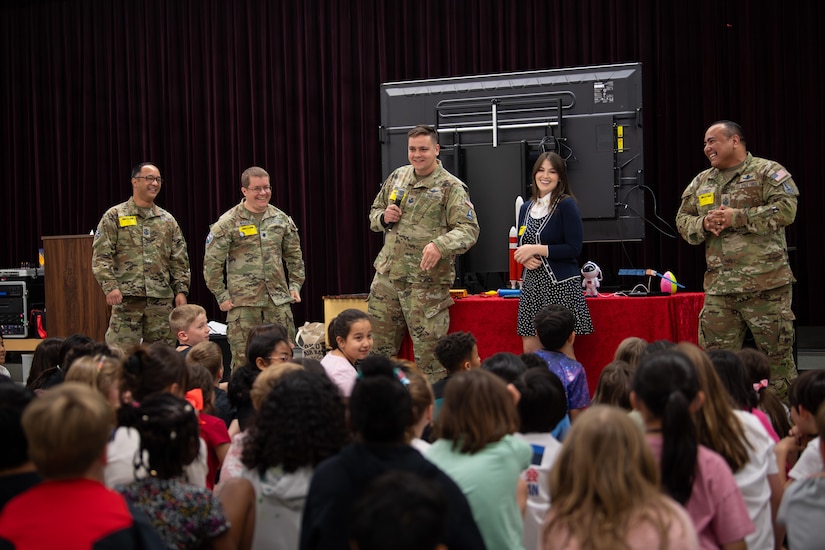
Four service members in military camouflage uniforms and a woman in business attire smile while standing in front of a group of seated children.

Further emphasizing that strong partnership, Laughton noted that Japan is also investing heavily in its space capabilities.  

"As the [operations group] continues to grow, it has been an exciting challenge to learn how to be effective in performing our missions together," Laughton said, "But overall, working side by side with Japan's space guardians has been phenomenal." 

The stars are the limit for U.S. Space Forces Japan's future. The component plans to continue its work to establish itself as the "one voice for space in Japan," providing a hub for collaboration with Japanese space partners, operating space effects for joint warfighters in the region and bringing options to U.S. Forces Japan as they move forward in their own transformation to a joint force headquarters. 

Monday, December 22, 2025

Trump Announces New Class of Battleship

President Donald J. Trump today announced the Navy's intent to develop a new class of American-designed, 30,000 to 40,000-ton large surface combatants, or battleships, that will be employed to meet the realities of modern maritime conflict. 

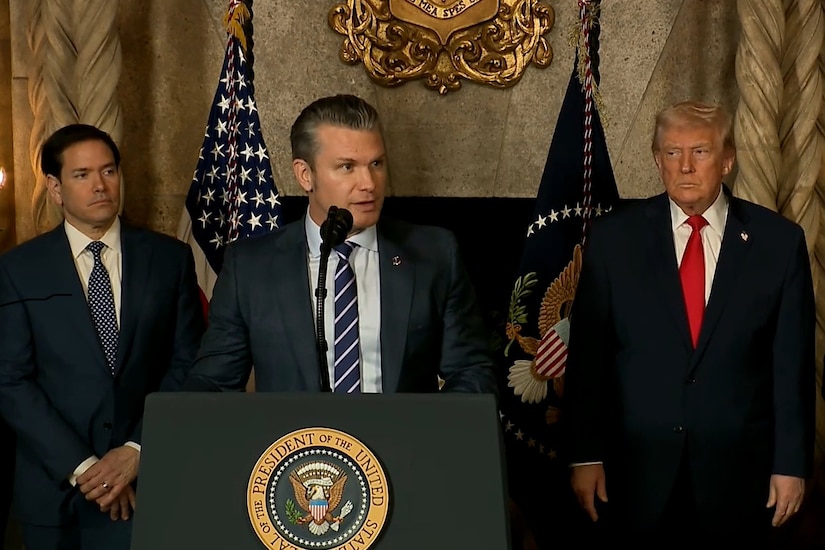
A man in business attire stands and speaks at a lectern with the American flag to the left behind him. Three men in similar attire stand behind him.

"As commander in chief, it's my great honor to announce that I have approved a plan for the Navy to begin the construction of two brand-new, very large — largest we've ever built — battleships," Trump announced from his Mar-a-Lago residence in Palm Beach, Florida. He was joined by Secretary of State Marco Rubio, Secretary of War Pete Hegseth and Navy Secretary John Phelan. 

The new Trump-class of ships — which the president said will contribute to a new "golden fleet" of advanced warships — are currently in the design phase, with construction of the first battleship, the USS Defiant, targeted for the early 2030s. 

Phelan said that the new class of battleship is something the Navy "desperately needs." The president noted that the Navy aims to have a fleet of 20 to 25 ships eventually. 

"The future Trump-class battleship, the USS Defiant, will be the largest, deadliest and most versatile and best-looking warship anywhere on the world's oceans," Phelan said, adding that he wanted to thank the president for his vision to make the future battleship a game-changing capability for the U.S. Navy.    

Phelan also compared the future Trump-class battleships to the former Iowa-class battleships, which were a cornerstone of the Navy's warship fleet for much of the 20th century. 

"The Iowa was designed to go on the attack with the biggest guns, and that's exactly what will define the Trump-class battleships: offensive firepower from the biggest guns of our era," Phelan said.  

"This ship isn't just to swat the arrows; it is going to reach out and kill the archers," he added. 

During his remarks, Hegseth said that strengthening the Navy's fleet ties directly to the War Department's key goals of restoring the warrior ethos, rebuilding the military and reestablishing deterrence.  

"American strength is back on the world stage, and the announcement of the golden fleet anchored by new battleships — the biggest and most lethal ever — accomplishes all three of those things and marks a generational commitment to American sea power across the entire department," Hegseth said.  

During the announcement, Trump made clear that the new battleships are intended to be constructed entirely in the U.S. by American citizens. 

"The construction will create thousands of American jobs. We're going to have the jobs be created," he said. 

Along with standard guns and missiles, Trump said the new battleships will be equipped with hypersonic weapons, electronic rail guns and high-powered laser-based weaponry. 

He added that the Navy will take the lead in the ships' design, while partnering with the U.S. defense industrial base. 

"We're going to make battle groups great again, and this is just one piece of the president's golden fleet that we're going to build with the investments," Phelan said.  

The new Trump-class battleships will replace the Navy's previous plans to develop a new class of destroyer, the DDG(X). However, the sea service intends to incorporate the capabilities it had planned to employ on that platform into the new Trump-class ships.  

The last time the Navy used battleships in combat was in 1991 during the first Gulf War, when the now-decommissioned Iowa-class battleships USS Missouri and USS Wisconsin provided naval gunfire support against Iraqi targets along the coast of Kuwait.   

Today's announcement of the Trump-class battleships comes on the heels of the Navy's Dec. 19 announcement of the FF(X), a new class of frigates intended to replace the Navy's recently cancelled Constellation-class frigate program. 

The War Department Announces First Round of FY 2026 APFIT Projects, Surpassing $1 Billion Awarded to Small Businesses

The War Department today announced the first round of Accelerate the Procurement and Fielding of Innovative Technologies (APFIT) projects selected for Fiscal Year (FY) 2026, marking a historic milestone in advancing defense innovation and small business engagement for the program. With this announcement, APFIT has now awarded more than $1 billion to small businesses and non-traditional defense contractors across the nation, accelerating groundbreaking capabilities, strengthening the U.S. industrial base and enhancing warfighter readiness.

The FY 2026 project slate represents the next wave of innovative technologies rapidly transitioning from development to fielding and initial production. These awards continue to focus on delivering mission-critical capabilities at scale while expanding opportunity for small businesses in every region, including those in traditionally underrepresented and remote states.

"Crossing the billion-dollar threshold underscores APFIT’s commitment to America’s small business innovators," said Emil Michael, Under Secretary of War for Research and Engineering, "and we are proud to accelerate the delivery of these critical capabilities to our warfighters."

This year’s initial selections reflect the growing scale and maturity of the APFIT portfolio, with the average FY 2026 award now exceeding $30 million per project. The program also recorded its highest single award to date at $49.7 million, issued just under APFIT’s $50 million maximum statutory cap, demonstrating both the depth of operational need and APFIT’s ability to efficiently transition and scale mature technologies.

APFIT remains a cornerstone of War Department’s strategy to accelerate innovation and ensure the United States maintains its technological advantage. Additional FY 2026 projects will be announced throughout the fiscal year as they are selected.

The initial round of FY 2026 selections include*:

  • Autonomous Unmanned Ground Vehicle (UGV) for Ground Based Air Defense (GBAD), $20.00 million, U.S. Marine Corps
  • Deployable, Attritable Optical Systems, $22.15 million, U.S. Space Force
  • Domestic High Performance UAS Batteries, $28.00 million, U.S. Navy
  • Gremlin Low-Cost Munition, $35.00 million, U.S. Marine Corps
  • High Frequency Intercept Direction Finding and Exploitation (HIDES), $21.66 million, U.S. Army
  • Kraken 18 Communications Pod, $33.00 million, U.S. Navy
  • Miniaturized Gyroscope for Resilient Navigation, $20.00 million, U.S. Marine Corps
  • Mobile Smart Manufacturing for Airframe Spares, $25.00 million, U.S. Air Force
  • Augmented Maneuver Vehicle for Satellites, $48.50 million, U.S. Space Force
  • Real-Time Command and Control at the Tactical Edge, $49.70 million, U.S. Army
  • Small Uncrewed Maritime Vessels, $24.00 million, U.S. Navy/U.S. Marine Corps
  • Tactical High-Bandwidth, Low-Latency, high-capacity data network, $10.00 million, U.S. Marine Corps
  • Trolling Uncrewed Navigation Assistant (TUNA) Seeker, $35.00 million, U.S. Marine Corps
  • Whaleshark Autonomous Low-Profile Vessel (ALPV), $29.49 million, U.S. Marine Corps

*Does not include classified selections.