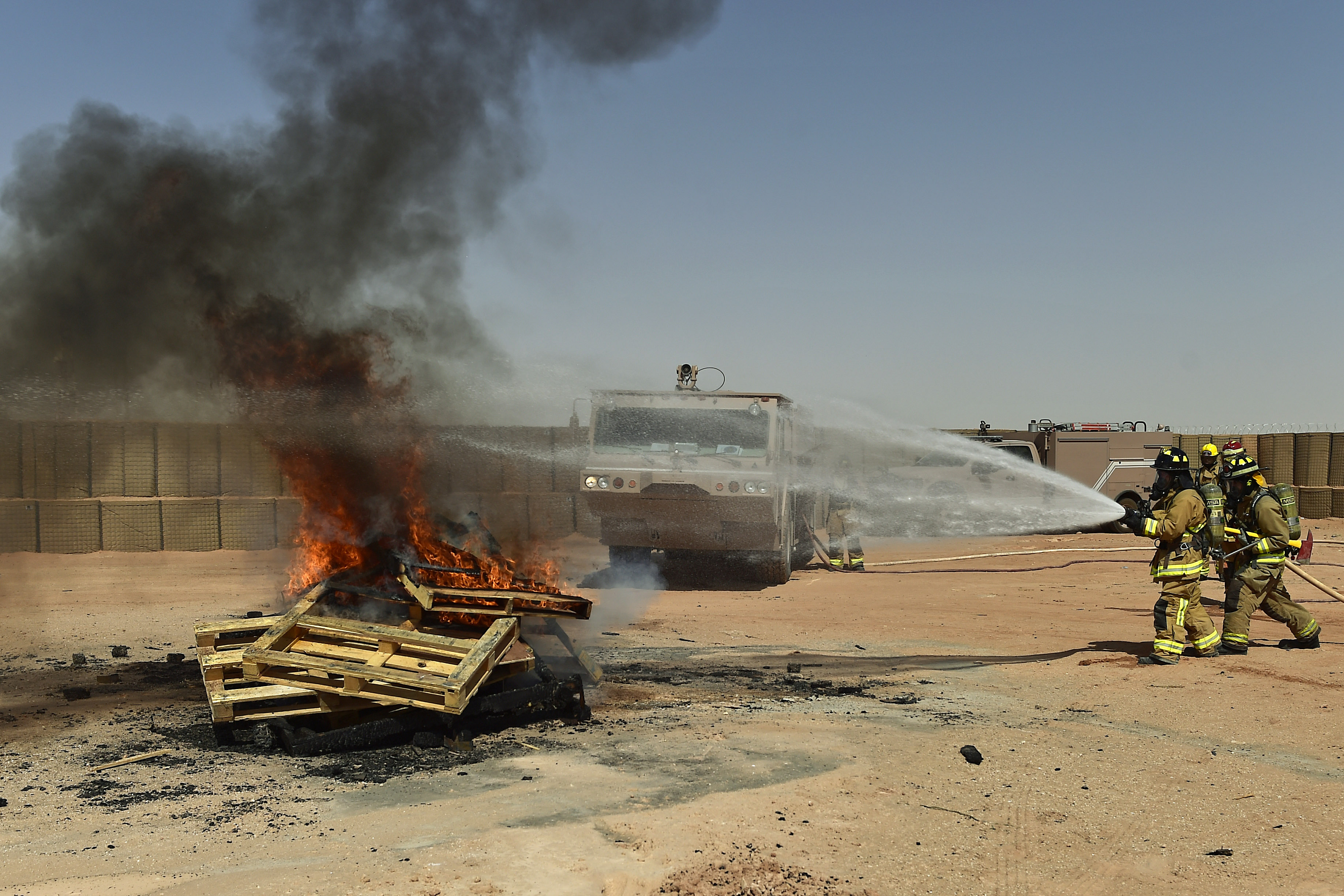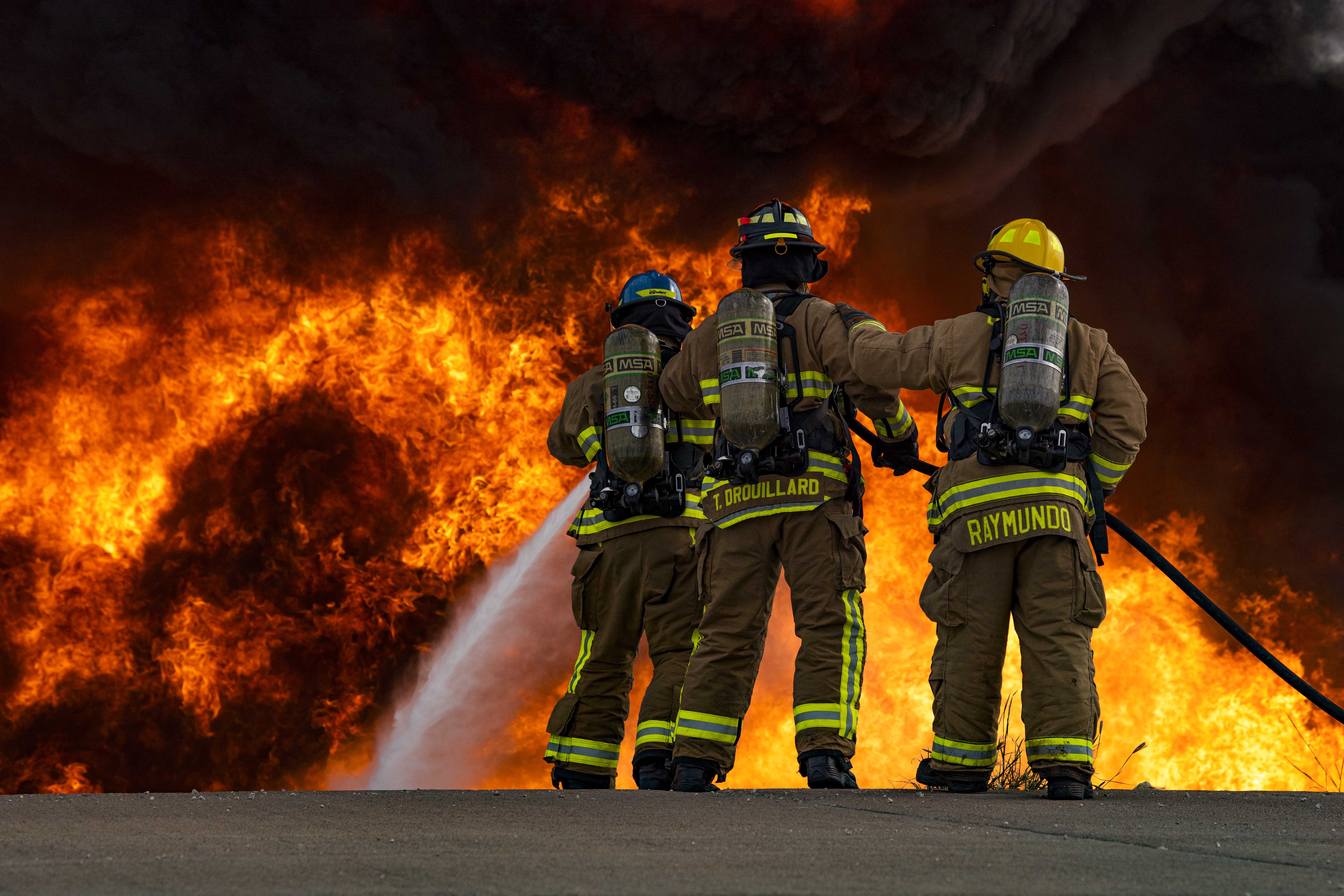
Air Force Airman Andrew Burr, Senior Airman Thomas Drouillar and Justin Raymundo test a new ultra high-pressure fire hose using an aircraft fire trainer at Dyess Air Force Base, Texas, Sept. 15, 2020.
Air Force Airman Andrew Burr, Senior Airman Thomas Drouillar and Justin Raymundo test a new ultra high-pressure fire hose using an aircraft fire trainer at Dyess Air Force Base, Texas, Sept. 15, 2020.
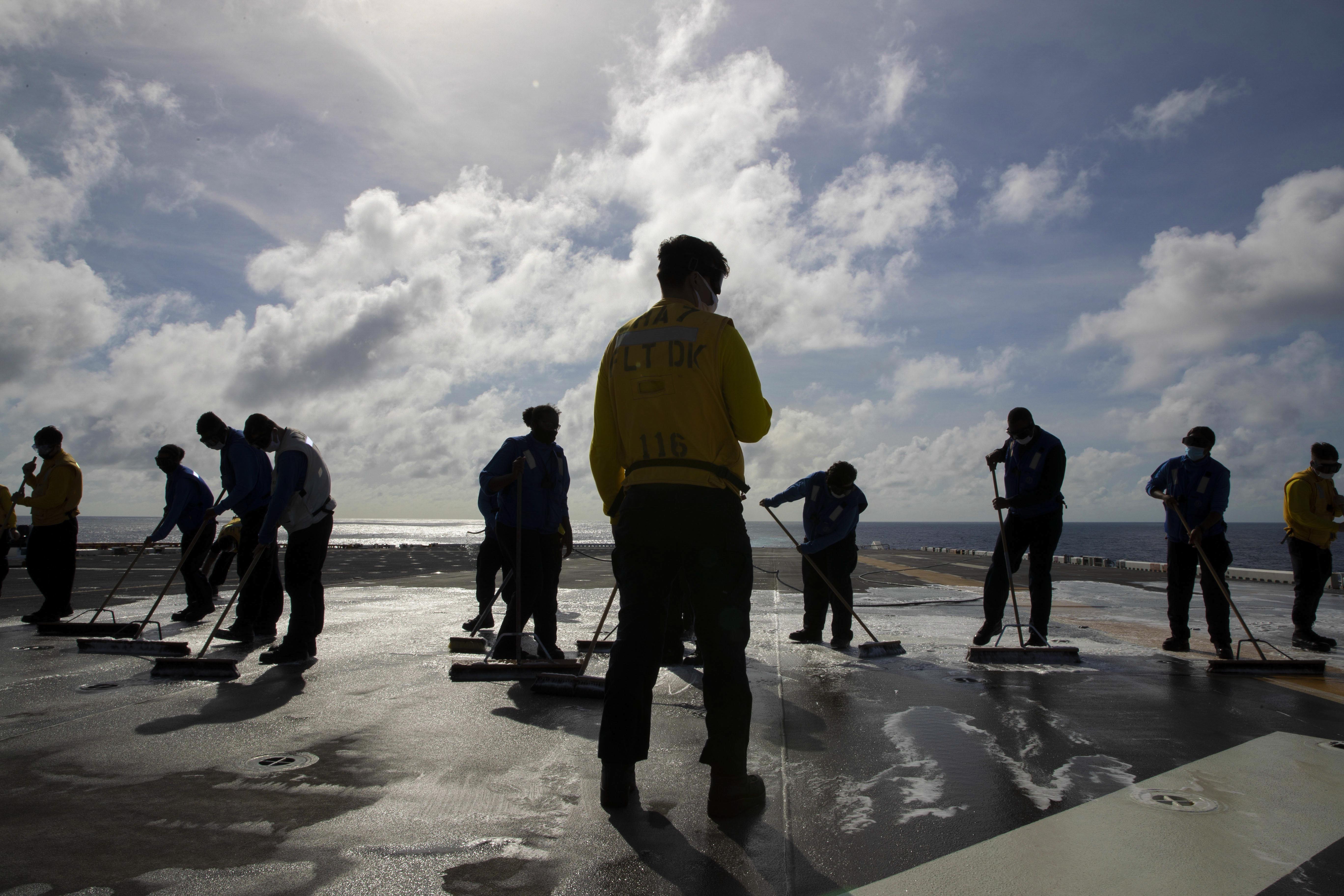
Sailors wash the flight deck of the USS Tripoli while underway in the Pacific Ocean, Sept. 15, 2020.

Army Sgt. Dylan Weiss and Spc. Anthony Roller establish a perimeter around a simulated enemy compound during Noble Partner at Vaziani Training Area, Georgia, Sept. 15, 2020. The exercise is designed to enhance force readiness and interoperability.
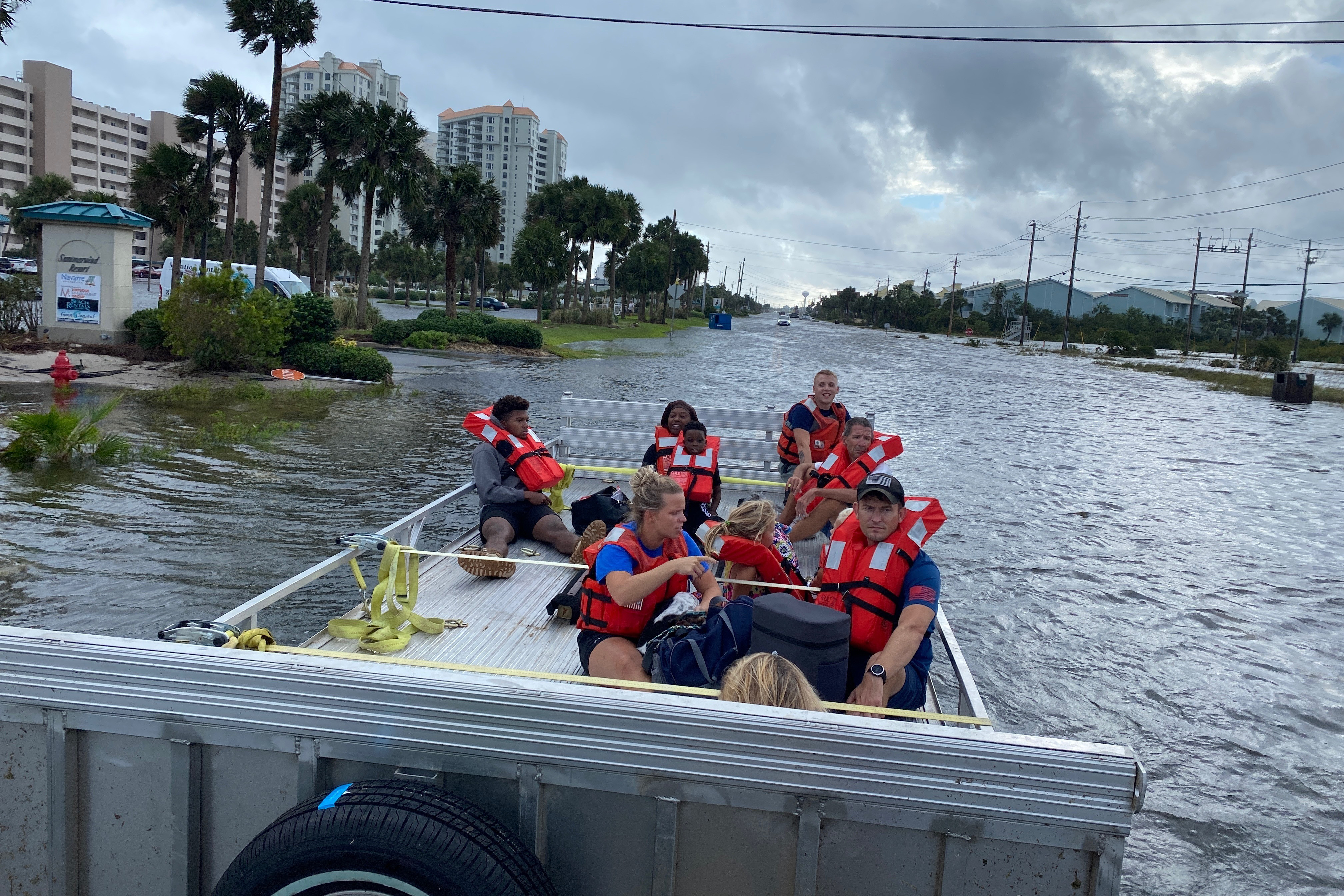
A Coast Guard water response team rescues nine people and a dog near Navarre Beach, Fla., after heavy rain from Hurricane Sally flooded the region, Sept. 16, 2020.
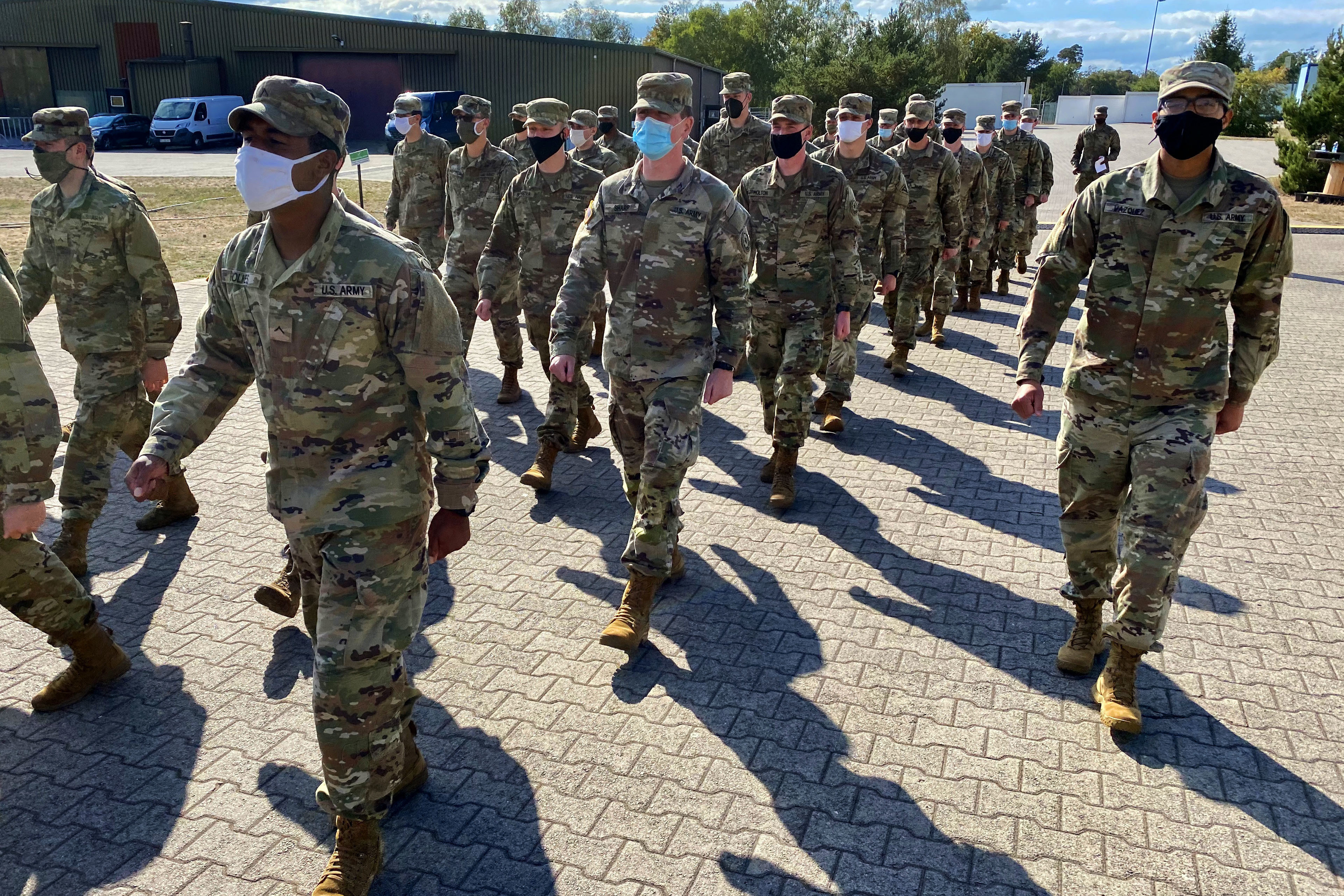
U.S. soldiers march to lunch at the deployment processing center, Rhine Ordnance Barracks in Kaiserslautern, Germany, Sept. 11, 2020. The DPC currently houses incoming personnel from the United States who are quarantined as they process into the European theater. Task Force Willkommen is a group of organizations facilitating this process during the COVID-19 pandemic.
Sept. 17, 2020
Acting Under Secretary of Defense for Policy Dr. James H. Anderson concluded a productive visit to Indonesia where he met with Minister of Defense Prabowo Subianto, Chief of Defense Air Chief Marshal Hadi Tjahjanto, Minister of Foreign Affairs Retno Marsudi, and Coordinating Minister for Maritime Affairs and Investment Luhut Pandjaitan.
Dr. Anderson expressed solidarity with Indonesia’s efforts to combat
COVID-19 and reaffirmed the Department of Defense’s commitment to a
strong bilateral defense partnership.
The leaders discussed a range of regional issues including the South
China Sea, counter-terrorism, cyber threats, and U.S. investment in
Indonesia. They also discussed pending defense acquisitions.
Both sides affirmed the importance of senior-level policy dialogue and look forward to resuming annual military exercises and defense engagements as soon as conditions allow.
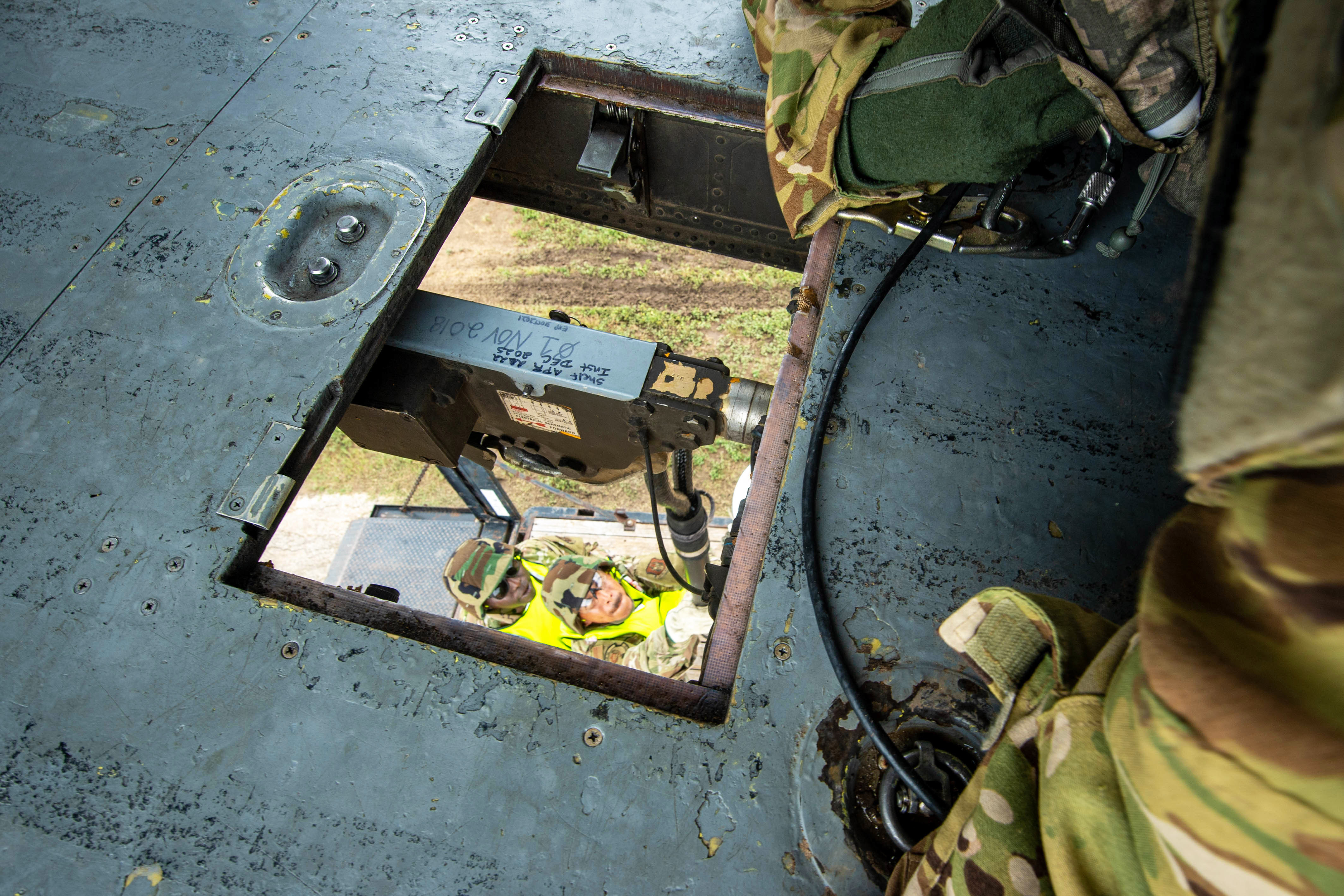
Airmen attach cargo to a Texas Army National Guard UH-60 Black Hawk during a training mission over Chapman Annex, Joint Base San Antonio, Texas, Sep. 9, 2020. The Black Hawk can transport up to 9000 pounds of sling load cargo and precisely deliver it anywhere, including remote and austere locations.

The view of downtown as seen from a Texas Army National Guard UH-60 Black Hawk above San Antonio, Texas, Sep. 9, 2020. The Blackhawk can transport up to 9000 pounds of sling load cargo and precisely deliver it anywhere, including remote and austere locations.
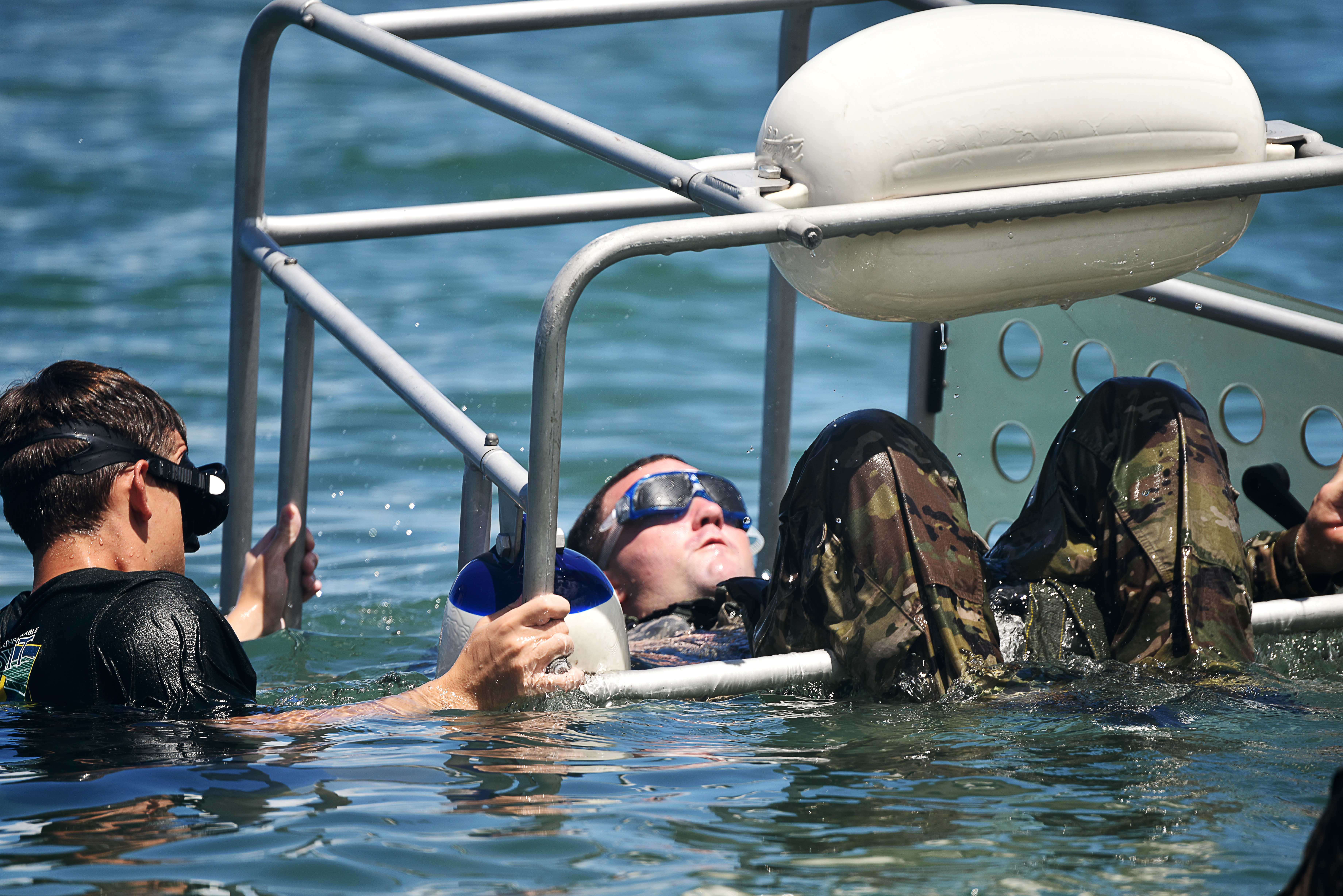
Service members assigned to Joint Task Force Bravo participated in a COVID-19 compliant emergency deployment readiness exercise at Trujillo Bay, Honduras, Sept. 14, 2020.
Sept. 17, 2020
The U.S.-Qatar Military Consultative Commission (MCC) was held in Washington, D.C. September 16-17, 2020. Dr. Michael Cutrone, Performing the Duties of Assistant Secretary of Defense for International Security Affairs, led the U.S. delegation, while Brigadier General Abdulaziz Al- Sulaiti, Chief of Qatar’s International Military Cooperation Authority, led the Qatari delegation.
The United States and Qatar reaffirmed the important contribution their military cooperation provides for the security and stability of the region. The U.S.-Qatar military partnership is critical to combating terrorism, countering violent extremism, and deterring external aggression. U.S. officials praised Qatar’s support for the U.S. military presence in Qatar under the U.S. Central Command.
The United States welcomed Qatar’s continued willingness to host U.S. forces and both sides discussed planned improvements to critical facilities at those bases. The two governments discussed the current $26 billion Foreign Military Sales (FMS) program, praised the recent delivery of AH-64E Apache combat helicopters, and looked forward to the upcoming delivery of F-15QA fighter jets.
The United States and Qatar discussed efforts to enhance their military relationship, including specifically in the areas of defense doctrine and strategy, security assistance and training, and military intelligence. The two governments acknowledged the continuing and strong and lasting bilateral security partnership, and look forward to that partnership enduring for years to come.
Sept. 17, 2020 |
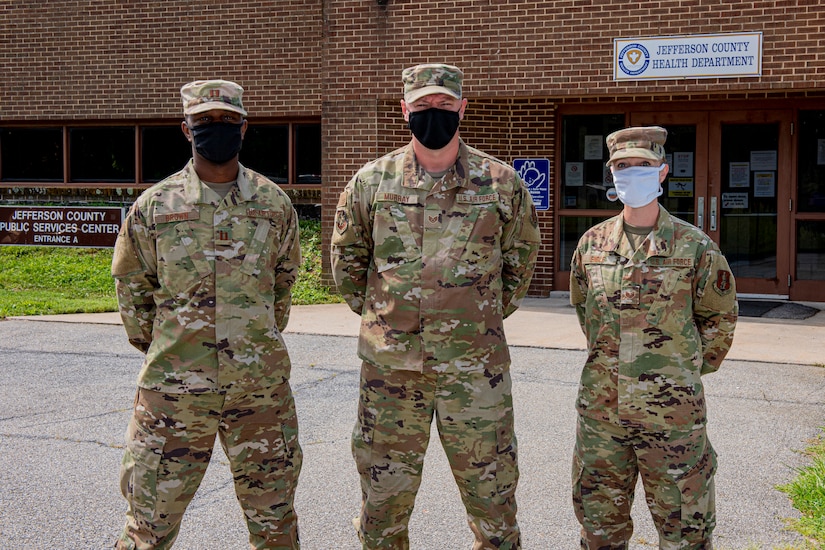
As COVID-19 threatens the local community, airmen from the 167th Airlift Wing continue to guide locals through the uncertainty of it all.
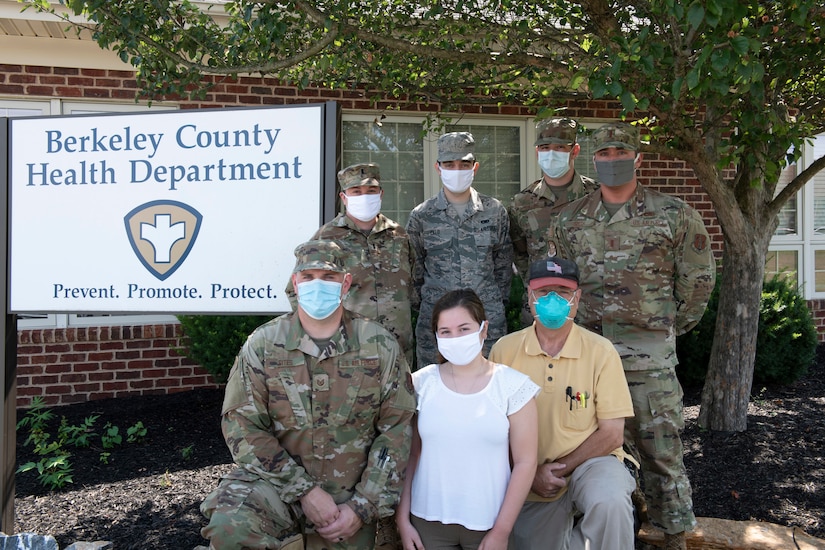
Currently, eight members are conducting voluntary COVID-19 mapping for the Berkeley and Jefferson County Health Departments. They are contacting people who have tested for COVID-19, guiding them through quarantine protocol, while collecting voluntarily-provided data.
"The lab will determine if the individual was positive or negative; once they are positive, then we start our process of contacting them within 24 hours," said Air Force Capt. Rodney Brown, the officer in charge of contact investigation for the Jefferson County Health Department. "Affected individuals are not required to provide us any information; we do ensure them that we are here to help."
The health department asks those testing positive for COVID-19 to provide the names and contact information of recently contacted individuals. The West Virginia National Guard is augmenting this initiative, led by the West Virginia Department of Health and Human Research.
"The regular duties of the health department are still carried out by the nurses who work here and the physicians," said Air Force Staff Sgt. Erin Engle, contact investigator for the Jefferson County Health Department. "That's why it's so important to have additional personnel to help with the COVID-19 response because all of those things still needed to happen."
The airmen on this mission received on-the-job training provided by WVDHHR officials and nurse staff. They also had online training for restricting the release of medical information and cyber security classes to defend private healthcare information.
"There are a lot of medical terminologies that we've been using," Engle said. "We have to communicate both with patients that are COVID-19 positive and the nursing staff at the health department, and if you can speak both languages, that helps. Being a licensed practical nurse and a medical technician makes communication with the health department more seamless."
On a typical day, the health department nurses receive the positive cases, then transfer them to the contact investigators, who will then make an initial phone call to let the person know that they tested positive or negative for COVID-19. Next, they explain the quarantine procedure. They also collect information on who they've been around, where they've been, and what their occupation is to try to determine potential exposure to their communities.
"We stick to the script," Brown said. "For instance, if there is a particular restaurant that several people have patronized within the last week, questions like this could lead the investigators to find a possible outbreak and warn others at risk."
The Berkeley and Jefferson county teams have placed more than 6000 calls concerning their assigned COVID-19 cases. One person in a case will take 15 to 30 minutes to enter into the WVDHHR database. Each case has the potential for more than a dozen entries as other people affected become possible positive cases.
"It's a lot of data that we are trying to collect in a short amount of time," Brown said. "We all have the common mission, the common goal which is to educate the community and to combat the pandemic."
(Air Force Staff Sgt. Timothy Sencindiver is assigned to the 167th Airlift Wing).
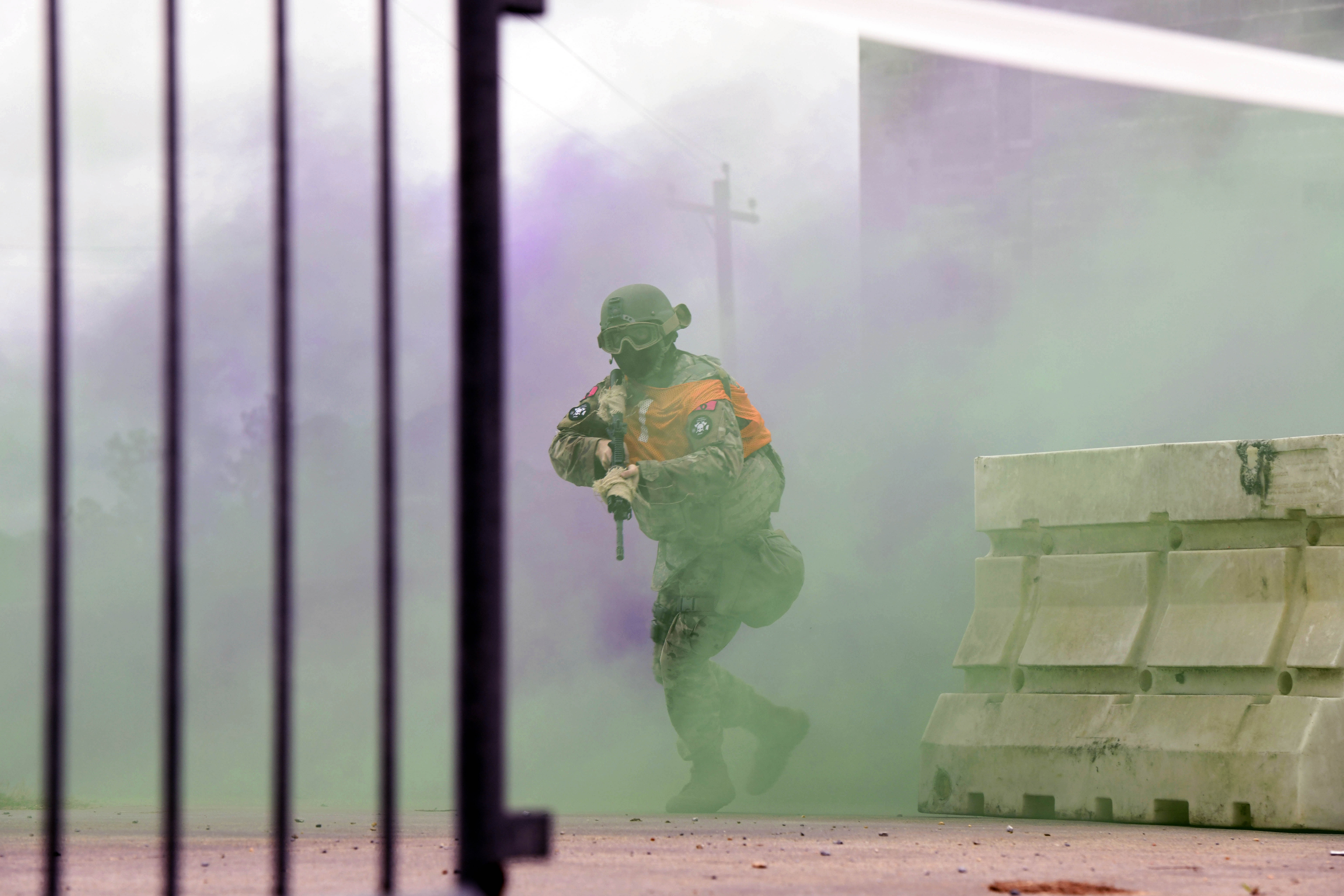
Army Spc. Jakob Ellingson takes pellet gunfire during the Army National Guard’s 2020 Best Warrior Competition at Camp Shelby, Miss., Sept. 16, 2020.
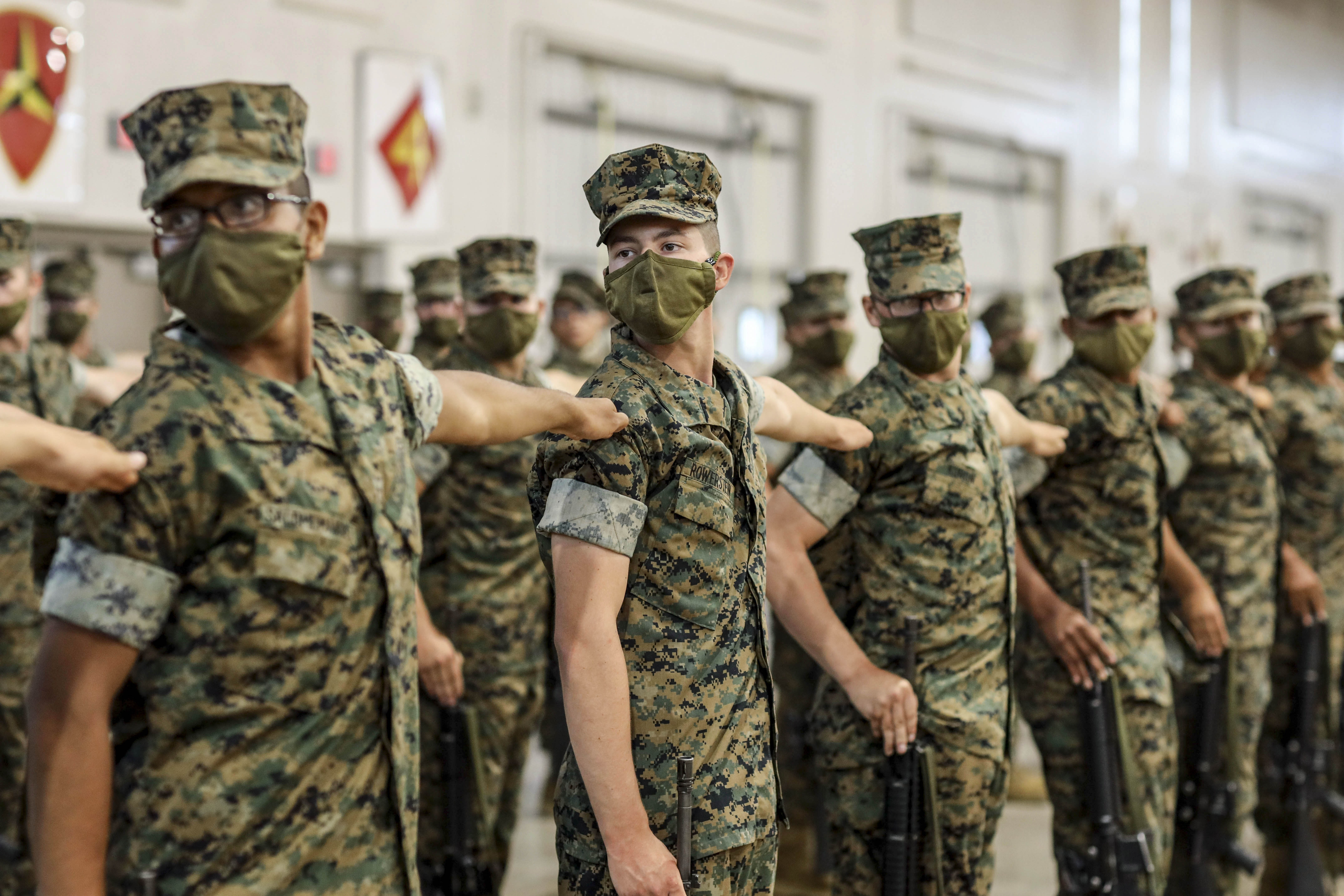
Marine recruits demonstrate drill movements at Marine Corps Recruit Depot Parris Island, S.C., Sept. 16, 2020. Final Drill tests instructors on ability to give drill commands and tests recruits on ability to properly execute the movements.
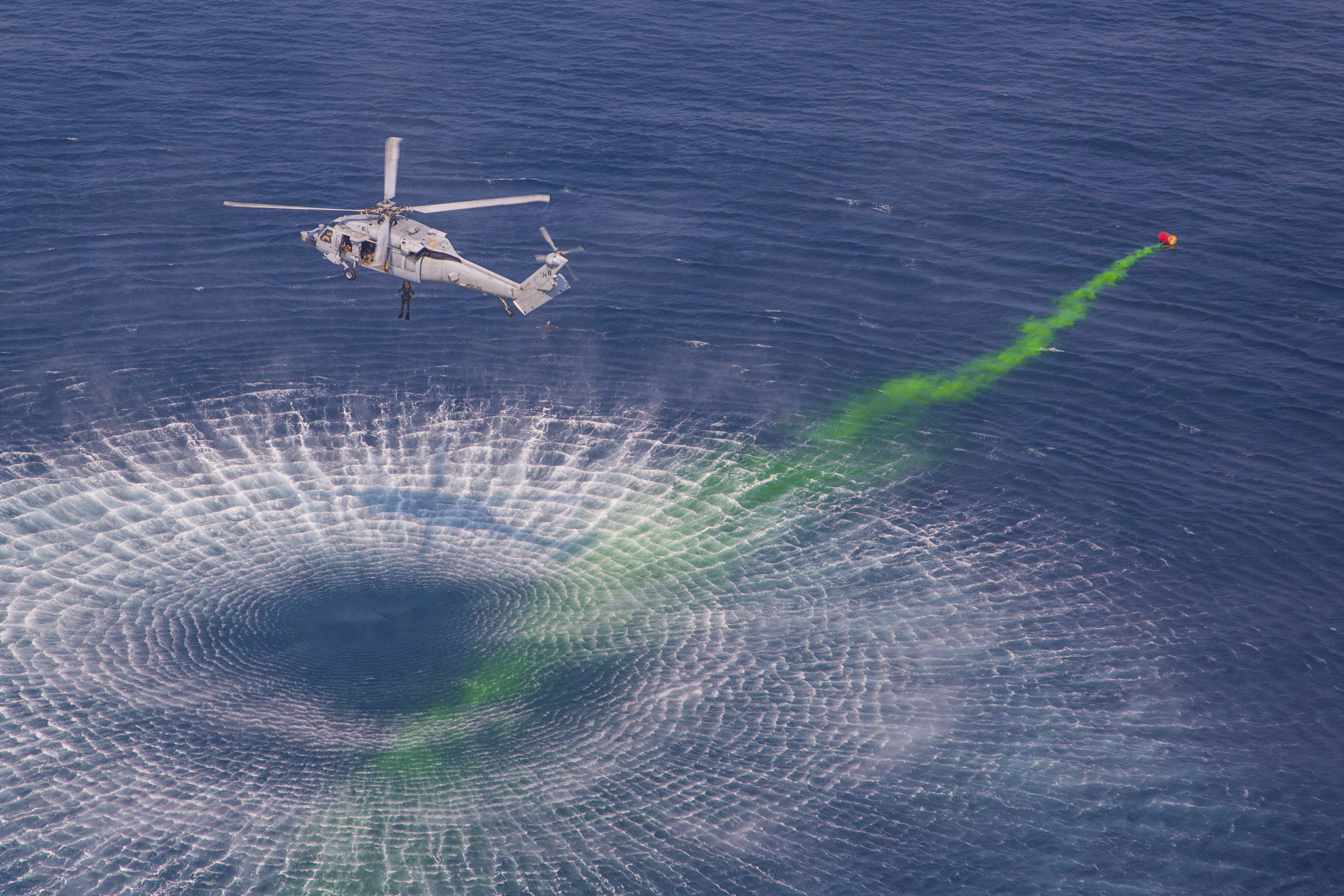
A Navy MH-60 Seahawk helicopter pulls a service member out of the water during a mine countermeasures interoperability exercise in the Persian Gulf, Sept. 10, 2020.
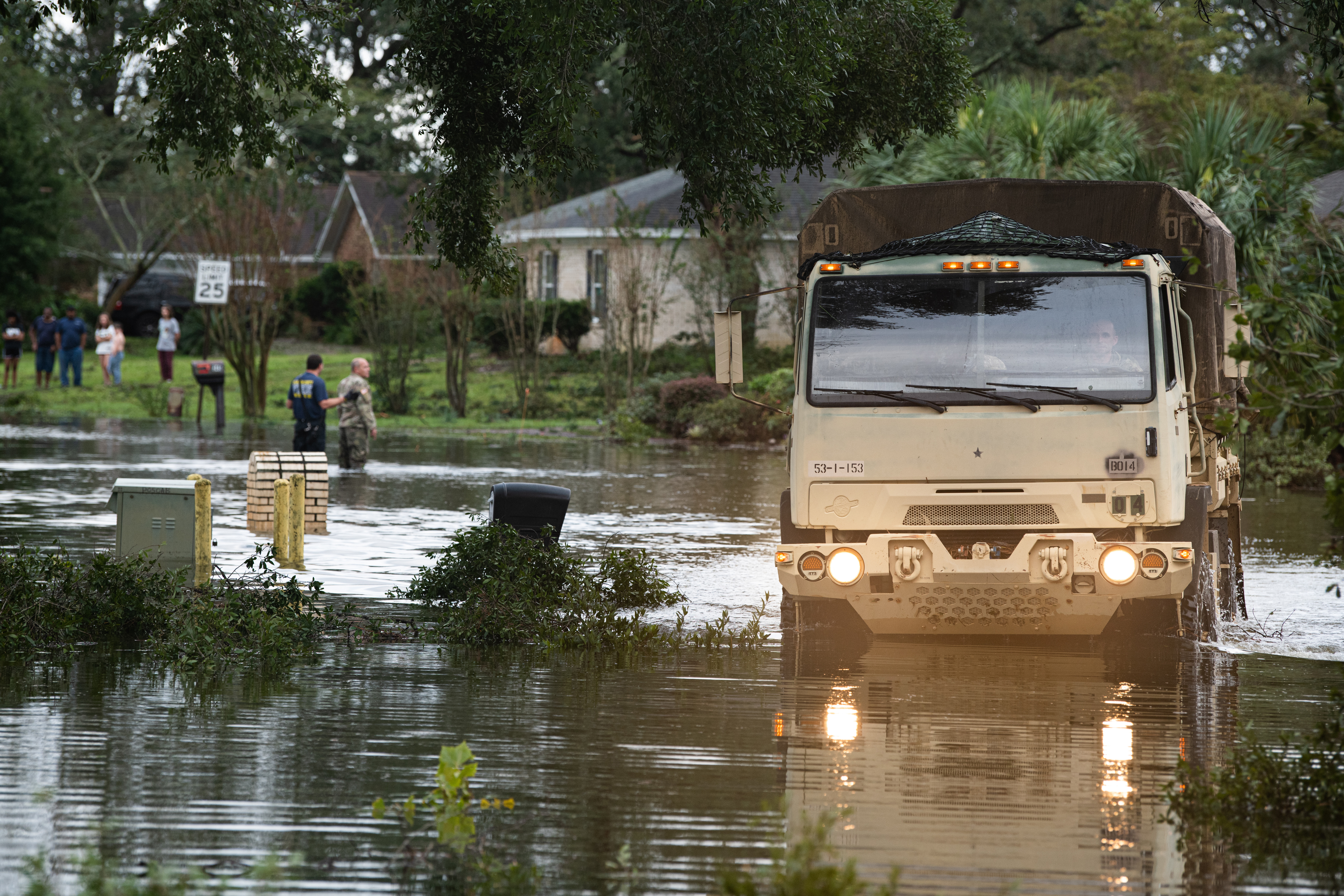
Soldiers assist residents of Escambia County, Fla., after heavy rain from Hurricane Sally flooded the region, Sept. 16, 2020.

Sept. 16, 2020
Good morning everyone. Thank you to Michael Rich for that kind introduction, and to Dr. Edward Harshberger for moderating today’s discussion.
It’s great to be here at the RAND Corporation, with many of the thought leaders who have made significant contributions to national security policy for more than seventy years. RAND has played a vital role in connecting military planning with research and development decisions since its founding in the wake of World War II.
Just two weeks ago, I stood on the deck of the USS Missouri, in Pearl Harbor, to commemorate the 75th anniversary of the end of that conflict. In its aftermath, the United States, our allies, and partners led the creation of an international rules-based order, rooted in our shared values, that has supported stability and prosperity around the world for more than seven decades.
Yet this free and open order is now under duress. We all understand that because peace is never fully assured. The United States and its partners must continue to protect our founding principles and way of life, and we are committed to doing just that!
Today, in this era of great power competition, the Department of Defense has prioritized China then Russia, as our top strategic competitors.
These revisionist powers are using predatory economics, political subversion, and military force in an attempt to shift the balance of power in their favor, and often at the expense of others.
China for example is exerting its malign influence through its “One-Belt, One-Road” Initiative.This campaign has left weaker nations with crushing debt, forcing them to take economic relief at the expense of their sovereignty.Additionally, Beijing’s aggression and disregard of its commitments in the South and East China Seas – such as the sinking of a Vietnamese vessel and escorting of Chinese fishing fleets into the exclusive economic zones of Indonesia and the Philippines – are further examples of the CCP’s attempts to reshape the international order that has benefitted nations, large and small.
At the same time, Russia is overtly redrawing international borders. Moscow’s invasion of Georgia in 2008, annexation of Crimea in 2014, and sustained aggression in Ukraine demonstrates its blatant disregard for international rules and norms.
And both nations are expanding and modernizing their armed forces, and extending their capabilities into the space and cyber domains, in order to exert greater pressure against other nations.
Meanwhile, for nearly two decades the United States concentrated on fighting violent extremist organizations in low intensity conflicts that left us less focused and prepared for a high-end fight against near peer adversaries. And in the last decade, the Department was crippled by the devastating effects of sequestration.
For years our military was in a period of strategic atrophy, and our adversaries watched from the sidelines, searching for opportunities to erode our hard-earned gains.
Today, with a view of the world very different than our own, our emboldened competitors are using their growing power to coercively alter the strategic environment to our detriment.
Given these challenges, in 2018, the Department of Defense developed the National Defense Strategy, which stated that we are now in this era of great power competition. The NDS also directs us to adapt to this increasingly complex security environment in order to deter conflict, and if necessary, fight and win.
I am pleased to report that a great deal of funding and effort was put behind this strategy over the past three years to ensure the U.S. military is organized, manned, trained, equipped, and ready to compete, deter – and fight and win if necessary – in this new age.
During my confirmation hearing last year, I made clear that my highest priority would be the irreversible implementation of the NDS. This strategy tells us that in order to succeed, we must follow three lines of effort; first, enhance our lethality and readiness across the force; second, strengthen our alliances and build partnerships; and third, reform the Department to align our resources with our highest priorities.
Soon after becoming the Secretary of Defense, I met with our senior DoD leaders – uniformed and civilian – and we developed a list of ten targeted goals to advance implementation of the NDS aligned under its lines of effort.
Our first line of effort aims to maintain our advantages and continue outpacing the competition. To modernize our capabilities, we have successfully secured funding for game-changing technologies such as artificial intelligence, hypersonics, directed energy, and 5G networks. We have also made significant progress recapitalizing our strategic nuclear triad. Among our other efforts, we conducted a comprehensive review of the Future Naval Force to meet our requirements in the years ahead– something I will discuss in greater detail in a few moments.
We are also modernizing how we maintain our readiness to fight. We have re-reorganized our ready forces into Immediate Response and Contingency Response Forces. And we’ve implemented enhanced readiness concepts such as dynamic force employment – demonstrated recently by our bomber task forces in the Indo-Pacific and the European continent. We are also developing a modern Joint Warfighting concept, which will ultimately become doctrine, and ensure the whole of the joint force is far more effective than the sum of its parts.
Our second line of effort builds on our relationships with other Nations, an asymmetric strategic advantage that no rivals can match. To do so, we are implementing a coordinated plan, the first of its kind, to strengthen allies and build partners. In our priority theater, the Indo-Pacific, we have worked hard toward this end – as evidenced by my multiple trips throughout the region —all in an effort to push back on China and its bad behavior. This is part of our theater strategy based on three-pillars: preparedness, strengthening partnerships, and promoting a more networked region.
Our third line of effort drives us to reform the Department for greater performance and effectively manage our Fourth estate, which includes organizations such as the Defense Logistics Agency, Defense Health Agency, and the Missile Defense Agency. In doing so, we are redirecting our time, money, and manpower to our highest priorities while maximizing the use of every taxpayer’s dollar.
We have made great progress on this front with our Defense-Wide Review, where we identified $5.7 billion in defense reforms and efficiencies across the Fourth estate last year, and we are on track to identify billions more this year. We have also directed our Military Services to conduct clean-sheet reviews to identify savings and efficiencies, as well as to develop their plans for reform to the NDS. Our Combatant Commands are going through a similar review to consolidate and reduce legacy requirements in order to optimize our operational footprint.
Underpinning all three of these lines, and principal to many of our efforts, is to focus the Department on China. To fulfill this objective, we stood up a new Defense Policy office on China, and established a China Strategy Management Group to better integrate our enterprise. I also directed our National Defense University to dedicate half of its coursework to China, and I tasked the Military Services to make China the pacing threat in all of our schools, programs, and training.
These are just a few of our efforts to turn our attention to our priority theater, the Indo-Pacific. Not only is this region important because it is a hub of global trade and commerce, it is also the epicenter of great power competition with China. And in the face of destabilizing activities from the Peoples Liberation Army (PLA), particularly in the maritime domain, the United States must be ready to deter conflict, and if necessary, fight and win at sea.
So today, I want to talk to you about our efforts to modernize our military, specifically the world’s greatest Navy. And over the next few days here in California, I’ll get a chance to see first-hand, what we are doing to prepare our force for the high-end fight, as I visit the USS Carl Vinson, Naval Base Point Loma, and industry partners who are developing unmanned naval systems.
Over the past year, I’ve had a chance to visit Navy ships and units all across the globe, and have met hundreds of Sailors. And I can assure you that we command, without a doubt, the best and most capable Navy on this planet. No doubt.
But as the NDS states, our military does not have a preordained right to victory on the battlefield. Beijing and Moscow have studied how we fight, learning to exploit our vulnerabilities and developing asymmetric capabilities designed to counter our strengths.
The Chinese Communist Party, specifically, intends to complete the modernization of its armed forces by 2035. By 2049, it aims to dominate Asia as a world-class military. In addition to developing advanced weapons systems, Beijing is also investing in long-range, autonomous, and unmanned submarines, which it believes can be a cost-effective counter to American naval power.
I want to make clear that China does not have parity when it comes to our Navy. Even if we stopped building new ships, it would take the PRC years to match our capability on the high seas. Simple ship numbers don’t address the capabilities of the vessels being counted, nor the crews that man them. Nonetheless, we must stay ahead; we must retain our overmatch; and we will keep building.
To compete in a 21st century high-end fight, we will need a future fleet that meets the following operational attributes:
The future fleet will be more balanced in its ability to deliver lethal effects from the air, from the sea, and from under the sea. This fleet will be need to be marked by more and smaller surface combatants; optionally manned, unmanned, and autonomous surface and subsurface vehicles; unmanned carrier-based aircraft of all types; a larger and more capable submarine force; and a modern strategic deterrent.
At the same time, this fleet must be affordable in an era of tight funding; sustainable over the long term; and operationally available at higher rates. And it must have a robust and healthy industrial base, with modern shipyards and highly-skilled workers, that have the capacity to build and maintain the fleet we need.
That is why, earlier this year, I asked the Deputy Secretary of Defense to lead a Future Naval Force Study, tasked with assessing a wider and more ambitious range of “future fleet” options. The Navy, Marine Corps, the Office of the Secretary, as well as outside advisors conducted a comprehensive, cost and threat-informed review and analysis:
This week I met with the Deputy Secretary and the team to discuss their findings. The results are a game-changer that reflect a good deal of serious work and effort based on facts and data. This study will serve as our guidepost as we program and build our future fleet, and conduct follow-on assessments. In short, it will be a balanced force of over 355 ships – both manned and unmanned— and will be built in a timely, relevant, and budget-informed manner. And we will build this fleet in such a way that balances tomorrow’s challenges with today’s readiness, and does not create a hollow Navy.
To achieve this outcome, we must increase funding for shipbuilding. This means we must get back to the same levels of spending dedicated for shipbuilding in the Navy budget that the sea service committed during the Reagan era – 13%, as compared to today’s 11%. This is something both the Secretary of the Navy and I are committed to pursuing.
As an example of where we are headed, earlier this year, the Navy granted a $795 million contract to purchase the first ship of a new class of guided missile frigates – with an option to purchase nine more totaling nearly $5.6 billion. This is the first new major shipbuilding program the Navy has sought in more than a decade. These ships will support the National Defense Strategy across the full range of military operations, with increased lethality, survivability, capability, and capacity to conduct distributed warfare—a key requirement borne out by the Future Fleet study.
As I visit with industry partners over the next few days, I will learn more about the Navy’s latest transformational capabilities – unmanned surface vessels and unmanned undersea vehicles. We are making solid progress on this front. Earlier this month, for example, the Sea Hunter prototype completed operations with the USS Russell, demonstrating various aspects of manned and unmanned teaming. We are planning on-going training events to continue developing tactics, techniques, and procedures for these platforms. These efforts are the next step in realizing our future fleet, one in which unmanned systems perform a variety of warfighting functions, from delivering lethal fires and laying mines, to conducting resupply or surveilling the enemy. This will be a major shift in how we will conduct naval warfare in the years and decades to come.
Finally, this future Navy and Marine Corps will employ novel concepts such as Distributed Maritime Operations and Expeditionary Advanced Base Operations, which will modernize the way we fight as they enable our new Joint Warfighting concept, and ultimately doctrine, for the 21st century.
Over the course of our history, the United States Navy evolved from the earliest wooden frigates of the Revolution to the low profile ironclads of the Civil War, and from the enormous steel battleships of Teddy Roosevelt’s Great White Fleet to Admiral Rickover’s “nuclear navy” of the Cold War, all the way up to today’s powerful supercarriers. Each one of these eras was marked by great technological change and new capability.
Today, we are at another inflection point – one where unmanned technologies and long-range precision weapons will play an increasingly leading role. The U.S. military, including the Navy, must adapt to that future as the character of warfare changes.
Building this future fleet and maintaining our maritime superiority now and into the future will require a whole-of-nation approach across government, industry, and academia.
To our private sector partners, particularly in shipbuilding, we must continue to work together to promote a robust and healthy industrial base with modern shipyards, infrastructure, and highly-skilled workers. We will need your help to match our level of ambition in the coming years, on cost, performance, and schedule.
For our partners in Congress, this means we need your support to continue our momentum, namely through adequate, sustained, predictable, and timely budgets.To support critical next-generation capabilities, our future budgets must be able to free up those resources by divesting from legacy systems and lower priority activities.We would also like the authority to put unused end of year Navy funding directly into the shipbuilding account, rather than see it expire.We need Congressional support to get these things done.
To our partners in academia and at think tanks, such as RAND, we need your “outside the box” thinking, your research, and analysis to help us adapt to this increasingly complex and challenging environment; to help us refine our future fleet plans and warfighting concepts in follow on studies; and to do so faster, in order to outpace our strategic competitors.
Finally, to our allies and partners, know that we are committed to preserving the international rules-based order that we have all benefitted from for more than 75 years. We urge you to increase your defense spending, and to make the needed investments to improve your capabilities and capacity, just as we are doing with our future fleet --- to protect our mutual interests, preserve our security, and defend our common values.
We all have a collective responsibility to prepare for the challenges of the future – while addressing the security issues of today. We cannot be complacent and must recognize the shifting landscape, otherwise we risk inviting greater aggression and further challenges to our shared values and security.If we can do this, I am confident that we will be able to maintain the rules-based order – that has given all of us security and prosperity – for many more generations to come.
Thank you and I look forward to our discussion.

Arizona Army National Guard service members prepare and deliver boxes of groceries to area residents at a local food bank in Mesa, Ariz., Sept. 11, 2020. Arizona Citizen-soldiers and Airmen continue to support grocery stores, food banks and other community needs during this state of emergency response.
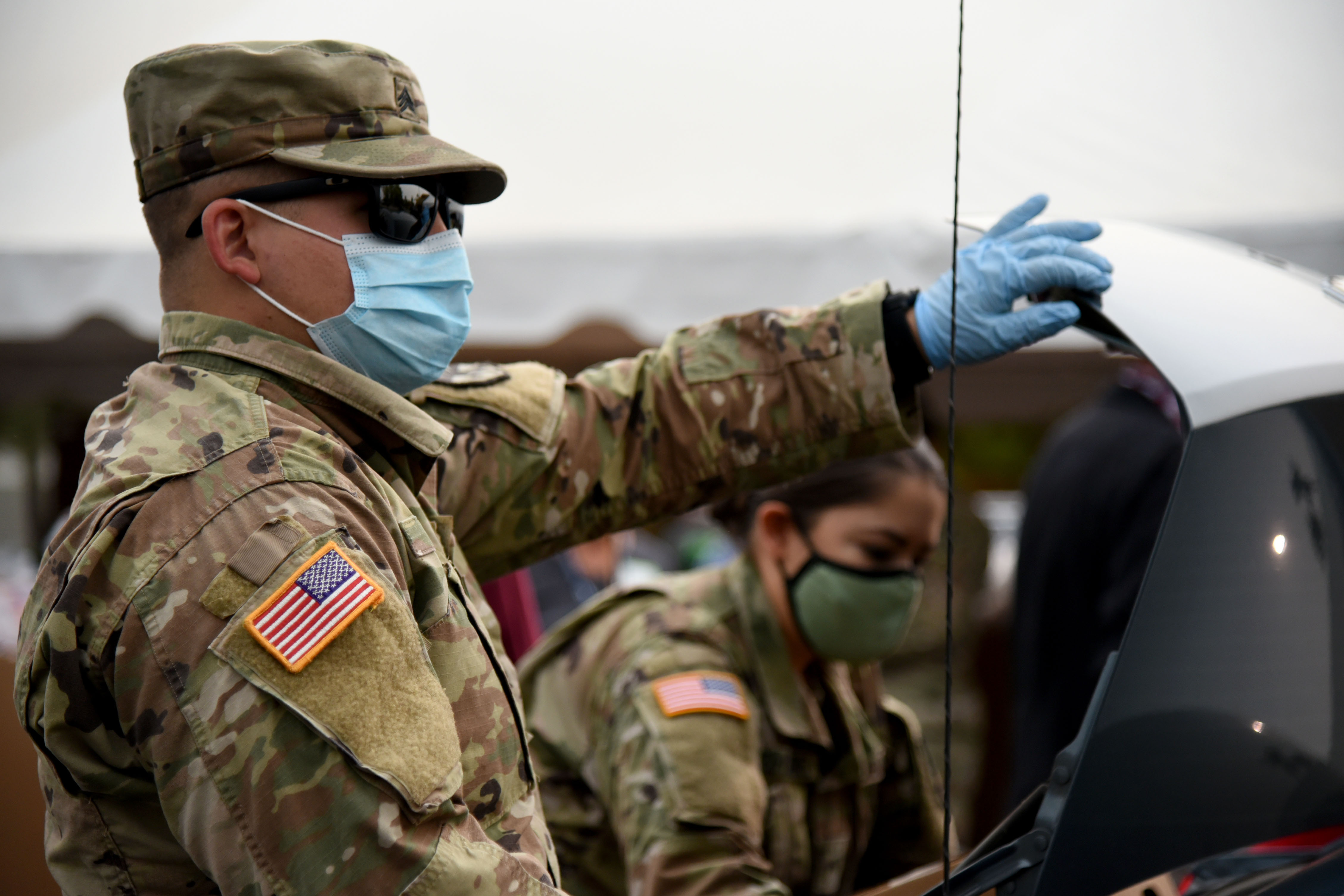
Arizona Army National Guard service members prepare and deliver boxes of groceries to area residents at a local food bank in Mesa, Ariz., Sept. 11, 2020. Arizona Citizen-soldiers and airmen continue to support grocery stores, food banks and other community needs during this state of emergency response.


 Posts
All Comments
Posts
All Comments
Posts
All Comments
Posts
All Comments