Wednesday, August 27, 2025

Paratroopers Make History With Army's First Drone-on-Drone Strike

 Aug. 27, 2025 

By Army Capt. Jennifer French, 173rd Airborne Brigade

For Army 1st Lt. Francesco La Torre, the Army's first drone-on-drone strike wasn't exactly a Hollywood moment. 

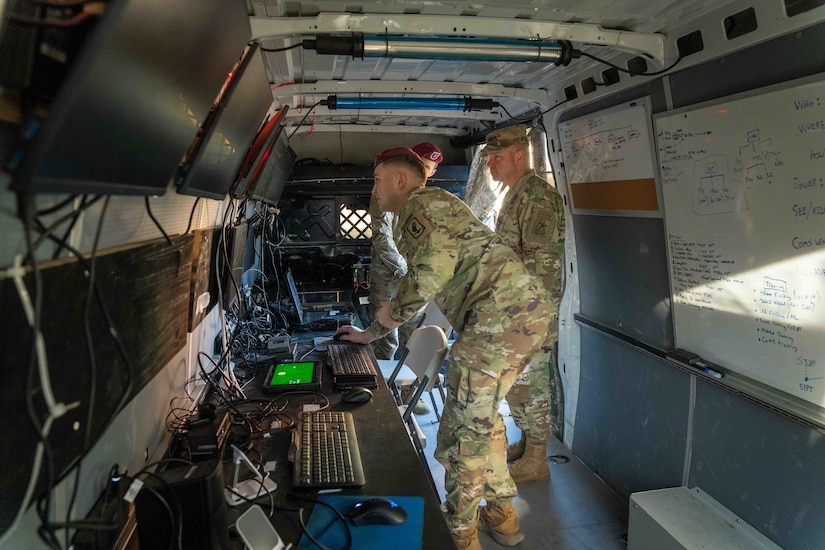
A man in a camouflage military uniform looks at a computer screen while moving a mouse. Another soldier in similar attire looks at the screen. Both men and another soldier in the background are standing in a long vehicle with a line of computers and monitors on the left side.
"In [the Star Wars movie], 'A New Hope,' Luke Skywalker flies an X-Wing through the Death Star trench and blows it up," La Torre said. "This wasn't like that. It was way harder. Honestly, it felt more like Darth Vader shooting down rebel pilots. He might be the villain, but he's also one of the best pilots in the galaxy." 
 
That was the image in La Torre's mind as his team with the 173rd Airborne Brigade achieved a milestone once unimaginable for conventional Army units: destroying an aircraft in flight using a first-person-view drone carrying an explosive charge. 
 
The strike took place earlier this month during the Army's Unmanned Aerial Systems and Launched Effects Summit, held Aug. 11-15 at Fort Rucker, Alabama. The live-fire event was led by the brigade's bayonet innovation team in partnership with the Pennsylvania Army National Guard and engineers from Army Combat Capabilities Development Command. 

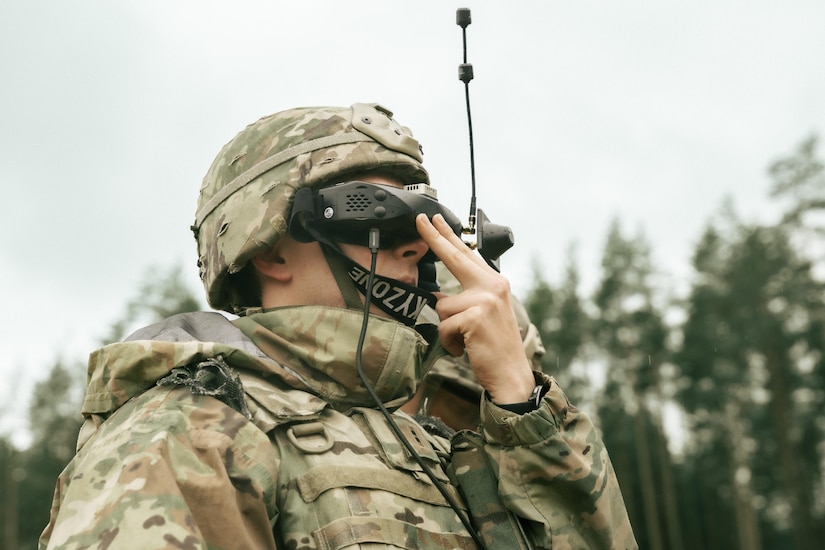
A soldier in a camouflage military uniform and helmet adjusts tactical goggles on his face.

 
"When I heard [Army] Chief [Warrant Officer 2] Nate Shea say, 'Arming,' when he was lined up behind the fixed wing threat UAS, I knew he'd take it down," La Torre said. "A few seconds later he detonated the claymore [mine], and I looked up from my end-user device to see the fixed-wing [aircraft] drop out of the sky." 
 
The success came after weeks of training. Paratroopers flew for hours each day, building muscle memory while rehearsing how to engage a fast-moving aircraft. Army Chief Warrant Officer 2 Andrew Topits familiarized himself with the fixed-wing platform a month in advance, while Shea practiced with inactive claymores. Once on the ground at Fort Rucker, the operators flew daily in changing weather, preparing for a target that could appear anywhere across the range. 
 
Technical skill proved as important as piloting. 
 
"The ability to train and solve problems immediately afterwards was critical to mission success," La Torre said. "The team was soldering, disassembling, reassembling and performing [quality assurance] around the clock while rehearsals were underway. While tactical units and technicians may not share the same language, they do share an intellectual curiosity and desire to succeed." 
 
La Torre emphasized what it means for the average paratrooper. 

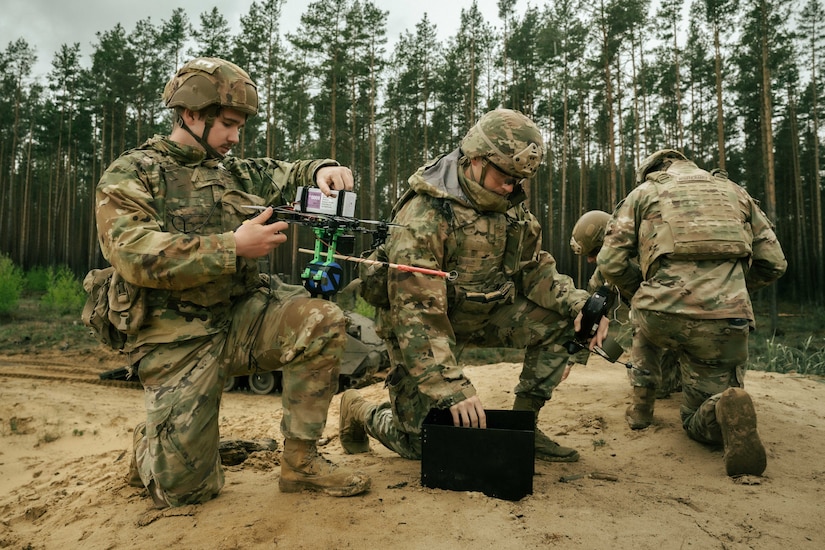
A group of soldiers in camouflage military uniforms kneel in the sand. A soldier on the left is holding a drone, while the soldier to the right is holding a remote. There are trees in the background.

 
"With the right kit, paratroopers will be able to utilize a low-cost system with preexisting munitions to execute a wide variety of mission tasks — and have the power to protect their unit from an endemic threat," he said. 
 
The drone demonstration showed that innovation doesn't have to come from the top. 
 
"It feels extremely satisfying to have this level of impact, but solving these kinds of problems should not be alien to junior officers, or any leader," La Torre said. "Every year the Army produces leaders at all levels who are better educated now than ever before. At the end of the day, rank is immaterial when it comes to problem-solving." 
 
For La Torre, the milestone reflects how far the 173rd Airborne Brigade has come. 

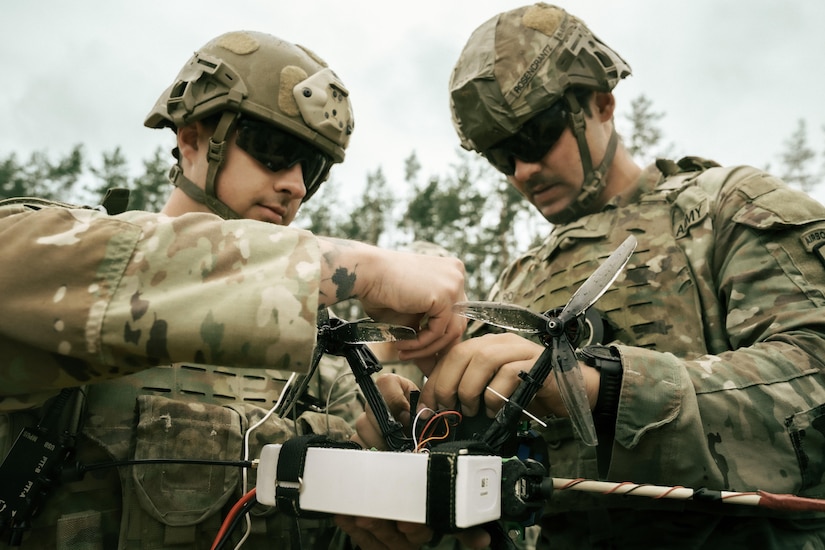
Two soldiers in camouflage military uniforms work on a drone.

 
"At this time last year, this kind of training was a pipe dream for conventional units," he said. "For the engagement itself, Chief Shea did an incredible job and so did Chief Topits. It's such a difficult mission profile for both aircraft." 
 
Lessons from the bayonet innovation team fed directly into Fort Rucker's new lethal UAS course, directed by Army Capt. Rachel Martin and Army Maj. Wolf Amacker. The course consolidates milestones within the Army's UAS community and serves as a hub for education and experimentation. 
 
"The more testing and experimentation we do, the less we must teach theoretically and the more we can back claims with real data," La Torre said. "Safe and effective experimentation allows commanders to understand the true nature of the risks they assume with these systems and helps make this training more commonplace." 
 
For La Torre, the boundaries are clear: safety and scalability. 
 
"We must safely conduct training, testing and experimentation," he said. "We also must make sure everything we do is exportable to other units so they can do the same. I'm confident what we've done is scalable, and the lethal UAS course at Fort Rucker will centralize the growth of lethal UAS engagements while also serving as a hub for subject matter experts to gather and exchange lessons learned."

FIM-92 Stinger: A concise history, capabilities, and combat record

Few weapons have shaped modern low-altitude air defense as visibly as the FIM-92 Stinger. A shoulder-fired, “fire-and-forget” surface-to-air missile (MANPADS), Stinger put credible anti-air capability into the hands of small units and irregular forces alike. This article surveys its origins and development, how militaries employ it, where it’s been used, and the system’s enduring strengths and weaknesses—along with how production has been sustained amid renewed demand.

Origins and development

The Stinger traces back to the U.S. Army’s effort to replace the FIM-43 Redeye with an all-aspect, more resilient MANPADS. Work began in 1967 under the “Redeye II” concept; the program was redesignated FIM-92 “Stinger” in 1972. Following a turbulent test program in the 1970s, production of the FIM-92A started in 1978, and the first units achieved Initial Operational Capability in 1981. Subsequent variants added dual-band IR/UV seekers and, critically, a reprogrammable microprocessor (RMP) that let the missile’s logic be updated for new threats without replacing hardware (FIM-92C “RMP,” FIM-92E “RMP Block I,” later FIM-92J life-extension). 

What the Stinger is—and how it works

At its core, Stinger is a supersonic, shoulder-launched missile guided by a passive seeker that homes on a target’s heat/UV signature. The current U.S. employment handbook emphasizes several properties:

  • Fire-and-forget guidance: Once the operator obtains lock and fires, the missile guides itself, letting the gunner move, take cover, or engage a second target.

  • IR/negative-UV homing with modified proportional navigation: guidance tuned for low-altitude aircraft, helicopters, and (in later updates) small uncrewed aerial systems (UAS).

  • Organic IFF support: an interrogator and antenna integrated with the gripstock help reduce fratricide risk under rules of engagement.

  • Tactical “planning range” of ~4 km (unclassified), with engagement geometry and target aspect strongly affecting outcomes.

  • Battery-Coolant Unit (BCU) constraints: once a BCU is activated it provides power and seeker cooling for at most 45 seconds, after which it must be replaced.

These are not abstract brochure claims—they are baked into field planning, training, and logistics.

On the hardware side, the designation record summarizes performance figures and evolution across variants. A typical Stinger round weighs roughly 10 kg (missile) and ~15–16 kg for a ready-to-fire unit, accelerates to around Mach 2+, and uses a ~3 kg blast-fragmentation warhead with impact/proximity/self-destruct fuzing (the proximity mode becoming more important against drones). The system ceiling is commonly cited near 3.8 km, with effective range around 4–5 km depending on target and environment; RMP Block II (cancelled in production) would have pushed the kinematic envelope further. 

Employment: teams, vehicles, and networks

A Stinger “team” (two soldiers is common) can deploy dismounted or from vehicles. The weapon’s modularity lets it serve as the missile component on Avenger turrets (HMMWV-mounted), Linebacker/Bradley derivatives, and newer M-SHORAD Stryker configurations, augmenting the human gunner with sensors, cueing, and stabilized mounts. For planning, Army guidance stresses integrating Stinger with early-warning sensors, airspace control measures, and combined-arms maneuver, not just parking a gunner on a ridgeline.

Where the Stinger has been used

The system’s combat debut came swiftly in the 1980s, but it never left the stage. Highlights include:

  • Soviet–Afghan War (1980s): Stinger’s arrival—widely associated with improved attrition of Soviet helicopters and attack aircraft—became a symbol of how portable air defense could blunt low-altitude air power. While narratives of “war-winning” effects are debated, authoritative technical histories still situate Stinger as “heavily used” in Afghanistan with hundreds of worldwide shoot-downs attributed to the type. 

  • Post-Cold War through GWOT: U.S. and allied forces retained Stingers for point defense, convoy overwatch, and base defense, often via Avenger or mounted applications. (These roles expanded and contracted as threat perceptions shifted.)

  • Ukraine (2022-present): Stinger was among the first air-defense systems transferred. By September 2024, the United States had provided over 2,000 Stinger missiles to Ukraine, and the system continues to feature in Ukraine’s layered SHORAD mix against helicopters, attack aircraft, cruise missiles, and drones. 

Strengths

Mobility and simplicity. A two-person team can move the weapon to where the fight is, with minimal logistics compared to radar-guided systems. For light infantry or dispersed territorial defense, that flexibility matters.

Fire-and-forget autonomy. Passive homing removes the need for illuminators or continuous guidance beams, reducing emissions and operator workload after launch.

All-aspect, multi-band seeker logic. Dual IR/UV sensing and reprogrammable processors (RMP) have kept Stinger viable against flares and background clutter—an ongoing “software war” against countermeasures. Upgrades like FIM-92J add proximity fuzing and refined logic for small, low-signature targets. 

Interoperability. From shoulder-launch to Avenger and M-SHORAD on Stryker, Stinger scales from pop-up ambush shots to networked, mobile air defense with cueing from radars and command networks. 

Proven combat record. Across decades and theaters, Stinger has repeatedly shown utility at the tactical edge, especially where larger systems can’t be everywhere at once. 

Weaknesses and limitations

Envelope constraints. Stinger is a short-range, line-of-sight system. With a planning range near 4 km and a ceiling around 3.8 km, fast jets at medium altitude or standoff munitions lie largely outside its sweet spot. Terrain masking can both help (ambush) and hinder (blocked sight lines).

Countermeasures. Modern aircraft bring flares, exhaust suppressors, flight profiles, and increasingly DIRCM (Directional Infrared Countermeasures). Army planning explicitly accounts for the “countermeasures environment” and the need to integrate sensors/cueing to maximize engagement quality. Even with IR/UV discrimination and updated software, sophisticated countermeasures stress MANPADS performance.

Time and power budget. The BCU hard limit—about 45 seconds of power/cooling per activation—adds pressure in high-tempo engagements and demands disciplined crew drills (don’t “burn” BCUs while waiting). Logistics must ensure sufficient BCUs alongside missile stocks.

Training and identification risk. Stinger includes an IFF subsystem, but IFF does not by itself authorize firing; rules of engagement and positive identification remain critical, especially in cluttered airspace with friendly UAS and coalition aviation. 

Aging inventory and obsolescence risk. After the U.S. last accepted new Stingers in 2005, parts obsolescence and atrophied production capacity became issues—until recent wars renewed demand. (See “Production and sustainment,” below.)

Tactics and use on today’s battlefield

Modern doctrine treats Stinger as part of a layered air-defense ecosystem rather than a silver bullet. A few practical patterns:

  • Ambush and area denial: Teams choose positions with good fields of view and short decision loops (observer-gunner pair, radio cueing). Short-range drones can be engaged with proximity-fuzed rounds or, in vehicle mounts, with integrated guns/sensors.

  • Mobility with maneuver forces: On M-SHORAD Strykers or Avengers, Stingers provide moving bubbles of protection for armored/mechanized units, especially against helicopters, loitering munitions, and low flyers. 

  • Cueing and command-and-control: Early warning from radars and airspace control nets matters—giving gunners seconds they won’t otherwise have to power BCUs, gain lock, and achieve a valid shot.

Production and sustainment: from “warm line” to multinational demand

The full-scale return of state-on-state conflict highlighted a dilemma: Western nations had drawn down stocks and allowed production lines to cool. In May 2022, the U.S. Army awarded Raytheon a $624.6 million contract modification for Stinger missiles and gear, the first major buy for new rounds in years, with deliveries projected into 2026. The award notice is explicit about the Stinger procurement and timelines. 

Demand is not just American. In July 2024, NATO’s procurement agency placed a nearly $700 million multinational order for Stinger missiles—an RTX (Raytheon) spokesman told Reuters the buy would keep the production line running through 2029. That order reflects both Ukraine’s consumption and allied recapitalization as European states rebuild short-range air-defense capacity. 

CRS analysis of U.S. defense production for Ukraine provides useful context: the United States had transferred more than 2,000 Stingers to Ukraine as of September 2024, while Army and industry worked through obsolescent parts and workforce gaps to restart production of a Cold War-era missile for twenty-first-century threats. 

Bottom line

The Stinger endures because it solves a timeless tactical problem: how to give small units a credible, mobile, immediately available answer to low-altitude air threats. Its strengths—mobility, autonomy, multi-band seeker logic, and interoperability—are balanced by weaknesses inherent to short-range, passive homing systems operating against modern countermeasures. In Ukraine and elsewhere, Stinger is no panacea; it is one indispensable layer. As allies recapitalize stocks and industry warms production back up, expect Stinger (and its successors) to remain a fixture of SHORAD doctrine—especially where drones and helicopters menace troops at the edge of the fight. 

References (APA)

Congressional Research Service. (2024, September 16). Defense production for Ukraine: Background and issues for Congress (R48182). https://www.everycrsreport.com/reports/R48182.html (EveryCRSReport)

Parsch, A. (2024, December 15). Raytheon (General Dynamics) FIM-92 Stinger. Directory of U.S. Military Rockets and Missiles. https://designation-systems.net/dusrm/m-92.html (designation-systems.net)

Reuters. (2024, July 9). NATO agency places $700 mln order for Stinger anti-aircraft missiles. https://www.reuters.com/business/aerospace-defense/nato-agency-places-700-mln-order-stinger-anti-aircraft-missiles-2024-07-09/ (Reuters)

U.S. Army, Center for Army Lessons Learned. (2018). Maneuver Leader’s Guide to Stinger (CALL Handbook 18-16). https://api.army.mil/e2/c/downloads/2023/01/19/18849503/18-16-maneuver-leaders-guide-to-stinger-handbook-apr-18-public.pdf

U.S. Department of Defense. (2022, May 27). Contracts for May 27, 2022 (Raytheon—Stinger missiles). https://www.defense.gov/News/Contracts/Contract/Article/3046664/ (U.S. Department of Defense)

Note: All sources are publicly accessible and verifiable as of August 27, 2025.
Tuesday, August 26, 2025

Navy Reservist Achieves Dream of Becoming an NFL Cheerleader


Aug. 25, 2025 |

By Tyler Grimes, Naval Supply Systems Command Fleet Logistics Center Jacksonville

As the NFL prepares to launch another exciting season, one Navy Reserve sailor is preparing for her own big debut.

Navy Petty Officer 2nd Class Alexis Gloster, a logistics specialist assigned to Naval Supply Systems Command Fleet Logistics Center Jacksonville, Florida, will step onto the sidelines this year as one of the newest members of the Jacksonville Jaguars cheerleading squad.

For Gloster, the accomplishment represents the fulfillment of a lifelong dream — one she has worked toward while balancing the demands of military service.

"After serving five years on active duty, I wanted the flexibility to pursue other dreams while still serving my country," said Gloster, who has now served a total of nine years in the Navy. "The Navy Reserve has given me the best of both worlds — remaining part of something bigger than myself while continuing to grow personally and professionally."

One of those dreams was professional cheerleading.

"I've loved performing and cheerleading for as long as I can remember," she said. "Becoming an NFL cheerleader was a way to share that passion on a huge stage while also making a positive impact in the community."

Earlier this year, the Fort Lauderdale, Florida, native auditioned for the Jaguars cheer squad. The process was rigorous, stretching across multiple rounds and lasting two weeks.

"We had to learn and perform choreography under pressure, complete an interview and stand out among more than 300 candidates," she recalled. "It really pushed me to be the best version of myself every single day. When I was selected, it made the moment even more special. It was intense but so rewarding."

Now, with the NFL preseason underway, Gloster is focused on balancing her Navy Reserve duties with the commitments of cheerleading on a national stage.

"It's definitely a balancing act, but the discipline and time management I've learned in the Navy help me stay on top of both," she said. "When you love what you're doing in both worlds, it makes the hard work worth it."

For Gloster, her role with the Jaguars is about more than performing in front of thousands of fans on Sundays.

"It's bigger than the field — it's about inspiring others, representing an incredible organization and connecting with people in meaningful ways," she said. "I feel so proud to wear both uniforms, the Navy's and the Jaguars'. They represent two very different worlds, but both are built on teamwork, dedication and heart."

Capt. Roger Dubé, Navy Reserve NAVSUP FLC Jacksonville commanding officer, said Gloster's role as a professional cheerleader could help with the Navy's recruiting efforts and set a good example for other Navy reservists to pursue their dreams.

"[She] is one of our unit's hard-chargers and also serves as our command fitness leader," Dubé said. "She is humble about her achievements as I was unaware of her selection as a professional cheerleader. We're looking forward to seeing her lead the games' crowds with her vibrant smile and energy."

As she looks ahead to her first season as an NFL cheerleader while continuing to serve in the Navy, Gloster hopes her story will motivate others to keep reaching for their goals.

"I hope my story shows others that you don't have to choose just one dream — you can chase them all," she said.

Guard Members Partner With Local Authorities to Render Life-Saving Aid in Multiple Incidents


Aug. 26, 2025 

By Army Master Sgt. Whitney Hughes  

"It was chaotic — people were running and screaming," said Army Staff Sgt. Zachary Graham, a member of the South Carolina National Guard assigned to the D.C. Safe and Beautiful Task Force, Joint Task Force District of Columbia.

Moments earlier, a man had been struck by a train and thrown across a Washington Metro station platform in Washington, Aug. 20. Graham and his fellow soldiers, all members of the 4th Battalion, 118 Infantry Regiment, immediately secured the scene, called 911 and assisted first responders in rendering first aid, ultimately reviving the man to the point that he was conscious and moving when EMTs transported him.

"Everybody was panicking but able to keep a clear head and make the phone call to 911 to get an ambulance on the way," said Army Spc. Nicholas Garrison, who was on patrol with Graham at the NoMa-Gallaudet U Metro station. "Our presence was important for getting him help as quickly as possible."

This was one of several life-threatening incidents in the past week where members of the task force were first on the scene to provide aid to local citizens and assist local authorities.

In an event at Union Station, two D.C. Army National Guard military police officers were conducting a joint patrol with the Amtrak Police Department, Aug. 15, when they encountered an unconscious man.

Army Sgt. Jay Whited, a team leader assigned to the 372nd Military Police Battalion, said the man appeared to have fainted and did not look well. They resuscitated him and contacted emergency services. Whited said the police suspected the man was experiencing a narcotic overdose and asked the guard members to help secure the scene while they administered naloxone, a medication used to reverse the effects of opiates.

"We are pretty uniquely positioned here, like all National Guard units, but even more so because it's D.C. and it's so small," he said. "We are uniquely experienced as well, and we integrate with local agencies well because we have done it so many times."

In addition to the metro incidents, guard members intervened during the assault of a U.S. Park Police officer, alerted the D.C. Metropolitan Police Department to a man brandishing a knife and making verbal threats at the Waterfront Washington Metro station and helped the U.S. Drug Enforcement Administration locate a missing child in southwest Washington.

Army Brig. Gen. Leland D. Blanchard, interim commanding general of the D.C. National Guard, stated that approximately 2,000 guard members are supporting the task force and providing critical assistance to local law enforcement officers. 

"The members of the District of Columbia National Guard are highly trained and capable of assisting our interagency partners to keep our district safe," he said.

Sunday, July 06, 2025

The History of Helicopter Use by the United States Coast Guard

The United States Coast Guard (USCG) has a long and distinguished history of employing helicopters to support its vital missions of search and rescue (SAR), law enforcement, homeland security, and environmental protection. Since the mid-20th century, helicopters have become an indispensable tool for the Coast Guard, allowing rapid response in treacherous conditions where other means of transportation often prove inadequate. The evolution of helicopter operations within the USCG reflects advancements in aviation technology and the increasing complexity of maritime safety and security.

Early Development and World War II Origins

The Coast Guard’s exploration of helicopter use began during World War II, spurred by the need for more effective search and rescue capabilities, especially in the vast expanses of the Atlantic Ocean where German U-boats threatened Allied shipping. Recognizing the potential of rotary-wing aircraft, the Coast Guard collaborated with helicopter pioneers such as Igor Sikorsky. In 1943, the Coast Guard commissioned its first helicopters, the Sikorsky HNS-1, also known as the XR-4, marking the beginning of helicopter operations within the service.

The HNS-1 proved instrumental in demonstrating the potential of helicopters for maritime rescue, especially in areas where fixed-wing aircraft and ships faced limitations. Coast Guard pilots quickly adapted to the unique flight characteristics of these early helicopters, laying the foundation for the service’s expanding aviation capabilities.

Post-War Expansion and the Birth of Air-Sea Rescue

Following World War II, the United States Coast Guard solidified its role as a leader in air-sea rescue operations. The service recognized that helicopters could significantly reduce response times to maritime emergencies, particularly in remote or hazardous locations. Throughout the late 1940s and 1950s, the USCG expanded its helicopter fleet, acquiring more capable aircraft such as the Sikorsky HO3S-1 and the Sikorsky HO4S.

These helicopters provided improved range, payload capacity, and reliability, allowing the Coast Guard to establish dedicated air stations along the nation’s coastlines. Notably, the integration of rescue hoists enabled crews to extract survivors from ships, life rafts, or dangerous surf zones without the need to land—a critical capability that remains central to USCG helicopter operations today.

The Jet Age and Modernization: 1960s–1980s

The 1960s and 1970s marked significant advancements in helicopter technology and the Coast Guard’s operational reach. The introduction of turbine-powered helicopters, such as the Sikorsky HH-52A Seaguard, revolutionized the service’s capabilities. The HH-52A, often regarded as one of the most iconic USCG aircraft, offered exceptional range, speed, and reliability compared to its piston-engine predecessors.

Equipped with amphibious landing gear and a powerful rescue hoist, the HH-52A became the workhorse of Coast Guard air stations across the country. During its operational tenure, the HH-52A is credited with saving more than 15,000 lives, a testament to the critical role helicopters play in maritime rescue.

The period also saw the Coast Guard responding to evolving mission requirements, including increased focus on drug interdiction and environmental protection. Helicopters proved vital for deploying boarding teams to vessels suspected of smuggling and for monitoring oil spills or other maritime hazards.

The Era of Advanced Rotary-Wing Aircraft: 1990s–Present

In the 1990s and early 21st century, the Coast Guard introduced a new generation of advanced helicopters to meet growing operational demands. The Sikorsky HH-60J Jayhawk and the Eurocopter HH-65 Dolphin became mainstays of the USCG’s rotary-wing fleet, offering enhanced speed, range, avionics, and all-weather capabilities.

The HH-60J Jayhawk, based on the U.S. Navy’s SH-60 Seahawk, provides long-range search and rescue, law enforcement, and homeland security support. Its ability to operate offshore for extended periods makes it particularly suited to the vast and often unforgiving maritime environments the Coast Guard patrols.

Meanwhile, the HH-65 Dolphin, a smaller, more agile aircraft, is widely used for short-range missions, especially in urban coastal areas and aboard Coast Guard cutters. Over the years, the Dolphin has undergone significant upgrades, leading to the current MH-65E variant with modernized avionics, enhanced safety features, and improved performance.

Helicopters in Modern Coast Guard Missions

Today, helicopters remain at the forefront of the Coast Guard’s multi-mission mandate. From rescuing stranded mariners in hurricane conditions to interdicting drug smugglers in the Caribbean, rotary-wing aircraft provide unmatched flexibility and speed. During high-profile disasters, such as Hurricane Katrina in 2005, Coast Guard helicopters were instrumental in rescuing thousands of individuals from flooded homes, rooftops, and dangerous waters.

Additionally, helicopters support polar operations, deploying to the Arctic and Antarctic aboard USCG icebreakers, and play a critical role in homeland security, patrolling harbors, offshore energy infrastructure, and key waterways.

Conclusion

The history of helicopter use by the United States Coast Guard reflects both technological innovation and an unwavering commitment to saving lives and protecting the maritime domain. From the pioneering days of the HNS-1 to the modern fleet of Jayhawks and Dolphins, helicopters have transformed how the Coast Guard fulfills its missions. As challenges at sea evolve, helicopters will undoubtedly continue to play an essential role in ensuring the safety, security, and stewardship of the nation’s waters.

Tuesday, July 01, 2025

Guardians of the Coast: Inside U.S. Coast Guard Operations

For more than two centuries, the United States Coast Guard has stood watch over America’s maritime interests, combining military readiness, law enforcement, search and rescue, and environmental protection into one unique and vital mission set. With over 95,000 miles of U.S. coastline and vast stretches of open water under their watch, Coast Guard personnel operate around the clock to safeguard lives, protect natural resources, and secure the nation’s maritime borders.

A Dual Mission: Military and Civilian Roles

Unlike other military branches, the Coast Guard operates under the Department of Homeland Security in peacetime but can be transferred to the Department of the Navy during wartime. This flexibility allows the Coast Guard to seamlessly balance both civilian and military responsibilities.

Their primary missions include:

  • Search and Rescue (SAR): Perhaps the most well-known mission, Coast Guard crews respond to thousands of distress calls every year, rescuing mariners from treacherous conditions, stranded vessels, and life-threatening situations.

  • Maritime Law Enforcement: From combating drug smuggling and illegal fishing to enforcing maritime laws, the Coast Guard patrols U.S. waters to ensure safety and compliance.

  • Port and Coastal Security: The Coast Guard plays a critical role in securing the nation's ports and waterways, preventing terrorist attacks, and safeguarding critical infrastructure.

  • Environmental Protection: Coast Guard units respond to oil spills, pollution incidents, and other environmental hazards, working to preserve fragile marine ecosystems.

  • Icebreaking and Arctic Operations: With growing interest in Arctic resources and shipping lanes, the Coast Guard’s fleet of icebreakers maintains year-round access to polar regions.

  • Aids to Navigation (ATON): The Coast Guard maintains over 50,000 navigational aids, including buoys and beacons, ensuring safe passage for commercial and recreational vessels.

Tools of the Trade: Coast Guard Assets

The Coast Guard operates a wide range of vessels and aircraft to support its diverse missions, including:

  • Cutters: Large ships capable of operating in open ocean and coastal environments.

  • Fast Response Cutters (FRCs): Highly maneuverable vessels used for law enforcement and SAR operations.

  • Response Boats: Smaller, agile boats ideal for rapid response close to shore.

  • Helicopters: Aircraft like the MH-60 Jayhawk and MH-65 Dolphin conduct SAR, surveillance, and interdiction missions.

  • Fixed-Wing Aircraft: Planes such as the HC-130 Hercules provide long-range surveillance and transport capabilities.

Everyday Heroes on the Water

From the icy waters off Alaska to hurricane-stricken coasts in the Gulf of Mexico, Coast Guard crews risk their lives daily to protect others. Their motto, "Semper Paratus"—Always Ready, reflects a culture of constant vigilance, rigorous training, and unwavering commitment.

Recent operations include:

  • Interdicting narcotics shipments in the Eastern Pacific.

  • Rescuing mariners from storms off the Atlantic coast.

  • Coordinating disaster response after hurricanes and floods.

  • Breaking ice to keep Arctic shipping lanes open.

Conclusion: The Quiet Force that Never Sleeps

While their actions often unfold far from public view, the men and women of the U.S. Coast Guard play a critical role in national security, public safety, and environmental protection. Whether braving stormy seas, patrolling for threats, or lending a hand to those in peril, the Coast Guard remains an indispensable guardian of America's maritime frontiers.

Sunday, June 29, 2025

The 3rd Infantry Division at the Battle of the Marne: Rock of the Marne in World War I

The First World War, often called "The Great War," was a global conflict that reshaped the political and military landscape of the 20th century. Among the many heroic contributions made by Allied forces, the actions of the United States Army's 3rd Infantry Division during the Second Battle of the Marne in July 1918 stand as a defining moment in the war's final chapter. Through their steadfast defense along the Marne River, the 3rd Infantry Division earned the enduring nickname "Rock of the Marne" and played a crucial role in halting the last major German offensive of the war. Their bravery not only helped turn the tide of battle but also solidified America's growing military reputation on the world stage.

Formation and Early History of the 3rd Infantry Division

The 3rd Infantry Division was activated on November 21, 1917, at Camp Greene, North Carolina, as part of the American Expeditionary Forces (AEF) organized under General John J. Pershing (Wilson, 2018). Composed initially of fresh recruits and veterans from various states, the division underwent intensive training in modern warfare tactics, with an emphasis on trench fighting, marksmanship, and combined arms coordination. The United States had only recently entered the war in April 1917, and American forces were urgently needed to bolster the exhausted Allied lines on the Western Front. By the spring of 1918, the 3rd Infantry Division was deployed to France, ready to join the fight.

The Second Battle of the Marne: Strategic Context

By mid-1918, the German Army had launched a series of aggressive offensives aimed at breaking the stalemate on the Western Front before American forces could fully arrive in Europe. One of the most significant of these was the German attempt to cross the Marne River and advance toward Paris (Gilbert, 2014). The Second Battle of the Marne, which began on July 15, 1918, represented Germany's last major push to seize a decisive victory.

The Marne River line, located near Château-Thierry, was of immense strategic importance. A successful German breakthrough would have exposed the Allied rear and potentially forced France to negotiate peace. To prevent this, French, British, and newly arrived American troops were positioned along the Marne to repel the German advance. The 3rd Infantry Division was assigned to a critical sector along the river's southern bank.

The 3rd Infantry Division at the Marne

When the German offensive commenced on July 15, 1918, the 3rd Infantry Division faced overwhelming artillery barrages and massed infantry assaults. Despite being under relentless attack, the soldiers of the division maintained their positions along the Marne River, refusing to retreat (Persico, 2001). Their disciplined resistance prevented the Germans from establishing a bridgehead across the river, blunting the momentum of the offensive.

It was during these fierce engagements that the 3rd Infantry Division earned the nickname "Rock of the Marne." French commanders, impressed by the Americans' determination and resilience, praised the division for standing firm when other units had been forced to fall back (Hallas, 2009). The steadfastness of the 3rd Infantry Division not only safeguarded the immediate sector but also provided critical time for Allied forces to organize a counterattack.

Outcome and Legacy

The failure of the German assault at the Marne marked a significant turning point in World War I. With their offensive stalled, German forces were forced onto the defensive, and the Allies seized the initiative. In the weeks following the battle, a coordinated Allied counteroffensive, including French, British, and American troops, drove the Germans back, setting the stage for the Hundred Days Offensive that would ultimately bring the war to an end (Keegan, 1999).

The actions of the 3rd Infantry Division at the Marne became legendary within military circles. Their heroism not only contributed to the Allied victory but also established a reputation for courage and tenacity that the division would carry into future conflicts, including World War II and beyond. To this day, the division's motto, "Rock of the Marne," symbolizes the strength and reliability of American soldiers under pressure.

Conclusion

The 3rd Infantry Division's performance during the Second Battle of the Marne exemplifies the courage, discipline, and sacrifice of American troops during World War I. Their unwavering defense along the Marne River was instrumental in halting the last major German offensive and preserving the Allied position on the Western Front. The legacy of the "Rock of the Marne" endures as a powerful testament to the critical role played by American forces in securing victory during one of history's most devastating conflicts.


References

Gilbert, M. (2014). The First World War: A Complete History. RosettaBooks.

Hallas, J. W. (2009). Doughboy War: The American Expeditionary Force in World War I. Stackpole Books.

Keegan, J. (1999). The First World War. Vintage.

Persico, J. E. (2001). Pershing's Lieutenants: American Military Leadership in World War I. Osprey Publishing.

Wilson, J. B. (2018). Maneuver and Firepower: The Evolution of Divisions and Separate Brigades. Government Printing Office.

Saturday, June 28, 2025

Title 10 Security Missions: The Role of U.S. Military Forces in Domestic Federal Operations

The United States military plays a vital role in supporting civil authorities during times of domestic crisis. Among the legal frameworks that govern these operations, Title 10 of the U.S. Code stands out as a key mechanism through which federally controlled military forces are mobilized to protect national interests on American soil. Title 10 security missions are a critical tool for safeguarding federal functions, property, and personnel during emergencies, providing disciplined military support while adhering to constitutional limits on military involvement in civilian affairs.

Legal Framework of Title 10 Missions

Title 10 of the United States Code establishes the legal basis for the organization, training, and deployment of the armed forces under federal authority (U.S. Code, 2024). Unlike Title 32, which permits state-controlled National Guard deployments under gubernatorial authority, Title 10 places service members under the direct command of the President and the Department of Defense. Title 10 forces are distinct from state-controlled troops and are typically deployed for federal missions, such as defense support to civil authorities (DSCA), when state or local resources are insufficient to address a threat.

Crucially, Title 10 operations must operate within the constraints of the Posse Comitatus Act, which limits the use of federal military personnel in enforcing domestic laws (Dycus et al., 2021). However, exceptions exist, including instances of insurrection, terrorism, or other threats to federal functions, where the President may authorize military support to protect the nation.

Historical Background and Evolution

The use of Title 10 forces for domestic security is not a new phenomenon. In 1957, for example, President Eisenhower deployed the 101st Airborne Division under Title 10 authority to enforce school desegregation in Little Rock, Arkansas, marking a significant use of federal military power to uphold civil rights (Mason, 2019). Similarly, after the September 11, 2001 terrorist attacks, Title 10 forces played a role in enhancing homeland security and supporting federal agencies in protecting critical infrastructure (Kraska, 2011).

In recent years, Title 10 authority has been used to support pandemic response efforts, disaster relief, and border security. These missions demonstrate the flexibility of Title 10 provisions in addressing evolving security challenges while ensuring that military operations remain under federal command and consistent with the law.

Current Application: Case Study of Los Angeles 2025

A contemporary example of Title 10 missions can be observed in Los Angeles in 2025. Amid growing security concerns surrounding federal properties and personnel, the Secretary of Defense directed U.S. Northern Command (USNORTHCOM) to establish Task Force 51 to oversee Title 10 forces in the region. U.S. Army Capt. Nissi Robledo, commander of 1st Battalion, 184th Infantry Regiment, and Staff Sgt. Zachary Shannon, a squad leader, have described the role of their soldiers in securing key locations alongside U.S. Marines (Sherman, 2025).

These operations exemplify the purpose of Title 10 missions: to reinforce federal security in collaboration with state and local agencies, without overstepping legal boundaries. The California Army National Guard, operating under federal orders, works alongside active-duty Marines to deter threats and provide visible security, ensuring the protection of critical federal infrastructure across the greater Los Angeles area.

Advantages and Challenges of Title 10 Missions

Title 10 security missions offer several advantages. First, they provide a unified federal command structure, ensuring streamlined decision-making and rapid response capabilities. The deployment of highly trained, disciplined military units enhances the ability to protect national interests during crises. Additionally, Title 10 missions grant access to specialized military resources and technology that may not be available to state or local agencies.

However, Title 10 missions are not without challenges. Legal restrictions, particularly those related to the Posse Comitatus Act, limit the scope of military involvement in law enforcement. Miscommunication or poor coordination with civilian authorities can undermine mission effectiveness. Furthermore, public perception of military presence on U.S. streets can be sensitive, underscoring the need for transparent communication and careful adherence to constitutional principles (Dycus et al., 2021).

Conclusion

Title 10 security missions remain an essential tool for safeguarding the nation during times of domestic crisis. By enabling federally controlled military forces to support civil authorities in a disciplined and legally sound manner, Title 10 provides a flexible yet constrained mechanism to address complex security threats. As demonstrated in Los Angeles in 2025, these missions can effectively protect federal interests while respecting civil liberties. Going forward, continued emphasis on legal compliance, interagency coordination, and public transparency will be essential to ensuring the responsible use of Title 10 authority in the evolving landscape of domestic security.


References

Dycus, S., Banks, W. C., Raven-Hansen, P., & Vladeck, S. I. (2021). National security law (7th ed.). Wolters Kluwer.

Kraska, J. (2011). Maritime security and the law of the sea. Oxford University Press.

Mason, R. (2019). Presidential power and civil rights: Eisenhower, Kennedy, and the politics of race. University Press of Kansas.

Sherman, C. L. (2025, June 22). U.S. Army leaders discuss security role of troops in Los Angeles under Title 10 mission [Video]. U.S. Army.

U.S. Code. (2024). Title 10 - Armed Forces. https://www.law.cornell.edu/uscode/text/10

The KC-135 Stratotanker: The Backbone of Aerial Refueling

Aerial refueling has become a fundamental capability for modern air forces, extending the range, endurance, and flexibility of military aircraft worldwide. At the heart of this capability for the United States Air Force (USAF) is the Boeing KC-135 Stratotanker, an aircraft that has been a global force multiplier for over six decades. Developed during the Cold War to support the United States' strategic bomber fleet, the KC-135 remains essential to U.S. and Allied air operations, reflecting a legacy of technological innovation and strategic foresight.

Historical Background

The origins of aerial refueling trace back to the early 20th century when experimental flights used rudimentary hose-and-drogue systems to transfer fuel in mid-air. During World War II, the concept evolved, but it was in the early Cold War years that aerial refueling became a strategic necessity. The U.S. Air Force recognized that long-range bombers and, later, fighter aircraft required airborne refueling to project power globally.

The KC-135's lineage includes several predecessor aircraft. The KB-29 Superfortress, a modified version of the B-29 bomber, provided the first large-scale tanker capability. This was followed by the KB-50 Superfortress, an upgraded B-50 with enhanced speed and performance. The KC-97 Stratofreighter introduced the boom refueling system but suffered from speed limitations, making it incompatible with the jet aircraft entering service.

Boeing addressed these limitations with the KC-135 Stratotanker, derived from the Boeing 367-80 "Dash 80" prototype. First flown in 1956 and entering service in 1957, the KC-135 became the first purpose-built, jet-powered aerial refueler, designed specifically to support the USAF's new B-52 Stratofortress bombers and, eventually, a wide array of military aircraft.

Technical Capabilities

The KC-135 revolutionized aerial refueling with its flying boom system, allowing rapid and efficient fuel transfer to compatible aircraft. Some variants are equipped with hose-and-drogue pods to refuel Navy and Allied aircraft, enhancing interoperability. The aircraft's performance specifications remain impressive even by modern standards. With a cruising speed of approximately 530 miles per hour and a fuel capacity of nearly 200,000 pounds, the KC-135 can offload significant amounts of fuel while airborne, extending the range and mission duration of combat and support aircraft.

The KC-135 fleet has undergone numerous upgrades over its service life. The KC-135R variant features CFM56 engines, significantly improving fuel efficiency, range, and reliability. Additional modernization programs have enhanced avionics, navigation systems, and structural components, ensuring the aircraft remains operationally effective into the 21st century. Notably, the KC-135 airframe has also served as the basis for specialized aircraft such as the RC-135 reconnaissance platforms.

Global Presence and Numbers

Since its introduction, over 800 KC-135s have been built. As of 2025, approximately 396 remain in active and reserve service with the USAF, Air National Guard, and Air Force Reserve Command. The aircraft's longevity, originally intended for a 25-year service life, is a testament to its robust design and adaptability.

KC-135s are stationed at key U.S. bases, including McConnell Air Force Base in Kansas, Fairchild Air Force Base in Washington, and Altus Air Force Base in Oklahoma, where aircrew receive tanker training. The aircraft is also forward-deployed to strategic locations worldwide, such as RAF Mildenhall in the United Kingdom, Andersen Air Force Base in Guam, and Al Udeid Air Base in Qatar, ensuring rapid response capabilities for global contingencies.

Strategic and Operational Significance

The KC-135 is central to U.S. and Allied force projection, enabling bombers, fighters, surveillance platforms, and transport aircraft to operate far from home bases. Aerial refueling enhances mission flexibility, allowing aircraft to remain airborne longer, carry heavier payloads, and reach distant targets.

Beyond its operational value to the U.S. military, the KC-135 plays a critical role in multinational cooperation. It regularly participates in joint exercises, including NATO operations and exercises like Atlantic Trident 25, which involve U.S., U.K., French, and other Allied forces. Such operations demonstrate not only aerial refueling interoperability but also the collective commitment to global security.

Transition to the Future

While the KC-135 remains effective, the USAF has begun transitioning to the next generation of tankers, namely the KC-46 Pegasus. Nevertheless, the KC-135 will continue to serve alongside its successor for years to come, providing critical refueling capability during the transition period.

Conclusion

The KC-135 Stratotanker has earned its reputation as a cornerstone of American airpower. Its unmatched longevity, versatility, and proven performance have made it indispensable to military operations worldwide. As the U.S. Air Force evolves, the KC-135 remains a lasting symbol of technological achievement and strategic foresight, ensuring that global reach and air superiority remain within America and its Allies' grasp.

References

Boeing. (n.d.). KC-135 Stratotanker. Retrieved June 28, 2025, from https://www.boeing.com/defense/kc-135-stratotanker/

U.S. Air Force. (2024, October 10). KC-135 Stratotanker Fact Sheet. Retrieved from https://www.af.mil/About-Us/Fact-Sheets/Display/Article/104525/kc-135-stratotanker/

GlobalSecurity.org. (2023). KC-135 Stratotanker. Retrieved from https://www.globalsecurity.org/military/systems/aircraft/kc-135.htm

Air Mobility Command. (2022). KC-135: The Workhorse of Air Mobility. Retrieved from https://www.amc.af.mil/About-Us/Fact-Sheets/Article/1440254/kc-135-stratotanker/

Miller, R. (2021). The History and Legacy of the KC-135 Stratotanker. Air & Space Power Journal, 35(3), 22-35.