
A Marine practices drill in preparation for his upcoming evaluation at Marine Corps Recruit Depot Parris Island, S.C., Sept. 1, 2021.
A Marine practices drill in preparation for his upcoming evaluation at Marine Corps Recruit Depot Parris Island, S.C., Sept. 1, 2021.
Sept. 2, 2021
Department of Defense Spokesperson Lt. Col. Martin Meiners provided the following readout:
Assistant Secretary of Defense for Indo-Pacific Affairs Dr. Ely Ratner co-chaired the fifth U.S. – India 2+2 Intercessional Dialogue, Sept. 1, alongside Principal Deputy Assistant Secretary of State for South and Central Asian Affairs Ervin Massinga, Joint Secretary Somnath Ghosh of the Indian Ministry of Defense, and Joint Secretary Vani Rao of the Indian Ministry of External Affairs.
The Dialogue spanned the U.S. – India comprehensive global strategic partnership, including climate, public health, defense, trade, technology and governance.
U.S. and Indian officials exchanged views on a range of regional issues of shared interest, including in South Asia, East and Southeast Asia, and the Western Indian Ocean, and identified opportunities for enhanced cooperation on maritime security, regional connectivity, counterterrorism and humanitarian assistance and disaster relief.
With several defense enabling agreements in place, officials committed to driving greater interoperability between the U.S. and Indian militaries. They also discussed bilateral and multilateral joint service engagements, as well as ways to advance cooperation in new domains, such as space, cyber, and emerging technology areas. Discussions also drove progress toward operationalizing key bilateral initiatives on information-sharing, logistics, defense industrial cooperation, and joint doctrine engagement through liaison exchanges.
Building on growing bilateral ties, U.S. and Indian officials discussed new opportunities to strengthen multilateral cooperation between the United States, India, and other like-minded partners.
Today’s Intercessional laid the groundwork for a fruitful 2+2 Ministerial Dialogue in the coming months, as the United States and India work together to sustain a free, open, inclusive and prosperous Indo-Pacific region. Assistant Secretary Ratner expressed his confidence that the United States and India will continue to take their partnership to new heights as they jointly meet the challenges of this century.

Air Force Staff Sgt. Danielle Smith checks the label of a COVID-19 test swab sample at Kadena Air Base, Okinawa, Japan, Aug. 31, 2021. According to the Centers for Disease Control and Prevention, nearly all international flights require proof of a negative COVID-19 test within three days of travel.

Air Force Master Sgt. Honorata Fernandez, an independent duty medical technician with the 18th Operational Medical Readiness Squadron, reaches up to perform a COVID-19 test on a woman at Kadena Air Base, Okinawa, Japan, Aug. 31, 2021. With COVID-19 testing requirements changing due to the varying protocols used to mitigate transmission, the 18th Medical Group ensures all current safety precautions are taken.
Sept. 1, 2021 | , DOD News
Speaking virtually in the keynote address at the 30th annual Pennsylvania Showcase on Commerce, the deputy secretary addressed members of the Johnstown Area Regional Industries Procurement Technical Assistance Centers and the Cambria Chamber of Commerce.
"Every day, people like you and others across this country are designing, building and producing the critical materials and technologies that ensure our armed forces have every advantage they need," she said.
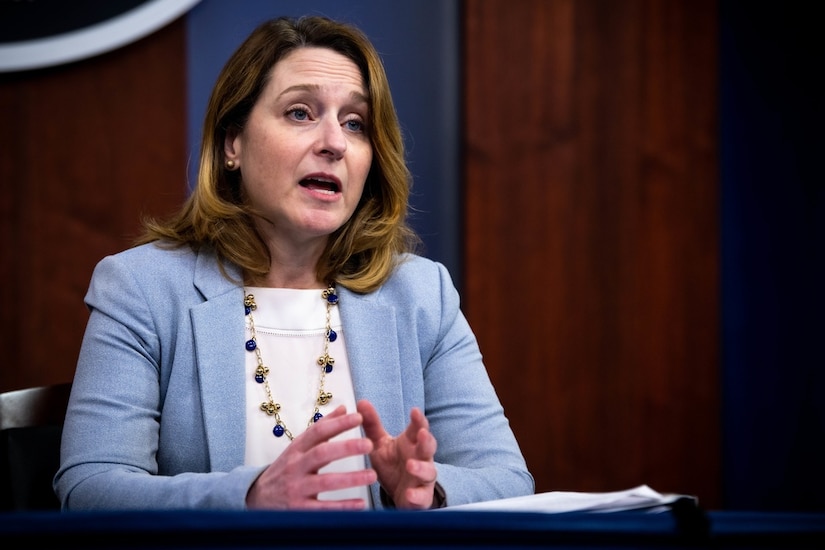
The Defense Department's industrial policy doesn't involve five-year plans or a command economy approach, but instead believes market signals and clear investment priorities can unlock the power of American entrepreneurship, technological breakthroughs and individual achievement.
DOD's research and procurement revolve around broad-based stakeholder coalitions and public-private partnerships, Hicks said, adding, "These have the ability to strengthen defense supply chains and catalyze economic growth across many communities."
Pennsylvania contributes a great deal to DOD's efforts, the deputy secretary said, and noted DOD invests more than $18 billion in the commonwealth, because "this state knows how to deliver."
"Companies in Pennsylvania manufacture a wide variety of products that are instrumental to critical DOD weapons systems, including munitions, missiles, artillery and explosives," Hicks said. "Here in Johnstown, you enable our radar, ground vehicle, armored weapons system capabilities and more."
The deputy secretary talked about how industry can continue supporting DOD's national security priorities, and what DOD can do to improve its partnerships in commerce to create and modernize its military force.
"To defend the nation, the United States must overcome a multitude of challenges," Hicks said. "The Department of Defense is prioritizing China as our long-term pacing challenge. Beijing has demonstrated increased military confidence and a willingness to take risks. Simultaneously, we face other advanced and persistent threats emanating from Russia, Iran, North Korea and other transnational and non-state actors."
We are all part of "a new age of technology," she emphasized. Many factors, such as the internet, additive manufacturing, analytics, robotics and more are transforming the way the DOD does business, she added.
"DOD is renewing its efforts to posture ourselves for the ‘future fight.' A vibrant defense industrial base will be critical to our success," Hicks said.
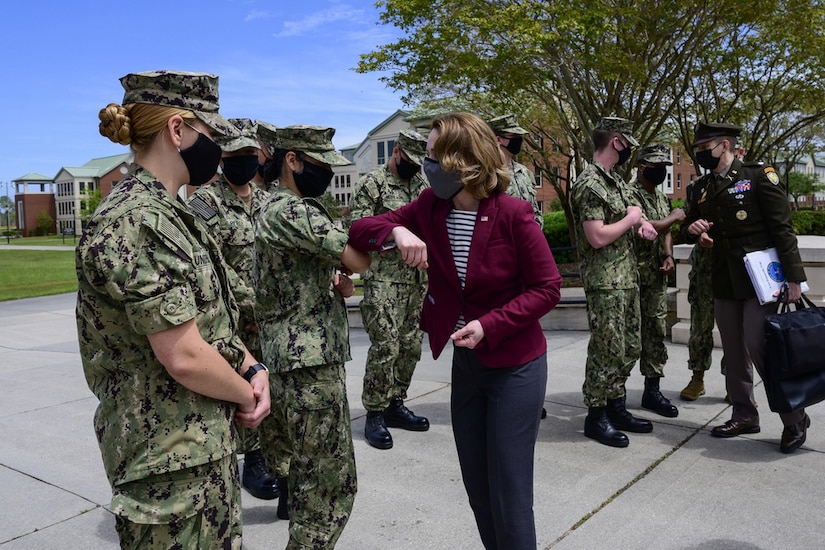
DOD wants to harness from the very best of America in sourcing a broad, diverse set of potential partners and suppliers — especially small businesses, she said.
And small businesses lead the nation in innovation — producing 16.5 times more patents than large patenting firms, Hicks said, adding that small businesses deliver rapid operational concepts, prototypes and demonstrators that allow DOD to respond with agility and efficiency.
DOD has made significant achievements in its work with small businesses, Hicks said: The department received an "A" from the Small Business Administration for meeting its contracting goals for seven straight years; DOD spent $80.3 billion with small businesses, with 45% of those awards going to disadvantaged or woman-owned businesses; and in the past 10 years, DOD dramatically increased small business spending in research and development by 83%. In that same time, DOD expanded spending in small business manufacturing by 28%, she added.
"Yet, over the past decade, small businesses in the defense industrial base shrunk by over 40%. The data shows that if we continue along the same trend, we could lose an additional 15,000 suppliers over the next 10 years," the deputy secretary said.
"I realize that doing business with DOD is not always easy. Because of our unique security requirements and procurement practices, we can be a challenging customer," Hicks said.
But DOD is committed to examining the administrative barriers small businesses face in working with the department and will take action to remove barriers where it can, she said.
"To do that effectively, we need your engagement," Hicks said. "This week, we are putting out a notice in the Federal Register seeking industry input on the barriers you face."
DOD has made significant strides to make its acquisition efforts more agile, but it needs industry to help the department understand where it can make additional progress, she noted. Such input will go into DOD's small business strategy, which Hicks said she intends to announce before the end of this year.
The deputy secretary also has created a DOD innovation steering group, which is focused on how DOD can better engage with innovators across the country — whether it's an established defense company or small business that's not familiar with DOD.
DOD is also reinvigorating its small business programs to provide streamlined, easier-to-use entry points into the defense marketplace, and is ensuring better long-term planning for its small business programs, Hicks said.
That means leveraging DOD's small-business program website as a single point of entry — at business.defense.gov — which contains an expanding set of toolkits to help companies get started, she added.
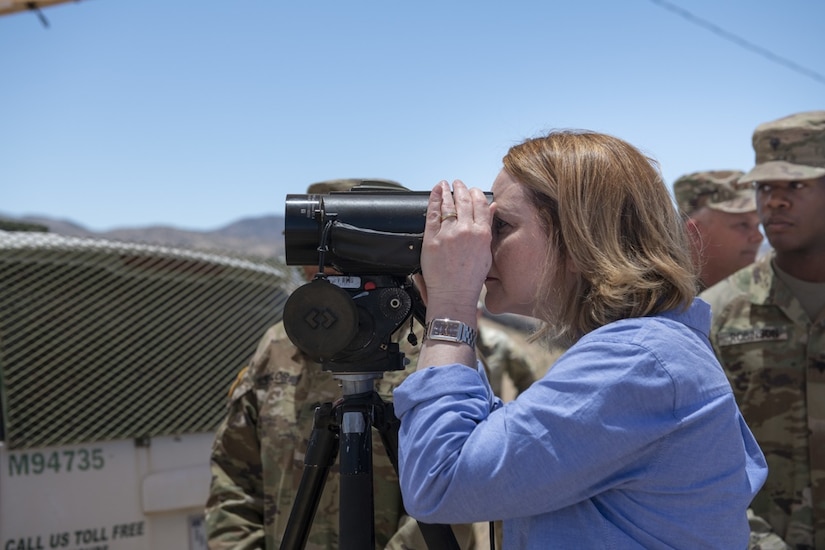
Additionally, DOD is enhancing its nationwide network of Procurement Technical Assistance Centers. DOD has 95 PTACs across the nation — including the Johnstown Area Regional Industries PTAC — that help businesses pursue contracts with DOD and other federal agencies, Hicks said.
"And we will continue to leverage programs like Small Business Innovation Research which, on average, commercializes $7 billion of small business innovations that are connected directly to our warfighting capabilities," the deputy secretary emphasized.
DOD is working alongside the White House, the Small Business Administration and other federal agencies to create more opportunities for onboarding small businesses on our contracting vehicles, Hicks said.
"This [Biden] administration will leverage the purchasing power of the federal government to ensure equity and inclusion of small businesses in our underserved communities," she added.
That includes increasing the share of dollars that the federal government spends on small, disadvantaged businesses — tripling the contracting goal to 15% by 2025, Hicks noted.
"Simultaneously, the secretary of defense and I will continue to increase outreach to underserved communities to foster additional potential connections, opportunities and investments," the deputy secretary said.
Additionally, DOD has made sure its fiscal year 22 budget request protects its mentor protégé program, which provides opportunities to both mentor and mentee firms, she said.
"Even as the department continues to focus on increased supply-chain resilience and innovation and modernization, we remain committed to working with local communities where we see opportunity," Hicks said.
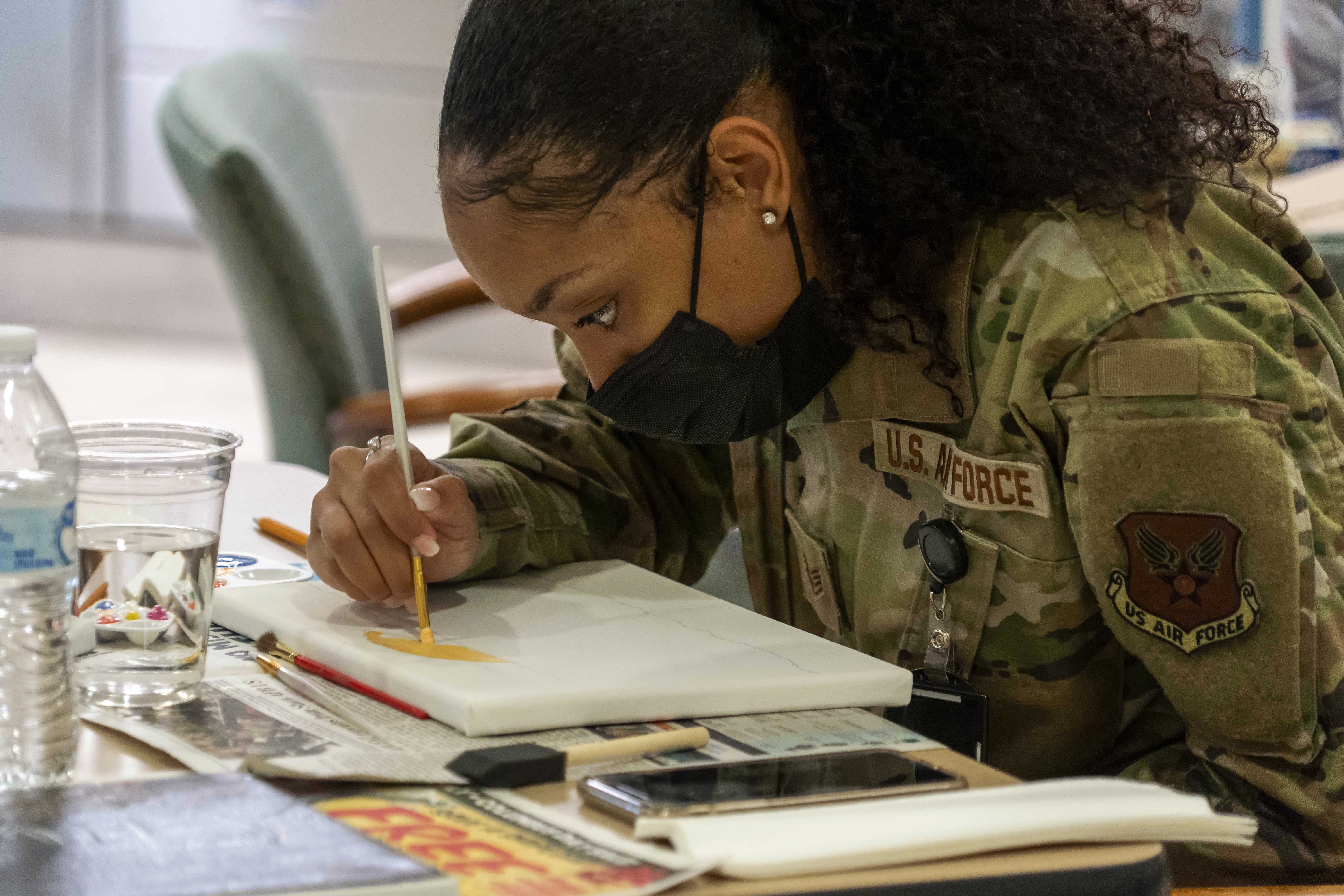
Air Force Staff Sgt. Brianna Dedeaux leads a painting session to help with relaxation and mindfulness at Dover Air Force Base, Del., Aug. 17, 2021.
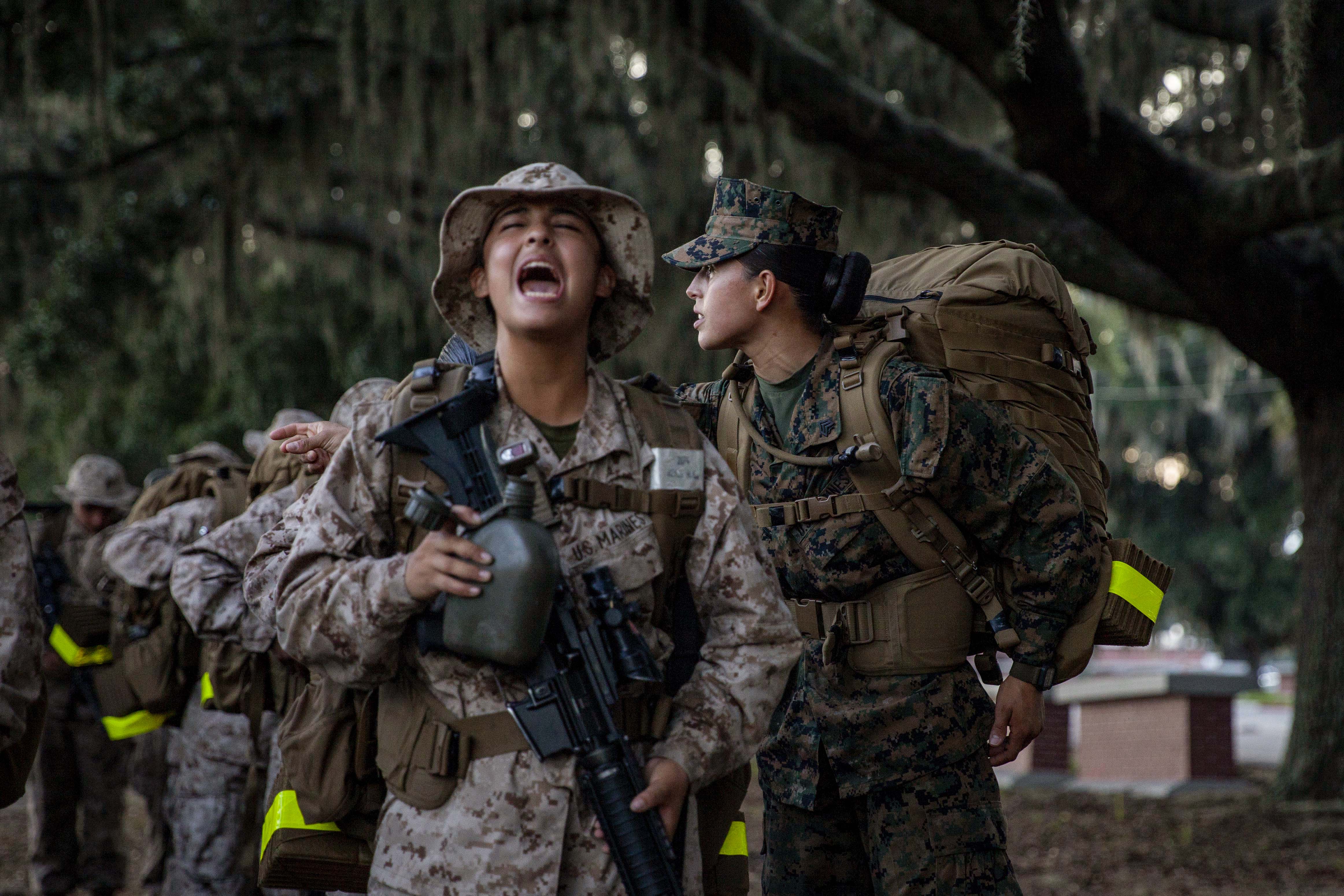
Marine Corps recruits conduct a 12K hike at Marine Corps Recruit Depot Parris Island, S.C., Aug. 21, 2021.

Navy Lt. Kashmeir Kirkpatrick performs rotary systems checks on an MH-60S Seahawk aboard the USS Carl Vinson in the Pacific Ocean, Aug. 25, 2021.
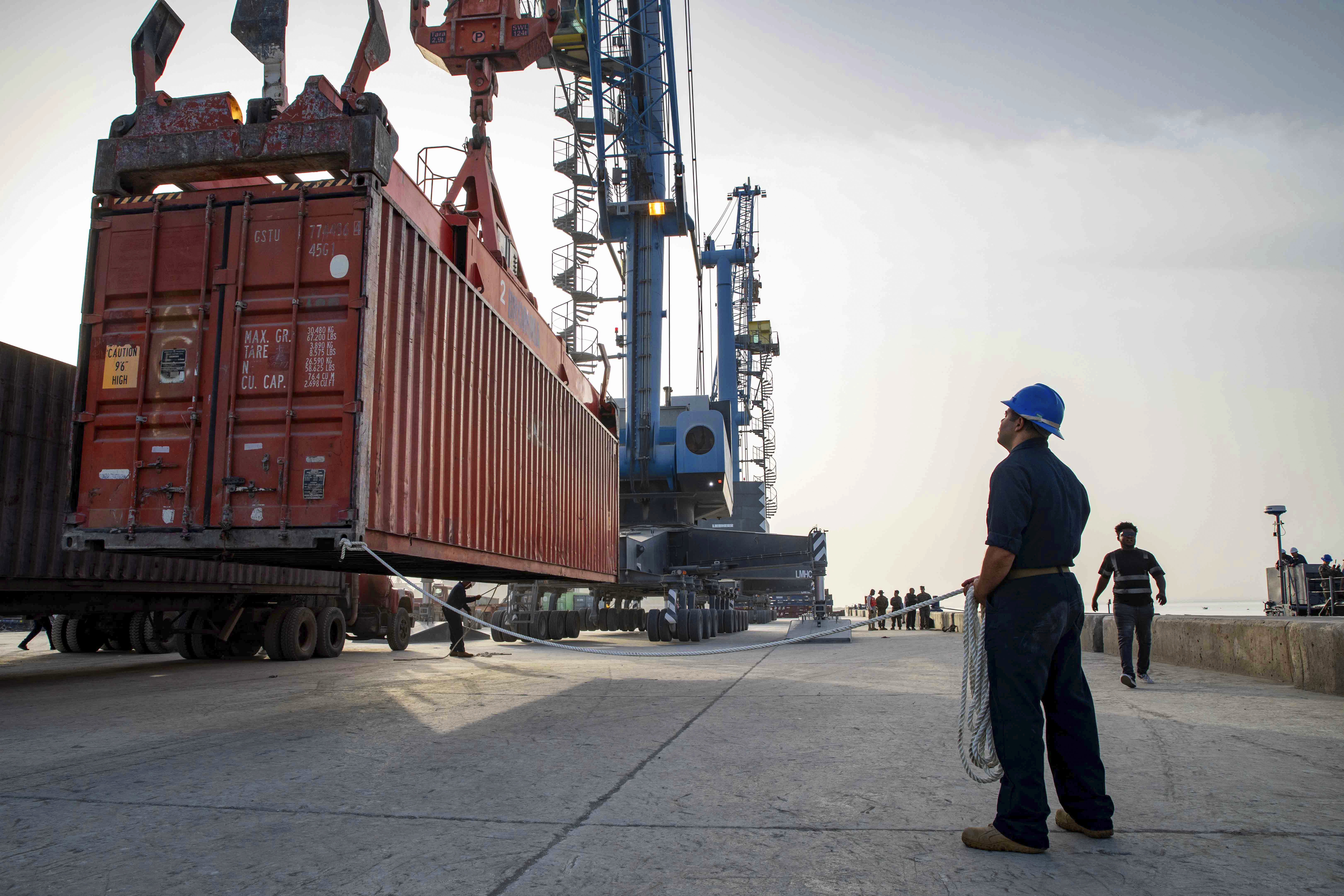
Navy Chief Warrant Officer 3 Elvis Acosta tends a safety line as a shipping container of humanitarian aid bound for Jérémie, Haiti, is loaded onto a landing craft assigned to the USS Arlington, Aug. 30, 2021, in Port-Au-Prince, Haiti. The Arlington is deployed to the U.S. Naval Forces Southern Command/U.S. 4th Fleet area to support humanitarian assistance and disaster relief efforts in Haiti following a 7.2 magnitude earthquake on Aug. 14.
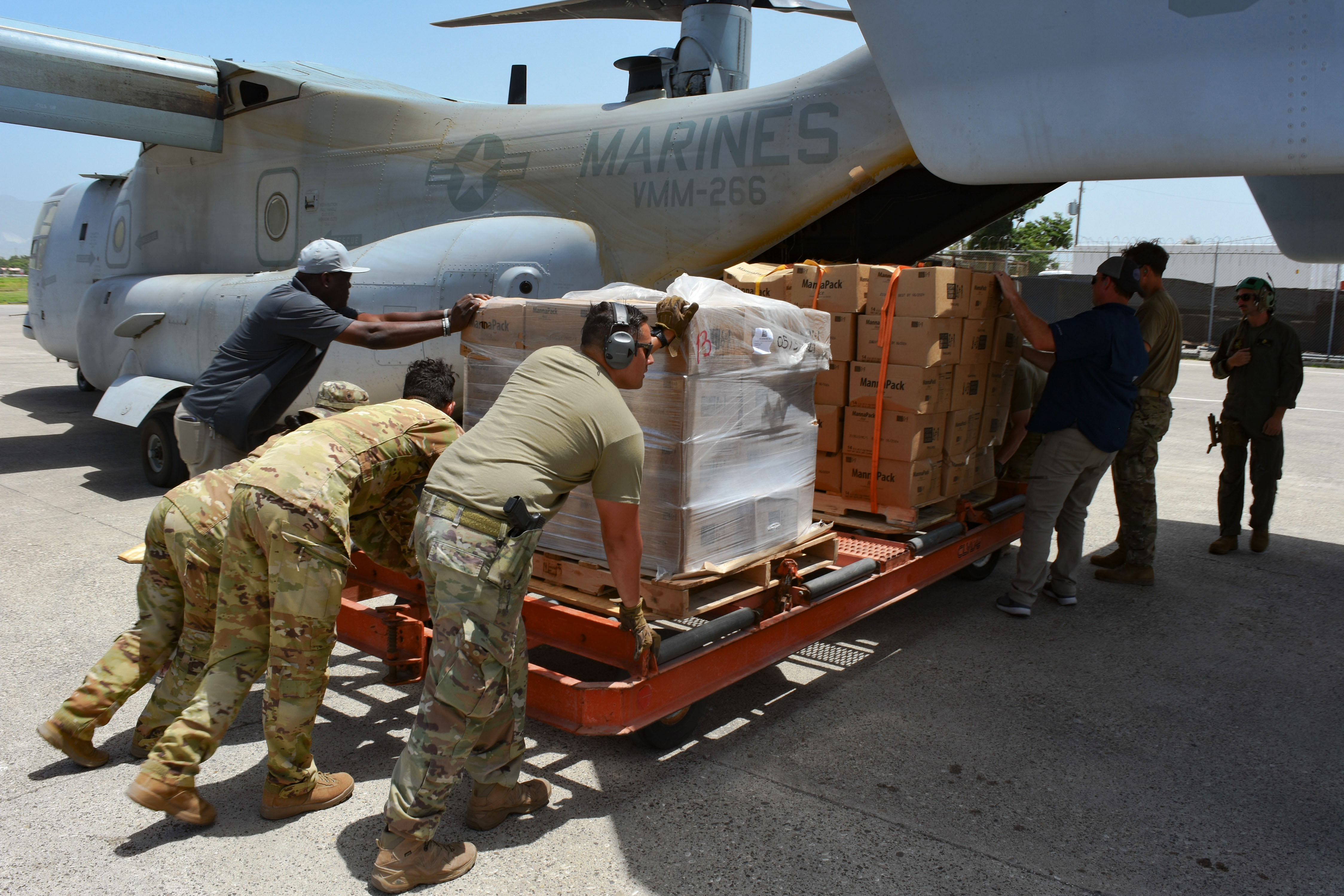
Service members assigned to Joint Task Force Haiti and U.S. Agency for International Development personnel load humanitarian aid onto an MV-22 Osprey in Port-au-Prince, Haiti, Aug. 28, 2021.

Air Force Senior Airman Joshuah Fonteno welds pieces of metal together at Aviano Air Base, Italy, Aug. 30, 2021.
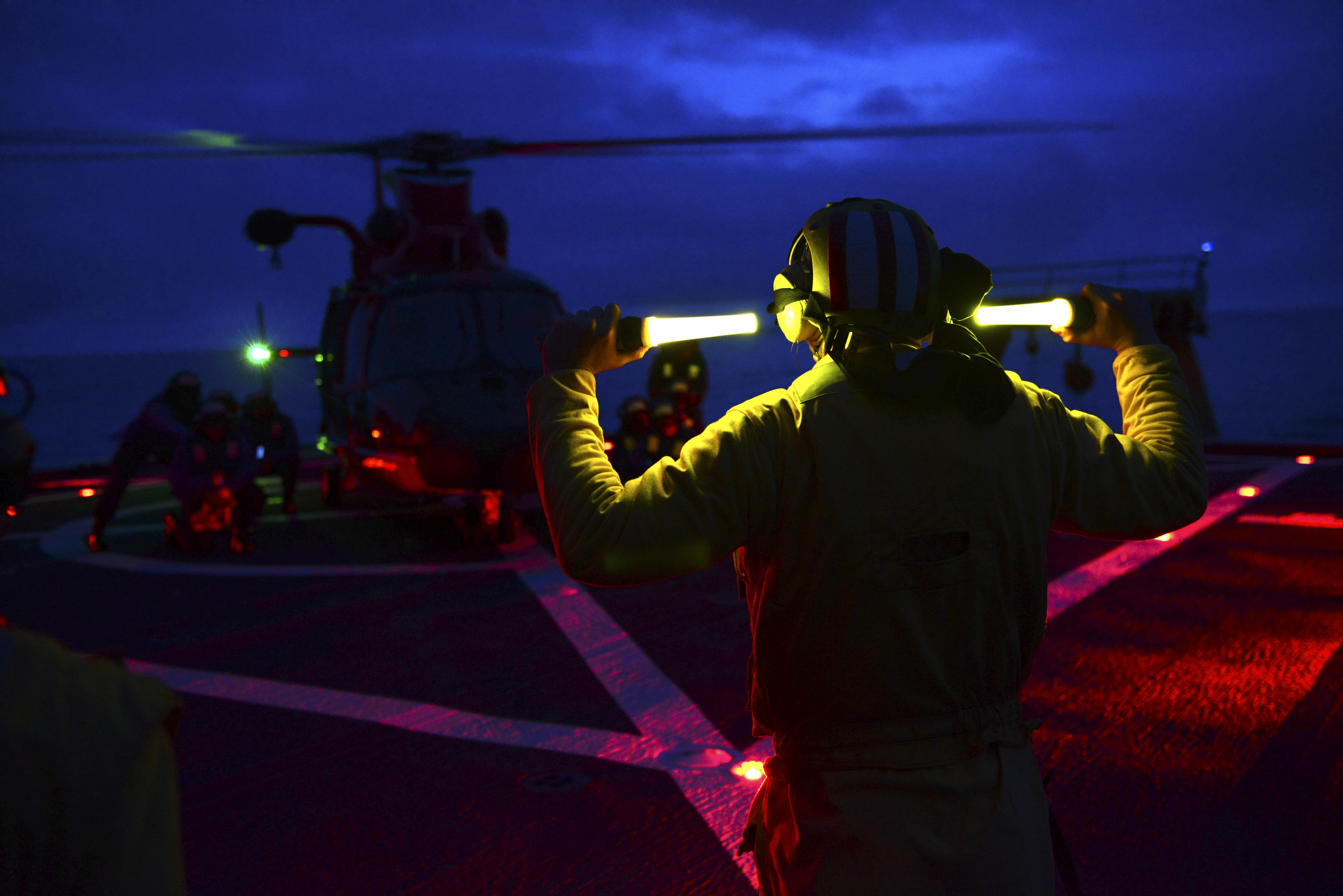
Navy Ensign Ryan Dunkle gives commands during joint flight training aboard the Coast Guard cutter Healy off the coast of Alaska, Aug. 25, 2021.
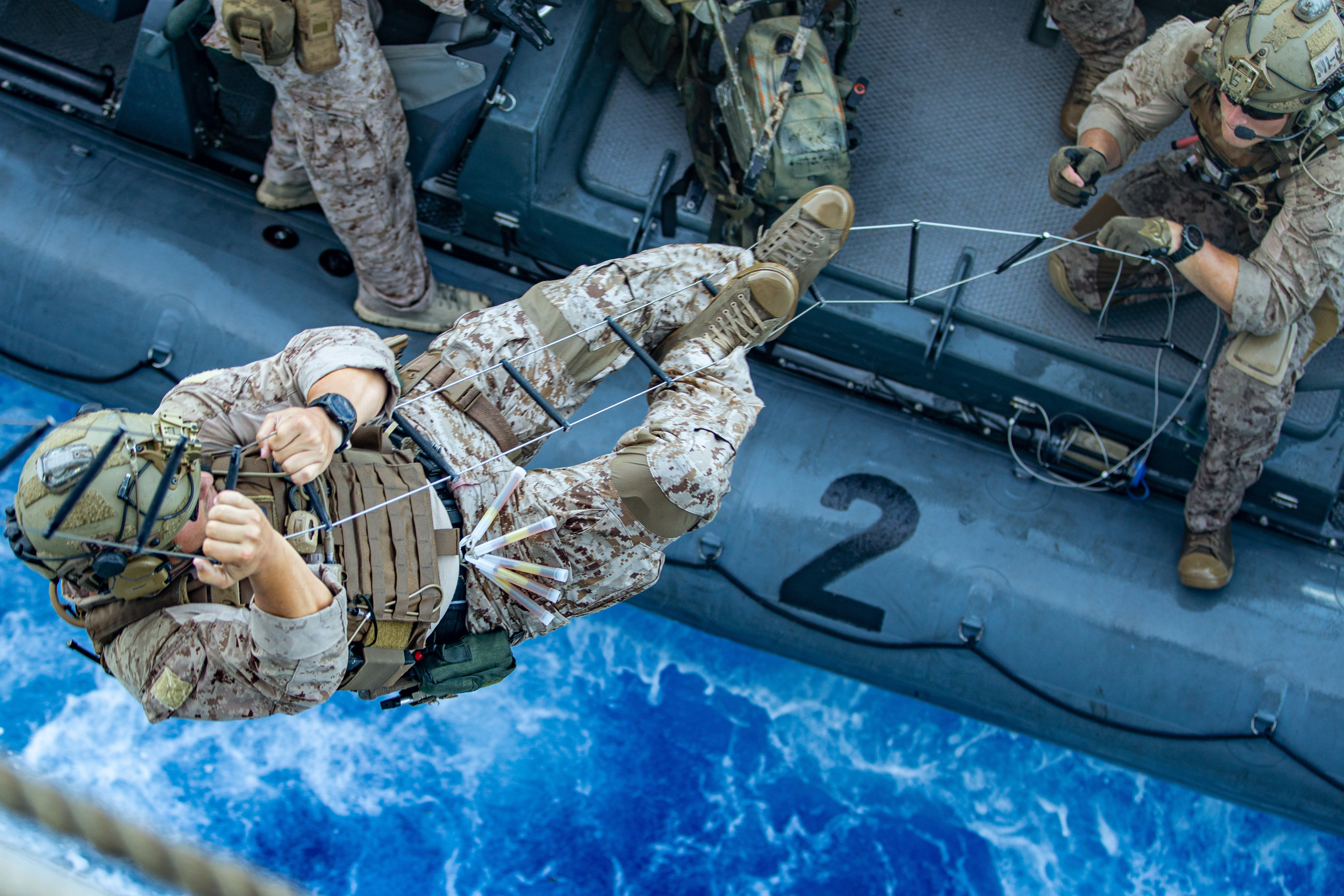
A Marine climbs a caving ladder during sustainment training aboard the USS Pearl Harbor in the Pacific Ocean, Aug. 15, 2021.

An MH-60S Seahawk helicopter prepares to land on the flight deck of the aircraft carrier USS Carl Vinson during operations in the Pacific Ocean, Aug. 23, 2021.
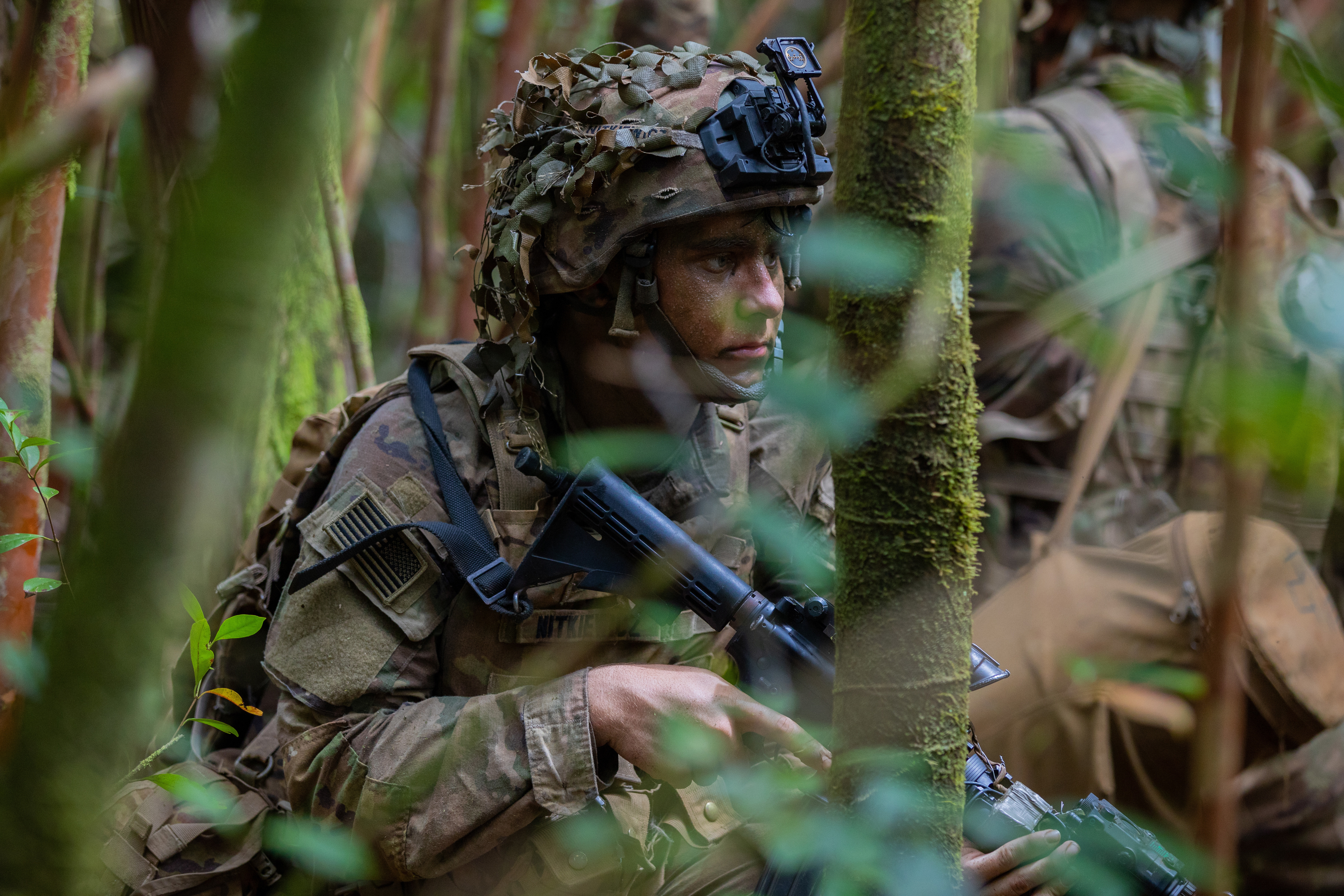
Soldiers conduct a company level air assault mission during Exercise Bronco Rumble at Keaukaha Military Reservation in Hawaii, Aug. 24, 2021. The mission allowed the brigade to test its ability to conduct operations over large distances, including neighboring islands, while still maintaining operational control.
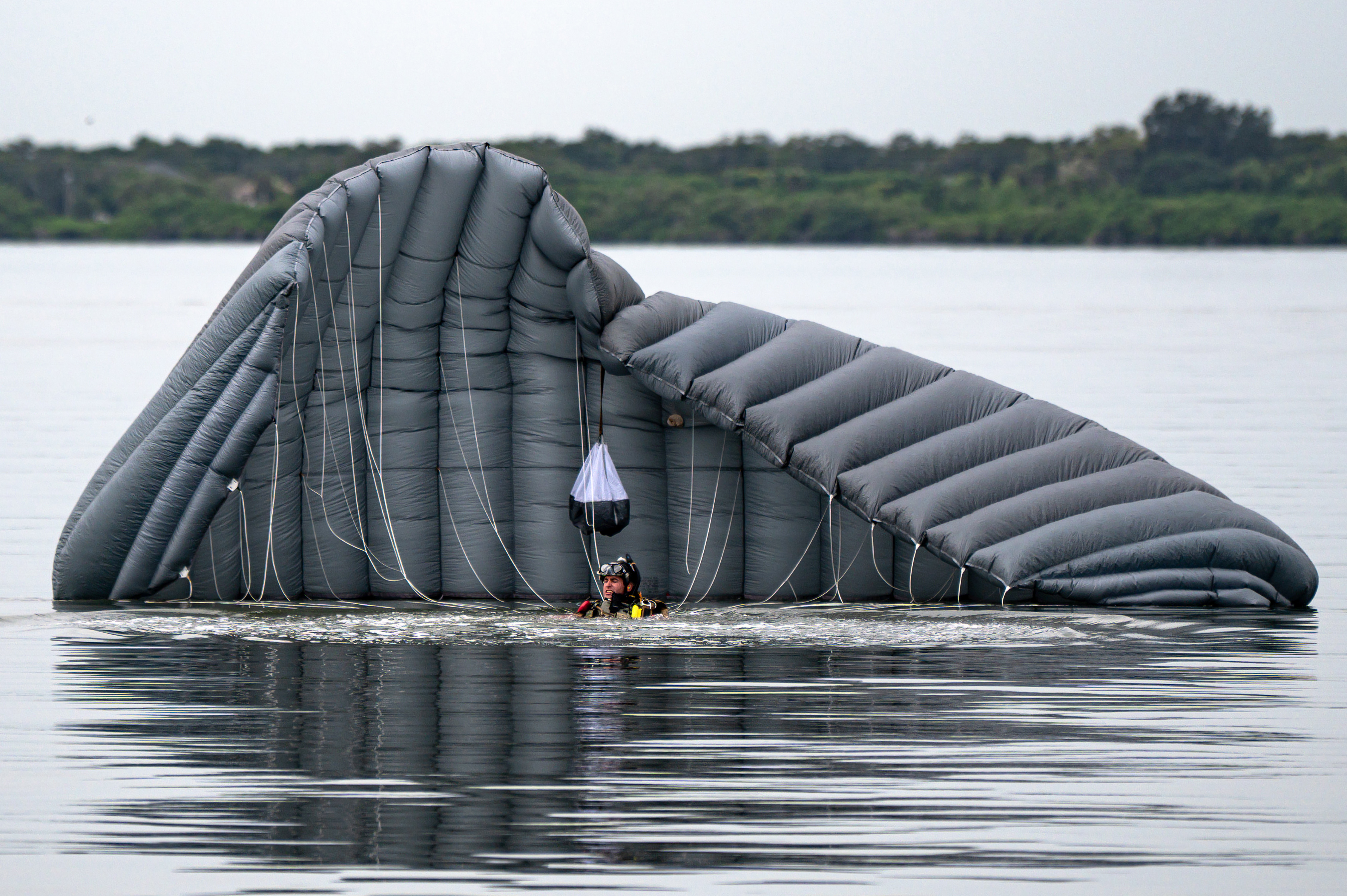
Air Force Staff Sgt. Tyler Huff treads water after landing in the Banana River near Patrick Space Force Base, Fla., Aug. 24, 2021. The training was designed to prepare pararescuemen for supporting the SpaceX and Boeing space flight programs.
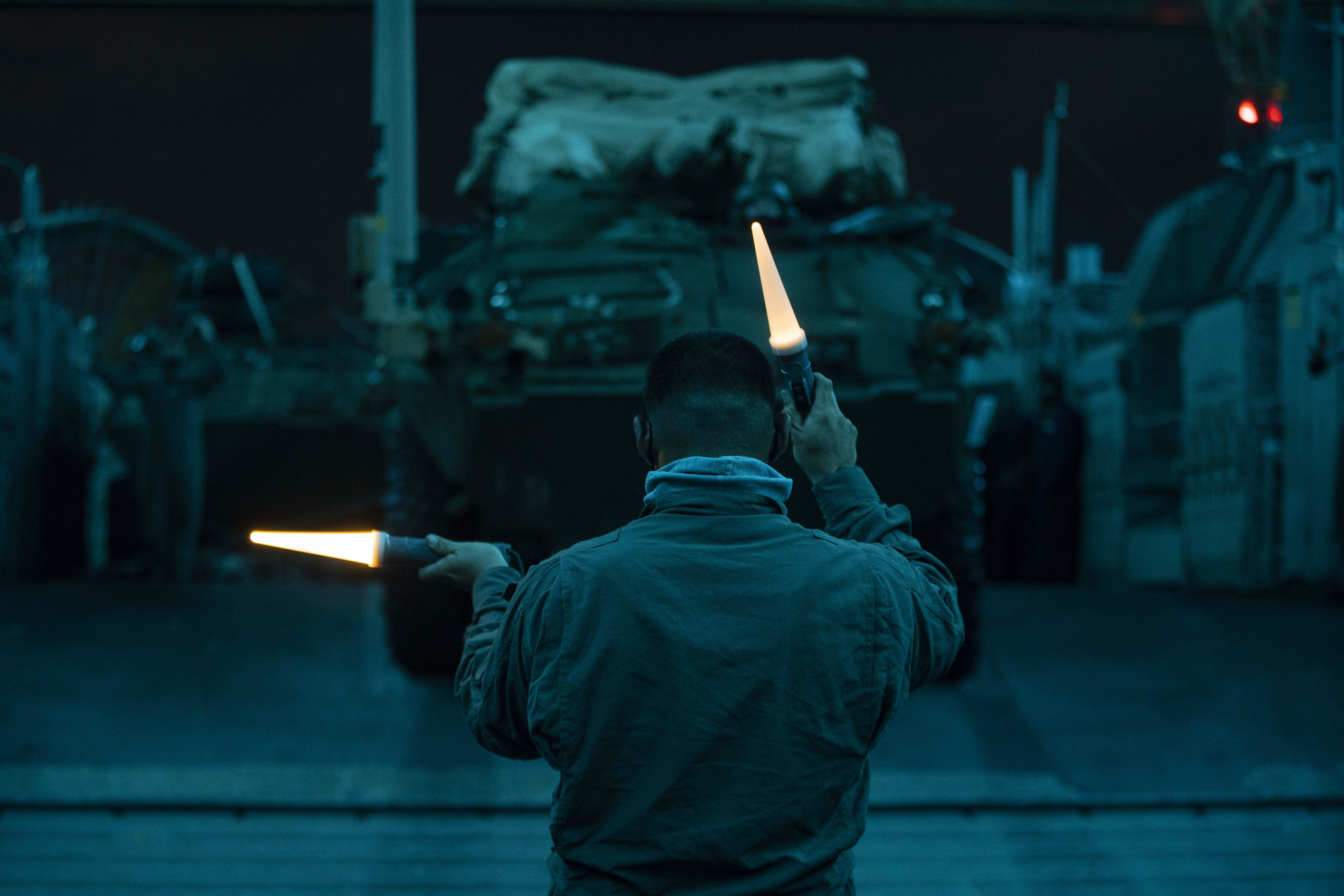
A sailor guides a light armored vehicle aboard the USS Portland in the Pacific Ocean, Aug. 21, 2021.
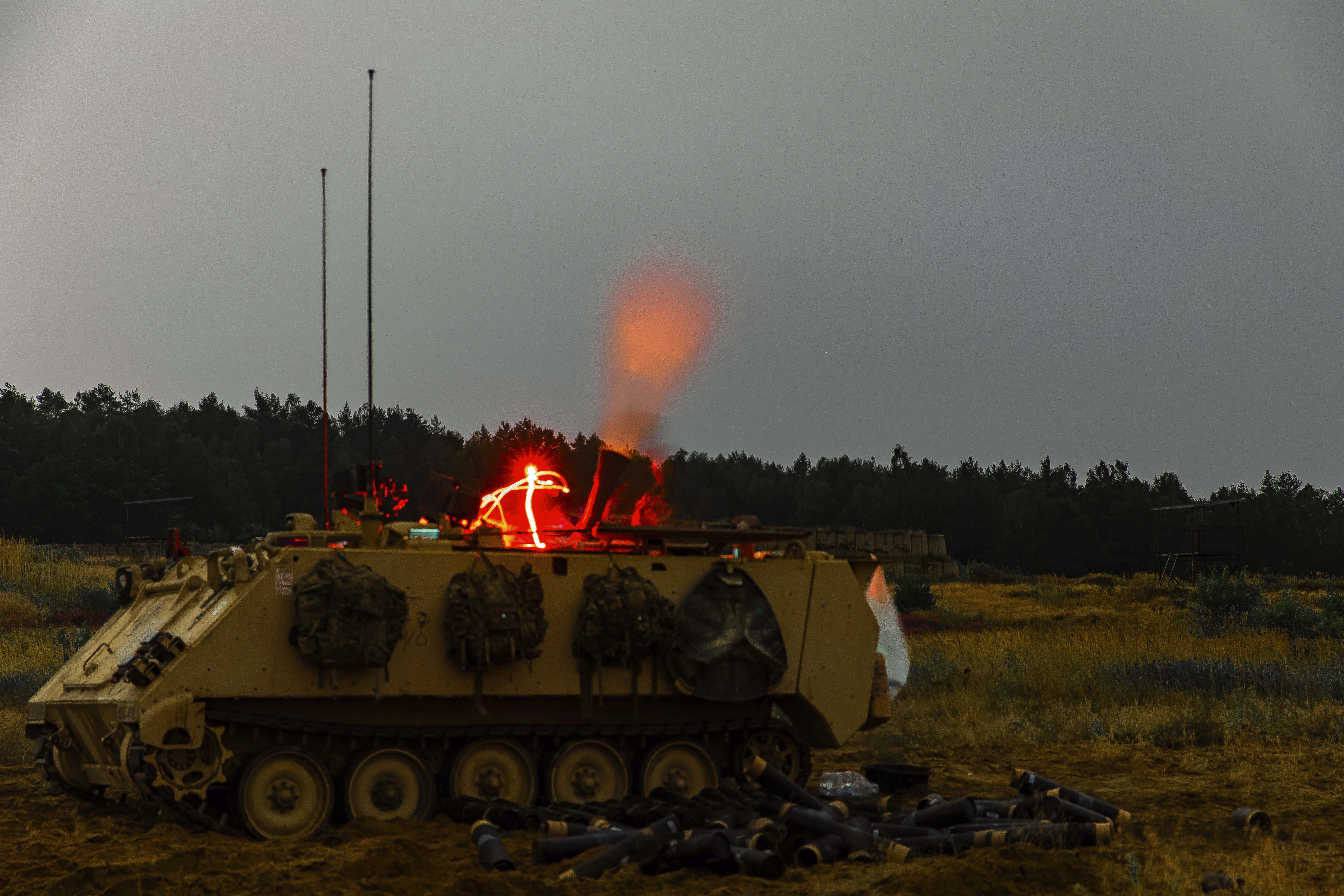
Soldiers fire 120 mm infrared illumination mortar rounds during live-fire training at Bucierz Range, Drawsko Pomorskie Training Area, Poland, Aug. 26, 2021.
Aug. 31, 2021 | , DOD News
The U.S. military is marking the 70th anniversary of its alliance with America's closest Pacific allies — Australia and New Zealand.
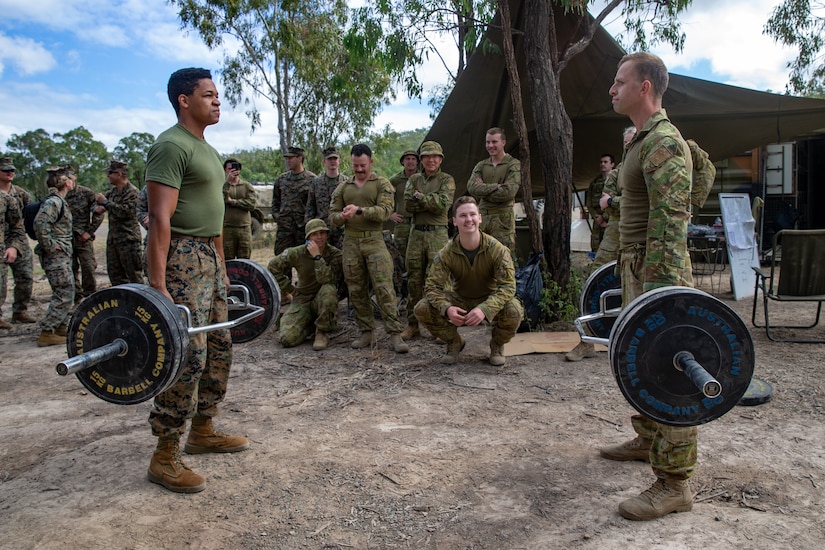
The Australia, New Zealand and United States Security Treaty was signed in San Francisco on Sept. 1, 1951. The pact formally committed the nations to protect the security of the Pacific together, but its roots go much deeper.
In 1907, U.S. President Theodore Roosevelt sent the Great White Fleet of U.S. warships around the world. The voyage of American battleships and other vessels marked the emergence of the U.S. Navy as a worldwide force to be reckoned with. The fleet visited New Zealand and Australia as part of its swing through the Pacific. Fully 10 percent of the population of the nation of New Zealand turned out to see the ships when they arrived in Auckland in August 1908. In Sydney Harbor later that month, around 500,000 Australians cheered the fleet as it arrived. Sydney, Australia, had a population of 600,000 at the time.
Fast-forward to July 4, 1918, and the muddy Hell of the Western Front in France. Australian and American soldiers went into battle against the Germans side-by-side in one of the first battles involving Americans.
In World War II, American, Australian and New Zealand forces fought alongside each other around the world. From the coast of Java to the sands of North Africa and from the jungles of New Guinea to the mountains of Italy, the nations cooperated. Guadalcanal in the Solomon Islands; Port Moresby, Papua New Guinea; the Coral Sea; Okinawa, Japan; Monte Cassino, Italy; Tunis, Tunisia; the Po Valley, Italy; and more were places hallowed by the shared sacrifices of the Kiwis, Aussies and Yanks.
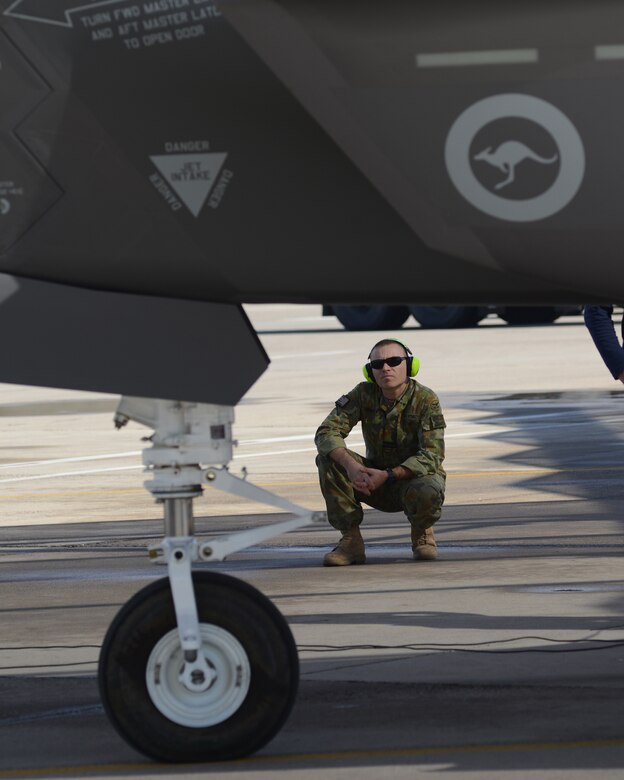
The three nations signed the pact in 1951 at a time when they were fighting alongside each other in Korea. Australian and Kiwis fought in Vietnam and were again operating together during Desert Storm.
When America was attacked on Sept. 11, 2001, Australian Prime Minister John Howard invoked the mutual defense portion of the treaty in support of the United States. Afghanistan, Iraq, Syria became places where the "mates" stood together once again.
The three nations share intelligence, plan together, exercise together, and operate together. It would be hard to find a peacekeeping or humanitarian operation where they don't cooperate.
Today, Australian and New Zealand officers work as integral members of the Joint Staff in the Pentagon and at U.S. Indo-Pacific Command in Hawaii. American officers man positions with Australian forces in the capital of Canberra.
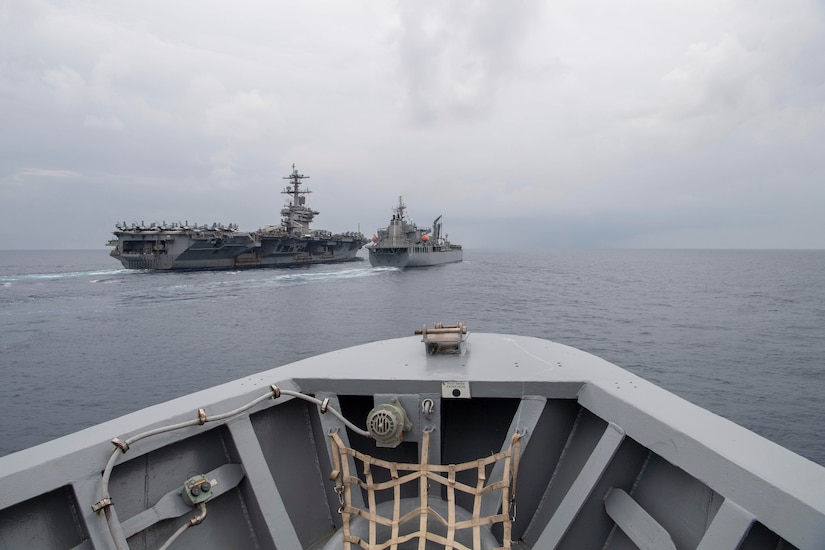
And the partnership continues to grow. U.S. Air Force personnel work closely with their Royal Australian Air Force counterparts. U.S. Marines — who rotate through the northern Australian city of Darwin — train constantly with their counterparts. U.S. Navy ships operate with New Zealand and Australian ships ensuring freedom of navigation throughout the Pacific. American, New Zealand and Australian special operators train together for a variety of missions.
The ANZUS Pact was important in 1951 when the world faced the threat of the Soviet Union. It remains important in 2021 when the international situation is becoming more and more complex.
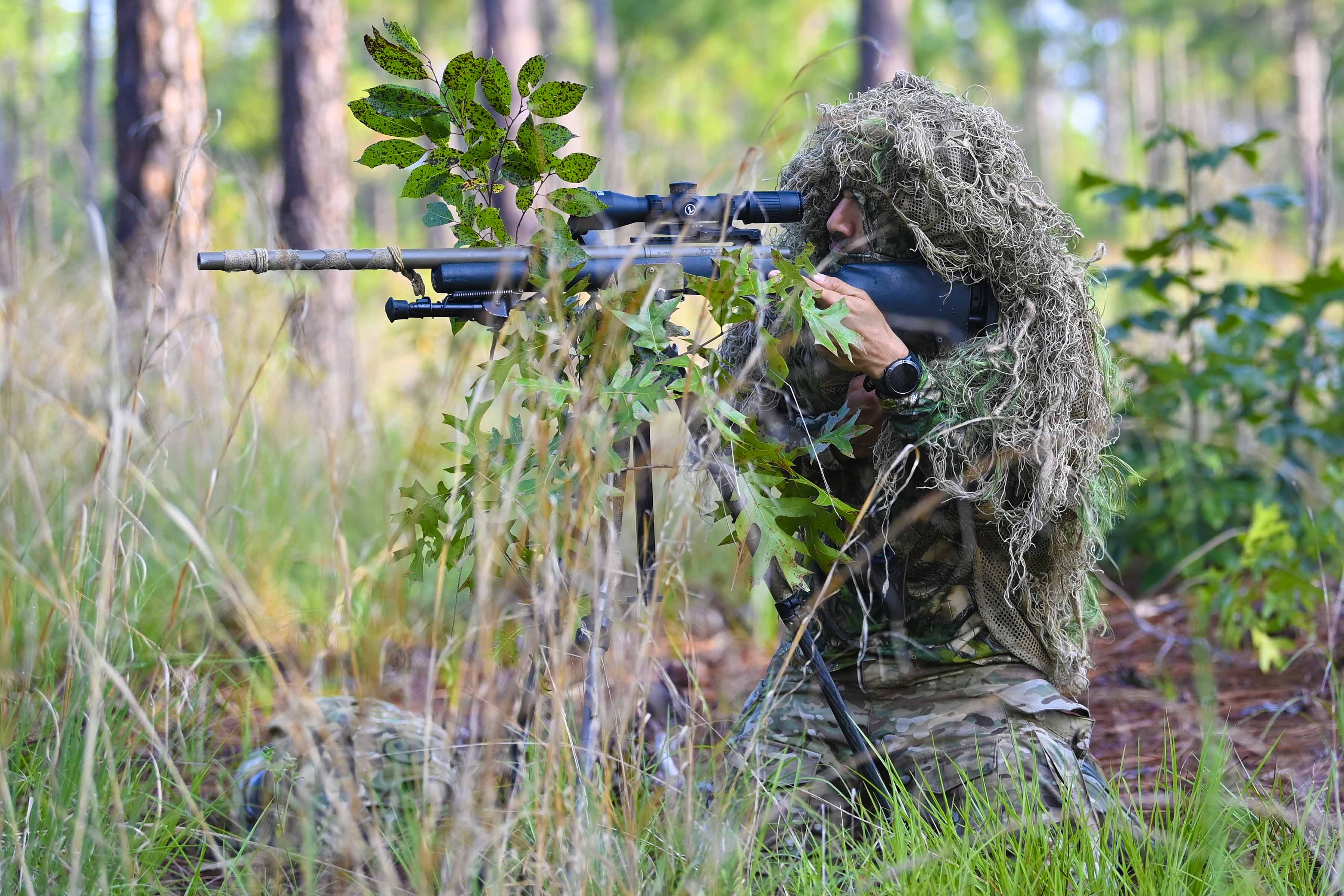
A student in the U.S. Army John F. Kennedy Special Warfare Center and School's Special Forces Sniper Course looks through a weapon scope during sniper training at Fort Bragg, N.C., Aug. 2, 2021.
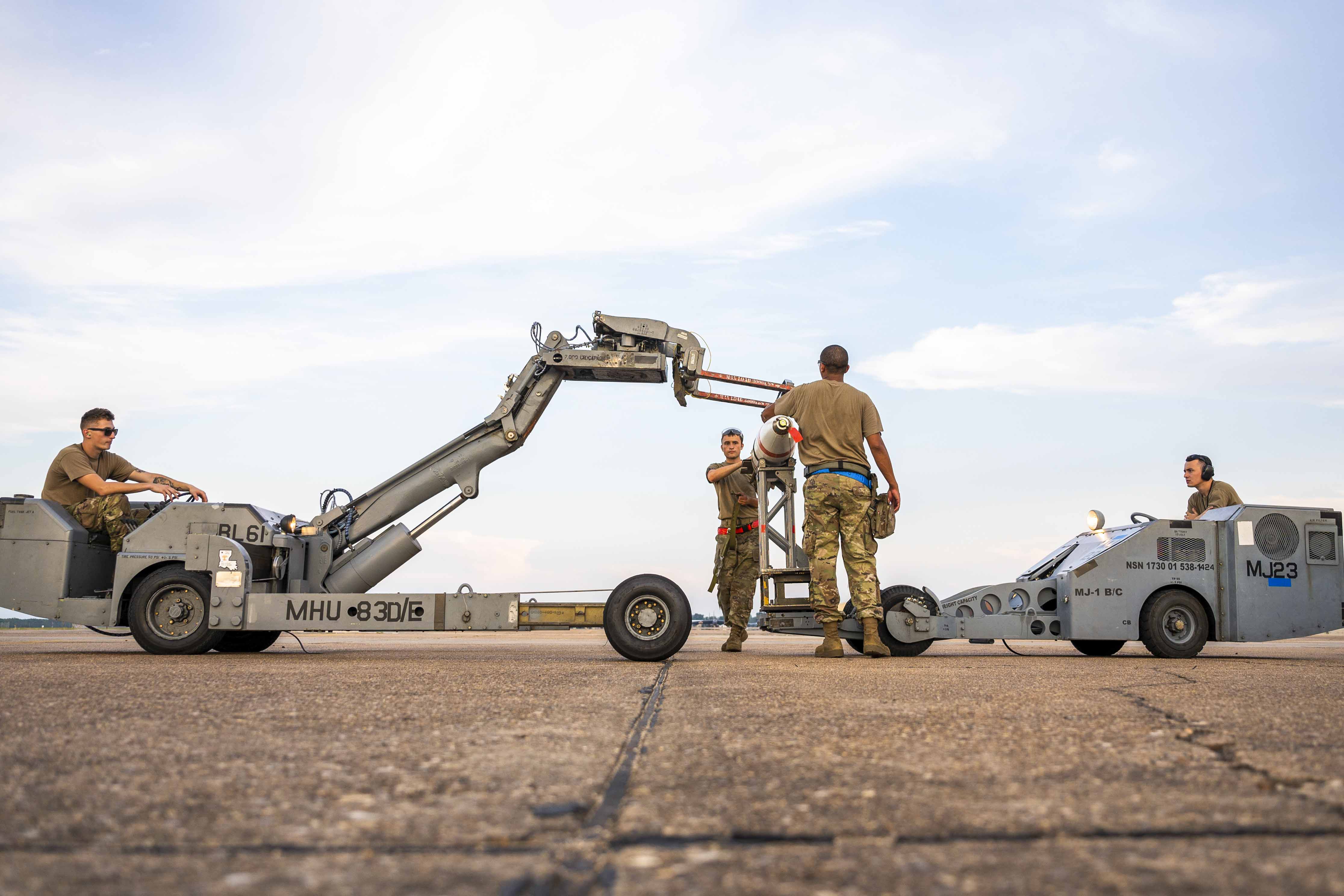
Airmen transfer an Mk-62 Quickstrike naval mine during a training exercise at Barksdale Air Force Base, La., Aug. 25, 2021.
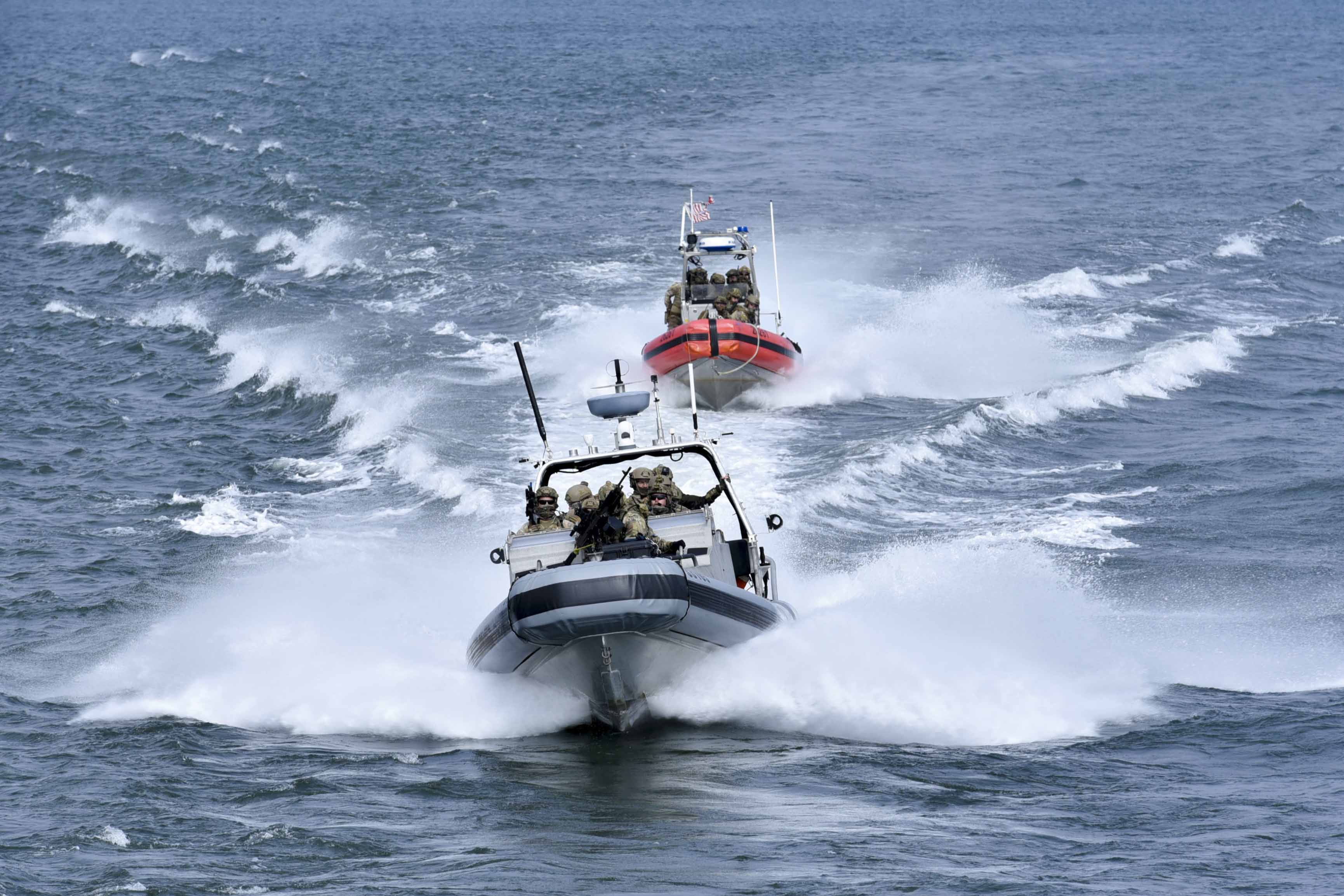
Coast Guardsmen participate in a law enforcement training exercise in the Columbia River, Aug. 26, 2021.

Marine Corps Cpl. Cole Strain loads a guided multiple launch rocket system into a launcher during Exercise Koolendong at Bradshaw Field Training Area, Australia, Aug. 29, 2021. The joint exercise with the Australian Defense Force tests ability to conduct a range of crisis response and contingency operations in the Indo-Pacific region.
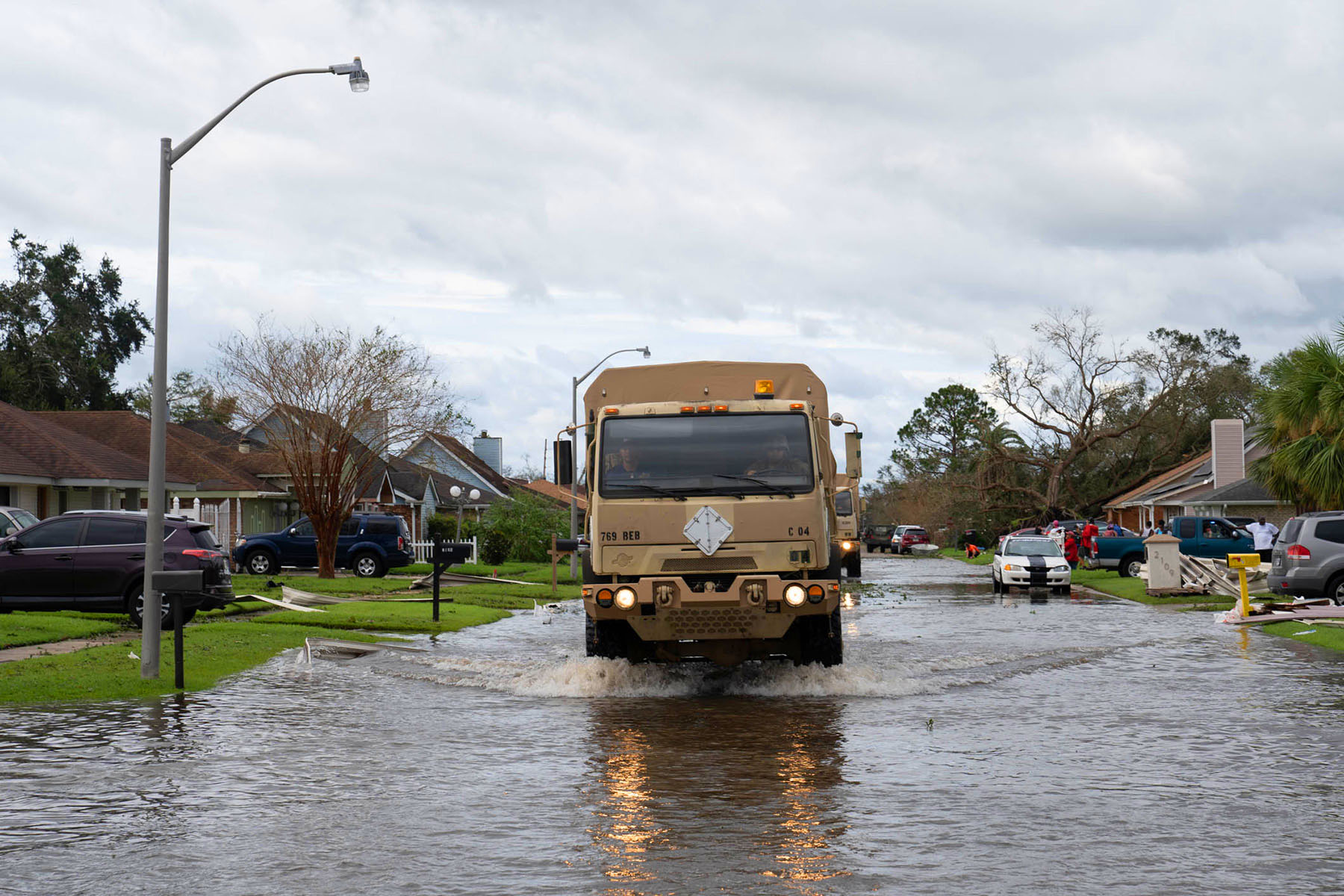
Louisiana National Guard members in high-water vehicles and boats work with St. John the Baptist Parish officials to rescue citizens stranded in their homes in the aftermath of Hurricane Ida in New Orleans, Aug. 30, 2021.

A soldier fires a weapon during a simulated deployment exercise at Fort Bragg, N.C., Aug. 10, 2021.
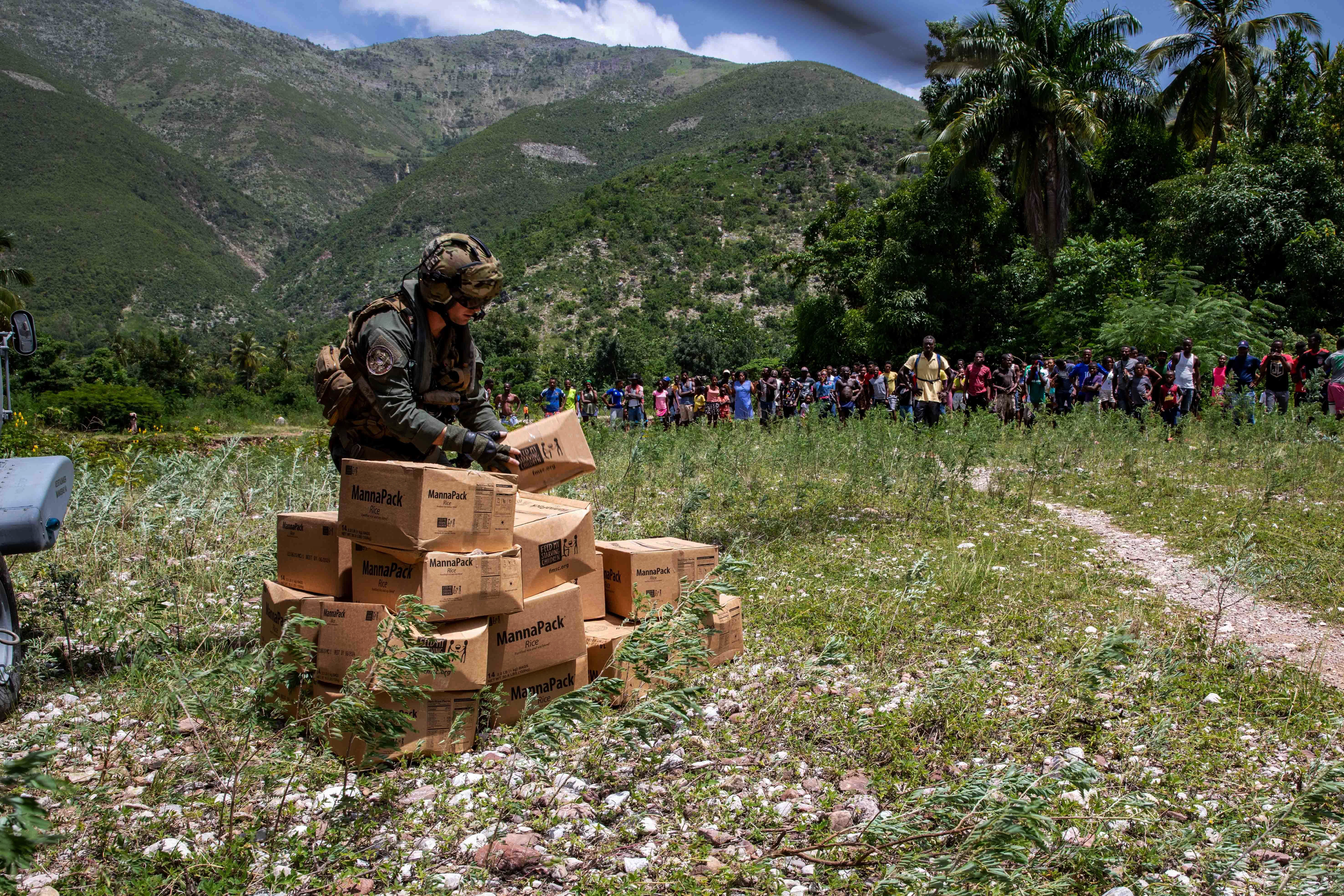
Navy Petty Officer 2nd Class Michael Kane unloads boxes of food in Saint-Louis-du-Sud, Haiti, Aug. 28, 2021, to support humanitarian assistance and disaster relief efforts following a 7.2 magnitude earthquake.
Aug. 31, 2021 | , DOD News
The United States will continue to urge Russia to end its illegal occupation of Ukraine's Crimea and looks to strengthen bonds between the United States and Ukraine, Secretary of Defense Lloyd J. Austin III told Ukraine's President Volodymyr Zelenskyy and Defense Minister Andrii Taranto at the Pentagon today.
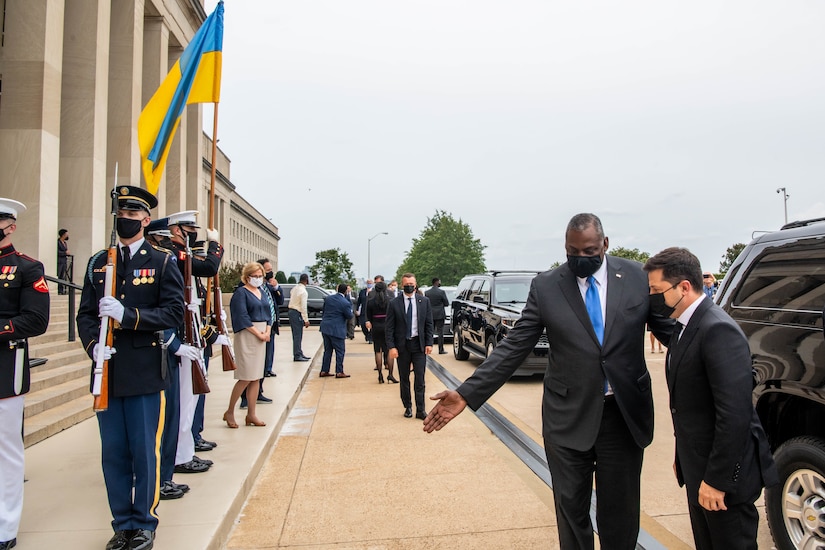
The Ukrainian delegation is in Washington to discuss the larger aspects of the U.S.-Ukraine relationship.
Ukraine is in conflict with Russia, which occupied and annexed Crimea
from Ukraine in 2014. Russia had agreed to respect the sovereignty of
all nations in Europe.
"Our support for Ukraine sovereignty, territorial integrity, and Euro-Atlantic aspirations is unwavering," Austin said at the beginning of the meeting. "We again call on Russia to end the occupation of Crimea and to stop perpetuating the conflict in eastern Ukraine, and we will continue to stand with you in the face of this Russian aggression."
The United States wants to strengthen the strategic defense partnership with Ukraine. To that end, Austin signed a strategic defense framework agreement with Taranto. The document is meant to enhance cooperation between the two nations and "advances shared priorities by ensuring that our bilateral security cooperation continues to help Ukraine counter Russian aggression," Austin said.
The agreement also looks at defense industry reforms in support of Ukraine's NATO membership aspirations, and deepening cooperation in such areas of Black Sea security, cyber defense, and intelligence sharing.
The two men will also sign a research, development, test and evaluation agreement. This will provide a framework for bilateral armaments and military technical cooperative projects.
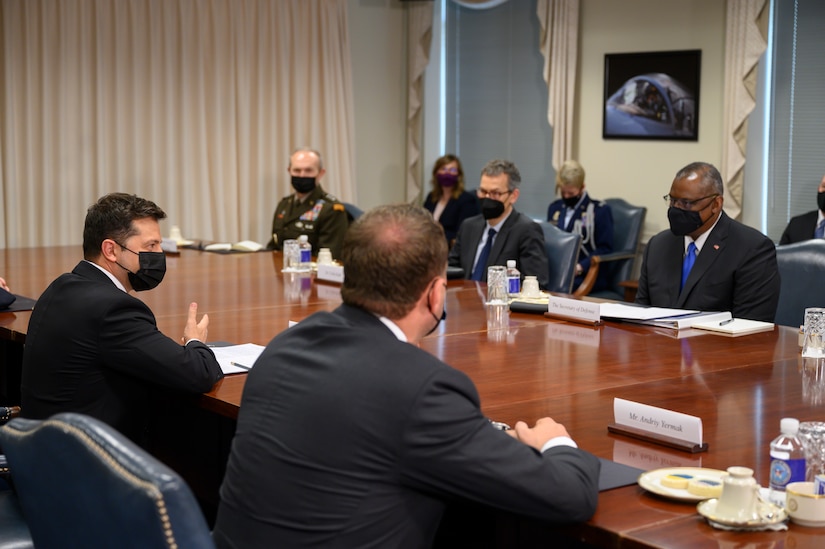
Since the Russia aggression, the United States has provided Ukraine with more than $2.5 billion in aid. This year, that includes Javelin missiles.
Austin said the United States remains committed to Ukraine, and he thanked the nation for its help in Afghanistan and in the evacuation effort. Austin told Ukraine's president that he looks forward to a more secure, prosperous, democratic and free Ukraine.
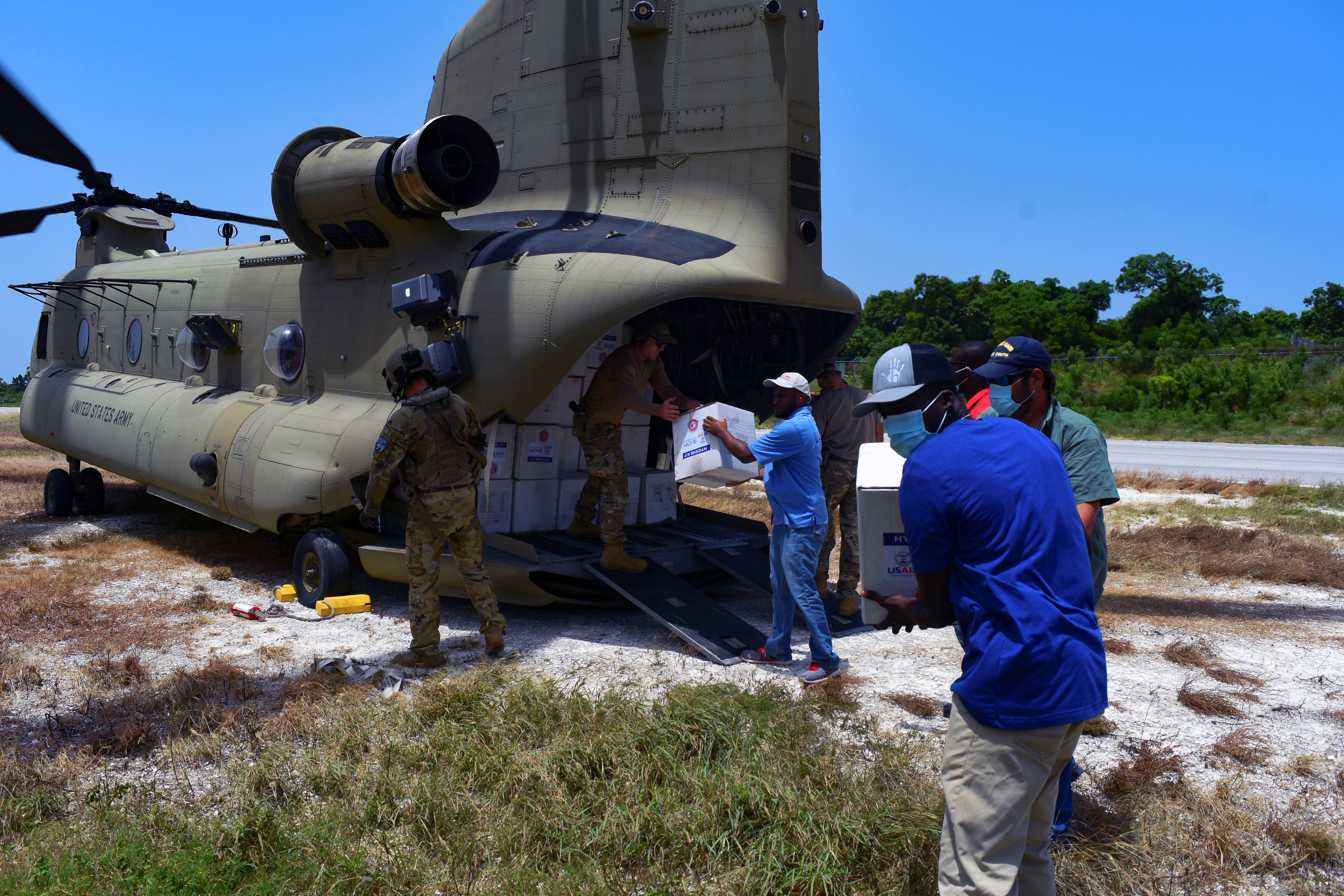
Haitians, U.S. service members assigned to Joint Task Force Haiti and U.S. Agency for International Development personnel unload humanitarian aid off a CH-47 Chinook in Jeremie, Haiti, Aug. 28, 2021. The task force and USAID have delivered more than 310,000 pounds of humanitarian aid since an earthquake struck the area on Aug. 14.
Aug. 31, 2021
Today marks a special milestone for the U.S. - Australian Alliance. Seventy years ago, we formally established the “Unbreakable Alliance” that continues to provide stability and security for the Indo-Pacific and beyond. While the Alliance itself is 70 years old, Australia and the United States have fought side by side in every major conflict since World War I.
The United States will never forget that twenty years ago, on September 11, Australia invoked, for the first time in its history, the collective defense article of the ANZUS Treaty. Once again, Australia sent troops to fight shoulder-to-shoulder with the United States and other allies and partners through nearly 20 years of combat. It is a testament to the enduring nature of “Mateship.” Our Australian allies stood by with us to the very end of our presence in Afghanistan and the United States will be forever grateful.
As we celebrate the signing of the ANZUS Treaty and the U.S. - Australian Alliance, we are also setting our sights on the future. Our shared interests and values ensure that our Alliance will continue to advance our shared vision for a Free and Open Indo-Pacific.
In a few short days, I look forward to hosting Australian Minister for Defence Dutton at the Pentagon, followed by this year’s Australia - United States Ministerial (AUSMIN) consultations here in Washington, D.C. Together, we will work to ensure that our Alliance continues to move forward with strength and purpose for decades to come.
Aug. 31, 2021
Pentagon Press Secretary John F. Kirby provided the following readout:
Secretary of Defense Lloyd J. Austin III met today with Ukrainian President Volodymyr Zelenskyy and Minister of Defence Andrii Taran to reaffirm the strategic defense partnership between the United States and Ukraine.
Secretary Austin reiterated unwavering U.S. support for Ukraine’s sovereignty, territorial integrity, and Euro-Atlantic aspirations. He condemned Russia’s continued occupation of Crimea and perpetuation of the conflict in eastern Ukraine.
With President Biden’s approval of a new $60 million package for additional Javelin anti-armor systems and other defensive lethal and non-lethal capabilities, the United States has committed more than $400 million in security assistance to Ukraine this year alone.
The leaders also discussed the importance of maintaining progress on defense and defense industry reforms in line with NATO principles and standards and exchanged perspectives on Black Sea security.
Secretary Austin and Minister Taran concluded the meeting with a signing ceremony of the U.S.-Ukraine Strategic Defense Framework , which enhances our strategic defense partnership and advances shared priorities, as well as a Research, Development, Test, and Evaluation Projects Agreement that will provide a framework for pursuing bilateral armaments and military-technical cooperation through cooperative projects.
Aug. 31, 2021
Pentagon Press Secretary John F. Kirby provided the following readout:
Secretary of Defense Lloyd J. Austin III spoke with German Federal Minister of Defense Annegret Kramp-Karrenbauer to discuss the end of U.S operations in Afghanistan. The Secretary thanked Minister Kramp-Karrenbauer for Germany’s support to evacuation operations in Afghanistan, and for Germany’s continuing support to evacuation operations ongoing at U.S. military facilities in Germany. They agreed to continue to closely collaborate as the situation evolves.
Aug. 31, 2021
On August 31, 2021, Secretary of Defense Lloyd J. Austin III held a phone call with Canadian Minister of National Defence Harjit S. Sajjan to express appreciation for Canada’s close cooperation during the operation to evacuate at risk Afghans and the drawdown of coalition forces from Afghanistan.
Secretary Austin recognized Canada’s contributions to one of the largest airlifts in history. Both leaders expressed their shared commitment to help vulnerable Afghans.
Aug. 31, 2021
Pentagon Press Secretary John F. Kirby provided the following readout:
On August 31, Secretary of Defense Lloyd J. Austin III spoke with Norwegian Minister of Defense Frank Bakke-Jensen to convey appreciation for Norway’s contributions to evacuation and retrograde operations from Afghanistan, in particular the critical role of Norway’s field hospital at Hamid-Karzai International Airport in treating the wounded, including U.S. service members, following the August 26 terrorist attack at Abbey Gate.
The leaders discussed the close and longstanding cooperation between U.S. and Norwegian forces over the twenty-year mission in Afghanistan and reaffirmed the strong bilateral defense relationship.
Aug. 31, 2021
Pentagon Press Secretary John F. Kirby provided the following readout:
Secretary of Defense Lloyd J. Austin III spoke with Amir Tamim bin Hamad Al Thani of Qatar to reaffirm the strength of the U.S.-Qatar bilateral relationship, and to discuss the situation in Afghanistan.
Secretary Austin conveyed appreciation for Qatar’s critical support to U.S. operations in Afghanistan, including its generous help in facilitating the safe transit of U.S. citizens, Embassy Kabul personnel, and at-risk Afghans through Qatar. Both leaders pledged to continue cooperation on regional security issues.
Aug. 31, 2021
Pentagon Press Secretary John F. Kirby provided the following readout:
Secretary of Defense Lloyd J. Austin III spoke with Kuwaiti Minister of Defense, His Excellency Sheikh Hamad Jaber Al-Ali Al-Sabah to reaffirm the strength of the U.S.-Kuwait partnership and to discuss the situation in Afghanistan.
The Secretary expressed gratitude for Kuwait’s generous role as a transit location as the U.S. military conducted the evacuation and retrograde mission from Afghanistan. Both leaders pledged to continue cooperation on regional security issues.
Aug. 31, 2021
Pentagon Press Secretary John F. Kirby provided the following readout:
Secretary of Defense Lloyd J. Austin III spoke with Bahrain Crown Prince, His Royal Highness Salman bin Hamad Al Khalifa to reaffirm the strong U.S.-Bahrain partnership and to discuss the situation in Afghanistan.
The Secretary expressed thanks for Bahrain’s critical role as a transit location as the U.S. military conducted the evacuation and retrograde mission from Afghanistan. Both leaders pledged to continue cooperation on regional security issues going forward.
Aug. 31, 2021
Pentagon Press Secretary John F. Kirby provided the following readout:
On August 31, Secretary of Defense Lloyd J. Austin III spoke by phone with Abu Dhabi Crown Prince Mohammed Bin Zayed Al Nahyan of the United Arab Emirates (UAE) to reaffirm the importance of the U.S.-UAE partnership and to discuss the situation in Afghanistan.
Secretary Austin conveyed his appreciation for the UAE’s instrumental role as a transit location as the U.S. military conducted the evacuation and retrograde mission from Afghanistan. The two leaders pledged to continue cooperation on shared regional security objectives.
Aug. 31, 2021
The Office of the Senior Enlisted Advisor to the Chairman of the Joint Chiefs of Staff (OSEAC) announced the following assignment:
Army Command Sgt. Maj. Corey J. Perry, currently assigned as the command sergeant major for the U.S. Army Installation Management Command’s Training Directorate, Fort Eustis, Virginia, has been selected to replace Navy Command Master Chief Laura S. Nunley as senior enlisted advisor, Defense Intelligence Agency, Washington, D.C.
Army Maj. Gen. William D. "Hank" Taylor spoke on this and other topics during a press briefing this morning.

The humanitarian assistance operation comes in the wake of two natural disasters that recently hit the Caribbean island.
First, on Aug. 14, a magnitude 7.2 earthquake struck the southwest area of Haiti, causing widespread damage, killing over 2,000, and injuring many more.
Haiti also took a direct hit from Tropical Storm Grace on Aug. 16, resulting in flooding and compounding the damage from the earthquake.
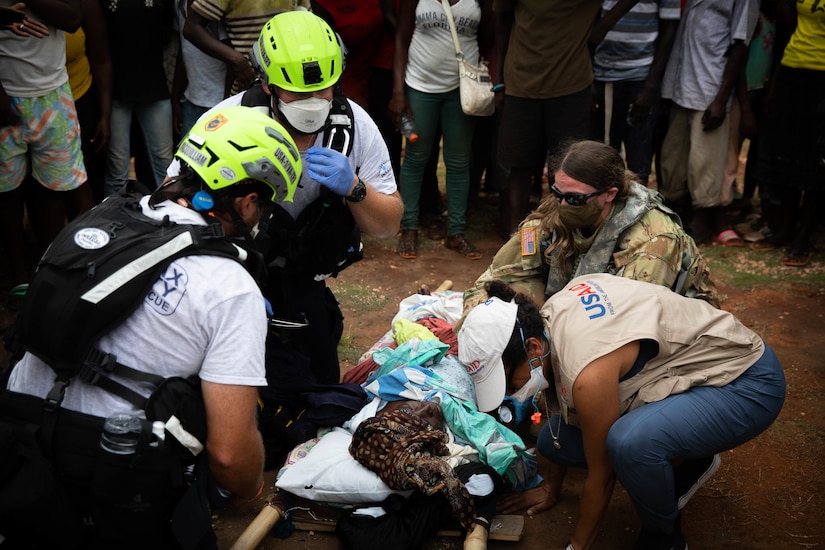
Air Force Lt. Col. Ken Hoffman, a Defense Department spokesman, said that as of this morning, the Joint Task Force Haiti team has saved or assisted in saving more than 475 lives. The JTF is composed of personnel, equipment, ships and aircraft from the U.S. Navy, Marine Corps, Army and Coast Guard.
The U.S. military "has been working around the clock to save lives and deliver aid since Aug. 14," and will continue with that mission, supporting the U.S. Agency for International Development and the Bureau for Humanitarian Assistance, as well as working with international partners and allies to provide life-saving aid and assistance to the people of Haiti, Hoffman said.

Navy Lt. Cmdr. Leonard Aranas, a critical care nurse with the Navy Medicine Readiness and Training Command Bethesda in Maryland, replaces an oxygen tank for a COVID-19 patient at Ochsner Lafayette General Medical Center during the COVID-19 response operations in Lafayette, La., Aug. 26, 2021.
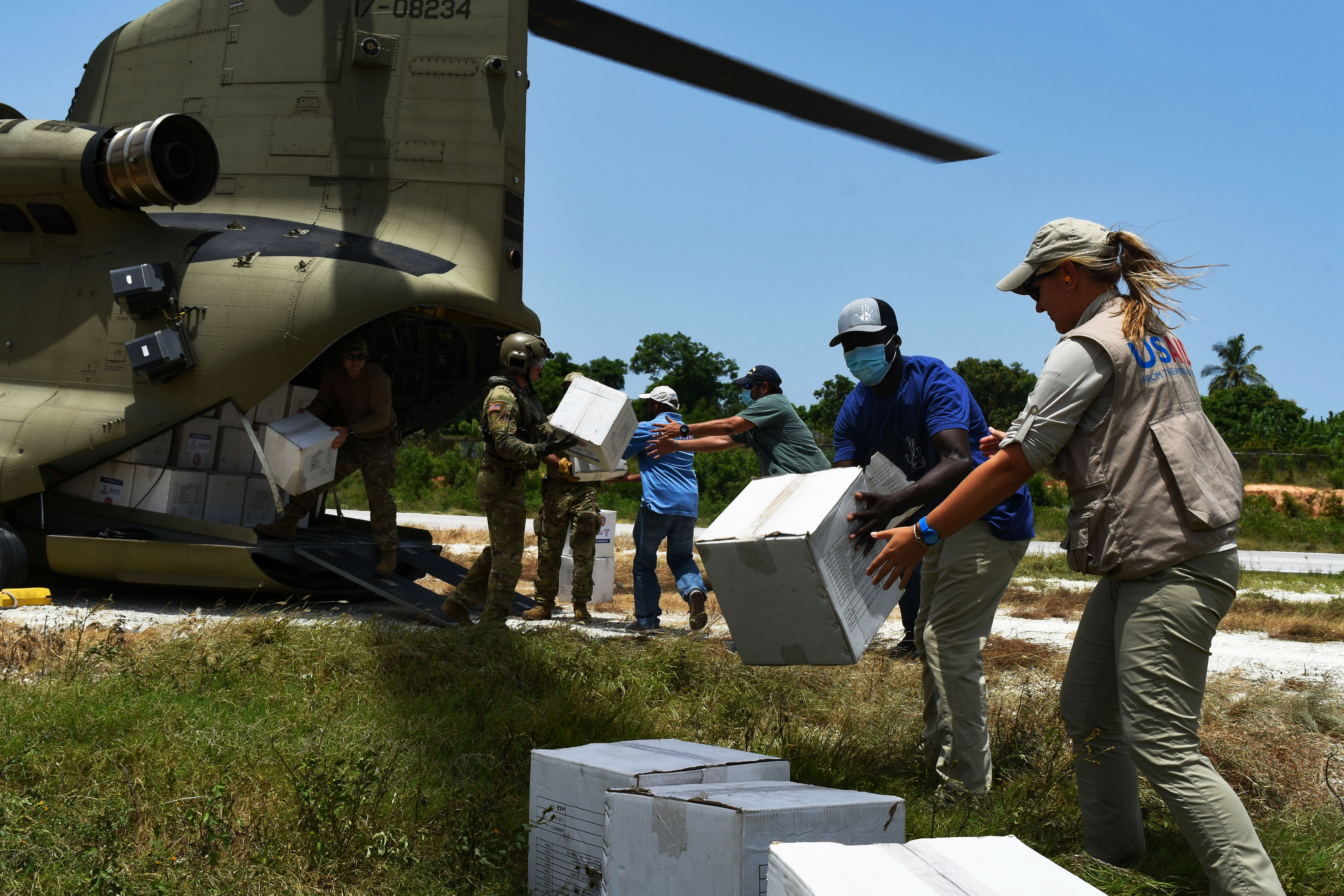
Haitian citizens assist U.S. service members with Joint Task Force-Haiti and members of U.S. Agency for International Development unload humanitarian aid from a CH-47 Chinook in Jeremie, Haiti, Aug. 28, 2021.
Aug. 30, 2021 | , DOD News
As of this morning, the National Guard has activated more than 5,200 personnel in Louisiana, Mississippi, Texas and Alabama in response to Hurricane Ida, the Joint Staff deputy director for regional operations said.
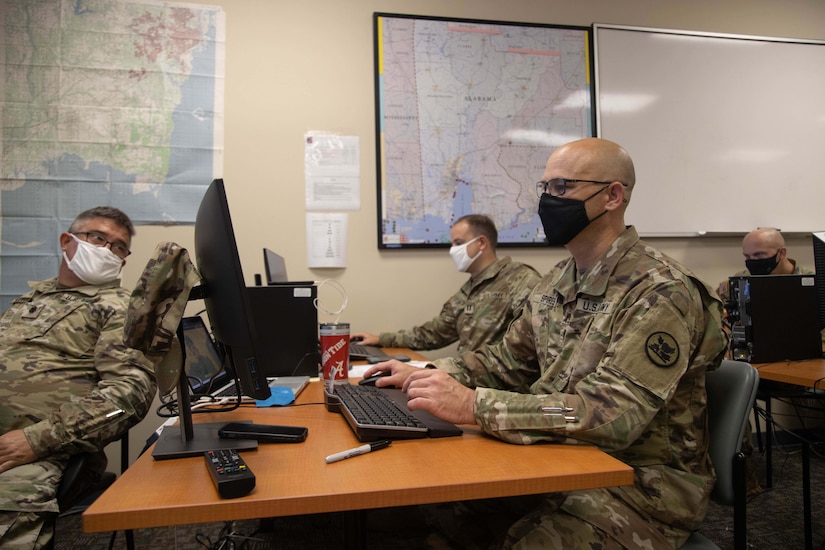
Army Maj. Gen. William D. "Hank" Taylor spoke on this and other topics at a press briefing this morning.
The majority of those National Guard troops — 5,009 — are in Louisiana, according to Army Lt. Col. Chris Mitchell, a Pentagon press officer. There are currently 150 in Mississippi, 100 in Texas and 40 in Alabama.
The National Guard brings to the region a variety of assets, including high-water vehicles, rotary lift capacity and other transportation support, Taylor said.
The U.S Army Corps of Engineers is operational in New Orleans, and is assessing the storm’s impact, he said, adding that the Defense Department stands ready to assist, if requested by the Federal Emergency Management Agency.
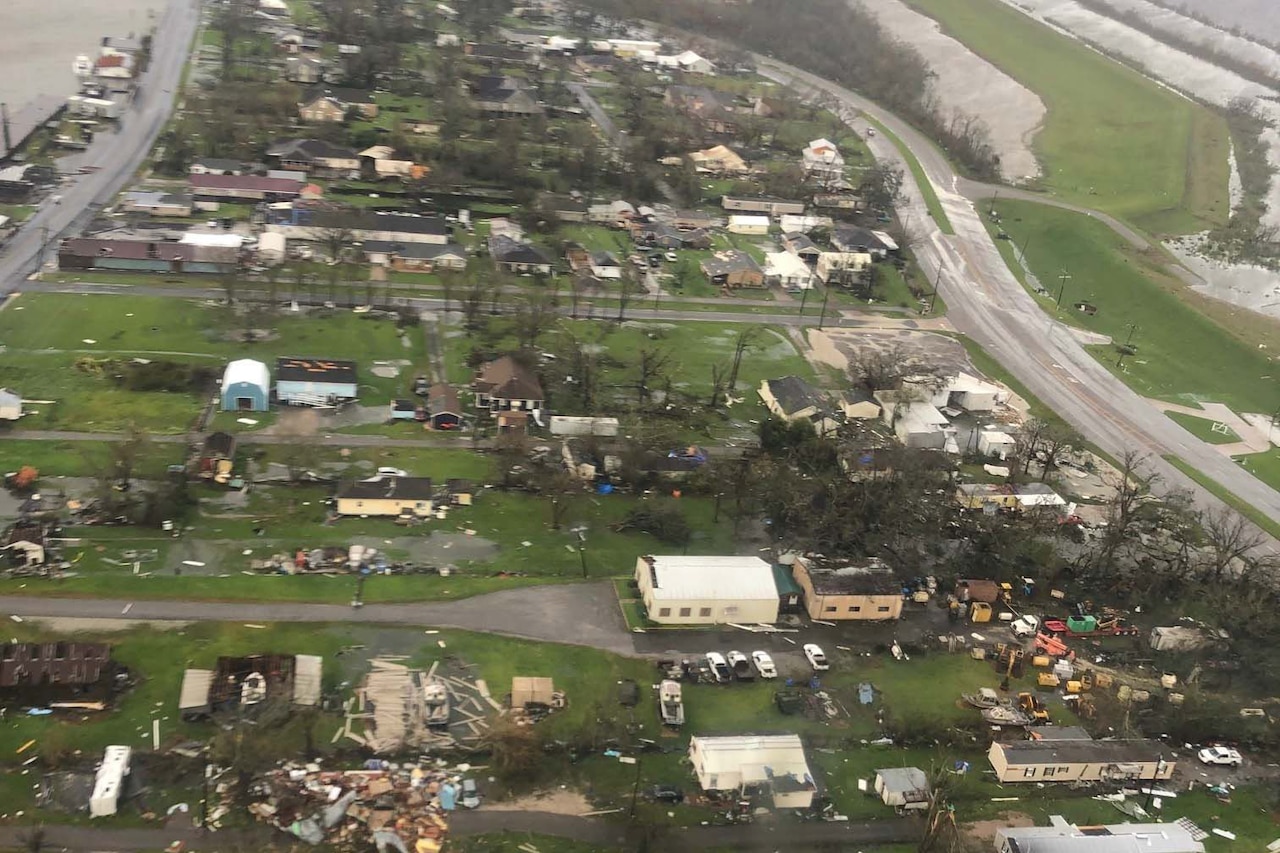
Coast Guard assets have also been deployed to the region and aircrews conducted overflights to assess damage and identify hazards.
Hurricane Ida, a Category 4 storm, came ashore in Louisiana yesterday, causing a significant amount of flooding and power loss. As of 11a.m. EDT, the National Hurricane Center was listing it as a tropical storm located near Jackson, Mississippi.
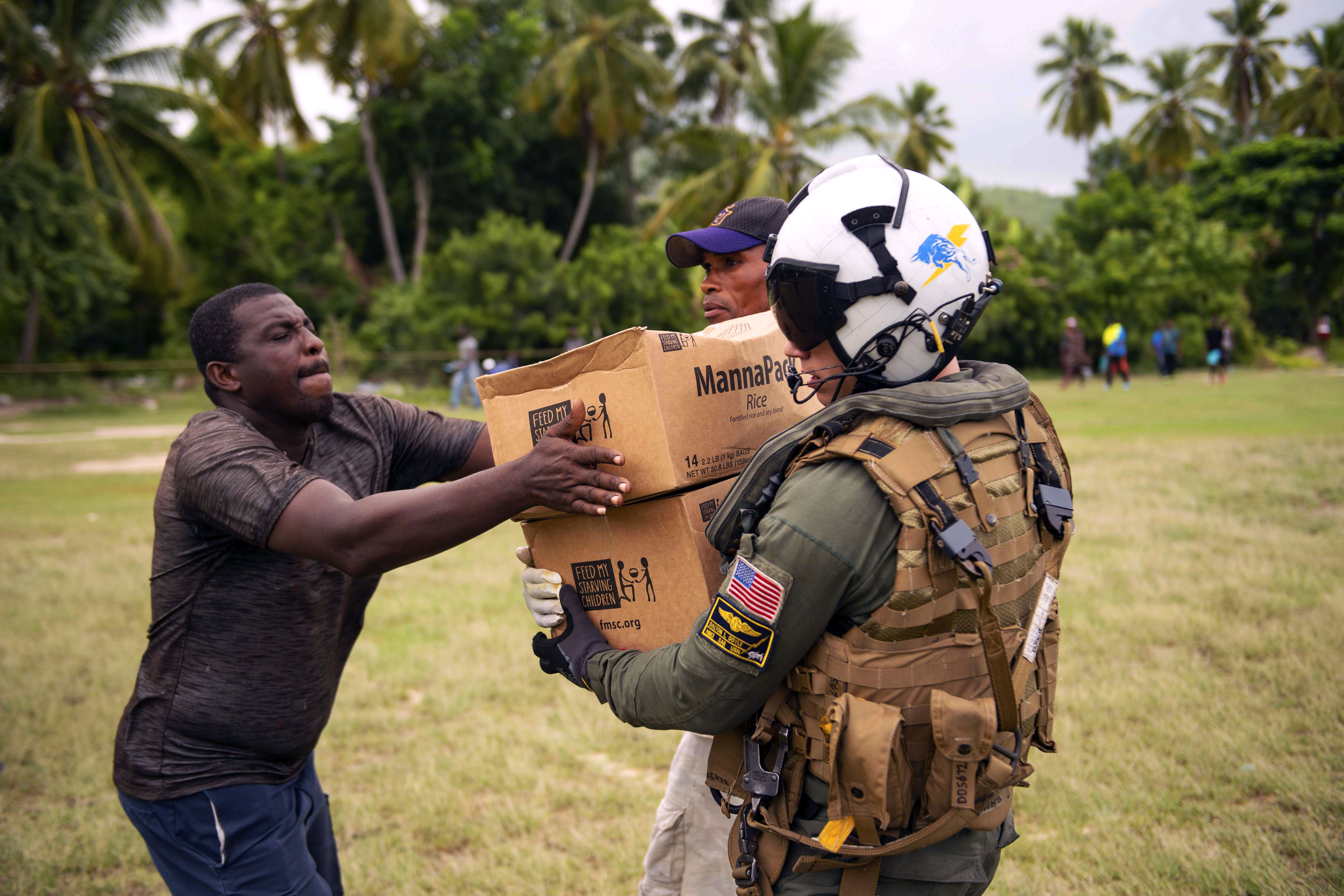
Navy Petty Officer 3rd Class Jace Borowiak passes boxes of food to Haitian citizens during a humanitarian aid mission in Anse-A-Veau, Haiti, Aug. 25, 2021.
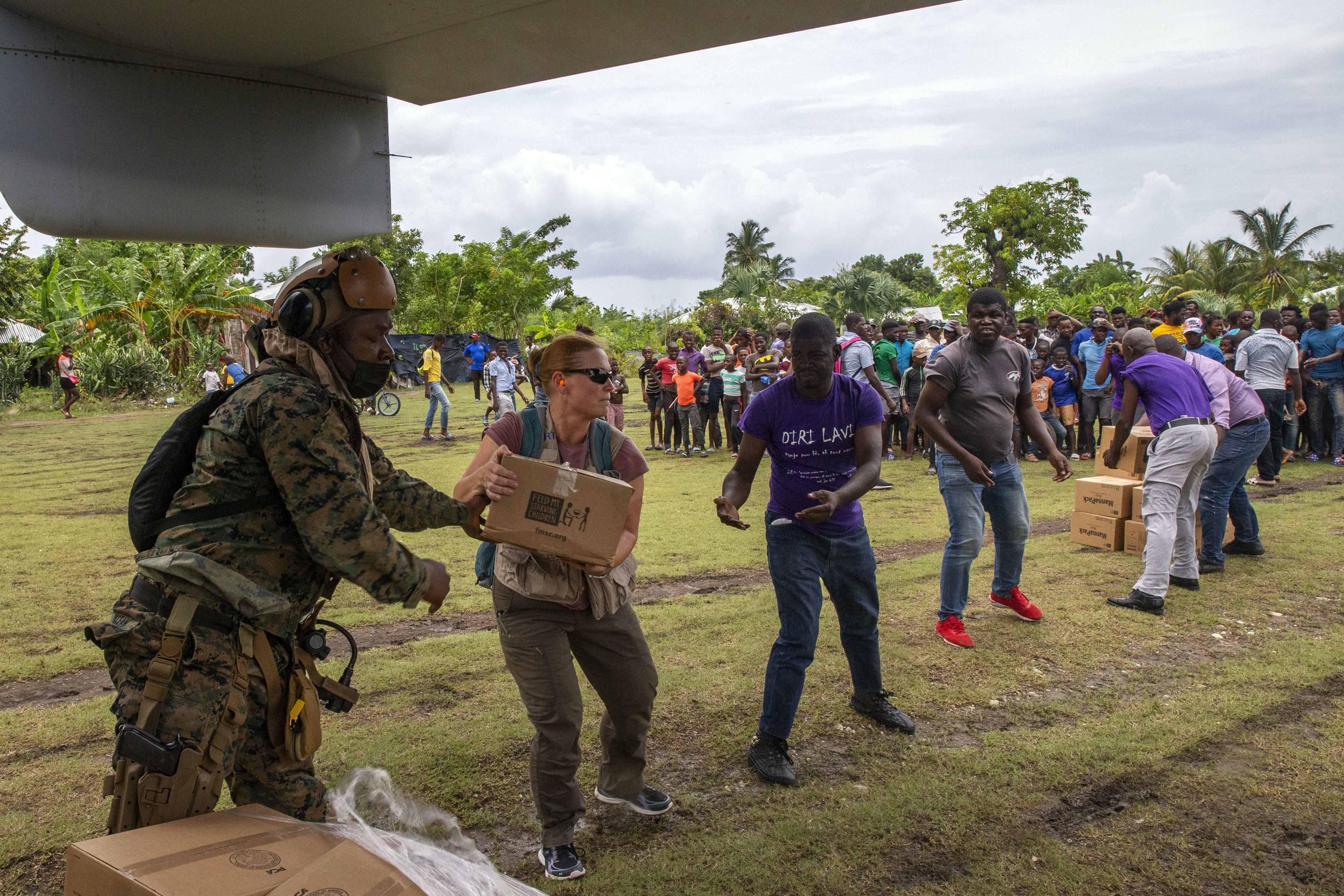
Marines deliver cases of supplies from an MV-22B Osprey during a disaster relief mission near Port-au-Prince, Haiti, Aug. 27, 2021.

Air Force 1st Lt. Amaryllis Cotto, aerial reconnaissance weather officer for the 53rd Weather Reconnaissance Squadron at Keesler Air Force Base, Miss., looks at atmospheric data collected during a flight into Hurricane Ida, Aug. 27, 2021. The data collected helps forecasters better predict the path of a tropical system.
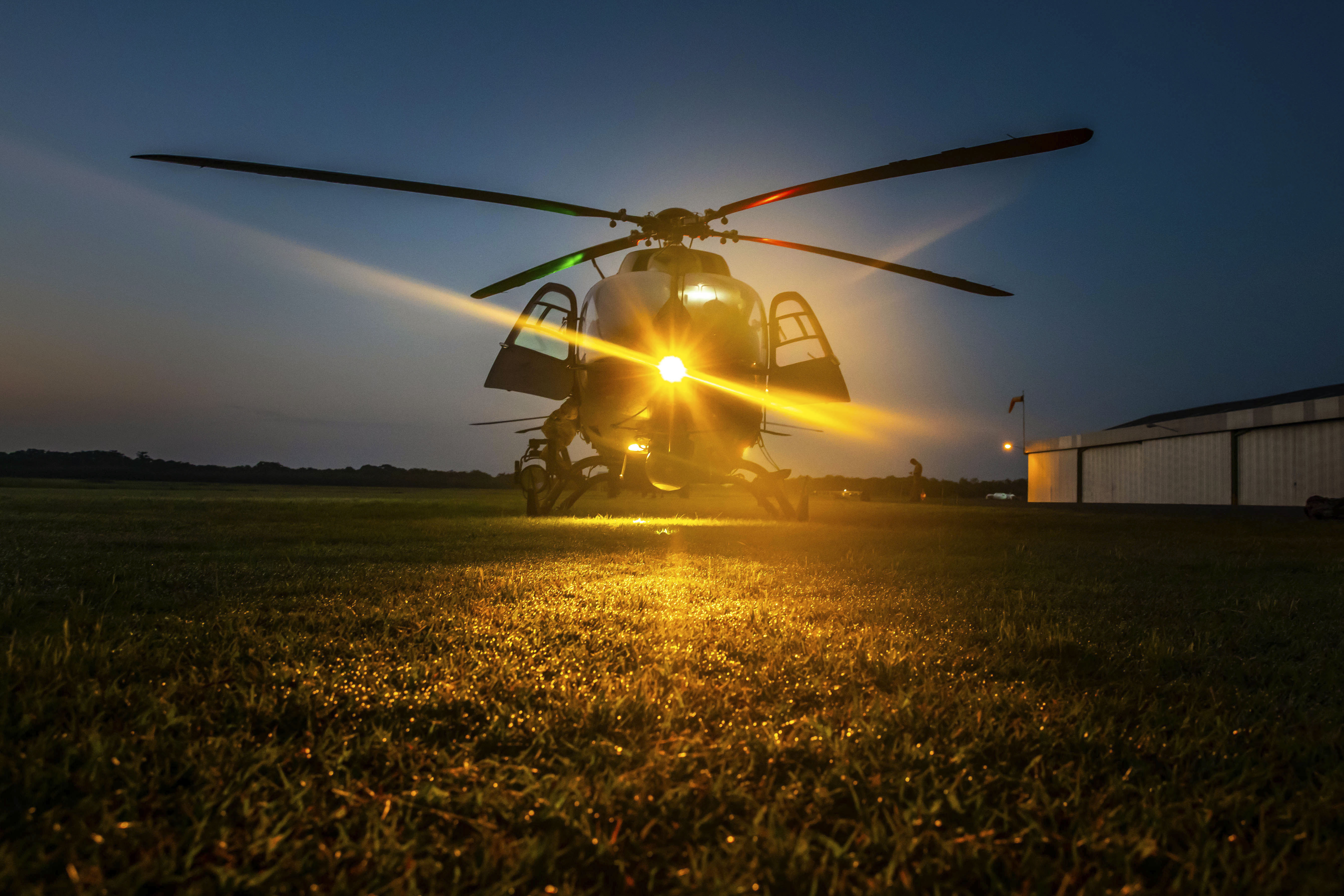
The crew of an Army UH-72 helicopter conducts a system inspection before departing from Puerto Rico to assist with earthquake relief efforts in Haiti, Aug. 27, 2021.
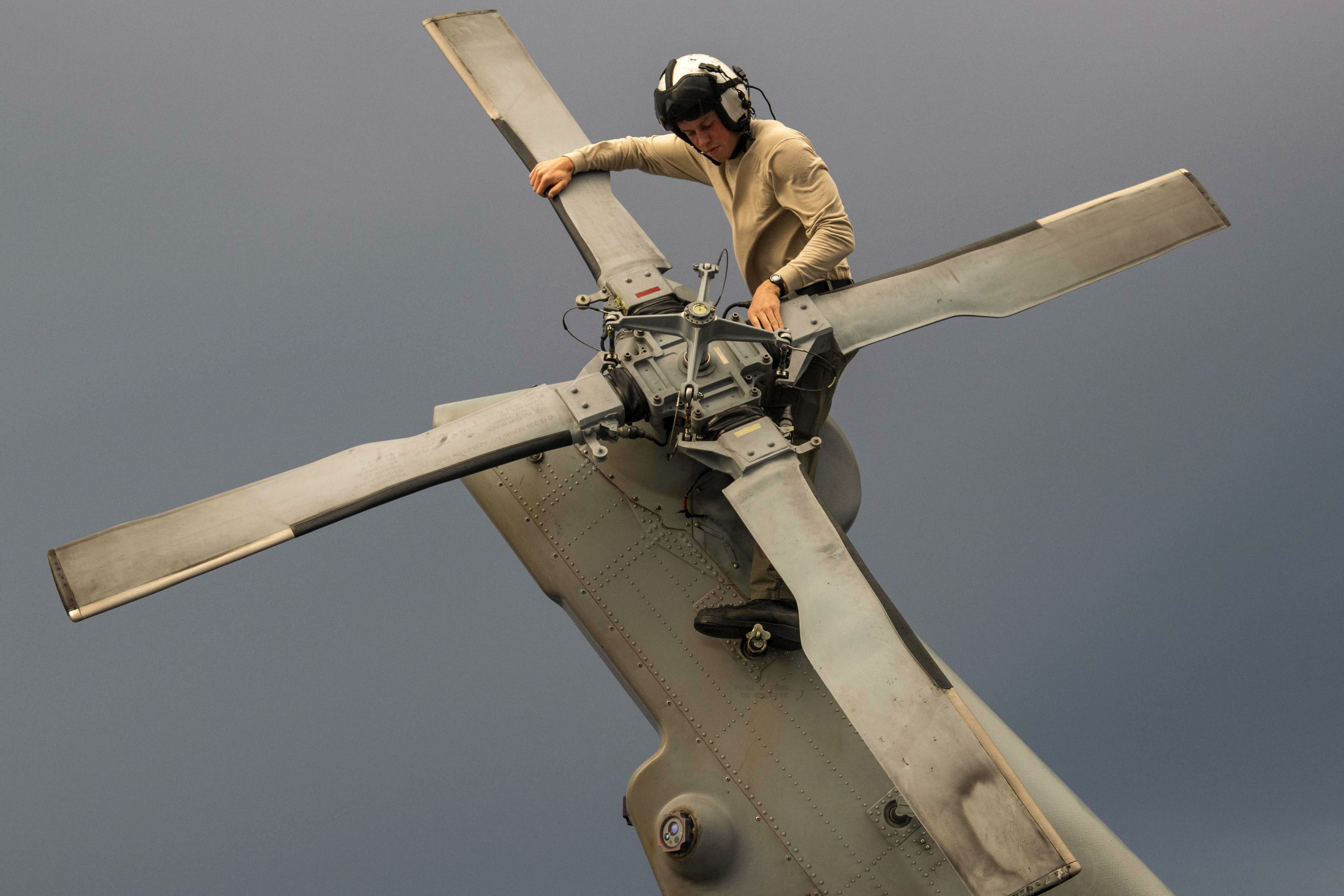
Navy Petty Officer 2nd Class Oleg Bylogurov inspects the tail rotor of an MH-60S Seahawk helicopter aboard the USS Charleston in the Philippine Sea, Aug. 28, 2021.
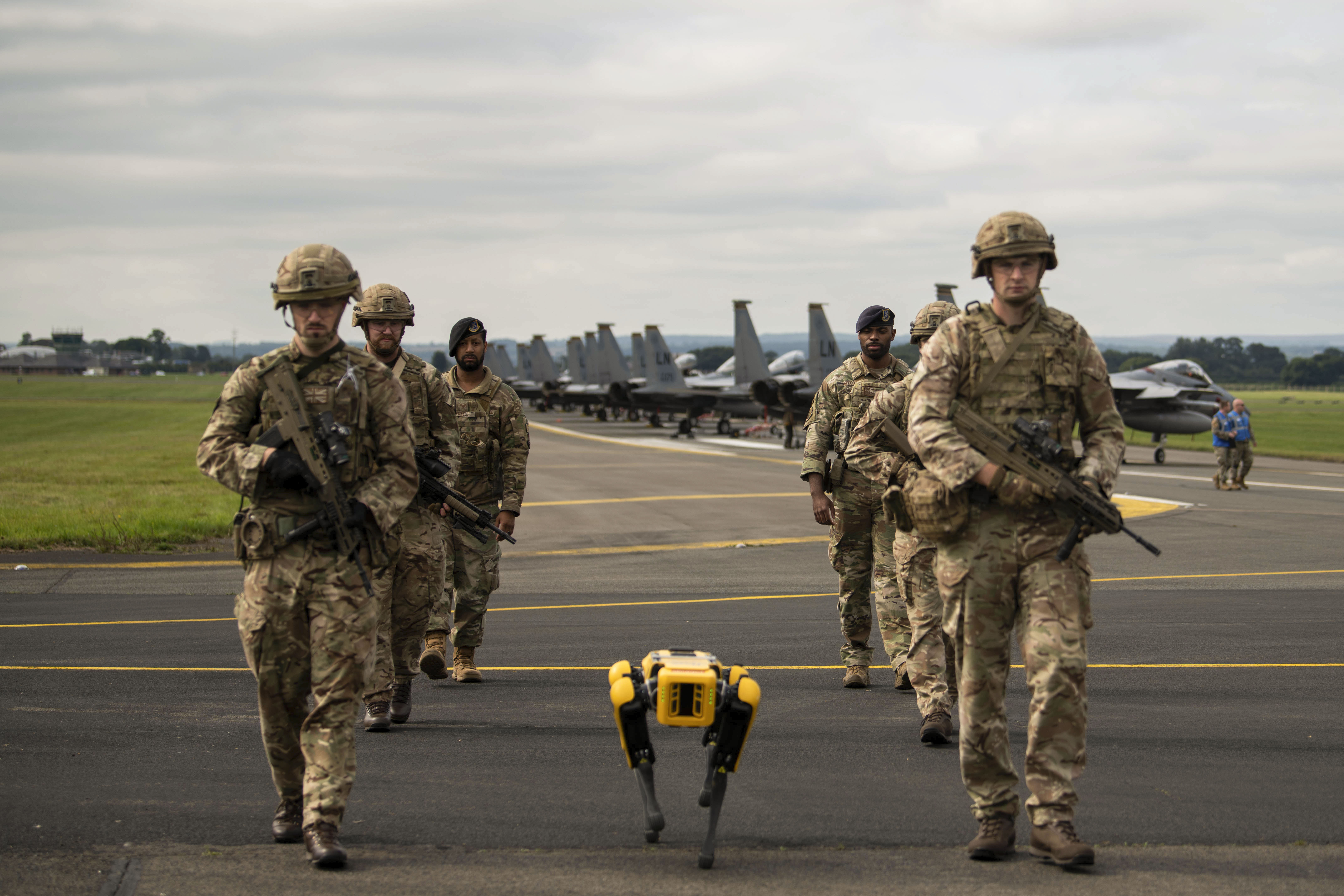
Airmen conduct a joint patrol with a Boston Dynamics Spot robot at Royal Air Force Leeming, United Kingdom, Aug. 25, 2021.

A Marine prepares for the arrival of Afghan personnel at Marine Corps Base Quantico, Va., Aug. 26, 2021. The Defense Department through U.S. Northern Command, and in support of the Department of State and Department of Homeland Security, is providing transportation, temporary housing, medical screening and general support for Afghan evacuees.
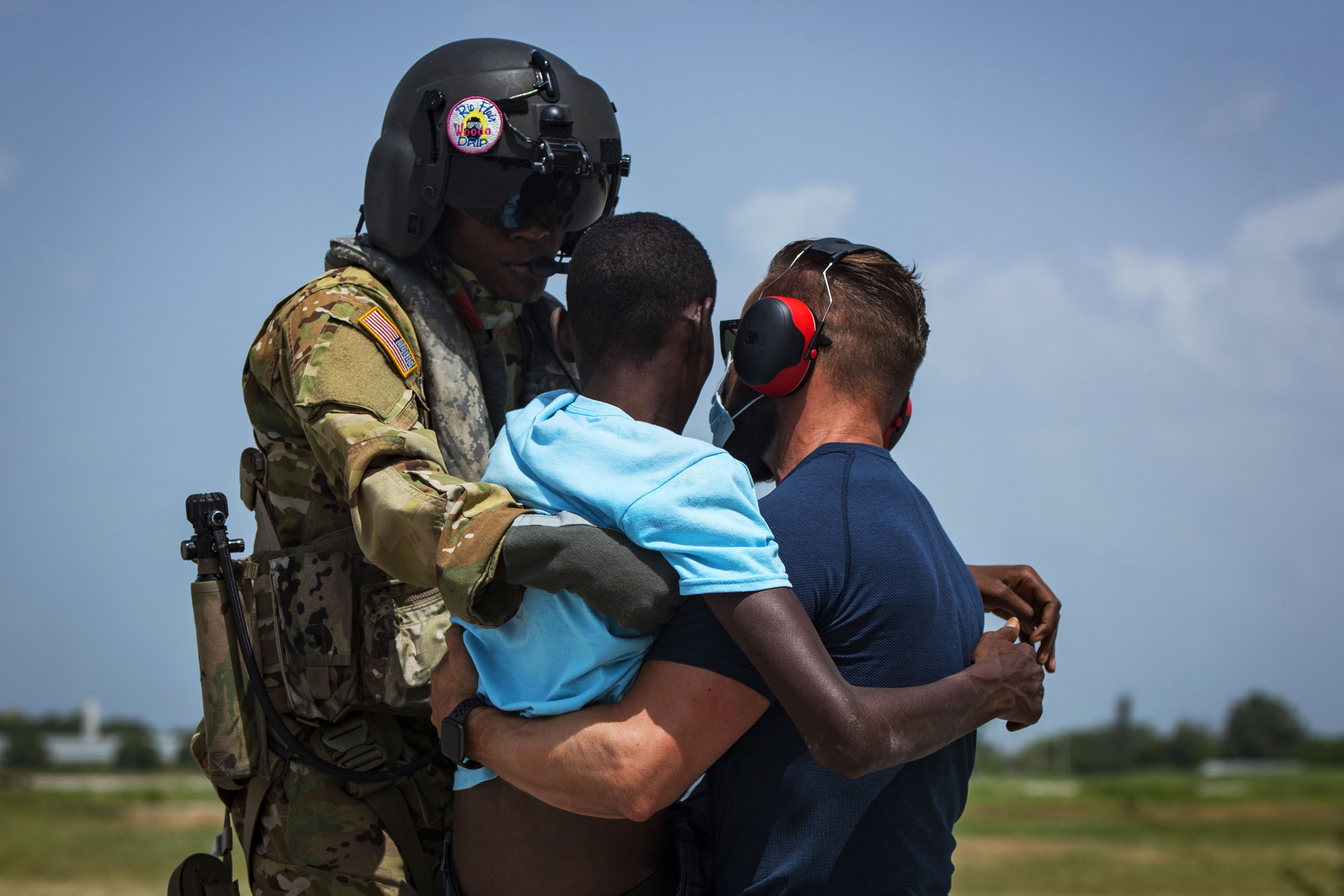
Army Capt. Alix Idrache, a pilot and future operations planner with the 1st Battalion, 228th Aviation Regiment, Joint Task Force Bravo, delivers a patient to Zach Pendergast, a paramedic emergency medical service volunteer, during a medical evacuation mission in Port-au-Prince, Haiti, Aug. 24, 2021. Task force members are supporting the Agency for International Development by conducting relief efforts for Haitian people affected by the magnitude 7.2 earthquake that struck the island nation Aug. 14.
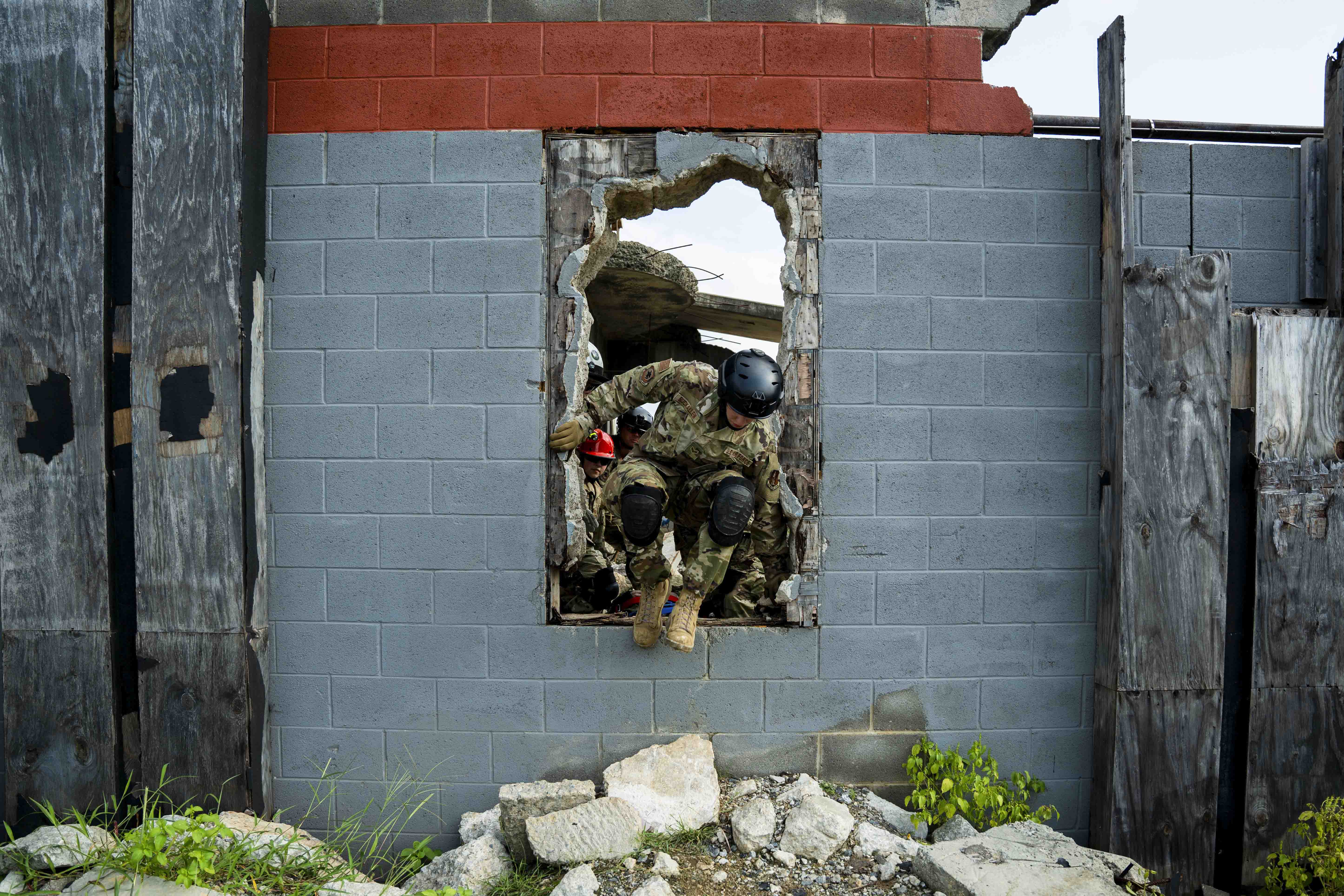
Air Force Senior Airman Katherine Buckallew participates in urban search and rescue training at the Guardian Centers in Perry, Ga., Aug. 4, 2021.
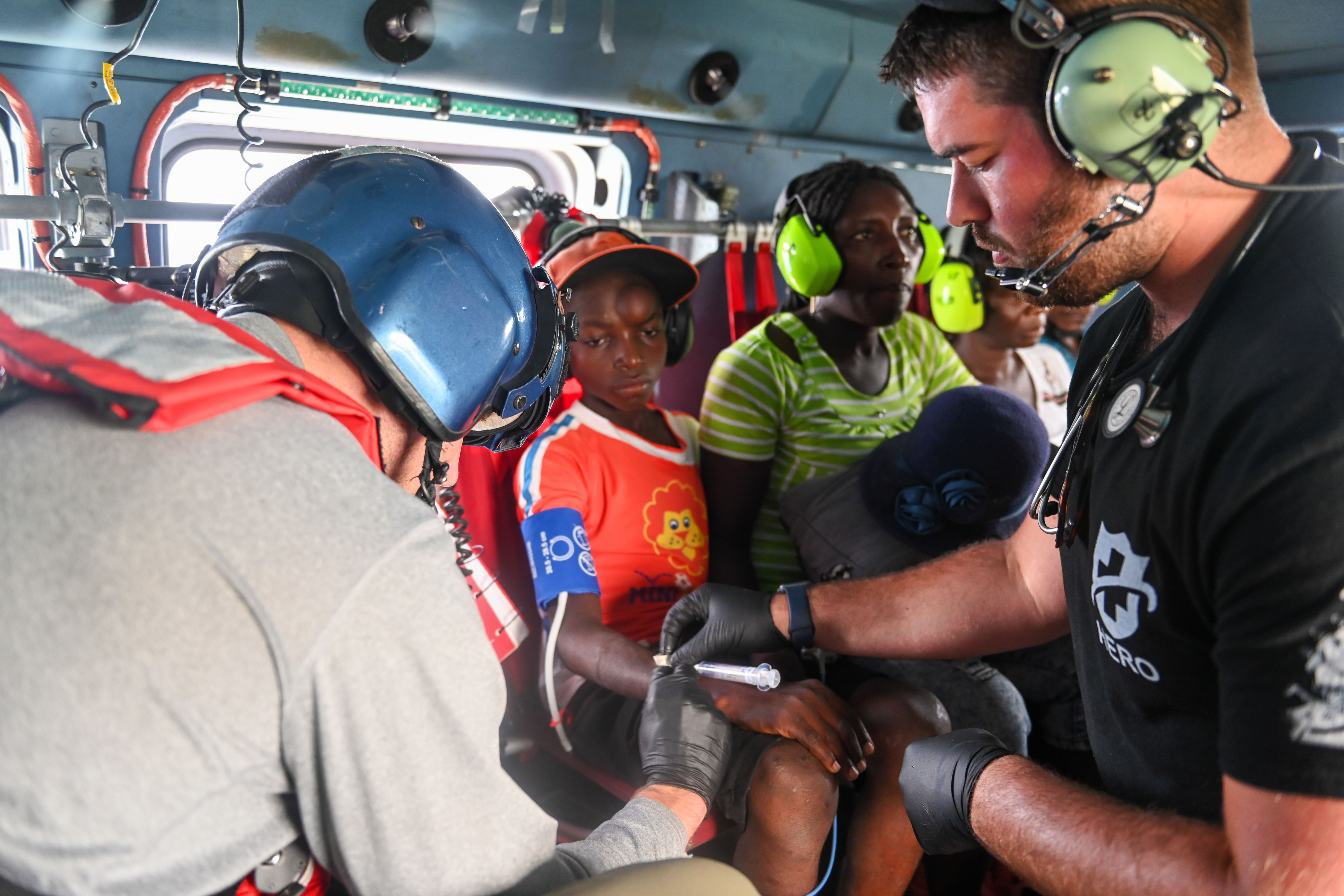
Personnel perform first aid on a medevac patient aboard a Coast Guard MH-60 Jayhawk helicopter in Port-au-Prince, Haiti, Aug. 24, 2021. Coast Guard helicopters and aircrews are transporting medical personnel and evacuating those requiring higher levels of care.

An Air Force B-2 Spirit flies during training over Royal Air Force Fairford, England, Aug. 25, 2021.

Navy Seaman Ricalin Mondejar conducts maintenance on an emergency breathing air compressor aboard the USS Iwo Jima in the Persian Gulf, Aug. 25, 2021.
Aug. 27, 2021
Pentagon Press Secretary John F. Kirby provided the following readout:
Secretary of Defense Lloyd J. Austin III spoke by phone today with Turkish Minister of National Defense Hulusi Akar to thank Turkey for its longstanding and significant support to the mission at Hamid Karzai International Airport. They agreed to stay closely engaged with respect to any future arrangements at the airport. The Secretary thanked Minister Akar for his condolences for the U.S. service members lost in yesterday’s attack in Kabul. The Secretary reaffirmed the enduring U.S.-Turkey defense relationship as demonstrated most recently by the strong cooperation between both countries on Afghanistan.


 Posts
All Comments
Posts
All Comments
Posts
All Comments
Posts
All Comments


