Wednesday, March 31, 2021

Servicemembers and Veterans Initiative Women’s History Month 2021 Statement

 March 31, 2021

In recognition of Women’s History Month, the Servicemembers and Veterans Initiative of the Department of Justice’s Civil Rights Division reflects on and honors the accomplishments that women have made, and continue to make, to our Nation’s Armed Forces.  Starting with the Revolutionary War, women have served our country’s military as soldiers, intelligence officers, nurses, engineers, and pilots, among many other positions. Today, more than 224,000 women serve in the active-duty military; women veterans comprise nearly 10% of the total veteran population. Female servicemembers have faced unique challenges throughout history, fighting for all of our freedoms, while simultaneously seeking their own equal rights and opportunities.

Female members of the Armed Forces have continued to make significant achievements in defense of our country as their representation amongst the leadership ranks grows. In July 2020, the Air Force became the first U.S. military branch to select a woman, Chief Master Sgt. JoAnne Bass, to serve as its highest-ranking noncommissioned officer. Midshipman Sydney Barber recently became the first African-American woman to achieve the top role of brigade commander at the U.S. Naval Academy, where she will lead 4,500 midshipmen. And last spring, Second  Lieutenant Anmol Narang, a nuclear engineer, became the first observant Sikh to graduate from the U.S. Military Academy. We look forward to the contributions of future female military leaders as this year we celebrate the 40th anniversary of our first female service academy graduates and, thanks to the landmark decision in United States v. Virginia, 518 U.S. 515 (1996) (a suit brought by the Department of Justice challenging an admission policy that discriminated on the basis of sex), the 20th anniversary of the first class of female graduates from a public military college.

The Servicemembers and Veterans Initiative (SVI), a part of the Civil Rights Division, advocates for the fair treatment of former and current military members by building a comprehensive legal support and protection network focused on serving servicemembers, veterans, and their families. The Civil Rights Division enforces certain laws that protect the rights of servicemembers, including those affecting their employment, housing, financial, voting, and disability rights. The Initiative builds upon this critical enforcement work, as well as the work of other Department components that serve the military community, by sharing information, identifying servicemember and veteran needs, and coordinating the distribution of resources. The Department of Justice, including the Civil Rights Division and SVI, is proud of the many contributions that women have made to our country’s military.  We remain committed to ensuring that those who wish to serve are not prevented from doing so on the basis of their sex sexual orientation, or gender identity.  If you have any questions about SVI’s work or have a concern specific to the rights of servicemembers, please visit our website at https://www.servicemembers.gov.

Syringe Prep


Army Maj. Jodi Brown, chief of public health at the California Medical Detachment, prepares syringes for the paramedics administering the Moderna COVID-19 vaccine on Fort Hunter Liggett, Calif., March 23, 2021.

Preparing the Workspace


Air Force Staff Sgt. Vittoria Gonzalez and Air Force Staff Sgt. Ayanna Blanco, aerospace medical technicians assigned to the 161st Medical Squadron, prepare a workspace to be used for the administration of the COVID-19 vaccine at Cesar Chavez Cultural Center in San Luis, Ariz., March 30, 2021. Airmen assigned to the 944th Medical Squadron are helping to provide vaccinations across Arizona.

Food Distribution


Warrant officer candidates from the Virginia National Guard’s Warrant Officer Candidate School volunteer at the Chesterfield Food Bank in Chesterfield, Va., March 19, 2021. The candidates helped sort, load and distribute food as part of their community project.

Vaccination Paperwork


Navy Petty Officer 2nd Class Amanda Reyna fills out COVID-19 vaccination paperwork before administering a vaccine brief to sailors at Naval Support Activity Bahrain, March 30, 2021. The vaccination effort has resulted in about 12,871 doses of the two-shot Moderna and single-shot Johnson & Johnson vaccines being administered to military and civilian personnel throughout the 5th Fleet area of operations.

DOD Announces Policy Updates for Transgender Military Service

 March 31, 2021


Today, the Department of Defense published the policy updates for transgender military service. The policy updates restore the Department’s original 2016 policies regarding transgender service.

The revised policies prohibit discrimination on the basis of gender identity or an individual’s identification as transgender, provide a means by which to access into the military in one’s self-identified gender provided all appropriate standards are met, provide a path for those in service for medical treatment, gender transition, and recognition in one’s self-identified gender, and seeks to protect the privacy of all Service members and to treat all Service members with dignity and respect.

The policies will be effective on April 30, 2021, affording the Military Services the necessary time to update service-level policies and provide guidance to Commanders, Service members, medical professionals, and other communities of practice as appropriate. During this period, the Department’s interim guidance of January 29, 2021 remains in effect.

The DoD Instruction 6130.03: Medical Standards for Appointment, Enlistment, or Induction into the Military Services can be found here.

The DoD Instruction 1300.28: In-Service Transition for Transgender Service Members can be found here.

DOD Recognizes International Transgender Day of Visibility

 March 31, 2021


Today, Secretary of Defense Lloyd J. Austin III signed a memorandum recognizing transgender and gender non-conforming persons and their continued struggle for a life of equality, security, and dignity during International Transgender Day of Visibility.

It is the policy of the Department of Defense (DOD) to pursue an end to violence and discrimination on the basis of sexual orientation, gender identity or expression, or sex characteristics, and DOD will lead by example in the cause of advancing the human rights of LGBTQI+ persons around the world. As such, Secretary Austin signed a memorandum on March 12, 2021 directing the Department to promote and protect the human rights of LGBTQI+ persons around the world, including in our engagements with partner nations and multilateral organizations, and within our foreign assistance programming.

In the memorandum, Secretary Austin announced the Department has updated its policies governing the open service of transgender individuals in the military.

The International Transgender Day of Visibility memo can be found here.

The Promoting and Protecting the Human Rights of Lesbian, Gay, Bisexual, Transgender, Queer, and Intersex Persons Around the World memo can be found here.

Partnership Expands Opportunities for New and Small Businesses to Work With the Department of Defense, Expand National Security Innovation Base

 March 31, 2021


The U.S. Department of Defense (DOD) Office of Small Business Programs (OSBP), the principal advisor to the Secretary of Defense on small business matters, and the National Security Innovation Network (NSIN), an innovation unit within the Office of the Under Secretary of Defense for Research and Engineering, signed a memorandum of agreement on March 5 to collaborate on expanding the national security innovation base.

The new partnership links two DOD organizations with a common mission to establish an annual, joint program plan to leverage OSBP and NSIN resources to achieve shared objectives:

  • Collaborate to develop events and programs to engage small businesses in the National Technology and Industrial Base.
  • Prototype operational concepts related to emerging technologies and accelerate the transition of technologies and services into acquisition programs and operational use.
  • Support partnership between DOD and academic institutions, commercial firms, accelerators, incubators, and nonprofit organizations whose missions relate to national security innovation.
  • Enhance the capabilities of the DOD in market research, source selection, partnerships with private capital, and access to commercial technologies.

“The effects of the past year have demonstrated the importance of small businesses in maintaining a strong supply chain and knowledge base within the national security and technology industrial base. The partnership between NSIN and OSBP is an important step towards building a resilient industrial base and engaging innovative small companies.

“In line with President Biden's Build Back Better (BBB) Recovery Plan, the initiatives developed in conjunction with NSIN will provide new pathways to American manufacturers and small businesses to offer critical emerging technologies to the Department,” said Farooq Mitha, OSBP Director.

The OSBP and NSIN partnership enables more DOD collaboration and support between small businesses, academic institutions, commercial firms, accelerators, incubators, and nonprofit entities whose missions include national security innovation. 

Morgan Plummer, NSIN Manager Director explained, “NSIN and OSBP share a deep belief that the ideas, technologies and talent that are needed to build a robust defense industrial and innovation base exist in small businesses and startups across the country, and must be deliberately engaged in partnership with the Department.

“This partnership will combine OSBP’s expertise in leveraging small businesses to close capability gaps for our armed forces with NSIN’s nationwide network of non-traditional problem solvers in the academic and startup communities to create a holistic way to increase the number of small businesses contributing to the work of the Department of Defense.”

Office of Small Business Programs (OSBP)

OSBP is the principal advisor to the Secretary of Defense on small business matters and maximizes opportunities for small business to contribute to national security by providing combat power for our troops and economic poser for our nation. OSBP is also responsible for the health and resiliency of the small business industrial base, leverages small businesses to eliminate gaps and vulnerabilities in the national technology and industrial base and words to expand the number of small businesses in the national technology and industrial base.

National Security Innovation Network (NSIN)

The NSIN mission is to “build networks of innovators that generate new solutions to national security problems.” NSIN is headquartered in Arlington, VA, and has regional offices in 11 commercial innovation hubs throughout the United States. Through its headquarters, regional hubs, and embedded university partnerships, NSIN builds a national network of innovators and delivers programming that solves real-world, DOD problems through collaborative partnerships with non-traditional problem-solvers within the academic and early-stage venture communities.

Filling Doses


Air Force medical staff, members of the Michigan Department of Health, and Meijer pharmacists fill doses of COVID-19 vaccines during the grand opening of the state-run, federally-supported Ford Field Community Vaccination Center in Detroit, March 23, 2021. The site will vaccinate up to 6,000 community members per day.

Black Hawk Hoist


Army Staff Sgt. Jose Bulow is hoisted into a UH-60 Black Hawk helicopter during predeployment training at Fort Hood, Texas, March 26, 2021.

Pentagon Press Secretary Holds an Off-Camera Press Briefing

 March 30, 2021

Pentagon Press Secretary John F. Kirby

PRESS SECRETARY JOHN F. KIRBY:  Okay, three, two, one. 

I don't have a topper, so Bob, we'll go to you.

Q:  Hi, John.

MR. KIRBY:  Hello, sir.

Q:  A question about the recent blockage of the Suez Canal.  I realize that's ended now but -- and I don't know if this is -- you've reviewed this previously but is -- has -- did it cause any operational issues for the U.S. Navy, including the movement of a carrier from the Med to the CENTCOM area?

MR. KIRBY:  Yeah, Bob, we talked about this a little bit yesterday.  I'm -- I'm not going to speak to specific operational impacts.  The only thing that I would add is that -- what I said yesterday, is that we always have – as a part of routine planning, we always have alternate methods and means of meeting mission requirements and -- and we're comfortable that -- that the forces assigned in both European Command and -- and Central Command have been able to meet their mission requirements.

QUESTION:  Thank you.

MR. KIRBY:  Okay.  In here?  Lara?

QUESTION:  Yeah, I know you guys just had your extremism training, so I'm wondering if you could tell us anything about that?

MR. KIRBY:  We -- we did.  The -- the Office of the Assistant Secretary of Defense for Public Affairs, we -- we just completed our extremism stand down.  I -- you know, only speaking for our world and the -- what -- and -- and not -- and not the department writ large, we -- I just finished -- we just wrapped up literally a half an hour ago.

We -- we had some terrific guest speakers, somebody from the FBI and somebody from our intelligence directorate here at -- at -- at the Pentagon who did terrific presentations about the scope of the issue and the reality of the threat, outside and inside the workforce, and that led to some, I think, very good questions by the people in my workforce, asking more detailed questions about what -- what these experts had to say.

Then we broke up into four small groups and -- different parts of my organization, where they were able to have more intimate discussions with their immediate leadership about their experiences and their thoughts.  I was able to migrate to all four small groups and I was impressed by the candor of the session, the forthcoming nature with which people spoke about the -- their -- their views on this issue and -- and some of the experiences that -- that -- that they had with extremists over the course of -- of their years of service.

So I was quite pleased with the level of engagement, very grateful for the experts that were giving -- so freely gave up their time to -- to come speak to us about their area of expertise, and it was -- I think it was -- it was a great learning experience.

Q:  But was it part of the stand down that DOD is doing?

MR. KIRBY:  Yes.

Q:  Okay.

MR. KIRBY:  Yes.  Okay, let's see.  We'll go to Jeff Schogol.  What do you got?

Q:  Hey, thanks for doing this.  There's only 32 days left until May 1st, and I just wanted to see, is that enough time to get all of the troops and equipment out of Afghanistan if the -- if the President decides to withdraw?

MR. KIRBY:  Well, the -- the key point -- key part to your question, Jeff, is the "if."  The President hasn't made a decision, so we're obviously not going to get ahead of him on that.  He -- I would point you to what the Secretary -- oh, sorry, what the President said himself, that -- you know, that -- that it would be tough but I would also point you to what the Secretary said when we were in Kabul a week or so ago, that -- that if there's a decision to leave, that he's confident that General Miller and General -- General McKenzie will be able to do that in a safe, effective and -- and orderly way.

Q:  Well, at this point, would that require destroying equipment rather than trying to take it out of country?

MR. KIRBY:  Yeah, Jeff, I just -- I'm not -- you know, we don't have a decision right now, and so I'm -- I'm not going to engage hypotheticals or speculate about what a withdrawal is going to look like. 

In the room, Mike -- Meghann?  See?  I went right to you this time.

Q:  Listen, I've not heard about it so it's okay.  So I wanted to ask if in your stand down, anything -- any kind of pushback came up, questions about what's considered extremism, what kind of groups and ideologies are considered extremism?

And I ask because I'm wondering if after this, after the review, after the feedback that's collected, if there's going to be a push to put out an instruction, some sort of guideline that has more clear delineation of we know you can -- but at this time, at least, it seems like you can belong but you can't be an active member, there are questions about, like, is being MAGA considered, you know, an -- a -- a -- a extremism, like, is Black Lives Matter an extremist movement?  And so I think there's going to be a lot of -- you know, there's a lot of desire for a more clear delineation, so I'm wondering where you guys are with collecting what -- how you're going to put that definition together and what it may look like when you've completed it.

MR. KIRBY:  Well, -- so I -- as I said, we're going to be informed by the stand down across the force.  That will help inform the direction the Secretary wants to go.  I don't want to get ahead of him on this but I do think you'll see, as -- after this stand down, I think you will see the Secretary make some decisions about how he wants to approach this going forward.

It is, as he has said -- and I suspect no matter what he decides to do, you'll see this reinforced for him -- it's going to be a daily task.  It's not going to be -- and we never thought the stand down would be one and done -- he wants this to be considered a -- an ongoing, enduring leadership issue, and I think you'll see that reflected in whatever decisions he makes -- and again, I won't get ahead of that.

I didn't sense any pushback from the folks in our stand down about the definition of what is or isn't and maybe that was because one of our briefer, our FBI briefer, had -- provided some very good structure about what they consider to be extremism and broken down into various categories.  I found that very interesting.

So, that might be why, I can't speak for every employee, but I didn't sense any anxiety or angst over the definition of it.  And again, we'll get on the other side of this stand down.  The secretary will get feedback from the services and then I think you'll see more clarity from the department on how we're going to proceed. 

OK, Missy, Washington Post.

Q:  Hi John.  I just have a follow-up on the extremism question and then a question about the -- a nomination question.  So on the -- on the extremism thing there was a recent hearing on this and I -- and there was skepticism expressed by some Republicans about how much focus there should be on the issue of domestic extremism in the military, especially because as the department has acknowledged you guys don't have great stats on how widespread the issue is.  And I just wanted to ask if you could address that notion or that concern.

And then it -- has the secretary done anymore outreach regarding the Colin Kahl nomination?  Since we heard about his conversations a while ago before the committee vote.

MR. KIRBY:  I'm not sure I understood your first question. 

Q:  The first question is, some Republicans in Congress, with the hearing last week and they were saying why is the Defense Department -- why are we talking about this issue?  Why are we making this sound like it's a big problem when the department itself doesn't have data to confirm that it is a widespread problem, so we should look at other issues.  That's the criticism of --

MR. KIRBY:  Oh, I gotcha.  OK, I'm tracking you.  On the -- on the second question I'm not aware of any additional outreach by the secretary with respect to Colin Kahl.  We were pleased to see him voted out of committee and we're certainly hopeful and look forward to his ultimate confirmation and to getting him here in the building.  He's an imminently qualified individual with significant and deep policy experience and the secretary looks forwards to working with him. 

On you first question, it is precisely because we don't have a complete granular body of knowledge about the full extent of the problem that we wanted to conduct this stand down and why the secretary wants to take the issue so seriously.  I don't know that you have to have a specific set of data in front of you to know enough that you've got a problem.  

And as the secretary said himself, the scope of the problem is probably less than the headlines would suggest and certainly more than we're going to find ourselves comfortable with.  It's somewhere in between and we owe it to the country, the tax payers that fund us and support us to get a better sense of this.

We've also said and -- actually not we -- the secretary has said, every time he talks about this, that the vast majority and I think he's used the phrase 99.9 percent in his mind are serving this country, whether they're military or civilian, contractor or in uniform, they're serving this country with honor and character and dignity and they uphold the values that we espouse.  They certainly uphold their oath to the Constitution. 

Nobody has suggested that this problem is widespread across the force.  We -- while we don't have perfect data we know that it isn't.  That said, even small numbers can have an outsized impact and that's what concerns us. 

So, we're taking this seriously, but we also do it with a view towards understanding that the vast, vast majority of men and women in this department are serving with honor and character.

Barb?

Q:  One on extremism, a follow-up and a different subject.  You had the briefing in this room, right?  Right here in the briefing room?

MR. KIRBY:  I had -- yes.  For some.  Maybe not everybody could do it.  We had to have some on --

Q:  (Inaudible) occur here.  And since this is not a classified space I want to make the request, could the Press Corps get the same briefing from the two people you had that you speak so highly of that have a top level view of the problem?  Can we request --

MR. KIRBY:  I can ask them if they'd be willing to talk to you.  The briefings they gave were not classified, obviously. 

Q:  I'll be the one to say on behalf of the whole Press Corps, can we get --

MR. KIRBY:  I will ask them if they'd be will to speak to you about what -- about their expertise.  I have no problem asking that question.  But, I can't make them do it.

Q:  No, but what they briefed you on.  No, it's just -- I don't want to hear about their expertise.  I'm assuming that --

MR. KIRBY:  No, I understand the question.  I'll ask.

Q:  Did they -- did they offer a list of extremist organizations?  Is it just specific organizations?

MR. KIRBY:  They had some examples.  But did they offer an exhaustive list?  No.

Q:  All right.  So, I'd like to request we get the same briefing.  The other question --

MR. KIRBY:  Barbara, just -- I will ask the question, but to remind, one of the briefers was from the FBI and I can't speak for that organization.  And the other one, although it's a Pentagon office, I would have to secure their agreement to do this.

Q:  Right.  I'm just asking.

MR. KIRBY:  Right. 

Q:  (Inaudible).

MR. KIRBY:  I will ask the question.

Q:  Right.  I endorse what I just said.  My -- but my actual question is this.  I wanted to just make sure I asked about Myanmar.  We've seen the international letter from maybe 9, 10 Chiefs of Defense staff condemning military action there.  The situation's pretty dire.  I understand the departure -- order departure or voluntary departure of America is a State Department issue, I fully understand that.  What I'm curious about is in this department are you -- what level of concern or what concerns are there about the security situation that you might have to be ready for if there is any sort of departure of Americans?

MR. KIRBY:  Well so you're right, that's an if.  And that's a decision that the State Department makes.  I certainly won't get ahead of --

Q:  And you plan for everything.

MR. KIRBY:  I think, look, in general I would point you to the letter that these Chiefs of Defense, including our own, General Mark Milley, wrote that I think speaks to the concern that we all have here about the security situation in Burma. 

I won't speculate about potential future operations one way or the other and I certainly won't speak to State Department equities with respect to the presence of their personnel or other American citizens on the ground.  That's really a -- that's a decision for them and only they can make.  And so, I think you realize that we -- in terms of this department I mean I'm not aware of any specific planning efforts one way or the other.

Q:  And can I just also ask, quick update - the SOCOM diversity chief, is he - they tell us he's been reassigned but since the Secretary's being kept up to date on that situation, any update on the status of that?

MR. KIRBY:  No, I don't have any update.

Q:  Thank you.

MR. KIRBY:  Yep.  OK, Caitlin Kenney, Stars and Stripes?

Q:  Hello.  My question is when is DOD going to release its current vaccination numbers and rates for each installation?  I know some of us have been waiting to see that data.  Thank you.

MR. KIRBY:  Yeah, we're working real hard, as I've said before, to get you guys some more granular data on that.  I - I don't have a specific date certain that I can guarantee its release but we're - we're getting there, we're working real hard on it, and I - I think we'll be able to, you know, post more - be able to post more data in - in coming days, but I - I just don't have a - I couldn't give you a date certain on the calendar.

Q:  A quick follow up, can you, I guess, explain kind of how that data is collected and then, like, what is kind of behind the scenes on, why it's kind of taking a little bit longer, just so that we have an understanding?  Thanks.

MR. KIRBY:  I - I - I can't tell you how it's collected.  I'd - I'd really have to point you to the experts on the COVID task force in terms of specifically, you know, the - the - the pencil work that goes into getting it.  What we're trying to do is get you more granularity from a - a service level.  So I would suspect that that - the - the data we're talking about is coming from the - the services.

And as for, you know - you know, what - what's taking this a while is we want to make sure we get it right.  We just want to make sure that if we're going to roll out more data for you, that it's data you can rely on, in a format that's easy to understand and to comprehend and that's useful, and, you know, we're still working on that. 

Mike?

Q:  Representative Charlie Crist has introduced legislation to make the commandant for the Coast Guard a member of the Joint Chiefs of Staff.  Is that being discussed or planned at all here?  And more importantly, is the table big enough, since you keep adding people to it, like, every couple of years?

MR. KIRBY:  I don't know the size of the table in the - in the tank.  I'm - and I won't - I won't speculate about proposed legislation.  I've seen the press reports of it but we're not going to get ahead of proposed legislation. 

Abraham?

Q:  Yeah, thanks.  I've got two questions - like, update questions and then a - something specific about the extremism stand down.  Anything new to report on the HHS request for site visits?  Anything new to report on the requests when General VanHerck was here and he mentioned that there was a request out from DHS to DOD to - to extend the border support?  So is there anything updating either of those two outstanding requests?

MR. KIRBY:  As far as I know, there was an additional site visit to Camp Roberts, which is a National Guard base in central California, for the potential use of the federal part of the land of that - of that site.  I don't know how that site visit went or whether or not our HHS colleagues are inclined to want to use it, so I won't get ahead of that.

We - I can tell you that we don't have - as of right now, we don't have a request for assistance for additional sites from HHS.  I - I - I think we are prepared at Bliss to receive - they are prepared to receive, at Fort Bliss, some number of children, as perhaps early as today.  I would again refer you to HHS for specifics about that but that's my understanding, that - that HHS is - that - and - and - and Fort Bliss is prepared but again, this is an HHS mission - mission, so I'd ask you to talk to them for more details.

On your second question - was that about the border mission?

Q:  Right.

MR. KIRBY:  Well - well ...

Q:  When General VanHerck was here, he mentioned that there was an outstanding request from DHS to - to extend that mission, which expires at the end of the fiscal year.

MR. KIRBY:  I - I don't have any updates on that.

Q:  OK, and then I ...

MR. KIRBY:  I - I can actually - we can take that question, though.  I think that's a fair question.

Q:  And then on the extremism stand down, just so I understand sort of how this works - across the whole force, the request went out to just sort of have a discussion, right, but no data was collected and passed to DOD, to Secretary Austin?

And then Secretary Austin's going to be briefed from the service secretaries and then the - no data has been collected.  And then will there be data collected or what's the next step?

MR. KIRBY:  Abraham, I think you have a fundamental misunderstanding of what the stand down was inclined - was intended to do - is not - it - it - it was not, and as I stood here at the podium and briefed - it - it - it was not a data collection exercise, it was meant to do two things - to reinforce our values, and specifically the importance of the oath that everyone takes here to the Constitution and what that oath requires of you.  There are active verbs in that oath that matter - and it was - it was - it was a - it was a chance to revisit what we've all promised to do and what we've all promised to serve.

And then number two, to listen, to get a sense from the men and women of the work force about how they view this issue, if they have any lived experiences that they would be willing to share, and to - to solicit their ideas and thoughts.  That is exactly how we conducted our stand down today, it was exactly that.

In addition to our two speakers, we did have a small session dedicated just to the oath and - and - and a chance to revisit those words, as the Secretary encouraged everybody to do in that video that he produced.  So it was not a data collection exercise.

And as I said and have said many times, we - we don't have perfect understanding of the scope of it but I - I think we want to get a better sense of it.  And the stand down was just the first step in doing that, and we've said that before too - it's just a first step.  Not meant to be a panacea, not meant to solve all of the problems, just to reorient everybody to the importance of service to this country in the Defense Department and a chance to listen to them.

Q:  So does the secretary have next steps in mind?

MR. KIRBY:  As I said to Meghann, I'm not going to get ahead of the secretary.  The - he - he will get briefed by the services on their view of the stand down and feedback that they - that - that they received and that they're willing to pass on to him, and then I think, as I've said, he's going to make this a concerted leadership issue every day that he's the Secretary. 

How that manifests itself, what decisions he might make as a result of what we're learning, I'm not - I'm - I'm not going to get ahead of, but I do think you'll hear more from him in - in coming days and weeks.

Q:  Great, thanks.

MR. KIRBY:  Yep.  Let's see - Jeff Seldin, VOA?

Q:  Thanks very much for doing this.  The SDF is now about three days into a - what seems to be a pretty massive operation to try to suppress and root out ISIS in the al-Hol displaced persons camp.  Wondering if - if you could share anything about what the U.S. and what U.S. forces are doing to support that operation, and also how worrisome is it?  The SDF says that they've already captured 53 suspected ISIS operatives, five cell leaders.  How - how worrisome is it that ISIS was able to establish that type of presence in al-Hawl, in an area controlled by the SDF - SDF, with the help of the coalition?

MR. KIRBY:  Well you're right, the Syrian Democratic forces did initiate an operation over the weekend to degrade and disrupt ISIS activities inside the Al-Hawl IDP Camp.  That operation is ongoing. As of Sunday, there were nine individuals, including one ISIS leader detained by the SDF.

As it is an ongoing operation that the SDF is conducting, I am not going to speak to the specific details of it, except to say that, again, the purpose of the operation is to remove ISIS elements from Al-Hawl in order to bolster the safety and security of the camp as has been recently advocated. 

I would remind that in this year alone, 2021, more than 40 residents of the Al-Hawl Camp have been murdered, so maintaining security in and around Al-Hawl remains essential to facilitating humanitarian access and safeguarding innocent civilians that are there.  So, I think that's about as far as I'm going to be able to go on that.

OK, here in the room.  Lara, again?

Q:  Yes, I wanted to ask about Afghanistan.  I just wanted to get you on the record again.  Are the Taliban meeting their commitments to the deal?

MR. KIRBY:  We are still reviewing the Doha Agreement, which includes reviewing compliance.

Q:  Because in January you said that they were not meeting.

MR. KIRBY:  We are still reviewing the Doha Agreement and that includes examining compliance. 

Q:  So you’re not willing to say what you said in January?

MR. KIRBY:  I'll just ping back to what I just said. 

Q:  Thank you.

MR. KIRBY:  Yes.  Looks like I got more here on the page than I have in the room. 

Tony?

Q:  Hi John.  I had a couple of Secretary Austin questions.  Does he have any plans in the works to have a full conversation with his PLA counterpart, the Minister of National Defense?  And I have a follow-up. 

MR. KIRBY:  I don't have any discussions to announce and speak to at this time.

Q:  Can you take it for the record in terms of whether he's planning or trying to schedule a trip -- to schedule a call?

MR. KIRBY:  I don't have anything to speak to at this time, Tony.

Q:  OK.  On the FY'22 budget, how would you describe his role in the preparation of it?  Is he fairly hands-on, hands-off until he gets a full briefing?  Or how would you describe it?  His role.

MR. KIRBY:  He's been -- he's been kept briefed and apprised of budget preparations that the Deputy Secretary has been leading.

Q:  OK.  Is there any particular program or area he's focused on?

MR. KIRBY:  I'm not going to get ahead of specifics on the various programs in the budget, Tony.  We'll have much to say that when it's the appropriate time.

Q:  Fair enough.  Thank you.

MR. KIRBY:  OK.  Nothing in here.  OK, Kristina Wong, Breitbart.

Q:  Hey, thanks for doing this.  Great to join you by Zoom.  On COVID, some soldiers and family members have reached out, saying that they're concerned that there's been (inaudible) can't visit the DFAC or gyms on their installation without showing their vaccine card. 

So, I guess they're upset because they say the vaccines are not mandatory and they feel that they're getting forced or pressured to get it.  Otherwise they can't visit the gym or the DFAC or whatever. 

So, my question would be, what do you tell those folks who don't to get the vaccine but feel that they're being sort of unfairly pressured to, otherwise they can't use base services?  And is this a DOD policy or is this sort of installation specific? 

MR. KIRBY:  Kristina, this is the first I've heard of this.  And so, I can assure there's no DOD wide policy governing that.  I would point you to the individual installation commanders to speak to their -- their policies.  This is the first I've heard of that.

But more broadly, what I would say to the men and women of the workforce, what the secretary has said is, that he wants them to be as informed as possible about the safety and efficacy of these vaccines, and to speak with their physicians about what's the right decision for them and for their health, and for the health of their families and, quite frankly, for the health of their teammates.

Q:  Yes, thanks.  I think -- I think some of them are -- are also expressing some concerns about not being able to deploy without getting the vaccine, which I think you've discussed before is -- is a policy, right?

MR. KIRBY:  I -- I'd have to look at the specifics on that. 

Q:  Probably need to.  OK.

MR. KIRBY:  No, I -- I would need --  I'd need to look at that.  I -- I -- I -- I'm -- you know, let me get back to you on that one.

Q:  OK, thank you.

MR. KIRBY:  Thank you. 

Aaron Mehta?

Q:  Hey, thanks, John.  So today is the three-month anniversary of the last time any nominees for top politically-appointed, Senate-confirmed jobs were announced.  Those obviously, Deputy Hicks and Colin Kahl.  So a few things on this:  first, are you expecting nominees to be announced in the next couple of weeks?  Two, has the secretary reviewed potential nominees and given his feedback to the White House?  And just more broadly, is there any concern that the slow pace of getting these nominees announced is going to cause people to drop out of consideration for jobs?

MR. KIRBY:  So there's a lot there, Aaron.  I -- I would say that the department continues to work with administration officials to identify for nomination talented individuals for these vacant jobs.  We very much understand the importance of filling these national security jobs with professionals fully qualified, able and willing to do the task.  There -- we -- we -- we understand the importance to national security of these -- of these jobs.

That said, I would tell you that of the approximately 350 appointee jobs here at the -- the department, we have to date filled about 97.  I just checked this morning -- 97 of the 350 or so.  Obviously, that there -- there is more work to be done, and we -- and we recognize that.  But we are focused first and foremost on identifying and nominating the -- the best, the most talented and most qualified people for these jobs, and not necessarily fixated on a predetermined timeline of how to do that.

And the last thing I'd say, Aaron, is that -- and you know this.  I mean, the -- the -- the nomination process does -- does not belong to us.  It belongs to the president of the United States, and -- and we respect that.  Our job is to -- is to help the -- the administration identify these individuals and recommend for nomination, but the nomination process is -- is done out of the White House.

I think I've got one more, and that's Dan De Luce.

Q:  Hey, thanks.  Just a couple of questions.  Do you have anything more on what the U.S. military is doing to help the government of Mozambique after that attack?  Obviously, there's some small-scale training that's been going on there, but I'm wondering if the U.S. is in discussions with the government there, or -- or offering any -- any assistance or support.

MR. KIRBY:  I'm not aware of any specific offer or request for support.  As I said yesterday, we remain committed to working together with the government of Mozambique to counter terrorism and violent extremism.  The training that you suggested is -- is a routine counterterrorism training, and is not related to the -- the events in Cabo Delgado.

Q:  And then separately, the -- China -- Chinese, the military's flown 20 aircraft into the air defense zone on Friday around Taiwan.  They flew eight more aircraft, I think, on Monday.  What's the department's view of -- of this activity there?

MR. KIRBY:  The -- the -- sorry.  The overflying of what?

Q:  China has been flying military aircraft into the air identification -- air defense identification zone around Taiwan, and 20, it was -- on Friday, it was 20 aircraft, and yesterday it was, I think, about eight, you know, fighter jets and other military aircraft, and I'm just wondering what the department's view of this pattern of activity...

MR. KIRBY:  This is not activity that we haven't seen before, Dan, and -- and I think we need to, you know, be mindful of that.  Again, nothing is changed about our commitment to aiding Taiwan in its self-defense.  I think that's about as far as I'd go on that today.

OK, thanks, everybody.

Tuesday, March 30, 2021

COVID-19 Test


Navy Petty Officer 2nd Class Benjamin Richardson tests a nasal swab sample for COVID-19 aboard the EUSS Hershel “Woody” Williams in the Adriatic Sea, March 28, 2021. Hershel “Woody” Williams is operating in the 6th Fleet to conduct interoperability training and build strategic partnerships with African partners.

Rescue Ready


Coast Guardsmen conduct ice rescue training with a simulated survivor in the water at U.S. Coast Guard Station Alexandria Bay, N.Y., March 16, 2021.

Airmen Salute


Air Force Chief Master Sgt. JoAnne S. Bass, left, recognizes Capt. Karen Miller during a meeting with the all-female aircrew that participated in a Women’s History Month heritage flight at Travis Air Force Base, Calif., March 26, 2021.

Underwater Exit


Marines exit a submerged simulated aircraft during underwater egress training at Camp Lejeune, N.C., March 23, 2021.

Soldier Cleanup


Army Sgt. Karissa Martin and Army Staff Sgt. Kristin Dodds wash their hands after plastering and painting walls at the Boy Scout center in Vilnius, Lithuania, March 13, 2021. U.S. and Lithuanian soldiers used their home improvement skills to revitalize the important building for the youth of Lithuania.

Pickup Prep


Air Force Airman 1st Class Collin Rideaux and Staff Sgt. Colton Clouse prepare a live GBU-12 bomb for pick-up at Eielson Air Force Base, Alaska, March 23, 2021.

Catching a Line


Coast Guard Petty Officer 3rd Class Carlos Sepulveda, right, throws a heaving line to Petty Officer 3rd Class Steven Rojas during boat recovery training in Guam, March 23, 2021.

Inspection Duty


Navy Petty Officer 2nd Class Vanessa Thomas inspects aircrew survival gear at Naval Air Station Fallon, Nev., March 29, 2021.

Agile Assessment


Soldiers participate in a team-building event during assessment and selection at Camp Mackall, N.C., March 2, 2021. Participants were evaluated on individual physical fitness and confidence, intelligence and psychological capability and ability to solve dilemma-based problems individually and as a team.

Friendly Formation


The USS Theodore Roosevelt, the USS Bunker Hill, the Indian navy Shivalik-class INS Shivalik and the USS Russell sail in formation in the Indian Ocean, March 28, 2021.

Night Lights


The USNS Carl Brashear conducts a replenishment with the USS Philippine Sea, not pictured, in the Gulf of Oman, March 22, 2021.

Pond Partners


A civic club president shows Navy Rear Adm. Robert Chadwick II historical Hawaiian figures before a hale, or open shelter, event near Joint Base Pearl Harbor-Hickam, Hawaii, March 26, 2021. The hale is part of an ongoing cultural resources project involving a continuing partnership by the Navy and the local community.

Ghanaian Dance


Navy Lt. Aricka Faulkner learns a traditional dance from teachers and students at a junior high school during a community relations event in Tema, Ghana, as part of Exercise Obangame Express, March 23, 2021. The exercise is designed to improve cooperation among participating nations and increase maritime security in the Gulf of Guinea and West African coastal regions.

Painting Partnership


Army Staff Sgt. Tim Horgan rolls a coat of paint on the wall during the renovation of a Boy Scout center in Vilnius, Lithuania, March 13. 2021. U.S. and Lithuanian soldiers were able to utilize their home improvement skills to revitalize the important building for the youth of Lithuania.

Candy Lineup


A soldier hands out candy to children in Lamu, Kenya, March 20, 2021. Soldiers collected donations from loved ones in the U.S. to support the humanitarian effort in the region.

Command Senior Enlisted Leader Assignment

 March 30, 2021


The Office of the Senior Enlisted Advisor to the Chairman of the Joint Chiefs of Staff (OSEAC) announced today the following assignment:

Navy Command Master Chief Kevin Guy, currently assigned as the command master chief, USS WASP (LHD 1), was selected to replace Air Force Chief Master Sgt. James Brown as the command senior enlisted leader for Joint Task Force – Civil Support, Fort Eustis, Virginia.

Sports Heroes Who Served: 'Bonanza' Actor Served in Army During Korean War

 March 30, 2021 | BY David Vergun , DOD News

Sports Heroes Who Served is a series that highlights the accomplishments of athletes who served in the U.S. military.

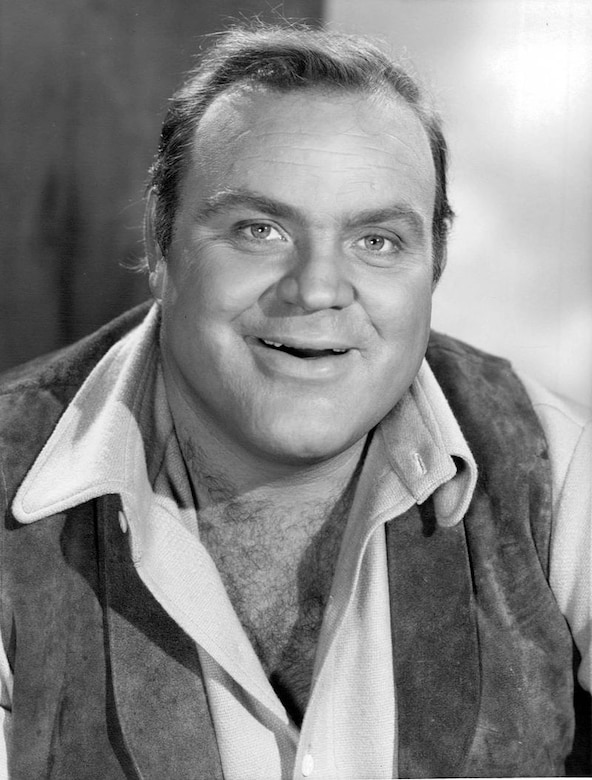
Bobby Dan Davis Blocker is best known as the TV actor who played Hoss Cartwright in the western "Bonanza," but he was also a soldier who was wounded in action during the Korean War.

In 1946, Blocker played football at Hardin-Simmons University in Abilene, Texas. In 1947, he transferred to what was then known as Sul Ross State Teachers College in Alpine, Texas. There, he was a star football player and graduated in 1950.

A man poses for a photo.

Blocker was drafted into the Army during the Korean War in late 1950, receiving basic training at Fort Polk, Louisiana, and nine more months of training in Sapporo, Japan. He then was assigned to Company F, 2nd Battalion, 179th Infantry Regiment, 45th Infantry Division in Korea from December 1951 to August 1952 and attained the rank of sergeant.

Blocker's unit occupied the sector of the Jamestown Line near Chorwon, which is now part of North Korea. In March, his unit was involved in heavy fighting 10 miles west of Chorwon at Outpost Eerie. On May 25, Blocker's company manned Hill 200 where six were killed in action and 21 were wounded; 132 Chinese soldiers were killed.

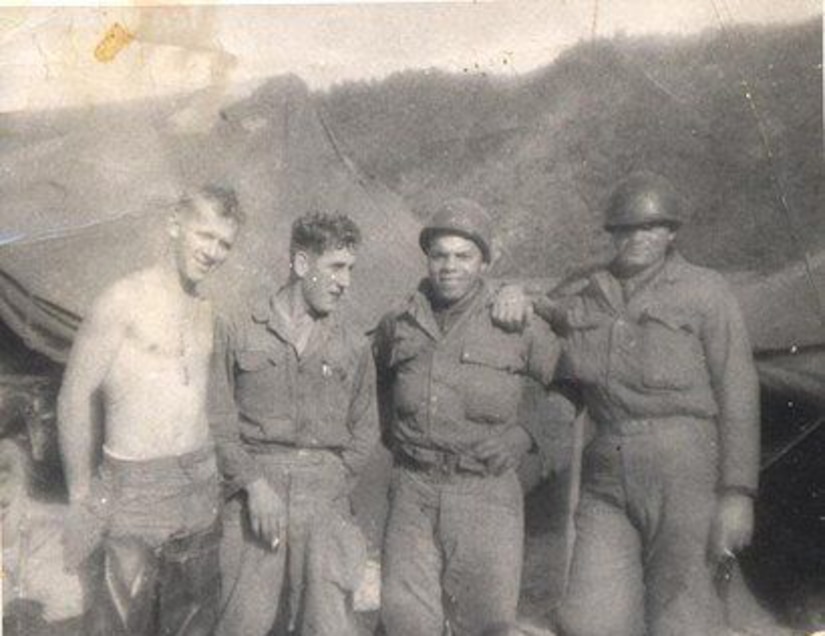
Four soldiers pose for a photo; mountains and tents are in the background.

From June 16 to 26, the 179th fought a series of outpost battles at Eerie, Old Baldy and Pork Chop Hill. On June 26 and beyond, F Company defended Hill 223. The 45th Division was withdrawn from the front in July after 209 days on the line. The 179th then went into reserve at Yanggu, South Korea. 

Blocker, who was the acting company first sergeant, was hospitalized for wounds received during one of the battles. He is credited with saving the lives of unit members in combat and was rotated home in August 1952.

A woman and two men, dressed in 19th century costumes, appear on the set of a western TV series.

Gordon Abts, who received a Silver Star Medal for gallantry on May 7, 1952, said he served under Sgt. Blocker in Korea. He told Steve Cahalan, a reporter for the La Crosse Tribune newspaper in Wisconsin, that the Chinese would usually attack at night, so the soldiers slept during the day.

“[Blocker] was a great guy,” Abts said. “He was very strong. He could take a beer can between two fingers and crush it. He was very athletic. He was loud, but very friendly and got along with everybody. He was a great leader.”

Abts and Blocker became friends, and, after the war, they stayed in touch with each other.

A man sits on the floor playing with two little boys as two little girls play with a large doll and other toys behind the man.

In 1959, Blocker was cast as one of the leads in "Bonanza," playing the middle of three brothers in a family of Nevada ranchers.

He often had to extricate younger brother Little Joe, played by Michael Landon, from trouble. Hoss was a beloved character on the popular show, which ran an extraordinary 14 seasons.

Unfortunately, Blocker only made it to season 13. He died from a pulmonary embolism following gallbladder surgery in 1972. He is buried near his hometown of De Kalb, Texas.

Former Marine Corps Officer Turned Army Critical Care Nurse Serves on COVID-19 Front Lines

 March 30, 2021 | BY ARMY 1ST LT. GRACE HARRISON AND ARMY MAJ. SHERRAIN REBER

From a Marine Corps logistics officer in Iraq, to a critical care nurse serving on the front lines of the COVID-19 pandemic for the Army Reserve, Army Capt. Tineisha Nagle has made a life dedicated to serving her country.

A female soldier works at a hospital computer.

In middle school, Nagle knew she was destined to serve in the military.

"There is a camaraderie within the military that you just don't get with civilian or federal careers," she said. "I knew the military would be a life-long career for me, and the Reserve affords you the opportunity to hold both a military and civilian career — I love that."

In 2005, she graduated from the Naval Academy and entered the Marine Corps where she served as a logistics officer for twelve and a half years on both active duty and in the Reserve. Now, Nagle is finishing her first year as a critical care nurse in the Army Reserve.

"I became interested in the health care side of the military during my deployments to Iraq as a Marine Corps lieutenant and took the necessary steps to become a registered nurse," Nagle said. "I felt that the Army would provide the most unique and expansive opportunities for RNs, so I decided to recommission into the Army Reserve."

After only one year in the Army Reserve, Nagle was mobilized under the 807th Medical Command (Deployment Support) as a member of the Urban Augmentation Medical Task Force (UAMTF) 328-1; a new construct designed specifically to provide support to the ongoing COVID-19 military medical relief effort. The task force is now a part of the broad response efforts being led by U.S. Army North at the request of the Federal Emergency Management Agency.

Two sailors perform surgery in Afghanistan.

In preparing for the mission, Nagle stated that she read a news article where the 807th MC(DS) Commander, Army Maj. Gen. Joe Heck, said, "This is a totally different mission than has ever existed before…"These words struck her as she was still relatively new to the Army and still learning about the history of the Nurse Corps. Nagle said, "I can appreciate that there is something very special about the UAMTF mission, and I am very honored to be a part of it at this stage of my career."

During her mobilization, Nagle worked within a designated COVID-19 intensive care unit providing support to medical staff at Yuma Regional Medical Center in Yuma, Arizona. 

When talking about her experience at Yuma Regional Medical Center, Nagle said, "It has been a quick turn-around on learning the daily protocols of the intensive care unit, without the traditional weeks of orientation before being integrated as part of the staff.

"Under normal circumstances, the integration into the local medical staff would take weeks. These days, time is a luxury that no one can afford as staff are overstretched and worn down with long hours and patients continually needing critical care. Nagle has had some familiarity with working in a COVID-19 environment prior to the mobilization, but this was the first time she worked directly at a patient's bedside for a complete shift.

"I was familiar with what PPE and special precautions needed to be taken, and felt comfortable going into this mission with that knowledge," Nagle said.

As an Army Reserve health care professional, Nagle's role is to support the front-line service members who defend the nation at home and abroad. During the fight against COVID-19 she was in a new role, in the trenches alongside her civilian health care counterparts, to serve the American people, right here in her own backyard. 

A female soldier wearing gloves, face mask and a face shield conducts a medical procedure.

"Reserve health care professionals from all communities have been asked to augment medical staff currently stressed beyond capacity," Nagle said. "On any deployment there is an inherent mission of winning the hearts and minds of the local population, and I feel that this especially applies to missions dedicated to directly serving the American people."

Nagle observed that every provider in the Reserve is experienced in their respective field, so the transition wasn't terribly stressful. "Especially for service members who train for stressful situations," Nagle said.

During a mobilization unlike any in her career, Nagle managed the stress by taking advantage of the down time between shifts to focus on self-care and connecting daily with her husband and family.

"I'm married to an active-duty service member; I have his full support and understanding," Nagle said.

U.S. Northern Command, through U.S. Army North, remains committed to providing flexible Defense Department support to the whole-of-America COVID-19 response.

(Army 1st Lt. Grace Harrison and Army Maj. Sherrain Reber are assigned to the 807th Medical Command.)

Monday, March 29, 2021

Vietnam War Memorial Wreath


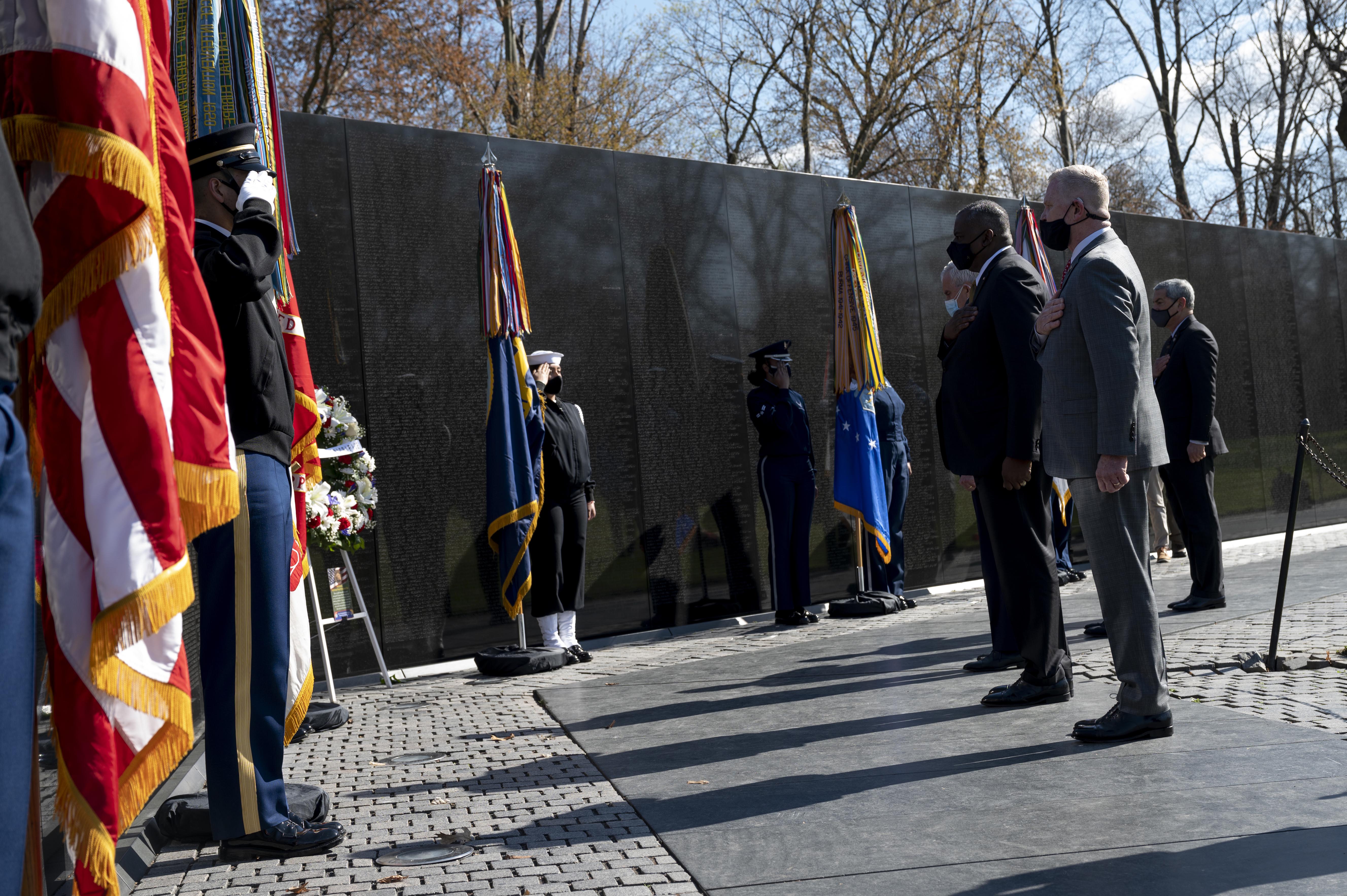
Secretary of Defense Lloyd J. Austin III participates in a wreath-laying ceremony at the Vietnam Veterans Memorial wall with Secretary of Veterans Affairs Denis R. McDonough in Washington, D.C, March 29, 2021.

Flag Officer Assignments

 March 29, 2021


The acting secretary of the Navy and chief of naval operations announced today the following assignments:

Rear Adm. Blake L. Converse will be assigned as deputy commander, U.S. Pacific Fleet, Pearl Harbor, Hawaii.  Converse is currently serving as commander, Submarine Force, U.S. Pacific Fleet, Pearl Harbor, Hawaii.

Rear Adm. Frederick W. Kacher will be assigned as assistant deputy chief of naval operations for operations, plans and strategy, N3/N5B, Office of the Chief of Naval Operations, Washington, D.C.  Kacher is currently serving as commander, Expeditionary Strike Group Seven; and commander, Amphibious Force, Seventh Fleet, Okinawa, Japan.

Rear Adm. (lower half) James A. Aiken, selected for promotion to rear admiral, will be assigned as commander, U.S. Naval Forces, Southern Command; and commander, U.S. Fourth Fleet, Jacksonville, Florida.  Aiken is currently serving as commander, Carrier Strike Group Three, Bremerton, Washington.

Rear Adm. (lower half) Joseph D. Noble Jr., selected for promotion to rear admiral, will be assigned as director, logistics operations, Defense Logistics Agency; and commander, Joint Regional Combat Support, Fort Belvoir, Virginia.  Noble is currently serving as commander, Naval Supply Systems Command Weapons Systems Support, Philadelphia, Pennsylvania.

Rear Adm. (lower half) Dean A. VanderLey, selected for promotion to rear admiral, will be assigned as commander, Naval Facilities Engineering Systems Command Pacific; and director, Fleet Civil Engineer, U.S. Pacific Fleet, with additional duties as fleet civil engineer, N46, U.S. Pacific Fleet, Pearl Harbor, Hawaii.  VanderLey is currently serving as commander, Naval Facilities Engineering Systems Command Atlantic with additional duties as fleet civil engineer (N01CE), U.S. Fleet Forces Command, Norfolk, Virginia.

Rear Adm. (lower half) Peter G. Vasely, selected for promotion to rear admiral, will be assigned as commander, special operations, Special Operations Joint Task Force – Afghanistan, U.S. Special Operations Command, Kabul, Afghanistan.  Vasely is currently serving as director for operations, Defense Intelligence Agency, Washington, D.C.

Rear Adm. (lower half) Stephen D. Barnett will be assigned as commander, Navy Region Southwest, San Diego, California.  Barnett is currently serving as commander, Navy Region Northwest, Silverdale, Washington.

Rear Adm. (lower half) Michael A. Brookes will be assigned as director, J2, U.S. Southern Command, Doral, Florida.  Brookes is currently serving as director of intelligence, J2, U.S. Strategic Command, Offutt Air Force Base, Nebraska.

Rear Adm. (lower half) Timothy J. Kott will be assigned as commander, Navy Region Hawaii; and commander, Naval Surface Group Middle Pacific, Pearl Harbor, Hawaii.  Kott is currently serving as commander, Carrier Strike Group One, San Diego, California. 

Rear Adm. (lower half) Carl A. Lahti will be assigned as commander, U.S. Naval Forces, Japan; and commander, Navy Region Japan, Yokosuka, Japan.  Lahti is currently serving as commandant, Naval District Washington, Washington, D.C. 

Rear Adm. (lower half) Matthew N. Ott III will be assigned deputy chief of staff for Fleet Ordnance and Supply; and fleet supply officer, N41, U.S. Fleet Forces Command, Norfolk, Virginia.  Ott is currently serving as executive director, operational contract support, Office of the Under Secretary of Defense for Acquisition and Sustainment, Washington, D.C.

Rear Adm. (lower half) Milton J. Sands will be assigned as commander, Special Operations Command Africa, U.S. Special Operations Command, Stuttgart, Germany.  Sands is currently serving as commander, Naval Service Training Command, Great Lakes, Illinois.

Capt. Christopher D. Alexander, selected for promotion to rear admiral (lower half), will be assigned as commander, Naval Surface and Mine Warfighting Development Center, San Diego, California.  Alexander is currently serving as commanding officer, Surface Warfare Officer School Command, Newport, Rhode Island.

Capt. Sean R. Bailey, selected for promotion to rear admiral (lower half), will be assigned as deputy commander, U.S. Naval Forces, U.S. Central Command; and deputy commander, U.S. Fifth Fleet, Manama, Bahrain.  Bailey is currently serving as chief of staff, Naval Air Force Atlantic, Norfolk, Virginia.

Capt. Thomas R. Buchanan, selected for promotion to rear admiral (lower half), will be assigned as deputy director for plans and policy, DJ5, U.S. Central Command, Tampa, Florida.  Buchanan is currently serving as commandant of midshipman, U.S. Naval Academy, Annapolis, Maryland.

Capt. Christopher J. Cavanaugh, selected for promotion to rear admiral (lower half), will be assigned as director, Maritime Headquarters (N03), U.S. Pacific Fleet, Pearl Harbor, Hawaii.  Cavanaugh is currently serving as director, submarine/nuclear power distribution (PERS-42), Navy Personnel Command, Millington, Tennessee.

Capt. Brad J. Collins, selected for promotion to rear admiral (lower half), will be assigned as commander, Navy Region Northwest, Silverdale, Washington.  Collins is currently serving as chief of staff, Navy Installations Command, Washington, D.C.

Capt. Jennifer S. Couture, selected for promotion to rear admiral (lower half), will be assigned as commander, Naval Service Training Command, Great Lakes, Illinois.  Couture is currently serving as assistant chief of staff, Naval Surface Force, Atlantic, Norfolk, Virginia.

Capt. William R. Daly, selected for promotion to rear admiral (lower half), will be assigned as deputy director for policy, plans, strategy, capabilities and resources, J-5/8, U.S. European Command, Stuttgart, Germany.  Daly is currently serving as chief of staff, Naval Surface Forces, U.S. Pacific Fleet, San Diego, California.

Capt. Ronald A. Foy, selected for promotion to rear admiral (lower half), will be assigned as deputy director for global operations, J-3, Joint Staff, Washington, D.C.  Foy is currently serving as deputy commander, Naval Special Warfare Command, Virginia Beach, Virginia.

Capt. Patrick J. Hannifin, selected for promotion to rear admiral (lower half), will be assigned as deputy director for political-military affairs (Asia), J5, Joint Staff, Washington, D.C.  Hannifin is currently serving as director, aircraft carrier requirements, N98, Office of the Chief of Naval Operations, Washington, D.C.

Capt. Oliver T. Lewis, selected for promotion to rear admiral (lower half), will be assigned as deputy director for political-military affairs (Europe, NATO, Russia), J-5, Joint Staff, Washington, D.C.  Lewis is currently serving as executive assistant to the chief of naval operations, Office of the Chief of Naval Operations, Washington, D.C.

Capt. Benjamin R. Nicholson, selected for promotion to rear admiral (lower half), will be assigned as U.S. Indo-Pacific Command representative, Guam, Commonwealth of the Northern Mariana Islands, Federated States of Micronesia, Republic of Palau; commander, U.S. Naval Forces, Marianas; and commander, Joint Region Marianas, Guam.  Nicholson is currently serving as executive assistant to the vice chairman of the Joint Chiefs of Staff, Joint Staff, Washington, D.C.

Capt. Randall W. Peck, selected for promotion to rear admiral (lower half), will be assigned as president, Board of Inspection and Survey, Virginia Beach, Virginia.  Peck is currently serving as commanding officer, USS John C. Stennis (CVN 74), Norfolk, Virginia.

Capt. Ronald J. Piret, selected for promotion to rear admiral (lower half), will be assigned as commander, Naval Meteorology and Oceanography Command, Stennis Space Center, Mississippi.  Piret is currently serving as chief of staff, Naval Meteorology and Oceanography Command, Stennis Space Center, Mississippi.

Capt. Benjamin G. Reynolds, selected for promotion to rear admiral (lower half), will be assigned as director of Maritime Headquarters, U.S. Naval Forces Europe/Africa/Sixth Fleet, Naples, Italy.  Reynolds is currently serving as director, Operations Division, Office of the Assistant Secretary of the Navy for Financial Management and Comptroller; and director, Operations Division, Fiscal Management Division, N821, Office of the Chief of Naval Operations, Washington, D.C.

Capt. Mark A. Schafer, selected for promotion to rear admiral (lower half), will be assigned as commander, Navy Region Korea; commander, U.S. Naval Forces Korea; and commander, Naval Component, U.S. Forces Korea, United Nations Command, Korea, Busan, Korea.  Schafer is currently serving as deputy, staff operations and plans, Joint Special Operations Command, Tampa, Florida.

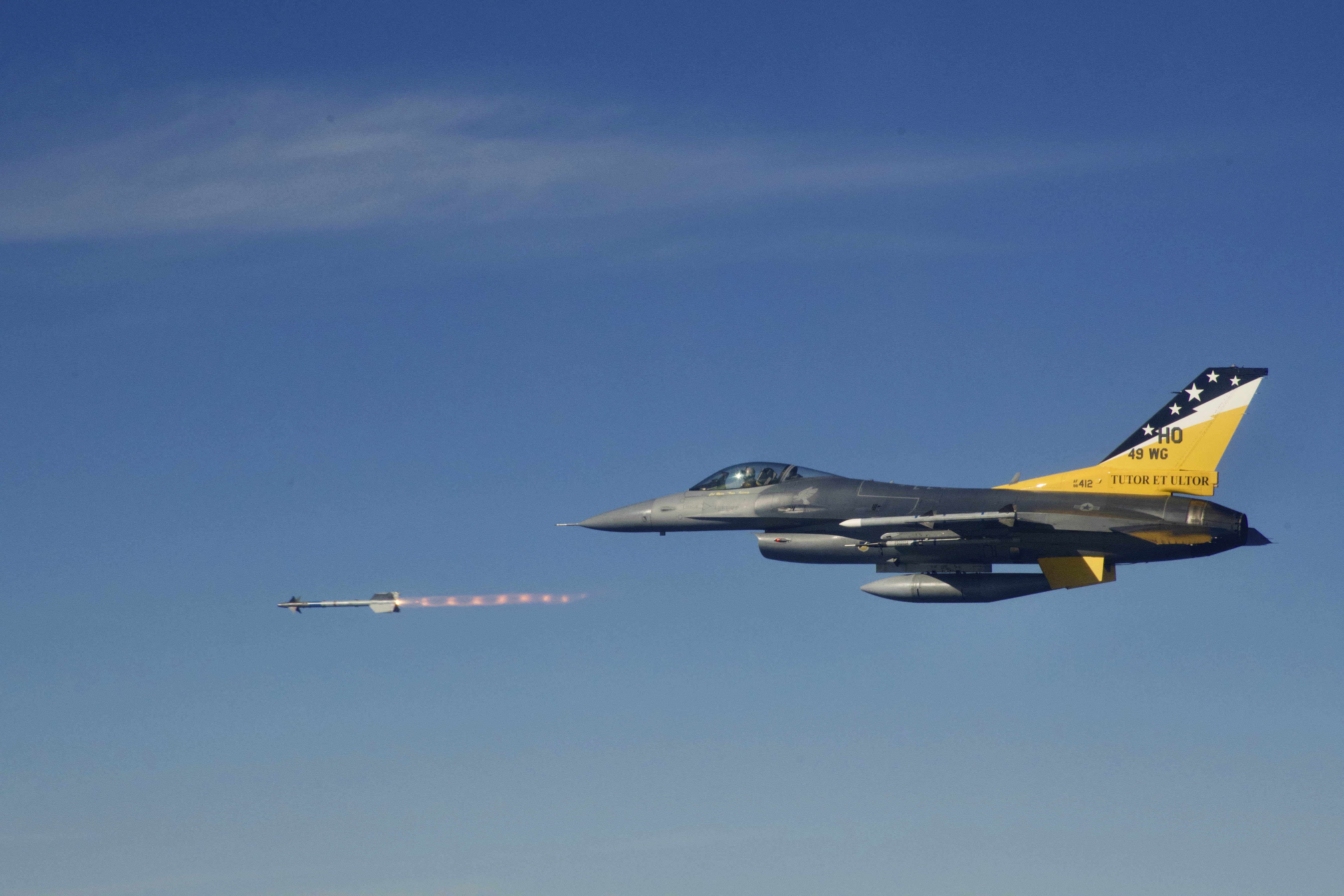
Straight Shot


An Air Force F-16 Fighting Falcon fires an AIM-9M Sidewinder missile during training at Tyndall Air Force Base, Fla., March 10, 2021.