Monday, March 15, 2021

DOD Receives Approval for Grants to Develop Interstate Compacts for Licensure Portability

March 15, 2021

The Department of Defense announced Friday the approval of a series of grants that will help military spouses with the issue of professional license portability.

Through a cooperative agreement with the Council of State Governments, grants will allow selected professions to work with CSG’s National Center for Interstate Compacts to develop model interstate occupational licensure compact legislation, addressing license portability affecting transitioning military spouses, along with other practitioners in the profession.

The five selected professions are teaching, social work, cosmetology, massage therapy, and dentistry/dental hygiene.

This is the first time the department has provided this kind of grant.

“The department views the selection of these professions as a significant milestone in achieving the long-term goal of providing license portability for military spouses,” Lernes J. Hebert, performing the duties of the assistant secretary of defense for manpower and reserve affairs, said Friday to the Senate Armed Services Committee staff at their staffer day presentation. “We look forward to working with the National Center for Interstate Compacts and the selected professions on the completion of compacts for these professions.”

Today’s announcement is the first installment of the cooperative agreement authorized by10 U.S.C. 1784, a bill that addresses the burden associated with relicensing by assisting professions interested in developing interstate licensing compacts except that the organizations overseeing these professions lack the resources necessary to engage in the process. Medicine, nursing, physical therapy, psychology, emergency medical services, audiology/speech-language pathology, licensed professional counseling and occupational therapy are professions that have successfully developed interstate licensing compact prior to the cooperative agreement grant process.

Reducing the burden associated with the occupational relicensing of military spouses is a priority for the department. The annual percent of the military spouse population that moves across state lines is 14.5% — compared to 1.1% for civilian spouses. As much as 34% of military spouses in the labor force are required to be fully licensed; and of those spouses, 19% experience challenges maintaining their licenses.

Military spouses can call Military OneSource at 800-342-9647 to speak with a Spouse Education and Career Opportunities career coach to learn about free tools and resources to help them achieve their education and career goals.  

About the Department of Defense-State Liaison Office

The Department of Defense-State Liaison Office engages state policymakers on the needs of military members and their families. Currently, efforts focus on 10 key issues (as approved by the assistant secretary of defense for Manpower and Reserve Affairs), which promote the well-being of service members and their families. The DSLO is the department’s point of contact for the cooperative agreement with Council of State Governments.

About Spouse Education and Career Opportunities

The Defense Department established the Spouse Education and Career Opportunities program to provide education and career guidance to military spouses worldwide, offering free comprehensive resources and tools related to career exploration, education, training and licensing, employment readiness and career connections. This program also offers free career coaching services six days a week.

About Military OneSource

Military OneSource is a DOD-funded program that is both a call center and a website providing comprehensive information, resources and assistance on every aspect of military life. Service members and the families of active duty, National Guard, and reserve (regardless of activation status), Coast Guard members when activated for the Navy, DOD expeditionary civilians, and survivors are eligible for Military OneSource services, which are available worldwide 24 hours a day, seven days a week, at no cost to the user.

Red Rescue


Navy Petty Officers 3rd Class David Rapp, left, and Jonathan Payanparra fight a simulated fire during a damage control drill on the USS John Finn, March 13, 2021.

Live Fire


A soldier participates in a live-fire exercise during Eagle Sokol 21 at Pocek Range in Postojna, Slovenia, March 12, 2021. The bilateral training exercise with the Slovenian Armed Forces builds a foundation of teamwork and readiness between NATO allies.

Japan Visit Aims to Cement Cornerstone Alliance

March 15, 2021 | BY Jim Garamone , DOD News

The visit of Secretary of Defense Lloyd J. Austin III and Secretary of State Antony J.  Blinken to Japan is all about consulting on shared concerns and opportunities in the Indo-Pacific, a senior defense official said today.

The official told reporters traveling with Austin that the meetings in Tokyo signify the importance the new administration places on U.S. relationships in Northeast Asia.

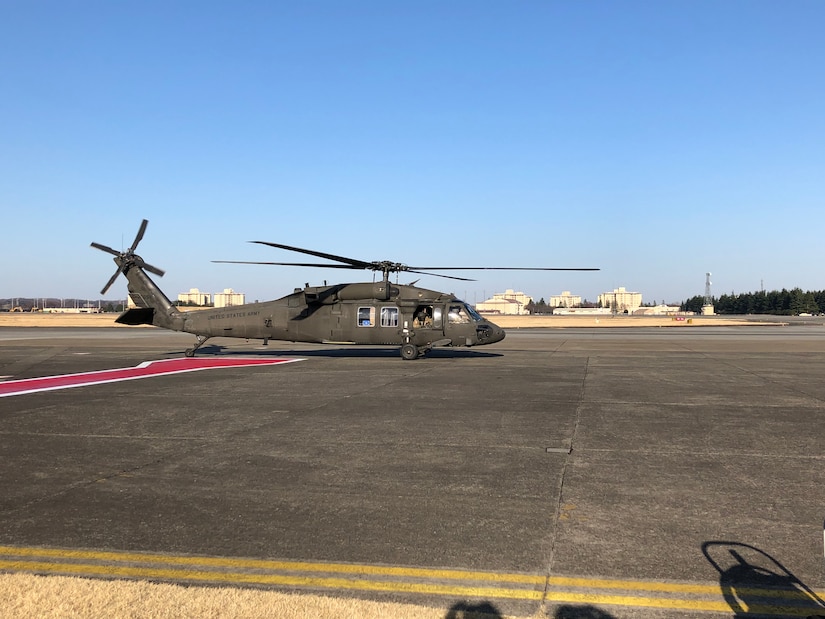
A Blackhawk helicopter takes off.

Blinken and Austin will meet with Japanese Foreign Affairs Minister Toshimitsu Motegi and Defense Minister Nobuo Kishi.

The trip is about investing in the U.S.-Japan relationship, "which is our cornerstone alliance for Indo-Pacific strategy," the official said. "It's about maintaining peace and stability across the priority theater for the department and for our country."

Diplomacy is at the center of U.S. foreign policy. The Defense and State department secretaries making the visits by cabinet-level leaders in the Biden administration to Northeast Asia sends an unmistakable signal of the importance that America places on the relationship. The official said Austin wants to engage in a deepened, sustained discussion about the regional security environment. He will get the Japanese perspective of the region, including the situation in North Korea, the rise of China and adventurism by the Russians. 

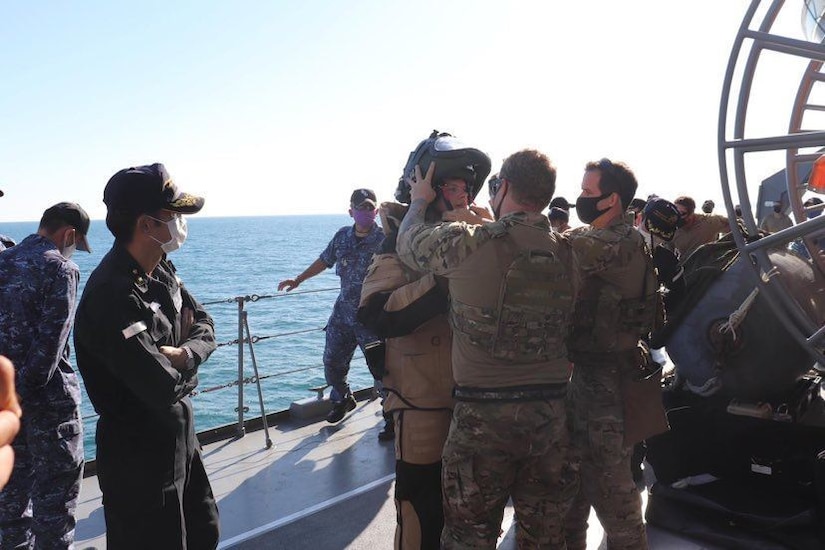
Sailors help a diver into his suit.

Japan and the United States are treaty allies. But beyond that both nations share the commitment to defending the rule-based international order, the official said.

Finally, Austin wants to discuss ways to increase military interoperability with Japanese leaders. "We've got a very strong alliance with Japan, and we're going to be looking at ways where we can make it stronger," the official said. 

He noted that just as the United States military is looking at a strategic posture review, so, too, are the Japanese. "So, this is an opportunity for us to talk about how we can build interoperability within the alliance to strengthen the interoperability within our alliance, what kind of capabilities we need to invest in, [and] how we can work together to better advance our shared goals and common objectives," he said.

DOD Officials Describe Conditions in Indo-Pacific

March 15, 2021 | BY Jim Garamone , DOD News

The Indo-Pacific has always been a region of superlatives, but the terms have changed over the past decades.

Now people talk about the Indo-Pacific being a "region of consequence," "the priority theater," or the "global economic engine."

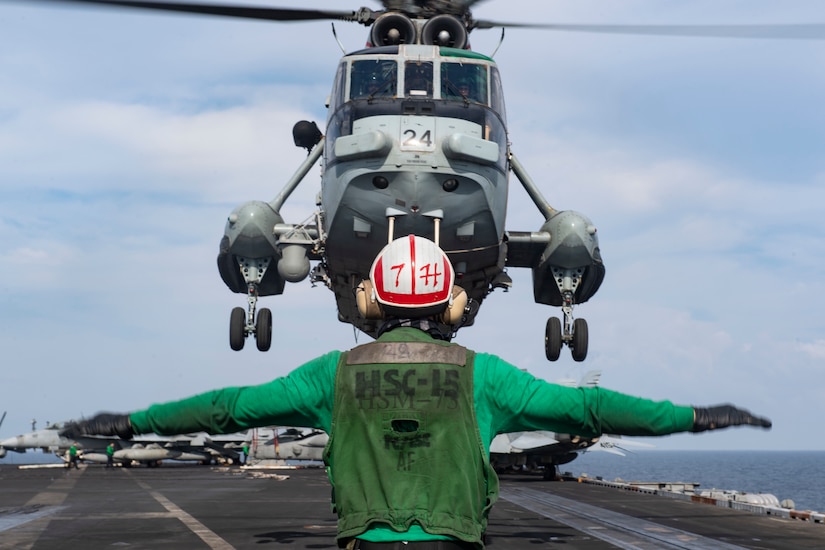
A sailor guides a helicopter as it lands on an aircraft carrier.

For decades, the U.S. military has recognized the importance of the theater. U.S. Indo-Pacific Command covers 51 percent of the globe. The region has 60 percent of the world's population. The United States and China are the world's largest economies. The most soldiers, the biggest navies, the longest distances, most endangered and much, much more. There are hundreds of languages and cultures and environments.

China is the pacing challenge for the United States military, and service members must respond — but it's not the only challenge in the region.

"We've all had these concerns for decades — the rising China, [North Korea], Russia, violent extremist activities — but their scope, volume, scale are much more problematic," said a senior defense official. 

Added to all this is the issue of climate change, which touches fundamentally on many of the island nations of Oceania. Also a problem is that this is the Ring of Fire, where tectonic plates collide causing volcanoes, earthquakes and tsunamis. Top it off with COVID-19 and the global pandemic, and there is a complex brew of problems and issues.

China, Russia, North Korea and violent extremism are in the Indo-Pacific and operate there every day. The threats are a direct challenge to the mission of the U.S. Indo-Pacific Command to provide freedom and mobility for commerce in the region, to support good governance, and to deter aggression. 

The best weapon in the arsenal is the U.S. network of allies and partners. Unlike Europe where NATO and the European Union have inured the nations to working together multilaterally, the Indo-Pacific doesn't have that architecture, a senior defense official said. 

The United States has treaty allies in the region: the Republic of Korea, Japan, the Philippines, Thailand, Australia and New Zealand.

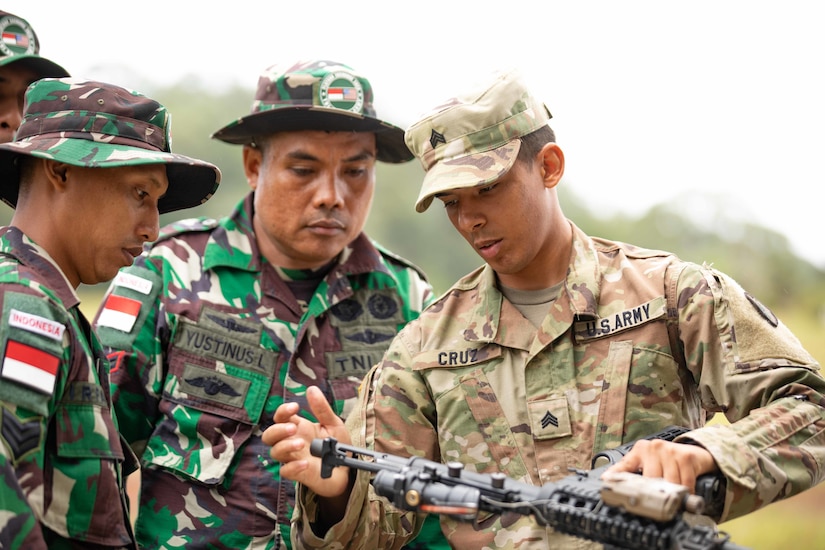
A soldier holding  a gun speaks to other soldiers.

While the United States works bilaterally with many nations in the region, leaders would like to see more multilateral engagement. "The Quad" call that President Joe Biden participated in with the leaders of Australia, India and Japan is promising, officials said. The Quad is not a security pact, but it could grow into an arena that allows the countries to cooperate more.

China's behavior in the region — from fighting with India at the line of control, to increasing efforts and patrols in the Indian Ocean region — is worrisome to India. "They are aware of that and the traditionally non-aligned country is starting to do more with the United States, with Australia and with Japan," the official said. "India is not going to sign a mutual defense treaty with us any time soon, but they are a major defense partner of the United States and they are trying to become more interoperable with the U.S. military in their military capabilities, their command and control, their information sharing."

This is important because the region is so vast and so varied that no one country can do it alone. The United States will need allies and partners to defend the rules-based architecture that has benefited so many — including China. 

The U.S. center of gravity is the friends and allies who want a free and open Indo-Pacific. China and Russia really do not have a network even close to this. 

U.S. government officials will study the basing of U.S. troops in the region. This doesn't mean bases, but spaces. "We are not looking to reposition large numbers of troops, in large vulnerable concentrations," the official said. "We want to get the virtues of massing without the vulnerabilities of concentration."

This means troops positioning in many different countries in episodic and dynamic ways. The U.S. military doesn't require new and permanent bases in Indonesia and Malaysia, for example. "What we need is episodic places that support operations with our allies and partners," the official said. 

Also, officials do not know China's plans, "and anyone who says they do, is probably being a little disingenuous," officials said. 

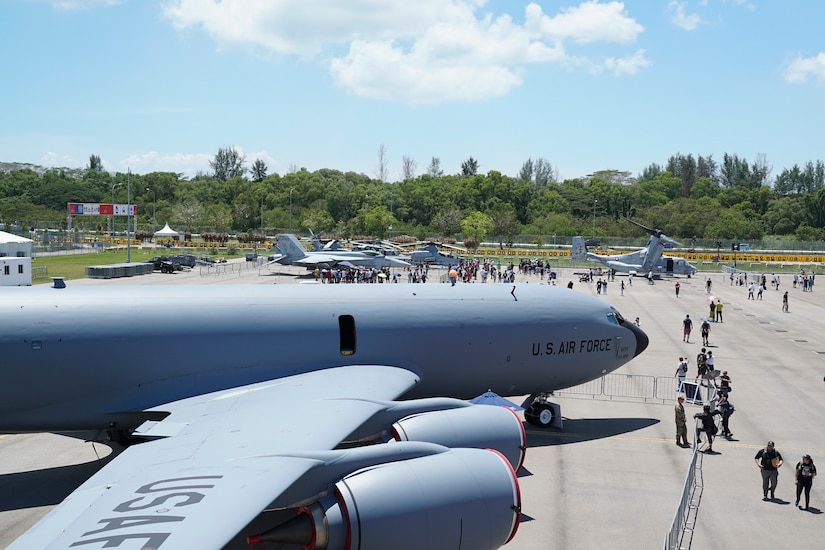
People walk on a tarmac looking at large planes.

China has built islands in the South and East China Seas and plunked missiles on top. Chinese leaders talk of unifying Taiwan under Chinese rule, but Taiwan was never part of China.

With Taiwan in particular, Defense Department officials look at Chinese capacity. "Do they have sufficient numbers of the right pieces of equipment necessary to execute what … they would believe would be a successful operation?" 

China has fielded scores of new and modern systems. "Just in 2020, in the midst of all the COVID related stuff, China still commissioned 25 major new ships," the official said.

A second part of this is that while the U.S. military was fighting in Afghanistan and Iraq, "China went to school on us: We're their pacing threat," the official said. 

The Chinese army has training centers similar to those the U.S. has at Fort Irwin, California, and Fort Polk, Louisiana. "They're trying to become joint interoperable," he said. 

All this leads to an erosion of U.S. conventional deterrence. Leadership processes are weak. "We believe in decentralized execution," the official said. "The American GI or Marine fights best when there are hand grenades being thrown at them, and nobody's around to tell them what to do."

China has nothing comparable. Chinese leaders can write excellent plans, but once they confront the unexpected, there will be trouble for them.


Saturday, March 13, 2021

Austin, Blinken Trip All About Partnerships With Asian Allies

 March 13, 2021 | BY Jim Garamone , DOD News

Secretary of Defense Lloyd J. Austin III's trip to the Indo-Pacific region is all about alliances and partnerships, he told reporters traveling with him.

America's network of alliances and partnerships is an asymmetric advantage. Austin and Secretary of State Anthony J. Blinken will visit Japan and South Korea.

"As a country [we] have more alliances than any other country in the world, more partnerships than any other country in the world," Austin said as the jet he was riding in approached Hawaii. "They give us a lot more capability and so one of the big things the Secretary of State and I want to do, is begin to strengthen those alliances — great alliances, great partnerships to begin with."

Secretary of Defense Lloyd J. Austin III walks up the stairs of an aircraft.

Both Japan and South Korea are treaty allies of the United States.

The visit will be about listening and learning, the secretary said. He and Blinken want to understand how the allies see things in the region with an eye towards increasing regional stability. "So I'm looking forward to engaging the leadership in each of the countries," he said.

Austin will also discuss enhancing capabilities with Japan and South Korea. "China is our pacing threat," he said. "Our goal is to make sure that we have the capabilities and the operational plans and concepts to be able to offer credible deterrence to China or anybody else who would want to take on the U.S."

As the United States focused on the Middle East for the last two decades, "China has worked to build a modernized military capability," the secretary said. 

The U.S. competitive edge has eroded. "We still maintain the edge and we're going to increase the edge going forward," he said. 

This is the first trip of both Austin and Blinken out of the country. The fact that this trip is to Asia is meant to reassure allies of America's commitment to the region.

Friday, March 12, 2021

First Black Female Brigade Commander at Naval Academy Leads With Passion

 March 12, 2021 | BY Terri Moon Cronk , DOD News

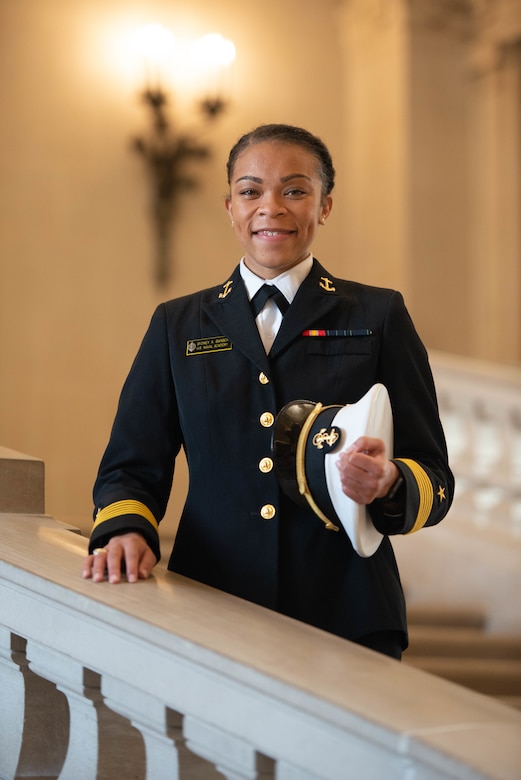
Senior-class Naval Academy Midshipman 1st Class Sydney Barber is a mechanical engineering major at the campus in Annapolis, Maryland, and will be a 2nd lieutenant Marine Corps ground officer when she graduates this spring. 

A female sailor poses for a photo.

She's on the Women's Varsity Track and Field team, co-president of the Fellowship of Christian Athletes club, and secretary of the National Society of Black Engineers. She also sings with the academy's gospel choir and is a member of the Midshipman Black Studies Club. In addition, she initiated a STEM outreach program for mentoring middle school girls of color in science, technology, engineering and math.

If that is not enough, Barber's most awe-inspiring position is as the academy's first Black female brigade commander this spring semester.

In the academy's 175-year history, women were only first accepted into the class of 1980, and she is the 16th woman selected for brigade commander since that time. She beat out 30 competitors for the top leadership position.

What we do is out of an act of love. Out of love, you make sacrifices, and love is proven by action."
Naval Academy Midshipman 1st Class Sydney Barber, brigade commander

Hailing from Lake Forest, Illinois, Barber, 21, is known as the "six-striper" at the academy. She said last night at the Ronald Reagan Presidential Foundation in Simi Valley, California, that she's in the highest leadership position within the brigade of more than 4,000 midshipmen, and she has a staff of 30 people.

As brigade commander, Barber finds solutions to issues that exist in the brigade and presents them to the academy commandant at the end of the day, among her many other duties.

"My job is to build a team," she said. "The team has to trust you and respect you and know their voices are heard. They must feel critical to the mission, and you must touch the hearts of the people you lead."

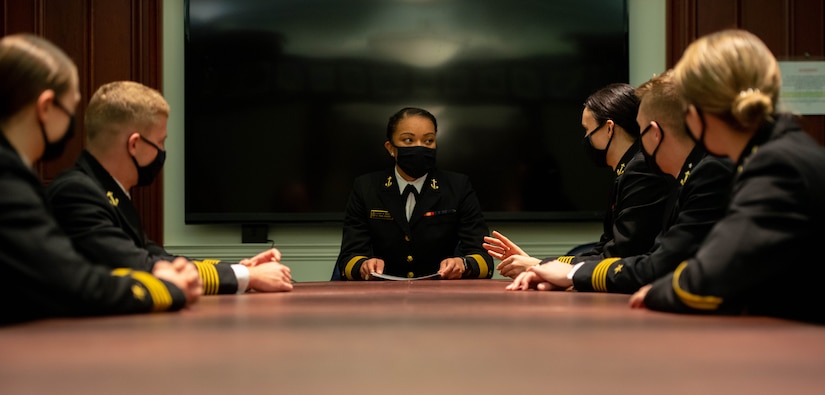
The Naval Academy’s first black female brigade commander meets with other sailors.

Barber said she never pictured herself as brigade commander. "I looked up to strong female leaders and had lot[s] of role models. A year ago, someone said they could see me as battalion commander, so I took on leadership roles, performed community service and joined service clubs. I threw my name in the hat to maximize my potential as much as possible." 

Her efforts had to do with her becoming the best version of herself, she said. 

A self-described introvert, Barber says she's not used to being under the spotlight that's shined on her since her appointment, but she came to embrace the idea that another opportunity might not exist for someone else who looks like her.

Barber says she feels blessed to be brigade commander at the academy, and her approach comprises her lifelong faith, heart and passion. Service became her passion, whether serving her country or working in a soup kitchen.

I pursued things that light fire in my heart."
Midshipman 1st Class Sydney Barber

She left her comfortable suburban life as a teen to do humanitarian work in Chicago, the Dominican Republic and India, among other places. "It opened my eyes," she said of working in the Dominican Republic. "…I grew up in privilege and affluence. I saw people living in metal sheds and making it from one meal to the next. There is much more to life than materialism, and it made me grateful for all I had. I want to pour that back into the world."

The Naval Academy, she noted, was the perfect place for her to do that, and she pursues three things in her life: heart, purpose and legacy.

"There's no greater sacrifice or expression of love than someone who's willing to lay down their life for their country," Barber offered. "What we do is out of an act of love. Out of love, you make sacrifices, and love is proven by action. Everyone wants to have purpose, but words are meaningless unless you pursue the action, not only in this generation, but especially in 10, 20, 30 years."

A sailor shows her class ring.

When she thinks about the life she wants hers to be, Barber wants to confidently say she emptied the tank and did all she could with her humanitarian passion. 

"I pursued things that light fire in my heart. In diversity and inclusion, how do you impact a large sector of people? In a Marine Corps career, leading with heart can be unconventional, but empathy, fostering trust, sharing your story and embracing someone else's, cultivates the passions of others," she said. She said being a leader throughout her career is vital to her and the legacy she hopes to leave.

Asia Trip by State, Defense Secretaries Highlights Importance of Indo-Pacific

 March 12, 2021 | BY Jim Garamone , DOD News

Secretary of State Anthony J. Blinken and Secretary of Defense Lloyd J. Austin III emphasized the importance of the Indo-Pacific region by becoming the first cabinet-level members of the Biden administration to travel to Japan and South Korea.

In a call with reporters, Ambassador Sung Y. Kim, the acting assistant secretary of state for East Asian and Pacific affairs, said the outreach shows that diplomacy is back at the center of U.S. foreign policy. 

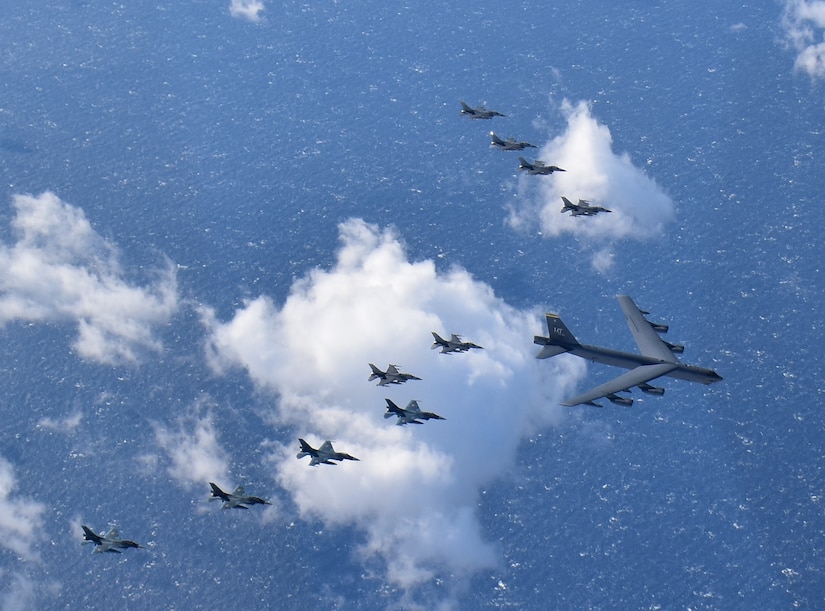
U.S. and Japanese fighters escort a U.S. strategic bomber.

"We are working to strengthen America's relationships with our allies as well as the relationships among them," he said. "And none are more important than Japan and the Republic of Korea."

The two secretaries will meet with leaders in both countries to discuss a wide range of regional and global concerns. The rise of China and the problems of dealing with North Korea are among the issues they will discuss, Kim said. They will also discuss ways to battle COVID-19 and the steps that must be taken to combat climate change. 

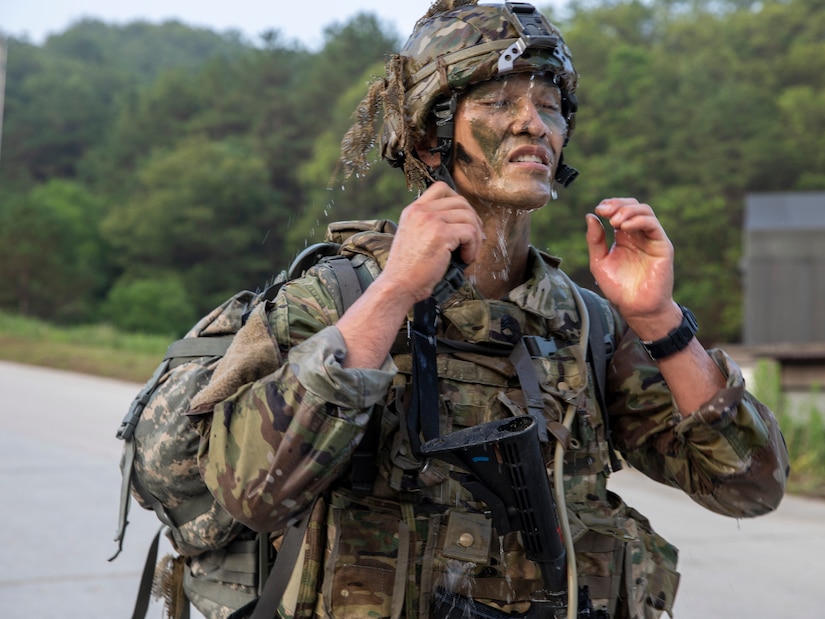
A soldier dumps water over his head to cool down.

In Tokyo, Blinken and Austin will participate in the U.S.-Japan Security Consultative Committee – the so-called "Two-plus-Two" meeting — with Foreign Affairs Minister Toshimitsu Motegi and Defense Minister Nobuo Kishi.

In Seoul, they will attend the U.S.-South Korea foreign and defense ministerial hosted by Foreign Affairs Minister Kang Kyung-wha and National Defense Minister Suh Wook.

"The American, Japanese and Korean people share deeply rooted values of defending freedom, championing economic and social opportunity and inclusion, upholding human rights, respecting the rule of law, and treating every person with dignity," Kim said. "Our cooperation with both Tokyo and Seoul to promote these universal values is vital to a free and open Indo-Pacific."

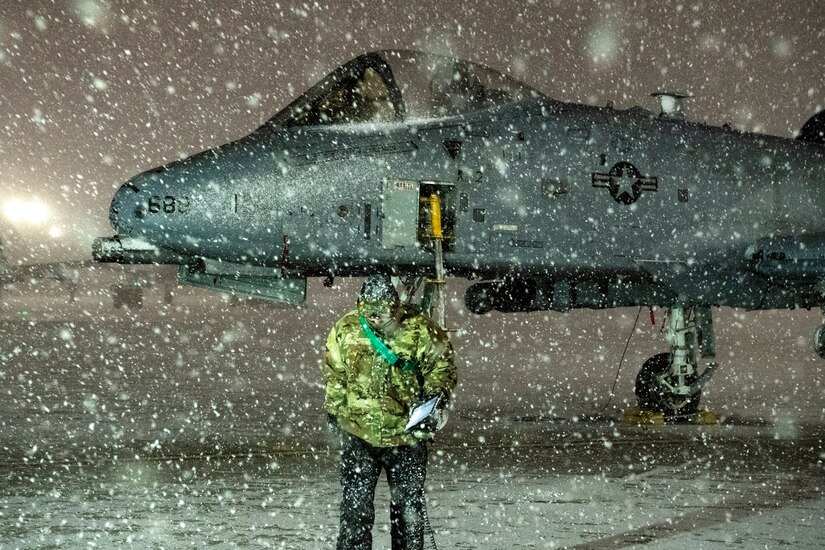
An airman finishes servicing an A-10 while in the snow.

From a defense standpoint, the alliances with South Korea and Japan are a force multiplier, said David Helvey, the acting assistant secretary of defense for Indo-Pacific affairs. The trip illustrates "the United States's commitment to a rules-based international order that places all nations on a level playing field and holds them responsible for preserving the principles that underpin it," Helvey said.

The Indo-Pacific is the Defense Department's priority theater, and U.S. military capabilities there are dedicated to "upholding a free and open Indo-Pacific region where all nations, large and small, are secure in their sovereignty and pursue economic opportunity, resolve disputes without coercion and have the freedom to navigate and fly consistent with international rules and norms," he said.

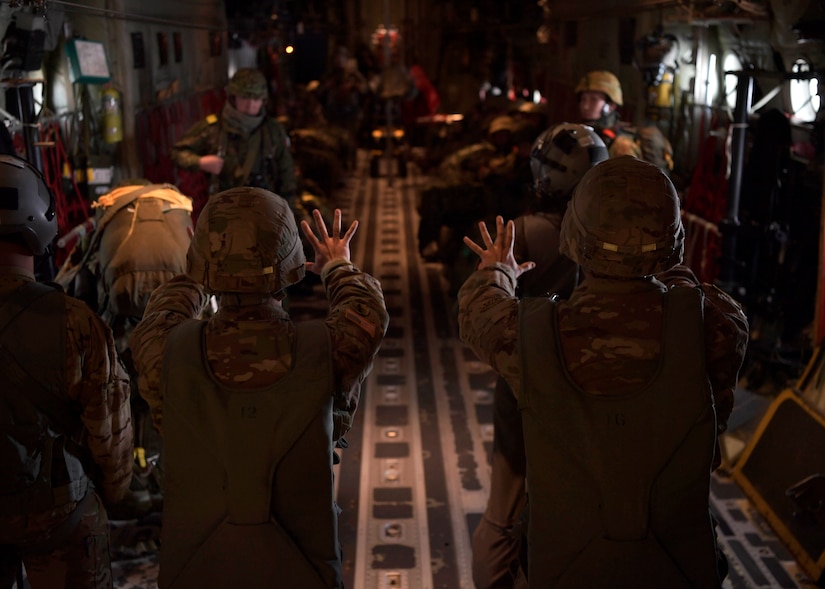
U.S. and Japanese soldiers get the word that their jump from a C-130 is in 10 minutes.

"At a time when the region is facing mounting pressure from the People's Republic of China, and the continued threat from North Korean nuclear weapons and ballistic missile programs, this trip sends an important signal of resolve to work with allies, partners and like-minded nations to promote a peaceful, stable and resilient order that benefits us all," Helvey said.

After Seoul, Austin will travel on to India where he will meet with Indian Defense Minister Rajnath Singh and others in New Delhi. They will discuss ways to better cooperate in the major defense partnership the U.S. has with India. These will include enhanced information sharing, regional security cooperation, defense trade and the effects of new domains.

Eagle Sokol


U.S. and Slovenian troops participate in live-fire exercise during Eagle Sokol in Slovenia, Mar. 11, 2021. The bilateral training exercise with the Slovenian Armed Forces builds a foundation of teamwork and readiness between NATO allies.

Corps Catch


Marines conduct well deck operations in preparation for a humanitarian assistance and disaster relief site survey aboard the USS Ashland in the Philippine Sea, March 1, 2021.

Defense Department Launches $7.5 Million Center of Excellence in Networked Configurable Command, Control and Communications for Rapid Situational Awareness

March 12, 2021

The Department of Defense (DoD), through the Office of the Under Secretary of Defense for Research and Engineering (OUSD(R&E)), launched a $7.5 million Center of Excellence in Networked Configurable Command, Control and Communications for Rapid Situational Awareness (COE-NC4) at the University of California, Riverside, a Hispanic-serving minority institution.  

The Center was awarded through the OUSD(R&E)’s Historically Black Colleges and Universities and Minority-Serving Institutions (HBCUs/MSIs) Research and Education Program and is administered by the Army Research Laboratory.  

By focusing on large-scale networked systems for next-generation computing and communications, the Center will conduct research that enables systems and subsystems for sensing, data analysis, communications and networking, to be seamlessly integrated and adaptive to novel mission needs.  The University of California, Riverside is nationally recognized for both its research capabilities and its diverse student population. The COE-NC4 will connect the university’s talented students, faculty, and staff with fundamental research questions in the development of a robust, resilient, secure, and fully networked infrastructure while responding to failures and security threats.  

“We are excited for the capabilities of University of California, Riverside to further enhance the Department’s efforts to conduct transformative research in these vital areas and their contributions to the defense technology base through the exploration of ideas,” said Dr. Jagadeesh Pamulapati, acting Deputy Director of the Office of Research, Technology, and Laboratories in OUSD(R&E). “The development of key fully networked command, control, and communication applications deepens our ability to solve science and technology challenges ranging from improving the performance of defense networks to accelerating sensing and computing research to further deter our adversaries in support of the DoD’s technology priorities.”

The COE-NC4 supports the Department’s commitment to building a diverse pipeline of science, technology, engineering, and mathematics talent.  This center will integrate underrepresented students into essential research efforts by way of design projects, colloquiums, and internships at defense laboratories and provides participants with a pathway to graduate studies while fostering awareness of critical research that impacts our national security.

“Our partners at the University of California, San Diego, will engage in research using novel communication and computing paradigms to transfer sensitive information safely to enable better decision making,” said Dr. Pamulapati.  “The Center’s research framework will further facilitate collaborations among the partnering institution and the DoD Army Research Laboratory in thrust areas concerning flexible network resource allocation and robustness to adversarial disruptions on sensing and communications infrastructure.”

For more information on the DoD HBCU/MSI Program, see [https://basicresearch.defense.gov/Programs/HBCU-MI-Program/]

Desert Disconnection


A Marine unplugs a fuel hose at Prince Sultan Air Base, Saudi Arabia, March 5, 2021.

Vaccination Time


Hawaii Army National Guard’s Sgt. Roberto Ramilo administers the COVID-19 vaccine to a Department of Education employee in Kona, Hawaii, March 6, 2021.

Academy Vaccination


A sailor receives the COVID-19 vaccine at the U.S. Naval Academy, Annapolis, Md., March 11, 2021.

Airdrop Partners


Air Force Senior Airman Keion Buckley checks Japanese bundles before loading onto a C-130J Super Hercules for an equipment airdrop during Airborne 21 at Yokota Air Base, Japan, March 10, 2021. The exercise allowed U.S. and Japanese troops to work alongside one another while improving the readiness of both forces.

First Military Women of Color Exhibit Opens at Women's War Memorial

 March 12, 2021 | BY Terri Moon Cronk , DOD News

"The Color of Freedom: Honoring the Diversity of America's Servicewomen" exhibit has made its debut at the Military Women's Memorial on the grounds of Arlington National Cemetery to highlight the contributions of military women of color who have served in the U.S. military throughout American history.

Visitors tour a museum exhibit.

The new exhibit was virtually unveiled March 4 in a partnership between the Women in Military Service for America Memorial Foundation and Comcast NBCUniversal, according to a memorial press release. The exhibit tells the stories of women of color who served in the military and it also includes three components with Kindergarten through 12th-grade educational programming, a speakers' forum and a digital exhibit.

"While the memorial has always worked hard to tell the stories of all service women, we are eager to add a voice to the current discussion of race, and to share the extraordinary and enduring contributions of service women of color," said Phyllis Wilson, president of the Women in Military Service For America Memorial Foundation at the exhibit's opening. 

"In many cases [these were] contributions that have been forgotten, ignored or diminished in our textbooks," she noted.

I found these women and many others have been forces within the trajectory of [U.S.] history, women's history and military history. I have found that diversity is our strength..."
Britta Granrud, Memorial Curator

The exhibit spotlights more than 30 service women of color who have blazed trails, broken down barriers and shattered glass ceilings, Wilson explained.

The women of color who dared to lean in and accomplish their missions created a better U.S. military and a better nation, she emphasized.

A display at a museum.

The public narrative regarding racial injustice last summer presented the memorial with an opportunity to develop an exhibit about all women of color, and to highlight their service, said memorial curator Britta Granrud. 

In designing the exhibit, the curator said she wanted the women to tell their stories in their words. The curator was able to capture those words from women who participated in the exhibit and from the memorial's largest repository of women's military stories in existence, in addition to artifacts and other tangible evidence of their service, she pointed out.

"I found that women of color have faced barriers of gender, race and traditional cultural values in pursuit of a right to serve," Granrud said. "I found that in their persistent efforts … overcoming discrimination has allowed them to thrive and see their roles expand across all sectors. I found these women and many others have been forces within the trajectory of [U.S.] history, women's history and military history. I have found that diversity is our strength; … [and] our life experiences and the communities from which we come make us stronger and make us better."

The common denominator of these women of color who served their country is that they are leaders, said retired Army command sergeant major Michelle Jones, a participant in the exhibit and a combat veteran who served 25 years in the Army. Jones was the ninth command sergeant major in the U.S. Army Reserve and the first woman to serve in that position.

A wide shot of a large memorial building.

The women of color who served gave us — and continue to give us — a roadmap of selfless service, she said. 

Jones said the women of color who served carry the five "Ls" of leadership: loyalty, to put the needs of the nation before their own; leadership, to lead the nation's greatest assets in its service members; liberty, to enforce our freedoms and our personal freedoms; life, to ensure our way of life is never compromised, and legacy, about which Jones said, "I say and believe your individual accomplishments and achievements are a testament to what you did in your life. But the legacy you leave is a testament to how you lived your life and the lives that you touched. A legacy never dies. It goes on exponentially."

Her sisters-in-arms continue to exhibit characteristics that carry them through their careers, their lives, their struggles and their disappointments, Jones noted. 

The memorial and exhibit hours are from 9 a.m. to 5 p.m., Mondays through Saturdays; and noon to 5 p.m., Sundays. For more information, call the memorial at (703) 533-1155.

Jet Power


Air Force Capt. Kristin Wolfe, F-35A Lightning II Demonstration Team commander and pilot, flies during a demonstration rehearsal at the 2021 Heritage Flight Training Conference at Davis-Monthan Air Force Base, Ariz., March 5, 2021.

Underwater Construction


Navy Petty Officer 1st Class Travis Kearns secures a 250-pound zinc anode onto a steel pile at Commander Fleet Activities Yokosuka, Japan. The anodes are welded onto the pile using underwater welding techniques developed by the underwater construction teams.

Military Advance


Marines advance during a force-on-force exercise at Combined Arms Training Center Camp Fuji, Japan, March 4, 2021.

Swift Swim


Army Spc. Michael J. Makinano participates in a swim event during the 2021 Best Warrior Competition at Schofield Barracks, Hawaii, March 5, 2021.

Readout of Annual Bilateral Meeting Between Acting Assistant Secretary of Defense David Helvey and Thailand's Ministry of Defence Permanent Secretary General Natt Intracharoen

 March 11, 2021


On March 10-11, Acting Assistant Secretary of Defense for Indo-Pacific Security Affairs David F. Helvey and Thailand's Ministry of Defence Permanent Secretary General Natt Intracharoen led the 6th U.S.-Thailand Defense Strategic Talks.  It was one of the first bilateral dialogues with a treaty ally in the Indo-Pacific region under the Biden Administration, and it symbolizes the value the United States places on the U.S.-Thai alliance.  The talks were virtual, and both sides looked forward to future in-person discussions.

Acting Assistant Secretary Helvey and General Natt discussed the wide range of U.S.-Thailand defense cooperation, including an exchange of views on the regional security environment, and enhancing reciprocal access and security cooperation.  Both sides agreed on the importance of working together to ensure maritime security, reiterated our shared commitment to a free and open Indo-Pacific, and discussed the coup in Burma, where both delegations voiced strong concerns about the Burmese military’s violence against protestors. 

Acting Assistant Secretary Helvey underscored that the United States will continue to prioritize the security, stability, and prosperity of the Indo-Pacific, and looked forward to the 40th COBRA GOLD exercise later this year.  In addition, U.S. Principal Deputy Assistant Secretary of State for East Asian and Pacific Affairs Ambassador Atul Keshap highlighted developments within the context of the U.S.-Mekong Partnership and reaffirmed U.S. commitment to Mekong security issues.

Army Hospital Helps Child With Rare COVID-19 Complication

 March 12, 2021 | BY Jane Lee, Martin Army Community Hospital

"It was scary, but I knew I wasn't going to lose him." A mother's faith sustained her through the most terrifying week of her life, as her 10-year-old son fought off a rare but serious COVID-19 complication in the pediatric intensive care unit in Fort Benning, Georgia.

Army Spc. Olubisi Abisoye's son, Enoch, woke her up in the early hours of Friday, Feb. 12, saying he did not feel well.

"Something's wrong, something's definitely wrong," Enoch said. "My body was too hot, my head was spinning as if something had just hit me in the head. I wouldn't normally wake someone up at 5 a.m. unless it was an emergency, so it was an emergency."

A family wearing personal protective equipment poses for a photo inside a hospital.

Abisoye treated her fifth grader with Tylenol for his headache and fever, and Pepto Bismol for his upset stomach. But when he wasn't feeling any better by 2 p.m., she brought him to the emergency department at Martin Army Community Hospital (BMACH).

The entire family had tested positive for COVID-19 in January, but have since recovered. The doctors still needed to rule it out due to Enoch's symptoms. Thankfully, the nasal swab for COVID-19 came back negative. So did the tests for flu and strep. When his 103 degree fever finally broke around 10 p.m., the doctors discharged him.

Abisoye said her son seemed fine over the weekend, but started complaining of a headache again on Monday. This time, she also noticed rashes. When he started throwing up Monday night, she thought it best to make an appointment to see his primary care manager. Since Enoch was suffering from COVID-19 symptoms, they took him to the Pediatric Respiratory Urgent Care Clinic.

Army Capt. Brandon Pye, a PRUCC provider, quickly assessed the child's symptoms and rushed him to the emergency department.

"His vital signs were so abnormal. His blood pressure was low," Pye said. "His heart rate was markedly elevated. He was lying down with his eyes closed, not spontaneously talking or moving a lot."

Enoch's mom credits this early intervention and the BMACH staff for saving her child's life.

"Within a few hours, his vital signs just started dropping," Abisoye said. "It was bad. He got everybody scared. He was in so much pain; he was crying and yelling. Luckily we had wonderful people on shift that day. They had ten people attending to him to make sure he was okay."

A young boy poses for a photo inside a hospital.

Now began the process to find out exactly what was wrong.

"They had to send his blood to the lab for examination. They did an MRI. The first one that came back was his COVID-19, and he tested positive."

Turns out Enoch had developed a rare but serious complication associated with COVID-19. According to the Centers for Disease Control and Prevention, Multisystem Inflammatory Syndrome in Children (MIS-C) is a condition where different body parts can become inflamed, including the heart, lungs, kidneys, brain, skin, eyes or gastrointestinal organs. The CDC does not know what causes the rare complication, but since mid-May 2020 has reported a spike of 2617 cases. What they do know is more than half the reported cases of MIS-C, 59%, are in males and most are in children and teenagers between the ages of one and 14. The CDC said MIS-C has also disproportionately affected children who are Hispanic, Latino or Black.

"The doctors discovered he had inflammation in different organs. I was really scared," Abisoye said. "He was having difficulty breathing, so they gave oxygen and epinephrine to him to help him… because at that time, he couldn't really breathe."

BMACH reached out to children's hospitals in both Atlanta and Auburn, only to be told their beds were full and couldn't take any critical COVID-19 patients. Fortunately, Children's of Alabama in Birmingham had beds and were already treating patients with MIS-C.

"Because of the urgency of the situation, they had to bring the helicopter to take him over there," Abisoye said. "They took him to the pediatric ICU in Birmingham around 11 p.m."

With her son medevaced to Birmingham, Abisoye took off on the solitary three hour drive.

"The drive was not the problem for me. The problem for me was I was so anxious to see him," shared Abisoye. "I'm not a medical person. I don't know what to expect. I don't know what's the worst that can happen. So that feeling of uncertainty of things scared me."

Abisoye said she prayed all through that night, and the following nights.

"I didn't get to see him until two or three in the morning. When I got to his room, as soon as I opened the door, he was half asleep. He opened his eyes, and he squeezed my hands."

A female nurse in personal protective equipment works at her desk.

Tami Story, BMACH nurse care manager, said two infusions of immunoglobulin finally stopped Enoch's body from attacking itself. Enoch was so sick, he wasn't even able to get out of bed until Thursday. The nurses were afraid of him falling.

"At least I wasn't as shaky," Enoch said. "So I could go to the bathroom and walk back and forth. I wasn't scared. I remember seeing all the beautiful lights during the helicopter ride."

"My greatest fear was the side effects. When this year started, God didn't tell me I was going to lose my child. I knew he was going to make it, but I didn't know what MIS-C was. Because COVID-19 is so new, the doctors can't really say this is what happened 20 years ago, and this is how we deal with it. And this is what we should do. So that 'IF' was the big problem for me as a mom."

Enoch was discharged from Children's of Alabama on Saturday, Feb. 20. He is on the mend, but must have more blood work done and see a rheumatologist in Birmingham to watch for inflammation and any long-term damage.

Thursday, March 11, 2021

Pentagon Press Secretary Holds An Off-Camera Press Briefing

 March 11, 2021

Pentagon Press Secretary John F. Kirby

PRESS SECRETARY JOHN F. KIRBY:  Hello.  Sorry I'm a little late today.  See, I'm not really sorry.

Q:  No, you're not.  And you're late most of the (inaudible).

MR. KIRBY:  Okay, maybe like by four or five minutes, Meghan.  It's not like I'm chronically late.

(CROSSTALK)

MR. KIRBY:  Yes.  In the Navy, I was brought up to believe if you are on time, you're actually late.

Okay.  Got a few things at the top, and then we'll get right at it.  Just make sure I've got this right.

Okay, a quick update on COVID vaccine distribution support.  Yesterday, COVID community vaccination centers in Chicago, Illinois and Greensboro, North Carolina began full operations.  We also achieved two milestones yesterday:  the first day with over 50,000 shots provided by DOD-supported community vaccination centers, and overall, more than 500,000 shots given at the 17 supported sites.

I think today, you may have seen Deputy Secretary of Defense Kathleen Hicks issued a memorandum to commanders of the combatant commands, defense agency and DOD field activity directors on the governance structure for deputy-secretary-managed processes.  The memorandum describes formal mechanisms that the deputy secretary will use to assist the secretary in advancing his priorities; specifically, Deputy Secretary of Defense Hicks is establishing a new governance body, the Deputy's Workforce Council, to advance the priorities laid out last week in Secretary Austin's message to the force.

The council will -- examining -- work to create lasting institutional change around the department's policies and processes on critical matters.  These include sexual assault prevention and response, countering extremism, transgender issues, diversity, equity and inclusion, workforce development and talent management, professional military education, and leveraging technology in support of workforce goals.  And we're going to be posting that establishment memo to defense.gov later today, if it isn't already up.

And finally, I'd like to briefly address some recent comments made by the host of a popular cable show about who serves in the military, and what that service means.  I want to be very clear right up front that the diversity of our military is one of our greatest strengths.  I've seen it for myself in long months at sea and in the combat waged by our troops in Iraq and Afghanistan.  I've seen it up on Capitol Hill just this past month, and I see it every day here right at the Pentagon.  One of the best decisions I ever made was becoming a Navy spouse myself; married to a terrific young naval officer who gave birth to our first child, and then went right back to work doing civil engineering for an airbase in Jacksonville.

We are better and more effective not only when we represent the American people -- all the American people -- but also, when we have the moral courage to include other perspectives and ideas into our decision-making; perspectives that, as the secretary himself noted Monday, are based on lived experience.  It's that experience, and the professionalism and commitment of our people, that has always been our decisive advantage.

A major but specific contributor to that advantage are the women who serve, civilian and military alike, and today, they serve in just about every skill set we put to sea and in the field.  They're flying fighter jets and commanding warships.  They're leading troops on the ground.  They're making a difference in everything we do because of what they bring to the effort.

To be sure, we still have a lot of work to do to make our military more inclusive, more respectful of everyone, especially women.  We're proud that two great leaders like Generals Van Ovost and Richardson have been nominated to combatant command, but we recognize the lack of female leadership across the senior ranks.  We pledge to do better and we will.

What we absolutely won't do is take personnel advice from a talk show host or the Chinese military.  Now maybe those folks feel like they have something to prove; that's on them.  We know we're the greatest military in the world today, and even for all the things we need to improve, we know exactly why that's so.

With that, I'll take your questions.  Go ahead, Barbara.

Q:  On this subject, a number of follow-ups.

Is -- you haven't mentioned Tucker Carlson by name and I am curious why.

MR. KIRBY:  I think you know who we're talking about.  Yes, we're referring to what Mr. Carlson said in his monologue.

Q:  Thank you.

My second question -- two additional questions.  Does the secretary have a reaction to this?

And third, it's my understanding the Armed Forces Network does carry Tucker Carlson's show on your military broadcast distribution network.  Will you -- there is some social media discussion that is -- is opposed to the continuing carrying of that show by the Pentagon.  Will you continue to carry his show?

MR. KIRBY:  The secretary certainly shares the revulsion of so many others to what Mr. Carlson said in his opening statement.  And, yes, Tucker Carlson's show, as well as a lot of other programming, airs on Armed Forces Network.  As I think you know, by instruction, we are required to broadcast and to make available for men and women and their families overseas the same type of content -- news, information, and sports content -- that their fellow citizens can get, so his show is aired on AFN.

Q.  Thank you.

Yeah, Joe.

Q:  On a different subject, following the latest decision made by the administration in regards to supporting the Saudi-led coalition in Yemen, I was wondering if you could provide us with the current assessment of the U.S. CT operations inside Yemen.

MR. KIRBY:  No, I'm not going to do that, Joe.  I'm not going to get into talking about specific operations here.  You know I won't do that. 

And we have a CT mission in Yemen that -- that remains important and critical.  And -- and it's still being implemented and executed by U.S. Central Command.  But I won't speak about the details of that.

Q:  Are you able to provide us with the number of U.S. special forces inside Yemen?

MR. KIRBY:  I'll have to see -- I don't know if that number's available.  I'll have to take the question and get back to you.  I don't -- I don't know if I have that.

Q:  Another quick question.  Today King Abdullah of Jordan denied permission for the Israeli prime minister to fly over Jordan on his route to UAE.  Jordan is close ally to the United States, as Israeli.  Are you concerned about the tensions between Israel and Jordan right now?

MR. KIRBY:  Those are issues for those two countries to -- to speak to and to address, Joe, and I'd think I'd leave it to the leaders of both those countries to talk about that.

Q:  Thank you.

MR. KIRBY:  Idrees?

Q:  Hey, John, if I could just change the topic quickly to the Capitol and National Guard, when was the last time the secretary spoke with the Capitol Police chief?  And has he conveyed to them, you know, what the Pentagon has said repeatedly, that the National Guard shouldn't, sort of, be a tool of first choice?

Because I think there's an increasing perception that the Capitol Police, you know, are very good at making requests, maybe not as good as making internal changes after January 6th.

MR. KIRBY:  I think -- I've talked about this before.  I mean, obviously the secretary has said and has continued to say publicly and privately that he doesn't want our National Guard troops up on Capitol Hill one day longer than they need to be.

I don't think anybody wants to see this become an enduring mission.  And by enduring I mean a forever mission.  At the same time, he recognizes that there is a legitimate need for them.  We talked about that yesterday, a valid requirement because of some capability gaps and capacity shortages right now that the Capitol Police are experiencing, as they adjust to a new post-January 6th environment.

And he looked at the request, determined it was valid, and we're going to source it.  But, of course, I don't think it's anybody's intention that this become some sort of long-term enduring mission for the National Guard here in the Capitol Region.

And I would just, lastly, because I don't think I answered your first question, he has certainly made those concerns well known to leaders here in the Pentagon.

Tara?

Q:  Thanks.  To follow up on Idrees' question on sourcing for the 2,300.  A number of units that I've spoken to have said they are coming home, they are not extending their mission at the Capitol for various reasons, whether it's they’re exhausted by the COVID response or they -- you know, natural disasters.

So when you say we're going to source it, can you update us on options that the Defense Department is considering, including the potential for involuntary activation?

MR. KIRBY:  I'm going to point you to specifics, to the National Guard Bureau, they are really the ones that will be much better able to answer that than I will.  But as I said yesterday, and it's my understanding that there will be a bit of a transition here between the Guardsmen that are supporting this current mission, which, as you know, ends tomorrow, and then the incoming mission, which extends out until May.

So we expect a certain number of Guardsmen that are on the mission now will stay in place to help with that transition, that turnover.  We also expect that some, and I don't know the number, I'll point you to the National Guard, but some Guardsmen have expressed an interest in volunteering to stay for the whole extension.

And then lastly, it's our understanding that for the sourcing of the new requirement, the extension, will be in -- will be tasked out, will be tasked to the governors to support.  And so we'll be looking at whole units coming in.  It won't be done in the same voluntary fashion that the current mission is being assigned.

And that's for a couple of reasons.  One, it helps protect these Guardsmen with their employment benefits.  And, two, it gives a greater sense of command-and-control because they'll be coming as whole units.  And so it will give the Guard a better ability to define the capabilities that the units have and that they'll come in complete with their command-and-control already built in as units.  That's my understanding.

But as for the details of that, how fast, from what states, and what that transition between the current mission and the follow-on mission, I'd point you to the National Guard.

Q:  Just as a quick follow-up, is there any concern in the building that by meeting the request through involuntary activations, that there'll be this perception of forcing troops to stay at the Capitol?

Again, following on the -- the line of questioning I had yesterday about, like, the optics of having service members come guard the Capitol and, you know, protect it instead of having it be open to all -- all of America who, you know, it used to be the people's house, could go in and -- it just seems like it, you know, there's been a lot of -- just there's been a lot of criticism that it's becoming more of a fortress rather than the open Capitol...

(CROSSTALK)

MR. KIRBY:  Nobody wants to see it become or be seen as a fortress.  As I said, the secretary's made clear, he doesn't want Guardsmen up there one day longer than required.  Again, I think the decision for the involuntary activation makes sense on a couple of different levels, and that gets us to May, and there's not talk that I'm aware of or no speculation that we're -- that we're going to be looking at missions beyond May.

But as the -- as for your question about -- about the optics, again, this is -- this is a valid requirement that was analyzed here at the Pentagon, and the secretary's comfortable that -- that it's worth supporting, okay?

Yeah?

Q:  Thanks, John.  Can you address the significance of the secretary's first foreign visit, and what he hopes to achieve?  And what can you tell us about when he intends to visit the Middle East, and whether there are any plans that are being worked out towards that?

MR. KIRBY:  I don't have any additional travel to speak to today.  I mentioned -- I talked about this yesterday, so I'd point you back to the transcript from yesterday.  But in essence, the secretary's very pleased to be able to make his first trip overseas, and to do so with the secretary of state, and to the Indo-Pacific region, which is such a critical part of the world.

And the main thrust of the trip is really to revitalize and to -- and to show our support to our alliances and partnerships over there, specifically our alliance with Japan and with South Korea, those are the two big stops there for -- for both Cabinet officials.

Q:  But for the Middle East, are there any plans...

(CROSSTALK)

MR. KIRBY:  As I said, I don't have any travel beyond what we're doing next week, to speak to.

Q:  Thank you.

MR. KIRBY:  Yeah.

Abraham?

Q:  Thanks, John.  After the Guard presence and granting of that request from the Capitol Police, did Secretary Austin put any strings attached to -- to this Guard force to assure that there will be a transition to no more Guard after May 23rd, or did he just give a blank slate?

MR. KIRBY:  You saw the -- you saw the -- the authorization that -- that he signed and it makes clear what the expectations are for authorities, for these -- this additional extension, for these Guardsmen during this initial extension.  And as I said, he doesn't want the Guard to be considered an enduring solution here, and he doesn't want them to spend any more time up on Capitol Hill than what's required.  He believes that this is a valid requirement, and I won't -- I won't speculate beyond that.

Mike?

(CROSSTALK)

Q:  The secretary's confident, then, that there -- that after May 23rd, he won't have to re-up again?

(CROSSTALK)

MR. KIRBY:  I won't speculate beyond -- beyond this extension.  I appreciate you want to get us into hypotheticals beyond that, and I'm just not going to do that.  I mean, it is -- it is clearly not a mission that we want to see the Guard own forever, but there's a valid requirement, the secretary determined that, and so we're going to fill this extension request, and that's what our focus is on right now.

Mike?

Q:  I want to go back to the Tucker Carlson incident.  You and the secretary are both political appointees, so you're held to a different status.  But there are also -- there have also been a number of general officers who've gone onto social media to directly criticize/attack Tucker Carlson by name for -- for the piece that they didn't like.  Is that sort of a proper behavior for serving officers to -- to get that sort of deep in the weeds?  And is that some sort of new (CROSSTALK) --

MR. KIRBY:  If you're asking -- if you're asking, does the secretary have concerns about the fact that active-duty leaders are also expressing their revulsion to these ridiculous comments, no, he doesn't have concerns about the -- their -- their willingness to do that.

Q:  Okay.

MR. KIRBY:  Let's see, on the phone, Bryan Bender?

Q:  Thanks, John.  Different topic:  I'm wondering if you have any update on the status of the department's position on Colin Kahl and his nomination to be the policy chief, now that it looks like all the Republicans on the Senate Armed Services Committee are a no vote, and it's, obviously, seriously in doubt whether he can get enough support.

MR. KIRBY:  Bryan, as -- as we -- I said the other day, the -- the secretary fully stands by the nomination of Dr. Kahl to be the undersecretary of defense for policy.  He's exactly the right person to -- to head up that effort here at the Pentagon with vast and significant experience in the field of policymaking, and he looks forward to working with the -- the Senate Armed Services Committee and the Senate writ large in the confirmation process, and very much looks forward to -- to a successful vote, and to getting Dr. Kahl in the building.

Jeff Schogol?

Q:  Thank you very much.  Does Tucker Carlson owe every woman in the military an apology?

MR. KIRBY:  I'll let Mr. Carlson figure that out for himself, Jeff.  I think I've made our position quite clear here at the Pentagon.

Paul Shinkman?

Q:  Yeah, hi, John.  The Reagan Institute issued a call yesterday saying that public trust and confidence in the military is slipping.  It -- it's still high, but over a two-year period, it's pretty steadily trending downward.  How troubling are the result of this poll?  Do you believe it has anything to do with the fact that the military has been thrust into the political fray in recent months?  And is there anything that the military is doing to reverse this trend by their -- because of this poll or in general?

MR. KIRBY:  Well, we're still working our way through the survey, Paul, and I addressed this a little bit yesterday.  I -- I would note that still, the United States military is the most trusted institution in -- in America right now, and we're always mindful of the need to earn and to deserve the trust and confidence of -- of the American people.

As to why the numbers are the way they are, I would point you to the -- the -- to the Reagan Institute, who -- who funded and -- and put forth this survey.  Our focus here is on making sure that we continue to defend the American people against threats to their security, and that -- that we do so in a responsible, prudent, measured, deliberate and -- and effective way, and -- and that's -- and I -- and -- and that's really where the locus of our energy is.  Clearly, we want to make sure that as we do all that, that we retain the -- the trust and confidence of the -- of the American people.  But again, I'd -- I'd have -- I'd have the agency issuing the survey speak to, you know, the -- the data and how they -- and how they -- how they arrived at that data.

Anything here in the room?

Q:  Yeah, John, just --

MR. KIRBY:  Yeah?

Q:  Just -- just for clarification, that's -- for the COVID shots, there were 50K in one day, and 500,000 given, just less than a month that they've -- that this effort has established and ramped up, correct?

MR. KIRBY:  Yes.

Q:  What do you anticipate the number of shots in arms is going to be in another month?

MR. KIRBY:  I -- I -- I couldn't tell you, Jim.  I -- I don't -- I don't have a -- a projection of what that's going to look like.

Q:  You're going to get more teams out though, right?

MR. KIRBY:  Well, that -- it -- it's -- we are certainly prepared to do that.  You've seen that the secretary's authorized, I think, 35 total teams.  There are 17 in action right now.  We don't want to go faster than FEMA and local communities can support.  So the idea of authorizing them in advance is to make sure that they're prepared, they're trained, they're ready to go.  Their existing commands are -- are being made ready for their departure and for backfilling their capabilities so that readiness at our MTFs is not -- our military treatment facilities -- is not adversely affected, so -- affected.  So all that's a part of the calculus.  I -- I couldn't predict what the number of teams are -- on the ground is going to be next week or the week after.  We will -- we can only go, and should only go as fast as FEMA and local communities will allow us to do that.  So that's why it's impossible for me to extrapolate from this data what it's going to look like in a -- in a couple of weeks.  So we'll just -- we'll just see.  The -- the -- the secretary's been very clear that we're going to lean in on this, and we're going to do as much as we can to support these FEMA-led efforts around the country to -- to get vaccines in arms.

Q:  Okay.

MR. KIRBY:  Yup.  Sylvie?

Q:  Hello.  I have a question.  I would like to go back, actually, to China.  Some Democrat senators and representatives have said that it would be a good idea for U.S. to ratify the U.N. Convention on the Law of the Sea.  I wanted to know if -- also, the position of the secretary.

MR. KIRBY:  It -- if -- is what the position of the secretary, Sylvie?

Q:  That it -- it should be -- it should be good -- it would be good to ratify this convention, U.N. convention.

MR. KIRBY:  It's -- we -- we continue to support the Law of the Sea Convention, and -- and we recognize the Senate's role in -- in ratifying that, and continue to be supportive of -- of a frank and candid discussion with legislators about -- about the -- what the Law of the -- the Sea affords us, and I think I'd leave it at that for right now.

Q:  You don't think it would help you in your efforts for a free -- free Pacific to, you know, to fight for the -- this principle? 

(CROSSTALK)

MR. KIRBY:  We essentially -- we essentially subscribe to the -- the Conventions of the Law the Sea as it is in practice.

Q:  Okay.

MR. KIRBY:  Stephen Losey?

Q:  You answered my question, thank you very much.

MR. KIRBY:  Okay.  Wafaa.

Q:  Yes, thank you, my question was answered.  Thank you.

MR. KIRBY:  Okay.  (Caitlin Kenney.

Q:  Hello.  Has Secretary Austin, Deputy Secretary Hicks provided any recommendations to the president about who he should look for, for any -- look at for any of the present military service secretaries?  And also, are they being consulted on this matter?

MR. KIRBY:  I won't get ahead of the decision-making process, Caitlin, as you know, that it's the president's prerogative as commander-in-chief to nominate individuals for service secretaries.  And that process continues.  I certainly don't have an update on it.  Everybody recognizes the importance of those jobs and how significant they are.  And I think it's important to the secretary to make sure that the recommendations he is making to the president, that he is making the best recommendations he can for the best possible talent to be the civilian heads of the services.

But I don't have an update on timing for you.

Q:  So you are saying that the secretary -- that Secretary Austin is consulting with the president about who he should look at?

MR. KIRBY:  I'm not going to get into private conversations or consultations between the president, commander-in-chief.  I think you can understand why I wouldn't do that.  What I am saying is that that he is aware of the need to fill those assignments and that when the time is right he will make the appropriate recommendations to the president.  And it ultimately is the president's decision to nominate individuals for those jobs.

Anything more?

Q:  Are there any updates on the attack on Al Asad?  Are the Iraqis making any progress in their investigation or did they share any useful information with you?

MR. KIRBY:  I don't have any updates on the Iraqi investigation.

Before I go, I want to go back to one question.  This was Jeff's question about whether or not Mr. Carlson should apologize to all women in the military.  Again, as I said, I won't speak for -- to that specifically, but I would hope that in the reaction he has seen, and hopefully in our reaction here today, that he'll realize the mistake he made and express some regret about the manner in which he essentially demeaned the entire U.S. military and how we defend and how we serve this country.

Okay.  With that, see you.

Seahawk Supplies


A Navy MH-60S Seahawk transfers supplies from the USNS Wally Schirra to Marines on the flight deck of the USS Makin Island during a replenishment in the Persian Gulf, March 7, 2021.

Heavy Haul


Marines pull a vehicle traction pad from an Army logistics support vessel during Spartan Fury at Marine Corps Base Hawaii, March 8, 2021. The exercise demonstrates ability to conduct distributed operations inside an adversary’s sensors and weapons engagement zone, attain and defend key maritime terrain and conduct sea denial in support of fleet operations.

Parnter Practice


Air Force Staff Sgt. Tara C. Cummins trains with military working dog Hugo at Kirtland Air Force Base, N.M., March 9, 2021.