Thursday, September 10, 2020

COVID-19 Safety Protocols, New Routines in Place for Fort Campbell Students

Sept. 10, 2020 | BY STEPHANIE INGERSOLL, ARMY

With backpacks hanging from their shoulders and masks secured to their faces, hundreds of students flooded into post schools on Fort Campbell, Kentucky, for their first day back.

''It's good to get out of the house and see people,'' said Isabella Espinoza, 12, as she waited to enter Mahaffey Middle School.

On the morning of Aug. 24, students and parents arrived at schools across the installation for the first time since March, when they were closed to prevent the spread of COVID-19. For many, it was a different experience than in the past as school staff enforced guidelines established by the Centers for Disease Control and Prevention and the Department of Defense Education Activity.
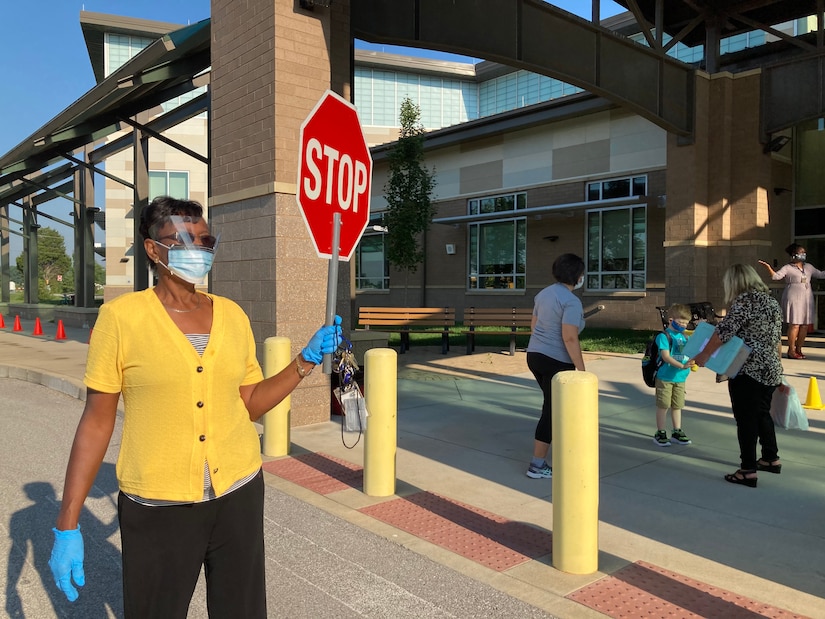
A teacher wearing a face mask and shield holds a stop sign.

Much planning and teamwork came together to get ready for post schools to reopen amid  the COVID-19 pandemic, said Linda Haberman, principal of Mahaffey Middle School.

''A lot of forethought went into this because when you think about health and safety for large numbers of students, you certainly take that personally – you want to make sure you have done everything you could to make sure all of your children and your staff are safe,'' Haberman said.

Isabella was one of  about 385 students who returned to Mahaffey in person for the start of the new school year. The school serves around 520 students, but some opted for a semester of virtual learning from home, Haberman said.

''This first day, we really wanted to do a lot of building community, building culture, making them feel good about being back in school, reducing any stress they might feel and really work on building that communication, community and of course, health and safety,'' she said.

Army Lt. Col. Brian Freidline, deputy commander for administration at Blanchfield Army Community Hospital, and wife, Missy, waited for school to start with their 14-year-old daughter, Anna, outside Mahaffey.

''School is important,'' Freidline said. ''You're always excited for her to start a new year with new teachers and new friends. She'll be learning new things and there will be new opportunities. And it gets everyone back on schedule.''

At Barkley Elementary School, Heather Pappas helped her 5-year-old daughter, Lily, with her rainbow mask. Pappas could not walk Lily to her classroom and greet her teacher as she would have in years past, but Lily didn't seem to mind.

A lot of forethought went into this because when you think about health and safety for large numbers of students, you certainly take that personally – you want to make sure you have done everything you could to make sure all of your children and your staff are safe.''
Linda Haberman, principal

''I'm 100 miles excited,'' Lily said.

Pappas was a little more nervous. Lily, who has four siblings, is the only one old enough to attend school.

''I never thought her first day of school would be in a mask,'' Pappas said. ''I'm nervous, but excited because she's my oldest.''

Kayla Lucas pushed a stroller with her infant while standing in line outside Barkley, while her daughter, Ava, 6, wore a face mask with Disney's ''Frozen'' characters that matched her backpack. She looked around for any friends while waiting to enter the school.

''I'm anxious but excited,'' Lucas said. ''You're excited for her to start, but you don’t really know what to expect with [COVID-19].''

Barkley Elementary School Principal Jenaya Parris said parents are not allowed inside the building to limit the number of people inside and practice social distancing.

Parris greeted students at the door that morning. About 369 were signed up for in-person school and about 120 enrolled in virtual learning, she said.

Parris said the morning went smoothly.

''The kindergarten especially welcomed their students in our gym, where they were able to social distance, make eye contact and start right from the beginning of the day, making students feel welcome and as they belong,'' she said. ''And knock on wood, we didn't even have any tears, so it was good.''

Teresa Moss, Barkley Elementary School guidance counselor, started the first day with drop-off duty. She wore a face shield and held a stop sign as she directed parents to pull their cars forward outside the entrance to let their children out.

Moss said she feels great to be back on campus.
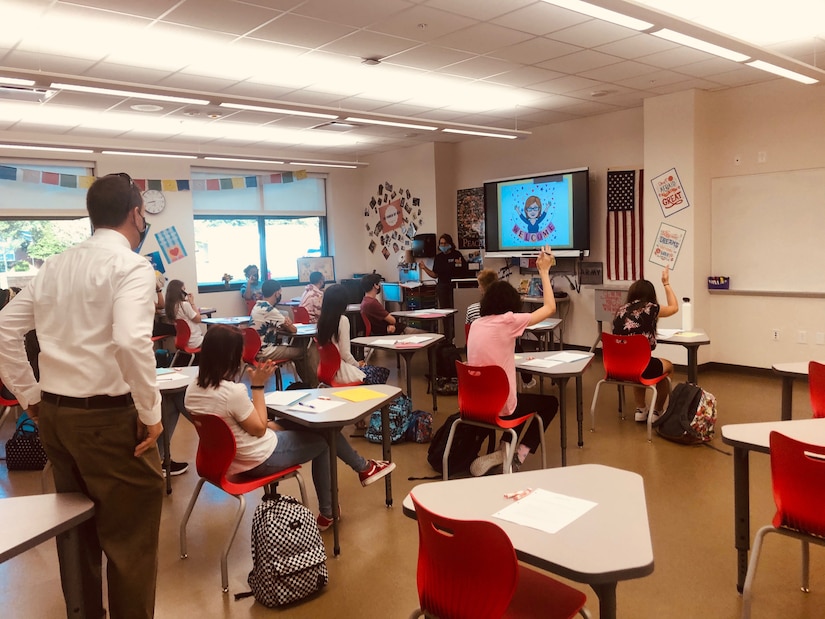
A teacher wearing a face mask teaches a class following COVID-19 social distancing guidelines.

''It's a little different, but it's good to see the kids,'' she said. ''I'm here to help those kids let that anxiety bubble float away.''

Fort Campbell High School Principal Thomas Whittle said the first day back was filled with excitement, learning and safety precautions.

''It's gone quite well, so far,'' Whittle said. ''We have had no issues with masks or students following the rules. There was not one issue with students not wearing a mask. The majority of our students did return.''

Parents also cooperated and there were no problems with car drop- offs or buses, he added.

''They followed the new routine, and if they didn't know they asked,'' Whittle said.

Teachers and staff also were in high spirits to be returning to a routine, he added.

''The faculty was happy to see the kids,'' Whittle said. ''They were happy to see that students wanted to be in school and had a desire to learn. It was quite exciting for people to get back to something close to normal.''

Staff will provide academic and emotional support to help students ''make sense of the new normal,'' he said.

(Stephanie Ingersoll is assigned to Fort Campbell).

China's Africa Investments Could Benefit All if International Rules Are Obeyed

 Sept. 10, 2020 | BY C. Todd Lopez , DOD News

Recently, during a closed-discussion facilitated by the African Center for Strategic Studies in Washington, D.C, U.S. defense officials joined African, European and U.S. scholars to discuss China's involvement in the world's second-largest continent. One takeaway was that China's investments and involvement there can be beneficial and welcome — so long as China plays by established global norms.

"The expectation is that China will be in Africa for a long time — and that's OK," said Chad L. Sbragia, the U.S. Deputy Assistant Secretary of Defense for China. But, Sbragia explained, the U.S. and African partners want China to conduct itself fairly.

"The expectations are that when the United States or China engages in Africa, it's done so in accordance with the practices that we all hold, including African nations, most dearly," Sbragia said. "That's with transparency and an understanding of meeting international standards."

Transparency, Sbragia said, means being open and honest about how and why activities are being conducted and also fully publicizing what's being done.

"There's a lot of issues that revolve around debt, loan transfers, investments that are made, monies that are paid out," he said. "Those should all be done in the most illuminated way possible."

That straightforward approach, Sbragia said, is something the U.S. brings to the table during its negotiations with partners, both in Africa and elsewhere.

"That's part of what I think our greatest contribution is from the United States, is to showcase and help underscore the best practices of the international system," Sbragia said. "We help screen foreign investments, ensure that all those are done with high quality, that they'll support long-term development in support of Africans' interests and don't undermine the sovereignty of those nations or the global system that we are all stakeholders in."

Ronald W. Meyers, acting Deputy Assistant Secretary of Defense for African Affairs, added that African nations face an array of challenges, so it should not be surprising that they are seeking to diversify their partnerships. "On the security front, they want partnerships to address local concerns over insecurity from violent extremist organizations (VEOs) and foreign intrusion into sovereign spaces, such as in the maritime space, among other priorities," Meyers said. "These are areas where we share common concerns, already work closely together, and have a vested interest in seeing international rules obeyed." The Department's security cooperation efforts are one way we advance mutual interests.

"U.S. Africa Command oversees many of these efforts for the Department under the valuable stewardship of General Stephen Townsend and his team" Meyers noted. The United States offers its partners in Africa quality training and equipment, with an emphasis on support that increases the accountability and resiliency of African defense institutions. U.S. assistance works towards long-term stability — as our training is often multi-year and requires consistent U.S. investment – a reflection of the U.S. enduring commitment to our partners, Meyers explained. 

Meyers stated the U.S. has mutually-beneficial partnerships on the continent today and, in some cases, those relationships date back more than 60 years. "African nations are global security exporters," he said. "They are the biggest contributor to peacekeeping missions in the world. They are trying to do things their way. And they're committing their own personnel to address our shared mutual interests."

African nations play an important role in international politics and in the global economy.  With a booming youth population, rapidly expanding markets, and occupying the biggest United Nations voting bloc, many experts predict that African voices will only grow louder going forward — and the U.S. is ready to listen. Meyers said, "We want to work more with African nations on issues relating to global security. We want to know how we can better work together to jointly see stability not just in Africa. We have a lot to learn from each other."  

With 54 nations on the African continent, there are opportunities to strengthen and grow U.S. security partnerships there, said the acting Undersecretary of Defense for Policy, James H. Anderson, who's also Sbragia and Meyers' boss. 

 "As China makes potential useful contributions in peacekeeping and anti-piracy, it is important that we look closely to understand which contributions truly advance African interests, and which mask harmful intentions," said Anderson. 

"China has expanded its global military presence as a means of protecting investments and exerting economic leverage over host countries. Notably, China is seeking to build overseas logistics and basing infrastructure beyond the People"s Liberation Army (PLA) base it established in Djibouti in 2017," Anderson elaborated. 

Both Meyers and Sbragia say that African partners have said they don't want to have to choose between the U.S. and China – but they have already made a choice about the world they want to be a part of.

"You hear this from some countries, not just in Africa, which is, don't make us [choose] choice between China or the United States," Sbragia said. "But when they talk about the choices they have already made, it's clear they support the same type of system the U.S. advocates for — a system built on good governance. We all have a stake in the system the way it is, not in the one that the Chinese are trying to impose upon us."

Sept. 11 Pentagon Memorial Observance Ceremony

 Sept. 10, 2020


Secretary of Defense Mark T. Esper and Chairman of the Joint Chiefs of Staff Army Gen. Mark A. Milley will conduct  a live virtual observance ceremony Friday, Sept. 11, 2020, at the National 9/11 Pentagon Memorial in honor of the 184 people killed in the 2001 terrorist attack on the Pentagon.  The Pentagon observance ceremony is not open to the public.  The ceremony will be livestreamed on defense.gov.

Due to DOD Health Protection Condition Bravo restrictions during the COVID-19 pandemic, press coverage will be limited in numbers.  For TV/video, this is a pool event and only the pool video cameras will be allowed in the memorial. 

The first press event will be at the main press station in the 9/11 Memorial at sunrise (6:47 a.m. EDT) just prior to the main ceremony's start. At that time, the American Flag will be unfurled down the side of the Pentagon.  Press coverage of the flag unfurling ceremony is limited to 12 press -- not including the network pool camera crew – who must be on the credentialed list.  Slots will be filled on a first-come basis, but only one per outlet.  Show time for press interested in covering the flag unfurling is 5:30 a.m.  Additional details regarding security screening, parking, etc., will be provided to those on the credentialed list.

Press coverage of the main observance ceremony is limited to nine press -- not including the network pool camera crew – who must be on the credentialed list.  Slots will be filled on a first-come basis, but only one per outlet.  Show time for press interested in covering the main observance ceremony is 7:30 a.m.  Additional details regarding security screening, parking, etc., will be provided to those on the credentialed list.

Media interested in covering this event must RSVP by 4 p.m. EDT today, Thursday, Sept. 10,  with name, outlet, position, email and phone number by contacting Sue Gough at susan.l.gough.civ@mail.mil.  Please indicate whether you want to cover the flag unfurling or the main observance ceremony, or both.  Ms. Gough will notify those who are on the credentialed list.

Families will not be present at the observance ceremony; they will be visiting the memorial in small groups throughout the day.  Press coverage of family visits is not permitted.  Please note that the National 9/11 Pentagon Memorial remains closed to the public; no press will be allowed on the memorial outside of the ceremony events.

Wednesday, September 09, 2020

Readout From the White House Coronavirus Task Force's Governors Briefing on COVID-19 Response & Progress on Vaccine Development, Manufacturing and Distribution

 Sept. 9, 2020


Today, U.S. Health and Human Services Secretary Alex Azar led a discussion with the chief executives of approximately 50 states, territories, and the city of Washington, DC, and the White House Coronavirus Task Force to discuss local, state, and federal COVID-19 response and recovery, and provide an update on Operation Warp Speed efforts to develop, manufacture, and distribute a safe and effective vaccine. 

Ambassador Birx provided an update on data and trends from across the nation, and discussed her recent visits to states in the upper midwest including Illinois, Michigan, Minnesota, North Dakota, Pennsylvania, Wisconsin, and her upcoming travels through the southeast. Administrator Verma delivered an update on efforts to protect the vulnerable in nursing homes.

Secretary Azar led discussion on federal efforts in coordination with state and local governments to develop, manufacture, and distribute a safe and effective vaccine. Dr. Slaoui reported on the status of the vaccine candidates, outlining the integrity of the robust development and approval process. Dr. Marks discussed the FDA’s role in the vaccine approval process and outlined the safeguards that ensure confidence in safety and efficacy. 

General Perna discussed how Operation Warp Speed is planning for the manufacturing and distribution of a vaccine, including the creation of multiple contingencies based on various potential scenarios and characteristics of the eventual vaccine(s). General Perna highlighted efforts to prepare the entire vaccine supply chain for the distribution of a vaccine including the production of additional supplies such as syringes.
Director Redfield discussed how the federal government will coordinate with state and local governments through the public health infrastructure to distribute a vaccine and discussed several actions governors can be taking now to prepare. Director Redfield also highlighted the five pilot states and communities with which CDC has already worked on microplans (California, Florida, Minnesota, North Dakota, and the city of Philadelphia, Pennsylvania) and preparation best practices.

Participants from the White House Coronavirus Task Force:

  • Secretary Alex Azar, U.S. Department of Health & Human Services (HHS)
  • Ambassador Deborah Birx, M.D., White House Coronavirus Task Force Coordinator 
  • Commissioner Stephen Hahn, M.D., U.S. Food & Drugs Administration (FDA), HHS
  • Director Robert Redfield, Centers for Disease Control & Prevention (CDC), HHS
  • Administrator Seema Verma, Centers for Medicare & Medicaid Services (CMS), HHS
  • Director Anthony Fauci, M.D., National Institute for Allergies & Infections Disease (NIAID), HHS
  • General Gustave Perna, Chief Operation Officer, OWS, U.S. Army Materiel Command, U.S. Department of Defense (DOD)
  • Moncef Slaoui, PhD., Chief Advisor, Operation Warp Speed (OWS), HHS
  • Director Peter Marks, M.D., PhD., Centers for Biologics Evaluation & Research, FDA, HHS
  • Rear Admiral John Polowczyk, Joint Chiefs of Staff, DOD

Since January 2020, the administration has organized and hosted 36 governors-only briefings to drive effective communication and collaboration at every level of government.

Readout of Under Secretary of Defense for Policy Dr. James Anderson's Bilateral Engagement With Nigerian Permanent Secretary of Defense Mr. Sabi'u Zakari

 Sept. 9, 2020


Acting Under Secretary of Defense for Policy Dr. James Anderson spoke with the Nigerian Permanent Secretary of the Ministry of Defense Mr. Sabi’u Zakari today by telephone.  The two leaders discussed the long-standing U.S.-Nigerian partnership and ways to advance our shared interests, including in the counterterrorism and maritime security areas.  
 
Dr. Anderson also underscored the United States’ enduring commitment to the partnership based on our common values, such as democracy, human rights, and transparency.  

Robust Plan Helps Deployed Guardsmen Avoid COVID-19

 Sept. 9, 2020 | BY JULIE SHEA, AIR FORCE , 158th Fighter Wing

When they returned from last month's deployment to the Northern Lightning training exercise in Volk Field, Wisconsin, members of the Vermont Air National Guard all tested negative for COVID-19.

To accomplish this, the 158th Fighter Wing leadership followed strict Centers for Disease Control and Prevention and Vermont Department of Health risk mitigation measures, including: screening, restricting movement, social distancing, mask wearing and asymptomatic testing.

"Overall, the testing was a resounding success. It was an effort between the state of Vermont, Vermont Department of Health, the SNS warehouse, our Joint Force Headquarters team, as well as the Wing and the medical folks at Volk Field," Air Force Lt. Col. Michael Romp, officer in charge of public health for the Vermont Air National Guard, said.

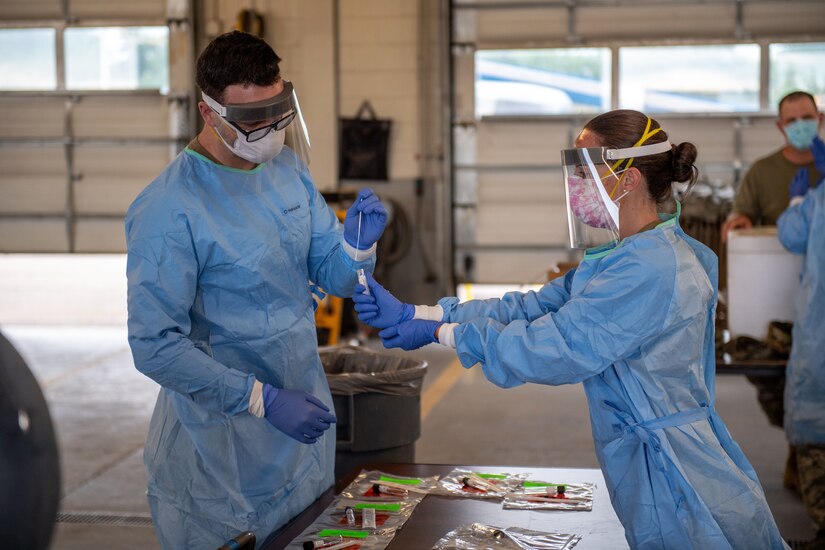
A man dressed in protective gear prepares to put a swab into a vial held by a woman, who is also dressed in protective gear.

The decision to test all members came after concern that the guardsmen were to travel to Wisconsin, where COVID-19 cases were more prevalent than Vermont, according to the CDC COVID Data Tracker, which records all COVID-19 cases reported to the CDC since Jan. 21, 2020.

About 100 airmen assigned to the Vermont Air National Guard were tested at varying times throughout the two-week exercise at Volk Field, to ensure any potential outbreaks could be tracked. All the guardsmen tested both on-site in Wisconsin and in Vermont have tested negative for COVID-19.

"We had a robust plan in place before they even arrived in Wisconsin," Romp said. "We screened everybody on the way out, with questions and temperature checks before they got on the plane. All of the units coming into the exercise had those requirements. When they arrived at Volk Field, all of the pilots, basically all of the operators, were tested. They had a pretty robust quarantine and isolation plan, if somebody needed to be treated. Luckily, we didn't have to execute that plan at all."

While the guardsmen were there, access off base was limited for essential travel only and on-base lodging was separated by sections, limiting contact with both the public and other Northern Lightning participants. Both social distancing and mask wearing were enforced, and there were daily screenings and temperature checks for all participants. After returning to Vermont on Aug. 21, airmen were immediately tested for COVID-19, twelve of whom had also taken a test before leaving Volk Field.

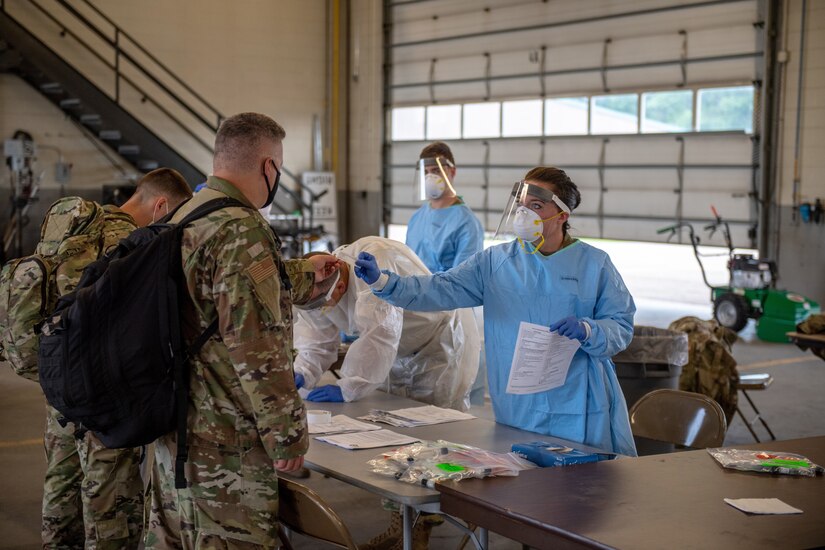
Three people dressed in protective gear test two service members wearing face masks for COVID-19.

"We were in constant contact with [Volk Field] before the exercise until well after, to make sure that folks safely arrived there, are safe while they are at the exercise, and then ensuring that they were safe — and their families were safe — when they returned," Romp said.

"Airmen, soldiers, civilians — it was definitely an intra- and inter-organizational success. And that has been the wing commander's policy from the beginning is to do the best we can: best mitigation, best preventative, following the CDC and state guidelines while still getting the mission done," Romp continued.

Until there is an effective COVID-19 vaccine available, similar precautions and screening will continue for upcoming Vermont Air National Guard training movements and deployments, according to Romp.

Washington National Guard Helps at Community Food Bank

Sept. 9, 2020 | BY Air Force Capt. Hans Zeiger

Members of the Washington Air National Guard's 194th Wing are working alongside Army National Guardsmen at the food bank in Bonney Lake, Washington, to serve their neighbors in need during the COVID-19 pandemic.

A woman wearing a food bank shirt prepares to remove a box of food from a packed vehicle.

The Bonney Lake Food bank is one of many food bank locations around the state where the guard continues to serve. Altogether, the guard has taken part in processing, packaging and distributing more than 45 million pounds of food.

"The guard has played such an integral role," said Stacey Crnich, director of the Bonney Lake Food Bank, who began her job not long after Gov. Jay R. Inslee declared an emergency in Washington. Early on during the pandemic, Crnich said she instituted a delivery model to keep up with the growing need and maintain health standards. At first, the food bank was overwhelmed, she said.

"The guard showed up a week and a half into our delivery model and changed everything," Crnich said. "We've been able to leverage resources and leverage people. Route delivery times decreased dramatically."

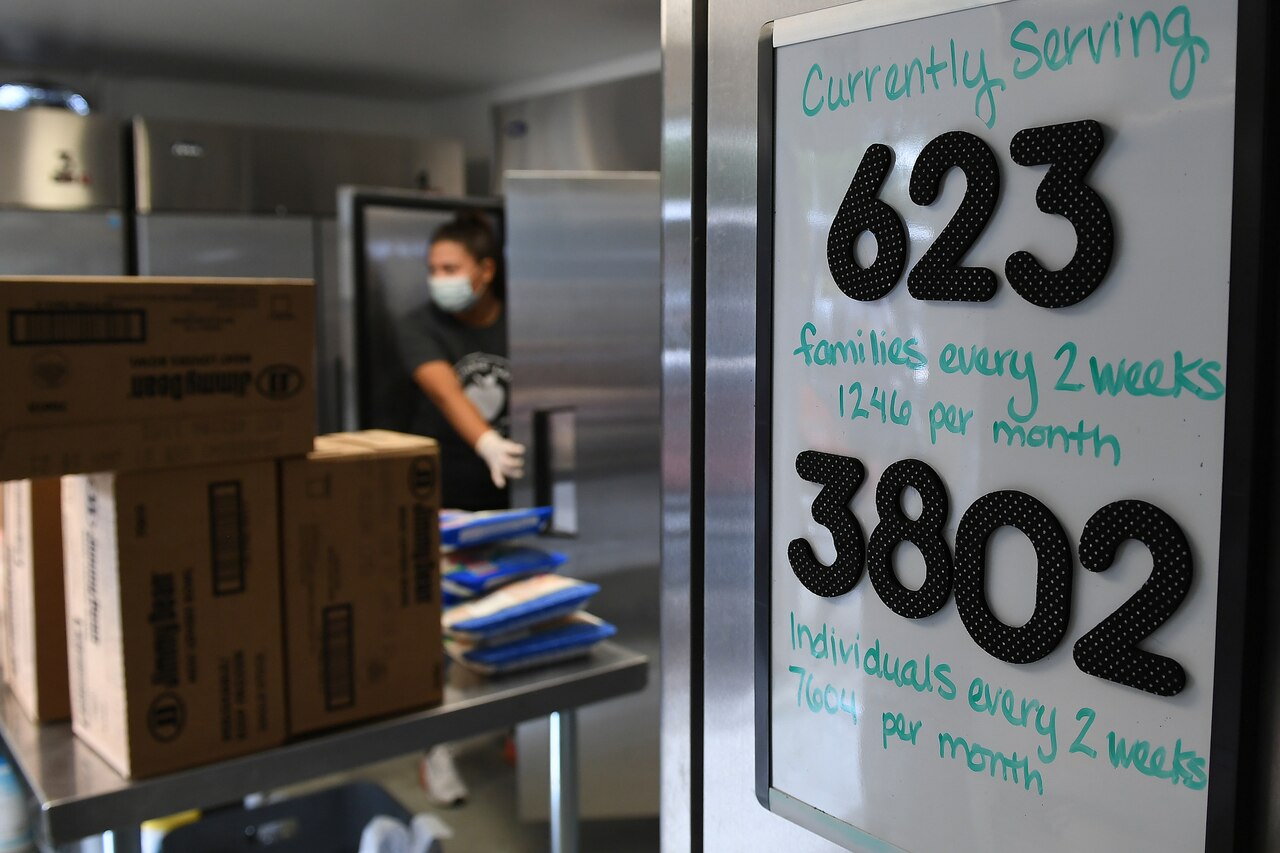
Crnich has seen the number of families she serves grow from 170 to more than 600 every two weeks, she said. The guardsmen have allowed Crnich and her team to keep up with the growing demand, she said.

A white board shows the number of families served by a food bank as a woman works in the background.

Many of the guardsmen serving in Bonney Lake live in the area, said Army 2nd Lt. Mike Sebastionelli, the officer in charge of the food bank mission in Bonney Lake. "People join the guard to help their community. [They] are making an impact on this area," said Sebastionelli.

"We are helping people who are hit by the impacts to the economy," said Air Force Master Sgt. James Moats, a member of the Washington Air National Guard's 116th Weather Flight. Moats started working at the Bonney Lake Food Bank in August after two weeks serving at a food bank warehouse in Kent, Washington.

People in the community are taking notice of the guard's impact, Sebastionelli said. One veteran has written notes expressing thanks to the soldiers and airmen who have delivered food to him, and someone hung a banner on the food bank building thanking the guard, Sebastionelli continued.

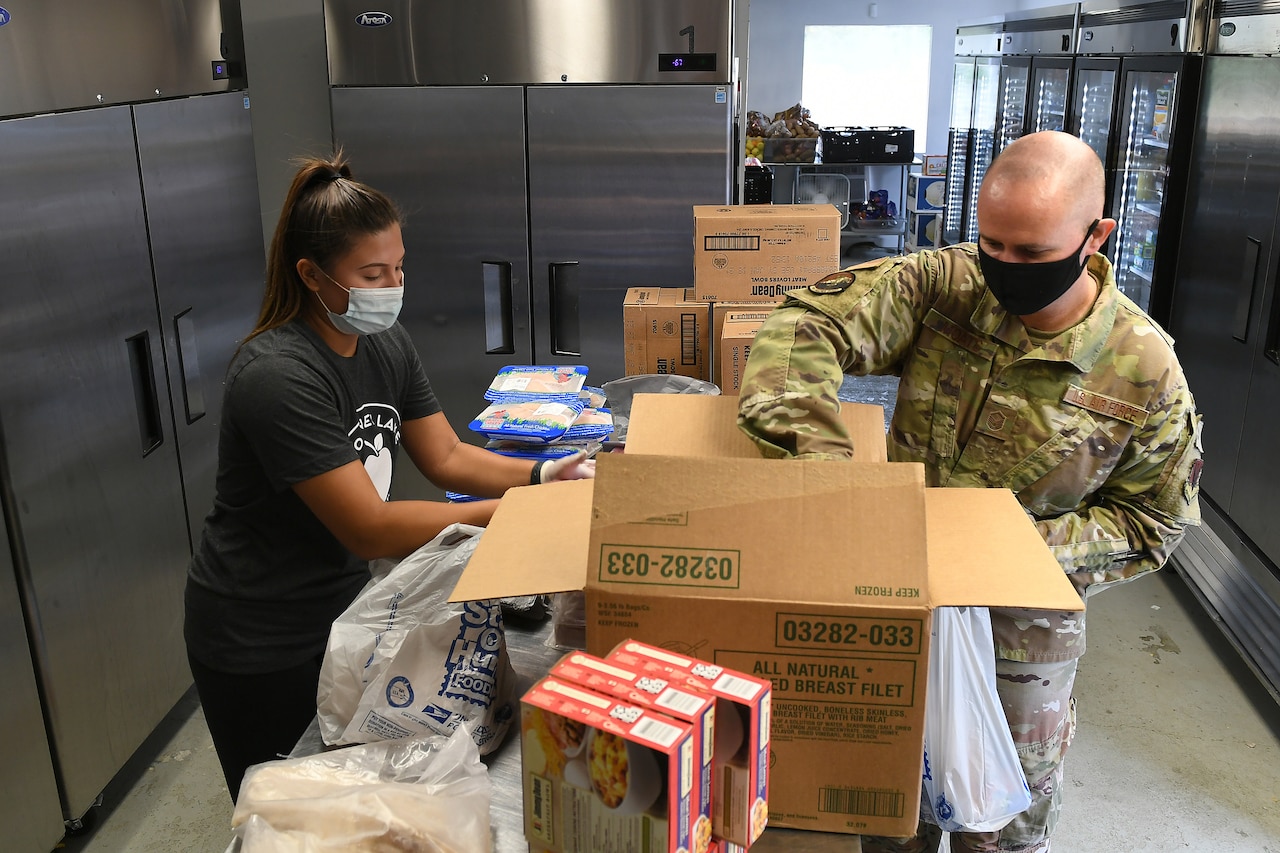
A service member and a woman wearing a food bank tee shirt pack a box with food.

"It's cool to see people come in and say thank you for everything that we do," said Christine Krysiak, a member of the Washington Air National Guard’s 194th Wing student flight who recently graduated from Franklin Pierce High School in Parkland, Washington.

Even though Krysiak has not completed initial training to become an airman, she is able to serve on state active duty status.

"I feel happy, and I'm [doing] my part and helping others, because COVID is really affecting everyone," Krysiak said.

Crnich credits the guard with enabling the Bonney Lake Food Bank to perfect its delivery model.

"We have systems in place where we can bring this to [families]," Crnich said. "That's the guard. I feel like we're business partners now."

(Capt. Hans Zeiger is assigned to the 194th Wing).

Defense Acquisition System Directive Goes Into Effect

 Sept. 9, 2020


On Sep. 8, 2020, Deputy Secretary of Defense David L. Norquist signed into effect DoD Directive 5000.01, The Defense Acquisition System. In support of the National Defense Strategy, the Defense Acquisition System develops a more lethal force based on U.S. technological innovation and a culture of performance that yields a decisive and sustained U.S. military advantage.

DoDD 5000.01 is the overarching directive that describes the principles governing the acquisition process and emphasizes six main tenets of acquisition implemented via the Adaptive Acquisition Framework. Representing one of the most transformational changes to acquisition policy in decades, the DoDD 5000.01 re-write was part of a comprehensive redesign of the DoD 5000 Series acquisition policies, which were streamlined and modernized to empower program managers, facilitate flexibility and enhance our ability to deliver capability at the speed of relevance.

DoDD 5000.01 can be found at https://www.esd.whs.mil/Directives/issuances/dodd/. To learn more about the Adaptive Acquisition Framework, visit https://aaf.dau.edu/.

Weight Work


Navy Petty Officer 2nd Class Elizabeth R. Pinon exercises aboard the guided missile destroyer USS Halsey in the South China Sea, Sept. 4, 2020.

Disinfecting Supplies


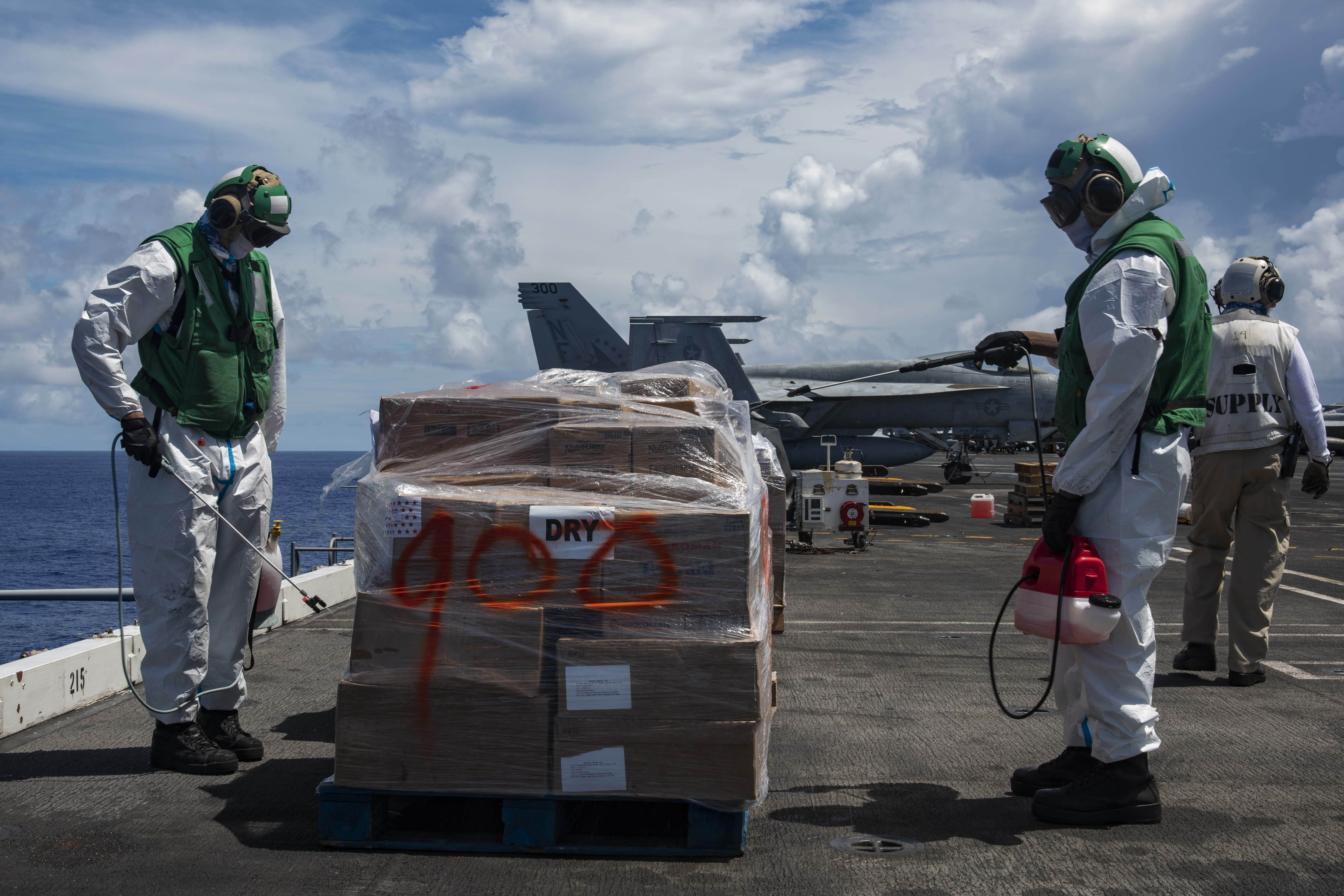
Air Force airmen disinfect supplies on the flight deck of the USS Ronald Reagan during a replenishment-at-sea with fleet replenishment oiler USNS John Ericsson in the Philippine Sea, Sept. 5, 2020.

Greenland Travels


The Coast Guard cutter Campbell travels with the Royal Danish Navy patrol vessel HDMS Knud Rasmussen off the coast of Greenland, Sept. 7, 2020.

Test Training


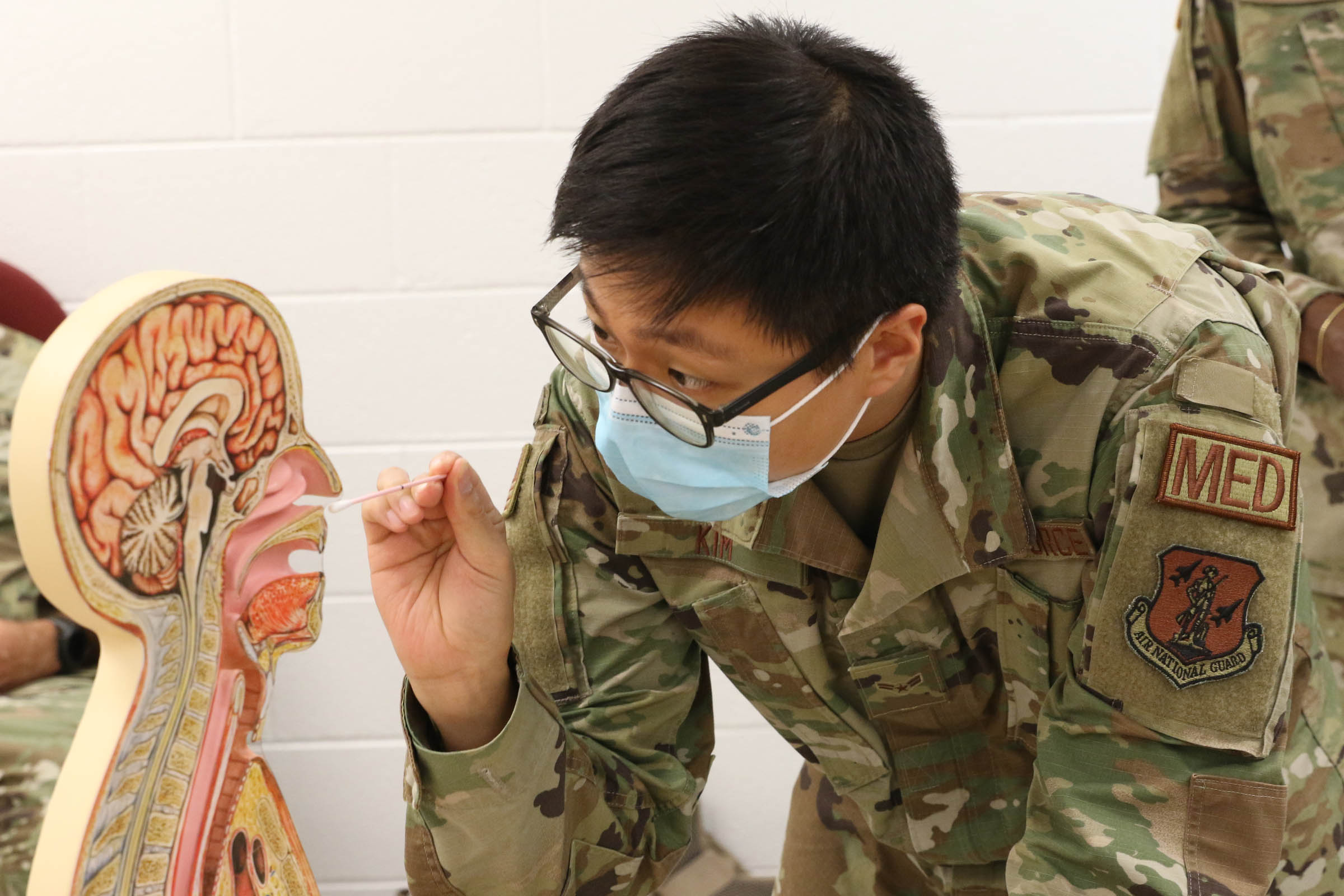
Virginia National Guard soldiers and airmen train on COVID-19 testing with Virginia Department of Health medical professionals in Sandston, Va., Sept. 4, 2020. Approximately 85 service members were trained and are ready to resume support for Virginia’s COVID-19 response.

Peephole Perspective


Navy Seaman Devin Fredrick installs an arming device on a Mark-63 1,000-pound inert mine aboard the aircraft carrier USS Gerald R. Ford in the Atlantic Ocean, Sept. 3, 2020.

Drone Launch


Coast Guard Gulf Strike Team members launch a drone to assess waterways near Lake Charles, La., Sept. 1, 2020, in the aftermath of Hurricane Laura. The team, one of three that make up the National Strike Force, is composed of highly trained Coast Guard professionals who rapidly deploy with specialized equipment to a variety of incidents, responses and other emergencies.

Tuesday, September 08, 2020

Twin Thunderbolt


Air Force A-10 Thunderbolt II aircraft fly over the U.S. Central Command area of responsibility after refueling midair, Sept. 4, 2020.

Smoky Squad


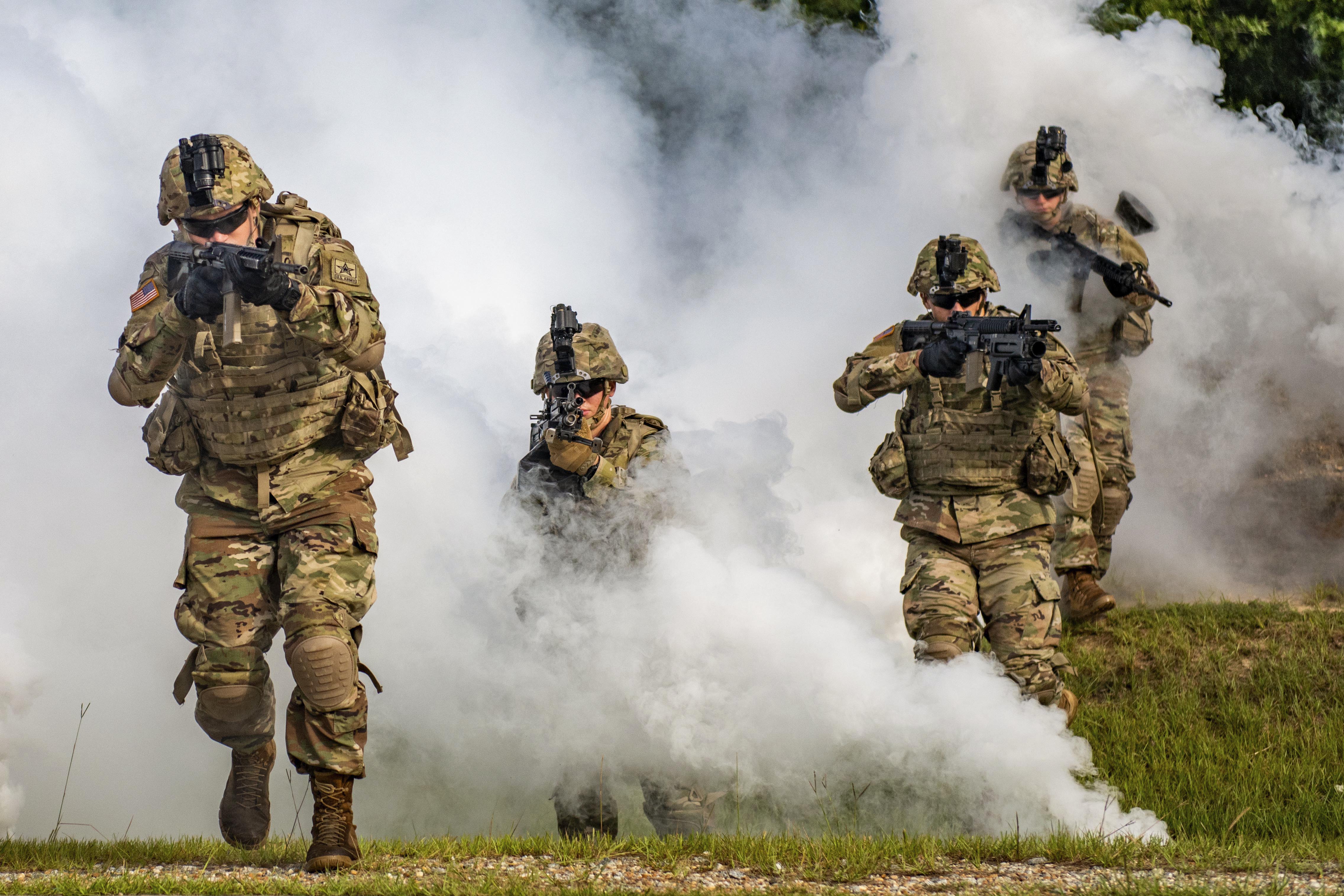
Soldiers participate in a squad demonstration at Fort Benning, Ga., Aug. 21, 2020.

Red Range


Navy Cmdr. Rudolf Hawkins fires an M4 rifle during a live-fire exercise aboard the USS Gerald R. Ford in the Atlantic Ocean, Sept. 6, 2020.

Digging Duty


Marines prepare to build a bridge during humanitarian assistance and disaster relief training at Mount Bundey Training Area, Australia, Sept. 5, 2020.

Number Line


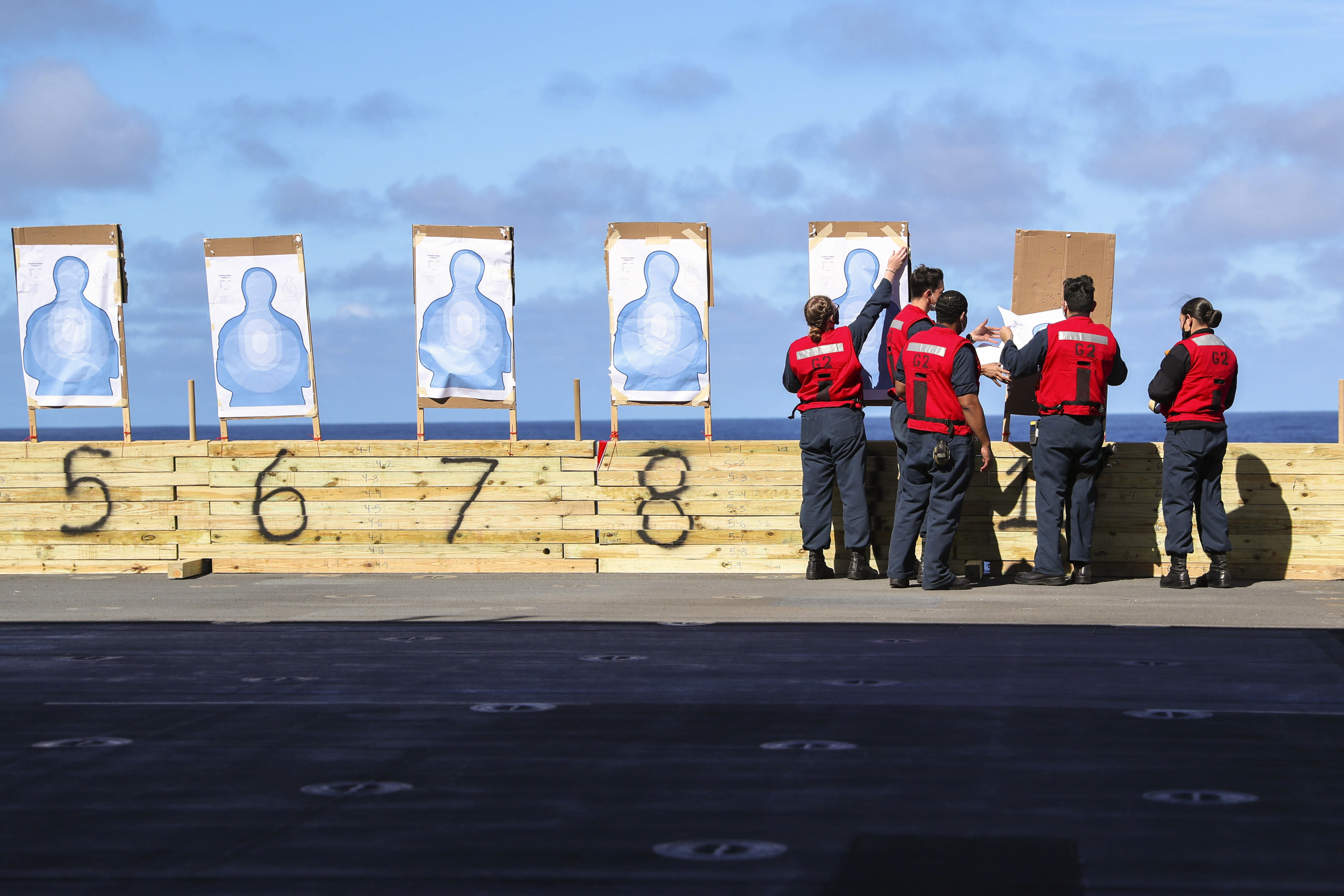
Sailors hang targets before a gun shoot aboard the USS Tripoli in the Pacific Ocean, Sept. 5, 2020.

Mopping Up


Soldiers dig out a hotspot during mop-up operations on the Complex wildfire in Mendocino National Forest, Calif., Sept. 4, 2020. The soldiers are supporting the Defense Department’s wildfire response, working side-by-side with professional firefighters.

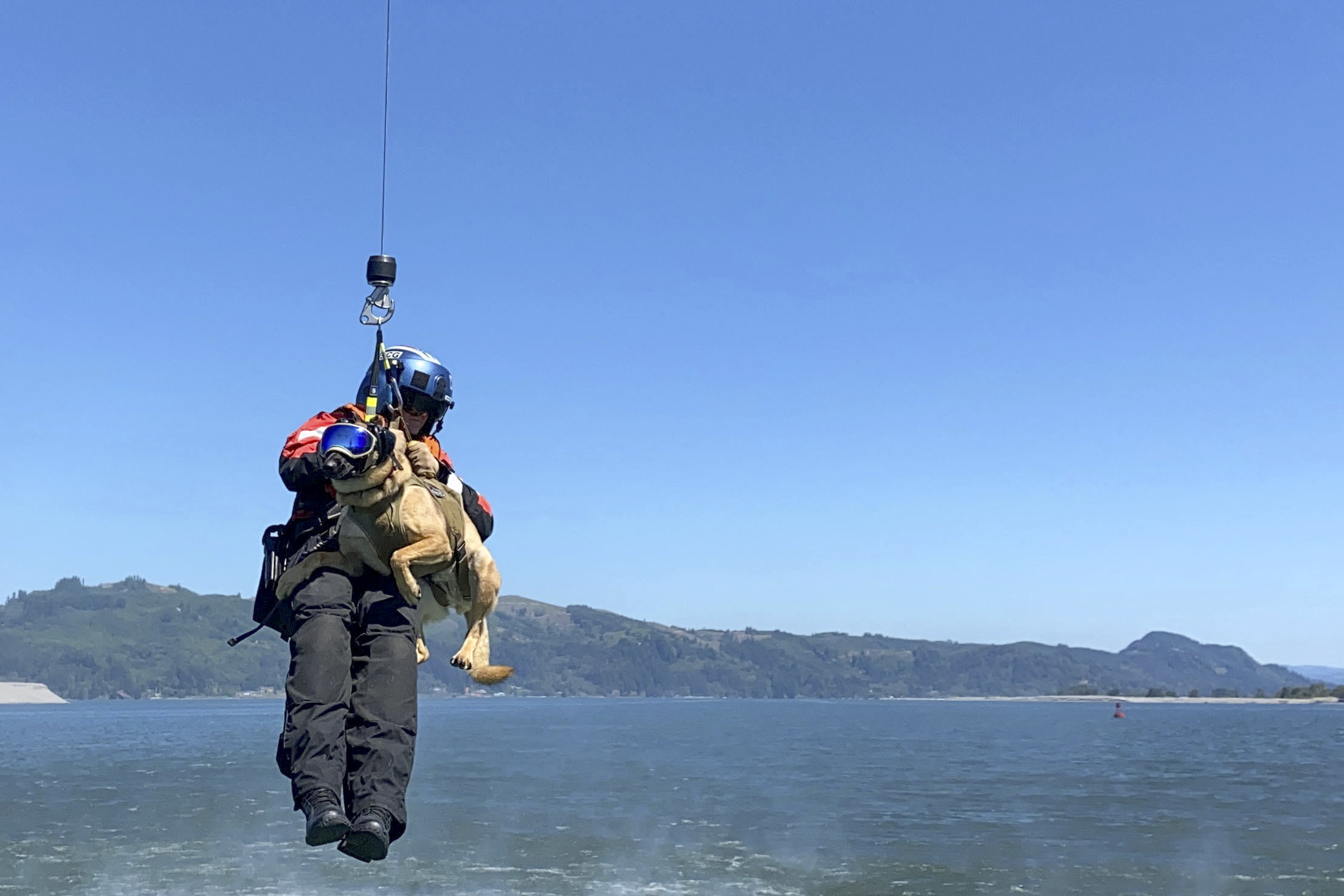
Downward Dog


Coast Guard Maritime Safety and Security Team 91101 members deploy from an MH-60 Jayhawk helicopter during training near the entrance to the Columbia River in Astoria, Ore., Aug. 17, 2020.

Spark Spatter


A Marine uses a welding torch to perform a simulated breach during a training exercise aboard the USS Germantown in the South China Sea, Sept. 6, 2020.

Force Focus


Army Sgt. Jose Galva Diaz sets up an M18 Claymore training mine during the U.S. Army Reserve Best Warrior Competition at Fort McCoy, Wisc., Sept. 6, 2020.

Camouflage Canopy


Marines assemble a camouflage canopy before a demolition range training event in Kuwait, Aug. 31, 2020.

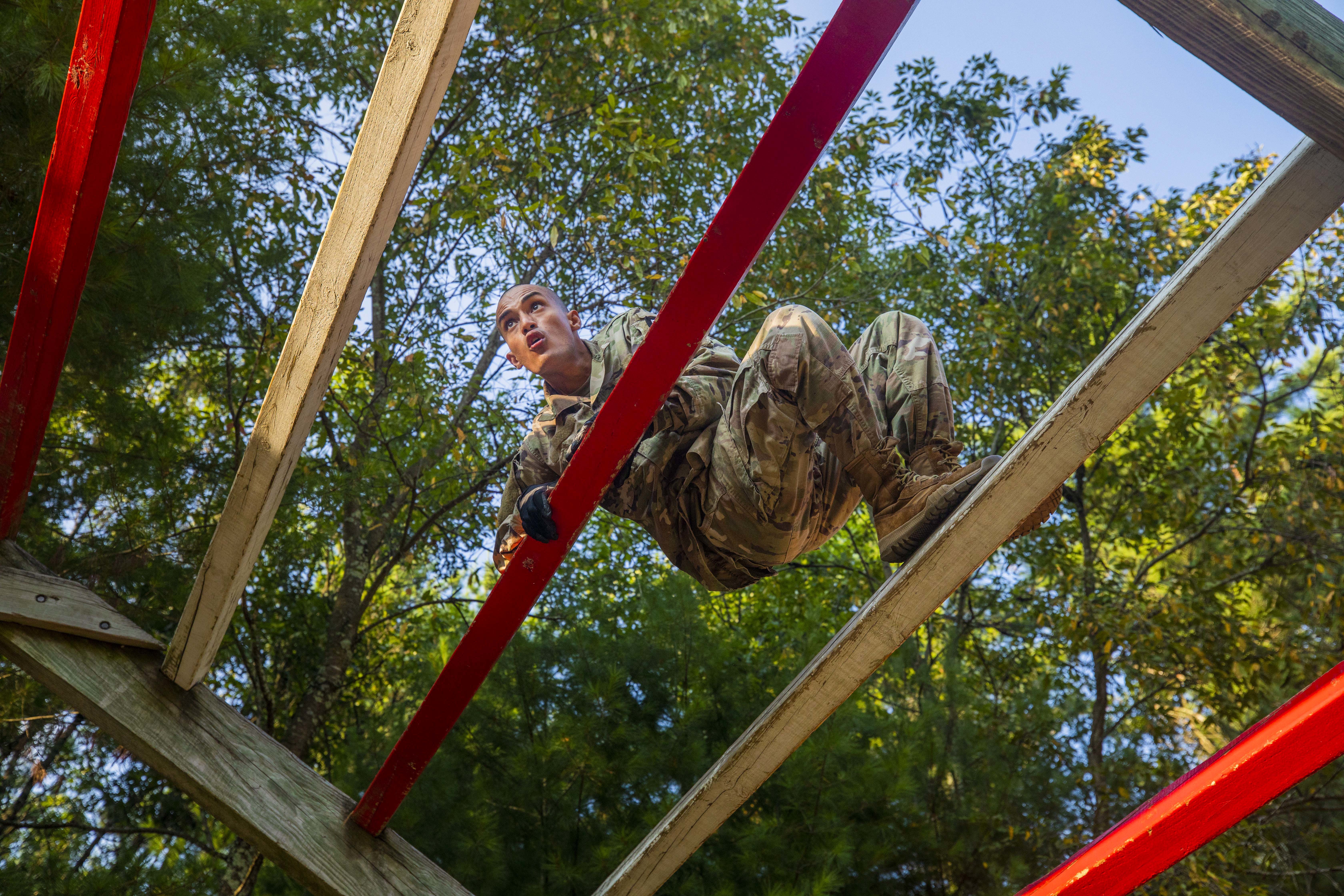
Weaving Warrior


Army Spc. Ivan Torres-Leon navigates a weaver obstacle during the 2020 Army Reserve Best Warrior Competition at Fort McCoy, Wis., Sept. 5, 2020.

Sports Heroes Who Served: Olympic Gold Shooter Credits Army

 Sept. 8, 2020 | BY DAVID VERGUN AND C. TODD LOPEZ , DOD News

In 2005, at the age of 16, Vincent Hancock won his first world championship title in men's skeet. The following year, he joined the Army.

Six years after joining, he said the Army had provided him with something that he couldn't get elsewhere.

"The military has given me a completely different outlook on life," Hancock said. "The determination they have instilled in me and the ability to grasp hold of opportunities is unlike any other. That's what the military instills in their soldiers.

"The military has led me in a direction that I don't think I could have gotten anywhere else," Hancock continued. "The marksmanship unit family that I've come to know over the past six years has just been an amazing company to be in. They have pushed me further than I knew that I could have gone, and they helped mold me into the man I am today."

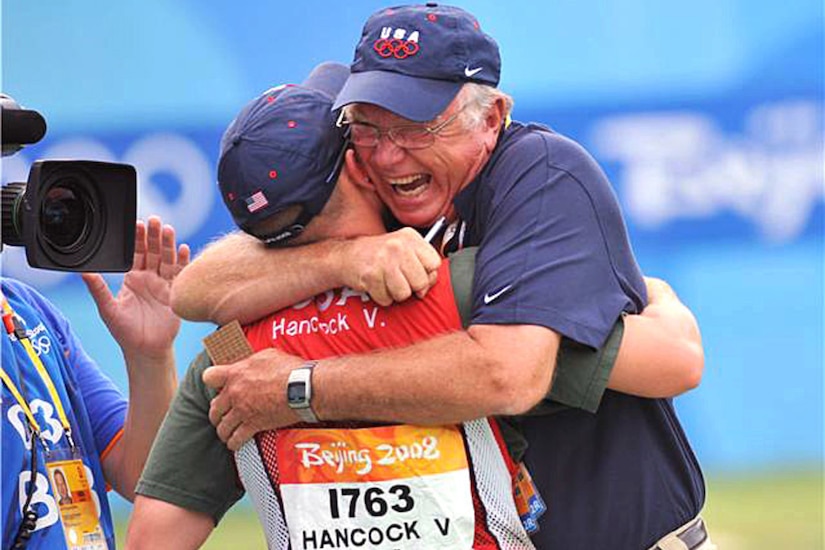
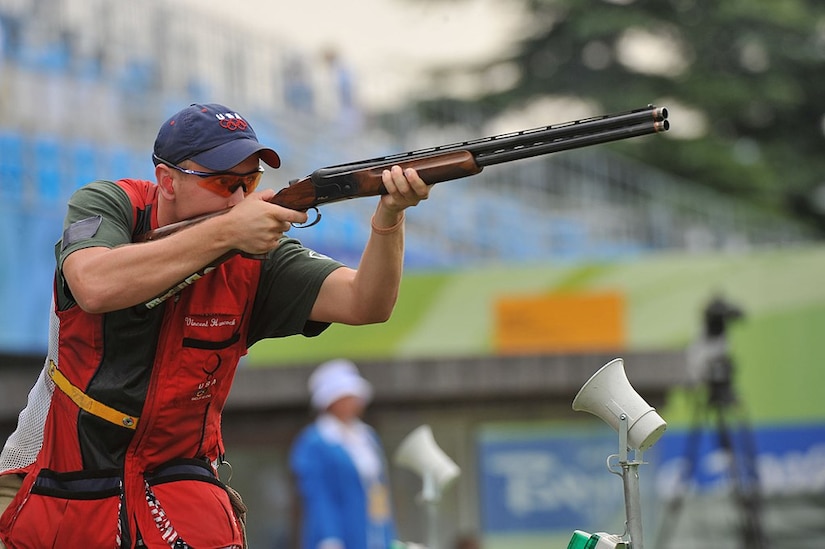
An older man hugs a man wearing a vest with the words Beijing 2008 Hancock V. USA.

While still in the Army, Hancock won gold medals in men's skeet at the 2008 Summer Olympics in Beijing and at the 2012 Summer Olympics in London. He is the first skeet shooter to repeat gold in the Olympics.

He also won gold in the men's division in the World Skeet Championships in 2009 and again in 2015. Hancock also represented the U.S. in the 2016 Olympics, but he didn't medal. In 2018, he won the gold again in the World Skeet Championships.

The skills he learned in the Army as part of the Army Marksmanship Unit didn't end when he left the Army in December 2012. He said he's passing those skills on to others. He and his father have started the "Hancock Shooting Academy," where he said participants will learn to be better shooters.

Hancock said it isn't money or more medals that's motivating him now. Instead, he said it's the desire to further the sport of shooting, to bring more enthusiasts into the fold and to teach newcomers what he knows.

"We've had people come to us for lessons that have never even touched a shotgun before, and this is their first time," Hancock said. "My goal for the shooting academy is not just to take the elite-of-the-elite and help them get better; it's to help grow the sport. That's the stage I'm in, in my career right now. I'm not about winning as many medals as possible or making as much money as I can. It's about growing my legacy, being able to pass on the knowledge I've learned over the past 13 years to people all around the nation and all around the world."

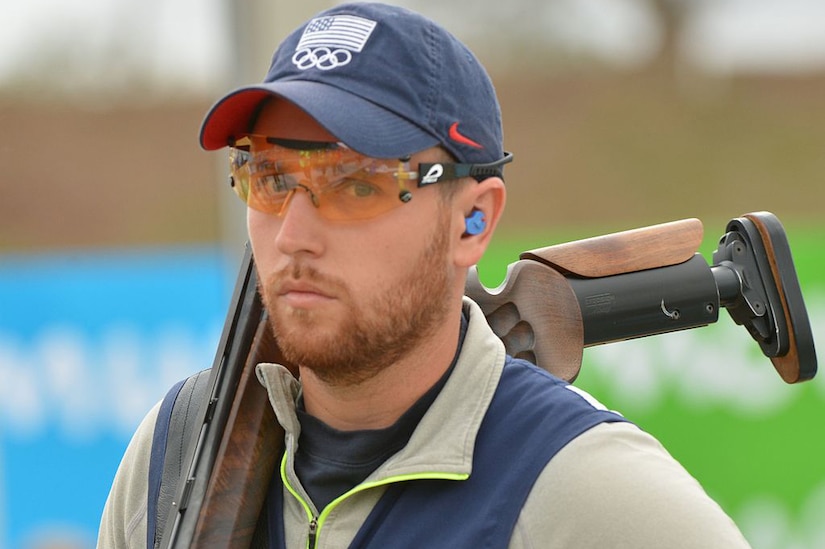
A man holding a shotgun over his shoulder poses for a photo.
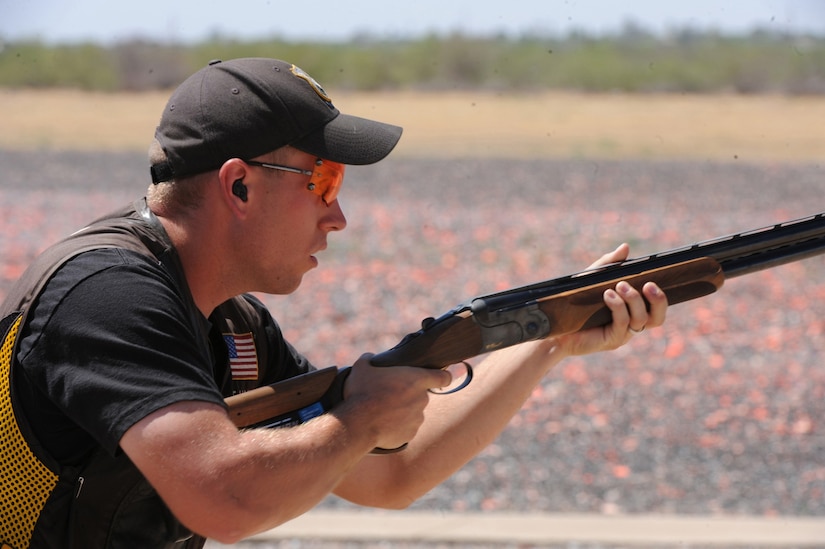
A man aims a shotgun.

Hancock started competing in shooting at age 11, and he said he now wants to do everything he can to promote a sport that has given him a lot.

"Shooting has changed my life so dramatically that I can't compare it to anything else in my life," he said. "Being a part of a U.S. national team and the international skeet community, I got my wife; she was a shooter before we met. It's given me so much; I want to give back."

Hancock lives in Fort Worth, Texas, with his wife, Rebekah, also a shooter, and his two daughters.

More About the Army Marksmanship Unit

In 1956, President Dwight D. Eisenhower authorized the formation of the Army Marksmanship Unit with the almost exclusive goal of winning shooting competitions that would raise the standards of marksmanship throughout the Army.

In the '50s, the Soviets dominated the international shooting scene. Many believed that only the U.S. Army had the personnel and facilities to develop a program that could compete with them.

The unit quickly established itself as a world power in shooting. Between 1962 and 1978, it led the United States to six Olympic gold medals and 59 individual and team championships in international competition.

Later, the unit's mission expanded to facilitate Army recruiting. The unit also provided marksmanship training to thousands of soldiers, and became a leader in small-arms research and development.

From 2009 to 2012, the Army Marksmanship Unit maintained a constant presence in Afghanistan by deploying multiple marksmanship training teams in support of the NATO's Afghan National Army training mission.

A man aims a shotgun.

The unit is composed of five competitive shooting sections, each with world-class training facilities and competition grounds.

Those teams include: service rifle, action shooting, international rifle, service pistol and shotgun.

These teams have represented the United States during every Summer Olympics since 1960 and have earned 24 Olympic medals since that time.

The unit builds and customizes small arms and ammunition through its Custom Firearms Shop. The Army's finest gunsmiths, machinists, range technicians and ammunition loaders staff the shop. They are known as the backbone, or "pit crew," of the marksmanship teams.

The Custom Firearms Shop's research and development efforts have enhanced the accuracy and reliability of the Army's competitive weapon systems and ammunition and intensified the combat effectiveness of the entire Army.

For example, the M21 and M24 sniper systems — special purpose rifles and squad-designated marksman rifles — were developed and tested in the shop.

Teams Come Together to Supply Trainee Uniforms


Sept. 8, 2020 | BY AIR FORCE AIRMAN 1ST CLASS SETH HADDIX

With Air Force basic military training coming to Keesler Air Force Base, Mississippi, due to COVID-19, the mission of the base has become to not only train but create premier war-fighters.

A team of airmen from different units around the Air Education and Training Command worked together to help the 81st Logistics Readiness Squadron issue uniforms to trainees at Keesler.

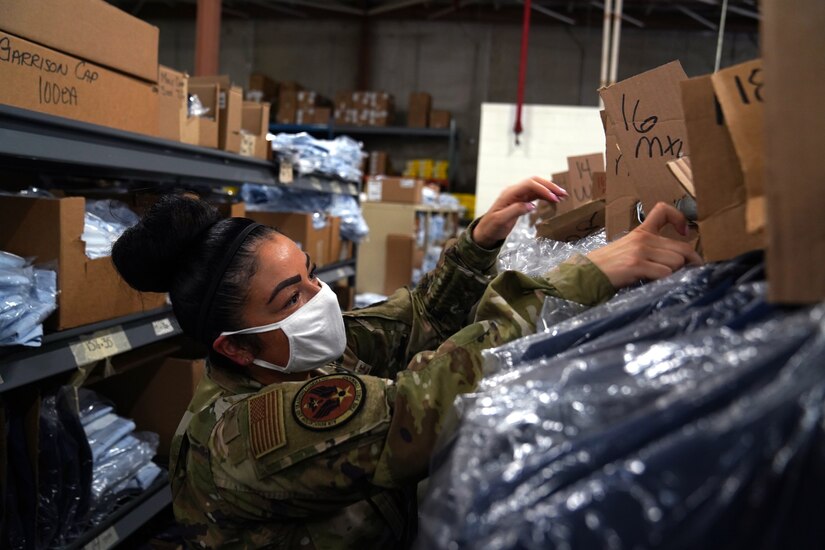
An airman sorts through clothing.

''Our purpose of coming here as a team is to support the training mission of Keesler and BMT,'' said Air Force Master Sgt. Melina Jimerson, 81st LRS BMT supply lead. ''Continuing to train through obstacles such as COVID-19 keeps our Air Force moving forward, so my team must stay resilient to do our part.''

The uniforms being issued to the trainees were supplied from the 502nd LRS, Joint Base San Antonio-Lackland, Texas. The group had approximately a week to prepare and organize the process.

''We came in with limited equipment and time, and had to develop a system that would work,'' said Air Force Senior Airman Hope Curry, 81st LRS material management journeyman. ''Through trials and tribulations, the process became more natural. We overcame and adapted quickly to equip the trainees with what they need.''

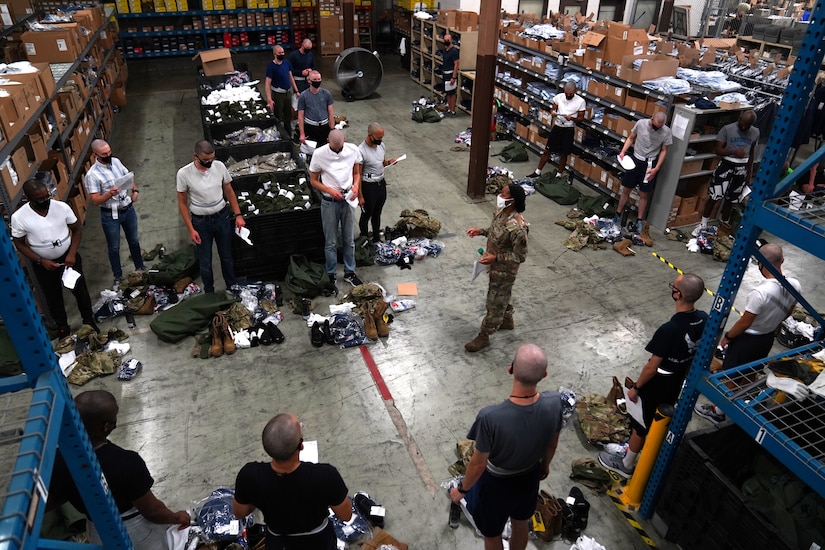
An airman hands out uniform items to trainees.

Training airmen safely and efficiently through COVID-19 has become possible with the units of AETC coming together as a team.

''Within our own units, we all have our own unique missions,'' Jimerson said. ''However, we've been able to combine our skills to support the BMT mission, which is to motivate, train and inspire the next generation of airmen with the foundation to deliver 21st century airpower without interruption.''

(Air Force Airman 1st Class Seth Haddix is assigned to the 81st Training Wing).

Friday, September 04, 2020

Transcom Aims to Reduce COVID-19 Exposure on Aircraft

t
Sept. 4, 2020 | BY Stephenie Wade , U.S. Transportation Command

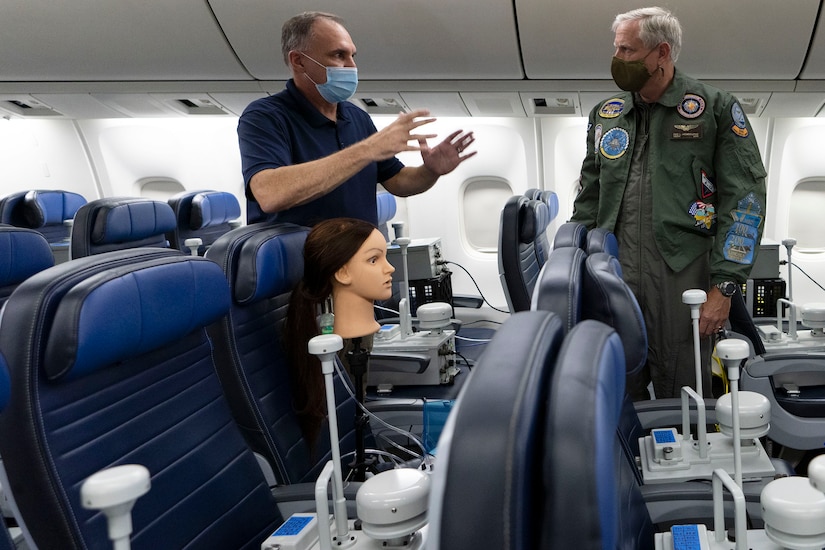
U.S. Transportation Command is on a quest to minimize the transmission of the coronavirus on Patriot Express flights by testing how aerosol particles flow on commercial aircraft.

The Patriot Express is a commercial charter flight contracted by the Defense Department to transport passengers on official military duty and their families.

Two people going over a coronavirus airflow particle test.

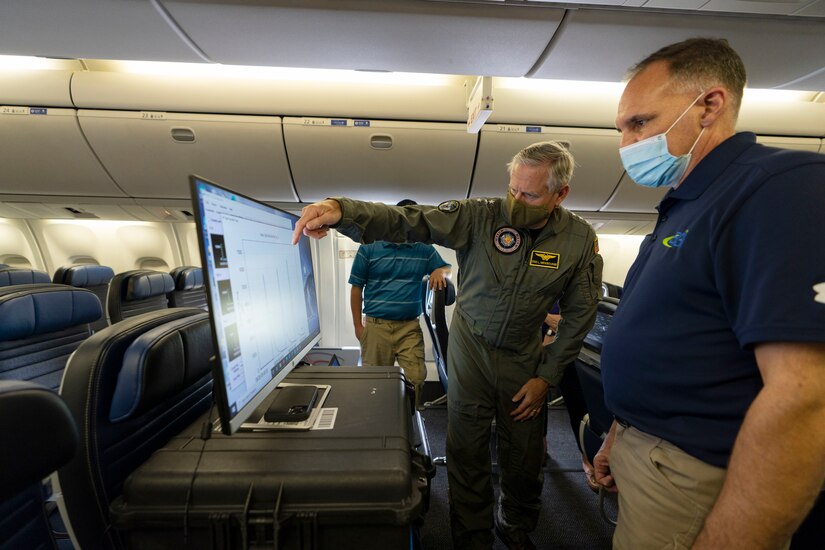
Navy Vice Adm. Dee Mewbourne, deputy commander of Transcom, traveled to Virginia’s Dulles International Airport on Aug. 28 to observe an airflow particle test onboard a United Airlines 767 aircraft.

U.S. Transcom’s goal is to provide the safest possible means of transportation for military members, dependents and contractors.
Navy Vice Adm. Dee Mewbourne, Deputy Commander, U.S. Transportation Command

Most viruses and other germs do not spread easily on flights because of how cabin air is circulated and filtered. However, social distancing is difficult on crowded flights, and travelers may have to sit near other people, increasing the risk for exposure.

“U.S. Transcom’s goal is to provide the safest possible means of transportation for military members, dependents and contractors,” Mewbourne said, while watching the test. “They are depending on the Patriot Express to get to their destination, which is why we require masks and only load to 80 percent capacity. This test will help enhance our understanding of what is going on in the cabin. We hope to find out how the virus patterns spread and how rapidly the virus is filtered out of the aircraft.”

The aerosol tests took place Aug. 24-31. They were performed by the Zeteo Tech and Defense Advanced Research Projects Agency on aircraft most contracted by Transcom, the Boeing 767-300 and 777-200.

Mannequins with and without face masks sat in various seats on an aircraft while small amounts of fluorescent tracer particles, or simulated infectious particles, were released at 2 to 4 minute rates during a combination of ground and in-flight events. Real-time fluorescent particle sensors were placed throughout the aircraft at the breathing zone of passengers to retrieve the data. The tracer amounts will be measured in multiple rows for four sections of an airframe: forward, forward-mid, mid-aft, and aft.

“The test will help U.S. Transcom understand the aerosol particle field generated by a passenger shedding viral material and the exposure risk to crew and passengers,” said Navy Lt. Cmdr. Joseph Pope, Transcom Operations directorate liaison for the airflow particle test.

Two people going over a coronavirus airflow particle test.

There were many scenarios considered for the test. Three configurations were tested, two ground and one in-flight: in-flight in the cabin and cockpit; at the terminal with the jet bridge connected to the aircraft and the cabin door open; and at the terminal with doors closed using an auxiliary power unit to power aircraft cabin air recirculation using ground air supply.

“This data collected will eventually inform the Department of Defense on contact tracing requirements needed for specific aircraft,” Pope said. “It will also be used to develop strategies like cabin loading and seating configurations to mitigate potential risk of inter-person transmission of the aerosol particles.”

One of the initial responses to the coronavirus by the DOD was to stop or limit travel including air. In May, the travel ban was lifted for military members and certain categories of space-available (Space-A) travelers, but this came with new restrictions to prevent the spread of COVID-19 while traveling.

Military members and families are still required to participate in a restriction of movement prior to departure, to wear a mask the entire flight and quarantine for 14 days upon arrival depending on their final destination. Airlines are also sanitizing surfaces routinely. However, even with these prevention methods, a small number of travelers arrive at their destination testing positive for the virus, but there has been no clear evidence to date the virus was contracted while aboard the flight.

“Once the data is put into a computational fluid dynamic computer model, we hope it will assist in determining if specific passengers on an aircraft should isolate when an asymptomatic COVID-19 positive individual has traveled,” Pope said. “It could be the difference between the whole aircraft isolating compared to one person.”

The aerosol test will conclude and results are due to the command in September. Data will then be reported to the DOD COVID Task Force and mission partners. This test was conducted in partnership with Boeing and United Airlines, as well as DARPA, Zeteo Tech and the University of Nebraska.

(Stephenie Wade is assigned to U.S. Transportation Command).

Personal Shopper Program Provides Helping Hand

Sept. 4, 2020 | BY AIR FORCE AIRMAN 1ST CLASS AZARIA FOSTER

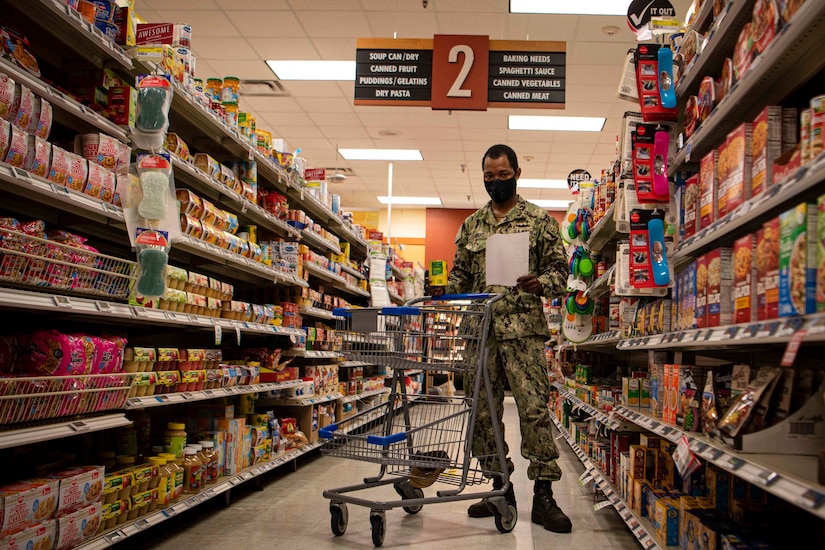
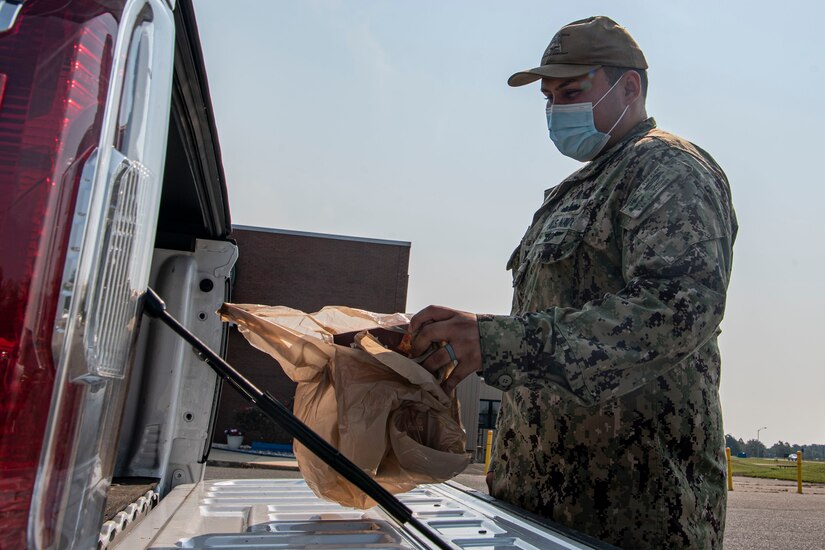
Due to COVID-19 restrictions limiting base accessibility, Naval Support Activity Lakehurst implemented a Personal Shopper Program to supply veterans and their families with groceries during the pandemic.

''The Personal shopper program [was created] because we limited the [base] to essential personnel only,'' said Navy Petty Officer 1st Class Victor Lambert, NSA Lakehurst Personal Shopper Program volunteer. ''We take time out to help the veterans who aren't allowed to come on base and do their grocery shopping for them. It helps limit veterans' exposure to COVID-19 and provides them with cheaper prices for goods.''

A sailor wearing a face mask shops in a grocery store.

Over the last six months, the program has aided more than 320 patrons with more than $33,000 in goods from the Lakehurst Navy Exchange and Naval Air Engineering Station Commissary.

''It feels great to know that we are not only helping people who can't get to the base to do their grocery shopping, but also helping the commissary make their stock turn,'' Lambert said. ''When the pandemic happened their profits had declined.''

The program is available to anyone who has a dependent or retiree ID as well as Navy members who have special dietary needs while on quarantine.

A sailor puts groceries in a truck.

''I would like to thank you and your troops for helping retirees during this restrictive time of COVID-19,'' said Edward Ellis, a Personal Shopper Program user. ''Your dedication to this mission should not go unrecognized or forgotten. Many retirees appreciate your efforts and caring about us. We thank you and are proud to see that the foundation of the military community still stands strong because of men and women like you.''

(Air Force Airman 1st Class Azaria Foster is assigned to Joint Base McGuire-Dix-Lakehurst).

Veteran Salute


Veteran Salute

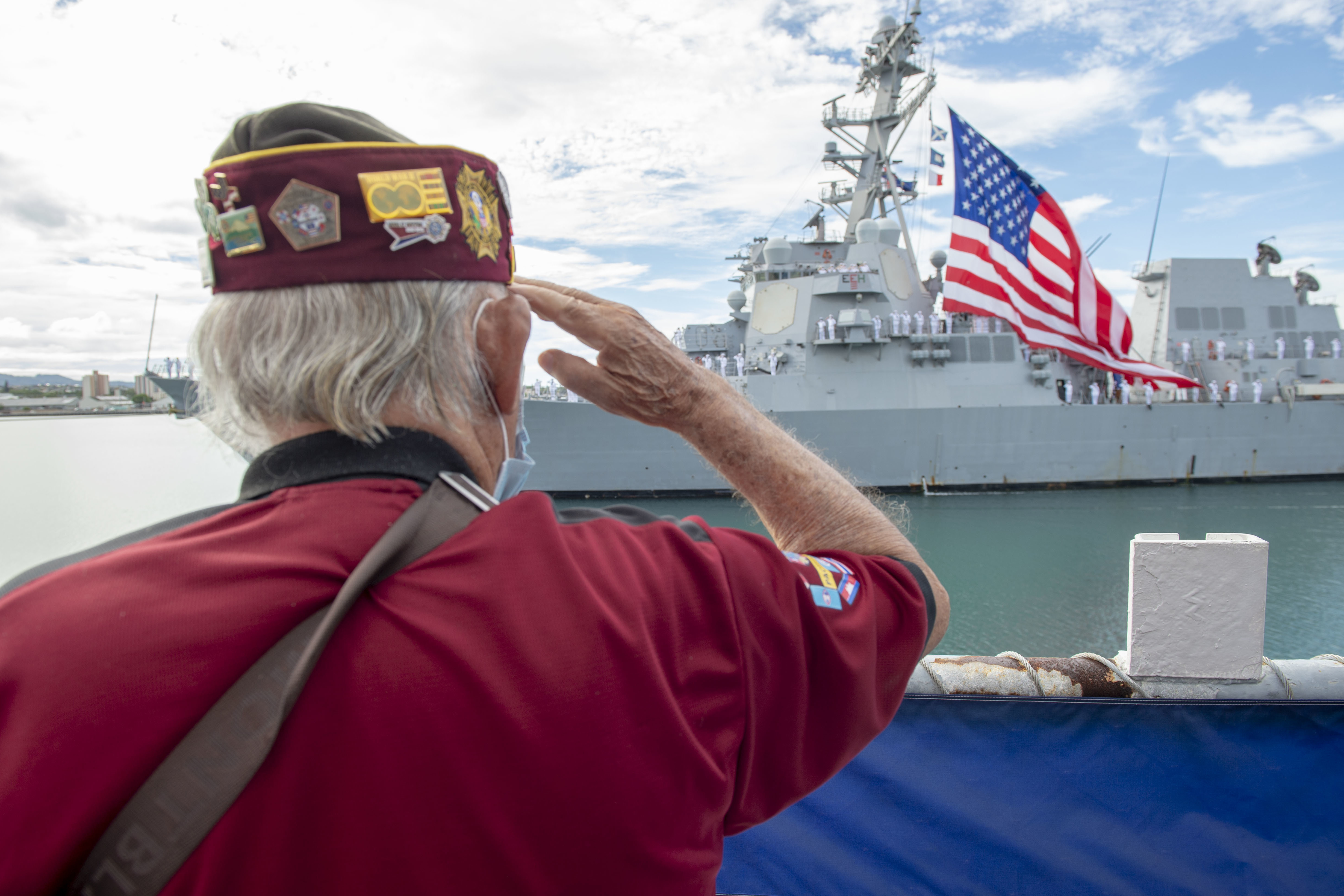
Veteran Wendell Newman salutes the USS Michael Murphy during the Pass and Review portion of the 75th Anniversary of the End of World War II commemoration ceremony at Pearl Harbor, Hawaii, Sept. 2, 2020.

Fire Focus


Members of the California Army National Guard’s Task Force Rattlesnake create a defensive fire line during the fight against the CZU Lightning Complex fire in Santa Cruz and San Mateo counties, Calif., Sept. 1, 2020. The Guard is assisting the California Department of Forestry and Fire Protection contain the massive wildfire that has scorched more than 85,000 acres since it started on Aug. 16.

RAft Ready


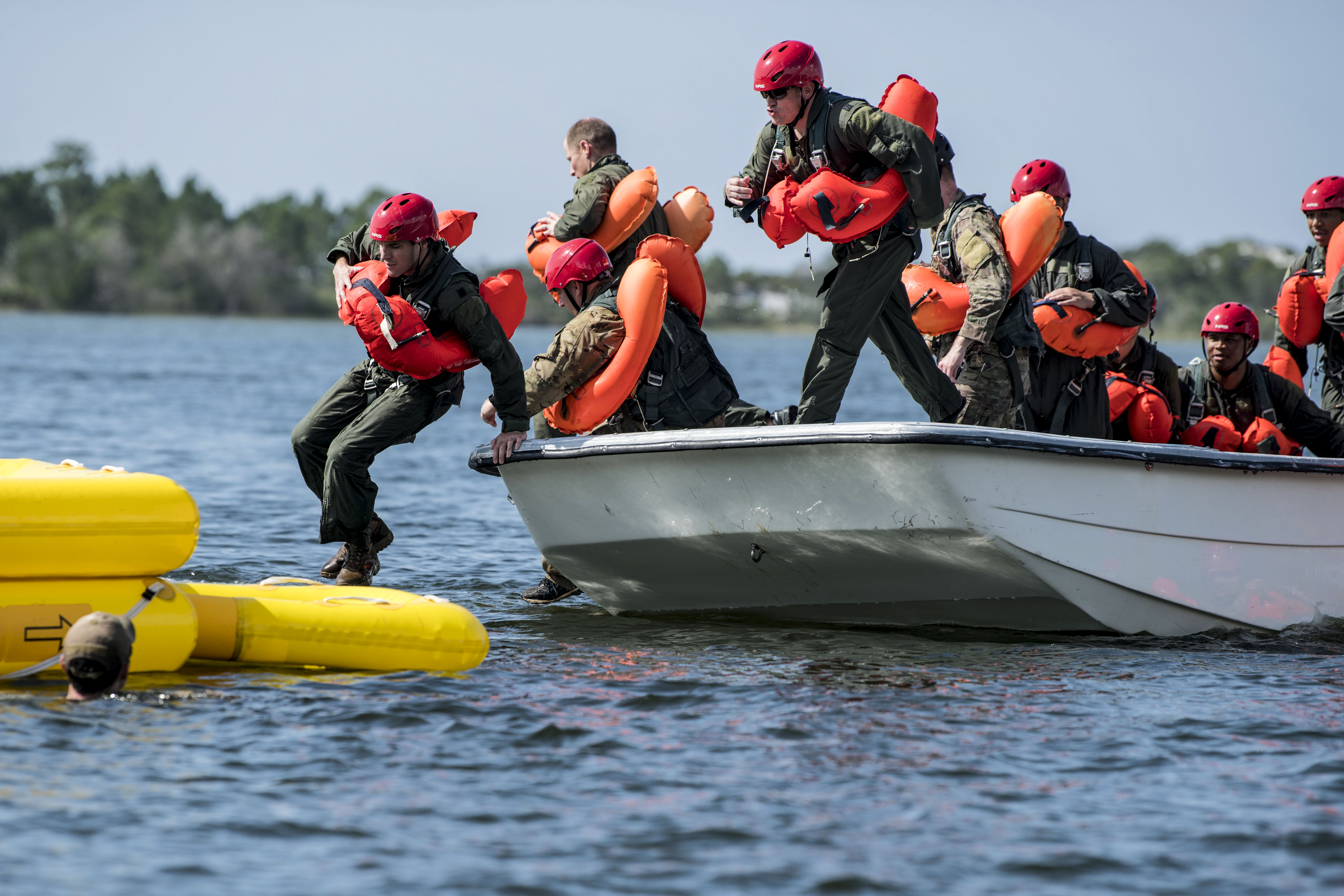
Airmen jump onto a 20-man life raft during parachuting and water survival training at Hurlburt Field, Fla., Sept. 1, 2020.

Herculean Effort


An airman inserts screws into a C-130J Super Hercules aircraft at Little Rock Air Force Base, Ark., Aug. 25, 2020.

Field Notes


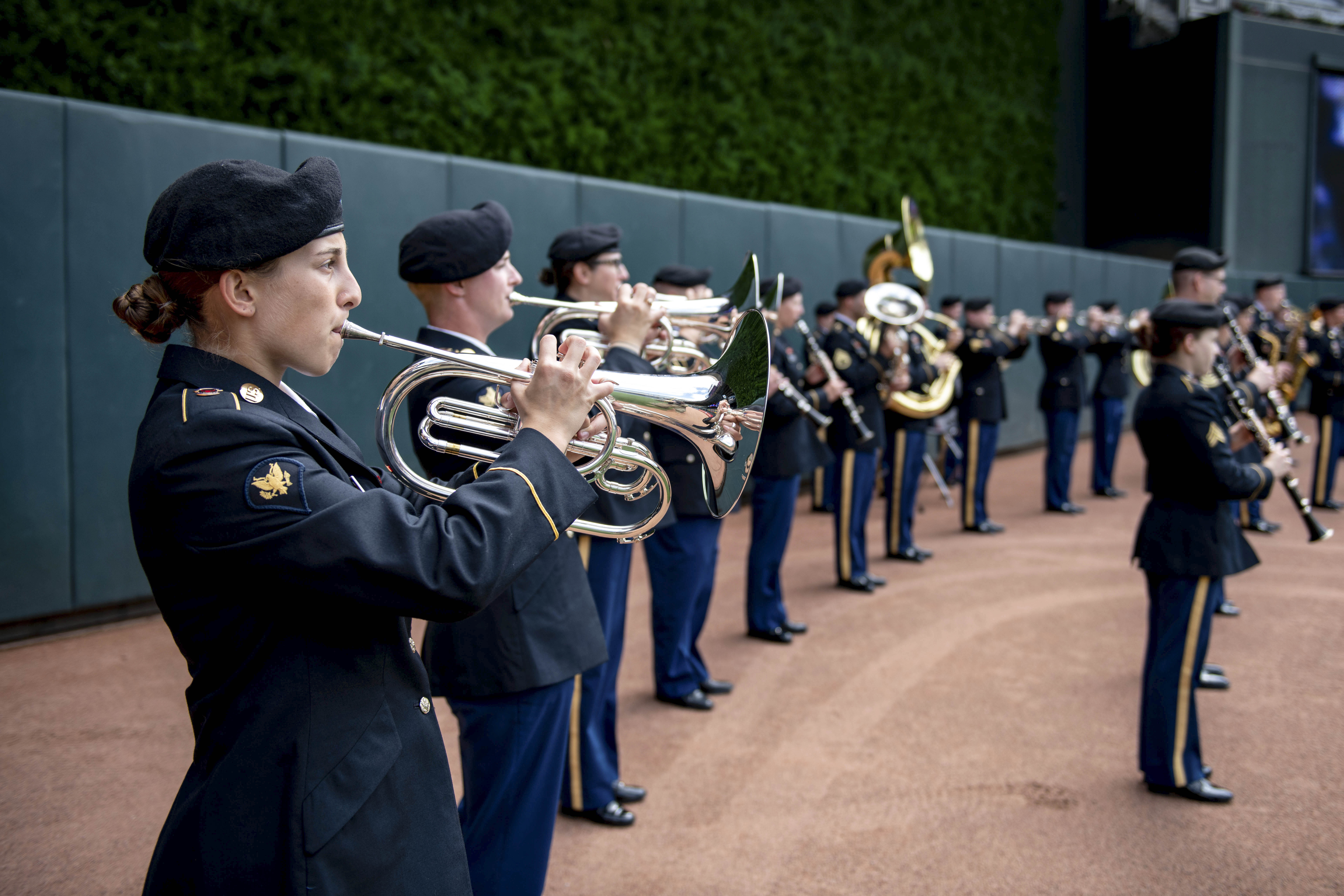
The 34th Infantry Division Band plays the national anthem and service songs while being recorded at Target Field in Minneapolis, Aug. 28, 2020. The band usually performs live for the Minnesota Twins’ Armed Forces Appreciation Day game, but this year the recordings were slated to be televised instead due to the coronavirus pandemic.

Sea Ops


The USS New Orleans, left, conducts a replenishment with the USNS Charles Drew and Navy MH-60S Seahawk helicopters in the Philippine Sea, Sept. 3, 2020.

Soldier Check


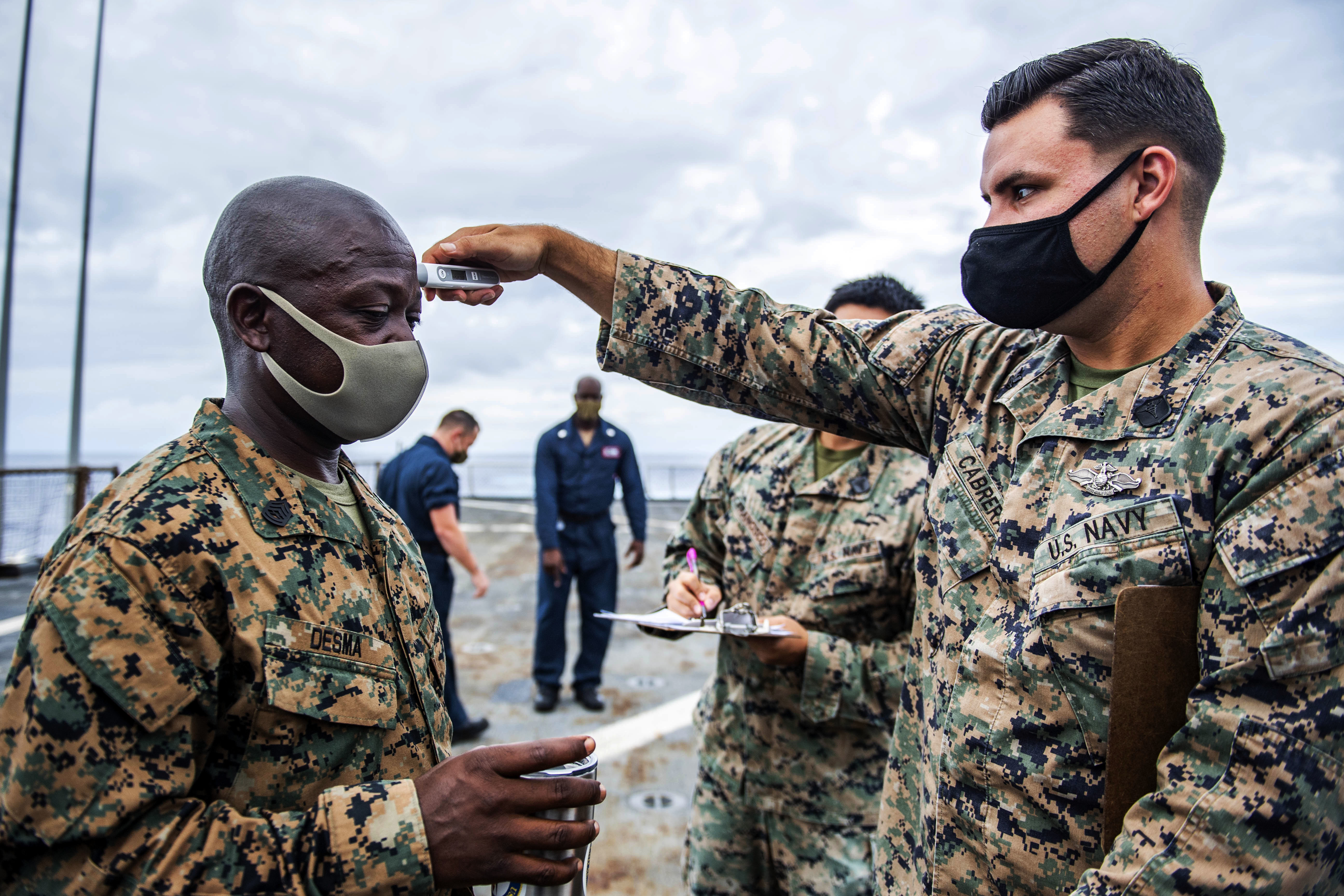
Navy Petty Officer 2nd Class Brian Cabrera, right, an independent duty corpsman assigned to Combat Logistics Battalion, 31st Marine Expeditionary Unit, checks the temperature of Marine Corps Gunnery Sgt. Luckner Desma during a drill on the USS Germantown in the Philippine Sea, Sept. 2, 2020. Cabrera is a member of USS Germantown’s COVID-19 Rapid Response Team; Desma is also assigned to CLB, 31st MEU. The Germantown, part of the America Amphibious Ready Group assigned to Amphibious Squadron 11, along with the 31st Marine Expeditionary Unit, is operating in the 7th Fleet area of responsibility to enhance interoperability with allies and partners and serve as a ready response force to defend peace and stability in the Indo-Pacific region.

COVID-19 Registration



A Hawaii National Guard member signals for the next person in line in order to verify COVID-19 registration during testing in the Tetsuo Harano Tunnel on the island of Oahu, Hawaii, Sept. 3, 2020. The Hawaii fire department, police department, National Guard and nurses were set to test over 5,000 residents throughout the day.

Flag Folding


Air Force Staff Sgt. Kara Tierney and Airman 1st Class Fuatapu Hook fold a U.S. flag during a six-man funeral sequence as part of an honor guard graduation ceremony at Joint Base Elmendorf-Richardson, Alaska, Aug. 26, 2020.

Readout of Secretary of Defense Dr. Mark T. Esper's Phone Call With Israeli Defense Minister Benjamin "Benny" Gantz

 Sept. 4, 2020


Secretary of Defense Dr. Mark T. Esper spoke with Israeli Defense Minister Benjamin “Benny” Gantz over the phone today.  During the call, Secretary Esper congratulated Minister Gantz on the historic step to normalize relations between Israel and the United Arab Emirates under the Abraham Accords.  Both leaders exchanged views on how recent developments will advance shared U.S.-Israeli defense priorities, and committed to maintaining an open dialogue about potential avenues for cooperation.

Iwo Jima Medal of Honor Recipient Recounts Experiences During Battle

 Sept. 4, 2020 | BY David Vergun and Katie Lange , DOD News

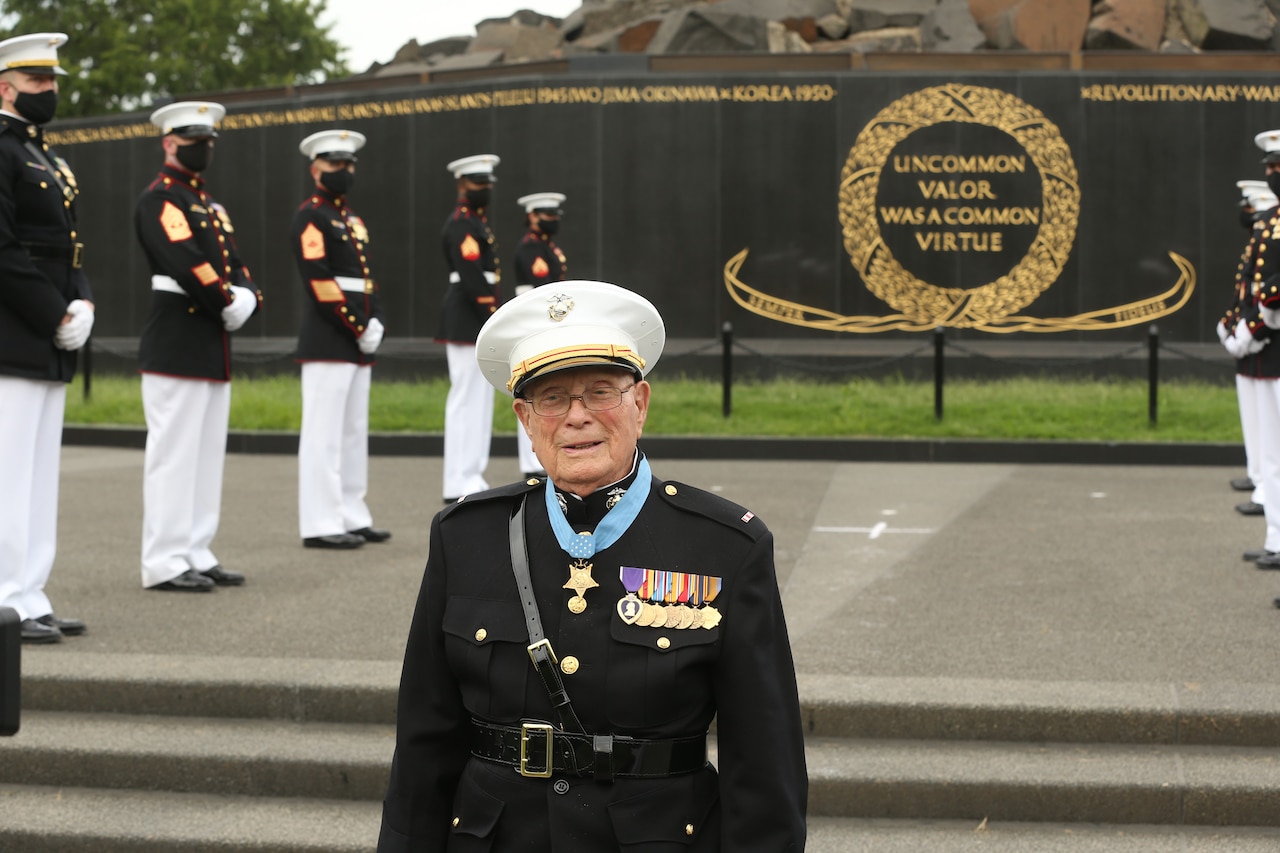
The last surviving Medal of Honor recipient to have fought in the Battle of Iwo Jima, Hershel "Woody" Williams, made a visit to the Iwo Jima memorial in Arlington, Virginia.

As Williams made his way up to the memorial on Sept. 2, scores of Marines snapped to attention, rendering the 96-year-old veteran a heartfelt salute. 

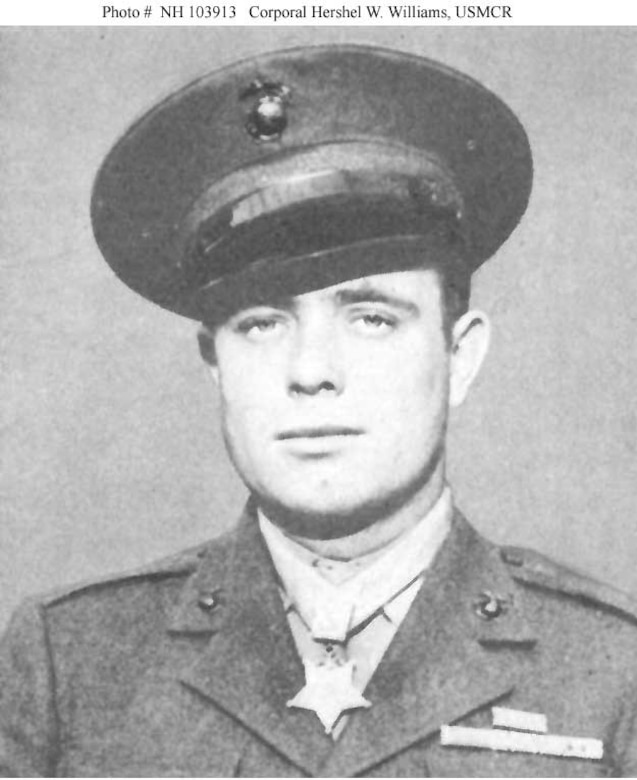
Williams joined the Marines in May 1943 and took part in the battle to retake Guam in the summer of 1944 before being sent to Iwo Jima, a tiny island in the Volcano Islands chain. The two were vastly different, he said.

A Marine Corps veteran in uniform and wearing the Medal of Honor poses for a photo. Marines stand in formation behind him.

"Guam was more jungle-type fighting — a lot of creeping and crawling — but when we got to Iwo Jima, everything had been wiped off that island," Williams explained in an interview for the Library of Congress' Veterans History Project. "About the only protection you could find would be a shell crater or try to dig your own hole."

Capturing Iwo Jima was crucial to the Allies. The U.S. needed the island's airfields. Other U.S.-occupied islands placed fighter jets out of bomber-escort range of Japan's mainland. 

Williams' reserve unit was sent ashore two days after the battle started, and the scene was chaotic. He said they found out quickly that the land was incredibly difficult to maneuver.

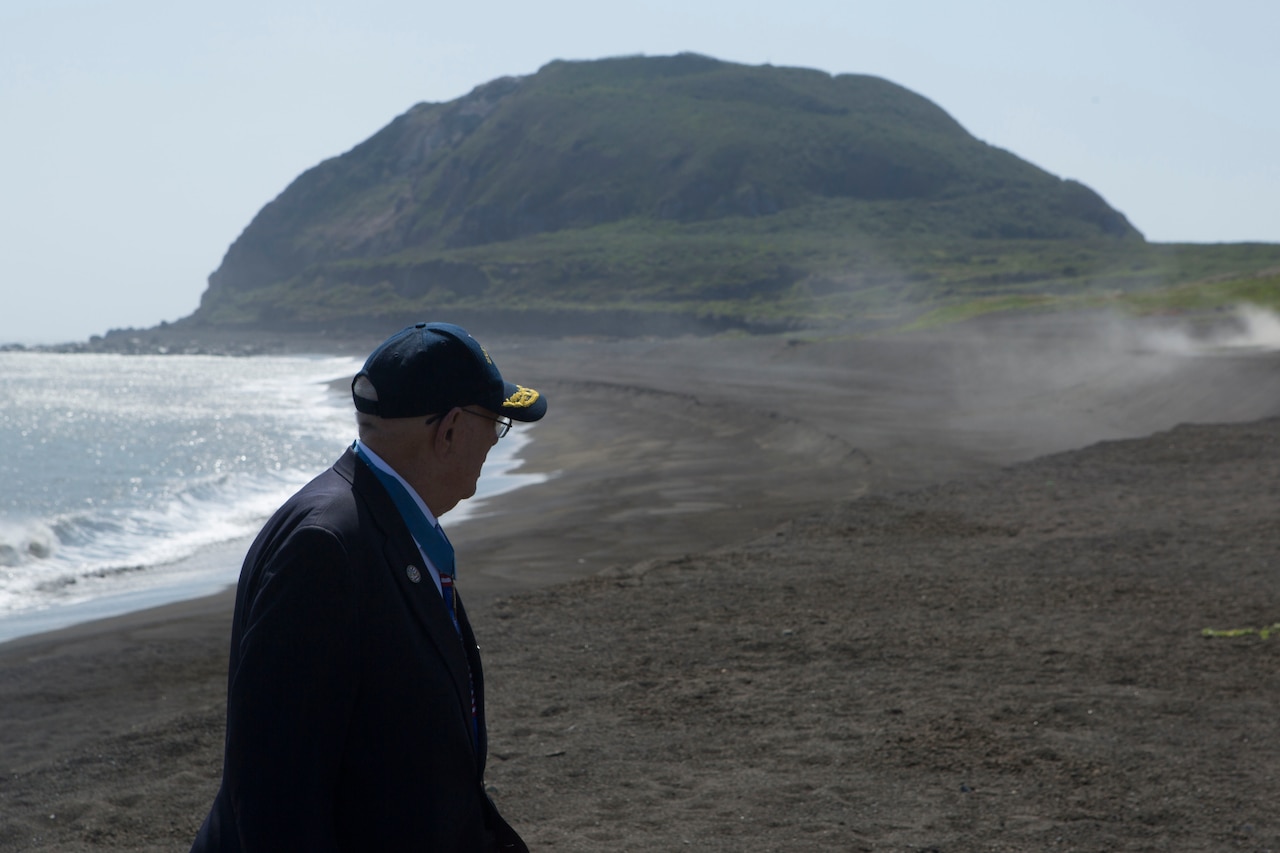
The tanks had trouble opening up a lane for the infantry through the black volcanic sand that sloped steeply up the beach from the waterline. But the biggest problem was posed by the many steel-reinforced "pillbox" bunkers protecting the Japanese airfields.

"Bazookas and that sort of thing had no effect on them, because they were so thick and well built," Williams said in a 2017 interview. "The only way to actually eliminate the enemy inside those pillboxes was by flamethrower."

The battle saw heavier than usual casualties. Williams had initially been one of several demolition sergeants, but by Feb. 23, 1945, he was the only one left. So, he bravely volunteered to go forward as the last flamethrower to try to quell the devastating machine-gun fire from the pillboxes.

In four hours, with only four riflemen to protect him, Williams managed to wipe out seven pillboxes. He repeatedly prepared explosives in a safe area, struggled back to where the enemy was, and then set off the charges.

One time, he jumped onto one of the pillboxes from the side and shoved the nozzle of his 70-pound flamethrower into an air vent pipe and fired, killing everyone inside. Another time, he charged bayonet-wielding enemies and killed them with one burst of flame.

A Marine poses for a photo.

"That made a hole big enough that [the company] could go through and get behind any other pillboxes that were in that area," Williams said. "Once you got behind the pillboxes, then we had the advantage."

Williams' efforts helped to neutralize one of the most fanatically defended Japanese strongholds his regiment had encountered. For his actions, he received the Medal of Honor from President Harry S. Truman during a group ceremony at the White House on Oct. 5, 1945. Ten other Marines and two sailors also received the honor that day.

Before Sunset Parade on Sept. 2, Williams made additional remarks about his service and what it means to serve.

When he and his fellow Marines saw the second American flag raised atop Mount Suribachi, Williams said their spirits were lifted. "I still remember that day," he added.

Williams said he's been asked where bravery comes from, particularly about his valorous actions leading to the Medal of Honor.

He said he's never been able to answer that question satisfactorily. "Everybody has some instinct of bravery. And, as long as they can control the fear, you can be brave. But if fear overtakes you and becomes the dominant instinct, you cannot operate. You cannot operate under fear. Your brain won't let you.

"I feel that our upbringing had some influence on our bravery because we were taught in the depression years, if you didn't have it, you had to make it," Williams said. "And the only way you could make it was to work at it. Our upbringing gave us the confidence that developed into bravery."

America was and is worth fighting for, he said. "If we lose our freedom we lose America."

Williams was discharged in 1945, but he stayed in the Marine Corps Reserve until his retirement. Nowadays, he continues to serve through his foundation, the Hershel Woody Williams Medal of Honor Foundation, which honors families who have lost a loved one in service to their country.

A man gazes at a hill. A shoreline is in the background.

Williams said it's those men — the ones who died protecting him — who really deserve the honor.

"This medal doesn't belong to me. It belongs to them because they gave their lives for me," he said, trying to hold back tears. "I was just doing a job that I was trained to do."

Asked what advice he'd give to young people, he said: "If you love America, truly, you are going to have the instinct and desire to serve your country. If you don't, then you're going to find some way to go in the other direction.

"Service is within all of us," he continued. "Every time we do something to help another person, we get a residual of that that makes us feel good, makes us feel proud that we could do something for someone else. And, there's no feeling like it."

In the last few years, Williams observed that Americans have become more separated than at any time since the Civil War. "We must come back together as a nation and as a people to where we can truly say, 'We are the United States of America.'"