Wednesday, October 21, 2015

18th Air Force to participate in Exercise Ultimate Reach

by MSgt. Thomas J. Doscher
18th Air Force Public Affairs


10/21/2015 - SCOTT AIR FORCE BASE, Ill. -- Eighteenth Air Force units, partnered with the Army's 82nd Airborne Division, will participate in Exercise Ultimate Reach Nov. 2-8.

Ultimate Reach is an annual U.S. Transportation Command-sponsored live-fly exercise designed to exercise the ability of 18th Air Force (Air Forces Transportation) to plan and conduct strategic airdrop missions. This iteration of Ultimate Reach partners with NATO Exercise Trident Juncture, currently being held in locations across Europe.

C-17 crews from Joint Base Charleston, S.C.; Joint Base Lewis-McChord, Washington; and Joint Base Elmendorf-Richardson, Alaska, will fly more than 500 Paratroopers of the 82nd Airborne Division's 2nd Brigade Combat Team across the Atlantic to conduct a joint forcible entry exercise over Zaragoza Spain. KC-10 aerial refueler crews from Joint Base McGuire-Dix-Lakehurst, New Jersey, and Travis Air Force Base, California, will provide refueling support during the mission.

The exercise serves to enhance 18th Air Force's interoperability and teamwork with NATO allies and sister services.

More than 5,000 U.S. service members are participating in Trident Juncture. Elements of the exercise is being conducted in Spain, Portugal, Italy, Belgium, Canada, Germany, the Netherlands, Norway and at sea. Trident Juncture is the largest NATO exercise conducted in the last 20 years and serves as an annual NATO Response Force certification exercise for 2016. Trident Juncture formally ends Nov. 6.

Latin American cadets learn about airlift

by Greg Davis
436th Airlift Wing Public Affairs


10/21/2015 - DOVER AIR FORCE BASE, Del. -- Team Dover hosted 26 cadets from 13 countries in Central and South America as they toured the base's transport aircraft types; the C-5M Super Galaxy and C-17A Globemaster III, during a brief visit Oct. 15, 2015, here.

The cadets were introduced to the jet transports and their crews during a tour of static aircraft on the main parking ramp as part of a professional development exchange called the Latin American Cadet Initiative. LACI is arranged through the Office of the Secretary of the Air Force's International Affairs Office-Latin American and Africa Division, and takes place each October.

The cadets on the tour represent the top two cadets from their respective countries and many are destined to be their Air Force's senior leaders in the coming years.

"Most will become pilots," Lt. Col. Orbelin Arreola, SAF-IA office chief, said of the cadets as they watched a C-17's cargo door being opened. "We want them to remember everything good about the U.S., especially the U.S. Air Force because they hold us at the highest level."

The visit to Dover is part of a whirl-wind, month-long tour across the U.S. which includes visits to all three U.S. military academies, major landmarks in New York, Washington, D.C., the Grand Canyon, plus experiences with the Army, Air Force, Navy and the Inter-American Air Forces Academy in San Antonio. The cadet trip is funded by the SeCAF IA office and recognized by leaders both here and abroad as a program of high-interest and high-reward for military-to-military relations, Arreola explained.

Before getting on a bus to conclude the tour of Dover AFB, El Salvador Air Force Academy Cadet Raul Granados reflected on his experience learning about how the Air Force conducts airlift.

"It's amazing and a little bit overwhelming. Our country's air force is so tiny compared to the United States Air Force," said Granados.

Validation of the LACI has not only lasting, but almost immediate impressions on the lives of these future leaders. Granados' expressed his reflections on having interacted with the professional aircrews at Dover.

"I want to be a pilot and was considering being a fighter pilot," said Granados. "Knowing the importance of the C-5 and C-17 missions makes me think of being a cargo pilot now."

The cadets continue their tour for another two weeks and left Dover AFB to visit bases in Virginia before continuing west for stops in Texas, Arizona and Colorado where they will finish at the Air Force Academy during Fall International Week.

Remembering the fallen and those who continue to fight

by Airman 1st Class Malcolm Mayfield
90th Missile Wing Public Affairs


10/19/2015 - F.E. WARREN AIR FORCE BASE, Wyo. -- Over 100 Airmen crowded into the Independence Hall Fitness Center, Oct. 14, waiting to start what they were told would be a brutal and intense workout. Security Forces Airmen from the 90th Missile Wing volunteered to push themselves to the limits in a group workout in memory of a fallen Airman, who many of them never had the chance to meet.

After hearing the details of the workout and words of encouragement, the Airmen began the silent workout in memory of the Airman 1st Class Leebernard Chavis.

Chavis was deployed to the Karadah Peninsula of Baghdad, Iraq, where he lost his life due to sniper fire while his squad was conducting route security on a suspected an improvised explosive device, Oct. 14, 2006.

His team considered this Hampton, Virginia native a down to earth Airman who always liked to keep things light, but was quick to handle business once his team went to work.

"I knew his team leader," said Tech. Sgt. Sarah Donis, 90th Security Support Squadron. "He introduced me to his workout in 2010 and I could see how much it affected him every year."

Donis has done this workout almost every year since the 2010 in memory of Chavis. The exercise consists of 150 burpees, a one mile run and 150 squat thrusts.

"This workout is grueling and hard, but it's supposed to be," she added. "When it gets hard you have to dig deep and push through."

Many fallen defenders have been honored with memorial workouts created in their memory by those left behind. The workouts mirror the philosophy of challenging one's self and being forced to dig deep, simulating what those who knew the fallen must endure.

"I've never felt so involved in a work out," said Staff Sgt. Brett Cassidy, 90th SSPTS instructor. "I've also never had a workout I actually wanted to complete so badly."

Though the workout was in memory of Chavis, he wasn't the only one being remembered.

"It's not just about one Airman, it's about all of the defenders who have passed and those still fighting overseas," Cassidy said.

Many Airmen that participated in the workout were brand-new members of the squadron, still training for their careers.

"All of my Airmen volunteered," Cassidy said. "To see them, not knowing [Chavis], and not knowing me or sergeant Donis, shows how much they care and how much they were invested. They made me proud to know that these Airmen will be the people I will be working with for the next 15 to 20 years."

Every Airmen that took on the challenge completed the memorial workout, remaining silent from beginning to end in remembrance of those defenders that have fallen in the line of duty.

‘A blood transfusion saved my life’


By Staff Sgt. Debbie Lockhart, 50th Space Wing Public Affairs / Published October 19, 2015

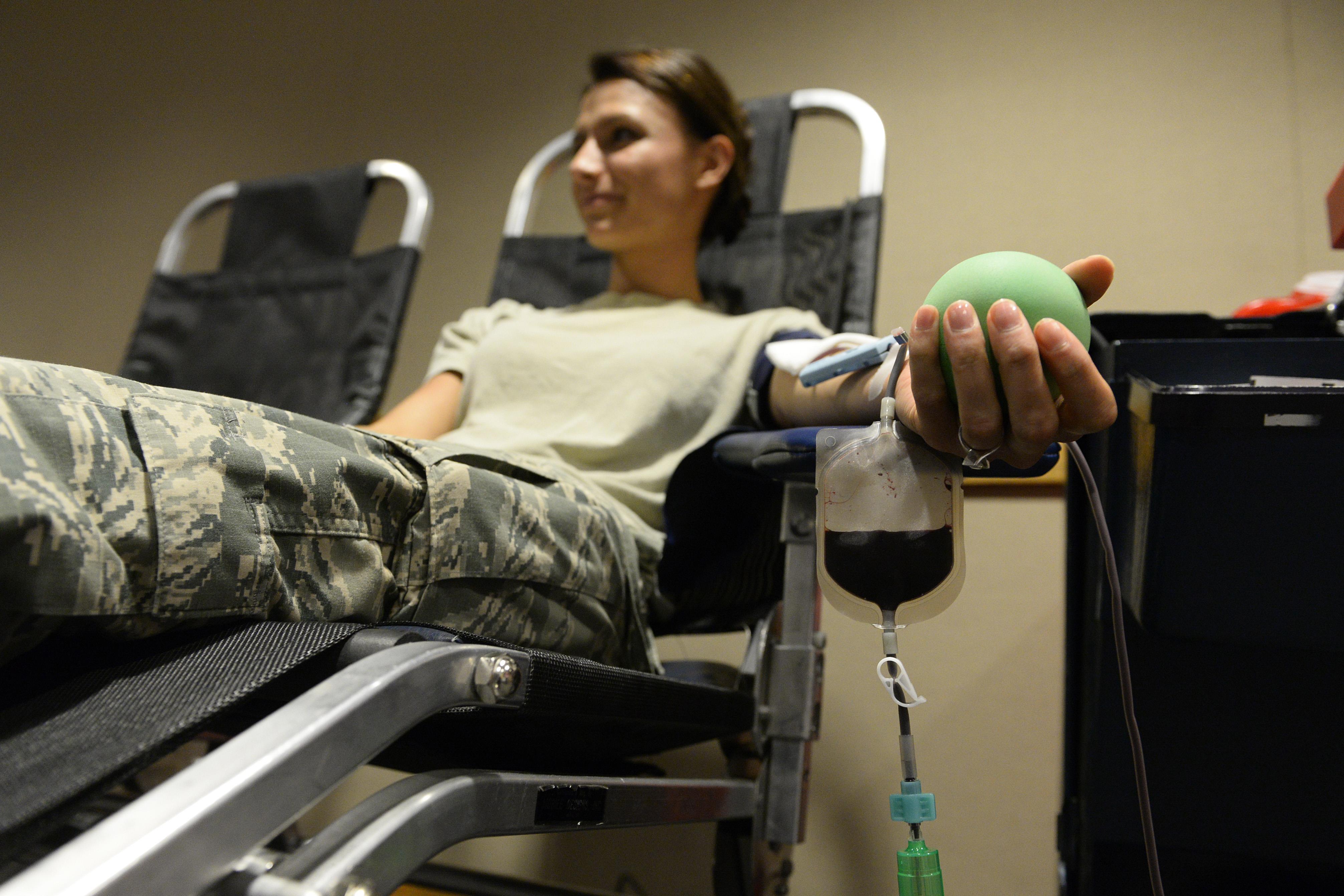
SCHRIEVER AIR FORCE BASE, Colo. (AFNS) -- Many children dream of taking a trip to Disneyland, and in 2001, 1st Lt. Fanita Schmidt's family set off to make it a reality. But the family's dream suddenly turned into a nightmare when Arizona winds blew their minivan off the road, causing the vehicle to roll down a hill.

"I lost my brother that day," said Schmidt, a 4th Space Operations Squadron orbital analysis engineer. "My sister's knee cap was sliced off, my father's ribs broke ... everyone was hurt."

Schmidt was immediately knocked unconscious. She suffered six broken bones above the hip and lost a large amount of blood.

"Because I passed out, I wasn't able to control my body, which is why I had so many more injuries than the others," she said.

Due to the extent of her injuries, Schmidt was airlifted to a hospital in Las Vegas, Nevada, where she could be properly cared for. Her outlook was grim at the time, she said, but doctors knew what they needed to save her life: blood.

"I was told I had less than a few hours to get a blood transfusion so that I could live," Schmidt said. "If that wasn't available to me, I would've died."

Schmidt received a blood transfusion that helped save her life, and now, 14 years later, she said she pays it forward by donating blood every chance she gets.

"I try to go to all the blood drives I can," she said. "I've even stopped myself from getting tattoos so I am actually able to donate."

According to the Red Cross, "although an estimated 38 percent of the U.S. population is eligible to donate, less than 10 percent actually do each year."

Schmidt encourages everyone who is physically able to donate blood.

"I do understand that it is a scary process for a lot of people to actually sit in that chair, have a needle put in and feel like a part of you is draining out, but you have to understand that it just takes a small part of you to make a whole of someone else," she said.

The Red Cross says one pint of blood is taken during a blood donation, which can save up to three lives.

"I was a child when a blood transfusion saved my life, and look where I am now," Schmidt said.

Schmidt insists that all it takes is time and courage to become someone's hero -- something she learned by watching her father.

"My father graduated from the first class of the Air Force Academy in 1959," she said. "He was a fighter pilot and he actually saved a lot of peoples' lives -- maybe not by donating blood -- but he earned four Distinguished Flying Crosses, so he's a true hero."

Her father's legacy inspired her to follow in his footsteps and serve in the Air Force, she said.

"If you have the physical, mental and psychological capability to serve and help others, then why not do it?" she asked. "And that correlates to donating blood -- I really do believe that even if you don't get the chance to go into a cockpit, you can still save someone's life."

Donating blood is a safe process and typically takes about 10 minutes, according to the Red Cross.

"We couldn't save lives without our donors," said Army Lt. Col. Jason Corley, the Armed Services Blood Program deputy director of operations. "As a program, we have saved thousands of lives this year and that happened because of our donors’ support. They are the silent heroes.'"

Scale bomber models find home in headquarters air parks

by Senior Airman Amanda Morris
2nd Bomb Wing Public Affairs


10/20/2015 - BARKSDALE AIR FORCE BASE, La. -- Members of Air Force Global Strike Command gathered to dedicate new B-1B Lancer precision scale models at AFGSC's and 8th Air Force's headquarters air parks, here, Oct. 19.

"This model symbolizes standing up bomber command for the United States Air Force," said Col. Patrick Matthews, 8th AF vice commander. "We are bringing the band back together."

The miniature air parks showcase the major missions of the command, and the addition of the Lancer represents recent growth within the command. 

"From the very beginning of AFGSC, there was a notion to bring all of the bombers under one command," said Yancy Mailes, AFGSC director of the global strike History and Museum Program. "It just wasn't the right time."

With the new realignment, the B-1B and the Long Range Strike Bomber program, previously residing under Air Combat Command, moved under AFGSC. This united all of the Air Force's bomber assets under a single command, effective Oct. 1.

Sixty-three aircraft and about 7,000 people transferred from ACC to AFGSC under the realignment. The 7th Bomb Wing at Dyess Air Force Base, Texas, and the 28th Bomb Wing at Ellsworth Air Force Base, South Dakota, continue to serve as the host wings.

"The B-1 has proven its capabilities in long range strike since its introduction to combat. Our B-52 Stratofortress and B-2 Spirit demonstrate the same capability," Mailes said. "It is only natural for the aircraft to fall under this command."

"This is an amazing opportunity for us to have all three of our bombers in the same command," said Gen. Robin Rand, Air Force Global Strike Command commander. "It is important that we put all of our bombers under one command. It is not just to look right or to feel right; it's the best thing for us to do to wage our nation's business."

"Global strike is capable of reaching out at any moment, not in days, weeks or months, but in hours," Rand continued. "There are few platforms that can do that better than the B-1."

Lt. Gen. Cox assumes command of 18th AF

by Master Sgt. Thomas J. Doscher
18th Air Force Public Affairs


10/20/2015 - SCOTT AIR FORCE BASE, Ill.  -- Gen. Carlton D. Everhart II, Air Mobility Command commander and former 18th AF commander, presided over a ceremony today in which Lt. Gen. Samuel Cox assumed command of 18th Air Force.

Everhart said Cox's leadership and the dedication of the men and women of 18th Air Force will allow the command to reach new heights.

"Those Total Force Airmen... Active Duty, Guard, Reserve and civilian, make up the largest numbered air force in the greatest air force the world has ever known," Everhart said. "It is now your charge and challenge to lead them."

As 18th AF commander, Cox will lead Air Mobility Command's operational mission as Air Forces Transportation, the air component of U.S. Transportation Command. He is responsible for the command's worldwide operational mission of providing rapid, global mobility and sustainment for America's armed forces through airlift, aerial refueling, aeromedical evacuation, and contingency response. Additionally, Cox also commands Task Force 294, which oversees Air Force tanker operations in support of U.S. Strategic Command.

"I look forward to leading and working alongside our mobility warriors," Cox said. "We are blessed to have amazing Airmen who are incredibly talented, and I am honored and privileged to be back as part of this amazing team."

Cox comes to 18th AF from the Pentagon where he served as Deputy Chief of Staff for Manpower, Personnel and Services. His prior assignments include multiple operational assignments in Air Mobility Command, commander of the 436th Airlift Wing and the 618th Air and Space Operations Center (Tanker Airlift Control Center) and Director of Operations and Plans at USTRANSCOM.

"I know what the Airmen of 18th Air Force are capable of," Cox said. "We will certainly face new and different challenges in the future, but I know our Total Force Airmen will rise to the occasion, and together, we will succeed - just like they have done for decades."

With approximately 37,000 active-duty, Guard, Reserve and civilians Airmen and approximately 1,100 aircraft, the 18th Air Force manages the global air mobility enterprise through the 618th Air Operations Center (Tanker Airlift Control Center) , 11 wings and two stand-alone groups.

MOT training enables JBLM mission success

by Senior Airman Naomi Griego
62nd Airlift Wing Public Affairs


10/20/2015 - JOINT BASE LEWIS-MCCHORD, Wash. -- More than 30 Soldiers from 5th Battalion, 5th Air Defense Artillery Regiment, and 22 Air Force loadmasters from the 62nd Airlift Wing recently trained loading a 75,000 pounds Counter Rocket, Artillery and Mortar trailer onto a C-17 Globemaster III on McChord Field, Joint Base Lewis-McChord, Wash. Oct. 1.

The Mission Oriented Trainer training opportunity is a weekly occurrence in which JBLM Soldiers and Airmen train for real world short notice equipment transportation deployment.

This hands on training enables the Army to prepare for their real world mission of global response by simulating what would occur if they were tasked to deploy in a less than a 72-hour window. It also prepares Air Force aircrew, specifically loadmasters, on their roles in a time sensitive scenario.

"The training is conducted in phases," said Master Sgt. Douglas MacGregor, 62nd Operations Support Squadron joint airlift integrator and training coordinator. "Phase one consists of ground training where the unit learns how to tie down their own cargo on the aircraft and how to fill out the proper paperwork for transport. This enables [our] loadmasters to get the experience of loading an aircraft with larger equipment in a tight space."

The second phase is timed and serves as a test run. The units simulate being notified of a 72 hour short notice deployment. This means their assets need to be in the air within that time frame. A minute over and they don't make the time line.

The third and last phase is where the cargo and crew flies with the equipment.

Staff Sgt. Melissa Michels, C-17 loadmaster, said the training provided gave loadmasters a unique experience on the joint base concept as well as improved proficiency.

"In all, it took 17 minutes to load the CRAM onto the aircraft," she said. "It was pretty impressive."

The consensus between all units involved is the training is essential.

"The aircraft [here] plays a big role in the mission," said Sgt. 1st Class Oscar Llamas, 9th Support Detachment 1st Battlefield Coordination Detachment ground liaison. "The Army can't move their equipment without a ride."
 
The goal according to MacGregor was to provide practice for all units and so far the training has been widely successful according to both Llamas and MacGregor.

"It builds everyone up in preparation," MacGregor said. "It is a better training platform to focus everyone on the real world mission."

Tuesday, October 20, 2015

Staying safe doesn’t have to be a drag during Halloween

by Senior Airman Tammie Ramsouer
JBER Public Affairs


10/20/2015 - JOINT BASE ELMENDORF-RICHARDSON, Alaska -- The moon is full, candy bags are empty, and children are dressed as their favorite fictional characters - eager to celebrate the centuries-old tradition of Halloween.

Between the hours of 5 and 8 p.m. Halloween night, Joint Base Elmendorf-Richardson's Pumpkin Patrol will be out in the housing communities ensuring residents, parents and children are safe.

"Our mission for Pumpkin Patrol is to facilitate safe pedestrian travel, provide traffic assistance and emergency response, and foster community relations to ensure every one has a safe and fun Halloween night in the housing communities," Pella said. "If anyone sees any suspicious activity or has an emergency during Halloween or at anytime, they should find one of us during the patrol or contact the Base Defense Operations Center at 552-8550 or 552-3421."

During Halloween, children age 11 and under must be accompanied by another person at least 12 years of age or older, or by an adult, said Air Force Staff Sgt. Carl Pella, 673d Security Forces Squadron noncommissioned officer in charge of corrections. Trick-or-treaters should use flashlights, wear proper reflective equipment and warm clothing, he said.

"Even with proper reflective gear, running from house to house, walking diagonally across the road or out from between parked vehicles is very dangerous, and parents and children should be aware of their surroundings," said Mike Lundvall, 673d Ground Safety Office administrator.

Pella added drivers should be extremely cautious of children in housing areas and keep their speed limited to 15 miles per hour.

Before leaving home, individuals should make a cautious decision with their costume of choice for the night.

"Costumes should allow the person wearing them to see properly and should not drag on the ground to prevent trips or falls," Lundvall said.

Not only are costumes a part of being safe while trick-or-treating, but safely using proper crosswalks while walking between streets can make the nighttime hunt for candy safer.

During trick-or-treating hours, JBER residents should leave their porch lights on to let children know where to get their candy.

If parents have a concern with the candy their children receive, the Air Mobility Command Passenger Terminal will X-ray candy on Halloween night. For any questions or concerns about the PAX terminal X-raying candy, contact them at 552-3782.

Lundvall said people should walk in groups and be beware of animals, such as resident animals or moose searching for pumpkins to snack on. He also recommends residents keep an eye on candles burning in their pumpkins, as they are a hazard and can possibly start a fire.

"We recommend residents use artificial pumpkins; that way it is less of a hazard to the children and parents having their fun on Halloween night," said Mark Sledge, 673d Civil Engineer Squadron Conservation Law Enforcement officer on JBER.

Within two weeks after Halloween, all JBER residents must take down holiday decorations, and remove all pumpkins and jack-o-lanterns immediately after the hours of trick-or-treating.

Leftover decorations could become a free meal for animals, which is not safe for residents or wildlife.

There can be a hefty fine for the individual accused of negligently feeding wildlife in Alaska, Sledge said.

According to Alaska State Law 92.230, a person may not negligently feed moose, bear, other wildlife, or leave human food, animal food or garbage in a manner that attracts animals.

For further information about trick-or-treating safety on JBER, contact the safety office at 552-6850, the Wildlife Conservation office at 552-8609, Aurora Housing at (907) 753-1023 or (907) 375-5515, or the 673d SFS at 552-5345 or 552-2132.

C-130 crash victims remembered by colleagues, leaders


By Mark Wyatt, 66th Air Base Group Public Affairs / Published October 19, 2015

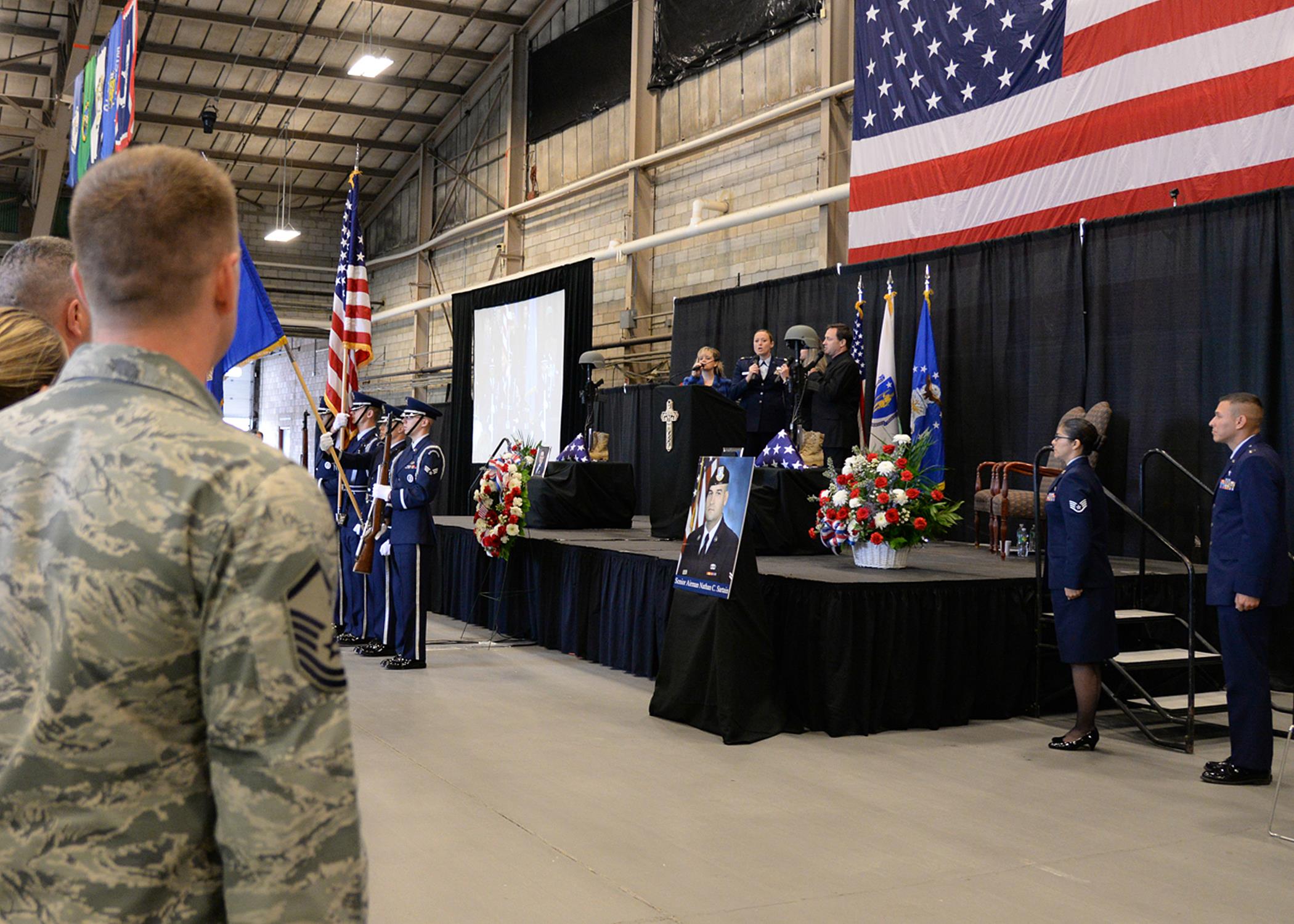
HANSCOM AIR FORCE BASE, Mass. (AFNS) -- More than 1,000 people attended a memorial service here Oct. 16 to honor two Hanscom Airmen killed earlier this month when the C-130J Super Hercules aircraft they were on crashed shortly after takeoff from Jalalabad, Afghanistan.

Senior Airman Kcey E. Ruiz, 21, of McDonough, Georgia, and Senior Airman Nathan C. Sartain, 29, of Pensacola, Florida, were members of the 66th Security Forces Squadron.

During the service, colleagues took time to remember them personally.

"If you were blessed to be his friend, then you had an incredible person in your life, one who leaves us with a legacy we will never forget," said Staff Sgt. Lee Shortell during his remarks on Sartain.

Shortell, who was Sartain's supervisor, added that there were very few people he knew "whose focus on the mission and pride in their work came anywhere close to Sartain's."

Staff Sgt. Derek Smiling, who spoke about Ruiz on behalf of Tech. Sgt. Matthew Marquart, said she was an "amazing troop."

"Kcey Ruiz, you were not only my troop, my sister-in-arms, but you were my friend and you are my hero," Smiling read. "I can proudly say, ‘Kcey, you changed me.’ She made me a better person, changed the way that I am as an NCO, as a supervisor, and as a human being."

Also recalling the two Airmen was the base commander.

"These two defenders embodied the character, honor, dedication and sacrifice of true heroes," said Col. Michael A. Vogel, installation commander. "I could not be more proud and humbled to stand here today as Nate's and Kcey's base commander."

Ruiz and Sartain were deployed with the 455th Air Expeditionary Wing in Afghanistan as Fly Away Security Team members as part of Operation Freedom's Sentinel.

At their home station here, both were installation entry controllers and also armorers.

"On behalf of all the men and women of the 66th Security Forces Squadron, I can tell you how proud we all are of Kcey and Nathan's exemplary service, friendship and defender kinship," said Maj. Joseph Bincarousky, the 66th SFS commander, to the families of the fallen Airmen. "They will always be a part of this family, and your families will always have a place in our hearts."

Both Airmen were posthumously awarded the Air Force Commendation Medal by their unit commander.

Vogel vowed to continue to honor the Airmen's memory by completing the mission.

"We will not falter; we will succeed," he said. "And we will always remember our two fallen heroes and those who loved them."