Monday, August 24, 2015

USS Boise Holds Changes of Command


By Kevin Copeland, Commander, Submarine Force Atlantic Public Affairs

NORFOLK, Va. (NNS) -- Cmdr. Chris Osborn relieved Cmdr. Scott Luers as commanding officer of the Los Angeles-class attack submarine USS Boise (SSN 764) during a ceremony held onboard the submarine at Naval Station Norfolk, Aug. 21.

A native of Westminster, Md., Luers earned a Bachelor of Science Degree in Ocean Engineering from the Naval Academy in 1995, and a Master's Degree in Engineering Management from Old Dominion University in 2007.

"I am truly proud of all that Boise has accomplished over the past few years," said Luers. However, I can take credit for very little. While much of what you'll hear today centers around Cmdr. Osborn and me, the truth, as any skipper worth his salt will tell you, is that each and every accolade and recognition received by the ship was the result of a stellar, professional, enthusiastic crew of submarine Sailors.

"Steaming over 33,000 miles during our recent Central Command deployment, a distance equivalent to circumnavigating the earth one and a quarter times, these Sailors faced numerous material, psychological and physical challenges and overcame each to return safely home to our loved ones. In doing so they sailed in four different theaters of operation, conducting missions vital to our national security in some of the most heavily transited, shallow waters of the world, and executed numerous port visits and goodwill events. Each of these told friend and foe alike, in no uncertain terms, that the United States was present and accounted for, and knowledge of our professionalism added a high degree of uncertainty to their calculations. All the while we operated, far from friendly ports, these Sailors kept their 23-year-old ship running smoothly."

Luers assumed command of Boise, Feb. 22, 2013, as the submarine's 10th commanding officer. Under his command, the submarine completed a deployment to the Central Command Area of Responsibility, Jan. 16, 2015, where the crew executed four missions vital to national and global security. The submarine was also awarded the 2014 Commander, Submarine Squadron Six Battle Efficiency Award.

"Crew of Boise, I am honored and humbled to have been your commanding officer," said Luers. "I consider you true shipmates, and look forward to our paths crossing again, as they inevitably will. Congratulations on everything you have accomplished. Keep up the great work that I have witnessed every day, defending our nation while serving onboard this amazing submarine as a Bronco. Chris, it is now your turn. You bring an impeccable record to BOISE and, based on my short 30 day observation, are a slam-dunk to take Boise into the next chapter in her history. Congratulations!"

Luers' next duty will be as the operations officer in the Operations and Special Operations Directorate at SUBLANT. Capt. Paul Snodgrass, Commander, Submarine Squadron Six and immediate superior in the chain of command, presented Luers with his second Meritorious Service Medal.

Brian O'Neill, Commander, Submarine Force Atlantic's (SUBLANT) deputy operations and special operations officer, and retired U.S. Navy captain who was Luers commanding officer onboard the Los Angeles-class attack submarine USS Albany (753), was the guest speaker.

"Boise is a superbly designed and constructed submarine," said O'Neill. "It is the finest most sophisticated warship ever built; encompassing the most advanced technologies man has developed. They are a tribute to human ingenuity, genius and craftsmanship. But the key element is really the men who serve aboard this magnificent ship, the fine crew of USS Boise. You joined the world's finest navy and then signed up for one of the most respected fraternal organizations in the history of naval warfare - the United States Submarine Service. You represent the top 4% of the U. S. Navy. Hold your heads high and be proud of your service."

"Submariners work hard and they must be an opportunity for to have fun, but it isn't all fun. The goal is always mission accomplishment and Scott and the entire Boise team have been doing just that. Under Scott's leadership, Boise successfully completed four nationally-tasked missions in four different areas of responsibility. Those missions are the cool ones we can't talk about. The Boise team did a fantastic job, in fact, they were the first boat in the history of the submarine force to accomplish some portions of the mission. Scott is a superb example of patriotism, leadership, sacrifice and dedication to duty.

"Chris, congratulations on being selected to relieve on Boise. You stand on the threshold of an adventure. Please embrace your tour and be sure to share the magic and sense of adventure with your entire crew. I envy you."

Osborn's previous duty assignment was the Submarine Readiness and Military Construction Officer at SUBLANT. A native of Freeland, Mich., he enlisted in the Navy in 1990 as a nuclear-trained Electrician's Mate. Selected for the Nuclear Enlisted Commissioning Program, he earned his Bachelors of Science Degree (Summa Cum Laude) in Mechanical Engineering from Auburn University. He received his commission through the Officer Candidate School in Pensacola, Fla., in October 1997.

He earned his Masters of Science in Operations Research from the Naval Postgraduate School in Monterey, Calif. His thesis on the at-sea effects of an alternate watch standing schedule for U.S. submariners garnered an Excellence in Undersea Warfare Technology award from the Naval Undersea Warfare Center.

"I would like to thank the mighty crew and exceptional families of the USS Boise," said Osborn. "I cannot express enough how blessed, privileged, and excited I am to be your commanding officer. Your team spirit and esprit-de-corps is unlike any other, and I look forward to continuing with you Boise's long legacy of excellence. I know many of you have worked very hard taking this fine warship thousands of miles from friendly shores on your recent deployment, and through your untiring efforts, have been able to share in many successes. Together, we will prepare Boise to execute a full range of war fighting capability in her next decade of service. Our mission will be challenging, but I know of no better crew who is up to the task. I cannot wait to tackle the challenges that lay ahead for us."

Dignitaries attended the ceremony were former Secretary of the Interior, U.S. Idaho Senator, and Idaho Governor Dirk Kempthorne; Boise Councilwoman Elaine Clegg; retired Vice Adm. Al Konetzi; and Tom Killingsworth, Chairman of Boise Commissioning Committee.

Fast-attack submarines like USS Boise are multi-mission platforms enabling five of the six Navy maritime strategy core capabilities - sea control, power projection, forward presence, maritime security, and deterrence. The submarine is designed to excel in anti-submarine warfare; anti-ship warfare; strike warfare; special operations; intelligence, surveillance, and reconnaissance; irregular warfare; and mine warfare - from open ocean anti-submarine warfare to intelligence, surveillance and reconnaissance to projecting power ashore with Special Operation Forces and Tomahawk cruise missiles in the prevention or preparation of regional crises.

Boise was built by Newport News Shipbuilding and commissioned November 7, 1992. The 360-foot submarine is the second naval ship to be named in honor of the city of Boise. The crew compliment includes 13 officers and 116 enlisted Sailors.

Southern Partnership Station-Joint High Speed Vessel 2015 (SPS-JHSV 15) Completes Mission in Belize


By Mass Communication Specialist 1st Class Kathleen A. Gorby

BIG CREEK, Belize (NNS) -- U.S. Navy Diver and Explosive Ordnance Disposal Technician training teams completed their second stop of the SPS-JHSV 15 mission Aug. 21 in Big Creek, Belize as part of the Adaptive Force Package (AFP) onboard USNS Spearhead (JHSV 1), operated by the Military Sealift Command.

USNS Spearhead is deployed in support of SPS-JHSV 15, a U.S. Southern Command-sponsored deployment focusing on enhancing cooperative partnerships with regional maritime services and improving operational readiness for all participating services. In addition, SPS-JHSV 15 provides the opportunity for U.S and partner nation forces to operate in the multinational environment, refine coordination, improve interoperability and demonstrate flexibility.

While ashore in Belize, Navy Divers from Mobile Diving and Salvage Company 3-1 from EODMU 3 and Explosive Ordnance Disposal Technicians from Platoon 642, EODMU6 provided training and conducted subject matter expert exchanges (SMEEs) with their counterparts to increase partner nation's capabilities to counter illicit trafficking and deal with explosive ordnance disposal.

Ensign Adam Pierce, AFP EOD officer in charge from Platoon 642, EODMU6 said they accomplished an incredible amount of work, fostering shared interests and values in the short period of time there.

"During our two and a half weeks in Belize we were able to conduct five days of demolition operations, including two days of an ordnance disposal operation," said Pierce.

"This operation included the explosive disposal of nine 81-mm mortar rounds, which were no longer serviceable and provided a safety hazard to the ammunition storage point in Hattieville. Additionally, we conducted diving familiarization training which directly improved the maritime safety capabilities of Belize Coast Guard (BCG) and Belize Defense Force (BDF)."

SPS-JHSV 15's mission to the region exemplifies the U.S. Southern Command and U.S. Naval Forces Southern Command commitment to cooperative partnerships in the Caribbean, Central and South America.

Master Diver and Senior Chief Navy Diver Michael Hunt is the leading Chief Petty Officer of Mobile Diving and Salvage Company 3-1 from EODMU 3, stationed in San Diego.

"The BDF and BCG are both extremely professional military units and we were privileged to work with them," said Hunt. "The culminating event of the engagement was an afternoon luncheon at a local nature preserve, which included an exchange of personalized plaques. We look forward for the opportunity to work with them in the future."

The AFP traveled to Honduras and is heading to Guatemala and Colombia next.

U.S. Naval Forces Southern Command and U.S. 4th Fleet support U.S. Southern Command's joint and combined military operations by employing maritime forces in cooperative maritime security operations to counter illicit trafficking, enhance interoperability and build enduring partnerships in order to enhance regional security and promote peace, stability and prosperity in the Caribbean, Central and South American regions.

F-16 Crash Update #5: Initial Recovery Efforts Complete; Local Partnership Continues

by Staff Reports
52nd Fighter Wing Public Affairs


8/24/2015 - SPANGDAHLEM AIR BASE, Germany -- U.S. Air Force recovery and environmental teams from Spangdahlem Air Base, Germany, have completed initial recovery efforts following an F-16C Fighting Falcon fighter aircraft accident near Engelmannreuth in the county of Bayreuth, Germany, Aug. 11, 2015.

All six of the F-16's 25-pound training munitions have been recovered. Most of the main parts of the aircraft were removed last week and transferred to Spangdahlem Air Base, Germany, for further study and inspection by the Safety Investigation Board there.

"Our recovery team has done a great job in working a speedy and efficient process for our Safety Investigation Board," said U.S. Air Force Col. Steve Horton, 52nd Fighter Wing vice commander. "It's due in large part to the great partnership we've had with the German military Bundeswehr, local forest rangers, and construction teams during this recovery effort. We value the community very much and they've helped us bring our mission to completion and mitigate adverse effects on the environment and the habitat."

Although the recovery team returned to Spangdahlem Aug. 22, 2015, officials continue to work with local partners to complete the recovery process.

Now that the crash site is clear of aircraft debris, base leadership has notified host-nation county officials from Landratsamt Neustadt Waldnaab and control of the site has been transitioned to the local German government. Spangdahlem AB personnel will continue to work closely with host-nation counterparts to ensure that remediation is accomplished in accordance with respective host-nation environmental laws.

Claims for compensation related to the F-16 aircraft accident can then be filed with Schadensregulierungsstelle des Bundes, Regionalbüro Süd in Nürnberg, which will in turn work with the U.S. Army Claims Service for reimbursement.

The cause of the accident is still under investigation. The Air Force will release a final report in the coming months detailing the findings.

"We thank the local community, the U.S. Army Garrison Bavaria, local police and first responders for their support during the incident and the subsequent recovery, cleanup and investigation endeavors," Horton said.

For more information, please contact the 52nd Fighter Wing Public Affairs office at 0656-561-6555 or 52fw.paoffice@us.af.mil.

--30--


GERMAN TRANSLATION

F-16 ABSTURZ ERGAENZUNG #5: BERGUNGSARBEITEN WERDEN ABGESCHLOSSEN; PARTNERSCHAFT VOR ORT LAUEFT WEITER

FLUGPLATZ SPANGDAHLEM, DEUTSCHLAND--U.S. Bergungs- und Umweltteams vom Flugplatz Spangdahlem, Deutschland, sind daran, die Bergungsarbeiten im Bereich der Absturzstelle des F-16 Kampfjets, das am 11. August 2015 in der Nähe von Engelmannreuth im Landkreis Bayreuth, Deutschland, abgestürzt war, abzuschliessen. Die meisten Teile des Flugzeuges wurden in der letzten Woche von der Unfallstelle entfernt und zwecks weiterer Untersuchungen und Ermittlungen der Sicherheitskommission zum Flugplatz Spangdahlem transportiert.

Dies beinhaltet alle sechs 25-Pfund-Übungsmunition der F-16.

"Unser Bergungsteam hat schnelle und effiziente Arbeit im Hinblick auf das Untersuchungsprozedere der Sicherheitskommission geleistet," sagte Oberst Steve Horton, Vizekommandeur des 52. Jagdgeschwaders. "Dies war groesstenteils moeglich aufgrund der hervorragenden Partnerschaft, die wir von Seiten der deutschen Bundeswehr, den oertlichen Forstleuten und Bergungsteams erfahren haben. Wir schaetzen die Gemeinde sehr, die uns geholfen hat unseren Auftrag fertigzustellen und negative Effekte auf die Unwelt und das Umfeld zu mitigieren."

Auch wenn die meisten Bergungshelfer des Teams am Samstag und Sonntag nach Spangdahlem zurueckgekehrt sind, werden offizielle Vertreter weiterhin mit den oertlichen Partnern zusammenarbeiten, um die Bergungsarbeiten fertigzustellen.

Die Bevoelkerung sollte sich weiterhin aus der Naehe der Absturzstelle fern halten, um abschliessende Bergungs- und Reinigungsarbeiten nicht zu behindern.

Militaerische Verantwortliche werden die deutschen Partner des Landratsamtes Neustadt Waldnaab informieren sobald alle Wrackteile entfernt sind. Zu dem Zeitpunkt wird das Militaer die Absturzstelle nicht laenger sichern und das Gebiet wird von den deutschen Behoerden kontrolliert. Deutsche Behoerdenvertreter koennen einen Umwelt-Reinigungsplan mit allen involvierten Stellen ausarbeiten. Dies gewaehrleistet dass Anstrengungen in Uebereinstimmung mit dem deutschen Umweltgesetz stattfinden.

Schadensansprueche, die im Zusammenhang mit dem F-16 Absturz stehen, koennen an folgender Stelle geltend gemacht werden: Schadensregulierungsstelle des Bundes, Regionalbüro Süd, die wiederum die Ansprueche zwecks Erstattung weiterleitet an die U.S. Army Claims Service.

Der Vorfall wird weiterhin untersucht. Die Untersuchungskommission wird einen Endbericht in den kommenden Monaten bekanntgeben mit Einzelheiten zu den Ermittlungen.

"Wir danken der Bevoelkerung vor Ort, der U.S. Army Garrison Bavaria, der oertlichen Polizei, und den Einsatzkraeften fuer Ihre Unterstuetzung waehrend des Vorfalls, und fuer abschliessende Bergungs- und Aufraeumarbeiten im Vorfeld der Ermittlungen," sagte Horton.

Striker Trident (Part 2 of 3): Navy Officers Trade Submarines for Missile Silos

U.S. Strategic Command Public Affairs

8/24/2015 - OFFUTT AIR FORCE BASE, Neb. -- The first two hand-selected U.S. Navy Submarine Forces (SUBFOR) nuclear engineer-qualified submarine officers began serving multi-year tours with Air Force Global Strike Command (AFGSC) intercontinental ballistic missile (ICBM) units in March as part of a Navy-Air Force nuclear officer exchange program.

The recently-implemented program, called Striker Trident, was designed to promote an expanded view of U.S. Strategic Command's (USSTRATCOM) strategic deterrence and global strike missions.

U.S. Navy Lt. Randall Hangartner, of the USS Tennessee (SSBN 734), Kings Bay, Georgia, is on a two-year assignment with USSTRATCOM's Task Force 214, located at F.E. Warren Air Force Base, Wyoming.

"The first officers selected for this program are of the highest caliber from their respective communities," he said. "I am proud to be counted among them."

Hangartner said he applied for the program because he wanted to challenge himself and operate outside of his comfort zone.

"Submarines and nuclear power have been my life for almost 18 years," he said. "It is great to work with a different community and learn something completely different. At the same time, my experiences and knowledge are still applicable and valuable here at TF-214," he added.

U.S. Navy Lt. Mitchel Normand, who previously served on the USS Alaska (SSBN 732), stationed at Kings Bay, Georgia, is the other Navy officer selected for the initial Striker Trident exchange. He is currently assigned to AFGSC headquarters at Barksdale Air Force Base, Louisiana.

Normand said he made Striker Trident his top assignment preference as soon as he heard about the program because he saw it as a once-in-a-lifetime opportunity.

"I enjoyed the strategic mission while on the USS Alaska and was always curious about the Air Force contribution," he said. "It is quite an honor to know that the Navy has this much confidence in me to be one of the first people in this position."

Normand works in AFGSC's ICBM operations cell and will transfer to the strategic bomber branch after a year. When his time in the exchange program is complete, he will have firsthand experience in all three legs of the nation's nuclear triad.

Like Normand, Hangartner said he will have acquired real-world experience and professional development in a variety of areas when he departs TF-214. Since arriving at the command, he has been involved in several projects at the action officer level, including an ICBM test launch and various events in direct support of U.S. Air Force Maj. Gen. Jack Weinstein, TF-214 (also known as 20th Air Force) commander.

By fully immersing officers into the day-to-day operations of different legs within the nuclear triad, AFGSC and SUBFOR are on the right path to developing "truly joint" nuclear officers, according to Hangartner.

Both he and Normand said they believe USSTRATCOM, the Navy and Air Force, and the individuals selected for the program will benefit from the innovative Striker Trident program.

"We're gaining a unique level of exposure and diverse experience not previously possible within the different branches of the nuclear enterprise," Hangartner said.

Normand agreed, adding that "commanders will have much more confidence in the decision-making abilities of officers when they have gone through some of the firsthand experiences that Striker Trident officers have.

"I believe that USSTRATCOM will see the benefits in several years when the officers who are in the program now are eligible for leadership positions within the command," he said.

Both Hangartner and Normand said their integration into the Air Force's unique culture and operating environments have been fairly smooth, and their new units have welcomed them with open arms.

They also described some of the surprises and lessons learned along the way:

"One of the first things I learned about the Air Force is that traditions and culture have just as much to do with success as rules and regulations, if not more," Hangartner said. "What surprised me most was the significant effort being put forth -- through the Force Improvement Program (FIP) -- to improve the conditions in which missileers operate."

The FIP, which began in 2014, is an aggressive, action-oriented Air Force effort with the goal of making rapid and substantial changes to the ICBM mission. The program was designed from the ground up as a field-level initiative to draw on the experiences of airmen at all levels by allowing them to provide open and honest feedback to their leadership through emails and confidential surveys.

Normand said he was surprised by the similarities between the Air Force and Navy. He specifically noted that, like his peers in the submarine community, "everyone here is professional, but also has a sense of humor.

"It is great to see just how much detail and attention all the Airmen give to the weapons and the mission. Just like the Navy, they take pride in their work," he said.

Normand did, however, point out one distinct difference between ballistic missile submarine and ICBM operations:

"The distance to the missile silos surprised me," he admitted. "Being on a submarine, we live right next to the weapons; but the men and women working in the missile field drive many hours just to get to their workplace every day. It gives me great appreciation for the work they do."

Being the first participants in the new, high-profile exchange program has presented unique challenges and opportunities for Normand and Hangartner; and both said they would recommend the program to their peers.

"Striker Trident has been everything I expected and more," Hangartner said. "My experience so far has been rich with information and exposure; and I would encourage any career-oriented officer to apply for this billet!"

Striker Trident (Part 1 of 3): An Innovative Inter-Service Exchange Program

U.S. Strategic Command Public Affairs

8/24/2015 - OFFUTT AIR FORCE BASE, Neb. -- U.S. Air Force Global Strike Command (AFGSC) and U.S. Navy Submarine Forces (SUBFOR) sent six company-grade officers, starting last summer, to participate in a dual-service, nuclear exchange program to enhance interoperability within the nation's nuclear enterprise.

The program, named Striker Trident, was designed to promote an expanded view of U.S. Strategic Command's (USSTRATCOM) strategic deterrence mission by enabling Air Force nuclear missile officers to temporarily serve with ballistic missile submarines and Navy nuclear engineer-qualified submarine officers to serve with ground-based missile units.

"Providing the nation with a safe, secure and effective nuclear deterrent force is a crucial mission with which USSTRATCOM is charged through the Unified Command Plan," said U.S. Navy Adm. Cecil D. Haney, USSTRATCOM commander. "Striker Trident represents a highly innovative and progressive means to enhance inter-service continuity and our deterrence capability as a whole. I am very proud of the initiative shown by these organizations and the officers selected for this unique program."

The hand-selected officers are currently serving multi-year tours with their new units in order to fully integrate into the day-to-day operations. Upon completion, they are expected to share the experience and knowledge gained in the program with their home units and service components.

U.S. Navy Vice Adm. Michael J. Connor, SUBFOR commander, said the goal of this program is to provide these officers a better understanding of how their teammates from other services support the USSTRATCOM mission.

"The Navy and the Air Force work together as part of a carefully crafted team under the direction of US Strategic Command," Connor said. This team has the most important mission in the entire Department of Defense -- prevention of nuclear and major power war. The future leaders of this team will be better prepared for their future assignments after working closely with their counterparts from other military branches."

U.S. Air Force Lt. Gen. Stephen W. Wilson, AFGSC commander, whose memorandum of understanding with Connor enabled the implementation of Striker Trident, called it a unique opportunity for some of our young nuclear officers to learn a great deal about the other legs of the nuclear triad.

"Ultimately, this experience will benefit USSTRATCOM, the Air Force and the Navy by creating stronger, better-rounded nuclear professionals to secure our future," Wilson added. "I look forward to seeing the evolution and growth of these impressive officers and the Striker Trident program."

In addition to learning the intricacies of each service's mission, Striker Trident participants are integrating and operating within organizations whose cultures differ in many ways to the environments to which they are accustomed.

Less than six months into his 24-month assignment, U.S. Navy Lt. Randall Hangartner, one of officers selected for the initial Striker Trident exchange, is already seeing the benefits of working with a different service component and leg of the nuclear triad.

He said the most significant takeaway so far is that traditions and culture have just as much to do with success as rules and regulations, if not more.

"Everyone brings something to the table and the Air Force truly embraces diversity," said Hangartner, who is serving with USSTRATCOM's Task Force 214, an intercontinental ballistic missile unit at F.E. Warren Air Force Base, Wyoming. "Being from submarines, which recently began incorporating women into the field, I would bring that mindset back to the Navy. Seeing the example set by the Air Force shows me that the Navy is headed in the right direction. Diversity is a positive thing and must be encouraged and embraced."

More information on the Navy officers' experiences in the Striker Trident Program will be available in part two of the three-part series.

Face of Defense: Pilot for a Day


169th Fighter Wing

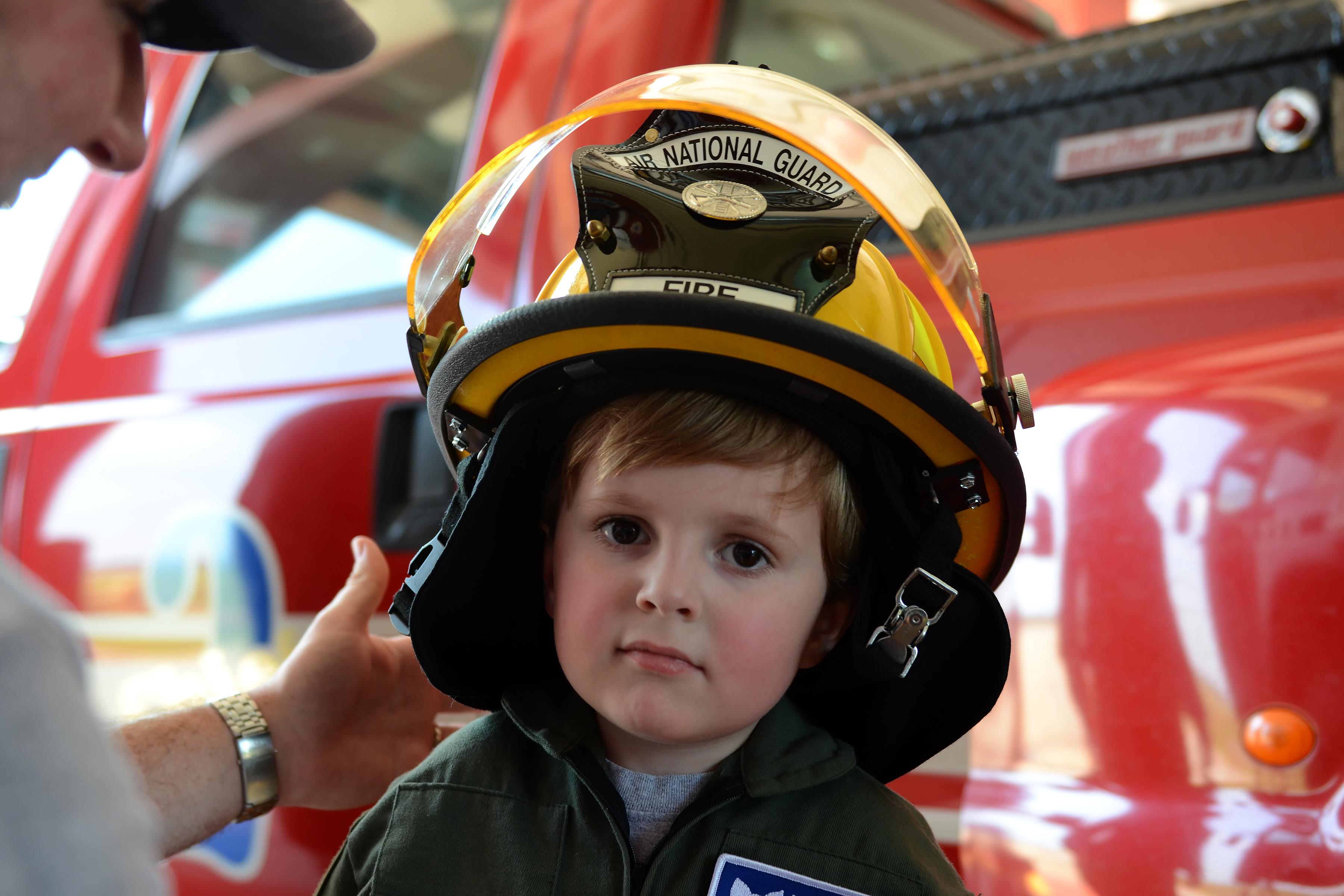
McENTIRE JOINT NATIONAL GUARD BASE, S.C., August 24, 2015 — Six-year-old Declan Alexander was recently honored as a Swamp Fox Pilot for a Day by the 169th Fighter Wing here, receiving a hero's welcome from the moment he arrived on base.

Declan and his father Brian Alexander were guests of the South Carolina Air National Guard Aug. 15, as part of the Pilot for a Day program, which allows children with disadvantages or debilitating illnesses to experience the life of a fighter pilot.

"Pilot for a Day allows us to reach out to the community, make community bonds and make a difference in someone's life," said 1st Lt. Cody May, a fighter pilot assigned to the 157th Fighter Squadron and Declan's host for the day.

The tour, led by May, began with Declan receiving a custom pilot’s flight suit from the aircrew flight equipment shop. He was later escorted to the end of the runway to watch F-16 Fighting Falcon aircraft land and was greeted with thumbs-up and well wishes from the airmen he met on base.

Lifetime Memories

"It is hard to express how cool it is to have everyone take time out of their day to set all this up and show us around and create lasting memories," Brian Alexander said. "It really is an amazing experience. There really are not words to express how much of a big deal this is for him and for us."

Declan displayed a big smile while sitting in the cockpit of an F-16 bearing his name on the side. He also enjoyed spraying the water cannon from McEntire's largest fire truck while touring the fire department, Brian Alexander said.

"Getting to ride in a fire truck and getting to sit in a fighter jet are two things you don't ever get to do," he said. "Those were definitely a ton of fun and put a smile on his face."

The Pilot for a Day program helps a child and the child's family to gain a memory of a lifetime, and is just as important to the Swamp Fox family who welcomed the young hero.

May said the most important part of the Pilot for a Day program is it has the ability to take a family's mind off of an illness by allowing them to experience something that very few people will ever get to experience.

"I really enjoyed being able to make a difference in someone's life," he added.

The 169th Fighter Wing has supported the Pilot for a Day program for nearly two decades.