Sept. 17, 2021
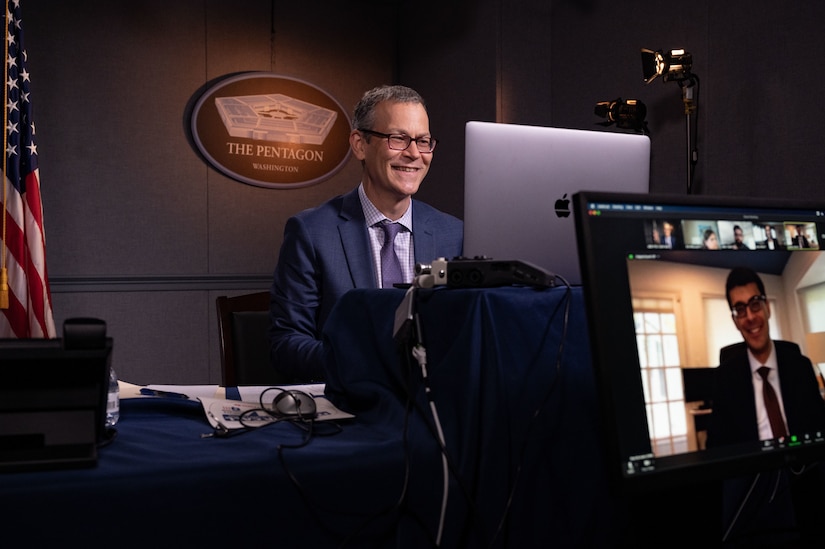
Pentagon Press Secretary John F. Kirby; General
Kenneth F. McKenzie Jr. (USMC), Commander, U.S. Central Command
PRESS SECRETARY JOHN F. KIRBY: OK, good afternoon.
Today I'm very honored and privileged to be joined by General Frank
McKenzie, Commander of U.S. Central Command. The General's got some
opening comment for you that will -- related to the August 29 airstrike
that was taken in Kabul. And then he'll stick around for some questions.
I will moderate those questions as we've done before.
And since we got pretty much a full house here and he's got limited
time, I'd ask you to keep our follow-ups to an absolute minimum so that
we can be as fair as we can to everybody. When the General's done, I'll
come back up and brief on some other topics as well.
So with that, General McKenzie, can you hear and see me OK?
GENERAL KENNETH F. MCKENZIE: John, I can hear and see you fine. (Inaudible).
MR. KIRBY: All good here, sir. I'll turn the floor over to you.
GEN. MCKENZIE: Thanks, John. Good afternoon. I'm here to brief the
results of the investigation I directed following the report of civilian
casualties from our strike in Kabul on 29 August. Having thoroughly
reviewed the findings of the investigation and the supporting analysis
by inner agency partners, I am now convinced that as many as 10
civilians including up to seven children we tragically killed in that
strike.
Moreover, we now assess that it is unlikely that the vehicle and
those who died were associated with ISIS-K or were a direct threat to
U.S. forces. I offer my profound condolences to the family and friends
of those who were killed. This strike was taken in the earnest belief
that it would prevent an imminent threat to our forces and the evacuees
at the airport.
But it was a mistake and I offer my sincere apology. As the combatant
commander, I am fully responsible for this strike and its tragic
outcome. While I have begun with the most important findings of our
investigation, I do want to provide the background leading up to the
strike and include an explanation as to why we felt reasonably certain
that this was a legitimate strike on in imminent ISIS-K threat with no
indication that the strike would result in civilian casualties as we
asserted in our initial statements.
The strike on 29 August must be considered in the context of the
situation on the ground, in Kabul at Hamid Karzai International Airport
following the ISIS-K attack that resulted it the deaths of 13 soldiers,
sailors and Marines and more than 100 civilians at Abbey Gate on 26
August. And also with the substantial body of intelligence indicating
the imminence of another attack.
In the 48-hours prior to the strike, sensitive intelligence indicated
that the compound at point number one on the map, and let's bring the
map up now, please. And we're just going to bring this up. Hopefully you
have an opportunity to see here as we go forward. John, can you see the
map there?
UNKNOWN MALE: (Inaudible), sir.
GEN. MCKENZIE: Hey, John, can you -- can you hear me now?
MR. KIRBY: Sir the press have hard copies.
GEN. MCKENZIE: OK, roger. Then I'm just going -- I'm going to continue based on that then, John.
In the 48-hours prior to the strike, sensitive intelligence indicated
that the compound at point number one on the map was being used by
ISIS-K planners, used to facilitate future attacks. We were also
receiving a significant number of reports indicating multiple avenues of
attached which were being planned simultaneously. Through which ISIS-K
would attempt to harm our forces including with rockets, suicide
explosive vests and vehicle born improvised explosive devices.
In fact, in the 36-hours preceding the strike our leaders on the
ground at the airport and in the strike cell received more than 60
different pieces of intelligence related to imminent threats with some
intelligence corroborating and some conflicting. With events observed
from our UAVs, which were flying above Kabul throughout the day.
One of the most recurring aspects of the intelligence was that ISIS-K
would utilize a white Toyota Corolla as a key element in the next
attack. Because the compound at point number one was our strongest lead
for this series of imminent attacks we initiated an intense surveillance
of the compound with as many as six MQ-9 Reapers on the morning of 29
August. At 8:52 A.M. local time on 29 August a white Toyota Corolla
arrived at point number one, the compound we believed to be a key area
of interest associated with imminent threats to the airport.
Two adult males exited the vehicle, met with an adult male in the
compound and received a bag from him. The Corolla then departed the
compound heading south and we followed the vehicle. At 9:05 A.M. the
Toyota Corolla picked up a third adult male carrying a bag at point
number two and then continued south. At 9:35 the Corolla arrived at the
compound at point number 3, which we now know to include an office of
nutrition and education international. And all three adult males, in the
vehicle, entered the building on the compound.
At 11:19 A.M. three adult males unloaded bags and jugs from the trunk
of the vehicle before departing the compound at 11:22 A.M. heading
south. At approximately this time U.S. forces were notified of a
sensitive intelligence collection indicating that an ISIS-K cell leader,
in Kabul, was dropping off supplies.
At 12:11 P.M. the Corolla arrived at point number four and at least
two adult male occupants exited the vehicle in front of an office
building before returning to their vehicle and departing at 1:27 P.M.
heading west and then south.
At 2:00 P.M. the Corolla returned to the compound at point number
three. Subsequently multiple adult males were observed loading the truck
of the vehicle -- the trunk of the vehicle with items assessed at the
time to be explosives before departing at 3:47 P.M. with four adult
males heading north.
At 4:11 P.M. the Corolla returned to point number two and dropped off
one adult male carrying a bag then continued north. After driving near
point number one, the Corolla dropped off one adult male on the road at
point number five, which is roughly several hundred meters north of
point number one.
At 4:39 P.M. the Corolla dropped off its last passenger on the road at point number six.
At 4:51 P.M. the Corolla arrived at point number seven and back into a
compound that was approximately three kilometers from the airport which
was the closest it came to the airport all day. We were very concerned
that the vehicle could move quickly and be at the airport boundary in a
matter of moments. By this time we had observed the vehicle for about
eight hours. While in the compound, the vehicle was observed being
approached by a single adult male assessed at the time to be a
co-conspirator. The strike was executed at this time because the vehicle
was stationary and to reduce the potential for civilian casualties. A
single Hellfire missile was fused to detonate inside the vehicle to
further minimize the chance for civilian casualties.
It struck the vehicle of vehicle at 4:53 PM, which produced an
explosive event and follow-on flames significantly larger than a
Hellfire missile would have been expected to produce. It is my
assessment that leaders on the ground and the strike cell had achieved a
reasonable certainty at the time of the strike to designate the vehicle
as an imminent threat to U.S. forces at the airport, and that they made
a self-defense strike in accordance with established rules of
engagement.
That assessment is based upon interviews with leaders on the ground
and members of strike cell, on a review of the intelligence available to
the team at the time of the strike and on the team's interpretation of
how this vehicle and its occupants' actions were confirming the
intelligence that they were seeing. It is further my assessment that the
strike team were convinced at the time of the strike that the area was
clear of civilians and that they had taken prudent steps in regards to
weaponeering the strike to minimize the potential for civilian
casualties. Finally, it is my assessment that they did believe, as
reported, that there was a secondary explosion.
Our investigation now concludes that the strike was a tragic mistake.
First, I will stress this was not a rushed strike. The strike cell
deliberately followed and observed this vehicle and its occupants for
eight hours while crosschecking what they were seeing with all available
intelligence to develop a reasonable certainty of the imminent threat
that this vehicle posed to our forces.
Second, while the initial reports indicated the secondary explosion,
the initial investigation could only conclude that there was a possible
to probable presence of external accelerants that could include either
explosive material in the vehicle or ignition of the gas tank of the
vehicle. Subsequent analysis could not rule out the presence of a small
amount of explosive material, but determined that the most likely cause
was the ignition of gas from a propane tank located immediately behind
the car. Such an ignition would have created the brief but massive
fireball oriented directly up and out of the compound that was observed
in the video and displayed in this photo. If we could get that next
photo up, please.
STAFF: (INAUDIBLE)
GEN. MCKENZIE: Finally, while this strike cell reported -- John, can you hear me OK?
MR. KIRBY: Yes, I got you, sir.
GEN. MCKENZIE: Roger.
Finally, while the strike cell reported the presence of two adult
males, one inside the vehicle and one outside the vehicle at the time of
the strike, the cell initiated a review of their footage immediately
following the report of civilian casualties and determined that a few
partially obscured forms were briefly visible moving in the compound.
This led to my initiation of an investigation within 24 hours of the
strike.
A comprehensive review of all the available footage and reporting on
the matter led us to a final conclusion, that as many as 10 civilians
were killed in the strike, including up to seven children. At the time
of the strike, based upon all the intelligence and what was being
reported, I was confident that the strike had averted an imminent threat
to our forces at the airport. Based upon that assessment, I and other
leaders in the department repeatedly asserted the validity of this
strike.
I am here today to set the record straight and acknowledge our
mistakes. I will end my remarks with the same note of sincere and
profound condolences for the family and friends of those who died in
this tragic strike. We are exploring the possibility of ex gratia
payments.
And I'll finish by saying while the team conducted the strike did so
in the honest belief that they were preventing an imminent attack on our
forces and civilian evacuees, we now understand that to be incorrect.
With that, I'm ready to take your questions.
MR. KIRBY: Thank you, General. Tom.
Q: General, this is a complete and utter failure. Can you explain how this possibly could have happened?
GEN. MCKENZIE: Well Tom, this particular strike was certainly was a
terrible mistake and we certainly regret that, and I've been very clear
that we take full responsibility for it. At the same time we were
carrying out a number of complex operations designed to defend
ourselves. We conducted a strike a couple of days ago at Nangarhar that
was very successful. We conducted other operations across the battle
stage to defend ourselves during this very difficult 48-hour period when
so many imminent threats were manifested.
So while I agree with it, this strike certainly did not come up to
our standards, and I profoundly regret it. I would not qualify the
entire operation in those terms.
Q: And will anybody be held responsible?
GEN. MCKENZIE: We are in the process right now of continuing that
line of investigation, and I have nothing for you now because that
involves personnel issues.
MR. KIRBY: Please identify yourself and your outlet when you ask your question, David.
Q: David Martin with CBS News. So you said that the -- you started
following this car after it showed up at the place associated with ISIS.
In retrospect is that -- was that place associated with ISIS? And this
was described as an over-the-horizon strike, which is what the U.S. is
going to be relying on from now on in Afghanistan, so what does -- what
does this incident say about the reliability of future strikes against
terrorist threats in Afghanistan?
GEN. MCKENZIE: Sure, David. So I'll take the first part of your
question and being with that. So point one on the map we do assess very
definitely associated with ISIS-K. In fact a little less than 24 hours
later rockets will be launched from that point against the airfield, so
we had very good intelligence to make us think point one on the map was,
in fact, an area where ISIS was centered, so I think that's -- that was
a very good intelligence support of that belief.
Now with the second part of your question about whether this is will
affect future OTH operations, let me be clear this was a self defense
strike taken under self defense rules and engagement based on an
imminent threat to attack us that is not the way we would strike in an
over -- in an OTH mission going into Afghanistan against ISIS-K targets,
the one thing that will not be a self defense strike. It'll be done
under different -- it'll be different -- done under different rules of
engagement, so -- and we'll have a lot more opportunity probably than we
had under this extreme time pressure to take a look at the target.
To use a phrase that you'll be familiar with, to soap the target with
multiple platforms to have an opportunity to develop extended pattern
of life. None of these things were available to us given the urgent and
pressing nature of the imminent threat to our forces.
MR. KIRBY: Phil.
Q: Are you considering reparations for the victims here? And what is
what happened with this strike say to you about the over-the-horizon
capability that we've been hearing so much about? What are the risks
involved with carrying out strikes when you don't have people on the
ground in Afghanistan going forward?
GEN. MCKENZIE: Sure. So as I said in my statement we are considering
ex gratia or reparations for this, and that'd ultimately be a matter for
policy, so we're in consultation with the office of the Secretary of
Defense to determine a way forward there.
As you will also understand it's very difficult to reach out on the
ground in Afghanistan to actually reach people, but we are very
interested in doing that and we'll move on it based on our ability to do
that.
So your question about this and OTH, I'll sort of echo what I said to
David. I would reject a parallel between this operation and an
over-the-horizon strike against an ISIS-K target, again, because we will
have an opportunity to further develop the target and time to look at
pattern of life. That time was not available to us because this was
imminent threat to our forces.
It's important that I emphasize that. We did not have the luxury of
time to develop pattern of life and to do a number of other things. We
struck under the theory of reasonable certainty. Probably our strikes in
Afghanistan going forward will be under a higher standard. That's a
policy matter, not a purely military matter.
But I don't think you should draw any conclusions about our ability
to strike in Afghanistan against ISIS-K targets in the future based on
this particular strike.
MR. KIRBY: Sylvie.
Q: (inaudible) from AFP. You said that you had intelligence about a
threat emanating from a white Toyota, so was it -- this intelligence was
not good or there was another white Toyota which was dangerous and
nothing happened from another white Toyota?
GEN. MCKENZIE: So I would tell you this. Clearly our intelligence was
wrong on this particular white Toyota Corolla. At the same time we
undertook a variety of things to make it hard for them to get at us
during this period of time.
We closed the gates, which we didn't want to do at HKAI during this
period of time as force protection. You know, we were very active with
our ISR overhead, which we know is -- often has a suppressive effect on
their activities.
We still took rockets the next day as you know, and they fired those
rockets from near point one and from other places actually near the
route of this vehicle. But I would tell you unequivocally in this case
clearly the intelligence was wrong on this vehicle, and we certainly
regret that as I've been very clear.
MR. KIRBY: Let me go to the phones. Jennifer Steinhauer, New York Times. Jennifer, are you there?
Q: My call's on -- my question's on a different matter, John, for after this.
MR. KIRBY: All right. OK. Luis Martinez, ABC. You there, Luis? OK, nothing heard. Nancy Youssef.
Q: Thank you. General, could you clarify a couple points for me? If
I'm understanding you correctly, you followed the wrong Toyota Corolla
from the beginning in. That is you weren't following one vehicle and
mistaken it for another one? And also in your initial statement you said
that there was no initial report of civilian casualties. It appears in a
release some concern about civilian casualties very early on, so on
what basis did you make that statement? And finally, was any of the
intelligence that you were using gathered from the Taliban? Thank you.
GEN. MCKENZIE: So let me begin with the last question. Nothing we did
was gathered from the Taliban, and I should be -- and I should be very
clear about that. We selected this car based on its movement at a
targeted area of interest to us -- a known targeted area of interest to
us and we hold it throughout the day. Clearly based on the end result
that was a mistake, and I have acknowledged that.
MR. KIRBY: OK, Meghann.
Q: Meghann Myers from Military Times. During this time were you
tracking any other suspicious activity in Kabul that might have also
been part of this threat? And do you have any intelligence from after
this drone strike that suggests what happened to the imminent threat
afterward?
GEN. MCKENZIE: Sure. So as I noted in my comments we had over 60
very, very high caliber reports of imminent threat to our forces in and
around -- in and around Kabul. Typically, those are signals based, but
there are also some human and other human intelligence as well. So, we
have a variety of sources for that intelligence. We believe that the
strike we took a couple of days prior up in Nangarhar actually had an
effect on quietening down because we got a key attack planner in that
strike. We believe that disrupted some of their plans.
Additionally, we did things to make it harder for them to -- to get
to us. For example, we closed the gates. The gates, as we know, are a
particular point where we're vulnerable. So, we decided not to process
people, and we hunkered down for a little bit of time while this threat
was still there. So, there were over 60 clear threat vectors that we
were dealing with during this period of time, including, as I've noted
before, the rocket attacks that occurred, you know, a little bit after
this from locations that are displayed on the graphic that you have.
Thank you.
Q: A really quick follow-up. Not in terms of the number of threats,
but the number of other cars or groups of people that you were following
that day. Were you tracking anybody else this closely?
GEN. MCKENZIE: We tracked a lot of other people. We didn't track
anybody as we -- as -- as closely as we did this because of the
limitations on our resources. And frankly, you know, we -- we thought
this was a good lead. We were wrong.
Q: Thanks.
MR. KIRBY: Alex?
Q: Thanks, John.
General McKenzie, this is Alex Marquardt from CNN. You mentioned that
you know, immediately following an attack, you saw shapes in the video
that led you to believe that -- that this necessitated an investigation,
that there could have been more civilians there. On September 1, we
heard from General Milley, who called this a righteous strike. And this
was several days later. Did you at the time, several days later, also
believe that this was a righteous strike? And -- and could you talk
about your erosion of confidence over the -- the following -- the next
subsequent two weeks of the investigation?
GEN. MCKENZIE: (inaudible) I think we issued a statement from U.S.
Central Command about six hours after the strike, acknowledging the
possibility of civilian casualties. So, we knew from the very beginning;
there was a possibility of civilian casualties. I think we still
thought we had good reasons to have taken that strike, and it took us
gathering the facts to change that. We took -- we didn't think, as you
will understand and appreciate, we didn't take the strike because we
thought we were wrong; we took the strike because we thought we had a
good target. It takes a little while to uncover some of those things.
We moved and worked as rapidly as we could. And actually, I think we
worked extremely rapidly to get this information out and to make it
public.
Q: That's fine. Thank you, John. Thank you, General.
So, despite numerous intelligence reports and warnings, on the 26th,
we had that tragic attack on -- on the airport, 13 U.S. service members
were killed, in addition to tens of Afghan civilians. Again, on the
29th, on this strike, another tragedy took place; as you said, 10
civilians were killed, among them 7 children. Is that a failure of
intelligence or leadership in Afghanistan, and what do you intend to do
about that? Thank you.
GEN. MCKENZIE: Well, I would tell you -- so we had two events, we had
the attack at Abbey Gate, we had this --, and we had this strike. Now,
the Abbey Gate attack, you're in -- you're in -- in combat with an enemy
who is alive and has his own will. And sometimes that enemy is going to
-- is going to -- his plans are just going to work. You can't cover
every eventuality all the time, despite our very best efforts to do
that. And we took every precaution that we could at Abbey Gate.
In fact, when we had -- when we had threats develop over the 48 hours
that followed, as I've noted, we closed the gates in order to --
recognizing it would reduce our ability to bring people in, but at the
same time, we thought that was the best thing we could do to actually
reduce our attack surface, if you will, to protect our forces. There are
also a number of attacks that were thwarted. These are two that you
know about because they're high visibility, and we're talking about
them. Others were forwarded and did not occur. So, the silence of those
attacks should mean something, too.
Unfortunately, it's very difficult to prove the negative.
MR. KIRBY: Tony?
Q: Hi, sir. Tony Capaccio with Bloomberg, I've got two quick
questions. Are you going to release the report of the investigation?
Two, in your fact gathering, to what extent did you rely on The New York
Times as extensive video investigation and then talks with NGOs or
civilian eyewitnesses at the scene?
GEN. MCKENZIE: So, repeat the first question again for me.
Q: You'll be releasing the final report of the investigation.
GEN. MCKENZIE: So, the final report -- the report is a highly
classified document. There'd be procedures that would have to be
followed to declassify elements of that document if it were to be
released. And I'll just leave that -- I'll just leave that question
there. As we, in fact, worked our investigation, we used all available
sources of information to inform us as we went forward, certainly that
included some of the stuff The New York Times did. It also included our
own extensive resources in this area, which we looked at. So, we tried
to go everywhere we could and not overlook anything as we sort of tried
to build a picture.
Q: Taliban at all aid in the investigation or the fact-gathering?
GEN. MCKENZIE: No.
Q: Thanks.
MR. KIRBY: Lucas?
Q: General McKenzie, Lucas Tomlinson, Fox News. Did you have forces on the ground that helped you conduct this strike?
GEN. MCKENZIE: No, we did not. As you know, at no time were our
forces really away from Hamid Karzai International airfield. So, there
was nobody there to -- nobody there on the ground to -- to have to play
that role. I think you can see from the graphic that the position of the
strike was about three to four kilometers to the west of HKIA. So no,
there was -- there were -- there were -- there was nobody, either us or a
proxy of ours, that was involved in this.
Q: That includes Special Operations Forces?
GEN. MCKENZIE: Explicitly.
Q: Can you talk about the challenges of conducting these drone strikes without any U.S. troops on the ground?
GEN. MCKENZIE: Well, so we conducted a very successful drone strike
two days earlier up in Nangarhar province. And we got the target. And I
think that had a significant event on dislocating and suppressing
ISIS-K's ability to attack us during this period of time. So, we
actually had success with that. This one we did not have success with --
success with, and we've been very clear about owning up to our
responsibility in this regard.
MR. KIRBY: Lucas, you've had three questions. We've got time for just a couple more.
Tara Copp?
Q: Thank you. General McKenzie, Tara Copp with Defense One. Since
there are no more U.S. forces on the ground, how would the ex gratia
payments be provided to surviving family members if they are provided?
And then I know you walked us through the timeline at the beginning of
this, but can you give us the -- the overall amount of time spent
actually identifying and confirming this target before a -- the strike
was taken?
GEN. MCKENZIE: Sure. So, as for the ex gratia payments, we're working
on that right now. And it will be difficult, as I -- as I noted in my
remarks, I think, or one of the first questions, it will be difficult to
do that without a presence on the ground. And that's just something
we're going to have to work through. I don't have a better answer for
you right now, other than I -- we recognize the obligation, and we'll
continue to work -- we'll continue to work that problem.
So, in a situation like this, to go to the second part of your
question, as you continue to look at the target over the course of the
day, you know, you -- you begin to build probabilities, you begin to --
you begin to -- you begin to weigh what we have -- are we going to take a
strike? Why -- why are we going to take the strike? When the vehicle
came up to the final point, at point seven on your map, which is
actually as I've noted as close -- the closest to the airfield it had
been all day, we were very concerned about a white Corolla being
involved in a -- in an -- in an attack. So, the cumulative force of all
those -- all those, the intelligence that we gathered throughout the
day, the position of the vehicle, its nearness to the airport, the
imminence of the threat, and the other SIGINT that we're getting
throughout the day all led us to the moment of deciding to take the
strike.
Q: And -- and one last follow-up. Who actually ordered the strike? Who had the final authority to say fire?
GEN. MCKENZIE: So, in this case, the target engagement authority is
held by the Over the Horizon Commander who's forward in the theater. The
Over the Horizon Strike Cell Commander, I should say.
MR. KIRBY: OK. We got time for one more and then we're going to have to let the General go. Jeff Seldin, VOA.
Q: Jeff Seldin from VOA. Thanks very much for doing this General.
Given how this Over the Horizon strike went. Where do things stand in
terms of getting at least a closer presence, a closer basing agreement
for future Over the Horizon strikes?
And we've been told that the Taliban had made various commitments to
counterterrorism. I know you said that they didn't provide any
information for this strike. But did they provide any sort of help in
the closing days? In terms of preventing the threat against from ISIS K.
Or have they been helpful since then, in cracking down on ISIS K as they continue to plot against U.S. Western targets?
GEN. MCKENZIE: So, I think the best way I can answer your question is
to sort of take the middle part of the question. In the final days, and
really in the second half of our time at H-Karzai as we continued our
evacuation. The Taliban were helpful in establishing an outer security
perimeter, which actually, we believe prevented some attacks from
developing. And look there's a downside of that, too.
It also allowed them to screen people that might otherwise have
gotten to the airfield. And that's just a hard, harsh fact. And you have
to balance those two-force protection of our forces. Which is supported
by Taliban, external presence against the fact that it may prevent some
people that you would like to bring out from being able to get to you
unmolested.
And that's a difficult balance, I, frankly, came down that I wanted
to protect our forces. And I needed that outer boundary. And to that
degree, we were able to work together. I have no particular affection
for the Taliban. And I don't know that they're doing anything at all for
us right now. But those questions are probably better going to the
Department of State.
Along with questions about basing and where we might be able to get
closer basing than where we are right now. I know all of those things
are actively being worked by our diplomats as we speak.
MR. KIRBY: Thank you, General. Appreciate your time this afternoon.
I'll turn it over to you for any last closing comments you might want to
make. Sir.
GEN. MCKENZIE: No, John. I just I appreciate the opportunity to come
on and appreciate the opportunity to take responsibility for this.
Because I do feel responsible for it. And I appreciate the questions
from the media. Thanks, John.
MR. KIRBY: General, thank you very much. OK.
Q: Hey, John. Before we move on can you refered to a picture, which
didn't come up. Are the -- are there other individual pictures of these
little blocks in here.
MR. KIRBY: I'll have to check with Central Command, David. I'm sure
if they were able to make that graphic, there must be imagery of it. But
what resolution they're in and all that we'll check.
Q: Do you know if it was sent out to the networks or anybody?
MR. KIRBY: I don't believe it was. It was designed for this briefing,
and we wanted to make sure you had hard copies of it. But we can check
with Central Command. That's fair. So, the Secretary was briefed by
General McKenzie this morning at eight o'clock on the results of his
investigation. And on behalf of the men and women of the Department of
Defense.
He offers his deepest condolences to surviving family members of
those who were killed including Mr. Ahmadi. And to the staff of
Nutrition and Education International, Mr. Ahmadi's employer. And you
should have in your inbox's now a statement that I'm basically
paraphrasing from. As the Secretary says, in the statement, we
apologize. And we will endeavor to learn from this horrible mistake.
And to that end, he has directed a thorough review of the
investigation just completed by U.S. Central Command. And he has asked
for this review to consider the degree to which the investigation
considered all available context and information. The degree to which
accountability measures need to be taken and at what level.
And agree to which strike authorities, procedures, and processes need
to be altered going forward. And he reiterates that of course no
military works harder than we do. To avoid civilian casualties and when
we have reason to believe that we have taken innocent life. We
investigate it. And if it's true, we acknowledge it. Just like we did
today. But he also notes that we have to work just as hard to prevent
reoccurrence.
No matter the circumstances, no matter the intelligence stream, and
certainly, no matter the operational pressures under which we labor. On
another matter altogether. Today, the Secretary approved a request from
the Capitol Hill Police Board to provide 100 members of the Washington
DC National Guard, who will be stationed at the DC armory. As a Physical
Security Task Force this weekend to augment law enforcement over the
weekend.
Covering the September 18 demonstration on Capitol Hill. The DC
National Guard will join a number of local law enforcement agencies in
supporting the Capitol Police. Should the Capitol Police require
assistance, they will first utilize local state and federal law
enforcement capabilities. Before requesting the deployment of the
Physical Security Task Force. The Task Force will only be deployed upon
request of the Capitol Police.
To help protect the U.S. Capitol building and Congressional Office
buildings. By manning building entry points and screening individuals
that are seeking access to the building. They will be unarmed. With
that, I can take some questions.
Yes, Travis.
Q: I had a question about that regard troops went to the hill. I
would say back in January it became kind of a big issue. That there were
veterans and I think a couple cases of active duty troops involved in
the January 6th incident. I'm just wondering if there have been any
efforts to say something to troops ahead of this.
About if they're thinking about going what they should consider
first. And if that's too many levels below the code to speak from the
podium. Can you talk at all about what the Secretary might say to the
troops who are thinking about going to a rally like this on Saturday?
MR. KIRBY: I don't know of any official communication that's come out
from the department at any level, specifically to troops who might
consider being a part of a protest. There are already limits to what
they can do in uniform. And clearly political protest is one of those
things are not allowed to do.
But I don't know of any specific, you know, guidance that's been
issued. They are American citizens. And in their off-duty hours, they're
allowed to participate in social events like that. Social political
events like that. But they can't do it in uniform. And obviously, if
should things turn violent, then they will be held accountable for any
violence that they participate in.
Of course, Travis, nobody wants to see it get to that point here.
And, and I, the Secretary has confidence that the men and women of the
department understand the limits and the constraints on their behavior
in these kinds of circumstances. Phil.
Q: Is the Secretary satisfied with the level of accountability so far
from this investigation? Or is he concerned that there hasn't been
accountability following the strike?
MR. KIRBY: I'm not going to characterize it one way or the other
right now. So, as I said, just a few minutes ago, he's asked for a
review of this investigation. And one of the things that he wants to
review to do. Is take a look at accountability and the degree to which
accountability measures need to be considered. And if so, at what level.
So, I'm not going to get ahead of his decision making on that.
Q: Has he ruled out firing anybody?
MR. KIRBY: I'm not going to get ahead of the Secretary's decision
making. That's why he's asked for a review. So, he can get a look. Yes.
Q: Mike (inaudible) from the Washington Examiner. Will there be a review of the first strike at all?
MR. KIRBY: The one in Nangarhar?
Q: Yes.
MR. KIRBY: No. No. Yes. Back there.
Q: So...
(Inaudible)
Q: ...today. The Joint Operations Command, announced an agreement --
Security Agreement with the U.S. To reduce the combat troops in
(inaudible) airbase and Irbil by the end of September. The OIR
statement, didn’t mention any reduction of the troop level? Can you
please clarify what's going on in Iraq now?
Why there is like misunderstanding between the Iraqi part and the
coalition? And also, can you confirm that their level of troops will
remain the same through at least September in Iraq?
MR. KIRBY: I can confirm that. And I -- you're going to have to let
me take your question on the statements. Because I just haven't seen
those today. And I don't want to venture a guess right now. So let me
take your question. We'll get you an answer back.
Q: But can I? If you can just explain a little bit about the
capabilities that the U.S. forces will maintain after December in Iraq?
Will they be able to conduct airstrikes targeting?
MR. KIRBY: Yes, we're. Obviously, we're still in technical talks with
the Iraqis about the presence going forward. I'm not going to get ahead
of those talks or what decisions they might make. So, I think it's
better for me to just leave it where we are right now.
Q: And the shift of the mission, the nature of the mission in Iraq. Will it affect in any way the mission in Syria?
MR. KIRBY: Again, I'm not going to get ahead of decisions that have
been made or policies that haven't been decided upon. We're in talks
with the Iraqis about what the posture is going to go forward. We have a
much smaller presence in Syria. But it's aligned to the same mission.
Which is to continue to counter ISIS and their influence in both Iraq
and Syria. So, while they are different places, different force
postures, same ultimate goal. But I'm not going to speak about the
policy decisions or operational decisions that haven't been made yet.
Janne.
Q: Thank you, John. Recently North Korean leader Kim Jong-un. Sent a
victory message to the Taliban and urging the U.S. military to quit.
What is your comment?
MR. KIRBY: I did not see the comment by Kim Jong-un. So, he can speak
for his own communications with the Taliban. What I can tell you is
that we no longer have a presence on the ground in Afghanistan. Our
involvement in that war on the ground is over.
And the President made clear his intention to do that. To retrograde,
the withdrawal is done. As well as the military part military element
of evacuating Americans and Special Immigrant Visa holders. That said
the U.S. government is still very much going to stay involved.
And trying to help people leave, who want to leave and who qualify to
leave. And as you heard General McKenzie, say, we're also going to stay
focused on the terrorist threat that could emanate from Afghanistan.
Yes, Sylvie.
Q: Hello, John. I would like to ask you a few details about the AUKUS
agreement announced yesterday on the military side. The Australian
Defense Minister spoke about basing. Does it mean that the U.S. wants to
deploy U.S. troops on Australian soil permanently?
MR. KIRBY: Well, we already have a rotational Marine Corps deployment
there which the Australians have been incredibly gracious and generous
and helping host. And I don't want to speak for, again, decisions that
haven't been made but one of the things that was discussed was the
opportunity to expand that presence in Australia and that access to
Australia, but no decisions came out of yesterday's Ausmin 2+2, but that
is something that I think you can expect we're going to continue to
talk to the Australians about going forward.
Q: And in terms of missiles, did you -- did you get any...
(CROSSTALK)
MR. KIRBY: Well, again, I think you heard both the secretary and the
minister, Minister Dutton talk about this yesterday, that there was a
range of capabilities that -- that we're going to continue to explore
with our Australian allies. No decisions have been made. The only
decision really in terms of capabilities that came out of yesterday was,
of course, the decision to help the Australian navy acquire nuclear
submarines. But as part of the meeting yesterday, they talked about a
range of other types of capabilities that we might want to continue to
pursue in Australia. But those discussions are really just starting.
And, again, these are going to be bilateral decisions made by both the
United States and Australia going forward, outside of AUKUS, of course.
Great Britain will be involved in AUKUS-related things as well, but my
point is these are sovereign decisions that these nation states have to
make. And I just don't have anything additional to read out today.
Fadi.
Q: Thank you, John. I have two separate questions. The first one is
on the 26th -- 29th attack. As General McEnzie said, the statement from
CENTCOM on that day, at the end it mentioned the possibility of civilian
casualties. So I'm still wondering why General Milley, on September
1st, still called this -- this strike righteous -- righteous attack.
MR. KIRBY: I think General McEnzie answered that question quite well,
Fadi. I'm not sure that I can add to that. And I'm not going to speak
for Chairman Milley. But as you saw from General McEnzie, within 24
hours of an indication that there could have been civilian casualties,
he launched an investigation, as is his responsibility. And he just
completed it. And they -- they did it fairly quickly, but I think they
wanted to take the time to be as contextual as possible. So I think he
already spoke to that.
Q: Yes, but, I mean, you said that within 24 hours, but General
Milley came out on September 1st, that's more than 24 hours, and still
called...
(CROSSTALK)
MR. KIRBY: Again, Fadi, again, I'm not going to -- I'm not going to
re-litigate the past statements here. As General McEnzie mentioned,
every leader in the department that spoke to this in the moment that it
was spoken to was speaking to you in good faith based on the information
that we had. And that includes me, by the way. Things that I said
obviously have not turned out to be correct.
But it was done in as a good faith an effort as possible, to be as
transparent as we could with what we knew at the time. Obviously, we now
know more things and different things that has completely changed the
character of this strike. And, again, we're trying to be as open and
transparent as we can when we know things.
Q: And on (INAUDIBLE), it seems France just recalled its ambassador
to the U.S. And this is a fallout from the submarine issue. So in your
-- in the department, you know, that the government effort to bolster
Australia's defenses in the Indo-Pacific, strategy to counter China, it
seems you're having long issue with France. How concerned are you,
first, about the future of defense cooperation with France? And was the
French government notified ahead of time of this move?
MR. KIRBY: Senior administrate -- senior administration officials
have been in touch with their French counterparts to discuss this
arrangement including before the announcement. The Secretary spoke with
the French Minister of Defense this morning and I won't characterize the
French side of course, but the -- it was clear from the discussion that
there is still much work to do in terms of our defense relationship
with France.
I mean more things to work on. There are -- that there are
opportunities and shared challenges and shared interest that both
Ministers committed to continue to explore. And there's -- as the
President said, there's no regional divide that separates the interest
of our Atlantic and our Pacific partners. Ensuring a free and open
Indo-Pacific is the shared interest between the United States and
Europe. And we will continue our close cooperation with NATO and the
E.U. and other partners on that kind of an endeavor.
Tony.
Q: Australia, I had a follow-up there. Going forward, now, what role
will the Pentagon and the Navy play with Australia in terms of smoothing
the way for -- the introduction of nuclear submarines? They're going to
buy diesel now they're going to buy nukes. Over the next 10 months or
so what's going to happen? What's the role of the Defense Department and
Navy?
MR. KIRBY: Yes, Tony, obviously we're still -- we're going to be
putting together the framework of what this is going to look like, this
process going forward. But I think you can obviously expect that the
United States Navy and Navy nuclear reactors will be very much involved
in helping with the acquisition of this capability.
Q: Are there any particular questions that need to be answered, did
the Navy set inspection but Australia's capability to build nuclear
submarines? Are the contractors to build stuff --
MR. KIRBY: Yes I don't think all that's been worked out right now,
Tony, but yes, there's a lot of questions that have to be answered here.
I mean this is a -- this is a significant undertaking and it will add
significant capability to the Australian Navy as well as reach. And
there's going to be a lot of questions and technical details that have
to be worked out.
But to your first question, of course the United States Navy and Navy nuclear reactors will be very much involved .
Q: Maybe ask a -- I'd like to ask you a Milley question -- a General
Milley question on the controversy with the book. It the Department of
Defense mulling, reviewing and releasing in redacted form the
transcripts or classified notes of the Milley China conversations that
were leaked to the -- to Woodward for his book? Any thought about just
releasing them like the White House did last year with the Trump
President of Ukraine transcript?
MR. KIRBY: I know of no such plans to do that and I would refer you
to the Joint Staff to speak to whatever notes they might have on a
counterpart call that the chairman conducted.
I think I get to the phones here. Jennifer, are you still there?
Q: Yes, I am, thank you. About the Afghanistan refugee situation on
bases, are you still monitoring and do you know if more measles or other
communicable disease cases? And are obligated to report those, at least
domestically, to local health officials?
MR. KIRBY: Well, we’re working with HHS very closely so of course if
we find any additional cases we certainly are keeping HHS informed. And
we're obviously making sure that tot eh degree there are any cases on
the domestic bases that our base commanders and people that work and
families live there are kept abreast. I don't have any additional
updates in terms of additional cases to report out to today.
But, again, we still remain at a pause for flights coming from any of
the lily pad locations overseas to the United States as we continue to
work this out with HHS.
Meghann.
Q: So all of the services have release their mandatory COVID
vaccination policies. The Army is giving itself, at least it's Reserve
and National Guard components, through the end of June to get fully
vaccinated. Does the Secretary have any concerns about that long of a
timeline given that there's been a surge in the past month or so of
military deaths and the bulk military deaths have been in Army
Reservists and National Guardsmen?
MR. KIRBY: The Secretary has made it clear that he expects the
services to move our as energetically as they can on this because he is
concerned about the rise in deaths and the impact that the Delta variant
has had on the force. That's one of the driving reasons why he went to a
mandatory regiment for, in this case, the Pfizer vaccine. He had -- he
spoke to the service secretaries just a few days ago about his very
topic and they reported out to him their progress and what their
implementation guidelines were.
He's satisfied that they are working hard enough and fast enough to
try to improve the vaccination population inside each of the services.
But it's not something that he's just going to lose focus on. He's going
to continue to engage with the services, continue to get updates and
certainly if the Secretary feels like a change in implementation needs
to occur in any one services on whatever the data is or what the rate of
infection, certainly the rate of deaths. I mean he will absolutely do
that.
Yes, Phil.
Q: Is the secretary satisfied with the -- where the authorities are
right now? To conduct any further strikes against ISIS-K in Afghanistan?
Or given what's been uncovered here, is there some thought to kind of
raise -- elevating the ability to authorize another strike?
MR. KIRBY: Well, without getting into specific decision on
authorities, I know that he has had conversations with General McKenzie
and with General Milley about the authorities going forward and I can
tell you that with respect to the authorities going forward,
particularly in Afghanistan, yes the Secretary is very comfortable with
what the arrangement is.
Secondly, as I announced at the top, there in this review that he has
ordered on this particular investigation he does want the review to
factor in any changes in procedures processes and authorities for
strikes going forward that might be -- that might be recommended. So
it's going to be part of the review.
Yes, in the back there.
Q: On AUKUS the submarines, long range missiles, the rotation of air,
sea, and naval forces. What it is about the deployment and the rotation
of these forces that's going to help the U.S. achieve its strategic
goals in the Indo-Pacific?
MR. KIRBY: It's not about just achieving U.S. goals in the
Indo-Pacific. It's about and you heard the secretary talk about this
yesterday, it's about improving what he calls integrated deterrence
which is rally about being able to in a networked way improve the
capabilities of not just all the joint force but our allies and partners
as well. And, as he said, this will improve the Australian Navy's reach
and it'll improve their capability.
And in a highly contested security environment as we have seen in the
Indo-Pacific, the Secretary believes, the United States believes that
this is a worthwhile endeavor.
Yes, Matt.
Q: More on the National Guard. Was the initial request that came in
from the Capitol Police to include arms National Guardsmen and was that
something that was considered by the Secretary?
MR. KIRBY: Yes, I've see the press reporting on this, Matt. I'm not
going to get into the sausage making process. What I can you is we did
approve an official request for a physical security task force and they
will be at the armory and they will be unarmed.
Q: Strictly unarmed.
MR. KIRBY: Strictly unarmed, yes. OK, thanks everybody, appreciate it.













 Posts
Posts

