Sept. 2, 2021
PRESS SECRETARY JOHN F. KIRBY: Okay, good afternoon, everybody.
Today I am very pleased to be joined by General Tod Wolters, commander of U.S. European Command and NATO SHAPE. I think you all know General Wolters, he's here to give us an update on the support that European Command continues to give to many thousands of Afghan evacuees.
So I'm going to turn it over to the general. He'll have some opening comments, and then just like before I'll moderate the Q&A. Please when I call on you, identify yourself and your outlet. And if you could, limit your follow-ups to a minimum. That would allow more people to get questions in.
And after we're done with the general I'll stay behind if there's any additional questions that we need to answer today.
With that, General, sir, over to you.
MR. KIRBY: Got you now, sir. Thank you so much for hanging with us. I hate to ask you if you could start on over again.
GEN. WOLTERS: Yeah, you bet, John.
And good afternoon to you. And again, if you didn't catch it, welcome to all the members of the Pentagon press corps.
On behalf of all the members of USEUCOM, I want to extend our deepest sympathy to the families of the 13 heroes who gave their lives to save so many Americans and so many Afghans.
But we also extend our thoughts and prayers to all those wounded and to all the family members who were involved and still remain attached to those who paid the ultimate price in Afghanistan over the course of the last two decades. You'll always be remembered and you'll always be in our thoughts and prayers.
Let me begin by offering a professional thanks to the militaries and the governments of Germany, Italy and Spain. Their comprehensive efforts over the course of the last several weeks has allowed us to facilitate great operations and achieve a high degree of success, and we deeply appreciate what they've done from the governmental level all the way down to the military level.
Now let me slow down for a second and also take this opportunity to thank a group of people that we don't often talk about and that's the volunteers.
It's an interesting story here in Europe. The operation first commenced on Friday the 20th of August, and our wing commander at Ramstein noted that we had a lot of volunteers on that day doing a lot of great work. And we actually had 20 or 30 volunteers and we were all very, very pleased to note that we had 30 volunteers.
Well, several days later, the 30 volunteers grew to hundreds of volunteers, and today as we scan across Europe we have thousands of volunteers who are doing everything from helping with food items, helping with clothing, serving as counselors, helping to organize, serving and assisting with security. They are tremendous force multipliers for us. And they are helping to facilitate good order and discipline in the environment day in and day out.
Since Friday, the 20th of August, when the operation started, we at EUCOM have processed 155 inbound flights, and we've taken care of 38,000 Afghan evacuees. On the ground, at this very moment, we have 12,000 Afghan evacuees at Ramstein Air Base in Germany, 5,000 evacuees at Rhine Ordnance Barracks in Germany, 2,500 evacuees at Naval Air Station Sigonella in Italy, and 1,800 Afghan evacuees at Nav Station Rota in Spain.
Since Friday, the 20th of August, when the operation started, we've been able to process and have 16,000 Afghan evacuees depart from Europe to the continental United States. 14,500 of those came from Ramstein Air Base, 1,500 came from Sigonella, and approximately 500 came from Rota Air Base in Spain.
And the reason that I mentioned this evacuation is because it's intense, and we anticipate more intensity in the future, and the mission must go on. Aside from the evacuee operation that we're currently working in EUCOM, we bear the responsibility to provide secure sovereignty for our European nations as well as to support NATO.
We've been able to continue all of those operations via our operations, activities and investments. And today, the region remains secure, and conditions are normal on the ground. The entire time, we bear the responsibility to ensure that we continue to promote the safety and security for all involved, whether it's the evacuees, our fellow volunteers across Europe, or all the great warriors that serve in USEUCOM.
John, I'll wrap up with a final thanks to some critical mission partners.
First, the United States interagency, all of our European allies and partners, U.S. Transportation Command, U.S. Northern Command and U.S. Central Command. Their support to U.S. European Command has been remarkable. But today, we're excited about the fact because all those agencies work together to facilitate the flow of travelers and Afghans from Europe to freedom.
John, I'll stop right there. And I look forward to taking your questions.
MR. KIRBY: Thank you, General. I appreciate that.
We're going to start with the Lita Baldor from AP. Lita, I think you're on the phones, yeah?
Q: Yes. Thanks, John.
Thank you, General.
I have a question about the screening of evacuees as they come in. And I realize the military isn't doing a lot of that, but can you give us a better picture of what is happening to people who may be failing the screening or problems with screening? Are the countries, the allies that you're dealing with, are they expressing some concerns about what is going to happen to those people? Where -- what will the U.S. do with them?
And can you tell us also on if there have been any COVID problems with -- with those evacuees as they are being processed?
Thank you.
GEN. WOLTERS: Lita, I'll kind of go in reverse order.
Number one, we're pleasantly surprised at the very, very few COVID situations that we've had abroad in Europe. Our policy is to allow the field commanders in place to govern the administration of COVID testing and COVID vaccination based off conditions on the ground.
And as you well know, at this time, the game plan is for all of our evacuees and travelers to ultimately get to the United States, get to military installations, and then at that point they would receive the appropriate testing and the appropriate vaccination.
With respect to allied concerns on folks that we are screening, so far we've had tremendous cooperation in this area. We've informed the nations of Germany, Italy and Spain when we have individuals who are coming up close to the 10-day time limit, and we've received 100 percent cooperation from the nations in this area.
And Lita, with respect to screening, it's come a long way in the last 10 days. What we do is in-process our evacuees, and during the course of the in-processing, we conduct combined biometric and biographic screening so that through DOD channels, through CBP channels, and through FBI channels, we have comprehensively scrutinized their background. And this process takes place at the initial screening when the evacuees come to our intermediate bases. And we want to make sure that we conduct the screening, get the results, and ensure that we've got results on the individual before we put these individuals into their sleeping quarters.
And then, as they remain on station, at some point, there'll be notified that it's time to depart. And as the individuals depart, there'll be screened one more time to make sure that from a biometric and biographical standpoint, cleared through DOD, CBP and FBI, that they continue to remain in the green.
I will tell you, we've also been pleasantly surprised with a number of individuals that are in need of further processing/more screening. And the way the process works at Ramstein, the way it works at Sigonella, and the way it currently works at Rota, is during that initial in-screening process, if an individual pops red, we calmly take them out of the normal processing line, and we put them in a different location so that we can have some isolation and have a little bit of extra time to make sure that everybody is as safe and secure as possible.
Lita, that's a big hand over a little map description. It's a lot more complicated than that. We've refined this process over the course of the last 10 days, as you can well imagine.
If we wind up in situations to where we are backed up with evacuees at certain locations, if the screening process is too exorbitant and too slow, we can wind up having some serious problems. When we initially started operations here in Europe, our average wait time in the in-processing line put us in a position to where we get in process about 60 folks per hour. Today we possess the capability to process 250 folks per hour, and that has a lot to do with the improvement in the software with respect to our biometric machines communicating with our biographical machines.
Lita, I hope this helps.
Q: But, General, can I just quickly follow up?
So I understand, when you say 250 folks per hour and 60 per hour, is that because you have more locations? Are you talking about at one particular location?
And that's all I have. Thanks.
GEN. WOLTERS: That's an average of the three current locations that we're working with here in Europe, at Ramstein in Germany, at Rota Nav Station in Spain, and at Sigonella in Italy.
Q: Hey, General Wolters, it's Courtney Kube from NBC News. I have a couple of follow-ups on all of that.
So, what happens that when individuals pop red, as you said, and are sent for further screening, have you had any who have not been ultimately cleared and what happens in that case?
And then I just want to be clear when you were talking about the COVID situation, you're not actually doing any testing for COVID of the evacuees, correct? They don't get tested until they come to the U.S.
And --if you are, can you tell us how that's happening? Is it only people who present symptoms or self-identify as having symptoms?
GEN. WOLTERS: Courtney, the process is as you just described. Ultimately, the plan is to test these individuals once they get to CONUS to their final military installation. But due to situations on the ground, and if we have situations where we see symptoms and the commander on site needs to have that person tested, we reserve the right to allow that commander to do so, so that he can preserve the health and well-being of the entire population in their community. They’ve got small resources to be able to do that. It hasn't been executed often. I can tell you in the last three days, it hasn't been executed once. So that -- that takes care of the COVID side of the house.
And Courtney, you talked a little bit about screening. Can you kind of clarify for me exactly what it is you're looking at?
Q: Sure, so when an individual pops red, you said they're isolated for further testing, or further screening, I guess. Have you had anyone who's not ultimately been cleared and brought back into the regular population, or -- in other words, are you holding any individuals because they've popped red and not been cleared?
GEN. WOLTERS: Courtney, at this time it's a rolling number. I've got 58 individuals that are in need of further processing, and based on when they entered the queue, I anticipate that all 58 will probably clear. I will tell you that we've had one individual since the operation started in Europe on the 20th of September who actually popped red, and that individual is currently in the appropriate custody of U.S. interagency officials, and Germany has been very, very cooperative, and we are still working his background investigation.
MR. KIRBY: Jen?
Q: General Wolters, Jennifer Griffin with Fox News. Can you give us any more details about that individual and what kind of security threat he posed? Was he a member of ISIS-K, Taliban? And just so I understand what you told Courtney, there's no COVID testing being done of these individuals before they get to CONUS. Why?
GEN. WOLTERS: First, Jennifer, the individual that's currently in custody is not of a high threat as far as I know. The rest of that information is protected, and that's with agencies here that -- are representative of that individual.
With respect to testing, based off the requirement and the timelines of the nations allowing us to use their soil for 10 days, it can become an administrative challenge with respect to moving people. As I said, Jennifer, commanders on the ground have the right to conduct testing and administer vaccination if conditions on the ground warrant, and that's a commander's call that they're equipped to make, and they've got the resources to be able to support that. But for the purpose of facilitating the flow of our evacuees to their final destination in CONUS, in order to comply with the restrictions of the nations, this is a current policy that we have in place.
MR. KIRBY: Go to the phone lines: Jeff Schogol?
Q: Thank you.
General, you had mentioned that you expected the mission to grow more intense. Can you elaborate on that?
GEN. WOLTERS: I can, Jeff.
We're -- we're at a point right now where we're processing in about the same number that we're processing out. And it's not comfortable for our troopers in the field, it's challenging that there is the potential that we would be in a position in Europe, as a result of our existing capacity, to continue to facilitate the flow of evacuees out of the Middle East to ultimately get to the United States.
So in order to make sure that our troops are as ready as they can possibly be, we are hoping for the best but preparing for the worst. And so that intensity level has to remain very, very high with respect to our readiness to be prepared to process folks.
I think what I've seen in the last six hours tells me that we're about to become in a position to where we're going to process about 500 or 600 in every day and we're probably going to have 2,500 to 3,000 to depart every day. And if that continues in perpetuity for the remaining time we'll be in good shape.
But the next 24-hours will be very, very telling, and I want to make sure that our troopers are prepared for the most intense situations possible. Jeff, that's why the narrative surrounds that conversation.
Q: Thank you.
And are any of the Afghan refugees being housed at Camp Bondsteel in Kosovo?
GEN. WOLTERS: None of our U.S. Afghan evacuees are at Camp Bondsteel. We are just on the edge with respect to NATO capability to putting some NATO Afghan evacuees into Camp Bechtel, which is very close to Camp Bondsteel, but we haven't started that yet.
MR. KIRBY: Sylvie?
Q: Sylvie Lanteaume from AFP.
The Europeans were a bit frustrated by the way the evacuation went in Kabul. They were not able to evacuate as many of their citizens as they wanted. And today there was a meeting -- defense minister -- a meeting of the defense ministers of European Union and they talked about creating a rapid European rapid reaction force.
Do you think -- as SACEUR, do you think it would be a good idea?
GEN. WOLTERS: Well, first, I can't speak for the European Union. I certainly can speak as SACEUR for NATO.
I've had reports from many nations, and the reports that have come to me through military channels and minister of defense channels have all actually been in the positive.
And I would tell you that NATO and the E.U. are always attempting to do all that they can to make sure that we can facilitate peace on our soil. And I can't speak for the efforts that you're quoting with respect to the European Union, but I would say anything that we can do to promote peace and security on the European continent is a plus.
MR. KIRBY: Meghann?
Q: Hi, General Wolters. It's Meghann Myers from Military Times.
You mentioned that the European countries have given you a 10-day deadline to get these evacuees moved through. So which screenings or processes are they doing in Europe? And what do they have to finish up when they get to the U.S.? Is it more screening or is it just resettlement? What processes need to be finished?
GEN. WOLTERS: Meghann, our evacuees receive biometric and biographical screening. They actually get screened twice. Once when they come in to our intermediate staging bases, once they've been initially screened then they're put in their sleeping quarters. And once it's time to depart, they're screened one more time to make sure that we've cleared as many wickets as possible.
And once they get to the United States, I believe they go through a similar process with the same machines to make sure that they continue to clear DOD, CBP and FBI.
Q: A health screening; is there anything like that that's going on in Europe, that final step in the process is still going on stateside?
GEN. WOLTERS: A thorough health screening will occur stateside, but we're in a position with our medical resources to get a broad-brush scan from a medical perspective and to take temperatures and to make sure that we're treating folks that need immediate medical help. And in many cases it happens to be expectant mothers.
MR. KIRBY: Tara?
Q: Hi, General. It's Tara Copp with Defense One.
You talked about in-processing everyone. We learned yesterday that many of the SIV applicants that have tried to get out of Afghanistan didn't get through. So could you give us a picture of who actually did get through? If they weren't SIVs, who are they? Are they P1s, P2s? Are they Afghans? Could you talk a little bit about what you've seen in the processing?
GEN. WOLTERS: Tara, I will tell you that I don't have the facts that you are quoting with respect to the statistics, but between what came out of HKIA to the Middle East and here, I can tell you that of the number of folks that I've told you that we've processed, we're in a position to where we have 792 AMCITs, we have 996 legal permanent residents. But aside from those qualifiers with respect to the individuals, that information is probably kept in DoS channels and you probably need to direct your question to that agency.
MR. KIRBY: Okay, back to the phones, Jared?
Q: Hi, sir. I think all of my questions have been answered. Thank you.
Q: Yes, it's Brian Everstine of Aviation Week.
You had mentioned at the top you had 155 inbound flights. How many outbound flights have you had? And with the Kabul airlift ending, are you getting more gray tail capacity? It's your AOR to help with the outbound, if so, do you anticipate needing CRAF assets for an extended of time?
GEN. WOLTERS: Brian, right now we don't have a need for Civil Reserve Air Fleet participation just because we're probably reaching a point where it's not required. We've had 155 inbound flights and I don't have the precise number of outbound flights but I would suspect that it's fairly close to that. So as long as the flow continues as expected, for the next 12 hours we're bracing for high intensity, but after that we should be in a position from a gray tail perspective to where the United States Air Force on the C-17 side of the house can adequately support the flow into Europe and the flow out of Europe.
MR. KIRBY: Okay. Time for one more and then we'll let the general wrap it up.
Go ahead, Tony.
Q: Thanks. Tony Capaccio with Bloomberg News.
On the biometric screening, can you give a sense of what databases are being tapped when someone gets a biometric screen? And will that information translate over to the United States or their eventual residence to help them get identification when they land here or their home, or where they end up?
GEN. WOLTERS: Okay, Tony, the biometric side of the screening I believe taps the DOD base and the biographic side of the screening that gets into fingerprinting and a retinal scan gets into the CBP and FBI. I can tell you that on my limited computer experience that those databases have the capability to talk to one another so you could flip crosscourt from DOD to CBP and FBI. And we can take this electronic database and flip it to CONUS.
So with respect to the question that you asked, my simple answer is there is compatibility in those systems, to the agencies that I've just identified. And there is compatibility with those capabilities from the European continent to the continental United States.
Q: Thanks.
MR. KIRBY: General, I'm going to -- thank you so much for your time. I apologize for the technical difficulties early, but I'd like to turn it back over to you for any closing comments you might have, sir.
GEN. WOLTERS: Well, John, first thanks to you for doing what you are doing.
And I just wanted to foot stomp one more time the tremendous patriotism that we see from our volunteers. They're DOD dependents, they are local nationals from Germany, from Spain and from Italy, and they're excited when they see these Afghans. And when they look in their eyes, they see folks with hope and inspiration, and that actually gives them inspiration. And I want to thank our nation for doing what it's doing in treating all of these Afghan evacuees with dignity and respect.
MR. KIRBY: Thank you very much, General. Appreciate your time this afternoon and this evening.
Okay, I've got a few things to go through with you and then we can take some additional questions.
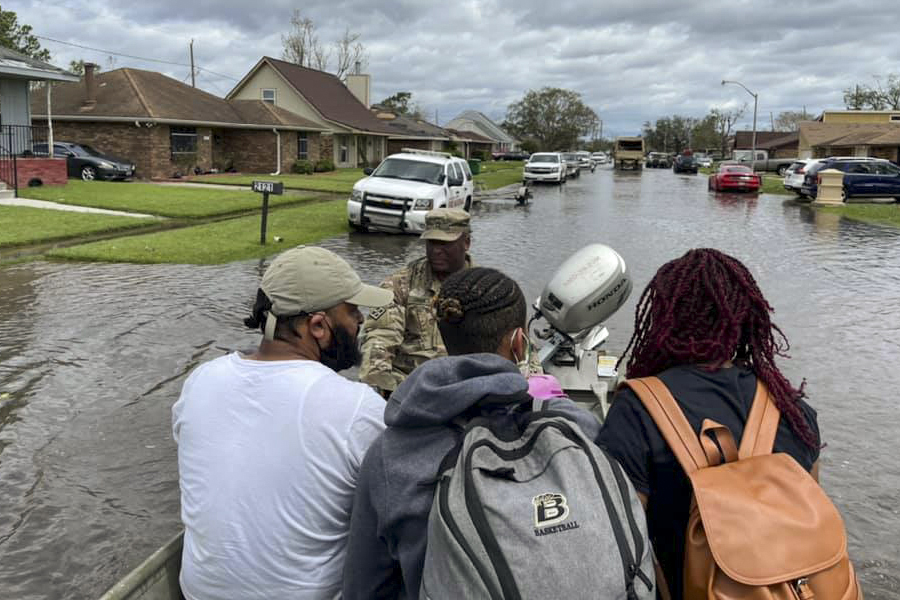
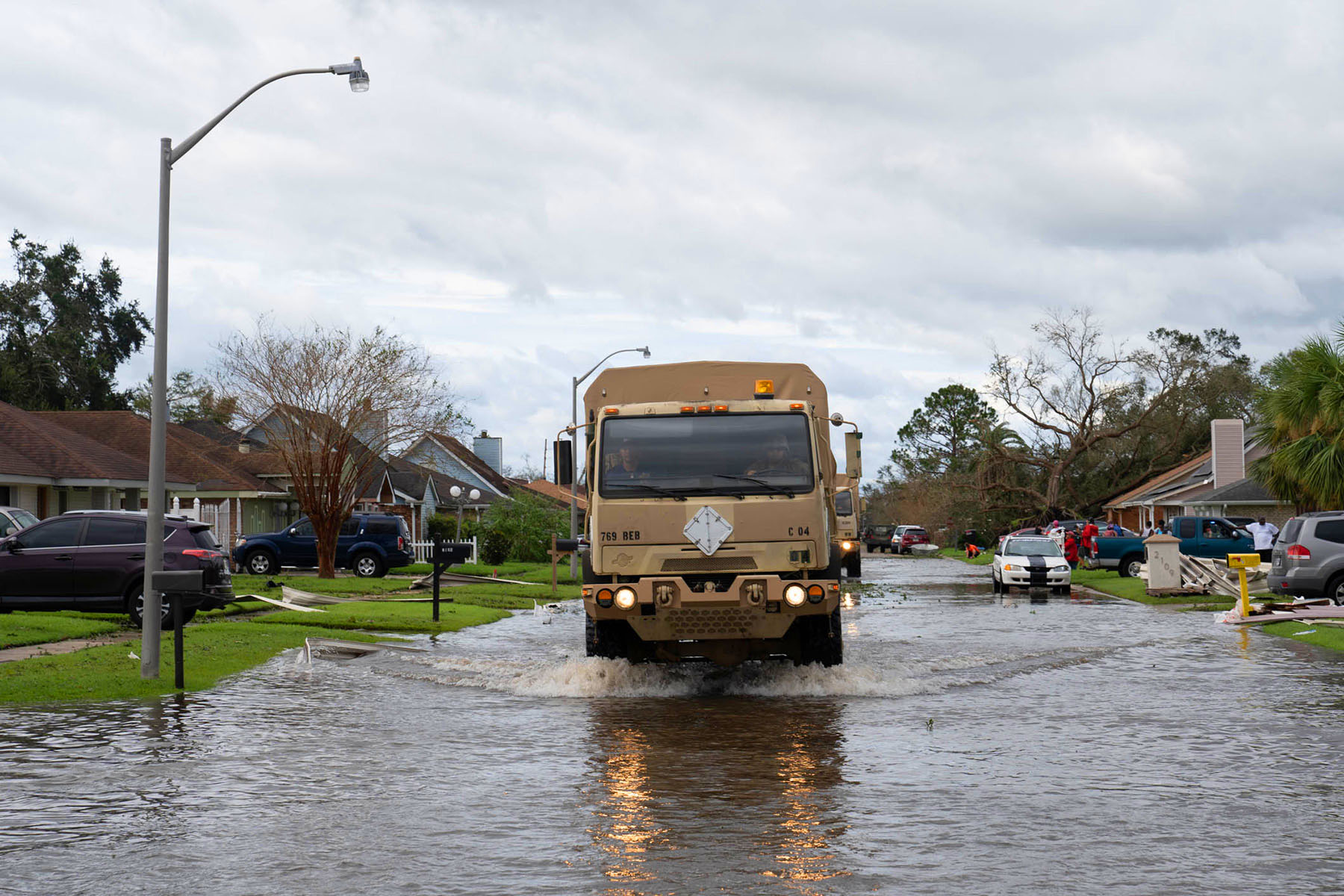
In the wake of Hurricane Ida, the department is working closely with FEMA and local, state and federal partners in supporting the states and areas impacted.
Currently there are roughly 5,800 National Guard soldiers and airmen from Louisiana and 10 other states responding to the aftermath of the Hurricane in Louisiana.
In Pennsylvania, roughly 150 Guard personnel have been activated, along with high water vehicles and helicopters, to support areas that are affected by the flooding.
As of this morning, more than 650 active duty personnel are supporting hurricane response operations in and around Louisiana. The mission sets include route clearance, debris removal, high-water rescue and transport.
The U.S. Army Corps of Engineers has deployed survey boats in southeast Louisiana, in coordination with the Coast Guard, to help open navigation lanes in the region. And the Corps is also providing technical engineering assistance to state and local authorities for flood response and risk management.
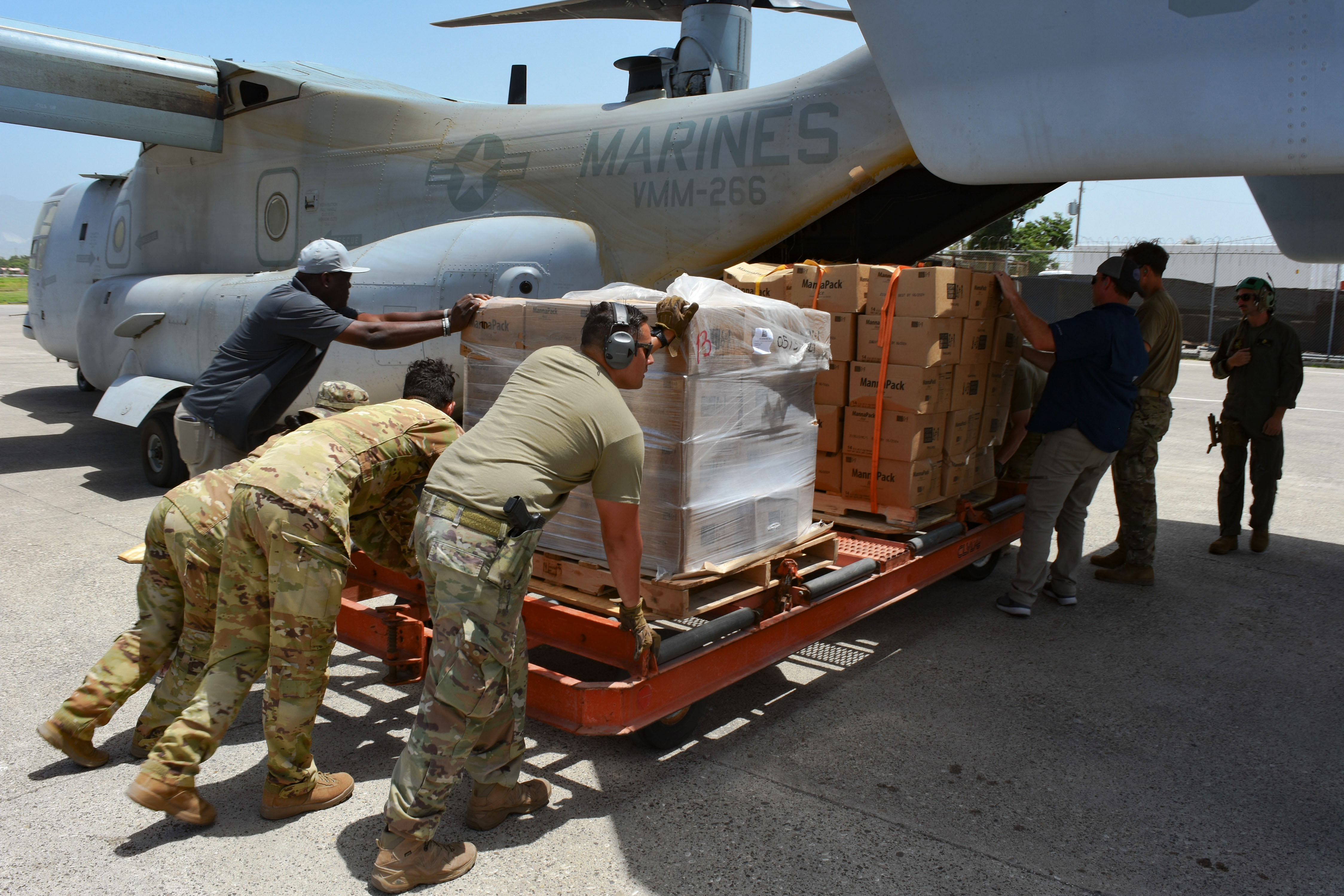
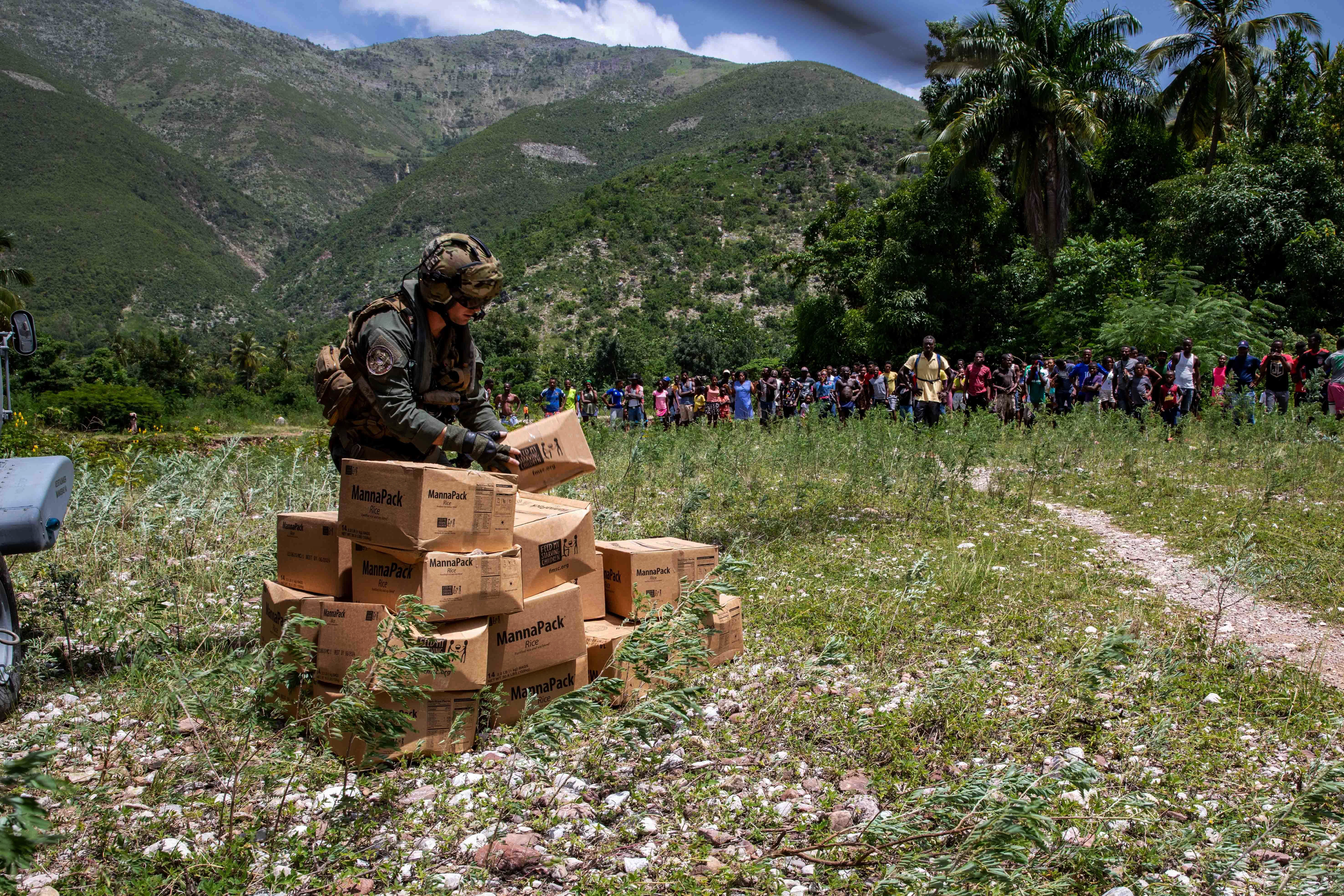
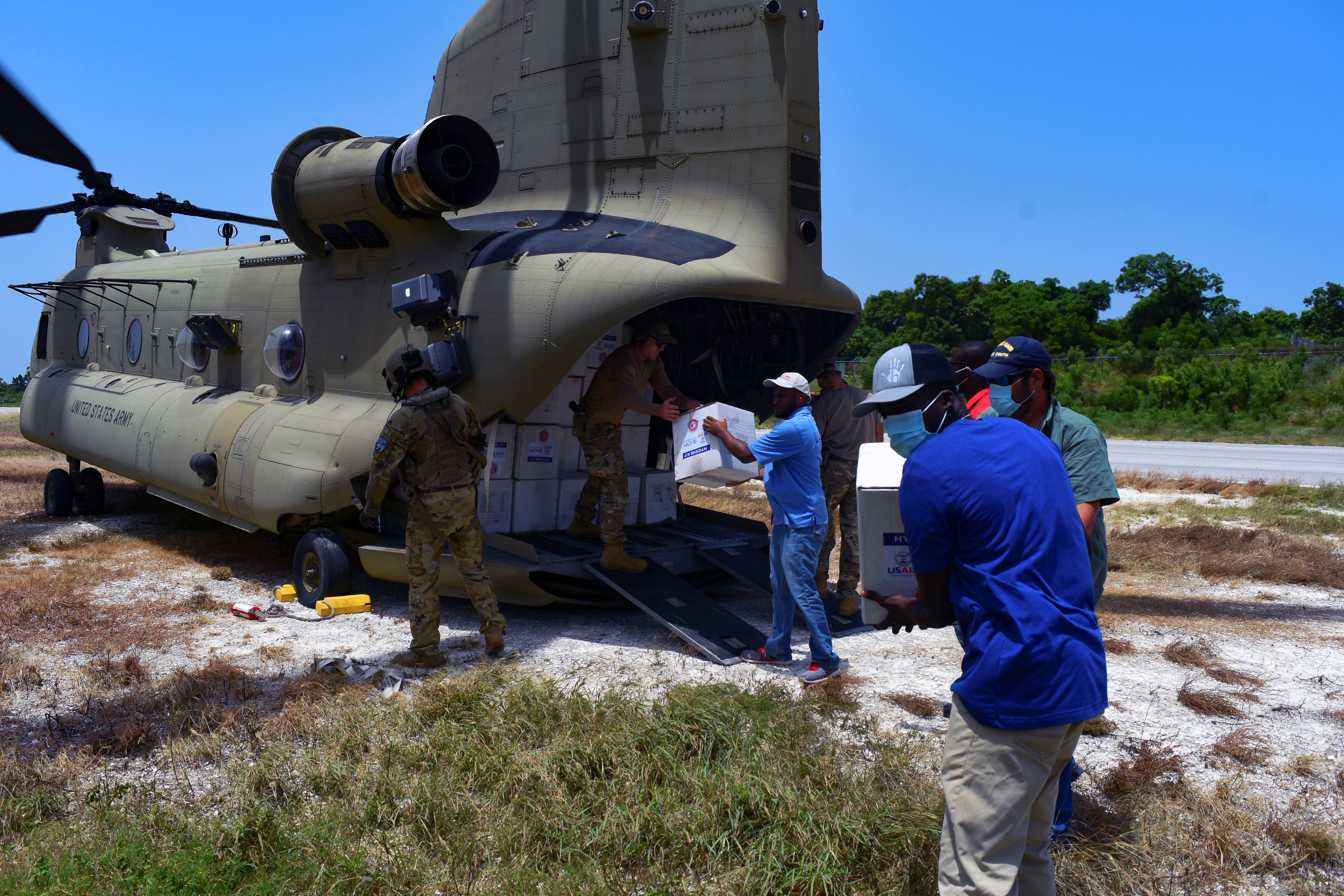
Now in Haiti, the department continues supporting USAID, working with international partners and allies to provide lifesaving aid and assistance to the people of Haiti in response to the recent earthquake there. U.S. Southern Command and Joint Task Force Haiti have been working around the clock to help save lives, deliver aid, all since the 14th of August when the 7.2 magnitude earthquake struck.
As of early this morning, the joint task force team has conducted more than 660 missions, delivered more than 573,000 pounds of aid, and saved or assisted more than 477 people.
We'll continue working with this humanitarian operation until USAID, working with Haitian officials, determines that the department's unique airlift, maritime, transport and logistics capabilities are no longer necessary, as commercial operations to transport supplies by air, land and sea increase on their own.
Search and rescue -- on the new topic of the Navy and the helicopter crash that they had yesterday, search and rescue efforts continue for the five missing crew members of the MH-60S helicopter that crashed into the sea yesterday while conducting flight operations from the USS Abraham Lincoln. The aircraft from Helicopter Sea Combat Squadron 8 was operating on deck before the incident.
The sailor who was rescued from the aircraft was transported ashore and is in stable condition. The five additional sailors aboard Abraham Lincoln who suffered injuries are also in stable condition.
Two of the five Abraham Lincoln sailors were transported to shore for treatment, while three of the five Abraham Lincoln sailors had minimal injuries and remain aboard the ship. An investigation into the cause of this incident is underway.
And now onto the boards. Back in January of this year, the secretary directed a zero-base review of all DoD advisory committees to include any committees not subject to the federal advisory committee act, to ensure that committee efforts are focused on our most pressing strategic priorities and the National Defense Strategy.
The ZBR Board has completed its work, presented their recommendations, and the Department is poised for many of the advisory committees to resume their essential work. The Department’s boards and committees have been and will continue to be a valuable resource as we defend the nation, succeed through teamwork and take care of our people.
The Secretary looks forward to working with many of these bodies personally and expects other Department officials to do the same.
After careful consideration of the recommendations resulting from the ZBR, the Secretary has approved the following advisory committees for resumption of operations.
The recommendations for other boards are still under consideration, and we will announce the results for more advisory committees in coming weeks.
Defense Business Board
Defense Policy Board
Defense Health Board
DoD Board of Actuaries
Medicare-Eligible Board of Advisors
Defense Science Board
Defense Advisory Committee on Investigation, Prosecution, and Defense of Sexual Assault in the Armed Forces
Uniform Formulary Beneficiary Advisory Panel
Inland Waterways Users Board
DoD Wage Committee
Board on Coastal Engineering Research
Marine Corps University Board of Visitors
Department of the Air Force Scientific Advisory Board
U.S. Strategic Command Strategic Advisory Group
Army Science Board
And, finally --
Defense Advisory Committee on Women in the Services.
As these boards get populated, we will again be transparent with you as members are brought back into the board work.
September is Suicide Prevention Month. The health, safety, and well-being of our military community is essential to the readiness of the Total Force.
The Department is committed to preventing suicide among Service members, veterans, and their families. We want to remind everyone that support is within reach and emphasize the valuable resources available year-round, such as with Military OneSource and the Veterans and Military Crisis Line.
This year, the DoD's Suicide Prevention Month theme is, Connect to Protect: Support is Within Reach. This highlights the vital role that connections to family, friends, the community, and resources can play in preventing suicide.
Our connections to family, friends, community, and organizations across the department are more important than ever.
And as you’ve heard the secretary say, mental health is health period, and that’s the way he wants everyone to look at it here.
Lastly, on a schedule note, tomorrow the Secretary looks forward to hosting the Italian Minister of the Defense Guerini here at the Pentagon. A readout of the meeting will be posted tomorrow afternoon.
With that, I’ll take your questions. Lita, did you have one for me?
Q. No, I’ll pass on that and let someone who did not get a question in earlier go.
MR KIRBY: Tara?
Q. John, you mentioned that the MH60 was operating on deck, so we (inaudible) understand that there was a collision or mishap on deck and the helicopter fell off the side?
MR KIRBY: I don’t know what caused the helicopter to go into the water. But our understanding is that it was on deck when the casualty occurred, whatever that is, and I don’t know, but the Navy is going to investigate that. But, it was on deck and fell from the deck into the water.
Q. And, secondly, yesterday when we had the secretary and the chairman up here, they both mentioned the internal pain that they’ve felt associated with this, is there going to be additional outreach to veterans or service members who served
in Afghanistan? Because there seems to be somewhat of a trigger for people who are maybe having suicidal ideations or been depressed just because of the way it all fell out.
MR. KIRBY: One of the reasons I wanted to make sure in my opening statements to talk about Suicide Prevention Month -- it's September, of course obviously. But we want to make clear that there are resources available and I think you'll hear more from department leadership communicating that across the force. And I know that -- I don't want to speak for the V.A., but I know that Secretary McDonough feels very strongly about this as well.
We all recognize that the events in just the recent past, certainly the last month or so, will factor in and potentially bear heavily on some of our veterans -- Afghan war vets. And as you heard the secretary say yesterday, I mean, everyone's different and we need to respect the fact that everyone will process this in their own way and over a course of time of their choosing.
But it's important -- and again I tried to hit this at the top -- that -- however you end up processing this, that you know it's okay to reach out for help -- whether that's professional help or just friends, family, colleagues -- that it's important that we respect each other and try to stay in touch with one another going forward.
But I do think you'll continue to hear throughout this month additional messages from department leadership about that issue, but also just writ large how that ties into mental health in particular.
Yes, sir.
Q: Thanks, John. Travis Tritten with Military.com.
I had a COVID question. The House is considering some legislation right now that would prohibit dishonorable discharge for any troop who declines a COVID vaccine. I'm not going to ask you to comment on the legislation, but I want to ask you about the punishment. Is dishonorable discharge going to be the outcome for troops who have refused the vaccine?
MR. KIRBY: Travis, as we've talked about before, the secretary expects that the department leadership will implement these mandatory vaccines with skill, but also -- because we know who to do this across a range of other vaccines -- but also professionalism and compassion. And when an individual declines to take a mandatory vaccine, they will be given an opportunity to talk to both medical providers as well as their own chain of command so that they can fully understand the decision that they are making.
And the other thing I'd say is that our commanders have a range of tools available to them short of using the Uniform Code of Military Justice to again try to get men and women in the department to make the right decision here.
Q: So if those other tools do fail, though, and it does go to UCMJ, can you speak at all what the outcome is? Are there a range of potential outcomes or are we looking at dishonorable discharge?
MR. KIRBY: There are -- I mean, if it goes to a disciplinary procedure, there are, again, a range of options available to commanders short of charges being filed and punishment of any given kind.
And this would be something that commanders would handle themselves, Travis. It's not something -- it wouldn't be some top-down driven set policy for every case across the whole department. This would be something that commanders would be able to decide for themselves.
But I want to stress -- and I don't think it's helpful to get into hypotheticals right now when we're still just at the beginning of this, but I also want to stress that the secretary's expectation is that commanders will lead with compassion here and will try to make available to members who are not willing to abide by the mandatory vaccine, to make sure that they understand the ramifications of their decision and that they have as much additional exposure to information and context as possible as they -- as they move forward.
Jen?
Q: Has anybody from the Pentagon or CENTCOM had any contact with the Taliban in the last -- since the last troops have left to begin making arrangements to either coordinate or work together?
MR. KIRBY: None that I'm aware of, Jen.
Yes, (inaudible)?
Q: Thank you, John.
About the Taliban and(inaudible) Group. (inaudible) It look like they start another civil war. Is Pentagon able to direct support the (inaudible) the Taliban, because people are very worried about the civil war?
And the next question, 10 civilian people have been killed by the U.S. operation -- military operation. Any more information or an update to an investigation?
MR. KIRBY: The U.S. military mission in Afghanistan is over.
And as for your second question, I would refer you to CENTCOM. I know that Central Command continues to assess the results of that airstrike and I wouldn't get ahead of their assessment of it.
I would only say two things, and I said it before, no other military works harder than we do to prevent civilian casualties. We certainly never want to see innocent life taken as a result of U.S. military operations.
And as you heard the chairman say, I think very clearly yesterday, that this strike was based on good intelligence, and we still believe that it prevented an imminent threat to the airport and to our men and women that were still serving at the airport.
Q: Can I ask a follow-up?
MR. KIRBY: Yes, sure.
Q: So you're saying that the military mission is over. That means that the U.S. is not going to support the Northern Alliance, this resistance group, with any kind of airstrikes against the Taliban fight?
MR. KIRBY: The U.S. military mission in Afghanistan is over.
Q: But -- so just to be clear, because you will still take strikes against ISIS and Al Qaida in the CT, right? So I mean from that perspective there is a military mission in Afghanistan, right?
MR. KIRBY: Courtney, what we will do is continue to be able to conduct over-the-horizon counterterrorism strikes as needed for threats to our interests and to the homeland. And we're absolutely going to do that.
But that's a different thing than saying that we have a military -- an enduring military mission in Afghanistan.
Q: So there will not -- there is not going to be any effort to support the -- any kind of --
(CROSSTALK)
MR. KIRBY: We will continue to defend our interests against legitimate terrorist threats anywhere in the world. And you heard the secretary say that there's not a scrap of earth that we can't hit.
Meghann?
Q: Navy and Marine Corps have released their COVID vaccine plans and they give a 90-day deadline to get vaccinated. It's my understanding that the Army and Air Force plans do not include a deadline. Is that up to the secretary's expectations for a rollout plan?
MR. KIRBY: I'm not going to speak for the Army and the Air Force. I have seen the Navy's directives. My understanding is that the Army and the Air Force will be setting forth their timing or their implementation guidelines here very, very soon.
The secretary wants -- as I said before, wants the services to move out as smartly on this as possible, and to be as efficient and effective in implementing the mandatory vaccines as they can be. And he has made it clear that they need to report directly back to the deputy secretary on a regular basis.
Q: But if there's no deadline in there, how is that a mandate? And is that what the secretary's expectations were for these policies?
MR. KIRBY: The secretary expects that the services will implement a mandatory vaccine with skill and compassion, as I said. And we'll do it as swiftly and efficiently as their individual healthcare systems and capabilities allow.
(inaudible)?
Q: John, you said secretary said, and president also said, that when U.S. military was in Afghanistan, they give their best -- best training and reference to the so-called Afghan military force. But they didn't fight. My question is, do you think anybody in the DOD or somewhere feels like, according to many reports, that they were really Taliban, not the Afghan military? That's why they didn't fight? And according to reports, Pakistan was helping, and they sent 10,000 to 15,000 Taliban from Pakistan into Afghanistan to fight and support the Taliban's.
So, finally, any message from the secretary to the millions of Afghans who said they are very thankful to the U.S. military that they had protected them for over 20 years? And what is their future?
MR. KIRBY: Let me try to take them one at a time if I remember them correctly. You're asking do we believe that a large portion of the Afghan forces collapsed because they were Taliban? I've not seen any indication that that's the case.
Your second question was about Pakistan flowing in fighters. I've not seen anything to corroborate that report. I would, as we said before, Pakistan has a shared interest in the safe havens that exist along that border, and they, too, have become -- and have been victims of terrorist activity. And I mean, I think that's something that we all share in common here is helping -- helping each other not become victim to that, to those kinds of attacks from that part of the world.
And your third question was the message of the Afghans after 20 years. Look, you know, you said -- I think the question you said was that we protected them for 20 years. And certainly, there's truth in that statement. I mean, we were on the ground there for 20 years with NATO and coalition partners. And -- we did spend blood and treasure to try to make sure Afghanistan doesn't become a safe haven again. And in the process of that, helped build Afghan force capability and competency in the field.
Obviously, nobody could have expected that -- that they would not fight the way that they didn't fight. But Afghan soldiers, too, fought and died for their country over the last 20 years. So there was -- it wasn't just about us protecting Afghan life there. Many, many Afghan soldiers and many Afghan civilians also suffered over the last 20 years trying to -- trying to make that country a better place. And we recognize that, and I think you heard the secretary and the chairman both say that yesterday.
Q: The secretary from yesterday? Who said that he fought, himself, this war. Any message from him?
MR. KIRBY: I think I'm going to leave it to what the secretary said yesterday. I don't believe that I can improve upon his words at the end of his comments yesterday. Terese?
Q: Yes, thank you, John. This goes back to the question earlier about veterans. You know, as someone who has served -- and served, and had the honor to serve with Afghans. We're taught from basic training on up; the number one thing we're taught is you do not leave your man behind. Now, how can the Department of Defense go before the American people, those military service members, and those veterans and say that the mission was accomplished when people were left behind?
MR. KIRBY: I think Terese, so we've been very clear that -- that we don't believe the effort has concluded. The military mission of evacuation is over. And as you heard the secretary and the chairman say, so too is the U.S. war in Afghanistan. But you've also heard the secretary of state say that we're still going.
We know there are people that didn't make it out, American citizens as well as special immigrant visa applicants. And the U.S. government is going to continue to look for ways to try to help them find safe passage out of the country. I don't foresee a military role in that. But I would also remind, and again, let me make it very clear. But as General McKenzie, I think, said very well, we're all heartbroken that we weren't able to get every single person out. We all recognize that. And don't think for a minute that people don't feel it here because we do.
But it is also important to remember the extraordinary effort that was expended over the course of some 17 days to get over 124,000 people out, including 6000 American citizens. The vast, vast majority of those we believe that were there. So again, while recognizing there are still individuals that will want to get out and will need to get out, and we'll still work on that. I don't want it lost the extraordinary effort that was -- that cost additional bloodshed of American troops. I don't want that lost either, that effort was -- done with exceptional professionalism and skill.
Think about the airlift effort alone. Over the course of 17 days, no mechanical breakdowns. I mean, it was an incredible effort. And I just don't want that to be lost in -- in what is fair scrutiny and fair criticism, that not everybody was able to get airlifted out. An awful lot of people were.
Tony?
Q: In the after-action reports that the secretary yesterday said would be done with humility and transparency, and General Milley kept alluding to. And has a process been started yet to do formal -- a formal after-action report? And what will be the topics? Will it include the broad topics and the evacuation?
MR. KIRBY: Yeah, Tony, I'm not aware of a formal process here, so I can't speak to a report. It is, as you well know, common practice for us to do after-action reports on almost everything that we do. So I have full expectations that as a department, we will take the time to go back and look at this operation, as the secretary said, and try to learn lessons from it. Now whether that's produced in a formal report that makes public. I can't attest to that right now. But we obviously will -- will go back over the course of appropriate time and try to see what we could have done better and what we can learn from this operation.
Q: The other thing too, yesterday, the secretary rightly alluded to the sacrifice of thousands of U.S. contractors who died. I want to ask you. Does the DOD have a rough order number for how many contractors died? Brown University has widely cited 3,841, but I wanted to hit. Does DOD have something? And if not, can you make an attempt to try to get a number?
MR. KIRBY: Let me take the question, Tony. I don't have a figure here with me today. But I'll take the question and see if we have a better answer for you.
Q: There's a lot of interest in that subject. And he rightly brought it up yesterday.
MR. KIRBY: It was by no coincidence that he mentioned the sacrifices of our contractors and the mourning and the suffering that their families are going through, because they were right there on the ground with us almost from the very beginning.
Let me take the question and see if we have a better answer. As you might imagine, that might be a little bit more difficult for us to get to because contractors work for companies and weren't necessarily on the government payroll.
Q: The Labor Department has a lot of those stats. The Labor Department has some of those stats.
MR. KIRBY: I will take the question, Tony, and see what we can do to get you an answer.
Q: Thank you.
Q: The secretary said there were thousands too, so you must have some order of magnitude (inaudible) --
MR. KIRBY: I understand. I'll take the question.
Yes, ma'am?
Q: Thank you. So the -- Secretary Austin and Turkish defense minister had several phone calls about the -- providing security to Afghanistan. But what's the latest update, I would like to ask? And the second question is, it seems airport security provider is still unclear. How will those be able to leave if there is no functioning airport?
MR. KIRBY: Yeah, no, I got that part. The -- the first question, the -- an update to what?
Q: Well, like the -- I mean, the airport in Afghanistan. So there was the update, the -- the airport security (inaudible).
MR. KIRBY: Airport security.
Q: Yes.
MR. KIRBY: Yeah, I think you've heard the State Department talk about this. There's a number of countries that are in discussions -- Qatar and Turkey are two of them -- for being able to provide some measure of airport security so the airport can get back up and running, and I understand that they are discussing with themselves how to move forward with the Taliban on that, and I would refer you to those two countries for updates. We would not be a party to that discussion.
I've got time for a couple more.
Oren?
Q: This is a group question. Do you have a number -- an update on the number of Afghans at CENTCOM bases?
MR. KIRBY: At CENTCOM bases. I actually think I might. Hold on just a second. I know I had this in here somewhere. You know what, Oren, I'm not going to hold everybody up. I think I have it in here. Let me keep looking for it, but I do think I have it. I just have to find it. Oh, here we go. I did have it.
In the Central Command AOR, the number is about 16,000. Yeah. Thanks, and sorry for the delay there. It was just a matter of finding it on the iPad.
Yeah, Jim?
Q: John, just how many American service members all told, from the grounds of Afghanistan all the way back to, you know, Fort Bliss and this area were involved in this? Can you give an idea of the scope of the involvement of the military in this? Or is there a way to find something like that out?
MR. KIRBY: Yeah, let me take the question, Jim. I'm sure we're talking tens of thousands, if not more, that were involved in this, yeah, but --
Q: (inaudible) 5,000 on the ground? I mean, it had to be huge.
MR. KIRBY: It stretched -- it stretched multiple combatant commands' area of responsibility. You just heard from EUCOM. You're going to hear from General VanHerck tomorrow at NORTHCOM. Of course, we know General McKenzie at Central Command. I don't know. It's a great question, and let us see if we can go back and do the math and get you something more reliable, but I have not seen an estimate of total U.S. military personnel involved in this from airlift to evacuation and beyond, but I'm sure it's quite sizable. And as you heard the secretary say yesterday, we're proud of, proud of each and every one of them.
Okay, thanks, everybody. Appreciate it, and I think we'll see you tomorrow.
















 Posts
Posts

