Monday, April 27, 2020

Corps of Engineers Team Upholds 'Building Strong' Motto During COVID-19


April 27, 2020 | BY Julie Shoemaker

The Army Corps of Engineers consistently lives up to the motto ''Building Strong,'' with some 37,000 civilians and soldiers delivering daily engineering services to customers in more than 130 countries.

COVID-19 has caused unimaginable changes to people's lifestyles, attitudes about social interaction, hygiene and overall priorities. People are self-quarantining and avoiding contact beyond immediate family members. Large numbers of workers are teleworking from their homes, and major life events such as graduations, celebrations, weddings, and funerals, have been postponed or cancelled.

The Corps of Engineers, including the Transatlantic Middle East, or TAM, District, has continued its primary mission while also assisting the nation and federal agencies during the crisis, ''Building Strong'' through deeds, not words.

TAM's headquarters is in Winchester, Virginia., with offices throughout the U.S. Central Command area of responsibility in the Middle East and Central Asia. Its work includes designing and constructing facilities for use by U.S. forces, performing engineering activities for other U.S. government and foreign agencies, and providing operations and maintenance services for various customers throughout the region.

''We don't have the luxury of waiting out COVID-19,'' said Army Col. Philip Secrist, the Middle East District commander, when he initiated maximum telework of Team TAM. ''Our mission partners are counting on us to continue to deliver during this challenging time.''


Projects still need to be completed on time, and Team TAM is doing whatever it can to do that, he said. The team in Winchester, including project management, contracting professionals, legal advisors and more, is coordinating through teleworking members and others deemed mission-essential. Contracts are awarded and project milestones are being met. The district continues to serve U.S. and allied mission partners, he added.

Work continues at TAM field offices, with many health and safety precautions being integrated into the daily routine.

''We are all doing our part to protect others, even when we cannot maintain the o[6-foot] distance while operating [or] riding our low speed vehicles to the job sites,” said Mark Wittrock, a Bahrain area resident engineer.

The list of essential office supplies required for daily activity has evolved during the pandemic. The Bahrain resident office now has an IP communicator, which is essential for many mandatory and daily conference calls, Wittrock said.Decontamination spray is kept on hand for daily wipedowns of the entire office. Decontamination wipes, face masks and antibacterial hand gels are used for travel outside of the decontaminated area, he continued. While maximizing telework and social distancing, several necessary phones are needed to keep in touch with team members abroad.

''I have my Saudi cell phone nearby to stay in touch with the Saudi teammates, since I cannot cross the border now,'' Wittrock said. ''And my U.S. cell phone to stay in touch with the TAM team in Winchester Plus the Bahrain cell phone to both stay in touch with Bahrain teammates and to use for taking pictures when needed.

''For nonsensitive information exchanges, we use several different group chats,'' he said. ''A specific Bahrain resident office group chat for our daily personnel status/COVID-19 check-ins, and our KAS Artillery Group chat is an effective tool for project updates and communicating among the project team members.''

The TAM offices are also doing their best to ensure that the contractors working for the Corps of Engineers on the worksites are safe, he added. This includes implementing techniques and tactics such as social distancing, wearing personal protective equipment, and establishing decontamination stations throughout the job site.

(Julie Shoemaker is assigned to the Army Corps of Engineers.)

COVID-19 Changes Daily Life of Marines


April 27, 2020 | BY MARINE CORPS LANCE CPL. BRENNAN BEAUTON

The daily lives of U.S. Marines have drastically changed since the outbreak of COVID-19. Marines stationed at Marine Corps Base Camp Smedley D. Butler, Okinawa, Japan, have implemented teleworking as a way to practice social distancing and combat the spread of the virus.

The work, social and home lives of Marines living in the barracks deviates from life before the pandemic. Marines assigned to the distribution management office, DMO, on Camp Foster, Okinawa, have a unique and difficult task to perform during this time.

DMO Marines are tasked with booking flights for temporary assignments and permanent-change-of-station orders, as well as moving all of a Marine's personal property to the new location. With the Defense Department's travel ban, DMO Marines are teleworking to help successfully move Marines and sailors to and from the island.

Communication is the most challenging aspect of teleworking during the outbreak, said Marine Corps Lance Cpl. Amanda Martinez, a personal property clerk at Marine Corps Base Camp Butler on Okinawa.

"We are used to face-to-face interactions, but we are having to call and email members, and they're teleworking as well," Martinez said. "It has been taking a little bit longer as far as documents being signed and information being sent back and forth."

While teleworking is an effective way to combat the spread of the virus, it hinders the DMO to operate at its full potential.

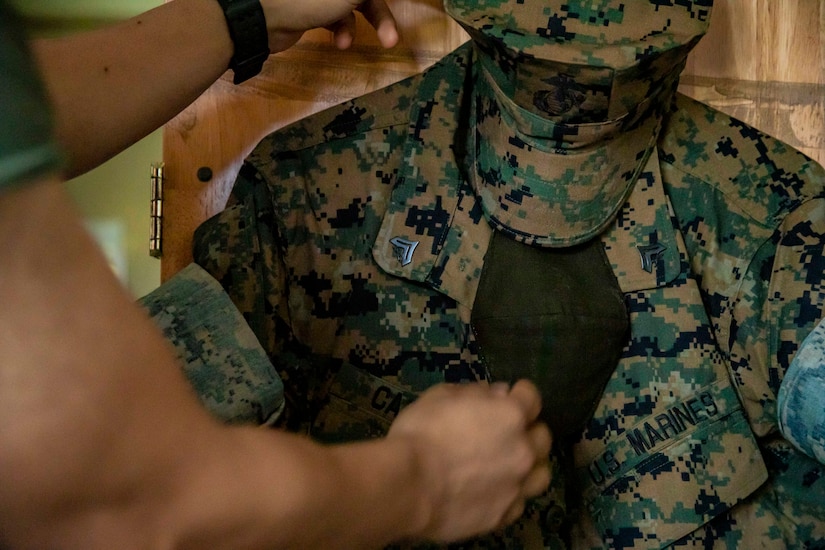
"Half of our staff is in office, and half of the staff is teleworking at the barracks. So, we're trying out a bunch of things to figure out the best way to communicate with our members and our team to make mission," said Marine Corps Cpl. Ricardo Casarez, the noncommissioned officer in charge of the passenger travel office at Camp Butler. "Regardless, we continue to work as a team in order to adapt and overcome COVID-19."

Not only have their jobs been affected, but so have their daily duties as Marines and the uniforms they wear.

"We are now required to wear masks. It's become a part of our everyday carries for us, and we are required to maintain social distancing, which are both not part of our daily routines, but it has become a norm for Marines," Casarez said.

Even the Marines' physical training schedule has been altered, but it does not stop them from working out however they can.

"We used to PT every day, now it's all on yourself to maintain your physical fitness," Martinez said. "It is kind of hard because of the gyms being closed, but a lot of us are just running every day, and do what we can with what we have. We are just adapting and overcoming to still be ready to fight if we have a calling."

The 3rd Marine Expeditionary Force announced Health Protection Condition Charlie Plus, which prohibits off-base liberty. However, the Marines still see a bright side during these difficult times.

"Due to COVID-19, Marines [are not] able to execute liberty off-base and enjoy the island," Casarez said. "I think it's brought camaraderie within units. It has definitely brought that feeling of being close for us. I believe it has made us more united than we have ever been."

(Marine Corps Lance Cpl. Brennan Beauton is assigned to Marine Corps Installations Pacific.)

DOD COVID-19 Response Continues Long History of Aiding Civilians


April 27, 2020 | BY David Vergun , DOD News

As the COVID-19 pandemic continues, active duty military, reserve and National Guard service members are responding in various ways, from providing medical support and logistics to transportation and food delivery.

This isn't the first time the Defense Department has assisted civil authorities in the United States.

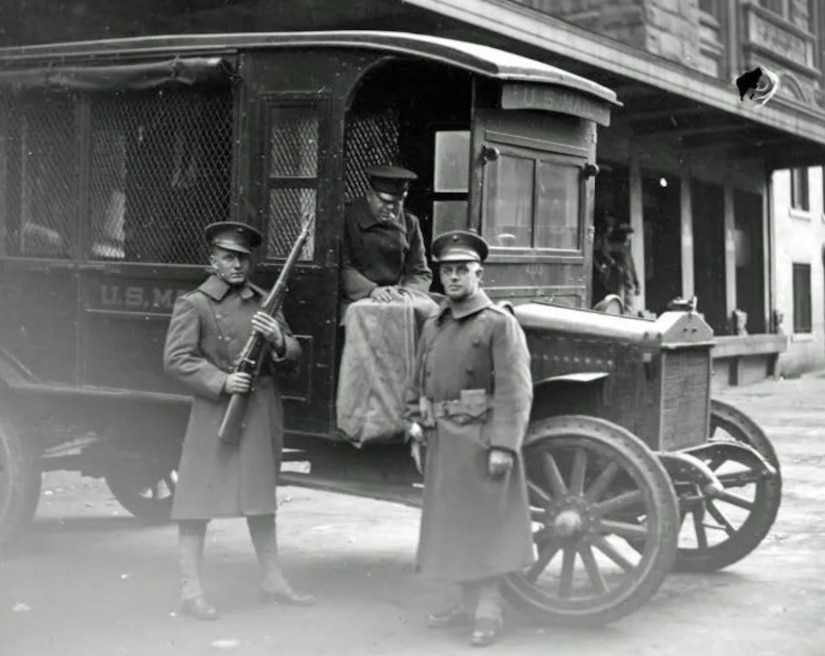
In the early 1920s, President Warren G. Harding ordered the Marines to protect mail delivery service after millions of dollars were stolen in a rash of mail robberies. Armed Marines guarded mail trucks and trains throughout the United States, with orders to shoot if necessary. Robberies of the mail completely stopped.

However, by the mid-1920s, the Marines had withdrawn from this duty, and robberies again became frequent. So once more, the Marines were sent in. Robberies ceased, and when the Marines later withdrew, mail robberies were no longer a problem.

One of the most destructive floods in the United States was known as the Great Mississippi Flood of 1926 and 1927. About 500 people lost their lives, and more than 700,000 became homeless. As a result, Congress passed the Flood Control Act of 1928, directing the U.S. Army Corps of Engineers to build levees along the river.

In August 2005, Hurricane Katrina came ashore in Florida, Louisiana and Mississippi, causing massive flooding in those and several other states, including in the city of New Orleans, which was especially hard-hit. About 1,200 people died as a result of the flooding, and millions were left homeless.

The Coast Guard, the Army Corps of Engineers, active duty service members, guardsmen and reservists were called on to help with rescue, recovery, cleanup efforts and rebuilding.

One of the worst snowstorms ever to hit Ohio, Pennsylvania, New Jersey, New York and all of New England was the blizzard of 1978, which raged from Jan. 26 to Feb. 7. Record snowfalls occurred throughout the region, and about 100 people were killed. Weather forecasting at the time was spotty, and many motorists got stranded on roads. The National Guard used helicopters and tactical vehicles to rescue those stranded and manned emergency centers.

The Defense Department, as well as other government agencies and civilian companies, have increasingly come under attack from Russia, China, terrorists and criminals, both to disrupt service as well as steal intellectual property. In 2018, DOD issued its U.S. National Cyber Strategy, which includes protecting the American people and businesses by safeguarding networks and data and strengthening the ability of the United States allies and partners to deter and punish those who use cyber maliciously.

More recently, DOD has also been tasked with monitoring and ensuring secure elections.

Those are just a few of the many examples of the department protecting the homeland. Others include fighting wildfires and providing security at major events such as the Super Bowl.