Monday, January 04, 2016

EC 2016: the EPME 'Year of the Student'

by Master Sgt. Mike R. Smith
I.G. Brown Training and Education Center


1/4/2016 - MCGHEE TYSON AIR NATIONAL GUARD BASE, Tenn. -- Reviewing 2015, the I.G. Brown Training and Education Center met challenges in professional military education, welcomed new staff members including its commandant, and set the bar through award-winning service, course offerings and rising infrastructure.

The TEC's staff gained top awards and recognition with seven Air National Guard Readiness Center awards, including 2014 civilian the year and a complete sweep of the readiness center's second and third quarter awards for outstanding civilian, NCO and SNCO.

Construction workers raised and enclosed much of the 47,000-square-foot classroom and dormitory facility.

Crews finished dirt excavation, poured cement footings and retaining walls and welded steel framing, among other actions. They enclosed the two-story classroom building, and then raised the three-story dormitory building.

In mid-February, Chief Master Sgt. Mitchell Brush, senior enlisted advisor to the chief of the National Guard Bureau, was the keynote speaker for a joint Airman leadership school and NCO academy graduation. Other graduation speakers included Maj. Gen. Daryl Bohac, adjutant general for the Nebraska National Guard, and Chief Master Sgt. Jim Hotaling, command chief for the Air National Guard. Airman leadership school saw the return of its graduation banquets.

The biggest month for the TEC may have been in August, when it hosted and facilitated the first General Officer Staff Course for 71 Soldiers, Airmen and civilians from 35 states, territories and the District of Columbia. Leaders from across the nation lauded the course.

The TEC also named two buildings after former commandants. Buildings 412 was dedicated to Chief Master Sgt. Richard Moon Apr. 9, and building 406 was dedicated to Chief Master Sgt. George Vitzhum Oct. 8.

Chief Master Sgt. Edward L. Walden became the 14th commandant of the Paul H. Lankford Enlisted Professional Military Education Center in May, following Chief Master Sgt. Thomas K. Stoudt's retirement. With the holiday season fast approaching Walden answered a few questions on the year's happenings and what may come for the TEC in 2016.

Q: Can you share what you learned about your role as an EPME commandant since your arrival?

WALDEN: The biggest thing I learned since being here is the enormous amount of responsibility to the students. If I don't focus on what we need to do on a cultural basis then I'm not really doing my job. I've ran a schoolhouse before, and it was more on the day-to-day operations, but here it's more about changing a culture for the students that helps shape the future of the Air Force. I wasn't expecting that. The other part is dealing with the instructors and the development that they need to do their jobs.

Q: What have been the significant accomplishments for the Paul H. Lankford EPME Center this year?

WALDEN: We brought back the Airman leadership school banquets in May, which was huge. It was something we did in the past that impacts people's careers as they continue on. It's one of those memories that you have, which you never forget. We also developed a student-centered approach to decision-making, so when we come to making decisions here, we now focus on how it impacts the student ... that's the underlying basis. Without that as our foundational way forward to answer our questions, it doesn't really help to change the culture here. That approach - having the student around our decision making model - makes sure that we stay focused on the purpose of why we are here, and that is to have quality students who have a quality experience. That includes anything from picking new furniture, or the new student lounges we are developing as collaboration areas, to instructor development as well as lowering the student-instructor ratios. It's going to be a change for the students to have an even greater experience.

Q: So how do your instructors influence the quality and success of EPME taught here?

WALDEN: The instructors are the key. They have a captive audience of individuals, eight hours a day, for four or five weeks. It's the instructors' values, it's their actual attitudes, that helps influence students throughout the time that they are here. They are the leaders that the students are looking at who impact their futures for the next 15, 20 years. I still remember my NCOA instructor. So the reality is that our instructors can't have a bad day, and that's why we want them to be a cut above when we select them. You have to have a passion for teaching, and if you don't have that you are not going to be successful in our classrooms.

Q: You are also the I.G. Brown Training and Education Center's senior enlisted advisor. In what ways were you involved with TEC's other capabilities, missions or staff?

WALDEN: One of the changes that I made, in that regard, was to start quarterly enlisted calls. Enlisted Airmen at the TEC get together, and we talk about teamwork. We talk about partnership, and we talk about attitudes. We discuss collaboration and just basically our overall want of being at the TEC. It's a unique job. This is a unique area, so we want to make sure that people are doing well while they are here. When I first got here I sat down and met with every enlisted Airman. It took a few months just for me to be able to get to know them, and it helped me have an understanding of the environment and the culture that is here and what I, as a senior leader, along with the other senior NCOs, can do to help shape our future going forward. We've held a mock interview panel, and I want to continue those. I'm also going to institute a formal mentorship program to help our staff grow and shape their careers. We have a staff that's regular Air Force, Guard and Reserve, so we want to help everybody focus on their careers, and that mentorship program is going to be key. It's also concentrating on the professional development side of taking care of people - on those that we rate on - and how to help them grow and progress in their careers.

Q: What excites you the most about the future of EPME here? Are there any predictions you want to make for 2016?

WALDEN: We are dedicating the year as a year of the student - as I mentioned - with a student-centered approach in our decision making, based on the students. So we will focus on the student through classroom upgrades, equipment upgrades, professional development and ensuring the quality of the experience for those that come though this school. I'm also looking forward the ILE [Intermediate Learning Experience] that is beginning in April 2016 ... that is going to be a completely new approach to how we're teaching NCOs at the NCO academy. Facilitated online distance learning is also something we are looking forward to getting off the ground in 2016.

Q: Can you share something interesting about the Paul H. Lankford EPME Center that some people may not know, or that you want others to know?

WALDEN: We are the Air Force's largest, and its longest standing, EPME center. It is truly, total force on a consistent basis, with active, Guard and Reserve, with Coast Guard and international students, as the constant makeup of individuals that come through this school. You won't get that experience anywhere else. Our instructors are also a true 50/50 mix of active and Guard. It's a wonderful experience, and it's something that we take advantage of.

Recapitalizing JSTARS: the BMC2 suite

by Justin Oakes
66th Air Base Group Public Affairs


1/4/2016 - HANSCOM AIR FORCE BASE, Mass. -- Hanscom program officials call it the "brain of the plane," and as the epicenter for JSTARS command and control, it's an integral part of the overall Joint Surveillance Target and Attack Radar System recapitalization effort.

The battle management command and control suite, also known as BMC2, allows operators to make decisions and direct and control the fight using highly capable on-board data and voice link systems. The JSTARS aircraft detects ground and maritime targets as well as slow-moving, rotary and fixed-wing aircraft via radar, collects the information and then fuses with on- and off-board data in the BMC2 suite.

"In essence, BMC2 is the art of translating real-time battle space awareness, operational guidance and combat potential into decisive action at the tactical level across a wide range of missions including air-to-air, air-to-ground and combat support operations," said Megan Kozacka, JSTARS Recap BMC2 Integrated Product Team leader.

The BMC2 system itself is made up of commercial-off-the-shelf servers and workstations configured with modular software applications. The system's software promotes mission planning, execution support and automation aids such as data visualization, advanced algorithms for data exploitation and playback capabilities.

Program officials plan to use existing technology for all components of the recapitalization, which includes the "natural evolution" of the BMC2 system.

"The legacy system was at the leading edge of technology (JSTARS debuted in 1991), prior to the exponential growth of COTS technology," said Lt. Col. John Kurian, JSTARS Recap Mission Systems Branch materiel leader. "Since its inception, the commercial marketplace has grown to support two- to three-year hardware refreshes and standardized data protocols in messaging."

According to Kurian, much of the existing JSTARS software had to be customized and "invented" to do the job. That won't be the case with the new system.

The Air Force now looks for the ability to easily incorporate best of breed software services. Automated tools, availability of systems and enhancements with modern technology in data visualization are a few of the characteristics being considered for the new BMC2 suite.

Recently, the program office completed an extensive BMC2 risk reduction effort, where members of industry were brought together with program officials to conduct prototyping experiments to design an Open Mission System, or OMS, open-architecture BMC2 subsystem.

"The feedback we received from the risk reduction experiments was extremely valuable," Kozacka said. "Contractors identified key improvements in the OMS standard to meet functionality and both sides increased their knowledge of the standard. Ultimately, implementation of OMS will result in a streamlined integration of the JSTARS Recap subsystems during the Engineering and Manufacturing Development phase."

The EMD phase is still on the horizon for the JSTARS Recap team, but the program reached a significant milestone Dec. 10 when OSD approved entrance into the Technology Maturation and Risk Reduction phase.

In August, the program office awarded three contracts worth more than $31 million in total to Lockheed Martin, Northrop Grumman and Boeing to continue risk reduction efforts; the contracts include conducting a System Requirements Review and option for additional technical reviews and prototype demonstration.

By reaching Milestone A, Joint STAR Recap is now able to exercise a six-month contract options for each of the three existing pre-EMD contracts.

"We're taking the necessary steps to ensure the new JSTARS system will meet the needs of combatant commanders, especially in regards to BMC2," Kurian said. "The command and control capability that JSTARS provides is a vital part of battlefield operations."

(Editor's note: this is the first of four articles in a series on the JSTARS Recapitalization)

Air National Guard director retires

by Elizabeth Kreft
Air National Guard Readiness Center


1/4/2016 - JOINT BASE ANDREWS, Md. -- Air Force Lt. Gen. Stanley E. Clarke, director of the Air National Guard and a strong advocate of the Total Force Continuum as well as the State Partnership Program, retired Dec. 18, after more than 34 years of military service.

During the ceremony at the Air National Guard Readiness Center at Joint Base Andrews, Md., former Air Force Chief of Staff General T. Michael Mosley, led the ceremony and complimented his friend and fellow Airman.

"You are in the lineage of American Airmen...that flew in the Lafayette Escadrille, that flew with Mitchell ... that flew with Chennault and the Flying Tigers, and that flew with the Tuskegee Airmen up the Italian peninsula into southern Germany," said Mosley. "You've left that legacy with [us] all... you're a pro and your family made this possible."

As the Air National Guard Director, Clarke was responsible for formulating, developing and coordinating all policies, plans, and programs affecting the more than 105,700 Guard members and civilians in more than 89 flying wings and 175 geographically separated units across 213 locations throughout the 50 States, the District of Columbia, Puerto Rico, Guam and the Virgin Islands.

The broad swath of responsibility was a burden General Clarke took on with great appreciation. When he testified before Congress earlier in 2015, Clarke noted the Air Guard supports combatant commanders around the globe, and continues to be a "proven choice" for the war-fighting operations they support.

"We have ... consistently deployed members of the Air National Guard," Clarke said. "In fact, over 2,000 are deployed today across the globe doing a variety of operations."

During his tenure, he also pushed for continued security cooperation. "We have bilateral relationships that don't even exist inside the State Partnership Program that we support," he told Congress. "An example of that would be what we do for the air forces of Iraq -- we're doing the training for the C-130J's ... and the F-16 foreign training is all done at Tucson [Arizona] by the Air National Guard."

Members of General Clarke's immediate staff said one of the most important legacies the director would want to be remembered by is his commitment to the Total Force Continuum concept and his "Ready Airmen" initiatives.

To accomplish these goals, General Clarke worked closely with Secretary of the Air Force, Deborah Lee James and the Air Force Chief of Staff, General Mark Welsh. During his retirement speech General Clarke thanked them both; "No component of any service, at any time in history, has had a better friend as a service secretary than Debbie James ... and you two are tremendous advocates of the Total Force."

Clarke began his Air Force career in 1981 when he was named a distinguished graduate of the University of Georgia ROTC program. He joined the Alabama Air National Guard in 1991, and went on to serve in multiple joint positions, including the Senior Defense Official and Defense Attaché to Turkey and NORAD.

As he spoke about the high points of his career, Clarke recalled a few poignant moments in the air and on the ground.

"I always wanted to be a fighter pilot, I just wasn't sure someone would give me the chance," he said. "I can vividly recall flying at 100 feet over the swamps of Carolina in brand new A-10s, and squeezing the trigger on a 30mm cannon for the first time. And I can still play scenes in my head of avoiding anti-aircraft artillery over Iraq in F-16s."

The command pilot, who accumulated 4000 hours in various aircraft including the A-10 Thunderbolt II, the F-16 Fighting Falcon and the C-26 Metroliner, said he stayed in the service for multiple decades because he "loved the people of the Air Force and the Air National Guard."

"The Air Force took me places I would have never had the opportunity to go otherwise," he said. "Not all the memories have been good ones ... I've touched the flag-draped caskets at Bagram, and I've been at Dover to watch them come home. However, the good memories outnumber the bad ... and (I have) too many blessing to count."

General Mosley took time during his speech to share a powerful tale that he said highlights "the leadership and strength of the entire Clarke family."

"This story begins in the spring of 2002; I was told to put together what would be the decisive strike at the regime which would be the air campaign (in Iraq)," Mosley said. "I asked Sid to join us in this ... because he and I have had several experiences through weapons school and a variety of other places, and I trusted him."

He said then-Colonel Clarke led and effort to build a mock up of the Iraq western front at Nellis Air Force Base ranges to meet the President's intent for the crucial mission.

"The SECDEF and President were happy with Sid's plan, which says a lot," Mosley said, "And then I told him he was going to command the effort. It was not a leap of faith for me. I knew, and Sid knew what was at stake."

He explained that Clarke volunteered to deploy to finish the job, and set up a "beautifully-executed piece of a very complicated campaign," which included flights across the Haditha dam and supporting special operations forces.

"The lives you've touched and the lives you've saved, some of them don't even know you saved -- some of them don't even know you saved them," Mosley told Clarke, "And some of them, as we enter the holidays and the Christmas season, in Australia and in the UK, some of those folks are with their families and their kids and their grandkids today because of you. And that's kind of a big deal."

In total more than 90 general officers, as well as hundreds of former coworkers and friends, attended the ceremony to show their gratitude for General Clarke's years of leadership and mentorship.

"He is an insightful, thoughtful and very dynamic leader," General Taheri, ANG Readiness Center Commander, said of General Clarke. "He's often quiet, and you wouldn't know it but the wheels are always turning, so when he does speak, he speaks with the kind of measured thoughts that are always one step ahead of where I wish I could have been before I started talking to him."

General Clarke's replacement has yet to be named; the new director will be recommended by the Secretary of the Air Force and approved by Congress. Until that person is selected, Major General Brian Neal previously appointed as the deputy director of the Air National Guard, will serve as the acting Air National Guard Director.

Face of Defense: Citizen-Soldier Supports Guard in Civilian Capacity


By Army Sgt. 1st Class Anna Doo, New Mexico Army National Guard DoD News, Defense Media Activity

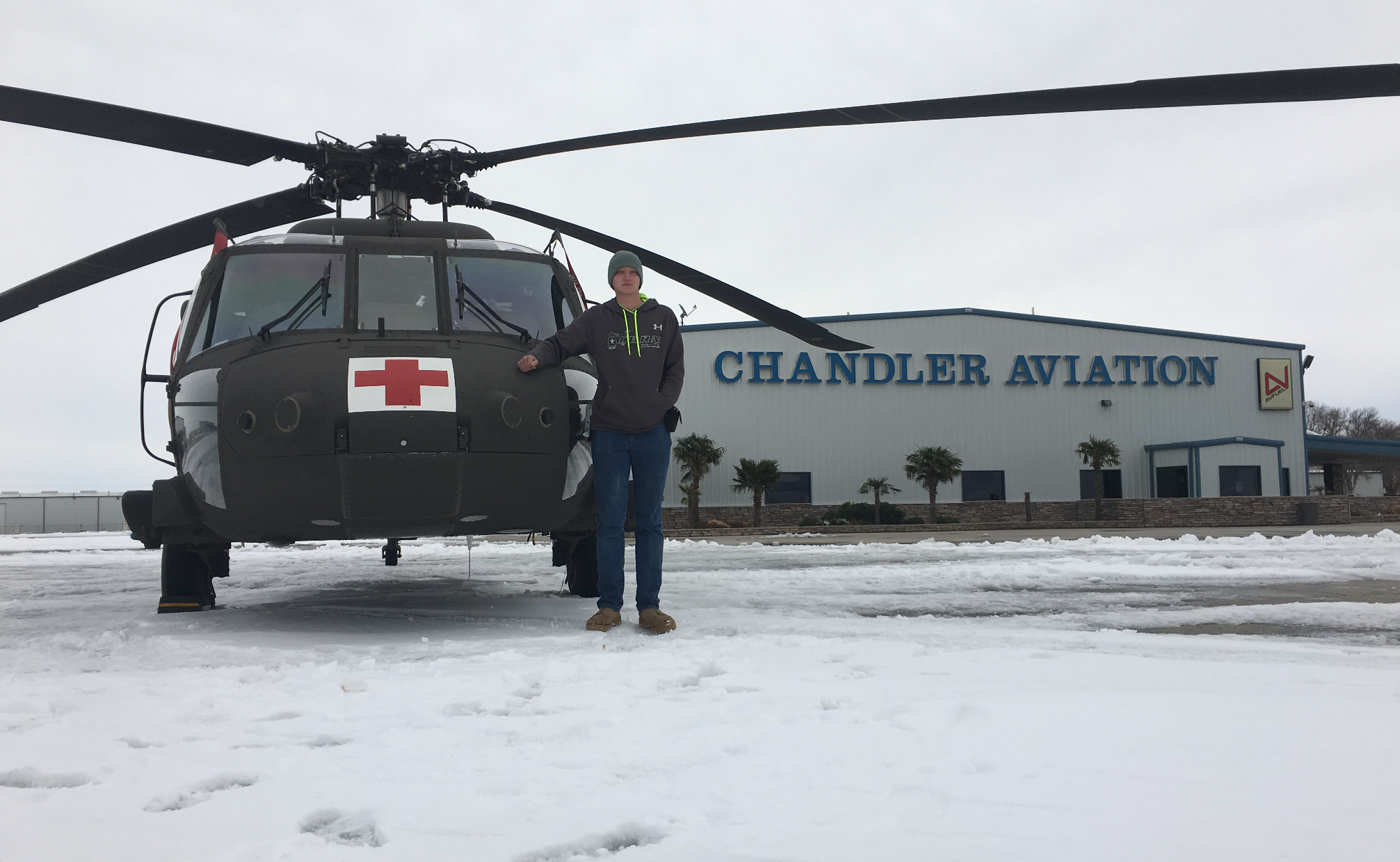
CARLSBAD, N.M., January 4, 2016 — While many of his fellow National Guard soldiers were called to state active duty in response to recent blizzards here, Army Pfc. David Mathews went to work in his civilian job -- refueling the medical evacuation helicopters called in to help.

The New Mexico National Guard was activated when a winter storm hit the southeastern section of the state Dec. 26. Soldiers have since been busy finding and helping stranded motorists, providing transportation to and from medical care, and assisting state authorities with clearing roadways.

Mathews, who's assigned to Headquarters and Headquarters Company, 717th Brigade Support Battalion, is employed with Chandler Aviation in Carlsbad, New Mexico. He said he was one of the only employees who could get to the airport due to the snow drifts covering most of the roadways. He said he mostly helped take care of the aviation crews of New Mexico Army National Guard's Charlie Company, 1st Battalion, 171st Aviation Regiment.

“The runways were completely iced over -- couldn’t use them. The only type of aircraft able to come in and out was helicopters,” he said.

Army Capt. Kevin Doo, the flight operations officer for the guard’s aviation support facility, arrived with his crew Dec. 30 and said the pilots and crew chiefs already there had nothing but praise for Mathews.

“When I landed, the aircrew lauded this volunteering soldier who’s been critical to our medevac coverage,” he said. “We wouldn't have been able to sustain medevac operations here if this soldier didn't come in to work on his own time.

"The airport has been closed for days, and Pfc. Mathews was supposed to be off," Doo added. "But he has come in to ensure we have access to jet fuel, a comfortable space, a place to secure our sensitive electronics, facilities, and the use of the company's courtesy vehicle. He's been staying all day with the aircrew to provide any assistance when needed.”

Even though Mathews was not activated with his fellow soldiers, he said he is simply doing his part. “Still being able to help inspires me,” he said. “One of the reasons why I enlisted was to help soldiers and civilians.”

Thursday, December 31, 2015

Guardsmen Battle Floods in Missouri, Elsewhere


By Steve Marshall National Guard Bureau

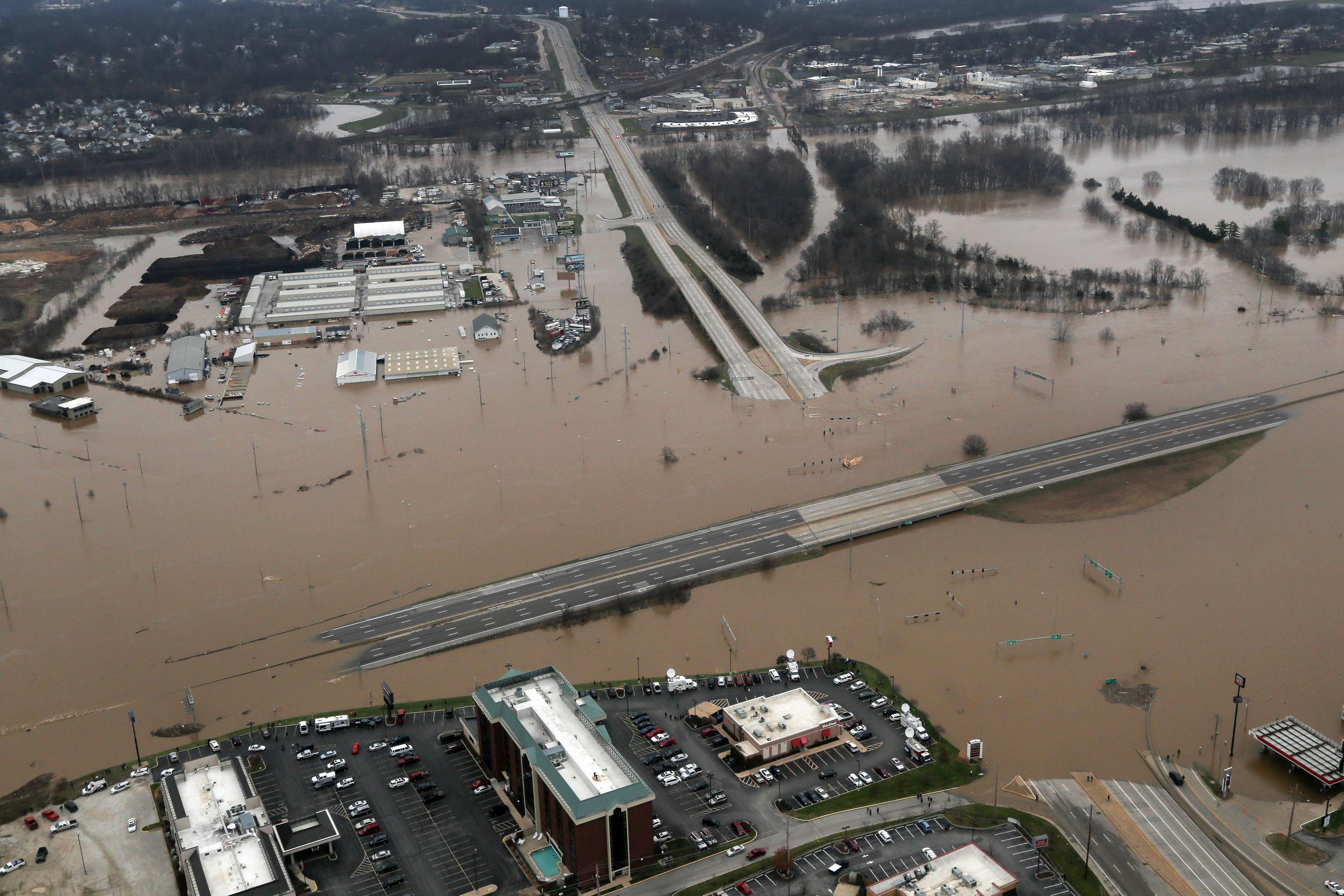
ARLINGTON, Va., December 31, 2015 — At least 625 National Guard soldiers and airmen are on duty today as several southern and central states fight heavy floods triggered by rain and runoff.

In response to historic flooding in some areas of Missouri, Gov. Jay Nixon mobilized the Missouri National Guard to protect local communities and support emergency response personnel.

The human toll so far: At least 20 people dead over several days in Missouri and Illinois, the Associated Press reported.

States of Emergency

States of emergency have been declared in these states: Georgia, Texas, New Mexico, Missouri, Arkansas, Oklahoma, Illinois, Louisiana and Missouri, according to data from the National Guard Bureau.

By far, Missouri had the most guard personnel on duty, with about 515 according to NGB figures. The guard there mobilized a task force with several hundred soldiers and airmen in several different locations across the state to provide defense support of civil authorities by saving lives, protecting property, and maintaining public order, said Army Maj. Gen. Steve Danner, adjutant general of the Missouri National Guard.

About 50 troops are on duty in New Mexico and 54 in Oklahoma for weather-related assistance. The Iowa National Guard has agreed to provide support to Missouri personnel, but hasn't deployed anyone yet.

"The citizen-soldiers and airmen of the Missouri National Guard are once again ready to support fellow Missourians in need," Danner said. "We will provide the same high-quality emergency response they've come to expect."

Missouri National Guard liaison officers are at emergency operations centers in Perry, St. Charles, Cape Girardeau, Jefferson, St. Louis and Franklin counties, where in the coming days the Mississippi River is expected to exceed the record levels set in the Great Flood of 1993, which caused $15 billion in damages and flooded 30,000 square miles.

Supporting Local Authorities

While on duty, Missouri Guard members are expected to take on a number of missions in support of local authorities, to include directing traffic away from road closures, providing security around breached levees and evacuated areas, sandbagging, and levee monitoring, Danner said.

"We have a team of seasoned leaders who are well-versed in responding to state emergencies," Danner said. "[The] Missouri National Guard has supported 14 state emergencies since 2009, including major flooding in 2011."

The evacuation of the town of West Alton has already taken place as a result of flooding. Hundreds of roads have been closed across Missouri, including in St. Louis and all lanes of I-44 at Jerome near Rolla. In addition, 124 areas on rivers in Missouri are at or above flood stage.

Local officials in Perryville have been working with the U.S. Army Corps of Engineers to fortify the Bois Brule levee on the Mississippi River to protect area homes and businesses, including Sabreliner Corporation and Gilster-Mary Lee.

The troops are part of a task force organized under the 35th Engineer Brigade at Fort Leonard Wood in Missouri, with Army Lt. Col. Paul Kirchhoff as the task force commander. Other units supporting the flood response include 70th Troop Command and 157th Air Operations, Jefferson Barracks in St. Louis County; 205th Military Police Battalion, Poplar Bluff; 1140th Engineer Battalion, Cape Girardeau; and the Joint Operations Center at Joint Force Headquarters in Jefferson City.

Wednesday, December 30, 2015

JTF-Bravo wraps up 2015 with CARVANA mission

by Capt. Christopher Mesnard
Joint Task Force-Bravo Public Affairs


12/29/2015 - SOTO CANO AIR BASE, Honduras -- Members from Joint Task Force-Bravo completed a two-day troop movement of Honduran soldiers Dec. 17, 2015, in the Gracias a Dios Department (state) of Honduras, as a part of a greater endeavor to assist the Central American nation's efforts to combat the trafficking of illicit materials through the region.

The troop-movement mission is part of a greater Honduran operation, named CARAVANA, and this iteration was the final one this calendar year, continuing to develop and build on the effects of the operation from the initial vision and request for support from the Honduran president in October 2014.

Originally, the request for aid to move troops came from the Honduran President's office to Gen. John F. Kelly, U.S. Southern Command commander.

"Our President has recognized the importance of supporting our Central American partners, making the region one of his top foreign policy priorities," Kelly stated in his March 12, 2015 Posture Statement to Congress. "We are now seeing real progress being made by the three 'Northern Triangle' countries. While there are many good examples, the situation is especially encouraging in Honduras, where the government is working hard to combat the drug trade, re-establish governance in remote areas, and take meaningful action to protect human rights."

Since its initiation, Operation CARAVANA has facilitated the movement of nearly 5,000 troops and over 210,000 pounds of cargo between remote locations in the eastern part of Honduras, giving the country the ability to quickly focus and adjust their forces against the ever changing tactics traffickers use in the region.

As Operation CARAVANA continues to evolve in its execution, JTF-Bravo continues to work in support of the Honduran Forces to ensure we facilitate efforts to gain significant effects against the trafficking organizations working within Honduras.

"The execution of this operation on a consistent basis has not only achieved the right effects within Gracias a Dios, but also effects throughout the region - impacting the overall trafficking network," said Col. Robert Harman, JTF-Bravo commander. "In addition, it has increased our interaction with the Honduran Staff in developing detailed and integrated plans, and also integrated command and control throughout the Honduran 30 day rotations of Operation CARAVANA. This operation is not only impacting the environment but providing the time and space for further development of our partnered forces."