Tuesday, August 14, 2018

Troops Hone Warfighting Capabilities, Interoperability at Noble Partner 18


By Army Sgt. Kris Bonet, 24th Press Camp Headquarters

VAZIANI TRAINING AREA, Georgia -- Anyone who’s ever played a game of chess knows what it takes to win a match: patience, concentration and a bit of foresight.

Knowing the pieces’ capabilities and limitations for maximum effectiveness is crucial to checkmate the opponent’s king. Simply put, it takes skill.

Skill is exactly what soldiers with 2nd Battalion, 5th Cavalry Regiment and 3rd Squadron, 2nd Cavalry Regiment demonstrated during a combined arms live-fire exercise during Noble Partner 18 here Aug. 12.

Heavy Weapons

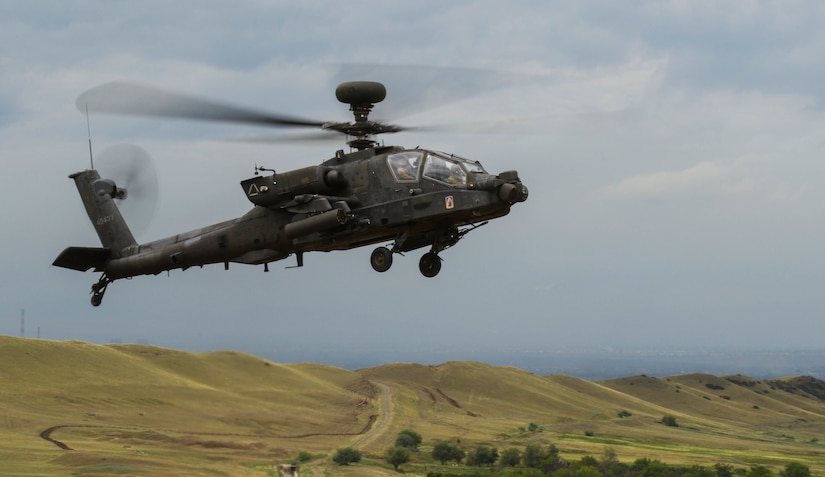
Instead of rolling in with rooks, bishops and knights, soldiers brought Bradley fighting vehicles, M1A2 Abrams tanks, Stryker infantry carrier vehicles and AH-64 Apache helicopters.

The training exercise’s goal was to deploy a variety of firepower simultaneously and have a dynamic presence on the battlefield. The units involved practiced interoperability, not only between each other, but also with a platoon of Georgian army BMP-2 infantry fighting vehicles with the 4th Mechanized Brigade.

“That’s what the Army is all about: bringing all the warfighting functions to fight and win our nation’s wars,” said Army Command Sgt. Maj. Aron Alexander, the battalion sergeant major with 2-5 CAV. “It’s a great opportunity to test all of our capabilities in terms of being expeditionary and being able to partner with other units located within U.S. Army Europe and [with] multinational partners.”

Weather proved to be an additional challenge during the exercise. Rain covered the range on the days prior, and the strengths of every moving piece on the battlefield had to be considered during mission planning.

“Tracked vehicles do a little bit better on the mud than wheeled vehicles,” said Army Capt. Richard Williamson, the exercise commander with 2-5 CAV. “To mitigate this, the Strykers move to the higher ground to establish their positions. My tanks and Bradleys will be on the lower ground, where we will have the organic ability to recover them.”

Another challenge was language. Communicating effectively with the Georgian platoon was necessary to maintain the dynamics of the complex area of operations.

“Once we got past the language barrier, we understood they don’t operate too different from us,” Williamson said. “Beyond that, it’s a matter of understanding their doctrine and blending it with ours to provide the most lethal possibilities for the exercise today.”

To break through the language barrier, Georgian interpreters were present, shoulder to shoulder with the Georgian leadership, to quickly translate orders between the host nation and American forces.

“This is my first time translating between the armies,” said Alex Vegiashvili, a college student serving as an interpreter with the Georgian army. “Seeing this live fire is really amazing. When I told my family I was going to be an interpreter for the Georgian army, they were very excited.”

Practicing Warfighting Skills

By employing several different vehicles at one time, younger soldiers learned vehicle recognition on the battlefield and their respective capabilities, said Army Sgt. 1st Class Anthony Sasscer, platoon sergeant with 2-5 CAV. Even the more seasoned noncommissioned officers got a chance to refresh their perspective.

“It makes me humble because I feel like I have a good grasp on this, but when you take on something this large in scale, it makes you take a step back and reconsider new ways of executing it,” Sasscer said.

Another successful day of training ended with a checkmate for the allies and partners of Noble Partner 18.
“Across the board, everybody was impressed with the capabilities the Georgians brought to bear, and how lethal those guys were out there,” Alexander said. “I’m very impressed with their performance today.”

Thousands of Guardsmen Battle Western U.S. Wildfires


By Jim Garamone, DoD News, Defense Media Activity

WASHINGTON -- Calling up the soldiers and airmen of the National Guard has become an unfortunate ritual of summer.

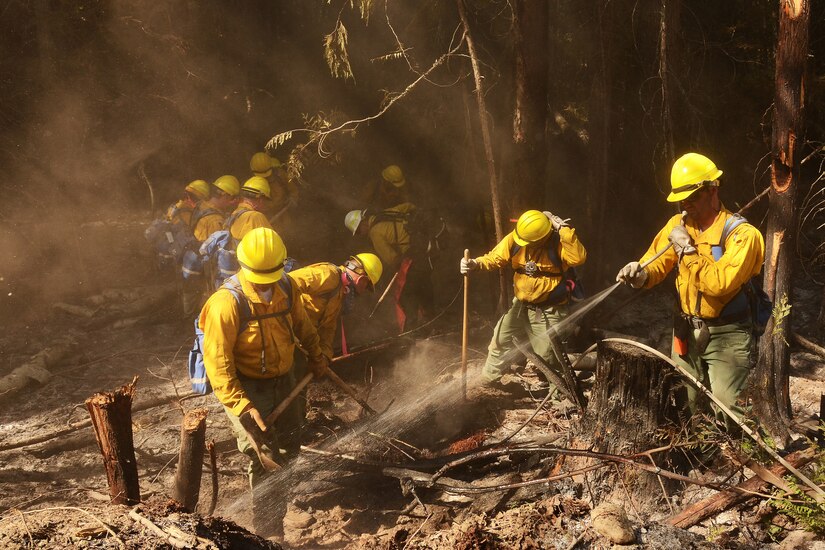
Wildfires through the Western United States -- especially in California -- started earlier than normal this year and expanded faster than in past years. Thousands of airmen and soldiers of the Guard responded.

These service members are helping firefighters and police save lives and property. National Guardsmen directed traffic, helped evacuate families, provided logistical support, flew helicopters with water buckets, flew C-130s that dropped fire-suppression fluid on blazes and actually were on the ground helping fire crews battle the blazes.

In California, the governor called up first tranche of 800 Guardsmen July 2. The California National Guard is providing nine UH-60 Black Hawk helicopters, two CH-47 Chinook helicopters, a LUH-72 Lakota helicopter and a C-12 Huron, as well as an MQ-9 Reaper and two RC-26 Metroliners for fire mapping, an HH-60 rescue/medical evacuation helicopter and four Modular Airborne Fire Fighting Systems for air support and personnel providing traffic assistance.

Devastating Wildfires

“We live and serve in the communities that have been devastated by these fires. We train year-round to come to the aid of our neighbors when tragedy strikes,” said Army Lt. Col. Jonathan Shiroma, spokesman for the California Guard. “We have alerted the entire Cal Guard, and already more than 2,000 Guardsmen have mobilized to support this response.”

The California Guard has been instrumental in using remotely piloted vehicles to map fires and provide crews on the ground the latest information on the blazes they are battling. The images from the National Guard are saving the lives of civilians and firefighters.

Guardsmen from neighboring Nevada are also providing assistance in California.

In Oregon, the governor called up 460 National Guardsmen on July 20. Guard Chinook helicopters have already dropped more than 700,000 gallons of water on blazes in the state so far.

Guardsmen also are serving as medevac personnel, while others are providing transportation, engineer equipment and evacuation help. Three UH-60 Black Hawk helicopters from Texas are supporting the effort.

“The Oregon National Guard has nearly 460 personnel on state active duty conducting fire support,” said Army Capt. Leslie M. Reed, a spokesperson in Oregon.

The state of Washington mobilized Guardsmen Aug. 5. “Washington currently has seven 20-person hand crews mobilized to two fires in Eastern Washington,” said Army Capt. Joseph F. Siemandel, Washington National Guard spokesman. “Two Black Hawk helicopters are mobilized to support the Washington Department of Natural Resources. We just mobilized our Joint Incident Site Communication Capability for a fire in Eastern Washington.”

But wildfires are only part of the mission for the Guardsmen. Both Oregon and Washington Guardsmen responded to the stolen airliner over the weekend. California Guardsmen are assigned in Afghanistan. California Guardsmen are operating on the U.S.-Mexican border.

And Guardsmen all over the United States train to assist civilian authorities help their fellow citizens.

Monday, August 13, 2018

Mattis, Brazil’s Foreign Minister Meet to Reaffirm Bilateral Relationship


WASHINGTON -- Defense Secretary James N. Mattis and Foreign Minister Aloysio Nunes of Brazil met today at the Itamaraty Palace in Brazil to reaffirm the long-standing bilateral relationship between their nations, chief Pentagon spokesperson Dana W. White said.

In a statement summarizing the meeting, White said the leaders discussed a broad range of defense issues, and the secretary thanked the minister for his country’s global leadership in peacekeeping missions around the world.

Common Values

“They agreed their countries’ common values of Inter-American principles of human rights, the rule of law and peace are a solid foundation for a long-term strategic partnership,” White said.

Mattis is in Brazil on the first stop of his first visit to South America since taking office. Officials said the trip – in which the secretary also will visit Argentina, Chile and Colombia -- underscores the department's strong defense ties that are critical to a collaborative, prosperous and secure Western Hemisphere.