Thursday, September 30, 2021

Justice Department Secures Settlement with Santander Consumer USA Inc. to Remedy Violations of the Servicemembers Civil Relief Act

 The Department of Justice announced today that Santander Consumer USA Inc, dba Chrysler Capital (Santander), has agreed to pay more than $134,000 to settle a federal lawsuit alleging that the company denied early motor vehicle lease terminations to servicemembers who qualified for them under the Servicemembers Civil Relief Act (SCRA). The department previously settled an SCRA lawsuit against Santander in 2015 for repossessing the vehicles of 1,112 servicemembers without a court order.

“The civil rights of servicemembers who sacrifice so much for our country must be respected,” said Assistant Attorney General Kristen Clarke of the Justice Department’s Civil Rights Division. “We are committed to ensuring that those serving in our nation’s military receive the full range of benefits and protections that they are entitled to under the Servicemembers Civil Relief Act.”

“Given all our veterans put on the line when they deploy or change station, the last thing they should have to worry about is their car lease,” said Acting U.S. Attorney Prerak Shah for the Northern District of Texas. “The Servicemembers Civil Relief Act is designed to ease the financial burdens associated with active duty military service. We are determined to uphold this important law.”

The SCRA permits servicemembers to terminate their motor vehicle leases early without penalty after entering military service or receiving qualifying military orders for a permanent change of station or to deploy to another location.

Today’s settlement, which must be approved by the U.S. District Court for the Northern District of Texas, resolves a lawsuit filed today by the Department of Justice. The lawsuit alleges that Santander unlawfully denied early motor vehicle lease terminations to ten servicemembers.

Under the proposed settlement, Santander must pay $94,282.62 in compensation to the ten aggrieved servicemembers and a $40,000 civil penalty to the U.S. Treasury. As part of the agreement, the company has also updated its SCRA procedures and training.

The department’s investigation, which began in 2019, stemmed from a complaint submitted by U.S. Army Captain Eric McDowell. Captain McDowell entered into a three-year lease in October 2017 for a Jeep Grand Cherokee, but he learned in May 2019 that he was going to be deployed to Afghanistan. In August 2019, he returned the vehicle to Santander and tried to terminate the lease, but the company denied his termination request. It was not until February 2020, after the United States had opened its investigation and six months after Captain McDowell returned his vehicle to the dealership, that Santander finally approved the lease termination, voided early termination charges, and refunded the lease amounts that had been paid in advance. Captain McDowell faced significant stress during his deployment to Afghanistan as a result of this six-month delay. The department’s investigation uncovered nine additional servicemembers whose SCRA rights it alleges Santander violated.

Servicemembers and their dependents who believe their SCRA rights have been violated should contact the nearest Armed Forces Legal Assistance Program Office. Office locations can be found at http://legalassistance.law.af.mil/.

The Justice Department’s enforcement of the SCRA is conducted by the Civil Rights Division’s Housing and Civil Enforcement Section and U.S. Attorney’s Offices throughout the country. Since 2011, the department has obtained over $476 million in monetary relief for over 121,000 servicemembers through its enforcement of the SCRA. Additional information on the department’s enforcement of the SCRA and other laws protecting servicemembers is available at www.servicemembers.gov.

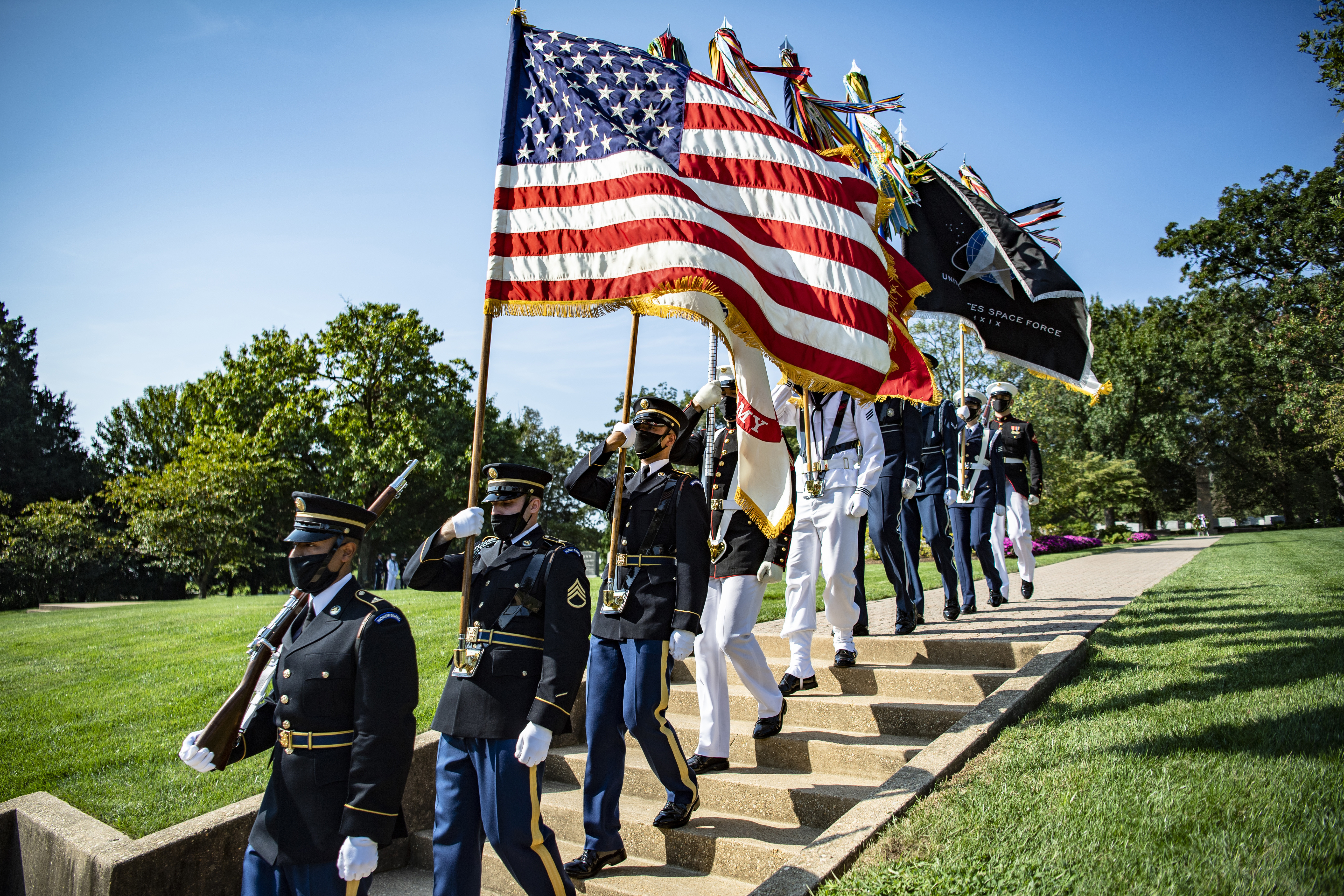
Full Honors


A joint armed forces color guard team supports a full honor wreath-laying ceremony at President William H. Taft’s memorial gravesite in Arlington National Cemetery, Arlington, Va., Sept. 15, 2021. The ceremony was held to commemorate Taft's 164th birthday.

Breathing Buddies


Marine Corps Sgt. Daniel Holtz, left, and Staff Sgt. Daniel Franklin prepare to conduct a buddy-breathing exercise during dive training in Mobile, Ala., Sept. 23, 2021.

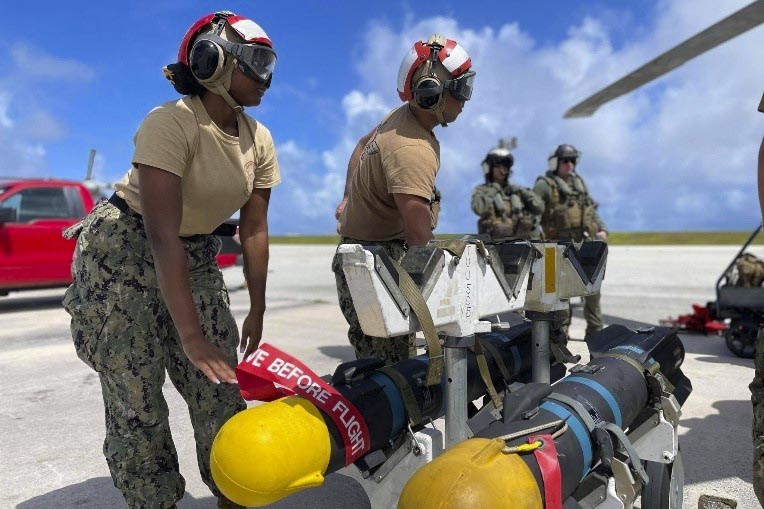
Training Duo


Sailors prepare to load a captive air training missile during training at Andersen Air Force Base, Guam, Sept. 14, 2021.

Refuel Team


Air Force Master Sgts. Michael C. Brown, left, and Travis Dulworth participate in an air-to-air refueling off the coast of Japan, Sept. 15, 2021.

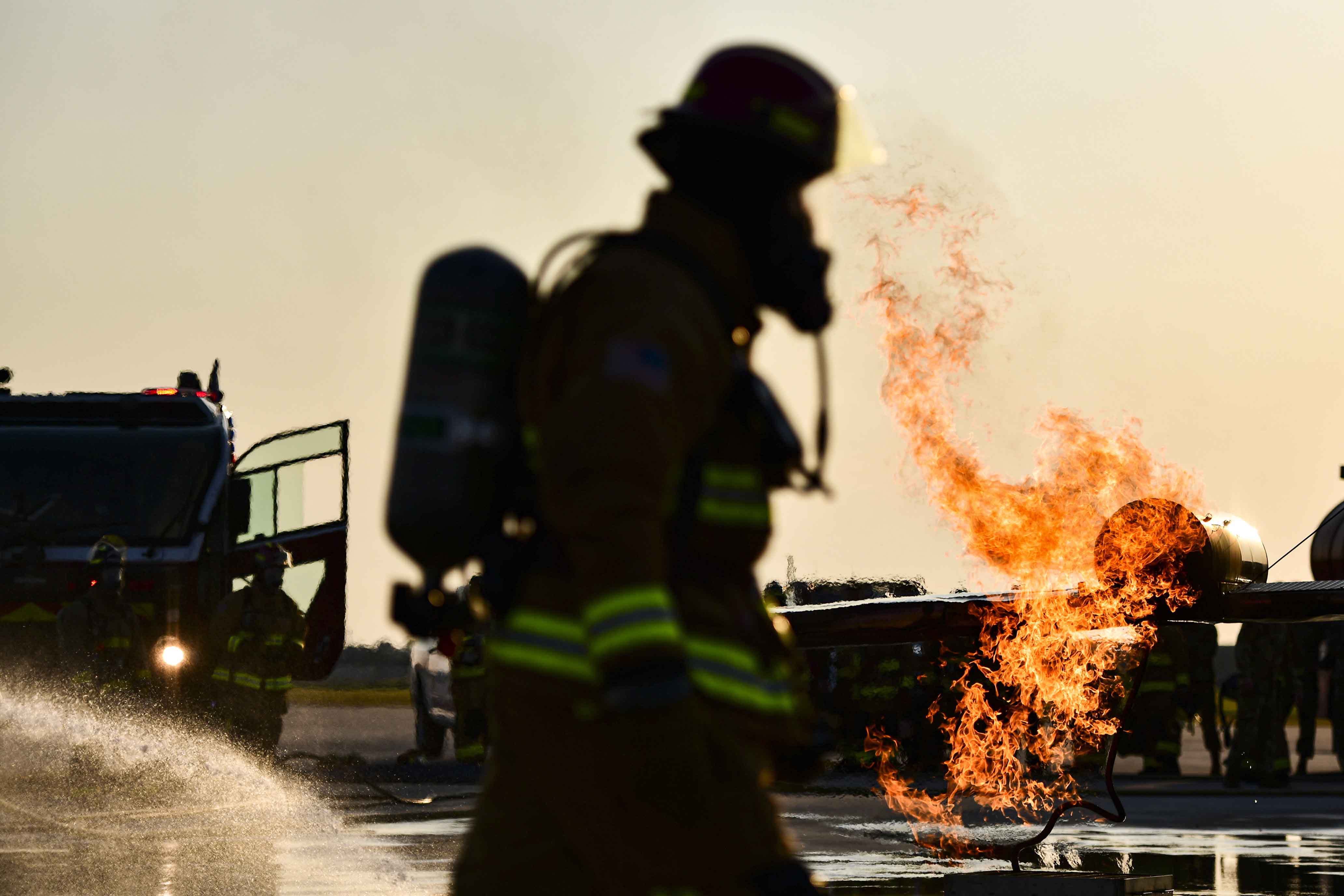
Fire Control


An Air Force firefighter walks past a controlled fire during live-fire training at Kunsan Air Base, South Korea, Sept. 23, 2021.

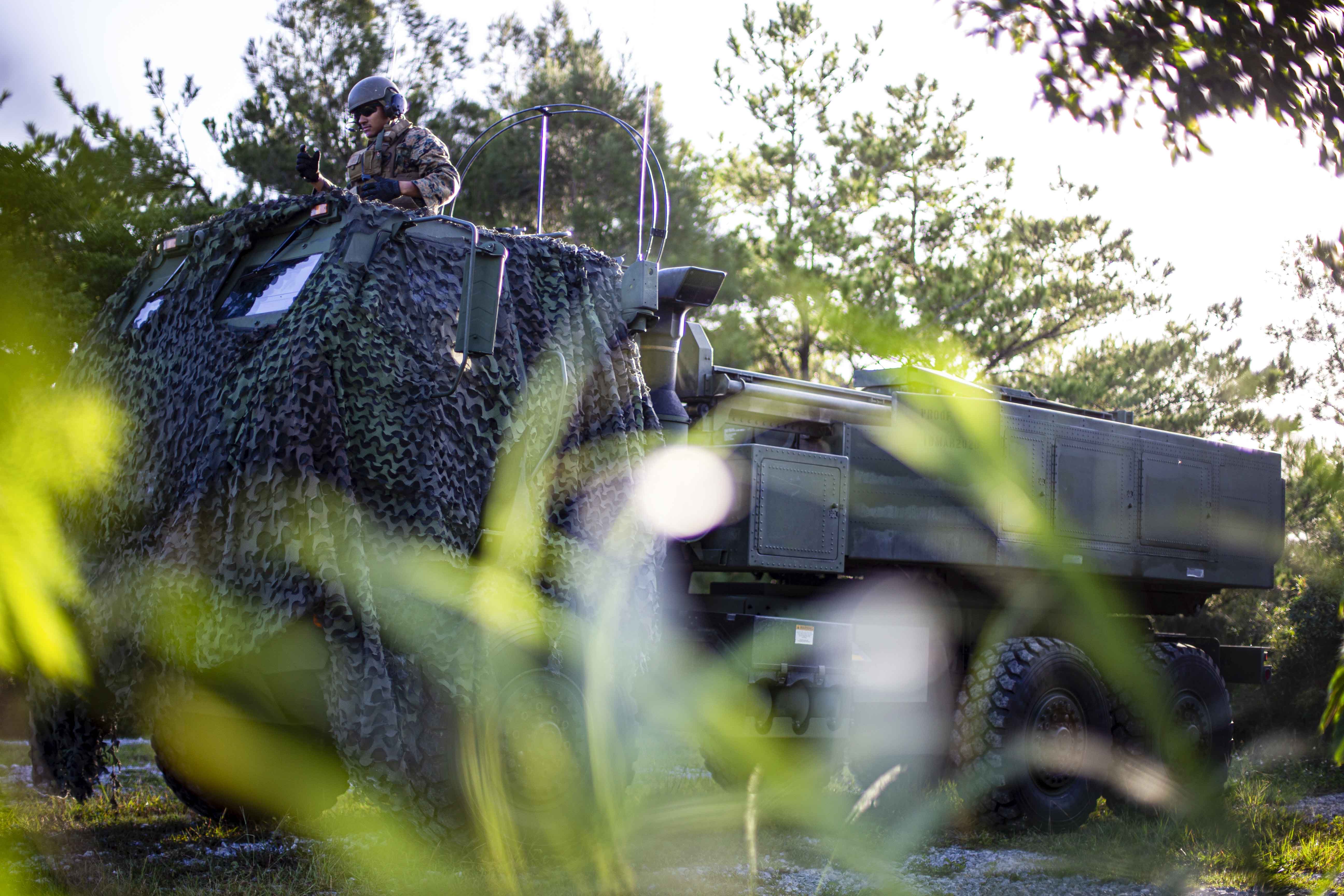
Noble Jaguar


Marines conduct a fire mission during Noble Jaguar in Okinawa, Japan, Sept. 29, 2021. During the exercise, Marines and sailors leveraged integrated command and control and joint sensors to expand battlefield awareness, share targeting data and conduct long-range precision strikes in support of sea control and sea denial in contested maritime environments.

Aerial Ops


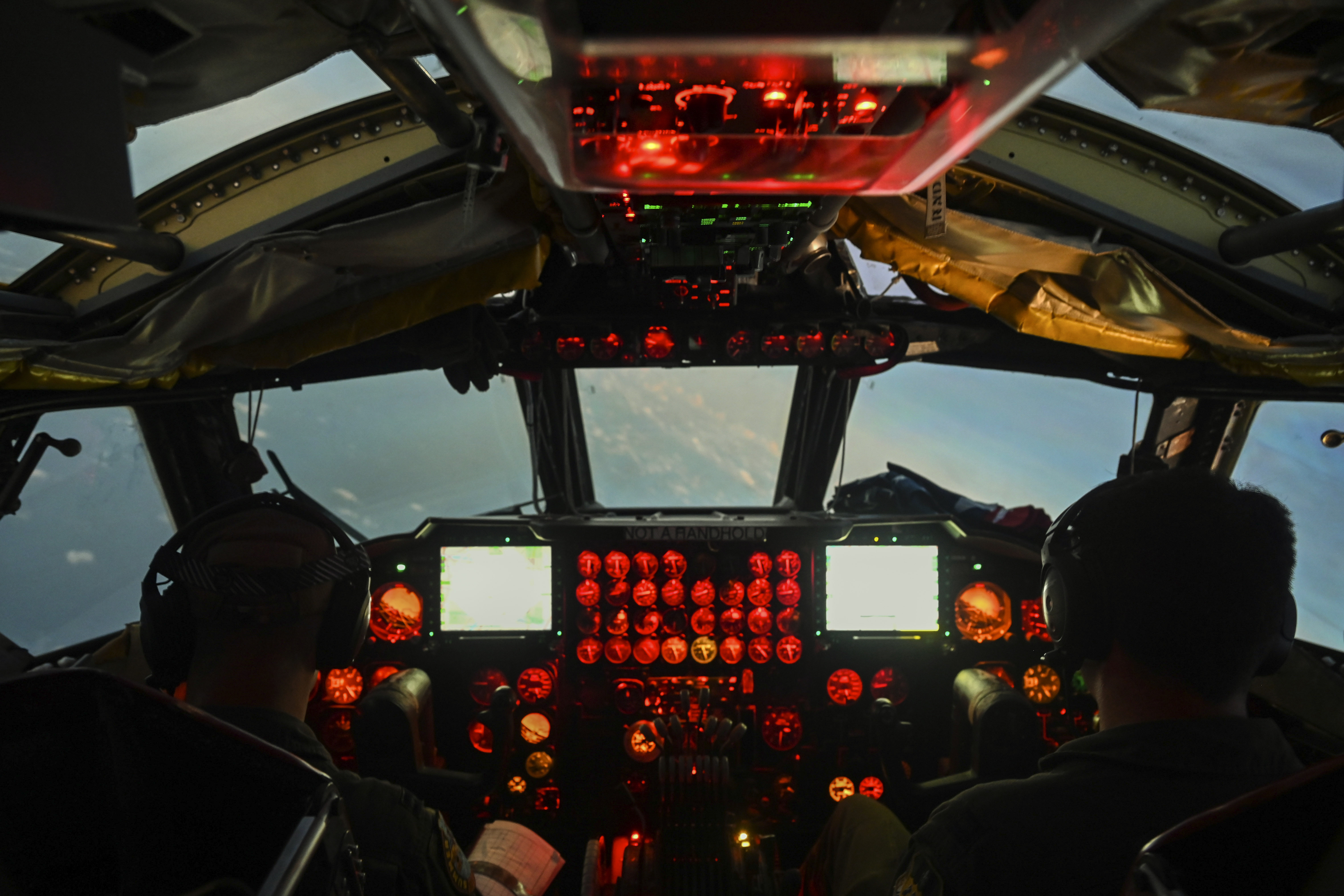
Airmen fly an Air Force B-52H Stratofortress during aerial operations in the Indo-Pacific region, Sept. 18, 2021.

Up and Away


Marine Corps Pfcs. Kenneth Slizewski and Jason Ditzel fire an 8 mm mortar round at Marine Corps Base Camp Lejeune, N.C., Sept. 28, 2021, during Burmese Chase, an annual U.S.-led multilateral exercise.

Dusty Training


Marines prepare to conduct a vehicle interdiction during a weapons and tactics instructor course at Yuma Proving Ground, Yuma, Ariz., Sept. 25, 2021.

Sunset Flight


Air Force F-16 Fighting Falcons fly over a high school football game during a POW/MIA ceremony in Niceville, Fla., Sept. 24, 2021.

Hugging Heroes


Air Force Col. Greg Young hugs a fellow airman after returning from a deployment to the Horn of Africa at Dyess Air Force Base, Texas, Sept. 26, 2021.

Patient Input


Army Sgt. Matthew Vela, a respiratory therapist at Fort Hood, Texas, inputs data after treating a COVID-19 patient at the University of Arkansas for Medical Sciences Hospital in Little Rock, Ark., Sept. 25, 2021.

Horseshoe Helper


A soldier puts a shoe on a horse at Fort Hood, Texas, July 27, 2021.


Secretary of Defense Statement on DoD Annual Suicide Report (CY2020)

 Sept. 30, 2021


On this final day of September, National Suicide Prevention Month, I am reflecting on the brave men and women we have lost to suicide. I feel these losses personally and mourn alongside the families and loved ones of those we have lost. Each suicide sends forth wave after wave of pain and grief. One such tragedy is too many.

Today, the Department of Defense has released our Annual Suicide Report for Calendar Year 2020. The findings are troubling. Suicide rates among our service members and military families are still too high, and the trends are not going in the right direction.

This is a paramount challenge for our Department. We must redouble our efforts to provide all of our people with the care and the resources they need, to reduce stigmas and barriers to care, and to ensure that our community uses simple safety measures and precautions to reduce the risk of future tragedies. We will continue to work swiftly and urgently, in close collaboration with our partners at the Department of Veterans Affairs.

I know that these are difficult days for many people in our Department of Defense workforce, for our military communities, and for my fellow veterans. If you find yourself contemplating suicide or simply feel that you could use a helping hand, please immediately seek support from a mental-health professional, reach out to your family, friends, a clergy member, or talk to a trained professional at the Veterans and Military Crisis Line or Military OneSource.

As I have said, mental health is health—period. We must all do more, at every level, to end the stigma against getting help. We all need counsel, community, and connection. Reaching out is a sign of strength and resilience.

We cannot bring back those we have lost, but we hope that we can in some way honor their memory by doing more—right now—to prevent future tragedies from suicide among our wider DOD family.

Please visit www.militaryonesource.mil, call 800-342-9647, or chat online with the Veterans and Military Crisis Line: www.veteranscrisisline.net, call 800-273-8255 (press 1) or text 838255. Confidential support is available 24/7.

Supply Chain Resiliency Is Whole-of-Government Effort

 Sept. 30, 2021 | BY C. Todd Lopez , DOD News

Ensuring the U.S. military's continued access to critical materials to enable the nation's defense is a priority of the Defense Department. But the dependability of America's supply chain doesn't just affect the military, it's a concern for the entire U.S. government, said Jesse Salazar, the deputy assistant secretary of defense for industrial policy.

"President Biden’s executive order on America's supply chains ... distinctly focused on changes in policies and processes geared toward a new approach for 21st century supply chains," Salazar said during remarks at ComDef2021. "Building on the work of prior efforts, the conversation of industrial base security and resiliency has expanded beyond the Department of Defense to a whole-of-government effort."

Three young soldiers set up equipment.

At DOD, Salazar is responsible for development of policies for the maintenance of the United States defense industrial base.

In Executive Order 14017, published in February, the president asked for a 100-day supply chain review, where the Department of Energy would report on high-capacity batteries; the Department of Commerce would report on semiconductors; the Department of Health and Human Services would report on pharmaceuticals; and the DOD report would identify risks in the supply chain for critical minerals and other identified strategic materials, including rare earth elements.

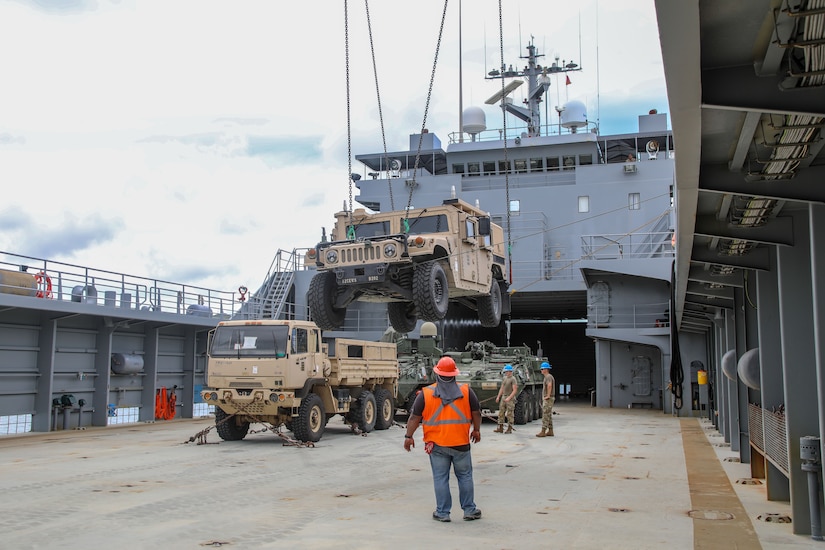
A large item is hoisted onto a ship.

Those four reports together, Salazar said, provide a clear outline of our approach to tackling supply chain resiliency from a whole-of-government perspective.

The department's own report laid out a set of recommendations to ensure the U.S. has continued access to strategic and critical minerals needed for economic security, addressing the climate crisis and national defense.

The recommendations in the department's report are focused on developing and fostering new sustainability standards for strategic and critical, material-intensive industries; expanding sustainable domestic production and processing capacity, including non-traditional mining and recycling; strengthening U.S. stockpiles; and working with allies and partner nations while promoting greater global transparency.

The president's executive order also requires DOD and five other federal agencies to submit within one year a report on supply chains in their sectors of the economy. The DOD report will focus on the defense industrial base. That report must also identify areas where civilian supply chains are dependent upon competitor nations. Salazar said development of this report is in progress now; its expected release date is in February.

Soldiers load supplies onto a ship.

Salazar also said a supply chain resiliency working group was established in August to address systemic barriers limiting supply chain visibility, conduct resilience assessments and develop effective mitigation assessments.

"The two-year effort will leverage work already being performed around supply chain resiliency across the department and interagency," Salazar said. "Initial findings will be included in the one-year report, as well."

Central to ensuring the reliability of America's supply chain is working closely with allies and partners, Salazar said.

"Our supply chains are — and continue to be — global and complex," he said. "It is only with support from our allies and partners, many of whom provide key components and expertise for our weapons systems, that we will be successful."

Canine Comfort

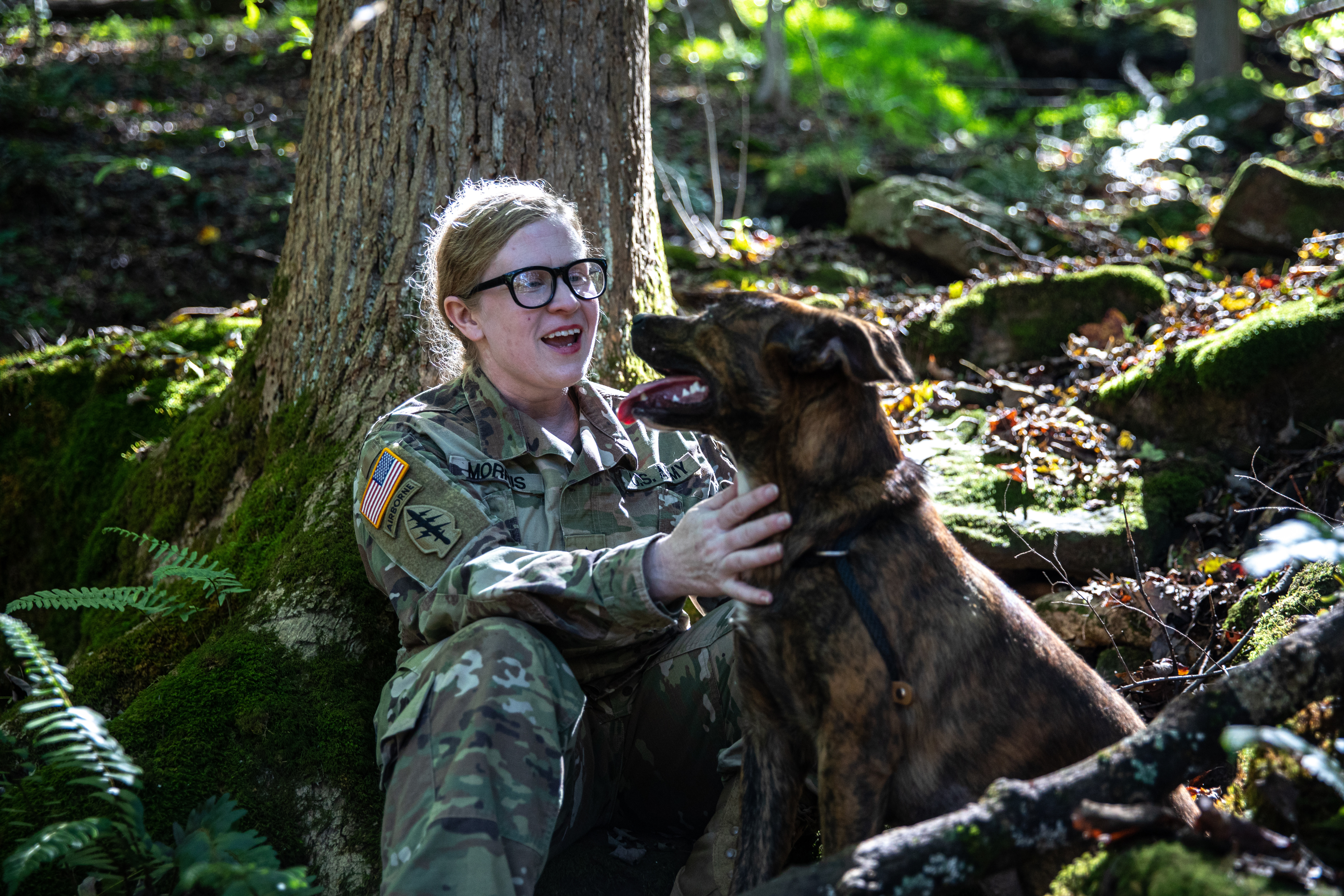
West Virginia Army National Guardsman Sgt. Zoe Morris takes a break during a walk with Oakley, a rescue dog, in Charleston, W. Va., Sept. 24, 2021.


Night Lights


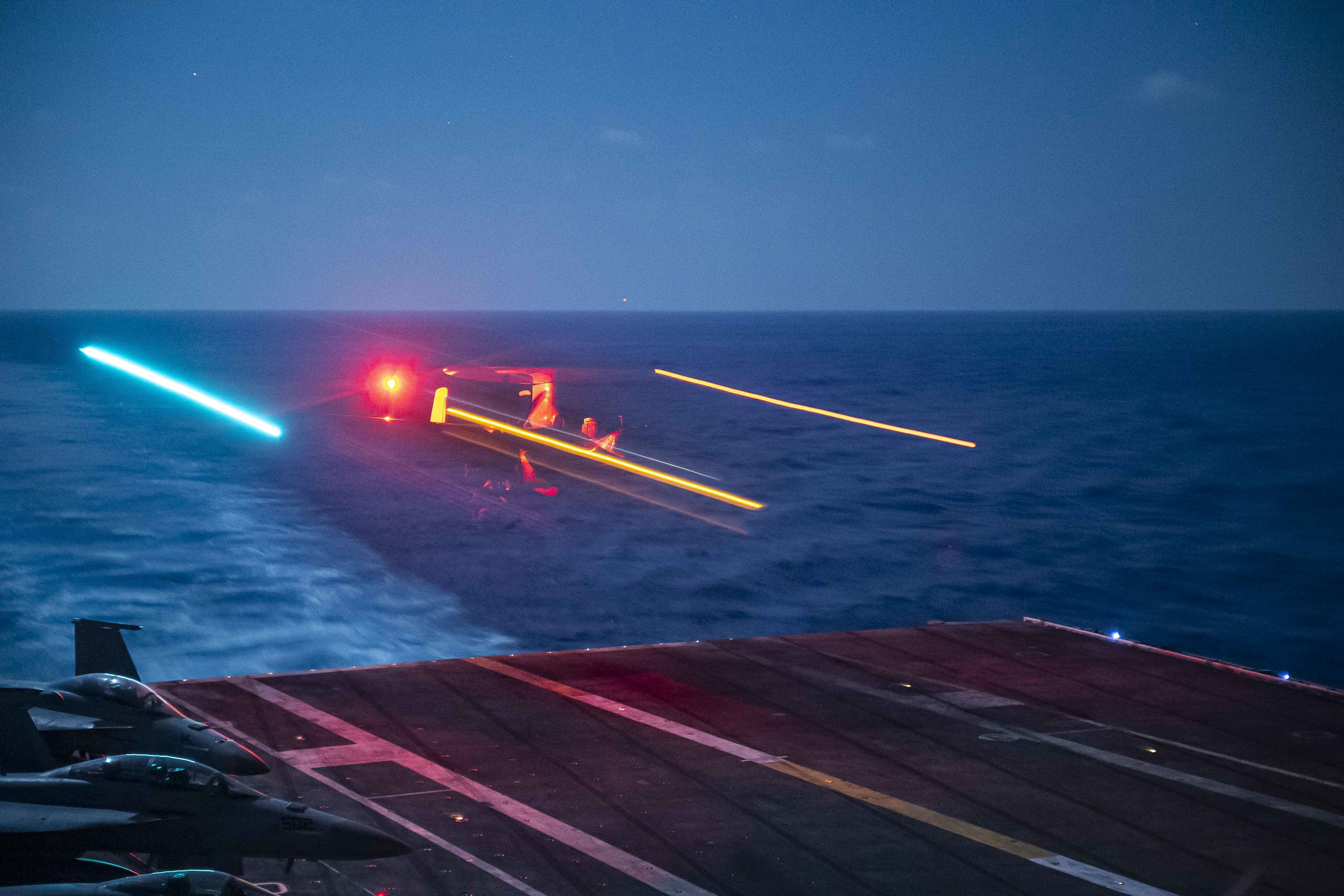
An E-2D Advanced Hawkeye recovers on the flight deck of the aircraft carrier USS Carl Vinson during operations in the Philippine Sea, Sept. 18, 2021.

Department of Defense Releases Calendar Year 2020 Annual Suicide Report

 Sept. 30, 2021


Today, the Department of Defense (DOD) released the Calendar Year (CY) 2020 Annual Suicide Report (ASR).  We continue to take action to prevent suicides while supporting our military members and their families.  Every death by suicide is a tragedy.  The CY 2020 ASR presents recent suicide data for Service members and their families, and describes current and future efforts underway to combat suicide. 

“Although our Service members constantly show the ability to achieve the seemingly impossible, for some of our brothers and sisters in arms, they experience challenging times just as many other Americans do,” said Major General Clement S. Coward, Acting Executive Director, Office of Force Resiliency.  “Getting this right is personal for all of us at the Department.  Yet, prevention can be complex.  As the scientific research about suicide prevention continues to evolve, we continue to do everything possible to stop these tragedies.  No two individuals are identical, and no two life experiences are identical.  So we are working to address a range of risk factors and enhance protective factors for members of our Armed Forces.”

Dr. Karin Orvis, Director of the Defense Suicide Prevention Office, added, “Suicide remains a serious public health issue in our Nation and military.  Our efforts must address the many aspects of life that impact suicide.  The Department is engaged in implementing a comprehensive public health approach to suicide prevention and is providing tailored resources to mitigate the impacts of the COVID-19 pandemic.  There is much more work ahead of us, and we will not relent in our efforts to provide the care and support our Service members and their families need and deserve.”

While suicide rates are not going in the desired direction, the Department did not see a statistical change in suicide rates between CY 2020 and CY 2019 or CY 2018 that would indicate a COVID-19-related increase.  We recognize the impact of COVID-19 on the well-being of our force and our Nation.  During this time, we continue our efforts to educate and support the force, promote a variety of resources such as mental telehealth resources and financial counseling, and emphasize social connectedness. 

“The military community – while resilient – is not immune from the same challenges that impact the Nation,” said Dr. Orvis.  “We are continuing to collaborate with federal and non-federal partners to change the conversation around mental health and suicide, increase help-seeking for mental health challenges and everyday stressors such as relationship and financial challenges, and educate about key suicide misconceptions with facts.  We’re in this together, and now more than ever we need leaders, Service members, family, and friends to connect and to reach for support for yourself and loved ones,” said Orvis. 

Data from the CY 2020 ASR

In CY 2020, there were 580 Service members who tragically died by suicide.  The ASR for CY 2020 shows that the suicide rate for the Active Component statistically increased from CY 2015 to CY 2020.  There was no statistically significant increase or decrease for the Reserve and National Guard from CY 2015 to CY 2020.  In the near-term for the Reserve, the CY 2020 rate was statistically comparable to both CY 2019 and CY 2018; the National Guard rate had statistically decreased from CY 2018 to CY 2019, returning to a comparable level in CY 2020.

We see continued risk for young and enlisted members.  The CY 2019 military suicide rates for the Active Component, Reserve, and National Guard were comparable to the U.S. population, after accounting for age and sex.  With respect to CY 2020, the most recent U.S. population suicide data available is for CY 2019.  Accordingly, the data needed to compare for CY 2020 are not yet available. 

The Department uses both internal and civilian data sources to determine military family member suicide deaths.  The ASR includes CY 2019 data, as that is the most recent annual civilian source data available.  In CY 2019, 202 military family members tragically died by suicide.  The suicide rates for military spouses and dependents in CY 2019 were statistically comparable with CY 2017 and CY 2018, and to the U.S. population rates, except for male spouses, which was higher.  

Prevention Efforts

Based on the findings from this year’s report, the Department will focus on addressing perceived barriers to seeking help and encourage use of support resources, especially among young and enlisted members.  For example, the Department is expanding a promising help-seeking focused training pilot to geographically-isolated Service members and those outside the continental United States.

For military families, the Department is increasing screening of military families for depression and suicide risk, supporting an outreach campaign to normalize relationship help-seeking, and expanding safety and safe storage of lethal means, such as firearms and medications.  The Department is also exploring ways to better understand help-seeking behaviors, perceived barriers to care, and suicide thoughts and behaviors among military spouses. 

The CY 2020 report includes Fiscal Year 2020/2021 National Defense Authorization Act reporting requirements, and represents the department’s continued commitment to provide transparency, accountability, and timely information on this critical issue.   

The CY 2020 ASR will be available at https://www.dspo.mil/ASR/.

Service members and veterans who are in crisis or having thoughts of suicide, and those who know a service member or veteran in crisis, can call the Veterans/Military Crisis Line for confidential support available 24 hours a day, seven days a week, 365 days a year. Call (800) 273-8255 and Press 1, text to 838255 or chat online at VeteransCrisisLine.net/Chat.

Because suicide is a public health issue and scientific research indicates that certain types of reporting can negatively impact vulnerable individuals, reporters covering this issue are strongly encouraged to visit www.ReportingOnSuicide.org for important guidance on how to communicate about suicide.

Any reference to non-federal entities, and the appearance of external hyperlinks does not constitute an endorsement of the United States Department of Defense of any organization, the linked websites, or the information, products, or services contained therein.

Wednesday, September 29, 2021

Readout of U.S. - PRC Defense Policy Coordination Talks

 Sept. 29, 2021


Department of Defense Spokesperson Lt. Col. Martin Meiners provided the following readout:

Dr. Michael Chase, Deputy Assistant Secretary of Defense for China, conducted a secure video conference with Major General Huang Xueping, Deputy Director of the People's Republic of China's (PRC) People's Liberation Army Office for International Military Cooperation to co-host virtually the 16th U.S.-PRC Defense Policy Coordination Talks, September 28 and 29, 2021.

The meeting is an important component of the Biden-Harris Administration’s ongoing effort to responsibly manage the competition between the U.S. and the PRC by maintaining open lines of communication with the PRC.

During the talks, the two sides held a frank, in-depth, and open discussion on a range of issues affecting the U.S.-PRC defense relationship. Both sides reaffirmed consensus to keep communication channels open. The U.S. side also made clear our commitment to uphold shared principles with our allies and partners in the Indo-Pacific region.

Drill Evaluation


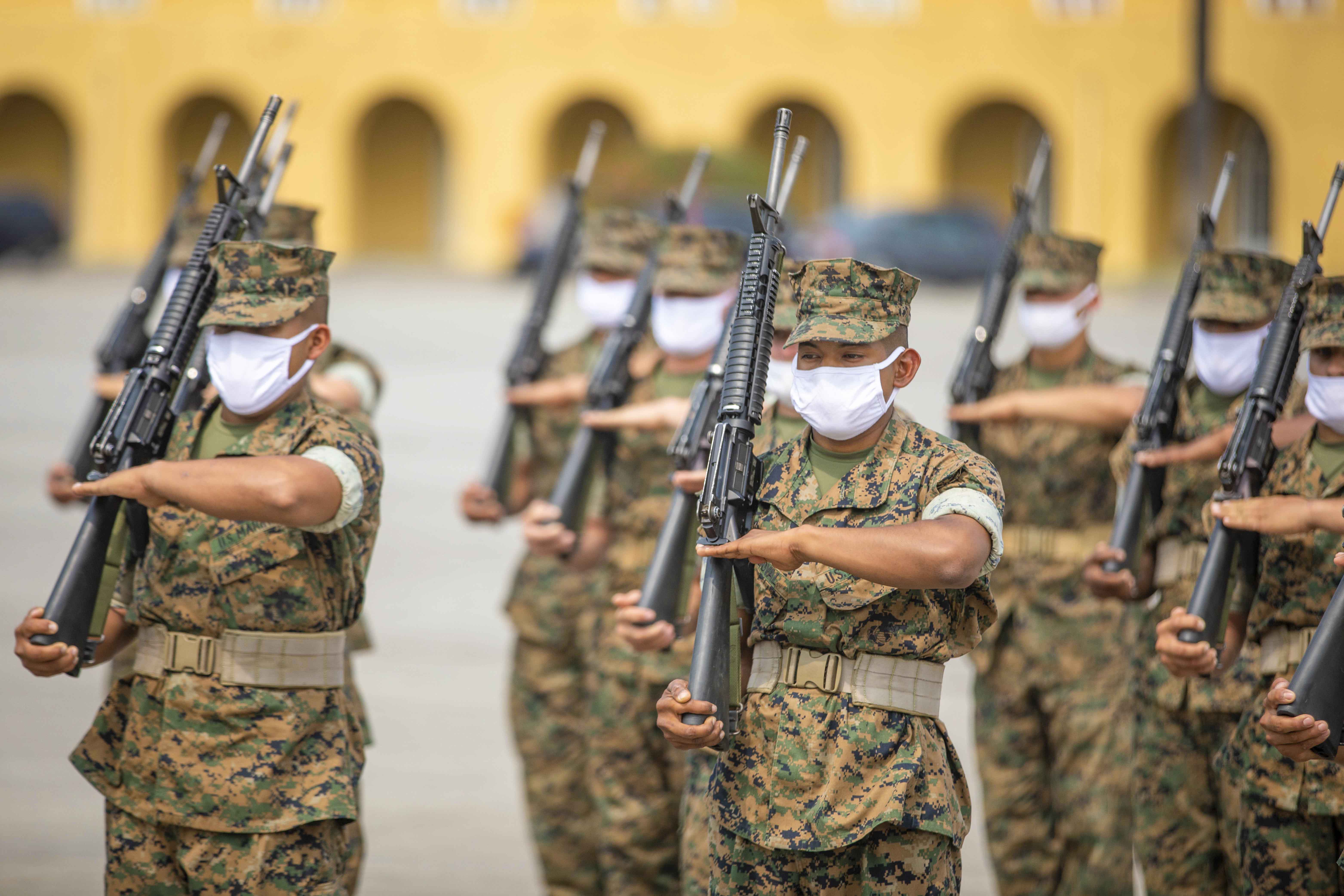
Marines conduct a final drill evaluation at Marine Corps Recruit Depot San Diego, Sept. 24, 2021.

Sea Training


Navy Petty Officer 2nd Class Joshua Curlee provides security during an at sea training evolution aboard the USS Arlington in the Atlantic Ocean, Sept. 27, 2021.

Red Line


A Navy F/A-18E Super Hornet recovers on the flight deck of the USS Carl Vinson in the Philippine Sea, Sept. 27, 2021.

General Officer Assignments

 Sept. 29, 2021


The chief of staff of the Army announces the following general officer assignments:

Army Reserve

Maj. Gen. Joseph J. Heck, commander (Troop Program Unit), 807th Medical Command (Deployment Support), Salt Lake City, Utah, to deputy surgeon general for mobilization and readiness (Individual Mobilization Augmentee), Office of The Surgeon General, Falls Church, Virginia.

Maj. Gen. Martin F. Klein, director of strategic operations (Individual Mobilization Augmentee), Office of the Deputy Chief of Staff, G-3/5/7, Washington, D.C., to commander (Troop Program Unit), 75th Innovation Command, Houston, Texas.

Maj. Gen. Tracy L. Smith, deputy surgeon general for mobilization and readiness (Individual Mobilization Augmentee), Office of The Surgeon General, Falls Church, Virginia, to commander (Troop Program Unit), 807th Medical Command (Deployment Support), Salt Lake City, Utah.

Brig. Gen. Robert E. Guidry, deputy commander (Troop Program Unit), 75th Innovation Command, Houston, Texas, to commanding general (Troop Program Unit), 86th Training Division, Fort McCoy, Wisconsin.

Brig. Gen. Michelle A. Link, deputy commander (Troop Program Unit), 416th Theater Engineer Command, Darien, Illinois, to executive director (Individual Mobilization Augmentee), Operational Contract Support, Office of the Under Secretary of Defense for Acquisition and Sustainment, Washington, D.C.

Army National Guard

Maj. Gen. Wendul G. Hagler II, senior defense official and defense attaché, U.S. Defense Attaché Office, Kingdom of Saudi Arabia, to deputy commanding general, U.S. Army Central, Shaw Air Force Base, South Carolina.

Flag Officer Assignments

 Sept. 29, 2021


The secretary of the Navy and chief of naval operations announced today the following assignments:

Rear Adm. David A. Goggins will be assigned as program executive officer, Attack Submarines (PEO SSN), Washington, D.C.  Goggins is currently serving as program executive officer for Submarines, Washington, D.C.

Rear Adm. Troy M. McClelland will be assigned as program executive officer, Shipyard Infrastructure Optimization (PEO SIOP), Washington, D.C.  McClelland is currently serving as deputy commander, Naval Facilities Engineering Systems Command, Washington, D.C.

Rear Adm. Scott W. Pappano will be assigned as program executive officer, Strategic Submarines (PEO SSBN), Washington, D.C.  Pappano is currently serving as program executive officer, Columbia, Washington, D.C.

Rear Adm. (lower half) Edward L. Anderson will be assigned as program executive officer, Undersea Warfare Systems (PEO UWS), Washington, D.C.  Anderson is currently serving as commander, Undersea Warfare (NAVSEA 07), Washington, D.C.

Readout of Deputy Secretary of Defense Dr. Kathleen H. Hicks' Travel U.S. Cyber Command and National Security Agency


Sept. 29, 2021

Pentagon Spokesman Eric Pahon provided the following readout:

Deputy Secretary of Defense Dr. Kathleen H. Hicks visited U.S. Cyber Command (CYBERCOM) and the National Security Agency (NSA) today to meet with General Paul M. Nakasone, Commander, U.S. Cyber Command; and Director, National Security Agency / Chief, Central Security Service; to discuss department initiatives and operations to enhance DoD network security strategic competition with China and Russia, and joint CYBERCOM/NSA efforts to defend the nation.

Dr. Hicks visited NSA’s Cybersecurity Collaboration Center to observe and discuss inter-agency and Defense Industrial Base cooperation to detect and mitigate cybersecurity threats.

The Deputy Secretary also discussed the missions and capabilities of USCYBERCOM and NSA/CSS to support strategic competition, intelligence, cybersecurity, cyber operations, and partnerships. 

Birthday Performance


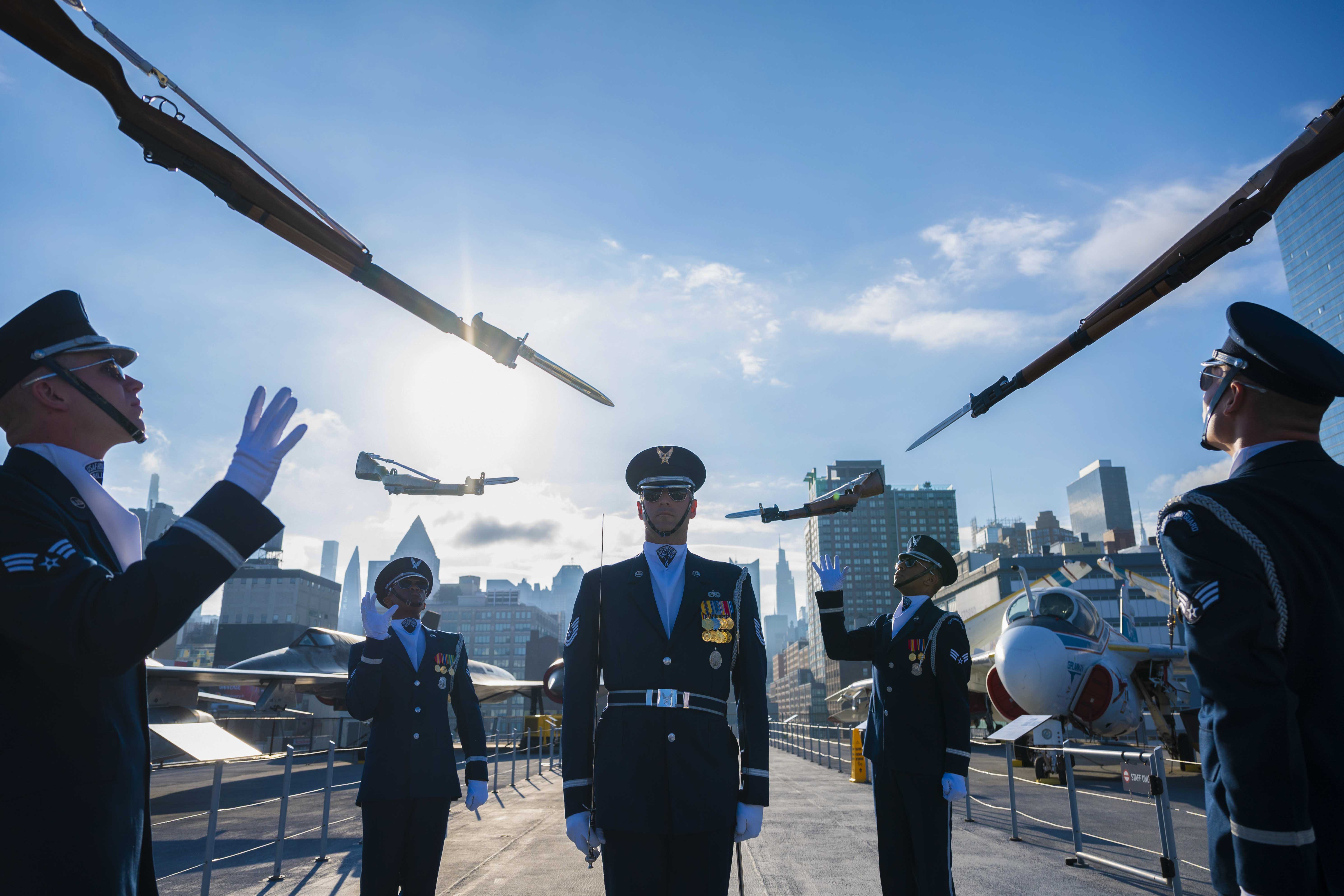
Members of the U.S. Air Force Honor Guard commemorate the Air Force’s 74th birthday at the Intrepid Sea, Air and Space Museum in New York City, Sept. 18, 2021.

Military Moves


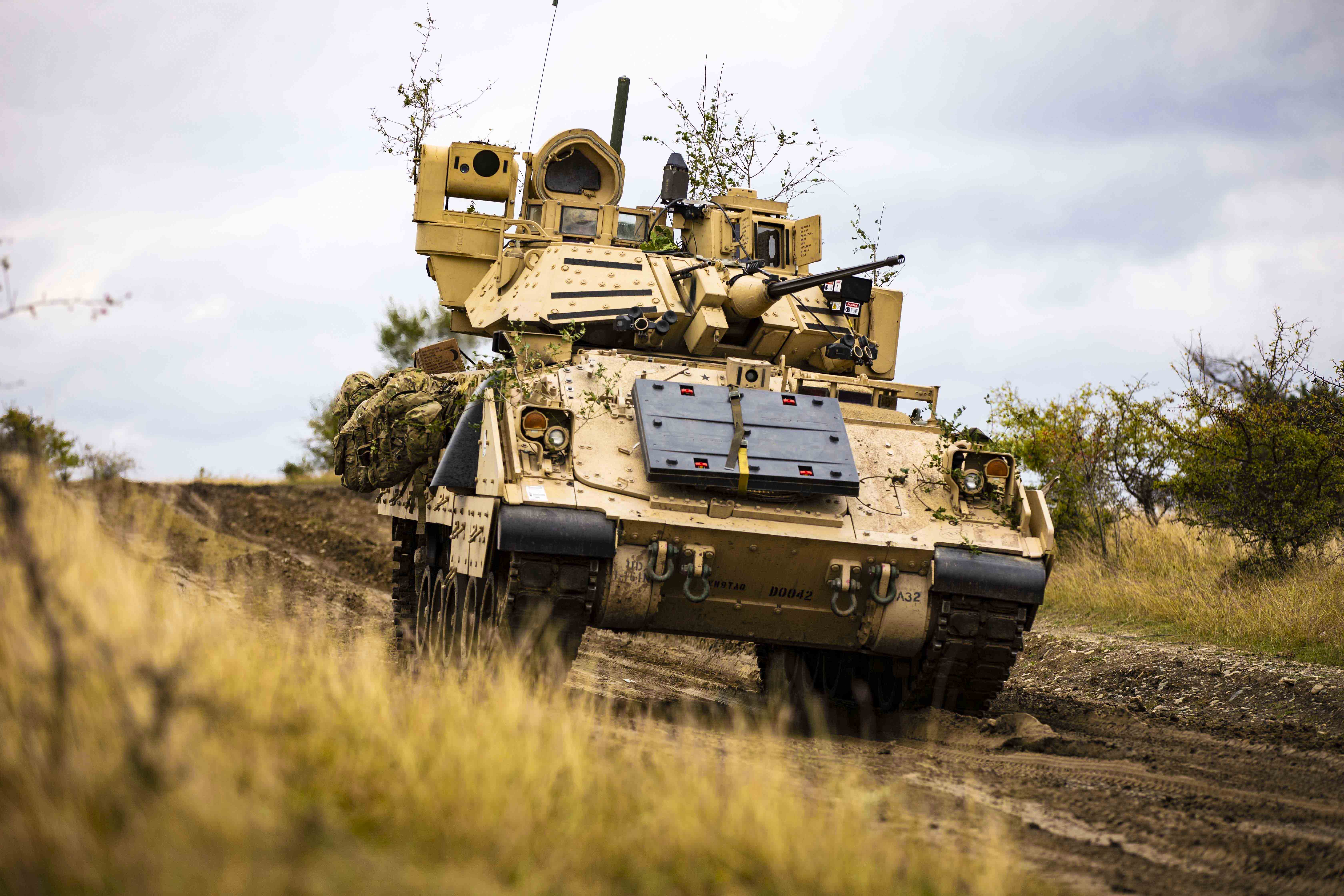
Soldiers move an Army M2 Bradley Fighting Vehicle toward an objective during a multinational situational training exercise in Cincu, Romania, Sept. 23, 2021.

Aerial Fire


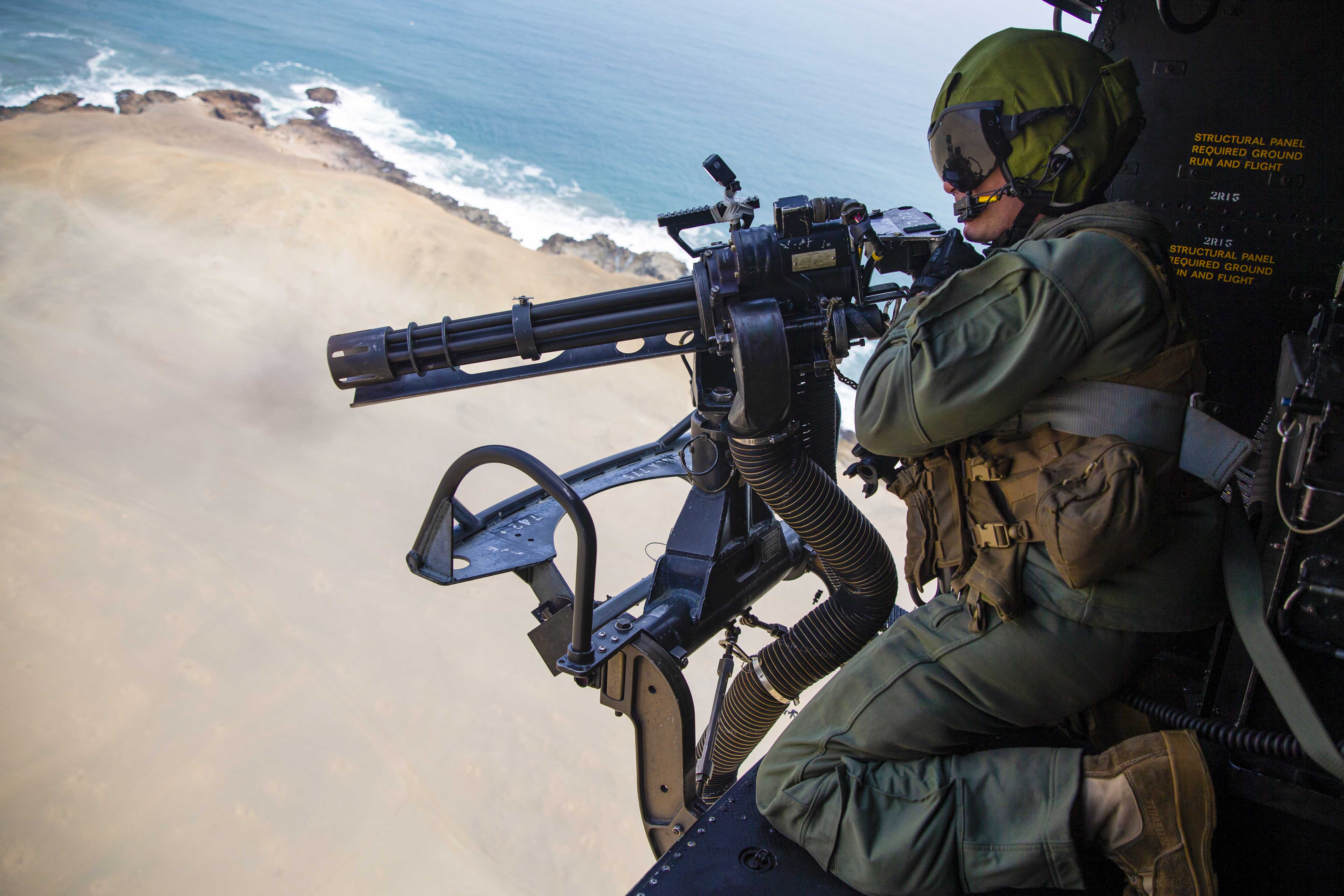
Marine Corps Sgt. Christophe J. Stump fires a GAU-17 minigun in Lima, Peru, Sept. 28, 2021, during UNITAS LXII, the world's longest-running annual multinational maritime exercise.

Missile Maintenance


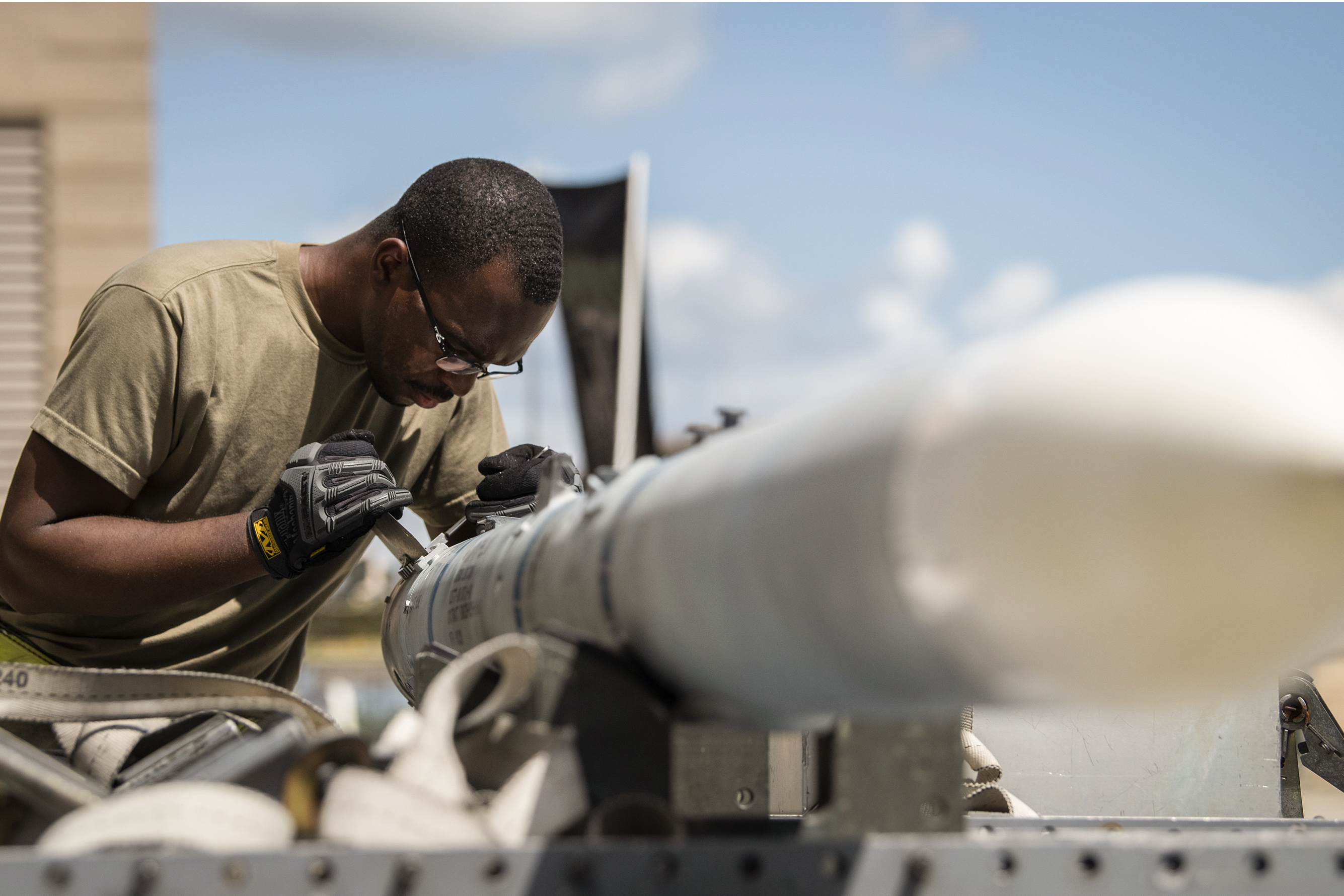
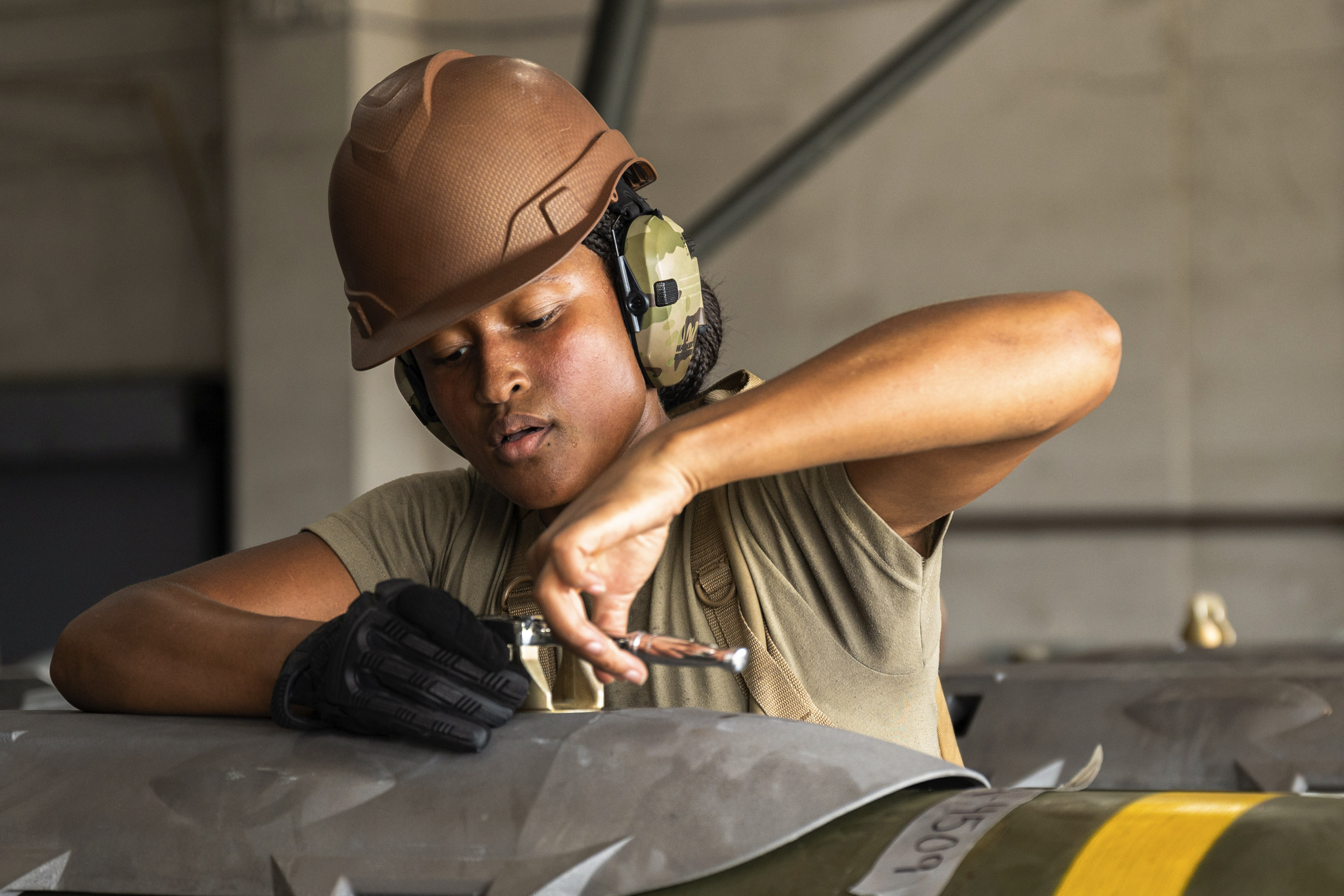
Air Force Senior Airman Taye-Anthony Bennett secures fins to an AIM-120 during a weapons load competition at Eglin Air Force Base, Fla., Sept. 21, 2021.

Colorful Drill


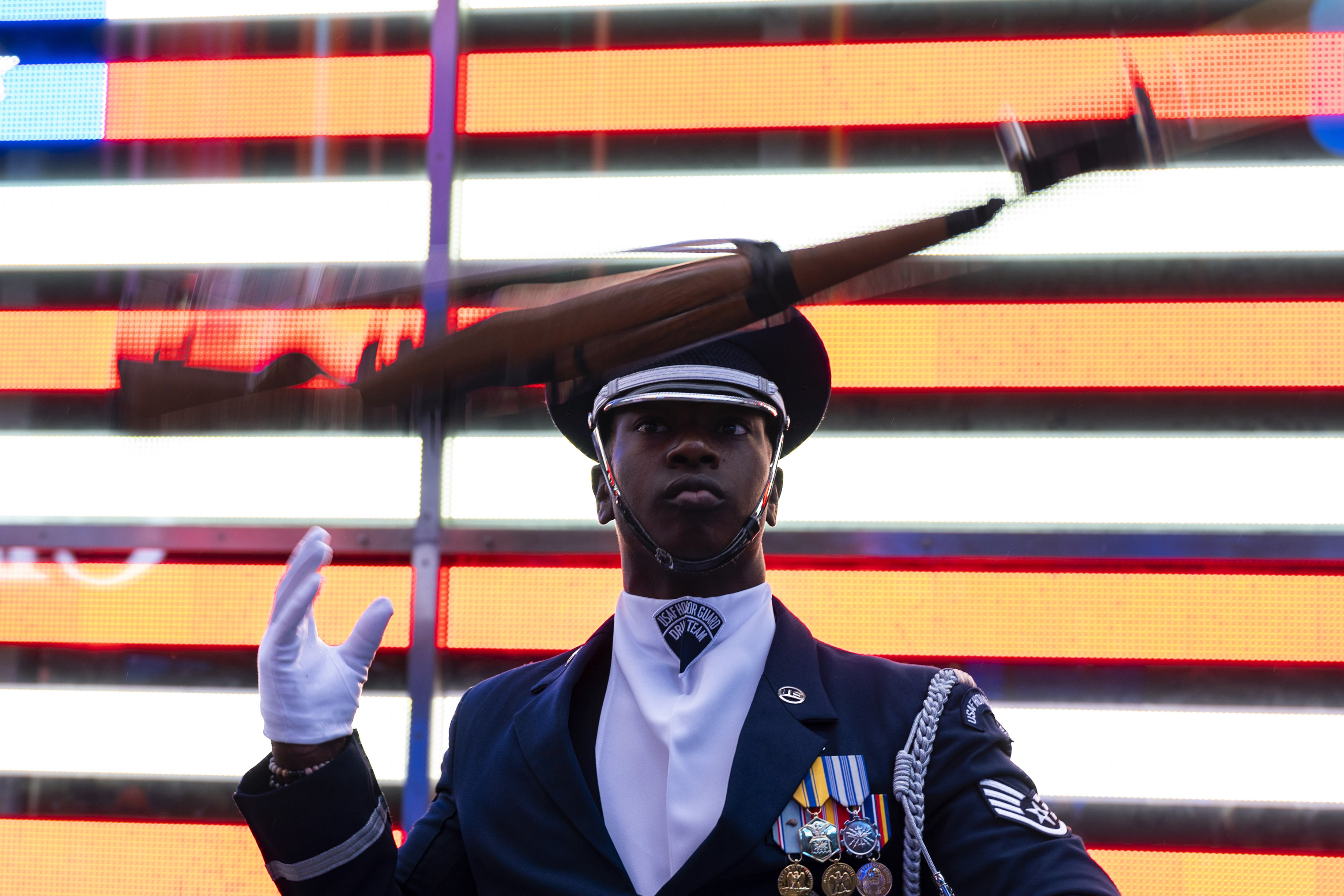
Air Force Staff Sgt. Marcus Hardy, a member of the U.S. Air Force Honor Guard drill team, warms up before performing in Times Square, New York, Sept. 17, 2021.

Falcon Flies


Air Force Kyle Partterson makes a running play against Utah State in Falcon Stadium at the U.S. Air Force Academy in Colorado Springs, Colo., Sept. 18, 2021.

Satellite Setup


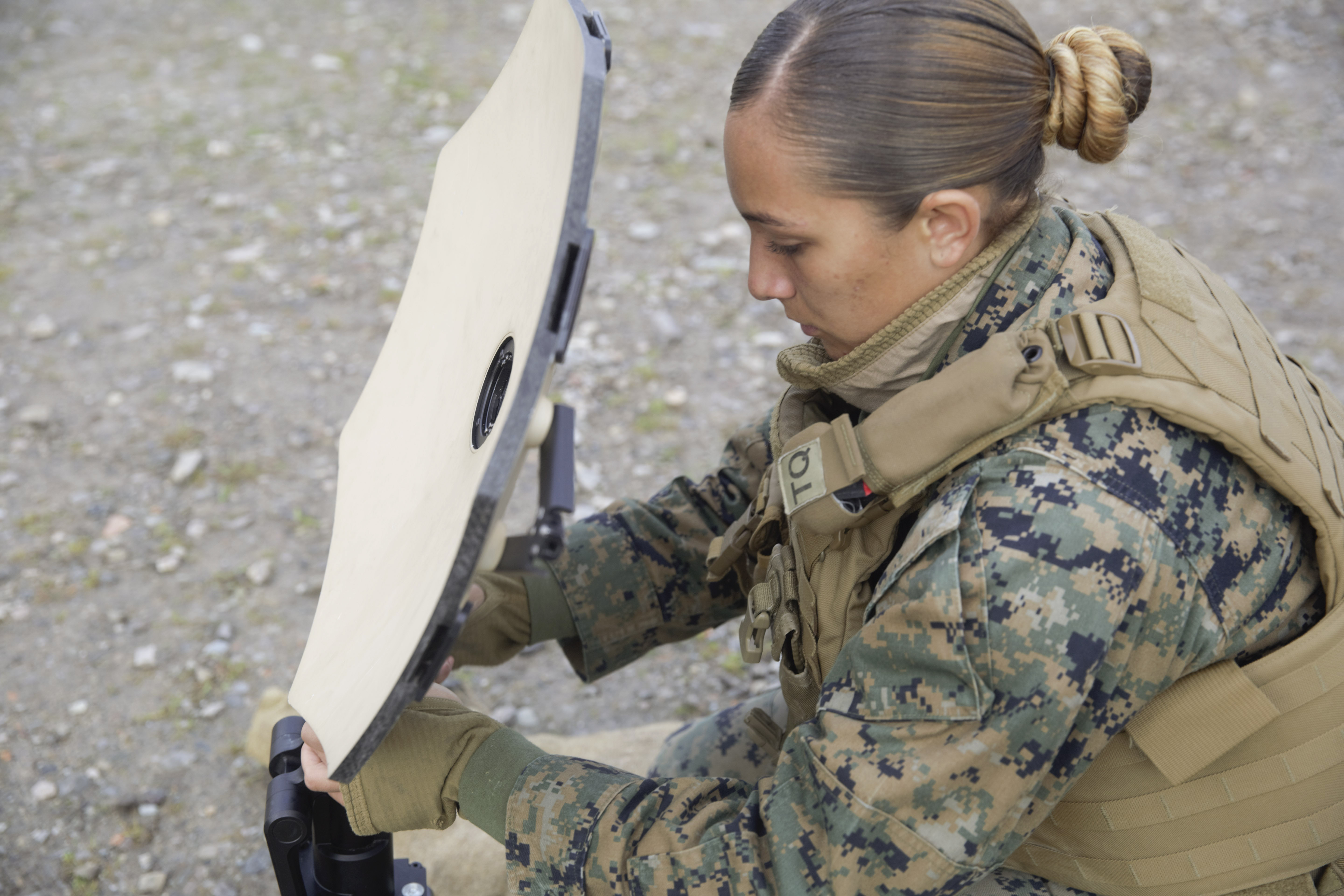
Marine Corps Lance Cpl. Ariana Romero sets up a satellite terminal during Joint Warrior in Durness, Scotland, Sept. 23, 2021. The exercise demonstrates operational capability and interoperability of U.S. and partner nations at a task force level.

Pinatas Prep


Military children assemble mini pinatas to mark National Hispani Heritage Month at the Youth Center at Keesler Air Force Base, Miss., Sept. 24, 2021.

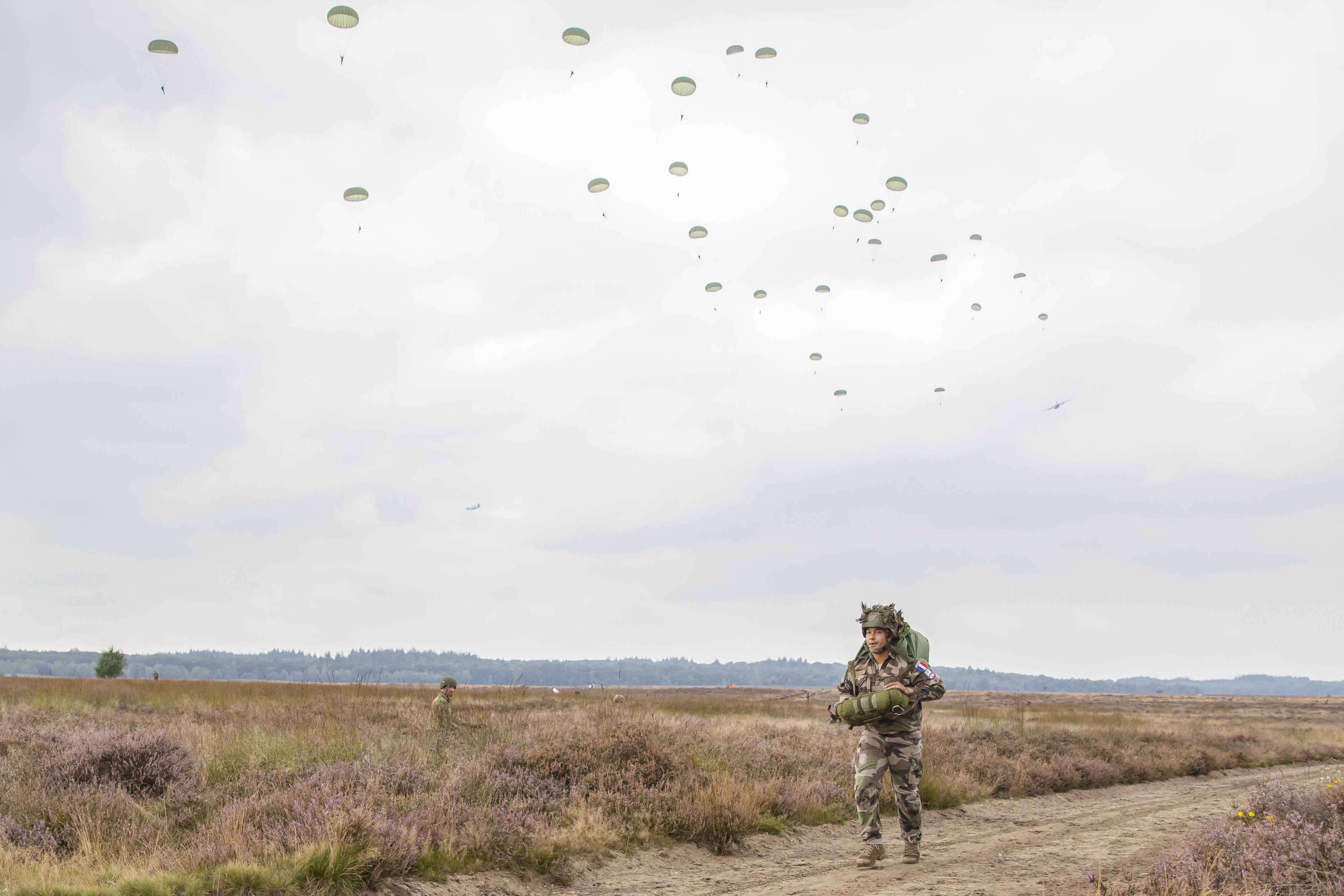
Airborne Exercise


Soldiers participate in Falcon Leap, NATO’s largest technical airborne exercise, at a drop zone in the Netherlands, Sept. 15, 2021.

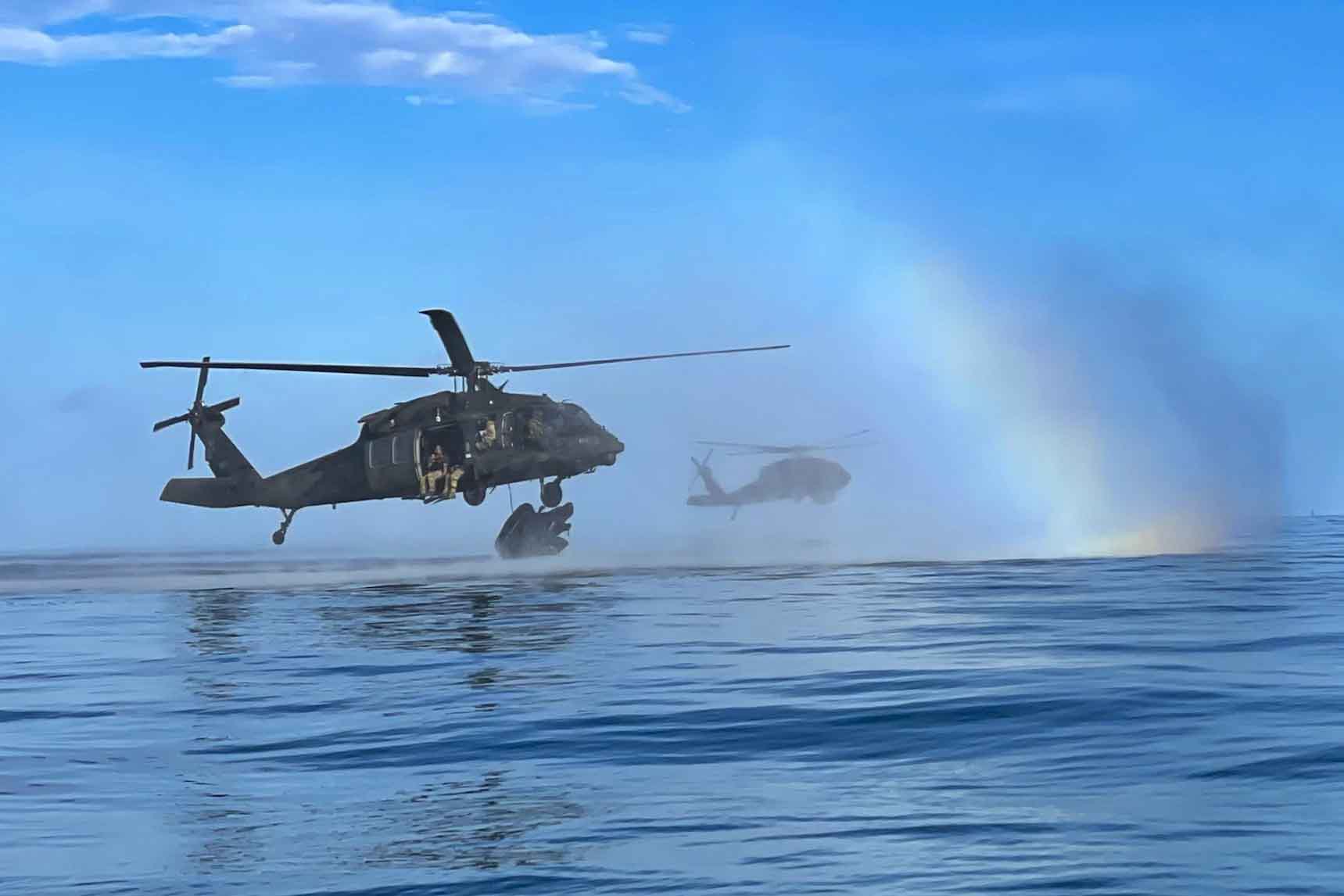
Rainbow Riders


Soldiers deploy a combat rubber raiding craft from a UH-60 Black Hawk helicopter during a waterborne infiltration course in Key West, Fla., Sept. 2021.

Honoring Heroes


Military family members release a lantern during the Air Force Families Forever Fallen Hero Sky Lantern Lighting on the beach in Biloxi, Miss., Sept. 24, 2021.


Sector Security


An Army paratrooper establishes sector security on a drop zone alongside paratroopers from the Lithuanian-Polish-Ukrainian brigade after conducting a joint airborne operation as part of Exercise Rapid Trident near Yavoriv, Ukraine, Sept. 25, 2021.

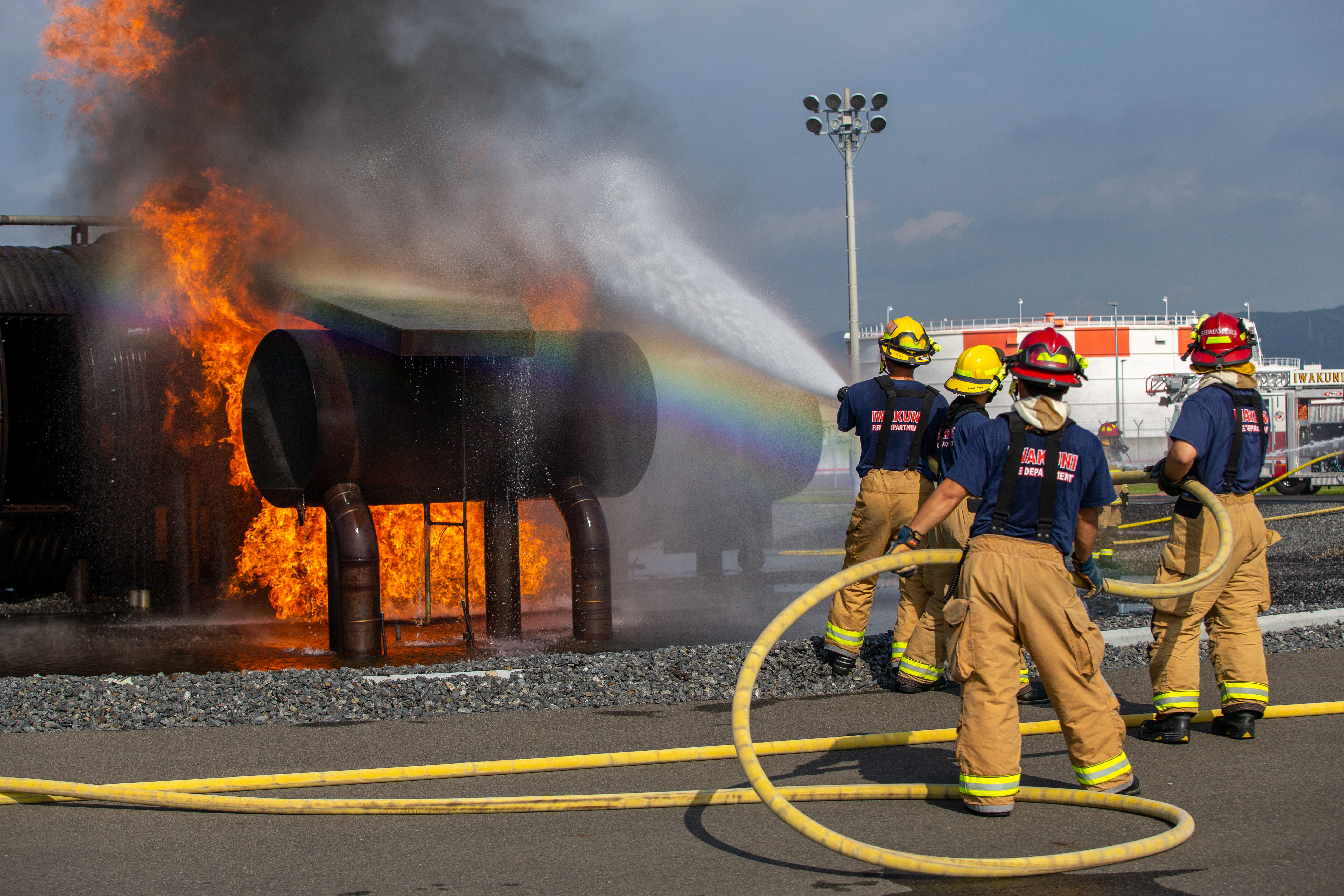
Fire Control


Fire department personnel put out a controlled flight line fire as part of an airport rescue firefighter course at Marine Corps Air Station Iwakuni, Japan, Sept. 10, 2021.

Peak Performance


Navy Petty Officer 1st Class Kristine Hsia performs during the Savannah Jazz Festival in Savannah, Ga., Sept. 25, 2021.

Tuesday, September 28, 2021

Food Bank Deliveries


Arizona National Guard service members at a food bank prepared boxes of groceries to be delivered to area residents in Queen Creek, Ariz., Sept. 20, 2021. As of Sept. 20, 2021, the Arizona National Guard has completed 8,944 food bank missions, handed out 1,747,238 units of food, prepared and served 943,765 meals, conducted 849 transportation missions with more than 1,091,934 miles driven, completed more than 700 covid testing site missions and 1,537 vaccination missions.

DOD Official Says Concept of Integrated Deterrence Is Call to Action

 Sept. 28, 2021 | BY Terri Moon Cronk , DOD News

In a speech earlier this year, Secretary of Defense Lloyd J. Austin III called deterrence the cornerstone of defense to make sure U.S. adversaries know that the risk of aggression is out of line with any conceivable benefit, a key Defense Department official said today.

Gregory M. Kausner, performing the duties of undersecretary of defense for acquisition and sustainment, was the keynote speaker at the Common Defense 2021 expo this morning.

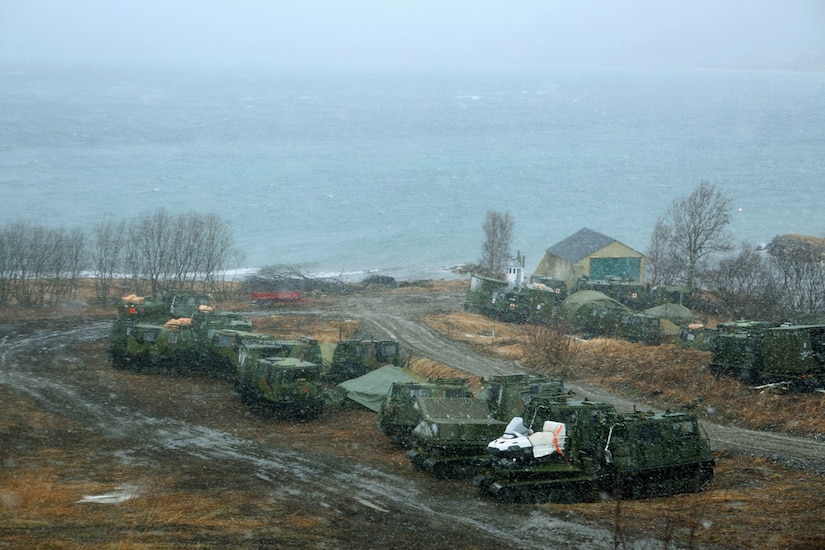
Military vehicles are parked in a muddy area along a coastline.

"In describing a new vision of 'integrated deterrence,' he [Austin] said that while it still rests on the same logic, it now spans multiple realms," Kausner said. "The right mix of technology, operational concepts and capabilities — all woven together and networked in a way that is credible, flexible and so formidable that it will give any adversary pause." 

That approach is multi-domain, spans numerous geographic areas of responsibility, is united with allies and partners, and is fortified by all instruments of national power, he said.

"For those of us in the acquisition and sustainment enterprise, the concept of integrated deterrence is a call to action," Kausner said.

DOD must continue to evolve its policies, processes — and, most importantly, its culture — to ensure the United States and its network of allies and partners remain predominant across the 21st century battlespace, he said.

The purpose in DOD's acquisition and sustainment is to enable the delivery and sustainment of secure, resilient and preeminent capabilities to the warfighter and international partners, Kausner emphasized.

As defense acquisition has evolved, the geopolitical landscape of today calls for an integrated suite of capabilities to field a lethal, resilient and rapidly adapting joint force, he said. 

"Developing such capabilities should be guided by mission engineering — a means to achieve desired warfighting effects through scoped requirements, guided development, and informed investment — to directly link programs with the missions they must accomplish," he explained. 

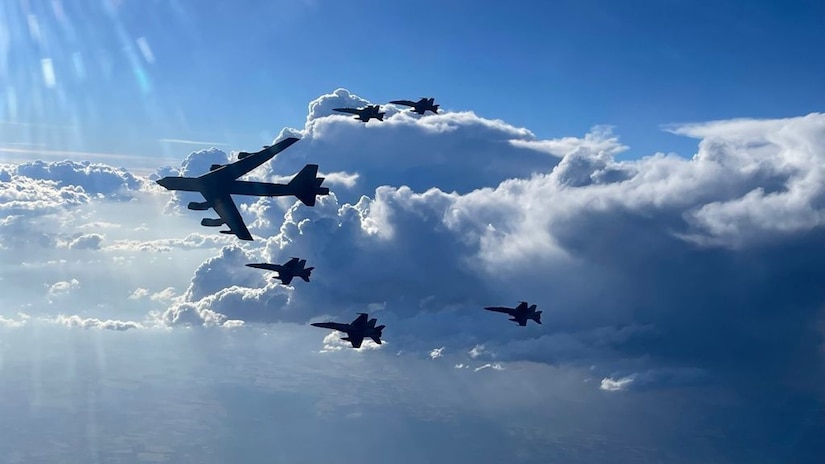
A U.S. Air Force B-52H Stratofortress flies in formation with Spanish air force F-18 aircraft.

"Put simply, the mission architecture is the business model for the conduct of operations," he noted. Kausner also added that, as overarching mission architecture is illuminated, DOD is able to identify critical mission threads and the necessary end-to-end tasks.

Kausner said the acquisition enterprise must center the force of its considerable resources, ingenuity and expertise on the critical linkages that enable warfighters to complete the kill chain. 

In recent years, DOD began that process with a comprehensive redesign of its acquisition policies. The result was the adaptive acquisition framework -- one of the most transformational changes to defense acquisition in years, he said.

With six distinct pathways, Kausner said the framework empowers program teams to tailor their approaches to a specific capability, making DOD more agile and more disciplined in addressing acquisition challenges at the program level.

Kausner said that to ensure a ready workforce, DOD is putting in place a comprehensive talent management framework focused on streamlining certification requirements, expanding job-relevant credentialing opportunities, and providing a continuous learning model. It's also adopting best-practices to optimize our performance.  

Kausner said that DOD is also evolving into a data-centric enterprise, one that uses data at speed and scale for operational advantage and increased efficiency.

And while DOD is just scratching the surface, there's an imperative to advance defense acquisition at the enterprise level, he said.  A holistic approach to enterprise acquisition is necessary — one that integrates policies and processes at the micro level, but also aligns other key aspects of defense acquisition at the macro level, he explained.

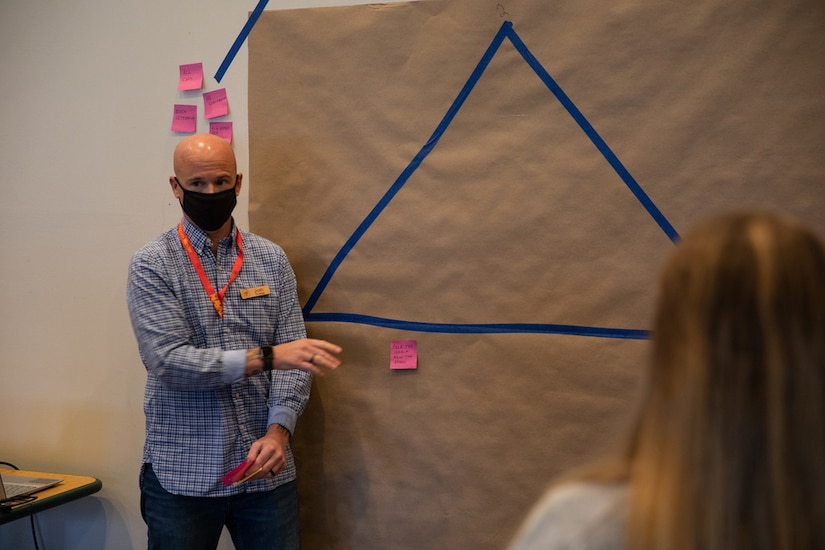
A man standing next to a wall-sized illustration gestures to make his point.

Kausner said that to identify and address interdependencies and critical risks, DOD must broaden its assessments to include a portfolio of systems. The department is adopting integrated acquisition portfolio reviews to strengthen synchronization of warfighting concepts, requirements, technologies and program execution. 

"We are in the midst of a rebalance from a program-centric approach to a portfolio-based perspective," he said. "For example, instead of looking only at a specific munition, we're more focused on how that system fits into the broader integrated air and missile defense capability portfolio," he explained.

Such an outlook enables DOD to not only see all the dots, but to connect them to directly align decision making with operational needs, Kausner said.

"We can expect adversaries to challenge our logistics dominance from the homeland to the outer reaches of the battlespace," he said, adding that cross-cutting portfolio reviews will highlight the impact of contested logistics by evaluating material shortages, munitions levels and fuel supply chains across a range of systems.  

"Climate change will also continue to alter our operational environment," he said. "Going forward, portfolio reviews will assess the efficacy of both our emerging programs and our supporting infrastructure in the face of shifting environments."

Adopting a portfolio perspective will also enable a healthy, vibrant, and — most importantly — a viable defense industrial base now and into the future, Kausner said.

DoD Publishes Federal Register Notice for Input on Supply Chain Vulnerabilities and Opportunities

 Sept. 28, 2021


As part of the department’s one-year response to Executive Order (EO) 14017, America’s Supply Chains, the Department of Defense published a Federal Register Notice (FRN) soliciting comments from industry on key supply chain challenges and recommendations to strengthen the defense industrial base. 

The department seeks comments about supply chain vulnerabilities and opportunities in four focus areas: select kinetic capabilities, energy storage/batteries, microelectronics, and castings and forgings. The department also welcomes inputs on vulnerabilities across five systemic enablers in these supply chains, including: workforce, cyber posture, interoperability, small business, and manufacturing. 

Details regarding the four focus areas and five systemic enablers are provided in the FRN, in addition to specific questions for response. The focus areas and strategic enablers were selected through ongoing supply chain analysis efforts across the department, interagency, and White House, and align with the secretary’s guidance.

Input from industry partners is critical to the department’s efforts to address supply chain challenges in the defense industrial base. While the FRN is the primary avenue through which DoD is collecting written feedback from industry, the Office of Industrial Policy will also leverage existing industry engagements and ad hoc events to solicit feedback over the coming months. DoD’s one-year report in response to EO 14017 will be published in February 2022. 

The Federal Register Notice is open until Oct. 13, 2021. The original language of Executive Order 14017 and the 100-day assessment published on June 4, 2021 can both be found on the White House website.

Secretary of Defense Lloyd J. Austin III Prepared Remarks Before the Senate Armed Services Committee

 Sept. 28, 2021


Chairman Reed, Ranking Member Inhofe, members of the committee: thank you for the opportunity to appear before you today to discuss our recent drawdown and evacuation operations in Afghanistan.

I am pleased to be joined by Generals Milley and McKenzie, who I know will be able to provide you with additional context.

I am incredibly proud of the men and women of the U.S. armed forces, who conducted themselves with tremendous skill and professionalism throughout the war, the drawdown, and the evacuation.

Over the course of our nation’s longest war, 2,461 of our fellow Americans made the ultimate sacrifice, along with more than 20,000 who still bear the wounds of war, some of which cannot be seen on the outside.

We can discuss and debate the decisions, the policies, and the turning points since April of this year, when the President made clear his intent to end American involvement in this war. We can debate the decisions over 20 years that led us to this point.

But one thing not open to debate is the courage and compassion of our service members, who – along with their families – served and sacrificed to ensure that our homeland would never again be attacked the way it was on September 11, 2001.

I had the chance to speak with many of them during my trip to the Gulf region a few weeks ago, including the Marines who lost 11 of their teammates at the Abbey Gate in Kabul on the 26th of August. I have never been more humbled and inspired. They are rightfully proud of what they accomplished, and the lives they saved, in such a short span of time.

The reason that our troops were able to get there so quickly is because we planned for just such a contingency. We began thinking about the possibilities for a non-combatant evacuation as far back as this spring.

By late April, two weeks after the President’s decision, military planners had crafted a number of evacuation scenarios. In mid-May, I ordered Central Command to make preparations for a potential non-combatant evacuation operation. Two weeks later, I began pre-positioning forces in the region, to include three infantry battalions. On the 10th of August, we ran another table- top exercise around a non-combatant evacuation scenario. We wanted to be ready. And we were.

By the time that the State Department called for the NEO, significant numbers of additional forces had already arrived in Afghanistan, including leading elements of the 24th Marine Expeditionary Unit, who were already on the ground in Kabul. Before that weekend was out, another 3,000 or so ground troops had arrived, including elements of the 82nd Airborne.
 

To be clear, those first two days were difficult. We all watched with alarm the images of Afghans rushing the runway and our aircraft. We all remember the scenes of confusion outside the airport. But within 48 hours, our troops restored order, and process began to take hold.

Our soldiers, airmen, and Marines – in partnership with our allies, our partners, and our State Department colleagues – secured the gates, took control of airport operations, and set up a processing system for the tens of thousands of people they would be manifesting onto airplanes. They and our commanders exceeded all expectations.

We planned to evacuate between 70,000-80,000 people. They evacuated more than 124,000.

We planned to move between 5,000-9,000 people per day. On average, they moved slightly more than 7,000 per day.

On military aircraft alone, we flew more than 387 sorties, averaging nearly 23 per day. At the height of this operation, an aircraft was taking off every 45 minutes. And not a single sortie was missed for maintenance, fuel, or logistical problems.

It was the largest airlift conducted in U.S. history, and it was executed in just 17 days. Was it perfect? Of course not. We moved so many people so quickly out of Kabul that we ran into capacity and screening problems at intermediate staging bases outside of Afghanistan.

We are still working to get Americans out who wish to leave. We did not get out all of our Afghan allies enrolled in the Special Immigrant Visa program. We take that very seriously. That is why we are working across the interagency to continue facilitating their departure. Even with no military presence on the ground, that part of our mission is not over.

Tragically, lives were also lost: several Afghans killed climbing aboard an aircraft on that first day; 13 brave U.S. service members and dozens of Afghan civilians killed in a terrorist attack on the 26th; and we took as many as 10 innocent lives in a drone strike on the 29th.

Non-combatant evacuations remain among the most challenging military operations, even in the best of circumstances. And the circumstances in August were anything but ideal. Extreme heat. A land-locked country. No government. A highly dynamic situation on the ground. And an active, credible, and lethal terrorist threat.

In the span of just two days – from August 13th to 15th – we went from working alongside a democratically elected, long-time partner government to coordinating warily with a long-time enemy. We operated in a deeply dangerous environment. It proved a lesson in pragmatism and professionalism.

We learned a lot of other lessons, too – about how to turn an Air Force base in Qatar into an international airport overnight, and about how to rapidly screen, process, and manifest large numbers of people. Nothing like this has ever been done before, and no other military in the world could have pulled it off. I think that is crucial.
 

I know that members of this committee will have questions on many things, such as why we turned over Bagram Airfield, how real is our over-the-horizon capability, why we didn’t start evacuations sooner, and why we did not stay longer to get more people out. Let me take each in turn.

Retaining Bagram would have required putting as many as five thousand U.S. troops in harm’s way, just to operate and defend it. And it would have contributed little to the mission that we had been assigned: to protect and defend our embassy some 30 miles away. That distance from Kabul also rendered Bagram of little value in the evacuation. Staying at Bagram – even for counter- terrorism purposes – meant staying at war in Afghanistan, something that the President made clear he would not do.

As for over-the-horizon operations: when we use that term, we refer to assets and target analysis that come from outside the country in which the operation occurs. These are effective, and fairly common, operations. Just days ago, we conducted one such strike in Syria, eliminating a senior Al Qaeda figure. Over-the-horizon operations are difficult but absolutely possible. And the intelligence that supports them comes from a variety of sources, not just U.S. boots on the ground.

As for when we started evacuations: we offered input to the State Department’s decision, mindful of their concerns that moving too soon might actually cause the very collapse of the Afghan government that we all wanted to avoid, and that moving too late would put our people and our operations at greater risk. As I said, the fact that our troops were on the ground so quickly is due in large part to our planning and pre-positioning of forces.

As for the mission’s end: my judgment remains that extending beyond the end of August would have greatly imperiled our people and our mission. The Taliban made clear that their cooperation would end on the first of September, and as you know, we faced grave and growing threats from ISIS-K. Staying longer than we did would have made it even more dangerous for our people and would not have significantly changed the number of evacuees who we could get out.

As we consider these tactical issues today, we must also ask ourselves some equally tough questions about the wider war itself, and pause to think about the lessons that we have learned over the past 20 years. Did we have the right strategy? Did we have too many strategies? Did we put too much faith in our ability to build effective Afghan institutions – an army, an air force, a police force, and government ministries?

We helped build a state, but we could not forge a nation. The fact that the Afghan army we and our partners trained simply melted away – in many cases without firing a shot – took us all by surprise. It would be dishonest to claim otherwise.

We need to consider some uncomfortable truths: that we did not fully comprehend the depth of corruption and poor leadership in their senior ranks, that we did not grasp the damaging effect of frequent and unexplained rotations by President Ghani of his commanders, that we did not anticipate the snowball effect caused by the deals that Taliban commanders struck with local
 
leaders in the wake of the Doha agreement, that the Doha agreement itself had a demoralizing effect on Afghan soldiers, and that we failed to fully grasp that there was only so much for which
– and for whom – many of the Afghan forces would fight.

We provided the Afghan military with equipment and aircraft and the skills to use them. Over the years, they often fought bravely. Tens of thousands of Afghan soldiers and police officers died. But in the end, we couldn’t provide them with the will to win. At least not all of them.

As a veteran of that war, I am personally reckoning with all of that. But I hope, as I said at the outset, that we do not allow a debate about how this war ended to cloud our pride in the way that our people fought it. They prevented another 9/11, they showed extraordinary courage and compassion in the war’s last days, and they made lasting progress in Afghanistan that the Taliban will find difficult to reverse and that the international community should work hard to preserve.

Now, our service members and civilians face a new mission: helping these Afghan evacuees move on to new lives in new places. They are performing that one magnificently, as well. I spent time with some of them up at Joint Base Maguire-Dix-Lakehurst, just yesterday. I know that you share my profound gratitude and respect for their service, courage, and professionalism.

And I appreciate the support that this committee continues to provide them and their families. Thank you.

General Officer Announcement

Sept. 28, 2021
Secretary of Defense Lloyd J. Austin III announced today that the President has made the following nomination:

Air Force Brig. Gen. Randall E. Kitchens for appointment to the grade of major general with assignment as the chief of chaplains, Headquarters United States Air Force, Pentagon, Washington, D.C.  Kitchens is currently serving as the deputy chief of chaplains, Office of the Chief of Chaplains, Headquarters United States Air Force, Pentagon, Washington, D.C.

Global Strike Challenge


An airman assembles a munition for Global Strike Challenge 2021 at Barksdale Air Force Base, La., Sep. 21, 2021.

Fast Rope


A Marine fast-ropes out of a UH-1Y Venom helicopter during UNITAS, the world's longest-running annual multinational maritime exercise, in Ancon, Peru, Sept. 26, 2021.

Jungle Ops


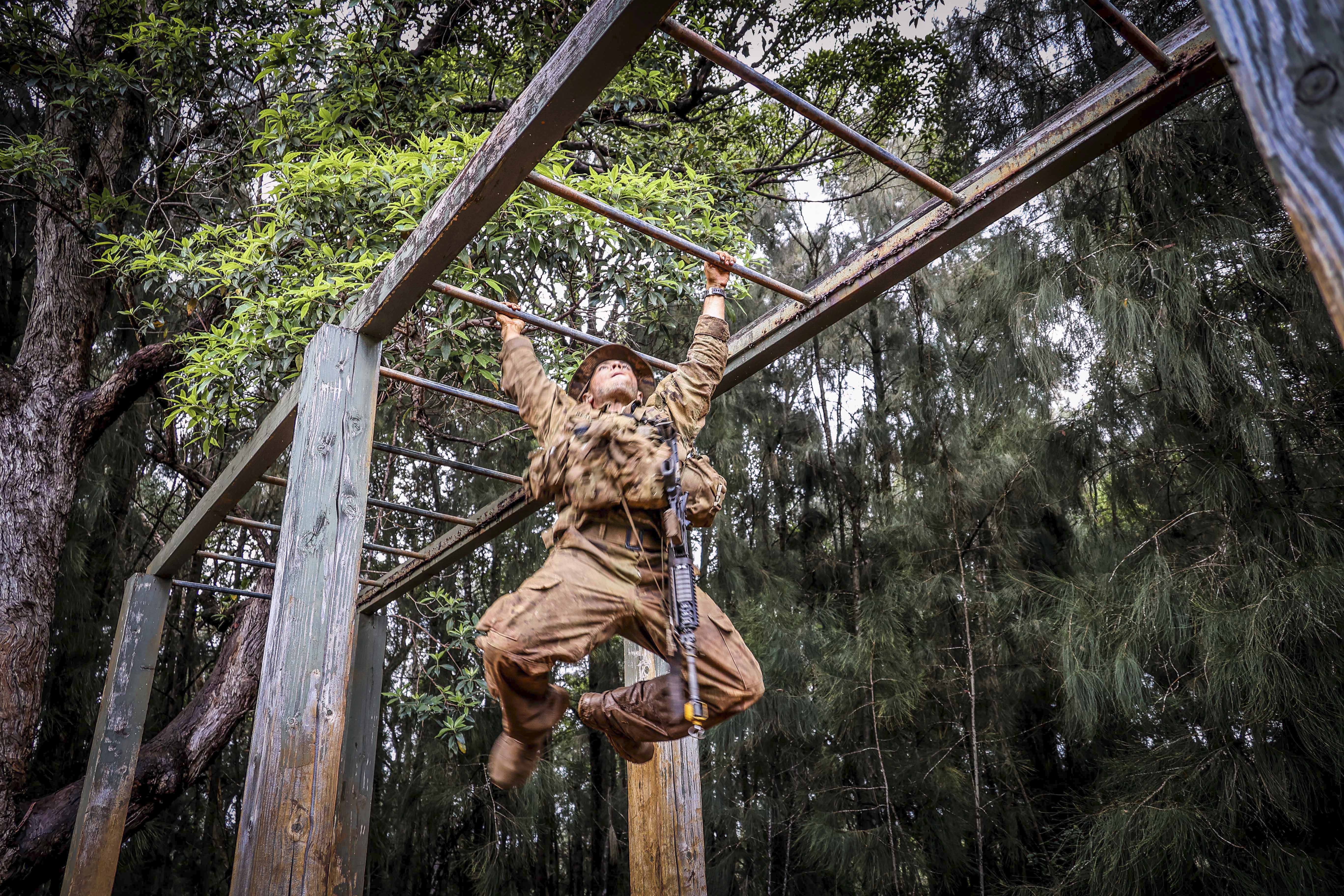
A soldier participates in a jungle operations training course at Schofield Barracks, Hawaii, Sept. 23, 2021.

Sports Heroes Who Served: Four Football Notables Made the Ultimate Sacrifice

 Sept. 28, 2021 | BY David Vergun , DOD News

Sports Heroes Who Served is a series that highlights the accomplishments of athletes who served in the U.S. military.

Football players have often been idolized and even been seen as heroes by generations of Americans.

Four football players served in the military and were killed in action. For paying the ultimate sacrifices, they can be listed as some of America's greatest heroes.

Football player poses.

Al Blozis

Al Blozis won Amateur Athletic Union and National Collegiate Athletic Association indoor and outdoor shot titles three years in a row from 1940 to 1942 while attending Georgetown University. In 2015, he was inducted into the National Track and Field Hall of Fame.

In 1942, Blozis pivoted from track and field to football. He was drafted into the National Football League and played offensive tackle for the New York Giants in 1942 and 1943. 

In December of 1943, he was commissioned a second lieutenant in the Army but took leave in early 1944 to play three more games for the Giants.

In 1944, Blozis departed for France with the 28th Infantry Division. On Jan. 31, 1945, while scouting enemy lines in the Vosges Mountains of France, he was shot and killed by enemy fire.

Man in uniform poses for photo.

Jack Lummus

Jack Lummus was a baseball center fielder at Baylor University from 1937 to 1940. He was considered the best center fielder who ever played at Baylor.

In 1941, he played nine games as a New York Giants rookie end.

On Jan. 30, 1942, he enlisted in the Marine Corps Reserve. In October 1942, he was commissioned a second lieutenant. 

After serving at Camp Pendleton, California, he deployed to the Western Pacific, assigned to the V Amphibious Corps.

Lummus was in the first wave of troops to land on Iwo Jima, Feb. 19, 1945. On March 8, 1945, he led his rifle platoon in fierce fighting at the northern end of the island. 

The lieutenant single-handedly knocked out three enemy strongholds which had prevented his platoon from reaching their objective. He was killed during the assault after stepping on an enemy landmine. For his valor, Lummus was awarded the Medal of Honor.

Football player poses holding football.

Don Steinbrunner

Don Steinbrunner was selected in the 1953 NFL draft by the Cleveland Browns as an offensive tackle. He played in the 1953 NFL Championship Game at Briggs Stadium in Detroit, but the Browns lost 17–16 to the Detroit Lions.

The following year, he left the NFL to fulfill his military requirements by joining the Air Force. He liked serving and decided to make the Air Force a career. 

In 1966, Steinbrunner, then a major, was deployed to Vietnam as an aircraft navigator. On July 20, 1967, his C-123 Provider aircraft was shot down by enemy fire, killing him and four other crewmen.

Man in uniform poses for photo.

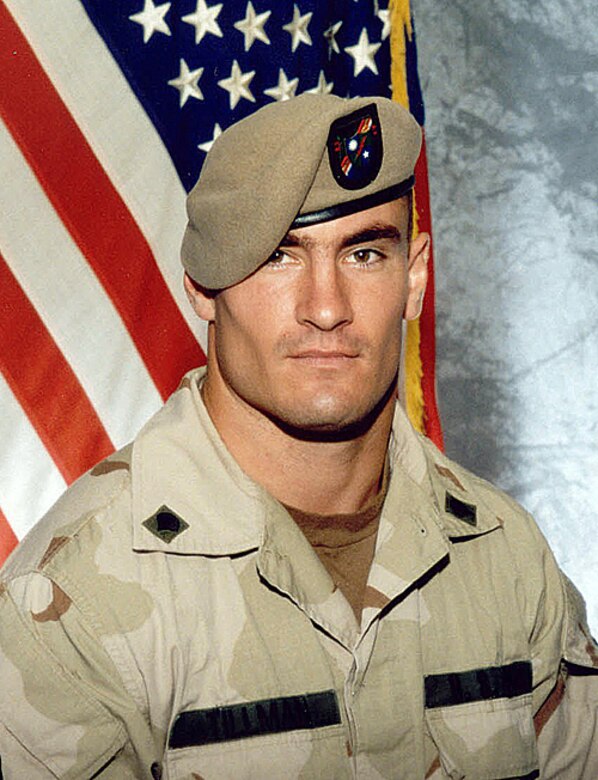
Pat Tillman

Pat Tillman was a linebacker for Arizona State University in the mid-1990s. In 1998, he was drafted by the NFL and picked up by the Arizona Cardinals, playing the safety position.

In 2002, Tillman turned down a $3.6 million contract for three more years with the Cardinals to enlist in the Army.

He participated in the initial invasion of Iraq in 2003 and then graduated from Ranger School later that year.

In 2004, he deployed to Afghanistan, and on April 22 of that year, he was killed by friendly fire.

Joint Press Statement for the 20th Korea-U.S. Integrated Defense Dialogue

 Sept. 28, 2021


The U.S. Department of Defense (DoD) and the Republic of Korea Ministry of National Defense (MND) held the 20th Korea-U.S. Integrated Defense Dialogue (KIDD) September 27-28, 2021 in Seoul, Republic of Korea. Deputy Minister for National Defense Policy (DEPMIN), Mr. Kim Man-gi, led the ROK delegation. Deputy Assistant Secretary of Defense (DASD) for East Asia, Dr. Siddharth Mohandas, led the U.S. delegation. Key U.S and ROK defense and foreign affairs officials also participated. Acting Assistant Secretary of Defense (A/ASD) for Strategy, Plans, and Capabilities, Ms. Melissa Dalton, and Dr. Mohandas together co-chaired the Deterrence Strategy Committee (DSC) session of the KIDD opposite DEPMIN Kim.

During the KIDD, the ROK and U.S. delegations reaffirmed a shared goal of achieving the complete denuclearization of, and permanent peace on, the Korean Peninsula and pledged that the U.S. and ROK combined forces would remain ready and postured to defend the ROK. The two sides acknowledged the third year of the inter-Korean Comprehensive Military Agreement, assessing that it—in addition to the continued enforcement and management of the Armistice Agreement by the United Nations Command—has contributed to peace and stability on the Korean Peninsula. The leaders discussed DPRK’s recent missiles launches and agreed to explore enhancements to the Alliance’s defense posture to account for omnidirectional threats. Both leaders underscored the importance of diplomacy and the resumption of dialogue to address these changes.

During the Security Policy Initiative (SPI), both sides reaffirmed that the U.S.-ROK Alliance remains the linchpin of peace and security on the Korean Peninsula and in the Northeast Asia Region, and committed to seeking measures to further deepen and expand the Alliance. Both leaders lauded the ratification of the Special Measures Agreement (SMA) as a critical achievement in maintaining the U.S.-ROK Alliance, and ensuring the steady stationing of U.S. forces in the ROK. Additionally, both sides shared the common understanding that the Fall 2021 Combined Command Post Training (CCPT) played an important role in maintaining ROK-U.S. combined defense posture.

The leaders also acknowledged significant progress toward the return of Yongsan Garrison to the ROK, consistent with the Yongsan Relocation Plan. Both sides concurred on the importance of creating stable and unfettered access to training facilities, resources, and other sites critical to the U.S.-ROK combined defense posture and military readiness. The leaders also reviewed the progress made in the combined joint multi-purpose live fire range joint study and discussed the way ahead to ensure progress in advance of the Security Consultative Meeting (SCM) later this fall. Both sides pledged to deepen cooperation in other domains including cyber and space to ensure an effective joint response against emerging threats and to maintain a free, safe, and prosperous, Indo-Pacific region. Additionally, the two sides shared the common understanding regarding the importance of ROK-U.S.-Japan trilateral security cooperation, based on shared security interests among the three countries. The two leaders also pledged to strengthen cooperation to maintain the rules-based international order. Furthermore, both sides committed to cooperate to better align U.S. and ROK regional strategies, including the ROK New Southern Policy and the U.S. Indo-Pacific Strategy.

During the Conditions-Based Operational Control Transition Working Group (COTWG), both leaders acknowledged the great progress made towards the transition of wartime Operational Control (OPCON) to the Future Combined Forces Command (F-CFC) and reaffirmed a mutual commitment to the bilaterally agreed upon Conditions-based OPCON Transition Plan (COTP). In particular, the two sides affirmed the progress of wartime OPCON transition tasks conducted this year, including the comprehensive joint study on COTP capabilities.

During the DSC, the two sides discussed combined deterrence and response concepts to strengthen Alliance tailored deterrence, to address DPRK’s threats including nuclear, WMD, and missiles, amidst a dynamic regional security environment. U.S. officials reaffirmed the ironclad U.S. commitment to provide extended deterrence to the ROK, utilizing the full range of U.S. capabilities, to include nuclear and conventional capabilities. ROK officials reaffirmed that they will continue to develop the ROK military’s nuclear and WMD response systems in order to deter and respond to North Korean threats. As part of the DSC, officials also participated in a tabletop exercise (TTX) to review measures to deter and respond to DPRK’s threats including nuclear, WMD, and missiles. The TTX outcomes will contribute to enhancing the combined deterrence capabilities of the Alliance and to shaping the Alliance Tailored Deterrence Strategy. On the margins of the DSC, A/ASD Dalton led consultations on the in-development U.S. Nuclear Posture Review (NPR) and Missile Defense Review (MDR) in which the ROK provided constructive feedback to shape its outcome.

In conclusion, U.S. and ROK leaders assessed that the 20th KIDD reaffirmed the close bonds within the Alliance, bolstered Alliance coordination, and strengthened U.S.-ROK combined defense posture. Based on these outcomes, the two sides pledged to continue efforts to achieve meaningful progress at the 53rd SCM, to be hosted in Seoul, Republic of Korea in late 2021.