Tuesday, February 23, 2021

Pentagon Press Secretary Updates Reporters on DOD Operations

 Feb. 22, 2021

Pentagon Press Secretary John F. Kirby

PRESS SECRETARY JOHN F. KIRBY: Good afternoon, everybody. Okay, a couple of things at the top here and we'll get right after it. 

The Department of Defense through the Office of the Undersecretary of Defense for Research and Engineering has launched the DOD Aerospace Education Research and Innovation Center, otherwise known as AERIC, and we pronounce is "eric" here, at Tuskegee University in Alabama. AERIC will support two-year research projects in the areas of fatigue damage tolerance, experimental aerodynamics and the performance of materials and components under extreme environmental conditions. Tuskegee University is the number one producer of black aerospace engineers in the nation and we are very excited to partner with them as they host AERIC.

Today Secretary Austin participated in a virtual meeting of NATO colleagues from Canada, Lithuania, Poland, the United Kingdom and Ukraine. The meeting was hosted by the United Kingdom Secretary of State for Defense Ben Wallace. All these allies are actively providing training and support in Ukraine alongside the United States and the meeting came on the heels of Secretary Austin's February 19th discussion with Ukraine Minister of Defense Andriy Taran, which focused on Ukraine's defense priorities, reform objectives, and of course, how the five allies can support Ukraine's Euro-Atlantic goals.

Now as you have been tracking, Secretary directed the force to conduct a one-day stand-down to deal with extremism in the ranks. To support this effort, we issued a video to the force with a message directly from Secretary Austin. It will be used alongside other training materials to facilitate a good exchange of ideas as commands work through their stand-downs and you can find that on defense.gov. It's on our website.

On the personnel front, we on-boarded another seven personnel today, bringing the total to 78. Today's additions include Spencer Boyer, Deputy Assistant Secretary of Defense for Europe and NATO Policy; Milancy Harris, Deputy Assistant Secretary of Defense for Special Operations in Combatting Terrorism; Farooq Mitha, Director of Small Business Programs; and someone that you're undoubtedly going to get to spend some time with here, Jamal Brown, our Deputy Press Secretary, who is right there. Wave your hand there, Jamal. He just checked in today. 

Finally, Secretary Austin will be making his first trip as Secretary of Defense this week; he'll travel to Colorado on Wednesday to visit with the U.S. Northern Command and then to California to see the first active duty team supporting one of FEMA's mega vaccination sites, this one of course, in Los Angeles. He'll also head to San Diego on Thursday and while there he'll link up with the Chief of Naval Operations, Admiral Mike Gilday, as they visit U.S.S. Nimitz, as she begins to make her final preparations to return home after a 10-month deployment. He'll also have the opportunity to visit with two Navy vaccination sites on the base at North Island and see what the Navy's doing to make more vaccines available to sailors there and in San Diego.

Okay. With that, I think Bob you're on the phone, right?

Q: Yes I am, thanks, John. I have a question for you about Iraq. In light of today's rocket attack on the Green Zone and, of course, the recent attack in Erbil, wonder what you make of this resumption of attacks and whether this appears to you to be the work of the militias that have been a problem previously?

MR. KIRBY: Well, certainly we have seen attacks in the past from Shia-backed militias operating inside Iraq. I don't know of any attribution for the one in Erbil from last weekend; I don't think that's been finally determined and as for the recent attack, again I don't have any attribution on that either. It's difficult to say with certainty, Bob, whether there's a strategic calculation driving this uptick, this recent uptick in attacks or whether this is just a continuation of the sorts of attacks we've seen in the past. But obviously we're going to be working closely with our Iraqi partners as we have been on the attack last weekend in Erbil. We'll be working with them to get more context about this and try to place it in proper perspective but clearly, look, I mean, these are dangerous attacks, and as we saw in the one in Erbil, an individual lost his life and now a family is grieving. I would say again, that we're there to counter ISIS at the invitation of the Iraqi government and our commanders, just like the Iraqi commanders, have the right of self-defense. 

Let's see, go back to the phone again here. Dan Sagalyn.

Q: Thanks for calling on me. I have a question about the Presidential Commission on Sexual Assault that the DOD is putting together. Is DOD consulting with members of Congress on who will be in the commission, on the commission, or is DOD just picking whoever it wants without regard to input from members of Congress?

MR. KIRBY: Well, we're certainly going to consult with Congress as the plans for this commission come together, Dan. I can tell you that the Secretary met with the senior OSD leaders, senior leaders, here at the Pentagon, which included the Service Chiefs, to talk to them this morning about his feedback on their inputs to him. As you know, it was his first directive on his second day in office to ask the Services to provide him input on what they felt they were doing right, what they needed to improve, maybe ideas they have going forward and he had the opportunity to review that work and talk to them about that today. It was a good, productive discussion. 

He explained to them that he expects before the end of the week to formally announce the 90-day commission with more granularity and more detail; I'm not going to get ahead of that announcement here today. But to your other question, as I said at the top, he -- he certainly understands, respects and appreciates the interest that members of Congress has -- have shown on this issue, and will keep them fully apprised as -- as we move forward.

OK, in the room. David?

Q: John, when Secretary Austin talks about extremism in the ranks, he says, "It's probably more than we would like, and less than the media depicts it as." Is he expecting some sort of number out of the Services; somebody to tell him exactly how many extremists there are in the ranks?

MR. KIRBY: I think what the Secretary would like to do, David, is to see if there's a way to get a better sense of the numbers, if there's -- if there is a way to try to collect data on the extent of this problem. He is also mindful that that's a difficult task to undertake because it's -- it's largely, we get a sense of the problem largely driven by conduct and behavior, and it -- it's, you know, difficult to know, sometimes, even in conduct and behavior that is prejudicial to good order and discipline or a violation of the UCMJ. Often it's not -- it's not always possible to know what drives that, not to mention that some extremist behavior happens off base, off duty, and is -- is captured rather by civilian law enforcement -- not even federal, but maybe even local civilian law enforcement, and we may not have perfect insight into that database.

So would he -- well, I don't want to ask the rhetorical question. He, of course, would like to know with more granularity how big the problem is, and that would include, but not -- not -- not solely, but it would include getting a sense of the -- the numbers of people who are in the ranks who espouse these beliefs and are acting, or willing to act on them. But he's mindful that it's a difficult dataset to get to.

Q: I haven't asked today, but last week, when you asked the Services, "When are -- when are your stand-downs taking place?" the answer was "We're waiting for guidance from OSD." Are you supposed to deliver some guidance before it -- each unit has its -- its stand-down? And if so, when is that guidance coming?

MR. KIRBY: As I understand it anecdotally, some Services, some commands have already conducted their stand-downs, and we are in the process of -- of putting out -- and we expect to do it very shortly here -- some training materials for them to be able to use when they conduct -- to -- to conduct their stand-downs. And the video I referenced today which, again, is on our website, was a -- a -- a part of that training package. You'll see, when you watch the video, he was clearly addressing it to the force.

Q: And we can expect these training materials when?

MR. KIRBY: I don't have a -- a date certain for you. The team's working hard on that, and I think it'll be very soon that that stuff will be delivered.

Q: So go back to the numbers for -- for a second. The -- the Marines have said that in the past three years they had 16 incidents of extremist behavior, mostly online postings; no sense of how those cases were resolved. And last year, the FBI said of half the cases -- investigations they're looking at involving mostly former military members, some active, roughly half of those have to do with -- domestic extremism. So if you get those two, you know, data points, I mean, why can't -- why can't you guys get more? I mean, it's just kind of frustrating when we have this little information.

MR. KIRBY: Yeah, Tom, look, I -- I -- back to David's question, I think the Secretary very much would like to have a better sense of -- of the data. And if there are lessons to be learned in one of the Services, that -- that other Services could learn from or we could apply centrally here, I think he's open to that.

And I -- I -- I understand the frustration, I -- I do, and he shares it. I mean, we need to have a better understanding of -- of how deep and how broad the -- the -- the problem is. There are, as you know and we've talked about it -- I mean, there's First Amendment rights here too that also -- also have to be respected. 

This isn't about, you know, trying to, you know, get into the, you know, brains of an individual member of -- of -- of the military but rather to make sure that we have a better sense of who we're bringing in and that those who are in are ascribing and acting on our core values, the core values of the institution, and not some other group's core values that are inimical to what we're supposed to do for defense of the -- of the nation.

And then, the last piece is that they're not acting out on beliefs -- extremist beliefs that put good order and discipline in jeopardy, or worse, put their shipmates, their teammates, their colleagues in -- in jeopardy, as well, OK? 

Let me go back to the phones here. Sam LaGrone, USNI?

Q: Hi. To follow up on the pier side visit of CNO and SecDef Austin, one of the things that we're seeing with carrier deployments writ large is they're getting longer and longer and longer, in part with this commitment to having assets in -- in CENTCOM, and you're seeing double-pump deployment just start last week with Eisenhower leaving Norfolk. TR is out. It's a double pump deployment, or a -- a -- a deployment back-to-back without a significant maintenance period.

You know, given that Nimitz has been out for 303 days with those sailors and -- and Marines away from their families, what -- what is the Department doing moving forward to -- to see if you can balance the kind of demand signal for these assets? That, you know, we're talking about, like, in the last year, there's more carriers underway than since the Arab Spring. So, thanks.

MR. KIRBY: Yeah, Sam, thanks. I mean, it's a good question and it's a fair one. I mean, I -- I think it's something that -- it's -- it's been a long -- a longstanding issue, this, balancing capabilities versus requirements, and there's a lot of requirements out there in the world for, in this case you're talking about, naval capabilities.

And the Secretary's certain mindful of the demand that's placing on the Service itself and, of course, on his -- on the sailors, and that's one of the reasons why he -- he wanted to go out to see Nimitz, as she gets ready to come home, to thank the sailors for -- for that extraordinary service and sacrifice.

He has also had, and I suspect he will continue to have, through the budget season and even beyond, discussions with the Chairman and the Chiefs about the resiliency of the force, the kinds of capabilities we're putting in the field, in the fleet, and the degree to which the requirements process is -- is being handled in the most effective and the most efficient way.

I mean, it -- there -- there -- there's always tension between what's needed out there and what's available, and he's mindful of that, having been a combatant commander himself and a -- a -- a -- the Vice Chief of the Army, he's been on both sides of that equation and I think he's uniquely qualified and -- and situated to -- to try to get the -- the balance better going forward. 

Idrees. Reuters?

Q: Thanks, John. So last week, NATO announced that it would up its presence in Iraq to about 4,000. I know you tweeted out last week, saying it won't include U.S. military personnel. If the number of troops -- NATO troops in Iraq does go up to 4,000, does the Pentagon believe that that allows the U.S. military presence to be reduced?

MR. KIRBY: So, what I said was that while we certainly support NATO's expanded mission -- the training mission in -- in Iraq and we recognize that there's a force generation process that goes along with that, there are no plans to put additional U.S. forces in Iraq to contribute to that expanded mission.

There are, as you know, many ways we can contribute to -- to mission sets without having to necessarily put more, to use the phrase, boots on the ground, that there are ways to contribute that -- that don't necessarily mean an increase in -- in footprint.

Q: Can I go back to Iraq?

MR. KIRBY: Sure.

Q: I have a question on Yemen, as well, but on Iraq, it's -- I mean, the attack today is one week since the attack on Erbil, and a group claimed responsibility for that attack, (inaudible) in reference to General Qasem Soleimani and (inaudible) -- and (inaudible).

Seen some analysis in the region claiming that U.S. is trying to play down these attacks to maintain a diplomatic opening with -- with Iran. We've seen the previous administration willing to use military action against such attacks when they happened.

Is this Administration trying to play down the -- these attacks or it's actually looking into military action to respond to -- you know, if they continue?

MR. KIRBY: We take these attacks very seriously, as I just said earlier, and that the President himself noted. When it -- if and when it's appropriate to respond, we'll do so at a time and a place and in a manner of our choosing and certainly in consultation with our Iraqi partners. Barb?

Q: ... on Yemen -- may I ask a question on Yemen? Thank you. So we're seeing that the Houthis are trying to advance on -- on Marib, a resumption of what's been described as the worst fighting since 2018, and this came at the heels of the decisions by the Administration to halt support to the Saudi coalition offensive operations in Yemen and revoking the global terrorist designation of -- of Houthis.

Do you think the Houthis are trying to kind of take advantage of these steps? Are they misreading the Administration's intentions in Yemen?

MR. KIRBY: I can't speak for the Houthis or what tactical decisions they're making and why. We've been clear that, in the decision to halt support for Saudi -- Saudi -- the Saudi-led coalition's offensive operations, that this was really about trying to get some space for humanitarian relief to get in there and to reflect our concerns over the precision, or the lack of precision, with which the coalition was executing their -- their offensive operations.

And -- but as for what's motivating the Houthis right now, you know, I -- I wouldn't begin to speculate. We want to see -- back to the bigger point -- we -- we support and we want to see a political settlement and an end to this war so that the people of Yemen can live in a safe, secure environment and -- and this humanitarian catastrophe can be ended. 

Barb?

Q: Two quick questions, different subjects. First, I was curious whether, following the United Airlines Pratt & Whitney -- Whitney engine failure, you're -- the Department, the military is taking any kind of -- although -- although they have different Pratt & Whitney engines ... 

MR. KIRBY: Right.

Q: Are they looking at or considering whether they need to have a look at the engines they do have, including Air Force One, to see if there's any commonality. 

And my other question. On the sexual assault commission, while that's going to be a 90-day process, if the Secretary's already beginning to hear what's working but also what's not working, can you give us any more on what his thinking is? Are there things that might be done before the 90 days are up? 

MR. KIRBY: So on the first one, I'm going to have to take the question, Barb. I don't have a good answer to a very fair question, so we will take that and we'll get back to you on that. 

On sexual assault, you've already seen him take some actions and I think you're going to -- you know, he didn't want to wait for the 90 days before he issued that first directive, and he did learn some things from the -- from Service input. 

Without getting ahead of him, I would expect that you will see him likewise take some immediate actions before the 90-day commission completes its work, somethings that I think he believes are warranted by what he's learned, and that he doesn't believe he has to wait for the 90-day commission to come back. 

But clearly, you know, the locus of the long-term strategic effort will be based on what they learn, and again, without getting ahead of the Secretary, I will tell you that it's his intent that this commission do a fair job of looking outside the lifelines, as we say, outside the Defense Department and consulting experts in the civilian community on -- on this particular issue. 

Let me go back. 

Lara Seligman from Politico? 

Q: Hey, John, thanks for doing this. I wanted to follow up on the question about Iraq actually. So there have now been three rocket attacks that endangered Americans in Iraq over the past week that are likely linked to Iran. So does the Pentagon -- have you -- or do you plan to communicate to Iran that killing an American is a red line, as the previous administration did? 

MR. KIRBY: We have made it perfectly clear our views about the malign activities that Iran continues to perpetrate throughout the region. As for these particular attacks, again, we haven't gotten into specific attribution, so I don't want to get ahead of the investigative process. 

Nick Schifrin? 

OK, thought he had a question. Jen, you had one?

Q: John, have you received or has the Pentagon received General Honore's report on Capitol Hill security that was commissioned by Speaker Pelosi? And have there been any new requests since Friday to extend the National Guard past the March 12th deadline? 

MR. KIRBY: I'm not aware that we have General Honore's report, so I will take that question and get back to you. I don't know if that's here or not. 

And there's been no updates and no additional requests that have come into the building about either extending or changing the -- the number, the scope of the National Guard presence on Capitol Hill. It still continues; I think, today, we're down around 5,300. In fact, I can give you the exact number here, 5,279 as of today. 

Q: And how many states they're coming from? 

MR. KIRBY: I don't have that broken down for you. I'll see if we can get that, I don't know if that's -- if I have that. 

Yeah, Jenny?

Q: Thank you, John. 

MR. KIRBY: You're welcome. 

Q: You look nice today. 

MR. KIRBY: Thank you. 

Q: I have a question about US-South Korea, joint military exercises-- you need to comment on the president (inaudible) remark, about the South Korean president (inaudible) that listened to press conference, that he would make a decision on the joint military exercises between the U.S. and South Korea, that he, after consulting with North Korea. 

As you know, it's a joint military exercise between U.S. and South Korea. Is there a work between our alliance and is there – I mean defensive against North Korea, you know that. 

And they -- it doesn't make sense, in consulting with North Korea (inaudible), North Korea is our potential enemy. I would appreciate your comments on this. 

MR. KIRBY: Well, I haven't seen the president's comments, so I'm not having seen them, I'm loathe to comment on that specifically. The only thing I would add -- and we've talked about this before -- is you're right, we do have a security alliance with Republican of Korea. It's a linchpin, we believe, for the region, that alliance, and we take it very, very seriously, our commitments to that alliance, we take very seriously. 

And as General Abrams had said many times, I mean, we do have to maintain a significant level of readiness on the peninsula, and the Secretary's confident that he, General Abrams, is doing all the right things to work with our South Korean allies to make sure that that readiness is preserved to the maximum degree possible. 

And there's lots of ways -- excuse me -- to preserve readiness and training, as we -- as we've seen. Even through COVID, there had to be adjustments made of course because of the pandemic. 

But again, we're confident that General Abrams understands those responsibilities and is working in lockstep with his counterparts in South Korea to make sure that that readiness is preserved and training is conducted and that the alliance is -- is as strong as ever, OK? 

Q: Thank you so much. 

MR. KIRBY: Sure, go ahead. 

Q: Thank you, John. As you know, Afghanistan situation gets worse day by day. This last Sunday, so many people, including civilian children, were murdered, have been killed. And nobody took the responsibility, Taliban and the government, they accused each other. 

And also Afghan people want to know how long it's going to take to review the Doha agreement between U.S. and Taliban. And from that, every day, people suffering a lot, a lot of people (inaudible).

And also, Russia wants to invite Taliban to continue the peace talk process. What is Pentagon's reaction on that? 

MR. KIRBY: We believe that -- well, let me back up. To your first point, I mean, we're certainly mindful of the suffering that continues to be experienced by the Afghan people. And as the Secretary said himself, when he was here -- up here Friday, the violence is too high and it needs to stop. 

The Administration is still conducting its review of the Doha agreement and the compliance mechanisms in that, so I won't get ahead of that. But again, as the Secretary said to you all on Friday, we are mindful of looming deadlines here. And we are certainly mindful of the suffering that's going on inside Afghanistan. 

We're also mindful of our obligations to -- to our Afghan partners, and to the Afghan government. It's important, we believe -- continue to believe -- that there's not going to be a military solution to this, it has to be done politically. And that means it needs to -- you know, negotiations in good faith have to bear fruit and have to be borne on the backs of a permanent comprehensive cease-fire. 

So, again, I won't get ahead of the decision-making process, but I can assure you that the Secretary and everybody here at the Pentagon are 100 percent committed to doing this review in a thoughtful, deliberate, but timely fashion. We understand that there's looming deadlines, OK? 

Let me go back to the phones…

Q: And my second question (INAUDIBLE) Taliban to talk about peace process?

MR. KIRBY: I don't -- I would refer you to our State Department colleagues on that. We, specifically, with the Russia piece, but as I said in my longish answer to you before, I mean, there is a peace process that has been undertaken already, an Afghan-led peace process. And that's what we continue to support, OK? 

All right. I think I got almost you all in the room here. Ellie Watson, CBS? 

Q: No question, thank you.

MR. KIRBY: OK. Christina Anderson? 

OK. Abraham from Washington Examiner. 

Q: Can you hear me, Christina Anderson? 

MR. KIRBY: Sure, go ahead. 

Q: OK. Yes, I'm interested in knowing whether there has been any review of the need for -- as expressed by the National Guard and Reserve, for military training and equipment that is much more up-to-date, and training also with their colleagues who are active duty? 

They feel -- some have expressed -- elements have expressed that they are concerned about training -- falling behind on the training. Thank you very much. 

MR. KIRBY: Well, let me follow up with you later about that, ma'am. I'm not familiar with those complaints, so I don't want to get into specifically addressing them when I'm not that familiar with that particular issue. So we'll follow up with you after the briefing to get more context from you. 

Again, just in general, back to what I was saying before when we were talking about the Navy, the Secretary understands as a former soldier himself the importance of making sure that our troops have the training and the resources, the equipment, the systems they need to get the job done. And he is always going to be interested in trying to close that gap to the maximum extent possible. 

Yes, over here. 

Q: Hey, John. 

MR. KIRBY: Hey. 

(CROSSTALK)

MR. KIRBY: I didn't recognize you. 

Q: I know. I haven't been here for a while, so thanks. 

I wanted to follow on David's question. In a TV interview, the former chief of staff, Kash Patel took another view on extremism in the military and said the problem doesn't exist. And I was wondering if we could have the Pentagon's views on that. 

And then secondly, in these stand-downs and listening sessions that will happening across units across the Services, will there be any attempt to maybe summarize the conversations that are had or gather data from those individual sessions to at least start to get a bigger picture of, you know, how big a problem this might be? 

MR. KIRBY: That's one of the reasons, in fact, I would argue it's the chief reason the Secretary ordered the stand-down was to do exactly that, to listen to the men and women of the force about what they are feeling and experiencing out there, to get a better sense about the scope and the breadth of the problem. Will it lead to specific data, as David asked? I doubt that. I mean, it's not about counting heads in the process of the stand-down but clearly it's about trying to get a better grasp of the degree to which the problem exists.

And as for Mr. Patel's comments, I -- I would only point you to the fact that -- that the Department, under the previous Administration, in October completed a -- a report, asked -- asked by Congress, and you've seen some reporting about that but, you know, clearly it found that extremism is an issue in the United States military. So I find that a very interesting comment to make when they themselves studied this and -- and -- and came to the conclusion that -- you know, that it is an issue.

And look, you don't -- I don't -- I don't think the -- I -- I don't think it's debatable that it is or it isn't an issue. What we don't know is the extent of it and what we don't know is exactly and how best to -- to go about eradicating that and the behavior that -- that it inspires. That's -- that's the problem.

It's -- so it's a -- it is a -- it is a -- a dataset issue -- I think we do want to know more about, you know -- like -- as the Secretary said, it's -- it's probably more than we'd like it to be and less than the headlines would suggest but more importantly, how do we get our arms around that? And -- and that -- that's where the focus is.

Nobody's -- I -- nobody's debating whether it is or it isn't an issue, it's really just about to what degree. I've got time for just a couple more. Go ahead.

Q: I want to go back to Iraq. It is my understanding -- the U.S. military is conducting its own investigation regarding Erbil's attacks. So do you have any explanation how, after we -- still no indication at all about who might be behind the attack -- I'm not talking politics, just facts on the ground -- an investigation?

MR. KIRBY: You're asking me why we don't know now?

Q: Yeah, so now -- no indications at all. In previous attacks, we, like, heard from the CENTCOM just ... 

MR. KIRBY: I -- I -- I -- look, I -- I would -- I think it's safe to assume that investigators are still working on this and it could be that they have a -- a better sense. I'm not privy to the investigation, nor would it be appropriate for me to be. It's an investigation that is being conducted by our Iraqi partners. The -- the Secretary offered to -- to help them with that and -- and it was a sincere offer. 

As far as I know, they are still conducting this and when there's something to report out, we'll do that -- we'll do that. OK, one more -- last -- go ahead.

Q: On Yemen, Houthis are moving towards Marib. It may be a very serious humanitarian disaster. Is there any commitment from the U.S. military that they will not allow this to happen? Any commitment to help the government of Yemen to defend Marib or to change policy and go back and help? 

MR. KIRBY: Our military operations in Yemen are -- are designed to -- to go after ISIS. It's a counter-ISIS mission. We believe that there needs to be a political settlement to this war, so that humanitarian assistance can get to the people that need it but -- but our mission -- it's important for people to remember our -- our mission in -- in Yemen is one based on counter-terrorism. 

Thanks, everybody, appreciate it.

Fueling Up


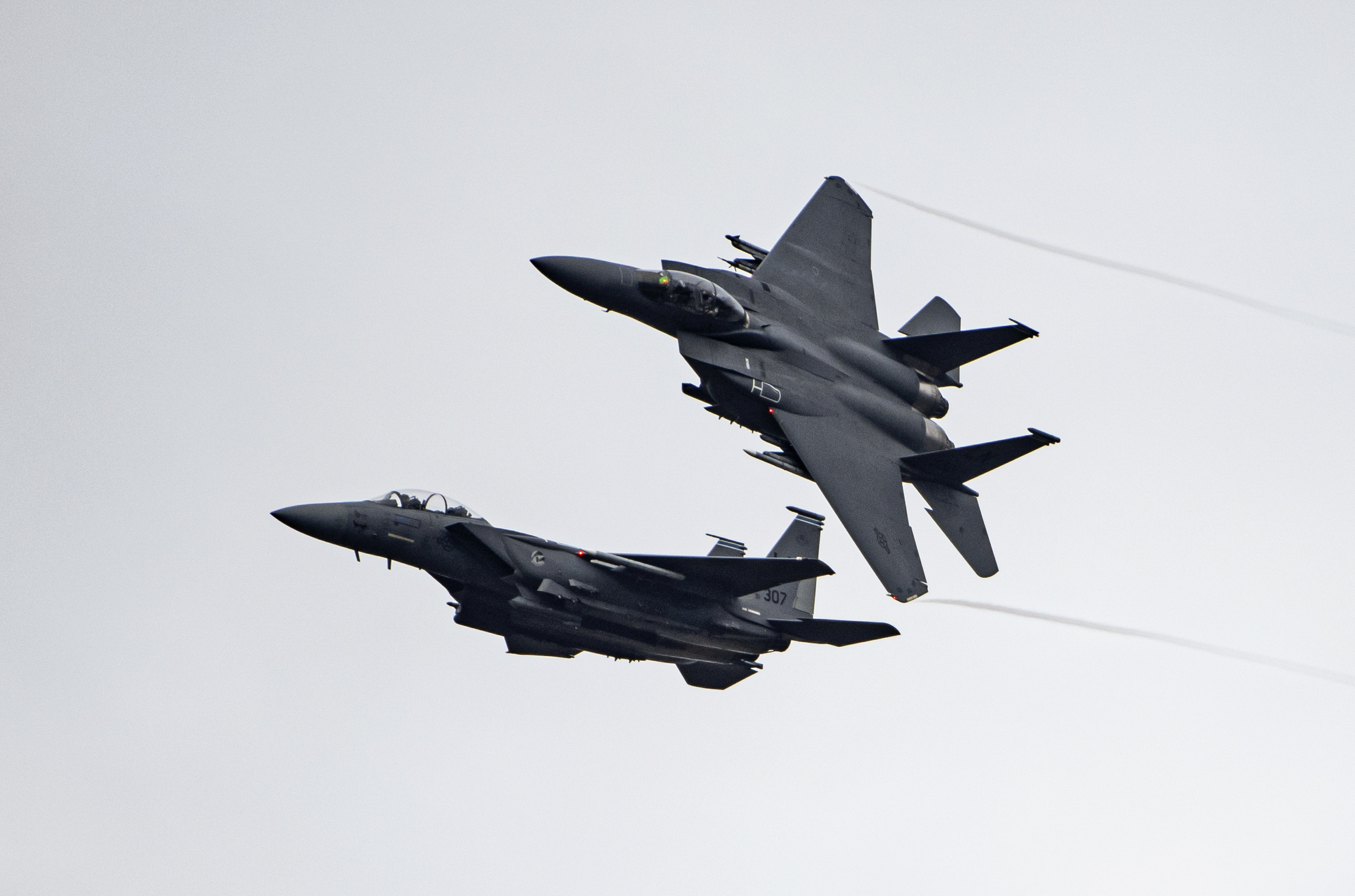
An Air Force F-15E Strike Eagle receives fuel from a KC-135 Stratotanker during a mission supporting Combined Joint Task Force - Operation Inherent Resolve over the U.S. Central Command area of responsibility, Feb. 9, 2021.

Night Fire Call


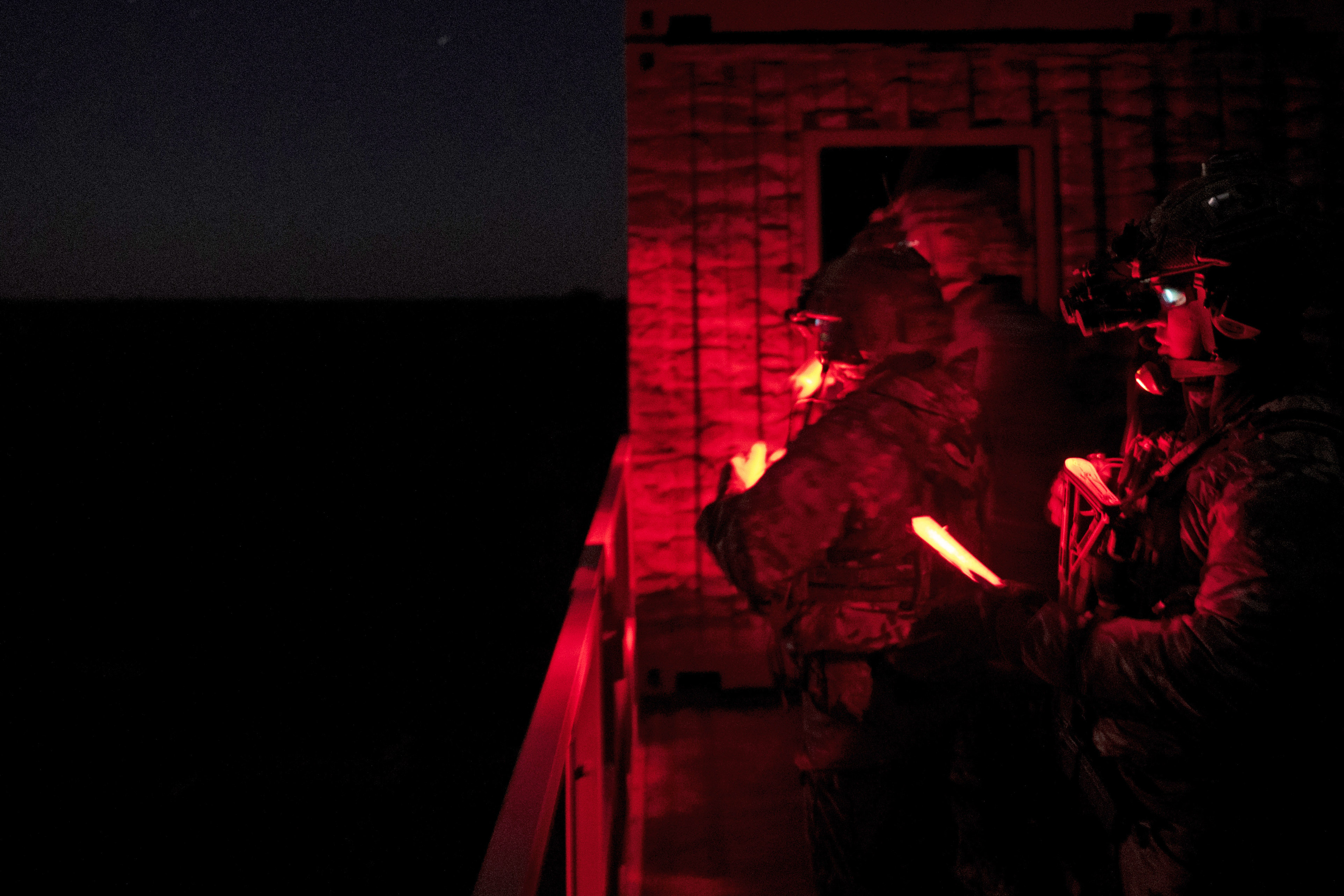
Airmen conduct call for fire training during Emerald Warrior 21.1, Feb. 19, 2021, at the Eglin Range Complex, Fla., Feb. 19, 2021. Emerald Warrior is the largest joint special operations exercise involving U.S. Special Operations Command forces training to respond to various threats.

Sports Heroes Who Served: Singer Served in Army, Played Baseball in Negro Leagues

 Feb. 23, 2021 | BY David Vergun , DOD News

Sports Heroes Who Served is a series that highlights the accomplishments of athletes who served in the U.S. military.

Charley Pride was famous as a country music singer. As an African American, he broke the color barrier in the country music industry with his 1960s and 1970s hits, particularly "Kiss an Angel Good Mornin'," released in 1971.

A young boy poses for a photo.

Pride, born in 1934, was one of 11 children of a sharecropping family in Sledge, Mississippi. He developed a passion for country music, buying his first guitar at the age of 14 and teaching himself to play by listening to radio broadcasts of the Grand Ole Opry.

Some of his other hits include:

  • "The Snakes Crawl at Night," 1966
  • "Just Between You and Me," 1966
  • "All I Have to Offer You (Is Me)," 1969
  • "(I'm So) Afraid of Losing You Again," 1969
  • "I Can't Believe That You've Stopped Loving Me," 1970
  • "Is Anybody Goin' to San Antone," 1970
  • "Wonder Could I Live There Anymore," 1970
  • "I'd Rather Love You," 1971
  • "I'm Just Me," 1971

In the decades that followed, Pride continued to produce a large volume of songs. One of his last singles was "Except For You" in 2011 on the "Choices" album.

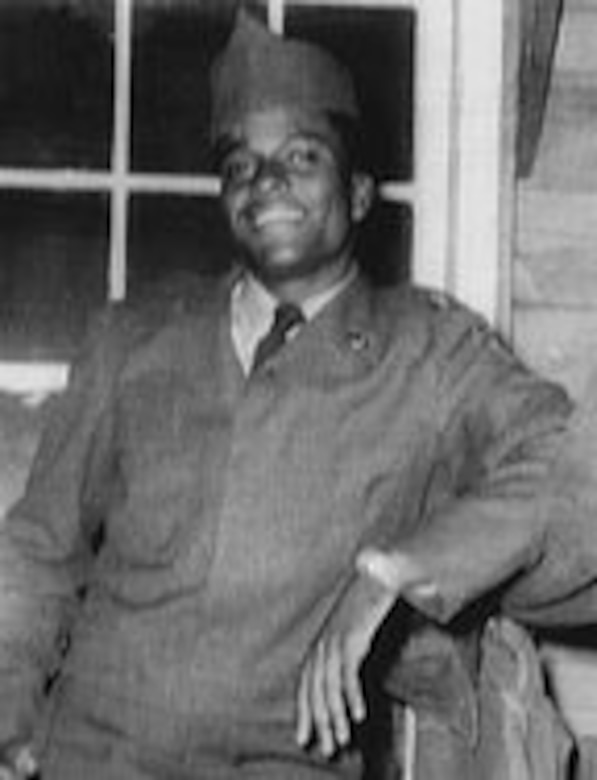
A soldier poses for a photo.

Pride was also a notable baseball player beginning in 1953 when he signed a contract for a farm team of the New York Yankees. He later earned a spot in the Negro Leagues, and he played as a pitcher and outfielder in Detroit, Memphis, Tenn., and Birmingham, Ala. 

In 1956, Pride's baseball career was interrupted when he was drafted into the Army.

Pride's honorable service in the Army was from 1956 to 1958. After basic training at Fort Chaffee, Arkansas, he was stationed at Fort Carson, Colorado, where he served in logistics. He also played on the installation's baseball team which won the "All Army" sports championship in 1957

After his Army service, Pride rejoined the Negro Leagues.

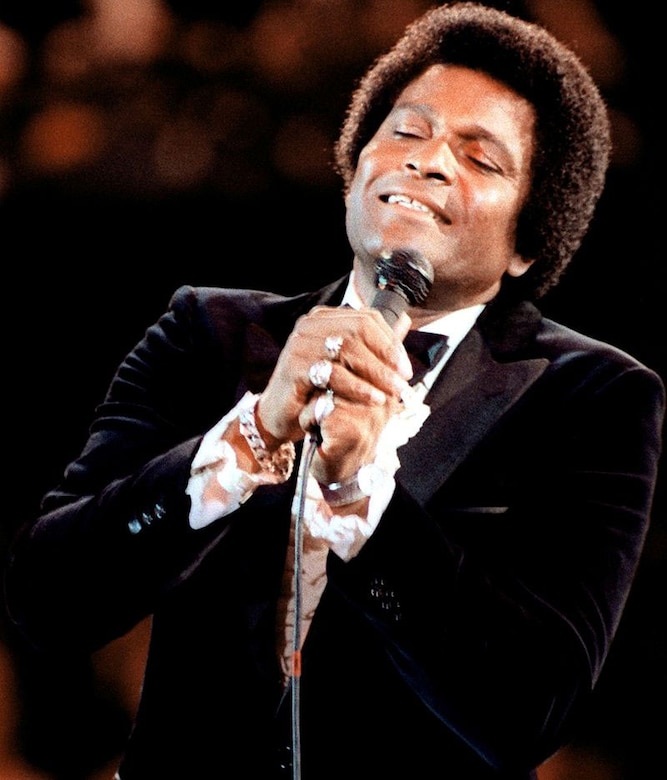
A man in a tuxedo sings into a microphone .

But Pride was becoming more interested in singing than baseball, and, in 1958, he cut his first record "There's My Baby (Walkin')."

More About the Negro Leagues

The Negro Leagues were formed in 1920 so that African Americans could play professional baseball, as they were not then allowed to play for Major League Baseball teams.

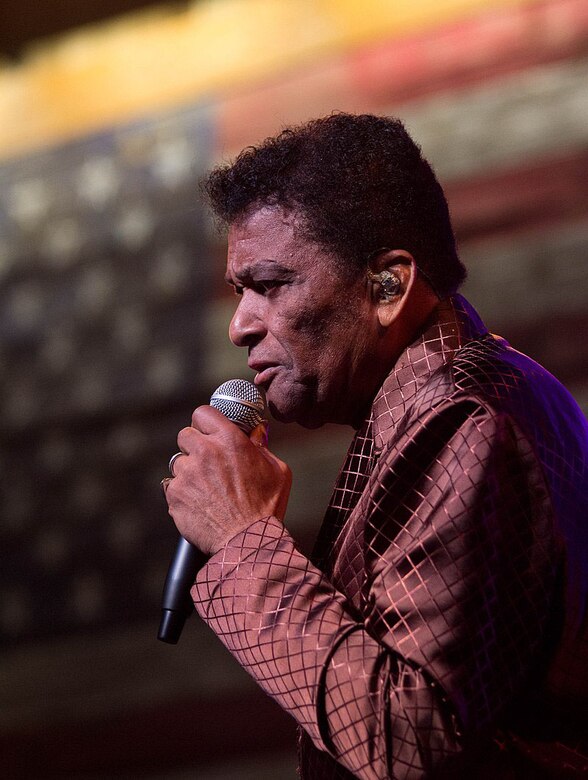
A man sings into a microphone.

On Dec. 16, 2020, MLB announced it was elevating the Negro Leagues to major league status.

Pride died of COVID-19 just four days earlier on Dec. 12 in Dallas.

More Stories of Sports Heroes Who Served


Pinning Ceremony


Navy Chief Petty Officer Rhanielou Amman receives her chief petty officer combination cover during a pinning ceremony on the aircraft carrier USS Carl Vinson during operations in the Pacific Ocean, Feb. 1, 2021.

Snowstorm Response


Members of the West Virginia National Guard conduct road clearing and debris removal operations in Putnam County, W.V., Feb. 18, 2021. A large winter storm left more than 90,000 West Virginians without power.

Ready Tanker Heist


Air Force Capt. James Huff and Capt. Wilson Spreier prepare the KC-135 Stratotanker aircraft flight simulator prior to starting a Tanker Heist competition at Royal Air Force Mildenhall, England, Feb. 11, 2021.

Winter Work


A North Carolina National Guard soldier deploys to the National Guard armory in Rockingham, N.C., for winter storm duty, Feb. 18, 2021. The soldiers deployed to support civil authorities in central North Carolina.

Forward Focus


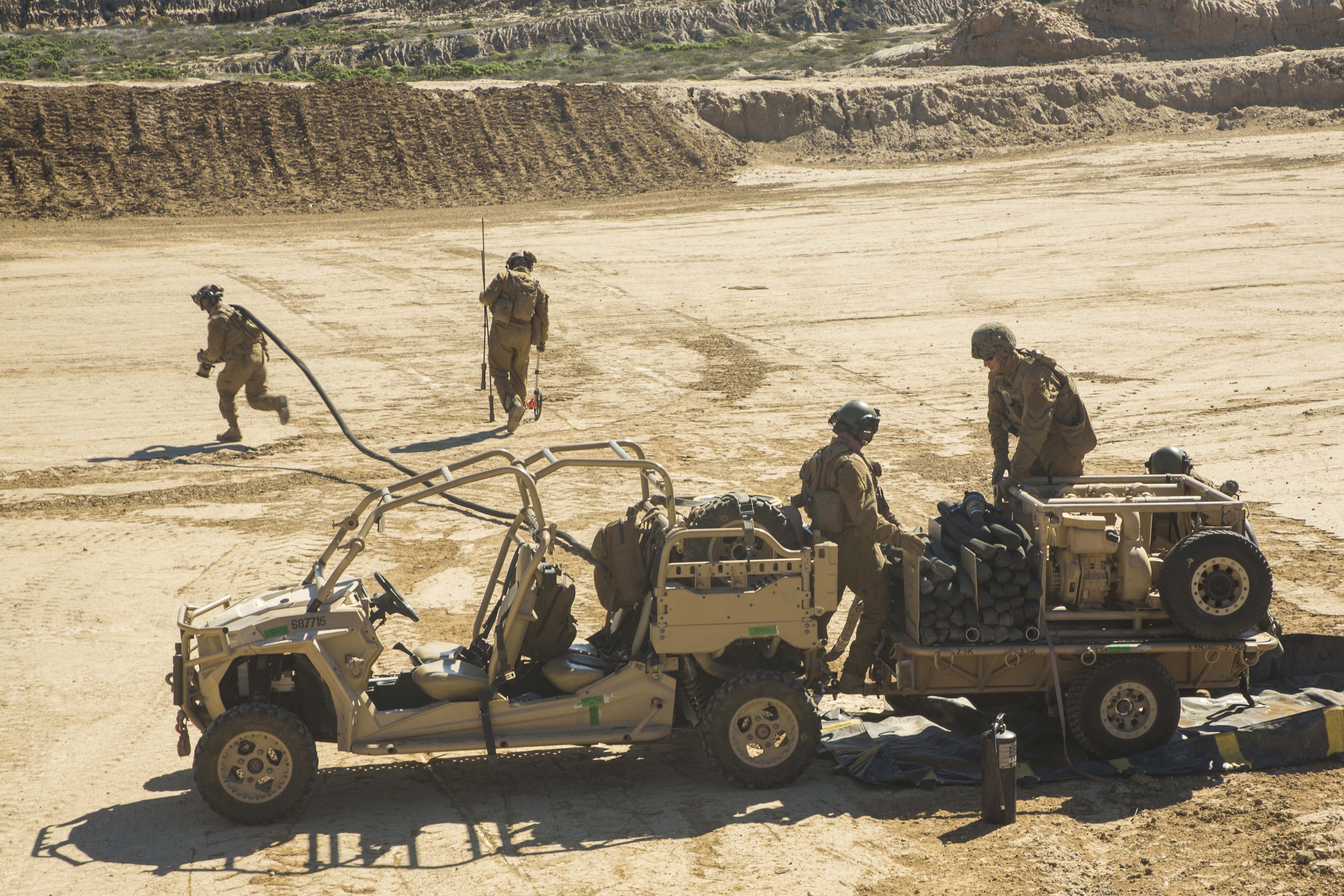
Marines set up a forward arming and refueling point during Exercise Winter Fury 21 on San Nicholas Island, Calif., Feb. 18, 2021.

Monday, February 22, 2021

Artic Aim


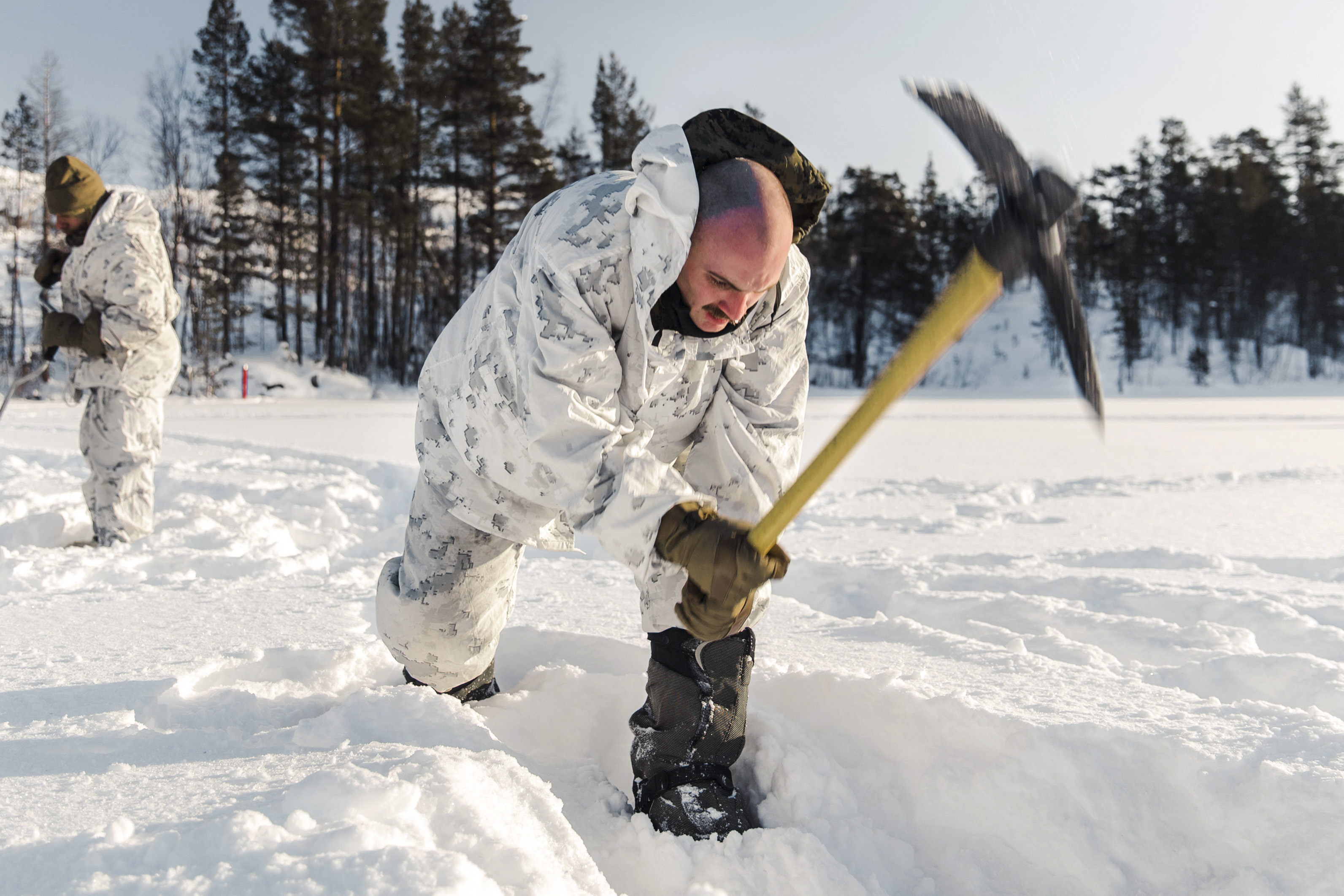
A Marine breaks ice on a demolition range during arctic cold-weather and mountain-warfare training in Setermoen, Norway, Feb. 18, 2021.

Night Vision Aim


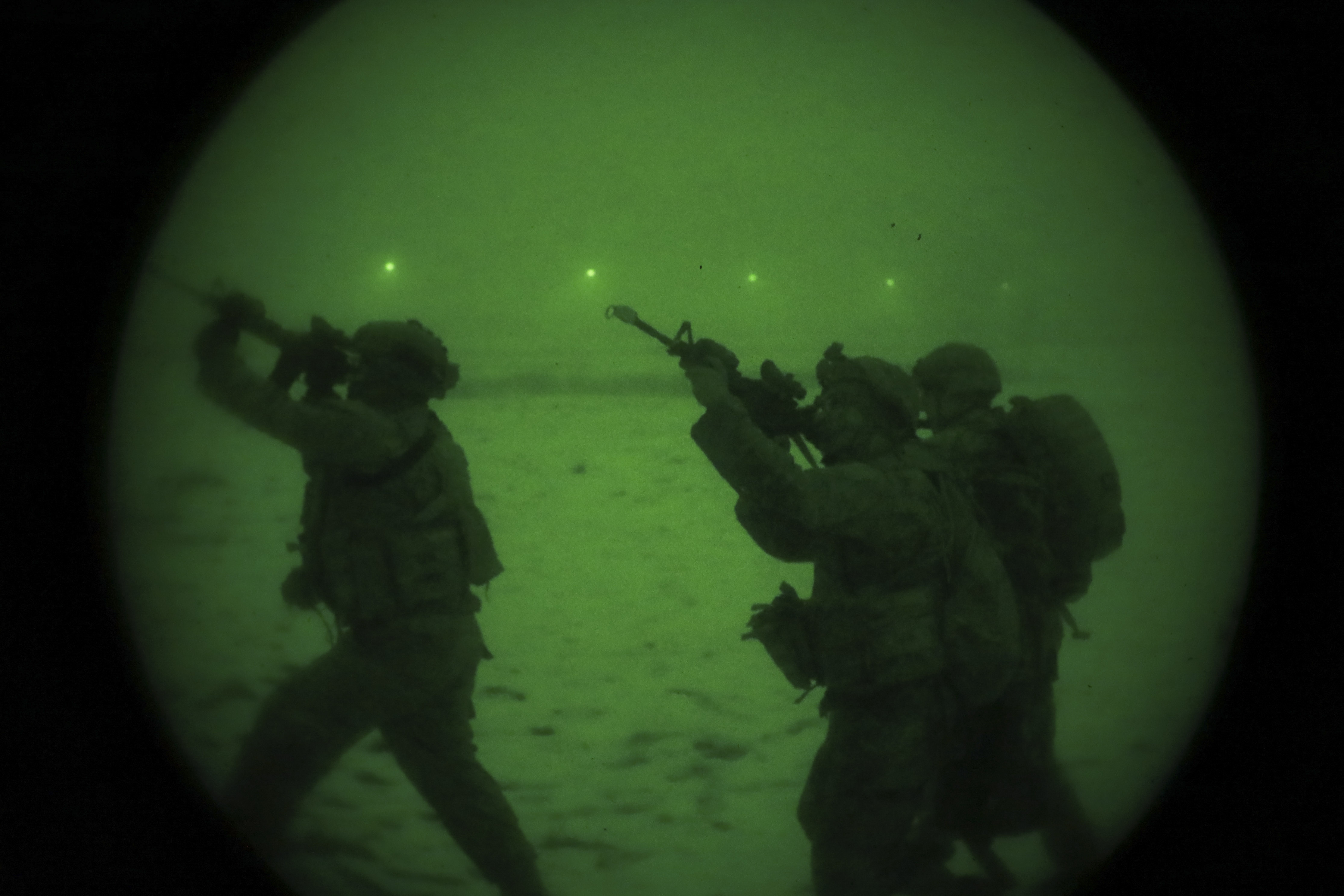
Soldiers cover the high ground during training at Hohenfels Training Area, Germany, Feb. 16, 2021.

COVID-19 Vaccine


A Marine receives the COVID-19 vaccination at the U.S. Naval Hospital Okinawa at Camp Foster in Japan, Feb. 18, 2020. As thousands of service members receive the vaccine, they are given an "I got my COVID-19 vaccine because…" sticker.

New Officials Sworn-in at the Department of Defense

 Feb. 22, 2021


The following individuals have been sworn-in virtually or in-person from Feb. 17, 2021, through today, Feb. 22, 2021. 

  • Elizabeth Stockton, Advance Officer, Office of the Secretary of Defense
  • Farooq Mitha, Deputy Assistant Secretary of Defense for Small Business Programs
  • Daniel Parnes, Special Assistant to the Assistant Secretary of Defense for Sustainment
  • Jamal Brown, Deputy Press Secretary, Office of the Assistant to the Secretary of Defense for Public Affairs
  • Won Palisoul, Special Assistant to the Under Secretary of Defense for Personnel and Readiness
  • Spencer Boyer, Deputy Assistant Secretary of Defense for Europe and NATO Policy
  • Milancy Harris, Deputy Assistant Secretary of Defense for Special Operations and Combatting Terrorism

For the lists of personnel sworn-in previously, please see the releases on Jan. 20, 2021, Feb. 9, 2021 and Feb 16, 2021.

Giving Instructions


Army Spc. Nzuegang Youmbi, an petroleum supply specialist assigned to the 729th Quartermaster Company, Maryland National Guard, provides instructions to civilians on how to administer the COVID-19 self-test at the Wheaton Recreation Center in Wheaton, Md., Feb. 3, 2021. Guardsmen are supporting county health departments to accelerate COVID-19 vaccination and testing efforts.

COVID-19 Test


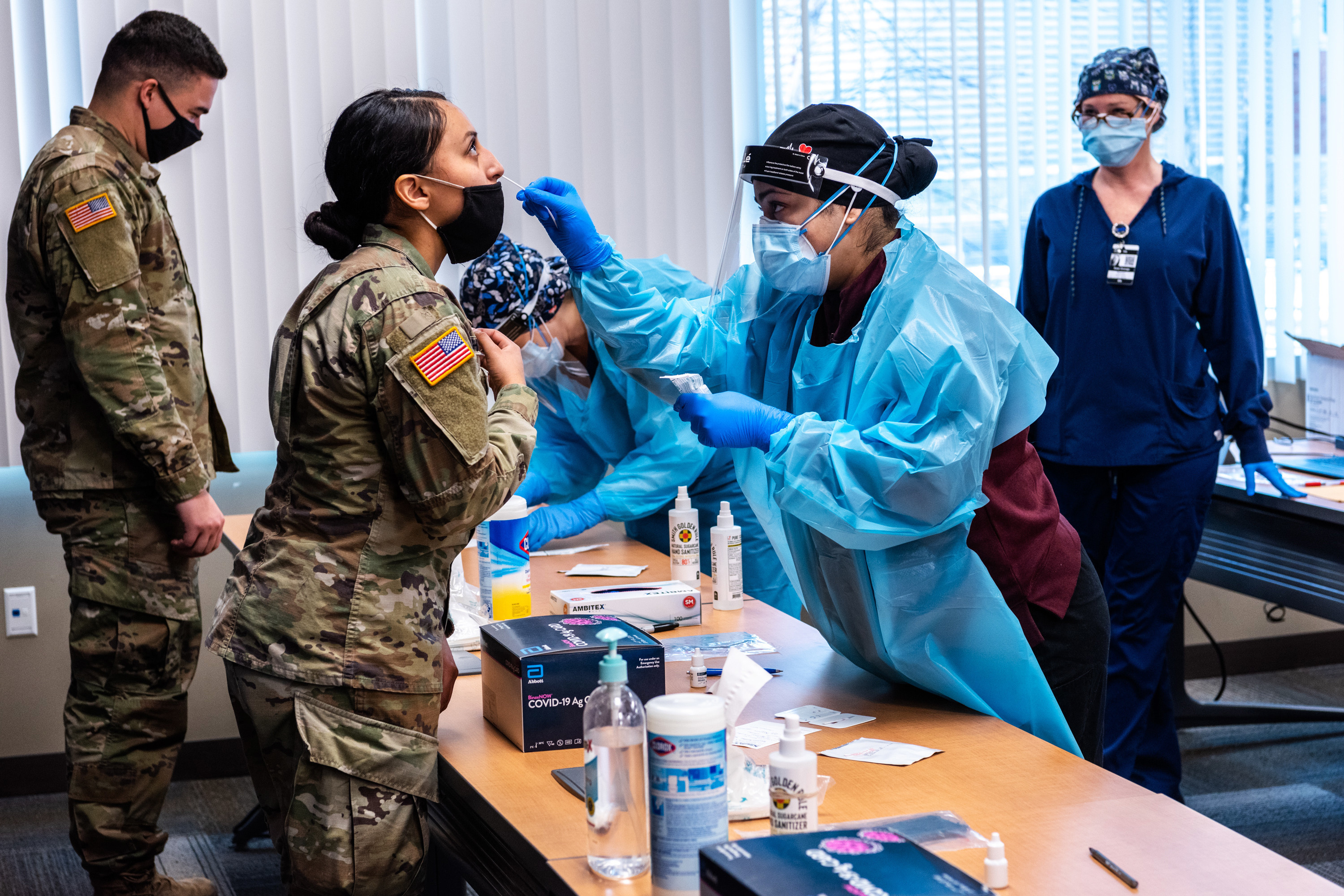
Members of the Title 10 Vaccination Support Team take a 15-minute COVID-19 test at a Federal Emergency Management Agency briefing at the New Jersey Air National Guard Training Center in support of COVID-19 vaccine operations in Sea Girt, N.J., Feb.13, 2021. FEMA is working with state, local, tribal and territorial governments to open vaccination centers in underserved communities.

Live Fire


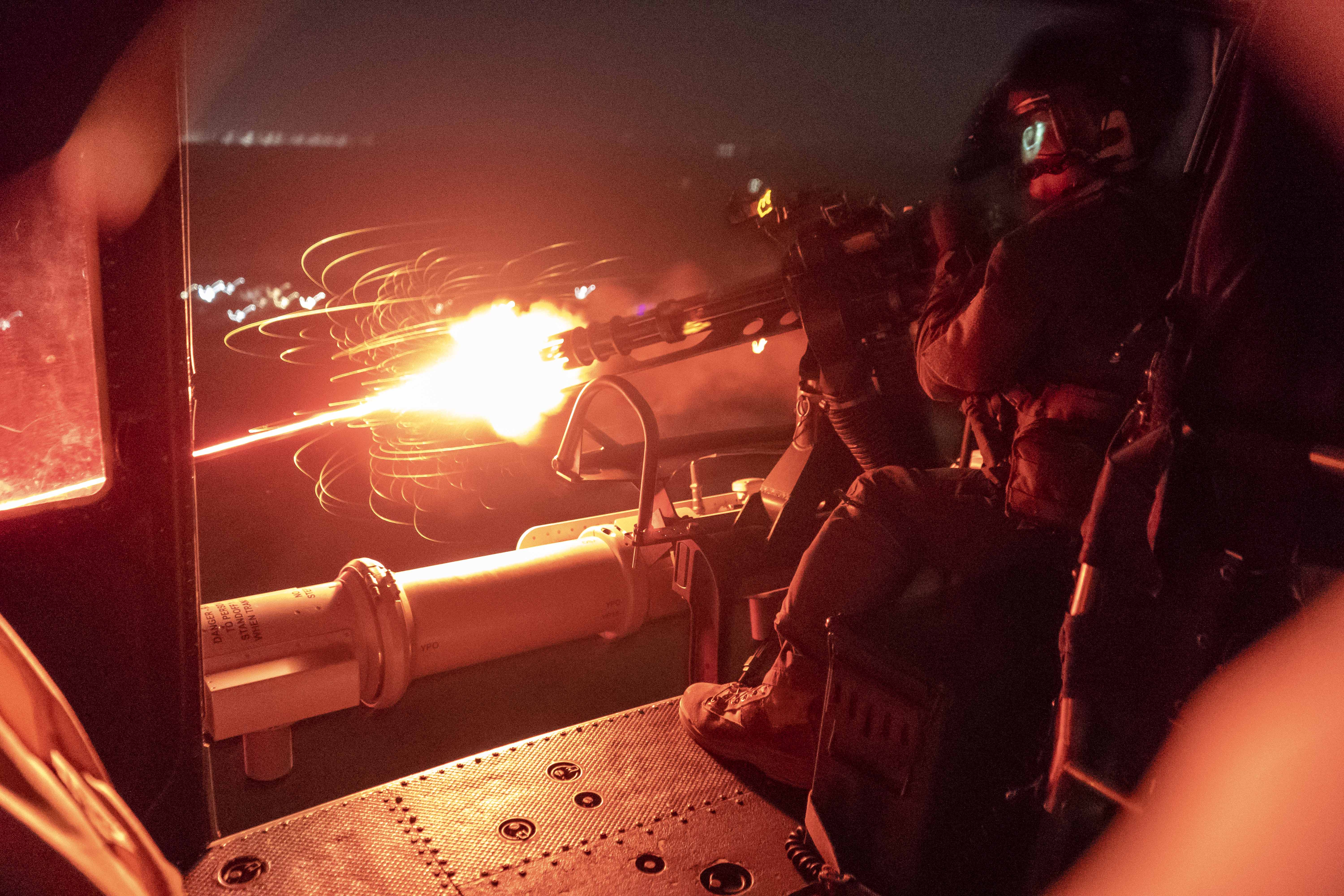
Marine Corps Sgt. Ross Roby fires a machine gun from a UH-1Y Venom during Operation Octave Quartz in Somalia, Dec. 22, 2020. The operation relocates U.S. forces in Somalia to other East Africa operating locations while supporting partner forces and maintaining pressure on violent extremist groups.

Chromite Watchfire


Marines fire a high mobility artillery rocket system during Exercise Chromite Watchfire at Marine Corps Base Camp Pendleton, Calif., Feb. 16, 2021. The training exercise focuses on Navy and Marine Corps integration and combat readiness.

Careful Clean


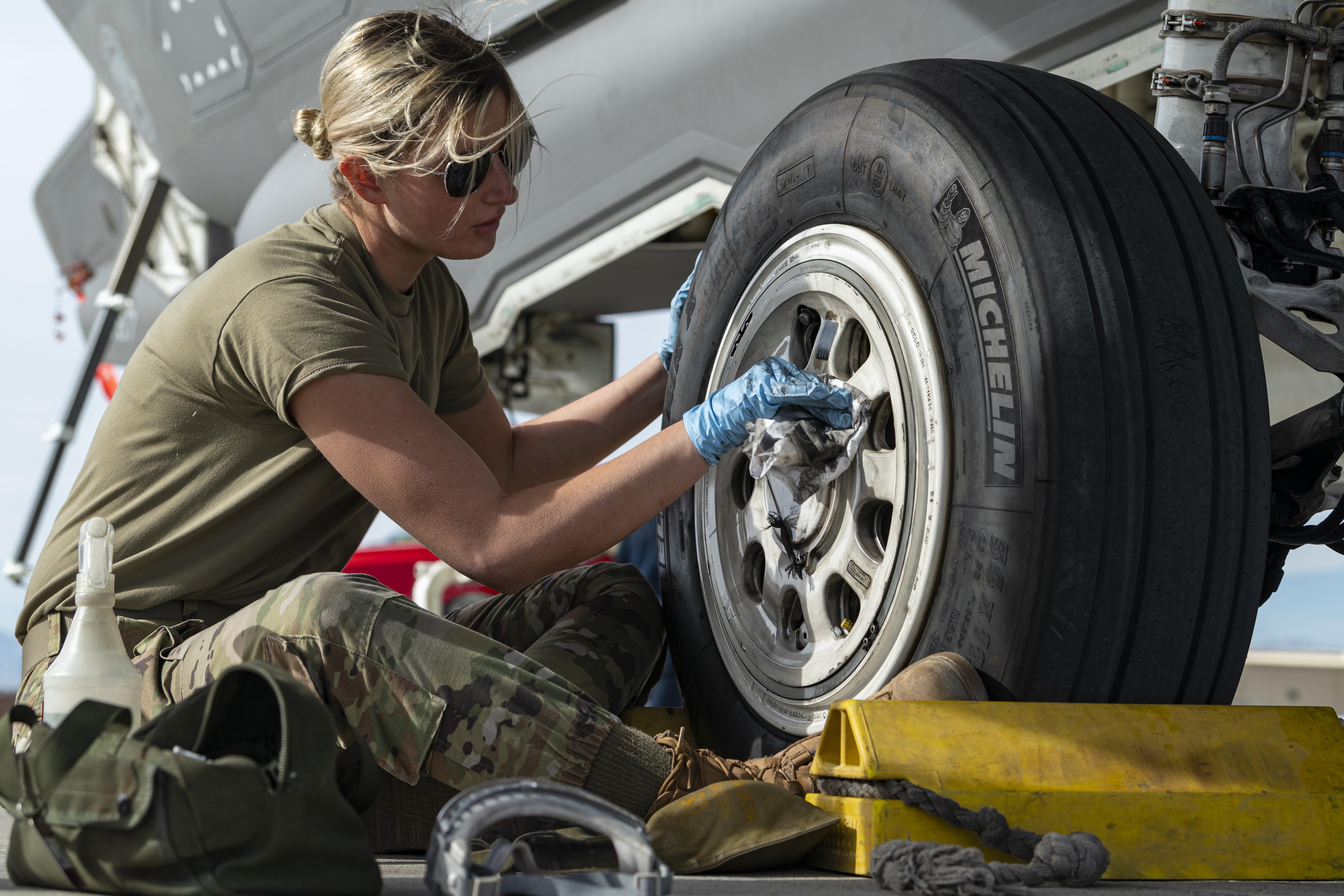
Air Force Senior Airman Molly Phillips cleans an F-35A Lightning II fighter jet before a mission at Nellis Air Force Base, Nev., Feb. 3, 2021.

Beach Landings


Air Force UH-1N helicopters conduct landing maneuvers at Numazu Beach, Japan, Feb. 18, 2021.

Smoky Mission

Air Force Staff Sgt. Jessica Poteet and a military working dog participate in a training exercise at Hurlburt Field, Fla., Feb. 11, 2021.


Eagle Ace


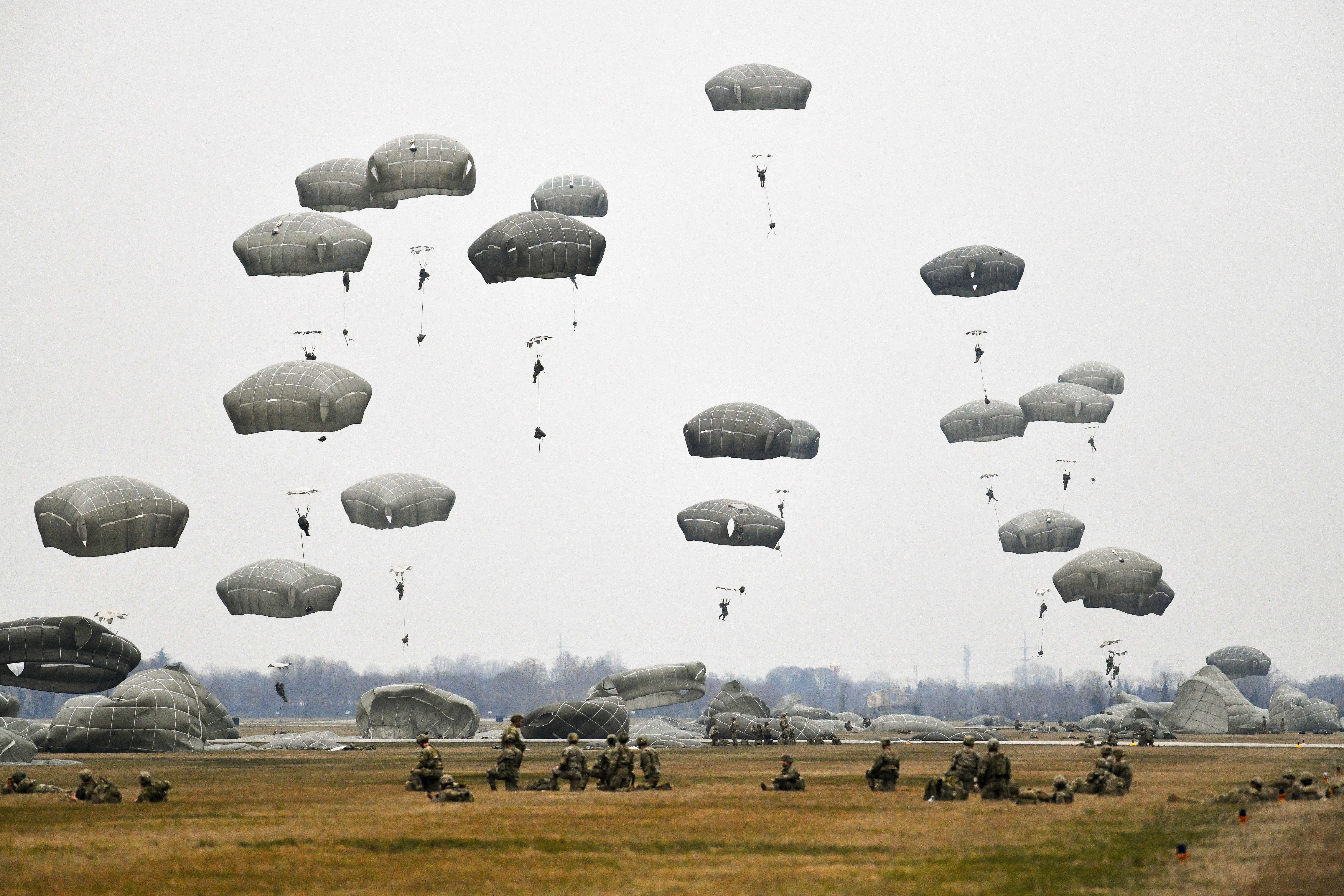
U.S. and Italian troops conduct an airborne operation from an Air Force C-130 Hercules aircraft during exercise Eagle Ace II at Rivolto Italian Air Force Base, Italy, Feb. 18, 2021.

Strike Sortie


Air Force F-15E Strike Eagles return from a training sortie at Royal Air Force Lakenheath, England, Feb. 19, 2021.

Deployment Processing


Air Force Staff Sgt. Ashley Spain, assigned to the 81st Force Support Squadron, helps to process deploying airmen inside the Bay Breeze Event Center at Keesler Air Force Base, Miss., Feb. 16, 2021. More than 150 airmen assigned to the 81st Medical Group were preparing to deploy to support the Federal Emergency Management Agency.

Vaccine Preparation


Army Pfc. Shaniah Edwards, assigned to the Virgin Islands Army National Guard's medical detachment, prepares to administer the Moderna COVID-19 vaccine to soldiers and airmen at the Joint Force Headquarters in Kingshill, Virgin Islands, Feb. 12, 2021.

Friday, February 19, 2021

Secretary of Defense Briefs Reporters on NATO Defense Ministerial and Ongoing Department of Defense Issues

 Feb. 19, 2021

Secretary of Defense Lloyd J. Austin III; Pentagon Press Secretary John F. Kirby

PRESS SECRETARY JOHN F. KIRBY: Good afternoon, ladies and gentlemen. I'm going to turn this over to the secretary in just a minute. He'll have a few opening comments and then we'll get to your questions. As you know, we're going to be doing questions from the phone and in the room, so I'm going to go two on the phone, two in the room.

The secretary has got 30 minutes, so we're going to try to move this crisply, given the restriction of time and his schedule, I'd ask you to limit your follow-ups, if you can. Meaning, limit them to zero.

So with that, Mr. Secretary, over to you.

SECRETARY OF DEFENSE LLOYD J. AUSTIN III: Well, good afternoon, everyone. And thanks to all of you for being here today. Before I start, let me just say that I deeply appreciate the work that you do on behalf of the public. I respect the way that you cover our military and I respect the role that you play in holding us accountable for how we defend the nation. And that is the number one job of the Department of Defense, to defend this nation and protect our interests.

As you know, I just wrapped up my first NATO Defense Ministerial meeting yesterday and it was a terrific couple of days and I want to thank Secretary General Stoltenberg for all his leadership in making that happen.

You all know that it's a little tougher to meet with people in a pandemic, and even though we met virtually, we still enjoyed productive discussions about a range of challenges facing NATO today and many that we are going to continue to face in the future, and they include a resurgent Russia, disruptive technologies, climate change, an ongoing war in Afghanistan, and the persistent threat of terrorism, and an increasingly aggressive China.

We were joined in some of those conversations by representatives from some of our most capable partners, including Finland and Sweden and the European Union, and we appreciated their unique perspectives, especially about China. Indeed, I applaud NATO's work on China and I made it clear that the United States is committed to defending the international rules-based order, which China has consistently undermined for its own interests.

We here at the Pentagon and the Department of Defense view China as our primary pacing challenge and we believe NATO can help us better think through our operating concepts and investment strategies when it comes to meeting that challenge.

But really, my first goal during the ministerial was to carry forward President Biden's message that strong alliances and partnerships remain vital to our collective security, and that foreign policy will be led by our diplomats.

I also stressed our ironclad –- ironclad commitment to the security guarantee under Article 5 of the national -- of the North Atlantic Treaty, and I don't use that word "ironclad" lightly. Our shared responsibility as allies, our duty, is to protect our populations and our territory, and to meet that duty we -- we require what the secretary general refers to as credible deterrence and defense, which I believe means that we must, each of us, do our part to procure, prepare, and provide ready forces and capabilities. And so I'm heartened to see that many of our allies meet or exceed NATO's 2014 Defense Investment Pledge, nine of the -- nine of them this year alone, in fact.

And now, we're into our seventh year of steady defense spending increases, and naturally, we want this trend to continue and we want to see every member of the alliance contribute their fair share. We recognize that this is -- this isn't always easy, but collective security rarely is. And neither are the missions that we're conducting in Iraq or Afghanistan easy.

We set aside a good bit of time to talk about those two places, and on Iraq, I reiterated our strong commitment to the defeat of ISIS and to supporting Iraq's long-term security, stability, and prosperity. That's a commitment that I made to my Iraqi counterpart and the Iraqi minister of interior just the other day after last weekend's deadly rocket attack in Erbil.

I also welcomed that expanded NATO mission in Iraq that responds to the desires and aspirations of the Iraqi government. With respect to Afghanistan, I walked our allies through our thinking as the new administration comes to grips with the reality on the ground.

The bottom line is this: we are committed to a responsible and sustainable end to this war, while preventing Afghanistan from becoming a safe haven for terrorist groups and -- and -- that -- that threaten the interests of the United States and our allies, and ensuring a just and durable end to the long-running conflict.

And so, to that end, we are conducting a rigorous interagency review of the situation, including all relevant options, with full consideration of the consequences of any potential course of action. We are mindful of the looming deadlines. But we want to do this methodically and deliberately, and I certainly won't get ahead of any decisions, nor will I preview the advice that I plan to give to the president.

Clearly, the violence is too high right now, and more progress needs to be let -- needs to be made in the Afghan-led negotiations, and so I urge all parties to choose the path towards peace. The violence must decrease now.

I told our allies that no matter what the outcome of our review, the United States will not undertake a hasty or disorderly withdrawal from Afghanistan that puts their forces or the alliance's reputation at risk. At this time, no decisions about our future force posture have been made. In the meantime, current missions will continue, and of course, commanders have the right and the responsibility to defend themselves and their Afghan partners against attack.

As we move forward in our review, we will consult with our NATO allies, our Resolute Support partners, and of course, the government of Afghanistan, and there will be no surprises. We will consult each other and -- and consult together and -- and decide together and act together. And so that was my message over the last two days, and I think it was well-received.

Over the last -- for -- for this last 70 years, NATO has proven itself to be the strongest alliance in history, upholding our shared values of democracy, individual liberty, and the rule of law. When Article 5 was first invoked, it was in our defense on September 11th, and the United States will not forget that, nor will we forget our own obligations to revitalizing this and all our other alliances. Collective security is, as I said, hard work, and we're ready to put our shoulders to the wheel.

And finally, I'd like to close by thanking the men and women of the Department of Defense who, as President Biden puts it, are often how the rest of the world encounters America. Because of them and their families and -- our nation will always lead from -- from a position of strength.

Thank you, and I look forward to your questions.

MR. KIRBY: Okay. We're going to go to Lita Baldor from AP on the phone. Lita?

Q: Thank you. Thank you, Mr. Secretary, and it's -- it's been quite a while since we've been able to ask questions of the defense secretary in the briefing room. We appreciate it, and we hope that you are committed to doing this on a regular basis.

My question is on Afghanistan. During the NATO meeting, were the allies pressing you for timing on an answer? How long do you think the U.S. can wait before making a decision? And is that enough time, do you think, for the Taliban to measurably change either the violence or the negotiations? Thank you.

SEC. AUSTIN: Thanks. I would just say that again, you know, we're going through a rigorous process, and our allies understand that, and they would want us to make sure that we're thoughtful about how we approach this and -- and -- and what we do. And so, you know, all of us are mindful of the time that -- that -- that's available, but we're really focused on making sure that -- that the negotiation process takes place as it should, and that, you know, hopefully, the parties will abide by their -- their commitments that they made at the outset of the -- the -- the negotiations, and the violence will -- we can bring the level of violence down.

But we're focused on making sure that we -- we make the right decisions, and we'll go through this process deliberately. Our allies understand that, and my -- my sense is that they did not fully expect that we would have a -- have a decision this early on in our -- in the -- this administration's tenure.

MR. KIRBY: Next question to Missy Ryan on the phone, Washington Post.

Q: Hi. Thanks for doing this, and echo Lita -- Lita. Hope to -- we could do this again regularly.

I have a question regarding the department's handling of sexual harassment and assault. I know that one of your first actions was this memo asking for initial input from senior officials by February 5th. I'm just wondering what you have learned so far and how that will guide your approach to tackling the problem of sexual harassment and assault.

And as a corollary, there was a video that went viral in the last 24 hours (inaudible) perpetrators retained by her commanding general. I was wondering if you have seen the video and if your office is looking into that? Thanks.

SEC. AUSTIN: So, Missy, there was quite a bit of feedback in the transmission there and I don't think I fully understood all of the question, but I -- what I think I heard you ask was, based upon what we received from our -- from the services, where are we in our efforts in taking on the sexual assault issue. And the second issue, as I understood it, was about the video.

First of all, you know, as I said in my testimony in front of Congress, I take this issue of sexual assault very, very seriously. And I know that the service chiefs and the service secretaries do as well. And so the collection of the data is a first step, but you can look for us to take additional steps in looking in detail at ourselves and what has worked, what hasn't worked, and what measures we need to take going forward to ensure that we provide for a safe and secure and productive environment for our teammates. I think any other approach is, in my view, irresponsible.

We have been working at this for a long time in earnest, but we haven't gotten it right. And my commitment to my soldiers, sailors, airmen, and Marines, and dependents is we're going to do everything in our power to get it right.

Regarding the video, I found the video deeply disturbing, and I've asked my staff for additional information, and I'll leave it at that.

MR. KIRBY: Tom? Tom, Tom, Tom.

Q: Mr. Secretary, at your confirmation hearing a month ago, you talked about the problem of domestic extremism in the military. I am wondering now weeks on do you have any sense of the scope of the extremist problem in the military, any data, any numbers about who is kicked out, who is not let into the military, and if not, do you still hope to get some data?

And also, it's now prohibited under DOD regulations to be an active member of an extremist group but okay to have simple membership. Do you -- will you move to change that, bar all membership in such groups?

SEC. AUSTIN: So I think that was about six questions in one there, but, yes, let me --

Q: (inaudible)

(Laughter.)

SEC. AUSTIN: Let me just say a couple of words about that. First of all, I think this is a very important issue to us in the department. And I think it's an important issue because, as I said in my testimony, this tears at the fabric -- very fabric of cohesion. And it's important for us to be able to trust the men and women on our left and right.

I've asked for the services to conduct a one-day stand-down and take 60 days to do it. And then, as they conduct that stand-down, I have encouraged them to have a dialogue with their troops about our values, about the oath that they took when they came into the service, and about who we are and what we're about.

This is also a time for us to educate leaders in terms of understanding those signs and those -- those symptoms that can indicate that we could be developing an issue within our ranks.

But let me say up-front here, though, before I go one step further, that -- that I really -- I really and truly believe that 99.9 percent of our service men and women believe in that oath. They believe, embrace, the values that we are focused on and they're doing the right things.

But -- and I expect for the numbers to be small, but quite frankly, they'll probably be a little bit larger than most of us would guess, but -- but I expect for them to be small. But I would just say that, you know, small numbers in this case can have an outsized impact.

And when I think about, you know, the issue of extremism in the ranks, you've heard me talk about my experience with the 82nd Airborne Division, which I believe was -- is a great organization, and we have a lot of great organizations in the military, but you know the history of the storied 82nd Airborne Division.

And as we wrestled with this -- with this issue when I was a lieutenant colonel, we couldn't tell that story of what we were doing and how great we were because nobody wanted to hear it, they wanted to hear about the skinheads. And so that had an outsized impact on that -- on that organization.

And one of the things that sticks in my -- in my mind right now -- and General Milley will probably step on my toes for saying this -- but I have this image of Mark Milley, Lieutenant General Mark Milley, standing in front of a podium in Fort Hood, Texas, talking about the impact that was -- that was experienced by one of our members, who had become radicalized and killed a bunch of our soldiers that were preparing for deployment. That nearly crippled the organization for a period of time. So an incredible – an outsized impact on the organization.

I think that -- you know, our -- the American public has high expectations of its military, as it should. And the American public should -- should know and understand that we're not afraid to take a look at ourselves, and we're not afraid to -- to address -- if there are issues, to address those issues that -- that may be rising up in our -- in our climates and our communities.

And so we're going to learn a lot more. You know, we don't have specific data about -- about numbers right now, but -- but quite frankly, as I said earlier, you know, small numbers can have an incredible impact on a great force, and we have a great force, ladies and gentlemen.

MR. KIRBY: Jennifer?

Q: Mr. Secretary. Will any U.S. troops remain at the Capitol after March 12th? And what would you say to those who say that there is no credible threat to the U.S. Capitol and those troops should go home right now?

SEC. AUSTIN: Right now in terms of, you know, our expected stay, it is March 12th. And -- and we don't have an additional requirement or request from another federal agency to provide them support, so that's our focus right now.

But while I'm talking about them, let me just emphasize the tremendous work that our Guardsmen have been doing. And you've been -- you know, you've seen the weather that we've had lately, they are out there, on point, on guard, in support of -- of other federal agencies, protecting our lawmakers. And I can't say enough about them, and I'm really proud of what their -- what their leadership is doing also to take care of them while they're doing this tough work.

But presently, we don't have any additional requirements beyond the one that we just -- that we talked about.

Q: And credible threats?

SEC. AUSTIN: Jennifer, you know, I mean, it's probably not appropriate for me to talk about intelligence matters from -- from this podium, but I would just tell you that we will continue to assess the threats as -- as we go forward, and decisions will be based upon, you know, what we believe is credible or not.

I told them, when I went to see them the other day, that, you know, my plan is to not keep them there one day longer than is necessary. Having said that, they know and understand that if our lawmakers need -- need help, they need protection, they stand ready to provide that protection. But again, March 12th is what we're focused on now.

MR. KIRBY: Okay, I'm going to go to the phones. Phil Stewart, Reuters?

Q: Yes, hi, Mr. Secretary. On your call with your Saudi counterpart, what message did you deliver about the war in Yemen and how this administration and this Pentagon will approach threats to the Kingdom of Saudi Arabia emanating from Yemen?

SEC. AUSTIN: Well, you know, I -- I certainly -- I consider that call to have been a good call. It was certainly re-establishing connectivity with -- with the crown prince, who was also the Minister of Defense, my counterpart.

As you know, President Biden has been clear about the fact that we will no longer support offensive operations -- the Saudis' offensive operations into Yemen. And so they've heard that message loud and clear.

And in terms of specific issues that I -- I would have covered with -- with the crown prince, you know, we provide a readout, but -- and I'm certainly -- I look forward to having issues -- talking about issues of substance in these conversations, but I certainly won't -- I won't provide details of the conversation from the podium here.

MR. KIRBY: Okay. Because of time, I'm going to go back into the room now. We'll go one-for-one until we run out of time.

Helene?

Q: Mr. Secretary, thank you for doing this. I have two questions, but they're connected. The first one is, you said that you found the viral video -- they're both related to females in the military. You found the viral video very disturbing, but in this video, this female Marine says -- and I quote -- "This is why females in the military kill themselves."

And you say that you're looking into this issue. She suggested specifically the commanding general, her C.G., saying that whoever the perpetrator is going to be retained in the military. How -- what kind of message are you going to be sending to sort of the -- the C.G.s, the captains, the brigade commanders throughout the military about how they deal with this issue?

And connected to that, my second question is on specifically the issue of Laura Richardson and Jacqueline Van Ovost. Your predecessor told us that he withheld their promotions because he was afraid of how President Trump would react to them. Are you going to be forward these promotions for these two women to President Biden?

SEC. AUSTIN: Helene, I think that was two questions, each with six parts.

Q: They’re connected!

SEC. AUSTIN: Yeah. On -- on the second question first, I -- I certainly can't comment on decisions that someone else made or my -- my predecessor made. I'll leave that to them to -- to explain their actions.

And I certainly won't -- won't comment on personnel actions from this podium, in this room. I don't think that's fair to the system, not fair to my boss, and certainly not fair to the people who are in the -- in the -- who are competing. I would just say that I've seen the records of both of these women, they are outstanding, and -- and so -- and -- and I'll leave it at that. 

On the -- on the issue of sexual assault and, you know, what's -- what is going to be done and -- and what I'm -- what -- what I'm going to emphasize to -- to commanders, I think we need to consider who I am and where I fit in the judicial process -- or -- or chain. And we want to make sure that, you know, I preserve my ability to -- to adjudicate or take action or whatever needs to happen.

But the first thing's -- first things first -- we have to get the facts, we have to understand what -- what just happened. And let me also say that -- that, you know, I care about each and every one of our -- of our troops, and certainly, you know, I'm going to ask that -- that her chain of command makes sure that someone is looking out after her needs and make sure that -- that we're taking care of her. So.

MR. KIRBY: Okay, back -- back to the phone here. Tara Copp from McClatchy?

Q: Thank you, Mr. Secretary, for doing this. I also have a question about the National Guard. A few weeks ago, the Adjutants General for the states of Washington and California said that the domestic demands on the Guard, whether they're wildfires or storms or domestic unrest, are expected to continue to -- in -- in future years, and what really needs to happen is we need to increase the end strength of the Guard.

I was wondering if you've talked to the National Guard about this and if you're considering requesting an end strength increase for Guard members to address these future domestic threats? Thank you.

SEC. AUSTIN: Again, I'm -- I'm really proud of our -- of the work that our Guard has done. I mean, it's -- it's -- and it continues to do -- we didn't talk about this earlier but I -- I think most of you know that there are over 20,000 Guardsmen out there right now around the country, helping out with -- with the COVID crisis and -- and helping distribute -- distribute vaccines and -- and that sort of stuff. So they are doing -- they are having a tremendous positive effect on our country and they're doing great work and I'm really proud of them.

In terms of end strength, that's a conversation that I've not had with -- with the chairman or the chief of the Guard and certainly I think when they feel that it's appropriate, if that's their concern, then they'll -- they'll bring it -- bring the issue forward.

But to answer your question, we've not had those discussions.

MR. KIRBY: The last -- last -- last question today is going to go to Tony, then we're going to have to wrap up.

Q: Can I have a -- can I have a question? I have a China -- I have a China question. Do you see any areas of cooperation with China? You talked about a pacing threat, a pacing challenge. This is four years we've heard the rhetoric.

What areas do you seek potential cooperation to lower the tensions between our -- our two nations?

SEC. AUSTIN: I -- I would say that -- that, you know, anything that we do will be based upon our best interests. And -- and so there no doubt are some areas where we -- we will see common interests and there may be an opportunity to -- to engage, but it will be from the standpoint of promoting our best interests.

Now, having said that, from a Department of Defense standpoint, as I mentioned earlier, you know, my number one concern and my number one job is to defend this country and protect our interests. And so we are -- in this department are going to do everything possible to ensure that we have the right operational concepts, the right plans in place, and that we have resourced those plans with the right capabilities to present a credible deterrence to -- not only to China or any other adversary who would want to -- want to take us on.

Q: Thank you.

MR. KIRBY: Thanks, everybody, we have to call it quits right there. Thank you so much. Thank you very much. Thank you.

(CROSSTALK)

SEC. AUSTIN: Thanks, everybody.

Readout of Secretary of Defense Lloyd J. Austin III's Call With Ukrainian Minister of Defence Andrii Taran

 Feb. 19, 2021


Pentagon Press Secretary John Kirby provided the following readout:

Secretary of Defense Lloyd J. Austin III spoke by phone today with Ukrainian Minister of Defence Andrii Taran to strengthen the strategic partnership between the United States and Ukraine.

Secretary Austin emphasized that the U.S. remains steadfast in its support for Ukraine's sovereignty and territorial integrity. He reaffirmed U.S. commitment to building the capacity of Ukraine’s forces to defend more effectively against Russian aggression and thanked Minister Taran for Ukraine’s contributions to international security. Secretary Austin also underscored the need for Ukraine to maintain progress on defense reforms.

Minister Taran expressed his gratitude for continued U.S. support and emphasized his commitment to transforming Ukraine’s defense sector in line with NATO principles and standards.

Damage Control


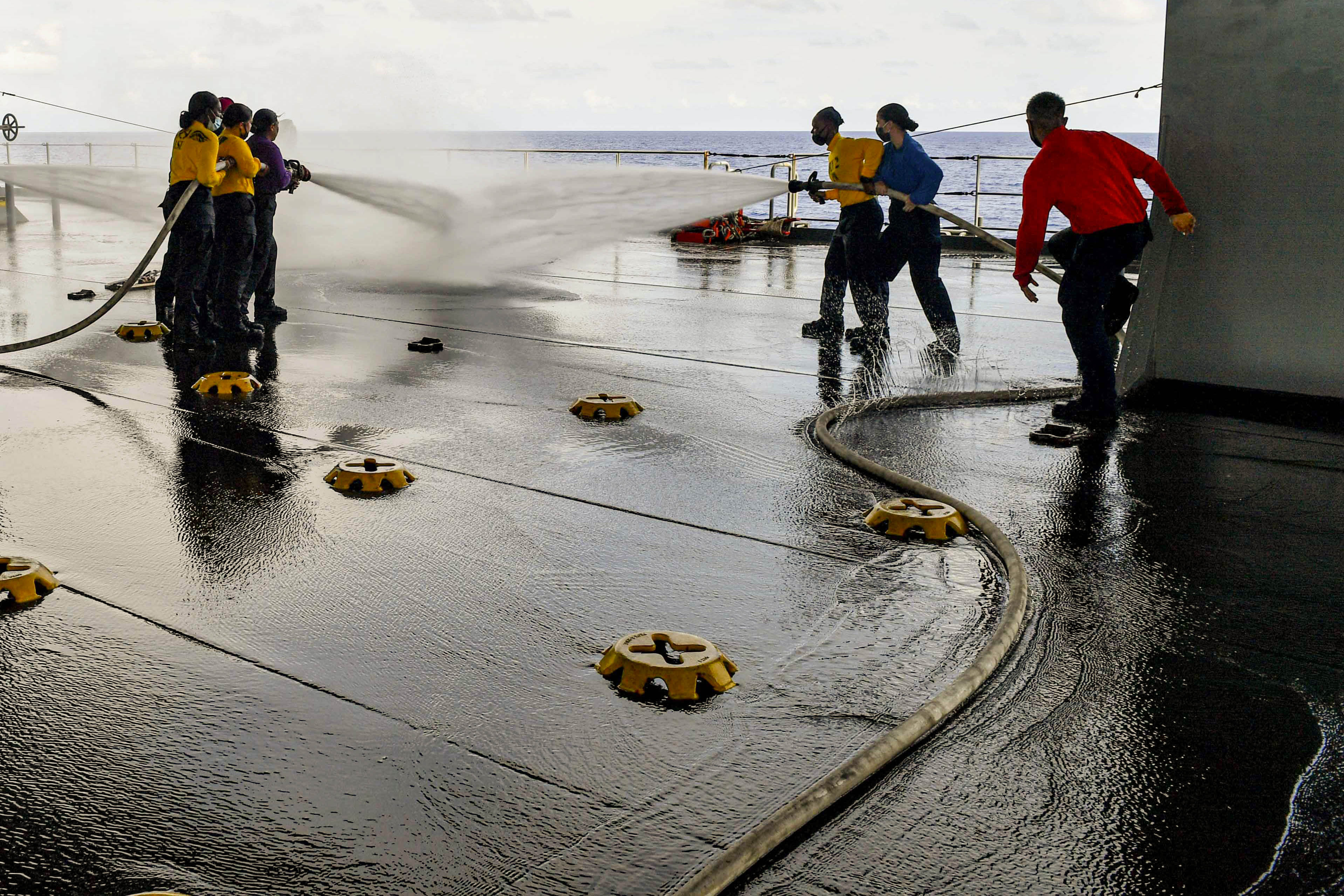
Sailors conduct damage control training aboard the USS Hershel “Woody” Williams in the Indian Ocean, Feb. 12, 2021.

Night Lights


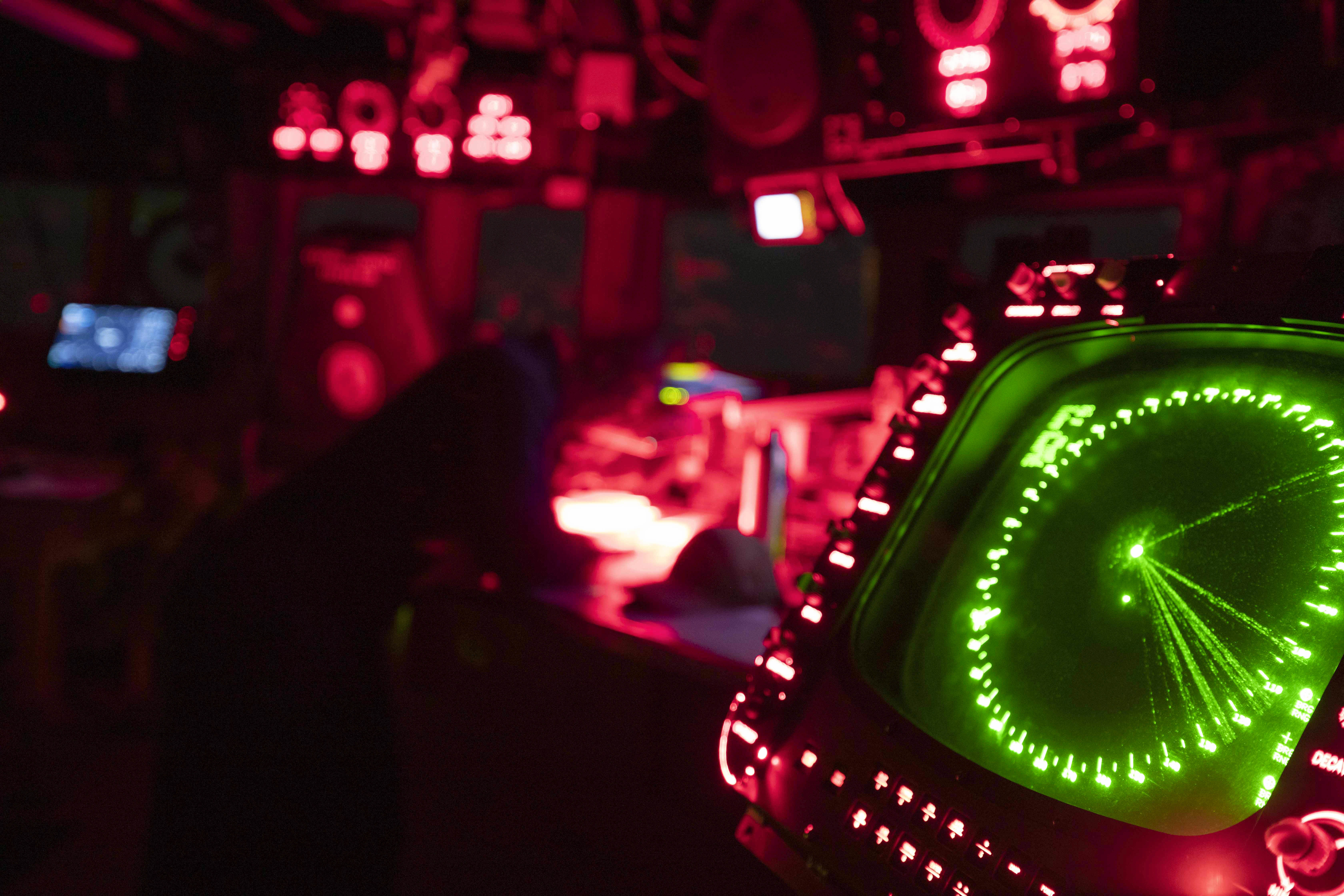
Sailors work in the bridge of the USS Porter at night in the Mediterranean Sea, Feb. 14, 2021.

Barrel Buddies


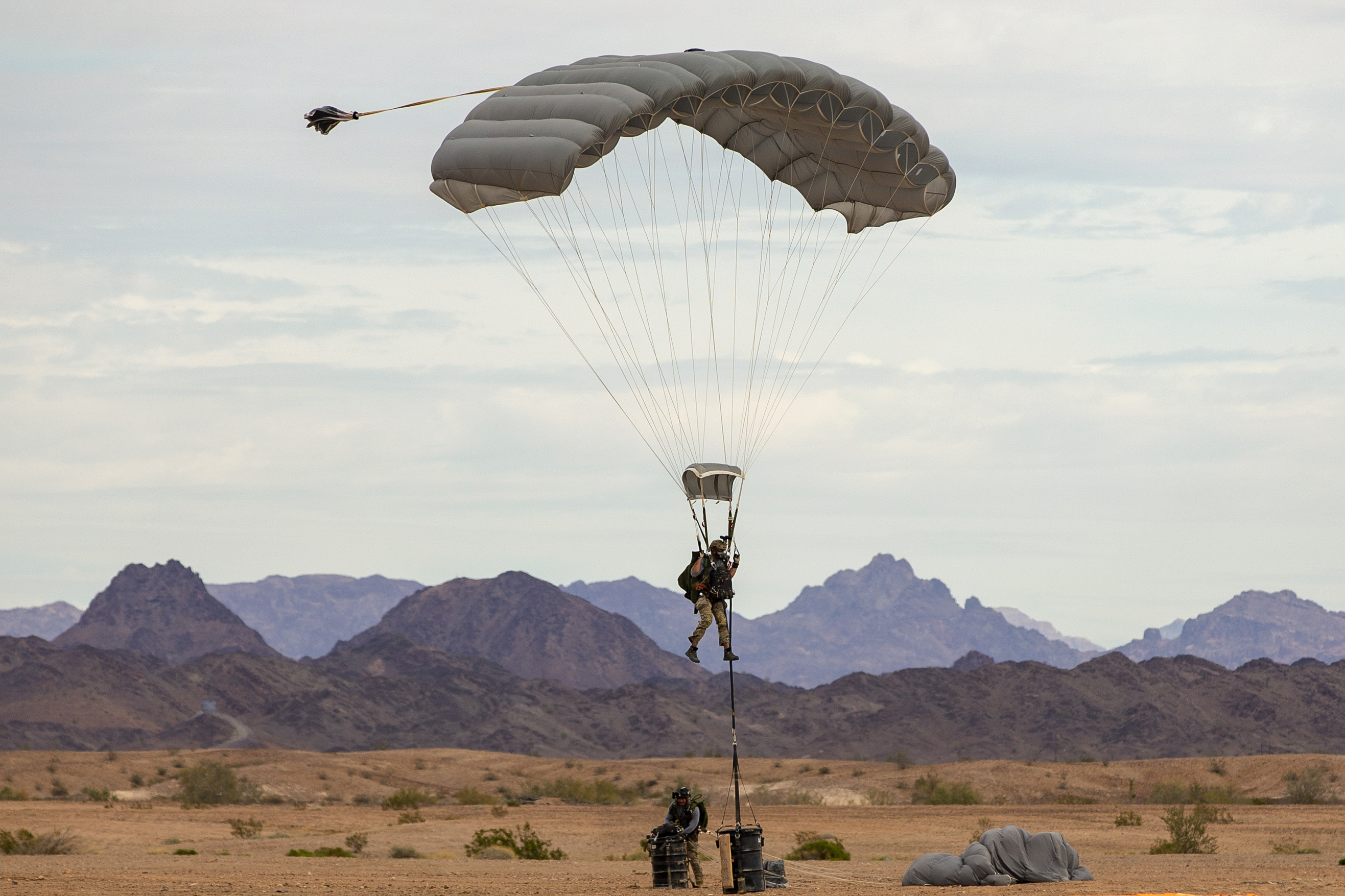
Marines and soldiers participate in barrel drops and tandem jumps out of a KC-130J at Yuma Proving Grounds, Ariz., Feb. 9, 2021.

President Biden Tells World: 'America Is Back'

Feb. 19, 2021 | BY Jim Garamone , DOD News

The United States is back and ready to work with like-minded nations to find solutions to the world's pressing problems, President Joe Biden told the Munich Security Conference today.

President Joe Biden delivers remarks.

The virtual conference is the clearest take yet that the United States is abandoning the America First program to work with allies and partners around the world.

Biden is no stranger to the Munich forum. He has attended and spoken to the group as senator, vice president, and in 2019, as a private citizen. "I speak today as president of the United States at the very start of my administration, and I'm sending a clear message to the world: America is back; the trans-Atlantic alliance is back. And we are not looking backward. We are looking forward together," he said.

Over the past four years, the challenges the world faces have shifted, the president said. "We're at an inflection point," he said. "The global dynamics have shifted. New crises demand our attention. We cannot focus only on the competition among countries that threatened to divide the world or only on global challenges [that] have threatened to sink us all together if we fail to cooperate. We must do both, working in lockstep with our allies and partners."

Biden bluntly and clearly sought to assuage any doubts allies and partners may have about U.S. policies moving forward. "The United States will work closely with our European Union partners and the capitals across the continent — from Rome to Riga — to meet the range of shared challenges we face," he said. "We continue to support the goal of a Europe whole and free and at peace. The United States is fully committed to our NATO alliance. And I welcome Europe's growing investment in the military capabilities that enable our shared defense."

He called America's commitment to Article 5 of the Washington Treaty that established NATO an "unshakable vow" that an attack on one ally is an attack on all.

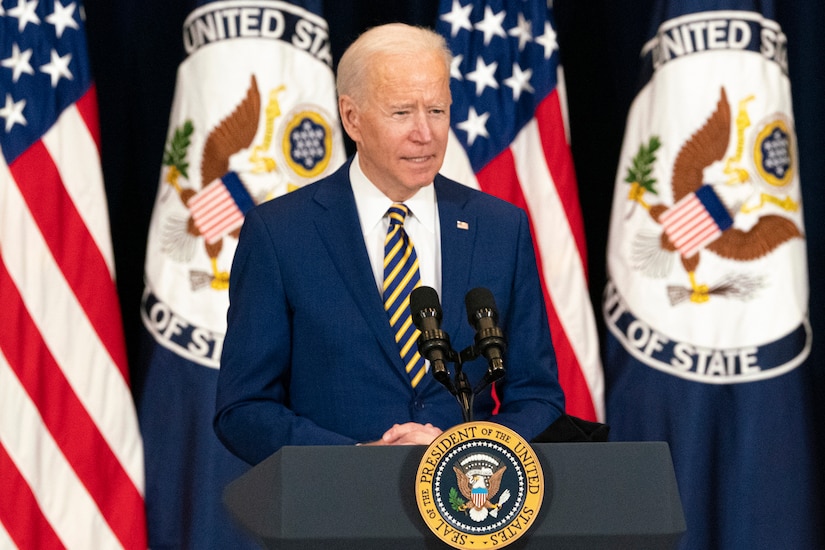
A man stands at a lectern with microphones and the Seal of the President of the United States affixed to the lectern. Four flags are in the background.

He also said the United States will consult closely and often with allies and partners in other parts of the world on regional and global problems. 

Afghanistan is an example of that, and the United States and allied nations will work together to ensure Afghanistan never again provides a base for terrorist attacks against the United States, its allies and interests. 

"Our European partners have also stood with us to counter ISIS," he said. "Just this week, NATO defense ministers endorsed significant, expanded training and advisory mission in Iraq, which will be vital to the ongoing fight against ISIS."

President Joe Biden speaks while Vice President Kamala Harris stands to his right.

The United States has launched a global posture review of the U.S. military. "While the United States is undergoing a thorough review of our own force posture around the world, I've ordered the halting of withdrawal of American troops from Germany," Biden said. "I'm also lifting a cap imposed by the previous administration on the number of U.S. forces able to be based in Germany."

The United States must "earn back" the trust it lost over the past four years, the president said. "The United States must renew America's enduring advantages, so that we can meet today's challenges from a position of strength," he said. "That means building back better our economic foundations; reclaiming our place in international institutions; lifting up our values at home and speaking out to defend them around the world; modernizing our military capabilities while leading with diplomacy; revitalizing America's network of alliances and partnerships that have made the world safer for all people."

Rust Removal


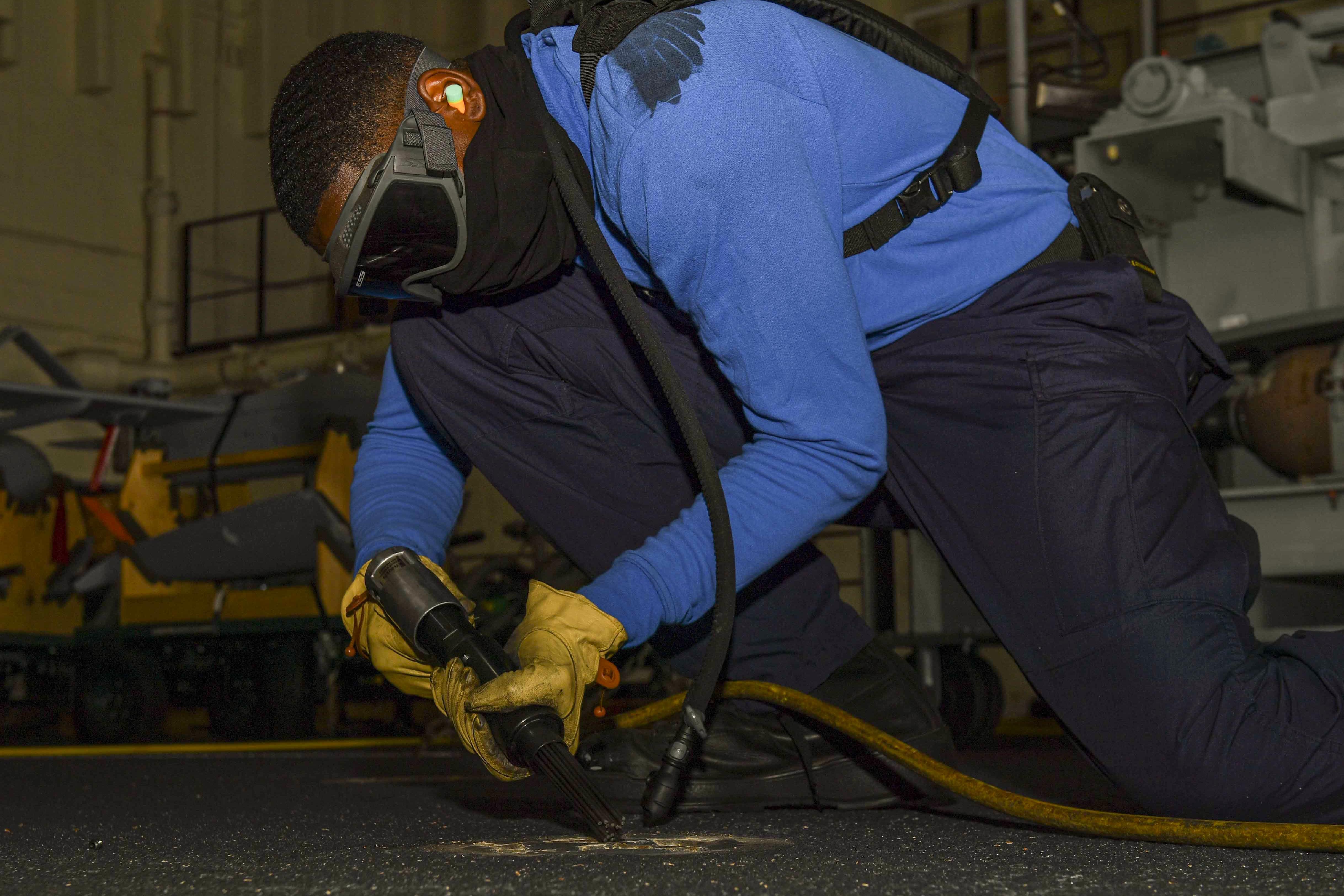
Air Force Airman Dominique Stanback uses a needle gun to remove rust from a pad-eye while on board the USS Hershel “Woody” Williams in the Indian Ocean, Feb. 11, 2021.

Corps Climb


Marine Corps recruits participate in a confidence course at Marine Corps Recruit Depot San Diego, Feb. 16, 2021.

Letting Off Steam


Navy P-8A Poseidon aircraft sits on tarmac while Mt. Etna lets off steam near Naval Air Station Sigonella, Italy, Feb. 16, 2021.