Wednesday, September 30, 2015

NATO Commander Discusses Ukraine, Syria, Russian Engagement


By Cheryl Pellerin DoD News, Defense Media Activity

WASHINGTON, September 30, 2015 — The situations in Ukraine and Syria and the need for the United States and European nations to engage with top officials in Russia highlighted remarks here Sept. 28 by NATO’s supreme allied commander for Europe.

Air Force Gen. Philip M. Breedlove, who also serves as commander of U.S. European Command, spoke at the German Marshall Fund of the United States, a group whose aim is to strengthen trans-Atlantic cooperation on regional, national and global challenges and opportunities.

Moderator Helene Cooper of the New York Times spoke with him about the next NATO summit, scheduled to be held in July in Warsaw, Poland, and the two discussed Russia’s involvement in Ukraine and in the fight in Syria against the Islamic State of Iraq and the Levant.

NATO Summit

At the last NATO summit in Wales in September 2014, Breedlove said, the alliance’s 28 nations agreed to “make probably the most substantive changes to our alliance in the history of the alliance.”

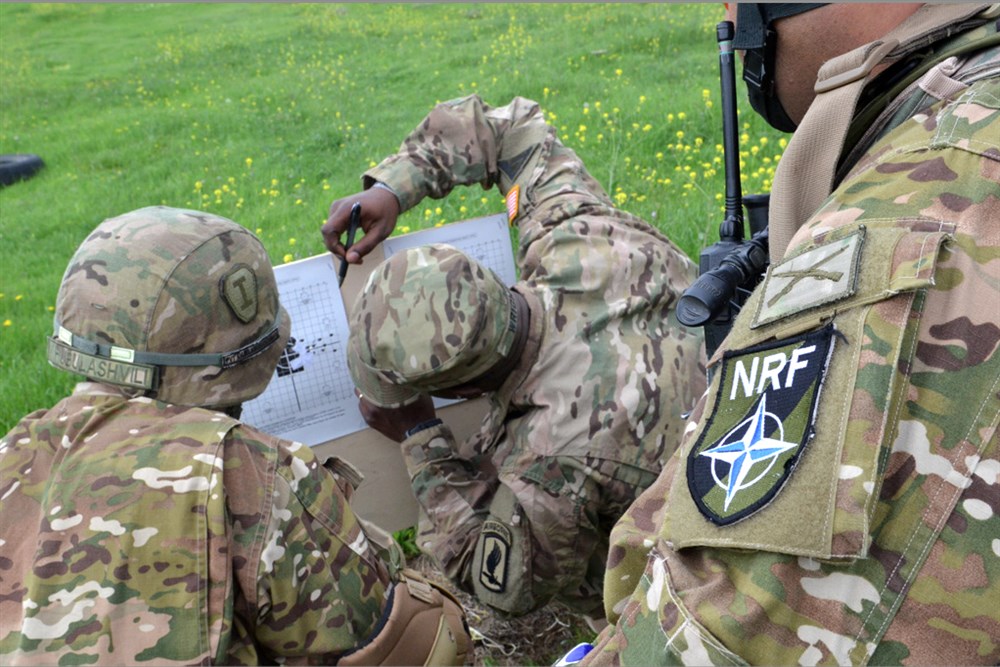
The changes, some of which are completed, include changes in the readiness and responsiveness of elements of the NATO Very High Readiness Joint Task Force, or VJTF -- a spearhead force within the NATO Response Force -- and changes to parts of the command-and-control structure to address issues related to a revanchist Russia, Breedlove said.

Also, the general said, NATO force integration units have stood up. Multinational Corps Northeast was given the mission of being ready every day, all day, for an Article 5 contingency, and the interim VJTF has been tested and has begun to exercise. Article 5 of the North Atlantic Treaty states that an attack on one NATO ally constitutes an attack on all.

“It is just Step 1 of several steps to get to the final adaptation of our force structure, but it’s good to see that on the tasks the leaders of our nations gave us in the military at Wales, we have made great progress,” Breedlove said.

The general said he sees next year’s Warsaw summit as “the next set of agreed-to adaptations that we have to make to continue to prepare ourselves and better position ourselves for the challenges we see.”

The road to Warsaw and beyond “is about looking at the readiness and responsiveness of the entire NATO force structure,” he added.

Stabilizing Ukraine

Breedlove said, Russian President Vladimir Putin -- with troops on the ground and arms and combat equipment moving nearby -- is allowing the conflict to simmer in southeastern Ukraine.

The Russian president has demonstrated that he can destabilize and maintain that instability in the southeast, Breedlove said, discouraging foreign investment, keeping Ukrainian forces in the field, and showing the people of greater Ukraine that their government can't retain control of the area.

What is important, he added, “is that the nations of the West -- more than NATO, the European Union and others -- continue to see what is happening in eastern Ukraine.”

Breedlove said Russia has moved more than 1,500 armored vehicles into eastern Ukraine, along with air defenses, Russian command-and-control structures and immense stockpiles of equipment to support its forces in the east.

“Getting all that out to re-establish the sovereign border of Ukraine will take months and months,” the general said. “What about a good show of faith [from Russia] -- begin the retrograde and show that we have a responsible way forward?”

Russia and ISIL

On Russia’s role in the ISIL fight in Syria, Breedlove -- emphasizing that he was speaking for himself as the military commander of NATO -- said Russia very much wants to be seen as a great power on the world stage.

“I think Russia very much wants to take the world's eyes off what they continue to do in Ukraine … and [that it] wants to maintain warm-water ports and airfield capabilities in the eastern Mediterranean, and they saw that possibly being challenged by progress on the ground of those opposing the [Bashar al-]Assad regime,” the general said.

Russia wants to enable and prolong the Assad regime “because that is their legitimate door to their ports and airfields in Syria,” Breedlove added.

“I think that Russia wants to be able to slow the advance of the opposition to Mr. Assad in Syria, and then after all of that, I think they will do some counter-ISIL work in order to legitimize their approach to Syria,” he said.

Breedlove said what concerns him about Russia fighting ISIL in Syria is that some sophisticated Russian air defenses and aircraft are going into Syrian airfields.

“I have not seen ISIL flying any airplanes that require … sophisticated air-to-air capabilities,” the general said. “So I look at the capabilities being created and determine from that what might be their intent. These sophisticated air-defense capabilities are not about ISIL.” High on Putin’s list in Syria is preserving the Assad regime against those who put pressure on it, he added.

Engaging Russia

Breedlove said President Barack Obama’s 95-minute meeting with Putin yesterday -- their first face-to-face meeting since 2013 -- was critically important.

And today, Pentagon Press Secretary Peter Cook announced that following on the Obama-Putin meeting, Defense Secretary Ash Carter directed his staff to open lines of communication with Russia on de-conflicting Russian and ongoing coalition airstrikes in the fight against ISIL in Syria.

 “We have said, and many nations have said, that we need to have a dialogue -- we need to be able to communicate with and engage with Russia,” Breedlove said.

If Europe is to be whole, free, at peace and prosperous, Breedlove added, it will need to engage Russia, a nation with vast energy reserves, a vast energy infrastructure, and substantial rail and road capability.

“Any way that we can begin to have a conversation is a step toward where we need to be,” the general said. “I think that if truly Russia wants to rejoin the world of norms and reason in Syria, a great first step would be to begin in Ukraine, showing that they are ready to rejoin the world of norms and Western values in Ukraine.”

ALS: Rediscovering the profession of arms


By Senior Airman Katrina M. Brisbin, 36th Wing Public Affairs / Published September 30, 2015

ANDERSEN AIR FORCE BASE, Guam (AFNS) -- When thinking about Airman leadership school, what thoughts come to mind?

Many Airmen may think of professional military education as boring, a box to check or a waste of time.

For me, ALS was none of these things.

ALS is a five-week course that prepares senior airmen, new staff sergeants and sister service rank equivalents for official supervisory and rating duties. Attending this leadership school in residence is a requirement for all Airmen either upon successfully testing for promotion or upon reaching 48 months time-in-service.

As a mandated stepping stone, to the uninitiated, the training may come along as just another training requirement on the way to a long-awaited promotion. It turns out it is more than that.

In all honesty, I was apprehensive as I took my first steps into the classroom. Little did I know my perspective would drastically change in just a few short weeks.

The first few days were a blur. We spent the majority of our time learning the rules, getting a feel for the curriculum and sizing up our classmates. After everything was laid out by the commandant and instructors -- it was 'game on.'

The 192-hour course, spread across 24 academic days, is divided into three major curriculum areas that support the course objective and focus on developing leadership abilities, building effective communication and the profession of arms. Classes are also required to positively contribute to their local community as well as create a legacy piece to enrich the schoolhouse for future generations of students.

The weeks quickly were consumed with academic work. We participated in group discussions, wrote papers, took written tests, stumbled through public speaking, braved typhoon rains during our community project and, more importantly, bonded as service members and future NCOs.

I learned quite a bit about what is expected of an NCO and leader, while also learning more about how to meet those expectations. Studying leadership traits in our diverse group of Airmen and Sailors helped broaden my perspective when it came to the profession of arms, something I think is vital for today's leaders to understand and practice.

According to our curriculum, to be part of the military profession of arms is to be a skilled practitioner of, or professional in the art of warfare. The profession of arms is a unique profession, whose customer base spans the sum of our great nation.

After reading the paragraph again, I was shocked to realize I still didn't fully grasp what this meant. As a public affairs Airman, I took it upon myself to know as much as I can about the Air Force mission, our polices and tenets, so I could better share Airmen's stories with the rest of the world. However, the true meaning of 'the profession of arms' eluded me.

In layman's terms, the profession of arms is the basic understanding that each member brings their own unique skills to the fight. With this definition, it's a fairly easy concept to understand, but one that may be difficult to communicate.

So much is changing these days. With a new enlisted performance report system, forced distribution and the operations tempo, it's hard to focus at times. It's even harder to stay positive and for some, see how our daily efforts fuel the fight.

The 36th Wing's mission is to provide the president sovereign options to decisively employ airpower across the entire spectrum of engagement. It may be difficult to discern every individual's contribution to this daunting task.

As reflected in the various occupational badges in our classroom, we all participate in the same fight. Without force support squadron Airmen, for instance, the dining facility and gym wouldn't open. There would be no one to provide vital combat and community support by delivering superior morale, welfare, recreation, manpower and personnel program services. Without the finance flight we would have to manage our own pay and accounts while continuing our daily tasks. The list of services goes on and in short, it would quickly overwhelm other career fields to cope with the additional workload.

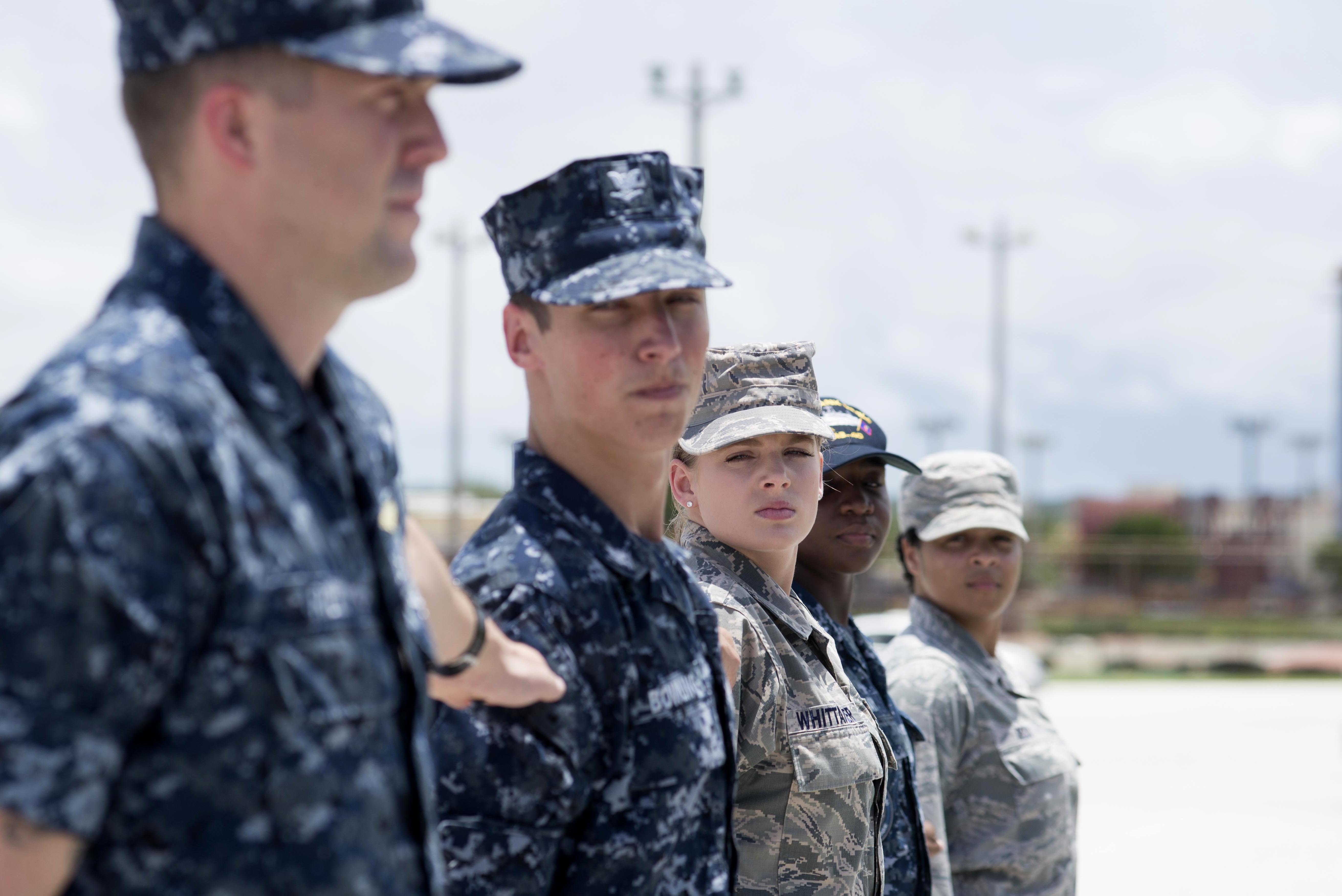
Having our Navy brothers and sister in the class also provided a comforting reality. This reality is that although we are different services, we all are NCOs, we all have troops in some form or fashion and we are all leaders.

The joint leadership school experience was neither boring nor a waste of time. Because of our productive class dynamic and our skilled teaching staff, I was able to walk away with a greater understanding of what it takes to be a supervisor in today's service and rediscovered my place in the profession of arms.

Each and every person plays a vital role in our military and has an impact on our mission, and as a photojournalist I feel blessed to be in the career field that allows me a firsthand look at the Air Force's missions. After ALS, I can't wait to share how Airman, Sailor, Soldier, Marine and Coast Guardsman's story in a way that highlights their unique contribution to the security of our nation.

AF senior leaders host suicide prevention summit


By Tech. Sgt. Torri Hendrix, Secretary of the Air Force Public Affairs Command Information / Published September 29, 2015

JOINT BASE ANDREWS, Md. (AFNS) -- Subject matter experts of mental and behavioral health, community support and Airmen across ranks and career fields gathered to discuss resiliency and suicide prevention at Joint Base Andrews from Sept. 22-25.

Air Force Chief of Staff Gen. Mark A. Welsh III opened the summit with his intent for action.

“Have a conversation,” he said. “Every Airman has a story. Learn the stories. Something has to change and you are the change agents.”

The purpose of the summit was to draw upon the vast shared experience and knowledge of attendees to discuss the complex problem of suicide, look for opportunities to improve the current prevention strategy, and develop actionable recommendations for improving the prevention program, applicable policy and other actions for completion by commanders or other leaders, like the members of Community Action Information Boards.

“We need to work together in order to preserve our most precious Air Force resource – our Airmen,” said Secretary of the Air Force Deborah Lee James. “We need to see these numbers start going down … not remaining steady, and certainly not going up."

The four-day summit consisted of presentations from academic and medical experts in the suicide prevention field, as well as leaders from various military and industry disciplines. The presentations were followed by working groups, with representation across ranks and career fields, to improve the opportunity for creative solutions.

"We really have to look at this differently. I urge you to break from the norm,” said Chief Master Sgt. of the Air Force James A. Cody. “Think outside the box and consider new ideas and ways of tackling this problem. If at the end of this summit we recommend doing more of what we're already doing, then we really missed an opportunity to make a difference ... and save lives."

On the final day of the summit, working group members presented their findings and ideas to the entire audience, as well as to Air Force senior leaders. The 10 groups represented five focused suicide prevention action areas: Individual, Peers, Civilians, Unit and Leadership.

"Those who committed suicide didn’t hear we have the ability to love Airmen like dedicated parents do,” Welsh said. “They didn’t realize there’s life beyond relationships, regardless of how they end, and they certainly didn’t know that when they were unable to climb to higher ground and look beyond their problems, we would have lifted them up."

During the presentations of findings and recommendations, several overarching themes emerged: communicating with Airmen, building a culture of belonging, incorporating dedicated resiliency or medical team members in units, and building and maintaining trust.

“This culture needs to be equally inspiring to fighter pilots as to financial managers,” said Air Force Vice Chief of Staff Gen. David L. Goldfein. “We’ve got to find a way that speaks to our Air Force, because everyone matters – everyone counts.”

AFMC promotes Depression Awareness Month

Air Force Materiel Command Health and Wellness Team

9/30/2015 - WRIGHT-PATTERSON AIR FORCE BASE, Ohio -- During the month of October, Air Force Materiel Command will promote Depression Awareness. As part of its Mental Fitness Campaign, AFMC will inform the workforce about the signs and symptoms of depression, offer anonymous behavioral health screenings, and promote mental fitness assistance programs and services. According to the National Institute of Mental Health, depression is highly treatable when an individual receives competent care.

"The campaign's goal is to reduce the stigma associated with seeking help for depression and other mental health issues," said Greg Chadwick, AFMC Health and Wellness Coordinator. This question and answer guide explains depression and the importance of seeking professional consultation.

How does depression differ from feeling sad?
Everyone occasionally feels sad or down, but these feelings usually pass within a few days. The NIMH reports that someone with depression experiences extreme sadness or despair for at least two weeks or longer. Depression can have enormous depth and staying power, and it can weaken one's joy and interest in activities of daily living. The difference between depression and feeling down is how severe the symptoms are and how long they last.

What are the signs and symptoms of depression?
People with depression do not experience all of the same symptoms. The physical and psychological signs and symptoms of depression may include:
· Feeling sad or "empty"
· Losing interest in favorite activities
· Feeling hopeless, worthless or helpless
· Not being able to sleep, or sleeping too much
· Having difficulty concentrating, remembering details and making decisions
· Experiencing fatigue and decreased energy
· Overeating, or not wanting to eat at all
· Having thoughts of suicide, or attempting suicide

If you are feeling depressed and hopeless, and these feelings are interfering with activities of daily living, you may be interested in a mental health screening. An anonymous and confidential depression online screening is offered on our website at AFMCwellness.com. Screening results are educational, not diagnostic, but are provided so participants may find out quickly if a professional consultation would be helpful.

Where can I go for help?
Professional counseling services are available for the AFMC workforce and their families.

Active-duty personnel can contact their local mental health clinic for services. Military OneSource is another option for military members and their families. For more information, call (800) 342-9647 or visit militaryonesource.mil.

Civilian employees may contact the Employee Assistance Program for free, confidential counseling services at (800) 222-0364 or visit the EAP website at FOH4You.com.

For more information about depression education materials, visit AFMCwellness.com or contact your local Civilian Health Promotion Services team.

'Yukla two-seven' Airmen remembered on 20th anniversary of crash

by John Parker
Tinker Public Affairs


9/29/2015 - TINKER AIR FORCE BASE, Okla.  -- On September 22, 1995 an E-3 Sentry airborne early warning aircraft went down at Elmendorf Air Force Base in Alaska, killing all 24 American and Canadian airmen aboard.

Two decades later, their memories live on and still inspire members of "America's Wing," according to Col. David Gaedecke, commander of the 552nd Air Control Wing out of Tinker Air Force Base.

"They gave their lives for us," Gaedecke said at a recent memorial service at Tinker. "It was why they're so special, so honorable and so worthy of remembrance. Though a solemn occasion, these 24 crew members would be so proud to know we have carried the torch for freedom and assured the freedom of our two nations."

Gaedecke said the crew members would have been proud of the special relationship maintained by the two nations. The Canadian detachment, which lost two airmen, has flown with their American counterparts at Tinker since 1979.

"They would cheer knowing we have taken the fight to our enemy abroad and protected our citizens at home," Gaedecke said. "Their deaths were not in vain. Their sacrifice serves as motivation and a reminder of greatness, of honor, of commitment and of excellence. " Gaedecke, Canadian Detachment Commander Lt. Col. Don "Boc" Saunders, retired former wing commander Col. Wylie Koiner and retired Master Sgt. Ken Lybolt laid a wreath at the base of the fallen airmen's monument. Lybolt, currently a civilian employee at Tinker, was the maintenance crew chief of Yukla 27 and witnessed the crash from the flight line.

The accident was caused when the plane, call sign Yukla 27, encountered a flock of Canada geese on takeoff, destroying the engines and wiping out thrust on the left side of the plane. The 962nd Airborne Air Control Squadron plane was airborne for 42 seconds before banking into the ground about a mile from the end of the runway.

"Let's all remember to be grateful and to learn by the example of honor these 24 heroes set for us all those years ago," the colonel said. "May the crew of Yukla Two-Seven rest in peace and continue their faithful watch over all of us as angels of America's Wing."

The Airmen lost that day are:

1st Lt. Carlos A. Arriaga, weapons director
Tech. Sgt. Mark A. Bramer, flight engineer
Staff Sgt. Scott A. Bresson, airborne radar technician
Tech. Sgt. Mark A. Collins, communications systems operator
Senior Airman Lawrence E. DeFrancesco, communications systems operator
Tech. Sgt. Bart L. Holmes Sr., flight engineer
Lt. Col. Richard G. Leary, navigator
Master Cpl. Joseph J.P. Legault, Canadian Forces, communications technician
Capt. Robert J. Long, senior weapons director
Master Sgt. Stephen C. O'Connell, advanced airborne surveillance technician
Capt. Bradley W. Paakola, co-pilot
Tech. Sgt. Ernest R. Parrish, area specialist
Sgt. David L. Pitcher, Canadian Forces, battle director technician
Capt. Glenn "Skip" Rogers Jr., aircraft commander
Airman Jeshua C. Smith, airborne surveillance technician
Staff Sgt. Raymond O. Spencer Jr., airborne surveillance technician
Maj. Richard P. Stewart II, mission crew commander
Tech. Sgt. Charles D. Sweet Jr., airborne radar technician
Maj. Marlon R. Thomas, mission crew commander
Tech. Sgt. Timothy B. Thomas, computer display maintenance technician
Maj. Steven A. Tuttle, airborne surveillance officer
Tech. Sgt. Brian K. Van Leer, advanced airborne surveillance technician
Airman Darien F. Watson, airborne surveillance technician
Senior Airman Joshua N. Weter, computer display maintenance technician