For the individuals who serve in the Marine Corps Mounted Color Guard, every day is a test of composure, discipline and adaptability — essential skills they demonstrate alongside wild palominos that were specifically domesticated for the job.
These Marines are unique in that they're the last mounted color guard remaining in the military.
"The unit perseveres because it consistently demonstrates value: connecting the American public to the Corps' legacy while constantly reinforcing Marine professionalism and core values," explained Marine Corps Capt. Elizabeth Kemp, the unit's officer in charge.
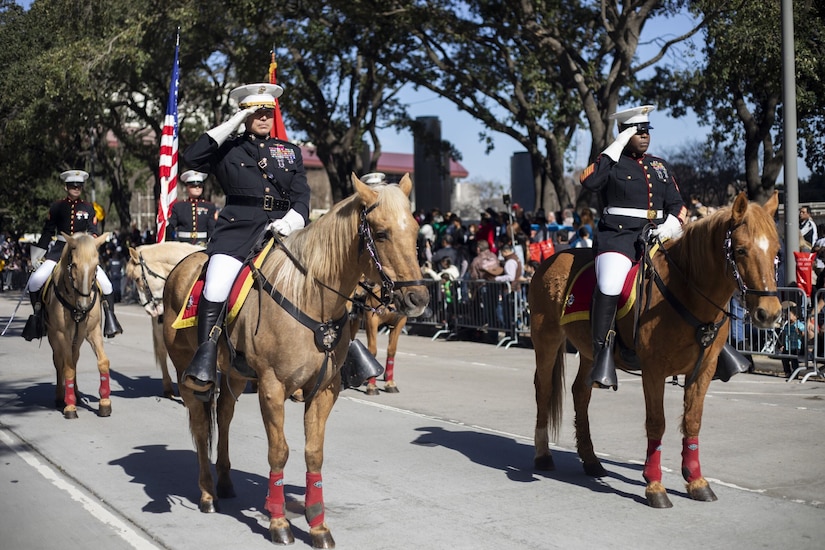
Based at Marine Corps Logistics Base Barstow in California's Mojave Desert, the Marine Corps Mounted Color Guard allows a few dedicated Marines the rare but honorable opportunity to present the service's colors and U.S. flag on horseback at military-related parades, ceremonies, commemorations, civic events, and other activities.
Their work is a show of dignity and respect for those who have served the nation, but being selected for the role itself is also considered an honor.
"Marines are entrusted with representing the Corps' history, traditions and standards in front of national and international audiences," Kemp said. "The level of trust and confidence embedded in the unit's core, coupled with the [increased] visibility, makes this a prestigious assignment for all Marines who serve here."
Dedication, Reliability Required
The mounted unit consists of a senior Marine who carries the U.S. flag, known as the color sergeant; a Marine who carries the Marine Corps colors; and two rifle bearers.
Any mid-level enlisted Marine from any career field can be selected for the role. They must possess an outstanding professional reputation and a high level of physical fitness, discipline and reliability. Candidates are screened for maturity, attention to detail and their ability to represent the Corps at the highest level.
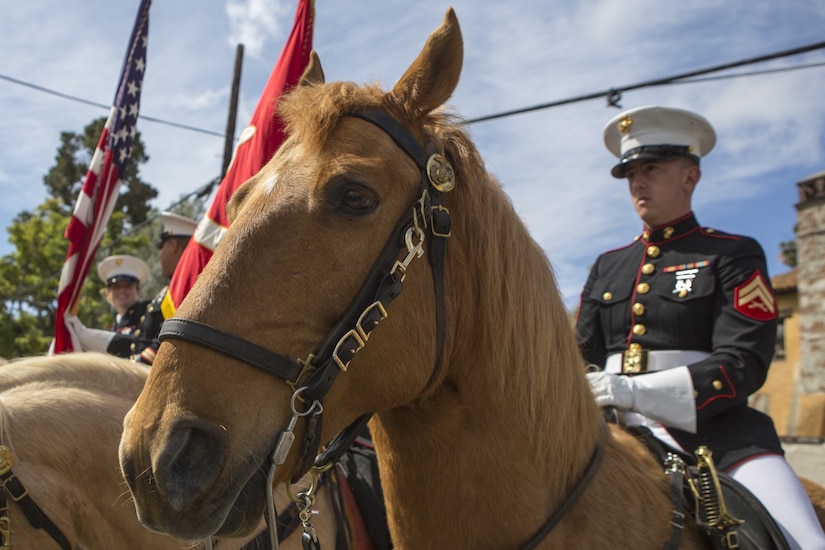
And if you're a Marine who doesn't know much about horses, that's not a problem. Kemp said many qualified Marines come to the stables with little to no experience in horsemanship or ranch operations.
"What matters most is character, work ethic and the ability to learn quickly while operating as part of a team," she said. "Prior experience is beneficial, but is far less important than discipline, patience, humility and commitment."
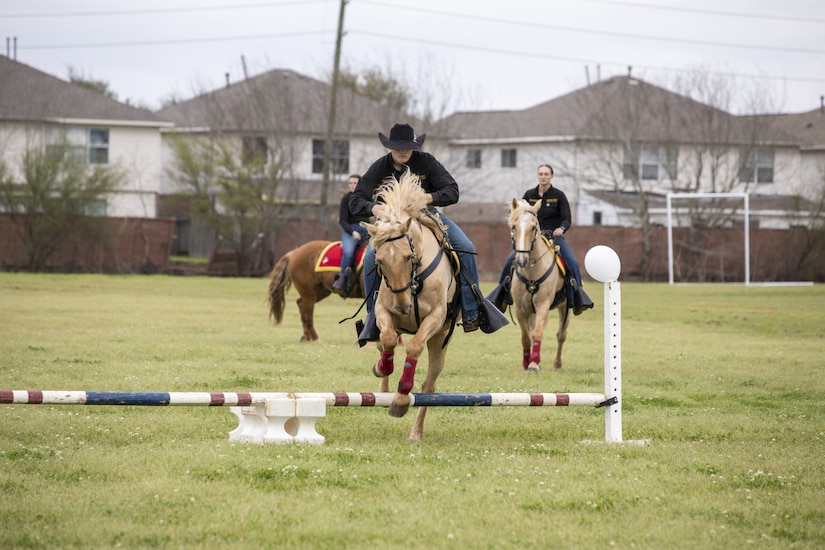
Marines selected for the prestigious role spend hours working with the base's civilian horse trainer to learn maintenance and how to ride, as well as all the duties required to work on a ranch.
High-Level Performances
The mounted unit is invited to all sorts of events, including the famed New Year's Day Rose Parade in Pasadena, California. The unit has appeared in every iteration of the parade since 1990, and it's had the honor of leading it several times as the first military unit.
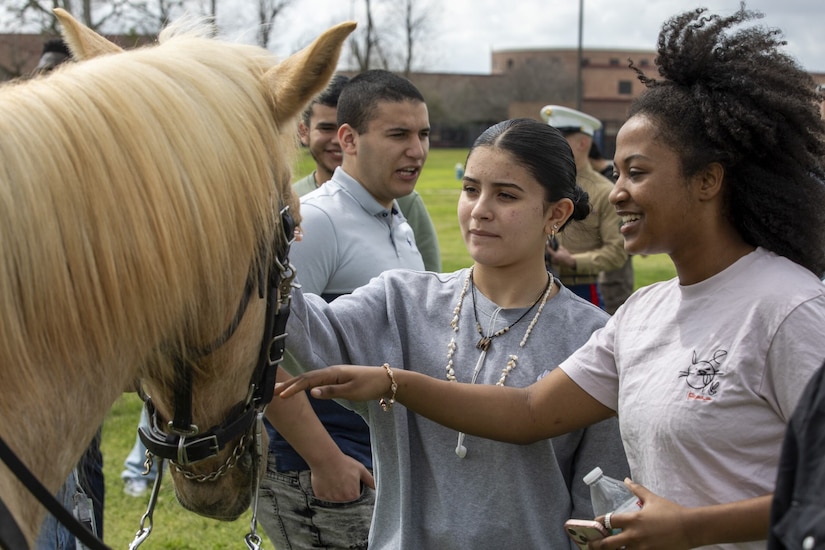
The unit also takes part in rodeos, which can help with recruiting efforts.
"Rodeos combine high energy, unpredictable environments and large crowds. Performing in this setting highlights the Marines' ability to stay composed, disciplined and professional under pressure — skills that translate well beyond ceremonial contexts," Kemp said.
The Mounted Color Guard is currently on tour at various rodeos throughout Texas until March 7.
The team mostly performs in the western U.S. However, in 2024, it made its first trek to the East Coast in about a decade. They presented the colors at the Preakness Stakes, participated in the National Memorial Day Parade and visited various historical sites, including the Marine Corps War Memorial in Arlington, Virginia.
From Wild and Free to Tame and Disciplined
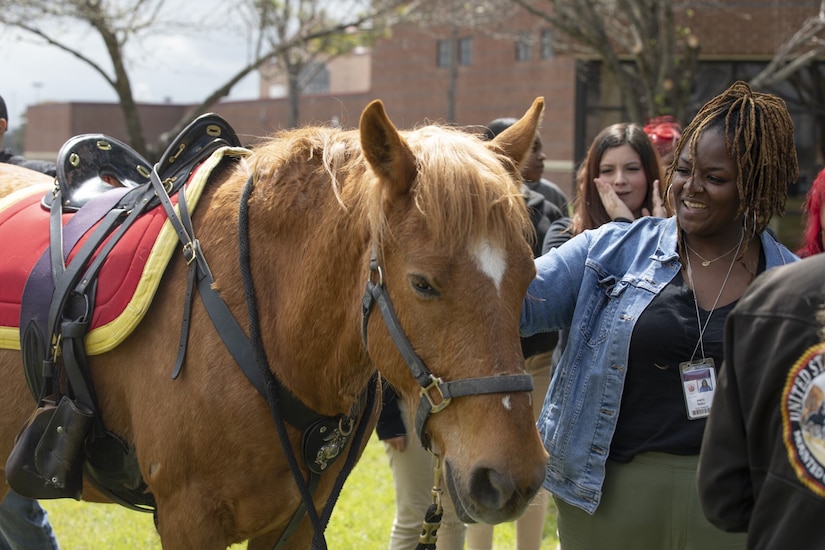
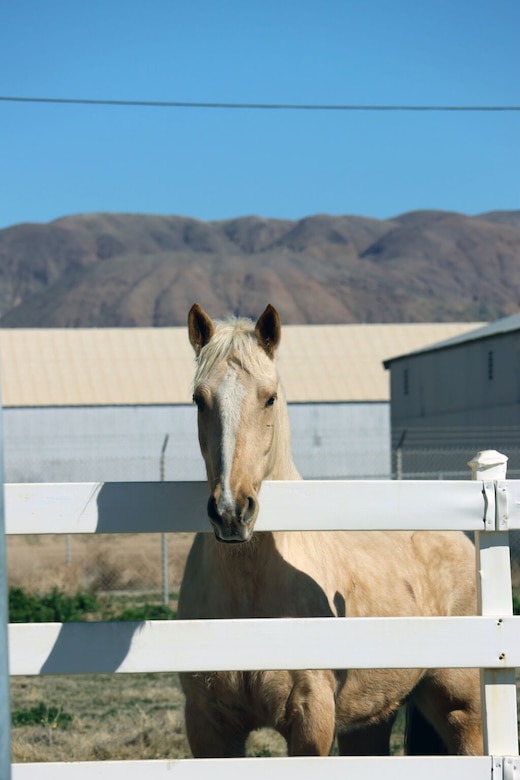
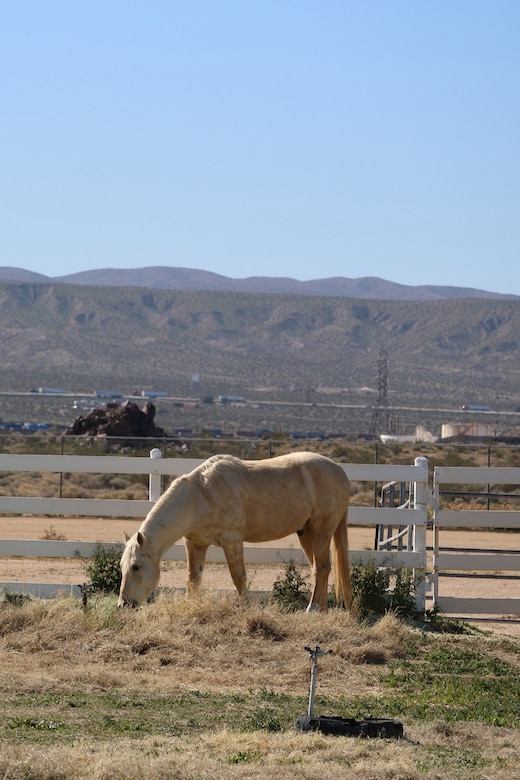
Another unique aspect of the job is that these active-duty Marines ride wild palominos adopted from the Bureau of Land Management's Wild Horse and Burro Adoption Program, which protects wild equines on public lands. When there are too many animals to manage, the bureau finds qualified private care for them through adoption or sales.
According to the color guard's website, stablemen initially found the wild horses on their own and trained them. But a chapter of the 1st Marine Division Association eventually got involved and started the process of adopting the horses through the bureau. That eventually became the official process.
Developing Ready, Lethal Marines
Kemp said the unit directly supports Secretary of War Pete Hegseth's focus on readiness and lethality by developing Marines who are disciplined, adaptable and can represent the force with credibility.
"It strengthens recruiting, public trust and institutional pride, all of which directly support the Marine Corps' ability to attract and retain high-quality warfighters," she said.
The Marine Corps Mounted Color Guard received its official designation in November 1968. The Army, the only other branch with dedicated mounted color guards, deactivated its last unit in 2023.


 Posts
Posts


No comments:
Post a Comment