Pentagon Press Secretary John F. Kirby
PRESS SECRETARY JOHN F. KIRBY: OK. I do have some
things at the top since it's been awhile since we had a briefing. So
please bear with me. I think, as you know, the chairman of the Joint
Chiefs, General Milley, hosted today his counterpart in the Israeli
defense forces, the chief -- the Israeli general -- chief of the Israeli
general staff, Lieutenant General Aviv Kohavi today at The Pentagon.
The two leaders discussed several issues of mutual concern, including
the current security environment throughout the Middle East. General
Milley reaffirmed, of course, the U.S. commitment to its relationship
with Israel. Secretary Austin did attend part of the meeting as well,
popped in for part of it.
And as you know, the U.S. and Israel enjoys strong military to
military relationship as key partners committed to peace and security in
the region. On the Departments support to the federal response against
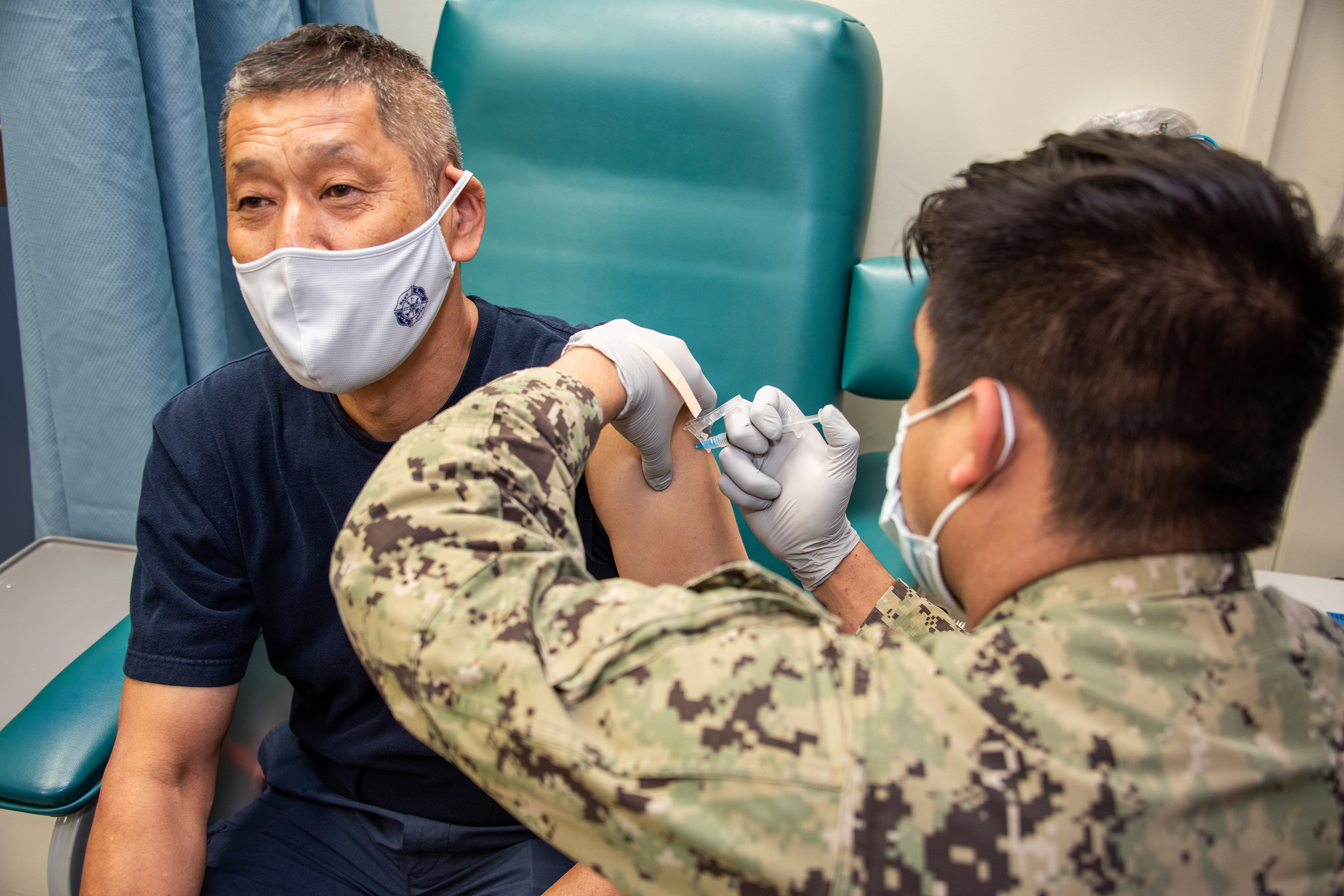
COVID, I can announce that the last federally supported community
vaccination center, which was located in New Jersey, conducted its final
day of operations, yesterday.
It's more than 5,100 active duty service members, supported 48
federal sites across the country, including Guam, Northern Mariana's and
the Virgin Islands and provided nearly 5 million COVID vaccines.
The National Guard continues their support to state and local
communities and to date they have helped administer over 12 million
vaccines to the American public. So combined that's over 17 million
vaccines by service members.
As we often see in times of crisis, our troops are Marshaled to care
for their fellow Americans and the Secretary is very, very proud of the
critical role that they played throughout this pandemic and thanks them
and their families for the sacrifices and the service that they rendered
their fellow citizens.
We have three exercises to highlight today: in Southern Command’s
area of responsibility representitvess from the United States and 18
partners nations are participating in the 36th annual Tradewinds
exercise in Guyana.
Tradewinds '21 is a Caribbean focused security exercise that's
designed to exchange knowledge and expertise and maintain regional
security and prosperity throughout the Caribbean and Caribbean basin.
The exercise kicked off actually on the 13th and it will run through
the 25th of this month. Friday also marked the conclusion of two
exercises. Exercise African Lion 2021 wrapped up. That’s the Africa
Command’s largest joint annual exercise.
More than 7,000 participants from nine nations and from -- and from
NATO trained together in Morocco, Tunisia and Senegal with a focus on
enhancing readiness across air, land, sea, and cyber domains. And we
want to congratulate them for the completion of that.
Friday also marked the conclusion of the 50th iteration of the
premier maritime focused defensive exercise called BALTOPS. For the
first time our Navy and Marine Corp used unmanned aircraft systems to
detect and map mines. A capability that frankly benefits all mariners
regardless of the flag flown.
This exercise included more than 40 ships, 60 aircraft and more than
4,000 military members from 18 different nations. Moving on, staying on
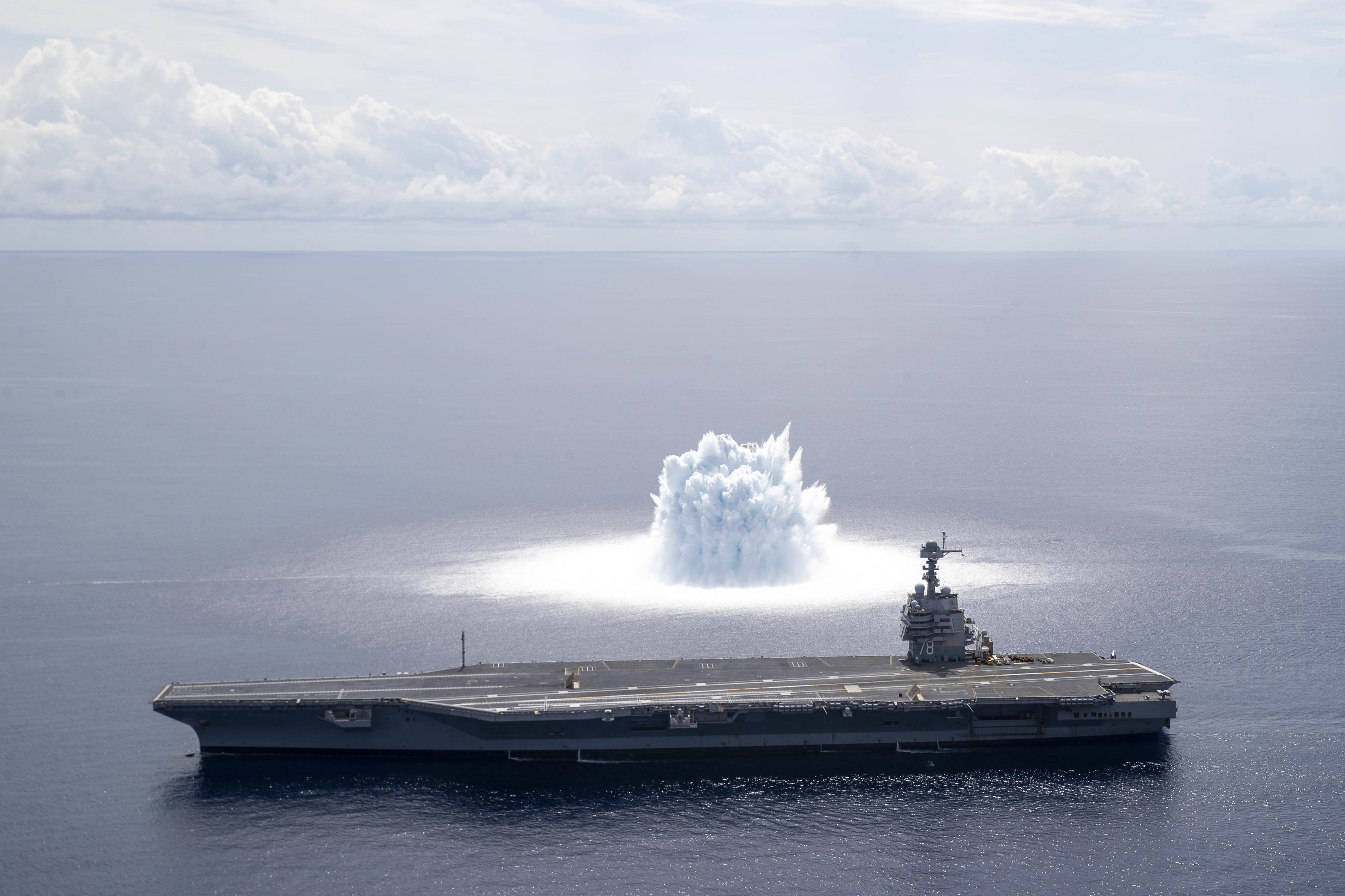
the Navy theme there, on Friday, the 18th of June, the USS Gerald R.
Ford successfully completed the first scheduled explosive event as part
of its full ship shock trials.
I think you probably have seen some of the video and the imagery out
of that. The first-in-class aircraft carrier was designed using advanced
computer modeling methods, testing and analysis to ensure that the ship
is hardened to withstand battle conditions and these shock trials
provide data that will be used in validating the shock hardness of the
ship.
And the Navy's conduction the shock trial testing in accordance with
OPNAV instruction, 9072 -- 9072.2 and as mandated by the National
Defense Authorization Act of 2016. Let's see.
On to COVID conditions here at The Pentagon. The Pentagon reservation
will reduce its health protection condition from Bravo-Plus, where we
had been since November of 2020 to HPCON Bravo.
And that's effective at 5:00 a.m. this Wednesday the 23rd of June.
Under HPCON Bravo, the occupancy goal will be no more than 50 percent in
work spaces. It's up -- that's up from 40 percent right now -- where we
are now.
Supervisors will continue to provide maximum telework opportunities
to eligible employees. Personnel who are not fully vaccinated should
continue to follow DOD masks and social distancing guidelines.
You see the signs all over The Pentagon that talk about that. Random
COVID-19 entrance screening of the work force will continue at about 10
to 20 percent levels and COVID-19 screening for visitors will continue
at 100 percent.
The Pentagon reservation remains closed for public tours and The
Pentagon 9/11 memorial remains closed. Gatherings on The Pentagon
reservation are limited to fewer than 50 people, currently fewer than
25. So that will go up a little bit. For here in the briefing room that
means that we won't be totally back to normal but starting Wednesday
there'll be some more seating here for in-person attendance across
briefings.
And with that, I'm done. Bob.
Q: Thank you. Question about Afghanistan. The Taliban apparently have
made some significant gains in recent weeks and even as recently as
past weekend. Maybe especially in the North. Is Secretary Austin
considering recommending either a slowdown in the withdraw or some other
changes that would perhaps be designed to minimize a chance of an early
collapse of the Afghan forces?
MR. KIRBY: I would say without speaking specifically to the Taliban
advances you spoke to, the -- as the secretary has said, the withdraw is
on pace. It is a dynamic situation and we've said that from the very
beginning, which means that he, and the chairman, General McKenzie, are
constantly looking at the pace we're going at and the capabilities we
have the capabilities that we're going to need throughout to complete
the withdraw.
And so as we've said from the very beginning, while there is a
schedule we are mindful that that schedule could fluctuate and change as
-- as conditions changed too. So I -- I can't speak to any specific
recommendations he's making about the Taliban advances.
But I can tell you that -- that he's looking at the situation every
day with a fresh set of eyes to see if, you know, the pace that we're
setting is the appropriate pace for the kinds of capabilities that we
think we need to again conduct a safe and orderly retrograde.
Q: But it looks -- as he looks at it now today, does he see something
different than he saw two weeks ago? In other words that make him think
something different has to be done.
MR. KIRBY: Everyday it -- you know the situation in Afghanistan
changes as the Taliban continue to conduct these attacks and to raid
district centers as well as the violence, which is still too high. I
mean everyday there's a fresh set of data to look at that helps inform
his discussions with military commanders and eventually whatever changes
might come of that.
Q: OK. And one last thing then on that -- has he received
recommendations from either General McKenzie or General Miller to change
the approach?
MR. KIRBY: I'm not going to speak to the specific discussions that
he's having with his operational commanders about the situation on the
ground, but again, Bob -- and -- and I understand where the question's
coming from -- I mean, it is a dynamic situation and we said from the
outset that we're going to treat it as such, in that the -- that -- if
there need to be changes made to the pace or to the scope and scale of
the retrograde on any given day or in any given week, we want to
maintain the flexibility to do that.
What's really critical here is that nothing has changed about two
things. One, we will complete the withdrawal of all U.S. forces out of
Afghanistan, with the exception of those that will be left to protect
the diplomatic presence. And two, that it will be done before early
September, as per the Commander in Chief's orders. Those two things are
constant and won't change.
Q: Thank you.
MR. KIRBY: Yeah, you bet. Let me go to the phones. Stephen Losey?
Q: Hi, thanks, John. I would like to ask about the DOD's withdrawal
of some assets, including some anti -- some air defense, anti-missile
assets. Can you talk a little bit more about what makes the Pentagon
confident that now is the right time to safely withdraw some of these
anti-missile assets, as well as some of the -- reportedly, some of the
fighter squadrons?
MR. KIRBY: Well, look, I'm -- I think you're talking about a Wall
Street Journal report. I'm not going to speak to the details of -- of
that press reporting. I -- I would just say this, Stephen,, and that's
-- and -- and you know this -- that A, we have a very robust presence in
the Middle East region, a lot of capabilities there, tens of thousands
of -- of personnel, as well as systems and capabilities across the
region at various facilities and bases, and the Secretary believes it's
important that that presence and those capabilities remain robust.
Number two, that -- and it's not uncommon in that or any other area
of responsibility around the world, we have to constantly take a look at
the -- at -- at the sustainment capability for those capabilities --
I'm sorry, that's -- that's not worded well. Let me do that again. We
have to look at the ability to sustain those capabilities and systems in
whatever region they're deployed.
And it's not uncommon for us to move resources around, sometimes
within a theater, sometimes outside a theater and into other theaters,
based on whatever the threats, challenges and risks that we -- that
we're -- that we're facing, as well as the need to maintain some of
these systems.
Some -- some of the places where these capabilities exist, it's a
pretty harsh environment, and some of these systems and capabilities
have been in these environments for a long time and we need to be able
to get them home, get them fixed, get them maintained so that they can
be redeployed appropriately.
So it's -- again, it's a dynamic situation, we're constantly making
these sorts of decisions and the Secretary takes seriously his
responsibility to make sure that certainly in the -- an area like the
Middle East, that we can maintain and sustain the kinds of capabilities
to back up our force presence and to -- and to properly look after our
security commitments to ourselves and to our partners, and he's
confident that we're doing exactly that.
Q: But he -- it's not just a Wall Street Journal report. The OSDPA
this morning confirmed that there are -- were some assets, including
primarily air defense assets that were withdrawn. So what I'm wondering
is, like, is, you know -- is the Pentagon confident that, like, these
assets will not be needed to deter or parry any -- any -- any potential
action from any nation such as Iran in the region.
MR. KIRBY: The secretary would -- does not and would not make
decisions about redeploying assets or capabilities if he didn't believe
that in so doing, whatever these are and wherever they're going would
put our security commitments at -- at unnecessary and greater risk.
Abraham?
Q: Yes, thank you. Thank you, John. Is the secretary any closer to
understanding the definition over the horizon than on April 16th? And
then I have a follow-up question.
MR. KIRBY: I'm not sure I understand the question. There's never been
a confusion about the definition of what over the horizon means. I'm
not sure what you mean.
Q: What I mean is are there basing agreements in negotiation
planning. Is there anything more that can be said as to how the United
States can be able to provide over the horizon support than was known
back in April when it first brought up as a possibility?
MR. KIRBY: There's still active discussion going on inside the
Department and actually at the State Department to -- to look at how we
will actualize over the horizon counter terrorism capabilities.
Certainly the secretary supports a diplomatic -- the diplomatic
effort that's ongoing right now to see if there are basing solutions
that could happen in and around the region. I'm not aware of any -- of
any assurances that we've received to date but I know that the State
Department's hard at work on that.
He's also tasked General McKenzie to look at what sorts of other over
the horizon capabilities we have existing in the region and how can we
best exploit those. The other thing I'd say and I said this last week is
that we tend to forget that we already do have over the horizon
capability when it comes to the counter terrorism threat in Afghanistan.
It is robust enough? Is it -- is it sustainable enough over the long
term? Well, that's what we're looking at. Well, you know that the
secretary extended the USS Eisenhower in the region.
We deployed a bomber task force to the region and there are other
facilities, bases; again, in the -- in the Middle East that can be of
some service. So nobody's discounting how difficult this is. But as the
secretary said, difficult does not mean impossible and that we have the
ability right now to reach any scrap of earth that we believe we need to
should the -- should the risk warrant it.
Q: So not further progress has been made then?
MR. KIRBY: I don't have anything more -- more to announce but I do
think it's important to remember it's not like we're starting from zero.
We have a capability over the horizon right now, as you and I speak.
Q: I mean is DOD planning for the support for the special immigrant visa applicants. Is there anything more on that?
MR. KIRBY: I don't have anything additional to add from what we've said before.
Q: Thank you, John.
MR. KIRBY: Sagmin Lee, Radio Free Asia.
Q: Yes. So the (inaudible) Senate hearing last week in his written
statement that if we (inaudible) current status of the U.S. bilateral
and multilateral exercise to maintain (inaudible) around the Korean
Peninsula. So is this likely to consider the redemption of larger scale
U.S/South Korea joint (inaudible) on his remark?
MR. KIRBY: I did not get all of that question. Would you mind repeating it? I apologize.
Q: OK. Mr. Ely Ratner, the nominee to be the assistant of the
secretary in the Indo-Pacific security. He recently was in a Senate
hearing last week and he said in his written statement that if he is
confirmed he will review the current status of U.S. bilateral and
multilateral exercise to maintain the readiness of forces in Korean
Peninsula. So based on his remarks, I want to know, is he likely to
consider the resumption of large scale U.S- South Korea joint military
exercise in the near future like this August?
MR. KIRBY: Thanks for repeating it. I don't have anything to announce
today with respect to changes in training on the Korean Peninsula. As
I've said before, this is something that we constantly review and
assess, given the strategic environment, and obviously should Dr. Ratner
get confirmed, I'm sure he'll meet his promises of taking a look at
training and exercises there.
But I don't have anything additional to say today or any changes to
the -- to the program, except to say what we said -- as we always say,
that -- that we know we have to -- our forces have got to be ready to
right tonight, and we're constantly looking at the -- the training
events there to make sure that they're appropriate and they're properly
scaled to the threats and the challenges.
Q: Can we go back to Afghanistan? Could you speak about the
contractors? There are some reports about the possibility of keeping
some contractors there, but they will be paid by the Afghan Government
instead of the U.S. Government. Is that something that is discussed?.
MR. KIRBY: I think there's a range of options that we're looking at
for how to continue to provide contractual support for the Afghan
forces, specifically the Afghan Air Forces. We've come to no final
conclusions about what that's going to look like. We're very actively
working our way through that right now.
Q: So you -- you are confirming it is ...
MR. KIRBY: We are looking at a range of options. I'm not at liberty
to confirm any specific one right now, but again, our -- our support for
the Afghan forces once the retrograde is complete will largely
financial, and it will be, in terms of contractual support, designed to
help them logistically and in a maintenance perspective, with respect to
their air forces. But it'll be -- but it'll be largely over the horizon
as well contractual support.
I don't -- I don't know of any specific other options that are being
considered, but again, I think we haven't come to any final conclusions,
and we're looking at a range of different options. OK. Yes.
Q: OK. Thank you. I want to ask you about Taiwan. So last week, Gen
Milley said that there is a low probability that China will take over
Taiwan militarily in the near future. But on the other hand, the
commander of the Indo-Pacific Command, Admiral Aquilino, said in March
that the incursion could be much closer than most people think. So it
seems there is -- their statements are, not consistent. Could you
clarify the DoD’s assessment on how urgent the Taiwan Strait contingency
would be? Thank you.
MR. KIRBY: Yes. I don't think -- I'd put it this way. I think
everybody is mindful of -- of tensions in that part of the world. And
just as importantly, everybody here in the department is mindful of our
obligations to help Taiwan be able to defend itself, in accordance with
the Taiwan Relations Act, the Three Communiques, the Six Assurances.
Nothing's changed about U.S. policy with respect to Taiwan and I think
everybody's properly focused on making sure that we're meeting our
obligations and I -- and I certainly wouldn't from the podium speak to
intelligence's assessments one way or the other about Chinese
intentions.
Nobody wants to see that the status quo change unilaterally and
certainly no one wants to see it changed by force. That's in no one's
interest. And again U.S. policy been consistent and I think it will
remain so.
Q: (Inaudible) so is it fair to say there are still a wide variety of
assessment on the urgency of the Taiwan Strait contingency ...
MR. KIRBY: A wide what?
Q: Wide -- a variety of assessment. There are so many assessments of ...
MR. KIRBY: No. Actually I don't think that's fair to say and I'm
certainly not going to talk about intelligence assessments from the
podium.
I think what you're hearing from leadership throughout the
department, including from the secretary, is that we're all mindful of
growing tensions and we're certainly, as I said before, very mindful of
our obligations and everybody's focused on that, on how we can best meet
our obligations.
Nobody wants to see this evolve into conflict. Nobody wants to see a unilateral change in the status quo.
Q: Thank you.
MR. KIRBY: Yes, you bet.
Okay, Mallory, from USNI.
Q: Thanks, John. The Carl Vinson strike group, carrier striker is
training near Hawaii ahead of its upcoming deployment on Southern
California, is the intent to signal U.S. presence in the Indo-Pacific?
MR. KIRBY: I -- we -- we're constantly altering the locations of
where we train and how we train to best meet, again, our security
commitments. I would caution you from thinking that there is some sort
of specific message here, other than, I mean obviously we are focused on
the Indo-Pacific and you've heard the secretary talk about this quite a
bit. So it shouldn't come as a surprise to anybody that we would be
training and taking advantage of training opportunities throughout the
region.
Q: Is there any reason why it's off Hawaii as opposed to where it would normally be off of California?
MR. KIRBY: I would refer you to the Pacific Fleet for specifics about
how they choose locations but again whether it's off California or it's
off Hawaii, it's still in the Indo-Pacific, it's still in the Pacific
Ocean, and it's still representative are -- of our commitment to broader
regional security there. Yes.
Q: Over the weekend, Secretary Austin and Defense Minister Carter had
a phone call. Is there a deal on protecting the Kabul airfield?
MR. KIRBY: Well, I think you heard the national security advisor on
Sunday speak to the meeting between President Biden and President
Erdogan where Turkey agreed to take the lead role in terms of security
at the airport. There are still details to be worked out. There is --
there is a lot more work to be done.
They have indicated that they have will need some support from the
United States and international community and we're working our way
through that and that phone call over the weekend was in line with those
discussions.
Q: Is the United States ready to provide it financial, logistic support to the ...
MR. KIRBY: Again, we're still working our way through exactly what
the support would look like. We don't have final answers on that right
now. Yes. Janne?
Q: Thank you, John. I'd like to ask about the North Koreans using
EMP, electromagnetic weapons. The U.S. confidence in the (advisor ?)
group and the military experts, recently reported that they had
(inaudible) has completed EMP weapons and they warn North Korean
currently are using EMP weapons to attack the United States Military
facilities.
What countermeasures do you have against this?
MR. KIRBY: I'm not going to get into this topic here from the podium,
Janne. We're certainly mindful of this technology and the capability
but I am not going to get into the habit of speaking to the specifics of
it here from this podium or what countermeasures we may or may not have
in place or be pursuing.
We take seriously our responsibilities to defend our interests and
our national security in that or any other part of the world and I can
assure you that the department's focused on that.
Q: I recommend responsibilities of these?
MR. KIRBY: I'm not going to go further on this issue.
Q: All right. This is very serious (inaudible) had happened.
MR. KIRBY: Thank you.
Q: You're welcome.
Q: The sexual assault task force, isn't there a 90-day period?
MR. KIRBY: That's right. Their 90-day period is up. They will be
providing the rest of their recommendations to the secretary this
afternoon. He'll take some time to review those recommendations and
he'll want to make sure that he gets as he had before on line of effort
one, on accountability that he has the -- given the military departments
and the chairman to provide their feedback as well.
Yes, ma'am?
Q: I have two questions. First one, can you please give us more
details, if you can of course, on Gen Kohavi’s meetings here at the
Pentagon? And also the issues to what were discussed?
And the other question is there a plan for General -- I mean,
Secretary Austin to be part of the discussions or the meetings between
the Afghani president and President Biden?
MR. KIRBY: So on the first question, it's -- as I stepped out here,
the meeting was still ongoing. And I'm given to understand that the
Joint Staff Public Affairs Office will be issuing a readout since it was
a meeting hosted by General Milley. It's more appropriate for them to
speak to that and I'll let them do that and I'm sure that they'll do
that this afternoon.
I don't have any scheduling announcements to make with respect to the
secretary and President Ghani's visit on Friday and, you know, if and
when I do will certainly let you know.
Q: Back to Bob’s initial question about the secretary was
recommending or discussing the pace of withdraw; Does the mission to
advise and assist Afghan forces in their fight against the Taliban still
exist? And is that something that the secretary has to consider as he
follows through with the other missions that the president has, given
...
MR. KIRBY: As we said before, Louis, as -- so as long as we have the
capability in Afghanistan, we'll continue to provide assistance to
Afghan forces. But as the retrograde gets closer to completion, those
capabilities will wane and will no longer be available to be used in
that way.
As you and I speak, you -- we are still providing a measure of
support in that regard. But again, that will change over time and as a
withdrawal -- as we complete the withdrawal, the mission will be the
mission assigned by the commander-in-chief, which is to provide an over
the horizon counterterrorism capability to prevent attacks on the
homeland and to continue to support the Afghan forces but from, again, a
finance -- a largely financial perspective.
Q: So you know, in this building there is a term that we hear a lot,
an inflection point. Does that mean that there'll be an inflection point
where U.S can no longer provide that mission? And when -- are we at
that point right now or close to it, which may be a reason why the
secretary may be there?
MR. KIRBY: Certainly there will come a point where those types of
capabilities are simply no longer available to General Miller to be able
to provide. I would defer to him in terms of what that timing looks
like. I'm in no position to guesstimate right now when that's going to
happen, but certainly there's going to be at a time where we've reached
that point, and again it's really for him to decide in consultation, of
course, with General McKenzie and the secretary.
And as I tried to explain it, maybe I didn't do it well enough with
-- to Bob's question, but I mean we're constantly taking a look at this
every single day. What's the situation on the ground? What capabilities
do we have? What additional resources do we need to move out of
Afghanistan and at what pace? And all of these decisions are literally
being made in real time.
Q: Last one on this.
MR. KIRBY: Sure.
Q: So does that mean that General Miller and then therefore Secretary
Austin have to look at the whole approach in Afghanistan in terms of
you're looking at daily looking at your situation.
MR. KIRBY: Sure.
Q: Does that mean that, OK, we have to look at this and determine how
will this affect the pacing and how will it affect the stability of the
government of inside Afghanistan after the U.S. departs?
KIRBT: I think the best way to answer the question, unsatisfying
though it may be, is that we take into account a whole range of factors
as we continue to move through the retrograde.
But again, Louis, two things are not changing. We will get -- we will
be out of Afghanistan with the exception of whatever presence is
required to protect our diplomatic mission there and that is still being
worked, and we will be out of Afghanistan by early September. Those two
things are not changing, OK?
Anson?
Q: Hi. Thank you. I have one quick question on what was brought up
last week by General Milley. In hearing he talked about improving the
mil to mil relationship with China and since deciding the need for
clearer communication with counterparts in China, what -- have there
been any developments to enhance these relations or improve
communications between U.S. military and the PLA?
MR. KIRBY: I don't know of any changes necessarily to the mil to mil
communications and relations. I think it goes without saying that the
relationship with China is tense right now. And I think General Milley,
what he was trying to express, and I think he's right, is that the more
that -- the more that there can be a sense of dialogue and that is
trustworthy, the less chances there are going to be for miscalculations
that could -- that could lead to worse outcomes.
So clearly we obviously had don't want to see that miscalculation,
but I mean I don't know -- there's no -- I don't have any changes to
speak to with respect to the bilateral relationship with the PLA right
now. OK, looks like that's it. Thank you.


























 Posts
Posts

