Wednesday, September 23, 2020

Washington Air National Guard Mobilizes Student Flight, Historic First

 Sept. 23, 2020 | BY Air Force Capt. Hans Zeiger

Six newly-enlisted members of the Washington Air National Guard are serving in a domestic operations support role for the first time in state history, working at food banks alongside soldiers and airmen in response to the COVID-19 pandemic. The enlistees are members of the 194th Wing's student flight, which helps to prepare future airmen as they await basic military training and technical training.

"It's the first time this has ever happened in Washington State," said Air Force Senior Master Sgt. John Austin, superintendent of the Washington Air National Guard's 194th Force Support Squadron, who oversees the student flight.

An airman working at a food bank.

As a result of intensive tasking for guard members in food bank support, voluntary COVID-19 mapping support to the Washington State Department of Health, military assistance for civil disturbances and other training and deployment requirements, Washington Air National Guard leaders recognized a need for additional personnel.

"Our volunteer pool was dwindling," Austin said.

While new enlistees cannot serve on federal missions before they have completed formal training, there is an allowance for them to serve in a state active duty status, Austin said.

After Washington National Guard leadership authorized new enlistees to volunteer for the food bank support mission, Austin put out the word to his student flight members in early August.

Christine Krysiak of Parkland came onto state active duty in August, just weeks after graduating from Franklin Pierce High School. She follows her father, grandfather and great uncle in joining the Air National Guard, and Krysiak's sister serves on active duty in the Air Force. Krysiak was assigned to the Bonney Lake Food Bank, where she helps to pack food and make home deliveries.

"We're helping out the community, and that's what matters," said Krysiak. "Everybody has been impacted by COVID-19. We don't know their situation, and we can't judge. We can only imagine what they could be going through."

Krysiak has seen the impact of her work on community members.

"It's cool to see people come in and say thank you for everything that we do," Krysiak said.

An airman working at a food bank.

For Air Force Airman Sara Mark, the opportunity to serve at the Nourish Pierce County warehouse in her hometown of Lakewood came as she awaits technical training to be a personnel specialist in the 194th Force Support Squadron. With reduced hours in her civilian job, it worked well for her to join the guard's food bank mission.

"I did want to help out the community during this pandemic," Mark said. "A lot of people can't afford food, so it's nice to be a helping hand."

Eric Cunningham of Shelton enlisted in the guard over the summer to become a member of the 194th Security Forces Flight. Two years out of high school, Cunningham worked in construction but he was able to take on a role with the guard at a food packing facility in Lakewood shortly after swearing into the military. Cunningham works with other members of the 194th Wing to make boxes that are used for packing.

"We make 2,000 boxes a day, which is 40 pallets worth," Cunningham said. "We're pretty efficient I'd say."

Cunningham said he sees value in his time on state active duty as he prepares for formal training.

"It helps me get more involved with the military before I go to basic military training," Cunningham said. "One advantage of interacting with Airmen who have already been through training, is that they can give advice on his next steps in military service."

During their time on state active duty, student flight members worked alongside experienced Air National Guard members who are designated to guide them.

"It's good Air Force mentorship," Austin said. "They are getting good experience that they would not otherwise have. They're learning to work in a team environment. They're learning about joint relationships with the Army."

An airman working at a food bank.

Student flight members mention teamwork as a highlight of their service experience.

"Even though we're in different branches, it's nice being part of a team," Mark said. "I like the emphasis on teamwork," Cunningham said.

And even though student flight members have just begun their journey in military service, they are already being integrated into a domestic operations mission.

"I feel included," Krysiak said. "I don't wear the uniform, but I'm still a part of them."

Altogether, Washington National Guard members have taken part in processing, packaging and distributing more than 45 million pounds of food since the start of the COVID-19 emergency. For Austin, the work that members of his student flight are performing is at the heart of why the guard exists.

"This is what the National Guard is about, to help out our community by jumping in early, getting fully organized," Austin said.

(Air Force Capt. Hans Zeiger is assigned to the 194th Wing)

Tuesday, September 22, 2020

Flare Training

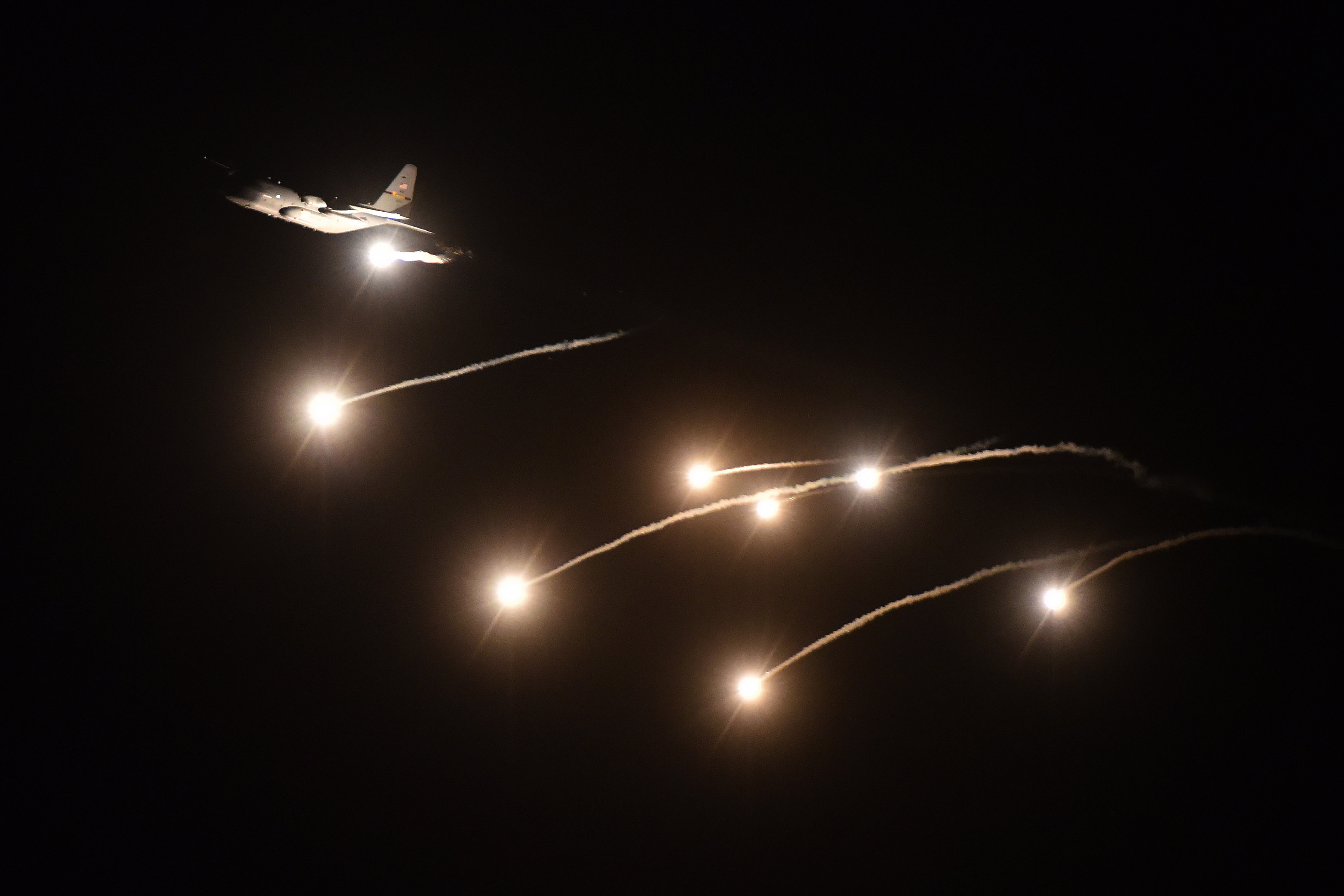
Flares shoot through a dark sky as a military aircraft flies upwards .


C130 crews with the Minnesota Air National Guard conduct air drop and aerial flare release training above Camp Ripley, Minn., Sept 16, 2020.

Winning Warriors


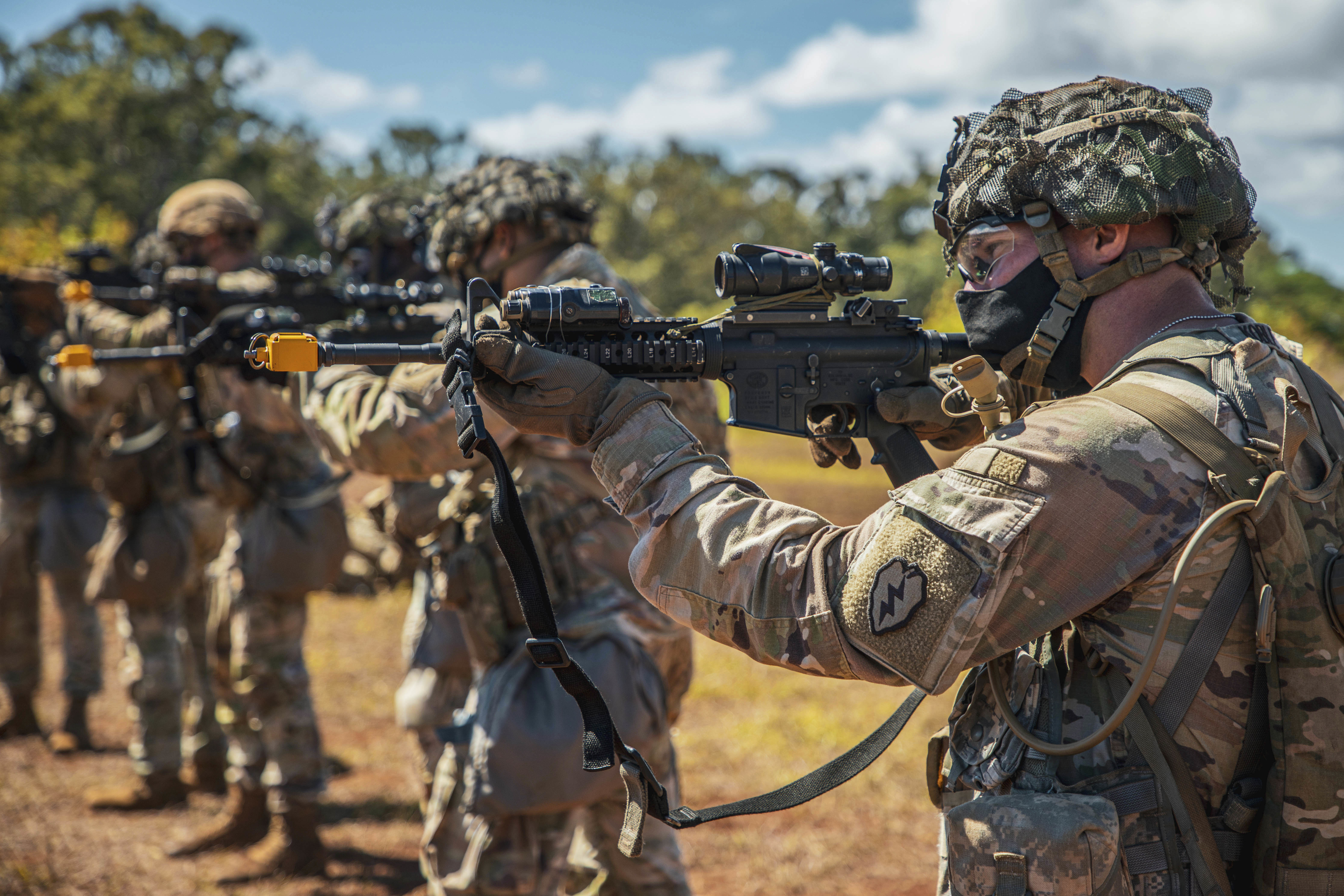
Soldiers compete for the Expert Infantryman Badge or the Expert Soldier Badge at Schofield Barracks, Hawaii, Sept. 16, 2020.

Esper Promises to Maintain Israeli Qualitative Edge in Middle East

 Sept. 22, 2020 | BY Jim Garamone , DOD News

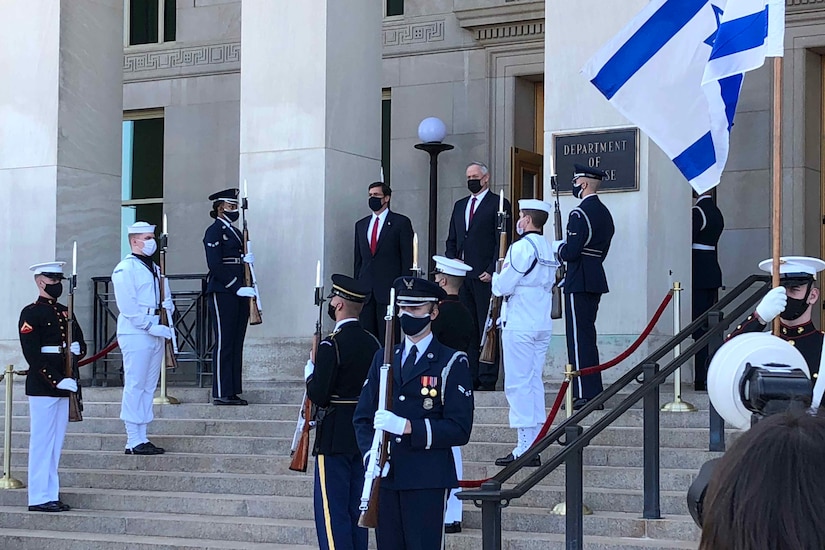
Defense Secretary Dr. Mark T. Esper promised Israeli Defense Minister Benny Gantz that the United States would maintain Israel's qualitative edge in the Middle East.

Esper made the promise at the beginning of a Pentagon meeting with the Israeli leader.

Gantz is no stranger to the U.S. military, having trained at Fort Bragg, N.C., as a young officer and working alongside many American officers as he rose in rank in the Israeli Defense Force. Gantz was the Israeli chief of defense as his last job in the military. He has been defense minister since the Israeli unity government started in April. He is scheduled to become the Israeli prime minister in November 2021.

Two men stand at the top of steps amid a color guard.

Esper stressed that Israel is America's most important strategic partner in the Middle East. "Our partnership is built over generations based on shared values, shared interests and shared concerns," Esper said. 

He said the bonds of friendship among the peoples of Israel and the United States are unbreakable. 

The United States was the first nation to recognize the nation of Israel when it established its independence in 1948. "Across that long history, the defense relationship between the United States and Israel has never been stronger: We intend to keep it that way," the defense secretary said. "I do want to say upfront for everyone, that a cornerstone of our defense relationship is preserving Israel's qualitative military edge in the region. 

"The United States is committed to that, and the Department of Defense is committed to that imperative," he said. "And we will continue to support the long-standing U.S. priority to maintain Israel's security."

Gantz thanked Esper for the warm welcome and promised on Israel's part to deepen the partnership. "As I always say, we have no other United States, nor do you have any other Israel," he said. "We will make sure together, to keep those bonds active and close to one another. It has to do with (qualitative military edge). But it also has to do with lots of cooperation that we have, we always say it is in our moral interest to share with you everything we possibly can. And we will continue those relations into the future."

Medical Brigade Supports COVID-19 Drive-Thru Testing

 Sept. 22, 2020 | BY ARMY SGT. 1ST CLASS KELVIN RINGOLD

The 1st Medical Brigade, 13th Expeditionary Sustainment Command, has been crucial in supporting COVID-19 testing and mitigation efforts in Texas and across the United States since March. As they assist Carl R. Darnall Army Medical Center, Fort Hood, Texas, in the fight against COVID-19, they continue to solidify themselves as the premier medical brigade in the Army.

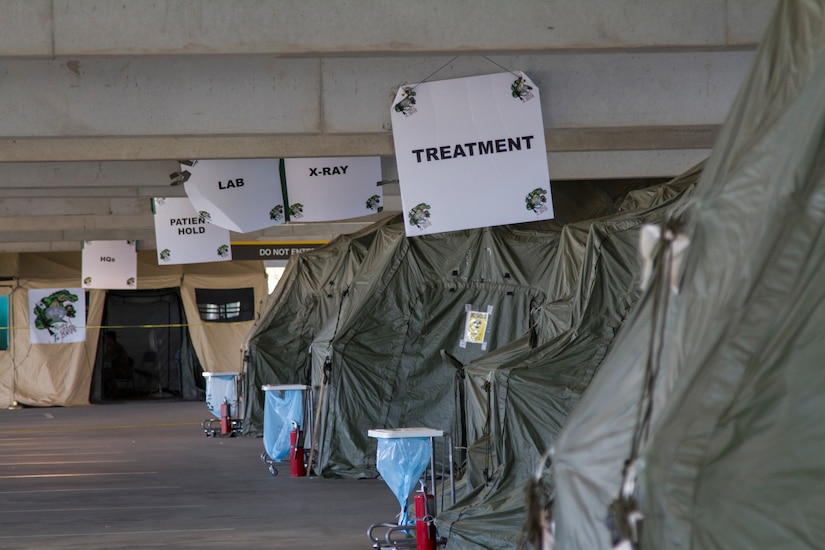
The 61st Multifunctional Medical Battalion, 1st Med. Bde. has led efforts at CRDAMC's COVID-19 testing drive-thru site inside the hospital's garage since June 29, 2020.

In an effort to reduce the health risks to personnel in CRDAMC, the screening site helps identify people with respiratory illness symptoms before they enter the hospital.

A line of tents with signs at a COVID-19 drive-thru site.

Before the cars move inside the garage, where the occupants' vitals are taken, the occupants see the medical professionals for Role 2 medical care and possible testing. It's important to ensure they are there for the right reasons.

"We screen them and make sure they actually need to be here to get tested first," Army Staff Sgt. Nelson Smith, healthcare noncommissioned officer in charge with 546th Med. Company Area Support, 61st MMB, said.

During the screenings, there are certain criteria that will immediately cause the medics to have the vehicles proceed into the garage.

"If they were exposed to someone who was known to have COVID-19, have been out of Texas within 14 days or are showing symptoms, we will move them in for testing," Smith said.

If no symptoms are present, personnel will not be tested at the site. Smith said there is also one other common instance that results in no test being administered.

"Some people may come in and say their spouse has tested positive and would like to also be tested," Smith explained. "At that point, we won't test them here, because if one person in the house tests positive, we assume the entire house is positive living in close quarters with each other."

Once someone is identified to be tested, their samples are taken to CRDAMC and the results come back typically within 72 hours.

If a patient is identified as needing Role 2 treatment, a system is in place to minimize the possible spread of COVID-19.

"A medic will radio the make, model and license plate of the vehicle so transport can pick them up from their vehicle and take them to Role 2," Smith said. "That's to avoid any possible contamination with rails, or if we have a really sick patient to avoid them having to walk themselves."

Army Capt. Joshua Gurr and Army 1st Sgt. Christopher Lane, both members of the 546th command team, oversaw operations at the site, and Gurr acknowledged the uniqueness of their current fight.

"As leaders, we try to predict the enemy's movements in order to react, to seize [the] moments and capitalize on opportunities," Gurr said. "The enemy for our mission is COVID, which is unpredictable."

A medical soldier collects patient information at a COVID-19 drive-thru site.

The health of the force is always a priority and it's something that concerns Gurr as the commander. 

"With how contagious it is, I'm concerned about my soldiers," Gurr said. "If they are treating a patient, they run the risk of catching COVID themselves. Even after we use all our safety measures and precautions, the risk still exists. So, it's something we constantly manage."

Lane praised his soldiers for their efforts supporting the fight against the pandemic.

"It's a proud moment for me," Lane said. "Fighting an unknown enemy like COVID, is something a lot of soldiers don't get recognized for as if they were fighting in Iraq or Afghanistan. They are doing something greater than themselves and also get to excel at their craft as medical professionals."

With no end date to drive-thru support set, the soldiers are motivated to continue their mission.

"Our teams are prepared to run the station for as long as it takes," Smith said.

(Army Sgt. 1st Class Kelvin Ringold is assigned to the 13th Expeditionary Sustainment Command).

Fort Campbell Schools Celebrate Successful Opening

 Sept. 22, 2020 | BY Emily Laforme, Army

Principals from the Fort Campbell, Kentucky, Department of Defense Education Activity schools are praising their teams, students and parents for successfully creating a safe learning environment during the early weeks of the 2020-2021 school year.

After successfully opening amid the COVID-19 pandemic, the principals from Barsanti Elementary School, Mahaffey Middle School and Fort Campbell High School reflect on what changes have made the transition back to in-person learning a success.

Barsanti Elementary School

Like the other schools across the installation, Barsanti Elementary School staff has placed directional stickers on the floors to help direct student-traffic flow while maintaining social distancing in the hallways. The desks in classrooms and seating in the lunchroom are properly spaced, sanitation takes place at regular intervals and everyone is wearing a face mask. They also found a way to alternate times for the use of the playground for recess. Disinfectant spray has been provided to the staff to clean high-touch areas after each use.

"I think the students and staff have done amazingly well," said Hugh McKinnon, Barsanti principal. "It was a little bit cumbersome, but I think the school year has come together nicely. We had some concerns about the younger students being able to keep their face masks on for long periods of time. We thought it would be more of a challenge than it turned out to be. I equate it to the parents telling me they have been making the effort to have their children wear these coverings when they are out and about outside of the home."

Kids wearing face masks play on a playground.

McKinnon also attributes their success to the Barsanti back-to-school team and the support of the community. They have only had to make minor changes to some of their seating arrangements in the lunchroom to better ensure social distancing.

The Fort Campbell schools back-to-school teams include teachers, paraprofessionals and parents who were part of back-to-school planning, he said.

"They pretty much had everything planned and sorted out for us prior to arriving [at] school, which made things easier," McKinnon said.

While teachers and staff have had to get creative, he said, they have risen to the occasion and are doing a great job keeping students and themselves safe while continuing with the daily lessons.

"I think we've learned from the other schools around us and had a lot of information on what our challenges would be and what to expect," McKinnon said. "It all seemed to come together very well. Now it's just a matter of making sure everything is habit and to not let up and keep up with our routine practices."

McKinnon said he is thankful for his staff, parents and students who are facing the challenges and are continuing to work together every day.

"I'd really like to give a shout out to the students," McKinnon said. "They've taken all of the challenges seriously while maintaining their positive attitudes and are still managing to have fun."

Mahaffey Middle School

After reviewing daily operations and COVID-19 precautions, the Mahaffey Middle School staff decided to keep students in one classroom as much as possible, with the teachers moving from classroom to classroom for each subject.

"The students are in one classroom for a majority of their day," said Linda Haberman, principal of Mahaffey. "The students are saying they really like it, and I think it's building little communities within the classroom. Everyone agrees it's the safest way to go. They do come out for their various electives, but the students are really liking it."

The students and parents have adapted easily to the new environment, and everyone has been very supportive, Haberman said.

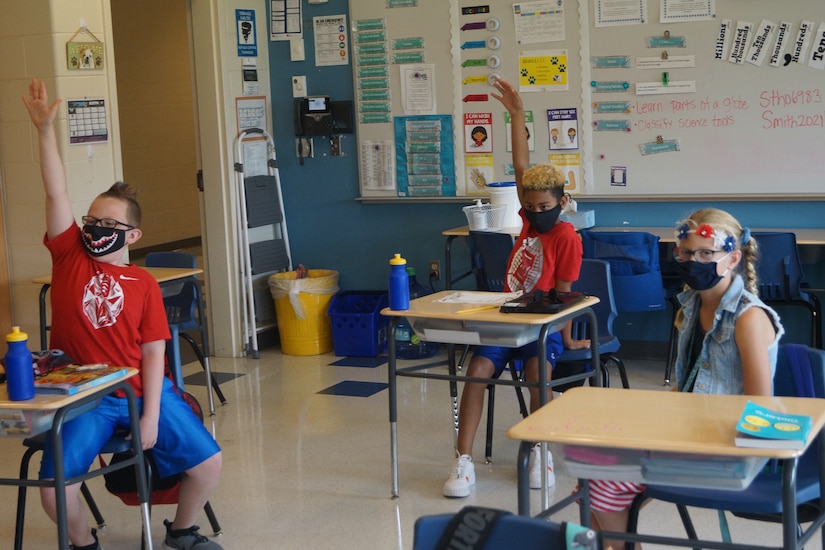
"The students have done a fantastic job with social distancing and wearing their masks, all of the mitigations we've put into effect," she said. "Our parents have been very understanding, especially with our decision to limit the amount of people we have coming into our building every day. We've been meeting with parents a lot virtually."

Kids wearing face masks raising their hands in a classroom.

The school staff decided to slowly begin after-school activities with a few clubs including National Junior Honor Society, Model United Nations, Spanish Club and the math competition team, Haberman said.

Students attending virtual learning also can participate in the clubs virtually or choose to attend in-person. They try to host the clubs outdoors as much as possible, weather permitting, Haberman said, adding that teachers have also incorporated outdoor learning into their classes' daily routines.

"We're going slow, but trying to do everything very precisely," she said. "One of the things I think has been helpful is our mask breaks. We have it arranged so teachers can take their students outside during scheduled parts of the day, when the weather is good, and they can hold some classroom discussions at a social distance with their masks off."

The only thing they have had to adjust since school started was the lunchroom seating arrangements, and now there are eating areas throughout the school to help with social distancing, Haberman said.

"I want to shout out to my entire staff. They've done a phenomenal job in supporting all of the changes," she said. "I also want to shout out to my guidance counselors, Wanda Bermudez and Michael Erickson, for continuing to support parents and students throughout all of these changes. I want to shout out our band director, Rusty Carter, for creatively finding ways to continue holding band classes. I want to give a shout out to Jhoni Hale, our education technologist, for supporting both in-person and virtual learning, and our school nurse, Tracey Thomas, who has been invaluable with communicating community health guidelines. Lastly, I want to shout out Sherri Gowker, our ordering clerk, who has made sure we have all of the materials we need for our students and teachers."

Fort Campbell High School

At Fort Campbell High School, principal Thomas Whittle said their successful return to in-person learning is linked to the students and staff, and their brave adaptability to a new learning environment.

"If I could praise our success, it would be to the students and their response to the new environment we are in," Whittle said. "I'd also praise the teachers and staff and the adjustments they have made, as well as the support from our Fort Campbell command group. The support has been astronomical."

The dedication to academic excellence has been as strong as ever for students and staff, despite the challenges they had to overcome, he said.

"We did a lot of walking the school itself," Whittle said. "We wanted to come up with an idea that would be safe following DoDEA guidelines and community guidelines, so we walked the school as if we were in a student's shoes. We rang the bells to see how long it would take to travel from one side of the school to the other. We also redesigned the lunchroom so students would have social distancing and be able to eat lunch without their masks."

The school staff has also worked closely with parents, virtually, to include them in decision-making to create a better school environment, he said. They've since moved the back parking lot into the bus loading and unloading zone, with students entering through the front of the school.

"We will resume some after-school clubs this week, and we will also start using the late buses for students who stay after school for activities this week as well," Whittle said. "We're looking at restarting the after-school tutoring program soon as well. Virtual learners will be able to participate in these activities as well."

He is thankful to the Fort Campbell administrative team, the other principals and staff at Fort Campbell schools, as well as his team for their support and communication during this time.

"They've all been great in putting in the extra hours to make sure our students and faculty are safe," Whittle said.

(Emily LaForme is assigned to Fort Campbell)

Top DOD Officials to Hold Virtual Town Hall Meeting

 Sept. 22, 2020

Defense Secretary Dr. Mark T. Esper; Army Gen. Mark A. Milley, chairman of the Joint Chiefs of Staff; and Senior Enlisted Advisor to the Chairman Ramón "CZ" Colón-López will hold a virtual global town hall meeting at the Pentagon to provide service members, their families and DOD civilians an opportunity to ask questions on the department’s COVID-19 response and diversity and inclusion at 10 a.m. EDT Sept. 24, 2020.

The event will be streamed live on Defense.gov, on DVIDS and on the DOD Facebook page.

Sports Heroes Who Served: Brooklyn Dodgers Legend Duke Snider

 Sept. 22, 2020 | BY David Vergun , DOD News

Sports Heroes Who Served is a series that highlights the accomplishments of athletes who served in the U.S. military.

Edwin D. "Duke" Snider was the pitcher for Enterprise Junior High School’s softball team in Los Angeles beginning in 1937. During three of the four years he played there, the team won the league championship.

A baseball player poses for a photo with his bat over his shoulder.

Snider recalled that three of the best hitters on the team were Japanese Americans. In February 1942, he said the three were sent to internment camps in the Midwest.

Snider continued playing both football and baseball at Compton High School in Compton, California. In 1943, he pitched a 6-0 no-hitter against Beverly Hills in his initial regional league appearance.

In June 1943, Snider's baseball coach at Compton, Bill Schleibaum, wrote to Branch Rickey of the Brooklyn Dodgers informing him of Snider's talent.

He wrote, ''During the past ten years, I have been directly connected with coaching, and it is my belief that Duke Snider is one of the finest baseball prospects that I have ever seen.''

The Dodgers invited Snider to a tryout camp in Long Beach, California, in September 1943, but they had to wait until his graduation in February 1944. 

Snider accompanied the Dodgers to their Bear Mountain training camp in upstate New York.

"During our stay at Bear Mountain, we played the Army varsity team a couple of times," he recalled. 

A man in a suit stands with his arm over the shoulder of a man wearing a baseball uniform.

He returned home to California after the season, turned 18, and in late 1944, he was inducted into the Navy, serving as a fireman third class.

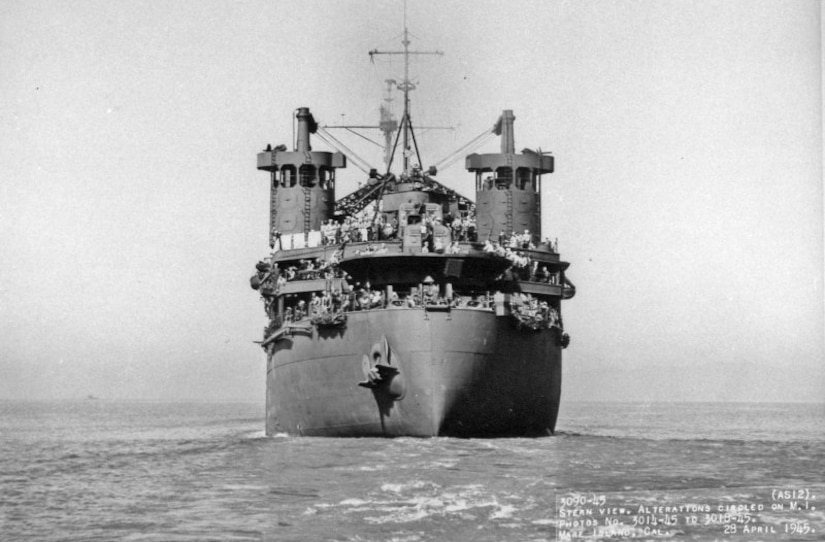
Early in 1945, he deployed to Guam and was assigned duties aboard the submarine tender USS Sperry. 

Snider moonlighted for the 2nd Marine Division baseball team while in Guam and played for the USS Sperry baseball team.

The closest he said he ever came to combat was when he had watch duty on one of the ship's 5-inch guns. In that incident, an unidentified ship was sighted ahead.

"The command came down from the bridge to load the gun with a star shell that would be fired if the ship did not respond to our signal requesting identification," Snider said. "No World Series moment ever scared me as much. I was no authority on loading or firing shells. All I had been told in our drills was that you press this lever, a shell comes up, you put it in and press another lever, and the shell goes 'boom!'"

An old photo shows a ship sailing on the ocean.

"I pressed the first lever, the shell came up, and I put it into the loading chamber. I was actually shaking while waiting for the command to fire," he continued. "Two ships might start firing at each other in the middle of the Pacific Ocean as a small part of World War II, and I was going to be the one to start the firing."

"Seconds before the command to fire would have come, the other ship identified itself as friendly," he said.

Snider was later stationed at Long Beach Army Air Base in California. While playing for the base team, he got an offer to sign with the Pittsburgh Pirates, but Snider said he had his Brooklyn commitment to fulfill.

Large military ships docked in a blue waters.

As center fielder, he played for the Brooklyn Dodgers and then the Los Angeles Dodgers from 1947 to 1962. In 1955 and 1959, the Dodgers won the World Series. Then, he played for the New York Mets in 1963 and, finally, for the San Francisco Giants in 1964.

Besides the two World Series, Snider was named an All Star eight times, 1950 to 1956 and 1963.

The Dodgers retired his No. 4 uniform, and he was inducted into the Baseball Hall of Fame in 1980.

Following his baseball career, Snider held a number of jobs in the media, including TV and radio announcer for the San Diego Padres from 1969 to 1971 and the Montreal Expos from 1973 to 1986. He also took TV and movie acting roles. In 2007, he was featured in the documentary film, ''Brooklyn Dodgers: Ghosts of Flatbush.''

Snider died on Feb. 27, 2011, in Escondido, California; he was 84. 

General Officer Assignments

 Sept. 22, 2020


The Chief of Staff of the Army announces the following general officer assignments:

Brig. Gen. Sean C. Bernabe, deputy commanding general, U.S. Army Europe, Germany, to commanding general, 1st Armored Division and Fort Bliss, Fort Bliss, Texas.

Brig. Gen. David B. Womack, special assistant to the commanding general, U.S. Army Europe, Germany, to deputy chief of staff, operations, Multinational Corps Northeast, North Atlantic Treaty Organization, Poland.

U.S. Army Reserve

Maj. Gen. Daniel J. Christian, deputy commander - support (Individual Mobilization Augmentee), Eighth Army, Republic of Korea, to deputy chief of staff, U.S. Army Training and Doctrine Command, Fort Eustis, Virginia.

Brig. Gen. Matthew V. Baker, commander, 102d Training Division (Maneuver Support); and deputy commanding general for mobilization and training, U.S. Army Maneuver Support Center, Fort Leonard Wood, Missouri, to commanding general (Troop Program Unit), 416th Theater Engineer Command, Darien, Illinois.

Brig. Gen. Vincent B. Barker, director of sustainment, Combined Joint Task Force-Operation Inherent Resolve, Operation Inherent Resolve, Kuwait, to deputy, inspector general, Office of The Inspector General, U.S. Army, Washington, D.C.

Brig. Gen. Miguel A. Castellanos, advisor to the commander (Individual Mobilization Augmentee), Joint Task Force - Horn of Africa, U.S. Africa Command, Germany, to commanding general (Troop Program Unit), 84th Training Command, Fort Knox, Kentucky.

Brig. Gen. Miles A. Davis, assistant to the deputy commanding general - readiness (Individual Mobilization Augmentee), U.S. Army Reserve Command, Fort Bragg, North Carolina, to commanding general (Troop Program Unit), 76th U.S. Army Reserve Operational Response Command, Salt Lake City, Utah.

Brig. Gen. Matthew P. Easley, director, Artificial Intelligence Task Force, U.S. Army Futures Command, Arlington, Virginia, to chief information security officer (Individual Mobilization Augmentee), Office of the Chief Information Officer, U.S. Army, Washington, D.C.

Brig. Gen. Joseph A. Edwards II, deputy commanding general (Troop Program Unit), 104th Training Division (Leader Training), Joint Base Lewis-McChord, Washington, to director of operations, Office of the Deputy Chief of Staff, G-9, U.S. Army, Washington, D.C.

Brig. Gen. Rodney J. Fischer, deputy commanding general (Troop Program Unit), 80th Training Command, Richmond, Virginia, to deputy commander (Troop Program Unit), 104th Division Leader Training Headquarters, Joint Base Lewis-McChord, Washington.

Brig. Gen. Howard C. Geck, commander, (Troop Program Unit), 103d Sustainment Command (Expeditionary), Des Moines, Iowa, to assistant to the deputy commanding general - readiness (Individual Mobilization Augmentee), U.S. Army Reserve Command, Fort Bragg, North Carolina.

Brig. Gen. Richard J. Heitkamp, deputy director, politico-military affairs (Western Hemisphere), J-5, Joint Staff, Washington, D.C., to deputy director, (Individual Mobilization Augmentee), Military Programs Headquarters, U.S. Army Corps of Engineers, Washington, D.C.

Brig. Gen. James J. Kokaska Jr., deputy commander, (Troop Program Unit), 416th Theater Engineer Command, Darien, Illinois, to commander, 102d Training Division (Maneuver Support) and deputy commanding general for mobilization and training, U.S. Army Maneuver Support Center, Fort Leonard Wood, Missouri.

Brig. Gen. Joseph A. Marsiglia, deputy commanding general, Army Reserve Medical Command, Pinellas Park, Florida, and mobilization and reserve affairs (Individual Mobilization Augmentee), Office of the Surgeon General, Falls Church, Virginia, to commanding general (Troop Program Unit), Medical Readiness and Training Command, Joint Base San Antonio, Texas.

Brig. Gen. Peder L. Swanson, program director, Reserve Medical, Office of the Secretary of Defense, Washington, D.C., to deputy commander (Troop Program Unit), 807th Medical Command (Deployment Support), Salt Lake City, Utah.

Readout of Secretary of Defense Dr. Mark T. Esper's Meeting With Israeli Defense Minister Benjamin Gantz

 Sept. 22, 2020


Secretary of Defense Dr. Mark T. Esper hosted Israeli Defense Minister Benjamin Gantz at the Pentagon today.  Secretary Esper expressed continued support for Israel's Qualitative Military Edge.  The two leaders shared views about the security challenges in the Middle East, and reaffirmed the ironclad defense relationship between the United States and Israel.  Secretary Esper and Minister Gantz agreed that the normalization of relations between Israel and the United Arab Emirates and Bahrain under the Abraham Accords represents a historic opportunity to strengthen regional security.

Readout of Acting Under Secretary of Defense for Policy Dr. James Anderson's Bilateral Engagement With Ghanaian Minister of Defense Hon. Dominic Nitiwul

 Sept. 22, 2020


Acting Under Secretary of Defense for Policy Dr. James Anderson spoke with the Ghanaian Minister of Defense Domonic Nitiwul today by telephone. The two leaders expressed appreciation for the enduring U.S.-Ghana defense relationship built on shared democratic values and mutual security interests.  

Dr. Anderson emphasized the United States’ commitment to the partnership and to continued collaboration on shared priorities of countering violent extremism, advancing maritime security, and defending international norms.

Focus Fire


Marines fire machine guns during training at Camp Fuji, Japan, June 23, 2020.

Monday, September 21, 2020

Security Duo

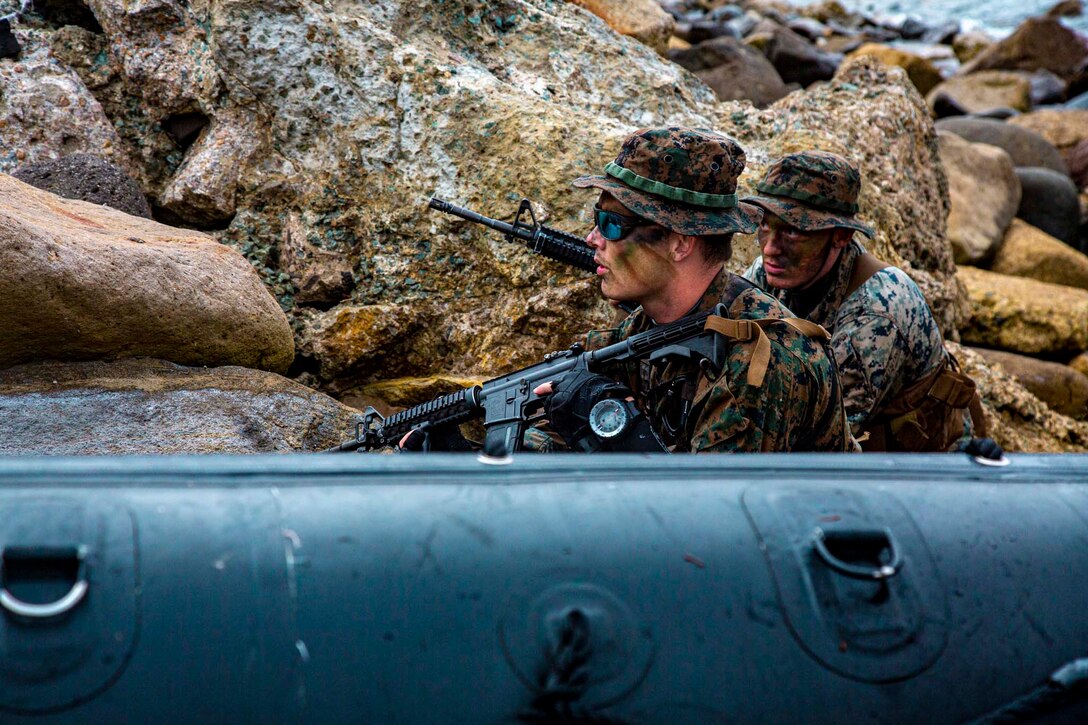
Two Marines wearing camouflage paint carry rifles while positioned against rocks.


Marine Corps Cpl. John Fudge, left, and Lance Cpl. John Clutter provide security for a simulated small boat raid during training at San Clemente Island, Calif., Aug. 4, 2020.

Decisive Action


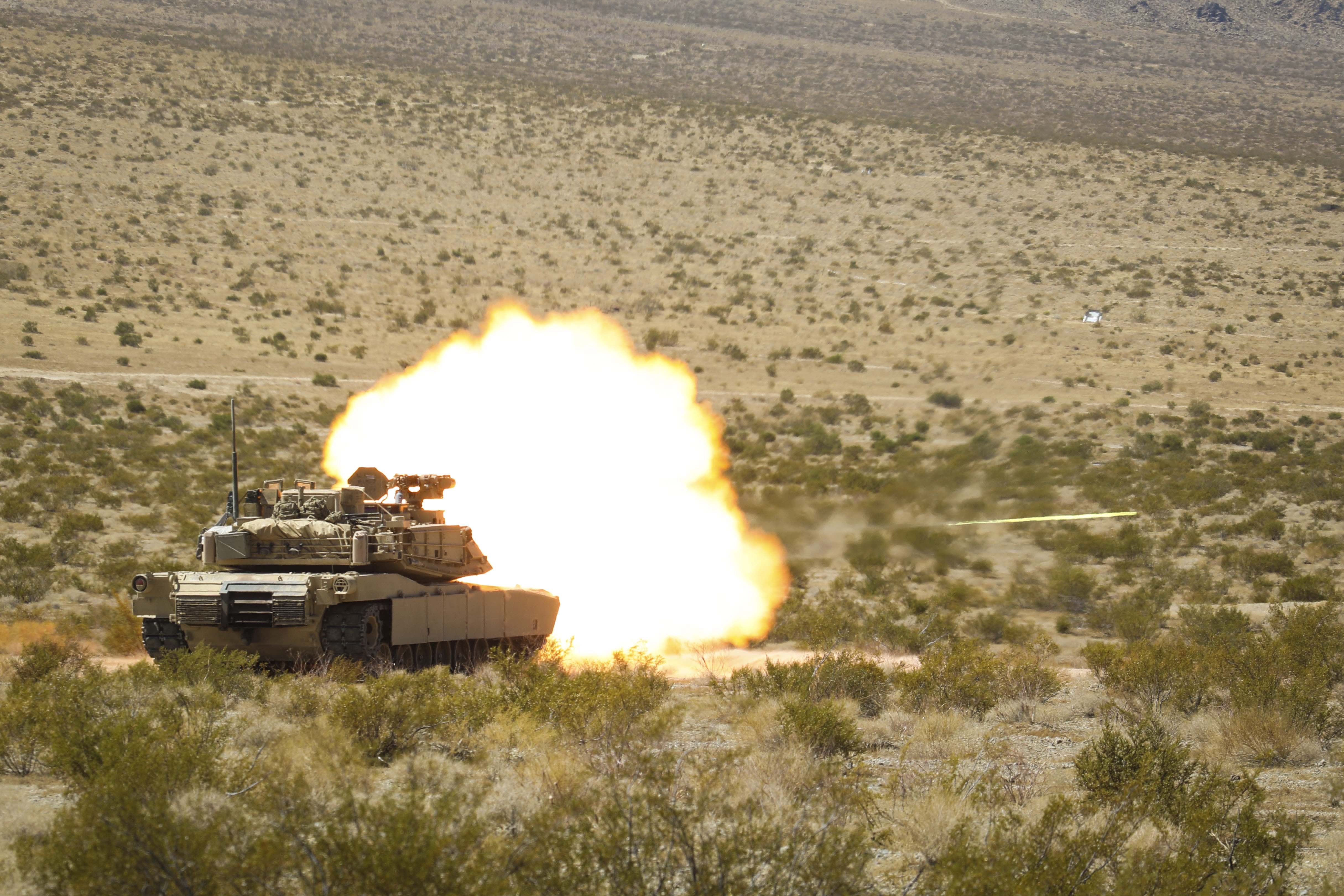
Soldiers engage simulated enemy forces during a decisive action rotation at Fort Irwin, Calif., Sep. 13, 2020. The rotations are designed to ensure Army brigade combat teams remain versatile, responsive and ready.

Final Walk


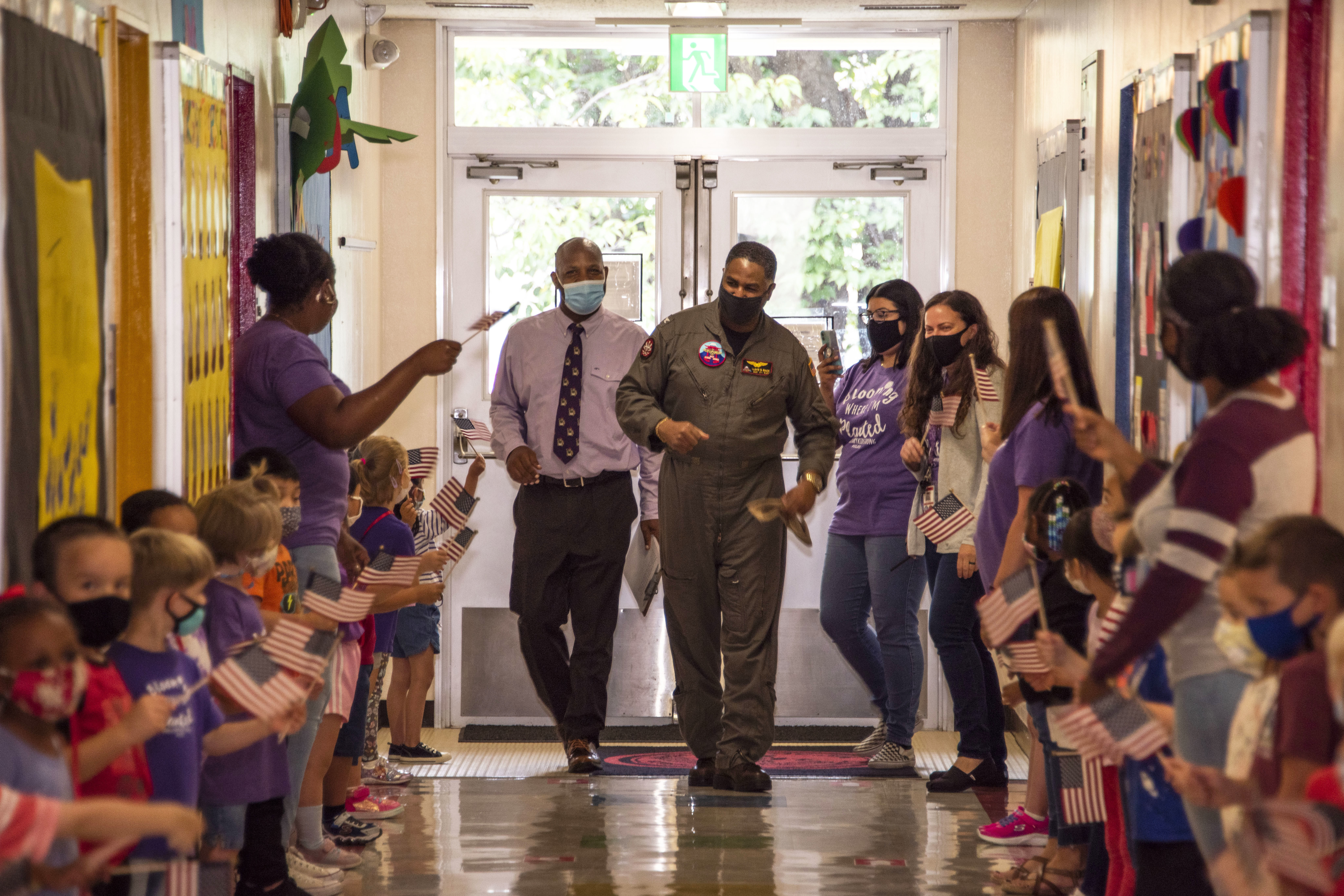
Navy Capt. Lloyd B. Mack, center, commanding officer of Naval Air Facility Atsugi, conducts a last walk through of Shirley Lanham Elementary School during a ceremony held in honor of him and his family at Naval Air Facility Atsugi, Japan, Sept. 15, 2020. Mack is scheduled to turn over his commanding officer duties to Navy Capt. John M. Montagnet. The facility is currently taking COVID-19 safety precautions to safeguard its service members and families on base.

Hurricane Cleanup


Air Force Senior Airman Jonathan Egboiyi cuts fallen trees at Hurlburt Field, Fla., Sept. 18, 2020. Airmen cleared fallen trees and debris caused by Hurricane Sally.

Arctic Air Defense

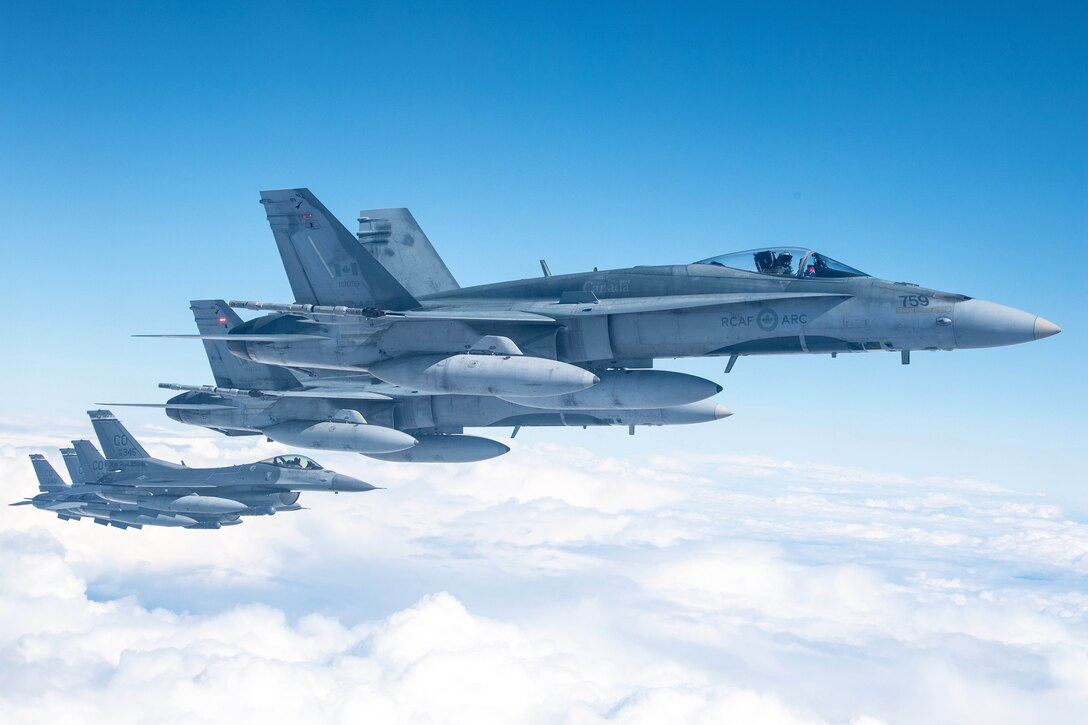
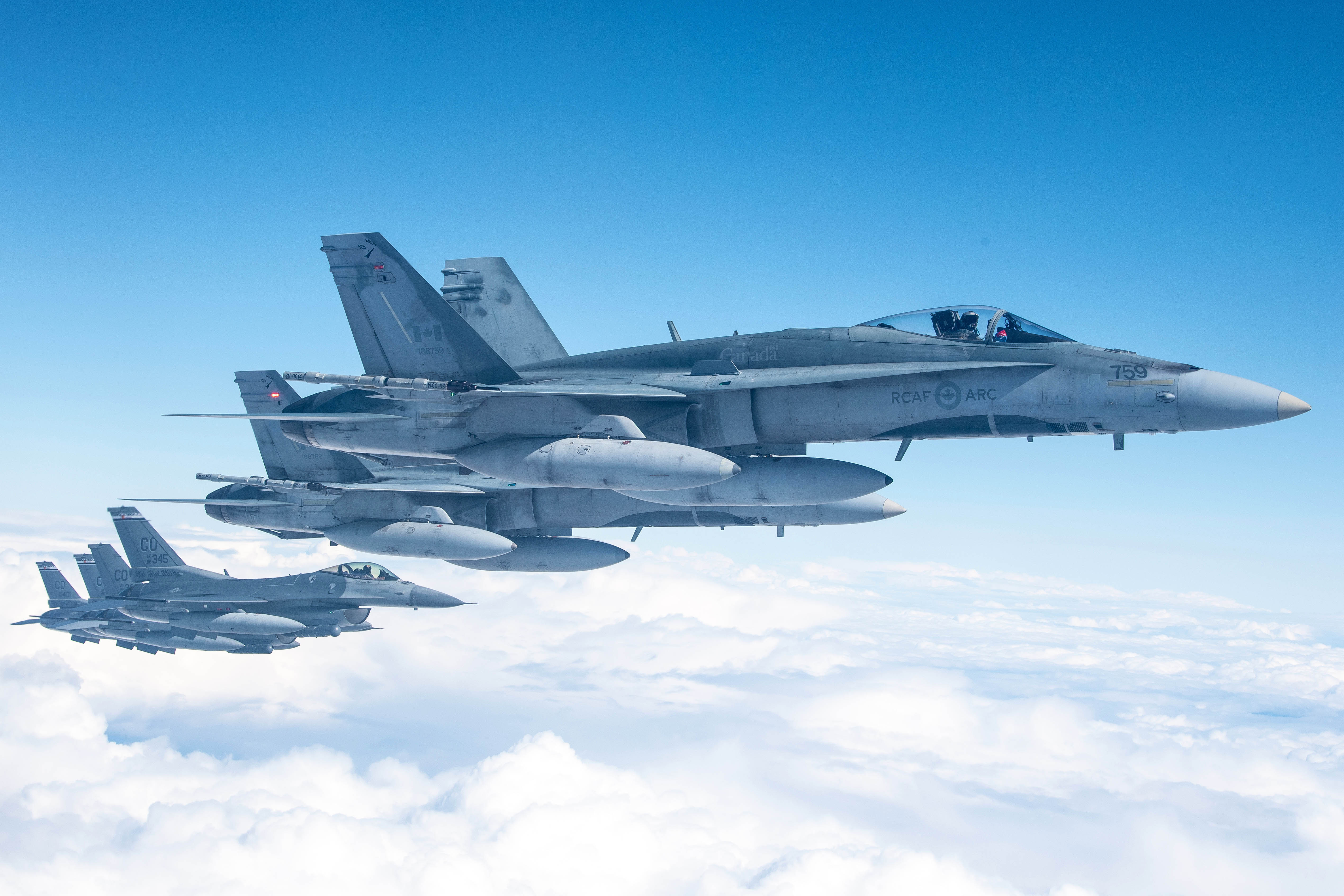
Six aircraft fly above clouds.

Four U.S. F-16 fighting falcons fly in formation with two Canadian CF-188 Hornets over the skies of Labrador, Canada, Sept. 20, 2020. The aircraft participated in a North American Aerospace Defense Command Arctic Air Defense Operation.

Caribbean Colors


Navy Petty Officer 2nd Class Muhammed Parks signals to an MH-60S Seahawk helicopter during flight operations aboard the littoral combat ship USS Detroit in the Caribbean Sea, Sept. 12, 2020.

NATO Military Committee Gets Virtual Check on Alliance Missions

 Sept. 21, 2020 | BY Jim Garamone , DOD News

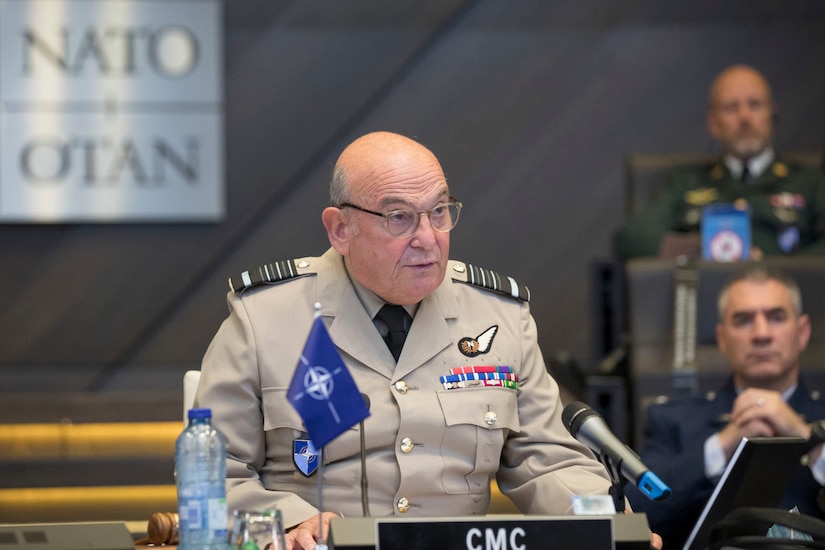
The NATO chiefs of defense met virtually for the alliance's Military Committee meeting last week. 

Under the leadership of Air Chief Marshal Sir Stuart Peach, the chairman of the committee, the chiefs discussed ongoing operations in a time of COVID-19 as well as future moves growing out of the alliance's new strategy. Army Gen. Mark A. Milley, the chairman of the Joint Chiefs of Staff, attended for the United States.

A man in a military uniform sits behind a desk and is speaking.

The meeting was to be in Rome, but the coronavirus has stopped travel.

Peach said he has been struck by the "fortitude and community spirit that has emerged" because of the pandemic. "In times of trouble, people have come together, focusing on what unites them and not what separates them, to help those in need," he said.

NATO as an organization has helped the allies in this time of need by ensuring crucial capabilities are where medical experts need them and by ensuring that the right equipment gets in the right hands. 

Alliance service members are also carrying on their mission of deterrence and stability, Peach said.

"Speaking virtually to the 30 allied chiefs of defense today, I was encouraged by their interaction — the coming together of friends, colleagues, all united in their effort to provide the best possible military advice for NATO," he said.

The chiefs shared best practices for the pandemic, identified lessons, pooled resources and assisted one another through the Euro-Atlantic Disaster Response Coordination Center.

The need for deterrence and stability remains as "state and non-state actors have kept up their efforts to manipulate, disrupt, deny and exploit in order to achieve their aims," Peach said.

A building with a circle of flags in front of it.

The chiefs focused on what the alliance has achieved, what needs to be done and what resources NATO service members need to accomplish the missions. 

The chiefs started by discussing the alliance missions in Afghanistan, Iraq and Kosovo. They also discussed the multinational battlegroups in the east of the alliance, the air policing mission and NATO maritime deployments.

Air Force Gen. Tod D. Wolters, NATO's Supreme Allied Commander Europe, briefed the chiefs on these missions. "Resolute Support Mission in Afghanistan was a key point of discussion with the peace efforts ongoing and the encouraging progress being made," the air chief marshal said. "The chiefs of defense reiterated their continued support for Afghanistan and stressed that the military presence of the alliance and its partners in the Resolute Support Mission in Afghanistan will remain conditions-based."

There are roughly 12,000 NATO troops in Afghanistan supporting the Afghan security forces. "A peaceful and stable Afghanistan is in everybody's interest," he said. "NATO allies and partners will continue to play our part."

The NATO mission in Iraq will continue training Iraqi security forces to build their capacity as a hedge against the resurgence of terrorism in the region.

The NATO flag and others are displayed in a row in a room.

"NATO's Kosovo Force marked its 21st anniversary this year (and) allied (chiefs) confirm their full commitment and that mission remains unchanged," Peach said.

There are about 3,400 troops provided by 27 NATO members and partners in Kosovo. "We regularly assess our KFOR mission and it has been agreed by Allies that we should maintain the current strength," he said.

The chiefs also heard about the precautions taken to protect troops during the pandemic. Peach stated that the operational readiness of NATO forces remains undiminished. 

The chiefs also looked at the deterrence and defense of the Euro-Atlantic area and NATO's warfighting capstone concept. These follow from NATO's new military strategy. "The deterrence and defense of the Euro-Atlantic area concept helps set out NATO's military priorities and approach to current and future threats," he said. "NATO's warfighting capstone concept is based on a 20-year view from a warfighting perspective."

Finally, the chiefs discussed Russia. Peach said the alliance's relationship with Russia is complex.

"We have been adversaries, partners and colleagues in countering terrorism, but since the illegal annexation of Crimea in 2014, our relationship has entered a new phase" he said. "There has been a pattern of destabilizing behavior from Russia — including aggressive actions against their neighbors, election interference and cyber-attacks."

Russian propaganda outlets have falsely accused NATO of creating and spreading COVID-19, and Russia has escalated tensions by developing hypersonic weapons. "These systems are clearly a concern for this committee," he said. "We will maintain our deterrence and defense, and we will not mirror Russia's actions."

DOD Personnel Proving Productive, Resilient During Pandemic

 Sept. 21, 2020 | BY David Vergun , DOD News

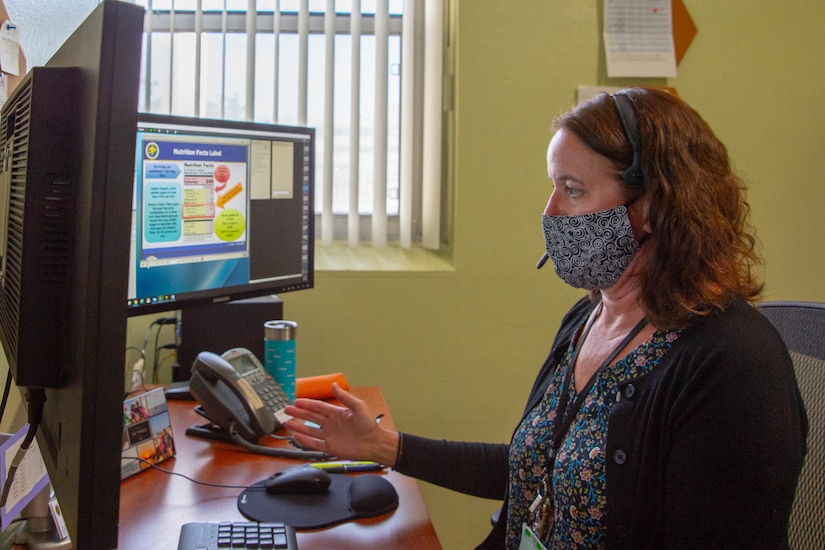
Due to the COVID-19 pandemic, a large number of Defense Department personnel have been teleworking and successfully continuing the mission, the DOD's chief management officer said.

A woman wearing a mask uses computer.

Lisa W. Hershman spoke Wednesday with Troy Schneider, the editor-in-chief of "Federal Computer Week" magazine.

Hershman used the example of the Pentagon to illustrate the department as a whole. She said that when she arrived in April 2018, people in the building said telework for the majority of workers couldn't be done. This was a big change from the company that she ran where the entire company worked remotely on Fridays, she said.

"Believe it or not, Fridays were our most productive days," Hershman added. 

"And when I came on board and I said, 'What's your teleworking policy?' They looked at me kind of funny and said, 'We don't do that here,'" she said.

The reason for not teleworking, Hershman said she was told, was because of the large amount of classified work performed in the building.

That was an understandable and reasonable response but then things dramatically changed with the pandemic, she said.

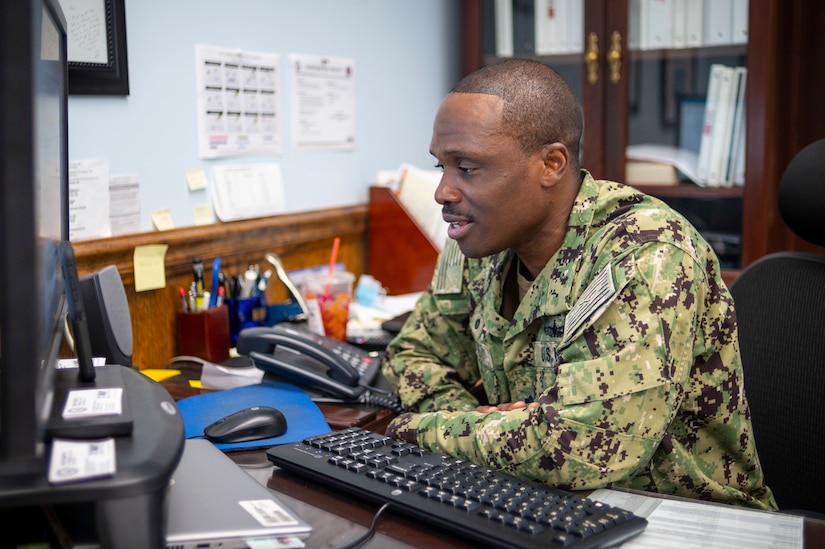
A man in a uniform works at a computer.

In the early days of the pandemic, the daily average of employees physically working at the Pentagon went from over 24,000 people to 5,300, about a 17 percent occupancy rate, she said. "It felt like a ghost town."

Hershman credited the department's information technologists with securing the necessary equipment and connectivity which enabled the workers to continue the mission.

Transitioning to remote work also has a cultural component, she said. In the department, as in the private sector, there are visionary leaders who want to improve their businesses and are focused on driving change for the better. Then there are others who are maybe a bit more reluctant to do things like working remotely.

Hershman provided some examples of how working remotely has been a driving force of change for the better.

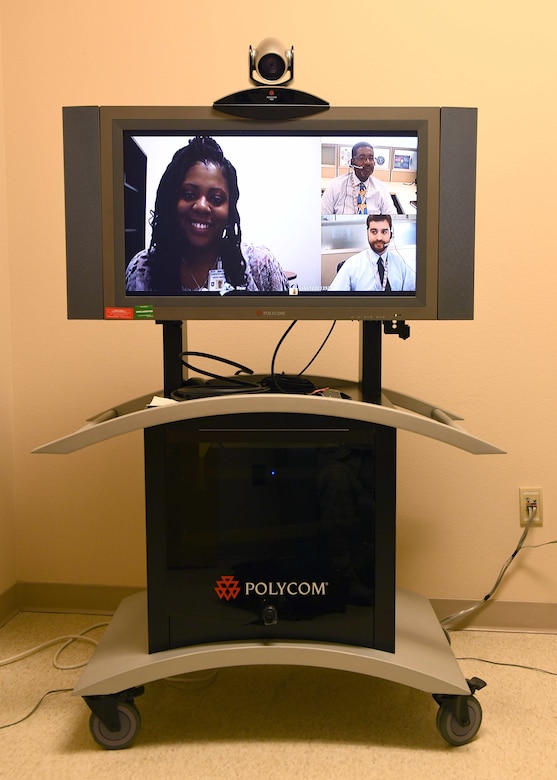
People on a computer screen interact with each other.

When the department was looking at how it manages medical care, before the pandemic, there was a telemedicine infrastructure in place but it wasn't accessed very regularly. That changed and now it is being utilized more often, she said. 

The department looked at a variety of metrics on productivity and found that many personnel were more productive working remotely, she said. "So we called them and said, 'Look, your numbers are phenomenal. What's different?' They said, 'I'm not constantly interrupted by phone calls and people knocking on the door and coming in, and so that's been very helpful.'" She added that for others, elimination of the long commute resulted in time saved and a decrease in fatigue.

Hershman mentioned that while unclassified work could for the most part be done outside the building, classified work still needed to be done inside.

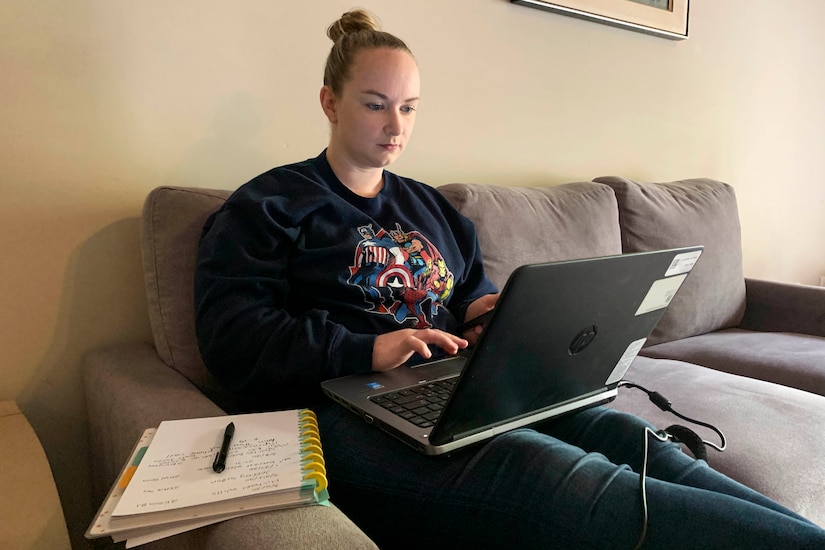
A woman works at a computer

"We've got to make sure that telework is accessible to all," she said. "There are some positions in the federal government that require 100% access to classified systems. So for those [who] do not have as much of that demand for continuous access to special systems or special equipment, supervisors need to consider that when implementing some of their routine remote working opportunities."

The department is now looking at position descriptions, performance metrics, IT system requirements and other factors such as level of security clearances needed for different types of work, in order to make teleworking a more available option, she said.

DOD Approves $25 Million in Grants to Defense Manufacturing Community Support Program

 Sept. 21, 2020


The Department of Defense today announced the award of six (6) grants totaling $25 million under the Defense Manufacturing Community Support Program by the Office of Economic Adjustment. These awards follow a competitive selection process culminating in Under Secretary of Defense for Acquisition and Sustainment Ellen Lord’s designation of six Defense Manufacturing Communities on August 16, 2020, and for the Office of Economic Adjustment to invite grant applications to strengthen the national security innovation base. The awards derive from Fiscal Year 2020 appropriated funding, and leverage an additional $12.6 million in non-Federal funding for a total investment of $37.6 million to enhance critical skills, research and development, and small business support in order to strengthen the national security innovation and manufacturing base.

The grant awards are as follows:

  1. $5 million to Catalyst Connection to undertake a $6,250,000 project to strengthen defense manufacturing capabilities through an industrial production ecosystem that melds advanced metals and materials with artificial intelligence, additive manufacturing, and robotics. The Artificial Intelligence in Metals and Manufacturing Consortium will involve 30 entities across the Pennsylvania-West Virginia-Ohio region and build on existing manufacturing collaborations in order to upskill the regional workforce, familiarize manufacturers with new technologies, and spur innovation in these specialized sectors.
  2.  $5 million to the Ohio Development Services Agency to undertake a $6,250,000 project through the Ohio Defense Manufacturing Community to offer Industry 4.0 technical assistance and workforce training for small- and mid-sized defense manufacturers, with a focus on the aerospace and ground vehicle sectors. This project will include leveraging the state’s existing Manufacturing Extension Partnerships and establishing new collaborations with educational facilities statewide in developing the Industry 4.0 workforce of the future.
  3.  $5 million to the Utah Governor’s Office of Economic Development to undertake a $11,005,000 project to enhance the capabilities of the regional defense industrial ecosystem, with a focus on carbon composites and advanced materials. The project will include several initiatives to strengthen workforce development across the Utah Defense Manufacturing Community, including developing defense manufacturing apprenticeship programs and retraining workers displaced as a result of COVID-19.
  4. $4.9 million to the California Governor’s Office of Planning and Research to undertake a $6,173,962 project to facilitate the California Advanced Defense Ecosystems & National Consortia Effort and enhance defense manufacturing in the state, particularly in the areas of microelectronics, 5G, and space. This effort will assist small- and mid-sized manufacturers develop a workforce capable of assessing opportunities and threats in these converging technology platforms.
  5. $3.7 million to the University of Alabama in Huntsville to undertake a $6,171,074 project to facilitate visibility, workforce training, and adoption of advanced manufacturing technologies in the region, with a focus on aviation, missiles, and ground vehicle systems. The Alabama Defense Advanced Manufacturing Community includes 22 counties in collaboration with several military installations with operations utilizing advanced manufacturing technologies, including Redstone Arsenal, Anniston Army Depot, Fort Rucker, and Maxwell-Gunter Air Force Base.
  6. $1.4 million to the Connecticut Department of Economic and Community Development to undertake a $1,750,000 project to enhance in-state defense prime vertical supply chains and bring Model Based Definition technology to each, in an effort to transform the supply chain from a 2-dimensional design and manufacturing platform to a 3-dimensional platform. The technology and processes developed through the Digital Model Initiative will provide a foundation for subsequent digital transformation initiatives in the defense manufacturing supply base.

The Defense Manufacturing Community Support Program is authorized by Section 846 of Public Law 115-232, which enabled the Secretary of Defense to establish a program to designate and support consortiums as defense manufacturing communities to strengthen the national security industrial base.

For more information about the Defense Manufacturing Community Support Program, visit https://oea.gov/Defense-Manufacturing-Community-Support-Program.

DOD Approves $50 Million in Grants Under Defense Community Infrastructure Pilot Program

 Sept. 21, 2020


The Department of Defense today announced the award of sixteen (16) grants totaling approximately $50 million under the Defense Community Infrastructure Pilot Program by the Office of Economic Adjustment.  These awards follow a competitive selection process culminating in Secretary of Defense Mark Esper’s approval of these projects on August 10, 2020, for the Office of Economic Adjustment to invite grant applications to address quality of life needs for our service members and their families.  The awards derive from FY 2020 appropriated funding, and leverage an additional $45.5 million in non-Federal funding for a total investment of $95.3 million for military family quality of life.

The grant awards are as follows:

1.)  $959,831 to the Abilene Independent School District, Abilene, Texas, to undertake a $1,919,662 project to provide a Science, Technology, Engineering, and Mathematics (STEM) classroom and laboratory to support military families at Dyess Air Force Base. 

2.)  $6,312,950 to the South Dakota Ellsworth Development Authority, Ellsworth, South Dakota, to undertake a $12,625,900 project to construct an indoor recreation facility and wellness center to support the military families at Ellsworth Air Force Base.

3.)  $9,000,000 to the Jefferson County Industrial Development Agency, Watertown, New York, to undertake a $18,100,000 project to construct a Watertown Family YMCA Community and Aquatics Center to support military families at Fort Drum.

4.)  $1,438,000 to the City of Sierra Vista, Arizona, to undertake a $1,538,000 project to construct an Emergency Medical Services substation to support the military families at Fort Huachuca.

5.)  $521,695 to the Silver Valley Unified School District, Barstow, California, to undertake a project to enhance the Silver Valley Unified School District Sports Complex to support military families the Fort Irwin National Training Center.

6.)  $677,238 to the Waynesville R-VI School District, Waynesville, Missouri, to undertake a $1,354,475 project to enhance the Early Childhood Center to support military families at Fort Leonard Wood.

7.)  $6,839,476 to the Louisiana Department of Economic Development, Baton Rouge, Louisiana, to undertake a $7,599,418 project in partnership with the Vernon Parish School Board to construct Science, Technology, Engineering, Art, and Mathematics (STEAM) laboratory and learning spaces at Leesville Junior High School, Leesville High School, Pickering Elementary School, and Vernon Middle School to support military families at Fort Polk.

8.)  $1,494,216 to the Lawndale Educational and Regional Network, Washington, D.C., to undertake a $2,988,432 project to improve access to a Pre-Kindergarden-8th Grade Charter School to support military families at Joint Base Anacostia-Bolling.

9.)  $707,008 to the City of Hampton, Virginia, to undertake a $1,858,022 project to enhance Hampton’s Air Power Park and Museum and provide year-round access to museum grounds to support military families at Joint Base Langley Eustis.

10.)  $3,506,426 to the Municipality of Chalan Pago-Ordot, Guam, to undertake a $6,506,426 project to construct a Multipurpose Recreation and Emergency Center to support military families on Guam.

11.)  $335,000 to the Commonwealth Bureau of Military Affairs, Tinian, Commonwealth of Northern Marianas Islands, to enhance utility infrastructure in support of life, health, and safety for service members rotating on/off the island of Tinian from Joint Region Marianas.

12.)  $10,000,000 to the City of Great Falls, Montana, to undertake a $20,000,266 project to construct the Aim High – Big Sky Recreation Center to support the military families at Malmstrom Air Force Base. 

13.)  $1,000,000 to the City of Jacksonville, North Carolina, to undertake a $5,000,000 project to reconstruct the Jack Amyette Recreation Center to support the military families at Marine Corps Base Camp Lejeune.

14.)  $250,000 to the County of Prince William, Virginia, to undertake a $500,000 project to enhance a warrior challenge course with accessibility improvements to support the military families at Marine Corps Base Quantico.

15.)  $6,293,820 to the City of Minot, North Dakota, to undertake an $13,977,964 project to construct the Magic City Discovery Center, featuring Science, Technology, Engineering, Arts, and Math (STEAM) to support the military families at Minot Air Force Base.

16.)  $426,500 to the Mountain Home School District, Mountain Home, Idaho, to undertake a project to enhance East Elementary School, North Elementary School, West Elementary School, Hacker Middle School, and Mountain Home Junior High School to support the military families at Mountain Home Air Force Base. 

Each of the grantees are working with the Office of Economic Adjustment to ensure compliance with the National Environmental Policy Act of 1970, as amended, and may commence ground disturbing activity upon notification from the Office of Economic Adjustment.  The Defense Community Infrastructure Program is authorized under 10 U.S. Code § 2391 and received appropriations in FY20. 

For more information about the Defense Community Infrastructure Pilot program, visit this website: https://oea.gov/defense-community-infrastructure-pilot-program-dcip.

DOD Approaches Goal of Destroying All Stockpiled Chemical Weapons

Sept. 21, 2020 | BY David Vergun , DOD News

This month, the Pueblo Chemical Agent-Destruction Pilot Plant team at the Army's Pueblo Chemical Depot in Colorado completed the destruction of nearly 300,000 155mm projectiles, which each contained 12 pounds of mustard agent, said Walton Levi, site project manager. 

Chemical agent destruction operations in Colorado began in March 2015 and are scheduled to be completed by 2023, said Levi. More than 780,000 munitions were in the original chemical weapons stockpile in Pueblo.

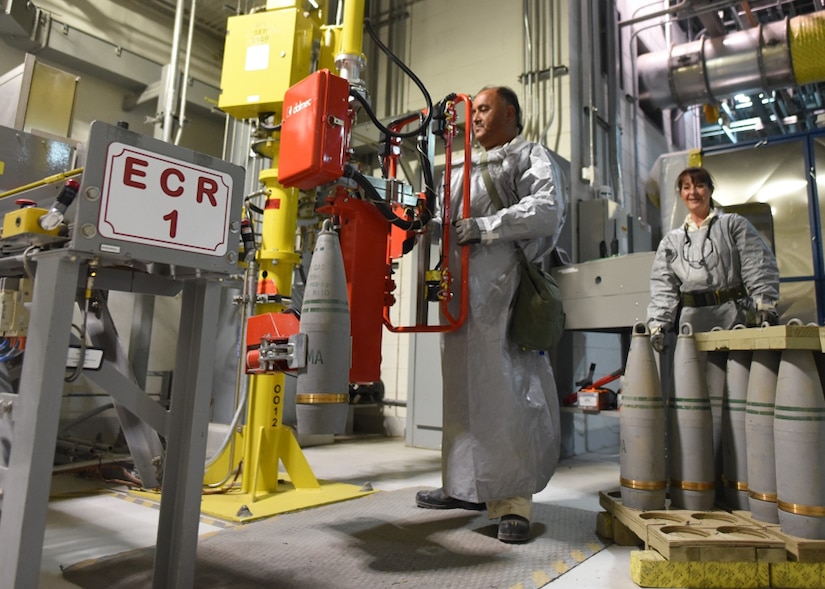
A man in a hazard suit operates machinery.

Mustard agent is a blister-producing chemical weapon contained within three types of munitions stored at the Pueblo Chemical Depot, each named after the diameter of its shell: 155mm projectile, 105mm projectile and 4.2-inch mortar round, he said.

This marks the end of the 155mm projectile campaign at PCAPP and the safe elimination of approximately two-thirds of the original chemical agent stored at the depot, said Levi. ''We proudly completed this campaign ahead of schedule — and while implementing strict, new protocols to keep our workforce safe amid the coronavirus pandemic,'' he said.

Since the late 1960s, the U.S. government has been taking steps to reduce and eliminate the U.S stockpile of chemical weapons. This was reinforced by a presidential directive and the U.S. ratification in 1997 of the Chemical Weapons Convention, an international treaty that calls on all member nations to destroy their chemical weapons and production facilities. 

An overhead view of a large machinery system.

To comply with the treaty, the U.S. is destroying its last remaining chemical weapons stockpile, said Levi. 

''Our ultimate goal is keeping the workforce and community safe from these World War II-era weapons,'' said Army Col. Michael Cobb, commander of the depot. ''We use the utmost care and follow strict safety procedures when delivering the munitions from their storage igloos to PCAPP.''

''Destruction of 155mm projectiles is a great accomplishment for the PCAPP team,'' said Ken Harrawood, project manager of the Bechtel Pueblo Team. ''Innovative solutions are key to solving issues that arise with a complex and one-of-a-kind operating facility like PCAPP. This would not have been possible without the dedication and professionalism of our amazing workforce.''

''I give credit to our team of employees dedicated to the munitions destruction effort, as many have spent their entire careers ridding the world of these weapons,'' said Kim Jackson, plant manager. ''We reached this milestone because of the amazing workforce and their diligence, hard work and support to the PCAPP mission.''

''The United States is fully committed to destroying 100% of its remaining chemical weapons stockpile by Dec. 31, 2023,'' said Mike Abaie, program executive officer of Assembled Chemical Weapons Alternatives.

Two large yellow machines sit on the floor.

As of Aug. 14, the destruction of 1,673.5 tons of mustard agent in the U.S. has been reported to the Organization for the Prohibition of Chemical Weapons, an intergovernmental organization whose goal is to eradicate chemical weapons worldwide, said Abaie.

How the Process Works

Under the close supervision of trained operators, the pilot plant uses dozens of automated systems to disassemble and drain the munitions and thermally heat the drained munition bodies, said Levi. 

The liquid agent is neutralized, and the product, hydrolysate, is then fed to living microorganisms in a process known as biotreatment, Levi explained. Water is recycled at the pilot plant and the remaining salt is shipped off-site to a permitted treatment, storage and disposal facility. The plant is equipped with a robust pollution abatement system made up of 12 carbon filter banks that filter out particles before air from inside the plant is released back into the atmosphere.

During the next several months at PCAPP, technicians will retrofit the plant’s robots and systems to begin processing the next munitions campaign, which are the 105mm projectiles, said Levi.

In July, workers finished assembling three static detonation chambers to augment PCAPP by destroying problematic munitions, which are unsuitable for processing using the main plant’s automated equipment, said Levi. The SDC units will destroy the 4.2-inch mortar rounds, which is the third and final destruction campaign.

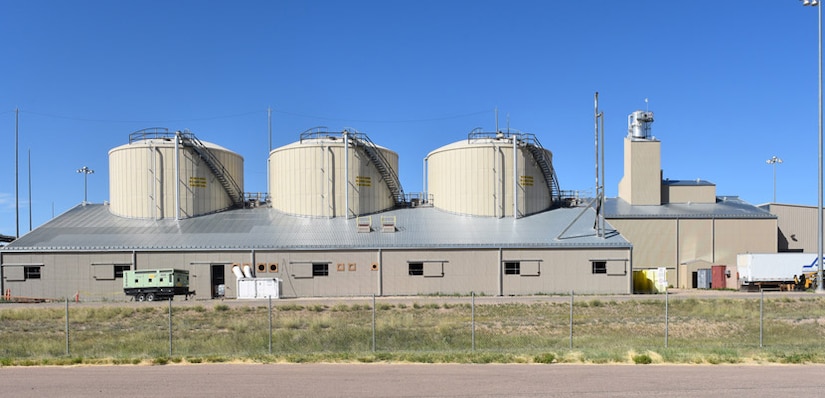
A building is situated behind a fence.

Other Chemical Weapons Site

The other remaining chemical weapons facility in the U.S. is PCAPP's sister site, the Blue Grass Chemical Agent-Destruction Pilot Plant near Richmond, Kentucky. BGCAPP is safely destroying 523 U.S. tons of the nerve agents VX and GB (sarin) and mustard agent stored in rockets and projectiles at the site, Levi said. 

BGCAPP is using neutralization or an explosive destruction technology to safely destroy the munitions, he continued. BGCAPP began agent destruction operations with explosive destruction technology on June 7, 2019, and its main plant began operations on Jan. 17, 2020. Operations will be completed by Dec. 31, 2023.

An important element in the process of safely destroying chemical weapons is the coordination and collaboration with the local communities. The Chemical Stockpile Emergency Preparedness Program works closely and supports state and local governments and the Federal Emergency Management Agency to educate, prepare and protect communities surrounding the stockpile sites, Levi said.

Army Reserve Welcomes Incoming Soldiers Amid COVID-19 Restrictions

Sept. 21, 2020 | BY Army Staff Sgt. Christopher Jackson

When Army Spc. David Marable greets new soldiers arriving at Rhine Ordnance Barracks, the Columbus, Georgia-native thinks about how challenging a move to Germany must be amid COVID-19 restrictions.

Hundreds of unaccompanied soldiers spend roughly two weeks at Task Force Willkommen upon their arrival to Germany. Most are junior enlisted troops heading to their first assignment and have never been overseas before.

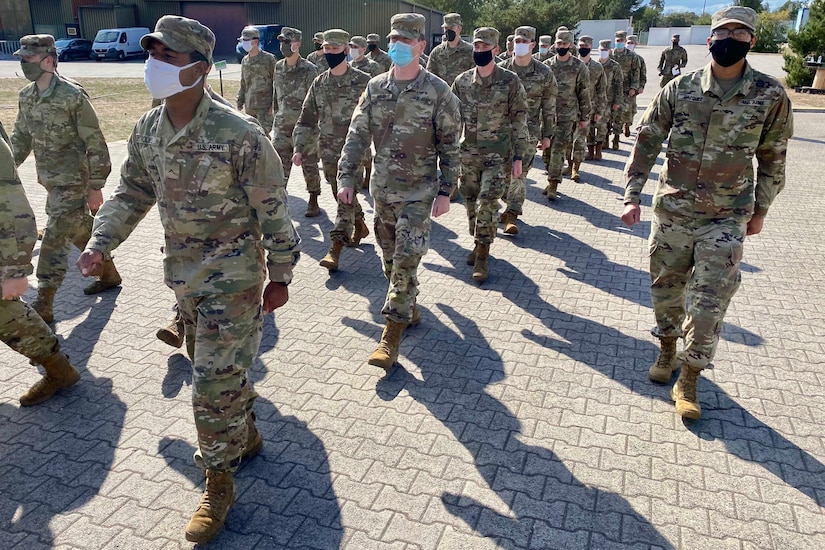
Soldiers wearing face masks march as a group.

Marable is one of roughly 60 reserve soldiers from the 7th Mission Support Command, a U.S. Army Reserve unit headquartered at Kaiserslautern's Daenner Kaserne, who spent this summer caring for new arrivals during a 14-day lockdown, designed to reduce the spread of the virus.

"I try to be there for them as much as I can," Marable said, a human resources specialist with the 83rd Combat Sustainment Support Battalion. "If they need someone, they come and get me."

Like most reserve soldiers, Marable brings civilian skills to his job. When not in uniform, he is a personnel specialist in Baumholder. He's often used his connections, plus a deep knowledge of German culture and the local area, to help new soldiers adjust.

"If I see somebody who is struggling, I will tell them what I know and about the pitfalls I had to endure so they don't have to themselves," Marable said.

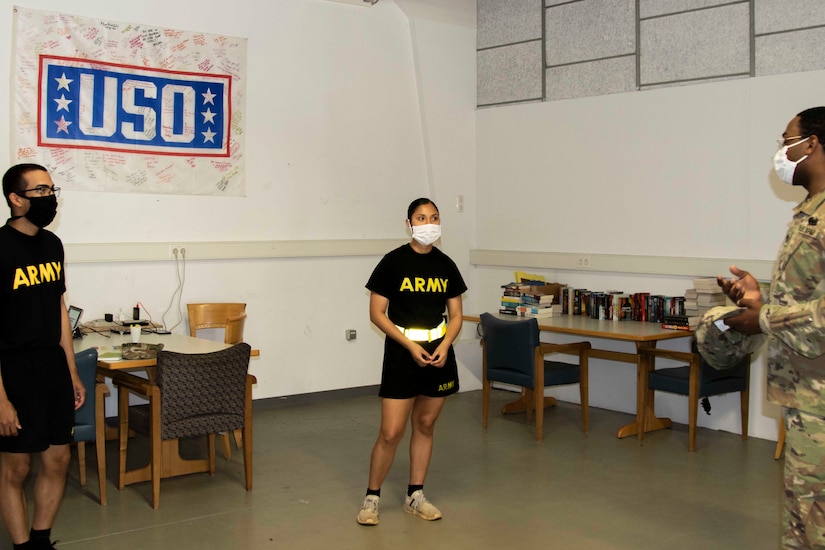
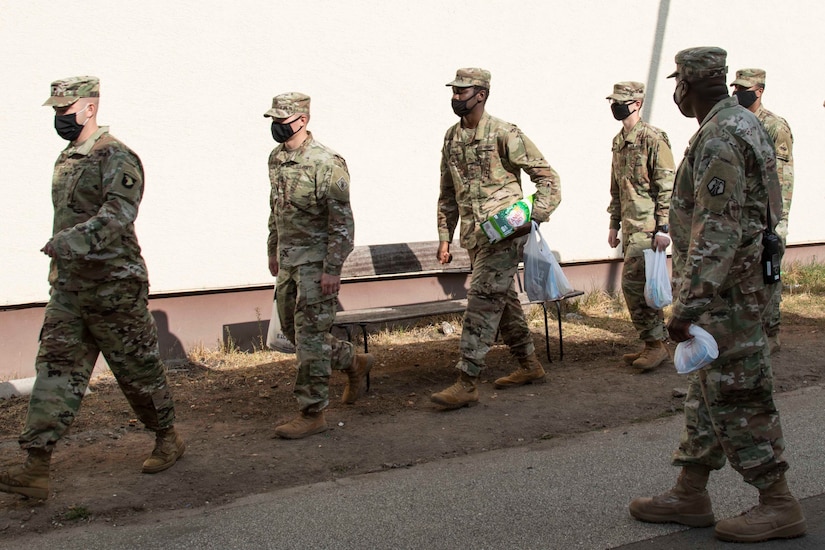
For two weeks, while transient soldiers are under restricted movement, large open warehouses are their home. They take online training, stay in shape with physical fitness sessions and hang out at the USO. They must march in groups to the dining facility — a large tent that is reminiscent of field conditions — and to the local convenience store. Other than that, they socialize with their masks on, play video games or cards or use free WiFi to call home.

"The cadre are treating us pretty good," Army Staff Sgt. Kendall Eason, who is starting his second tour in Germany, said. "The USO also supplies tons of stuff, and I didn't expect that, so it is a plus."

Soldiers are tested upon arrival. Ten days later, they undergo a follow-up test. Any soldiers who present symptoms or tests positive are brought to a separate facility and cared for by medical professionals. Trace teams contact anyone close to those soldiers. They are then separated and monitored.

Soldiers wearing face masks ask another soldier a question.

Soldiers with families, plus senior enlisted and officers, are housed in other locations at U.S. Army Garrison Rheinland-Pfalz, where their movement is also restricted. Measures to limit COVID-19 transmission are in accordance with German regulations and in some cases stricter than off-post. The local German press recently reported how impressed host nation officials were with the high standard of the U.S. military's COVID-19 restrictions.

Most soldiers arrive at nearby Ramstein Air Base then travel by bus to ROB. Awaiting  for their initial COVID-19 test results is their first task.

"[For] the first three days, you are not cleared until you get your test results back," Eason said. "After you get your test results back, that is when you start classes, be able to do laundry and get marched to the shoppette."

Begun in March, as a cooperative effort between the 21st Theater Sustainment Command and USAG-RP, the task force has since cared for thousands of soldiers. In June, reserve soldiers from the 7th MSC stepped in. At the end of September, the 21st TSC's Special Troops Battalion will continue the mission.

"I thought we were going to be quarantined in our quarters at our unit," Army Sgt. Joshua Cueno, who is joining the 44th Expeditionary Signal Battalion in Baumholder, said. "I was a little unprepared for that. I know some of the other guys were too."

Cueno, a signal noncommissioned officer from San Diego who previously served in Iraq, said some transient soldiers arrived without some important personal items, including towels. Task Force staff and the USO stepped in.

"They had some extra supplies, so some of the guys were able to get toiletries and stuff like that," Cueno said.

Soldiers wearing face masks picking up items.

Protecting Defense Department personnel is a top priority, according to Defense Secretary Dr. Mark T. Esper. In U.S. Army Europe, unaccompanied soldiers heading into barracks could potentially spread COVID-19 and affect readiness. Therefore, it was important for the Army to build a program that cares for incoming soldiers and protects the force.

"People are the most important when it comes to combating this pandemic," Army Lt. Col. Andrea Talbert, 83rd CSSB commander, who has led TF-Willkommen since July, said. "It's our honor and our duty to care for incoming personnel while protecting the force and the people in our host nation."

More than 1,400 soldiers completed the two-week cycle since July. Afterward, they move to units across Germany, ready to support Army missions, Talbert said.

"We are very dedicated and proud to support our active duty counterparts," Talbert added. "By doing this here, receiving units can remain focused on their missions and not worry about COVID-19 in their formations."

(Army Staff Sgt. Christopher Jackson is assigned to the 7th Mission Support Command).

Friday, September 18, 2020

Remembrance Run


Airmen participate in a POW/MIA 24-hour Remembrance run at Eielson Air Force Base, Alaska, Sept. 18, 2020.

Missing Man Table


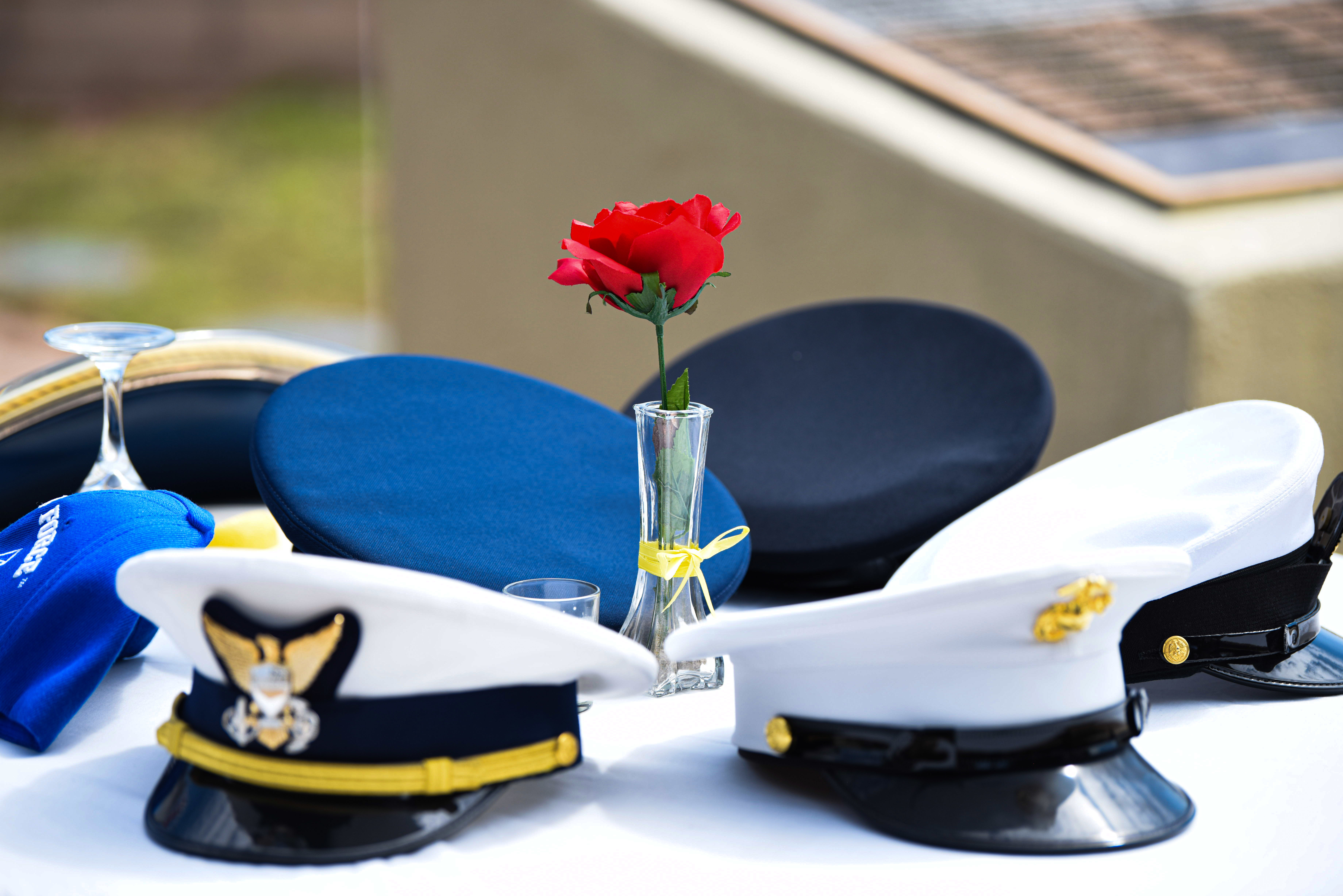
The ‘Missing Man Table’ sits at the Prisoner of War and Missing in Action Closing Ceremony at Vandenberg Air Force Base, Calif., Sept. 18, 2020. Each detail of the table symbolizes an aspect of the POW/MIA’s life or fate, or of those whom they left behind. The table is displayed to signify those who are missing but are not forgotten.

Stratofortress Support


An Air Force B-52H Stratofortress receives fuel from a KC-135 Stratotanker during a task force mission over the Mediterranean Sea, Sept. 16, 2020.