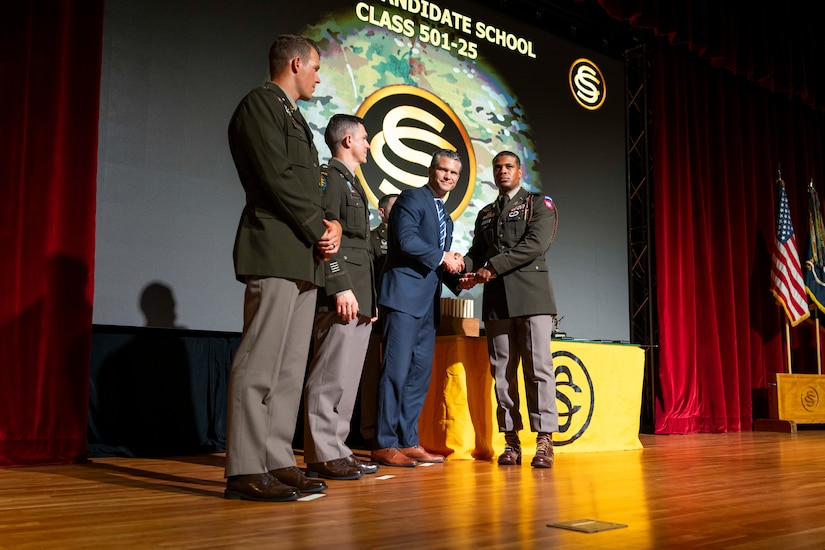
The Army's newest officers pinned on gold bars at
Fort Benning, Georgia, Sept. 4, as Officer Candidate School Class 501-25
crossed the stage during a graduation ceremony. Secretary of War Pete
Hegseth was the guest speaker.
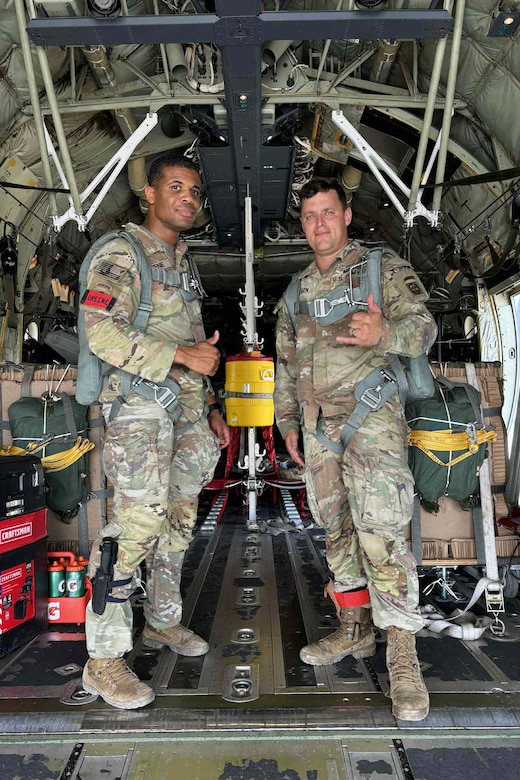
Among the graduates was Army 2nd Lt. Darren Greene, a prior enlisted
paratrooper, whose decade in uniform began in basic training and now
turns toward leading soldiers.
"I'm living the life right now," Greene said after the graduation.
Greene called the ceremony "perfect," the culmination of a
well-rehearsed week. In the days leading up to graduation, he said the
class "rehearsed constantly, nonstop" from Monday through Thursday to
make sure every movement landed on time and to standard.
Greene's path to becoming a commissioned officer did not follow a
straight line. He first entered military training as a college student
at West Virginia University, where ROTC shared space with big campus
distractions.
"I kind of got sucked into the big party, school lifestyle, frat parties, house parties," he said.
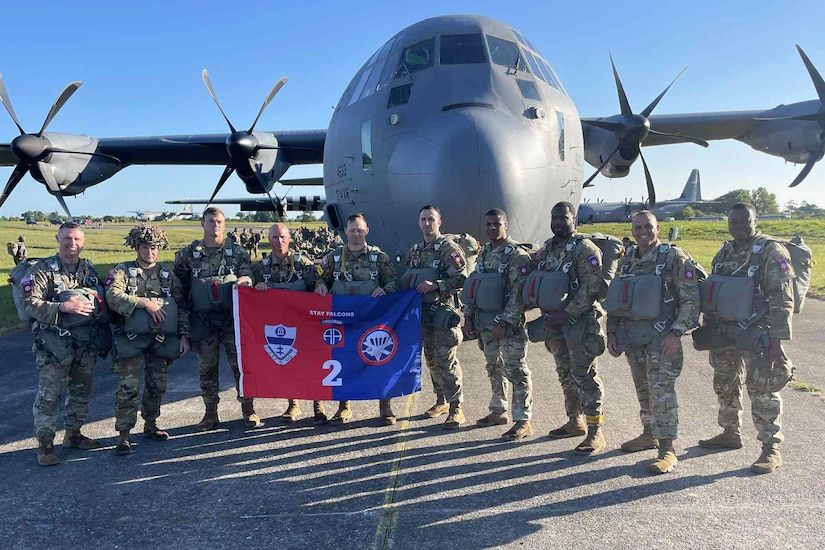
Greene left Morgantown without a commission, enlisted in 2014 and
went to infantry training and Army Airborne School before reporting to
the 82nd Airborne Division.
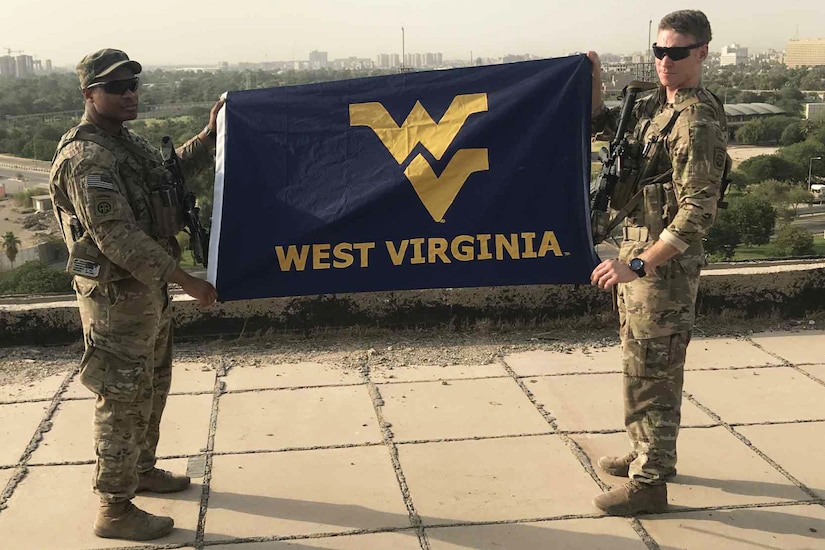
From 2016 through 2017, Greene deployed to Iraq during Operation
Inherent Resolve, supporting missions that moved from Baghdad northward.
The experience cemented his decision to make the Army a career, and he
began chipping away at the college credits he needed to finish his
degree.
"I took the long route to my college graduation, right?" he said,
describing years of part-time coursework that ultimately led back to
West Virginia University and a completed capstone in 2023.
Greene advanced from private to sergeant and served overseas in Italy
before returning to the 82nd Airborne Division, where familiar leaders
noticed his trajectory. He credits mentors for hammering home
expectations he intends to carry into his commission.
"The two biggest things that you are responsible for are yourself and
the reputation of your unit," Greene said. "If you're not the
standard-bearer, you can't, like, you can't expect people to follow
you."
Hegseth's message to the class echoed that mindset and the school's motto.
"It is great to be here at Fort Benning. And it is Fort Benning," he
emphasized, before praising the OCS creed of "standards, no
compromise."
Hegseth urged graduates to anchor their leadership in fundamentals
and preparation, invoking a battlefield lesson popularized by Army Lt.
Gen. Hal Moore: "There's always one more thing you can do to increase
your odds of success."
That preparation, he said, begins with knowing the mission, the
terrain and the formation, then trusting and leveraging experienced
noncommissioned officers. The secretary also emphasized decentralized
decision-making in combat.
"We're going to make sure that decisions are pushed down to the lowest possible level where they should be made," Hegseth said.
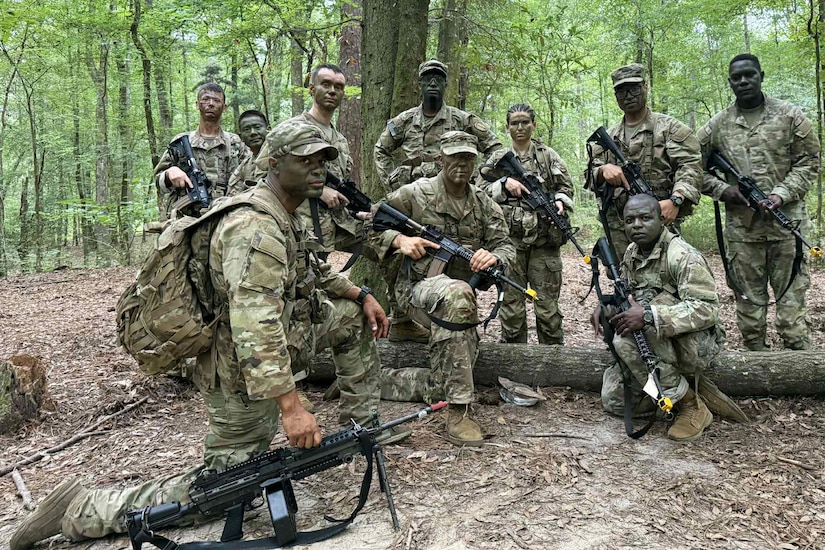
OCS's 12-week crucible is designed to make those expectations real.
The class's prior service population — including soldiers like Greene,
who had already led squads and teams — brought practical experience to
land navigation, small-unit tactics and troop-leading procedures. The
transition now moves from OCS to the Basic Officer Leader Course, where
lieutenants learn branch-specific skills before reporting to their first
platoons.
Greene understands that the work ahead will test his time-management
skills as much as his tactics. He and his wife are raising two young
sons, ages 3 and 1, and BOLC will mean months away from home. But he
views the sacrifice as an investment in the soldiers he will soon lead
and the noncommissioned officers he plans to rely on.
Greene's deployment and subsequent years in airborne formations
shaped a leadership philosophy that fits OCS's emphasis on standards and
accountability. He talks about earning trust through preparation,
showing up ready and listening hard to the NCOs who own the craft. Those
habits — and his insistence that a leader's personal reputation is
inseparable from the unit's — mirrored the ceremony's themes and the
charge delivered from the lectern.
"You have been forged and now you will forge," Hegseth told the graduates.
The line landed as both a compliment and a warning: the hard part
starts next. The 12-mile rucks and field problems will give way to
training calendars, maintenance meetings and the daily work of building
lethal, disciplined teams that can execute under pressure.
Greene, for his part, leaves OCS clear-eyed about that
responsibility. The pride of crossing the stage quickly yields to the
reality of a first platoon sergeant waiting on a new lieutenant to set a
tone. Standards, he knows, flow from the front — and they are
contagious.




 Posts
Posts

