
Airmen conduct water survival training at Joint Base McGuire-Dix-Lakehurst, N.J., July 17, 2021.
Airmen conduct water survival training at Joint Base McGuire-Dix-Lakehurst, N.J., July 17, 2021.

Air Force honor guard members stand at attention before a change of command ceremony at Royal Air Force Alconbury, England, July 20, 2021.
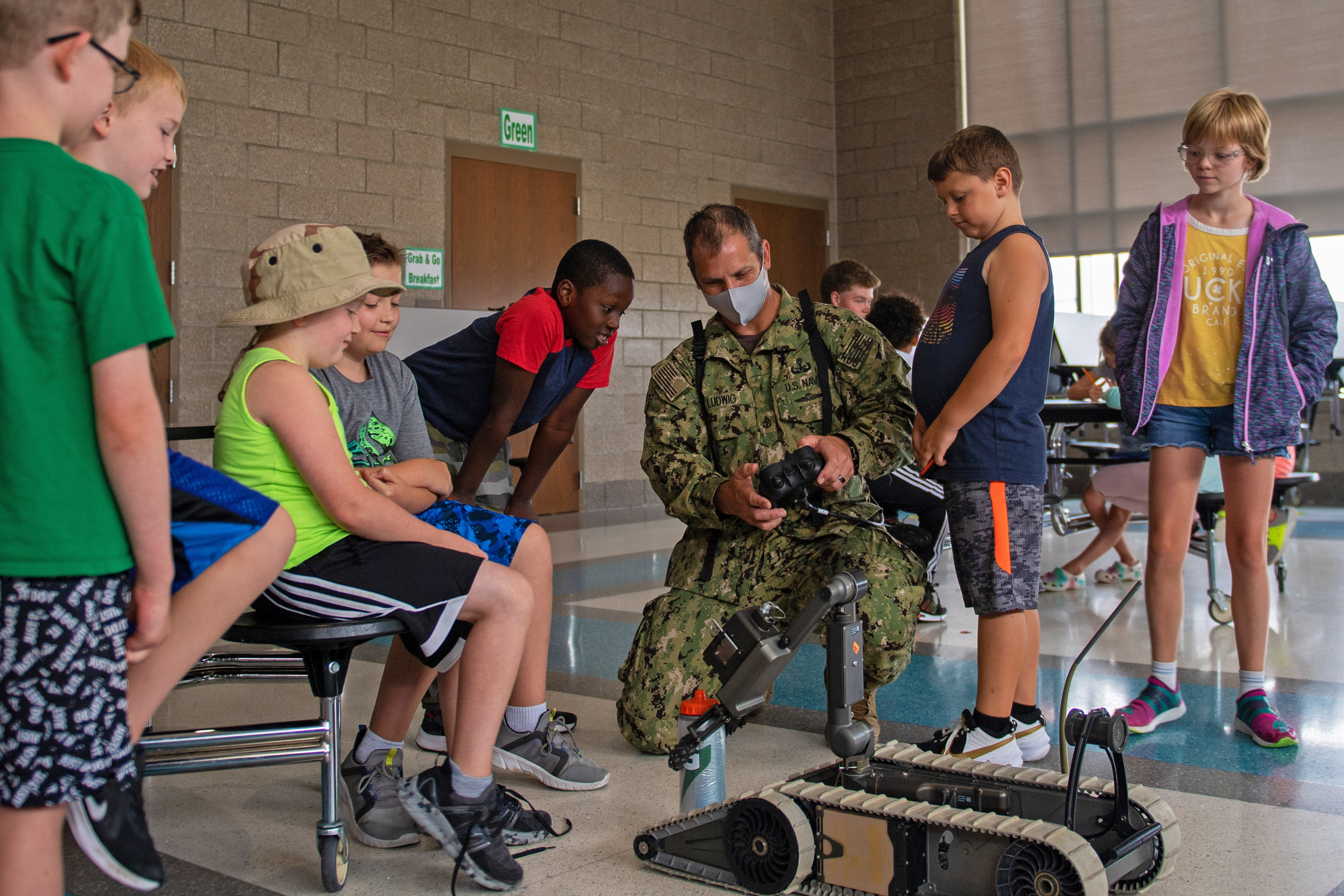
Navy Chief Petty Officer Matt Ludwig shows children an unmanned ground vehicle during a community relations event at Ed Clapp Elementary in Fargo, N.D., July 21, 2021.
July 22, 2021
PRESS SECRETARY JOHN F. KIRBY: Everybody. Okay. Just a couple things at the top.
This morning, Secretary Austin, Deputy Secretary Hicks and acting undersecretary of personnel and readiness joined the secretary of veterans’ affairs, the Honorable Denis McDonough, and other V.A. leaders and a small group of advocates and survivors to participate in a survivor and advocate roundtable on sexual assault and sexual harassment. During the meeting, the group discussed priorities, efforts and recommendations as part of the development and implementation of the Independent Review Commission roadmap. This is, I think, their third engagement with this group of survivors. This is something that the group, that they've been trying to stay in touch with as we move from the very beginning of the IRC all the way through the end, so it was a chance to touch base with them again now that the IRC recommendations are complete, and listen to them and their input, and to read out to them where the department's thinking is on this.
Today, we will also host a delegation from the government of Iraq for the next iteration of the U.S.-Iraq military technical talks as part of the U.S.-Iraq strategic dialogue. The meetings will discuss the long-term U.S.-Iraq security cooperation partnership and areas for cooperation beyond counterterrorism, and we'll, of course, give a full readout of the meeting when it's over.
And with that, I think we'll start with Bob on the phone here.
Q: Yes. Thanks, John.
I actually do have a question about the Iraq talks. My question is, you know, the last time there was, I think, the last Iraq-U.S. strategic dialogue in April, there was a joint statement put out afterwards that said that now that U.S. and coalition forces had transitioned to training and advising, that the -- this would allow for what they said was the redeployment of any remaining combat forces from Iraq, with the timing to be established in upcoming technical talks, which may be exactly what you were referring to there. And my question is, has there been any additional clarity on that timing? And does Secretary Austin wish there to be, let's say, more clarity and a -- a firm timetable for withdrawing from Iraq?
Thanks.
MR. KIRBY: Yeah, Bob.
We are talking about -- we're talking with the Iraqis over the course of the next couple of days about a whole host of issues, and certainly, you can expect that one of those issues is, of course, the American military footprint in Iraq and the missions that we're conducting inside Iraq. I won't get ahead of those discussions. I do think you can expect that at the conclusion of the dialogue, there will be a public statement, as there has been in the past. And as I said we'll give a readout from today's meetings, as well. I don't know how detailed that will be in terms of a timeline for the eventual departure of U.S. troops.
I think it's important to remember that we are there at the invitation of the Iraqi government. This was -- this -- this mission, which was focused on ISIS, was never intended to be permanent, and I think everybody has always understood that there would be a time when there would no longer be a need for U.S. combat forces inside Iraq. And what that looks like going forward, again, these talks are part of that process, and I simply don't -- won't be able to get ahead of decisions that haven't yet been made.
But -- we're obviously in close consultation with our Iraqi partners about what we're doing and the mission against ISIS, how that's going, and of course, thinking about what the future would look like.
Q: A follow-up question is, is it your intention to establish more clarity during this week's talks, or is this the beginning of a longer-term dialogue?
MR. KIRBY: Again, I don't want to get ahead of talks that haven't been completed. We're -- we're certainly looking at these talks as additional opportunities in the process to discuss what the future will look like.
Q: Thank you.
MR. KIRBY: Okay. In here? Court?
Q: On that, has the Biden administration's viewpoint changed? I mean, is it still the intention of the administration to maintain U.S. military combat troops in Iraq or -- I mean, I know there's these ongoing reviews, so is that still the hope, that the same footprint or even a larger footprint will -- where are you -- where is that coming from?
MR. KIRBY: No -- Courtney, I mean, the hope is that we can, you know, rid ourselves and rid the region of the threat that ISIS poses. And there's been a lot of good work done in the last several years on greatly diminishing that threat. That's -- that's what we're there for and that's what we're hoping for.
Our presence there, again, is at the invitation of the Iraqi government and what that looks like going forward is something that we're going to decide with our Iraqi partners. So if and it's -- not about a desire to have a presence or not to have a presence, it's a desire, in concert with our Iraqi partners, to eradicate the threat that ISIS poses, and -- and that's what these discussions are all about. It's examining the threat, examining what we're doing, the operations, and what it needs to look like going forward, commensurate with the status of ISIS inside Iraq.
Q: And then one -- one other thing --
(CROSSTALK)
MR. KIRBY: Hang -- hang on just a second.
Q: What is the department's intent about media access to the Afghans who are going to Fort Lee?
MR. KIRBY: I would refer to you -- to the State Department for that, Courtney. That it's a -- the -- the media posture for the relocation of these individuals and their families is not something that the Department of Defense is going to be responsible for. That's -- that's really for the State Department to speak to.
Yeah -- yeah, Joe?
Q: Yeah, thank you so much.
Yeah, I had a question on Afghanistan. I wanted to ask (inaudible) yesterday. What -- what's the current assessment of the Pentagon of Pakistan's role inside Afghanistan? And have you seen any evidence that the Pakistani Air Force has helped Taliban in gaining grounds, especially in the Kandahar Province?
MR. KIRBY: I'm not going to speak for operational details here, Joe, you know that, and we -- we've talked about this before. The -- we -- we recognize that Pakistan has a stake in a stable, secure Afghanistan, the long border there, and we've long recognized that the border between those two countries has been used in the past as safe haven for some of these terrorist groups, including the Taliban, and that the Pakistani people themselves have fallen victim to terrorist attacks that have emanated from that border region.
So our message to the Pakistanis has remained consistent, that -- that we we recognize we have shared interests here, common interests in not allowing for those safe havens, and -- and we continue to talk to the Pakistanis about ways that, collectively, all of us can -- can see an improvement there.
But as for what the Pakistanis are doing or are not doing and operationally, that's something that they should speak to, not -- not us.
Q: Sorry, but you can't say if they are playing a positive or a negative role now -- right now --
MR. KIRBY: What I can tell you is that we -- we have had discussions with Pakistan about ways in which they can be helpful in terms of helping secure that border and contributing to a more stable and more secure future for Afghanistan.
Q: Yeah, but Pakistan's support to the Taliban (inaudible), which he has said, is helping Taliban get control -- ground control of -- now they have control of 200 districts. Isn't it impacting your mission in Afghanistan?
MR. KIRBY: Well, our mission in Afghanistan is to complete this drawdown and to get to a point where our force presence is designed to protect our diplomats and our diplomatic mission. That's our mission in Afghanistan.
And again, I think we've been very candid and forthcoming about the challenges along that border, and I think the Pakistani people, they understand the threat that they're under, too, and the need to -- to not allow for there to be safe haven there.
Yes, Wafaa? How's your finger?
(CROSSTALK)
Q: Yes, I have to keep it for a few days.
Back to the strategic dialogue, you said that the meetings will discuss area of cooperation beyond concert -- counter-terrorism. Can you explain this, especially that the mission in Iraq is to defeat ISIS, its counter-terrorism mission?
MR. KIRBY: Yeah, the military mission in Iraq is aligned against ISIS but we also have a bilateral relationship with Iraq that doesn't just exist in a security environment, and I think that's what the strategic dialogue is trying to get at.
Q: And are you going to discuss specific security measures that the government of Iraq, the Iraqi Forces need to take to secure the bases -- military bases where the U.S. is being, like, targeted by militia backed by Iran?
MR. KIRBY: I think we'll be talking about a range of security issues. I'm not going to get ahead of the the discussions, but to your point -- and we've said this before -- we take the safety and security of our people in Iraq very, very seriously. The President has proven on numerous occasions now that he's willing to take action to try to bolster that force protection and he certainly reserves the right as Commander in Chief to do it again, if need be. And -- and I think our Iraqi partners well understand that.
Yeah?
Q: Hey, good morning, sir.
After he took office in January, the Secretary (inaudible) zero-based reviews of about 40 advisory committees and boards. What's the status of those reviews, sir?
MR. KIRBY: They -- we -- largely, the committee-level work has been completed and -- and we are examining those committee recommendations -- the Secretary is -- to determine how he wants to move forward.
I don't have any specific announcements to make today but I do think you'll start to see us be able to communicate in -- with -- in more detail very soon about what those -- what -- what boards are going to be reconstituted and -- how they're going to be both chaired and populated.
I don't want to get ahead, again, of the Secretary's decisions. I think in general, now that the committee work is done -- I mean, I can certainly, in general, point to the fact that some of the major boards, like the Defense Policy Board, the Defense Science Board, the Defense Business Board, Health and Innovation Boards -- I mean, they -- will be reconstituted. But the -- as for -- you know, beyond that, I'd really rather not get ahead of -- again, of the Secretary's decision space.
I didn't go to anybody on the phone here. Stephen Losey?
Q: Hi. Thank you.
My question has to do with the assassination in Haiti and the DOD's statement that some of the suspected people involved had received training from the U.S. military. Has there been anything in addition that the Defense Department has learned about potentially how many people, what -- what kind of training, things like that? And also, are those -- is that discovery and what happened in Haiti prompting the DOD to perhaps reevaluate or reconsider how it trains foreign militaries, or how it vets those who participate?
MR. KIRBY: So I think what we can confirm is thus far, we've identified seven individuals who were former members of the Colombian military that had received some sort of training and education, U.S.-funded and provided education and training. Some of it was under State Department funding and authorities, and some of -- some of the training was under DOD, Department of Defense-funded training.
But to you give an example of some of them that we've identified -- and -- and this isn't by individual. I'm not going to get into speaking to individuals, but cadet leadership development, counter-drug operations, noncommissioned officer professional development, small-unit leadership training, human rights training, emergency medical training, some helicopter maintenance training and those kinds of things -- all things that are very common. We train thousands of individuals, particularly from militaries in the Western hemisphere over the -- over the course of a given year, all training that is basic military and leadership training, as I just cited. And those examples I gave are actual examples of training we know that these seven individuals got -- nothing, certainly, related at all -- or -- or that one could extrapolate, you know, as leading to or encouraging of what happened in -- in Haiti. And I know of no plans right now, as a result of what happened in Haiti, for us to reconsider or to change this very valuable, ethical leadership training that we continue to provide to -- to partners in the Western hemisphere and to partners around the world.
Q: Is it correct that some of them were -- were trained at Fort Polk, or were some people trained elsewhere, or --
MR. KIRBY: I don't have the details of exactly where all this training went. You're talking about seven individuals over the course of their time in the -- in the Colombian military, and I just, I don't have the details of every base at which every training seminar was held, and frankly, I'm not really sure the relevance of that level of detail anyway.
Q: But no changes in the works.
MR. KIRBY: Sylvie?
Q: Hello. I had a question about Somalia. There was a strike against Al-Shabaab in Somalia this week, and I wanted to know if it was authorized by the White House, or if the -- if President Biden lift the instruction to always go through the White -- the White House to -- before striking Somalia.
MR. KIRBY: The strike that we've -- that -- that we're -- you're talking about, Sylvie, was ordered by General Townsend under his existing authorities to act in -- in the defense of our Somali partners, who were under attack by Al-Shabaab. He had all -- he had the authorities to do this. He ordered this on his own. You know, he ordered this under his own authority to do so, and he didn't need to -- to ask permission to -- to conduct that strike.
Q: But in March, you told us that all the strikes that were ordered outside Afghanistan, Iraq and Syria had to go through the White House.
MR. KIRBY: What I can tell you is that General Townsend had the authority to order this strike, and -- and he used those authorities to do so, and those -authorities have existed for -- for General Townsend, and I'm not -- you know, I -- I think -- I think I'll just leave it there.
Oren?
Q: On the Iraq talks, given the relationship between the presence in Syria and the presence in Iraq, is there a -- is that part of these talks, how a tweak or a change to the footprint in Iraq might affect the footprint in Syria, or is that a consideration for DOD as these move forward? And then separately, do you know the number of Delta variant breakthrough cases amongst DOD vaccinated personnel?
MR. KIRBY: I don't have a number on the Delta variant cases here. Let me see if we can get you a better idea. We do know that there are -- there are Delta cases inside the DOD population. I just don't have the exact number.
I'm sorry, and your first question was about Syria?
Q: Essentially, how does the conversation in Iraq and the strategic dialogue, how could that affect, and -- and is it part of the conversation about it could affect the footprint in Syria? (inaudible) --
MR. KIRBY: I mean, as you know -- again, I don't want to get ahead of talks that are ongoing here and where it's going to go. But as you know, the -- the missions are very -- they're very linked because we knew when ISIS stood up in 2014, or when they got -- when they were on the move in 2014, they were using Syria as a staging/logistics/ recruiting/training ground for much of their operations inside Iraq. So -- it's all -- I mean, there -- there is a linkage there under Operation Inherent Resolve.
What -- what decisions might come out of these talks that could affect the footprint in Syria, I just don't know. But, you know, but clearly, the fight against ISIS continues, and --and how it's going to look, you know, in -- in future months, I think, is just unknown right now. We're going to be continuing to talk to the Iraqis about our presence there, and about what makes the most sense for the threat that ISIS poses, and just as importantly, what makes the most sense for our Iraqi partners, because we're there at their invitation.
Yeah?
Q: Thanks. On Afghanistan, SIGAR yesterday put out a report on ANDSF's fuel with -- alleging that about half of it has been stolen, and without enough fuel, ANDSF operations will come to a grinding halt. First, does DOD have any reaction to this ongoing issue? And going forward, does DOD or groups like DLA or anyone else expect to provide logistical support for fuel, spare parts, that sort of thing, in Afghanistan?
MR. KIRBY: Yeah, I don't have -- I don't have anything on that report. I haven't seen it. So let me see if we have an official department reaction to that. I just haven't seen it, and I wouldn't want to speculate.
But broadly speaking, as the secretary said, our commitment to the ANDSF will continue after the drawdown is complete in a largely financial and logistical support component. Now what -- what piece of that is fuel, I just don't know, and I don't know that we have that all ironed out right now. But our support to the ANSF -- ANDSF will continue in terms of helping them have the logistical and maintenance capability to continue defending their country.
And again, I just have to -- let me take a look at this report and see what it says. I just -- I don't know.
Eric?
Q: John, going back to the airstrike in Somalia, there have been other times when partner forces have come into contact with al-Shabaab and airstrikes had not been authorized. What was -- what made this particular incident rise to that occasion and does it augur for more instances where U.S. drones or other aircraft will come in support of Somali forces on the ground?
MR. KIRBY: Yeah, I -- I won't speak for General Townsend and the calculus that he used to come -- to make this decision. Again, it was -- he ordered it, he had the authority to do it, and I think I'd rather refer -- defer to him in terms of whatever thought process he's willing to share. It was done, I think as I said, at his level.
And as for the future, clearly I won't speculate about what potential operations could occur in the -- in the future but he does have the authority to act in defense of our forces and our Somali partners, if he feels that he needs to do that. He has the authority and has the capability and -- and I think, you know, we'll just -- I -- I wouldn't want to get ahead of that.
It does underscore the threat that Al-Shabaab poses in Somalia and -- and certainly the Horn of Africa, and -- and that -- that threat remains significant and we're -- we're going to continue to be vigilant about it.
Jeff Schogol?
Q: Thank you. Has the U.S. military conducted any airstrikes around Kandahar recently? I'm seeing tweets that possibly some Navy FA-18s have launched attacks to stop the Taliban from taking the city.
MR. KIRBY: Without speaking to specifics, Jeff, I can say that -- that in the last several days, we have acted through airstrikes to -- to support the ANDSF but I -- I won't get into tactical details of those strikes.
But we continue to be able to and we continue to, as the Secretary said yesterday, conduct airstrikes in support of the ANDSF. General McKenzie has those authorities.
Q: Well, if I could follow up, the DOD did announce an airstrike in Somalia. Why not just say what's going on in Afghanistan?
MR. KIRBY: We didn't announce an airstrike in Somalia, Jeff, we were asked a question and we answered it.
(CROSSTALK)
MR. KIRBY: I -- as I said and as the Secretary said yesterday, we have, in recent days, conducted strikes in support of the ANDSF. We're not going to get into specific details about them.
Yes, ma'am?
Q: How many troops do you have in Syria now?
MR. KIRBY: I'll get you the firm number. I don't have it off the top of my head. It's -- as I understand it, it's still less than 1,000 but we can -- we can try to pull you a more specific number.
Q: Thank you. Russia and Ethiopia --
MR. KIRBY: I'm sorry?
Q: Russia and Ethiopia last week signed a military cooperation agreement. Do you have any concern regarding that?
MR. KIRBY: Who? I'm sorry, I could not understand you.
Q: Russia and Ethiopia signed a military agreement last week -- Russia and Ethiopia.
MR. KIRBY: Okay, Russia and Ethiopia.
Q: Yeah. Do you have any comment on that?
MR. KIRBY: I'm not familiar with that agreement. I don't want to speculate or comment on it. I have not seen that agreement. Yeah, I'm sorry.
Yeah, in the back there?
Q: Hi, John. Just to bring it back to Iraq, can you tell us which Iraqi officials are participating in that current discussions ahead of Prime Minister Al-Kadhimi's visit?
MR. KIRBY: I don't think I have that list, do I, Jess. We should be able to get it to you, though, I just don't have that --
(CROSSTALK)
Q: -- just to follow up on this, you mentioned, you know, it's always been understood that combat troops will eventually no longer be needed. Do you have a rough estimate of how many U.S. combat troops are actually in Iraq right now?
MR. KIRBY: I think what we said -- the -- the number's roughly around 2,500.
Q: Right, but aren't they considered advisors under OIR?
MR. KIRBY: They are -- they are -- the mission is -- is largely advice and assistance.
Q: Okay. Do you have any -- any rough idea of what percentage or --
MR. KIRBY: I can't break that down more than that, no.
Okay, thanks.
Q: Thank you.
July 22, 2021
Pentagon Press Secretary John F. Kirby provided the following readout:
Dr. Mara Karlin, Acting Assistant Secretary of Defense for International Security Affairs, hosted Qassem al-Araji, Iraq National Security Advisor; Staff General al-Shimary, Deputy Commander of the Joint Operations Center – Iraq; and a military delegation from the Government of Iraq for the next iteration of the U.S.-Iraq Military Technical Talks, as part of the U.S.-Iraq Strategic Dialogue.
During the meeting, both parties reaffirmed the importance of the U.S.-Iraq bilateral security relationship, their shared commitment to the D-ISIS mission, and the need for U.S. and Coalition to be able to safely support the Iraqi Security Forces. They also discussed the long-term U.S.-Iraq security cooperation partnership and areas for cooperation beyond counterterrorism.
Secretary of Defense Lloyd J. Austin III joined the delegation, reiterated his commitment to the Defeat-ISIS mission, and reaffirmed his steadfast support for the U.S.-Iraq strategic partnership.

A Marine Corps recruit completes an obstacle during a confidence course at Marine Corps Recruit Depot Parris Island, S.C., July 20, 2021.

Navy Seaman Nicholas Rotelli fires a line throwing adapter from an M14 aboard the USS Carl Vinson in the Pacific Ocean, July 21, 2021.
July 22, 2021
The chief of staff of the Army announces the following general officer assignments:
Lt. Gen. Antonio A. Aguto Jr. to commanding general, First U.S. Army, Rock Island Arsenal, Illinois. He most recently served as commanding general, 3d Infantry Division and Fort Stewart, Fort Stewart, Georgia.
Lt. Gen. Stuart W. Risch to judge advocate general, U.S. Army, Washington, D.C. He most recently served as deputy judge advocate general, U.S. Army, Washington, D.C.
Lt. Gen. Edwin J. Deedrick Jr. to U.S. Military Representative to the NATO Military Committee, Belgium. He most recently served as commander, Combined Security Transition Command-Afghanistan, U.S. Forces-Afghanistan, Operation Freedom's Sentinel, Afghanistan.
Maj. Gen. (Promotable) Jonathan P. Braga, deputy commanding general, U.S. Army Pacific Command, Fort Shafter, Hawaii, to commanding general, U.S. Army Special Operations Command, Fort Bragg, North Carolina.
Maj. Gen. (Promotable) Paul A. Chamberlain, director for Army Budget, Office of the Assistant Secretary of the Army (Financial Management and Comptroller), Washington, D.C., to military deputy for Budget, Office of the Assistant Secretary of the Army (Financial Management and Comptroller), Washington, D.C.
Maj. Gen. Joseph B. Berger III to deputy judge advocate general, U.S. Army, Washington, D.C. He most recently served as commanding general/commandant, U.S. Army Judge Advocate General's Legal Center and School, Charlottesville, Virginia.
Maj. Gen. John W. Brennan Jr., commanding general, 1st Special Forces Command (Airborne), Fort Bragg, North Carolina, to commander, Combined Joint Task Force-Operation Inherent Resolve, Operation Inherent Resolve, Iraq.
Maj. Gen. Jeffery D. Broadwater, commanding general, 1st Cavalry Division, Fort Hood, Texas, to deputy commanding general, V Corps, Fort Knox, Kentucky.
Maj. Gen. Brian J. Mennes to deputy commanding general, XVIII Airborne Corps, Fort Bragg, North Carolina. He most recently served as commanding general, 10th Mountain Division (Light Infantry) and Fort Drum, Fort Drum, New York.
Maj. Gen. John B. Richardson IV, deputy commanding general, III Corps, Fort Hood, Texas, to commanding general, 1st Cavalry Division, Fort Hood, Texas.
Brig. Gen. Eugene D. Cox to command surgeon, U.S. Army Forces Command, Fort Bragg, North Carolina. He most recently served as commander, U.S. Army Medical Research Institute of Infectious Disease, Fort Detrick, Maryland.
Brig. Gen. Jack M. Davis, commanding general, Regional Health Command-Pacific; market manager, Puget Sound Enhanced Multi-Service Market; and chief of the Army Nurse Corps, Joint Base Lewis-McChord, Washington, to director, Walter Reed National Military Medical Center; deputy director, National Capital Region Market, Defense Health Agency; and chief of the Army Nurse Corps, Bethesda, Maryland.
Brig. Gen. Marcus S. Evans to chief of staff, U.S. Special Operations Command, MacDill Air Force Base, Florida. He most recently served as commander, Special Operations Joint Task Force-Afghanistan, U.S. Forces-Afghanistan/Headquarters NATO Special Operations Component Command-Afghanistan, Operation Freedom's Sentinel, Afghanistan.
Brig. Gen. Alison C. Martin to commanding general; and commandant, U.S. Army Judge Advocate General's Legal Center and School, Charlottesville, Virginia. She most recently served as executive officer to the judge advocate general, U.S. Army, Washington, D.C.
Brig. Gen. David E. Mendelson, staff judge advocate, III Corps, Fort Hood, Texas, to assistant judge advocate general for military law and operations, U.S. Army, Washington, D.C.
Brig. Gen. Clinton K. Murray to commanding general, Brooke Army Medical Center; and deputy market manager, San Antonio Military Health System, Joint Base San Antonio, Texas. He most recently served as commander, Walter Reed Army Institute of Research, Silver Spring, Maryland.
Brig. Gen. George R. Smawley, staff judge advocate, U.S. Cyber Command, Fort Meade, Maryland, to commanding general, U.S. Army Legal Services Agency; and chief judge, U.S. Army Court of Criminal Appeals, Fort Belvoir, Virginia.
Brig. Gen. Brett G. Sylvia, deputy commanding general (Maneuver), 1st Cavalry Division, Fort Hood, Texas, to vice director, J-5, Joint Staff, Washington, D.C.
U.S. Army Reserve
Maj. Gen. Rodney L. Faulk, commander (Troop Program Unit), U.S. Army Support Command - First Army and deputy commanding general, First Army, Rock Island, Illinois, to commanding general (Troop Program Unit), 99th Readiness Division, Fort Dix, New Jersey.
Maj. Gen. Robert D. Harter, assistant deputy commanding general for Reserve Office (Individual Mobilization Augmentee), U.S. Army Material Command, Redstone Arsenal, Alabama, to deputy chief of Army Reserve, (Individual Mobilization Augmentee), Office of the Chief of Army Reserve, Washington, D.C.
Brig. Gen. Joseph D’costa, deputy commander - support (Troop Program Unit), 412th Engineer Command, Vicksburg, Mississippi, to deputy commanding general - support (Individual Mobilization Augmentee), Eighth Army, Korea.
Brig. Gen. Dianne M. Del Rosso, deputy commanding general (Forward) (Troop Program Unit), 1st Theater Sustainment Command; and commander, 311th Sustain Command (Expeditionary), Operation Spartan Shield, Kuwait, to assistant deputy chief of staff, Logistics (Individual Mobilization Augmentee), Office of the Deputy Chief of Staff, G-4, U.S. Army, Washington, D.C.
Brig. Gen. Joseph Dziezynski, deputy commanding general (Individual Mobilization Augmentee), U.S. Army Intelligence and Security Command, Fort Belvoir, Virginia, to commanding general (Troop Program Unit), Military Intelligence Readiness Command, Fort Belvoir, Virginia.
Brig. Gen. Cheryn L. Fasano, deputy commander (Troop Program Unit), 377th Theater Sustainment Command, Belle Chasse, Louisiana, to mobilization assistant to the commander and commander (Individual Mobilization Augmentee), Joint Transportation Reserve Unit, U.S. Transportation Command, Scott Air Force Base, Illinois.
Brig. Gen. Tony L. Wright, commander (Troop Program Unit), 98th Training Division (Initial Entry Training), Fort Benning, Georgia, to deputy chief of staff, strategy, plans and policy, (Individual Mobilization Augmentee), Supreme Allied Command Transformation, Norfolk, Virginia.
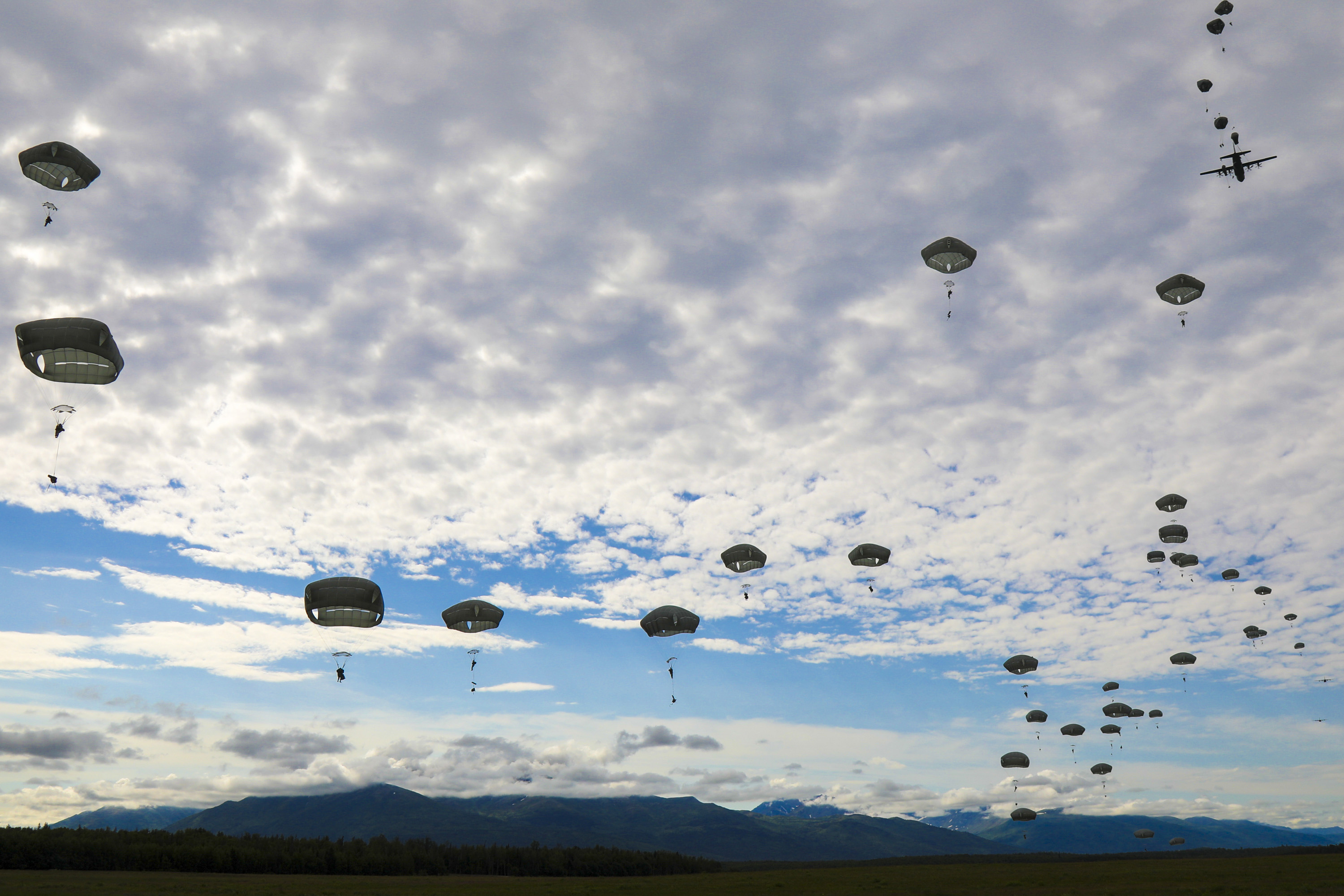
Soldiers jump from a C-130J during an airborne operation at Joint Base Elmendorf-Richardson, Alaska, July 14, 2021.
July 22, 2021 |
The Defense Department's information technology capacity provides intelligence information to leaders and warfighters to give them a decision-making advantage.
The legacy systems that provide that capacity, however, must be modernized to ensure the United States doesn't fall behind its competitors, said the deputy chief information officer for special access program information technology.
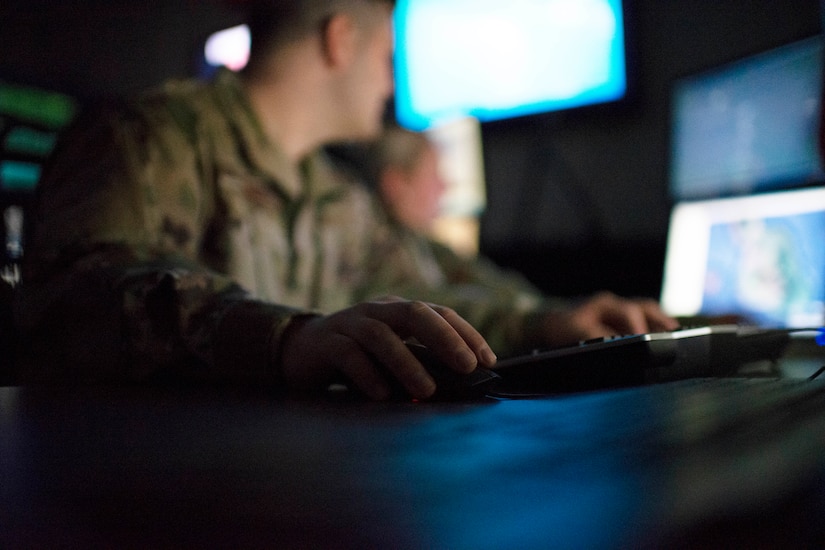
"Our nation continues to face a complex, evolving and diverse set of threats," Cynthia J. Mendoza said yesterday at a forum sponsored by GovExec. "To counter these threats and remain ahead of our adversaries, it's very important that we have timely, insightful and accurate data and information."
U.S. adversaries, Mendoza said, are advancing in areas such as cybersecurity, artificial intelligence, machine learning and supply chain risk management. The U.S. must do the same.
"To confront these technology challenges, we must be united across the DOD in how we are scaling and operationalizing the IT infrastructure and securing it to provide for the best advanced technologies," she said. "As we look forward, our challenge will be to scale and operationalize IT-enabling capabilities by leveraging key advanced technologies, such as artificial intelligence and machine learning, 5G wireless technology and quantum computing."
Mendoza said she's guided by three principles she believes will help her move the department ahead, but which are not at all new.
Those basic tenants include building trusted partnerships, understanding mission results and outcomes, and leveraging best practices and lessons learned.
"I call these 'getting back to basics,'" she said.

Stakeholders in the IT modernization strategy don't just include the department, the intelligence community, international partners, the private sector, academia and Congress, Mendoza said.
"I honestly believe people are the 'secret sauce,'" Mendoza said. "They will make the capability real. It all begins with building and developing a stakeholder engagement strategy that is inclusive of all key enterprise stakeholders and focused on a particular capability gap."
She said trusted partnerships with stakeholders enable DOD to rally around a common purpose with accountability to deliver capabilities with an enduring commitment for success.
Mendoza also said the department needs to be clear on what it wants to do — it must understand mission results and outcomes.
"What problem are we trying to solve?" she asked. "We need to be clear on the result and the outcome we are all working to accomplish. We need to ensure that we validate this with our stakeholder community and that they understand the intended outcome."
Leveraging best practices and lessons learned is also critical to avoid "reinventing the wheel" when addressing DOD's mission goals and objectives, she said.
"We leverage lessons learned from our colleagues who are doing similar things," she said. "Best practices and best solutions go hand-in-hand, and so do best approaches: reference architecture frameworks, service-centric and platform based environments, common operating principles, speaking and operating from the same ontology. These are fundamentals, best practices that eliminate our need to reinvent the wheel."
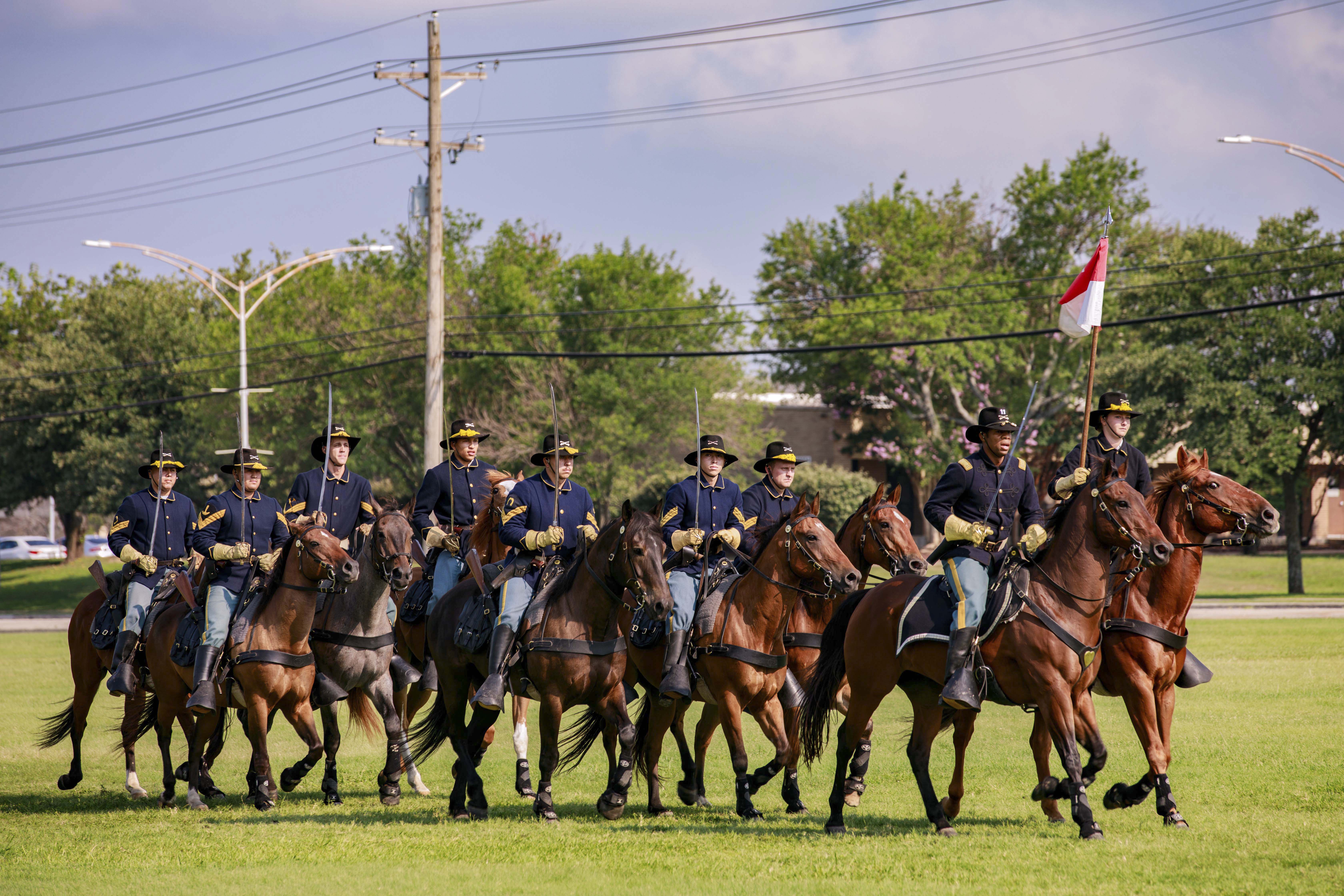
Soldiers participate in a transfer of command ceremony at Fort Hood, Texas, July 21, 2021.
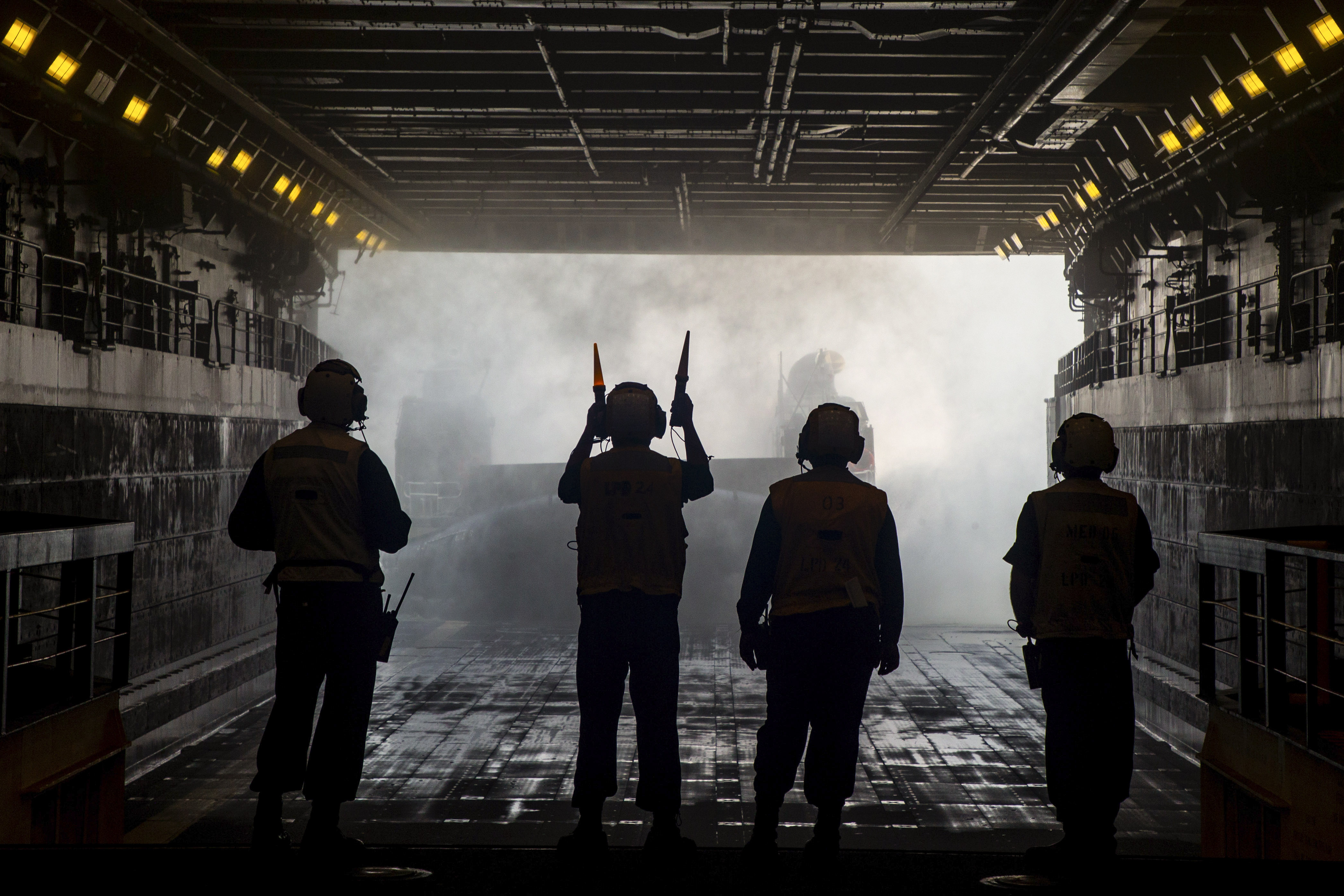
Service members signal an Navy air-cushioned landing craft to enter the well deck of the USS Arlington during mission rehearsals at Naval Station Norfolk, Va., July 21, 2021.
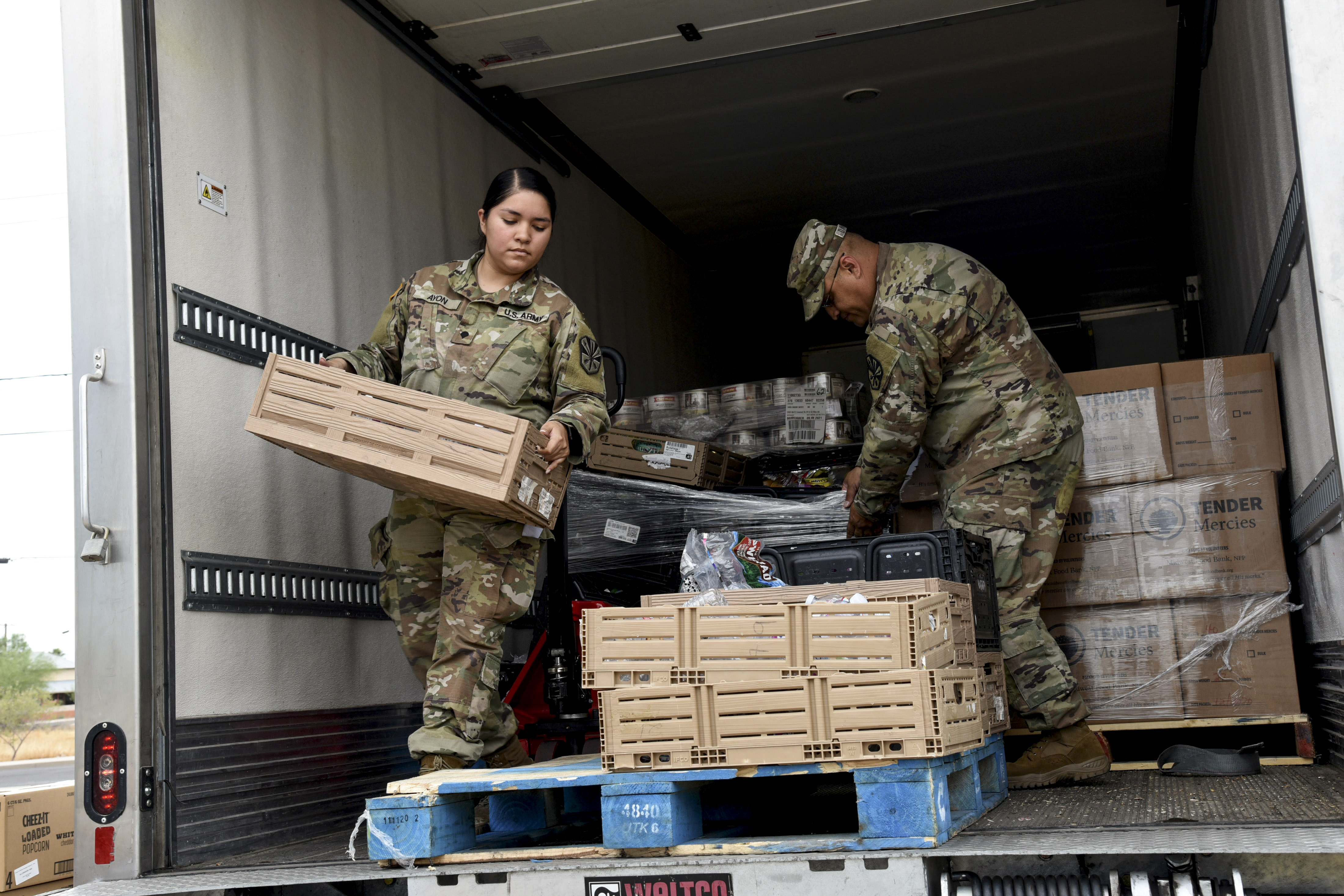
Arizona Army National Guard soldiers load boxes of groceries into a truck at a food bank in Gilbert, Ariz., July 16, 2021, while supporting COVID-19 response efforts.
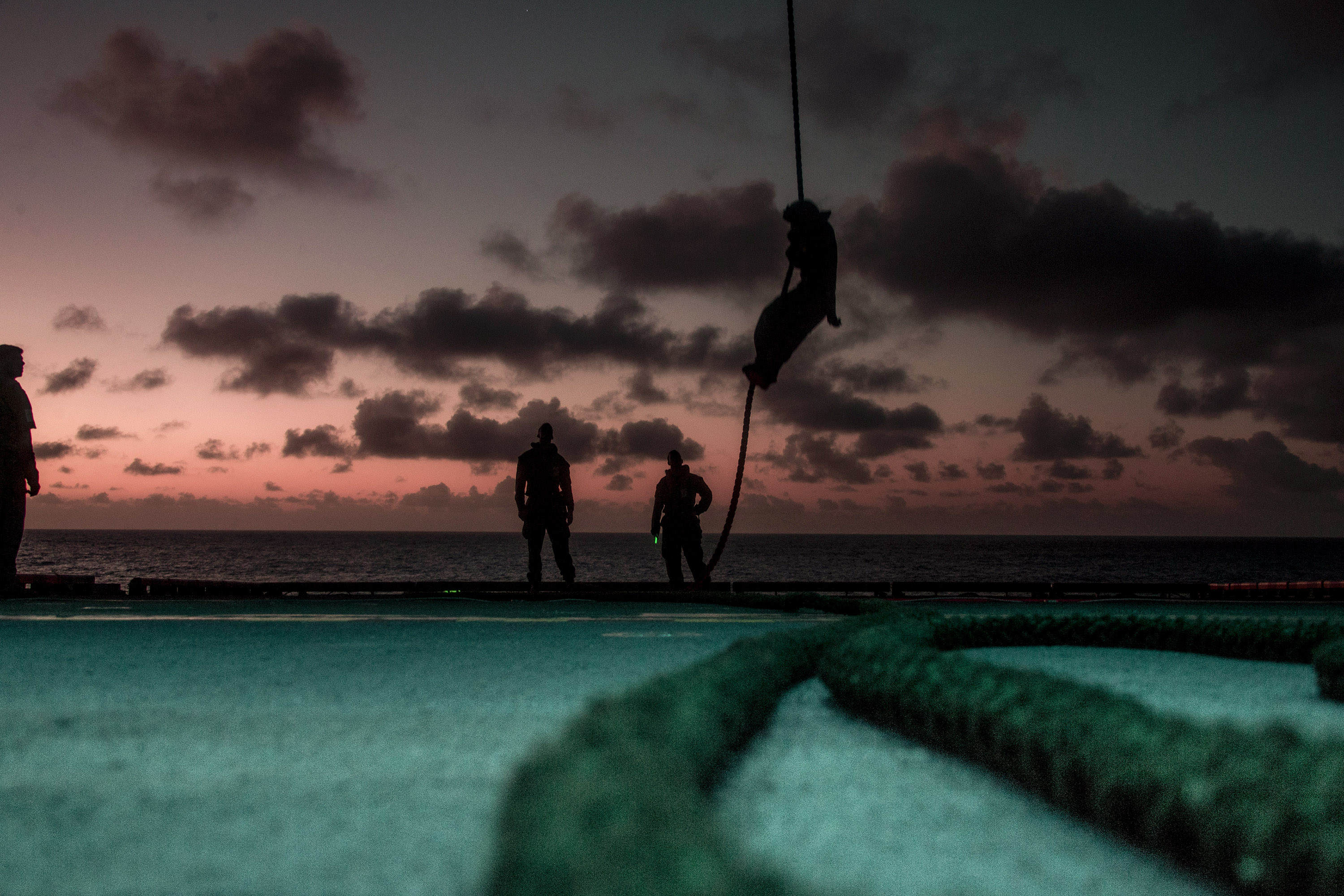
Marines conduct fast-rope training aboard the USS America in the Coral Sea, July 16, 2021.

Marine Corps Staff Sgt. Fernando Mata supervises Lance Cpl. Austin Mitchell while he fires an M240 machine gun on a UH-1Y Venom during specific weapons delivery training in Misawa, Japan, July 20, 2021.

Marine Corps Lance Cpl. Justis Tinoco crawls on the beach during a scout swimmer course at Naval Amphibious Base Coronado, Calif., July 16, 2021. The course provides Marines with the skills necessary to plan and execute swimmer reconnaissance for small boat raids.

Pilots and loadmasters conduct low-level tactical flight patterns during a training exercise at Joint Base Elmendorf-Richardson, Alaska, July 13, 2021.

Army Staff Sgt. Ryan Rodehorst plays soccer with a child at the Caritas Orphanage, Djibouti, July 15, 2021.
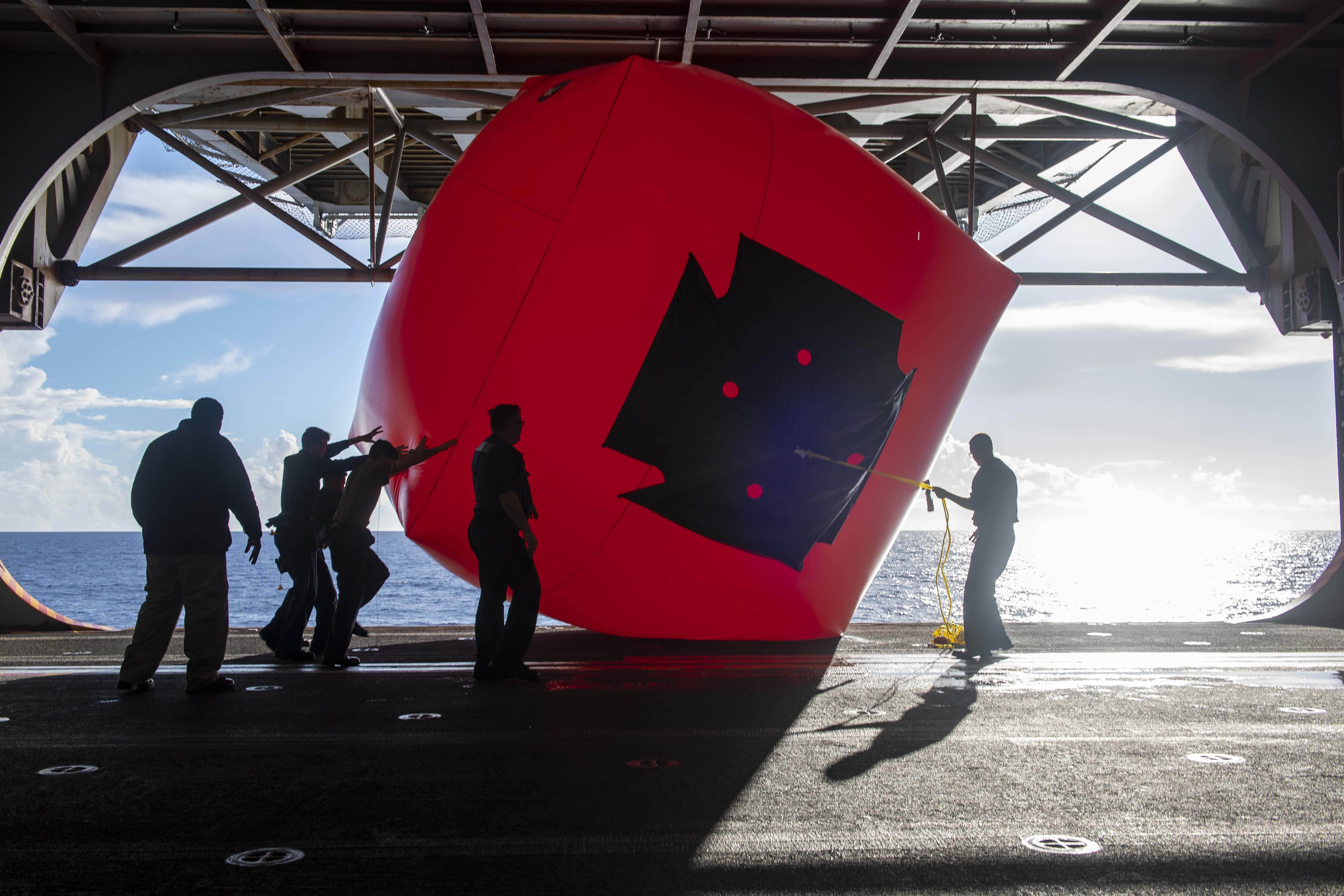
Sailors assigned to the amphibious assault ship USS America set up an inflatable target in the ship’s hangar bay in preparation for a weapons exercise in the Philippine Sea, June 9, 2021.
July 21, 2021 | , DOD News
Secretary of Defense Lloyd J. Austin III previewed his trip to the Indo-Pacific and discussed the situation in Afghanistan during a Pentagon news conference today.
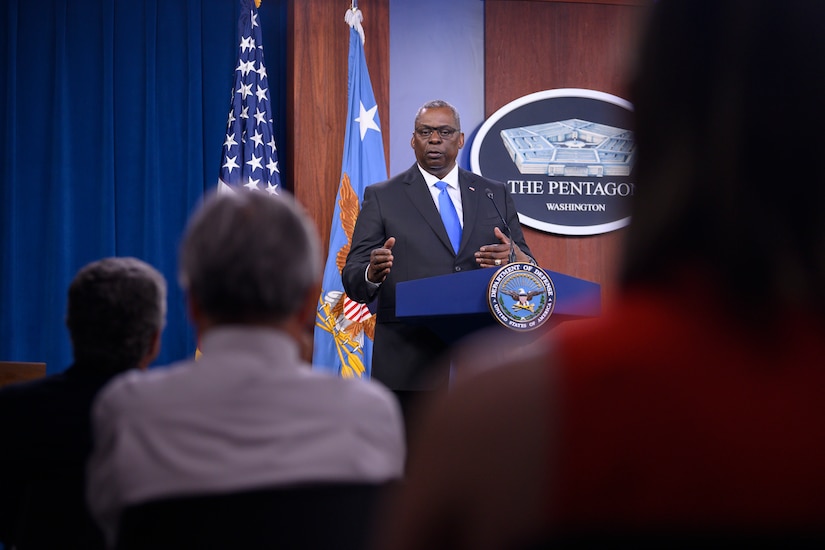
"I'm especially looking forward to making keynote remarks in Singapore on how [we] are strengthening one of our strategic assets in the region, which is our powerful network of allies and partners in the region," he said.
Austin will meet with defense and foreign affairs leaders and discuss a range of issues with them. "I'll be carrying a few key messages and agenda items," he said. "The first is simply that the United States remains a reliable partner: a friend that shows up when it counts."
The United States has been intimately involved in the region for more than a century. Since the end of World War II, the United States has been instrumental in maintaining stability and allowing nations the freedom to make their own choices as is their sovereign right, the secretary said. "Today, we have moved urgently to help our partners tackle COVID-19 and to build back even stronger afterward," he said.
He will continue to make the case for "a more fair, open and inclusive regional order and for our shared values to ensure that all countries get a fair shake," he said. "We don't believe any one country should be able to dictate the rules or worse yet, throw them over the transom."
As part of this, Austin will emphasize America's commitment to freedom of the seas, "and I will also make clear where we stand on some unhelpful and unfounded claims by China in the South China Sea," he said.
Austin will also brief allies and partners on what the U.S. military is doing to update and modernize its capabilities and how the nations can work together moving forward.
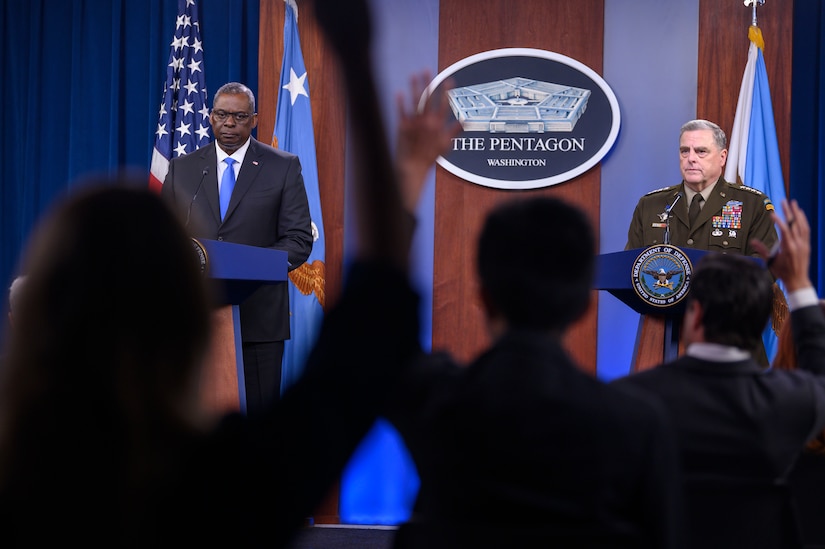
On Afghanistan, the secretary again praised the professionalism U.S. forces have displayed as the retrograde from the country continues. "We are still on track to finish up [the retrograde] by the end of August," Austin said.
He said the U.S. military has tasks to accomplish which include protecting U.S. diplomatic presence in Afghanistan, providing funding to Afghan forces, advising Afghan ministries and preventing the re-emergence of a transnational terrorist threat from the country. To these four missions, Austin added one more: "Working closely and urgently in support of the State Department to relocate brave Afghans and their families who have provided such exceptional service during our long mission," he said. "These are friends of the United States who have done exemplary and courageous work, and we take our obligations to them and their families very seriously."
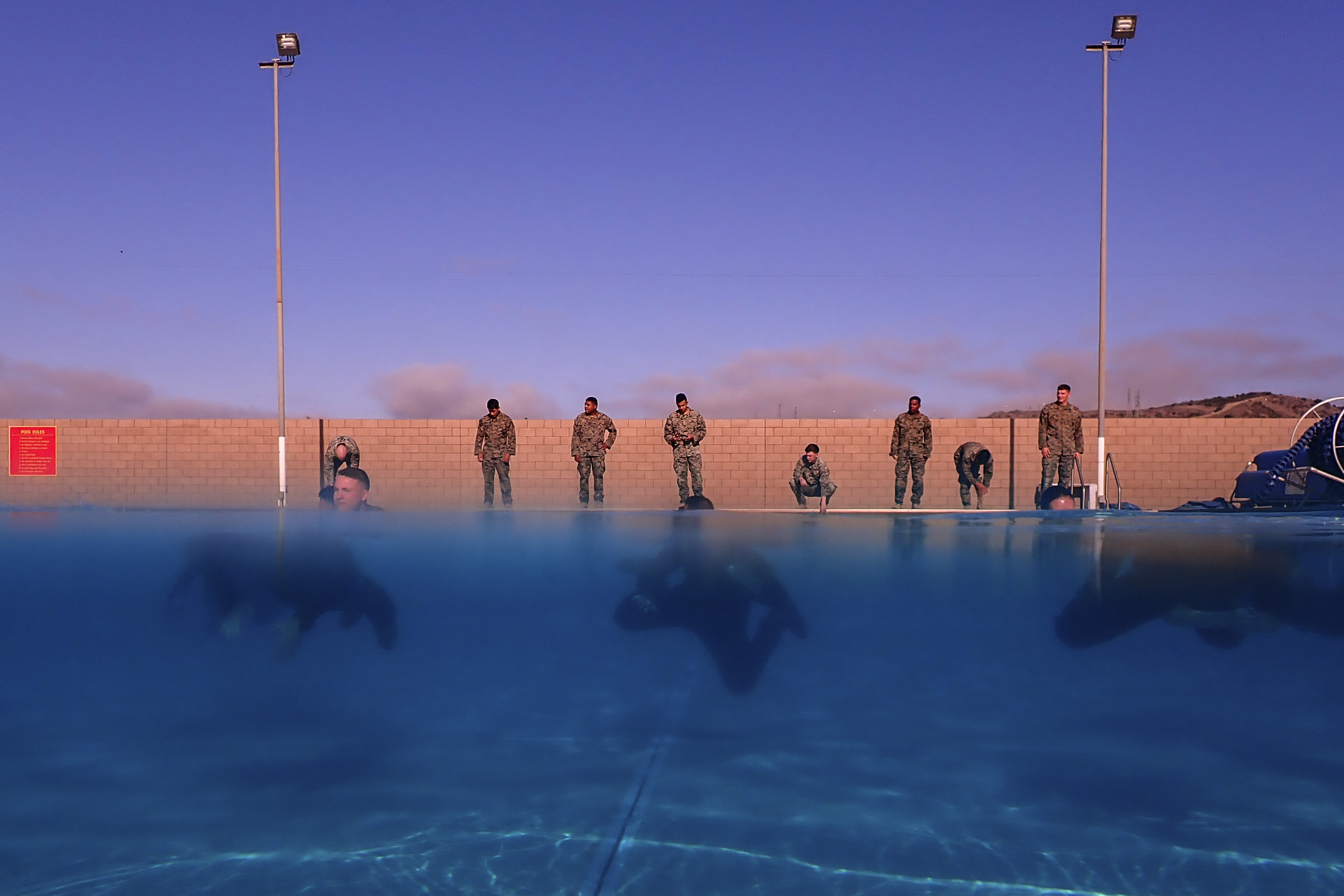
Marines swim across a pool during a swim qualification at Marine Corps Base Camp Pendleton, Calif., July 7, 2021.

Army Lt. Jesus Sanchez searches under a vehicle for hidden contraband during vehicle interdiction training at the Presidio of Monterey, Calif., July 13, 2021.
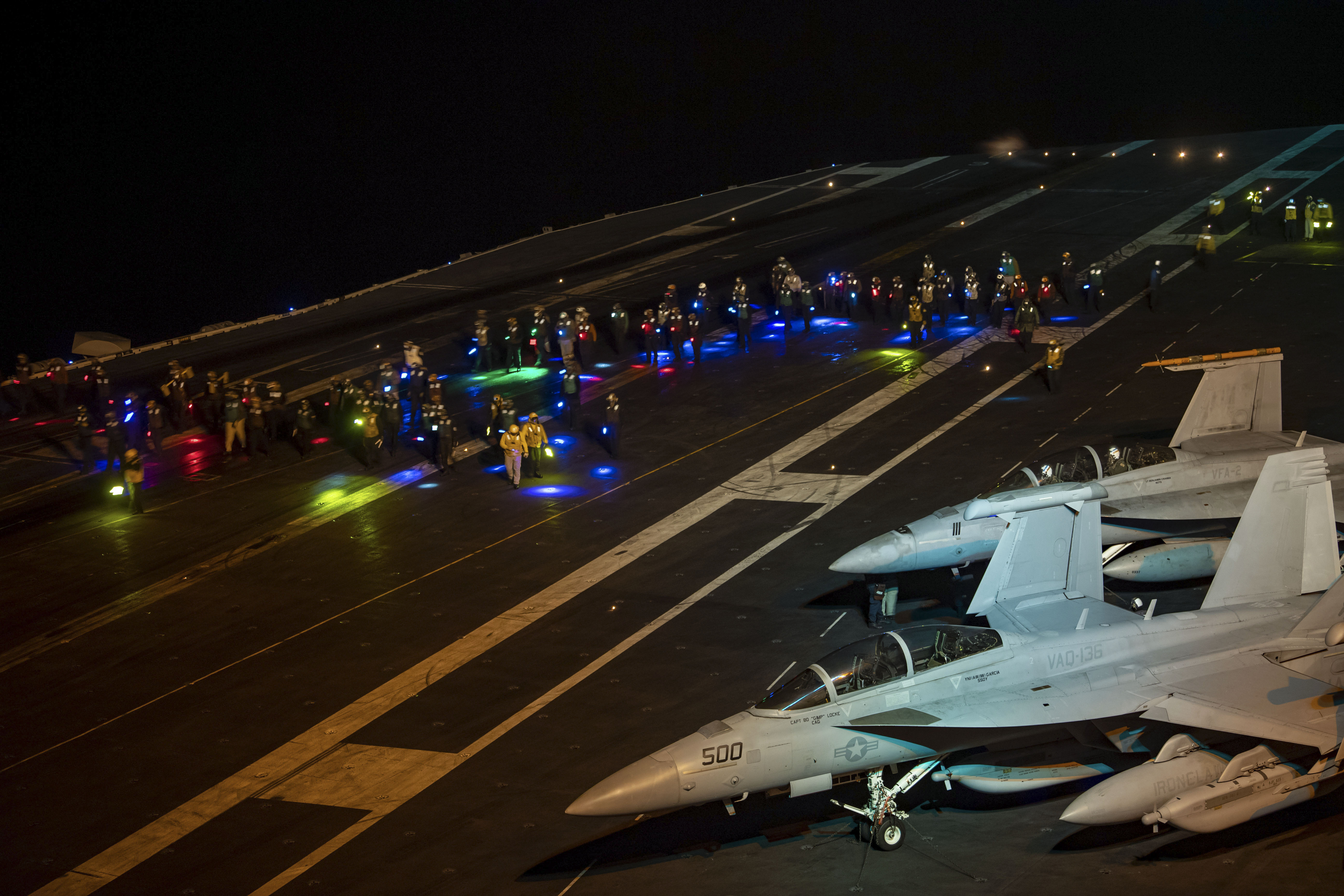
Sailors perform a foreign object debris walk down on the flight deck the USS Carl Vinson in the Pacific Ocean, July 9, 2021.
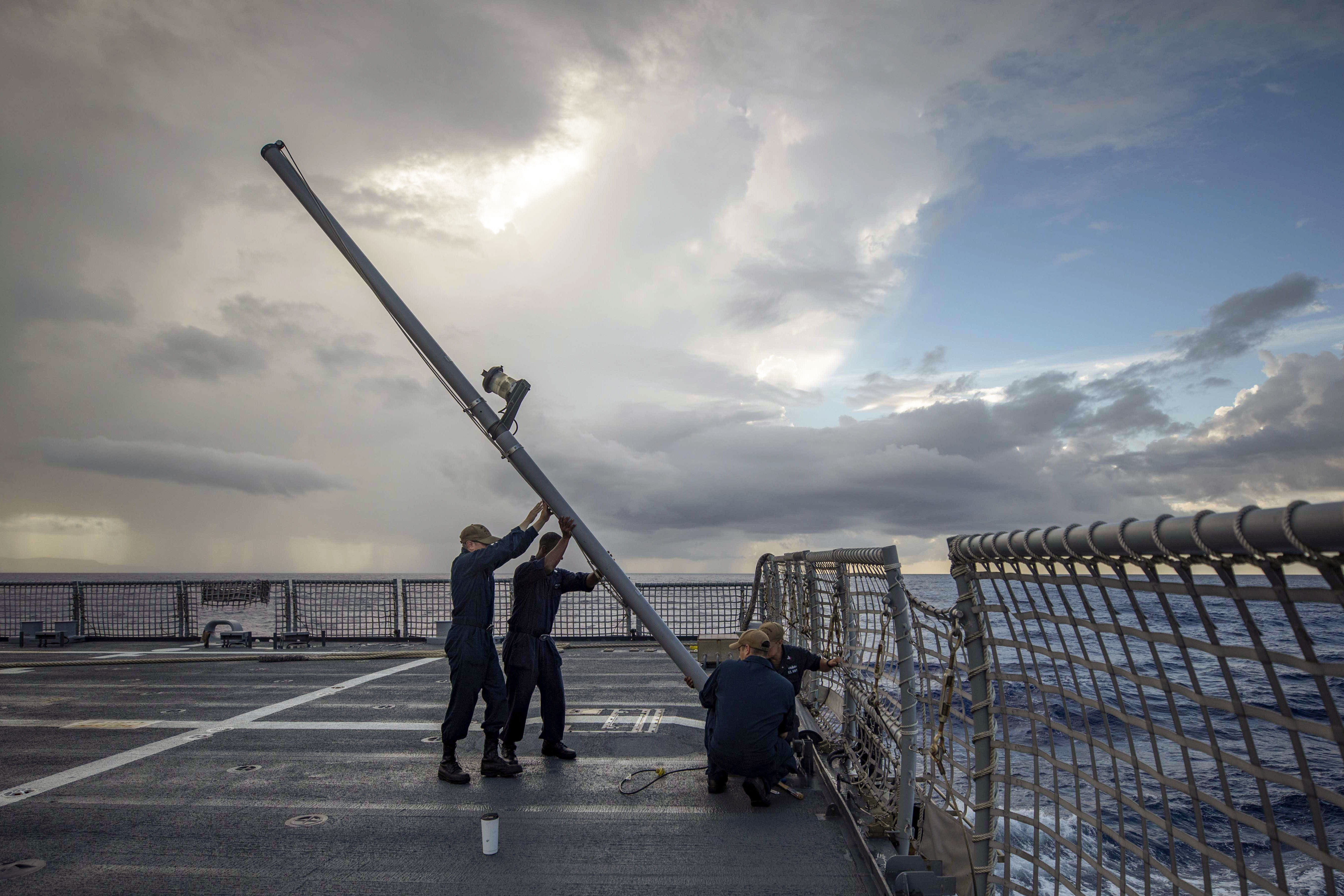
Sailors raise the flag staff on the flight deck of the USS Billings in the Caribbean Sea, July 16, 2021.
July 21, 2021
PRESS SECRETARY JOHN F. KIRBY: OK, good afternoon, everybody. We'll get started here in just a second.
Just a little bit of ground rules. We've got about 30 minutes. Both the secretary and the chairman have opening comments. We'll let them get through those first, and then I'll moderate and -- and call on questioners. Please identify who you are and what outlet you are with when you ask your question, and please limit the follow-up -- follow-ups so we can get through as efficiently as possible.
With that, sir, Mr. Secretary.
SECRETARY OF DEFENSE LLOYD J. AUSTIN III: Thanks, John, and thanks to all of you for coming today.
I'd like to start by talking briefly about my trip later this week to our priority theater of operations, which is, of course, the Indo-Pacific, and then I'll add just a few words on Afghanistan, which is very much on all of our minds here.
And I'd like to start by saying I'm looking forward to my second trip to the region as secretary of defense. This time, we're heading out to Southeast Asia, and I'm glad to have the opportunity to engage in person with leaders there.
I'm especially looking forward to making keynote remarks in Singapore about how we're strengthening one of our unmatched strategic assets in the region, which is our powerful network of allies and partners. I'll follow up -- I'll follow that up with stops in Vietnam and the Philippines, where I'll meet with my counterparts and other leaders.
And so it's going to be a busy trip. There's no shortage of national security interests that we and our partners share in this dynamic region, and I'll be carrying a few key messages and agenda items. The first is simply that the United States remains a reliable partner, a friend who shows up when it counts.
We've been there to maintain stability and let sovereign -- we've long been there to maintain stability and let sovereign states in the region make their own choices, and today, we've moved urgently to help our partners tackle COVID-19 and to build back even stronger afterward.
I'll also continue to make the case for a more fair, open and inclusive regional order, and for our shared values to ensure that all countries get a fair shake. We don't believe that any one country should be able to dictate the rules, or worse yet, throw them over the transom, and in this regard, I'll emphasize our commitment to the freedom -- to freedom of the seas. I'll also make clear where we stand on some unhelpful and unfounded claims by China in the South China Sea.
And finally, I'll be working closely with our partners about how we're updating our -- and modernizing our capabilities and their own capabilities to work together to tackle some changing forms of aggression and coercion that we're all seeing. And I'll be talking with our friends about how we're -- we'll work hand-in-hand to pursue our new vision of integrated deterrence.
Now, let me briefly talk about where we are on Afghanistan. I'm very proud of the professionalism that our forces have displayed. Our drawdown continues in a safe and orderly manner, and we're still on track to finish up by the end of August. The president has made a decision that we're going to get it done, and we're going to get it done right, and we have four ongoing key tasks. We remain committed to protecting our diplomatic presence in Afghanistan and to providing funding to the Afghan National Defense and Security Forces, and to advising Afghan security ministries, and to preventing the -- the reemergence of transnational terrorist organizations.
And we've added a fifth urgent task, and that is working closely and urgently in support of the State Department as they relocate brave Afghans and their families who have provided such exceptional service during our long mission. These are friends of the United States who have done exemplary and courageous work, and we take our obligations to them and to their families very seriously. You've seen that we'll be hosting the first group of Afghans at -- on Fort Lee in Virginia, and we expect them to arrive soon and most likely, will stay there only for short while as they complete their parolee paperwork. We're also working on several overseas locations to host other individuals not as far along in the visa process as this first group, and some of these locations belong to us, and some are in third countries, and when we can provide more details about which ones we'll use, we'll -- we certainly will.
This is a priority for the administration, and not only do we in the Department of Defense have a responsibility to these brave men and women and their families, so, too, do we have a responsibility to support the State Department as it carries out the president's directive.
And of course, even though our mission in Afghanistan is not over, I would be remiss if I didn't take the opportunity to honor the American and allied troops who have served bravely over the last two decades of war and those who gave their lives there. We owe them and their families a debt that we can never repay.
We know these are difficult times for them and we will never forget all that they gave for their country.
And so now, for more context on where we are in Afghanistan, let me pass this over to the chairman.
GENERAL MARK MILLEY: Thanks, Secretary. I appreciate that, and I appreciate your comments and your leadership every day.
And good afternoon to everyone.
I want to extend also a thank you to all of you, because you're a reminder that freedom of speech is alive and well and freedom of the press is a principle in our Constitution.
Last week, I traveled to Norfolk to attend a ceremony recognizing a new operational capability: the first and only NATO headquarters on U.S. soil, Joint Forces Command Norfolk, which is part of a vital network of strategic alliances and partnerships that enable us to project U.S. military strength throughout the world.
And during those discussions that visit, we also talked about the changing character of war, the geostrategic changes and the challenges that we're going to face sometime in the future.
Also last week, the secretary and I were honored to welcome home General Scott Miller from Afghanistan. And I want to publicly thank him one more time for his incredible leadership as the longest serving commander in Afghanistan. Twice wounded in combat over the years, Scott Miller is an American hero of the first order. He is representative of the more than 800,000 servicemembers who have served in Afghanistan across the last two decades and we should always remember their faithful service.
General Miller and his team, along with CENTCOM and many others in the joint force, have paved the path for a safe, orderly and responsible transition.
The sheer volume of movement involved in this operation has been extraordinary. 984 airlifts over the last less than three months have enabled us to reach almost 95 percent completion on the retrograde. To include equipment, we also moved 9,000 people, both civilian and military.
Furthermore, all the military operating bases outside of Kabul have been fully transferred to the Afghan Ministry of Defense and the Afghan security forces. A small contingent of predominantly military personnel, but some civilians and contractors, along with Department of State, remain in Afghanistan to provide security and bolster our diplomatic presence in Kabul. The forces here are key to achieving the five ongoing tasks that the secretary laid out in his comments.
A major component of sustaining a robust diplomatic presence in Kabul is to maintain a functioning and secure airport in Kabul. So we continue to dedicate our security resources to that, to secure the embassy, to secure the international zone and secure HKIA, the international airport in Kabul for our diplomats, our personnel and our continued support to the government of Afghanistan.
The Afghan Security Forces have the capacity to sufficiently fight and defend their country, and we will continue to support the Afghan Security Forces where necessary in accordance with the guidance from the president and the secretary of defense.
The future of Afghanistan is squarely in the hands of the Afghan people, and there are a range of possible outcome in Afghanistan. And I want to emphasis repeatedly, and I've said this before, a negative outcome, a Taliban automatic military takeover, is not a forgone conclusion. We will continue to monitor the situation closely and make adjustments as necessary.
Additionally, we're always going to maintain the capability of self-defense. We possess the military means and have several options at our disposal to fully protect our force in Afghanistan and throughout the region.
In CENTCOM, if needed, the USS Ronald Reagan Carrier Strike Group is on station. The package of long-range bombers, additional fighter-bombers and troop formations are postured to quickly respond if necessary and directed.
Further, we will always protect our nation. We maintain an agile over-the-horizon counterterrorism capability that is set up and effective now to detect and address any terrorism threat to the United States. In addition to our mission in Afghanistan, we continue to defend this country from all kinds of other threats. We're monitoring Russia, North Korea, Iran. We watch China closely while maintaining strategic deterrence to safeguard great power peace.
The Department of Defense ensures no terrorists are able to launch attacks from Iraq or Syria or Africa. We keep a watchful eye on Haiti and Cuba, and we do all these things while we serve here at home as well, and I want to recognize the great efforts of our Reserve component, our National Guard and our active-duty soldiers that are fighting wildfires in California and the Pacific Northwest, and as of Tuesday morning, California and Nevada National Guard C-130 units are operating near Sacramento, California, and have flown 205 sorties and provided 4.5 million pounds of fire retardant, and we will continue to provide support as required. Our Joint Force is incredible because of the skill, determination of our men and women and their leaders, and there's task that they cannot accomplish.
Thanks for the opportunity, and look forward to your questions.
MR. KIRBY: Thank you, sir.
Bob?
Q: Thank you, John. I have a question for each of you.
Secretary Austin, both you and General Milley have mentioned a number of times that the United States intends to continue providing -- supporting Afghan forces through financial assistance and remote logistical assistance. But given the tenuous state of security there, the -- the Taliban offensive, I'm wondering whether in your view, the U.S. should do more beyond August 31st to prevent a collapse of the government.
And if I could pose a question to General Milley also. General Milley, you're portrayed in books published this summer as having sounded the alarm privately about the possibility of President Trump manufacturing a crisis involving the military either domestically or overseas in order to stay in office after January 20th. I'm wondering, would you now set the historical record straight, and were you concerned about the possibility of a coup, and on what basis was that concern?
SEC. AUSTIN: So on the first piece, Bob, thanks for your question there. We -- we are doing a lot to support the Afghan military and the Afghan leadership as we speak. You know, we talked a lot about the fact that we're going to stand up nodes to continue to provide security assistance. We've stood up a node in -- in -- in Qatar that's operational now. We -- we have provided -- begun the provision of the aircraft that we mentioned to you earlier, that we're going to provide on Friday three newly-refurbished UH-60s that landed in -- in Kabul, and they'll continue to see a steady drumbeat of that kind of support, going forward. We've talked about, you know, setting up a -- a -- a node to be able to conduct over-the-horizon strikes. That node is in place.
Q: After August?
SEC. AUSTIN: After August, our focus, as we've said, is on those threats that -- that present a -- those -- those -- those elements that present a threat to the United States of America, so it'll be a counterterrorism focus there. So -- and that's currently where we stand, but we have not changed that.
But make no mistake that we remain committed to helping the Afghan Security Forces and the Afghan government going forward, and -- and we are doing what we said we were going to do in terms of putting the pieces in place to ensure that we can provide that support.
GEN. MILLEY: And Bob, thanks for the question. Look, I know there's a lot of interest out there on all of these books that are out there and quoting me and lots of others, et cetera. I'm not going to comment on what's in any of those books. Let me just say this, though: I always personally provided the best military professional advice to President Trump previously, to President Biden or any other president. I always provide that best military advice to the secretary of defense, whomever is the secretary of defense, and I do that for the National Security Council, as well. And -- and I will speak also for this one time on the part -- on behalf of the Joint Chiefs. The same applies to them. We've always adhered to providing best professional military advice, bar none. It was candid, honest in every single occasion. We did that all the time, every time.
The other thing that I think is important to note here is that I, the other members of the Joint Chiefs, and all of us in uniform, we take an oath, an oath to a document, an oath to the Constitution of the United States, and not one time did we violate that. At the entire time, from time of commissioning to today, I can say with certainty that every one of us maintained our oath of allegiance to that document, the Constitution, everything that's contained within it. And we also maintain the tradition of civilian control of the military. We did that without fail, and we also maintained the tradition of an apolitical military. We did that then, we do that now, and we will do that forever, all the time, Bob.
SEC. AUSTIN: I -- I'd just like to add a comment to that, Bob. I -- I've known the chairman for a long time. We've fought together. We've served a couple of times in the -- in the same unit, so I -- I'm not guessing at his character. He doesn't have a political bone in his body. And I -- I think -- you know, I -- I clearly have tremendous faith and confidence in the chairman. What I want to make sure we do is main -- maintain our focus on -- on the threats ahead, maintain our focus on our pacing challenge with China and -- and all the things that we're trying to do to make sure that this force is ready to meet the challenges of the future.
MR. KIRBY: Courtney?
Q: Secretary Austin, on Afghanistan, are -- are you concerned that as the Taliban gain ground, that Al-Qaida will be able to move back in and be able to strengthen enough to attack the West? And if so, can you give us a sense of how long, and the estimates are before they will be able to have that capability?
And General Milley, I know you -- you don't want to talk about the book, but you -- you have not denied any of the recent reporting that's been out there about you, including the comments, including some of the actions. And the American public and members of the military, because of your -- your silence on it and the -- in denying it, have no reason to believe that -- the vignettes are anything but -- but accurate. So looking back now, I know you said that you didn't violate, and you maintained apolitical. But looking back now, were you too political at the time? And are you concerned about the message that that sends to the rank and file?
SEC. AUSTIN: You know, Courtney, on your -- on your first piece and -- and whether or not we're concerned about Al-Qaida coming back, that's something that we are watching very closely currently, and we will continue to keep an eye on. Again, you know, our major focus going forward is to make sure that, you know, violence, terrorism cannot be exported from -- from Afghanistan to our homeland. And so we'll maintain the capability to be able to not only observe that, but also address that if there -- if it does emerge.
The Taliban early on committed to not providing a safe haven for Al-Qaida. We expect for them to meet that commitment. If they want legitimacy going forward, I think that's something that they'll have to consider. That's -- that's one way to earn it. And so, we'll see what happens.
But most importantly, we will maintain the over-the-horizon capabilities to be able to address this threat or any threat if it emerges.
You heard me say a while back that, you know, my rough estimate was that it would take two years for them to develop that kind of capability and it was a medium risk. I've not changed my -- my assessment there. But again, a number of things that could happen that could speed that up a bit or slow it down.
GEN. MILLEY: So, Courtney, I hear what you're saying but I'm not to comment on any of the books.
But I want you to know and I want everyone to know, I want America to know that the United States military is an apolitical institution, we were then and we are now. And our oath is to the Constitution, not to any individual at all.
And the military did not and will not and should not ever get involved in domestic politics. We don't arbitrate elections. That's the job of the judiciary, and the legislature, and the American people. It is not the job of the U.S. military. We stay out of politics, we're an apolitical institution.
Q: But are you concerned that some of these comments that are attributed to you are making it -- pulling you more into politics than you necessarily -- or your office should be?
SEC. AUSTIN: Look, let me -- let me just make a comment here. I -- you know, it's really important to me that this department remain apolitical. And so we're going to do everything within our power to make sure that our troops, our leadership both civilian and -- and military remain focused on the task at hand and understand that they are not a part of the -- of the political apparatus there. So we will remain apolitical.
MR. KIRBY: Tony?
Q: Mr. Secretary and General, I -- closer to home, you've got a yawning gap in leadership among the weapons buying bureaucracy here. You don't have an under secretary for Acquisition and Sustainment, you're seven months into the -- into the administration.
Michael Brown pulled out last week. Your capable acting is leaving. How concerned are you? I mean -- the Pacific's important, your trip’s important, but your -- the business of the department -- a lot of money being spent here. How much -- how concerned are you? And have you suggested to the White House a new candidate?
And for this -- General Milley, a non-book question. You talked about the Afghans having the capability to defend themselves, 300,000. We spent $74 billion on them. They're facing about 75,000 Taliban over the -- the president said this. In layman's language for the American people, given the numeric superiority of the Afghans, why does it appear that the Taliban is winning?
SEC. AUSTIN: Tony, on your first question in term -- regarding the numbers of people that we've had confirmed thus far, certainly we'd like to see more.
This is something that the deputy secretary and I, and my whole -- all of my leadership remained focused on each and every day. And we continue to work with the White House to make sure that we have quality and qualified applicants to -- to fill these seats.
We have six that have been confirmed so far, and 10 that are -- that are waiting for a vote and five more that are in committee. So the process continues to work. And I think that you'll see that when the confirmations do occur that they'll be experienced, quality people that will add a lot of value.
And of course, you know, I'm concerned about the -- the A&S position that you mentioned, and absolutely, we'll make a -- we'll -- another nomination -- provide another name to consider -- for the White House to consider. And -- but that's an ongoing process, and -- and again, when we do get that person, it will be the best person available.
And, you know, again, I consider that job to be very, very important, but we'll continue to work with the White House on the issues.
GEN. MILLEY: And -- and Tony, what I would tell you is a couple of things. One is you know as well as anybody else does that warfare is not just about numbers. So yes, you cited some correct numbers there. And the Afghan Security Forces writ large, the NDS, the police, the Army, et cetera, they're well equipped, they've been well trained over the years -- the past 20 years, at -- at great expense to the United States and other international allies.
But there's other factors that determine outcomes. The two most important combat multipliers actually is will and leadership. And this is going to be a test now of the will and leadership of the Afghan people, the Afghan Security Forces and the government of Afghanistan.
Right now, you’ve talked about the -- the narrative that the Taliban are winning. There clearly is a narrative out there that the Taliban are winning. In fact, they are propagating an inevitable victory on their behalf, they're dominating a lot of the airwaves on -- on that sort of thing.
I would tell you that as of today, more or less -- I guess it's about 212, 213, it's in that range -- the 200s -- of the district centers are in Taliban control. It's about half of the 419 that are out there. You've got 34 provincial capitals in Afghanistan. None of them have been seized, as of today, by the Taliban, although the Taliban is putting pressure on the outskirts of probably about half of them -- 17 of them, in fact -- and what they're trying to do is isolate the major population centers. They're trying to do the same thing to Kabul.
And roughly speaking, the order of magnitude -- a significant amount of territory has been seized over the course of six, eight, 10 months sort of thing by the -- by the Taliban. So momentum appears to be -- strategic momentum appears to be sort of with the Taliban.
The Afghan Security Forces, though, are consolidating their forces. So part of this is they're giving up district centers in order to consolidate their forces because they're taking an approach to protect the population, and most of the population lives in the provincial capitals and the capital city of Kabul.
So they are, right now, as we speak, adjusting forces to consolidate into the provincial capitals in Kabul. And they remain -- that's why I say it remains to be seen over the rest of the summer. Right now, the balance is relatively low cause of Eid, but after Eid, we're going to find out -- we're going to find out the levels of violence, whether it's going to go up, stay the same. There's a possibility of a negotiated outcome that's still out there. There's a possibility of a complete Taliban takeover or a possibility of any number of other scenarios -- breakdowns, warlordism, all kinds of other scenarios that are out there.
We're monitoring very closely. I don't think the end game is yet written.
MR. KIRBY: We've only got time for a couple more. Barb?
Q: I wanted to ask both of you a question -- somewhat for both of you, following up on your recent House testimony. Mr. Secretary, for you first -- could you explain in more detail your views on when you think and under what circumstances critical race theory should be an appropriate part of military education? I know you brought -- you were asked about it in that hearing and you addressed it briefly but I'd like to better understand your views on that.
And for you, General Milley, in that hearing, you said to Congress that you wanted, in your words, "to understand white rage and what it is that caused thousands of people to assault the Capitol and try to overturn the Constitution of the U.S., what caused that. I want to find that out."
Can you offer a more detailed explanation what led you to the conclusion of white rage, and since you talked about it publicly before Congress, in your view, what is white rage and why and when should the U.S. military be concerned about that? Thank you.
SEC. AUSTIN: Barb, you've -- you've heard me say that the critical race theory is not something that this department teaches, professes, embraces. You've also heard a couple of people at academic institutions say that, you know, they have required this to be reading for their students in -- in specific courses.
But because that is the case does -- does not mean that this department embraces this theory. And I stand by what I said earlier. And Barb, I don't want us to get distracted with the -- with the critical race conversation. This department will be diverse, it will be inclusive and, you know, we're going to look like the country that we support and defend. And, you know, our -- our leadership will look like what's in the ranks of -- of -- of our military.
And so I'm committed to that, this department's committed to that, the Chairman's committed to that and that's what we're going to stay focused on. And so, you know, we're not going to spend too much time debating the merits of -- of this theory or any other theory. We're going to stay focused on making sure that we create the right force to defend this country and promote our values.
And I know that's important to you and all of you in this room, as well, Barb, and -- but I thank you for that question.
GEN. MILLEY: So Barb, in -- in the minute or two left, first of all, I'm not going to address specifically white rage or black rage or Asian rage or Irish rage or English rage or German rage or any other rage, right? The -- the events of the 6th of January happened, those are all going to get sorted out, historians will sort it out, commissions will sort it out, and so on.
But I do think it's important that we, as a professional military, not only understand foreign countries and foreign culture and foreign societies -- that's important that we do that -- but we also need to understand our own society and -- and understand the soldiers, sailors, airmen and Marines and the society they're coming from, and I think that's important for the leadership to study. Thank you.
Q: But with due respect, Sir, you said the words "white rage."
GEN. MILLEY: Yeah, I said I'm not going to discuss it right now. I think it's a very complicated topic and we don't have the time to go into the nuance of it right this minute. I can do that later, I'll be happy to do that later, but right now is not a good time to do that. It's too -- it's too complicated.
MR. KIRBY: We've only got time for one more, guys, and I want to get to -- to -- over here. Ryo, go ahead. Yeah.
Q: Thank you for taking my question. My name's Ryo Nakamura, with Japan's Nikkei Asia. Yeah, I have a question to both of you.
To General -- to Secretary Austin -- on your trip to Southeast Asia, China continues to militarize the South China Sea, despite the U.S. Freedom of Navigation Operation military exercises security cooperation with allies and partners in the region. So what will you do differently to change the trajectory of China's behavior in the South China Sea?
To General Milley, on Taiwan, you mentioned in the House Armed Service Committee last month China intended to develop their capabilities to seize Taiwan by 2027. Do you feel a sense of urgency that the U.S. and allies in the region, such as Japan, should develop an operational plans and conduct joint military exercises for contingencies in the Taiwan Strait?
Thank you.
SEC. AUSTIN: So on the importance of freedom of navigation of the seas and the skies, this is -- this is really important, not only to the United States of America but to all of our allies and partners in the region and around the world.
And so, what we will -- what we have done and what we will continue to do is to work with our allies and partners to make sure that -- that we can navigate, you know, the skies and the -- and the seas to the degree that we should have the right to, in -- in accordance with international law. And so our emphasis will remain on that.
And our emphasis will also remain on making sure that we keep those alliances strong and that -- and that our allies and partners know that they can count on us going forward. And that's the message that I'll take to the theater.
GEN. MILLEY: And I think to answer your question on -- on Taiwan, the -- the geostrategic nature of the globe has been changing for quite some time. And it's -- we're in the middle of that change as well.
And as we go forward, China is the pacing threat for us in uniform, the United States. And it's been directed now by the secretary of Defense, the president and the previous as well. So we are gearing our capabilities, our programs, our training, our skills, our activities, et cetera, militarily with China in mind. There's no question about it.
And we will work very closely with Japan, with other countries -- South Korea, Philippines, Australia and other allies and partners in the region to make sure that we have proper capability to deal with it, whatever comes to us in the future.
MR. KIRBY: Thanks, everybody. I'm afraid we have to go now. Appreciate...
Q: A follow-up on...
(CROSSTALK)
MR. KIRBY: ... appreciate your -- thanks very much. I'm sorry, we've got -- we've got to go. Sorry. Sorry about that.
Q: One more question...
(CROSSTALK)

Air Force Capt. Hannah Myers steps into a T-38 Talon at Alpena Combat Training Center, Alpena, Mich., July 16, 2021.
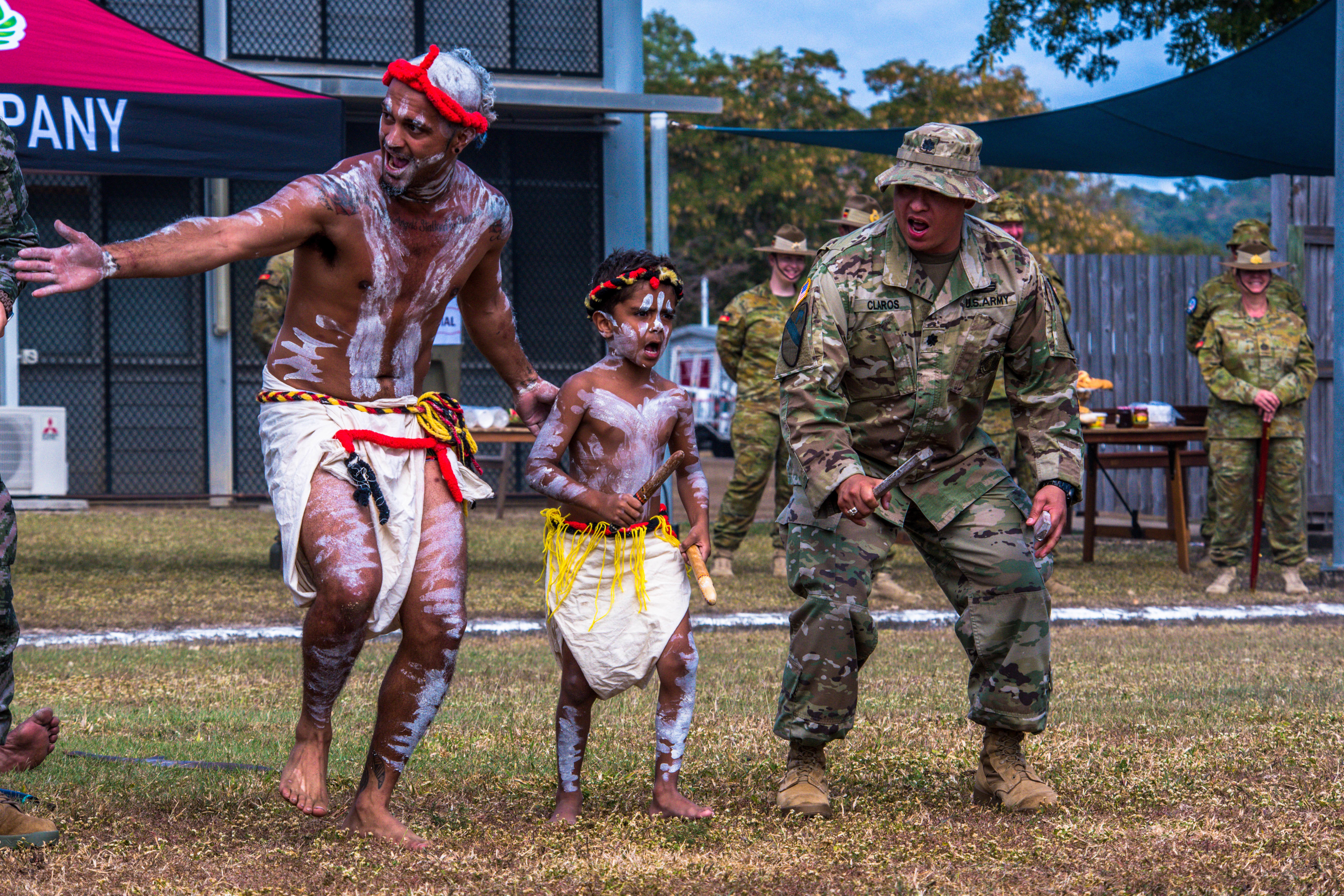
A soldier joins members of the Bindal clan performing a traditional dance at a welcoming ceremony during Exercise Talisman Sabre at Lavarack Barracks, Townsville, Queensland, Australia, July 19, 2021.
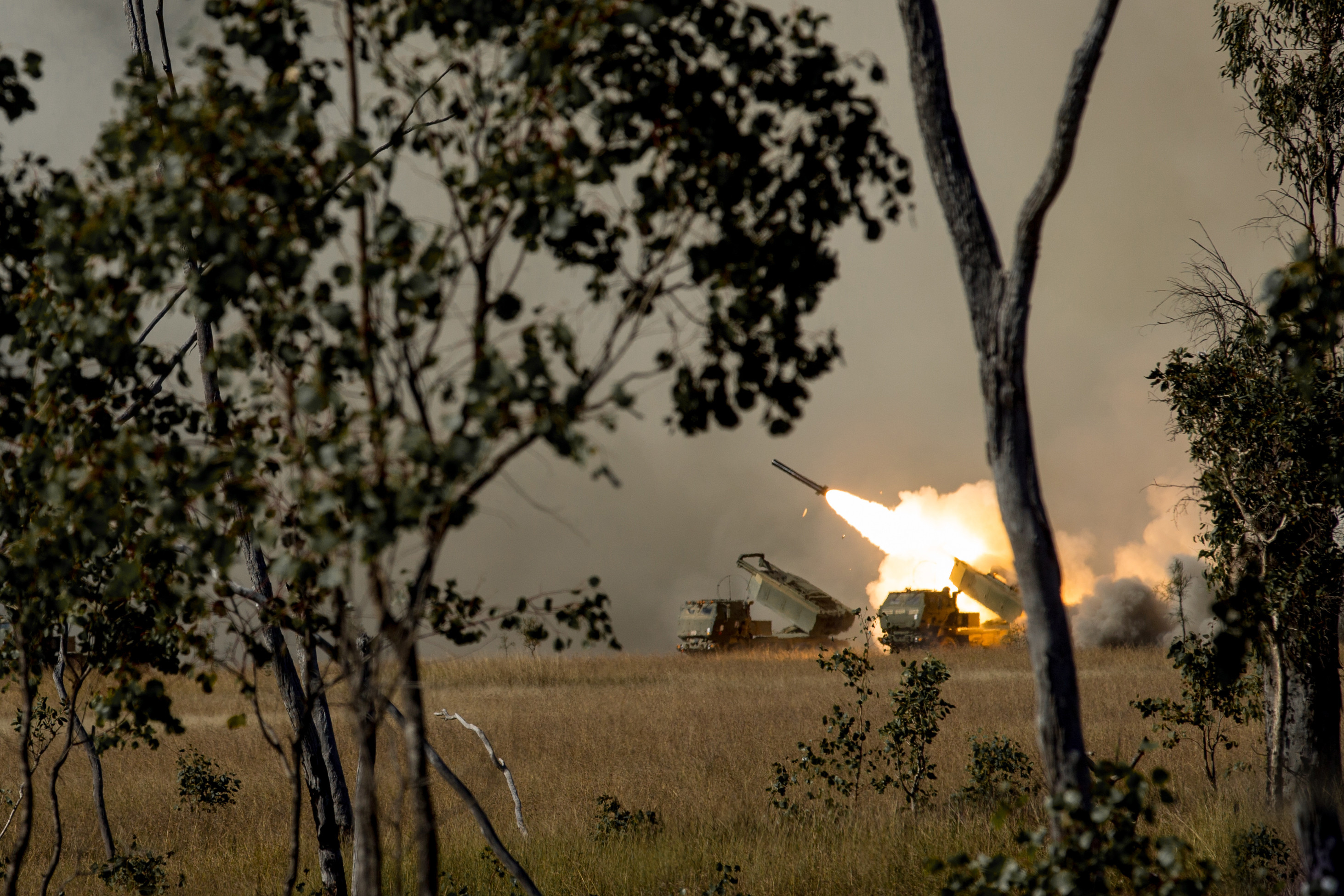
Soldiers and Marines train on high mobility artillery rocket systems during Exercise Talisman Sabre in Shoalwater Bay Training Area, Queensland, Australia, July 18, 2021.
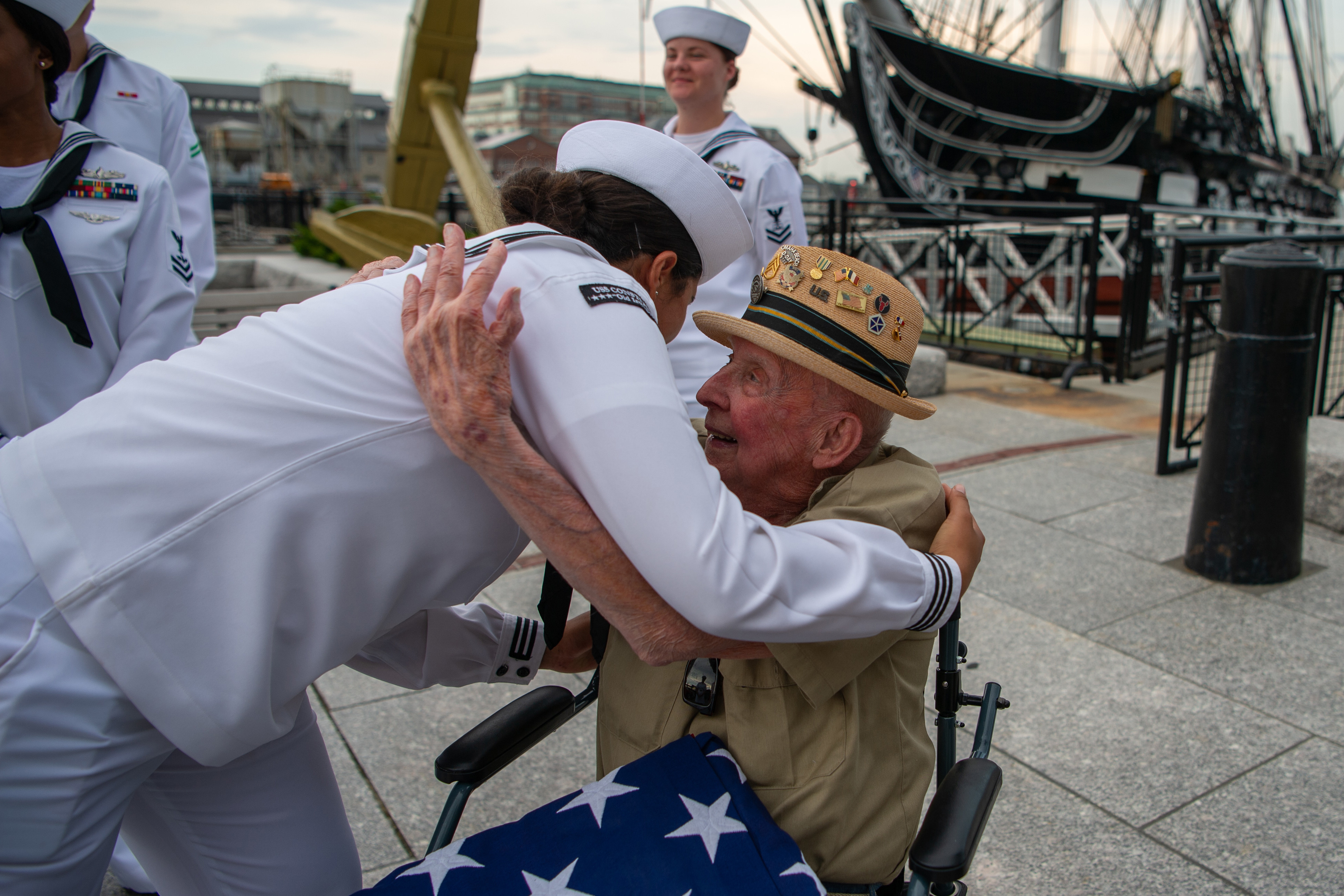
Retired Army Staff Sgt. Jake Larson, a World War II veteran, embraces Seaman Nicole Gonzalez in front of the USS Constitution in Boston, July 16, 2021. Larson took part in the landing at Omaha Beach on D-Day and fought in the Battle of the Bulge.


 Posts
All Comments
Posts
All Comments
Posts
All Comments
Posts
All Comments


