by Airman 1st Class Victor J. Caputo
22nd Air Refueling Wing Public Affairs
10/18/2013 - MCCONNELL AIR FORCE BASE, Kan. -- In
order to achieve Global Reach, the aircrew of the 22nd Air Refueling
Wing and 931st Air Refueling Group must not only accomplish the mission,
but to also be prepared for the worst case scenario.
They must be able to survive, evade, resist and escape, and two SERE NCOs here aim to keep McConnell Airmen ready for anything.
"We provide code of conduct continuation for all the aircrew at
McConnell," said Staff Sgt. John Michels, 22nd Operations Support
Squadron SERE specialist.
All Air Force aircrew go through an initial SERE training course at
Fairchild AFB, Wash., during initial training, but they are required to
remain up-to-date on the training throughout their careers.
"When they get here, they have to maintain their currency and maintain
the skills they already have," said Tech. Sgt. Justin Watters, 22nd OSS
SERE NCO in charge. "We tailor those skills to their specific mission
sets, aircraft and equipment."
"One thing we try to focus on here, because of the mission, is a lot of urban evasion," said Michels.
The unique mission of the KC-135 means crash landing and long-term
evasion are not top concerns for McConnell aircrew. Instead, possible
detention on a runway and frequent questioning with possible
anti-American sentiment is what a lot of training covers, he said.
In addition to ground and water survival training, Watters and Michels
also teach a week-long Army combatives course and offer personnel
recovery operation support training and environmental threat analysis
for different units on base.
"Ultimately, what we're looking to see is that they've retained some of
those skills," said Watters. "We're trying to make sure they can execute
what they already have and that they're building upon those skills."
While much of the training offered by SERE is aircrew-centric, Michels
emphasized that it's not just for pilots and other "flyers," and Airmen
desiring additional pre-deployment training are more than welcome to
contact the SERE office.
"I hope anyone who comes through here walks away with the skills
required to survive, evade, resist exploitation and escape if the
situation dictates," said Michels.
Monday, October 21, 2013


3rd Wing redeploys from Southwest Asia
by Air Force 1st Lt. Matthew Chism
JBER Public Affairs
10/21/2013 - JOINT BASE ELMENDORF-RICHARDSON, Alaska -- The 3rd Wing's 525th Fighter Squadron deployed to the Central Command area of responsibility to relieve its sister squadron, the 90th Fighter Squadron, also located at Joint Base Elmendorf-Richardson. The swap-out of fifth generation aircraft took place after five months of supporting combat operations in Southwest Asia.
Air Force Lt. Col. Nicholas Reed, 90th FS Commander, said though a unit replacing itself is uncommon, 3rd Wing units are well prepared to do so.
"We train for this," Reed said. "Part of our capability is to be able to move at a moment's notice into not necessarily a robust environment and immediately start performing our mission. A lot of times, it makes it easier if you are working with a sister squadron."
Flying is readily associated with providing air dominance for good reason. But the work of maintenance crews is just as crucial to deployed success.
While deployed, the maintainers averaged a 96 percent pass rate in the Expeditionary Maintenance Group's Quality Assurance Program. The QA program tracks maintenance performance against metrics to improve efficiency, production and reliability. The unit's "Outstanding" effort, as rated by the expeditionary group, culminated with the 90th Aircraft Maintenance Unit winning 12 expeditionary maintenance awards.
"The maintainers did an amazing job," said Air Force Capt. Ron Poe, 3rd Aircraft Maintenance Squadron Operations Officer. "They demonstrated through execution; now they can bring that level of competency back to the unit."
Maintenance units focus on the readiness of the aircraft to fly - the health of the fleet - Poe said, adding that the awards are excellent indicator the unit is accomplishing its core function.
"By performing outstanding maintenance, we're providing a better product to our operators so they can do their mission," Poe added. "It's a daily focus of keeping the mission in mind. Through effective scheduling and a strong focus on operator safety, you're able to improve the health of the fleet."
More than 150 Airmen and civilians from JBER deployed to Southwest Asia with the 525th and the 90th fighter squadrons. This included members from the 3rd Maintenance Group, 3rd Munitions Squadron, 673d Logistics Readiness Squadron, 673d Security Forces Squadron and 477th Fighter Wing.
"Regardless of capability, a 3rd Wing squadron cannot deploy on its own," said Air Force Col. David Nahom, 3rd Wing commander. "The technical expertise and dedicated support of our Total Force Integration and JBER partners are critical to our mission success."
This marks the third time in a year an F-22 Raptor unit with maintenance and support personnel from the 3rd Wing has left in support of a Theater Security Package deployment. TSP deployments demonstrate the wing's continued commitment to security and regional stability, while allowing units to train with international partners. The F-22s compiled more than 90 combat flying hours and 430 combat training missions during the deployment.
"They are very respectful of what the F-22 can do and what it symbolizes," Reed said. "It symbolizes a huge U.S. presence and care for what is going on in that region."
"I am extremely proud of the phenomenal job the 3rd Wing team, along with our partners, did while deployed and we are thrilled to have them back home," Nahom added. "Their hard work and dedicated delivery of combat airpower was essential to the strategic battle space and was highly praised by the CENTCOM commander."
JBER Public Affairs
10/21/2013 - JOINT BASE ELMENDORF-RICHARDSON, Alaska -- The 3rd Wing's 525th Fighter Squadron deployed to the Central Command area of responsibility to relieve its sister squadron, the 90th Fighter Squadron, also located at Joint Base Elmendorf-Richardson. The swap-out of fifth generation aircraft took place after five months of supporting combat operations in Southwest Asia.
Air Force Lt. Col. Nicholas Reed, 90th FS Commander, said though a unit replacing itself is uncommon, 3rd Wing units are well prepared to do so.
"We train for this," Reed said. "Part of our capability is to be able to move at a moment's notice into not necessarily a robust environment and immediately start performing our mission. A lot of times, it makes it easier if you are working with a sister squadron."
Flying is readily associated with providing air dominance for good reason. But the work of maintenance crews is just as crucial to deployed success.
While deployed, the maintainers averaged a 96 percent pass rate in the Expeditionary Maintenance Group's Quality Assurance Program. The QA program tracks maintenance performance against metrics to improve efficiency, production and reliability. The unit's "Outstanding" effort, as rated by the expeditionary group, culminated with the 90th Aircraft Maintenance Unit winning 12 expeditionary maintenance awards.
"The maintainers did an amazing job," said Air Force Capt. Ron Poe, 3rd Aircraft Maintenance Squadron Operations Officer. "They demonstrated through execution; now they can bring that level of competency back to the unit."
Maintenance units focus on the readiness of the aircraft to fly - the health of the fleet - Poe said, adding that the awards are excellent indicator the unit is accomplishing its core function.
"By performing outstanding maintenance, we're providing a better product to our operators so they can do their mission," Poe added. "It's a daily focus of keeping the mission in mind. Through effective scheduling and a strong focus on operator safety, you're able to improve the health of the fleet."
More than 150 Airmen and civilians from JBER deployed to Southwest Asia with the 525th and the 90th fighter squadrons. This included members from the 3rd Maintenance Group, 3rd Munitions Squadron, 673d Logistics Readiness Squadron, 673d Security Forces Squadron and 477th Fighter Wing.
"Regardless of capability, a 3rd Wing squadron cannot deploy on its own," said Air Force Col. David Nahom, 3rd Wing commander. "The technical expertise and dedicated support of our Total Force Integration and JBER partners are critical to our mission success."
This marks the third time in a year an F-22 Raptor unit with maintenance and support personnel from the 3rd Wing has left in support of a Theater Security Package deployment. TSP deployments demonstrate the wing's continued commitment to security and regional stability, while allowing units to train with international partners. The F-22s compiled more than 90 combat flying hours and 430 combat training missions during the deployment.
"They are very respectful of what the F-22 can do and what it symbolizes," Reed said. "It symbolizes a huge U.S. presence and care for what is going on in that region."
"I am extremely proud of the phenomenal job the 3rd Wing team, along with our partners, did while deployed and we are thrilled to have them back home," Nahom added. "Their hard work and dedicated delivery of combat airpower was essential to the strategic battle space and was highly praised by the CENTCOM commander."
Army National Guard’s first sergeant major runs Army 10-Miler on 80th birthday
By Sgt. 1st Class Jon Soucy
National Guard Bureau
ARLINGTON, Va. (10/21/13) - More than 35,000 runners took part in the 29th Annual Army 10-Miler Sunday marking the biggest turnout for the run in its nearly 30-year history. But, for one runner taking part in the event, it marked a different sort of milestone.

For retired Command Sgt. Maj. Al Hunt Jr., who from 1976-1978 served as the first sergeant major of the Army National Guard, the day also marked his 80th birthday. To mark the occasion, Hunt ran this year's course with Command Sgt. Maj. Brunk W. Conley, the current sergeant major of the Army Guard, as well as Soldiers assigned to the Army National Guard Readiness Center.
"Today is my 80th birthday," Hunt said after the race. "I ran ten miles and I finished. It's an experience that everybody needs to challenge themselves."
Hunt finished the course in just under three hours, but it wasn't his first time taking part in the 10-Miler. In 1994 he ran in the 10th 10-Miler and has also taken part in a number of marathons as well. Running, for Hunt, goes back more than six decades.
"I started running in high school to become part of a team that could challenge you both physically and mentally," he said. "It also provided individual measurements of one's limits."
And testing your limits was one of the reasons Hunt said he chose to run in this year's 10-Miler. Age alone presented Hunt with limits to test, made even more challenging, many may say, as Hunt is visually impaired and legally blind.
"When you're hearing impaired or visually impaired you don't ever let that stop you," Hunt said. "You can overcome."
Hunt, however, said there were others who kept him motivated.
"The people that really inspired me were the wounded warriors," he said. "I mean, they're coming back with limbs missing. It's just a generation of "you can do anything." All you have to do is just step out and do it."
Hunt said that this was his way of stepping out and doing it.
"You see all these people around you and they're doing things with no limbs," he said. "They're accomplishing something so I figured I might be blind, I might be deaf but I'm gonna do it. "
It also represented a homecoming of sorts for Hunt.
"My kids used to run with me. When I was stationed here at the Pentagon and lived on Fort Myer, we used to run these same bridges and around all these monuments," he said. "It was a challenge to come back here and do it again."
It was also a homecoming in other ways as well.
"It means that I had returned and experienced running with a team and that's what the Guard is all about," he said.
And for Conley, it was a chance to reconnect with the Army Guard's past as a way to shape the future.
"The back of the (Army Guard 10-Miler) shirt says 'a tradition of excellence,' but excellence has to start with the first," said Conley. "You can't start until the first gets the ball rolling in the right direction. You're looking at where excellence started. Everybody that has followed on since then has built on that tradition of excellence."
And watching Hunt take part and complete the event, for some, served as a way to inspire that tradition of excellence in others.
"They say running is 90 percent mental, and I strongly believe that," said Army Capt. Emilygrace Mate, who headed up the 10-Miler teams and the Army Guard's participation in the event. "I think it's a tremendous feat what he just did and gives us the motivation, especially for those of us that aren't runners, to go out next year and run. I think it's tremendous that he came out here and ran and set the standard for everyone."
This year's event also saw a large turnout for runners from the Army Guard.
"We had 2,025 runners registered, last year we had 1,500 registered, so that was a big increase for us this year," said Mate, adding that the Guard also had two teams - one male team and one female team - running the 10-Miler competitively with both teams taking second place in their respective divisions.
And for Hunt, it all comes back to preparing for and accepting the challenge.
I started (preparing for the 10-Miler) in December because you need to at least do 10 months preparation," said Hunt, who previously coached both child and adult runners. "You can't just go out and start running. Even at that pace and that amount of training I still had muscle cramps but that's just normal. You get to a certain age and you just expect that to happen. But, you just don't quit. That's what this is all about."
And Conley, the tenth Army Guard sergeant major, said he has similar challenge in mind.
"I hope that when I'm 80 I can run with the 20th sergeant major of the Army Guard," he said.
The chance to run with Hunt was an exceptional experience, said Conley.
"It was a pleasure. It was an honor," he said.
New system helps Porters cut load times

60th Air Mobility Wing Public Affairs
10/18/2013 - TRAVIS AIR FORCE BASE, Calif. -- While there is nothing the Airmen at Travis can do to stop an earthquake, tsunami or hurricane, there is one element they are in total control of; the response time of Air Mobility Command aircraft and its assets.
The 60th Aerial Port Squadron unveiled a new Deployable Automated Cargo Measurement System Oct. 10 here. The new system cuts the average time it takes porters to weigh and measure a vehicle from 20 or 30 minutes to less than 1 minute. That equates to less time military and emergency response vehicles need to spend on base before they can get to the scene of the disaster and begin assistance.
"I wish we had a system like this back in 1995," said Richard Salek, 60th APS cargo operations foreman. "I was stationed at Rhein-Main Air Base, Germany, and we had to send over 1,000 vehicles to Bosnia. It took ages to accomplish, but this system would have been great."
Before the 60th APS had the DACMS, each vehicle had to be parked, weighed, measured and labeled before it could be loaded onto an aircraft. With the new system, a vehicle doesn't even have to stop rolling to get all of the same metrics, said Tech Sgt. Arthur Lavoie, 60th APS cargo deployment function NCO in charge.
As a vehicle is driven through, lasers first measure the length, width and height of it and any trailers or cargo that may be attached. Then, without stopping, it is driven over the scales which find the center-of-balance, gross weight and axle weights. A label is then printed out with everything the porters need to know about the vehicle, he said.
"This system, while not new to mobility operations, is a massive victory for Travis porters who work all hours of the day, in any weather condition, to process cargo and load our aircraft," said Col. Mark Weber, 60th Maintenance Group commander. "Before this, our process had customers waiting in long mobility lines as one piece of equipment at a time rolled slowly through the manual Joint Inspection. It wasn't a system flaw, just the reality of the human process. With this specific upgrade we have modernized to the point where we will now be waiting for the customers. Simply awesome."
The system has already been put to use for a real-world mission to move a C-17 Globemaster III engine to Hawaii. Porters were able to get all the metrics on the engine and get it out to an aircraft to be loaded in just minutes, Salek said.
Saturday, October 19, 2013
Behind the Scenes - Joint Base personnel work to made distinguished visitor visits seamless
by Senior Airman Christopher Stoltz
Joint Base Pearl Harbor-Hickam Public Affairs
10/17/2013 - JOINT BASE PEARL HARBOR-HICKAM, Hawaii -- It is just another Aloha Friday in sunny Hawaii. The temperature is 84-degrees and you're driving, windows down, to the commissary on Hickam to grab some groceries for this weekend's game. You pass the AMC terminal, look left, and see a white plane with a few light-blue accents slowly coming to a halt.
"I wonder who is visiting," you ponder.
It is probably a senator or state representative. Who knows, maybe it's the president. However, you drive past with nothing but food, beverages and the countless people assured to be at the commissary in your head.
While seeing this plane pull-in is nothing more than a simple observation to you, the arrival of this Boeing VC-25 (Air Force One) means it is going to be a long weekend for quite a few people, namely those who help plan and support visits for distinguished visitors.
According to Air Force Captain Nathaniel Cavender, 15th Wing Plans officer, the purpose of the DV group is to make sure all distinguished visitors arriving at Hickam get all the support they need for their aircraft, aircrew, and anyone that may be traveling with them.
Cavender, who has been part of the group since April of this year, said the group also ensures the wing commander is kept in the loop on any changes or problems that may arise during the DV's visit.
"We are a working group made up of individuals from agencies around the 15th Wing to include: Public Affairs, Logistics Readiness Squadron, Operational Support Squadron, Force Support Squadron, Security Forces Squadron, CP, Safety, Maintenance, and XP. The members of this group constantly change and there are multiple people from each agency."
Cavender said having a representative from each agency is critical when scheduling a visit, especially if it is someone like the President. Countless hours are given by many individuals to create a schedule that is planned to the second.
"There is a lot of coordination that goes into a visit for someone like the POTUS. We hold many working group meetings to discuss all the details ranging from security, fuel, parking, airfield operations, maintenance, transportation, lodging, public affairs, and all contingencies in-case there are any changes in the DV's plans."
One thing Cavender said is more important that having a representative from each agency is having Airmen dedicated to making each visit a success.
"The work we do wouldn't be possible or successful without everyone else doing their job perfectly," he said. "Whether it's refueling the Jet, the security forces troops providing perimeter security for the aircraft from dusk 'till dawn, or the troop driving the air stairs quickly and precisely to make sure it's exactly in place on the jet to avoid delaying the DV. It's everyone that makes the group efficient and the visit successful."
Cavender and the planning group's most-recent conquest was planning the visit for the Secretary of Defense. The group will have to push through here shortly as the President is expected to make his way back to JBPHH. He reminds his team while the job may be tough, it is very rewarding.
"I would say that we are sometimes jaded by what we do on a day to day basis," he said. "If you sit back and think about the impact that we have on what is going on in the world, it really gives you a sense of pride. Can you imagine if we delayed the President, and in turn, he didn't make an important meeting or event?"
The Working Group point-of-contacts and the Airmen who make every visit happen may not get much of the glory or recognition, but they definitely have an impact on success of and DV's trip who is traveling through Joint Base Pearl Harbor-Hickam."
So remember, every time you hear about a DV coming to Hickam, or see a unique aircraft by the flight line, think of the Security Forces Airmen working even-longer shifts and protecting the aircraft, the Public Affairs personnel contacting and arranging media visits or the countless other personnel working longer than they want to.
Joint Base Pearl Harbor-Hickam Public Affairs
10/17/2013 - JOINT BASE PEARL HARBOR-HICKAM, Hawaii -- It is just another Aloha Friday in sunny Hawaii. The temperature is 84-degrees and you're driving, windows down, to the commissary on Hickam to grab some groceries for this weekend's game. You pass the AMC terminal, look left, and see a white plane with a few light-blue accents slowly coming to a halt.
"I wonder who is visiting," you ponder.
It is probably a senator or state representative. Who knows, maybe it's the president. However, you drive past with nothing but food, beverages and the countless people assured to be at the commissary in your head.
While seeing this plane pull-in is nothing more than a simple observation to you, the arrival of this Boeing VC-25 (Air Force One) means it is going to be a long weekend for quite a few people, namely those who help plan and support visits for distinguished visitors.
According to Air Force Captain Nathaniel Cavender, 15th Wing Plans officer, the purpose of the DV group is to make sure all distinguished visitors arriving at Hickam get all the support they need for their aircraft, aircrew, and anyone that may be traveling with them.
Cavender, who has been part of the group since April of this year, said the group also ensures the wing commander is kept in the loop on any changes or problems that may arise during the DV's visit.
"We are a working group made up of individuals from agencies around the 15th Wing to include: Public Affairs, Logistics Readiness Squadron, Operational Support Squadron, Force Support Squadron, Security Forces Squadron, CP, Safety, Maintenance, and XP. The members of this group constantly change and there are multiple people from each agency."
Cavender said having a representative from each agency is critical when scheduling a visit, especially if it is someone like the President. Countless hours are given by many individuals to create a schedule that is planned to the second.
"There is a lot of coordination that goes into a visit for someone like the POTUS. We hold many working group meetings to discuss all the details ranging from security, fuel, parking, airfield operations, maintenance, transportation, lodging, public affairs, and all contingencies in-case there are any changes in the DV's plans."
One thing Cavender said is more important that having a representative from each agency is having Airmen dedicated to making each visit a success.
"The work we do wouldn't be possible or successful without everyone else doing their job perfectly," he said. "Whether it's refueling the Jet, the security forces troops providing perimeter security for the aircraft from dusk 'till dawn, or the troop driving the air stairs quickly and precisely to make sure it's exactly in place on the jet to avoid delaying the DV. It's everyone that makes the group efficient and the visit successful."
Cavender and the planning group's most-recent conquest was planning the visit for the Secretary of Defense. The group will have to push through here shortly as the President is expected to make his way back to JBPHH. He reminds his team while the job may be tough, it is very rewarding.
"I would say that we are sometimes jaded by what we do on a day to day basis," he said. "If you sit back and think about the impact that we have on what is going on in the world, it really gives you a sense of pride. Can you imagine if we delayed the President, and in turn, he didn't make an important meeting or event?"
The Working Group point-of-contacts and the Airmen who make every visit happen may not get much of the glory or recognition, but they definitely have an impact on success of and DV's trip who is traveling through Joint Base Pearl Harbor-Hickam."
So remember, every time you hear about a DV coming to Hickam, or see a unique aircraft by the flight line, think of the Security Forces Airmen working even-longer shifts and protecting the aircraft, the Public Affairs personnel contacting and arranging media visits or the countless other personnel working longer than they want to.
Lost and Found - Hickam Airmen participate search and recovery training
by Senior Airman Christopher Stoltz
Joint Base Pearl Harbor-Hickam Public Affairs
10/17/2013 - JOINT BASE PEARL HARBOR-HICKAM, Hawaii -- To better prepare for possible accidents and incidents on base, Airmen from Joint Base Pearl Harbor-Hickam completed their first search and recovery team training on Sept. 26, held on Hickam Beach.
The purpose of the search and recovery team is to respond to military-related incidents on base, including military vehicle, aircraft mishap and mass casualty incidents, if and when they occur.
If called upon, the team must search and cover selected areas, keeping an eye out for evidence, things out of place, or personal effects. A line is formed with one step taken at a time, a quick search of that immediate area conducted, and then the line moves one step forward yet again.
Anything that could be considered out of place is collected, then bagged and tagged as evidence. The team then covers the entire area again from a different direction, only to ensure nothing has been missed.
According to Air Force Technical Sgt. Brian Wingo, 647th Force Support Squadron Unit Training Manager and search and recovery team lead, said the training, hosted quarterly, is used to train Airmen to recover and help preserve evidence, which could help determine the cause of an incident.
"Search and recovery is important because it provides a method to recover and return home the remains of fallen personnel," he said. "The team is trained to conduct operations to recover all remains, and do so in a manner that preserves dignity and respect."
Wingo has only been a part of the team on Hickam for nine months, but said he has been fortunate enough to have never needed to respond to a real-world incident. However, this does not stop him from ensuring new Airmen added to the team know how to respond accordingly.
"Usually, we (the instructors) will conduct a classroom session covering search and recovery procedures," he said. "Then we will go out and apply those instructions in the field. The location for the outdoor portion changes to keep a sense of realism, because the terrain for a real-world incident could be anywhere."
Maintaining a sense of realism in a training environment is nearly as important as ensuring the training given is the best it can possibly be. This is why Air Force Staff Sgt. Jay Waddell, Hickam Mortuary Affairs non-commissioned officer in charge, not only helps maintain and train the team, but the trainer as well.
"I draw up a crash site for the team and give all the crash details to the team lead," said Waddell. "I inspect the team lead on his communication and leadership, as well as question him or her on the procedures they are about to conduct. I also conduct equipment checks and see if the team lead inspects said equipment prior to sending their team out."
Waddell said the teams are there help aid Civil Engineering, Security Forces and local law-enforcement agencies, if there ever is a need. He also said sharing part of the flight line with the Honolulu International Airport makes the team that much more helpful if there ever was an incident.
"Completing the training and providing hypothetical situations for my team ensures that I'll have the knowledge to perform the mission," he said. "Accidents happen all the time, so I have to be ready to lead my team into any operation."
Joint Base Pearl Harbor-Hickam Public Affairs
10/17/2013 - JOINT BASE PEARL HARBOR-HICKAM, Hawaii -- To better prepare for possible accidents and incidents on base, Airmen from Joint Base Pearl Harbor-Hickam completed their first search and recovery team training on Sept. 26, held on Hickam Beach.
The purpose of the search and recovery team is to respond to military-related incidents on base, including military vehicle, aircraft mishap and mass casualty incidents, if and when they occur.
If called upon, the team must search and cover selected areas, keeping an eye out for evidence, things out of place, or personal effects. A line is formed with one step taken at a time, a quick search of that immediate area conducted, and then the line moves one step forward yet again.
Anything that could be considered out of place is collected, then bagged and tagged as evidence. The team then covers the entire area again from a different direction, only to ensure nothing has been missed.
According to Air Force Technical Sgt. Brian Wingo, 647th Force Support Squadron Unit Training Manager and search and recovery team lead, said the training, hosted quarterly, is used to train Airmen to recover and help preserve evidence, which could help determine the cause of an incident.
"Search and recovery is important because it provides a method to recover and return home the remains of fallen personnel," he said. "The team is trained to conduct operations to recover all remains, and do so in a manner that preserves dignity and respect."
Wingo has only been a part of the team on Hickam for nine months, but said he has been fortunate enough to have never needed to respond to a real-world incident. However, this does not stop him from ensuring new Airmen added to the team know how to respond accordingly.
"Usually, we (the instructors) will conduct a classroom session covering search and recovery procedures," he said. "Then we will go out and apply those instructions in the field. The location for the outdoor portion changes to keep a sense of realism, because the terrain for a real-world incident could be anywhere."
Maintaining a sense of realism in a training environment is nearly as important as ensuring the training given is the best it can possibly be. This is why Air Force Staff Sgt. Jay Waddell, Hickam Mortuary Affairs non-commissioned officer in charge, not only helps maintain and train the team, but the trainer as well.
"I draw up a crash site for the team and give all the crash details to the team lead," said Waddell. "I inspect the team lead on his communication and leadership, as well as question him or her on the procedures they are about to conduct. I also conduct equipment checks and see if the team lead inspects said equipment prior to sending their team out."
Waddell said the teams are there help aid Civil Engineering, Security Forces and local law-enforcement agencies, if there ever is a need. He also said sharing part of the flight line with the Honolulu International Airport makes the team that much more helpful if there ever was an incident.
"Completing the training and providing hypothetical situations for my team ensures that I'll have the knowledge to perform the mission," he said. "Accidents happen all the time, so I have to be ready to lead my team into any operation."
Friday, October 18, 2013
New York's 'hire heroes' job fair attracts hundreds of vets and service members
By Sgt. 1st Class Raymond Drumsta
New York National Guard
LATHAM, N.Y. (10/1813) - Opportunity rocked for American veterans and service members at the U.S. Chamber of Commerce's "Hiring Our Heroes" job fair held at the New York National Guard armory here Oct. 16.

More than 200 veterans and service members of all ranks, stripes and services took the opportunity to meet with scores of potential employers such as Federal Express, General Electric, Time Warner Cable, National Grid and CVS Pharmacy stores, who were stationed at tables arranged around the armory floor.
The fair was also designed to allow National Guard Soldiers and Airmen, military Reserve members, active duty service members, veterans and military spouses to learn how to use job-hunting tools. General Electric held workshops on resume writing and interviewing in an armory classroom.
Veterans who served in Vietnam, the Gulf Wars and Afghanistan worked the floor for several hours, spoke with company representatives, learned about job openings, filled out applications and submitted resumes.
The New York National Guard has also hosted "Hiring Our Heroes" events across New York in Rochester, Syracuse, Buffalo, Farmingdale, Peekskill and Binghamton.
Veterans' job skills are almost too numerous to list, said Eric Eversole, executive director of the "Hiring Our Heroes" program and a U.S. Chamber of Commerce vice president.
Among other things, veterans have work discipline and - most importantly -- the ability to solve problems, he emphasized.
"Each of you, as members of our military, have done that, day in and day out," Eversole said to the veterans who were on hand for the fair's opening at 10 a.m.
Eversole thanked the New York National Guard and Maj. Gen. Patrick Murphy, the adjutant general of New York, for hosting the event.
"Without the support of the National Guard, events like this would not be as successful as they could be," he said. "The support of the guard is integral to the events and the efforts to ensure vets and their spouses have meaningful job opportunities."
National Guard leaders also have the pulse of their communities, Eversole said.
"They understand, first hand, the sacrifices vets have made over the last decade," he stressed. "They also know that these vets make tremendous employees. They've solved problems in difficult situations. They know how to get the job done."
Thomas Lang, a Gulf War and navy veteran from Watervliet, N.Y., said he handed out 15 resumes, and he estimated that he spoke with about 30 company representatives.
"I lost count after five," he recalled.
The fair was a great opportunity, and a far cry from the experiences of returning Vietnam veterans, Lang said.
"The community recognizes the sacrifices we made," he said. "Today, veterans have more of a chance to succeed."
But veterans and others must learn how to adapt to changes, recognize opportunities and seize them, Lang said.
"You have to go out there and talk to people," he said. "Be open-minded, learn new things, don't dwell on the past. If you take care of today, the future will be written."
The event was co-sponsored by the New York National Guard, New York State Department of Labor, Albany-Colonie Regional Chamber of Commerce, Rensselaer County Regional Chamber of Commerce, the Employer Support of the Guard and reserve (ESGR), NBC News, the U.S. Department of Labor Veterans Employment and Training Service (DOL VETS), US Department of Veterans Affairs, and The American Legion.
National Guard engineers from four states continue Colorado highway repair
By Colorado National Guard Public Affairs
CENTENNIAL, Colo. (10/18/13) - National Guard members from four states are continuing to support the Colorado Department of Transportation in repairing a 25-mile stretch of U.S. Highway 36 between Lyons, Colo., and Estes Park, Colo.

Approximately 200 National Guard Citizen-Soldiers or -Airmen are working on the project at any given time.
Because of the large scope of the project, National Guard engineering units from Colorado, Utah, Montana and Kansas are assisting.
National Guard engineers from Kansas arrived Oct. 16, and most of the Guardsmen from Utah are scheduled to depart Oct. 18.
"All of the states coming together to help Colorado's citizens during their time of need shows the value of the National Guard," said Adjutant General of Colorado Maj. Gen. H. Michael Edwards. "The National Guard is all about neighbors helping neighbors, and our neighbors from the Utah National Guard?, Montana National Guard? and Kansas National Guard? are here to assist with the manpower and technical expertise needed for a project of this size and scope."
The National Guard is working on 18 different project sites along the highway. Four sites have been completed and others are at various levels of completion. The National Guard's portion of the project is an estimated 55 percent complete.
The goal of this project is to create a passable, 24-foot, two-lane causeway that will allow passenger vehicles to get through the area, before the weather halts construction.
Since operations began in September, the multi-state, National Guard team has worked 7,150 man hours, placed 320 feet of culvert, and hauled 10,980 cubic yards of fill material.
"This mission couldn't be completed without the help of other states' National Guards," Edwards said. "This is a true testament of the flexibility and dedication of our members who continued with this essential project, without delay, even through the recent government shutdown."
Flood support by the numbers:
Evacuation totals:
During the Colorado flooding, the military members provided aviation support, ground search and rescue, traffic control points, engineering support, and many other services to affected communities.
A total of 3,233 people and an estimated 1,300 pets were evacuated by either military aircraft or military vehicles.
At the peak of flood evacuation operations, more than 750 troops, along with 21 helicopters, 200 military vehicles, 20 ground search-and-rescue teams, and 67 traffic-control points operated in support of lifesaving and protection efforts.
Aviation evacuation totals:
Helicopters and crews evacuated a total of 2,526 people - 83 by hoist - and 1,047 pets who were in immediate danger or cut off because of impassable roads in Boulder County, Larimer County and Weld County.
Aviators transported 48.3 tons of cargo, including critical food, water and clothing; as well as transportation and engineering supplies.
The Colorado National Guard provided nine helicopters and crews from the 2nd Battalion, 135th General Support Aviation at Buckley Air Force base in Aurora, Colo., and the High-Altitude Army National Guard Aviation Training site in Gypsum, Colo.
The Wyoming National Guard provided five helicopters and crews from the 5th Battalion, 159th Aviation Regiment in Cheyenne, Wyo.
The U.S. Army provided seven helicopters and crews from the 2nd General Support Aviation Battalion, 4th Aviation Regiment, 4th Combat Aviation Brigade, 4th Infantry Division.
Ground evacuation totals:
A total of 285 Colorado Notional Guard Soldiers and Airmen were assigned to ground search-and-rescue efforts. There were a total of 23 GSAR teams; a GSAR team consisted of three Light Medium Tactical vehicles and six Guardsmen.
Colorado National Guardsmen evacuated a cumulative 707 people and an estimated 300 pets by ground search-and-rescue efforts.
GSAR teams assisted local authorities in Boulder County (including the major effort in Lyons, Colo.), Weld County and Larimer County.
Colorado National Guardsmen filled, moved and stacked more than 12,000 sandbags in Jefferson County to help civil authorities mitigate flooding in affected areas.
Security totals:
At the peak of operations, Colorado National Guard members manned 67 checkpoints in Boulder County, Larimer County and Weld County. They assisted local authorities to ensure public safety and to protect property of those displaced by the floods.
More than 590 Soldiers and Airmen worked side-by-side with local authorities at traffic-control points and roving patrols in affected areas.
PACAF Airmen wrap up busy year
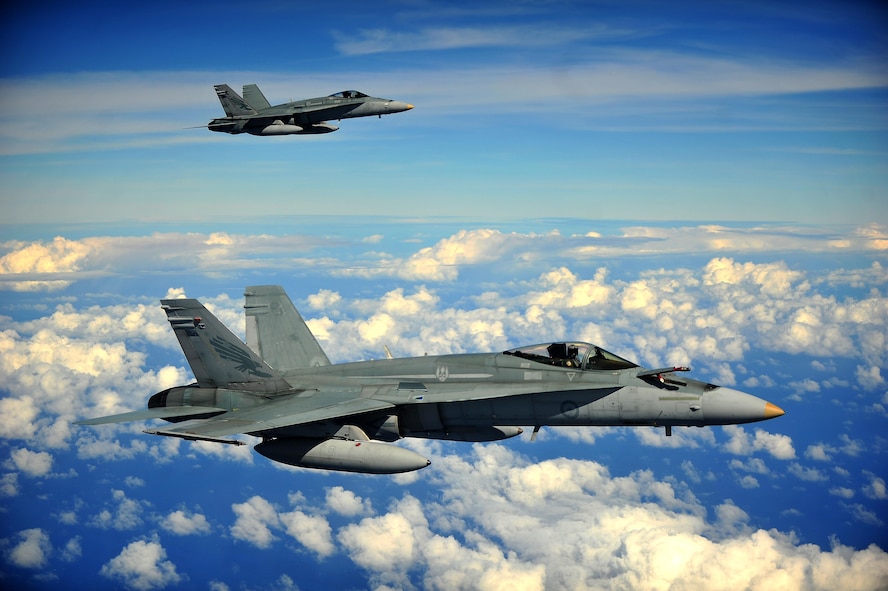
JOINT BASE PEARL HARBOR-HICKAM, Hawaii (AFNS) -- Throughout fiscal 2013, the key aspect of Pacific Air Forces was engagement as more than 45,000 Pacific Air Forces Airmen conducted a broad spectrum of operations, from humanitarian relief to decisive combat employment, in an area covering 13 time zones and 100 million square miles.
These operations began with the inactivation of 13th Air Force and the operationalization of the Headquarters PACAF Staff, as the Air Force established its benchmark component major command (C-MAJCOM). This unified structure gives PACAF dual focus: support to an operationalized staff across the range of military operations and performance of mandated duties of organizing, training, and equipping Airmen.
Throughout the year, PACAF Airmen expanded engagements, increased combat capability and improved warfighter integration by participating in more than 25 exercises and humanitarian operations throughout the region.
"Engagement is something we are doing every day across the Asia-Pacific region," said Gen. Hawk Carlisle, commander of Pacific Air Forces. "I cannot overstate the importance of working with our allies, partners and the international community to deter aggression and to maintain peace and stability in the region."
Operation Pacific Angel is an example of PACAF's expanded engagements, as more than 275 PACAF Airmen and joint service members joined host nation military and civilian forces, multilateral military, and non-governmental organizations in Cambodia, Indonesia, the Philippines, Sri Lanka, and Vietnam to promote regional humanitarian assistance and disaster relief interoperability.
The PACANGEL engagements included medical, dental, optometry, and engineering programs, as well as various subject-matter expert exchanges. More than 22,000 total patients were cared for in these countries and 15 structures such as schools or medical clinics were built or refurbished during these operations.
"Partnering in operations such as Pacific Angel enhances our ability to work together and effectively respond to humanitarian disaster relief and international peacekeeping operations," said Lt. Col. Keith Gibson, commander of Pacific Angel 13-2, from Joint Base Pearl Harbor-Hickam.
Increased combat capability was another focus this year, as exercises such as Red Flag Alaska involved more than 110 aircraft and the participation of more than 5,200 personnel from the U.S. Air Force active duty, Reserve and Air National Guard, U.S. Army, U.S. Navy and Marines, Singapore, Australia, Japan, and the Republic of Korea. Three Red Flag multinational exercises occurred this year. The two week-long tactical air combat exercises replicated the stress warfighters face during their first 10 combat sorties of a conflict.
Expanding engagements as well as theatre security cooperation was also evident in early February as Cope North was in full swing. Participants from the U.S. Air Force, the Japan Air Self Defense Force and the Royal Australian Air Force focused on Large Force Employment scenarios, which enhanced the interoperability of 15 different airframes.
"During Cope North, we are able to facilitate an environment, in coordination with our international partners, which allows us to share information to decision makers," said Lt. Col. Michael Erickson, 962d Airborne Air Control Squadron commander. "This provides those on the ground and in the air the best possible situational awareness."
Besides exercises, multi-national leadership visits and exchanges also increased the situational awareness and solidified partnerships. Lt. Gen. Cha-Kyu Choi, Republic of Korea, Air Force Vice Chief of Staff, visited PACAF headquarters in November to discuss ways to further improve support and cooperation between our nations' air forces.
Another significant meeting was the first-ever Medical Acupuncture and Battlefield Medicine Subject Matter Expert Exchange in Beijing, China Oct. 21-27. U.S. Air Force medical physicians attended at the invitation of China's People Liberation Army to help U.S.-China militaries increase mutual trust and understanding while sharing practices in traditional Chinese medicine.
In addition, General Carlisle hosted a 14-member Chinese People's Liberation Army of China delegation as part of an agreed upon reciprocal visit between Chinese and American military officers. During their visit, the Chinese officers received a briefing from General Carlisle on PACAF's priorities, and toured a C-17 Globemaster III.
The year closed with General Carlisle representing PACAF along with Air Force Chief of Staff Gen. Mark A. Welsh III, meeting with People's Liberation Army Air Force Deputy Chief of Staff Maj. Gen. Li Chunchao, in Beijing, China, Sept. 24. The U.S. Air Force leaders visited with various military leaders in China as well as tour the Chinese Air Force Aviation Medicine Research Institute as part of a weeklong trip.
Working with our allies and partners to expand engagement is crucial to PACAF's responsibilities in the Department of Defense's largest area of responsibility.
Throughout this past fiscal year and into the next, PACAF has and will continue to work together with established allies and partners, to help build their confidence, improve combined interoperability, disrupt proliferation and provocations, and solidify joint access during contingencies and/or for throughput to critical locations across the Asia-Pacific region.
Luke EOD blows it up

56th Fighter Wing Public Affairs
10/18/2013 - LUKE AIR FORCE BASE, Ariz. -- The sun blazed down as they hiked and climbed through the rough terrain. As the search for improvised explosive devices continued they were forced into a defensive stance, firing at enemy targets.
The 56th Civil Engineer Squadron Explosive Ordnance Disposal unit participated in predeployment training Sept. 17 through 20 at the Barry M. Goldwater Range in Southwest Arizona.
"This training is vital to the safety of our team and the success of our deployed missions," said Capt. Justin Schultz, 56th CES EOD commander. "Our ability to detect IEDs is critical to the safety of countless deployed service members all over the globe."
The unit trained on TNT, Semtex, C-4 and other explosives, and then split into three teams. The teams went into predeployment exercises designed to mimic dismounted operations in Afghanistan. The scenarios included disarming and disposal of IEDs.
Each scenario presented its own challenges such as simulated enemy combatants, steep terrain and inaccessible IEDs that were handled manually instead of by an explosives robot.
"It's important for our team to get training in all these scenarios because they are all real possibilities when downrange," said Senior Airman Timothy Donnan, 56th CES EOD team member who planned and organized the training. "We want our Airmen to be the best prepared professionals so they can do their part to save lives and ensure a successful mission."
Throughout the training, EOD members slept in tents and cots and ate MREs for all meals. The munitions that were set were connected to 50-caliber bullets that would be set off if the ordnance was triggered.
"We made it as realistic as possible," Schultz said. "The idea is for them to learn to be successful here, so they make it home from their real-life deployments."
At 'tip of spear,' passion keeps pilots sharp

56th Fighter Wing Public Affairs
10/18/2013 - LUKE AIR FORCE BASE, Ariz. -- It's a dark night over Baghdad. Storm clouds rumble with the sound of thunder. In poor weather, Air Force pilots move in to escort a navy strike package, dodging surface-to-air missiles and anti-aircraft artillery fire, wondering whether they will make it back alive.
This is part of the job for Air Force fighter pilots, but a love for the job and good training keep pilots ready to fight.
Lt. Col. Shamsher Mann, 62nd Fighter Squadron commander, has been flying F-16s for more than 15 years. He said his mother told him he was playing with airplanes before he could talk. He had two dream careers, either become a fighter pilot or play in the National Football League. Mann chose to focus on being a fighter pilot. He said it was a good thing that the first career choice worked out since career choice two was never going to happen.
"I love my job," Mann said. "I've had the opportunity to fly all over the world and go to combat in the F-16. It's been exciting and rewarding."
Mann, who played football in high school, compares flying jets to being good at a sport. Pilots train every day just like athletes, so when it's time to perform a mission they're ready.
Mann deployed to Iraq for Operation Northern Watch, Operation Southern Watch and Operation Iraqi Freedom. He describes his first combat mission with gut-wrenching detail.
"It was intense," Mann said. "You spend years training for combat scenarios and the first time you go into hostile territory, it's like wrapping up all the emotions you've ever felt -- love, hate, fear, anger -- all at once and magnifying them a thousand times. Your heart is beating a thousand beats per minute."
Pilots spend three to seven hours in the air or sometimes even more flying combat sorties. They receive taskings from the ground and are continuously on the hunt for the enemy. Jets are refueled in flight, targets are updated and munitions are put on targets until none are left.
During combat operations, pilots must be calm and calculating while dealing with the intensity of being in combat. This means maintaining the highest level of personal readiness.
"We mentally rest, stay in good physical condition and eat right," said Maj. Derek Pegg, 62nd FS assistant director of operations. "We really don't know how long we're going to be airborne. We must mentally get ourselves in gear and define what it is we're going to accomplish."
Stakes are high when flying a $30 million aircraft into combat and getting shot at, Mann said. It's mentally and physically straining, but pilots constantly prepare.
"Pilots go through survival, evasion, resistance and escape training, and have very specific plans for how to evade the enemy or what to do if they are captured by the enemy in combat," he said.
Being a fighter pilot sometimes means having to put bombs on target. It's a matter of life and death, kill or be killed, and is a fact pilots must accept.
"Knowing you are putting ordnance toward the earth, you accept that fact as part of war," Mann said. "There are people on the ground shooting at you or maybe friendly troops, and both of you are trying to get the other first. It's a matter of one being successful and the other not. When the nation says it is time to go to war, all hesitation needs to go by the wayside. You reflect on missions in quiet times, but I've never had any regrets."
Mann has described his most intense missions as almost spiritual experiences and says they gave him confidence that his priorities in life were right. His advice to young pilots is to fly with a zeal.
"Fly fighters like an athlete approaches his sport, with passion," Mann said. "You want to be a good fighter pilot and learn from your mistakes. You can't treat it like a nine-to-five job. Our training prepares us for the mechanics of flying fighters, but to be a good fighter pilot you have to put in passion and effort."
Airmen check engines, save millions

2nd Bomb Wing Public Affairs
10/17/2013 - BARKSDALE AIR FORCE BASE, La. -- Every time the B-52H Stratofortress takes off, eight engines battle intense heat, wind, pressure and foreign object damage to get the 488,000 pound behemoth aloft.
Altogether, are more than 216 B-52H Stratofortress engines on Barksdale and five Airmen from the 2nd Maintenance Squadron are responsible for maintaining each one.
This includes monitoring engine flight hours and maintenance, trending engine data over time to determine recurring problems, and coordinating engine investigations and overhauls with Tinker Air Force Base, Okla.
"Every time there's a sortie and engines are operated and flown in flight, pilots fill out an engine performance sheet which has all of the engine parameters," said Tech. Sgt. William Cheese, 2nd Maintenance Squadron engine trending and diagnostics monitor. "After the sortie debriefing, I'll compile and trend the data."
Trending engine data allows the engine management shop to document an engine's ongoing behavior in flight or problems the engine has had in the past.
Every 6,000 flight hours, the engine is shipped to Tinker, for an overhaul, which replaces most components with new ones. An engine may also be shipped to Tinker for other reasons.
"Some things we can fix here on the flightline," said Cheese. "But as far as taking the entire engine apart, that happens at Tinker. We'll ship any motor or engine with internal damage or part failure and then issue a spare."
To prevent a costly $1.5 million replacement, engines are also inspected at regular intervals.
"There are phase inspections every 450 flight hours," said Staff Sgt. Christopher Percy, 2nd Maintenance Squadron base engine manager. "It's when the engine is inspected for its condition to see if its parts are maintaining their integrity or becoming worn down."
Parts may become damaged or worn down by more than an engine surpassing recommended flight hour limits. FOD remains a real threat to turbines and can cause malfunctions.
"The turbine blades have to withstand a lot of heat and stress and if they aren't changed in time, they'll break down," Percy said. "A piece of FOD can get inside the blades of the engine. At Tinker, an investigation will be done to find out the source of the FOD."
In case of an engine failure or malfunction, engine management also maintains a number of spare engines while the damaged unit is repaired at Tinker.
"We need those spare engines," Cheese said. "We want to have two right-hand motors and two left-hand motors at all times. The B-52 is an older aircraft but if an engine problem arises, we're the Airmen who have to keep the mission going."
Elite gate guards maintain professionalism day in, day out

2nd Bomb Wing Public Affairs
10/17/2013 - BARKSDALE AIR FORCE BASE, La. -- The 2nd Security Forces Squadron recently created an elite gate guard section consisting of 40 hand-selected Airmen who exemplify professionalism and adherence to the Air Force core values.
Barksdale is one of only a few bases around the Air Force that has done so.
"What sets us aside from regular Airmen is that everything we do is crisp and done with excellence every time; from the salute, to our appearance, to our posture at the gate," said Senior Airman Deon Abdullah, 2nd SFS elite gate guard. "We want to show no flaw as people come through the gate so they know the gates and the base are being manned by true professionals."
Elite gate guards are the first people someone sees when they arrive at the base.
"Making a first impression is one of the most important things you do and it can never be taken back," said Tech. Sgt. Nicholous Banks, 2nd SFS elite gate guard NCO in-charge. "As elite gate guards, we are the faces of Barksdale."
Professionalism is something that is instilled in every Airman from day one of Basic Military Training and elite gate guards are no exception.
"To be professional, you need to be humble, respectful and disciplined," said Deon. "Professionalism is not a clock-in and clock-out kind of thing, it is a 24/7 type of thing and takes discipline to be able to learn. You also have to maintain a positive attitude and show that to each person no matter the rank."
The wingman concept within the elite gate guards is a way for them to always have someone there to make sure they are squared away no matter the time of day or shift they are on.
"The wingman concept can never be over emphasized," said Deon. "For example, during the nights when there may not be a car for hours and all you have is your wingman, this is the time you should use to check each other's uniform, ensure your post is in order and to keep each other alert."
The Air Force core values play a big part into how the elite gate guards are expected to act.
"Excellence in all we do is very important to everyone, but especially us," said Nicholous. "The core values are called core because you build off them. If you can't understand these basic building blocks of the Air Force, then you are not going to be able to get the important stuff done right."
Excellence means showing up to work on time, wearing the uniform properly and being prepared for duty with the right mindset and performing those duties to the absolute best of one's ability, said Nicholous.
"Being the best we can be is something that we strive for day in and day out," said Deon. "Each and every person in this unit is strictly dedicated, highly motivated and are ready to meet any kind of challenge to the best of our abilities."
9th SFS conducts pilot-rescue exercise
by Staff Sgt. Robert M. Trujillo
9th Reconnaissance Wing Public Affairs
10/18/2013 - BEALE AIR FORCE BASE, Calif. -- Airmen from the 9th Security Forces Squadron conducted a pilot-rescue exercise at Dragon Town here, Oct. 9.
The scenario involved the simulated downing of a U.S. aircraft and the capture of the pilots by opposition forces.
With the aid of Air Force contractors, security forces Airmen were tasked with recovering the downed pilots.
The rescue team conducted a recovery operation in a simulated village while using Beale's MC-12W Liberty aircraft to provide tactical reconnaissance.
"The (MC-12) is our eyes in the sky. It allows our ground forces a real-time view of the battle space," said Capt. John Hart, 9th SFS commander. "Our defenders were able to utilize this cutting-edge technology just like they would in a deployed location."
Once in the village, the rescue team was engaged by opposition forces with simulation and blank rounds.
Air Force contractors with real-world recovery operation experience demonstrated proper movements, communication and tactics.
"There is no substitution for first-hand knowledge," said Staff Sgt. Kirsten Bradley, 9th SFS trainer. "Our Airmen received training straight from subject matter experts."
According to Hart, the exercise highlighted security forces' ability to execute outside-the-wire missions.
"Current conflicts require our Airmen to go outside the wire and bring the fight to the enemy," Hart said. "This training is essential."
Master Sgt. Damien Larche, 9th SFS NCO in charge of training, emphasized the importance of the training.
"Having the opportunity to simulate a scenario our Airmen may encounter downrange is time well spent," Larche said. "The knowledge gained from this exercise is vital."
9th Reconnaissance Wing Public Affairs
10/18/2013 - BEALE AIR FORCE BASE, Calif. -- Airmen from the 9th Security Forces Squadron conducted a pilot-rescue exercise at Dragon Town here, Oct. 9.
The scenario involved the simulated downing of a U.S. aircraft and the capture of the pilots by opposition forces.
With the aid of Air Force contractors, security forces Airmen were tasked with recovering the downed pilots.
The rescue team conducted a recovery operation in a simulated village while using Beale's MC-12W Liberty aircraft to provide tactical reconnaissance.
"The (MC-12) is our eyes in the sky. It allows our ground forces a real-time view of the battle space," said Capt. John Hart, 9th SFS commander. "Our defenders were able to utilize this cutting-edge technology just like they would in a deployed location."
Once in the village, the rescue team was engaged by opposition forces with simulation and blank rounds.
Air Force contractors with real-world recovery operation experience demonstrated proper movements, communication and tactics.
"There is no substitution for first-hand knowledge," said Staff Sgt. Kirsten Bradley, 9th SFS trainer. "Our Airmen received training straight from subject matter experts."
According to Hart, the exercise highlighted security forces' ability to execute outside-the-wire missions.
"Current conflicts require our Airmen to go outside the wire and bring the fight to the enemy," Hart said. "This training is essential."
Master Sgt. Damien Larche, 9th SFS NCO in charge of training, emphasized the importance of the training.
"Having the opportunity to simulate a scenario our Airmen may encounter downrange is time well spent," Larche said. "The knowledge gained from this exercise is vital."
Special Ops Command Seeks Prototypes for ‘Iron Man Suit'
By David Vergun
Army News Service
WASHINGTON, Oct. 18, 2013 – U.S. Special Operations Command wants its operators to be protected with what it informally calls an “Iron Man suit,” named after the fictional superhero.
|

The goal of TALOS is to provide ballistic protection to Special Operations Forces, along with fire-retardant capability, said Michel Fieldson, TALOS lead for Socom.
"We sometimes refer to it as the ‘Iron Man’ suit, frankly, to attract the attention, imagination and excitement of industry and academia," Fieldson said. "We're hoping to take products we're developing in several technology areas and integrating them into a consolidated suit to provide more protection for the [special operations forces]."
Other technologies include sensors, communications, energy and material that can store and release energy to prevent injuries and increase performance.
Materials that can store and release energy might be similar to the Intrepid Dynamic Exoskeletal Orthosis, now used by some wounded warriors for lower-leg injuries. So TALOS could benefit wounded warriors too, Fieldson said.
The Homeland Security Department and firefighters have expressed an interest in this technology as well, he said, and it eventually might become available for other service members.
"Our goal right now is to try to get the word out and bring industry partners together," Fieldson said. The technologies that will go into the suit’s development are varied, he said, so it is unlikely one contractor would be able to specialize in the entire ensemble.
The traditional approach, Fieldson said, was to pick a prime contractor, usually a traditional defense partner, give them the design requirements and let them come up with the solution. That would take a long time, he noted.
"In this case, the government will be the lead integrator, and we'll look to work with traditional or nontraditional partners in industry and academia who are innovative," he said. "We'll leave no stone unturned."
The goal, he said, is to begin integrating capabilities over the next 12 months and have the first suit ready for full field testing in four to five years.
Fieldson thinks TALOS will become a reality because it protects the warfighters and has the backing of Socom's commander, Navy Adm. William H. McRaven.
"I'm very committed to this," McRaven said to industry representatives at a July 8 TALOS demonstration in Tampa, Fla. "I'd like that last operator that we lost to be the last one we ever lose in this fight or the fight of the future, and I think we can get there.
"I'm committed to this," he continued. "At the end of the day, I need you and industry to figure out how you are going to partner with each other to do something that's right for America."
Hagel, Romania's Defense Chief Reach Significant Agreements
American Forces Press Service
WASHINGTON, Oct. 18, 2013 – Defense Secretary Chuck Hagel met with Romania's Minister of Defense Mircea Dusa today at the Pentagon, a meeting that produced a number of significant agreements, which Pentagon Spokesman George Little said will enhance the strong and productive partnership the U.S. enjoys with Romania.
Among the agreements reached Little said, is for Romania to support logistics in and out of Afghanistan, including both personnel and cargo movement.
"Secretary Hagel praised this agreement, which is particularly important as the U.S. prepares to wind down transit center operations at Manas, Kyrgystan next year," Little said in a statement issued after the meeting. "Secretary Hagel highlighted this agreement as a further testament to Romania's steadfast commitment to the ISAF mission and its commitment to regional and international security," he added.
In addition, Little said Hagel thanked Romania for its decision to host the Aegis Ashore missile defense system, emphasizing that the agreement reaffirms and strengthens the collective defense upon which NATO was founded. "This system represents an important component of the larger European Phased Adaptive Approach and is expected to be operational in 2015." At Hagel's direction, Undersecretary of Defense for Policy Dr. James N. Miller will attend the groundbreaking ceremony for the Aegis Ashore system at Deveselu later this month.
Little said Hagel further praised Romania's decision to purchase 12 F-16 aircraft from Portugal. He added that this significant investment in air superiority capabilities will open the door for greater regional collaboration and will be valuable to future NATO and coalition operations.
"Secretary Hagel reaffirmed that Romania is one of the United States' staunchest allies. The two leaders also agreed to look for ways to expand our strong military cooperation as well as to support Romania's efforts to become a leader in the region and in NATO."
Airman escapes adversity for shot at new life

SEYMOUR JOHNSON AIR FORCE BASE, N.C. (AFNS) -- One Airman underwent the toughest challenge of her life in 2007, transitioning from her native background to a land she never imagined.
After spending the first 15 years of her life in Bogota, Colombia, Airman 1st Class Andrea Spanjer, 4th Aerospace Medicine Squadron bioenvironmental engineer, left her family and friends to escape adverse living conditions and start down a new path in Federal Way, Wash., a small town south of Seattle.
"It was hard to leave when I had many friends and most of my family in Colombia," Spanjer said. "I was already halfway through my ninth-grade year and when I came to America I had to do it all over again."
Spanjer enrolled in a new school where she didn't know anyone, was unfamiliar with the surrounding area and couldn't speak the primary language.
"It was really hard adjusting in America, especially interacting," Spanjer said. "I didn't know that much English and tried communicating to people with hand gestures. My stepfather helped me in his spare time to learn the language."
For Spanjer, learning English was a challenge as it wasn't an essential tool in Colombia.
"I thought learning English was unnecessary," she said. "Nobody in my family spoke English, and everything around me was in Spanish, like the music we listened to and the shows we watched on television."
Although she struggled, Spanjer said she eventually learned to speak and understand a fair amount of English, through multiple helping agencies.
"In school there was a class offered called English as a second language and that is where I made most of my progress," Spanjer recalled. "My aunt got me a tutor who would come over to help me every weekend for about two hours. I also had friends who helped me when they could."
Once Spanjer reached 12th-grade, she took an Air Force Junior Reserve Officers' Training Corps class, which she said propelled her interest into joining the Air Force.
Shortly after graduating high school, Spanjer enlisted in the Air Force. She embarked on her journey to Lackland Air Force Base in San Antonio, for Basic Military Training (BMT).
"BMT wasn't so hard after the first week," Spanjer recalled. "At first I didn't talk to many people because I am shy and wasn't comfortable communicating fluently in English, but after a while people in my flight realized that and helped me when I needed it."
Upon her graduation from BMT, Spanjer received her citizenship during the Airman's coin ceremony. The United States Citizenship and Immigration Services established naturalization, the process in which citizenship is granted to non-citizens after fulfilling certain requirement, at basic training in August 2009. The process includes a recording of identifiable traits, a 10-question exam, a naturalization interview, and the administration of the Oath of Allegiance.
"Getting my citizenship was an overwhelming feeling," said Spanjer. "It was a great accomplishment in my life and my family being there made it perfect."
Following BMT, Spanjer went to Wright-Patterson Air Force Base, Ohio, for her technical training in the bioenvironmental career field. There she learned the aspects of her job and how to accomplish daily tasks. Afterwards, she reported to Seymour Johnson Air Force Base for her first duty assignment where she is currently serving as a bioenvironmental engineer.
"She's very unique, always happy and brings good morale to the flight," said Staff Sgt. Sherring Goodwin, 4th AMDS NCO in-charge of environmental surveillance. "She thinks outside the box and she's a great asset to the Air Force. You learn a lot from new people from different places, and she's taught us a lot. She's on top of her job and she makes sure she does it to the best of her ability."
Spanjer said she is proud of her heritage and appreciates Hispanic Heritage Month and all those who pay respect to it. During the month, she said she got together with fellow Colombian friends to eat and drink Hispanic foods, and share stories from their past.
Spanjer said she plans to continue her Air Force career, expand her education and look toward a bright future, while never forgetting where she came from.
Barksdale, community enjoy long partnership
by Tech. Sgt. Mike Andriacco
2nd Bomb Wing Public Affairs
10/17/2013 - BARKSDALE AIR FORCE BASE, La. -- In 1931, construction began on what would one day become Barksdale Air Force Base, but the Shreveport and Bossier City communities' close relationship with and support of the military began long before.
As early as 1924, a group of prominent civic leaders began looking for a location to host a new military installation and began a tradition of partnership that continues to this day.
Today, Barksdale and its neighbors rely on each other for everything from financial support to employment. The spouses and dependents of Barksdale Airmen often find work in the local community and many Bossier City and Shreveport citizens are employed by the base.
According to the base's last economic impact statement, Barksdale employs 4,445 civilians. In turn, the community helps support more than 6,000 dependents with employment opportunities, medical care and recreation, which is often mutually beneficial. Many Airmen also take the opportunity to volunteer and support off base nonprofit organizations and events.
Three local organizations that stay heavily involved in supporting the base are the Military Affairs Council and the Shreveport and Bossier City Chambers of Commerce.
"We are a diverse organization that has one goal in mind; to support the men and women that defend this country and to honor the sacrifices they and their families make every day," said Kathi Smith, MAC executive director.
In her role with the MAC, Smith keeps her finger on the pulse of the military and civilian community partnership and attends regular meetings on base to make sure the MAC is able to support the base as needed. Barksdale also has regular representatives at local chambers of commerce meetings.
"The Military Affairs Council participates in several events throughout the year," Smith said. "We recently sponsored Celebrate Barksdale, our annual picnic to express the community's collective appreciation to the men and women who serve while stationed at the base."
The MAC has assisted with Barksdale's annual air show by helping fund civilian acts, publicity and other special needs to supplement military demonstration teams and static displays in an effort to draw as many civilian guests to the event as possible. But their support does not end there.
"The MAC also supports awards that recognize and encourage Airmen for a job well done," Smith added. "Modest cash gifts and MAC coins are given at the wing level to monthly, quarterly, and annual award recipients as a token of our community's appreciation for excellence in service."
MAC members come from all walks of life, some of them former military themselves.
"The MAC membership is comprised of civic leaders, business owners and retirees, both military and civilian," Smith said.
She herself is a prior active duty Airman, retiring after more than 30 years of service at the rank of chief master sergeant.
The chambers of commerce also sponsor events for Barksdale's Airmen. Upcoming events sponsored by the Bossier City Chamber of Commerce's Military Relations Committee include a semi-annual career fair, members and military bowling tournament, the preferred military merchant program, the annual patriot awards ceremony and several military education seminars.
The organization also champions for quality of life improvements for Bossier Parish's military families through advocacy to the business community, in addition to encouraging social interaction between the civilian and military communities.
"The Bossier Chamber values our partnership with Barksdale Air Force Base and we consider it an honor to be able to give back to these Airmen who truly exemplify Service Before Self," said Monique Roux, the chamber's director of business development and military relations liaison. "Our goal is to improve the quality of life for the Airmen and their families to make their time at Barksdale a great experience."
The MRC makes sure Airmen know what services the group offers as soon as they arrive on base; briefing them at the base's Right Start and Air Force Global Strike Spouses' orientations.
After more than 80 years of existing side-by-side, the relationship between Barksdale Air Force Base and its surrounding communities remains as strong and vibrant as ever, thanks in no small part for the efforts of community organizations and the Airmen who make it a point to participate as active community members, both on and off base.
2nd Bomb Wing Public Affairs
10/17/2013 - BARKSDALE AIR FORCE BASE, La. -- In 1931, construction began on what would one day become Barksdale Air Force Base, but the Shreveport and Bossier City communities' close relationship with and support of the military began long before.
As early as 1924, a group of prominent civic leaders began looking for a location to host a new military installation and began a tradition of partnership that continues to this day.
Today, Barksdale and its neighbors rely on each other for everything from financial support to employment. The spouses and dependents of Barksdale Airmen often find work in the local community and many Bossier City and Shreveport citizens are employed by the base.
According to the base's last economic impact statement, Barksdale employs 4,445 civilians. In turn, the community helps support more than 6,000 dependents with employment opportunities, medical care and recreation, which is often mutually beneficial. Many Airmen also take the opportunity to volunteer and support off base nonprofit organizations and events.
Three local organizations that stay heavily involved in supporting the base are the Military Affairs Council and the Shreveport and Bossier City Chambers of Commerce.
"We are a diverse organization that has one goal in mind; to support the men and women that defend this country and to honor the sacrifices they and their families make every day," said Kathi Smith, MAC executive director.
In her role with the MAC, Smith keeps her finger on the pulse of the military and civilian community partnership and attends regular meetings on base to make sure the MAC is able to support the base as needed. Barksdale also has regular representatives at local chambers of commerce meetings.
"The Military Affairs Council participates in several events throughout the year," Smith said. "We recently sponsored Celebrate Barksdale, our annual picnic to express the community's collective appreciation to the men and women who serve while stationed at the base."
The MAC has assisted with Barksdale's annual air show by helping fund civilian acts, publicity and other special needs to supplement military demonstration teams and static displays in an effort to draw as many civilian guests to the event as possible. But their support does not end there.
"The MAC also supports awards that recognize and encourage Airmen for a job well done," Smith added. "Modest cash gifts and MAC coins are given at the wing level to monthly, quarterly, and annual award recipients as a token of our community's appreciation for excellence in service."
MAC members come from all walks of life, some of them former military themselves.
"The MAC membership is comprised of civic leaders, business owners and retirees, both military and civilian," Smith said.
She herself is a prior active duty Airman, retiring after more than 30 years of service at the rank of chief master sergeant.
The chambers of commerce also sponsor events for Barksdale's Airmen. Upcoming events sponsored by the Bossier City Chamber of Commerce's Military Relations Committee include a semi-annual career fair, members and military bowling tournament, the preferred military merchant program, the annual patriot awards ceremony and several military education seminars.
The organization also champions for quality of life improvements for Bossier Parish's military families through advocacy to the business community, in addition to encouraging social interaction between the civilian and military communities.
"The Bossier Chamber values our partnership with Barksdale Air Force Base and we consider it an honor to be able to give back to these Airmen who truly exemplify Service Before Self," said Monique Roux, the chamber's director of business development and military relations liaison. "Our goal is to improve the quality of life for the Airmen and their families to make their time at Barksdale a great experience."
The MRC makes sure Airmen know what services the group offers as soon as they arrive on base; briefing them at the base's Right Start and Air Force Global Strike Spouses' orientations.
After more than 80 years of existing side-by-side, the relationship between Barksdale Air Force Base and its surrounding communities remains as strong and vibrant as ever, thanks in no small part for the efforts of community organizations and the Airmen who make it a point to participate as active community members, both on and off base.
Thursday, October 17, 2013
Ranger’s Salute Strikes Patriotic Chord Across Nation
By Elaine Sanchez
Brooke Army Medical Center
JOINT BASE SAN ANTONIO-FORT SAM HOUSTON, Texas, Oct. 17, 2013 – A photo of a wounded Army Ranger saluting his commander from a hospital bed in Afghanistan has become a symbol of fortitude, sacrifice and honor.
|

“It moves me to tears,” Taylor said during an interview at Brooke Army Medical Center here, where her husband is now recovering. “I mean I think that’s why it’s gotten so much attention. It’s moving people. It’s just an amazing thing he’s done and that he did it.”
Hargis was injured Oct. 6 when a suicide bomb and several improvised explosive devices detonated during an operation southwest of Kandahar. Four of his fellow soldiers were killed, and several others were injured.
While Hargis was in a hospital in Afghanistan, his commander presented him with a bedside Purple Heart Medal. Those present thought Hargis was unconscious throughout the visit, but then saw his right arm stir in an effort to render the customary military salute.
“Despite his wounds, wrappings, tubes and pain, Josh fought the doctor who was trying to restrain his right arm and rendered the most beautiful salute any person in that room had ever seen,” his commander recalled in a letter to Hargis’ wife.
“Grown men began to weep,” he wrote, “and we were speechless at a gesture that speaks volumes about Josh’s courage and character.”
Filled with pride, Taylor posted the commander’s letter and photo to her Facebook page. “That’s my husband,” she said. “He’s an amazing man.”
The photo since has been circulated on websites and in papers across the nation. The Guardian Valor website dubbed the photo the “salute seen around the world.”
Hargis’ commander called it “the single greatest event I have witnessed in my 10 years in the Army.”
Taylor, who is pregnant, said she’s moved by the photo’s popularity, but is most grateful to have her husband home. “The world should know what is happening overseas,” she wrote on her Facebook site. “The world should know what true heroes and warriors are.”
Face of Defense: Wounded Warrior Makes Good on Vow to Give Back
By Donna Miles
American Forces Press Service
WASHINGTON, Oct. 17, 2013 – Four years ago, retired Marine Corps Capt. Dan Moran accepted the keys to a new house presented by a nonprofit veterans organization, telling then-Defense Secretary Robert M. Gates and hundreds of others gathered for the ceremony that he would express his gratitude through the life he would lead.
|

The path to Moran’s new threshold had been a rocky one. He received third-degree burns over 50 percent of his body when his platoon was ambushed during his second tour of duty in Ramadi, Iraq. He also suffered a compression fracture to his T-8 vertebrae, herniated discs, a mild traumatic brain injury and an inhalation injury.
He underwent more than 30 surgeries and spent two and a half years recovering at Brooke Army Medical Center in San Antonio.
Moran had first met Gates when, as president of Texas A&M University, he presented Moran his “Aggie” diploma in 2003. Four years later, then as defense secretary, Gates visited Moran when he was being treated at Brooke. In 2008, Gates and former President George H.W. Bush joined Moran on the field during a Texas A&M football game and awarded him the Navy Commendation Medal with “V” for valor.
In August 2009, Gates presented Moran the keys to a brand-new home in suburban Houston, donated through Helping a Hero. The nonprofit, nonpartisan group funds financial, emotional educational, mentoring, recreational and scholarship support for severely injured military members and their families.
The home was built with special accommodations for Moran’s physical condition. It featured tinted windows, a high-efficiency air conditioner and heating system and other enhanced temperature-control measures, because Moran is no longer able to control his body temperature. The lot was selected to allow the least amount of direct sunlight to enter the home, and the home had an extended covered porch so Moran could spend time outdoors with his family.
“What can I say to people who have given me so much? What can I say? Words don’t do justice,” Moran told the crowd gathered for the presentation ceremony. “So let me tell you right now: It is going to be the way that I live my life. And the way I am going to live my life is by honor, courage and commitment.”
Today, Moran is making good on that commitment in a variety of ways. He’s CEO of Moran Enterprises Inc., a private equity and management consulting firm he founded that promotes veterans employment and veteran causes. He’s been a member of the Texas Veterans Commission since 2011, serving as an advocate for his fellow veterans. He also is a board member for Hope for the Warriors, a national nonprofit organization that helps combat-wounded service members, their families and families of the fallen, and he serves as a spokesman for Helping a Hero.
Moran said the outpouring he received through his own ordeal reaffirmed his faith in the American people and his commitment to serve.
“I was blessed to be the recipient of people’s love and goodwill, and them saying not only ‘Welcome home,’ but ‘Hey, we want to make an investment in you,’” he said during a phone interview from his company headquarters in Houston.
Looking around him, Moran said, he is struck by the generosity and dedication of the American people. It transcends the political fray, bringing them together to support causes larger than themselves, he said.
“The thing that unites all Americans is service,” Moran said. “Regardless of everything else going on in the world, it is something that unites us.”
Moran said he’s proud of the way federal, state and municipal governments, the private sector and nonprofit organizations have come together to demonstrate those core values through their support of wounded warriors and their families.
He said he regularly challenges others, and encourages them to challenge him, by asking, “What have you done today to serve your fellow Americans?” It’s not a slogan, he said, but a core value and a way of life that Americans share.
“There is so much goodness out there, and people want to do right for their fellow Americans,” he said. “I just hope that all the infrastructure that has been put up at this point and all the good that has been done will continue so that men and women who have to go into harm’s way years from now will be able to benefit from that infrastructure.”
Moran said he’s proud to be among the many committed to ensuring the nation will continue to support today’s wounded warriors and veterans and those who will serve in the future.
“I am just one of the hundreds of thousands, if not millions, dedicated to making sure that generations from now, those people are taken care of,” he said.
MWD and trainer triumph in final trial

60th Air Mobility Wing Public Affairs
10/16/2013 - Travis Air Force Base, Calif. -- The 60th Security Forces Squadron Military Working Dog unit made history Oct. 4 and 5 when they took first place overall in the Western States Police K-9 Association end of year trial in South Lake Tahoe, Calif., an unprecedented win by any other military unit.
The WSPCA sanctions and hosts multiple trials throughout the year for working dogs from various agencies to train and compete from all over the Western United States. The end of year trial is the culmination of the competitions.
"This year there were teams in competition from all across the Western U.S.," said Tech. Sgt. Chris Smith, 60th SFS MWD kennel master. "Out of all of those teams, we were the only military organization."
After taking 5th place in the Yuba County trial a month ago, the kennel master intensified training in order to place better in the final and most important trial for the year, Smith said.
"Our handlers were so motivated to compete at the highest level," he said. "We started training six days a week and created more difficult scenarios for the dogs."
The extensive training included hiding narcotics in places such as ceiling tiles, and behind kitty litter to create a scent barrier.
"The difficult training greatly contributed to the dogs' success in the trial," said Staff Sgt. Zahir Mohammed, 60th SFS K-9 handler.
Extra training days were not the only way the handlers displayed dedication to the competition. Due to the current state of the government shut down, no funding is available to train the MWDs. The handlers divvied up the cost of travel and lodging among themselves to travel to Reno, Calif. and Tahoe, Calif., with dogs in tow in order to compete.
The various law enforcement agencies resulted in more than 30 different dog teams, but one dog stood out among the pack.
At two and a half years old, Borat is the youngest dog at the Travis Air Force Base kennel. He was paired with his handler, Mohammed, about a month ago.
The Belgian malinois' young age along with the trial of learning from a new handler should have created obstacles for Borat, his handler said. When Borat swept the competition and took first place in vehicle competition and second place in building competition he was the unpredicted success of the trial.
For Mohammed, the achievement was a testament to the hard work and training of both the dogs and handlers at Travis.
"This was by far the proudest moment I've had as a handler, and even in my Air Force career," said the Sacramento, Calif. native. "I've been a dog handler for less than three years and I was competing against proficient handlers who have been at it for more than 12 years. To be able to surpass them in competition really shows what Travis military working dogs are bringing to the table."
Borat is referred to as a green dog due to his short time in the field as well as his age and experience. When the kennel master decided to pair Mohammed with Borat a month before the end of year trial, the handler had his work cut out for him.
"Borat had a lot of deficiencies which needed to be fixed," Mohammed said. "He was very difficult at first because he has a very independent or alpha demeanor. He did whatever he wanted whenever he wanted, and it was a challenge for me to get him to realize this is a two way relationship."
Eventually through time, training and effort, the two formed a strong bond between dog and handler.
"We were out training from six to eight hours a day," Mohammed said. "I ate lunch in the field with him, took breaks with him and we trained off base at different agencies together to further advance him."
The disadvantage for military handlers compared to law enforcement handlers is that military handlers are not authorized to take the dogs home with them, so all bonding time has to occur during work hours, Mohammed said.
Judges took note of the great partnership between Borat and Mohammed in their notes when scoring the teams.
Both Smith and Mohammed share the sentiment of hope that taking first overall in the competition will progress the use of Travis MWDs to broader fields.
The Air Force is known to use military working dogs as a psychological defense against bad guys, Smith said. The dogs also get called out year round for explosives detection assistance in the community. The whole team displayed that military working dogs can be the best at narcotics detection as well.
"It puts military working dogs on the map, not only are we good down range, we're good at home too and can be a resource to the community," Mohammed said.
Commissaries honor Vietnam vets with special events
by Sallie Cauthers
DeCA marketing and mass communication specialist
10/17/2013 - FORT LEE, Va. -- During the Veterans Day holiday weekend, commissaries worldwide will honor all veterans, particularly those who served during the Vietnam War, with commemorative events, special sales promotions, giveaways and food demos.
The tribute to Vietnam-era veterans is linked to the introduction of the 50th Anniversary Vietnam War Commemoration Flag, said Rogers E. Campbell, DeCA's executive director of Sales, Marketing and Policy.
"The flag recognizes the service, valor and sacrifice of our military members who made it possible for America to remain strong and safe as a defender of democracy worldwide," Campbell said. "We hope that every time a Vietnam War veteran and their family sees this flag, they will know that a grateful nation remembers, thanks and honors them."
In addition to commemorative events in the stores, commissary customers will find discounts on name-brand items thanks to special promotions that run from Oct. 24 to Nov. 13. Throughout this promotional period, DeCA's industry partners - vendors, suppliers and brokers - are collaborating with commissaries to offer discounts beyond everyday savings.
Companies participating in this super sale include: Lipton, Bertolli, Hellman's, Breyers, Dove, AXE, Country Crock, Kraft Foods, Healthy Choice Frozen Foods, Marie Callenders, Hunts, Gatorade, Quaker Oats, Tropicana, Aunt Jemima, Smuckers', Martha White, Kellogg's, General Mills, Mid-Valley Produce, Ocean Spray, Hormel, Campbell Soup and Del Monte.
"It is with great honor that your local commissary serves our nation's veterans with dignity and gratitude for everything they have done to keep our country safe," Campbell said. "We cannot thank the Vietnam War veterans and all war veterans enough for what they have done for our country, our Constitution and our families."
Customers are asked to check their local commissary for dates and times for the commemorative events and for the specific sales events offered at their store.
DeCA marketing and mass communication specialist
10/17/2013 - FORT LEE, Va. -- During the Veterans Day holiday weekend, commissaries worldwide will honor all veterans, particularly those who served during the Vietnam War, with commemorative events, special sales promotions, giveaways and food demos.
The tribute to Vietnam-era veterans is linked to the introduction of the 50th Anniversary Vietnam War Commemoration Flag, said Rogers E. Campbell, DeCA's executive director of Sales, Marketing and Policy.
"The flag recognizes the service, valor and sacrifice of our military members who made it possible for America to remain strong and safe as a defender of democracy worldwide," Campbell said. "We hope that every time a Vietnam War veteran and their family sees this flag, they will know that a grateful nation remembers, thanks and honors them."
In addition to commemorative events in the stores, commissary customers will find discounts on name-brand items thanks to special promotions that run from Oct. 24 to Nov. 13. Throughout this promotional period, DeCA's industry partners - vendors, suppliers and brokers - are collaborating with commissaries to offer discounts beyond everyday savings.
Companies participating in this super sale include: Lipton, Bertolli, Hellman's, Breyers, Dove, AXE, Country Crock, Kraft Foods, Healthy Choice Frozen Foods, Marie Callenders, Hunts, Gatorade, Quaker Oats, Tropicana, Aunt Jemima, Smuckers', Martha White, Kellogg's, General Mills, Mid-Valley Produce, Ocean Spray, Hormel, Campbell Soup and Del Monte.
"It is with great honor that your local commissary serves our nation's veterans with dignity and gratitude for everything they have done to keep our country safe," Campbell said. "We cannot thank the Vietnam War veterans and all war veterans enough for what they have done for our country, our Constitution and our families."
Customers are asked to check their local commissary for dates and times for the commemorative events and for the specific sales events offered at their store.
Sharpshooter training prepares defenders for demanding AF course

621st Contingency Response Wing
10/17/2013 - JOINT BASE MCGUIRE-DIX-LAKEHURST, N.J. -- A truckload of insurgents rolls slowly toward the back side of an airbase where an American cargo plane has just landed to unload food and medical teams. They figure this little dirt road will allow them to sneak up undetected, so they can probe for weaknesses and a find way to stop the relief supplies.
In a patch of vegetation at the edge of the airbase almost a half-kilometer away, two men lie prone. They've been in this spot since well before the sun came up, and are well hidden. One has a radio and a spotting scope, the other, a powerful rifle. The insurgents don't know it yet, but this attack is over before it even started.
"Defender control, this is Shadow," the observer quietly speaks into his throat microphone.
"Go ahead." Replies a slightly garbled voice over his encrypted radio.
"We have six military aged males in a light truck approaching the back fence line. Advise you send a quick response force to their location."
"Copy that Shadow, please observe and keep us posted."
Without a single shot being fired, the 621st Contingency Response Wing's close precision engagement team was able to identify a threat and direct a visible response. If the situation required it, this team of expert sharpshooters would be able to stop the truck in its tracks, and if need be, engage the men in it.
This scenario is fictional, but these airmen's skills are put to the test every time a CRW team needs to establish a security perimeter around one of its operations in a dangerous environment.
"The further out we can see people that may want to hurt us, the more opportunities we may have to discourage them and prevent conflict," said Staff Sgt. Bryan McMullen, close precision engagement team leader assigned to the 818th Global Mobility Readiness Squadron. "The CPE mission is to deliver long-range precision rifle fire, enhanced observation and reporting in support of air base defense and continuous airfield operations. Our skills make us a force multiplier for the defense force commander."
With only a half dozen trained marksmen assigned to the East Coast-based units of the CRW, CPE teams are a valuable resource. The U.S. Air Force only conducts two of the 220-hour, 19-day CPEC courses each year at Fort Bliss, Texas. And class size is limited. There are usually no more than 40 Airmen in each class.
With so few chances to build a vital capability for the CRW, McMullen teamed with the other CPEC graduates in the CRW to create an indoctrination course for sharpshooter candidates.
"When I went to CPEC, my class started out with around 30 students and only graduated 14 of them," he said. "Of these, nearly everyone had attended some type of qualification course before they had arrived at the schoolhouse."
With this in mind, McMullen created a 160-hour, 10-day CPEC preparation course for 621st defenders interested in attending the full CPEC in Texas.
"Every aspect of our curriculum is based on the actual course," he explained. "It educates and familiarizes the candidates with everything they will encounter at the schoolhouse, such as target detection, stalking, range estimation, observation, memory games, physical training and firing."
The unit was also able to accomplish this training at zero cost to the CRW.
"We didn't have to spend a dime to put these Airmen through this training," said McMullen. "Our only expenditure was ammunition, and it was already in our training allotment for the year."
Security forces members in the CRW who were interested in becoming Air Force sharpshooters were encouraged to attend. This year's class was held from Sept. 30 to Oct. 11 and had seven students from the 817th and 818th GMRS.
"I feel pretty drained," said Staff Sgt. Jordan Whitlock, CPEC candidate with the 817th GMRS. He and the other candidates had just run through a known-distance firing exercise where they engaged a target at 100 meters, then ran in full combat load to stations every additional hundred meters back to 600 meters.
"Running with the rucksack and the weapon makes your arms and shoulders cramp up. But the most physically draining part wasn't the running, it was the shooting. My neck and eyes got very tired from looking at the target at such long distances. It's a lot of work to maintain your focus and deliver accurate fire in a fixed time limit."
After 10 days of drills, the students found something unexpected on the other end of their 10x Leopold scopes - confidence.
"This training is awesome and I'm learning something every day," said Airman 1st Class Nicholas Zinner, a CPEC candidate from the 817th GMRS. "This class has definitely prepared us for the main course, and I feel it's even a little bit more rigorous than what we've been told to expect."
McMullen chuckles when he hears this.
"The real course is going to be brutal," he said. "But these guys are ready. I'm proud of what they have already accomplished."
445 AW C-17 hits new milestone

10/16/2013 - WRIGHT-PATTERSON AIR FORCE BASE, Ohio -- The 445th Airlift Wing hit a historical mark Sept. 30 when its C-17 Globemaster IIIs flew more than 5,000 hours in a single year; an accomplishment last met with a different airframe in 2005.
The wing hit its last 5,000 hour milestone eight years ago when it was still flying the C-141 Starlifter.
Fiscal year 2013 has been a monumental year for the 445th Airlift Wing. It successfully completed an operational readiness inspection and became fully operational capable. Adding to this accomplishment, the wing flew more than 175 missions to six continents. It flew 300 local proficiency sorties; to include aerial refueling, aeromedical evacuation trainers, assault landing fields, and semi-prepared runway operations). This adds up to more than 5,200 flying hours.
With a new airplane and conversion status for the first six months of the year, the wing could have easily been on pace for less than 4,000 hours. However, with each passing month, aircrews got more proficient, and maintainers got more efficient; with each group growing more comfortable and more capable in moving the C-17 aircraft, said Lt. Col. Stephen Schnell, 445th Operations Support Squadron current operations chief.
Having more aircraft commanders allowed the 89th Airlift Squadron to fly more than 50 'downrange' missions. More instructors gave the squadron more current, confident crew members. More seven- and nine-level maintainers increased the wings basic post-flight speed and precision, thereby increasing launch and quick-turn capabilities. After the newness wore off, the wing learned just how reliable and how we could make the most of the new airlifter.
The enthusiasm that has surrounded the 445th and its focus on making the C-17 shine has shown loud and clear in 2013. Back in 2005, the wing had 18 C-141s and highly experienced operations and maintenance groups. Utilizing the wing's nine C-17s, the experience and capability of the aircrew and maintainers continues to grow with each month.
Going forward, Schnell said the wing will start seeing a steady 500+ hours of flying per month (that's more than 6,000 hours annually). The numbers don't lie. These feats do not happen without the tremendous support of every member of this wing, added Schnell.
Subscribe to:
Posts (Atom)


 Posts
Posts

