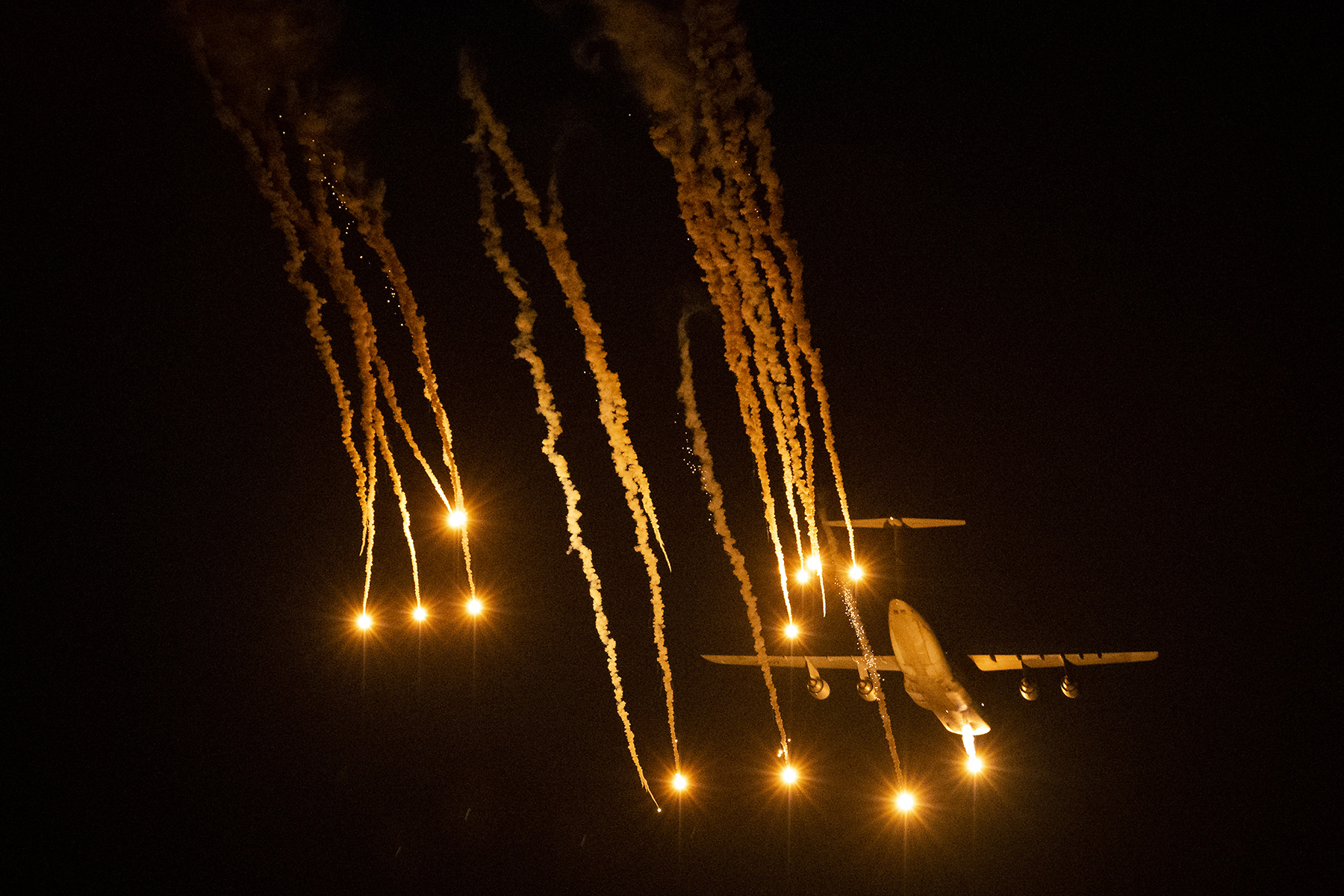
An Air Force C-5M Super Galaxy releases flares during a test at Eglin Air Force Base, Fla., May 12, 2021. The aircrew released the flares as part of a two-week defensive countermeasures test program with the 46th Test Squadron.
An Air Force C-5M Super Galaxy releases flares during a test at Eglin Air Force Base, Fla., May 12, 2021. The aircrew released the flares as part of a two-week defensive countermeasures test program with the 46th Test Squadron.
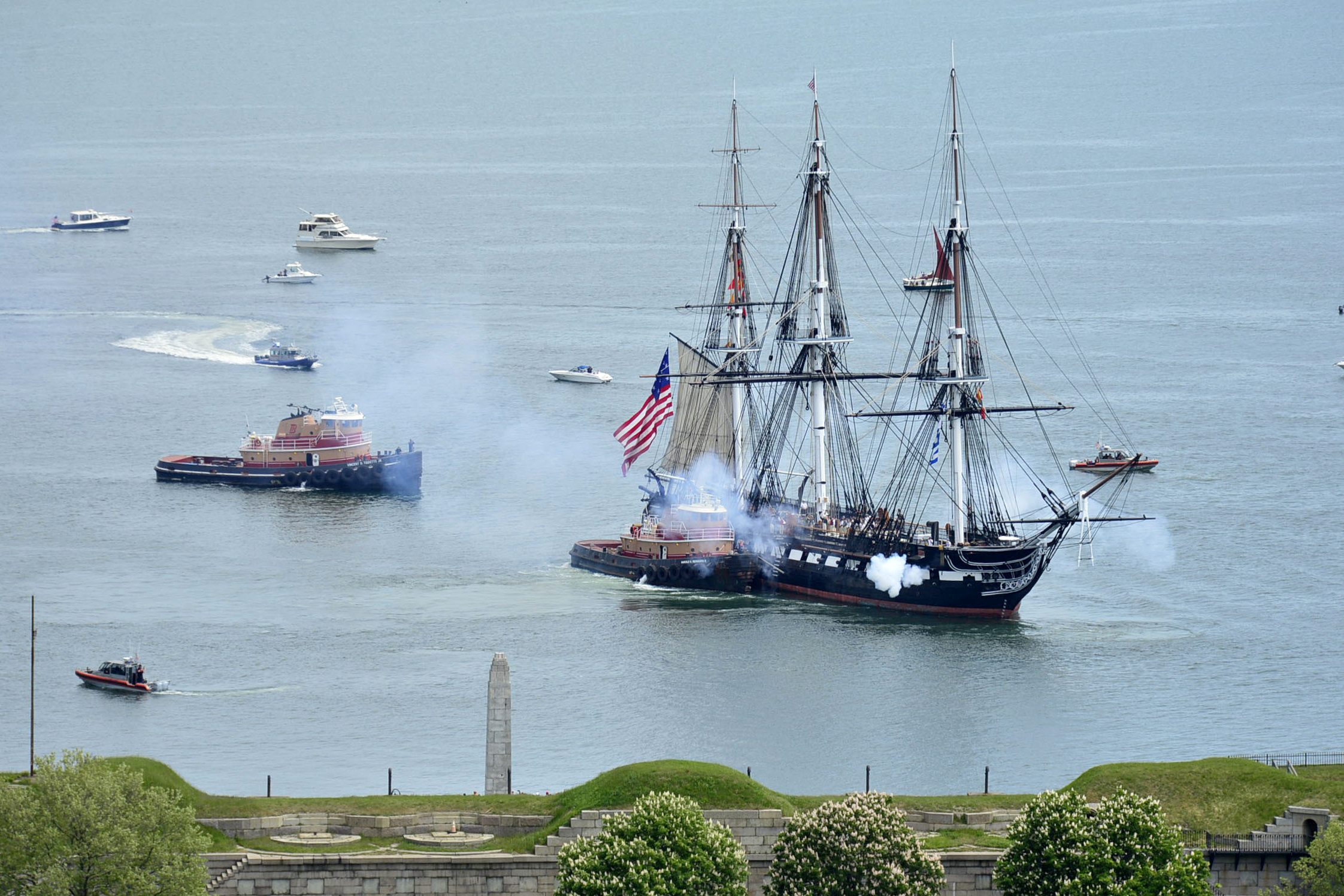
USS Constitution fires its cannons as it's tugged through Boston Harbor, May 21, 2021. Sailors stationed aboard the Constitution provide free tours to more than 600,000 people a year as they support the ship’s mission of promoting Navy history. USS Constitution is the world’s oldest commissioned warship still afloat.
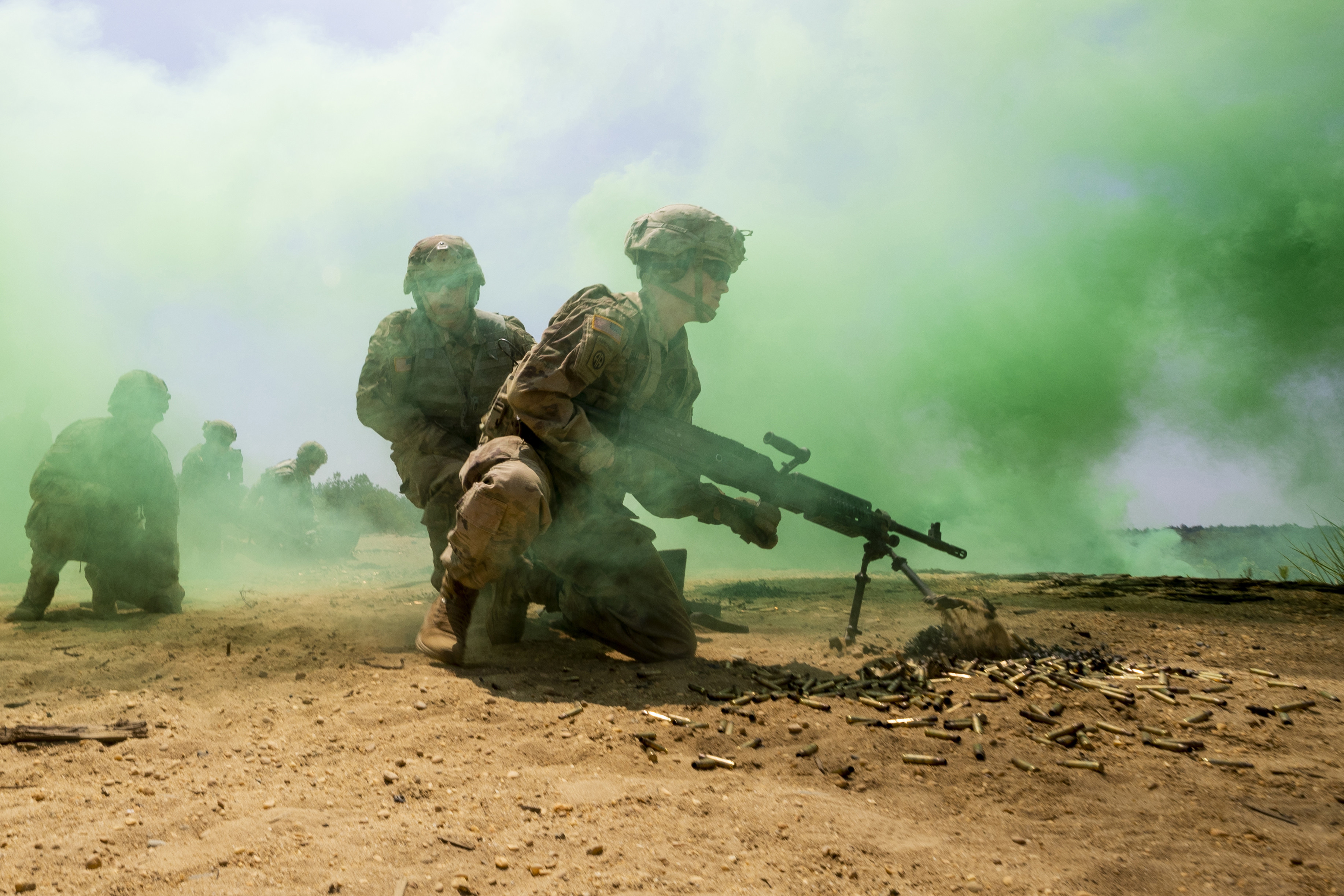
Soldiers take part in live-fire training during an infantry advanced leaders course hosted by the New Jersey National Guard at Joint Base McGuire-Dix-Lakehurst, N.J., May 21, 2021.

A CV-22 Osprey lands on the flight deck of the amphibious assault ship USS America during operations in the Pacific Ocean, May 20, 2021.

Navy Petty Officer 3rd Class Jessica Quinn marks a bingo card during downtime aboard the guided missile destroyer USS Roosevelt in the Atlantic Ocean, May 23, 2021.
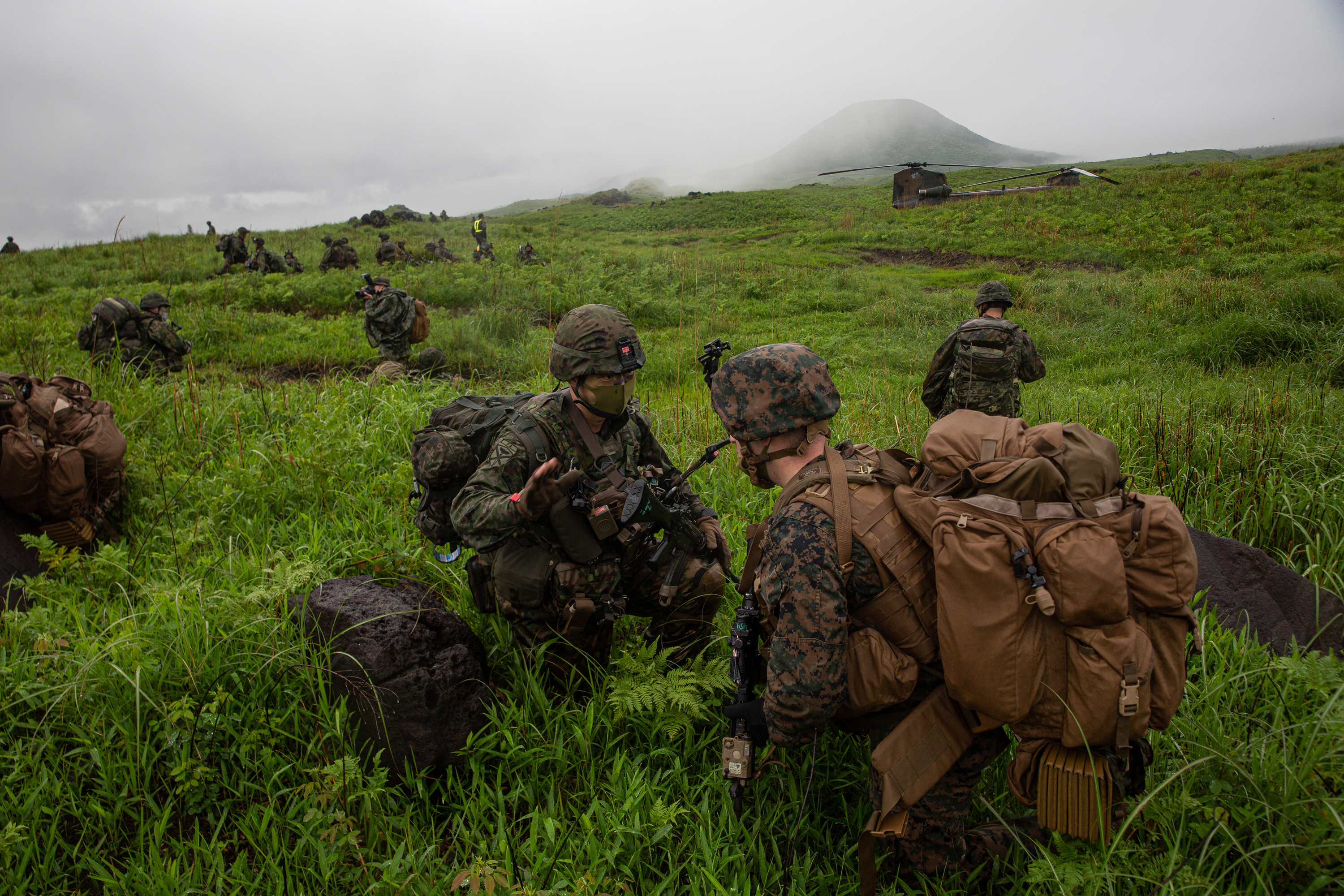
Marines and Japanese soldiers post security while conducting a multilateral assault during Exercise Jeanne D’ Arc at Kirishima Maneuver Area, Japan, May 15, 2021.

Army Sgt. 1st Class Brian Bowling, a critical care flight paramedic with the 129th Aviation Regiment, prepares COVID-19 vaccination syringes for distribution at a medical center in Kingman, Ariz., May 12, 2021. More than 850 Arizona National Guardsmen continue to assist at vaccination sites and food banks throughout Arizona.

Army Pvt. Antonio Ocampo, a wheeled vehicle mechanic with the 1348th Maintenance Company, Arizona Army National Guard, prepares boxes of groceries to be delivered to area residents at a food bank in Phoenix, Ariz., May 21, 2021. The Arizona National Guard is continuing to support food banks as well as COVID-19 vaccination sites statewide.
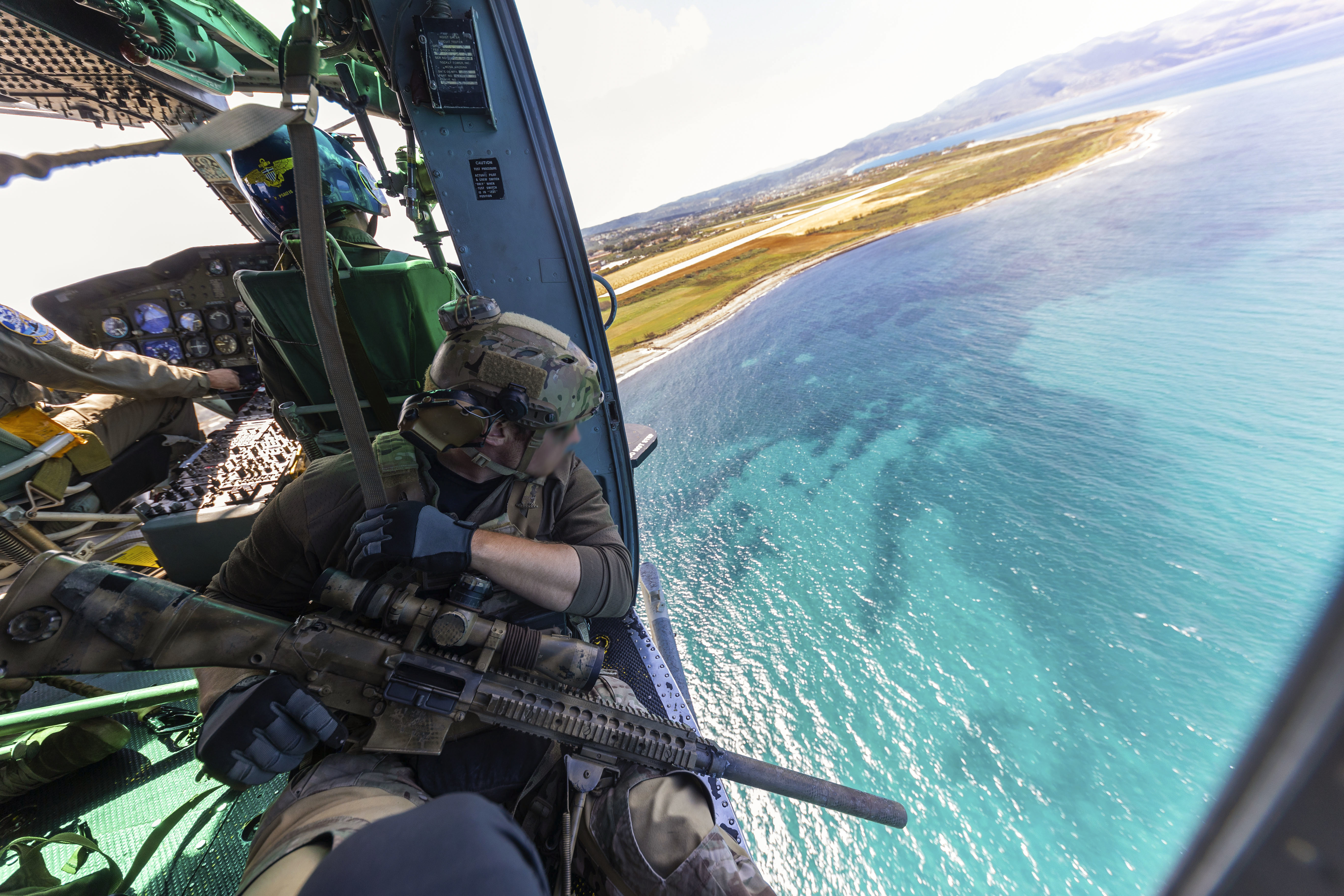
An Army Special Forces solider rides in a Greek helicopter during the NATO Maritime Interdiction Operational Training Centre Sniper Course in Souda Bay Greece, April 21, 2021. The course was designed to improve the accuracy of snipers from land, air and naval vessels.
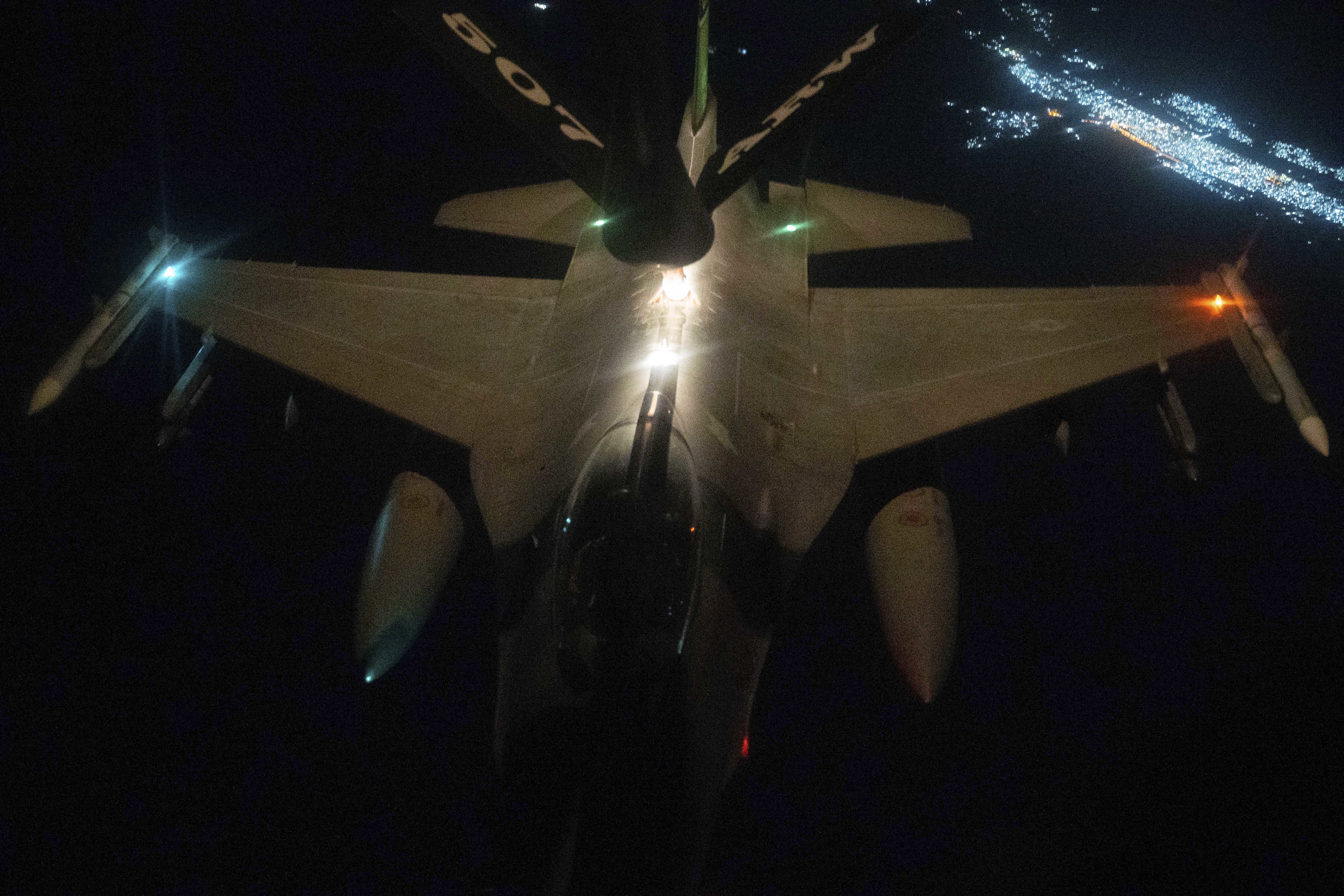
An Air Force Fighting Falcon receives fuel from a KC-135 Stratotanker over the U.S. Central Command area of responsibility May 9, 2021.
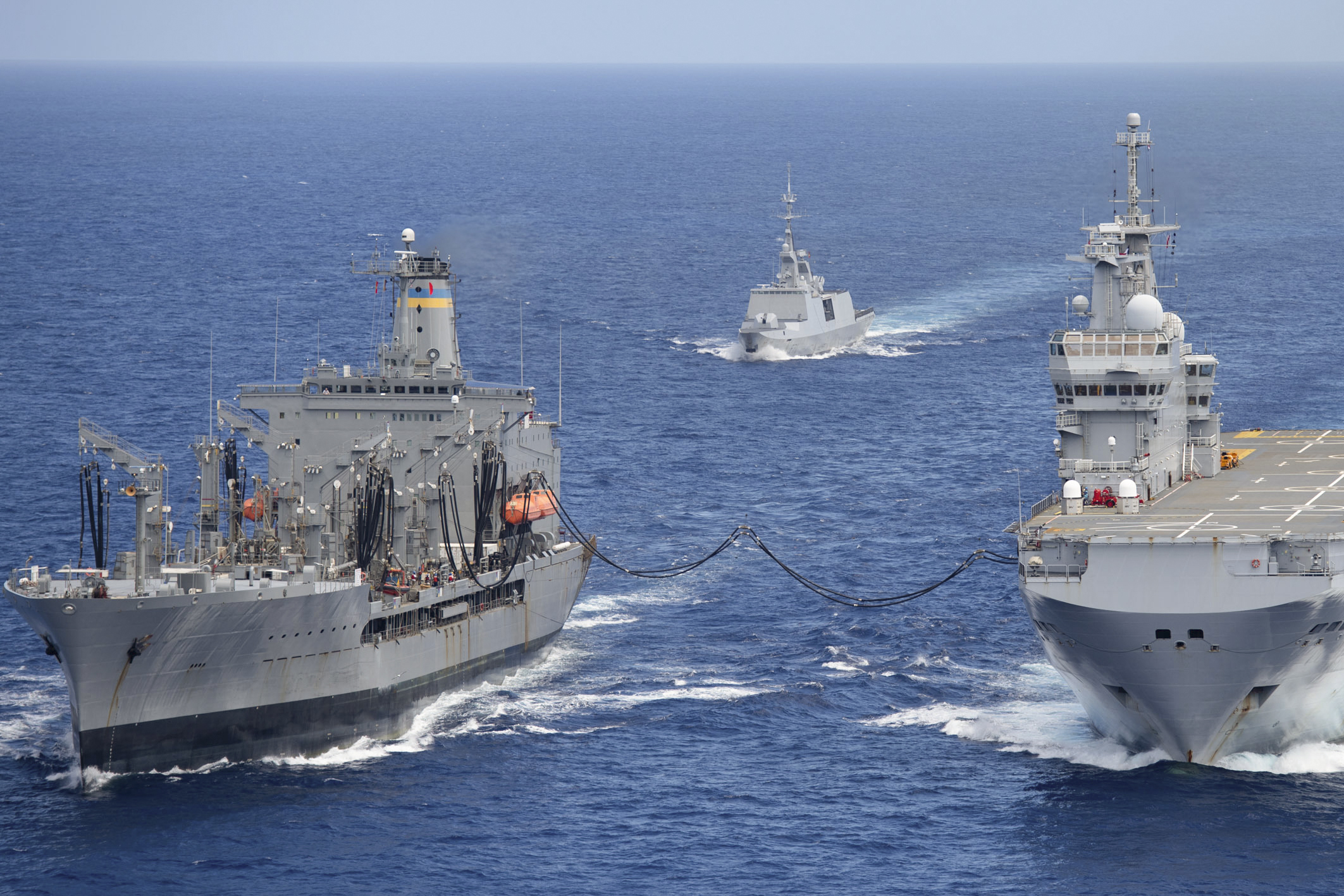
The USNS Big Horn, left, conducts a replenishment with the French navy FS Tonnerre while the FS Surcouf follows in the Philippine Sea, May 19, 2021.
May 24, 2021
I want to take this opportunity to thank the Soldiers and Airmen of the National Guard who for the last five months have been standing watch over the Capitol grounds in Washington, D.C.
They came here from all 54 states and territories, leaving behind jobs, homes and families, to bolster security at the Capitol in the wake of the dramatic events on January 6th. Many of them volunteered for this duty, and most of them did so on little notice. In good weather and bad -- sometimes cold and wet and tired -- they provided critical capability to the Capitol Police and local authorities.
These airmen and soldiers protected not only the grounds, but the lawmakers working on those grounds, ensuring the people’s business could continue unabated. They lived out in very tangible ways the oath they took to support and defend the Constitution.
It’s been a trying but telling year for the National Guard. Between natural disasters, civil unrest and an ongoing pandemic, our Guardsmen and women have been tested time and time again. And each time, they have performed magnificently. So magnificently, in fact, that it would be all too easy to take their service -- and that of their incredible families -- for granted. We won’t do that, of course, because we know we will continue to call on them in times of need.
As these troops depart for home and a much-deserved reunion with loved ones, I hope they do so knowing how much the nation appreciates their service and sacrifice -- and that of their families and employers. I hope they know how very proud we are of them.
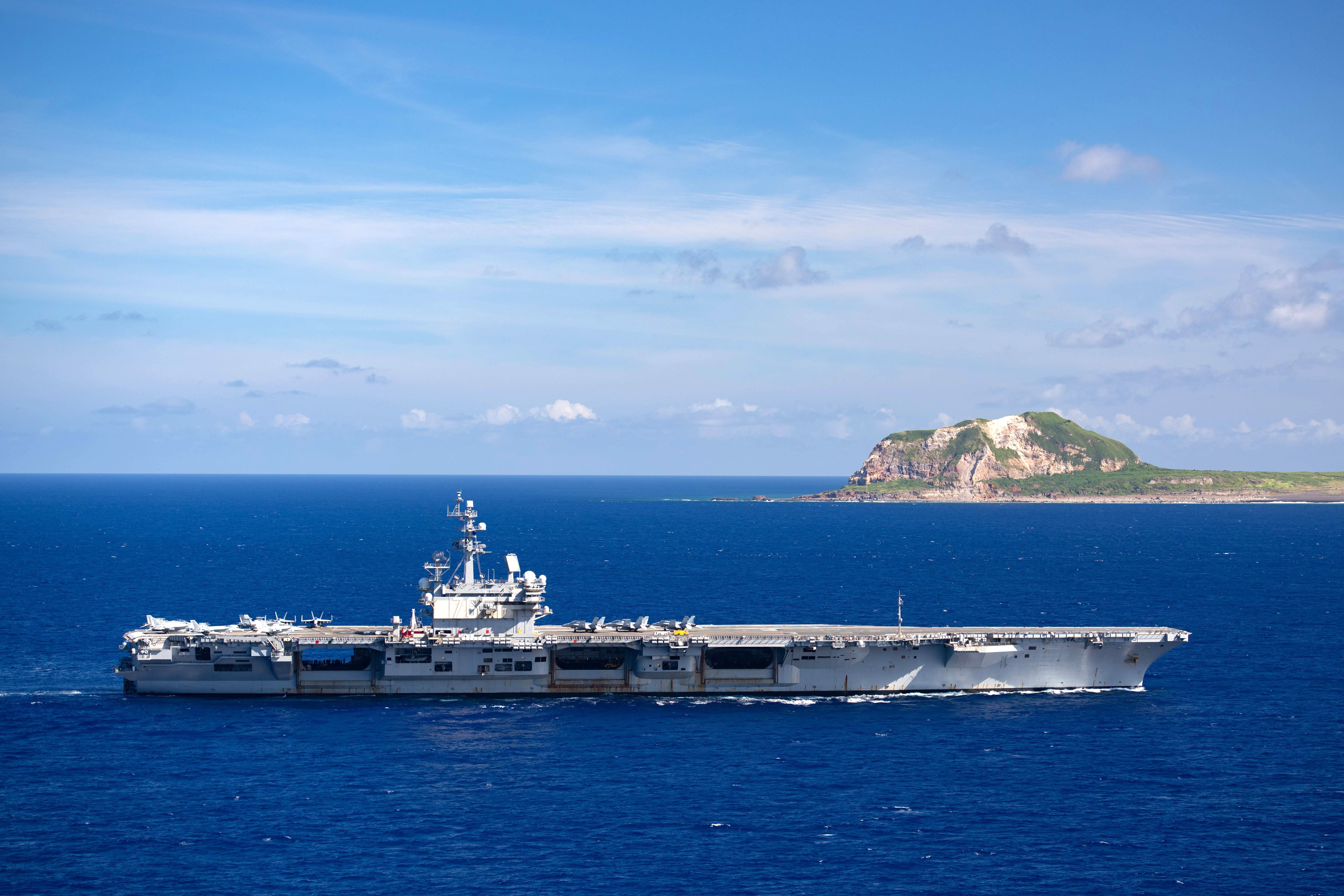
The aircraft carrier USS Ronald Reagan steams off the coast of Iwo To, formerly referred to as Iwo Jima, in the Pacific Ocean, May 22, 2021.
May 24, 2021 | , DOD News
Asian Americans and Pacific Islanders have shaped the history of the United States and have had their lives dramatically influenced by moments in its history. Every May the Defense Department joins the rest of the nation in celebrating Asian American Pacific Islander Heritage Month.
Navy Petty Officer 2nd Class Fa'atuatua Pinkston was born in San Jose, California, and grew up in St. Louis. Her mother was born in Apia, American Samoa.
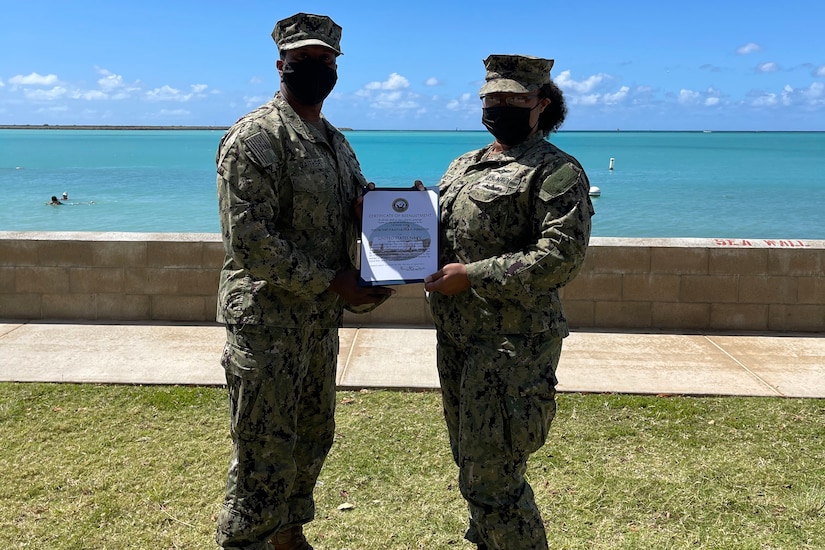
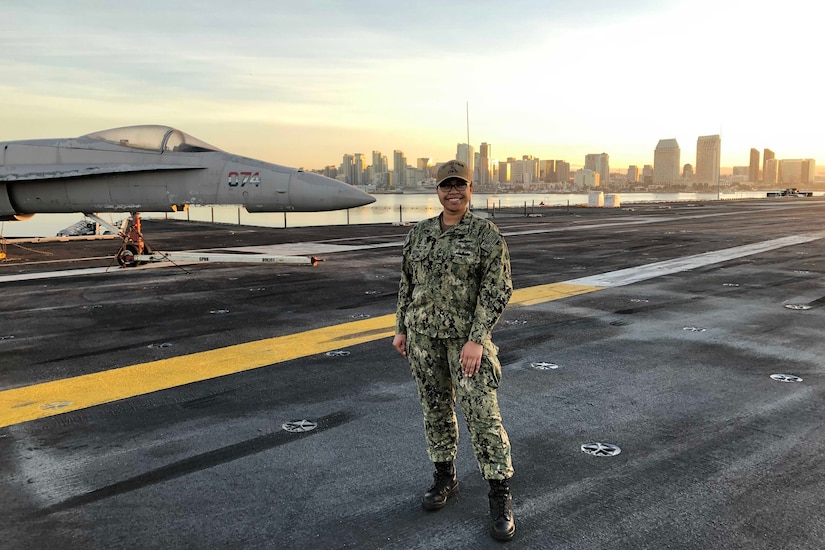
Pinkston said she's doubly proud of her heritage: Pacific Islander, from her mother's side, and African American from her father's side.
"To be an American in the armed forces and being able to express my heritage and culture is very honorable for me," she said. "It is very hard to find others of Samoan heritage but when we do find them, the pride is strong!"
Pinkston said she studied the island culture, which included tribal tattoos and native dances, with special historical meaning associated with those rituals. "A lot of people are excited to hear our interesting stories about those things."
Pinkston said she joined the Navy because she loves the ocean and was fascinated with the structure of the naval vessels. "Something about warships really pulled my interest."
As an information systems technician, she said she manages everything from communications systems to computer networks.
After boot camp in Naval Station Great Lakes, Illinois, she served aboard the USS Carl Vinson aircraft carrier from 2016 to 2019, homeported in San Diego.
She's already been on two deployments in the Pacific and participated in the allied, fleet-wide Rim of the Pacific, or RIMPAC, Exercise.
RIMPAC, is the world's largest international maritime warfare exercise. It's held biennially during June and July of even-numbered years in Honolulu. The only exception was 2020 when it was held in August.
After her time aboard the carrier, Pinkston was stationed at the Defense Intelligence Agency in Pearl Harbor, Hawaii. A few weeks ago, she detached from that command and soon will be assigned to the Explosive Ordnance Disposal Group in Virginia Beach, Virginia.
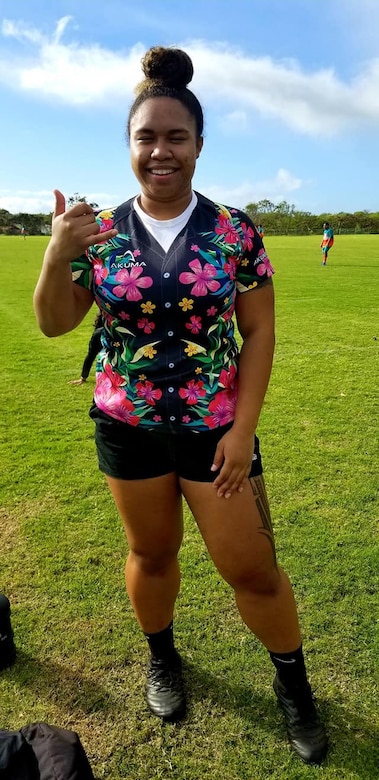
Pinkston is also a gifted rugby player, on the Navy Women's Rugby team.
Growing up, Pinkston said she always knew that rugby was her sport of passion but there were no nearby teams in her St. Louis neighborhood.
It wasn't until she was stationed in San Diego that she was able to start playing rugby after learning the basics.
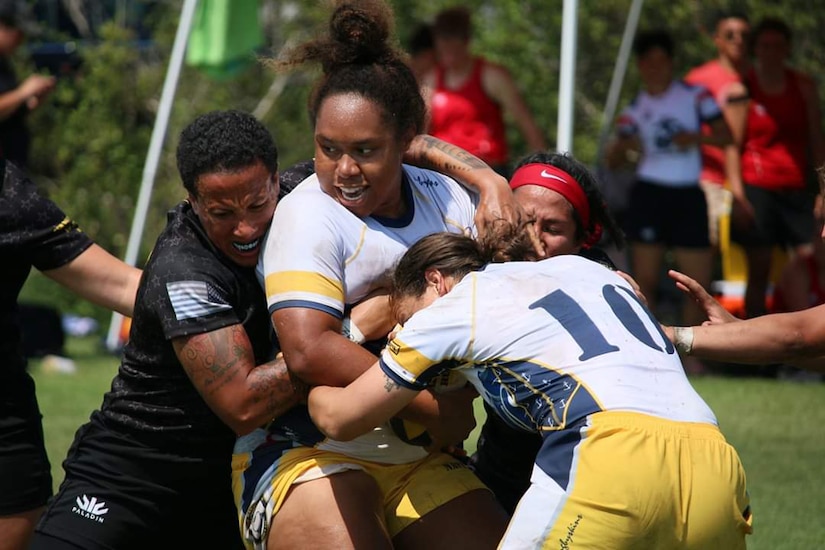
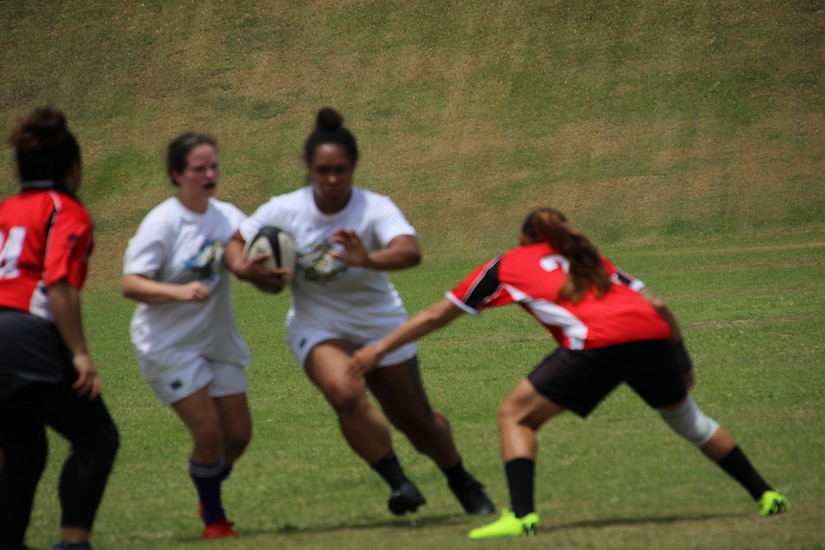
"Rugby has definitely made me a better sailor and person overall," she said.
Rugby is a physical as well as a mental sport. It helps build teamwork and leadership, both important traits to have in the Navy, she said.
"Rugby made me realize my true physical strength, power and potential. I am a beast! I am unstoppable! I am what I envisioned myself to be and rugby helped bring it out. It also helped me dig deeper into my roots as I can compete against women bigger than me and still hold my ground or push further! It has made me powerful and unlocked that skill! Rugby has made [me] confident in every obstacle I take on! If I can take on rugby, I can take on anything!" she said.
Pinkston's future plans are to continue excelling in her Navy career and taking advantage of college courses and certifications and other resources that are offered. She added that as she grows as a leader, she'd like to mentor younger shipmates.May 22, 2021
SECRETARY OF DEFENSE LLOYD J. AUSTIN III: Thank you so much General Williams and thank you for that warm introduction. You know, it's always tough to spend behind General Williams. He's such a -- such a great speaker. Every time I come back here it feels like I'm coming home. By the way General, what do you call this group of fine men and women that I see assemble on the field in front of us?
GENERAL ANTHONY WILLIAMS, SUPERINTENDENT OF WEST POINT: (inaudible) Warriors Mr. Secretary.
SEC. AUSTIN: OK. “Soup” says he calls you warriors. I'm going to call you Lieutenants. Is that OK with you?
(Laughter.)
(APPLAUSE)
This is a big deal guys. I want your Secretary of Defense to be the first to call you Lieutenant. So – Hooah.
(APPLAUSE)
It is great to see Senator Reid and his classmates from the class of 1971. Congressman Womack, Acting Secretary Whitley, General McConville and so many others of the supporters of this -- this exceptional academy. And let me again thank General Williams and Sergeant Major Coffey and all the faculty and staff here at West Point for all that you do and all that you have done to uphold the traditions of this extraordinary place and for all that you have done for the newest officers in our United States Army, and that brings me to the Class of 2021. You know, the next time that I see your Commander-in-Chief and I see him often. I will report to him some very good news and that good news is that reinforcements are on their way.
(APPLAUSE)
Let me give a shout -- a quick shout out to your First Captain, Lieutenant Reilly McGinnis.
(APPLAUSE)
I am particularly proud that this year senior cadets from West Point, the Air Force Academy and the Naval Academy are all women.
(APPLAUSE)
Lieutenants, I hope that you're feeling proud of yourself because we are certainly proud of you. Your graduating under exceptionally tough circumstances but you fought through from R-day to today and you fought through to take your place in the "Long Gray Line" so congratulations.
(APPLAUSE)
You know this isn't just your day. It also belongs to the families and loved ones who have done so much to get you here. Amid the pandemic when so many families have suffered aching losses, it's particularly powerful to have all of you here with us today. Your families have worried and sacrificed and told you to call your mother. They're not going to stop worrying about you now but they're also not going to stop being proud of you. They've given their love and been your biggest cheerleader so let's take a second to turn that around. Everyone, let's give it up for your families.
(APPLAUSE)
See some proud families up there waving and you should be waving. You've done well. Lieutenants it doesn't seem like that long ago that I was sitting where you're sitting. So I'm congratulating you not just as the Secretary of Defense but also as a member of the Class of 1975. You know, I think it's finally safe to -- to admit that for much of high school I never really considered West Point, and still my family has a strong tradition of military service. My father served proudly in World War II as a truck drive in the Army Air Corps, and I can still remember seeing pictures of him in his uniform as a young Corporal. And one of my uncles was the first African-American Green Beret that I ever saw, you know, he came home wearing that green beret.
(APPLAUSE)
Yes, he came home wearing that green beret and those jump boots and I said, you know, I -- I got to do that. I got have some of that. So -- so I grew up wanting to serve at some point. But I also grew up being Catholic and fascinated with the idea of going to Notre Dame and joining the Fighting Irish. And I wound up getting into Notre Dame on a scholarship as well as being offered a place at West Point. So my father called me in one day and he said, let's talk our way through this. This is a pretty important decision. He said listen, if you go to Notre Dame, even with that scholarship, it's still going to cost me some money.
(Laughter.)
But if you go to West Point, it would be quite an honor.
(Laughter.)
And not only will it not cost me money, but they'll also pay you every month.
(Laughter.)
And you'll get an opportunity to do something that very few people in life get to do. You know, you can always go to graduate school at Notre Dame but you only get one chance to go to West Point.
(APPLAUSE)
So we talked some more and then my dad asked me, he said, OK, so son? What do you want to do? I said that's easy dad. I want to go to Notre Dame.
(Laughter.)
And he said, OK son, let's try this conversation again tomorrow.
(Laughter.)
And I guess you can tell how that played out. You know, dad's looking pretty smart about right now. I'd never set foot on West Point when I started out here. I'd never been to the state of New York. In fact, the furthest that I'd ever been, north I had ever been was north Georgia. I paid for my own flight to get here from Georgia and -- and it was the first airplane that I ever flew on. I landed in New York City in 1971 and let me tell you, it wasn't just different from my hometowns in Georgia and Alabama. It was another planet. And so the next day I got on a bus and I headed up here and this academy on the Hudson looked like my second new planet in two days.
It was unlike any place that I've ever seen in my life. The grounds were perfectly groomed and they seemed to be filled with perfect people. You know, I still remember the rising seniors who gave us our first instructions. They were athletic and brilliant. They spoke flawlessly with no pauses or stumbles. I don't think they ever even blinked. So they made quite a first impression on us, and I found myself thinking, there is no way that I can ever be that good. And like many of you, my goal was just to make it through the first day and then to the next day and the next week and the next month. I sometimes wondered what good could possibly come out of all of this intensity, and I remembered being given just a few minutes to read the newspaper in the morning and then being prepared to discuss the items in the newspaper with the upperclassmen.
And I thought, how does that matter? How can that possibly make me a better officer? And now, as Secretary of Defense, I find myself with a stack of intelligence assessments and -- and international news clippings that I race through every morning and as I do I think of West Point and I chuckle. That's just one of the skills that I learned here and it turned out, by the way, that the upperclassmen who gave us such a fine impression on that first day had actually been rehearsing for weeks. And that taught me a lifelong lessons in the importance of serious preparation. I learned the -- I learned that focus and discipline are really important. I learned the importance of mastering your trade, and above all I learned the importance of being -- of becoming a team member.
Lieutenants, on challenging -- challenging deployments, you will have to work together with your teams to survive and succeed, and this institution excels at instilling exactly that spirit. You've learned how to follow with loyalty. You've learned how to lead with honor. You've learned how to question with rigor. You know, looking out at all of you I see the vanguard of a generation. I see patriotic, committed young people coming of age at a hinge in history, who grew up never knowing anything other than a nation at war. And so now, you're about to graduate into a changing country and a changing world where many of the old ways of doing business don't hold up anymore. You're seeing raw divisions at home and the painful aftermath of the pandemic.
You may also have heard some of America's competitors claim that the future belongs to a model that promises wealth as it stamps out freedom. You're watching as America's longest war winds down, and you're seeing technology change the character of war itself. And even as big and rising powers jostle and compete, you're seeing new threats from pandemics to terrorism, to cyber weapons, and you're seeing those threats race across borders like a gale. You know, I might -- I just might have a bit of insight into what you're facing. A democracy under strain, economic fall out, painful issues of racism and discrimination, social tensions and the end of a long and controversial war. Well, that all sounds pretty familiar to those of us from the Class of 1975.
So let me assure you of something, and this is from very personal experience. No matter how strong the headwinds, West Point will keep you on course. It worked for my class and it will work for yours. Some things change, but the skill set taught here is made to last because it teaches you to adapt. It teaches you to stick with it as your class model says until the battle is won. Lieutenants you --
(APPLAUSE)
Lieutenants, you are ready. In this young century, adaptation is the name of the game. Leadership is the name of the game, and West Point has given you what you need to tackle any whether channel -- challenge to embrace any honorable mission. So yes, you are graduating in extraordinary circumstances but let's be clear, extraordinary circumstances are what the United States Army does.
(APPLAUSE)
On the face of it, there may -- may -- may seem not to be much in common between the forces that George Washington led along the Hudson and between the units that I've led in the Middle East. But when we are at our best, we are true to our founding values and we don't fight for a tribe or for a political leader or for conquest or for plunder. No, when we're at our best, we fight to defend our republic. We fight to defend our democratic ideals.
(APPLAUSE)
We fight to defend human rights, human dignity, human liberty.
(APPLAUSE)
Take it from someone who spent 41 years in an Army uniform. I've seen the problems but just like the nation it defends, the United States military strives to be a more perfect version of itself. And I will take that over our competitors any day.
(APPLAUSE)
You know, you serve a country that sees the use of force as a last resort. You serve a country that loves liberty. You serve a country that rejects bullying and aggression and that seeks a world rooted in rules that favor the advance of freedom. That stands for democracy and decency at home or abroad. You serve a country that works hand and hand with our old allies and new partners. That cherishes the rich tapestry of the backgrounds of its citizens. That strives to grow and to man and to reach the better angels of our nature. You serve a country that knows, as our president has said, that we are strongest when the power of our example matters more than the example of our power.
(APPLAUSE)
So since becoming Secretary of Defense, I've worked hard with my team to put those principles into place. We're working urgently to help bring this global pandemic -- help bring this global pandemic to an end. We've focused on the security challenges presented by China. We're working hand and hand with our allies and partners to strengthen a rules based international order that advances a cause of human freedom. And we are driving hard to ensure that we have the right capabilities and the right operational concepts and weaving them together in new and network ways to produce a truly integrated 21st century vision of deterrence. And we're doing all of this while making sure that we take care of all of our people, to grow and to develop the talent that we need for the -- for the future and to ensure that everyone who serves can do so in an environment that's free of hate and harassment and discrimination.
(APPLAUSE)
And that ladies and gentlemen is not just a matter of national principle, it is a matter of national security. And I --
(APPLAUSE)
You know I learned all of this at this great institution. This great engine of leadership and I kept learning from West Point long after I graduated. I lived through a lot between my last day here and my first day as a general officer but there wasn't a day when I didn't draw on my years here at West Point. And you're time here will serve you incredibly well over the decades to come as well. You know, most of all, I still -- I still depend on the values that I learned at West Point. I still believe that leadership demands character. I still believe in telling the truth. I still believe in treating people with dignity and respect. I still believe in serving your country and I still believe in the tenets of our democracy and the words of our Constitution.
(APPLAUSE)
Those -- those values are the lasting -- lasting legacy of West Point. They are the guideposts that will steer you right when you face the hardest decisions of your lives and some of you 2nd Lieutenants will have to -- will have to make life and death calls. Those values will see you through. Those values will guide you home. And you know what? You're prepared to make those decisions. You may not know it yet, but you are ready to be leaders. The values that we uphold are the values that will hold us up, and the Department of Defense is committed to doing everything in its power to support you when you serve and when you deploy and when you come back. And we're also to help your families on the home front because we know that when a soldier deploys their loved ones are on the front lines too.
Now, one word of advice. Hold on to your academy friends. They're a huge part of what you'll carry forward. My West Point buddies and I still remember going into New -- into New York City on the very few weekends that we could get off post. Back in those disco days of 1975, we were surrounded by bell bottoms and big hair and wide collars. And I can tell you up front, just for the record, that I never wore any of those.
(Laughter.)
Obviously, just kidding. We still laugh about those times but there was plenty that we didn't laugh about. We didn't laugh about the struggles of getting through ranger school or airborne school or the strains on the home front of a life of serving your country.
But through it all, we always knew that the friends that we made here were the kinds of people that you'd want to be in a fox hole with, and I can promise you that we're going to need your courage and your commitment in the future. You know when I graduated, Vietnam ended and my classmates and I went for a long time, which -- in which many of us weren't involved in any kind of a major conflict. But after September 2001, this country found itself in a continuous fight for almost 20 years and I wound up commanding troops in combat at the one star, two star, three star and four star levels. Now, America's goal is to always lead with diplomacy and to deter conflict whenever we can, but if we are forced to defend ourselves, we will win and we will win decisively.
(APPLAUSE)
Lieutenants, our job is to fight and win our nation's wars and that means that nothing that you have learned here is solely academic. Because I can pretty much guarantee you that something that we're not anticipating is going to happen -- happen on your watch because we live in an imperfect world. One in which patriotic young men and women still learn the ways of war and volunteer proudly to keep their fellow citizens safe, and we're grateful to all of you for standing up and standing tall. Now we don't get to choose our times but we do get to shape our times. And in our democracy, that isn't just a job for those at the top, it is the responsibility for every citizen and it is a mission for every soldier in the United States Army.
Lieutenants, your hour will come and when it does the eyes of the nation will turn again to the men and women of West Point and our entire military. In the course of the republic and the depth of our security will be shaped again by you and by your teammates in the other services until the battle is won.
(APPLAUSE)
Yes. Those who came before you are so proud to see you sitting here today and we believe in you, in each and every one of you. And we know that you will prevail and we know that you will make us proud for democracy, for liberty, for the Constitution and for duty, for honor, for country. Thank you and congratulations again Class of 2021.
(APPLAUSE)
May 21, 2021 | , DOD News
Navy Petty Officer 2nd Class Denise ''Tolo'' Atualevao was born in Honolulu. Her mother, Koroseta Ululima Atualevao, and father, Tafale Atoa Atualevao, are both from American Samoa.
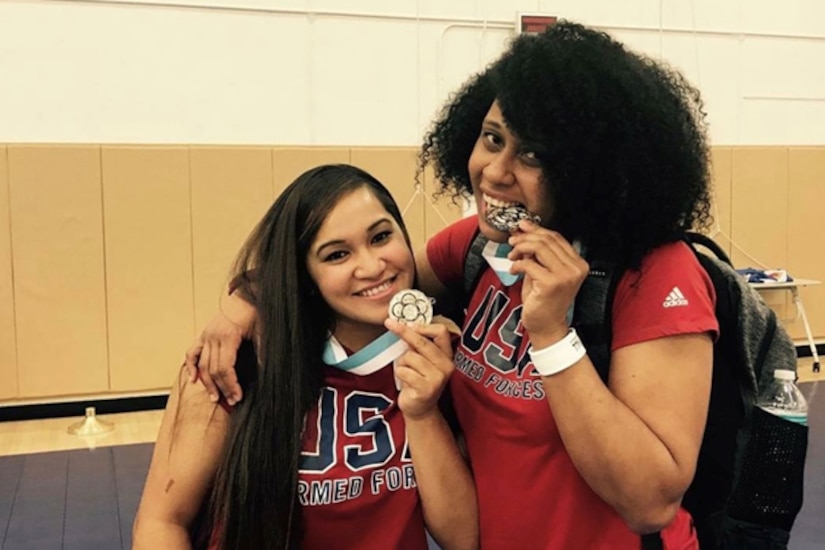
Atualevao's mother grew up in the villages of Nua and Se'etaga and her father in the village of Leone.
"I am a proud full-blooded Samoan teine," she said, noting that teine means girl in Samoan.
Although she was born in Hawaii, Atualevao grew up in San Diego.
However, Atualevao said she was fortunate to have been able to visit American Samoa twice a year during summer and winter breaks, every year in college until 2014, when she graduated from Graceland University.
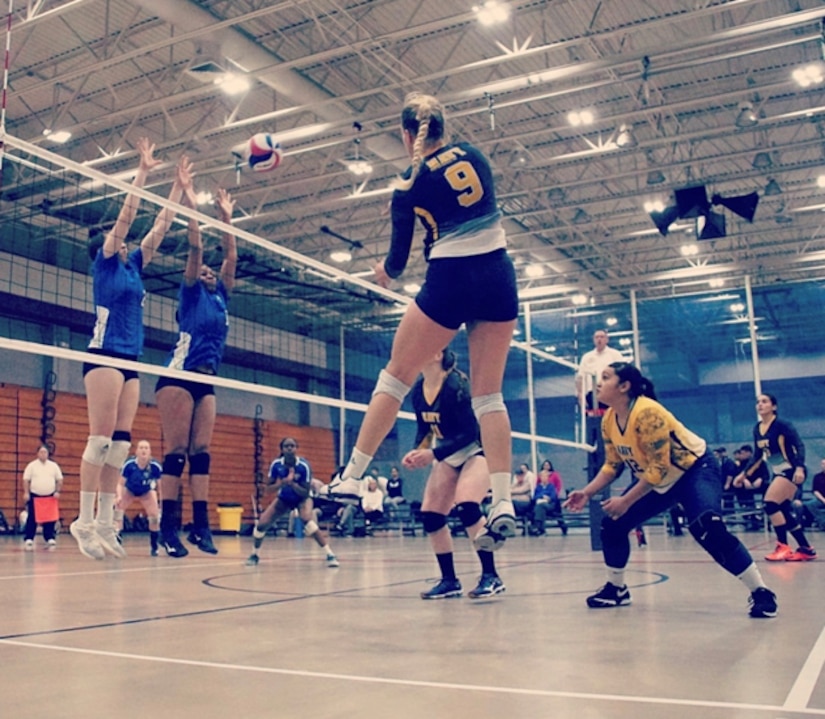
Atualevao said she is fluent in the Samoan language and is knowledgeable about the history and culture of the island.
Since enlisting in the Navy six years ago, Atualevao has worked as a hospital corpsman, stationed for her first two years at Naval Hospital, Pensacola, Florida, then three years on the USS Blue Ridge, an amphibious command ship, homeported in Yokosuka, Japan. She is currently working at Naval Medical Center Point Loma Clinic in San Diego.
Besides working as a corpsman, Atualevao is also a member of the All-Navy Women's Volleyball team.
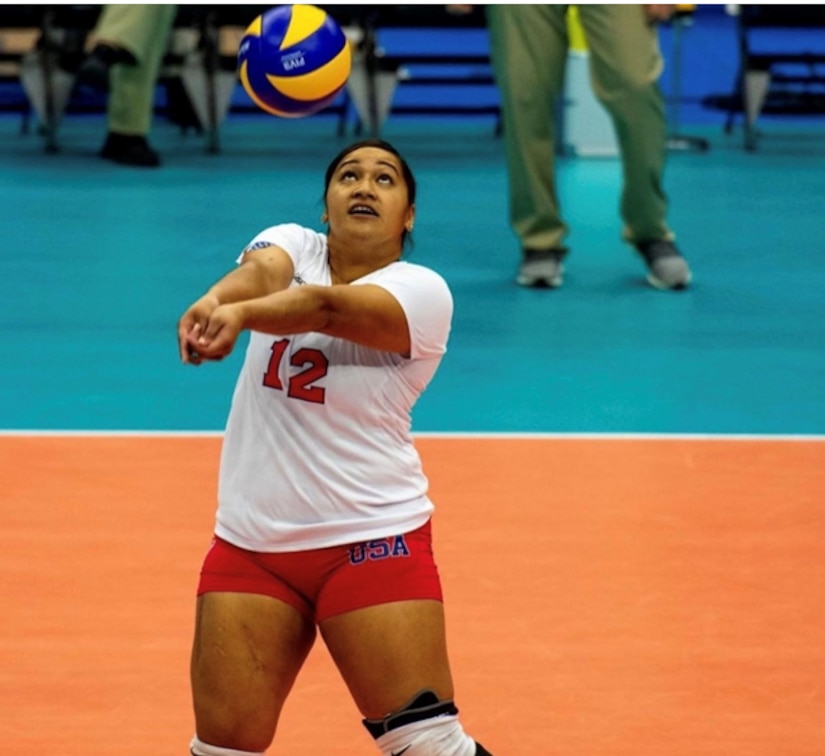
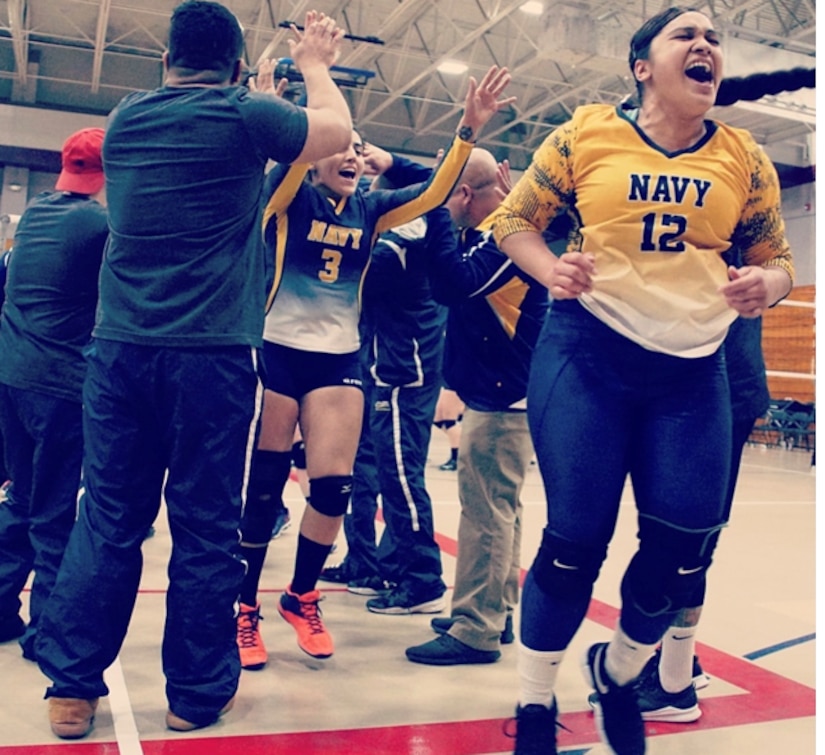
Playing volleyball has given her an added boost in competitiveness, teamwork, leadership and confidence — attributes that are so important to have in the Navy, she said.
"Being one of the team captains has definitely helped build my leadership skills and to not be afraid of whatever adversity we might face together," she said.
Making the cut for the team wasn't too difficult, because Atualevao said she's been playing volleyball continuously ever since she was in the third grade.
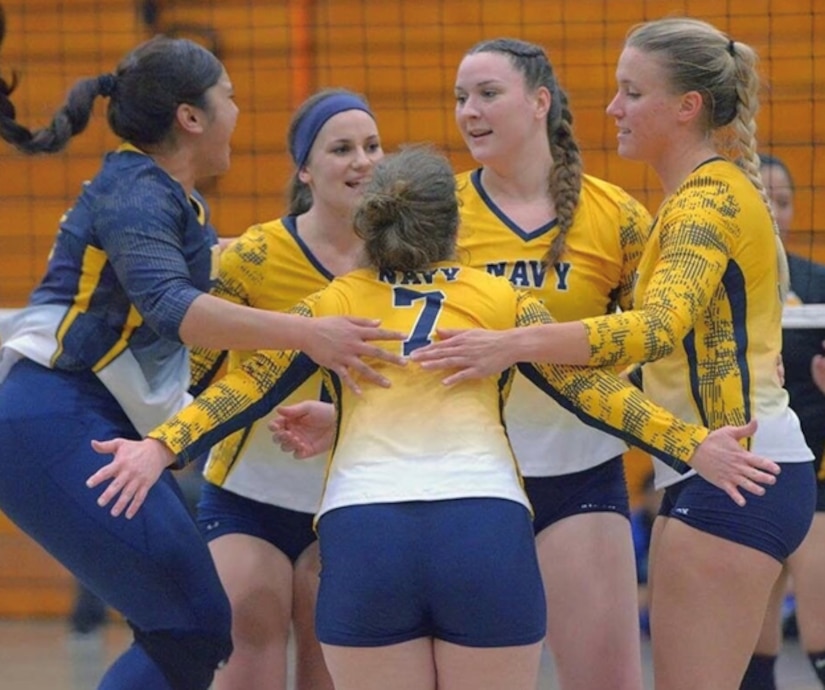
Since her team plays against other teams from around the world, Atualevao said she's made a lot of friends in other countries.
Atualevao said her future goal is becoming a health care
administrator as a civilian, a Reserve naval officer as a health care
administrator, and opening a club for Polynesian volleyball players.

A soldier jumps into a pool while carrying a weapon to prepare for a jungle operation training course at Schofield Barracks, Hawaii, May 14, 2021.
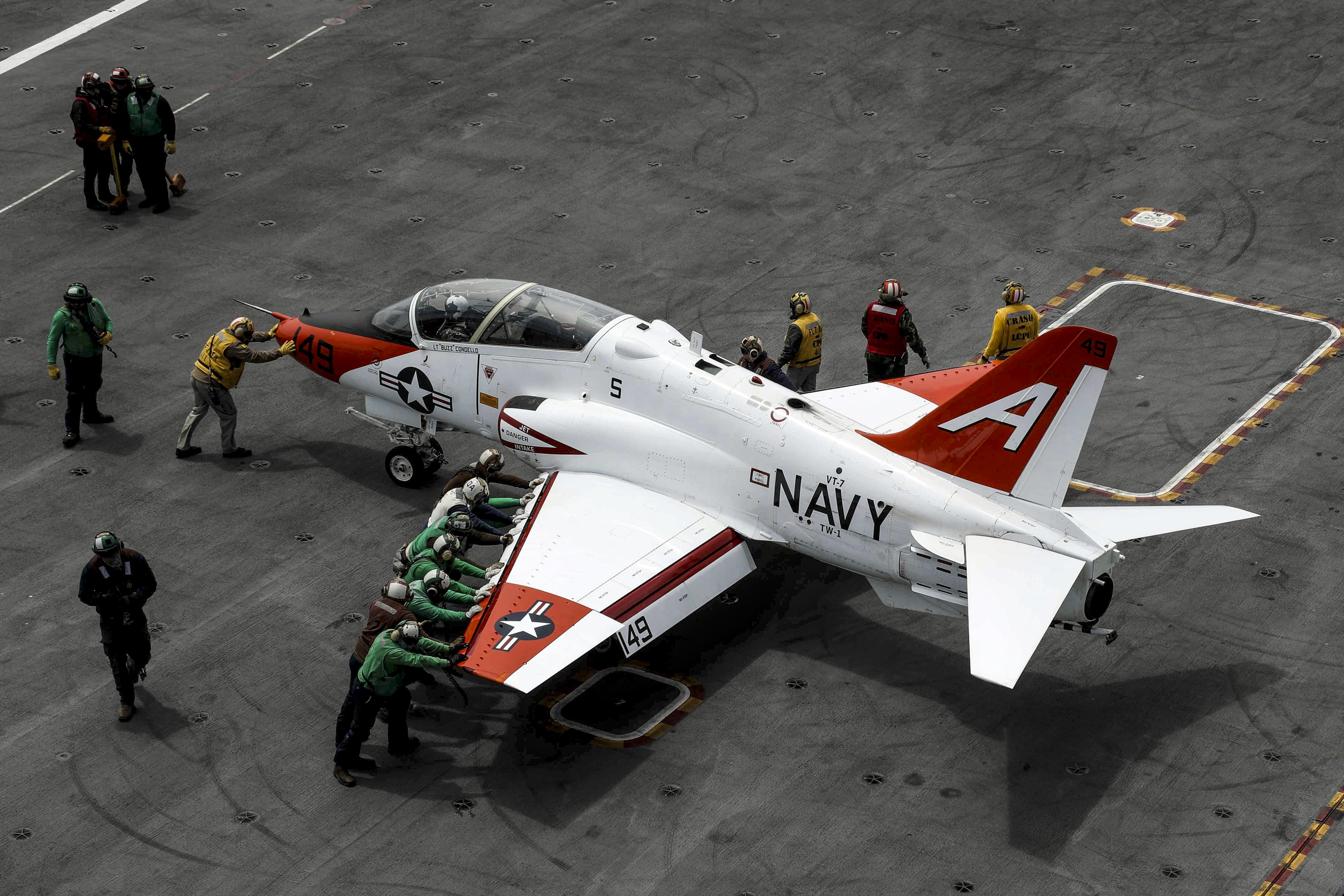
Sailors push a T-45C Goshawk toward the runway to prepare for takeoff aboard the aircraft carrier USS Abraham Lincoln in the Pacific Ocean, May 16, 2021.

The Blue Angels, the Navy’s flight demonstration squadron, perform the low break cross maneuver during a training flight at Naval Air Facility El Centro, Calif., Feb. 26, 2021.


 Posts
All Comments
Posts
All Comments
Posts
All Comments
Posts
All Comments


