

Army Spc. Keith Davis assists patients with nasal swab samples for the COVID-19, community-based collection site in Duckwater, Nev., Nov. 10, 2020. Davis works with Task Force South’s coronavirus strike team and assisted the Shoshone Tribal Health Clinic while testing over 70 members of the tribal community.

Soldiers participate in a fitness assessment during training in Djibouti, Nov. 3, 2020.

An Air Force MQ-9 Reaper sits on the runway at Creech Air Force Base, Nev., Oct. 16, 2020.
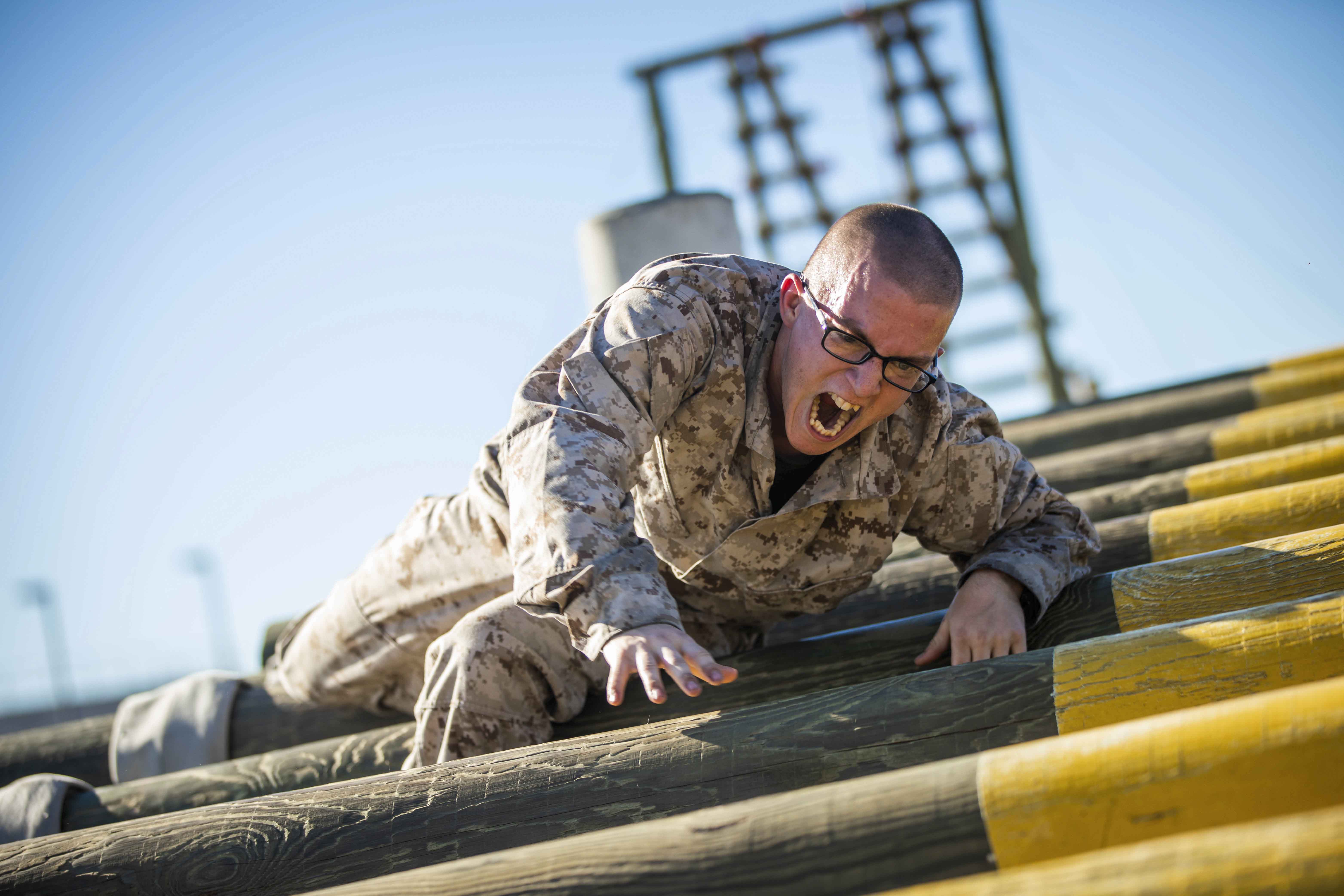
Marine Corps Recruit Taryn Bunton navigates an obstacle as part of a confidence course at Marine Corps Recruit Depot San Diego, Nov. 16, 2020.
Nov. 18, 2020
ANNOUNCER: Good morning, acting Secretary Miller and distinguished guests. We are gathered today for a signing ceremony to implement the reforms outlined in Section 922 of the fiscal year 2017 National Defense Authorization Act.
For nearly four years, the Department of Defense has planned and prepared to implement this important legislation. It not only strengthens the role of the assistant secretary of defense for special operations and low-intensity conflict as a senior civilian for special operations within the department, but it also reinforces the partnership with the commander of the United States Special Operations Command.
Ladies and gentlemen, we will have opening remarks from the acting undersecretary of defense for intelligence and security, Mr. Ezra Cohen.
ACTING UNDER SECRETARY OF DEFENSE EZRA COHEN-WATNICK: Thank you, Jim.
Mr. Secretary, on behalf of the men and women of U.S. Special Operations, especially Army Special Operations, welcome home. We are honored that you have returned to your roots on this historic day on hallowed ground.
Today, the Department of Defense has started the process of formalizing what we have long known – the fundamental role of U.S. Special Operations in defense and foreign policy by elevating Special Operations forces to a level on par with military departments as authorized and directed by Congress.
As we enact these reforms, we follow the vision of President John F. Kennedy, who predicted the rise of Special Operations nearly 60 years ago. He foresaw, quote, "another type of war, new in its intensity, ancient in its origin, that would require a whole new kind of strategy, a wholly different kind of force, forces which are too unconventional to be called conventional forces, which are growing in number and importance and significance."
President Kennedy gave these remarks at the opening of the nuclear age, when the Pentagon was primarily organized to plan and direct large conventional operations against superpowers, not special operations short of overt declared conflict. The global demand for Special Operations forces then and now has confirmed President Kennedy's foresight. And now, under the leadership of President Trump, we are fully realizing President Kennedy's prescient view of Special Operations forces.
It is fitting that we are again entering an era of great power competition as we gather to affir -- affirm the importance of special -- the Special Operations community. Then, as now, I know Special Operations forces will play a vital role, and by the historic reforms we have enacted today, we will ensure Special Operations forces has a civilian advocate commensurate to the secretaries of the other military departments. I am honored to serve as your service secretary. Thank you very much.
(APPLAUSE)
ANNOUNCER: Ladies and gentlemen, acting Secretary Miller. (inaudible).
ACTING SECRETARY OF DEFENSE CHRISTOPHER C. MILLER: Here, Jim, you take this. Got my big book; going to speak for a couple hours.
Good morning, everyone. Wow, what a week. That old cliché, if you want a friend in Washington, D.C., get a dog may be true for many. But for me, I know I can come to Fort Bragg and be with my brothers and sisters in Special Operations forces, who will always have my back.
It is an honor to be here on this hallowed plaza, where we are reminded of the enormous sacrifices and burdens shouldered by our nation's special operators. These brave heroes were first to the enemy's doorstep, Mark, in the aftermath of the September 11th attacks in 2001. Only weeks after that dark day in our nation's history, they plunged into danger to bring justice to the terrorists who took thousands of innocent American lives, and they will be the ones who continue to deny safe haven to violent extremists and maintain unrelenting pressure on the road to stability and lasting peace in Afghanistan and Iraq.
I know firsthand the caliber and character of these brave service members, being served -- having served as an Army Special Forces company commander under then-Colonel John Mulholland during Operation Enduring Freedom -- and with Mark, of course. I also served two tours in Iraq, including during the 2003 invasion, and later, in 2006 as a Special Forces battalion commander, 2nd Battalion, the Special Forces group -- absolutely the best Special Forces battalions in the history of the world -- no offense. I spent the remainder of my career just as committed to defeating terrorists and those that would help harbor them.
Today, we are gathered before a monument that symbolizes the tremendous cost of these conflicts and our relentless vigilance. In light of the countless sacrifices made by hundreds of thousands of American service members and our enormous progress over nor -- over nearly two decades, we are now bringing these conflicts to their successful and responsible conclusion under the bold leadership of President Trump.
Yesterday, the president ordered the downsizing of our force presence in Afghanistan and Iraq: 2,500 troops in each country by 15 January 2021 in a manner that protects our fighting men and women and our hard-earned gains. At the same time -- you all know this -- should any malign actors underestimate our resolve or attempt to undermine our efforts, we will not hesitate to restore deterrence and defeat any and all threats.
As we implement the president's orders, we also recognize that transitions and campaigns are fraught with risk and unexpected challenges and opportunities. That is why I am here today to announce this -- this is an omen -- uh oh. I'm here today to announce that I directed the Special Operations civilian leadership to report directly to me instead of through the current bureaucratic channels. This historic step finalizes what Congress has authorized and directed, and will put Special Operations Command on par with the military services for the first time.
This reform will immediately improve agility to the department and the command, and will enable us to streamline information flow, enhance decision-making and more adaptively and adeptly support our commanders and their superb soldiers, sailors, airmen and Marines. Change is often tectonic in the Department of Defense. This is by -- this is by design, and as our history shows, has served the nation very well.
Today's reforms is directly aligned with all three of my priorities, as outlined in my message to the force on Monday. First, bring the current war to an end in a responsible manner that guarantees the security of our citizens; two, continue implementing the National Defense Strategy with an emphasis on transforming the department for great power competition; and three, accelerate the department's activities to contribute to our whole-of-government effort to combat transnational threats.
I also want to highlight that this particular change has been analyzed, debated and refined over the course of the past 30 years, since the creation of Special Operations Command and the assistant -- and the creation of the assistant secretary of defense for special operations, low intensity conflict by the Nunn-Cohan -- Cohen, excuse me -- Nunn-Cohen Amendment to the Goldwater-Nichols Act of 1987. I have closely studied and been intimately involved in these efforts. I personally think SOLIC deserves to be an undersecretary of defense, but unfortunately, that's beyond my authority and purview at this time, but I know future generations will take that one on.
Today, as we chart a clear path forward for our special operators, we proudly stand on the shoulders of the giants who came before us: Colonel Aaron Bank, founder of the U.S. Army Special Forces; Major Richard "Dick" Meadows of the U.S. Army Special Forces, who is mortalized in the statue nearby; Major General Johnny Alison, founder, U.S. Air Force Special Operations; Captain Phil Bucklew, whose name adorns the Naval Special Warfare Center in Coronado, California; Brigadier General Evans Carlson. Where are the Devil Dogs? What an incredible commander, an influential commander of the earliest Marine Raiders; Major General Jack Singlaub, a trailblazer amongst Special Operations forces; former acting -- sorry -- former Army Secretary John Marsh, a vocal advocate for SOF improvements in the wake of Operation EAGLE CLAW; and more recently, Colonel retired Dave Maxwell, United States Army Special Forces; Lieutenant Generals John Mulholland and Charles Cleveland. Is that -- Charles Cleveland. He's always Charlie Cleveland. That's good to see it formalized there. They're now retired senior leaders in the Special Operations community.
We also acknowledge the leaders in Congress who were a driving force behind the Nunn-Cohen reorganization. I'm reminded of the late Congressman Dan Daniel from Virginia, early and influential proponent of Special Operations reform; and Jim Locher, who was instrumental in garnering bipartisan support for the reorganization, and later became the assistant secretary of defense for Special Operations Low-Intensity Conflict. We have to remember though, behind these titans stood an enormous group of dedicated patriots, many that have served in this building, who did the heavy lifting to create what ultimately became U.S. Special Operations Command, a national treasure, unparalleled in the world. These patriots give us strength, and remain our guiding lights.
Today, with the strong support of President Trump, we are forging the next chapter in the history of the United States Special Operations Forces in formalizing a watershed reform. Right now we start the transition to provide greater civilian oversight of -- and critical advocacy for our special operators.
This couldn't come at a more critical moment in time as we bring our nation's longest conflict to a responsible end and prepare our Special Operations forces for this new era of great power competition. I can think of no better place than here, at the original home of our Special Operations forces, to enshrine stronger support for the next generation of special operators, hardened by combat and unrelenting deployments, who understand the fundamental nature of war, who remain committed to defeating every threat, and who are undeterred by the high-price of victory.
De oppresso liber. God bless our women and men in uniform. God bless our great nation. Thank you so much.
(APPLAUSE)
ANNOUNCER: Ladies and gentlemen, joining acting Secretary Miller for the signing of the document is Mr. Mark Mitchell, the former acting assistant secretary of defense for special operations low-intensity conflict, Mr. Cohen and Dr. Joseph Tonon.
(CROSSTALK)
ANNOUNCER: And Colonel (retired) Dave Maxwell.
(CROSSTALK)
(APPLAUSE)
ANNOUNCER: Ladies and gentlemen, thank you for attending today's events. This concludes the ceremony.
Nov. 18, 2020
“The US Department of Defense applauds the announcement by the United Kingdom to significantly increase defense spending. The UK is our most stalwart and capable ally, and this increase in spending is indicative of their commitment to NATO and our shared security. With this increase, the UK military will continue to be one of the finest fighting forces in the world. Their commitment to increased defense funding should be a message to all free nations that the most capable among us can – and must - do more to counter emerging threats to our shared freedoms and security.”

Airmen use an all-terrain forklift to transport cargo to a C-17 Globemaster III at Amedee Army Airfield in Herlong, Calif., Nov. 6, 2020.
Nov. 18, 2020 | , DOD News
While plans are underway for a change in administration, officials within the Defense Department still have several goals they'd like to achieve. Among those is implementation of the "Trusted Capital Marketplace," the undersecretary of defense for acquisition and sustainment said.
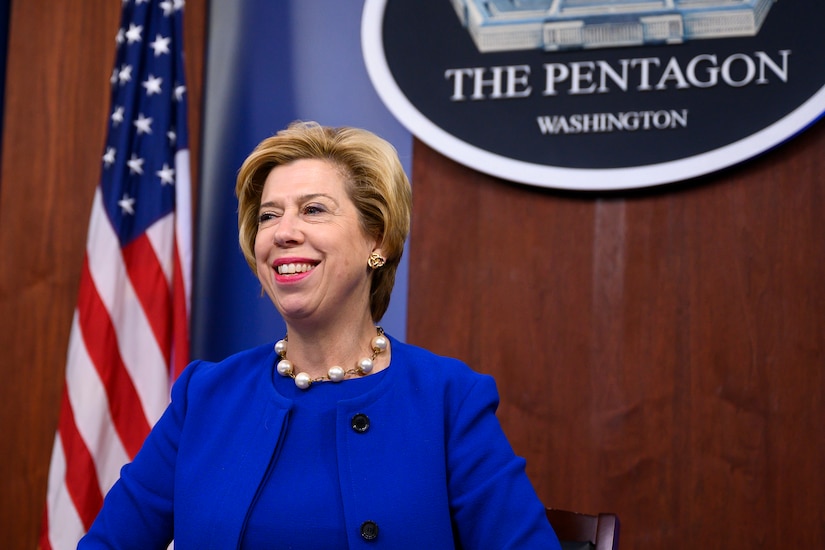
"[One] area that we want to bring over the finish line here is our trusted capital project," Ellen Lord said during an online discussion today as part of the three-day American Institute of Aeronautics and Astronautics ASCEND Summit. "We'd like to think the capital markets are very, very efficient. But we work with the Council on Foreign Investment in the U.S. to block or undo a lot of transactions where our adversaries are coming in and buying companies that are critical for our national technology initiatives."
The Trusted Capital Marketplace project is a department effort within A&S meant to both support the defense industrial base and limit adversary nation access to American technology. The effort is in response to a mandate by Congress laid out in the 2018 National Defense Authorization Act.
Within the Trusted Capital Marketplace, the department will be involved in matching up businesses in need of investment with investors that have been shown to not have ties to adversarial nations.
"What we want to do is instead of driving companies, or driving people trying to sell real estate to these adversarial and nefarious kinds of actors out there, we want to be able to partner people with clean money with companies where we understand the beneficial ownership and grow that capability for the betterment of our national security and economic security," Lord said.
To facilitate that, there's going to be an electronic marketplace, she said, something she said pairs up cleared investors and companies in need of investment in much the same way a dating website might work.
"What we're doing is clearing people with money, investors, and then companies that have critical technology for the Department of Defense, and giving them a place where they can get together and talk and hopefully do some deals," she said.
Lord said she expects the Trusted Capital Marketplace to be available in December.
"We are literally just going through federal paperwork right now to launch this," she said. "I'm really excited about our Trusted Capital Marketplace."
Nov. 18, 2020 | , New York National Guard
The hospital was purchased by U.S. Africa Command through the command's Humanitarian Assistance Program, and transferred to South African officials by personnel from the U.S. Embassy in Pretoria, South Africa.
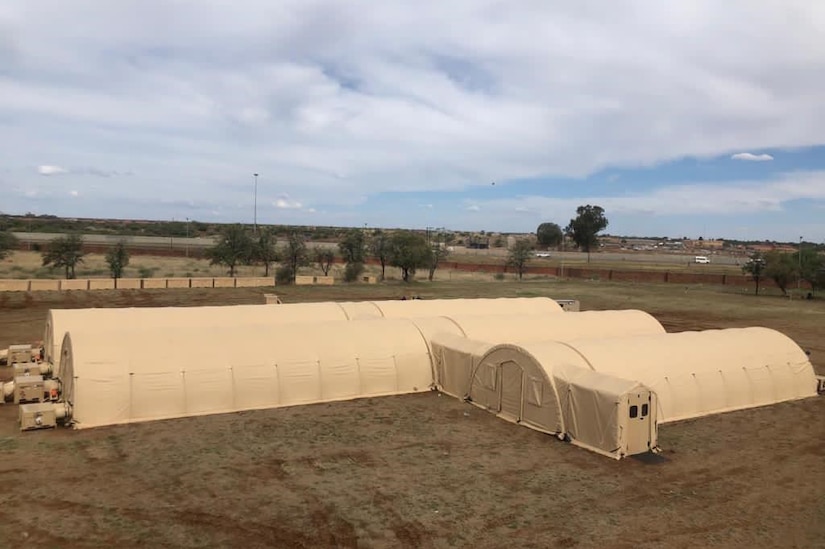
Mahikeng, previously known as Mafikeng, was chosen as the location for the hospital by Dr. Zweli Mkhize, South Africa's health minister, because of an increase in COVID-19 cases in the province in recent weeks.
"The donation of this field hospital is timely given that our scientists are anticipating a possible second wave of COVID-19 infections in February," Jeanette R. Hunter, the deputy director general for primary health care at the South African National Department of Health, said.
As of Nov. 5, 2020, the Mahikeng Provincial Hospital had only four negative pressure isolation beds to treat 28 COVID-19 patients.
Negative pressure beds are maintained in rooms isolated from the rest of a facility. The air pressure inside these rooms is maintained at a lower level. This keeps air — which could be contaminated — from flowing out when a door is opened.
In order to ensure there were enough beds to treat COVID-19 patients, 90 beds that were used for other purposes were shifted to accommodate. This restricted the hospital's ability to treat patients without COVID-19, Hunter said.
The new field hospital has 40 beds isolated by negative pressure, which will increase the hospital's capacity for more patients.
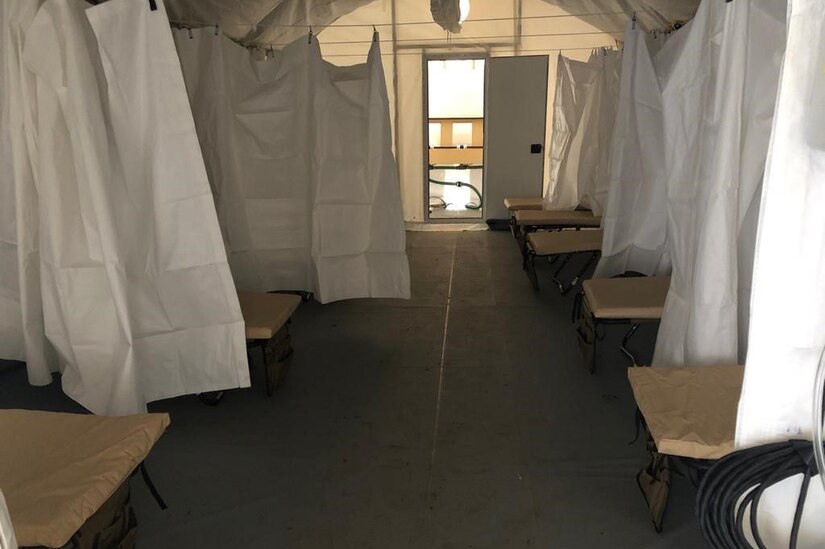
The hospital was manufactured by Alaska Structures, an Anchorage company that specializes in engineering fabric buildings. Two 2,300 kilowatt generators provide power, and the system includes toilets, showers and a limited reception area.
The hospital can operate autonomously and is equipped with eight air conditioning units equipped with high efficiency particulate air filtration and ultraviolet light scrubber systems to control infections.
"The fight against COVID-19 in South Africa is not over, and that's why this state-of-the-art field hospital donation from the American people, through Africom, is especially timely," U.S. Ambassador Lana J. Marks said.
"We once again commend the South African government and Minister Mkhize, who personally chose Mahikeng as the location for this facility, on their response to the pandemic, which the United States government has been honored to support," Marks added.
The field hospital was set up during the latter portion of October and transferred to the South African government during a ribbon-cutting ceremony on Oct. 26.
Africom sent a team of civilian trainers to assist South African medical and support teams selected to run the mobile hospital on its assembly, set up, facilitation, transportation and storage.
Africom's support to the COVID-19 response and mitigation efforts began in late March, early April, as the first signs of COVID-19 infections emerged.
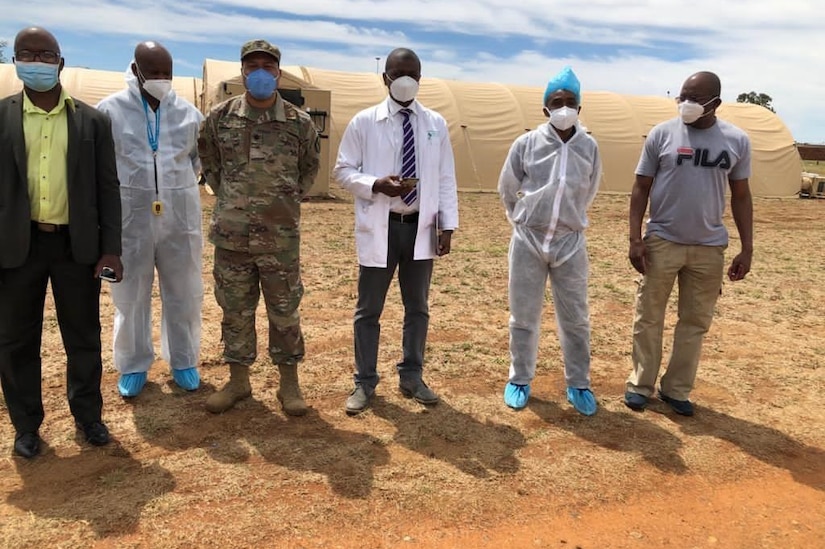
Africom has purchased seven 40-bed and seven 30-bed negative pressure isolation hospitals for African partners.
The military's Humanitarian Assistance Program, or HAP, helps partner nations build their disaster readiness, response and mitigation capabilities. The program funds infrastructure, equipment and training to help nations prepare before disasters and crises strike, but also supports countries who request assistance from the U.S. government when they experience health and weather-related emergencies.
COVID-19 assistance projects are funded under HAP to support requests from partner nations for supplies and equipment needed to respond to the virus outbreak, treat infected patients and prevent additional exposure. The U.S. Department of State and U.S. Agency for International Development review the projects and concur with their proposed assistance before they are approved, according to embassy officials.
Nov. 18, 2020 | , DOD News
It was just two years ago when the Joint Artificial Intelligence Center was created to grab the transformative potential of artificial intelligence technology for the benefit of America's national security, and it has grown substantially from humble beginnings.
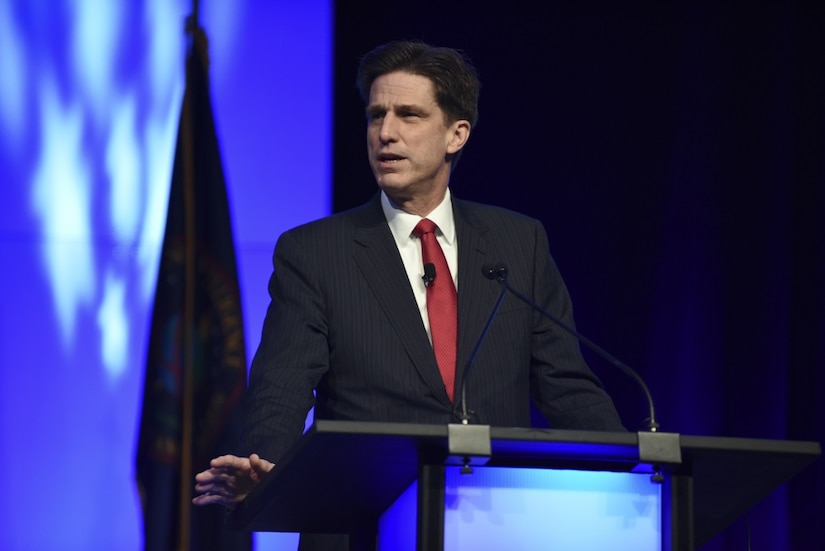
Dana Deasy, the Defense Department's chief information officer, and Marine Corps Lt. Gen. Michael Groen, the director of the JAIC, virtually discussed from the Pentagon the growth and goals of JAIC at a FedTalks event during National AI Week.
''One of the things we've wanted to keep in our DNA is this idea that we want to hire a lot of diversity of thought into [JAIC],'' Deasy said, ''but yet do that in a way where that diversity of thought coalesces around a couple of really important themes.''
When JAIC began, it needed to grab hold of some projects that can show people that it can be nimble, agile, and it has the talent to give something that is meaningful back to the Defense Department, he noted.
So JAIC started in a variety of different places, Deasy said. ''But now as we've matured, … we really need to focus on what was the core mission … for JAIC. And that was, we have to figure out what the role is that AI plays in enabling the warfighter. And I've always said that JAIC should be central to any and all future discussions in that place,'' the CIO said.
''Transformation is our vision,'' Groen said.
''So, it's a big job. We discovered pretty quickly that seeding the environment with lots of small AI projects was not transformational in and of itself. We knew we had to do more. And so, what we're calling JAIC 2.0 is a focused transition in a couple of ways. [For example], we're going to continue to build AI products, because the talent in the JAIC is just superb,'' the JAIC director said.
Groen noted that the JAIC is thinking about solution spaces for a broad base of customers, which really gets it focused.
''There are, you know, the application, and the utilization of AI across the department [that] is very uneven. We have places that are really good. And there, some of the services are just doing fantastic things. And we have some places, large-scale enterprises with fantastic use cases [that] really could use AI, but they don't know where to start. So, we're going to shift from a transformational perspective to start looking at that broad base of customers and enable them,'' he said.
JAIC is going to continue to work with the military services on the cutting edge of AI and AI application, especially in the integration space, where JAIC is bringing together intelligence or intelligence of maneuver, Groen said, ''The warfighting functions have superb stovepipes. But now we need to bring those stovepipes together and integrate them through AI,'' he added.
The history books of the future will say JAIC was about joint common foundation, Deasy said. ''JAIC could never do all of the AI initiatives with the Department of Defense, nor was it ever created to do that. But what we did say was that people who are going to roll up [their] sleeves, and seriously start trying to leverage AI to help the warfighter every day. … at the core of JAIC's success has got to be this joint common foundation,'' he noted.
Deasy noted that the JAIC was powerful and very real.
Into next year, he added, JAIC will have some basic services. And then it's a minimum viable product approach, where JAIC is building some basic services, a lot of native services from cloud providers, but then adding services to that.
''And where we hope to grow the technical platform is a place where people can bring their data, places where we can offer data services, data conditioning, maybe table data labeling and we can start curating data,'' Deasy projected. ''One of the things we'd really like to be able to do for the department is start cataloging and storing algorithms and data. So now we'll have an environment so we can share training data, for example, across programs.''
The modernized software foundation now gives JAIC a platform so it can build AI, Groen said, adding AI has to be a conscious application layer that's applied, leveraging the platform and the things that digital modernization provides.
''But when you think of it that way, holy cow, what a platform to operate from,'' he said.
So now JAIC will really have a have a place where the joint force can effectively operate, he said, adding that the JAIC can now start integrating intel in fires, intel in a maneuver command and control, the logistics enterprise, the combat logistics enterprise and sort of the broad support enterprise, Groen noted.
''You can't do any of that without a platform, and you can't do any of that without those digital modernization tenets,'' the JAIC director said.
If JAIC is going to have the whole force operating at the speed of machines, then it has to start bringing these artificial intelligence applications together into an ecosystem, Groen said, noting that it has to be a trusted ecosystem, meaning "we actually have to know, if we're going to bring data into a capability, we have to know that's good data."
''So how do we build an ecosystem so that we can know the provenance of data, and we can ensure that the algorithms are tested to set in a satisfactory way that we can comfortably and safely integrate data and decision making across warfighting functions,'' the JAIC director asked. ''That's the kind of stuff that I think it's really exciting, because that's the real transformation that we're after.''
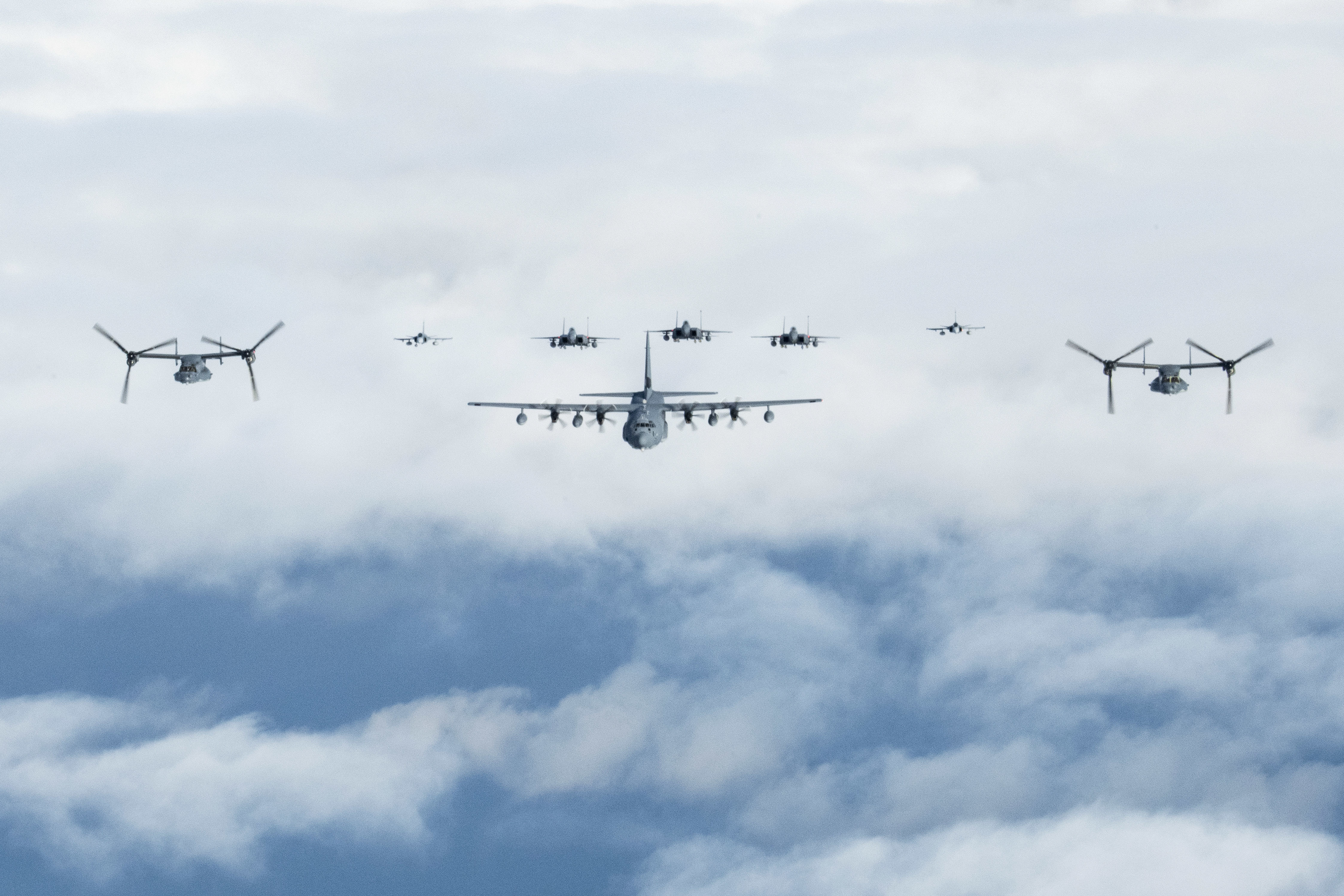
An Air Force MC-130J Commando II, two CV-22B Ospreys and three F-15E Strike Eagles fly with two Swedish JAS 39 Gripens over Gotland, Sweden, Nov. 13, 2020, during an exercise to demonstrate the resolve of the Swedish, U.S. and Estonian forces to defend the sovereignty of nations and work with regional partners for a secure and stable Europe.

U.S., Australian, Indian and Japanese vessels participate in Malabar, an India-led multinational exercise, in the Arabian Sea, Nov. 17, 2020.
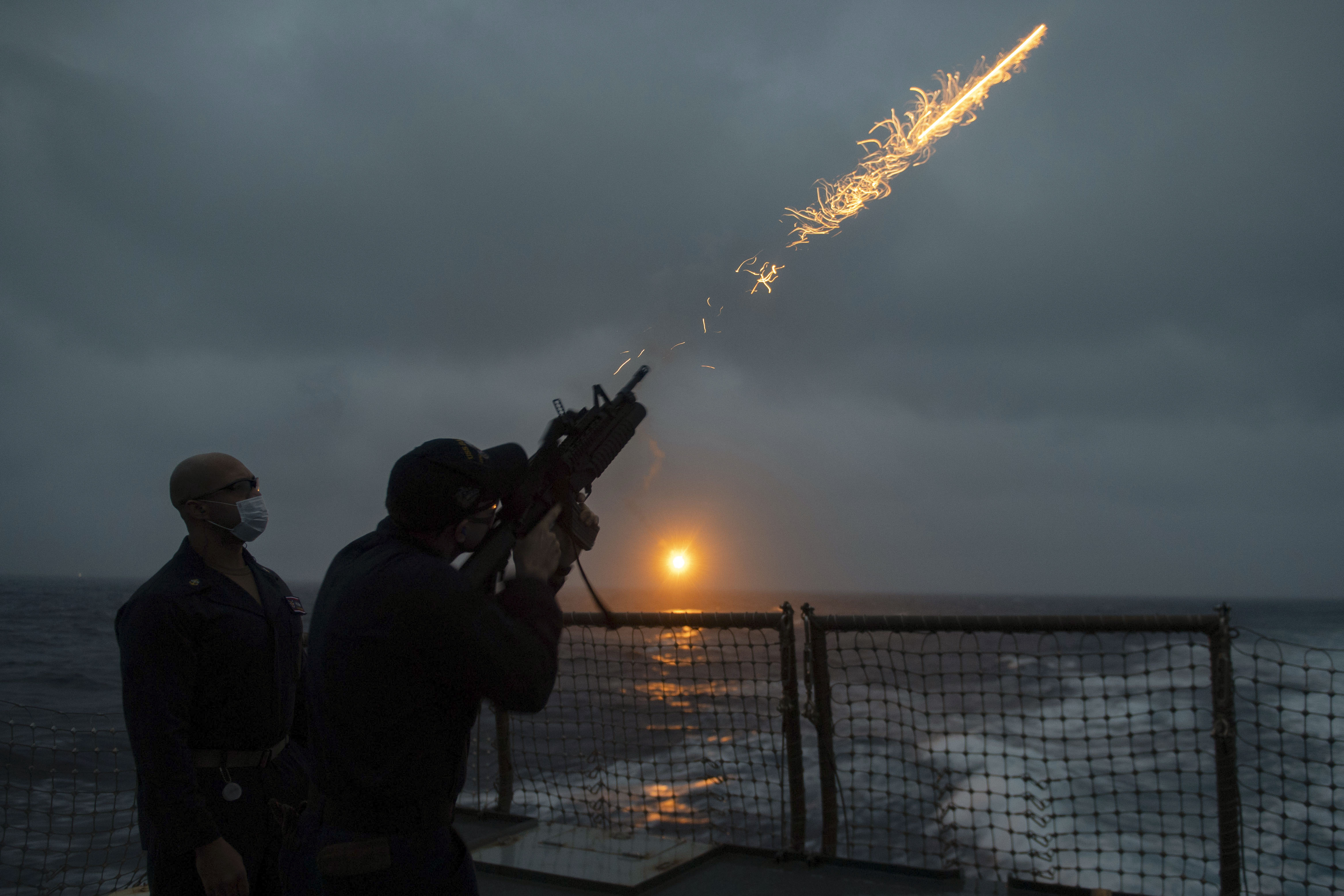
Navy Petty Officer 3rd Class Cullen McArdle fires a flare while Chief Petty Officer Ricardo Stewart observes during an exercise aboard the USS Barry in the Philippine Sea, Nov. 6, 2020.
Nov. 16, 2020
CHRISTOPHER SHERWOOD: Okay, good morning. I'm Christopher Sherwood. I'll be moderating the press briefing today and follow-on discussion.
The topic of today's briefing is the department's results of the F.Y. '20 full statement audit -- full financial statement audit. Our speaker is performing the duties of the Undersecretary of Defense Comptroller and Chief Financial Officer Thomas W. Harker. Our discussion is on the record, embargoed until you receive an e-mail from me later this evening once the Office of the Inspector General sends out agency-wide results to the comptroller. I will send an e-mail to you releasing the embargo.
We have 30 minutes for this -- for questions from those attending here in person and attending by phone. I will provide a five-minute warning. Please introduce yourselves and your organization, and limit your question -- questions to one initial question and one follow-up.
With that, I would -- I will turn it over to Undersecretary Harker. Sir?
PTDO COMPTROLLER THOMAS W. HARKER: Thanks, Chris.
Good morning, everybody. My name's Tom Harker, for those who don't know me. I'm the assistant secretary of the Navy for financial management and comptroller, performing the duties of undersecretary of defense comptroller. I've been performing those duties since June, and anticipate continuing for a while.
I'm pleased to report this year that DOD has completed its third annual comprehensive financial statement audit, covering the entire enterprise. We also have a couple of organizations who are still under audit because they need a little more time to show positive results this year.
There's two key themes that I want you to take away from this session today, and that's continued progress and value to the warfighting.
We continue to conduct one large audit of the Department of Defense, which consists of 24 standalone audits of the military services and the larger defense agencies. Our goal is to get a clean financial statement audit opinion for the Department of Defense as a whole, and we believe that the best path to accomplish that is to conduct standalone audits on each of our services and defense agencies.
We've been clear that this is a journey that will require a sustained effort over several years, and we remain committed to this goal and continue to make significant progress.
Each year, we work to sustain the current clean opinions, increase the number of agencies or military services with clean opinions, and eliminate material weaknesses at both the department level as well as the component agency level.
For sustainment this year, every agency that had a clean opinion last year sustained a clean opinion this year, in spite of significant challenges due to COVID. They're all listed on the fact sheet that I believe Chris is going to provide you, but suffice it to say that it still takes a lot of work to maintain an opinion, and these agencies have done that in spite of the size and complexity of their agency and the challenges we faced this year with COVID which prevented us from doing a lot of testing, travel and that sort of thing, as you'd imagine.
The audit for the OIG has not been completed yet, but we anticipate completing that by the second quarter of fiscal year '21, and they anticipate getting another clean opinion, as well.
For continued progress, this year we're very pleased to report that we anticipate getting a new clean opinion for the DISA working capital fund. DISA's worked real hard this year to improve their business processes and controls. That's resulted in several operational improvements such as decreasing the time required to deliver property to their customers, improving the accuracy of their property records, and improve the accuracy of their financial statements. It also generates a clean opinion on the working capital fund, but I spoke about the three operational things first because those are really more important to warfighting than just the financial statement audit opinion. They had a 80 percent decrease in the time from award to delivery for a lot of their equipment that they have done, based on the improvements they've made to the business processes and controls over the last several years. They also were able to increase their data reliability through the use of robotic process automation and other tools, which has improved the -- or, the -- decreased the cost and improved the accuracy of their financial data.
In addition to the clean opinion on their working capital fund this year, we also anticipate them getting a clean opinion on their general funds next year, so this is an area where they've made a lot of investment in time and effort to improve their business processes, and we'll see the audit results this year, as well as next year.
In addition to the new opinion for DISA's working capital fund, we also have had several material weaknesses be eliminated from last year, two of them at the department level. The Navy also eliminated three material weaknesses, two on their general fund, one on their working capital fund, and the Marine Corps eliminated one material weakness.
We've also had a number of the Defense agencies eliminate material weaknesses because we made an accounting change that moved all of our real property onto the balance sheets of the military departments or the Washington Headquarters Service, so that was a change in accounting procedure that resulted in elimination of material weaknesses. Putting it all on the military departments improves our ability to account for property, and it puts it all in the hands of the services and WHS.
Lastly, we continue to progress in the elimination of auditor-identified discrepancies. We had 3,248 discrepancies identified by all of the different auditors over the 24 component audits during F.Y. '19. We've cleared 530 of those to date, and we anticipate clearing a couple hundred more between now and the end of December, when the auditors finish all of their work. This is a significant accomplishment in spite of COVID, which has prevented a lot of the auditors from getting out and doing testing, and we'll be able to close more than 20 percent of the findings, which is similar to the progress we made last year.
So the bottom line in simple terms is the auditors found certain areas have gotten much better this year, in spite of the challenges faced it by COVID, and that we understand this audit is a massive undertaking. We have a fact sheet that we'll be providing that gives you a lot of these things I mentioned in more detail. But the audit, the bottom line is, it's part of our key component of our reform effort. It's how we go in and we make our business processes more effective so that we have better data and better outcomes.
So some of the value that comes from audit, I want to talk about that real quick.
First off, one of the things the auditors do is they look at our I.T. systems, and they go in and they test the controls around our I.T. system so we have good access controls, we have good segregation of duties -- that kind of thing. All of the steps we take to fix the things that they find helps decrease our cyber vulnerabilities. So it's not just the audit; it's also improving our cybersecurity.
The next thing that is key is the audit has taken a deep dive into our property, plant, and equipment, and our inventory and operating materials and supplies. During the first couple years of audit they found significant deficiencies in these areas, but we've made a lot of progress identifying areas where we had errors, going in and doing a lot of the cleanup work. And so you see now, as they go forward, they've cleaned up our accuracy of our property records. That helps us significantly because it lets us know what to order, what we already have.
In a lot of cases, auditors found things that weren't on the books anymore, things where we bought it out of the working capital fund and taking it to the end user, and the end user didn't need it right then, so they put it on a shelf, and then people forgot that it was on the shelf. Navy did a lot of work in this area. They were able to find, I think, $3.4 billion over the last several years, and they've put more than $50 million-worth of items onto aircrafts and ships as immediate, "Hey, we found this. We need it. Let's put it out there." And they've put another $2.7 billion back onto the books, as these items are available for people to order. So it's a significant improvement in how they manage their property.
We've also had another improvement from the audit in that it's helped us identify that we have too many systems. We're spending a lot of effort to go in and consolidate those systems and eliminate the legacy ones. That improves both our cybersecurity by eliminating old legacy COBOL-based software systems, and also saves us a lot of money. When you run nine systems and you can get that down to two, that saves you a significant amount of money. And so you're seeing that across all the defense agencies, as well as the military services not just on their financial systems, but on a lot of the other business systems that feed into the financial like H.R. or logistics.
So the last thing is as we get better, more accurate financial data, that gives us better ability to use that data to make decisions and it gives senior leaders the ability to ask better questions. We've been able to go through and build a data analytics tool called AVNA. It's for advancing analytics -- that we pull all of the general ledger data from the various I.T. systems, and that gives information available in real-time to senior leaders. They can combine that information with H.R. information, logistics information, and it gives them more ability to ask better questions. It also gives people at lower levels ability to ask better questions too, because they can see things at a more granular level that help them make better decisions, as well.
So we remain committed to sustaining this effort and demonstrating greater progress each year until the department receives and sustains a clean audit opinions. We've prepared the press release -- Chris will provide that -- and I'm ready to answer any questions. One thing I want to let you all know is that I'm hard of hearing. I have hearing aids, and so I would ask that we're all socially-distanced here. If you could please remove your mask, it enables me to read your lips, and also speak loudly so that I can hear you. I'd appreciate it. Thank you much.
MODERATOR: Okay. So we'll start with the room, and we'll start with Tony Capaccio.
Q: Hi, sir. Tony Capaccio with Bloomberg. We -- we've been covering this for the last couple years. Now, last year the general funds and the working capital funds of the Army, Navy, Marines, DLA, and SOCOM and TRANSCOM and D.H. -- the health programs all received disclaimers of opinion, which is not a good thing in your world.
MR. HARKER: Yes.
Q: Have those improved, or do -- do -- have those disclaimers of opinion continued?
MR. HARKER: We continue to receive disclaimers of opinion for the ones listed on the sheet. We have an overall disclaimer, and there's also several significant large agencies that have disclaimers. The only improved opinion we had this year was the DISA working capital fund.
Q: Okay. Can I ask a follow-up, too? Last year DOD said this -- the effort about a billion dollars. Is that roughly the -- the amount? And how many trillions of dollars of assets, just for -- for the layperson, did you audit that were reviewed?
MR. HARKER: How many did we --
Q: Okay, last -- last year the -- the press release said that $2.9 trillion of DOD assets --
MR. HARKER: Oh, that's -- yes.
Q: -- were -- were reviewed. I just -- for size and scope.
MR. HARKER: Yes. So we reviewed similar total assets, about $2.9 trillion of -- roughly. The challenges we've had are ensuring the accuracy of that. So when we look at elements of our property plant and equipment and our other assets, about a trillion of it is in government bonds. That's money that we have invested in government bonds which we hold as an offset to our actuarial pension liability. So the military service members have a pension liability. We also have assets that support that.
Q: Yes.
MR. HARKER: So those are all clean. The good news is we have a trillion dollars-worth out of our $2.9 trillion where we have a clean opinion on the audit that looks at that. The $2. -- the liability, our biggest liability is that pension, and that also is clean. So when we're looking at these things, we have significant areas -- real property, there's been a lot of improvement there. I mentioned that we're moving real property from all of the defense agencies' balance sheets onto the military services and the Washington Headquarters Service. That gives us only four places where we have to hold real property data, which makes it easier for us to audit. It also gives us better visibility into what real property we have, where it is, what condition it's in so that we can make better operational decisions about the acquisition of property.
As you can imagine with COVID, we've had people increase telework significantly. And so now we look at all of our real property, we say "what do we own, what are we leasing, do we need to continue leasing or do we bring people back into -- behind the fence line?" So it's -- it's given us a lot more better data.
Q: Great, thanks.
MR. HARKER: Yep.
MR. SHERWOOD: Okay, we'll -- we'll go to the phones here for a second, and Richard Sisk with Military.com. Do you have a question please?
Q: Yes, can you hear me, sir?
MR. SHERWOOD: Yeah, we can hear you.
Q: Okay. Mr. Harker, did I hear you say, you know, it'll be several years before you could expect a clean audit? And as -- as a follow, did this audit -- did you look at Afghanistan and what you might have to counter, not count -- considering -- considering that the troops might be withdrawing? What -- what's the status of Afghanistan as far as an audit goes?
MR. HARKER: So -- so the -- sir, could you repeat the question please?
MR. SHERWOOD: I can -- I can repeat that absolutely. So Richard asked if -- basically in Afghanistan, if -- with regards to a count or in -- in the audit, was anything with regards to a troop drawdown that the audit had captured? And Richard, can you repeat your first question? It was before the --
Q: Yeah, I thought Mr. Harker said it'd be several years he expected before there -- there really would be a clean audit.
MR. SHERWOOD: Thank you.
MR. HARKER: Okay, so first, going through the process of being audited, each year the auditors dive deeper and they find more things. So you look at the process of getting to a clean opinion for federal agencies, it can take a long time.
DHS is the most recent agency to get a first clean opinion and it took them 10 years. We had a meeting last week where each of the military services presented their timelines to get to a clean opinion for us and that's roughly similar to what the DHS timeline was. If you look at when we first started being audited in 2017, we're on track or we have plans that are resourced to get us to a clean opinion around that same timeframe.
Second question was dealing with assets and expenditures in Afghanistan. As the audit unfolds, the auditors pull items to test as part of their audit. When they do tests of property, one of the challenges we faced this year during COVID was the travel bans and we were not able to send auditors out and do that much travel, so they weren't able to do as much testing on the ground.
In some cases, they were able to do virtual testing, where they -- where they weren't on a classified location and they could use cell phones to do FaceTime or Zoom meetings and actually see the serial numbers on assets but it was limited because of COVID. I don't know specifically whether any of our auditors went to Afghanistan but we can get back with you that information.
MR. SHERWOOD: Okay. And we'll go back to the room. I think Ryan, you had your hand up first. Go ahead.
Q: Excuse me. Thank you, sir, for doing this. I -- I just wanted -- Tony had asked how much the audit had cost, and I don't know if I -- I had heard that, but I actually just -- you said something at the beginning, where you said you expected to be doing this for some time to come.
I guess -- so has there been any impact by the shakeup here at the Pentagon leadership on the audit or the proof -- getting sign off from Secretary's office? Did that delay anything? And then do you expect to be carrying out this audit next year?
MR. HARKER: So the department is required to be under audit for several different laws. It's written into the NDAA that we start -- and we did start, and 2017 was the first year -- that continues to be a priority for the committees. It's also a requirement of the CFO Act of 1990. So the audit will continue.
The cost of the audit, you asked, that was around $203 million this year for all of the different audits that were conducted at the 24 sub-component level, as well as some of the -- and if I get too technical, I apologize -- but we do statement of standards of attestation agreements, number 18 service organization control reports, which is a mini audit of a process at places like DFAS or other areas, where they perform a process of the service provider for large elements of DOD.
So we do a small audit of one of those processes, we call it a SOC Report, Service Organization Control Report, and then other auditors rely on that work. So -- but the total cost was $203 million for all of that. So second question?
Q: So any of the, I mean, leadership -- obviously you said you've been here and -- and obviously there's been a lot of change. Has that -- did that impact getting sign off on the audit, did that impact any of the processes at all?
MR. HARKER: It did not. We have a process in place where our DCFO Office inside the OSD comptroller shop goes and routes materials up for explanation and signature. The -- in various years, the Deputy Secretary or the Secretary has signed the reports. This year, the Deputy Secretary signed it. As you know, Secretary Norquist is very familiar with everything we're doing because of his role as Comptroller. I mean, he's meeting with the Secretary today to walk him through everything that he needs to know about the audit but, you know, the -- the Deputy Secretary is an expert on this.
Q: Great, thanks.
MR. HARKER: So --
MR. SHERWOOD: We're going to stay in the room. Lara?
Q: Hi, sir, thanks for doing this.
MR. HARKER: Thank you.
Q: Can I just clarify -- you -- you told Tony that you reviewed roughly 2.9 trillion assets this year. Is this -- and you said that was similar to last year. Is that on top of what you did last year or is it the same number?
MR. HARKER: 2.9 trillion is the total assets on our balance sheet. And so all of those assets are under audit. So it's the same 2.9 trillion, it's just when the auditors do their samples, they look at different things.
Q: Okay. And then also, can you just say a little it more about the -- can you quantify the impact that COVID had, what didn't get done, did things get done less efficiently? Can you just say more about that?
MR. HARKER: Certainly. So when -- when auditors do test work, their best way to do test work was to go out and see and touch an asset and say "yes, this asset exists," and to walk around an area and look and say "are there other assets that exist in this area that might not be in your books?"
So the best thing for them is to be able to go out and come in and, you know, assuming these chairs are assets, it's like "Okay, look at that one, look at that one, look at all of them, check the serial numbers, make sure that verifies everything that's on the books," then also look and say "are there some here that aren't on your books?" So they call that existence testing and completeness. Existence is "does everything that's on your books exist?" Completeness is "is everything that does exist on your books?"
Because of COVID, they had a hard time doing completeness testing. It's hard for them to be able to go and validate that there's something that -- that everything's on your books, because they're not physically there.
They were able to do existence testing for a lot of the items by going and using digital media for things or pictures, take a picture of the serial number and a picture of the asset, you can kind of see the progression. So a lot of the agencies that had clean opinions were able to do things that way. Some of the ones that were progressing were able to do things that way, but it did create challenges.
The other challenge is just the lack of face-to-face ability to look over things and talk through it. Zoom meetings are useful, but it's not as good as being in the same room, looking at the same piece of paper and talking about it, the face-to-face communications has made a challenge.
Q: Were there any agencies, though, that maybe didn't get a clean audit because --
MR. HARKER: Sorry?
Q: Were there any agencies though that maybe didn't get a clean audit or didn't make as much progress because of the challenges due to COVID? Like what was the impact?
MR. HARKER: I would say there were a number of challenges that everyone dealt with for COVID. When you talk to private sector companies, a lot of them had challenges in their audits as well because of the same things I just talked about with regard to property testing.
The audit standards folks went around and they identified ways of providing assurance, so they worked with all the big audit firms on how can they do the testing, and then we incorporated a lot of those same standards.
Specific agencies, the focus for us was let's get -- for the ones that have clean opinions and do everything we need to do to support them in sustaining those clean opinions. And then for the agencies that didn't, let's figure out how we can help them in executing their corrective action plans.
You know, the Navy was able to clear three material weaknesses, that's a huge accomplishment in spite of COVID. They might have gotten a fourth if we hadn't had COVID. The one that they came close on was their environmental and disposal -- I'm sorry, no. Their utilities. They got environmental and disposal liabilities.
So they were looking at the utilities on the bases when in a lot of cases that's underground, sewage pipes, power transmission facilities, all that, stuff where having the auditors on-site would have made that easier.
MR. SHERWOOD: Okay, we'll go back over to the phone lines.
Aaron Mehta, Defense News, do you have a question, please?
Q: I do, thanks.
This follows up a little bit on a few things you said. With the understanding that this is a likely 10-year process -- you said that's how long it took DHS -- are you at all, I guess, disappointed or did you expect more progress this year versus last year?
MR. SHERWOOD: More progress this year over last year, did you expect more?
MR. HARKER: Do we expect more next year or did we make more this year than last year?
Q: Did you expect more this year compared to last year? I think, like, last year there was a lot of stuff that Ms. McCusker told us had gotten close and had just kind of crossed that threshold. But it sounds like, from what you've said, only one major working capital fund seemed to have improved this year.
MR. SHERWOOD: So, bottom line, yeah, we got it -- thank you, Aaron. So the bottom line is did you expect more this year?
MR. HARKER: We didn't expect more than we received. I mean, I think any time you have a new agency get a clean opinion, that's a huge accomplishment. So for us, last year, we did not have any agencies make -- get new clean opinions, this year we did. So DISA's working capital fund getting a clean opinion there was a significant improvement.
We also were able to eliminate material weaknesses this year, which is something that, last year, only Navy did it. And it was one material weakness. This year we had two material weaknesses at the department level, three at Navy, one at Marine Corps, and then we were also able to clean up a lot of the smaller ones for real property by consolidating real property.
So what you're seeing is a maturation of the process. Many of the individual agencies or services are developing more capability and better accounting skills so that they can resolve a lot of the problems, and you're seeing significant process in certain areas.
I may be a little biased because I came from Navy, but the Navy and Marine Corps have both made huge progress this year. The Marine Corps did make a push for an audit opinion this year. They were initially at the start of the year really focused on trying to get there, and they fell short.
A lot of that was due to COVID, but some of it was due to just lessons learned during the process of being audited and going for a full-scope audit opinion. That enabled them to clear a material weakness, and also increase the accuracy of a lot of their property planning and equipment balances, and their inventory and operating materials and supplies.
They cleaned up military payroll so that when the auditors tested military payroll -- and with our own internal testing -- they got 100 percent accuracy, which is the first time any of our services have done that.
So the Marine Corps made a ton of progress, it just didn't quite result in that audit opinion. And I think that was primarily due to COVID.
MR. SHERWOOD: Aaron, did that answer your question? Do you have a follow-up?
Q: That's good, thank you.
MR. SHERWOOD: All right, I'll go over to Jeff Schogol with Task and Purpose. Do you have a question, please?
Q: Hi, thank you very much. If I understood you correctly, you said the Defense Department did not pass the audit this year. And since it first started getting audited in 2017, and it will take 10 years, it will be until 2027 until the Pentagon passes this audit. Is that right?
MR. HARKER: The -- yes, I would say that's right. We did not pass -- we had a disclaimer on the consolidated opinion, we had several other disclaimers on the individual audits. And this is similar in timeline to what the Department of Homeland Security experienced during their quest for an audit.
Q: If I could ask a follow-up question, if it's taking the Pentagon 10 years to pass an audit, what is it doing wrong? Can you elaborate on where it's overspending and money being wasted, which is the purpose of the audit?
MR. HARKER: So one of the things that -- if I could come at your question from a different point of view, we spent $200 million being audited this year. But when we look at the return on investment for the process improvements that we're making around accountability for property, accountability for inventory, that type of thing, we've identified more than $700 million in savings based on these process improvements.
So it's one of those things that it's not that anyone's doing anything wrong, it's that there's -- this is something that's never been done for an entity of the size and complexity as the Department of Defense. And so we have not built up a robust capability in financial accounting. Our focus has been many other things: executing the budget, acquiring weapons systems, and whatnot.
So as we're building that capability, we're executing corrective actions to the things that don't comply with accounting principles in order to get into compliance. But more importantly, we're improving the accuracy of our financial information so that decision-makers can make better decisions.
MR. SHERWOOD: Okay, we have time for one last question in the room. Tony, please?
(CROSSTALK)
Q: -- can you clarify the cost issue? The billion dollars, the cost issue. The $230 million you talked about was preparing the infrastructure for audit, but there are audit fees and then there's cost to remediate deficiencies. Those cumulative were over a billion dollars last year. I just want to -- if Chris could -- because there's going to be people saying, "Oh, it went from a billion to $200 million."
MR. HARKER: (inaudible) --
Q: You -- you had a subset. That's -- I -- (inaudible) --
MR. HARKER: The cost -- the cost of the audit this year was $203 million for when you add up all the audits. Somewhere last year, I think last year was around $195 million. The year before that was around $200 million. So the cost of the audits has stayed the same.
The investment that we've put into cleaning up deficiencies, that's always been a hard one to quantify. It was around a billion last year, but it's -- that's kind of a modeled number, and it's around the same this year. We're -- we're pulling that data together.
Q: Okay, and then the auditor fees for Ernst & Young and all the companies, that's a separate subset?
MR. HARKER: That's the $200 million.
Q: Oh, that's part of it?
MR. HARKER: That's the auditor fees. That's what we're paying the independent public accounting firms that come audit us.
Q: Okay.
MR. HARKER: That's -- and that's part of the -- the $1 billion that you cited for last year.
Q: Okay, I just want to be -- just see if Chris can get just the cumulative cost remediation auditor fees and preparations. So it's --
MR. HARKER: There's a report to Congress that we prepare, and we'll make sure that you get a copy of that.
Q: (inaudible) --
MR. HARKER: It goes over all of that.
Q: I'm trying to reconcile your figures from last year.
MR. SHERWOOD: All right. And sir, I'll offer any closing comments you have, and then we'll wrap it up.
MR. HARKER: Appreciate you-all's interest, and thank you for coming out and dialing in, if you're on the phone. This was something where we've invested a lot of time and effort in getting to the audit, and being audited these last several years has revealed a lot of information to us on the areas where we can improve our processes, become more efficient, more effective, and better stewards of taxpayer resources.
MR. SHERWOOD: Okay. Thank you for your time.
Nov. 17, 2020
On November 17, Acting Secretary of Defense, Christopher C. Miller, conducted a phone call with the Republic of Korea (ROK) Minister of National Defense Suh Wook to reaffirm the enduring strength of the U.S.-ROK Alliance. Secretary Miller and Minister Suh discussed the outcome of the 52nd Security Consultative Meeting (SCM) in October and underscored the U.S. commitment to defend South Korea through the combined defense posture of the U.S.-ROK Alliance. Minister Suh and Secretary Miller both reflected on the importance of maintaining communication to deepen bilateral cooperation. The two leaders further pledged to pursue continued progress on the mutual security interests of the U.S.-ROK Alliance.
Nov. 17, 2020 | , DOD News
Diversity and inclusion are a top priority for the Defense Department, the department's director for manpower and personnel said today.
"The department has undergone a tremendous task force effort with regard to diversity and inclusion, and the secretary is soon to approve and publish that document," Air Force Maj. Gen. Lenny J. Richoux said during an online discussion hosted by the Department of Energy.
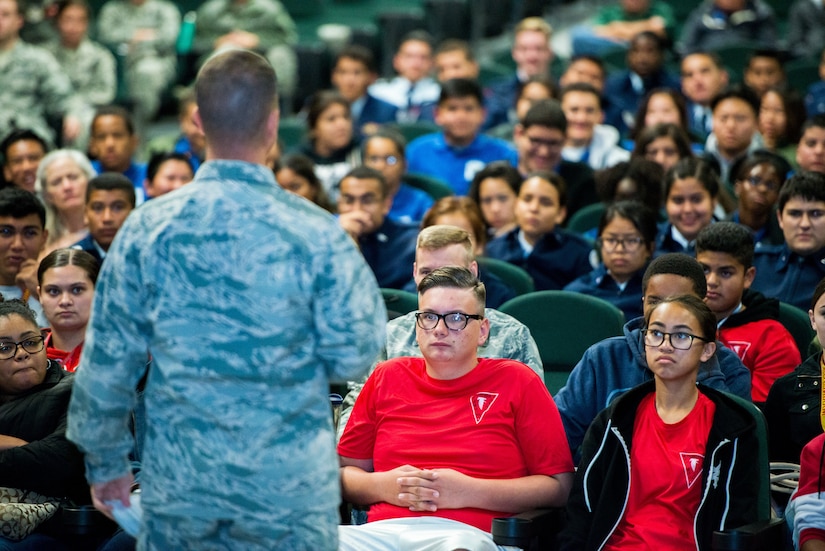
"For [Chairman of the Joint Chiefs of Staff Army Gen. Mark A. Milley], one of his desires is to diversify the senior leadership, the joint senior leadership and senior leadership writ large across the department," Richoux said. "Everyone knows it takes about 24 or 25 years to make a general officer and can take almost that long to make an E9 — a senior leader E9 in all the branches."
The length of time it takes to develop a senior leader in the department means that in order to reach diversity and inclusion goals, the department must now start eyeing the youngest Americans as candidates for future leadership positions.
"We've been working on this for a long time. But the department has made some substantive changes to improve diversity and inclusion," Richoux said. "I think one of those areas that I've been trying to work with the services on is how and from where we recruit."
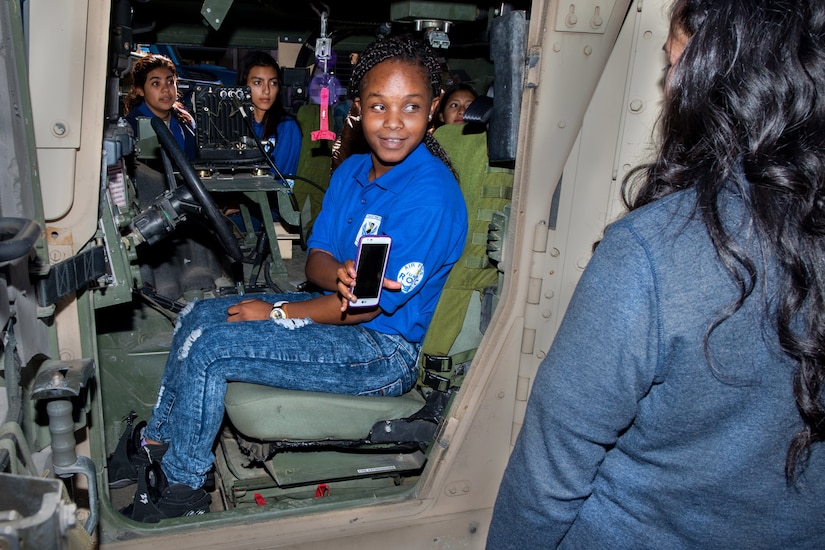
There are more than 100 historically black colleges and universities in the U.S. today, and those schools are great places, Richoux said, to start looking for America's next military leaders.
"[We're] increasing scholarship opportunities and feeding into ROTC," he said, adding that Americans even younger than college-age students are also candidates to one day be leaders.
The Reserve Officer Training Corps programs at HBCUs are fed by other, more junior programs, such as Junior ROTC, Civil Air Patrol, Sea Cadets or the Young Marines, he said.
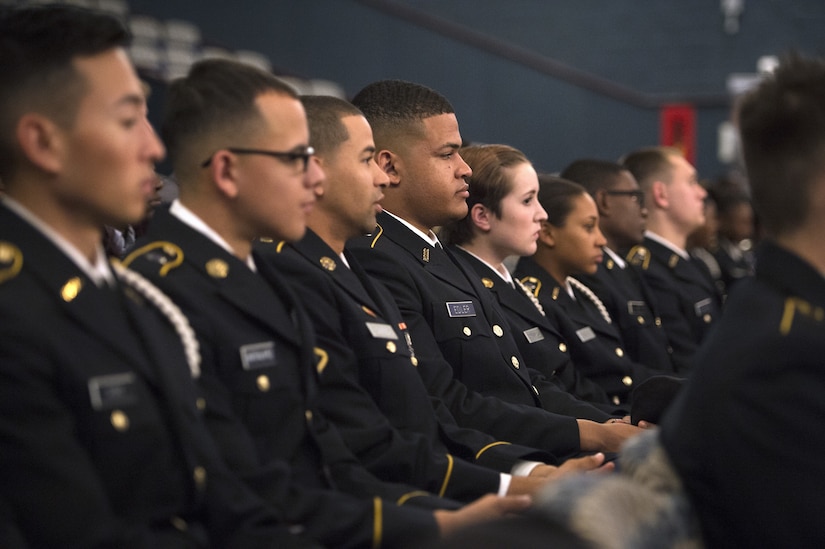
Richoux said those programs marry STEM with military service and drive a culture as a sense of purpose and service for our young people. "I think it starts young ... when they're formative, when they're figuring out what they want to do in these programs that tie them to service, STEM ... I think it's a thread of interest," he said.
Richoux also said private industry might take an interest in such programs because by encouraging participation early and by being involved, those young Americans will eventually transition out of military service — as 200,000 persons do each year — and seek jobs in the private sector. That will constitute a pool of potential private sector employees who are equipped with both STEM training and leadership skills.

Air Force Airman 1st Class Brandon Peacock performs a pushup in front of Army Sgt. 1st Class Danny Gonzalez during the Army Combat Fitness Test at Joint Base McGuire-Dix-Lakehurst, N.J., Oct. 29, 2020.
Nov. 17, 2020 | , Combined Joint Task Force Horn of Africa
The USO at Camp Lemonnier has been supporting military members since they opened their doors in 2015. This USO site is the only physical USO on the continent of Africa and handles a large area of responsibility.
"It's exciting to expand the USO support across the Horn of Africa just in time for the holidays, the most challenging time to be separated from loved ones," said Holly Coffer, USO Camp Lemonnier manager. "We hope this trip leads to many more and that we're able to continue expanding USO support across the region."
Coffer said that due to COVID-19 restrictions, this is the first trip that has been made to other sites in East Africa in quite some time.
"It's a privilege to be with them in these remote locations, and it allows us to bring a touch of home in some of the most far-flung corners of the world," Coffer said. "We celebrate connections in so many ways — from roasting s'mores in the mountains of Afghanistan, to helping a deployed dad surprise his daughter on her graduation day, to hosting a virtual wedding ceremony for service members separated by COVID. We're in these remote locations to make their deployment and separation from family, home and country a little bit easier."
For many service members, receiving a care package is more than just a gift — it's a reminder that someone cares and that they are not forgotten.
"I have been on many deployments, and the USO has had a footprint there," said Navy Command Master Chief Petty Officer Alex Hebert, senior enlisted leader, Combined Joint Task Force – Horn of Africa (CJTF-HOA). "It brings that part of home to you that you can't find while on deployment and brings a sense of normalcy in the middle of conflict."
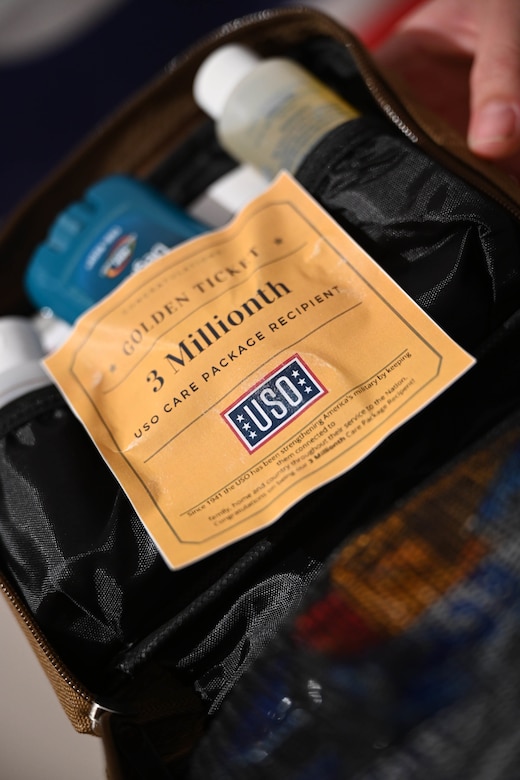
Coffer and Hebert were able to present the three-millionth care package during a night of Bingo and trivia provided by the USO. The recipient of the package was Army Spc. Kayla Lystad, a Minnesota National Guardsmen deployed with Task Force Bayonet in support of CJTF-HOA.

"The USO helps with so many aspects of morale," Lystad said. "You guys put in so much work and effort and have to travel to some not-so-nice places and always have a smile on your face — so I just want to say thank you."
Hebert and Coffer both agreed they hope this is the first trip of many throughout East Africa.
"Our goal is to connect service members and create morale-boosting activities and engagements that help alleviate some of the stress brought on by being in the military," Coffer said. "We focus not just on the service member but the whole family."
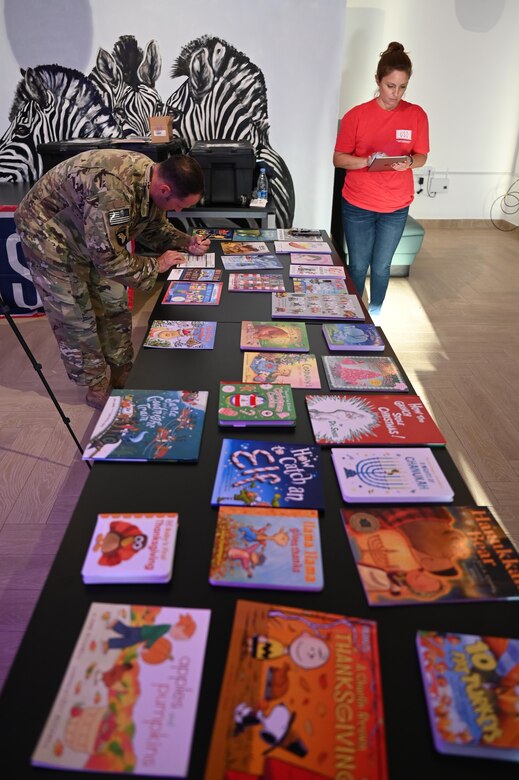
In addition to the delivery of care packages during the recent trip, the USO was able to provide forward-deployed service members the opportunity to utilize the Bob Hope Legacy Reading program.
"The USO took our reading program mobile and set up a location where service members can record themselves reading a book to their children," Coffer said. "The USO will then mail the book and the recording home at no charge to the service member. It's a great way for the service member to keep reading those bedtime stories to their children no matter where in the world they're located."
According to Coffer, working with the USO is a rewarding experience and a wonderful opportunity to show service members how much appreciation she has for what they do and the sacrifices they make.
The USO was formed in 1941 as a response to President Roosevelt's
call for a civilian organization to boost the morale of U.S. troops
during WWII.
"This represents almost 80 years of the USO standing side by side with
America's military no matter how far from home they serve," Coffer said.
"It also represents the countless staff members and volunteers who've
shared their time, talents and treasures in an effort to let our
military know we stand behind them every step of the way. Where they go,
we go."
Nov. 17, 2020 | , DOD News
A panel of Defense Department experts on the topic spoke remotely at the American Society of International Law.
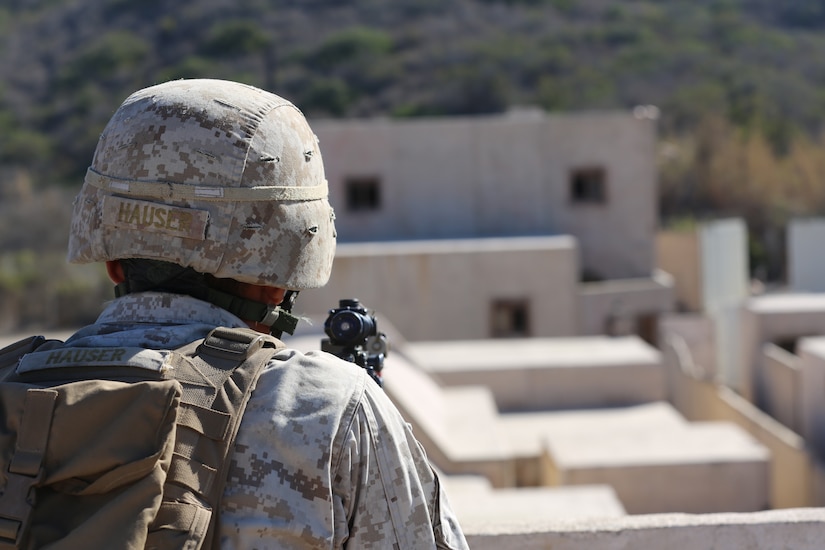
The American military's strong commitment to minimizing civilian casualties to the maximum extent possible and adhering to international humanitarian law principles is enculturated and internalized at all levels of command and across the services, Air Force Maj. John Legg, assistant professor of law at the U.S. Air Force Academy, said.
At the educational level in all of the services, commanders are inculcated with the moral and legal obligation to mitigate civilian harm, he said.
Also, structures are in place in the military to mitigate civilian casualties, he said, adding that the department works closely with allies and partners to ensure these norms are followed.
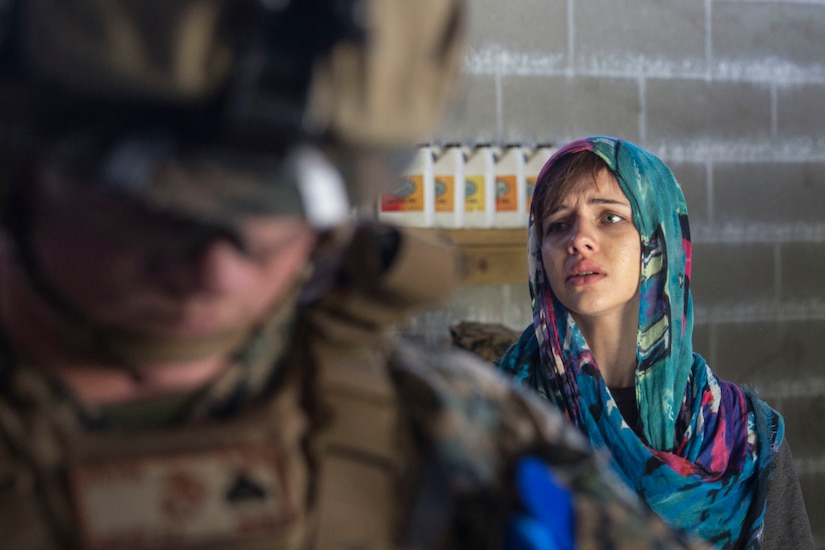
Foreign military sales are contingent on the partner nations' respect for mitigating civilian casualties, Loren Voss, senior advisor for Civilian Harm Mitigation at the Defense Security Cooperation Agency, said.
Factors that determine whether or not an FMS transfer is approved include looking at how the weapons will impact regional stability, how the arms are intended to be used, how the transfer affects U.S. national security and foreign policy interests and how the recipient nations will mitigate any risk of civilian casualties, she said.
The State Department's Office of Regional Security Arms Transfers oversees this effort in cooperation with DSCA and the geographic combatant commands, as well as with congressional oversight, she said.
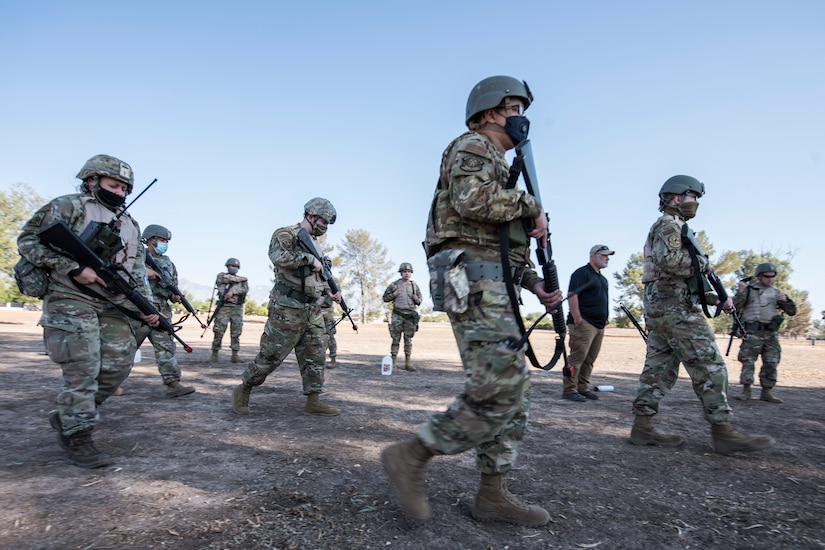
Retired Army Col. Randy Bagwell, senior director of International Services — U.S. Programs at the American Red Cross, said there are cultural differences among nations. Some cultures respect the rule of law more than others and compliance with the Law of Armed Conflict is much higher in those nations. Also, some nations lack the training and education necessary to reduce civilian harm.
Nicholas W. Mull, Civilian Harm Mitigation Program manager at the Defense Institute of International Legal Studies, said his organization promotes partner nations' military and institutional awareness of the Law of Armed Conflict through education and advisory efforts, as well as plans to ensure shared normative values dedicated to the rule of law.


 Posts
All Comments
Posts
All Comments
Posts
All Comments
Posts
All Comments


