
An airman assigned to the New Jersey Air National Guard conducts tactical training at Warren Grove Gunnery Range, N.J., June 12, 2020.
An airman assigned to the New Jersey Air National Guard conducts tactical training at Warren Grove Gunnery Range, N.J., June 12, 2020.
"Today Elaine McCusker submitted her resignation as Deputy Under Secretary of Defense (Comptroller) effective Friday June 26, 2020. Since joining the Department of Defense Elaine has worked tirelessly to ensure that our budgeting and audit processes give full value to the taxpayer while meeting the enormous security needs of our nation as well as the men and women who serve it. I am grateful for her dedication to public service and the contributions that she has made to the Department and wish her the very best in her future endeavors."
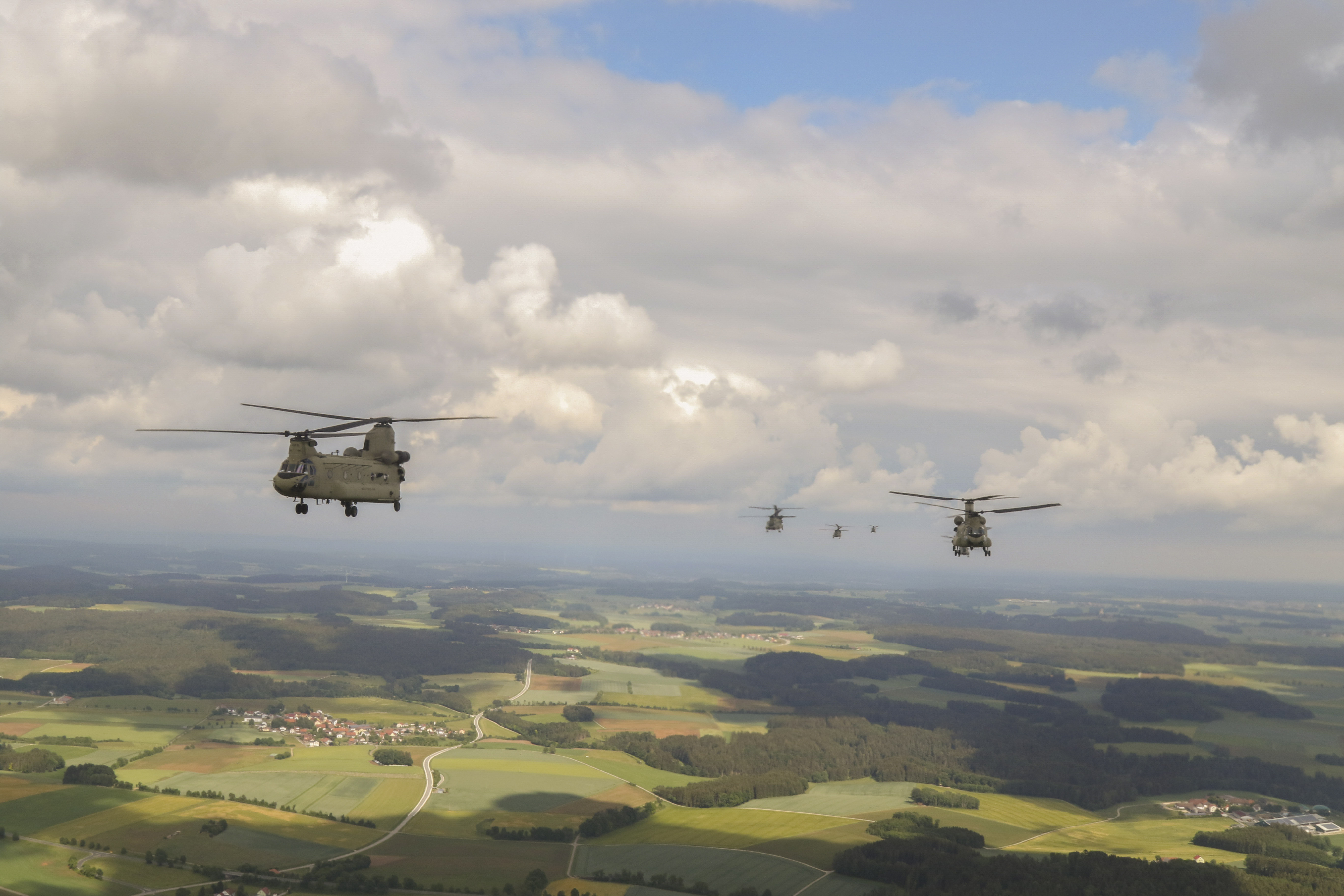
Soldiers aboard Army CH-47 Chinook helicopters fly over Hohenfels Training Area, Germany, June 6, 2020, during an air assault exercise.
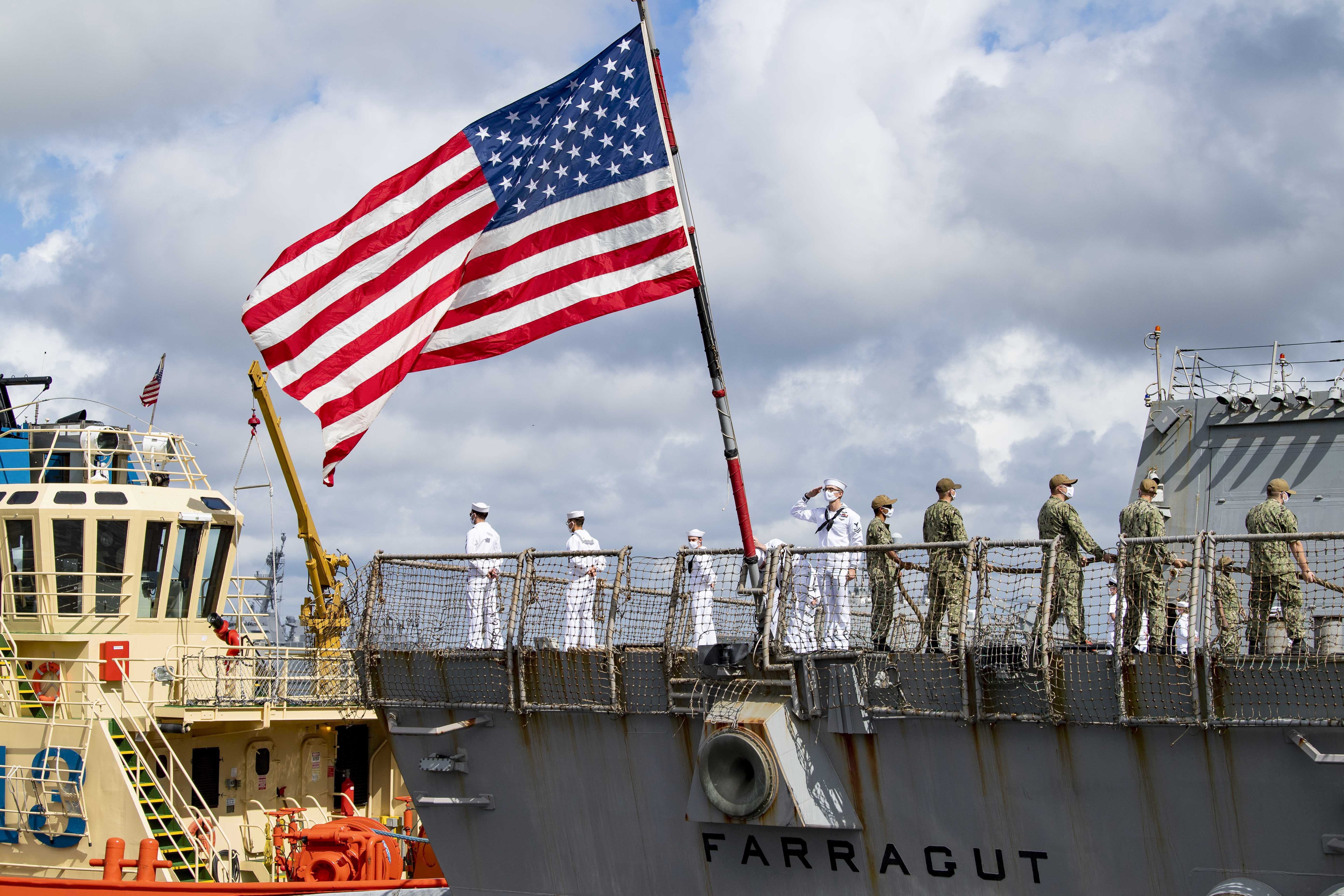
Sailors shift colors aboard the USS Farragut at Naval Station Mayport, Fla., June 14, 2020, after completing a deployment.
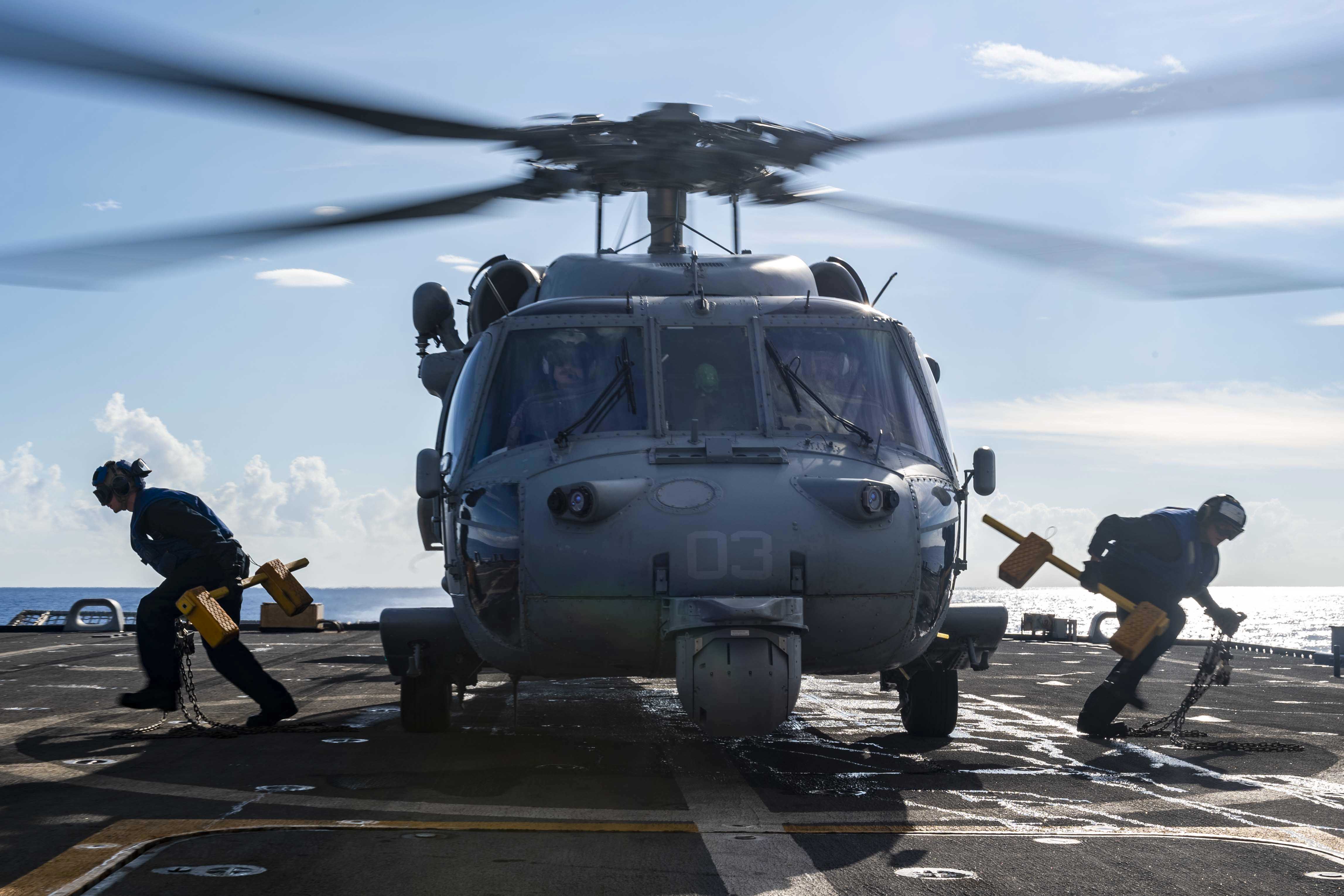
Sailors remove chocks and chains from the landing gear of an MH-60S Seahawk helicopter on the flight deck of the USS Detroit while transiting the Florida Straits, June 12, 2020.
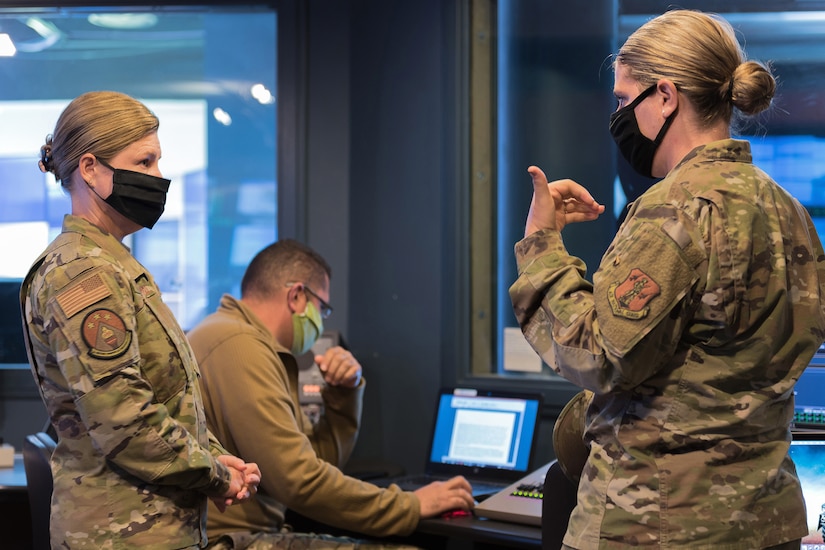
Professional Military Education instructors and staff at McGhee Tyson Air National Guard Base in Tennessee have made it possible for airmen who need to complete their Noncommissioned Officer Academy and Airman Leadership School requirements virtually.
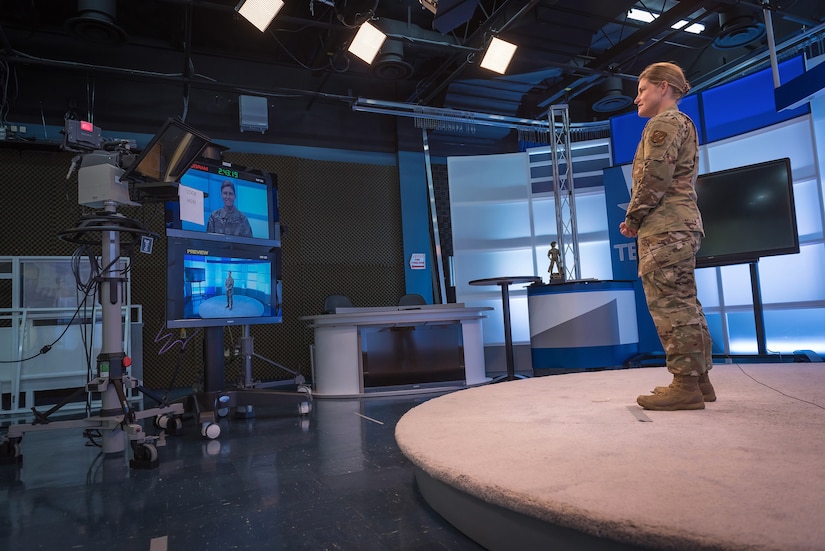
Air Force Tech. Sgt. Megan Francolini and Air Force Tech. Sgt. Renee Wiederspahn recorded sessions for the virtual in-residence remote NCO Academy in the I.G. Brown Training and Education Center TV studio.
The center's Lankford Enlisted Professional Military Education Center — the Air Force's largest enlisted PME center — kicks off the virtual-remote NCO Academy and Airman Leadership School courses today for more than 250 virtual students.
Air Force Chief Master Sgt. Steven Durrance, the Enlisted PME Center commandant, said in March that his team was focused on preparations to instruct a new curriculum as well as alternative learning methods.
Instructors learned television-studio camera skills such as reading from a teleprompter from broadcasting professionals to record their curriculum. The center operates the Air National Guard's broadcast center and Warrior Network television studios.
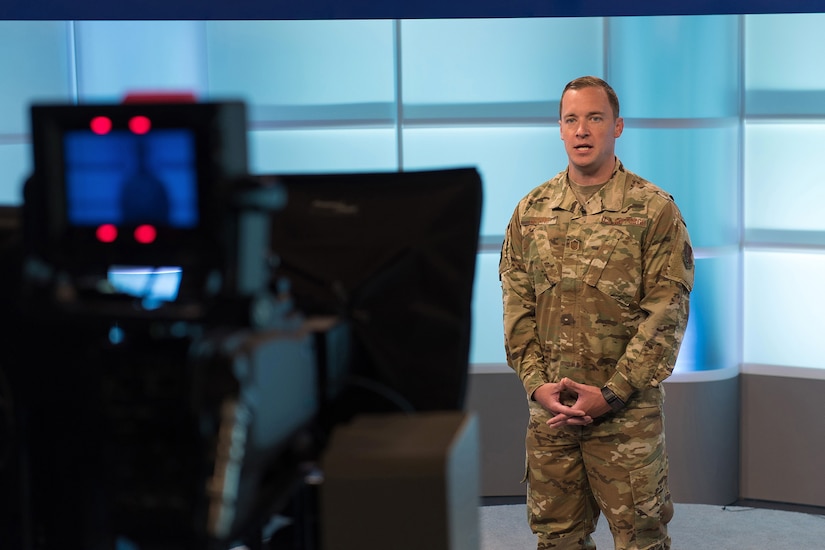
"This was an extremely quick turn for Lankford; especially considering the circumstances," said Air Force Master Sgt. Michael Beiting, the superintendent of the NCO Academy. "It really has been a massive effort with a lot of challenges."
The Air National Guard's Lankford Center is a total force institution and graduates thousands of students annually. The 38 faculty members include 19 active duty enlisted airmen, 18 from the Air National Guard and one from Air Force Reserve Command, as well as three support staff. They have focused on course revisions and transformations from home since the COVID-19 pandemic suspended classes on campus.
(Air Force Master Sgt. Mike Smith is assigned to the Air National Guard Training and Education Center.)
Faced with school closures due to the COVID-19 pandemic, California Military Department state active duty soldiers who serve as full-time cadre at California Military Institute found a new way to serve through a school meal program at Pinacate Middle School in Perris, California.
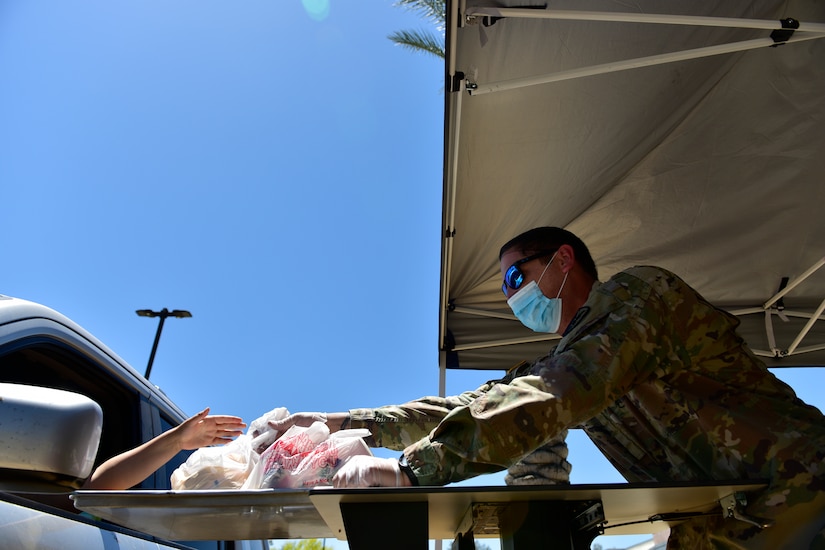
Army Sgt. 1st Class Benjamin Federici, the California State Guard noncommissioned officer in charge of operations at the California Military Institute, and Army Staff Sgt. Patrick Kelhi, with the California Army National Guard, volunteer twice a week, packaging and distributing meals to students in need.
"We're just here to help," Kelhi said. "The kids are going through enough, and no one has experienced this before. We’re a little bit of a solid foundation for the kids and family. They know we will be here on Mondays and Wednesdays to give out meals. They rely on us during this time of uncertainty. It's amazing."
The soldiers work with members of the TerraBites Cafe, which provides nutritional services to the Perris Union High School District. When all of the district's schools closed March 16, the TerraBites Cafe continued its meal programs.
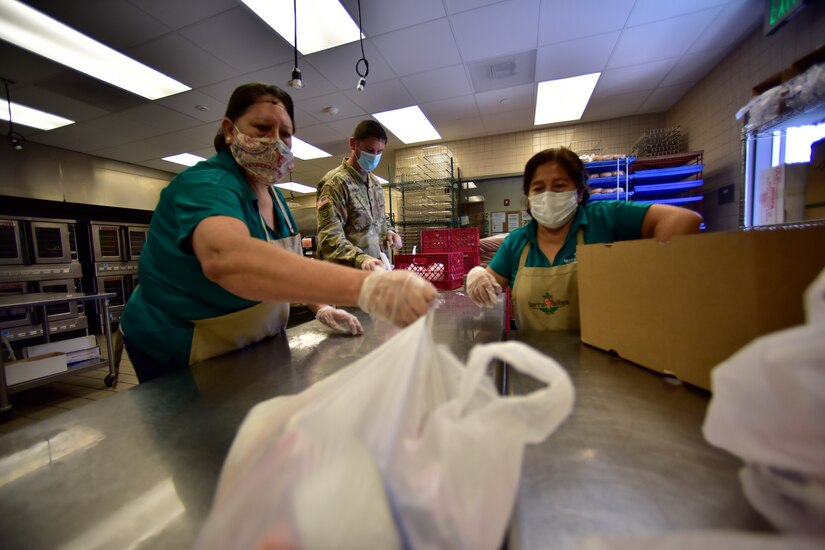
Louise Lopez, the nutritional services lead at the middle school, runs the meal distribution efforts that started shortly after the school closures.
"The kids count on these meals," Lopez said. "We have a really high percentage of students that receive free and reduced meals. We want to continue to meet that need, because we want to make sure they're still eating. For a lot of them, breakfast and lunch are their main meals, and it comes from us."
"I couldn't even put a word to it, it tears me up," she continued. "It's just so important. It's everything for a lot of them, and it's everything for a lot of parents, too."
Kelhi and Federici were quick to offer their help to the effort.
"When this started, we talked about it in our office and how these kids were going to be taken care of," Kelhi said. "So many kids rely on these meals. When we had the opportunity to volunteer here, we jumped on it. It's busy, it's hectic but the smiles on the kids' faces is a huge payoff."
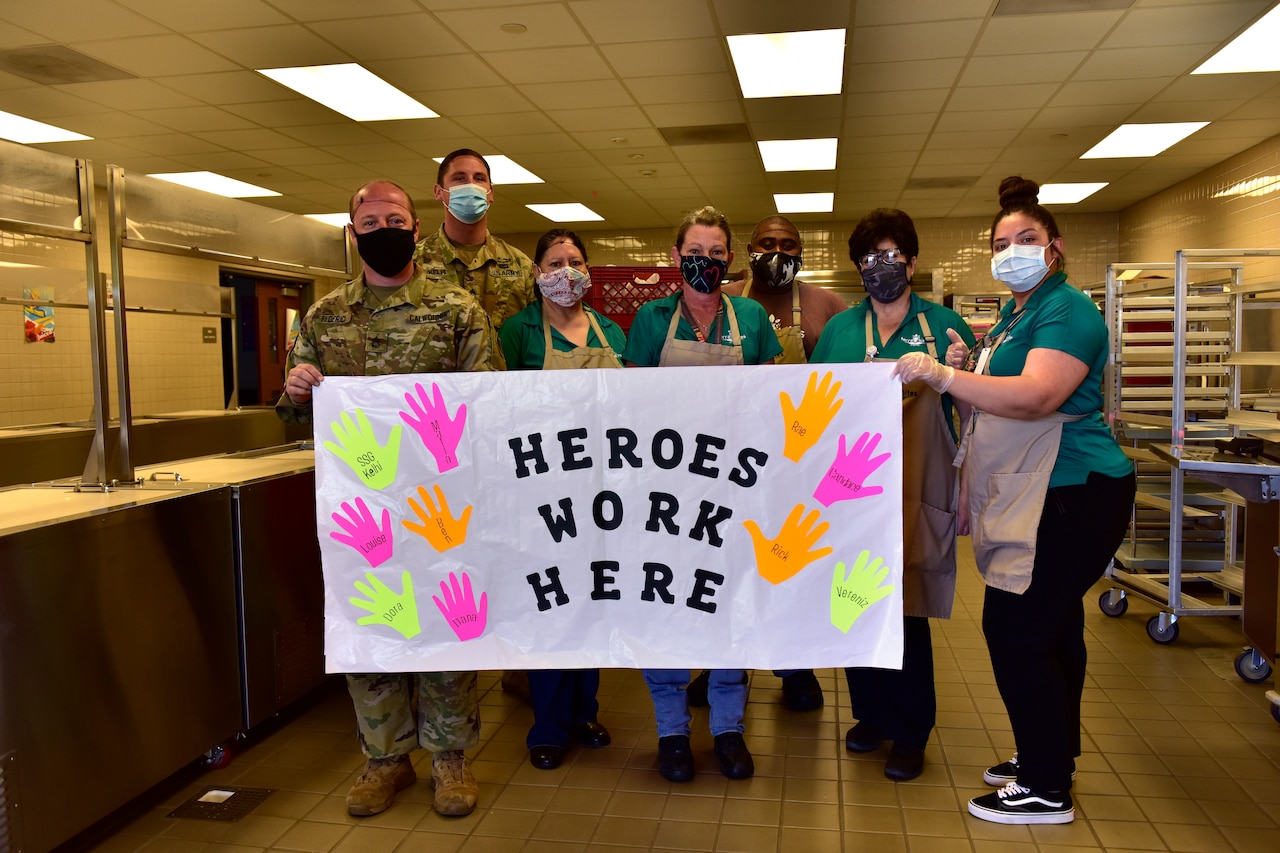
The twice-weekly distribution starts at 7 a.m. with staff members cooking and packaging the meals. Each meal includes a hot lunch item and two additional days' worth of breakfast and lunch items. The food covers the five days of meals children would have received if the school was still in session.
"Right now, what we're doing is making sure they get breakfast and lunch five days a week," Lopez said. "We have a system where the parents pull up, roll the window down, put their hand out of their window and show three fingers, four fingers, or whatever it is they need. Then we put the corresponding number of meals on a tray for them to grab."
Many of the children are not present for the meal pick-up, but some do ride along with parents just to see a familiar face and have a sense of normalcy.
"A lot of students will come through the line with their parents and say, 'That's my lunch lady,' or 'That’s my teacher,'" Lopez said. "They’ll wave, and the parents will wave at the guardsmen. The students get excited because we’re familiar to them."
"I want to go back to school," said Rogelio Lopez, who is 13 and a CMI cadet and member of the California Cadet Corps. "I miss my teachers and my friends, so it's cool to come through to get lunch and see them. This is amazing, because at the beginning, my mom couldn't get some things at the store because they ran out."
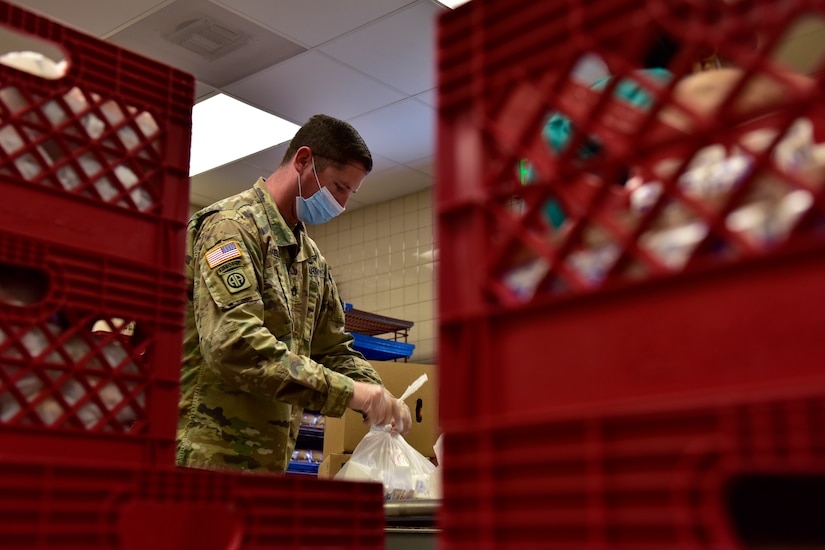
Kelhi and Federici help the TerraBites Cafe staff package the food and lead the drive-thru distribution to families.
As cadre members, both Federici and Kelhi interact daily with students in grades 5-12 who attend CMI, which is a military-themed public charter school in Perris. The school uses the California Military Department's youth leadership program, California Cadet Corps, as its military foundation, and members of the California state and national guards augment teachers to help facilitate the school’s cadet program.
"It helps out to have that face-to-face with my students, check on them and crack a dad joke to make them smile and laugh," Federici said. "I try to remind them that this will be over soon. Some of the students were upset that everything that was in the works got cancelled. I tell them this is just a setback."
The meal distribution means much more to Federici and Kelhi. For the pair, it's about more than handing out food.
"I feel a sense of pride that the kids are able to come here and get some nourishment, but also engage with us, too," Federici said. "If I can make that dad or mom or kid or grandparent smile and uplift their spirit, it helps me to go home to my kids and know I'm adding some good to a world that's chaotic right now."
(Air Force Tech. Sgt. Julianne Showalter is assigned to the California Air National Guard.)
The secretary's May 20 visit included stops at the 27th Special Operations Logistics Readiness Squadron and the 20th Special Operations Squadron, among other units.
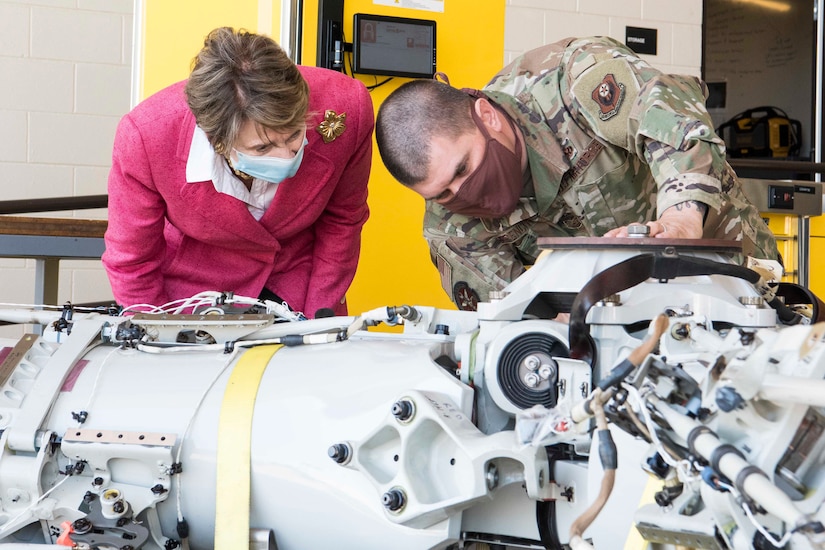
"It was reassuring to hear [Barrett's] insight and reflection on the wing and Air Force's response to COVID-19," said Air Force Lt. Col. Mark Hamilton, the commander of the 20th SOS. "We also noted her interest in taking away some of the best practices learned from the pandemic to become a more efficient and lethal vertical-lift squadron."
Hamilton and Barrett discussed the unit's role in the wing's mission, briefly showcasing the history of the unit and its accomplishments and how its airmen have continued staying current in meeting evolving demands with modern solutions.
"We are the sole vertical-lift platform at Cannon, and we strive to execute that professional specialized work for our nation," Hamilton added.
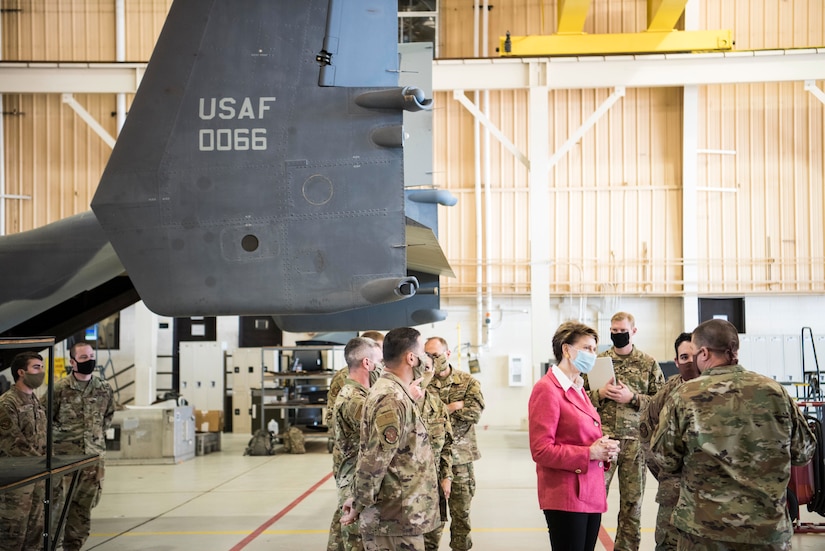
In light of the current times, Barrett not only wanted to see the day-to-day work of some of the base's units, but also wanted to hear about their methods of balancing airman safety with meeting mission requirements.
"We were presented with a unique problem set and rapidly adapted our lives in order to maintain readiness, minimize exposure and ultimately protect our collective family," Hamilton said.
Like many units, the 20th SOS has created a new shift system that essentially "splits" the squadron to minimize possible exposure. "While the workload has not reduced, we have become more effective at leveraging technology to work from home," Hamilton said.

Air Force Lt. Col. Shaun Parker, the 27th SOLRS commander, explained his squadron's side of the mission to the secretary and highlighted some airmen for their individual effort in keeping operations requirements met.
"I very much appreciated how she recognized the hard work of our members that have led the wing's pre-quarantine efforts to ensure we could deploy and relieve our deployed members that have been extended," Parker said. "I took away that she was interested in how we were maintaining readiness in the face of COVID-19."
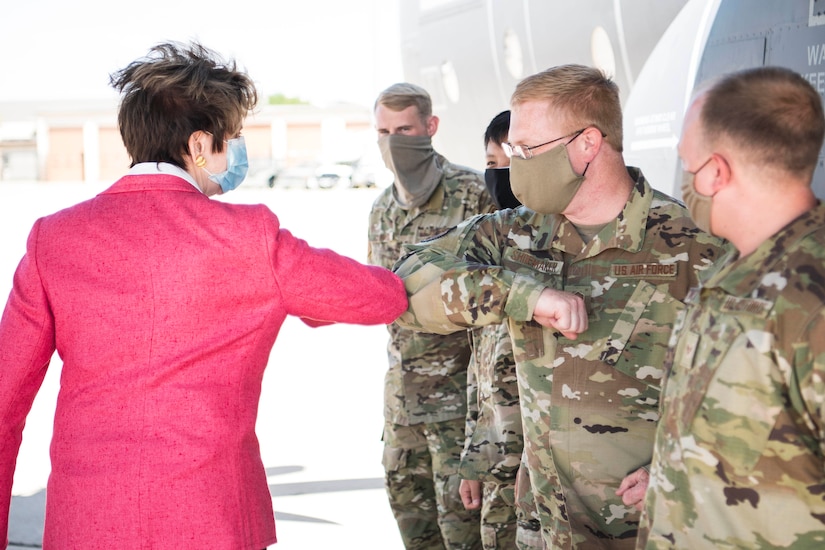
These two units were examples of how all squadrons at Cannon chose to adapt and press on with executing global operations at a high standard, base officials said.
"Today, the U.S. government, through the Department of Defense, is delivering vitally important equipment, including [personal protective equipment], to Eswatini to help prevent and combat COVID-19," said Ambassador Lisa J. Peterson. "We will continue to work with [the] government and our implementing partners to respond to this crisis in real and concrete ways."
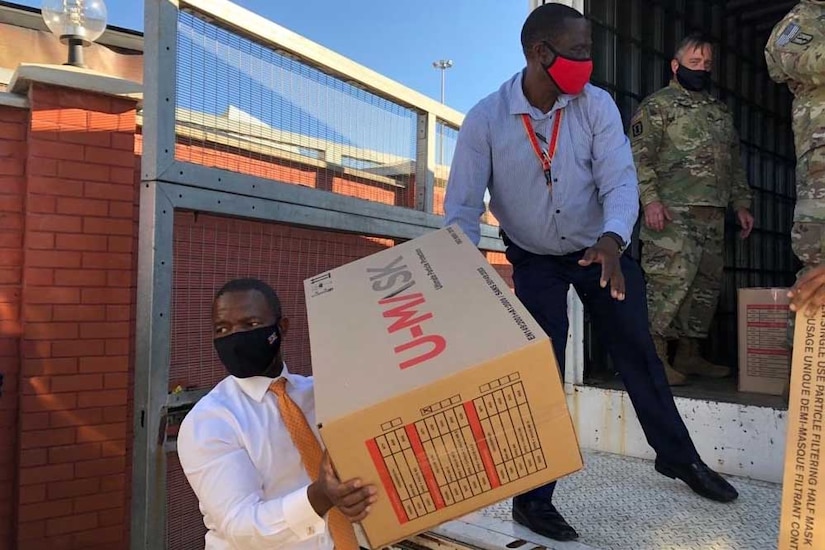
Eswatini, with a population of 1.2 million, is working hard to prevent the spread of COVID-19 within its borders. The donated equipment was transferred from embassy personnel in South Africa to the embassy personnel in Eswatini to comply with South African COVID-19 quarantine policies and laws.
"Together, we are working to overcome the COVID-19 pandemic, to protect people who are most vulnerable to contracting this disease and to preserve the advances Eswatini has made in the fight against HIV and AIDS," the ambassador said.
The donation of medical personal protective equipment from the U.S. to Eswatini is just one example of the ways the United States is supporting efforts to control COVID-19. The U.S. Embassy has already dedicated 22 medical and technical experts from the President's Emergency Plan For AIDS Relief, the Centers for Disease Control and Prevention, DOD and the U.S. Agency for International Development to work directly on Eswatini's COVID-19 response.

These officials support national efforts, share technical expertise, provide training and offer a wealth of knowledge and experience in responding to this unprecedented public health threat, officials said. Through direct funding to partner organizations, the U.S. Embassy is supporting 50 clinics and 1,926 facility and community-based support staff to support the government COVID-19 response.
"This donation of PPE from [U.S. Africa Command] to the Kingdom of Eswatini exemplifies how, despite vast distances between our capitals, governments can still work together to face down common threats on behalf of our citizens," said Army Lt. Col. Darrick Mosley, the U.S. Embassy Office of Defense Cooperation chief.
The border transfer demonstrates a continued and enduring commitment to helping build a stronger health system in Eswatini, officials said, protecting people who are most vulnerable from disease and working together to defeat COVID-19.
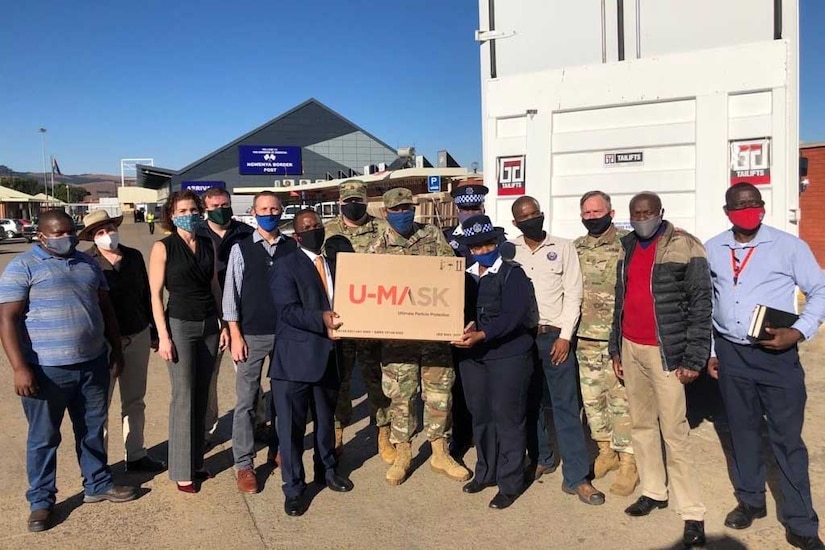
"We want to say, on behalf of his majesty's government, thank you for this partnership between the Kingdom of Eswatini and the U.S," Dr. Simon Zwane, the principal secretary of Eswatini's Ministry of Health. "We are so grateful to the American government for their generosity and warm heartedness, which they have shown not only in this COVID-19 pandemic but always. This PPE will go a long way in assisting the kingdom to respond more effectively to this pandemic, particularly to our beloved frontline workers."

Airmen assigned to the 347th Rescue Group drop flares during a "fini flight" for Col. Bryan Creel, the group's commander, at Moody Air Force Base, Ga., June 5, 2020. The fini flight is an Air Force tradition marking pilots' departure from a unit, or the last time they fly an aircraft. Creel's event marked his slated move to Incirlik Air Base, Turkey, to command the 39th Air Base Wing.
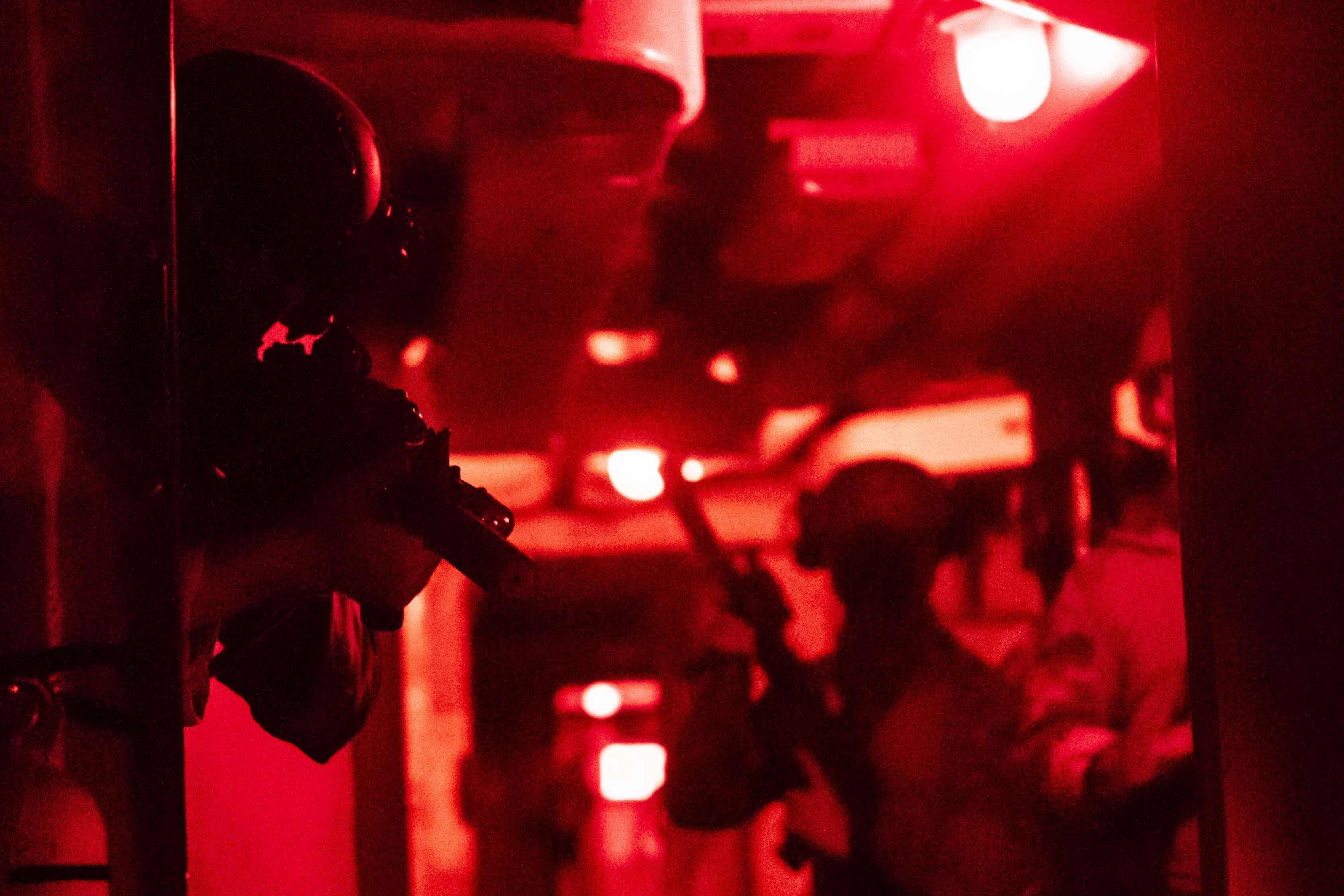
Coast Guardsmen conduct close-quarter combat training aboard the Coast Guard cutter Ingham, a museum ship, in Key West, Fla., June 8, 2020.
Based upon analysis of local conditions, per the White House guidelines for Opening Up America Again, DOD Chief Management Officer Lisa Hershman will move the Pentagon Reservation to Phase One (Restricted) of the Pentagon Reservation Plan for Resilience, effective 12:01 a.m. EDT, Monday, June 15, 2020. Under Phase One, the Health Protection Condition (HPCON) for the Pentagon Reservation remains HPCON C. The status of the Armed Forces Retirement Homes will not change; they will remain at HPCON D.
Main differences that may be seen starting Monday, as outlined below, are a slight increase of people in workspaces, more open entrances, and additional random testing of people entering facilities.
Under Phase One:
Additionally, under Phase One at the Pentagon building:
For further information, please see:
Thomas McCaffery told the Defense Writers Group today that he spends about 80% to 90% of his time on the Military Health System's response to COVID-19.
It is not surprising, as he is responsible for ensuring the health of the force and that forces are capable and ready if called on to deploy.
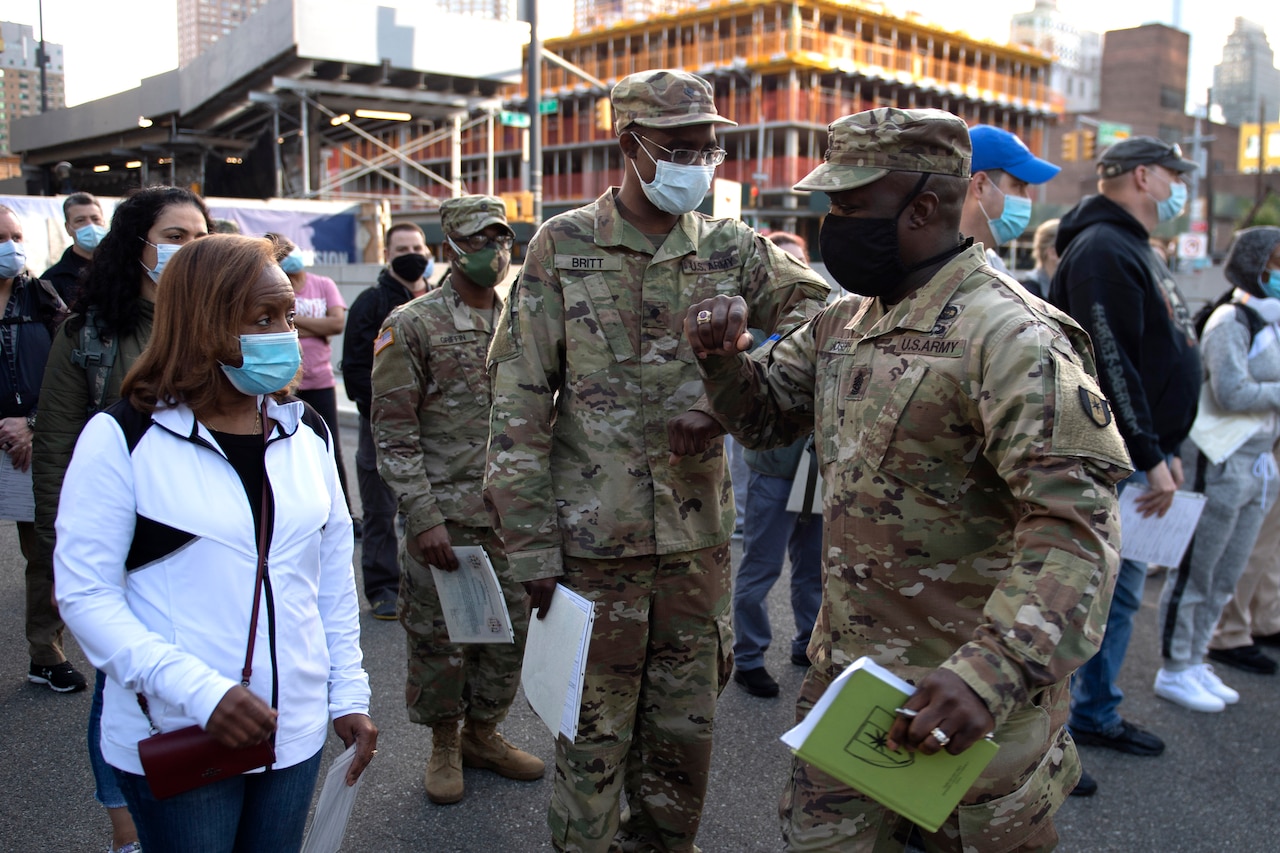
McCaffery, who came to the job in 2017 from time in the private sector and state of California health care systems, was struck by the short-term nature of the system when he first came on board. "One of the things that I found really interesting, and somewhat challenging, was the fact that in the military … there is continual change in leadership levels," he said.
He said he was struck that leadership positions turn over every two or three years, very different from his time in the civilian sector. "I was like, 'Wow, now that's a challenging dynamic,'" he said.
This works against long-term issues, but there's a flip side, he noted. "That is, our uniform leaders and our civilians are very, very good at adapting to change, and it's not something unique; they're used to it," he said. "It's part of the culture, part of their DNA. The health system leadership pivoted easily when the pandemic hit," he added.
The deployment of hospital ships to New York City and Los Angeles, the deployment of Army medical units to cities that include Seattle, Denver and Dallas, and the sharing of medical equipment with civilian hospitals are just some of the issues to which the Military Health System had to adjust, McCaffery said.
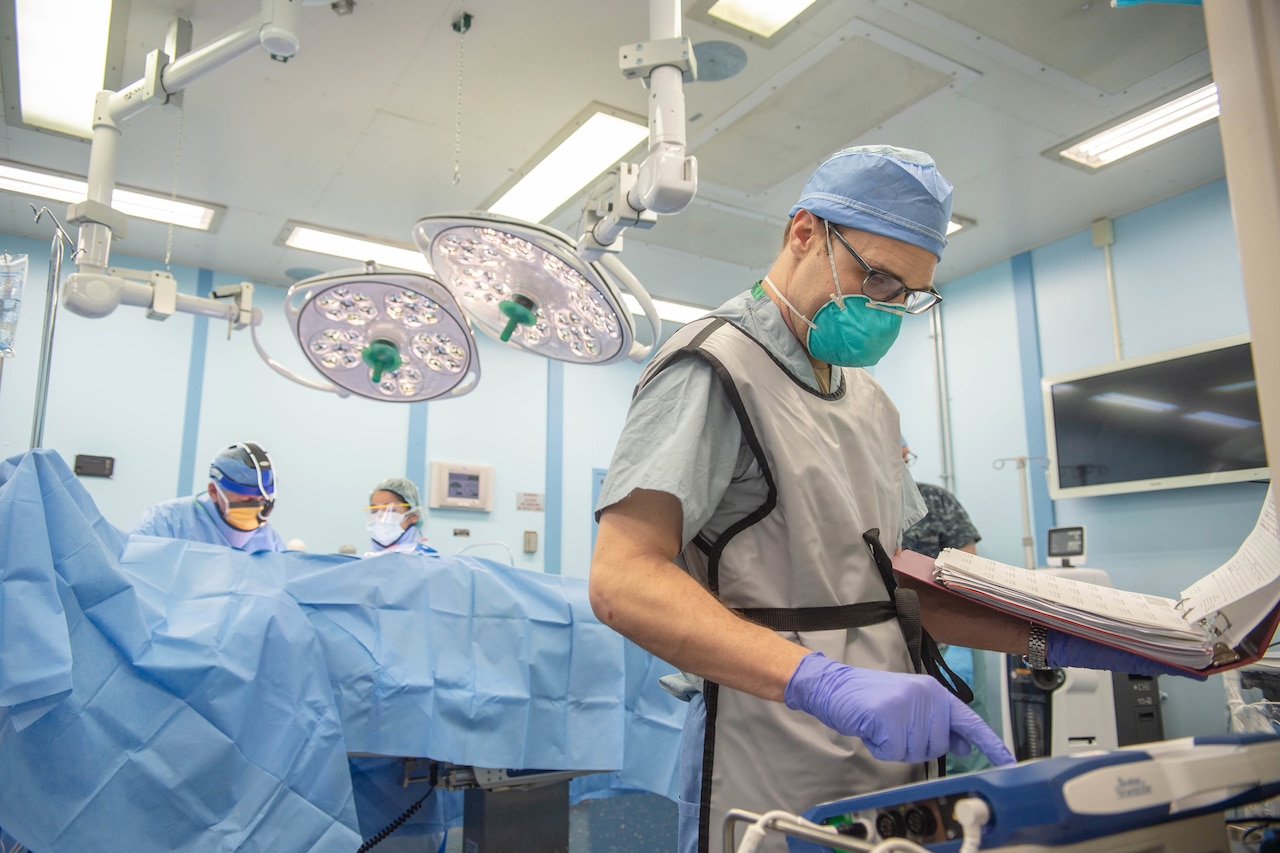
When U.S. medical forces are deployed, they usually are going overseas or perhaps to domestic areas affected by emergencies such as hurricanes, he said, and they deal with trauma rather than disease. "This was very different — a very different enemy," McCaffery said. "As we saw in New York City, we had several hundred of our uniformed medical providers actually helping staff civilian hospitals."
Another aspect is research, he said, and the Military Health System has been able to deal with the pandemic in that respect. "I kind of consider myself fairly educated on health care, but it wasn't until I got here [that I began] to realize the enormous role that the Military Health System plays in medical research and development," he said.
The military has a long-standing research arm that developed treatments for malaria, yellow fever and more to protect service members deployed around the world, McCaffery said. "But it often translates into supportive, kind of larger, social civilian health care sector," he added. "Obviously, we do research on vaccines, medical countermeasures for military purposes, keeping our troops safe. But we were very quick to pivot and leverage that kind of research that has already been going on for our military purposes, to … vaccine research and development for COVID therapeutics for treatment."
Global conflict is evolving, and to illustrate that the United States military needs the expertise and viewpoints of all members of society for success. DOD has published the Women, Peace and Security Strategic Framework and Implementation Plan as part of a national effort to promote the safety, equality and meaningful contributions of women around the world, Pentagon spokesman Jonathan Rath Hoffman said.
"By recognizing the diverse roles women play across the spectrum of conflict — and by incorporating their perspectives throughout plans and operations — DOD is better equipped to promote our security, confront near-peer competitors, and defeat our adversaries," he said.
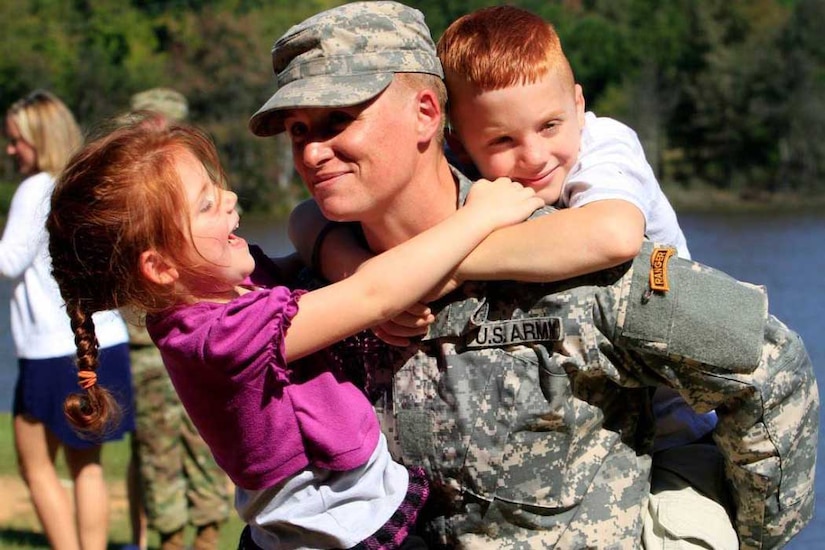
Stephanie Hammond, the acting assistant secretary of defense for stability and humanitarian affairs, briefed the strategic framework during a webinar hosted by the American Enterprise Institute. She said the plan recognizes that identifying "sustainable security approaches that meet the unique needs of an entire population is greater than ever."
From the "Yeomanettes" and "Hello Girls" of World War I through the establishment of the Women's Army Corps and Women's Airforce Service Pilots during World War II to engagement teams of women serving in Afghanistan, the roles and viewpoints women offer to operations have grown officials said, and this plan seeks to ensure this process continues.
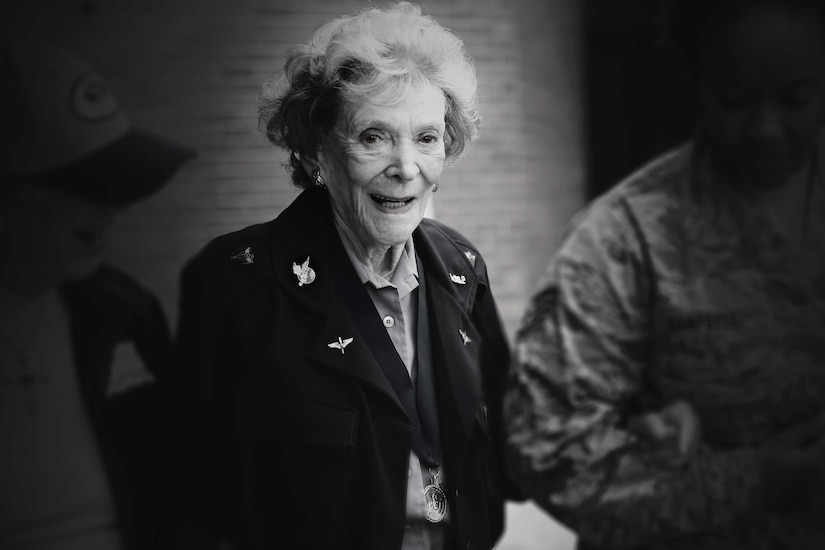
Adversaries — from near-peer competitors to ISIS — seek strategic advantages through the global recruitment and exploitation of diverse populations. "We must work together to continue to empower and train diverse talent," Hammond said.
The Women, Peace and Security Strategy agenda is key to upholding international human rights and the rules-based international order the United States and its allies and partners seek to maintain, and it is part of a whole-of-government approach, Hammond explained. She was joined in the webinar by speakers from the State Department, the Department of Homeland Security and the U.S. Agency for International Development.
Hammond said she sees the plan as a unique engagement opportunity to strengthen relationships with allies and partners through collective efforts to reinforce women's empowerment, meaningful participation and decision-making, protection from violence and access to resources.
"When we recognize the diverse roles women play as agents of change; and when we incorporate their perspectives throughout our plans and operations, we are better equipped to promote our security, confront our near peer competitors, and defeat our adversaries," she said.
Strategies are great, but if they are not followed, they are just so much clutter on bookshelves. DOD has an implementation plan it will follow to ensure this is not a meaningless effort, Hammond said.

The department will work toward fully incorporating the perspectives of women in military activities, operations and investments across the continuum of conflict and crisis, Hammond said. "This is the first departmentwide strategy that outlines how the department will support the intent of the [Women, Peace, Security] strategy through attention to the composition of our personnel and the development of our policies, plans, doctrine, training, operations, and exercises," she added.
This approach will support the lines of effort in the 2018 National Defense Strategy, Hammond said. "It will help the department strengthen alliances and attract new partners by demonstrating U.S. commitment to human rights and women's empowerment, making the United States the partner of choice," shed said.
Hammond outlined three DOD objectives of the Women, Peace Security strategy:
This is the first DOD-wide strategy written to promote the meaningful inclusion of women across the spectrum of conflict, to strengthen partnerships and increase effectiveness and national security capabilities, Hammond said.
This will not happen overnight. The plan lays out a series of intermediate defense objectives and effects to establish and improve policy frameworks and support achievements in gender equality, Hammond said.
At the crowning of this year's Zama Middle High School royal prom court at Camp Zama, Japan, all four members stood alone, socially distanced, to put on their own crowns or tiaras.
With this year's prom canceled due to COVID-19, there was no dancing, no crowd and no fancy gowns or tuxedos, but the members of the court still smiled, nicely dressed and thankful the school managed to maintain a few prom traditions despite the ongoing pandemic.
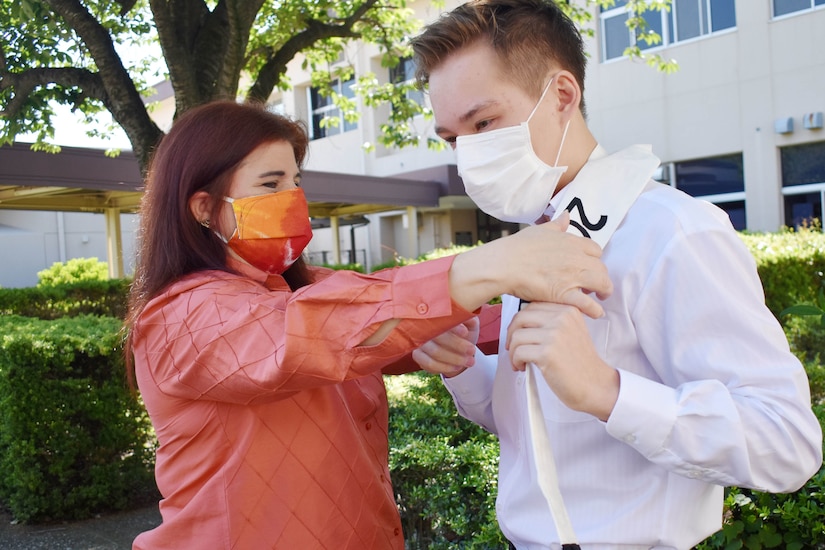
Lauren Rosa, an art teacher and the prom organizer, led the organization of a modified version of the traditional prom that included party favors, the crowning of an elected prom court and the chance for photos and a video.
"It's important to finish what you start," Rosa said. "What's going on doesn't have to, per se, define your whole academic career or your entire senior year. It stinks. It's not a great way to end, but something, in my book, is always better than nothing."
This year's prom court consisted of Jason Giles, prom king; Leah Sakamoto-Flack, queen; Alexander Ala, prince; and Aika Davis, princess. They individually put on their crowns and tiaras while maintaining social distancing during a small ceremony in a sunny garden at the school May 29. Lucinda Ward, the Camp Zama school liaison officer, sewed the sashes and donated them.

Sakamoto-Flack, a senior, said she appreciates the effort everyone put into the modified prom.
"I think it's the best they could do under the circumstances, and I think it's still honoring the seniors because this is their last high school event," Sakamoto-Flack said. "They still did a really good job with everything."
Davis, a junior, said she had been looking forward to attending this year's prom before its cancellation but was glad organizers found a way to maintain some of the traditions.
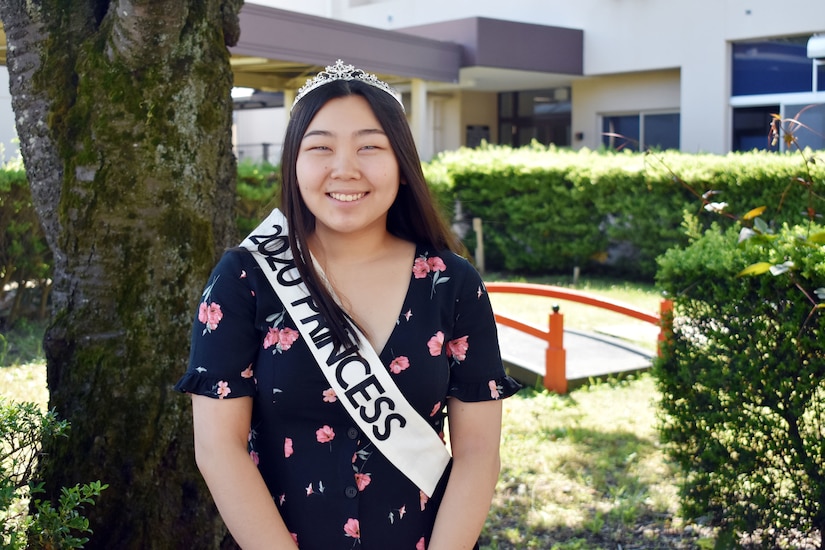
"I went to the prom my freshman and sophomore years, and I'm going to miss the whole dancing part, but I think it's nice that they're doing something for the kids," Davis said.
Giles, meanwhile, said he found one aspect of this year's prom better than last year's: It was outside. Giles, a senior, said he was glad organizers held the ceremony outside and in person instead of online.
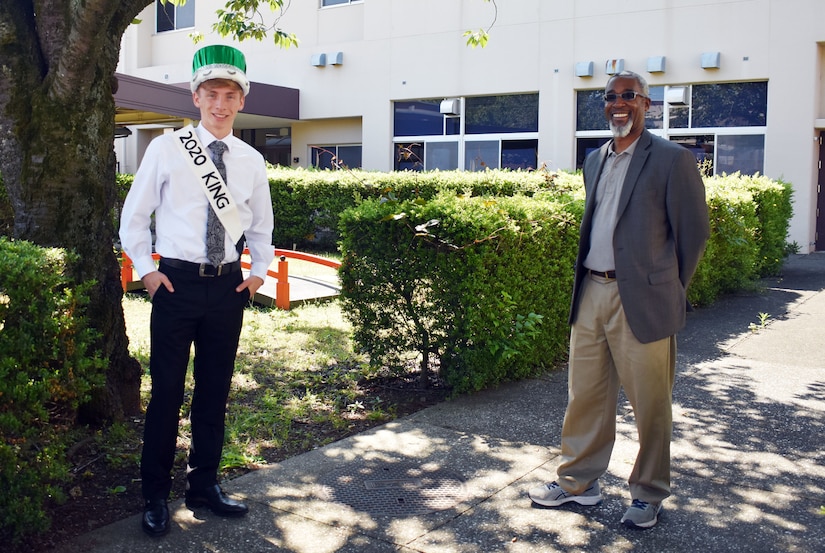
Ala said he recognizes the school could not hold a full-fledged prom this year with COVID-19, and appreciates all they did instead.
In addition to the court members, the student body also had a chance to participate by voting online for the court and picking up Botanical Bloom Prom 2020 party favors at the school. Of the 138 students eligible to vote for the court, 100 did, Rosa said, and she was happy with the turnout.
All four members of the court said they were surprised their peers had voted for them.
"I wasn't expecting this and was really surprised," Ala said, echoing similar sentiments from all three other members of the court.
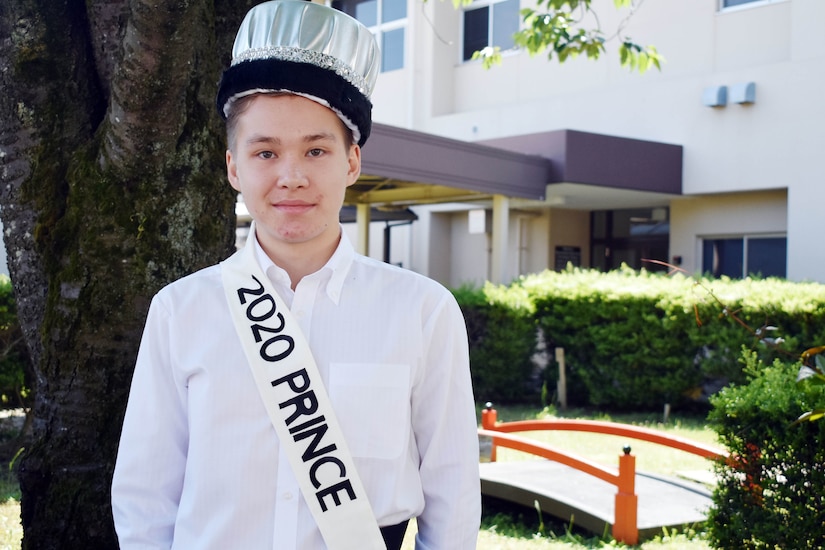
Rosa said she had organized nine other proms at the school she used to work for in Florida, so she knows how important proms are for students.
In addition, however, continuing with a modified prom teaches a greater life lesson: in the face of adversity, it is important to keep going, Rosa said.
"[COVID-19] is one challenge, one disappointment in your life, and if it's the only one, fantastic, but that's probably not likely," Rosa said. "You just have to put one foot in front of the other and just try."
Ward agreed.
"Our traditions do not have to stop based on a pandemic; they just need to be modified," Ward said. "Recognizing prom allows the youth to still experience tradition through a different set of glasses."
Ward said she donated the sashes because sewing is her favorite pastime, and when she arrived at Camp Zama nine months ago, the community embraced her.

"Making the sashes is just my way of thanking all of the youth for welcoming me as the school liaison officer," Ward said. "This is a great community."
Wayne Carter, the principal of Zama Middle High School, said the modified prom went well and he thanked Rosa, Ward and Camp Zama's Family and Morale, Welfare and Recreation for making it happen.
Not only did the prom organizers step up this year, so did everyone associated with the school, Carter said.
"This has been a very unprecedented year, but what we've seen from the students, from the families, from the teachers, it's just phenomenal," Carter said.
(Winifred Brown is assigned to US Army Garrison Japan.)
U.S. Army Medical Command promulgated the COVID-19 Airway Management Isolation Chamber. It's used to protect medical care providers from exposure while treating COVID-19 patients.
The CAMIC is an inexpensive barrier device constructed by draping clear plastic sheeting over a box-like frame made of common PVC piping. The barrier is then placed over the patient's head to reduce the risk of spreading COVID-19 during treatment. This barrier protects health care workers from aerosolized droplets by capturing and removing viral particles emitted from the patient. Holes in the piping device release oxygen flowing through it from one end, which is then sucked out by a vacuum on the other end.
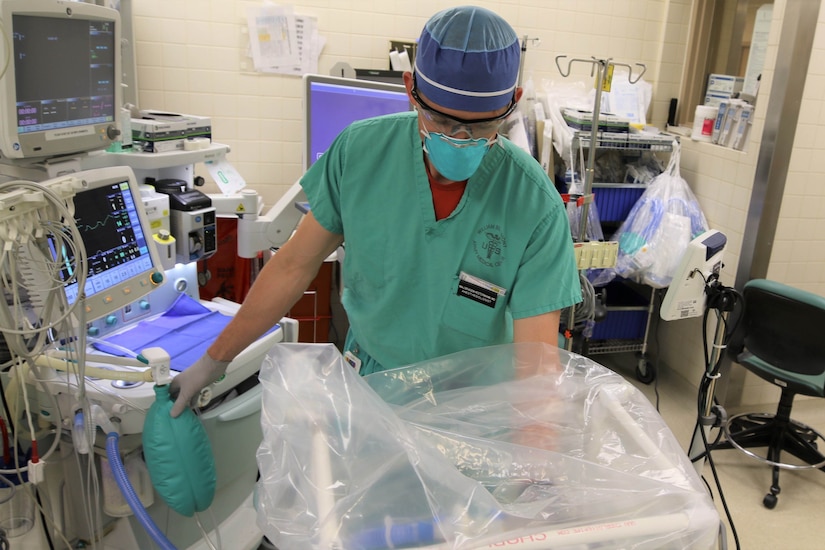
With an emergency use authorization from the U.S. Food and Drug Administration, the hospital contacted Fort Bliss for support in constructing 40 CAMICs. A few volunteers from Fort Bliss Range Control stepped forward to do the job. They volunteered to construct the devices, procured all the supplies needed and began working on the construction immediately.
Tim Ahlstrom, Robert Serrano, Kevin Waller and Raul Martinez, range control maintenance workers from the Fort Bliss Directorate of Plans Training Mobilization and Security, came in for a few weeks and built the CAMICs using development instructions from Army Medical Command.
"When they explained to me what it was going to be used for, I said definitely, we will do it," said Serrano, a maintenance mechanics. "We have to do what we can to help during these times. It is a small part on our part, but still it's something that is going to be a big help to the people who get infected."
Doctors and nurses at the hospital are thankful that the items were constructed in such a quick manner and are at their disposal when treating someone with COVID-19.
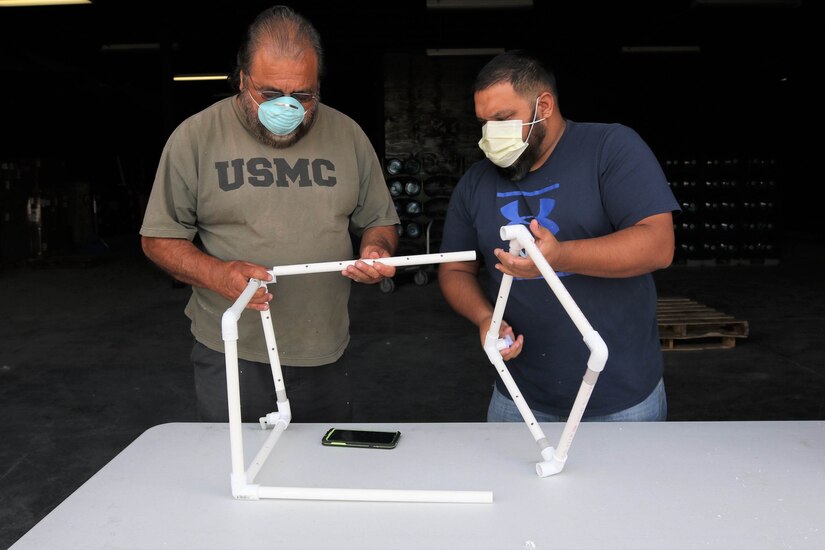
"The construction of the CAMIC devices by our Team Bliss colleagues is a great example of the phenomenal work by the entire Fort Bliss community in response to the COVID-19 pandemic" said Army Col. (Dr.) Michael Oshiki, the commander of William Beaumont Army Medical Center. "These devices will provide a superb degree of protection to our staff and our patients, and on behalf of WBAMC, Command Sgt. Maj. [Janell] Ray and I would like to extend our heartfelt thanks to all those who contributed to getting these devices made."
Army Lt. Col. (Dr.) Eric Weber, the chief medical officer of William Beaumont Army Medical Center, explains that the CAMIC can be the solution to a worldwide problem.
"The problem is we have a disease that is dangerous and can spread easily when aerosolized," Weber said. "Where you would normally treat a patient with this disease in an isolation or negative pressure room, this helps. There are not enough negative pressure rooms in hospitals, and this can help treat patients in regular rooms."
In the emergency room, a patient with COVID-19 may need to be intubated, and anyone within 6 feet of that patient is at high risk for contracting it themselves.
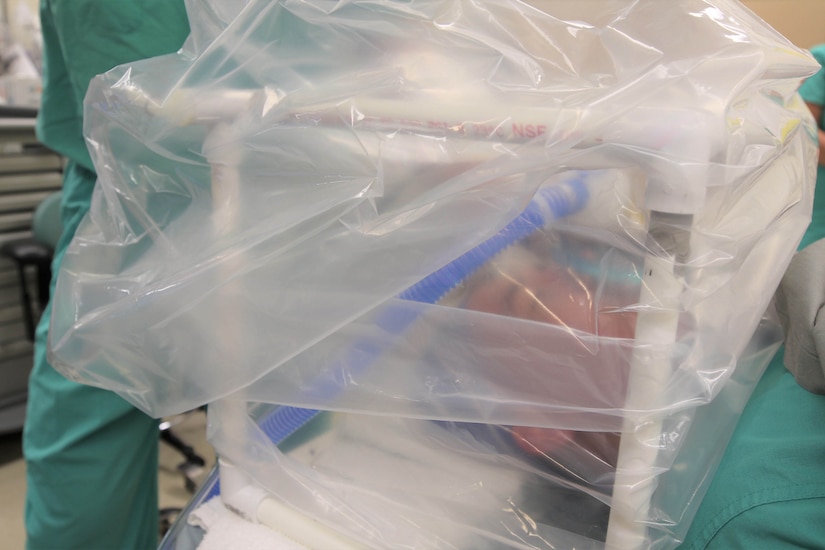
"The CAMIC is the perfect solution. You can put anyone on a [Bilevel Positive Airway Pressure device] or any kind of high-flow nasal device and completely wall it off, and prevent them from getting intubated and help them get better and not spread the disease to everybody else," Weber said.
All 40 CAMICs have been fielded in different parts of the hospital, to be used on patients when needed.
"The CAMIC is a small piece of what we are doing to treat patients with COVID," Weber said. "We have an amazing staff, and we are prepared. I think patients can feel safe and comfortable coming here. We are ready should a large volume of patients come."
As a doctor himself, Weber said, he does not hesitate to give the local population his advice.
"As the chief medical officer here, my advice to everybody is to wear a mask," Weber said. "There is a tremendous amount of data that wearing a mask is the absolute best thing we can do. It's not 'Wear a mask for yourself,' it's for the people around you. You may do great if you are young, but you may have other people who you may interact with that may not do so well. A mask will help slow the spread until we can get a vaccine."
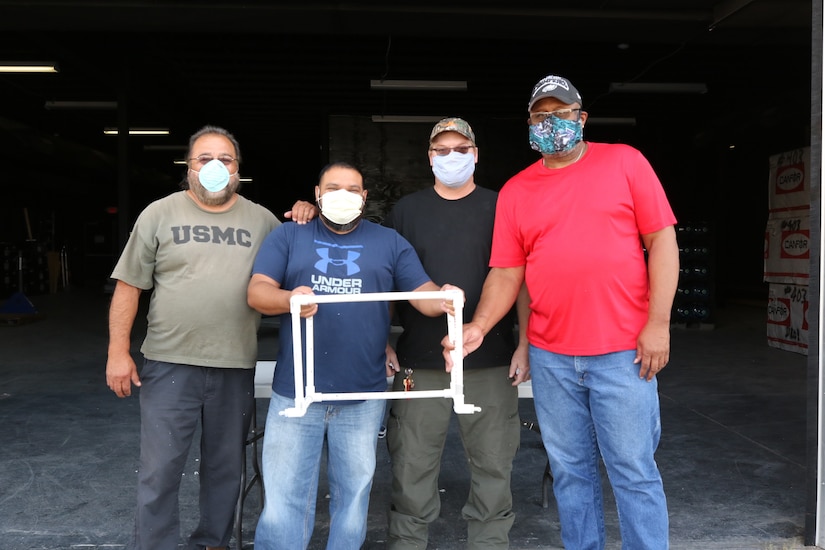
Samuel Pearson, the logistics manager for the range branch, agrees with Weber. Aside from helping in acquiring the materials for the range control team to make them, he feels people should know that they may end up under the CAMIC themselves.
"I want people to take it seriously, you know," Pearson said. "Wear the mask, wash your hands. We get emails on people telling us what to do, what not to do, and I just want people to adhere to what our leaders are telling us so we can be safe."
(Amabilia Payen is assigned to the William Beaumont Army Medical Center.)
Since not being fully operational since mid-March due to COVID-19, the 2nd Operational Medical Readiness Squadron, is preparing to reopen the dental clinic on Barksdale Air Force Base, Louisiana, using a phased approach to begin completing a backlog of 903 dental exams.
''First, we are going to be catching up on all the annual required dental readiness exams that have been postponed since March,'' said Air Force Lt. Col. (Dr.) Rachel A. Webber, a periodontist with the 2nd OMRS. ''No routine dentistry [e.g., fillings, cleaning] until later, unless it is causing the patient to be dentally nondeployable.''
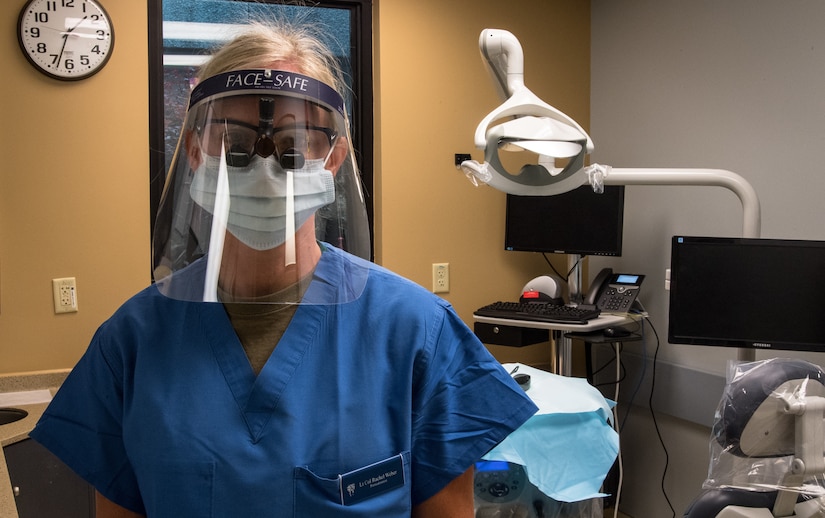
Upon arrival at the clinic, patients must call and notify the front desk personnel that they have arrived and then wait in their cars. Patients will get a call to come to the front door.
Once at the door, patients are asked to wear a face mask. A dental technician will check the patients' temperature and screen them using a COVID-19 questionnaire. Patients will then immediately be brought back to their treatment room. These procedures are in place to minimize the number of patients in the reception area, Webber explained.
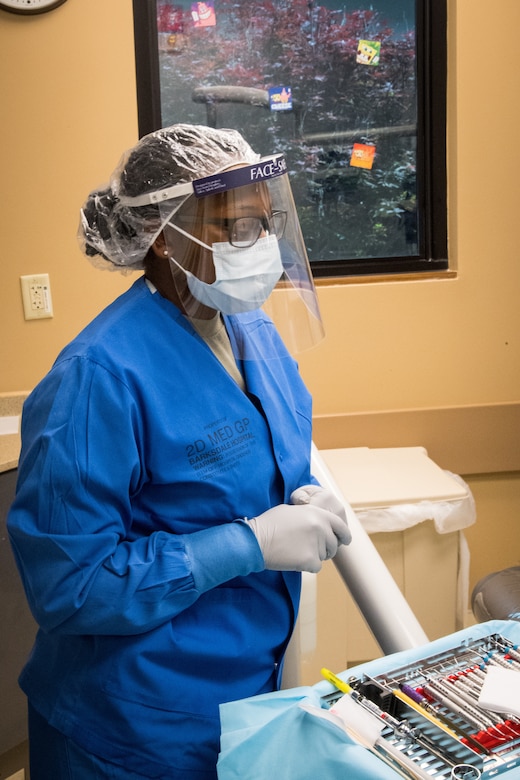
Aside from having patient procedures in place, the dental staff has been preparing each suite for use. Rooms have been inspected, unnecessary items were removed and water lines have been shocked and tested.
''It's good to get back to a workflow and nice to start seeing everybody''' said Air Force Airman 1st Class Bryson T. Raymer, a dental technician at the clinic. ''It's kind of a blessing in a way, because I know people were running out of things to do. I'm happy to be back.''
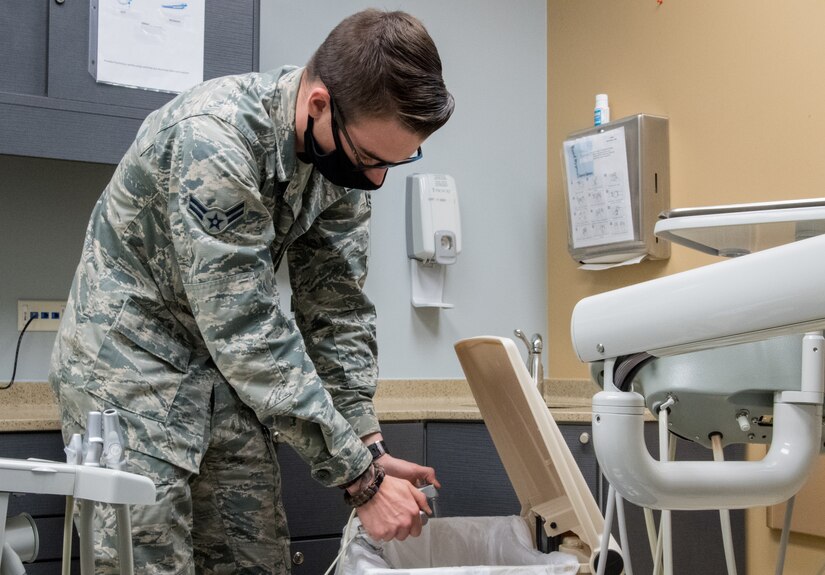
Although the clinic will have full-day operational hours from 7 a.m. to 7 p.m., it will be operating with a split staff. Half of the dental staff will report in the morning and work in one section of the clinic, while the afternoon staff will work on the opposite side of the clinic. This schedule is designed to help keep everything isolated.
''I'm adjusting and getting back to everything,'' said Air Force Senior Airman Amanda Yeske, a front desk attendant. ''I'm ready to get back into the swing of things.''
(Air Force 2nd Lt. Aileen Lauer is assigned to the 2nd Bomb Wing.)
It's election season again, when federal, state and local political campaigns kick into high gear. Defense Secretary Dr. Mark T. Esper's latest ethics video lays out the importance of political activity rules that Defense Department civilian employees and service members must follow.
In the 2020 DOD Public Affairs Guidance for Political Campaigns and Elections memorandum of Feb. 11, DOD spokesman Jonathan Rath Hoffman summarized the rules that apply to all DOD personnel regarding involvement in political events.
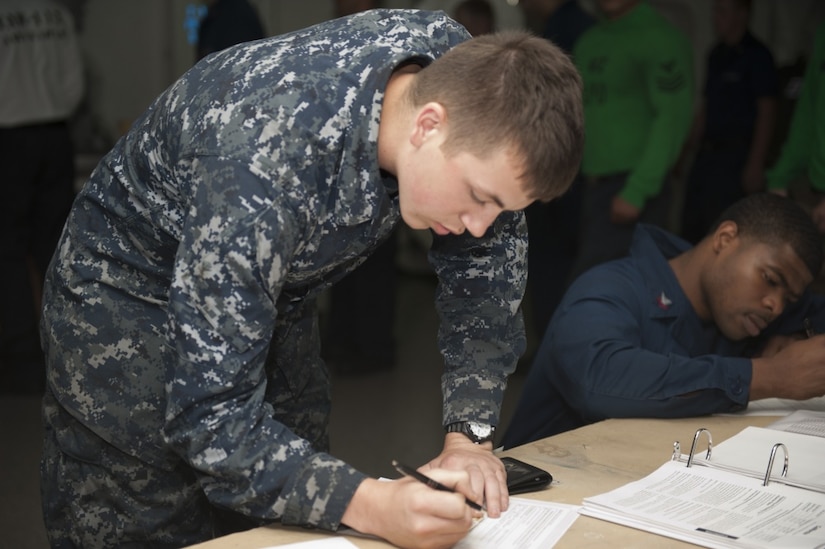
"The Department of Defense has a longstanding and well-defined policy regarding political campaigns and elections to avoid the perception of DOD sponsorship, approval or endorsement of any political candidate, campaign or cause," Hoffman wrote.
"The department encourages and actively supports its personnel in their civic obligation to vote, but makes clear members of the armed forces on active duty should not engage in partisan political activities," his memo read.
The Hatch Act is a federal law passed in 1939 that limits certain political activities of federal employees, according to the U.S. Office of Special Counsel. It applies to DOD civilian employees. The law's purposes are to ensure that federal programs are administered in a nonpartisan fashion, to protect federal employees from political coercion in the workplace, and to ensure that federal employees are advanced based on merit and not based on political affiliation, the OSC site added.
DOD policy for service members is contained in Department of Defense Directive 1344.10, Political Activities for Members of the Armed Forces. It is DOD policy to encourage members of the armed forces to carry out the obligations of citizenship while keeping with the traditional concept that members on active duty should not engage in partisan political activity. All members of the armed forces, including active-duty members, members of the reserve components not on active duty, and retired members are prohibited from wearing military uniforms at political campaign or election events.
As the secretary said in his ethics video, both active-duty service members and civilian employees must understand federal rules and DOD policies pertaining to political activities. Service members and employees should direct any questions to their supervisors or their supporting legal office, said a senior official in DOD's Standards of Conduct Office.
For particulars and more in-depth information concerning political activities, check out DOD Directive 1344.10 for service members and the U.S. Office of Special Counsel website for civilian employees.

In his ethics video, and in previous ethics messages to the department, Esper emphasized the importance of leaders regularly training their subordinates in the importance of maintaining ethical standards.
"Maintaining the hard-earned trust and confidence of the American people requires us to avoid any action that could imply endorsement of a political party, political candidate or campaign by any element of the department," he said.
"As the secretary has stated, we must continuously train and prepare so that we are ready to do what is right when ethical dilemmas arise," said Scott Thompson, director of DOD's Standards of Conduct Office. "Training is not a one-time event. The secretary expects department leaders to be personally involved in training their organizations, and to talk about examples of ethical decision-making, good and bad. In addition to annual ethics training, leaders should routinely make conversations about ethics a natural part of meetings and engagements with personnel."
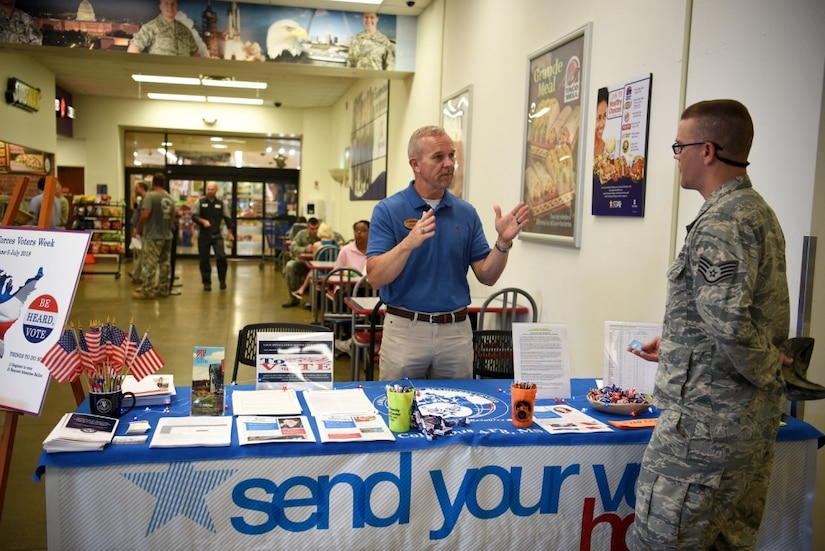
As leaders, teammates and colleagues, all must inspire one another by setting the right example of ethical conduct, Thompson emphasized.
"Shortly after taking office, Secretary Esper reminded DOD personnel that each of us takes a solemn oath to support and defend the Constitution. The department's mission imparts a special responsibility on each of us to serve with the utmost integrity and be vigilant in protecting the duties and confidences with which we have been entrusted," he added. "To ensure we are ready to do what is right when ethical dilemmas arise, we must train and prepare ourselves."
(Katie Lange of Defense Media Activity contributed to this report.)
Governors in 28 states have called on the National Guard to support first responders in the wake of civil unrest and protests across the nation following the death of George Floyd.
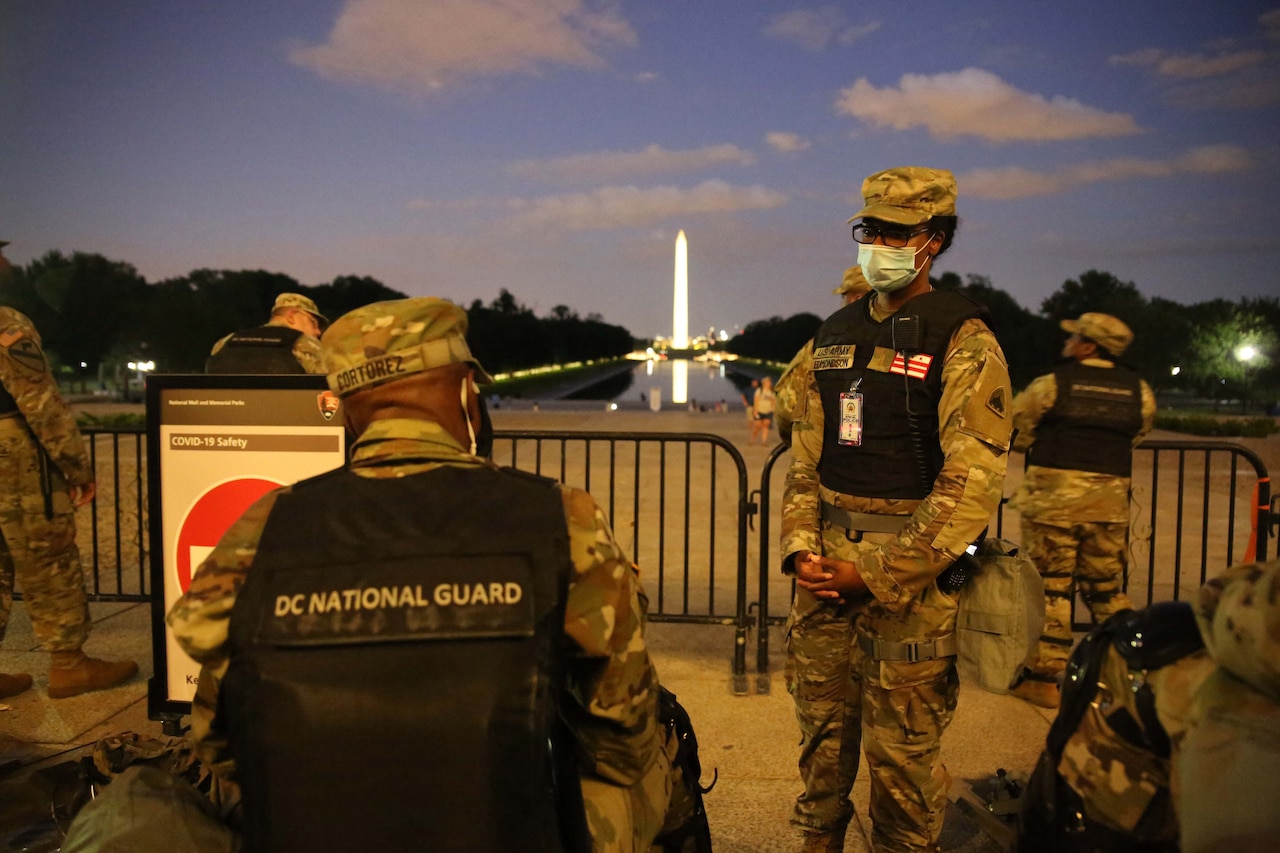
A Defense Department official said yesterday that the country relies on Guard troops to support civil authorities because they can be deputized to serve in a law enforcement role, if needed, while active duty service members cannot.
But, the official noted, DOD is consulting with governors to determine if and where active duty troops might be needed to supplement the Guard's efforts.
Department officials held a press briefing to discuss the potential use of National Guard and active duty personnel in support of state and local authorities.
District of Columbia National Guardsmen have been deployed to help the district's law enforcement agencies protect buildings, federal installations and monuments — and ensure peace, order and safety, the official said.
The D.C. National Guard and Guard troops from outside the city who come to help are being led by Army Maj. Gen. William J. Walker, the D.C. National Guard commander, the official said. Since the district doesn't have a governor, Walker reports directly to Army Secretary Ryan D. McCarthy.
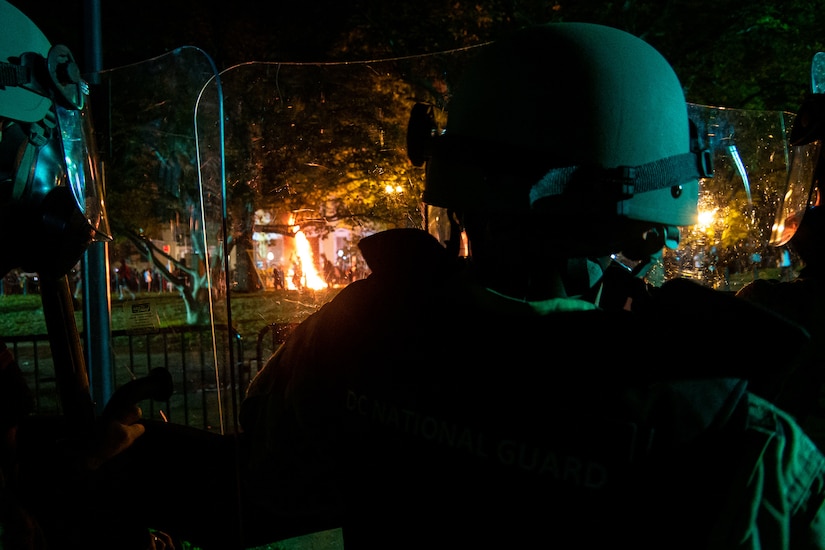

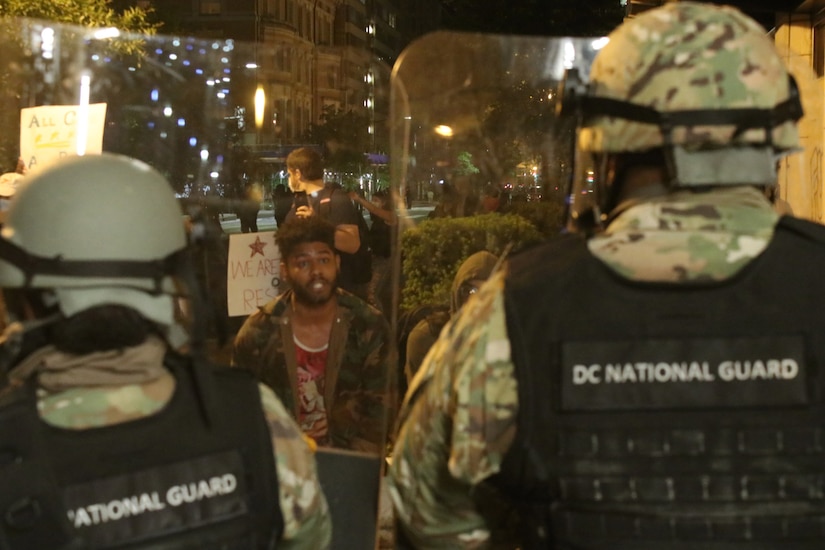
However, the official noted, the response to civil unrest in the nation's capital was overwhelmingly from law enforcement, not National Guardsmen.
More than 100,000 guardsmen are engaged across the country and in overseas missions, the official said.
In the U.S., more than 67,000 National Guard soldiers and airmen are supporting operations in every single state, three territories, and the District of Columbia, the official said, noting that this represents the largest domestic response since Hurricane Katrina.
"More than 42,000 are still actively doing COVID operations," the official said. "All of those mission sets remain the same, and ... another over 18,000 now in 29 states and the district are assisting law enforcement authorities."
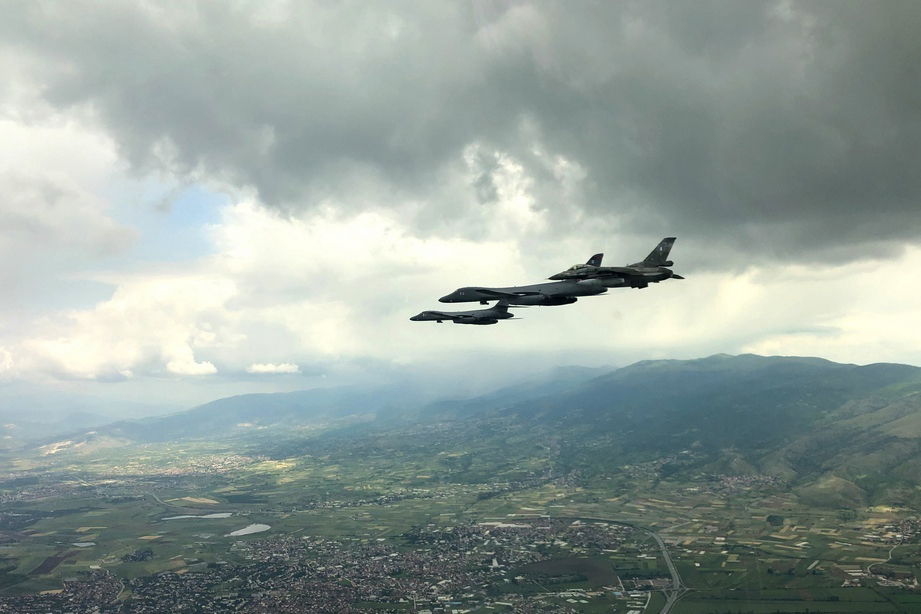
Two U.S. Air Force B-1B Lancers fly with a Greek air force F-16 during a training mission for Bomber Task Force Europe over North Macedonia, May 29, 2020.


 Posts
All Comments
Posts
All Comments
Posts
All Comments
Posts
All Comments


