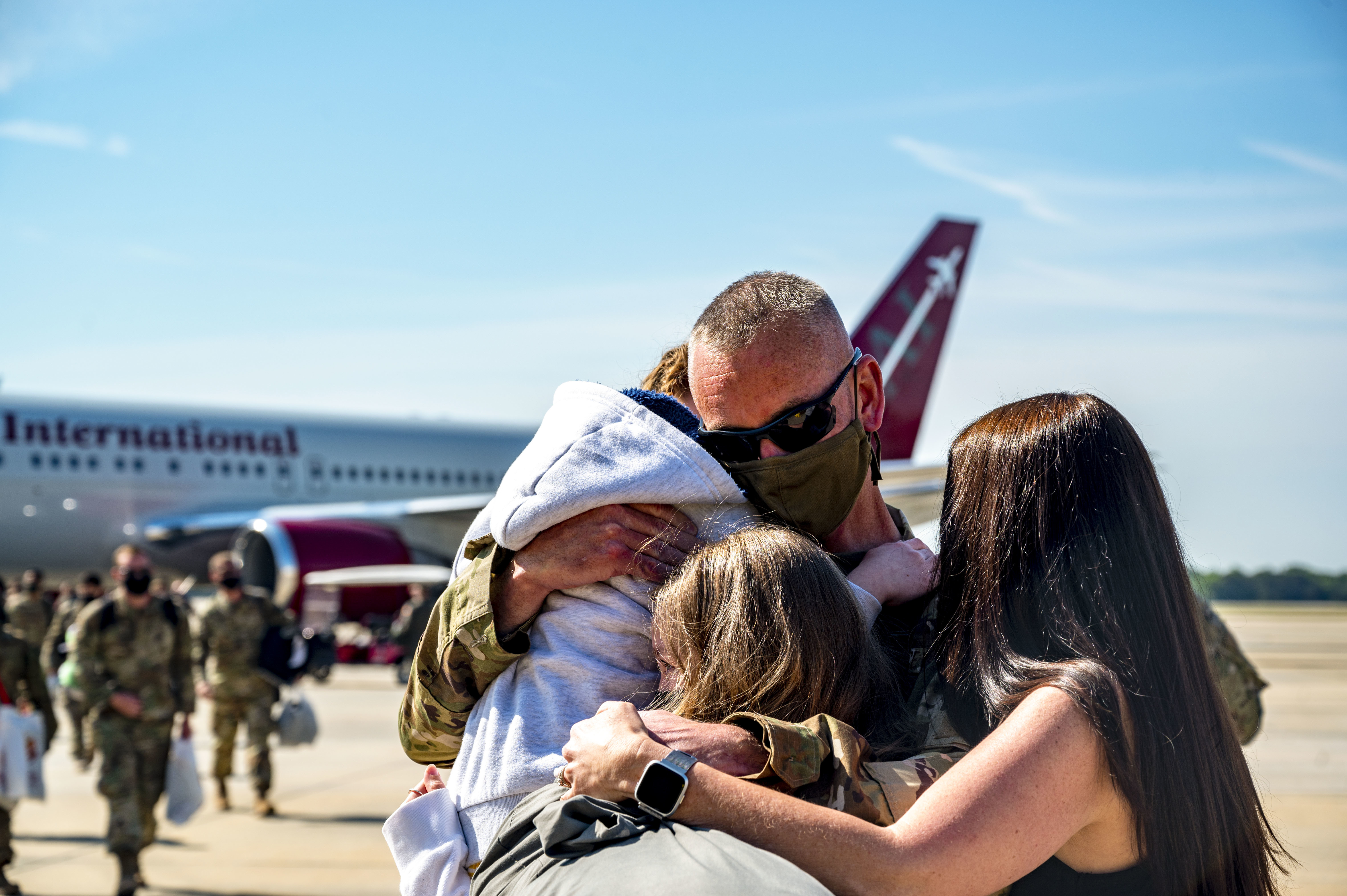
An airmen greets his family at Shaw Air Force Base, S.C., April 23, 2021, after returning from redeployment.
Providing up-to-date information, news and original content on American Military issues.
An airmen greets his family at Shaw Air Force Base, S.C., April 23, 2021, after returning from redeployment.

Marine Corps Lance Cpl. Htoo Htoo Baw welds pieces of metal together during training in Okinawa, Japan, April 20, 2021.

Air Force Staff Sgt. Justin Rice watches as Lt. Col. Matthew Suhre and Staff Sgt. Daniel Robinson rappel down a structure at Travis Air Force Base, Calif., April 19, 2021.
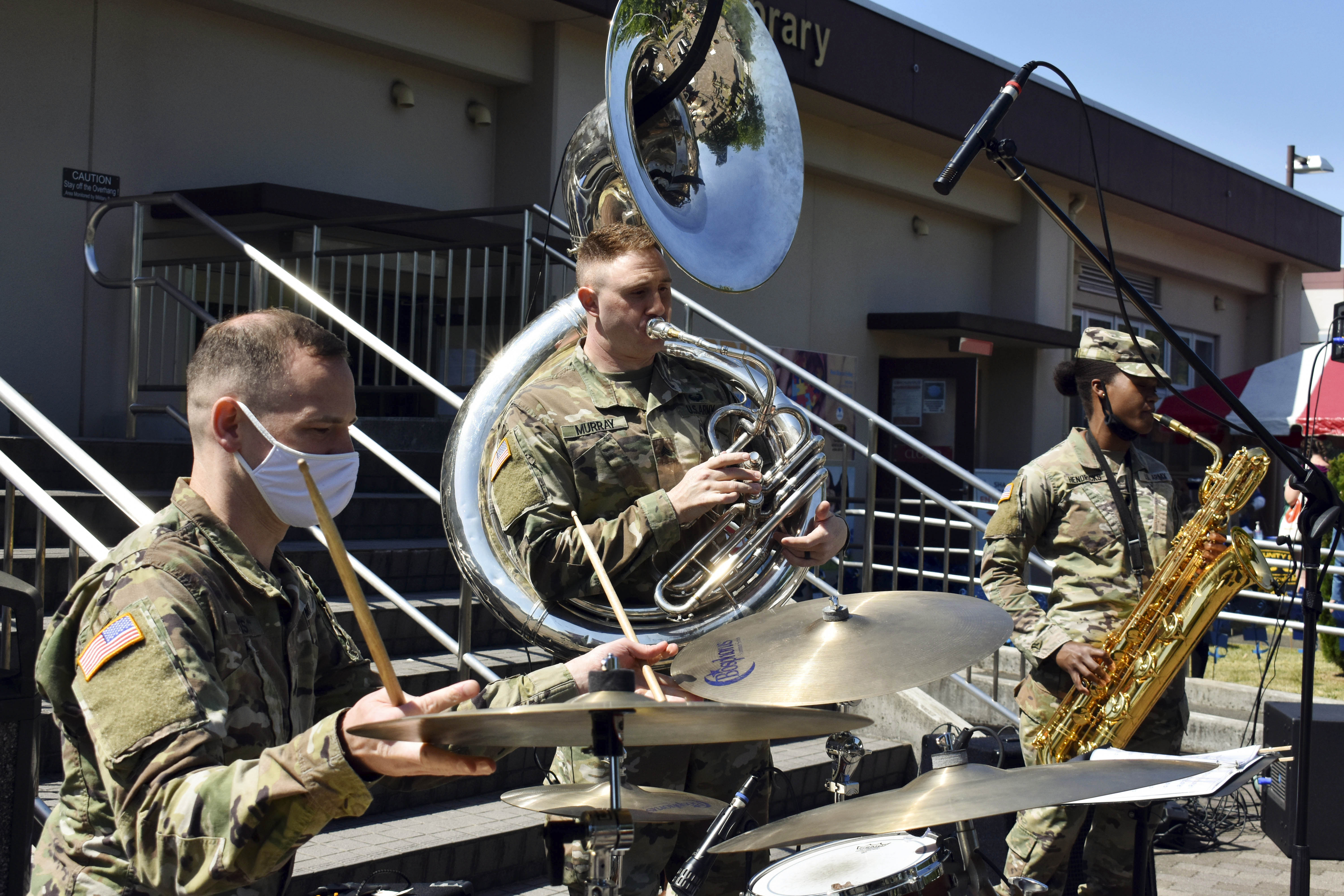
Army Sgts. Jacob Davis and Colin Murray, left, and Spc. Brooke Hendricks, members of the U.S. Army Japan Band, perform during a community event to mark National Child Abuse Prevention Month in Japan, April 23, 2021.
April 26, 2021
The Office of the Senior Enlisted Advisor to the Chairman of the Joint Chiefs of Staff (OSEAC) announced today the following assignment:
Navy Command Master Chief Kim A. Feroni, currently assigned as the command master chief for Maritime Expeditionary Security Group Two in Virginia Beach, Virginia, was selected to replace Coast Guard Command Master Chief Michael S. Koch as command senior enlisted leader for Joint Task Force-Guantanamo, Guantanamo Bay, Cuba.
April 26, 2021
The chief of staff of the Army announces the following general officer assignments:
Maj. Gen. Xavier T. Brunson, commanding general, 7th Infantry Division, Joint Base Lewis-McChord, Washington, to deputy commanding general, I Corps, Joint Base Lewis-McChord, Washington.
Maj. Gen. Robert F. Whittle Jr., commanding general, Great Lakes and Ohio River Division, U.S. Army Corps of Engineers, Cincinnati, Ohio, to deputy commanding general, U.S. Army North, Joint Base San Antonio, Texas.
Brig. Gen. Matthew L. Eichburg, deputy commanding general (Operations), 1st Armored Division, Fort Bliss, Texas, to chief of staff, U.S. Army Central, Shaw Air Force Base, South Carolina.
Brig. Gen. Daryl O. Hood, commandant, U.S. Army Chemical, Biological, Radiological, and Nuclear School, U.S. Army Maneuver Support Center of Excellence, Fort Leonard Wood, Missouri, to deputy director for operations, National Joint Operations Intelligence Center, Operations Team Four, J-3, Joint Staff, Washington, D.C.
Brig. Gen. Steven M. Marks, deputy commanding general, 1st Special Forces Command (Airborne), Fort Bragg, North Carolina, to deputy commanding general, U.S. Army Special Operations Command, Fort Bragg, North Carolina.
U.S. Army Reserve
Brig. Gen. John M. Dreska, deputy commander (Troop Program Unit), 311th Sustainment Command (Expeditionary), Los Angeles, California, to commander (Troop Program Unit), 311th Sustainment Command (Expeditionary), Los Angeles, California.
Brig. Gen. Michael L. Yost, hospital commander (Troop Program Unit), 228th Medical Command Hospital, Forward Detachment 2, U.S. Military Hospital, Operation Spartan Shield, Kuwait, to deputy commander for professional services (Troop Program Unit), 807th Medical Command (Deployment Support), Saint Charles, Missouri.
April 25, 2021
Statement by Secretary of Defense Lloyd J. Austin III:
The men and women of the Department of Defense stand by our Indian partners in their hour of need. We are in this fight together.
To that end, I have directed the Department to use every resource at our disposal, within our authority, to support U.S. interagency efforts to rapidly provide India’s frontline healthcare workers with the materials they need. We are currently assessing the equipment we can both procure and draw from our own inventory in the coming days and weeks.
In the next few days, we will provide transportation and logistics assistance to deliver needed supplies to India, including oxygen-related equipment, rapid testing kits, and personal protective equipment.
We will continue to work closely with other U.S. agencies and Departments, as well as with industry, to support our Indian partners in their effort to combat this outbreak.
April 23, 2021 | BY C. Todd Lopez , DOD News
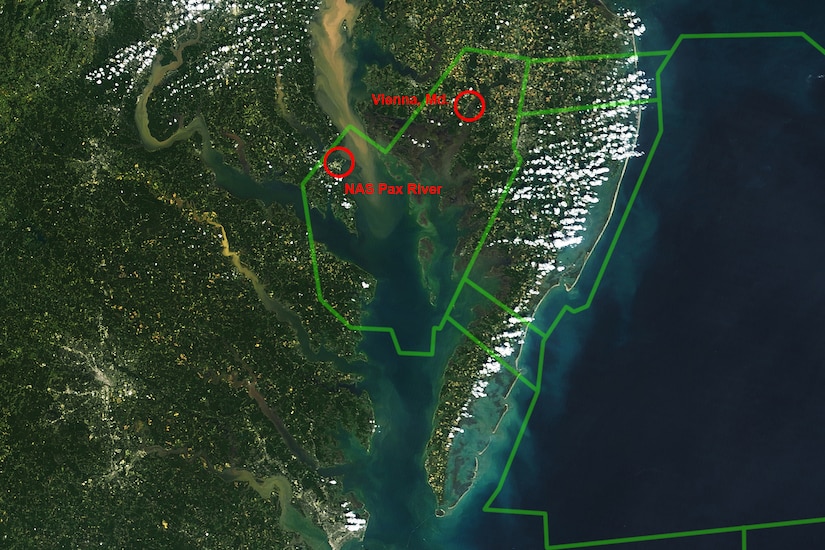
About 70 miles southeast of Washington is Vienna, Maryland. It sits on the Nanticoke River, which drains into the Chesapeake Bay.
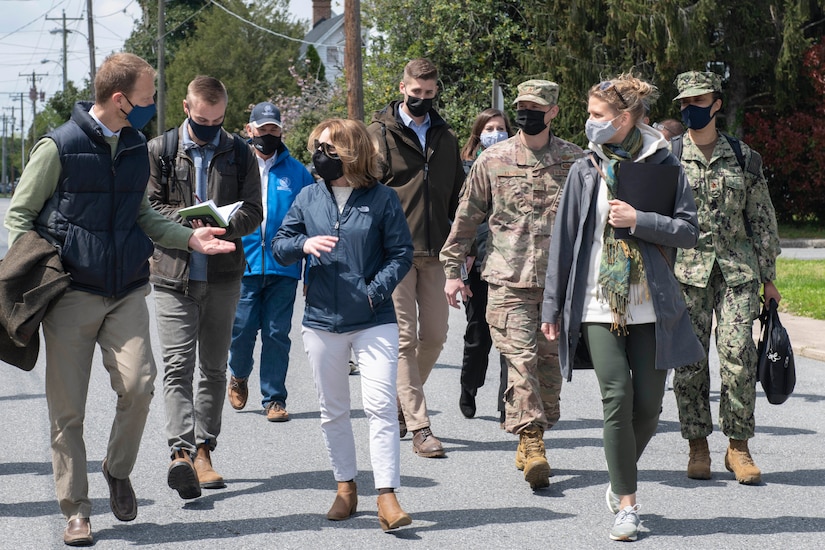
Deputy Defense Secretary Kathleen Hicks visited the Middle Chesapeake Sentinel Landscape in Vienna yesterday on the 51st anniversary of Earth Day to highlight the Sentinel Landscape partnership there.

At locations designated as sentinel landscapes, a multiagency and multi departmental partnership connects private landowners with government assistance programs that fund land protection and natural resource restoration projects. By aligning these programs in sentinel landscapes, the departments of defense, agriculture and the interior use taxpayer dollars more efficiently and accomplish more on the ground with fewer resources.
Environmental conservation groups in the region are interested in preserving the wetlands and natural habitats that surround the Nanticoke. But there's broader interest, as well, in preserving larger sections of the region — not just to keep agriculture strong, but to preserve the Navy's use of that airspace for testing and flying aircraft.
A big part of that preservation effort is DOD's Readiness and Environmental Protection Integration program. The program allows the military services to partner with state and local governments to preserve land use around military installations and ensure DOD's continued ability to train in those areas.
If agricultural land inside the bounds of the Atlantic Test Range, where Naval Air Station Patuxent River tests aircraft, is opened to commercial or residential development, the Navy may no longer be allowed to fly over those areas. Ensuring the Navy's continued use of that airspace is one of the key responsibilities of the Middle Chesapeake Sentinel Landscape Partnership.
In the Chesapeake Bay area, REPI helps fund the Middle Chesapeake Sentinel Landscape Partnership, which involves a multitude of state, local and environmental organizations in addition to DOD, DOI and Agriculture.
"We all work together to advance a set of shared land-use goals around our military installations and ranges," Kristin Thomasgard, REPI director, said during a gathering of conservation partners in Vienna on Thursday. "Over the six-year lifespan of the Middle Chesapeake Sentinel Landscape Partnership, we've been able to see just how valuable these partnerships can be."
She said REPI has been able to leverage about $17 million in DOD funding with over $88 million in federal, state, local and private funds to protect more than 50,000 acres of land within the Middle Chesapeake Sentinel Landscape Partnership area of concern and enroll 131,000 acres of land in technical assistance programs that lead to sustainable land-use practices.
"What this really demonstrates to me is that together we have been able to achieve outcomes that go far beyond what we can do individually," Thomasgard told partners. "Through this remarkable investment, this partnership has been able to sustain local, historical, agricultural, and fishing traditions; to protect critical forest habitats; improve community resilience to climate change; and to strengthen military readiness at one of the Navy's most important aircraft testing locations in the country."
Funding from REPI helps support the Middle Chesapeake Sentinel Landscape Partnership's efforts to preserve agriculture in the area, maintain natural habitats, and keep Navy aircraft flying, Hicks said.
"That's why programs like REPI are so important for how we think about maintaining the quality of our training environment, the longevity of our assets and also the relationships with the communities that we work so closely with that surround our installations," she said.
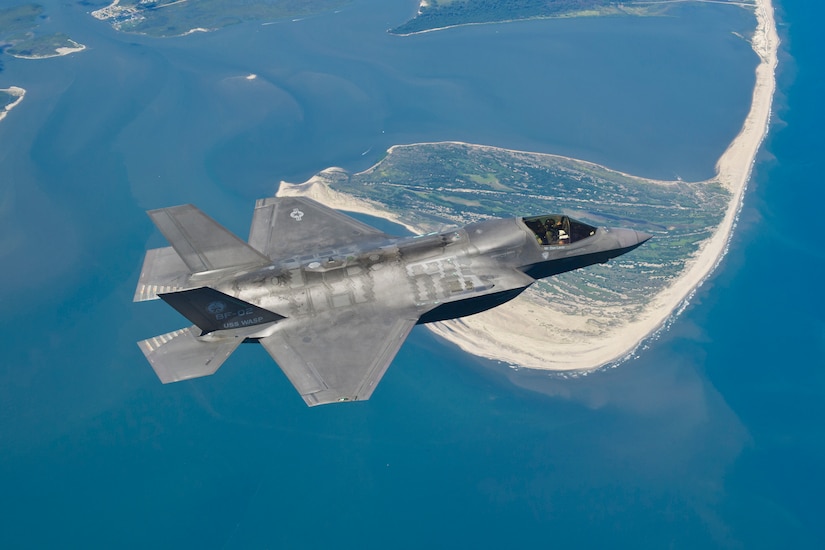
Use of the airspace that makes up the Atlantic Test Range is at the heart of the mission at NAS Patuxent River, where airborne research and development testing help bring aircraft — including the F-35 Lightning II — into the Navy.
Navy Capt. John Brabazon, the commander of NAS Patuxent River, said REPI and the Middle Chesapeake Sentinel Landscape Partnership keep his installation's mission viable.
"To date, REPI funding has been used to preserve 63 separate parcels — that's 63 willing land owners, 63 conservation partners doing the very time-consuming work to preserve more than 12,000 acres, so far, beneath the range air space," he said.
Brabazon also said he believes that the goal of preserving 50,000 acres of land can be met by 2045 with continued help from conservation partners.
"Through conservation of land by willing land owners we'll ensure that our mission, aircraft testing and training, can be accomplished safely," he told conservation partners gathered at a community center in Vienna. "Your Maryland naval air station could not protect its research, development and test mission without you."
Hicks told conservation partners that another issue that affects their waterside community — climate change — is important to DOD as well.
"In the national security community where DOD sits," she said, "we have long understood the effects of climate change and the devastating consequences it can have, both for our own installations and also for the way in which the world community grapples with change and has to deal with consequences of things like resources scarcity, shifting migration patterns, and the opening up of regions of the globe like the Arctic to new kinds of competition. These are all things we have to think long and hard about."
Adapting to and mitigating the effects of climate change, Hicks said, are considered "mission essential" within DOD.
"The cost of not paying attention to climate change can be quite devastating," she said.
Earlier this month, Hicks visited Pensacola Naval Air Station in Florida, which suffered damage from last year's Hurricane Sally. Tyndall Air Force Base, Florida, suffered around $6 billion in damage from the same hurricane.
"We were learning about the billions of dollars in damage caused from extreme weather events, like [the] increasing frequency of hurricanes," she said of the trip.
Hicks said the effects of environmental change, such as rising sea levels and wildfire fires, greatly affect DOD's ability to operate.
"These are major challenges — rising sea levels if you're in Norfolk, [Virginia], if you're in Camp Lejeune, [North Carolina] — major challenges to how we think about the safety and security of not only our personnel and the cost of our installations, but, frankly, the readiness — our ability to actually the execute mission," she said. "How many days, for instance, are we down, not able to train, because we're not able to due to weather events? That's why DOD cares a lot about thinking through, in the long-term, how we manage."

An MQ-9 Sea Guardian unmanned maritime surveillance aircraft system flies over the littoral combat ship USS Coronado in the Pacific Ocean, April 21, 2021 during U.S. Pacific Fleet’s Unmanned Systems Integrated Battle Problem 21. The exercise integrates manned and unmanned capabilities into challenging operational scenarios to generate warfighting advantages.
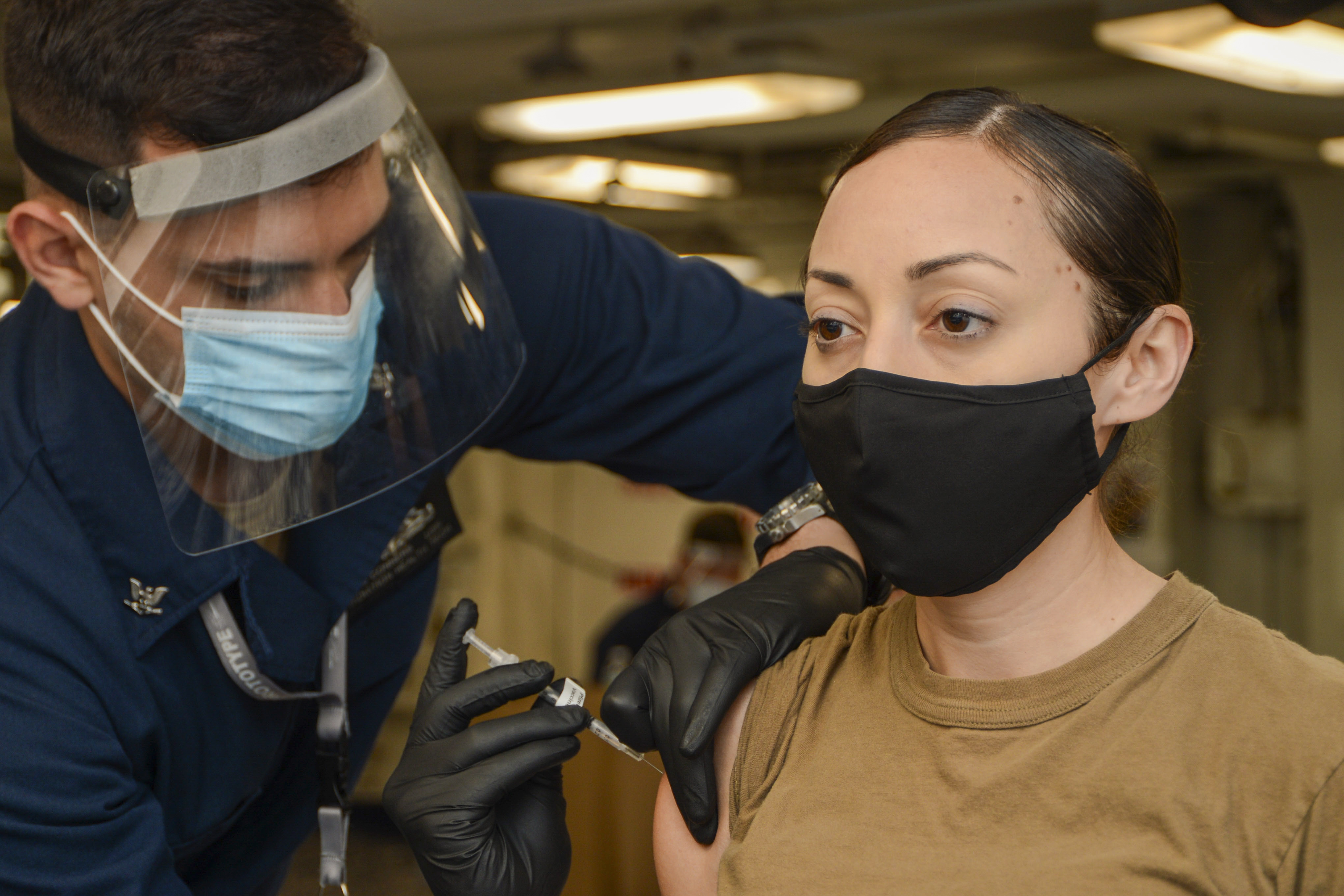
Navy Petty Officer 3rd Class Charles Conners administers a COVID-19 vaccine to Petty Officer 1st Class Krystina Garcia aboard the USS Harry S. Truman in Portsmouth, Va., April 15, 2021.

Air Force Senior Airman Andrew Bouffard welds a frame together at Yokota Air Base, Japan, April 22, 2021.
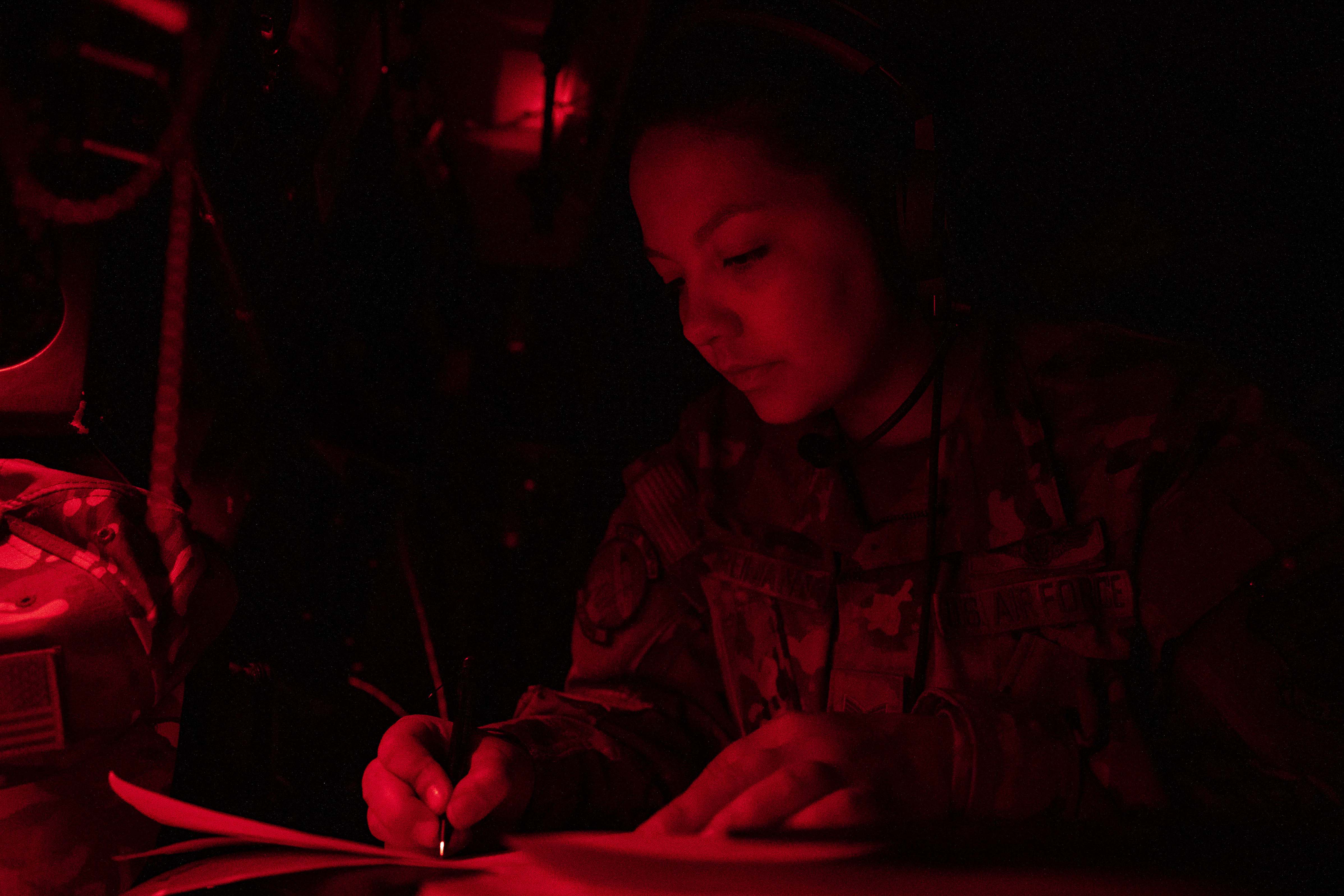
An airman reviews an aerial refueling checklist aboard an Air Force KC-135 Stratotanker as it flies over the U.S. Central Command area of responsibility, April 16, 2021.
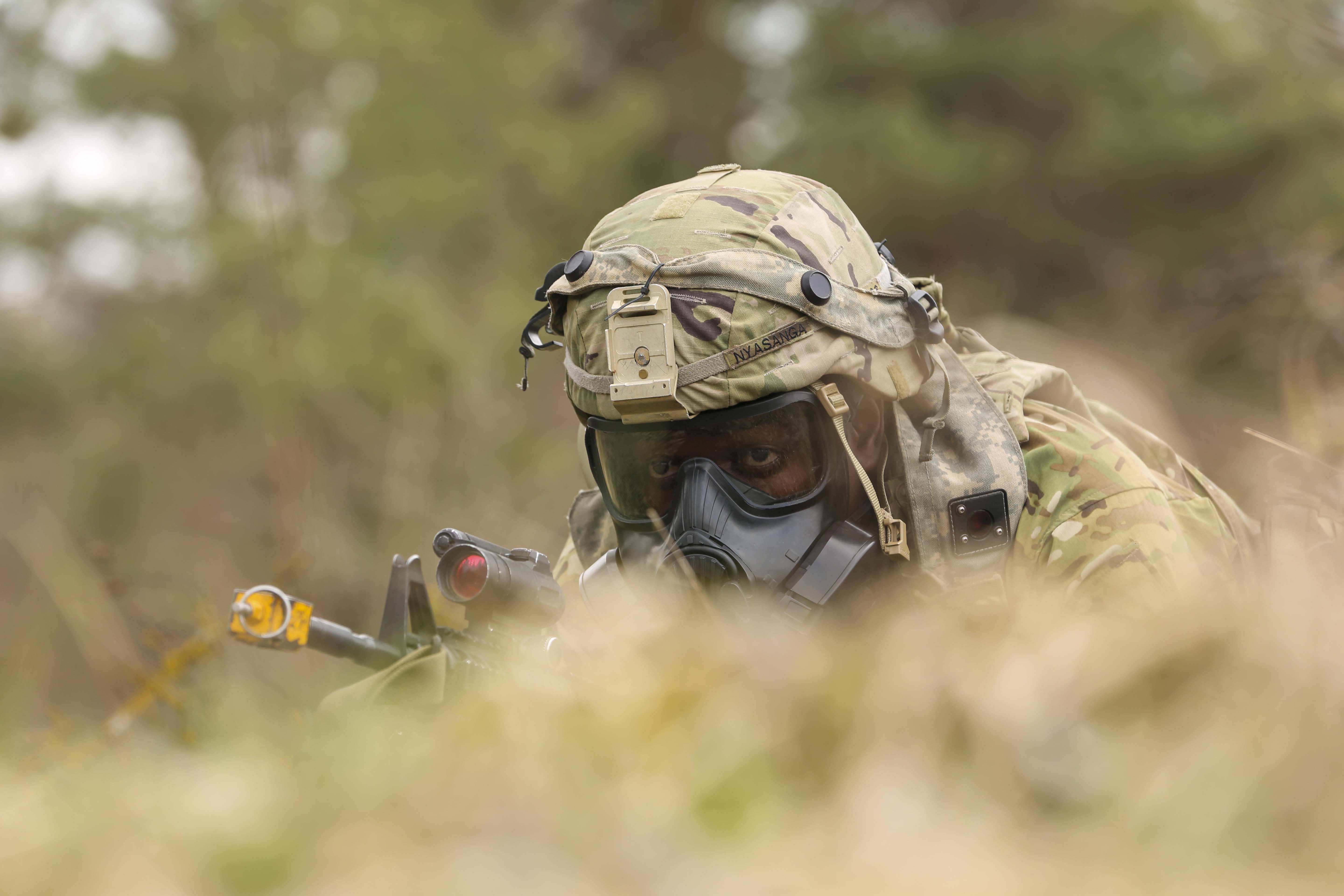
A soldier takes a fighting position during a simulated gas attack at Hohenfels Training Area, Germany, April 18, 2021, as part of Dragoon Ready, an Army-led readiness exercise.

The USS Mitscher transits the Persian Gulf, April 19, 2021, during a live-fire exercise.

Boy Scouts help plant trees and flowers in celebration of Earth Day at Osan Air Base, South Korea, April 22, 2021.

Sailors participating in a flight deck crash simulation fight a simulated fire and move in to rescue trapped passengers during British Flag Officer Sea training aboard the USS Ross in the English Channel, April 21, 2021.

Army Spc. Kysam Moody, a Mississippi National Guardsman, moves through an obstacle course during a competition at Camp Shelby Joint Forces Training Center, Miss., April 20,2021.
April 23, 2021
Pentagon Press Secretary John Kirby provided the following readout:
Secretary of Defense Lloyd Austin spoke this morning with Indonesian Minister of Defense Prabowo Subianto to express his heartfelt concern over the missing Indonesian submarine KRI Nanggala 402 and the uncertain fate of the 53 sailors on board.
The two discussed the recent deployment of a P-8 Poseidon aircraft to aid the search. Secretary Austin offered to provide additional assistance, which could include undersea search assets, for the effort. Minister Prabowo thanked Secretary Austin for his concern and for U.S. assistance, citing his appreciation for the friendship between the two countries.

Marines provide security during a weapons and tactics instructor course, which runs concurrently with an integrated weapons training exercise, at Marine Corps Air Ground Combat Center Twentynine Palms, Calif., April 20, 2021.



 Posts
Posts

