Marines use an interior training strip explosive during training at Camp Hansen in Okinawa, Japan, Aug. 12, 2020.
Marines use an interior training strip explosive during training at Camp Hansen in Okinawa, Japan, Aug. 12, 2020.
Aug. 19, 2020
Chief Pentagon Spokesperson Jonathan Hoffman provided the following readout:
Secretary of Defense Dr. Mark T. Esper hosted an enhanced Honor Cordon and Bilateral Meeting in Honor of His Excellency Jumaah Saadoon, the Minister of Defense of the Republic of Iraq, today. The two leaders discussed the bilateral security partnership and the importance of continuing to build the capabilities of the Iraqi Security Forces, such that they are able to prevent the Islamic State of Iraq and Syria (ISIS) from ever re-emerging and threatening Iraq, the region or the broader international community. Both leaders reaffirmed the continued cooperation between the Iraqi Security Forces and the US-led Global Coalition to Defeat ISIS and their commitment to the ultimate objective of a secure, stable and prosperous Iraq.
Aug. 19, 2020
Tomorrow, Secretary of Defense Dr. Mark T. Esper will travel to Colorado Springs, Colorado, where he will attend the change of command ceremonies for United States Northern Command and United States Space Command. The next day, he will travel to Nevada to visit the Nellis Air Force Base test and training range and meet with U.S. Air Force personnel.
The following week, Secretary Esper will travel to the Indo-Pacific region, visiting Hawaii, Palau and Guam. On this trip he will conduct meetings with military leaders, local officials and foreign partners; visit with our forces deployed through the region; and participate in commemorative events marking the 75th Anniversary of the end of World War II. During this trip he will reinforce the United States’ vision for a free and open Indo-Pacific comprised of nations that adhere to the international rules-based order that was established 75 years ago in the wake of the allied victory in World War II.
TOPEKA, KAN. – A former Army soldier stationed at Fort Riley was sentenced today to 30 months in federal prison for distributing instructions for making explosives, U.S. Attorney Stephen McAllister said. After his prison time, the defendant will serve three years on supervised release.
Jarrett William Smith, 24, formerly of Ft. Riley, Kan., pleaded guilty to two counts of distributing information related to explosives, destructive devices and weapons of mass destruction.
Smith joined the Army June 12, 2017. He served as an infantry soldier and was trained in combat and tactical operations. He was transferred to Fort Riley in Kansas July 8, 2019.
The FBI received information that Smith used social media to give out guidance to others on how to construct improvised explosive devices. He spoke to others on social media about wanting to travel to Ukraine to fight with a violent, far-right military group.
On September 20, 2019, from Fort Riley Smith sent a person working undercover for the FBI specific instructions for making an explosive device. Smith also provided a recipe for creating improvised napalm.
McAllister commended the FBI and Assistant U.S. Attorney Tony Mattivi for their work on the case.
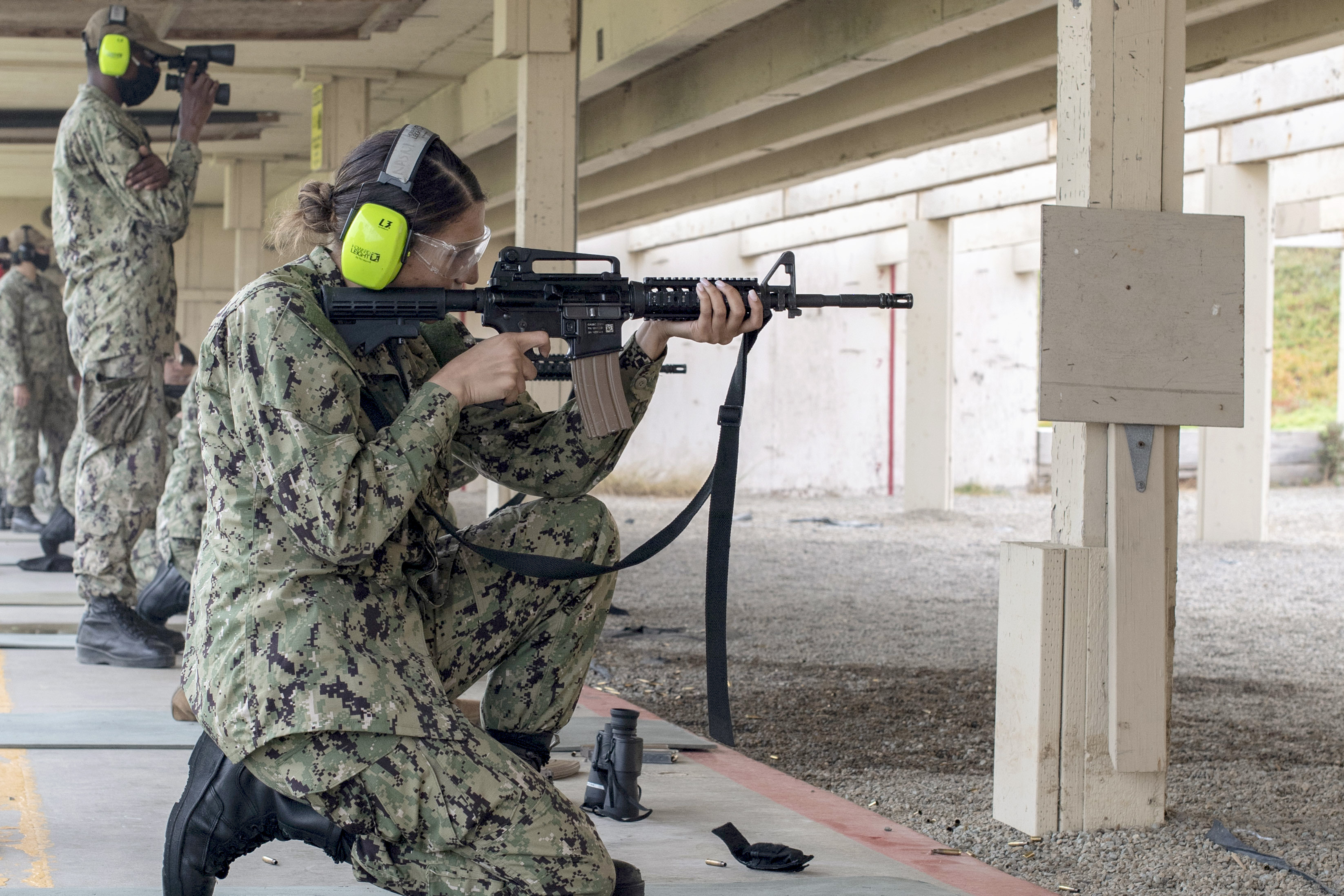
Navy Petty Officer 3rd Class Naajee Tymes shoots an M4 carbine during a small arms qualification at Naval Base Coronado, Calif., Aug. 17, 2020.
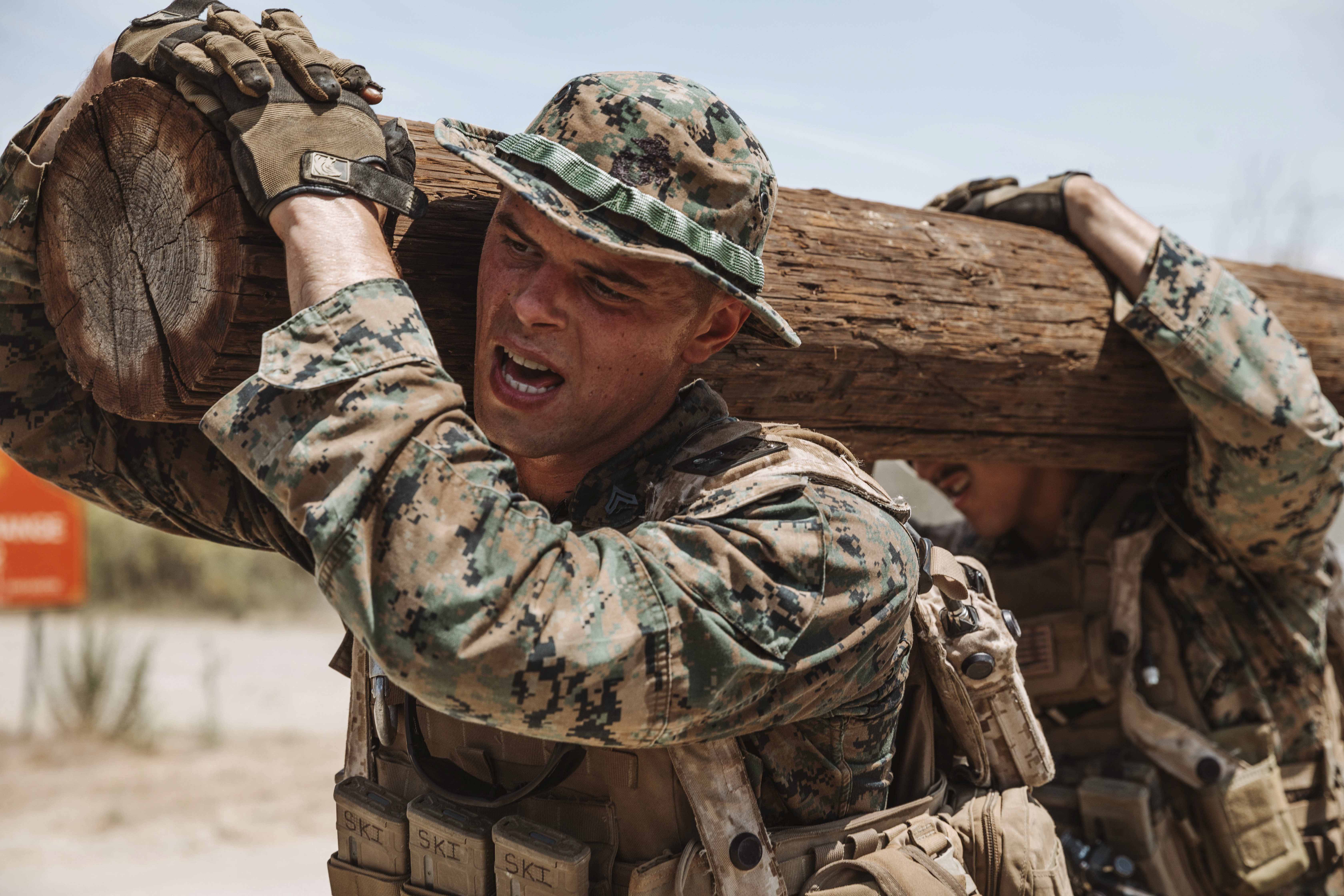
Marine Corps Cpl. Jakob Orlowsky carries a log during a competition at Marine Corps Base Camp Pendleton, Calif., Aug. 16, 2020.

Marine Corps Lance Cpl. Ethan Willy climbs a rope during a competition at Marine Corps Base Camp Pendleton, Calif., Aug. 16, 2020.
Aug. 18, 2020 | , DOD News
In 1974, during his 1973-1976 service in the Marine Corps, Leon Spinks earned a bronze medal in the light heavyweight division at the inaugural World Amateur Boxing Championships in Havana.

He then won the 1975 Amateur Athletic Union title and was runner-up in the finals of the 1975 Pan American Games. In 1976, he clinched the gold medal in the light heavyweight division at the Olympic Games in Montreal.
Spinks gained the reputation of being one of the best amateur boxers in the world by registering 133 knockouts over a three-year period.
When he enlisted in the Marine Corps, boot camp was 13 weeks long. However, he remained in boot camp for six months at Marine Corps Recruit Depot, San Diego, California, because he was said to have had trouble adjusting to military structure.
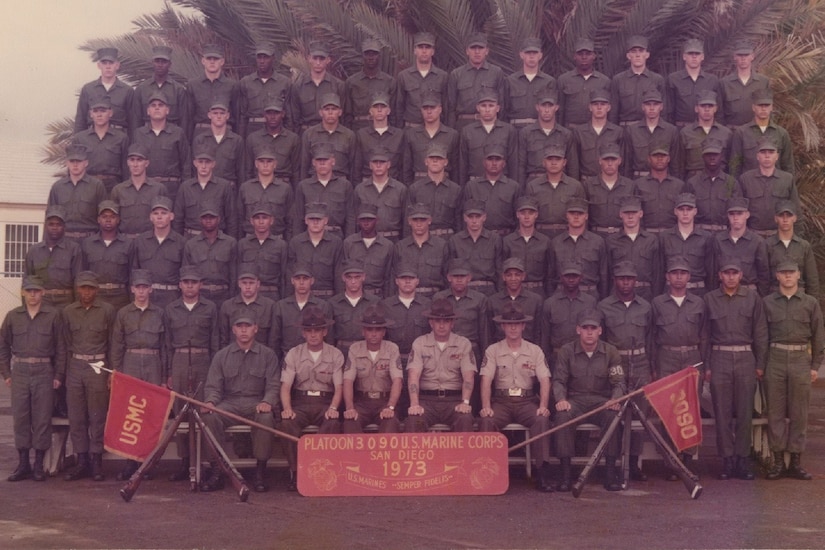
But he and his drill instructors persevered, and Spinks finally graduated from Platoon 3090 in December 1973. He then joined the All-Marine boxing team at Camp Lejeune, North Carolina, which was a good fit for his tremendous talent, energy and drive.
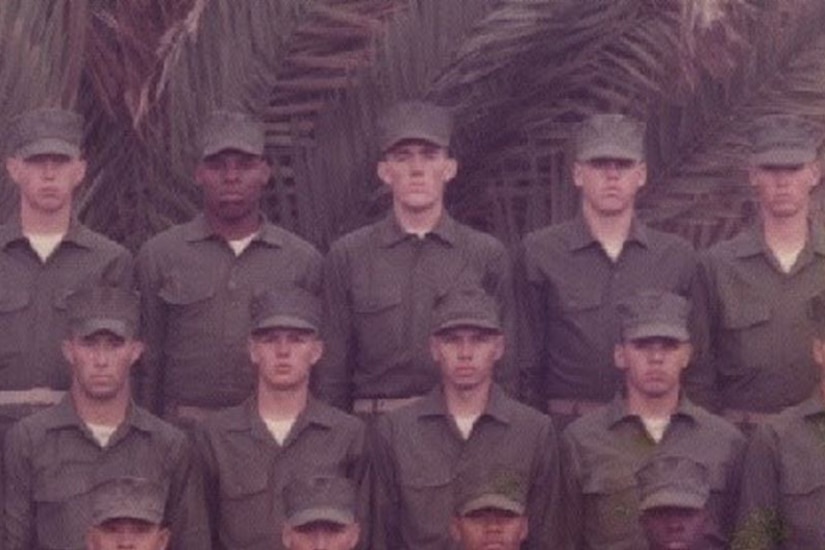
When Spinks stepped into the boxing ring at Camp Lejeune for the first time, Marine Corps assistant coach J.C. Davis, who became the first African American Marine Corps boxing coach in 1967, immediately knew he had an incredibly talented young man. Within just 15 seconds, Spinks knocked out his opponent.
"I mean Leon did that combination — boom, boom — and this guy was out," Davis said then. "I looked at the time, and I looked at [the head coach], and I said, 'S---, we've got a champion.'"
Marine Corps Sgt. Terry Jamerson, stationed at Camp Lejeune in 1976, watched Spinks spar at the gym. After Spinks knocked out his sparring partner, "he looked at me and said, 'Would you spar with me? You look big enough,'" Jamerson said. "I told him that I am not an idiot and would only watch. I got his autograph that day."
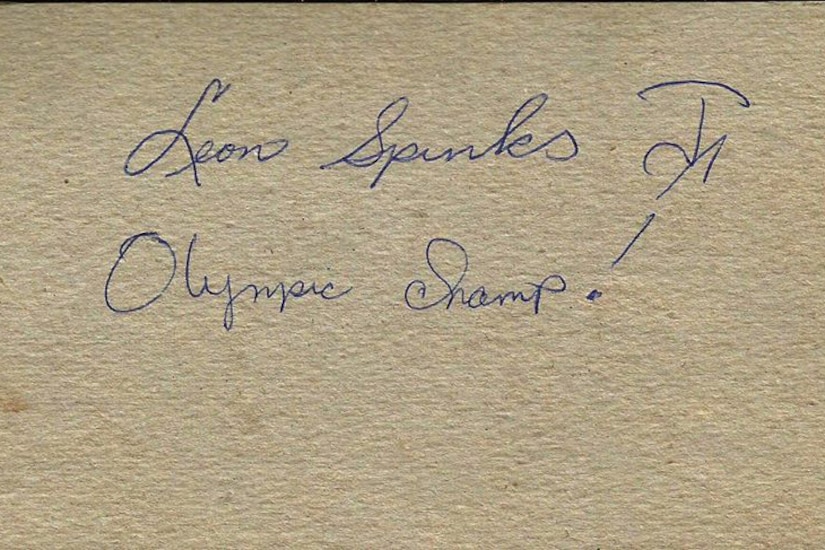
On Feb. 15, 1978, in Las Vegas, in one of boxing's greatest upsets, Spinks won a split decision over heavyweight boxing champion Muhammad Ali after going 15 rounds. Spinks became the heavyweight champion after only eight professional bouts, and he was the only man ever to take a world title away from Ali in the ring, as Ali's other losses were either in nontitle bouts or in world title fights where Ali was the challenger.
On Sept. 15, 1978, Ali regained his title in a rematch.
Spinks is a 2016 All-Marine Boxing Hall of Fame member. He was also inducted into the Jacksonville-Onslow Sports Commission Hall of Fame in Jacksonville, North Carolina, April 12, 2018.
Retired Marine Corps Lt. Gen. Ronald L. Bailey attended the 2018 induction and watched his friend get inducted.


"First thing that I want to say is that several years ago we inducted Leon into the Hall of Fame of the Marine Corps," Bailey said. "One of the things that I remember him saying is that 'I may not have been the best in certain aspects of the sport, but I was a Marine.' He never lost sight of his foundation and how he came up in the Marine Corps. Leon is still a character, and he is still a massive man with his hands and shoulders."
Bailey said he admired the grit and determination that Spinks had in the ring.
"I could only imagine what it was like to be hit by him. Glad he was on our team," he said. "I saw him numerous times fight, and he had something called the Spinks Jinx. He got into his boxing stance and double stomped his front foot, distracting his opponent. They would look and then his overhand right punch would hit them with the left hook taking them down. He had this unorthodox way of bouncing forward that would throw you off in the ring. There are a lot of world class boxers that represented the Marine Corps."
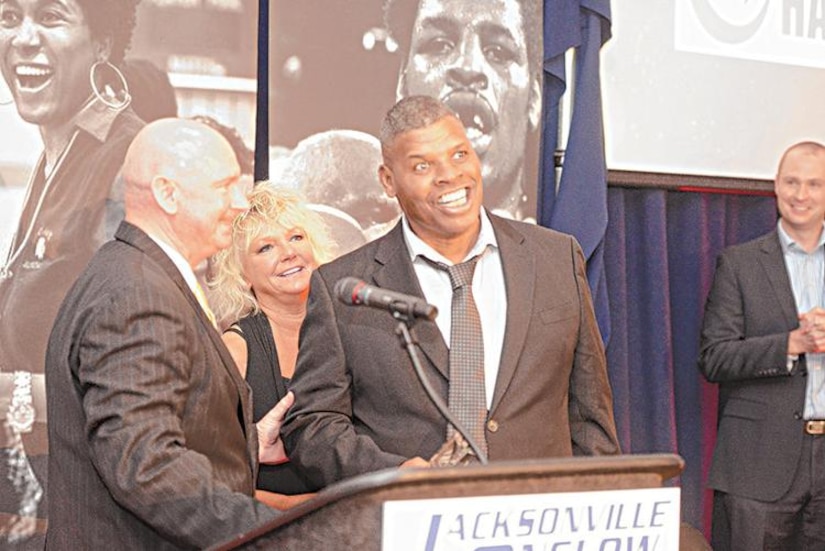
The late Ken Norton, inducted in 2018 to the All-Marine Boxing 2018 Hall of Fame, maintained a strong friendship with Spinks after their boxing careers. Norton also defeated Ali and reigned as the World Boxing Council's heavyweight champion.
Spinks' brother, Michael Spinks, won a gold medal in the middleweight competition during the 1976 Montreal Olympics. Both were inducted in the 2017 Nevada Boxing Hall of Fame.
The All-Marine Boxing Team was disbanded in October 2012, due to a change to the USA Boxing rule at the time that removed headgear during bouts.
(Matthew Sokol, sports writer for the Camp Lejeune "Globe" newspaper, contributed to this article.)
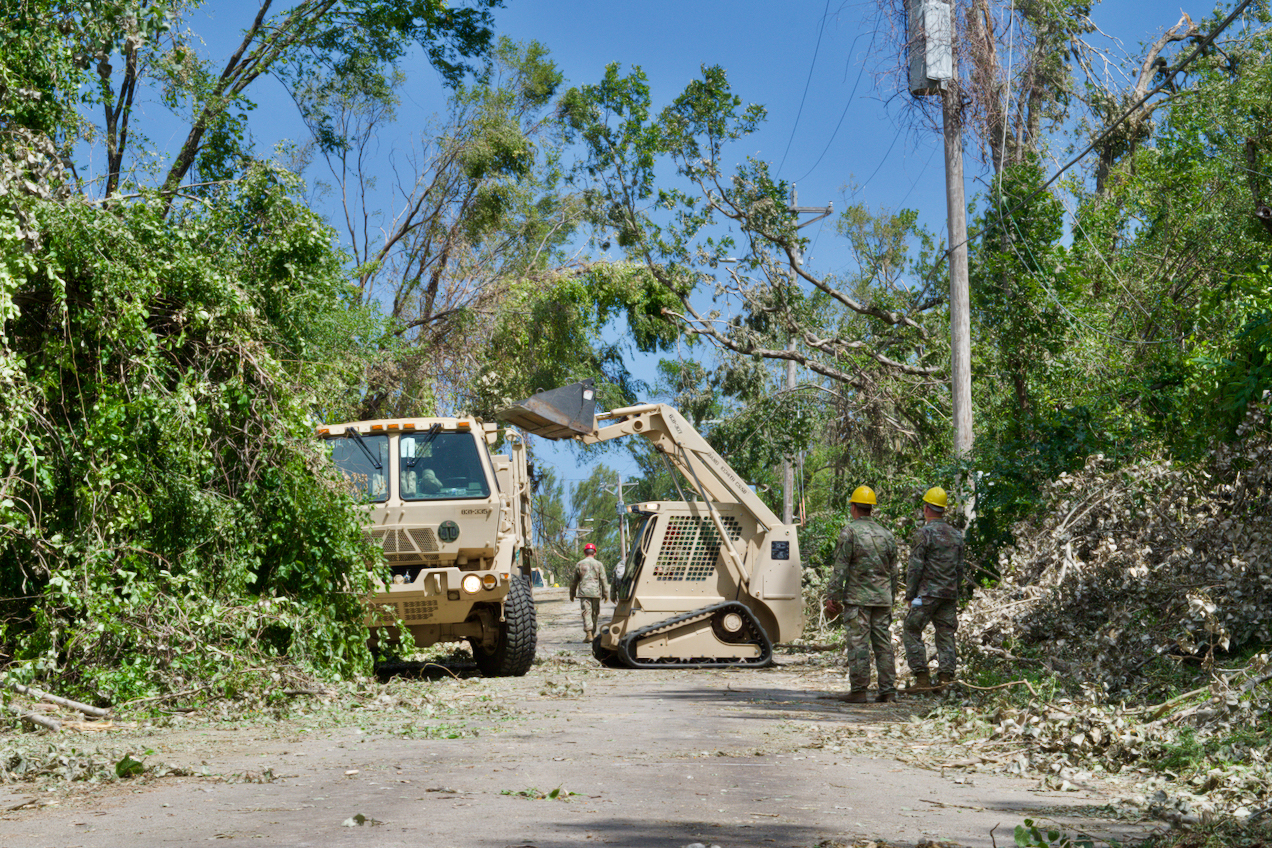
Iowa National Guard soldiers remove tree limbs and other debris from power lines and roadways, Aug. 14, 2020, after a derecho hit the eastern part of the state. In the first three days of response efforts, the soldiers moved nearly 2.25 million pounds of debris and cleared the equivalent of 68 city blocks.
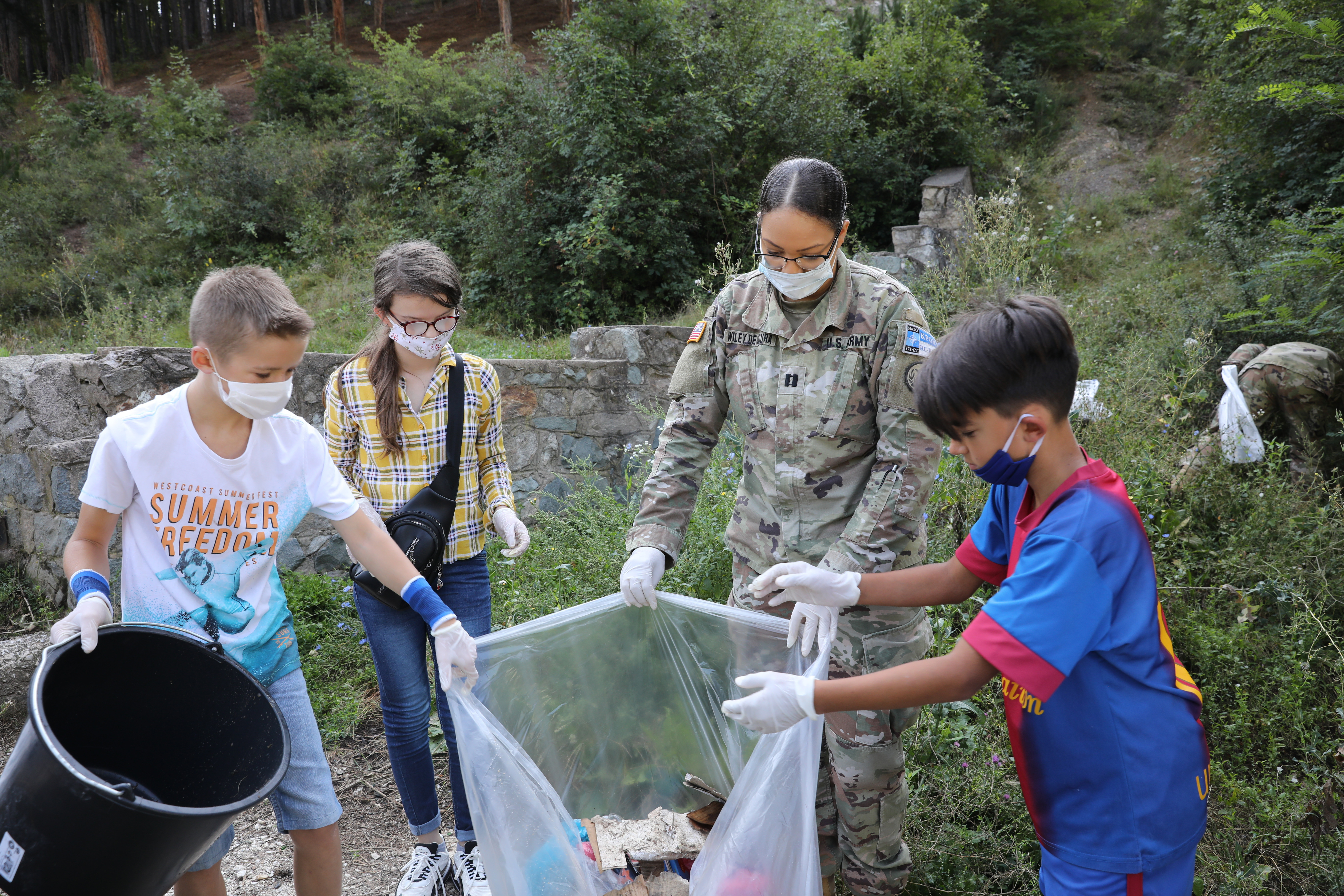
Texas Army National Guard Capt. Nadine Wiley De Moura helps students collect trash at Elena Gjika School in Mitrovica, Kosovo, Aug. 14, 2020. Capt. De Moura and other soldiers volunteered for the beautification project to support building strong relationships with communities in the area.
The Justice Department today filed a lawsuit in the District of Massachusetts alleging that PRTaylor Enterprises LLC, a company doing business as Father & Son Moving & Storage (Father & Son), violated the Servicemembers Civil Relief Act (SCRA) by failing to obtain a court order before auctioning off the entire contents of a U.S. Air Force Technical Sergeant’s two storage units while he was deployed overseas.
The SCRA, which provides a wide variety of financial and housing protections to members of the military, prohibits storage companies from auctioning off servicemembers’ belongings without a court order. The lawsuit further alleges that among the Technical Sergeant’s possessions sold by Father & Son were military gear and mementos that had belonged to a cousin who was killed in military action, his grandfather’s military service medals, a dresser that was handmade by his great-grandfather, and personal photographs.
“Congress enacted the Servicemembers Civil Relief Act to protect the patriots who protect all of us by serving in our nation’s armed forces. The Servicemembers Civil Relief Act outlawed the kind of conduct alleged here, and for good reason. No individual or organization should be able to get away with the kind of devastation this young man suffered when he returned home from an overseas deployment and learned that many of his most valued family mementos were gone. The law protects servicemembers from losing their property, including items of great sentimental value, because of their service,” said Assistant Attorney General Eric S. Dreiband of the Justice Department’s Civil Rights Division. “The Department of Justice is filing this lawsuit today to ensure that this servicemember receives just compensation and to prevent this from happening to another member of our military. We must and will put an end to these unlawful business practices.”
“This servicemember was called overseas to serve our country and returned home to find his personal possessions, family heirlooms and military awards auctioned off to the highest bidder,” said U.S. Attorney Andrew E. Lelling. “That is unacceptable. We will continue to protect the rights of servicemembers who dedicate their lives to preserving our security and freedom.”
The law places the burden on moving and storage companies and other lienholders to determine whether the property in their possession belongs to a servicemember. The complaint alleges that several facts should have put Father & Son on notice that the Technical Sergeant was a servicemember, including that he told an agent of Father & Son that he was in the military. The complaint also alleges that Father & Son picked up and packed the Technical Sergeant’s belongings at Hanscom Air Force Base while he was present and wearing his U.S. Air Force uniform. The lawsuit asserts that Father & Son sent correspondence to the Technical Sergeant at his previous address of record at Hanscom Air Force Base while he was stationed overseas.
In addition to seeking damages for the servicemember, including the value of the auctioned items, the Justice Department is seeking to enjoin Father & Son from illegally auctioning off servicemembers’ possessions in the future in violation of the SCRA. The lawsuit also seeks a civil penalty.
This lawsuit resulted from a referral to the Justice Department from the U.S. Air Force. Servicemembers and their dependents who believe their SCRA rights have been violated should contact the nearest Armed Forces Legal Assistance Program Office. Office locations may be found at http://legalassistance.law.af.mil/. The department’s enforcement of the SCRA is conducted by the Civil Rights Division’s Housing and Civil Enforcement Section and U.S. Attorney’s Offices throughout the country. Since 2011, the department has obtained over $474 million in monetary relief for over 120,000 servicemembers through its enforcement of the SCRA. Additional information on the Justice Department’s enforcement of the SCRA and other laws protecting servicemembers is available at www.servicemembers.gov.
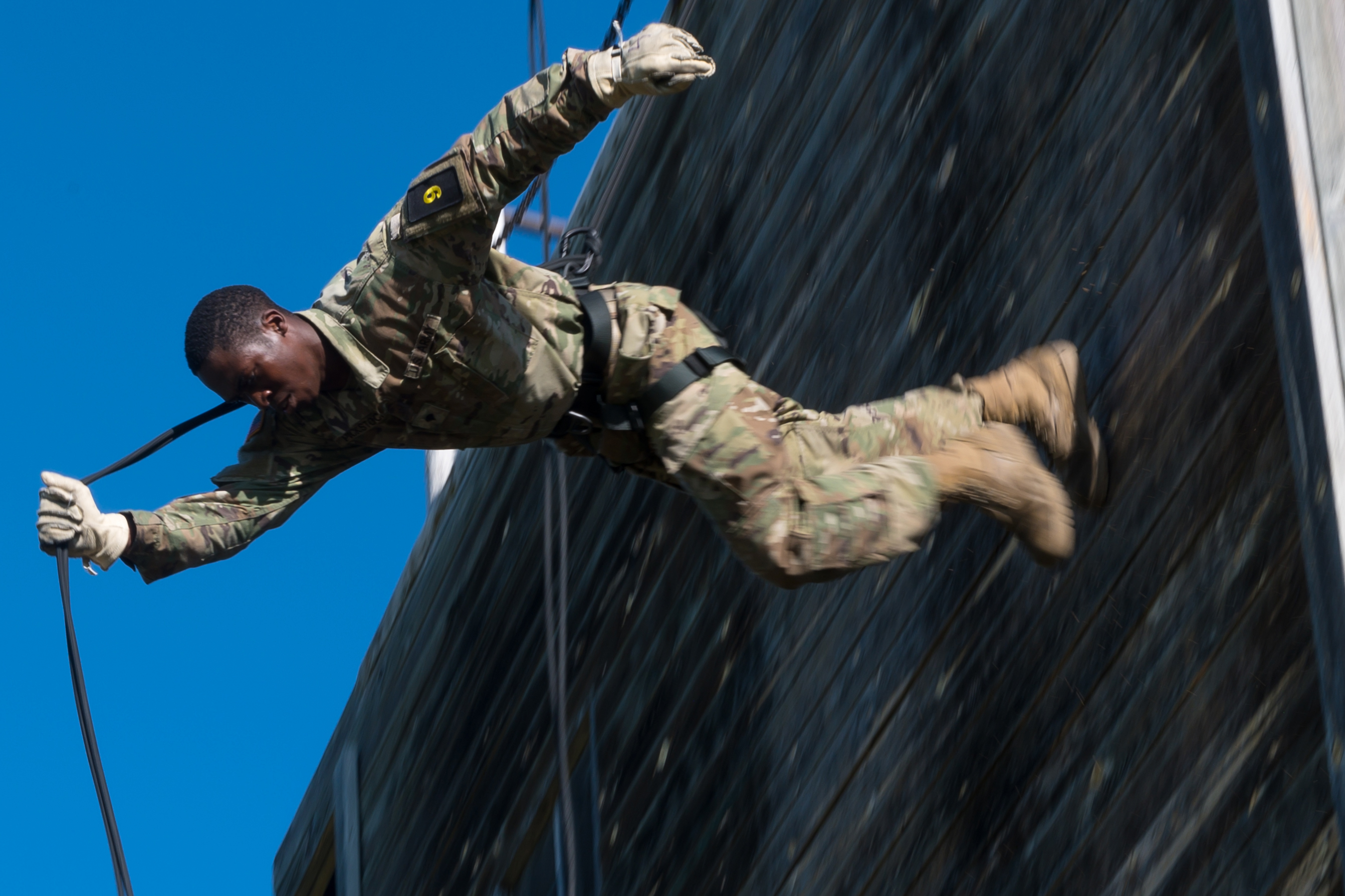
Army Spc. LeSean Pickstock rappels down a tower during the 2021 State North Dakota National Guard Best Warrior Competition at Camp Gilbert C. Grafton, N.D., Aug. 16, 2020. The competition challenges participants in multiple aspects of soldier tasks.
Aug. 17, 2020 |
Air Force Master Sgt. Adam Ingram, the 6th Logistics Readiness Squadron Vehicle Management Flight superintendent, said his being a customer service flight presents increased safety concerns for his airmen.
"We work on nearly all of the vehicles on base, so there is a high risk of cross-contamination throughout multiple organizations and our flight members," Ingram said. "We mitigate these concerns by having COVID rules of engagement in place to help keep things safe and sanitized."
The flight increased sanitization protocols, and also retrofitted some of their vehicles with barrier screens to help minimize the spread of the virus.
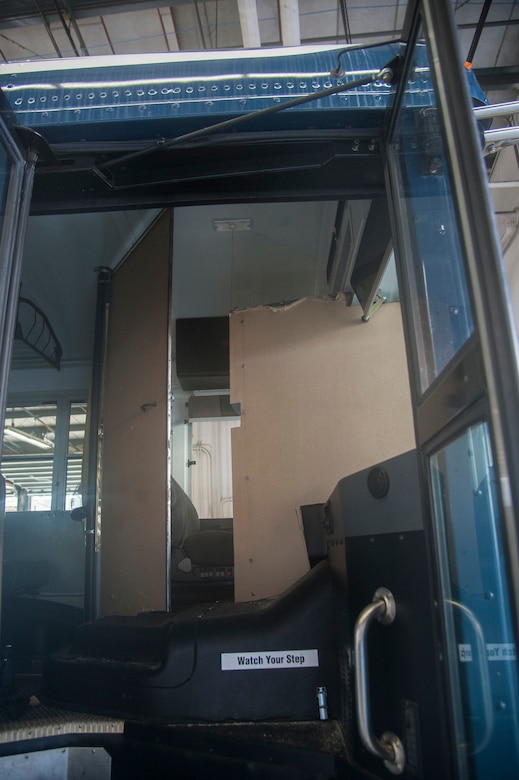
"Our peers at 6th LRS ground transportation recognized a potential issue of exposure to their drivers and posed it to us to see if we could come up with a solution," Air Force Airman 1st Class Arfaneil Rebujio, a 6th LRS vehicle maintenance technician, said.
One of the unit's mechanics, who is currently deployed, told Rebujio about an idea. Before he left for his deployment, he asked Rebujio to help create a design that would block the air circulation separating the operator from the rest of the bus.
So far, modifications have been made to several of MacDill's transport vehicles, including passenger buses used to transport aircrew from their squadrons to the flight line.
"We have installed the barrier screens on five of our 44-passenger buses and one on an eight-passenger van," Rebujio said. "I think it's a great idea having them installed on our transport buses so we don't risk the well-being of our operators."
For the 6th LRS Vehicle Management Flight, teamwork has helped them overcome many of the challenges presented by COVID-19. They are fully committed to their safety procedures, and those looking to the 6th LRS for services can rest assured that their vehicles are safe.

"It's challenging because we have to interact with customers, but we have developed ways to interact, stay safe and keep the mission going," Ingram said. "Our airmen have developed a daily cleaning process to disinfect vehicles when they arrive to the shop and before we return them to the customer."
Throughout the course of the pandemic, the airmen have remained resilient and have found ways to solve difficult problems.
"COVID has presented new challenges, but the out-of-the-box thinking of our airmen has truly shown," Ingram said. "In response to the virus, our members have applied creative thinking, which will protect our warfighters and ultimately support our mission on an even bigger scale."
(Air Force Senior Airman Shannon Bowman is assigned to the 6th Air Refueling Wing.)
Aug. 17, 2020 | , 31st Marine Expeditionary Unit
The July 13 training was designed to enhance coordination and familiarize subordinate elements with the MEU's unique mission set, in preparation for follow-on exercises that will incorporate the entire Marine Air Ground Task Force.
The 31st MEU, the Marine Corps' only continuously forward-deployed MEU, provides a flexible and lethal force ready to perform a wide range of military operations as the premier crisis response force in the Indo-Pacific region. The unit has implemented strict health protection measures and will continue to conduct mission essential training in support of regional security and stability, officials said.
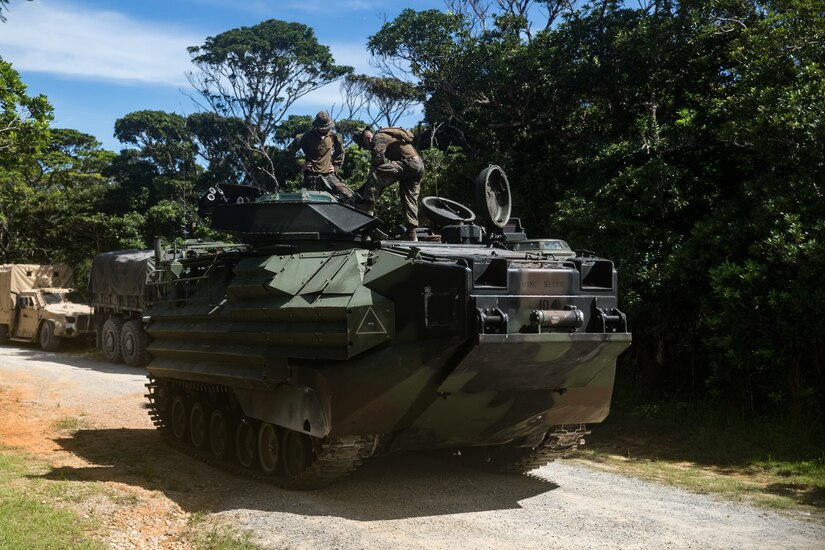
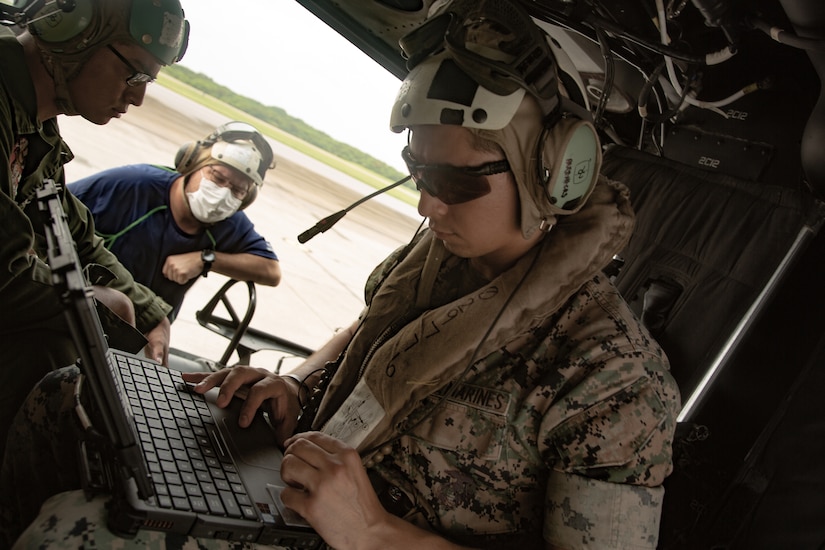
The training kicked off with a communication exercise at the Jungle Warfare Training Center to integrate personnel and equipment from Battalion Landing Team, 2nd Battalion, 4th Marines, or BLT 2/4, with the communications section of the command element, testing the MEU's ability to sustain high-frequency communications across long distances from an austere environment.
"COMMEX is our only training event that focuses exclusively on communications," said Marine Corps Maj. Ryan Hamilton, communications officer for the 31st MEU. "It provides an opportunity for radio operators, systems administrators, network administrators and technicians to employ their equipment without the pressure of supporting larger unit-level training objectives.
"Marines can make mistakes, familiarize themselves with their equipment and learn what it means to operate in a remote location with no sources of outside support," he continued. "This training is key in the development of our Marines' technical skills and prepares them for follow-on exercises and operations."
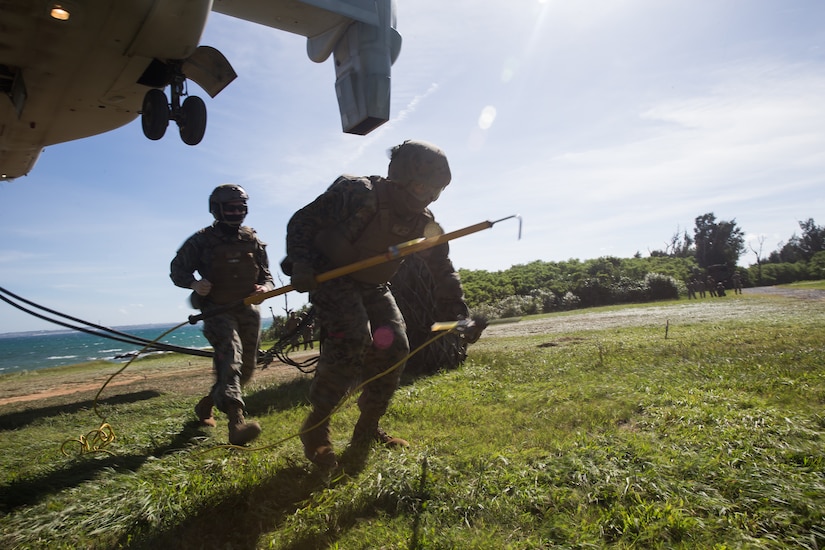
BLT 2/4, which recently arrived from Camp Pendleton, California, worked in close coordination with Marine Medium Tiltrotor Squadron 262 (Reinforced), headquartered on Marine Corps Air Station Futenma, to conduct fast-rope training and on-off drills with MV-22B Ospreys.
"This was our first opportunity to coordinate with the aviation combat element and get Marines off the deck in Camp Butler," said Marine Corps Capt. Kenny Herman, Echo Company executive officer, BLT 2/4. "For many Marines, it was their first live-slide out of an MV-22. The Marines demonstrated proficiency during their live slides and proved they're more than capable of executing this insert technique in a real world mission."
Fast-rope training is critical to the battalion landing team because many of the missions the MEU conducts may require insertion and extraction of ground troops by aviation assets in hostile environments.
Combat Logistics Battalion 31's Helicopter Support Team also trained with VMM-262 (Reinforced) over the past few weeks, practicing their ability to attach loads to helicopters in-flight.
"Working with VMM-262 helps us increase our speed and proficiency at executing external lifts, said Marine Corps Staff Sgt. Mitchell Buelow, CLB-31's landing support chief. "We're able to practice so that if we need to, we can get large pieces of equipment to locations that we wouldn't otherwise be able to reach. [Helicopter support teams] are especially important during humanitarian assistance and disaster relief missions."
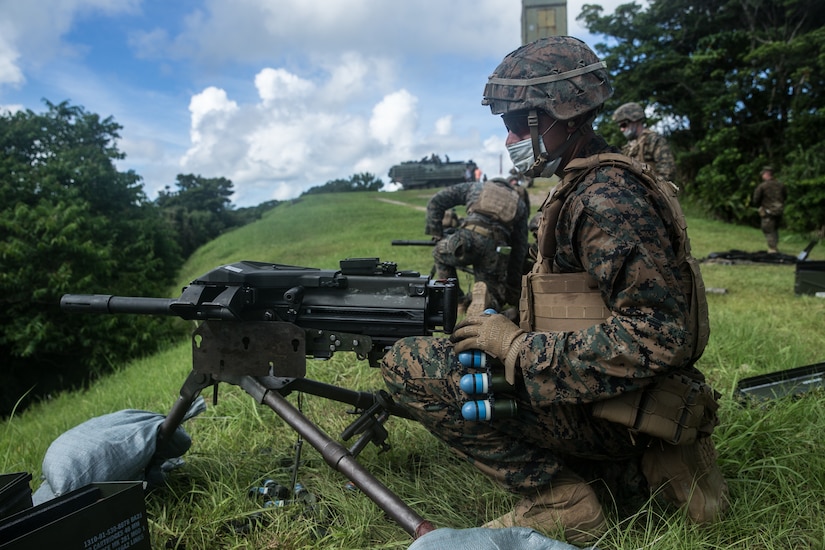
Other events included multiple live-fire ranges, reconnaissance and surveillance missions and tactical air control training with the intent of honing coordination and specific skills prior to the upcoming MEU exercise. While the training conducted over the past two weeks allowed the 31st MEU's subordinate elements to accomplish initial objectives, the MEU exercise will test the ability of the entire Marine Air Ground Task Force to operate together as a crisis response force.
"By working together during Interop, we developed a solid foundation to build on for MEUEX and any missions we will execute together in the future," said Marine Corps Maj. Brett De Maria, the 31st MEU assistant operations officer. "We are remaining flexible, constantly shifting our plans in order to get the maximum training possible while keeping our Marines safe from COVID-19."
Across the MEU, strict measures have been enforced to prevent the spread of the virus: wearing masks, physical distancing and the continuation of mission-essential training, in accordance with III Marine Expeditionary Force health protection guidance.
"The 31st MEU cannot stop training during this time. It's our job to respond to crisis at a moment's notice, and our nation and partner nations throughout the region are counting on us to be prepared in case the worst happens," De Maria said.

Army Sgt. Maj. Joseph Kim, a California National Guardsman, salutes while the national anthem is played during a groundbreaking ceremony for the Korean War Memorial at Hillcrest Park in Fullerton, Calif., Aug. 14, 2020.

Soldiers conduct simulated air assaults at Hohenfels Training Area, Germany, Aug. 10, 2020, for Saber Junction 20, an annual U.S. Army Europe-directed exercise.
Aug. 17, 2020 | , DOD News
Dana Deasy said during the Aug. 12 event that quality data that is secure will also help to enable the development of artificial intelligence.
With AI, humans and machines are going to collaborate effectively and efficiently in an ethical manner, Deasy said, lauding the progress being made by the Joint Artificial Intelligence Center's work over the last 18 months.

He then turned his attention to the COVID-19 pandemic.
The DOD COVID-19 Task Force, along with IT organizations across the department, have helped to protect DOD personnel, ensured continued execution of missions and supported the whole of government approach in combating the pandemic, the CIO said. The combatant commanders, leaders from across the services and the secretary of defense all have recognized that effort, he noted.
"It was there. It worked," he said, speaking of the tools that service members and DOD civilian employees have used to work remotely. "Yes, we had our moments where we had to scramble and get things fixed, but if you kind of take the long view of this thing, it was a truly remarkable result by all of you, so a huge 'thank you.'"
U.S. Cyber Command, the National Security Agency, the Defense Information Systems Agency, the Joint Staff, the military services and National Guard Bureau, as well as the DOD CIO office, worked together to get the necessary equipment into the hands of the users, enabling hundreds of thousands of people to work remotely, Deasy said.

Navy Rear Adm. William Chase, senior military advisor for DOD Cyber Policy, noted that adversaries such as Russia and China attack the information space daily through cyber intrusions; intellectual property theft — including weapon systems from the defense industrial base — and, attempts to deny DOD's use of command and control, networks and communications. As a result, he said, joint interoperability and all-domain command and control is a top priority for DOD.
An example, Chase said, is joint all-domain situational awareness, which involves integrating AI and secure cyber data enabled by machine learning as a tool for the combatant commanders to use in such things as target recognition and decision aids for use in long-range, precision fires.
Greg Garcia, the Army's deputy CIO, said it's important to have a workforce that is customer focused, communication strong, adept in technology management and structured to meet future demands.
Skills such as application software, data, information management, enterprise architecture, systems analysis and data analytics will increasingly help the department better prepare to improve mission outcomes in the digital future, he said.
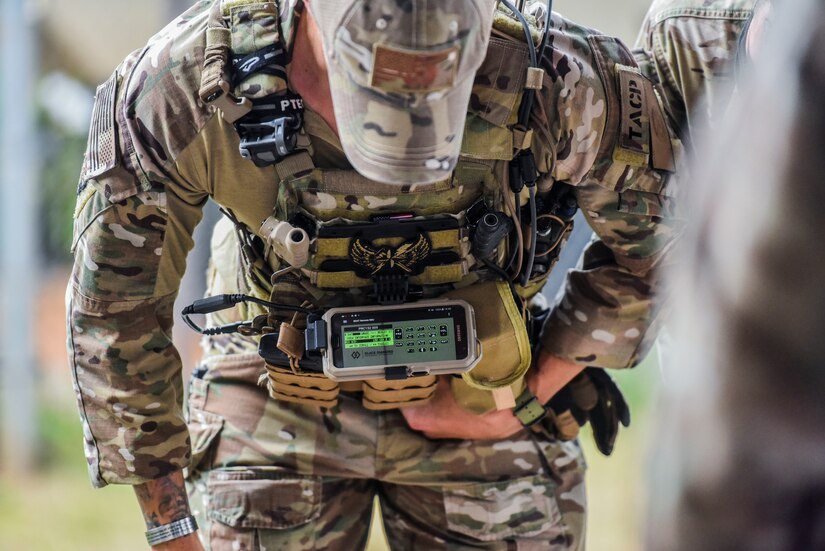
Col. A.G. Hatcher, deputy Air Force CIO, noted that it's critical that the joint force gain the needed 5G network access across different operating environments. Although innovation is taking place, it needs to move even faster, he said, not only to get to such goals as 5G, but to get to the post-5G network that inevitably will follow.
A 5G network would be particularly useful for telemedicine into remote areas such as Iraq or Afghanistan, he said, and work is being done on that at Joint Base San Antonio in Texas.
The next focus of 5G work will be on extending the range of the signals, particularly in the vast area of U.S. Pacific Command, Hatcher said, and work on that will occur soon at Joint Base Pearl Harbor-Hickam, Hawaii.
Aaron Weis, the Navy's CIO, said the challenge for his department is modernizing aging infrastructure and IT systems. The culture needs to change as well, he said.
"Today we have a culture that's driven by security through compliance," he said. "We need to get to a state where security is driven as a constant state of readiness."
Navy Vice Adm. Nancy Norton, the DISA director, said her agency is working to get new collaboration tools that support cloud computing. The Defense Enterprise Office Solutions Program will lead that effort. These cloud collaboration tools will be made available first to the combatant commands in support of the warfighters, and it will eventually expand out across the department, she said. DISA also is working on ways to reduce bandwidth, improve cyber security and improve performance, Norton said.
Aug. 17, 2020
The Department of Defense responded to interest from service personnel by providing its members with diversity and inclusion resources for those who experienced racism, bias and discrimination in either their personal or professional lives.
The DOD partnered with various programs, including Military Family Life Counseling (MFLC) and Military OneSource to leverage their non-medical counseling expertise to address diversity and inclusion (D&I) issues. Diversity and inclusion coaches will phase into the MFLC program and allow service members to process their reactions to their experiences and to develop successful coping strategies. The MFLC program and its D&I coaches have the skills and capacity to provide coaching services to address the issues of diversity and inclusion; provide the immediacy of contact; and assist service members dealing with encounters of racism, sexism, bias and any form of discrimination.
The Military OneSource call center, available 24/7, provides information and referrals to MFLC D&I coaches, Military OneSource non-medical counseling and peer-support, as well as DOD Equal Opportunity (EO) representatives and Chaplains. This integrated approach to address diversity and inclusion issues offers a range of support options for the military community.
Service members experiencing frustration, sadness, depression or other anxieties can seek assistance to address their concerns, as well as find the support and care they need.
These resources are provided at no cost.
Military members and their families are encouraged to contact these resources at:
Unlawful discrimination has no place in the DOD and our DOD Equal Opportunity representatives are available to help create and maintain a culture of inclusion and fairness throughout the DOD workforce. EO operates to ensure all individuals are provided a full and fair opportunity for employment, career advancement and access to programs without regard to race, color, religion, national origin, disability (physical or mental), gender, age, sexual orientation, genetic information or parental status. All military members who believe they have been a victim of unlawful discrimination based on race, color, national origin, religion or sex that is not otherwise authorized by statute or policy are strongly encouraged to immediately disclose the incidents to their chain of command. All unresolved complaints should be reported to their unit’s Equal Opportunity Office.


 Posts
All Comments
Posts
All Comments
Posts
All Comments
Posts
All Comments