
The USS Russell, left, and the USS Sterett travel in formation during dual carrier operations in the Pacific Ocean, June 23, 2020.
The USS Russell, left, and the USS Sterett travel in formation during dual carrier operations in the Pacific Ocean, June 23, 2020.
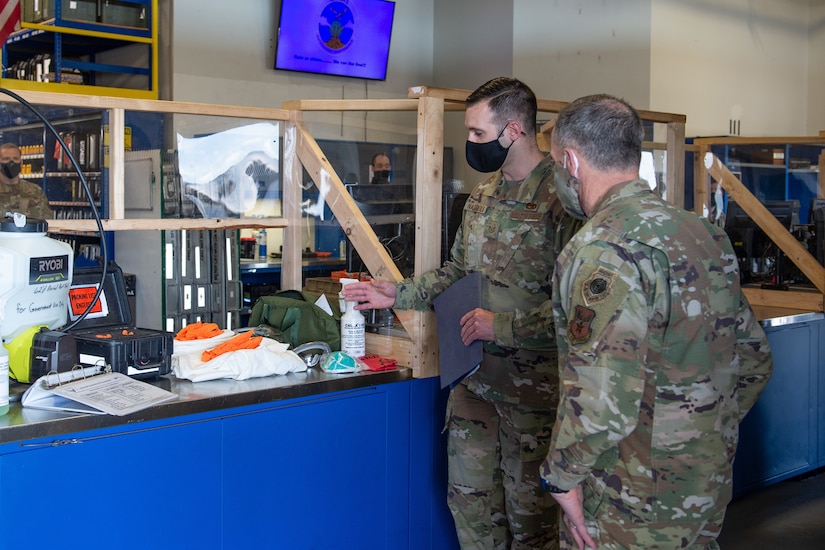
"This has been an interesting journey for all of us," Goldfein said during the June 18 visit.. "I could not be more proud of the leadership here and how they approached this challenge. As our nation has hunkered down during this pandemic, it's needed to move more and more by air, not just across the nation, but globally. We're a global superpower because of global reach. There’s no more important place for global reach than right here."
Air Force Col. Erin Staine-Pyne, commander of the 62nd Airlift Wing, briefed Goldfein and local military leaders about how COVID-19 has affected McChord Field.
"COVID has been a tough challenge for McChord," Staine-Pyne said. "Certainly not just for our airmen, but also for our families. I think it's a mixture of concern for your health and also a push to maintain our readiness and execute the mission our nation expects us to do. While it has been tough to balance those two things, we really have done that well, and it's evident in the health of airmen right now."
Goldfein visited the Western Air Defense Sector, 62nd Maintenance Squadron, 62nd Aircraft Maintenance Squadron and the 4th and 7th Airlift Squadrons.
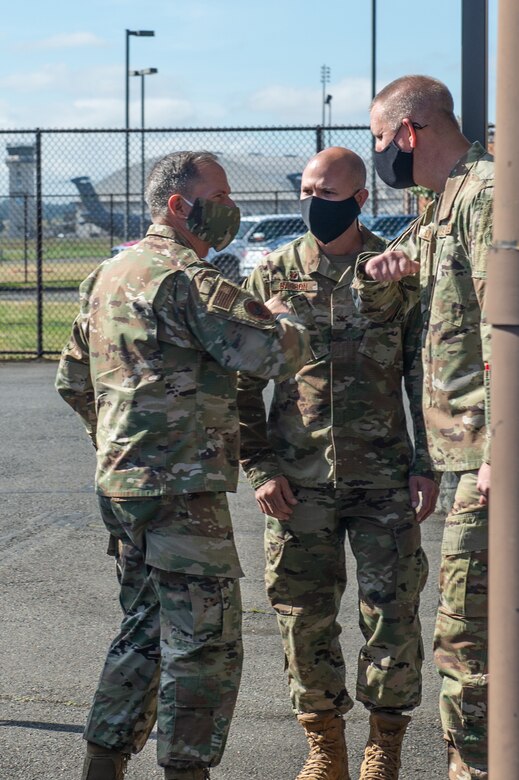
"The heartbeat of our Air Force is the squadrons," Goldfein said. "It's the squadron command teams that have been proactive and creative in making sure they have identified those who are of the highest risks and taken appropriate workplace measures and adjusted accordingly."
Several airmen received challenge coins from Goldfein for their outstanding performance and creative innovations to continue their mission during the pandemic. Each interaction provided the general an opportunity to speak one-on-one with airmen and learn more about them.
In addition, Goldfein met with Team McChord airmen who have endured hardships because of the pandemic.
"I am one of those believers that every challenge in life presents an opportunity," he told them after listening to their accounts. "Your stories show the importance of team resiliency. It ensures no one goes through the challenge alone. It's the resiliency of our team that ensures no one goes through it alone."
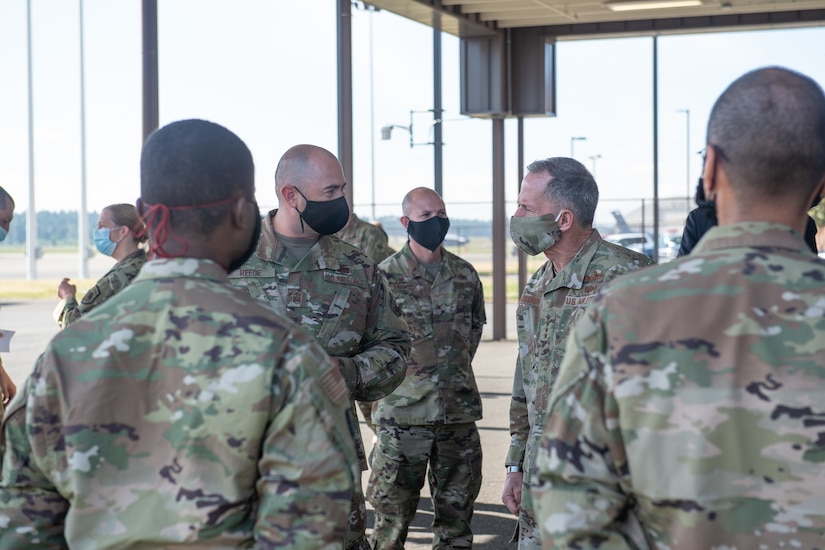
After seeing how the airmen at McChord were coping with the pandemic, Goldfein wanted to address the families of the service members.
"I want to thank the families here for what they bring to the team," he said. "We do our best as leaders, but we have to take care of the airmen who are entrusted in our care, and we have to take care of [their loved ones]. To the families of [Joint Base Lewis-McChord], thank you for being great patriots and for your courage as we go through all of this together."
As of June 15, the Air Force had 1,400 COVID-19 cases resulting in 33 hospitalizations and four deaths. Leaders all across the Air Force are not taking the pandemic lightly, Goldfein said.
"More than anything, we have to understand that we are living with the virus in our midst and that virus is cyclical," he added. "We know enough about it to know what works: social distancing, wearing a mask and identifying early if you're feeling any symptoms. If we can keep disciplined and diligent on the procedures we have put in place, we will continue to operate and survive. We can't let our guard down."
(Air Force Senior Airman Tryphena Mayhugh is assigned to the 62nd Airlift Wing.)
Sailors aboard the aircraft carrier USS Theodore Roosevelt participated in voluntary COVID-19 antibody testing.
Thousands of sailors from the aircraft carrier and the embarked staffs signed on to have their blood drawn. It will be analyzed for antibodies indicating whether or not they have been previously exposed to COVID-19.
Navy Lt. Cmdr. Rebecca Pavlicek, a microbiologist from Navy Environmental Preventive Medicine Unit Six in Pearl Harbor, Hawaii, who is embarked aboard Theodore Roosevelt to help administer the tests, said the science behind COVID-19 antibody testing is still in the development stage.
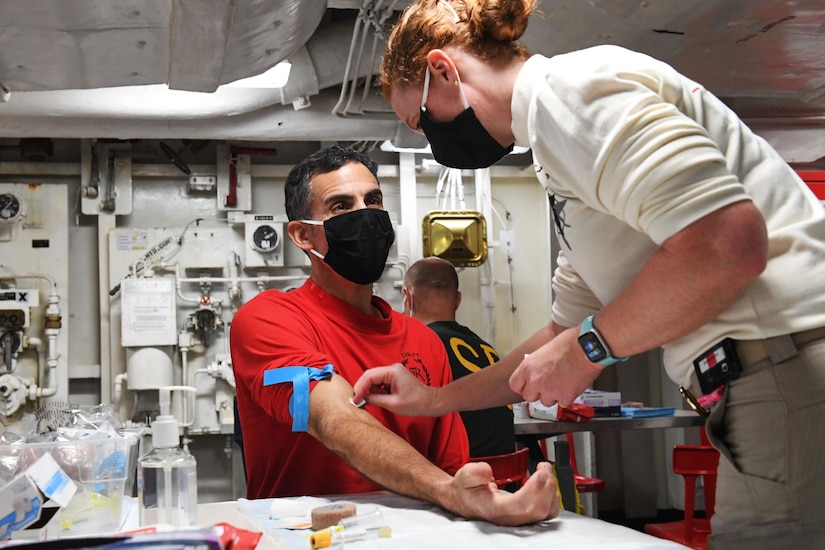
"The science on this test is relatively new, and we do not know if the antibodies resulting from infection will provide future immunity," Pavlicek said. "We do know it is important for the Navy to provide sailors with leading-edge medical care and testing, and that this kind of information can also help primary care physicians in providing the best health care possible to each and every sailor."
The test required medical personnel to draw a small amount of blood from each crew member to be shipped to Tripler Army Medical Center in Honolulu for testing.
"An antibody test looks for the presence of specific protective proteins made by the body in response to infections," said Navy Petty Officer 1st Class Maybelle Lania, a lab technician and leading petty officer of the Theodore Roosevelt's medical department. "This test can detect COVID-19-specific antibodies in most people who have had an infection, whether they knew it or not."
Navy Petty Officer 3rd Class Ahmad Hammad tested negative for the virus while the ship was in Guam, but still signed up for the testing.
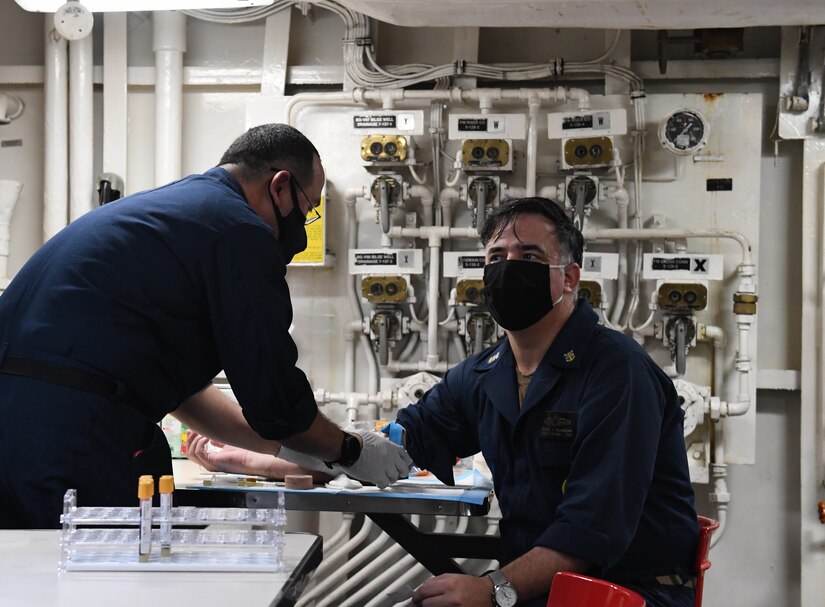
"I'm mainly curious about whether I had it," Hammad said. "I never tested positive, but I am doing it to help our medical staff find a solution to this disease."
"While this antibody testing won't contribute to vaccine development directly, this will help the Navy develop tools for future outbreak response and will provide each sailor with information on their current state of health," Pavlicek said.
The Theodore Roosevelt is the nation's fourth Nimitz-class aircraft carrier with a crew of nearly 5,000 sailors who support and conduct air operations at sea. The carrier left San Diego on Jan. 17 for a scheduled Indo-Pacific region deployment.
(Navy Petty Officer 2nd Class Pyoung Yi is assigned to the USS Theodore Roosevelt.)
One clear morning a few months ago, among the tall pines and broad sprawls of Fort Benning, Georgia, Army 1st Sgt. Kevin L. Sipes called someone he knows at the unit that trains new infantry soldiers.
It was late March, a time when the COVID-19 pandemic had brought restrictions on military travel. Many newly trained soldiers were on hold, waiting to move to their first units.
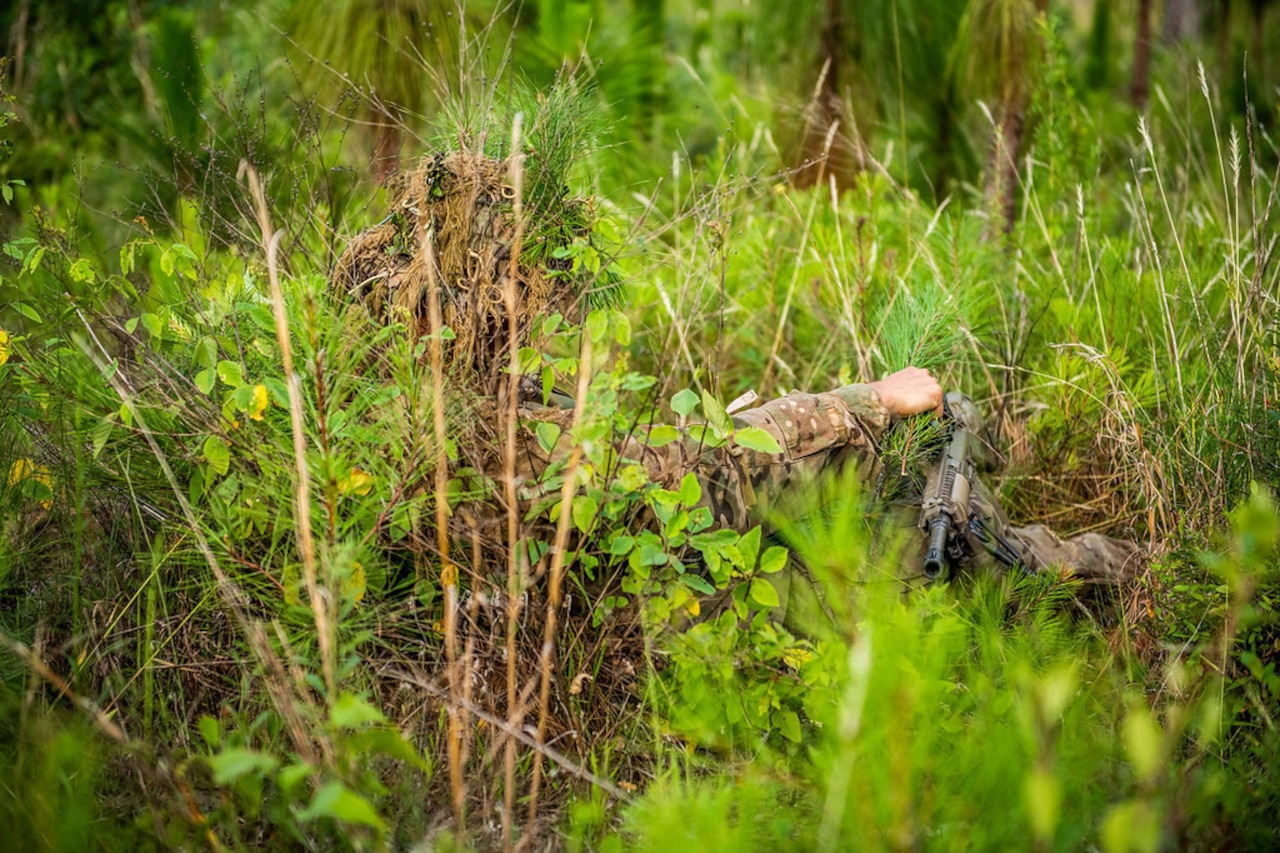
Sipes had an idea on how Fort Benning could help the whole Army by adding to the quality of its sniper units. Snipers are exceptionally good marksmen. They're specially trained in spotting and killing enemy targets, ideally on the first shot.
They're also trained to gather eyes-and-ears battlefield intelligence that can help commanders manage the fight. Fort Benning's Maneuver Center of Excellence, trains them through its seven-week U.S. Army Sniper Course, which is part of the U.S. Army Infantry School.
Snipes said he'd had the idea for about two years, long before the pandemic, but that it "kind of got put on the backburner."
"Then the COVID situation happens, and there were trainees that were here on Benning that weren't going anywhere for a while," Sipes said. "COVID-19 was sort of the catalyst to make it happen. It was sort of a no-brainer."
So, he said, he thought it was time for another try.
He called Army Sgt. Maj. Vincent M. Lewis, the operations sergeant major of the 198th Infantry Brigade. The brigade runs Infantry One-Station Unit Training, or OSUT, which trains soldiers to serve with the infantry. Lewis asked Sipes to stop by. Sipes was joined for the visit by Army Capt. Zach Lemke, the commander of Charlie Company, 1st Battalion, 29th Infantry Regiment, 199th Infantry Brigade. Sipes is the company's first sergeant. Charlie Company runs the Sniper Course.
"We popped in — 'Hey good to see you' — and got right to the point," Sipes said. He made the pitch to Lewis: "How about giving new Infantry OSUT soldiers the chance to volunteer for sniper training while they're still right here at Fort Benning?"
Sipes recalled Lewis' answer: "He said, 'Man, that sounds like an awesome idea. How do you plan to do it?' We talked about it for about 30, 45 minutes, just laying out the groundwork for what we were trying to accomplish," Sipes said.
Their idea, Sipes told Lewis, was to offer Infantry OSUT soldiers a chance to volunteer for a five-day tryout for the formal, seven-week sniper course. It would condense the course to key sniper basics. If they showed the right degree of mental sharpness and other aptitudes, they could go on to the Sniper Course. Then, if they made the grade in the Sniper Course, those recent OSUT graduates would arrive at their new units sniper-qualified, starting their Army service formally schooled in the best, state-of-the-art, sniper skills and methods.
Infantry units can train their own soldiers in-house to serve in their sniper squads, but they sometimes decide to send them to Fort Benning for formal sniper training. Taking some of the Army's newest soldiers and putting them through the Sniper Course — especially while they're already here — would be "a win-win," Sipes said.
"The units won't have to work as hard to train a soldier," he said. "They are ready to succeed on Day One. The only thing they lack is experience within the job, but that can be done through training. They've met the requirements. They know how to perform the specialized tasks. Now they just need the experience that comes from working in that organization."
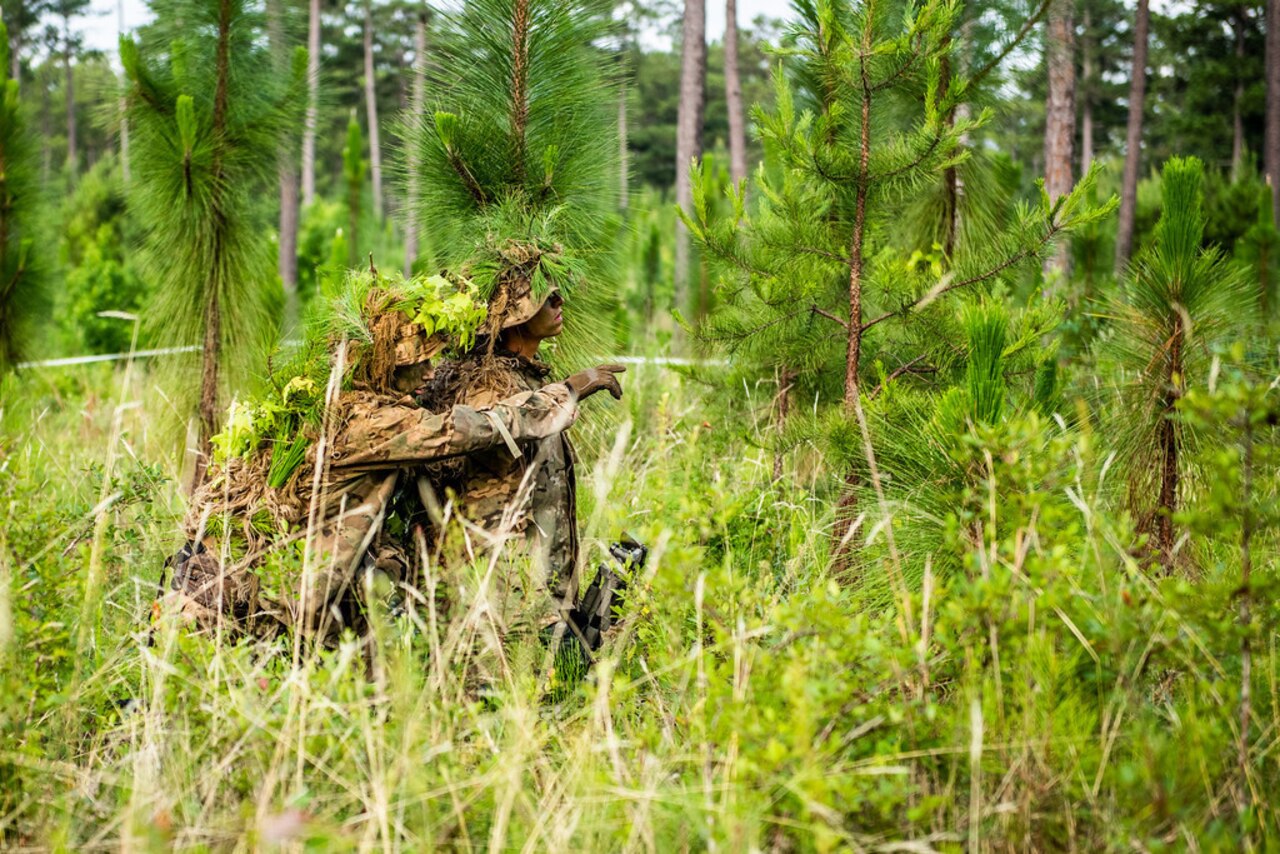
Lewis took the proposal to brigade leaders, Sipes said, including Army Command Sgt. Maj. Ronnie E. Blount Jr., the brigade's command sergeant major, who in turn discussed it with Army Col. Dave Voorhies, the brigade's commander at the time.
"They came back and told us we were good to go," Sipes said. "It took about a week to 10 days to get the final approval on it. We created the schedule and sent it over to them."
The 198th helped with finding volunteers, Lemke said. The brigade's drill sergeants formed up the trainees, told them there was a chance to try out for the Sniper Course, and then asked for a show of hands. Among soldiers who had enlisted for the infantry, the chance to specialize as a sniper had warrior appeal. Hands went up, Lemke said.
"Obviously," Lemke added, "if you go to a basic training company full of privates and you asked, 'How many of you wanna go to sniper school?' every single one of 'em's gonna raise their hand, basically, I would assume."
To be considered, candidates would have to have attained the expert marksmanship score while in OSUT and have a score of at least 270 on the Army Physical Fitness Test. They'd also have to be in the Army's infantryman job category.
The brigade's drill sergeants sent forward a list of 20 soldiers who met the requirements, Lemke said.
"We got a list of names probably within the next 48 hours," Sipes said. "Then we went and picked them up and started to train them. So from flash to bang was probably 18 days or so."
The five-day-training is called the OSUT Soldier Sniper Assessment, Lemke said.
Charlie Company instructors teach the sniper-hopefuls how to spot targets, estimate the distance from themselves to the target, gauge the wind's movements so they can adjust for it in taking their shot and how to use a sniper's high-tech optical gear to trace the path of a shot. They're also taught the basics of stalking a target and are tested on their ability to fire the M110 sniper rifle using live ammunition.
But throughout the five days, the trainers also put a keen eye on whether a candidate has the cognitive ability to absorb the instruction, including its many technical fine points, and then apply it all properly, Sipes said.
Sipes added that he consulted a sports psychologist who works at Fort Benning for tips on how best to evaluate each candidate's ability to receive new information, learn how to apply it, apply it and then work to improve performance in the future.
Charlie Company ran the first assessment April 20-24 and a second May 11-15.
Ten OSUT soldiers went from the assessment into the Sniper Course's
Class 4, which ran April 27 to June 12 and started with 47 students.
Fourteen graduated, four of them OSUT soldiers who had gone through the
assessment. Two OSUT soldiers washed out, and the remaining four were
allowed another try in Class 5, which began May 18 and ends July 2,
Lemke said.
As the time approached to run another Sniper Assessment, the 198th sent Charlie Company another list of 20 candidates.
Class 5 started with 36 students and is now at 29, 11 of them OSUT graduates who had gone through the Assessment, Lemke said.
Lemke and Sipes said they think the results of Class 4 — with four out of 10 OSUT soldiers who were still virtual rookies to the Army making it to Sniper Course graduation — suggests the effort to seek sniper candidates from Infantry OSUT right at Fort Benning, has big potential.
"And that's only going to improve over time as we master how we assess and select them," Sipes said. "That was our first two attempts. We've taken notes on how to improve it, and it'll only get better."

But that wasn't the only encouraging sign, Lemke and Sipes said.
Of those four OSUT graduates who completed Class 4, two achieved special distinction: one received the Top Shot award for highest marksmanship scores in the class. Another took the Fieldcraft Award for top grades in stalking, target detection and range estimation, Lemke said.
"We have these soldiers here on post already," Sipes said, "that are brand new, hungry, they're physically fit. They're already in that training mindset."
"We can see the potential of these soldiers immediately out of OSUT," Lemke said. "We can measure it, train them, and then send them to the force ready. That's an extremely important thing for the Army."
"This allows us to take a lot of the training burden off of units," he continued. "I can send a soldier onto his next duty station already sniper-qualified, and that unit doesn't have to make any other investment and send them back to Fort Benning. They don't have to reinvent the wheel. He's coming straight out of OSUT, receiving that training and then arriving at your unit, ready to perform that duty."
If the program can continue to send out qualified snipers to the force, it helps to build the Army's sniper capability, he added.
(Franklin Fisher is assigned to Fort Benning.)
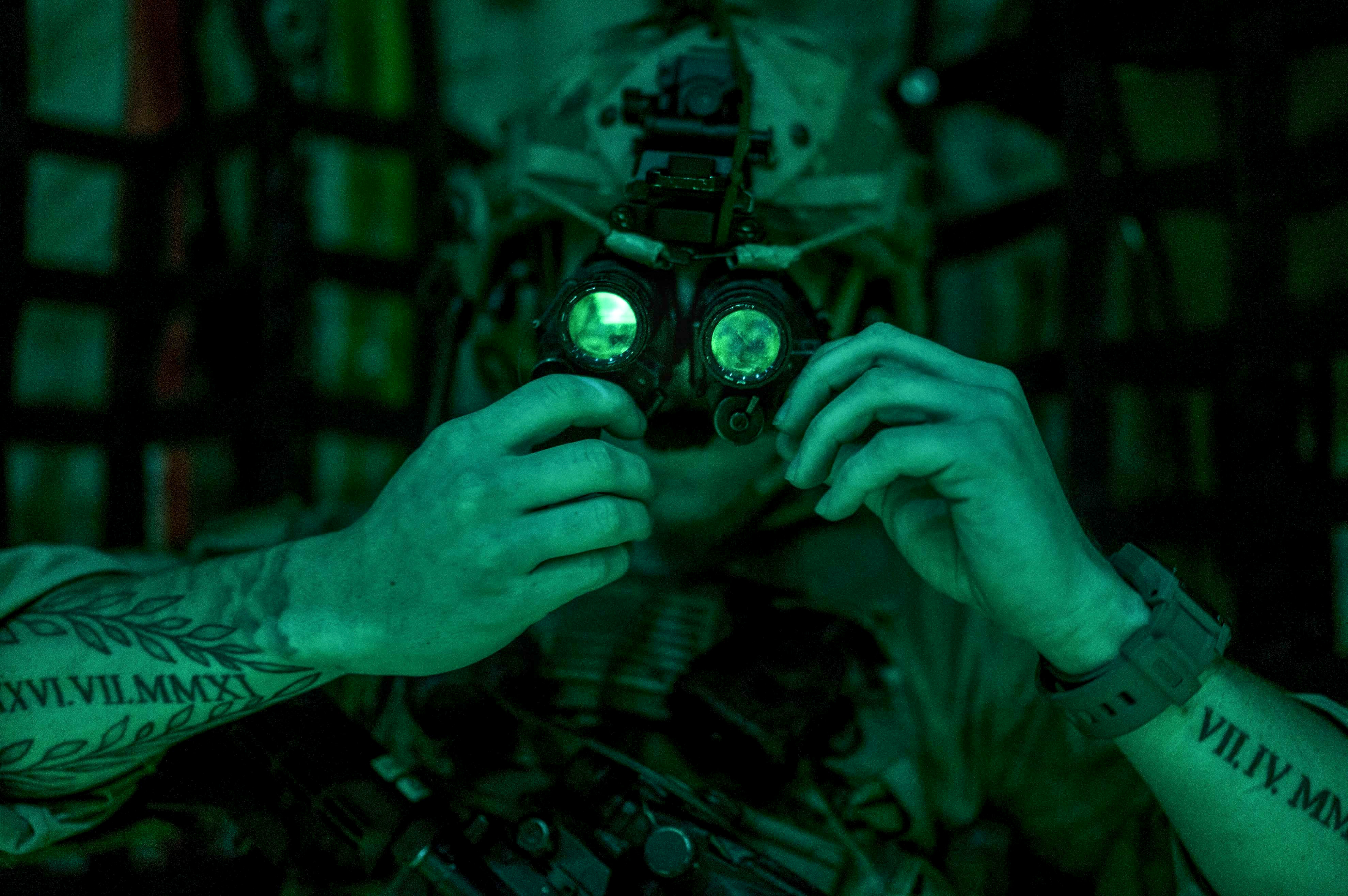
Army Spc. Caleb Ardaiz, a Task Force Guardian sniper, prepares to provide security for an Air Force C-130J Super Hercules in Somalia, June 16, 2020. The task force provides base security and force protection for Combined Joint Task Force Horn of Africa personnel and U.S. partner forces deployed in the region.

Army Sgt. 1st Class Kevin Beavers, a member of the Army Special Operations Command’s parachute demonstration team, the Black Daggers, descends during a demonstration in Jackson, Miss., June 17, 2020.

An Air Force B-2 Spirit receives fuel from a KC-135 Stratotanker, June 18, 2020, while flying on a strategic bomber mission north of the Arctic Circle.
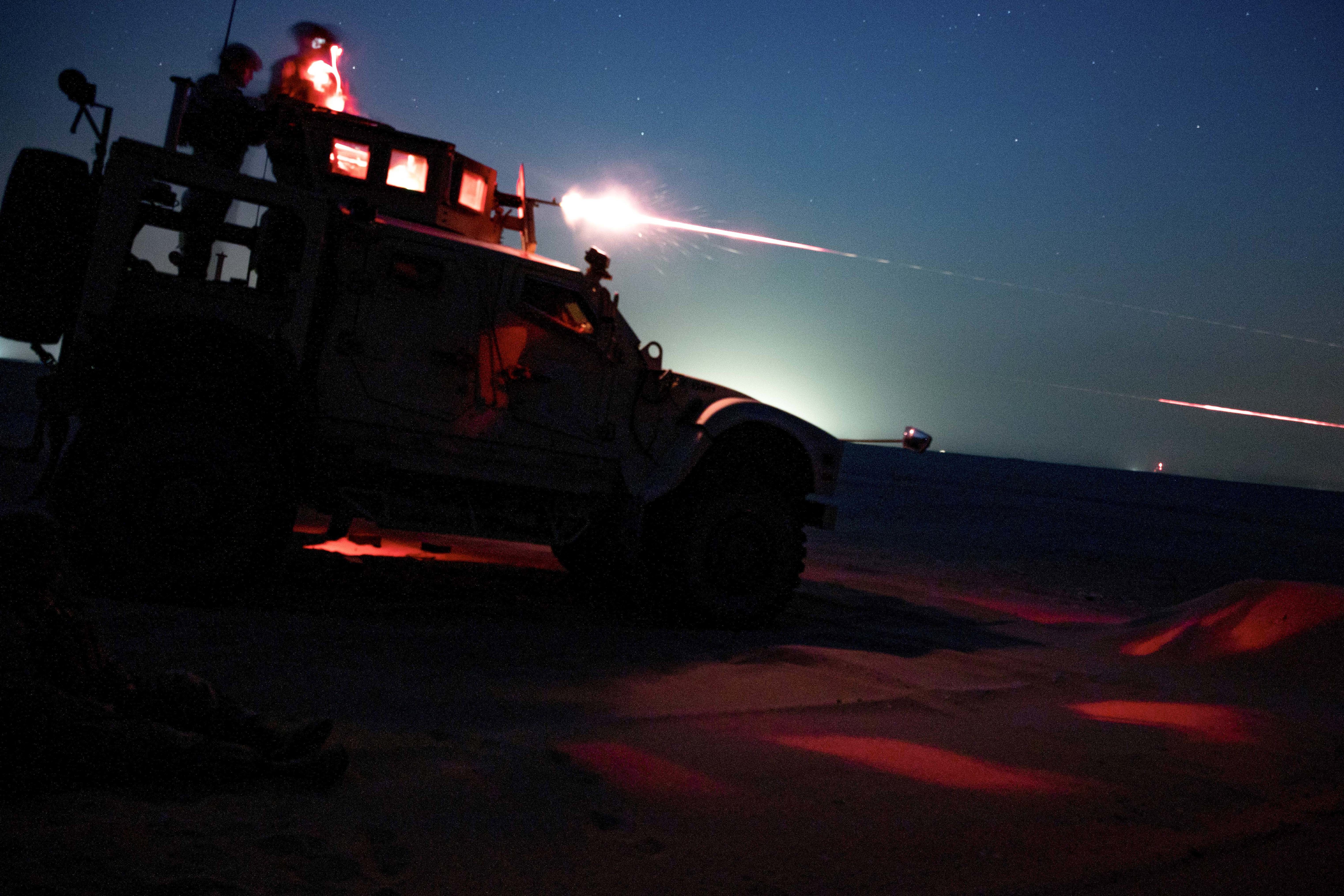
Marines fire an M240B from a mine-resistant, ambush-protected all-terrain vehicle during nighttime range training in Kuwait, June 16, 2020.
Defense Prisoners of War/Missing in Action Accounting Agency public affairs official Lee Tucker emphasized that South Korean soldiers fought alongside U.S. troops during that war against North Korea. The war lasted from 1950 to 1953. The remains are returning to South Korea after 67 years, he noted.
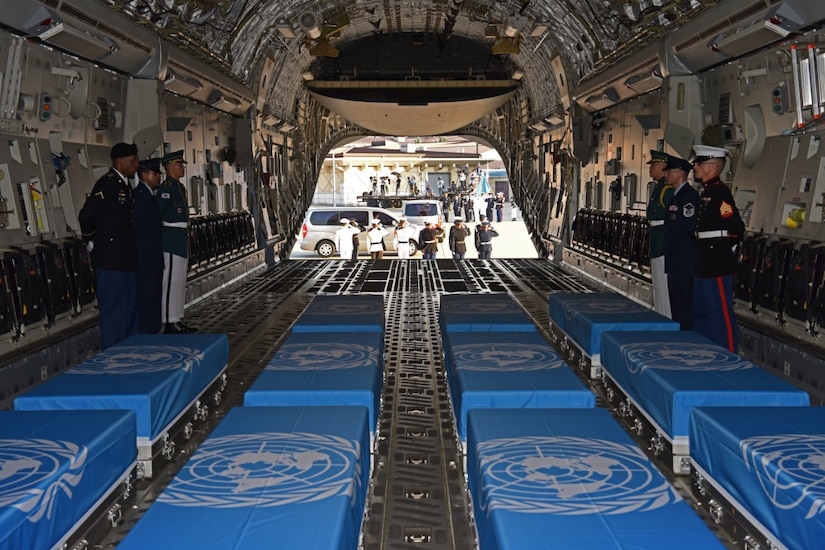
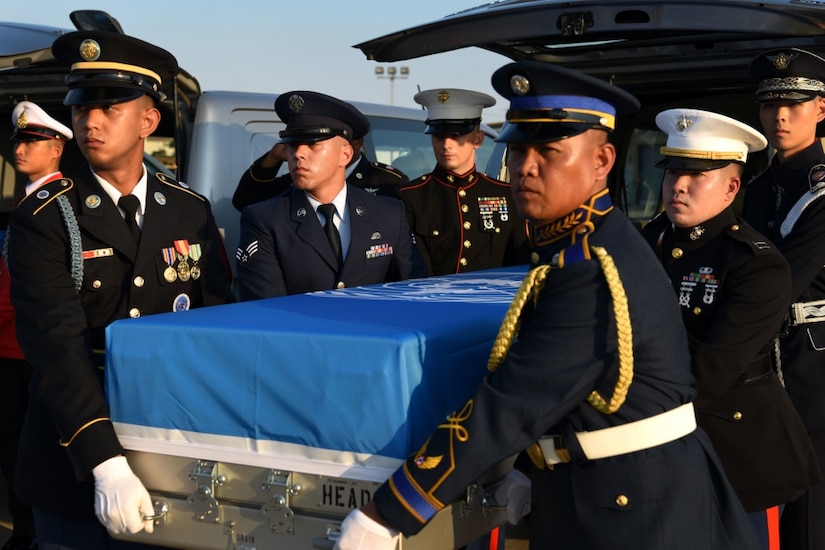
"This, like the past repatriation, is due to the strong and long standing partnership between the Defense POW/MIA Accounting Agency and [South Korea's] Ministry of National Defense Agency for KIA Recovery and Identification," Tucker said. "It is the incredible improvements in technology, advancements in forensic science and the strong partnership between DPAA and MAKRI which led to these identifications."
MAKRI and DPAA scientists have conducted joint forensic reviews and validated 147 remains as being of South Korean origin. Gleaned from advanced DNA and other forensic analyses, 77 of them are from the remains North Korea turned over in 55 boxes in July 2018, and the others are from remains repatriated in the early 1990s, he said.
The Pearl Harbor-Hickam ceremony will be followed by a June 25 repatriation ceremony in South Korea's capital of Seoul, hosted by President Moon Jae-in. June 25 coincides with the 70th anniversary of the outbreak of the Korean War, Tucker noted.
Seven South Korean family members have been identified as having DNA matches to seven of the 147 remains, and they will be present at the ceremony in Seoul.
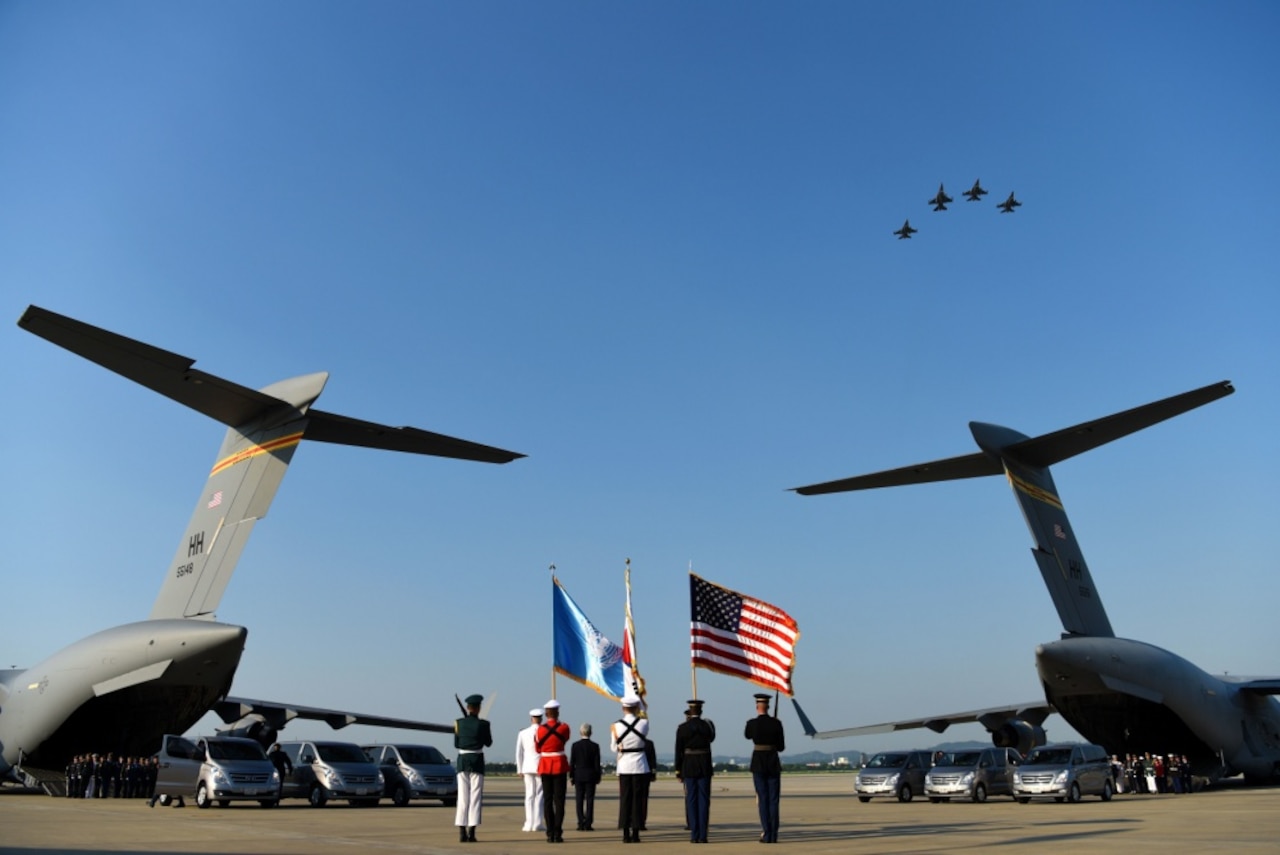
South Korea also will turn over to the United Nations Command six sets of U.S. remains that South Korean teams have recovered. The seven South Korean soldiers, who have been identified, and the six U.S. service members will be at the forefront of the ceremony in Seoul, Tucker said.
The United Nations Command will conduct a dignified transfer of remains aboard a U.S. aircraft at Osan Air Base on June 26 or 27 for transport to Hawaii, he said.

A Marine fires an M240B machine gun during mixed weapons range training at Combined Arms Training Center Fuji, Japan, June 19, 2020. The Marines were participating in Fuji Viper, an annual exercise focused on sustaining individual and small unit proficiency and decision making.
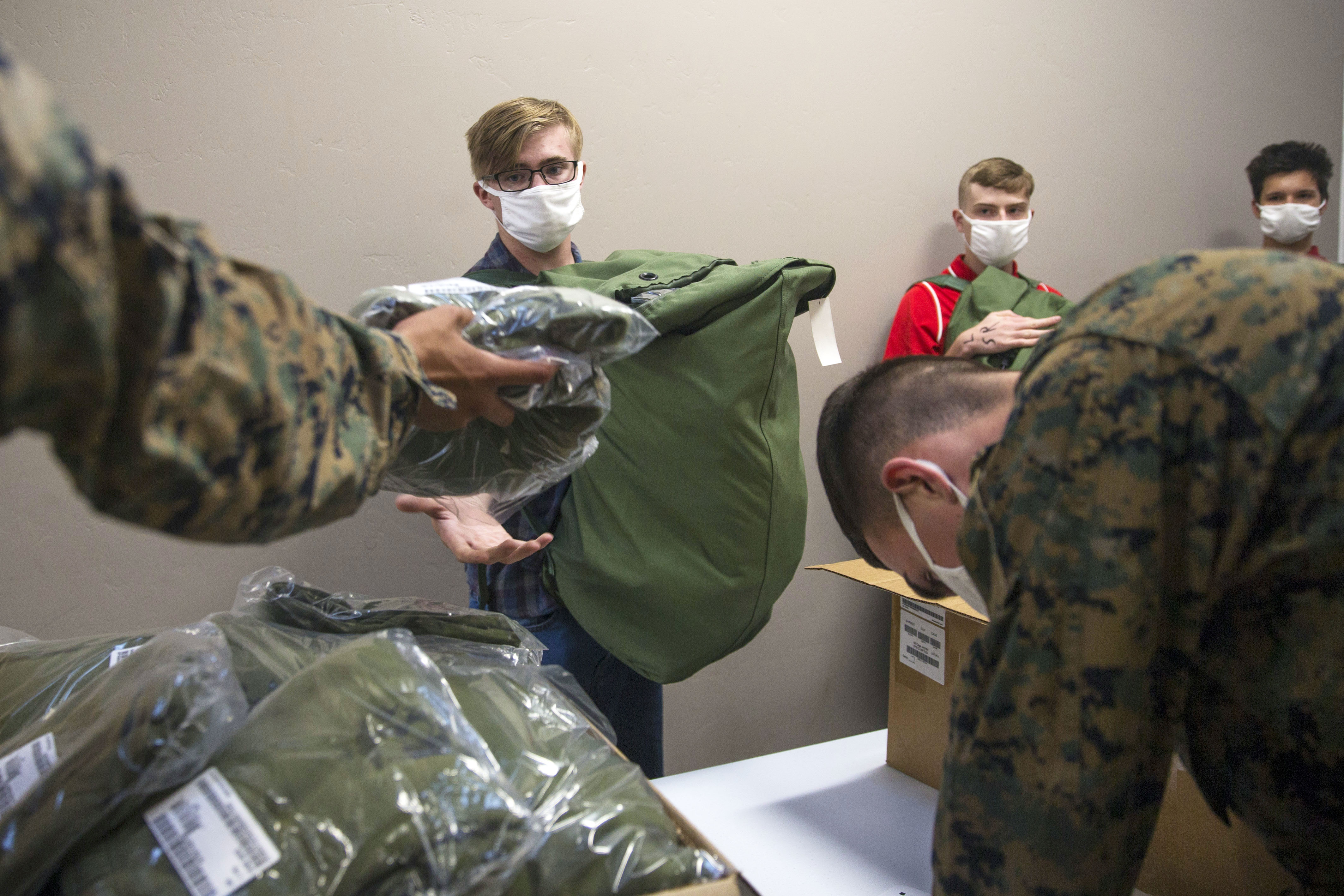
Recruits assigned to Charlie Company, 1st Recruit Training Battalion, are issued gear upon arrival at Marine Corps Recruit Depot San Diego, Calif., June 22, 2020. In the future, as recruits arrive at the depot, they will enter a 14-day staging period during which they will be medically screened and tested for COVID-19, monitored and provided classes to prepare them to begin training. All of this occurs before they step onto the iconic yellow footprints and make that memorable move toward earning the title Marine. Although current planning and execution remain fluid as the response to the pandemic evolves, one thing remains constant: the health and well-being of the recruits, the recruiting and training personnel, and their families remain the primary concerns.
The defense ministers/secretaries from the Five Eyes nations (Australia, Canada, New Zealand, the United Kingdom and the United States) met via videoconference on 22 / 23 June.
Ministers reaffirmed their commitment to advance defense and security cooperation on matters of common interest to support and defend a stable, rules-based, global order that is increasingly being challenged.
Ministers recognized the role of regional partners and institutions in shaping globally and across the Indo-Pacific a stable and secure, economically resilient community, where the sovereign rights of all states are respected.
Ministers discussed new opportunities for Five Eyes partners to further strengthen their relationship, build resilience, address challenges to international rules and norms and advance cooperation across key lines of effort in an increasingly complex and challenging geostrategic environment.
Ministers committed to meet regularly as part of efforts to address existing and emerging security challenges, and to advance their shared values of democracy, freedom and respect for human rights.
The 75th Medical Group at Hill Air Force Base, Utah, recently established a COVID-19 drive-thru screening and testing line for airmen with the 421st Fighter Squadron to get them out the door healthy and safe for deployment.
Prior to the pandemic, airmen would congregate at a building and be processed one by one through a line, stopping at different stations to ensure their immunizations, public health and other records were in order before they deployed.
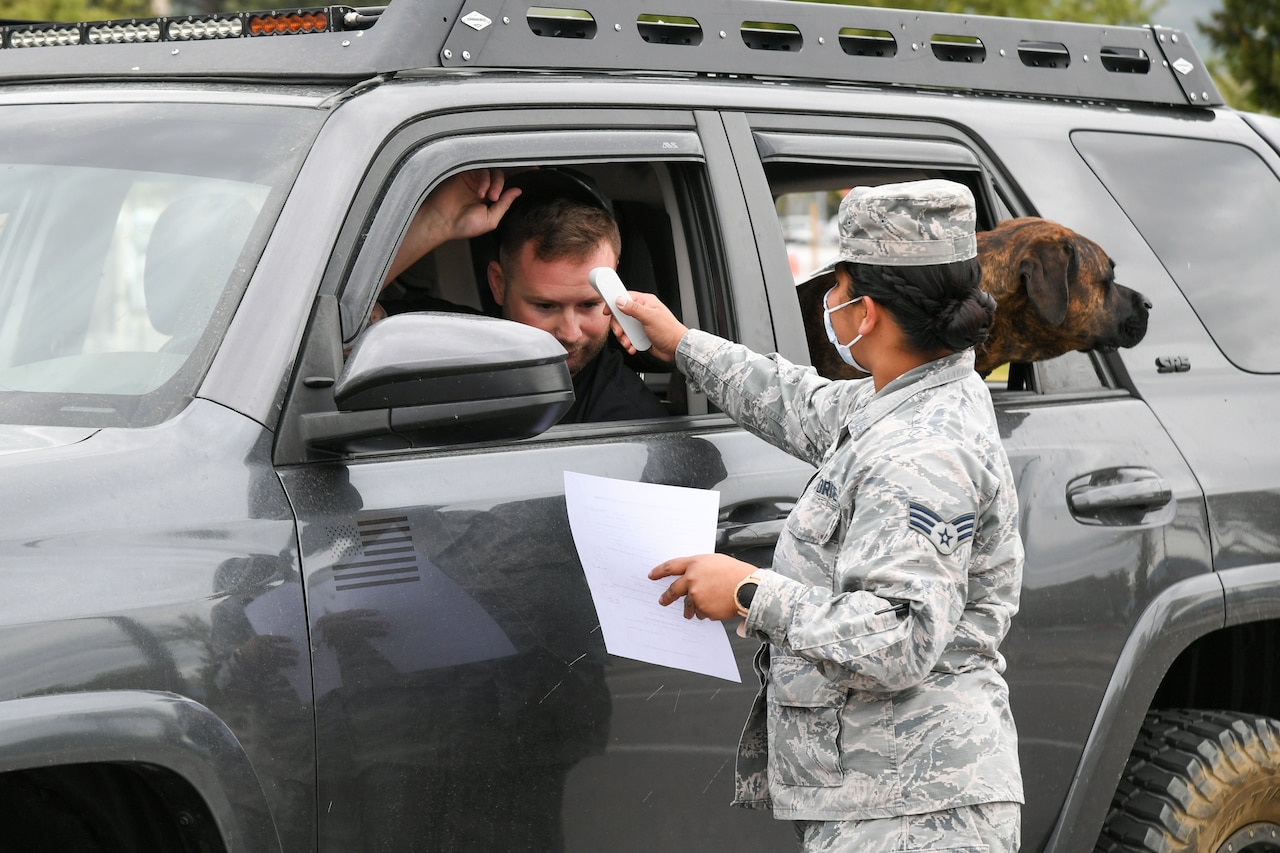
To maximize social distancing due to COVID-19, the 75th Medical Group scheduled airmen to go through its medical predeployment screening and testing line while remaining in their personal vehicles.
The line consisted of three stations. At station one, airmen received a temperature check and all medical documents necessary for the upcoming deployment were verified. At the next station, medics performed a nasopharyngeal swab to test for COVID-19. At the third station, airmen with any outstanding requirements were directed to park and go into the clinic to complete them. Those who didn't require additional actions were given further predeployment quarantine instructions and exited the line.
Air Force Capt. Pedro Rivera, the laboratory and radiology flight commander for the 75th Medical Group, said the drive-thru line was practiced three times before it was executed. The practice, along with local hospital and laboratory coordination, helped ensure the line was safely and efficiently handled, he said.
"Collaboration with all sections was imperative," he added. "Medics were trained prior to collection to ensure safety for patients and medics, while the laboratory staff made sure to meet specimen and collection requirements and coordinated with the reference laboratory for quick processing."
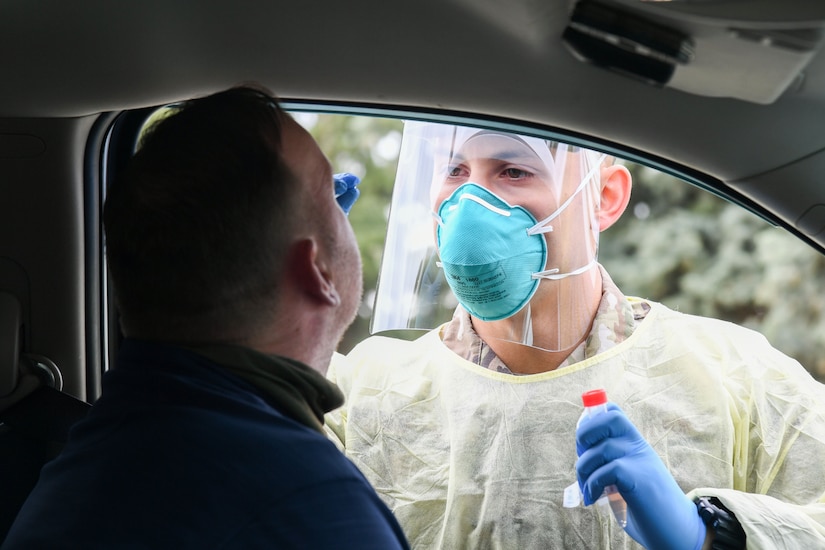
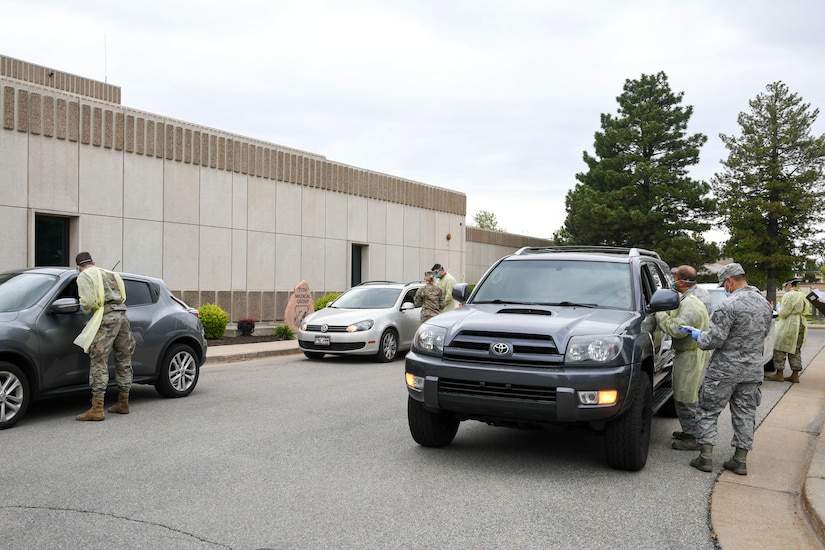
Rivera said each airman spent only six to 10 minutes in the line, and the entire process was completed in less than five hours.
"The ingenuity of our personnel is outstanding," Air Force Col. Mark Cleveland, the 75th Medical Group commander, said. "When you can just provide the vision and then get out of their way and watch what happens, you usually find yourself amazed at the results."
Cleveland noted that the medical group's people are doing everything they can to lower the virus risk to their patient population and personnel, and that every procedure that can be done safely is still being accomplished at the clinic.
"It may take an extra minute to get in the doors, but once inside, you can expect the same great service from the professionals as you did prior to COVID-19," Cleveland said.
(Cynthia Griggs is assigned to the 75th Air Base Wing.)
Almost every sporting event in the United States has been postponed due to the COVID-19 pandemic, an absence noted by the many service members who are ardent sports fans and enjoy playing sports. Because the games are mostly on hold, here's a look at two sports legends who also served in the military.
Roy Gleason and Donny Tidwell both have ties to Los Angeles Dodgers baseball and to military service in Vietnam. The difference is that one came home alive. One didn't.
Outfielder and switch-hitter Roy Gleason played just eight major league games for the Dodgers in 1963, though he had been with the Dodgers organization in the minor leagues since 1961. But 1963 was the year that the Dodgers swept the World Series over the New York Yankees, 4-0, making Gleason part of the team's legacy.In 1967, Gleason was drafted into the Army. He completed basic training at Fort Lewis, Washington, and advanced infantry training at Fort Polk, Louisiana. Shortly after completing his training, he was deployed to South Vietnam with the 39th Infantry Regiment and then the 9th Infantry Regiment. He was stationed at the old French fort called Fort Courage, near Saigon, beside the South China Sea.
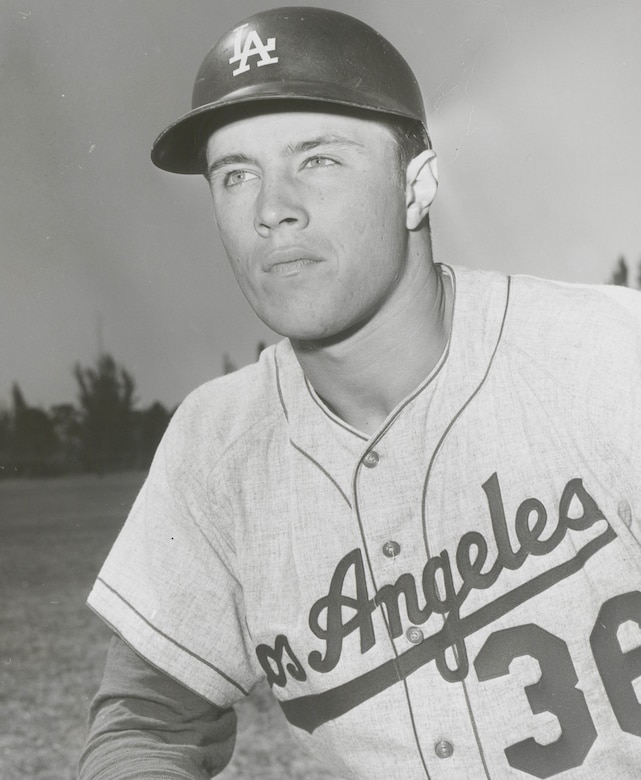
Gleason had many close calls with death, which he recounted in his collaborative biography, "Lost in the Sun."
Fort Courage got mortared regularly, Gleason wrote, once taking a direct hit which killed five soldiers and took the leg off his company commander.
In March 1968, Gleason's platoon came under heavy fire in the Mekong Delta as they were crossing a rice paddy. Two soldiers were hit by enemy fire, and Gleason carried each to safety as incoming fire continued. As a result, Gleason was meritoriously promoted to sergeant in June, thereby making him the platoon sergeant.
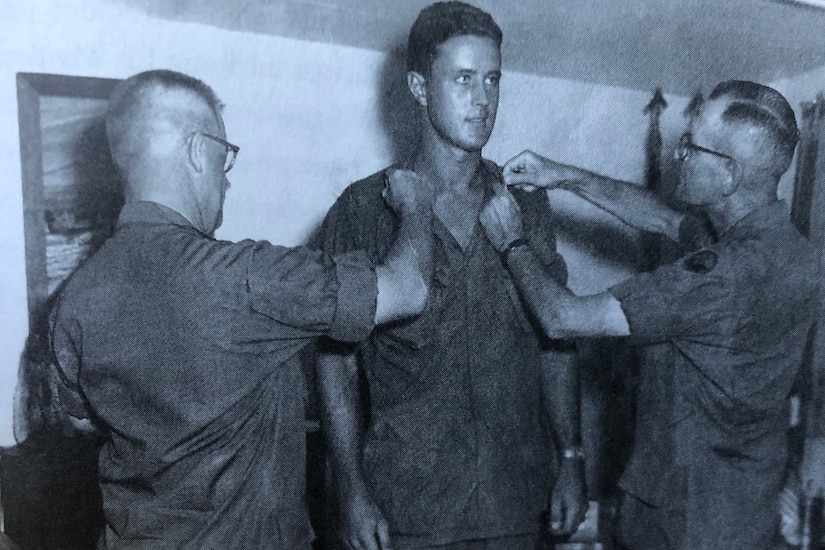
Shortly after his promotion, on July 24, 1968, while walking point, he and his men walked into an ambush. Almost immediately, he was wounded in the wrist and lower leg. After fashioning a tourniquet, he returned fire. Many of his buddies were wounded or killed that day. Eventually, they were evacuated by helicopter, and that ended Gleason's tour in Vietnam.
After his tour of duty, Gleason played in the Dodgers' farm system in 1969 and 1970, but his war wounds prevented him from returning to the major leagues. He went on to have a career in television and films, including starring in the TV series "Branded" alongside actor Chuck Connors, and portraying a race car driver in a "Batman" episode.
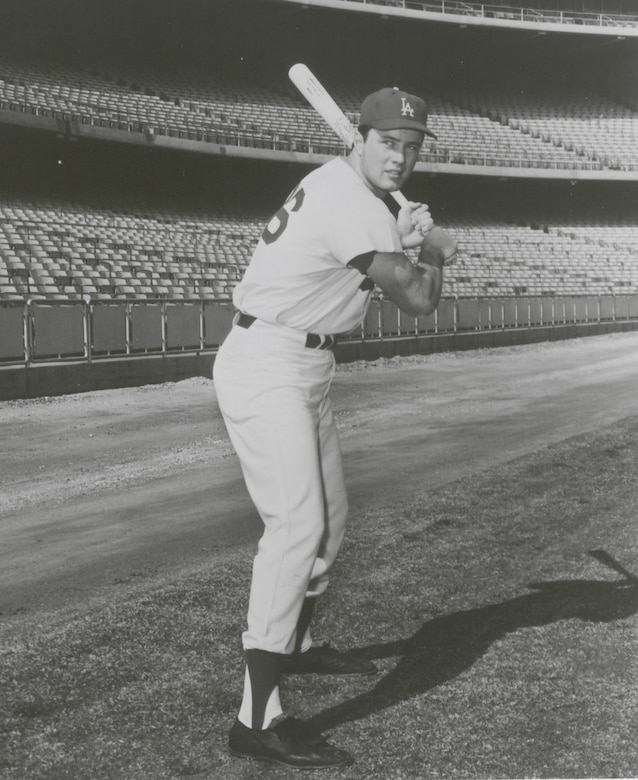
He makes his home in Melrose Park, Illinois. His father, Richard Roy Gleason, served as a Seabee during World War II.
Just about every rookie who gets drafted into the big leagues dreams of hometown glory. Donny Tidwell, most likely, had dreams, too.
The Dodgers selected pitcher Donny Tidwell in the 42nd round of the 1966 first-year player draft. In his only professional season at rookie-league level with the Ogden Dodgers, Tidwell went 4–3, with a 4.01 earned run average in 19 games, according to Mark Langill, L.A. Dodgers team historian and author of five Dodger-related books. Based in Ogden, Utah, The Ogden Dodgers were a minor league baseball team in the Pioneer League from 1966 to 1973.
It was future Baseball Hall of Fame coach Tommy Lasorda's second season as a minor league manager, and Ogden won the Pioneer League title with a 39–27 record, Langill said. Future major league players on that 1966 Ogden squad included then-outfielder Bill Russell and pitcher Charlie Hough. Tidwell's roommate at Ogden was infielder Justin Dedeaux, son of longtime University of Southern California baseball coach and former Brooklyn Dodgers shortstop Rod Dedeaux.
Tidwell, sensing a call to duty, enlisted in the Army in November 1966 for an expected three-year tour. He had been in Vietnam for only two months and 12 days when he was killed, at age 21, on April 12, 1968. Tidwell was a member of Bravo Company, 22nd Infantry Regiment, 25th Infantry Division, Langill said.
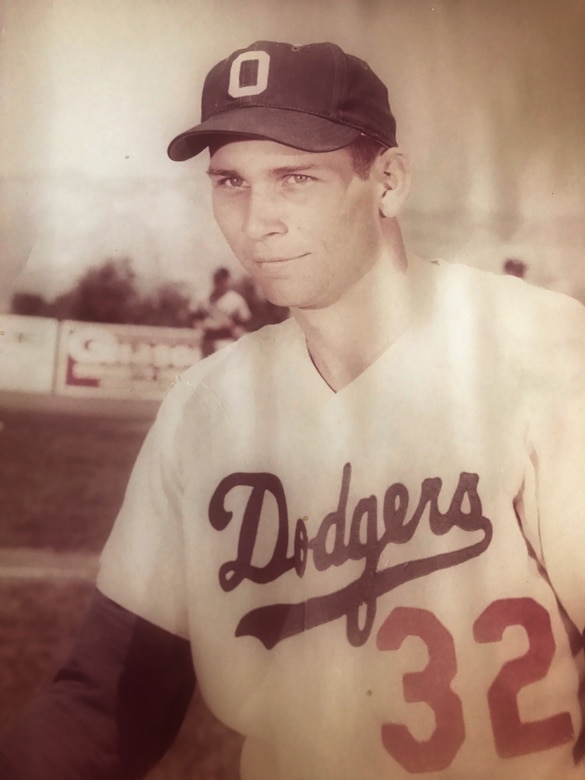
Lasorda, who later managed the major league Dodgers for 20 seasons and was elected to the Baseball Hall of Fame in 1997, sent a message to the Tidwell family in 2018, when Tidwell's high school in Diana, Texas, renamed its baseball field in his honor. Hometown glory was just as sweet 50-plus years after that rookie season.
"I began my managerial career in the rookie leagues. It was an incredibly good feeling to take young, inexperienced players and mold them, build them into good players and winners," Lasorda wrote to Tidwell's family. "Throughout my playing career, I knew there was only a small difference between the mediocre ballplayer and the very good ballplayer on the team, and that distance could be narrowed through hard work and determination.
"My first championship team was the 1966 Ogden Dodgers," he continued. "I'll always look at that roster and think of Donny Tidwell. Every player who starts out in pro ball has a dream of playing in the Majors. While several of his teammates eventually played in the Majors, Donny decided there was something bigger than baseball. His decision to enter the Army took courage as he set aside his dream of playing baseball to serve his country. The image of Donny eagerly taking the ball and pitching in a Dodger uniform during that summer of 1966 is something I've carried with me for more than 50 years. I am thankful the community of Diana, Texas, continues to honor a true hero and role model."
Even a pandemic like COVID-19 cannot stop the Army from developing and training its future enlisted leaders, and the Emergency Basic Leaders Course in Kuwait made sure of that.
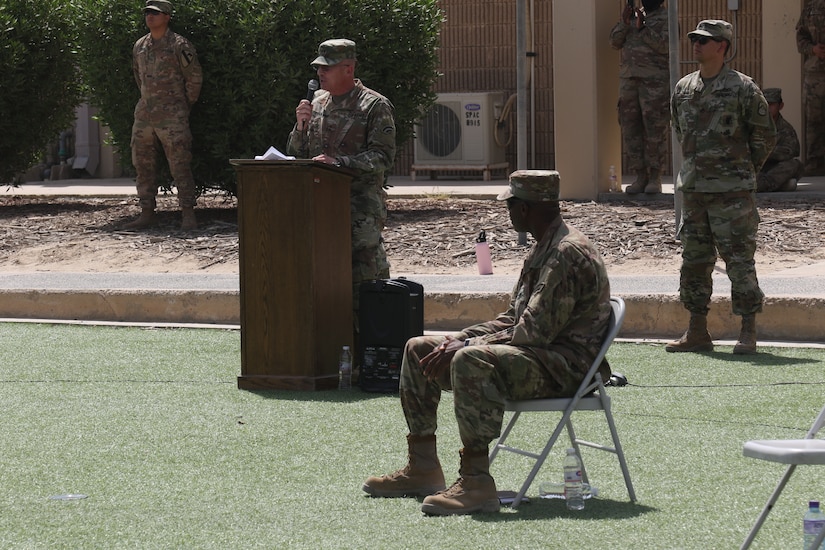
Deployed soldiers in the next generation of Army enlisted leaders were able to complete the Basic Leaders Course in Kuwait without having to go back to the United States for classes or delay their promotion eligibility.
The newest graduating class included more than 40 soldiers from Camp Arifjan, Kuwait, with about 120 more from throughout the U.S. Army Central Command area of responsibility.
"This is your first developmental class; hopefully, you'll have plenty more," Army Maj. Gen. Steven Ferrari, the commander of Task Force Spartan Shield and the Infantry Division, told the latest graduates.
Enlisted soldiers must take many courses as they progress through the Army's ranks. Completing the Basic Leaders Course is the first step in that progression, and it gives future enlisted leaders a glimpse at what it takes to become a noncommissioned officer and what it takes to lead other soldiers properly.
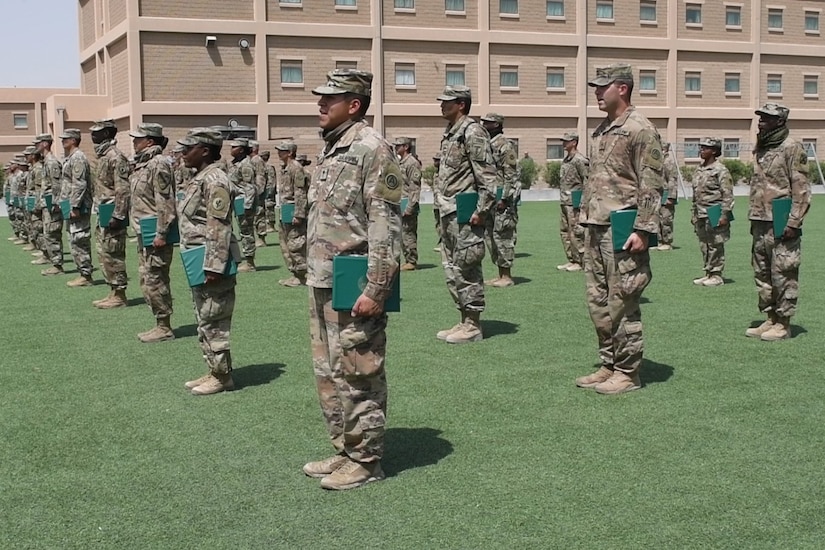
"As you progress through your career, you will go to many courses, but none will be as unique as this one," Ferrari said. "It gives you an overview on how to lead, but everyone will develop their own style in how to lead. What you must do in order to become successful in this military is you must be a leader of character, competence and commitment."
As the coronavirus swept through the nation, schools once bustling with the sounds of children became ghost towns, school buses stopped in their tracks, and classrooms once filled with life went vacant.
The pandemic left families in Bladen County, North Carolina, in a dire situation. Unemployment skyrocketed, and families struggled more to feed their children.
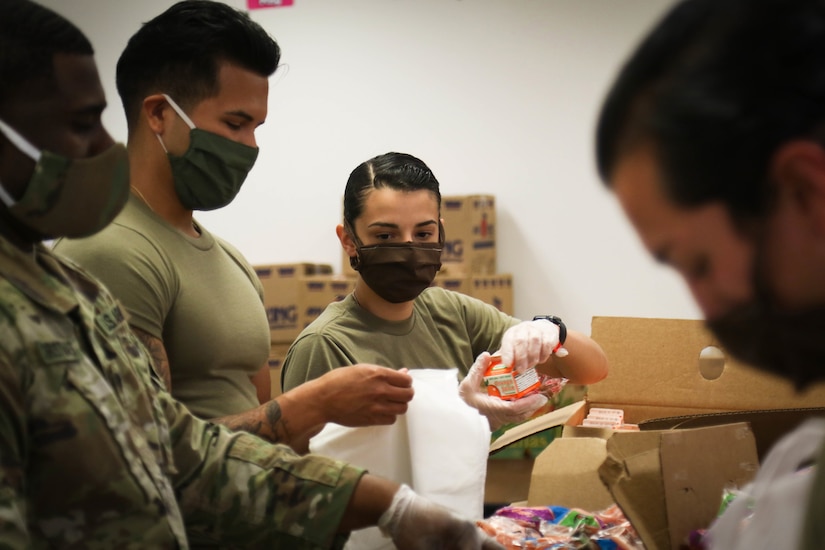
Amy Stanley, the director of school nutrition for Bladen County Schools, said 76% of students attending Elizabethtown Middle School would typically receive free or reduced meals during the school year, and that most of the meals the children ate on weekdays, came from the school meal programs.
"On a daily basis, typically, students are here at school and they're able to get those lunches....But COVID-19 has impacted our society so much," said Jamal Dunham, the principal of Elizabethtown Middle School. “We transitioned to virtual schooling, but kids still need to eat.”
With parents out of work and students without a meal plan, the uncertainty of when their next meal would come became a mystery and a gut-wrenching horror.
"Without those meals, they're not going to have the nutrition that they need," Stanley said. "When we get out of school on Friday and come back on Monday, there are many children that do not eat during that weekend. So to go three or four months without the children eating would be devastating to the families and to the children."
Schools were no longer in session, but their desire to help remained strong. County leaders called on the North Carolina Army National Guard to help with their mission to provide school breakfast and lunches to students.
"The National Guard has stepped in and provided our district the opportunity to support children through natural and healthy eating habits," Dunham said. "We would not have been able to make the impact we're making without the help of the National Guard."
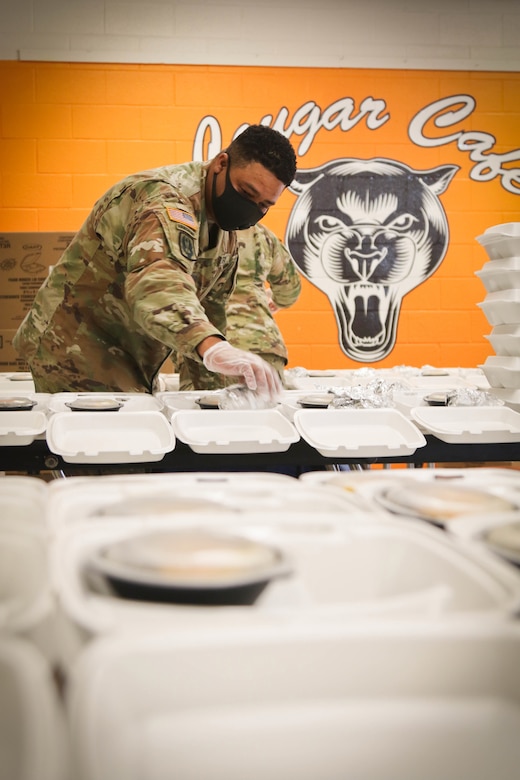
Fifty-five soldiers from guard units across North Carolina — including the 1131st Charlie Company, Headquarters and Headquarters Company, 449th Theatre Aviation Brigade, Alpha and Bravo Battery, 5th Battalion, 113th Field Artillery Regiment, and the 1454th Transportation Company — arrived in Bladen County.
"It was just amazing to see how quickly they were able to come in, integrate into the system, and just hit the ground running," said Robert Taylor, the superintendent at Elizabethtown Middle School.
The guardsmen provided assistance to seven different schools throughout the county, including Elizabethtown Middle School. Their collaborative mission to help the hungry began early in the morning, as soldiers put on their uniforms and worked long hours with the school staff to make and prepare meals. Finally, the meals were loaded onto school buses and were off to their usual routes.
"The teamwork is just phenomenal," said Army Maj. Ashley Perdue, the officer in charge at Elizabethtown Middle School. "Working with the cafeteria staff, we all just melded. … It's been a really great experience."
The guard played a key role in helping Bladen County's limited workforce to produce and distribute mass quantities of food on a daily basis. The guard helped the county provide about 45,000 meals a week that were distributed daily along 26 bus routes.
"The feeding of the children during this COVID crisis has been a really tremendous effort," Taylor said. "Having the National Guard here has made a tremendous difference in terms of how we serve people."
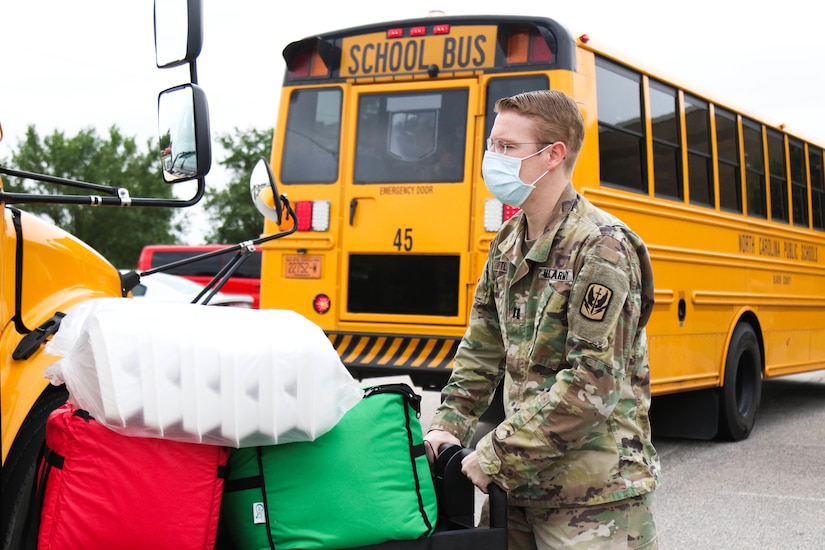
During a time of social distancing, school buses were as rare a sight as an ice cream truck in the dead of winter. Nonetheless, children of Bladen County were once again able to hear the sweet sound of the roaring engine as their yellow beacon of hope approached their bus stop. Their unexpected guardian angel had arrived. However, the last thing the kids expected to see were boots emerging from the bus as the doors opened.
"At first they were kind of standoffish and scared, not used to seeing the uniform," said Army Spc. Amber Cohen, assigned to the 449th TAB. "Now they're running up to me like I'm family...and giving me hugs on my leg."
The experience ended up being more than just a duty and a job especially to Cohen. The word "family" was used to describe the relationship the staff and soldiers developed while working for the same cause. It brought new perspectives and grateful hearts as these heroes in green served their community.
"Their people of our own," Cohen said. "It feels like it's a family. You get to see the smiles on their faces, and you know that when you hand them that food, they're going to be eating for lunch and breakfast the next day at the very least."
An unlikely hero quickly became a friendly face that the children greeted with warm hugs and bright smiles.
"The National Guard in Bladen County will be a lasting memory for everyone," Taylor said. "The guard is actually helping out communities in ways that they have never imagined."
The dedication and perseverance of the Elizabethtown Middle School staff and soldiers served food and hope to many children. A time of tragedy evolved into an unexpected experience of unity and camaraderie.
"The National Guard has made an impact here at Elizabethtown Middle School and is touching the lives of the students here in Bladen County," Dunham said. "The National Guard has done some phenomenal work. We are blessed to have you on our side."
(Army Spc. Hannah Tarkelly is assigned to the 382nd Public Affairs Detachment)
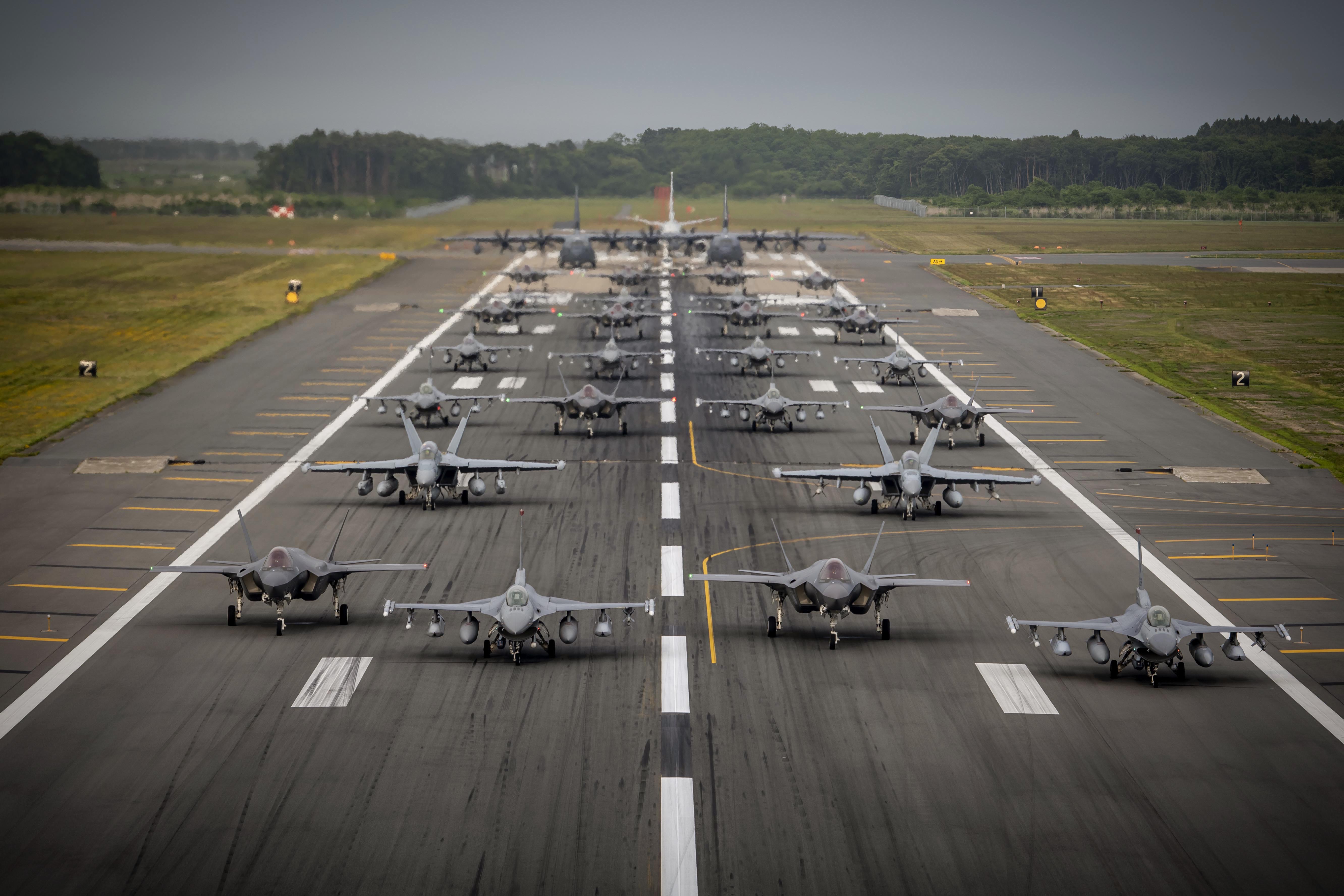
Twelve Air Force F-16CM Fighting Falcons, two Air Force MC-130J Commando II aircraft, two Navy EA-18G Growlers, a Navy C-12 Huron, a Navy P-8 Poseidon and 12 Japan Air Self-Defense Force F-35A Lightning II aircraft participate in an "Elephant Walk” at Misawa Air Base, Japan, June 22, 2020. The event showcased the base’s collective readiness and ability to generate combat airpower at a moment's notice.

Marines exercise during the High Intensity Tactical Training competition at Marine Corps Base Quantico, Va., June 18, 2020. The Marines showcased their fitness after having to social distance due to the COVID-19 pandemic.
The Department of Defense announced today the induction of seven new members to the Defense Advisory Committee on Women in the Services. DACOWITS provides the Secretary of Defense with advice and recommendations on matters and policies relating to the recruitment, retention, employment, integration, well-being, and treatment of women in the U.S. Armed Forces.
The committee is comprised of up to 20 members, who include prominent civilian women and men from academia, industry, public service, and other professions. Selection is on the basis of experience in the military or with women-related workforce issues. Members are selected for a 4-year term and perform a variety of duties, to include visiting military installations annually, conducting a review and evaluation of current research on military women, and developing an annual report with recommendations on these issues for the secretary of defense.
New committee appointments include:
Current committee members:
To learn more about DACOWITS visit https://dacowits.defense.gov/.


 Posts
All Comments
Posts
All Comments
Posts
All Comments
Posts
All Comments


