Friday, April 30, 2021

The Day He Stopped Breathing: Silver Star Recipient Recalls Mission

 April 30, 2021 | BY Army Sgt. 1st Class Justin A. Naylor

Curtis Reid was 33 years old when his heart stopped.

It happened in a dusty building southeast of Baghdad. He was surrounded by soldiers he loved.

"I watched him die," recalls Lyndon Kilcrease, then a newly-promoted Army specialist. "They started to resuscitate him, and I remember Jones saying 'Look, he's dead.'" But Reid would live to serve on. 
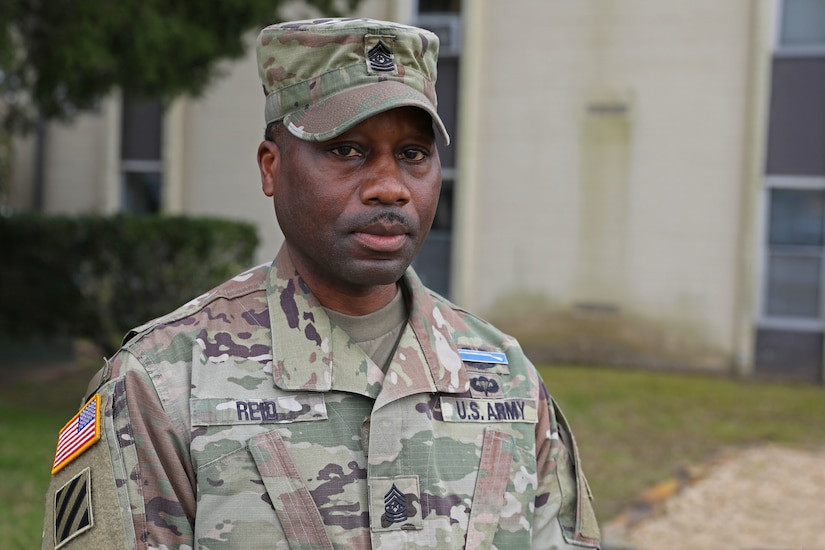
A soldier in uniform poses for a photo.

It was July 3, 2006. Reid's unit had just returned from an overnight air assault mission that involved clearing insurgents out of a local village. Kilcrease remembers the soldiers returning to their base — Combat Outpost Cahill — around 5:00 a.m.

"We were all bone tired," he said. Most of the members of the unit weren't aware that a change occurred overnight that would send the weary soldiers back out into harm's way later that morning. The soldiers were originally set to bring their vehicles in for refit July 4. However, there was a change in orders, and now they would be bringing them to Forward Operating Base Hammer — some 50 miles away — a day early. 

"So, we got ready and loaded up the Bradleys with the dismounts," remembers Reid.

Once we hit a certain checkpoint, we proceeded, and, the next thing I know, it's just a huge explosion; it shattered my helmet."
Command Sgt. Maj. Curtis Reid

With the dismounted soldiers loaded into the back of the vehicle, Reid told his driver to raise the back ramp, but the ramp didn't budge, so the soldiers manually closed it. 

First their mission to go for refit was bumped forward a day and now the ramp on their vehicle was broken. Reid remembers thinking this seemed like a sign.

With the ramp finally locked in place, the line of vehicles departed COP Cahill and headed toward FOB Hammer. Reid's vehicle was the last in line and was tasked with providing rear security. The 25mm cannon on his Bradley faced toward the back of the vehicle.

"The back deck has a cargo hatch," Reid said. "Dismounts can get in and out of the cargo deck, but if that barrel is blocking that cargo hatch, you can open it but you can't get out."

"Once we hit a certain checkpoint, we proceeded, and, the next thing I know, it's just a huge explosion; it shattered my helmet," said Reid. "I just remember calling out 'IED, IED, IED' and I looked over at my gunner, and he was knocked out, unconscious." [IED stands for improvised explosive device.]
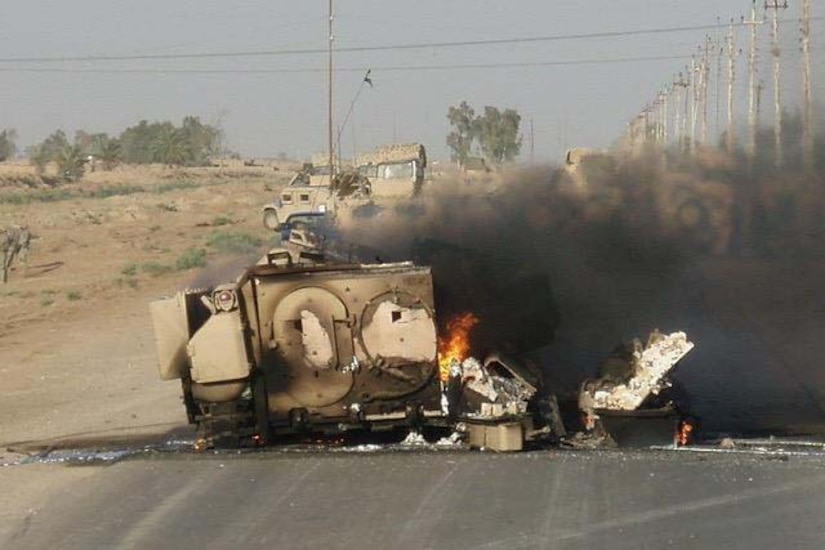
A military vehicle burns on a street in Iraq.

Reid recalls that the vehicles in front of him turned around immediately after the explosion and medics rushed to his vehicle.

"I'm kind of in shock and disarray, and that's when I pulled my gunner out and took him to the ground," Reid said. "The medics were already there on scene. My driver had managed to get out of his hatch. He was hit with shrapnel and was on fire."

Reid's driver for the day was Kilcrease, whose recollection of the explosion is hazy.

"I remember us driving, and then I remember 'boom' and then there's, like, a brief 30 seconds or a minute that I was knocked out," said Kilcrease. "I woke up and there was just fire everywhere. The [explosively formed penetrator] went off, and it went through the fuel cell; then, it went through the engine; then, it blew into the driver's compartment right behind me."

I knew that if I didn't do anything, they would burn alive in there."
Command Sgt. Maj. Reid

EFPs were a common weapon used by insurgents to penetrate the thick armor of military vehicles. They work by focusing a weighted piece of metal in an explosion and can cause high levels of destruction on impact.

After Kilcrease woke up, he turned around and looked in the area behind the driver's seat, dubbed the 'hell hole.'

"I tried to release the back ramp so that the guys in the back could get out," said Kilcrease. "There's a lever; it's the ramp lever. It releases the emergency hatch so you can push the button to lower the ramp. After I turned around and saw the hell hole was on fire, I grabbed the release. I tried to push the ramp button down, but all the electronics had been knocked out of the Bradley, so nothing was working."

With the ramp malfunctioning, Kilcrease exited the burning vehicle. He was on fire when he hit the ground and was tackled by a medic who put out the flame.
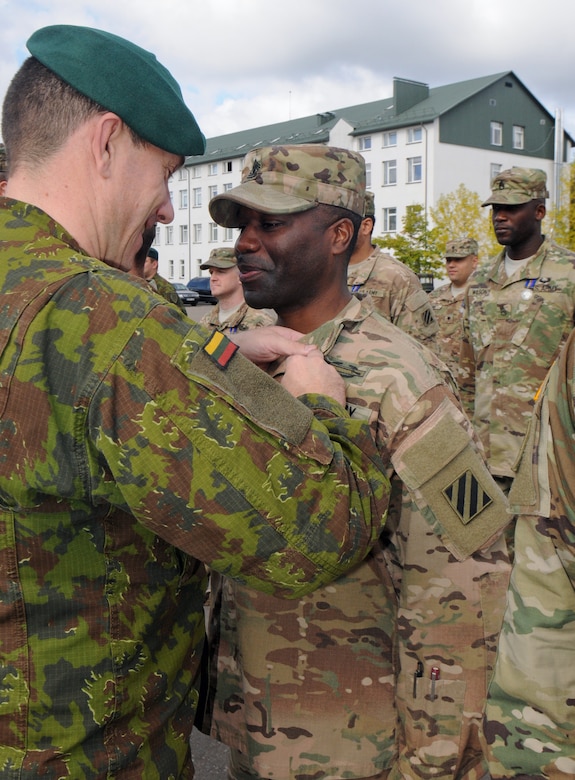
A foreign military service member pins a medal on a U.S. soldier.

Reid remembers watching the medics treat Kilcrease. It was at this moment that he realized that the dismounts were trapped inside with a malfunctioning ramp and the gun blocking the top exit to the vehicle.

"I knew that if I didn't do anything, they would burn alive in there," Reid said. "From that point, I jumped back into the turret in my compartment. In the Bradley, you control the turret in mechanical mode or electric mode; I put everything in manual mode. Once I did that I was able to raise the gun barrel."

Reid lifted the gun barrel to maximum elevation, and a soldier in the back of the vehicle popped the hatch open halfway.

"I jumped out of the turret to where the cargo hatch was and opened up the cargo hatch all the way," Reid said. "I jumped into the hull to where the dismounts were in the back, where they ride at. I took each individual out one by one and also the Iraqi interpreter. Some of them were unconscious, some of them were just confused from the explosion, so they didn't have any idea what happened."

After getting the last soldier out of the vehicle, Reid jumped off the burning Bradley. Hitting the ground is the last thing he remembers.

"His adrenaline went out, and he just collapsed," said Kilcrease.
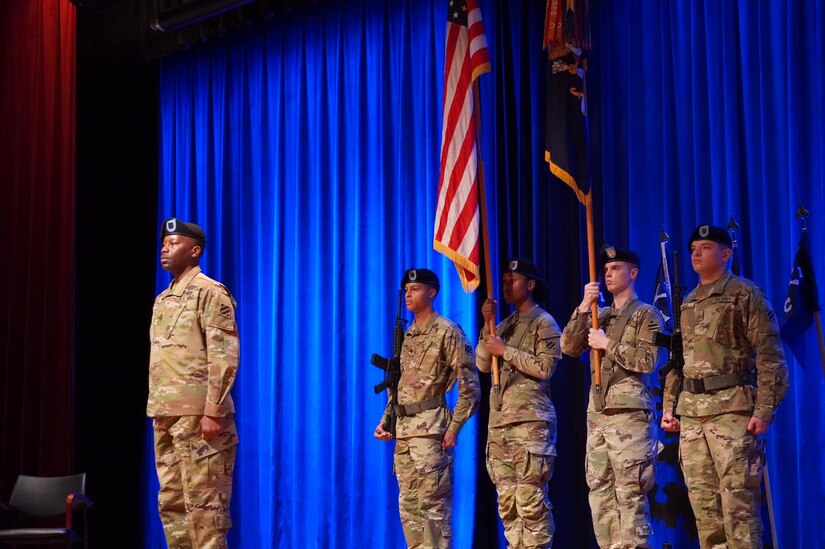
A soldier stands at attention in front of a color guard carrying the American flag.

Reid's next memory is of waking up in a small hospital. It was here where his heart stopped and the medical team resuscitated him. The medics treated Kilcrease alongside him.

"They're scrubbing me down trying to control all these burns and pulling shrapnel," he said. "They put [Reid] on a litter right in front of us. He quit breathing."

"They resuscitated him and got him back," Kilcrease said. "I can't tell you how I felt at the time. I was just sitting there watching a dude that you kind of looked at as a father figure die."

Reid's next stop was in Landstuhl, Germany, where a medical team worked to stabilize him. The explosion ruptured his spleen, so the doctors removed it. Once he was out of critical condition, he was moved to Womack Army Hospital at Fort Bragg, North Carolina, for recovery.

While the physical injuries were painful, the concussion caused neurological injuries that last to this day.

"I had to go through speech therapy, writing therapy, hand and eye coordination therapy," Reid said. "It was like a two-year rehab. Sometimes, I still have challenges with speaking."
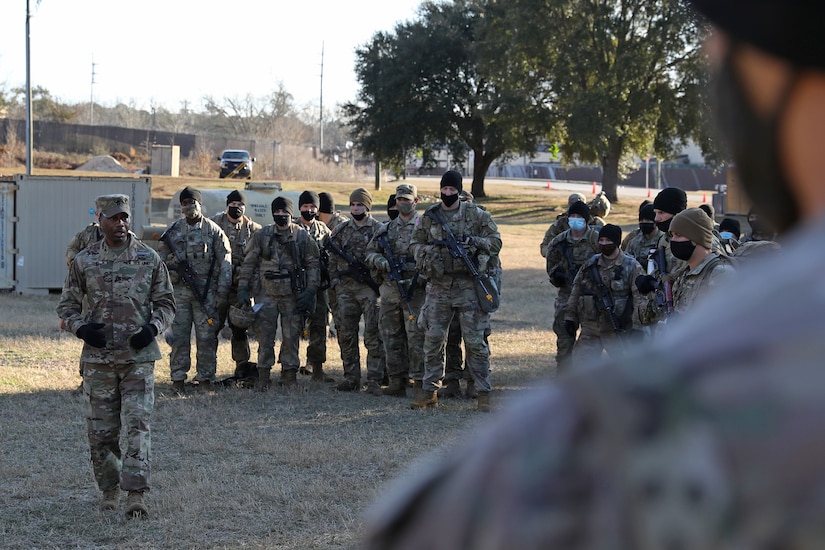
A soldier speaks to a group of soldiers.

Reid's leadership presented him with the Silver Star Medal during his recovery at Womack. 

Reid's recovery was grueling, but he said that his faith, his family, and his love for the soldiers he served with kept him pushing to get better. These injuries might have ended the careers of other soldiers, but, for Reid, they were just hurdles to overcome.

"I love being around soldiers," Reid said. "That's why I'm still doing what I do, because I love being around soldiers and taking care of soldiers."

Flag Officer Assignments

 April 30, 2021


The acting secretary of the Navy and chief of naval operations announced today the following assignments:

Rear Adm. William D. Byrne Jr. will be assigned as director, warfare development, N72, Office of the Chief of Naval Operations, Washington, D.C.  Byrne is currently serving as vice director, Joint Staff, Washington, D.C.

Rear Adm. Ronald C. Copley will be assigned as director, National Maritime Intelligence Integration Office; and commander, Office of Naval Intelligence, Washington, D.C.  Copley is currently serving as deputy director of operations, National Security Agency, Fort Meade, Maryland.

Rear Adm. Douglas G. Perry will be assigned as director, Undersea Warfare Division, N97, Office of the Chief of Naval Operations, Washington, D.C.  Perry is currently serving as commander, Submarine Group Nine, Silverdale, Washington.

Rear Adm. (lower half) Christopher C. French, selected for promotion to rear admiral, will be assigned as deputy judge advocate general of the Navy, Washington, D.C.  French is currently serving as legal counsel to the Chairman of the Joint Chiefs of Staff, Washington, D.C.

Rear Adm. (lower half) George M. Wikoff, selected for promotion to rear admiral, will be assigned as vice director, Joint Staff, Washington, D.C.  Wikoff is currently serving as special assistant to the deputy chief of naval operations for operations, plans and strategy, N3/N5, Office of the Chief of Naval Operations, Washington, D.C.

Rear Adm. (lower half) Craig C. Clapperton will be assigned as commander, Combined Joint Task Force, Cyber, U.S. Tenth Fleet, Fort Meade, Maryland.  Clapperton is currently serving as commander, Carrier Strike Group Twelve, Norfolk, Virginia.

Rear Adm. (lower half) Douglas C. Verissimo will be assigned as director, Assessment Division, N81, Office of the Chief of Naval Operations, Washington, D.C.  Verissimo is currently serving as commander, Carrier Strike Group Nine, San Diego, California.

Capt. Maria L. Aguayo, selected for promotion to rear admiral (lower half), will be assigned as commander, Naval Facilities Engineering Systems Command Atlantic, with additional duties as fleet civil engineer (N01CE), U.S. Fleet Forces Command, Norfolk, Virginia.  Aguayo is currently serving as chief of staff, Naval Facilities Engineering Systems Command, Washington, D.C.

Capt. Erik J. Eslich, selected for promotion to rear admiral (lower half), will be assigned as deputy commander, Seventh Fleet, Yokosuka, Japan.  Eslich is currently serving as executive assistant, U.S. Fleet Forces Command, Norfolk, Virginia.

Capt. Joseph B. Hornbuckle, selected for promotion to rear admiral (lower half), will be assigned as commander, Fleet Readiness Centers, Naval Air Systems Command, Patuxent River, Maryland.  Hornbuckle is currently serving as chief of staff, Naval Air Warfare Center Aircraft Division, Patuxent River, Maryland.

Capt. Christopher A. Kijek, selected for promotion to rear admiral (lower half), will be assigned as director, operations and plans, N3, Office of the Chief of Naval Operations, Washington, D.C.  Kijek is currently serving as executive assistant, U.S. Indo-Pacific Command, Camp H. M. Smith, Hawaii.

Capt. Stuart C. Satterwhite, selected for promotion to rear admiral (lower half), will be assigned as director, My Navy Career Center, Millington, Tennessee.  Satterwhite is currently serving as deputy director, enterprise support, Office of the Chief of Naval Personnel, Arlington, Virginia.

Capt. Ralph R. Smith III, selected for promotion to rear admiral (lower half), will be assigned as vice director for intelligence, J-2, Joint Staff, Washington, D.C.  Smith is currently serving as director, Maritime Operations Center, U.S. Tenth Fleet/U.S. Fleet Cyber Command, Fort Meade, Maryland.

Marines on the Move


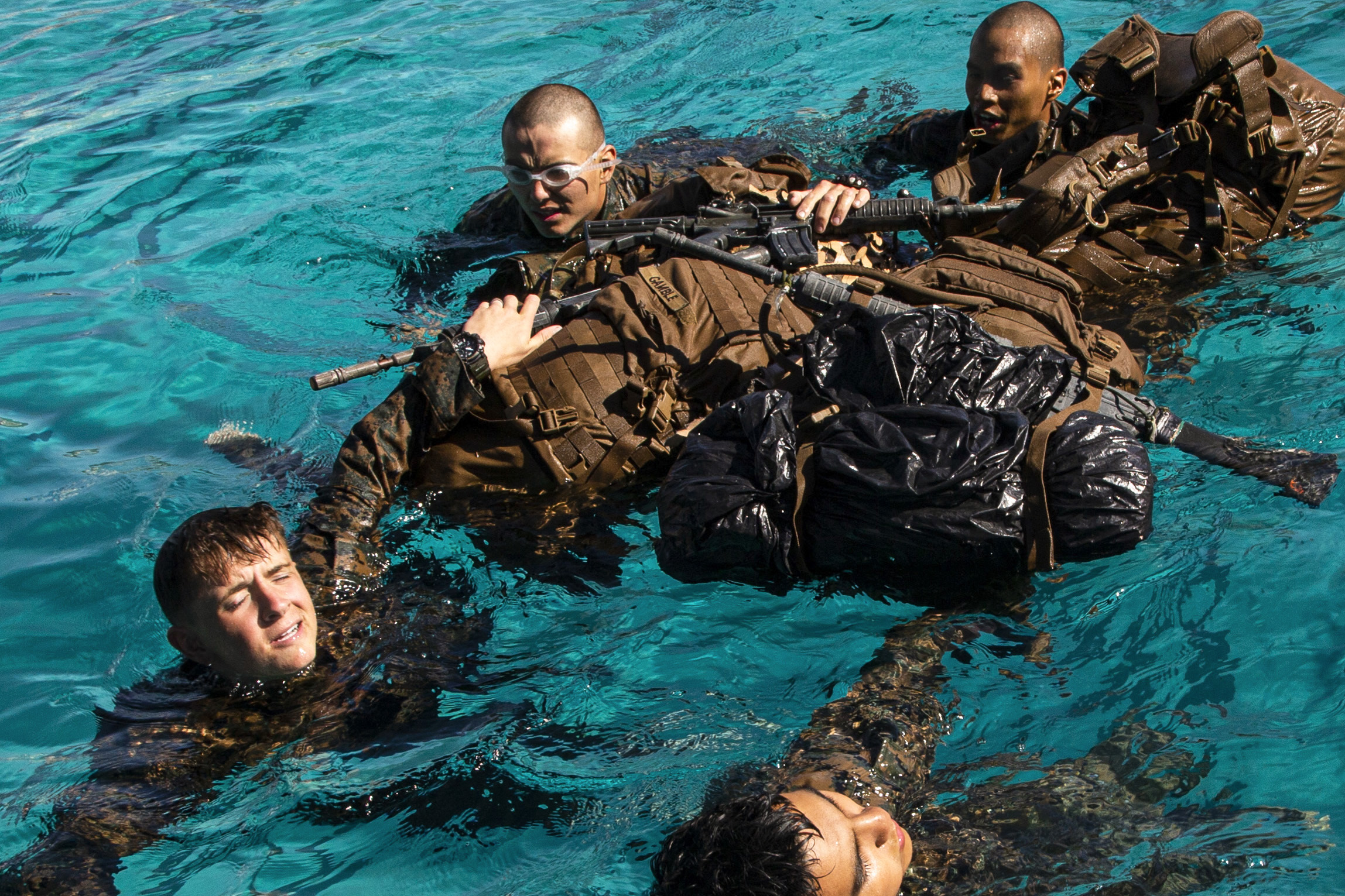
Marines build a pack raft while participating in a squad swim during the Infantry Marine Course at Marine Corps Base Camp Pendleton, Calif., April 28, 2021. The 14-week pilot course is designed to create more lethal entry level infantry Marines.

Cockpit View


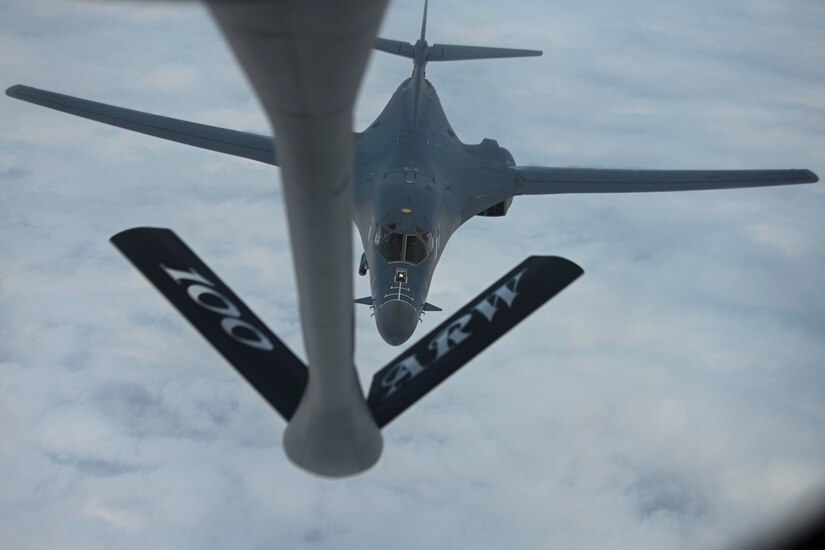
An Air Force MC-130J Commando II approaches a KC-135 Stratotanker for refueling over the North Sea, April 28, 2021.

Rolling Thunder


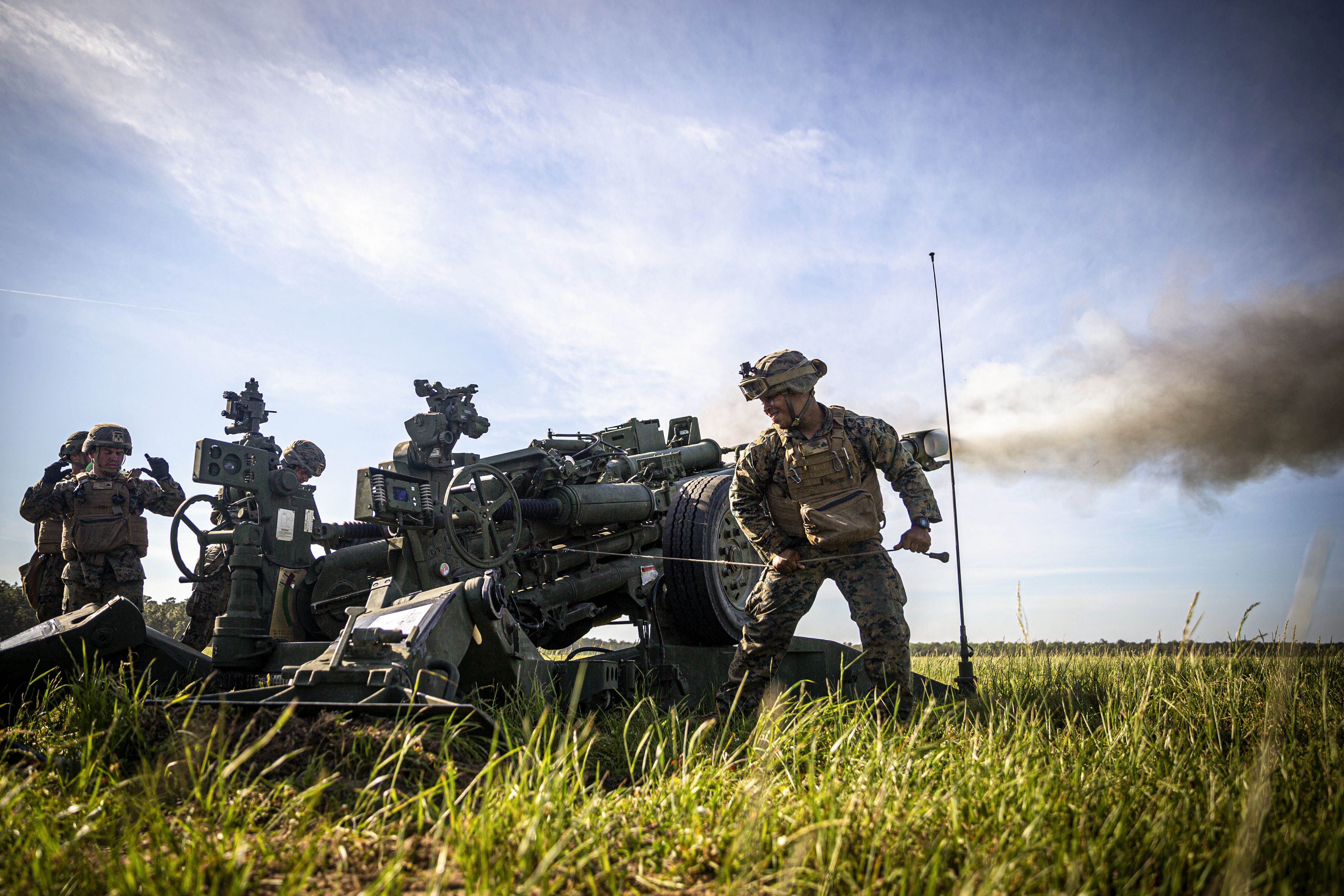
Marines fire an M777 howitzer during Rolling Thunder at Camp Lejeune, N.C., April 28, 2021. The exercise tests Marines’ abilities to operate in a simulated littoral environment against a peer threat in a dynamic and multidomain scenario.

Paint Pros


Navy Seamen Jesus Davila, left, and Tucker Weldon paint the USS Iwo Jima’s forecastle while transiting the Atlantic Ocean, April 29, 2021.

Deputy Defense Secretary Says Conflict With China Is Not Inevitable

 April 30, 2021 | BY David Vergun , DOD News

The challenge posed by China sets the pace for most U.S. defense requirements; but, despite concerns, diplomacy is important, and conflict with China is neither desirable nor inevitable, Deputy Defense Secretary Kathleen H. Hicks said today.

In a virtual address to the Aspen Security Forum, Hicks talked about the Defense Department's competition with China and what the department is doing to meet that challenge, especially regarding innovation and modernization.

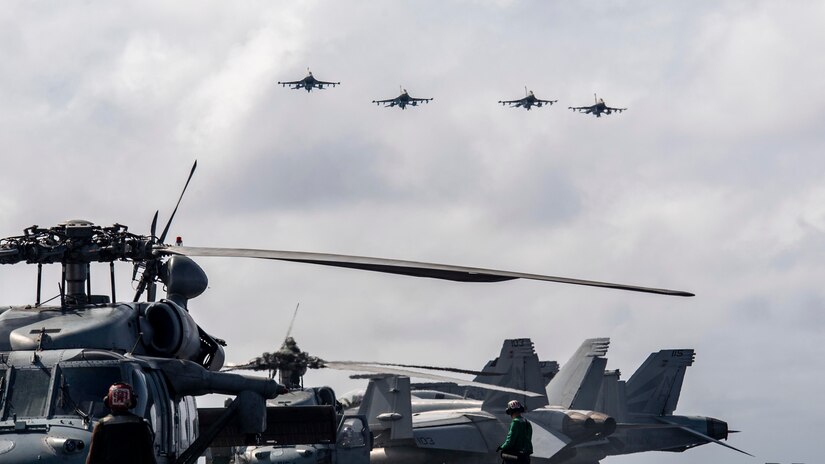
Four aircraft fly over a ship at sea.

"Beijing has the economic, military and technological capability to challenge the international system and America's interests within it. This is happening all along the continuum of conflict — from routine statecraft, through the use of sharp power or gray-zone tactics, to the potential for sustained combat operations and an expanded and capable nuclear enterprise," Hicks said.

As an example, Beijing continues to leverage its maritime militia to press its unlawful claims in the South China Sea, she said.

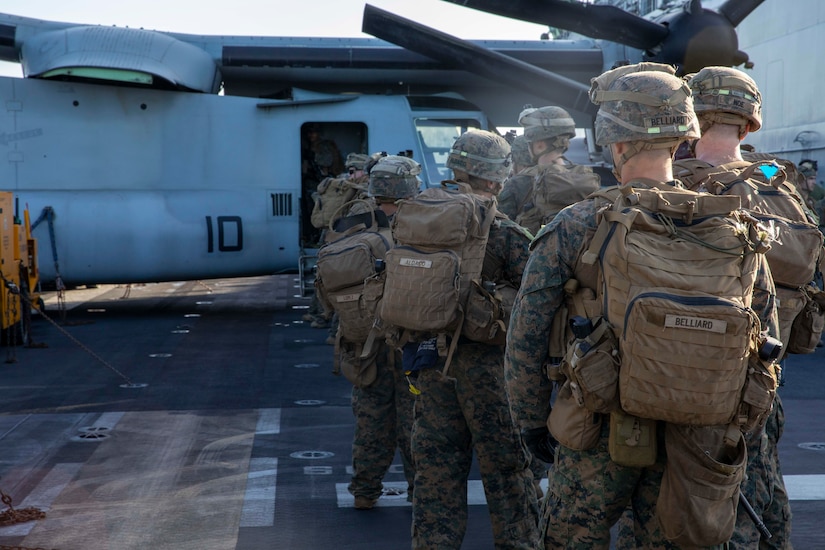
Marines file into a helicopter.

China's military capabilities are rapidly advancing in a number of areas, she said. Beijing continues to make progress — strengthening its ability to conduct joint operations — and it fields increasingly sophisticated conventional systems, such as long-range precision missiles and integrated air defense systems. 

China is also advancing its space and cyber capabilities, Hicks said, adding that China presents a prolific and effective cyber espionage threat and possesses substantial cyberattack capabilities.

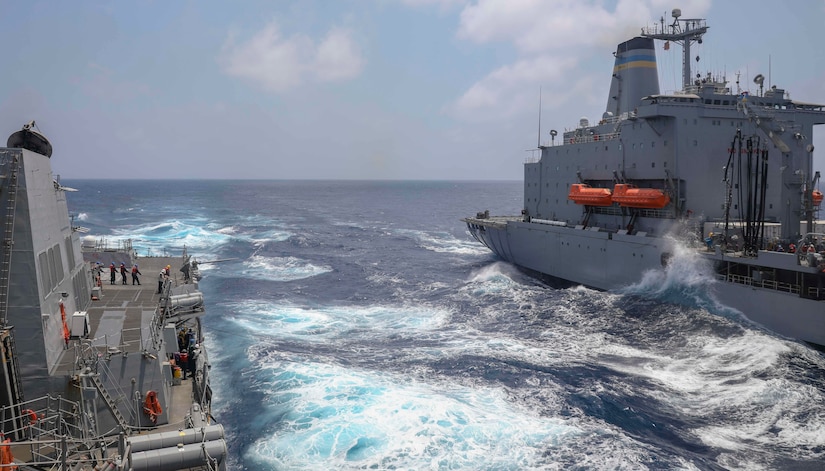
Two ships are alongside each other at sea; a cable is extended from one to the other and waves crash below.

Despite these growing concerns, Hicks said open channels of communications and diplomacy with China are important.

"We anticipate the U.S. military will often serve as a supporting player to diplomatic, economic and other tools," she said.

Central to DOD's value in deterring bad behavior from Beijing is demonstrating the role and capability to credibly deter China's aggression, she said. "This will best position us to avoid a conflict."

Hicks said allies and partners are important in deterring Chinese aggression.

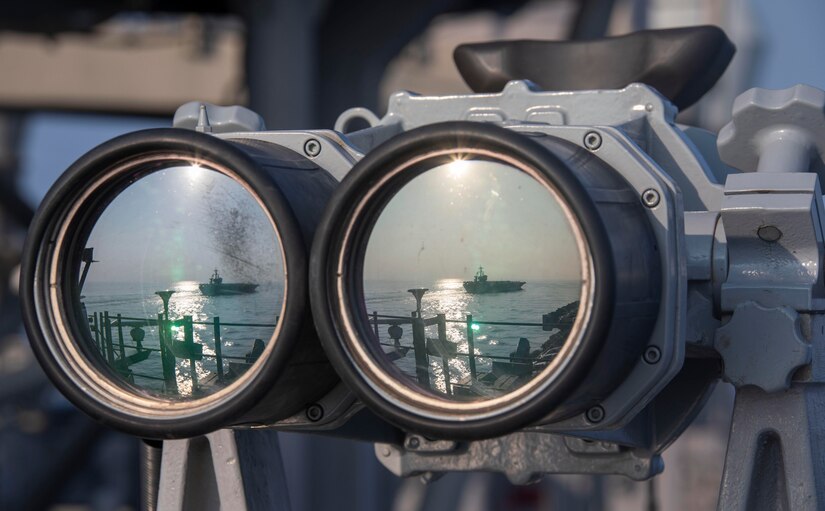
The reflection of a ship at sea shows on the lenses of a pair of binoculars.

Also, the department's budget and research investments will focus on the threat and include nuclear modernization, cybersecurity, long-range fires, autonomy, artificial intelligence, shipbuilding and microelectronics, she said.

Incentivizing innovation, cutting red tape and working closely with the private sector and other government agencies are also important, she said. "This means being able to share best practices and key findings focused on the most important national security challenges."

Cooperation with Congress is also critical to ensuring the department receives the support required to deter China's aggression, she said.

"Let there be no doubt, China presents a real and enduring challenge," she emphasized.

Lightning Moves


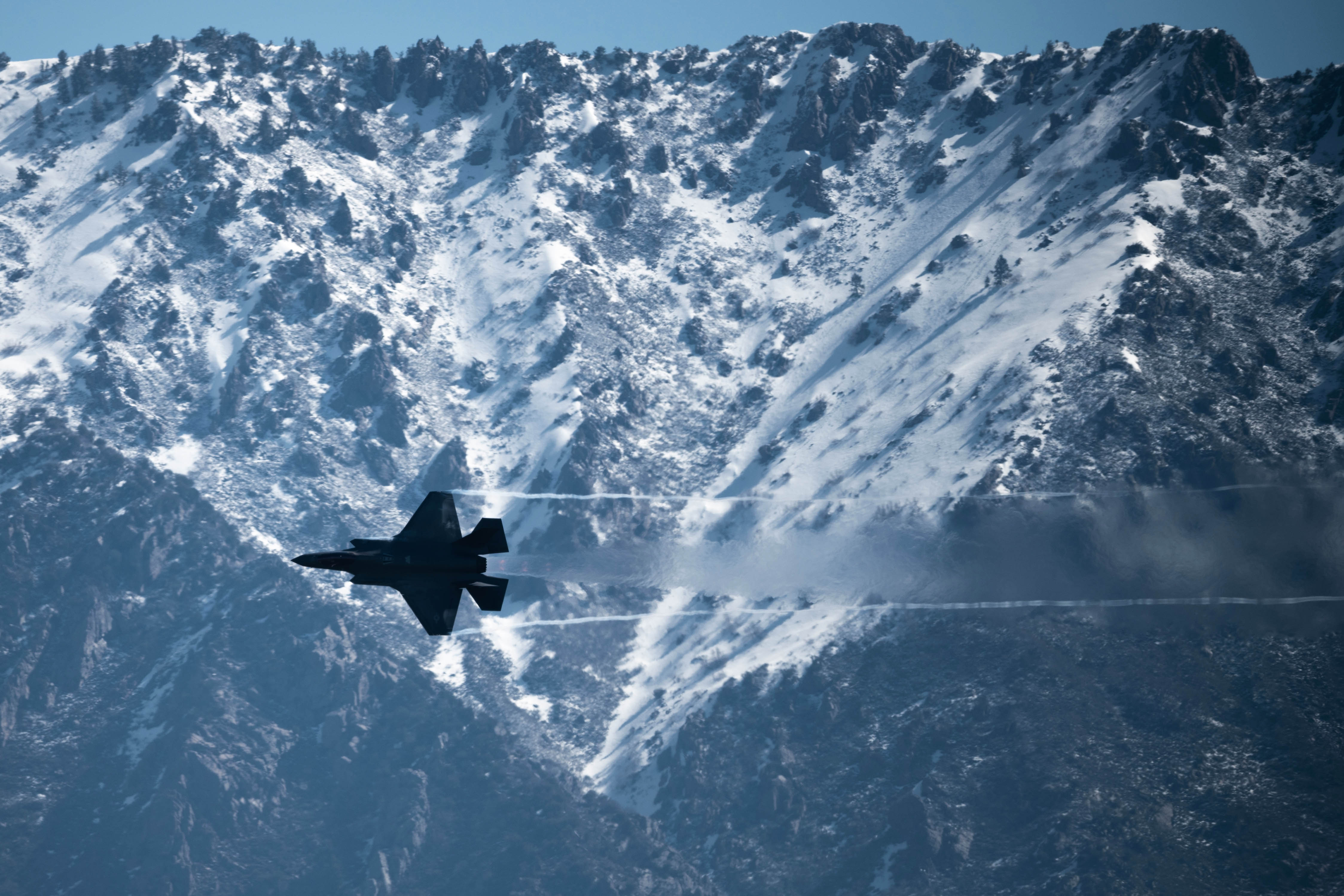
Air Force Maj. Kristin "BEO" Wolfe flies an F-35A Lightning II during a demonstration rehearsal at Hill Air Force Base, Utah, April 28, 2021.

Demo Duty


Soldiers perform demolition duties during an exercise at Fort Knox, Ky., April 8, 2021.

Preflight Perfection

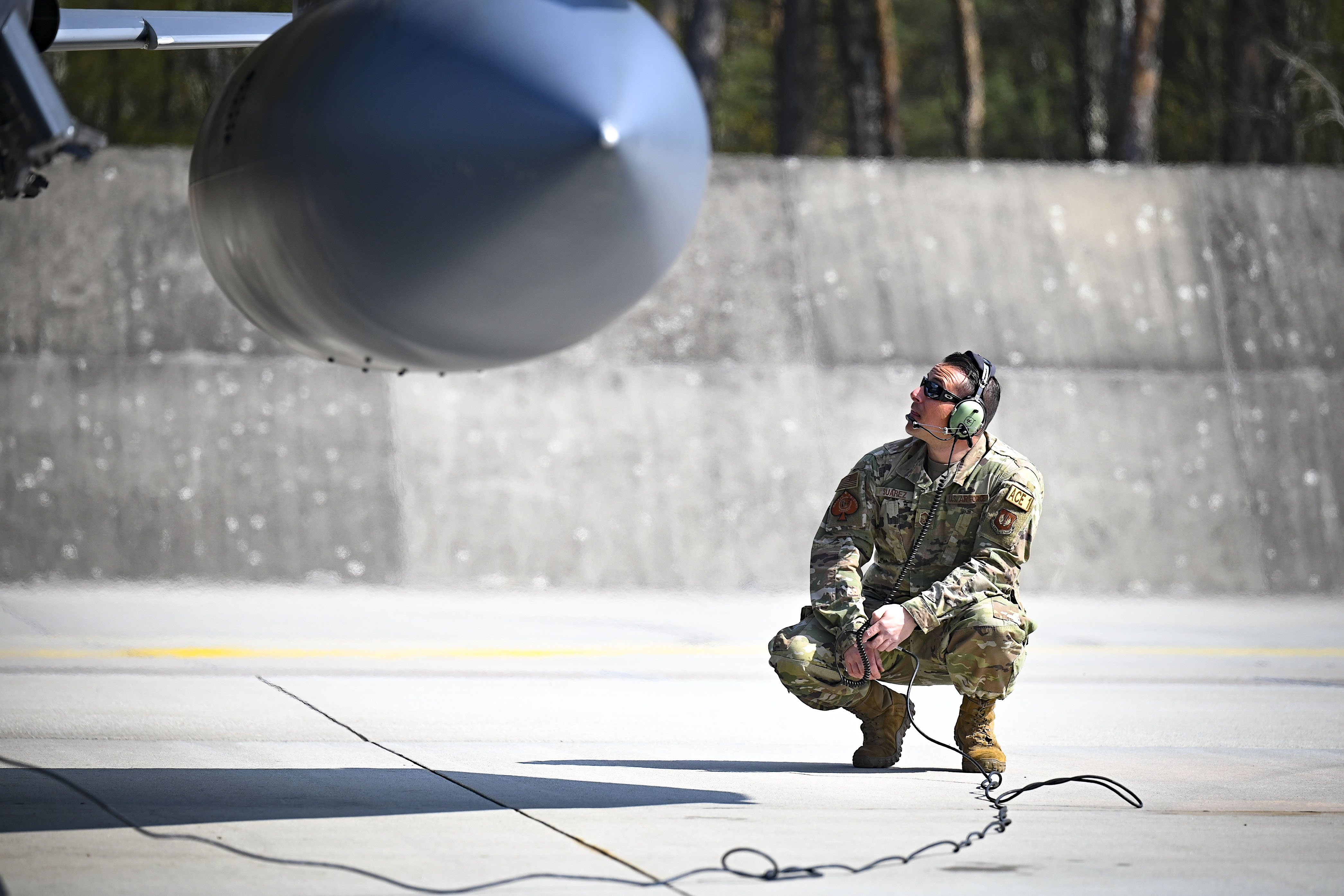
Air Force Senior Master Sgt. Christian ‘ACE 1’ Suarez performs preflight checks at Łask Air Base, Poland, April 30, 2021.

Field Day


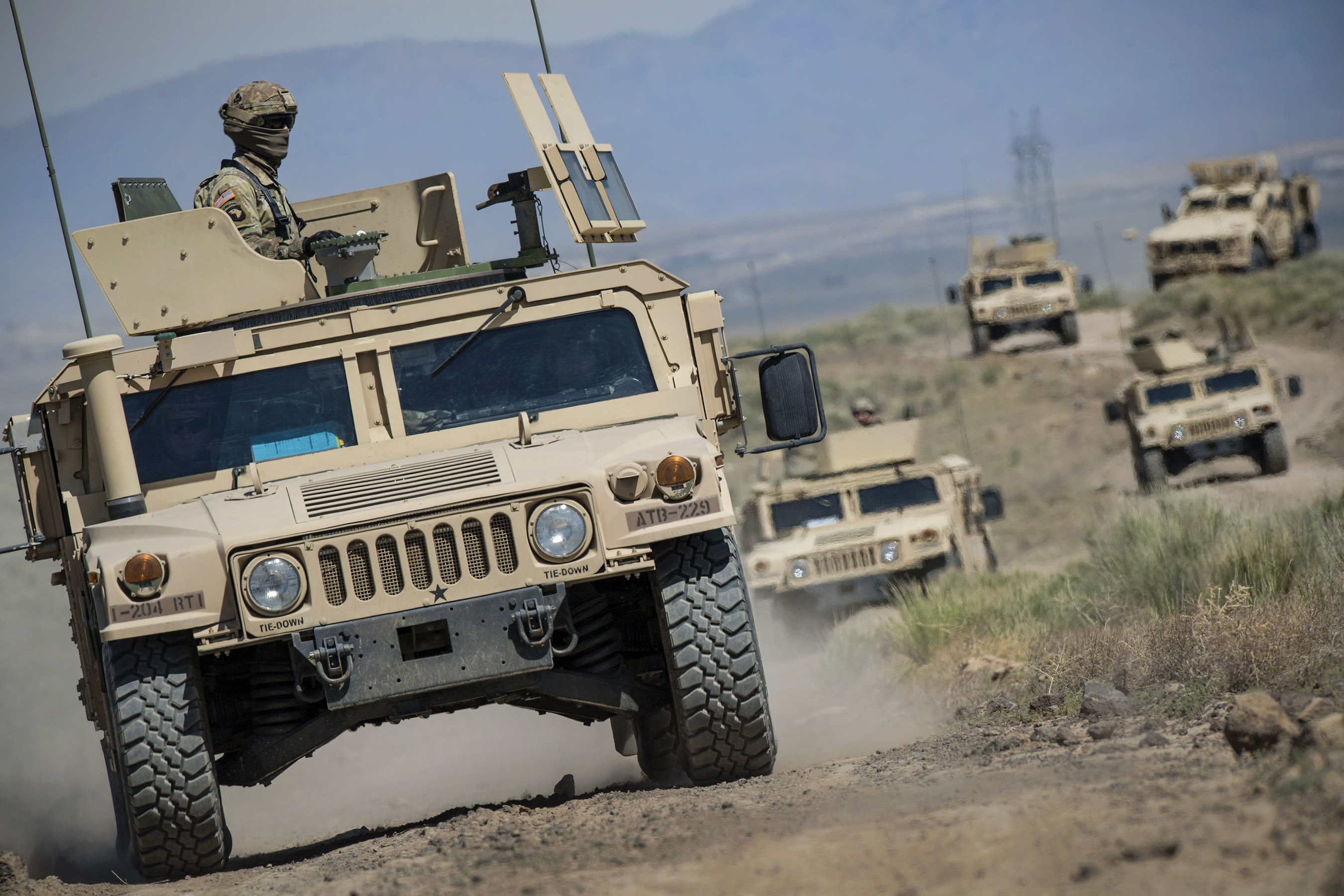
Soldiers ride in a Humvees during field training at the Orchard Combat Training Center in Boise, Idaho, April 20, 2021.

Ramadan Celebration


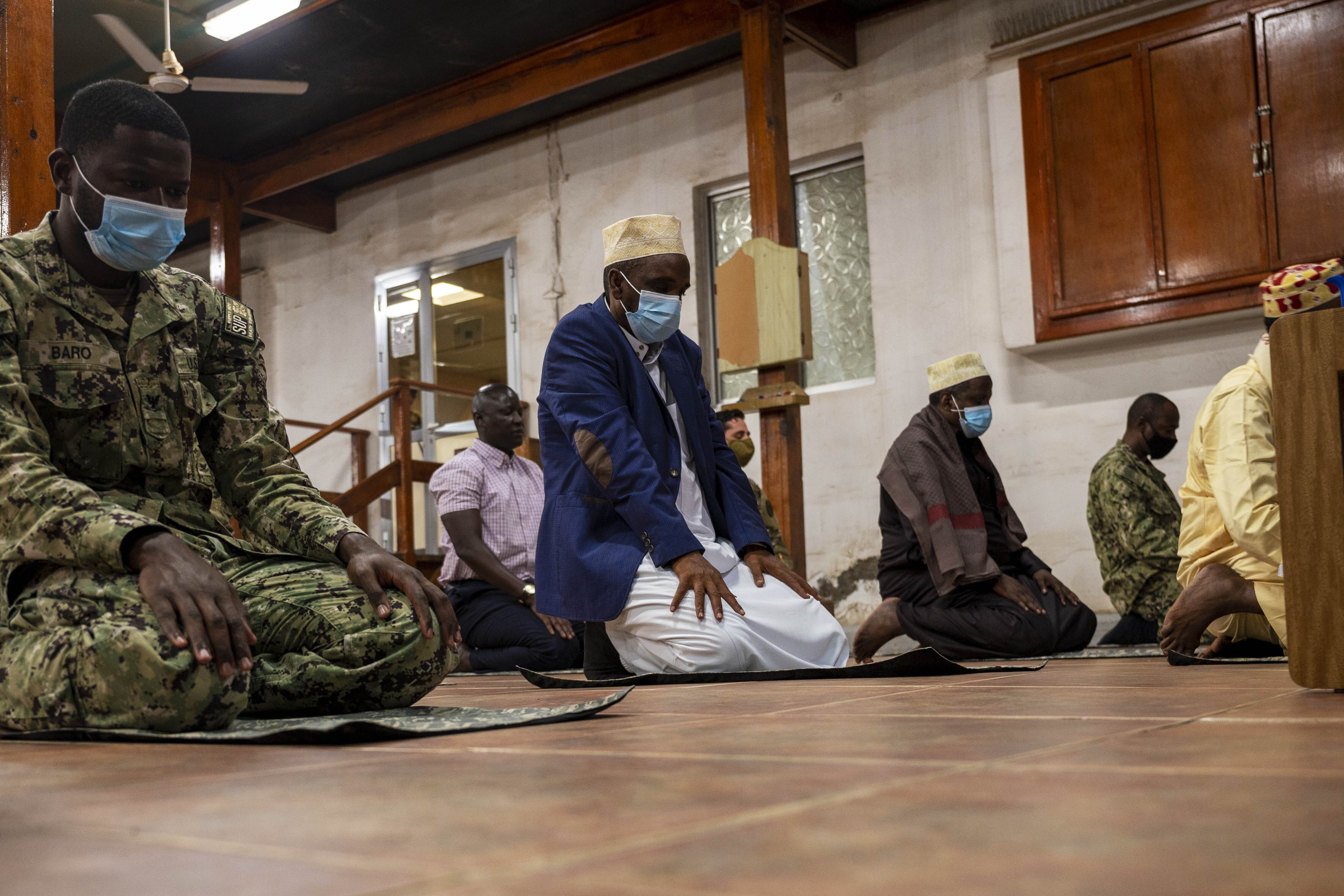
Service members participate in a prayer and Iftar to celebrate Ramadan in Djibouti, April 28, 2021. The Iftar event provided an opportunity for key partners to come together in unity, build on existing relationships and reaffirm the importance of cross-cultural understanding.

Vaccine Arrival


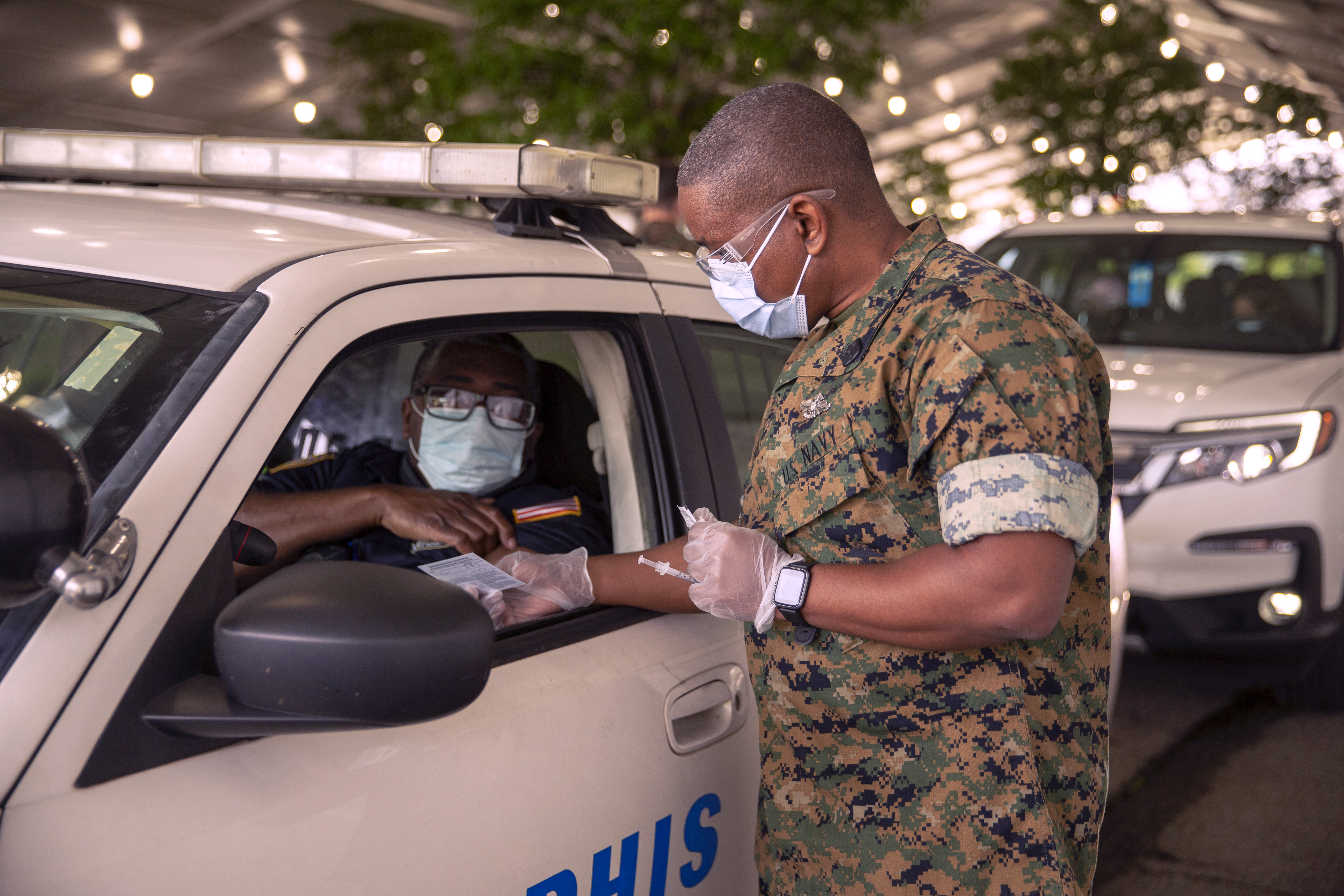
Memphis police officer Victor Lester speaks with Navy Petty Officer 1st Class Marco McNair, assigned to the 2nd Marine Division, Camp Lejeune, N.C., before receiving his COVID-19 vaccine at a community vaccination center in Memphis, Tenn., April 27, 2021. U.S. Northern Command, through Army North, remains committed to providing continued flexibleDefense Department support to the Federal Emergency Management Agency as part of the whole-of-government response to COVID-19.

Vaccinated Residents


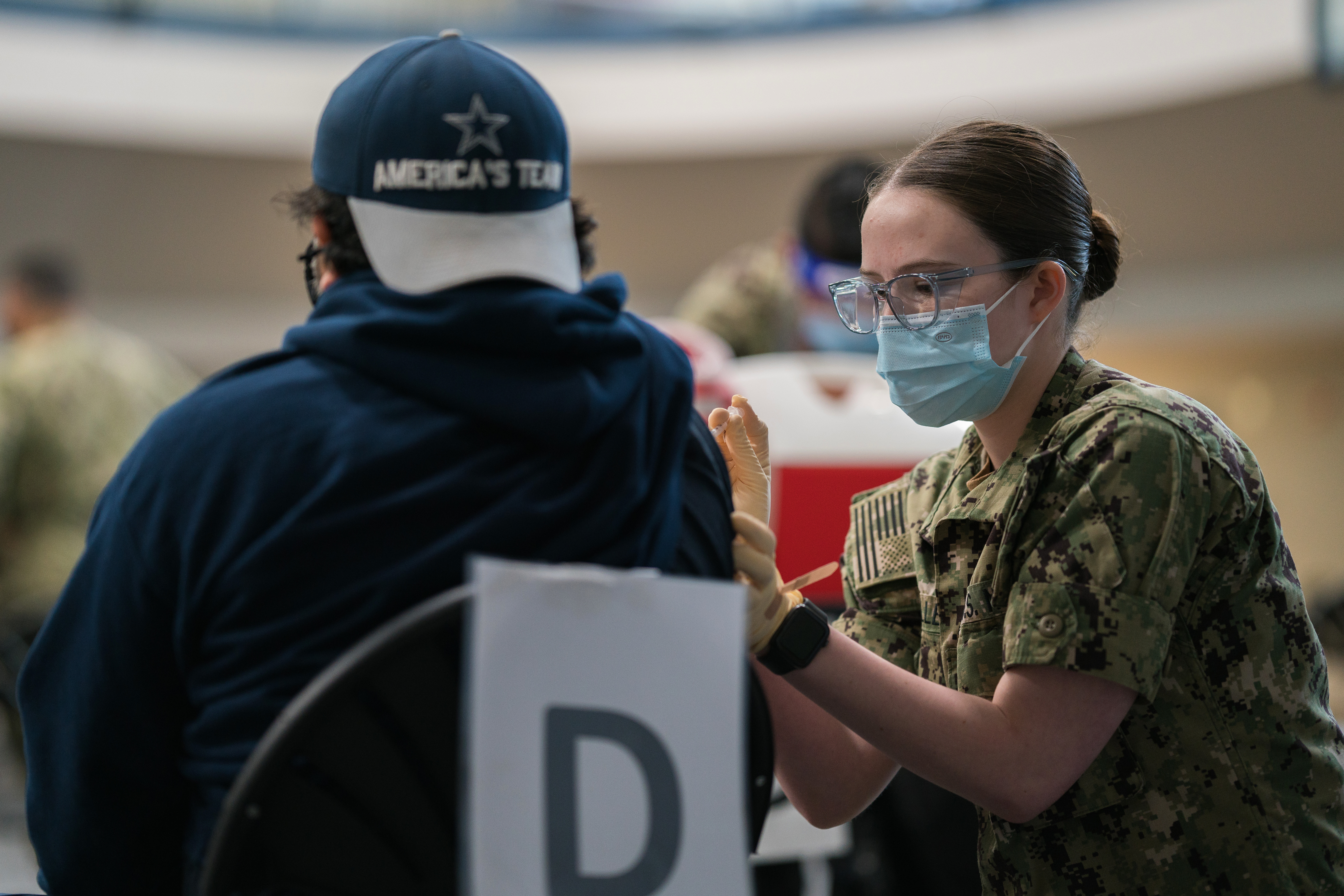
Navy Seaman Danica Keller, a hospital corpsman assigned to the Navy Medical Readiness Training Command San Diego, vaccinates a Tulsa community member at a community vaccination center at the Tulsa Community College Northeast Campus in Tulsa, Okla., April 28, 2021. U.S. Northern Command, through Army North, remains committed to providing continued, flexible Defense Department support to the Federal Emergency Management Agency as part of the whole-of-government response to COVID-19.

DOD Release Regarding Cancellation of Border Barrier Project Cancellation

April 30, 2021

Today, the Department of Defense released the following statement on the cancellation of all border barrier construction projects paid for with funds originally intended for military missions and projects.

“Consistent with the President’s proclamation, the Department of Defense is proceeding with canceling all border barrier construction projects paid for with funds originally intended for other military missions and functions such as schools for military children, overseas military construction projects in partner nations, and the National Guard and Reserve equipment account,” said Jamal Brown, Deputy Pentagon Spokesman.  “DOD has begun taking all necessary actions to cancel border barrier projects and to coordinate with interagency partners.  Today’s action reflects this Administration’s continued commitment to defending our nation and supporting our service members and their families.”

With this cancellation, unobligated military construction funds that had been diverted from military construction projects will be used for previously deferred military construction projects, allowing some of these critical efforts to move forward as soon as possible.  The Department is reviewing the deferred project list to determine funding prioritization.

The Department will continue to work with its interagency partners regarding any additional steps that should be taken at construction sites affected by project cancellation.

Target Practice


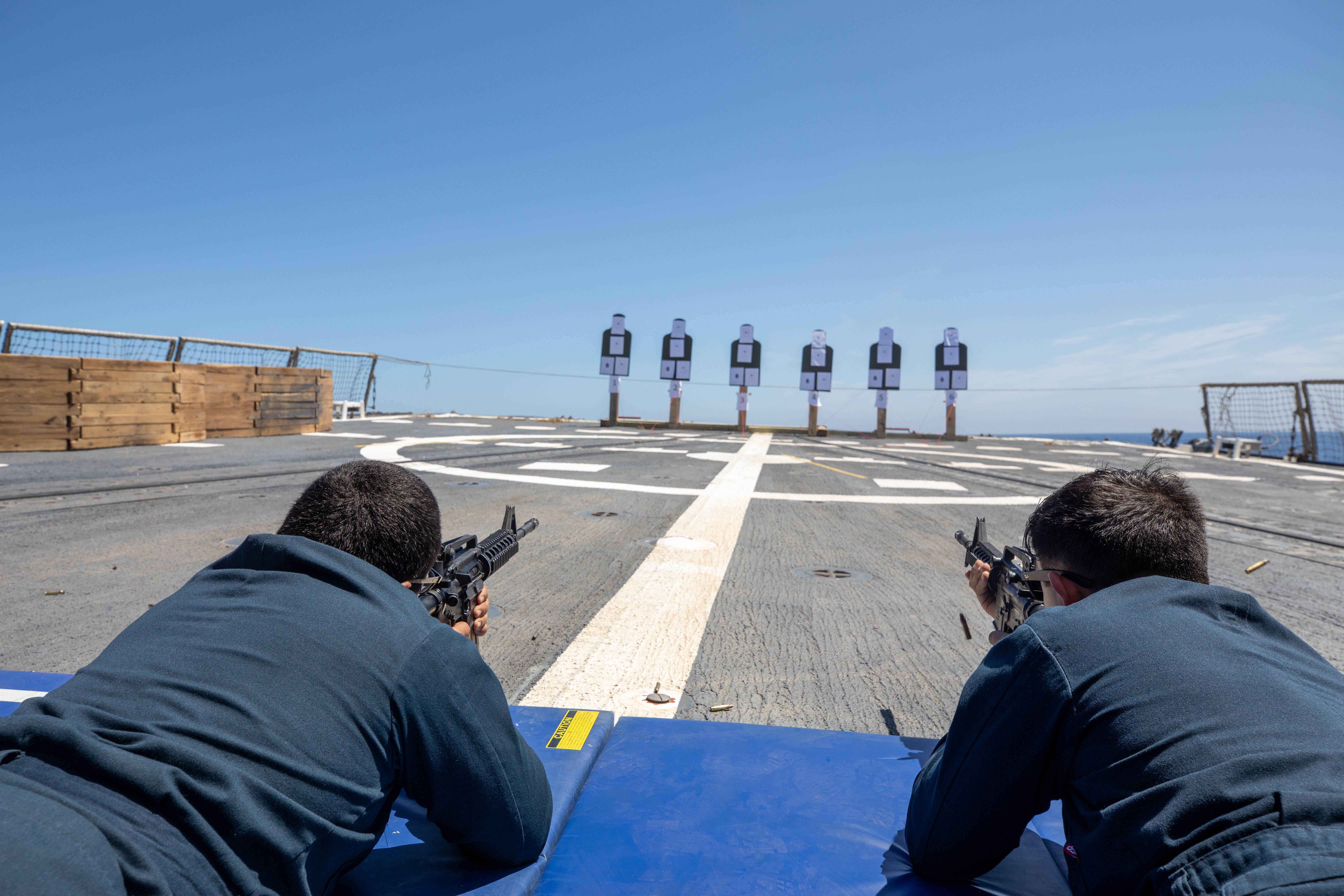
Sailors aim their M4 rifles during a live-fire weapons exercise aboard the guided missile destroyer USS Roosevelt during operations in the Aegean Sea, April 28, 2021.

Denali Supplies


A soldier watches as a CH-47 Chinook helicopter lands on Kahiltna Glacier in Denali National Park, Alaska, April 22, 2021. The chopper carried gear and supplies for the National Park Service. The Army provides assistance annually flying in supplies to the base camp located at 7,200 feet.

Thursday, April 29, 2021

Urban Ops


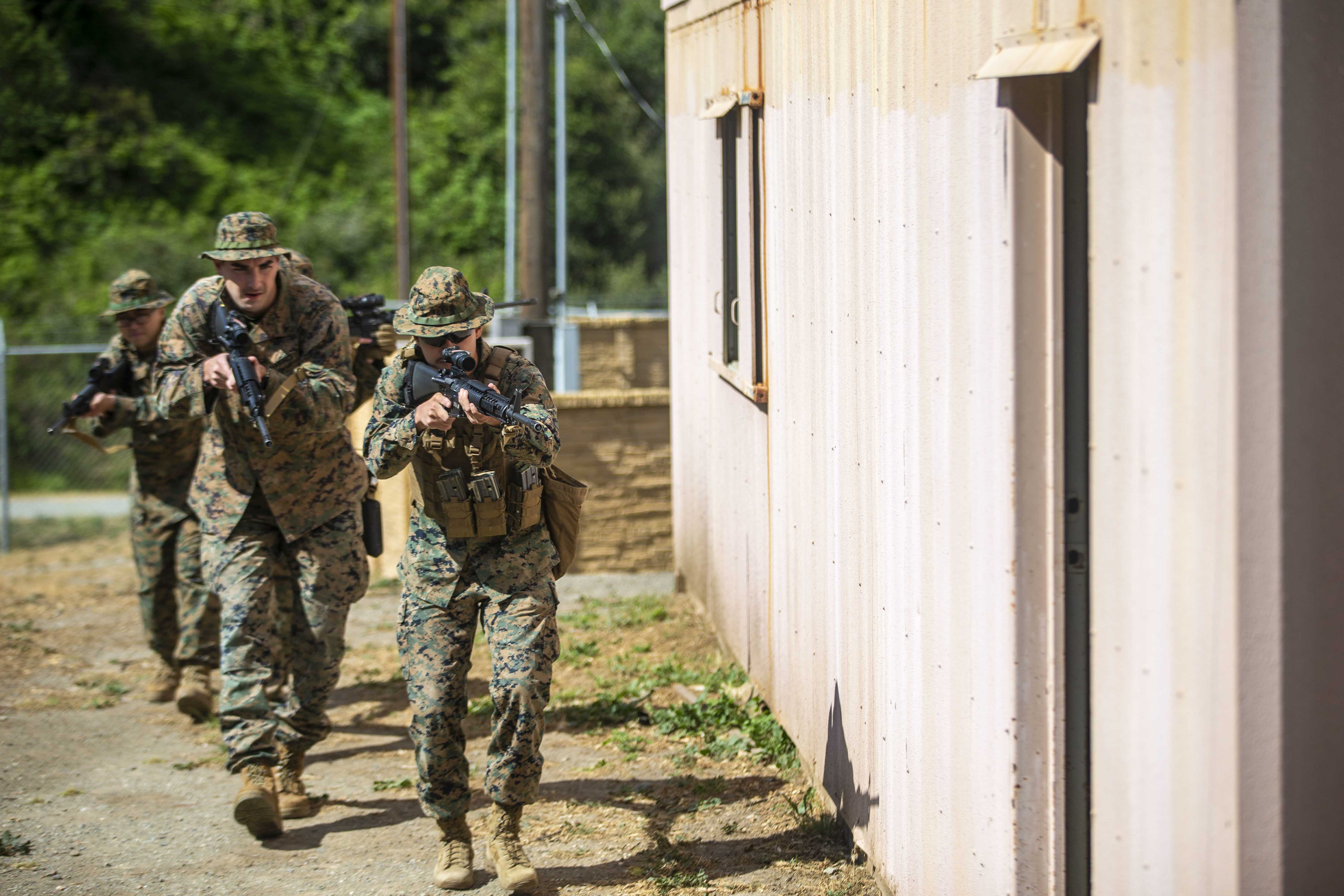
Marines prepare to enter a building during urban operations training at Marine Corps Base Camp Pendleton, Calif., April 27, 2021.

Unpacking Needles


Air Force Senior Airman Joseph Serrano, medical technician assigned to the 88th Inpatient Squadron, 88th Air Base Wing, unpacks safety needles that are used in syringe assembly at the state-led, federally-supported Ford Field Community Vaccination Center in Detroit, April 22, 2021. U.S. Northern Command, through Army North, remains committed to providing continued, flexible Defense Department support to the Federal Emergency Management Agency as part of the whole-of-government response to COVID-19.

Continuing Food Distribution


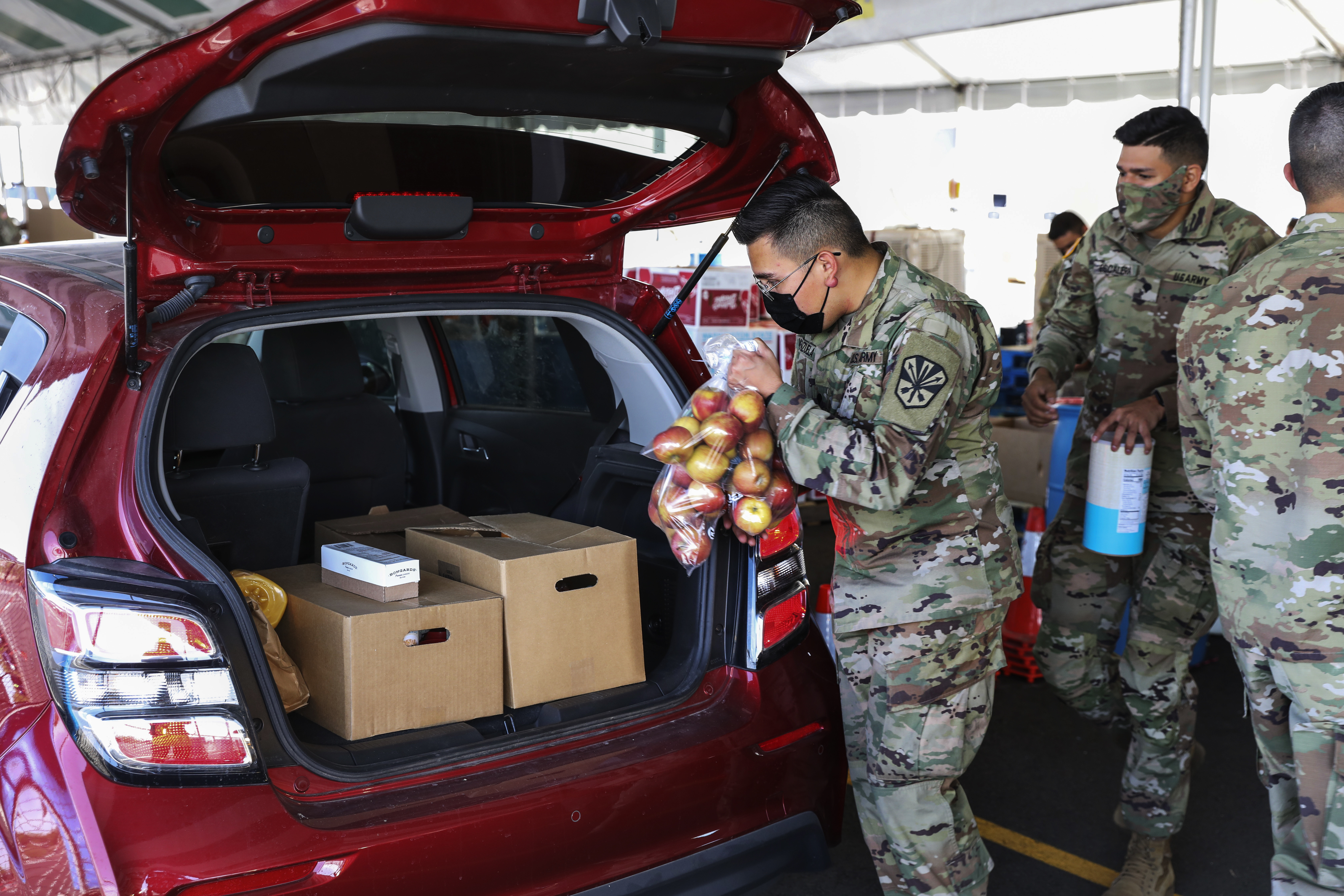
Arizona National Guard soldiers and airmen work alongside civilians distributing groceries to local citizens at a food bank in Tucson, Ariz., April 14, 2021. Arizona National Guardsmen continue to support community needs all over the state during the state of emergency response.

Staying on Track


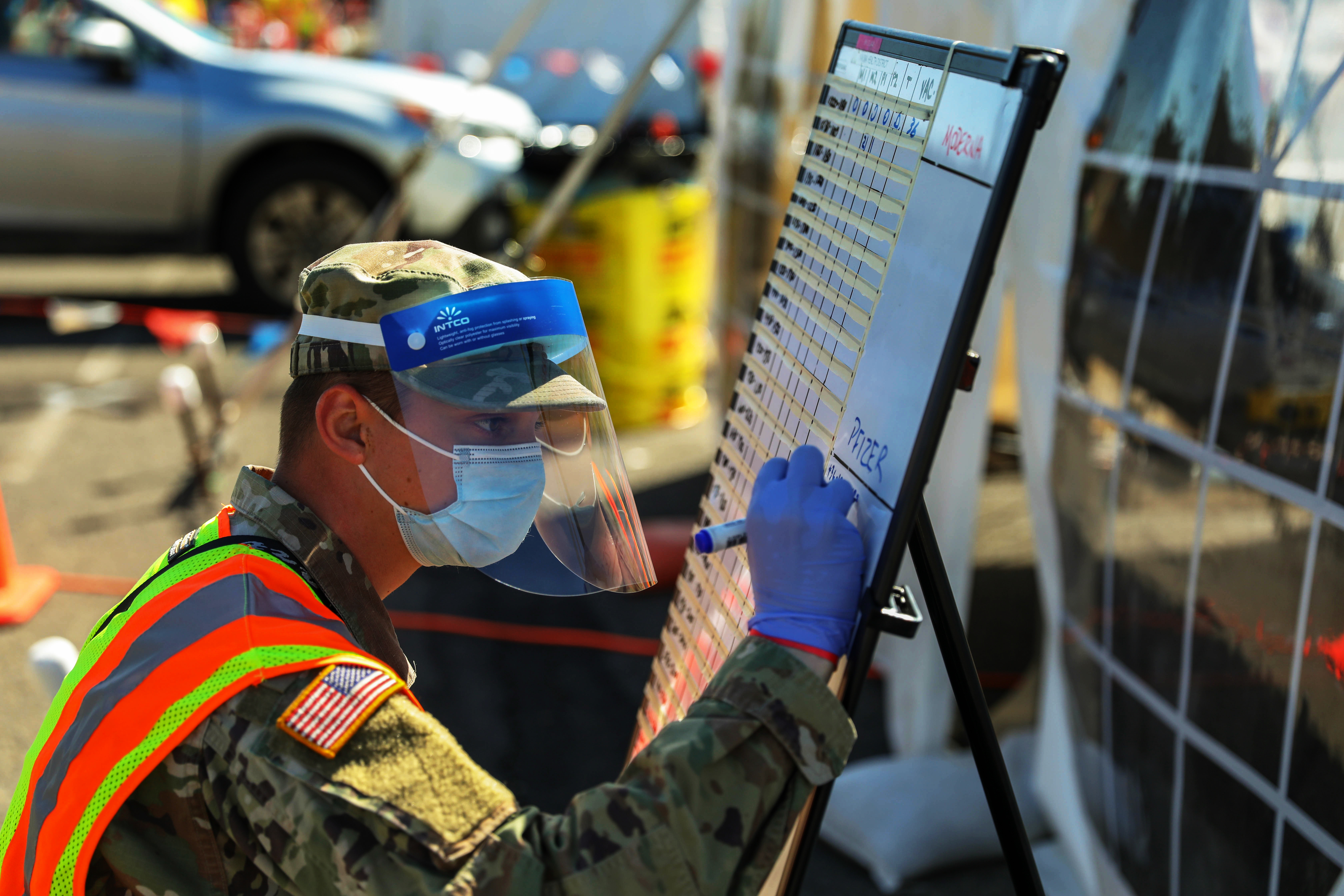
Army Spc. Noah Lamoureux, a combat medic assigned to the 62nd Medical Brigade, documents how many doses of the COVID-19 vaccine his team has administered in a 30-minute period at the Yakima Community Vaccination Center, Yakima, Wash., April 19, 2021. U.S. Northern Command, through Army North, remains committed to providing continued, flexible Defense Department support to the Federal Emergency Management Agency as part of the whole-of-government response to COVID-19.

Souda Bay Arrival


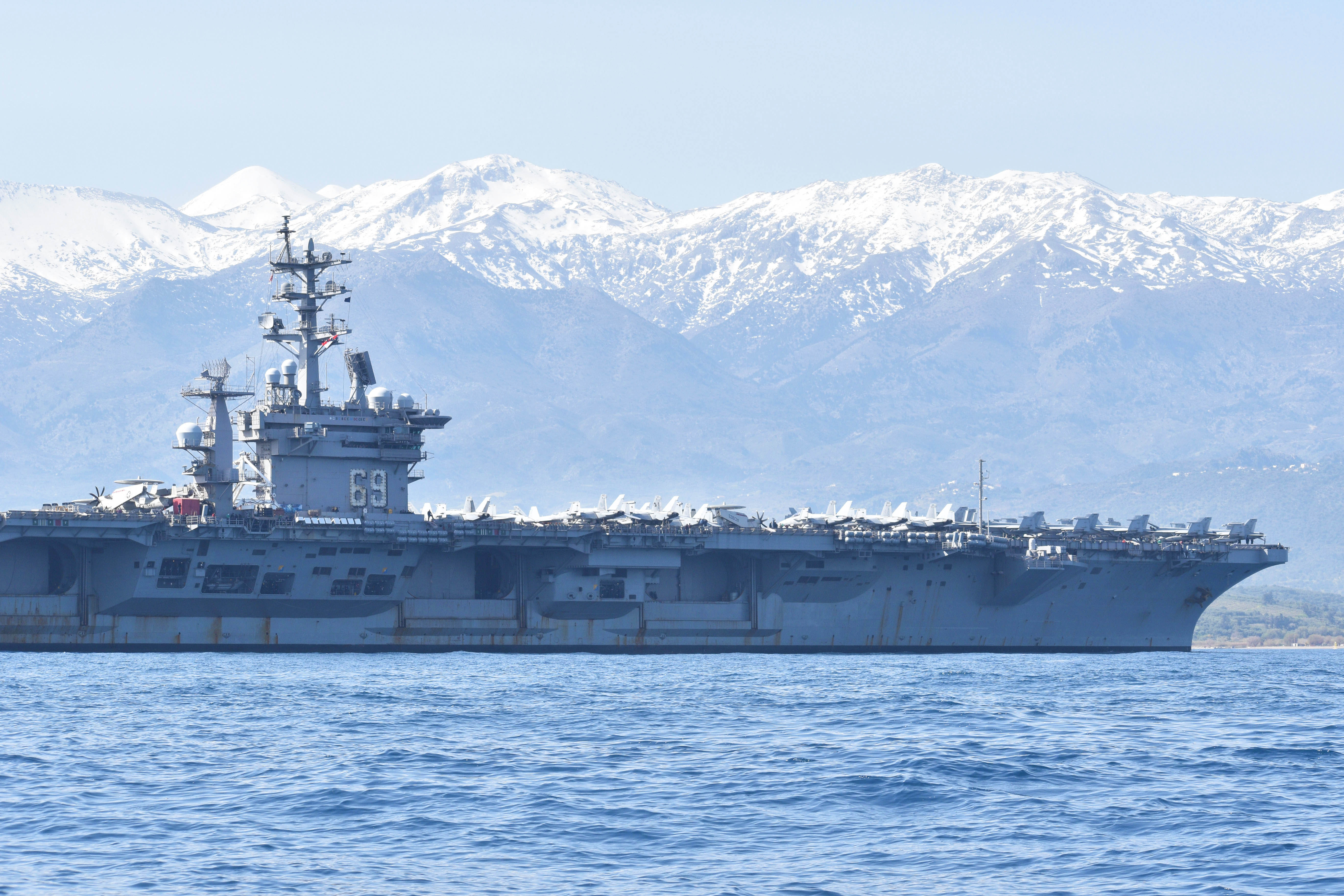
The aircraft carrier USS Dwight D. Eisenhower arrives in Souda Bay, Greece, March 20, 2021, for a scheduled port visit.

Show and Tell


Air Force Airman 1st Class Jordyn Eubanks shows Grayson, a military child, how to don aircrew flight equipment during a military child appreciation event at Ellsworth Air Force Base, S.D., April 17, 2021.

Aircraft Aboard


Sailors oversee the movement of a Marine Corps MV-22 Osprey aboard the USS Makin Island in the Pacific Ocean, April 24, 2021.

Night Ops


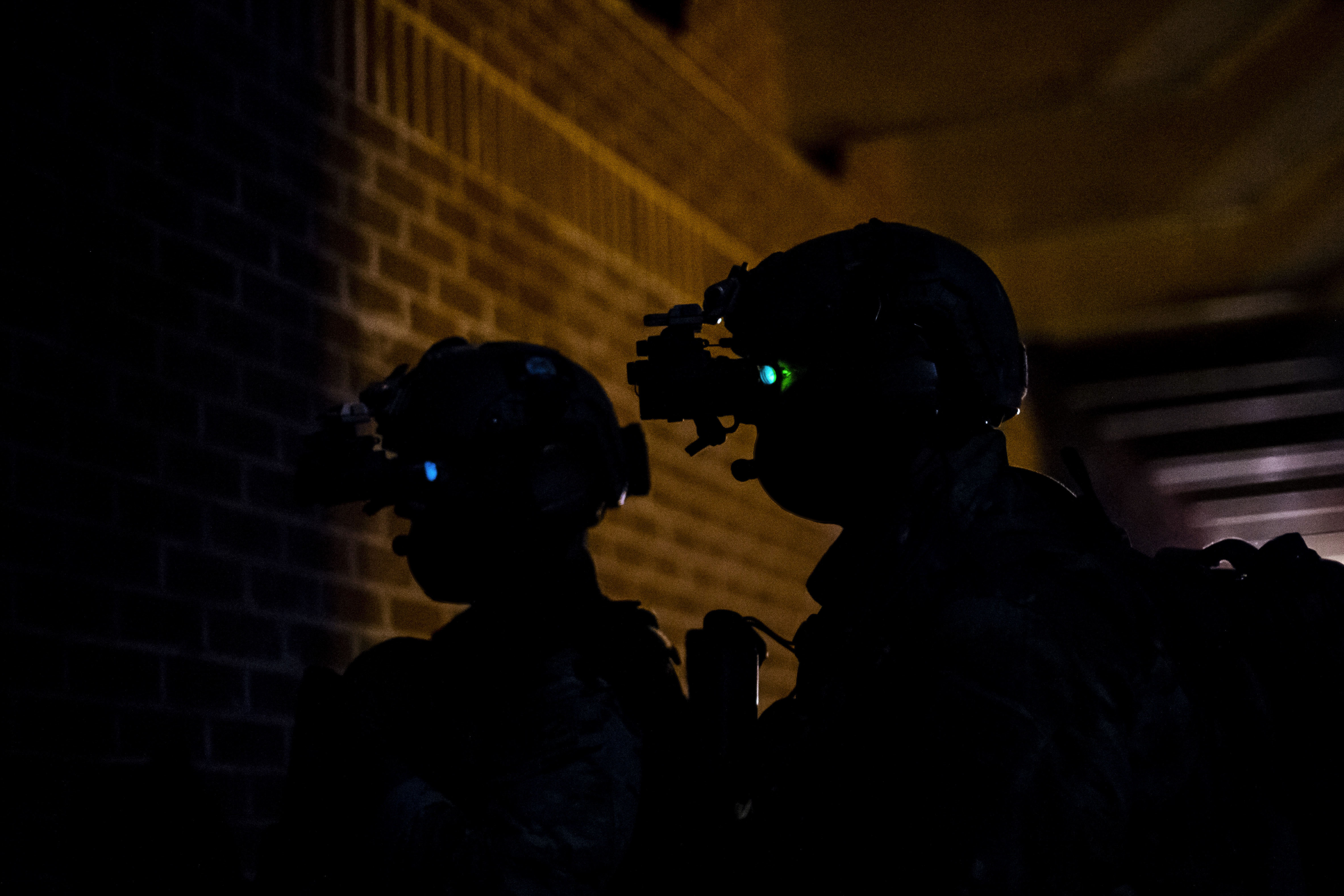
U.S. and Uzbekistani Special Forces conduct training operations during Southern Strike in Meridian, Miss., April 25, 2021. The annual exercise is designed to increase combat readiness.

Nexus Dawn


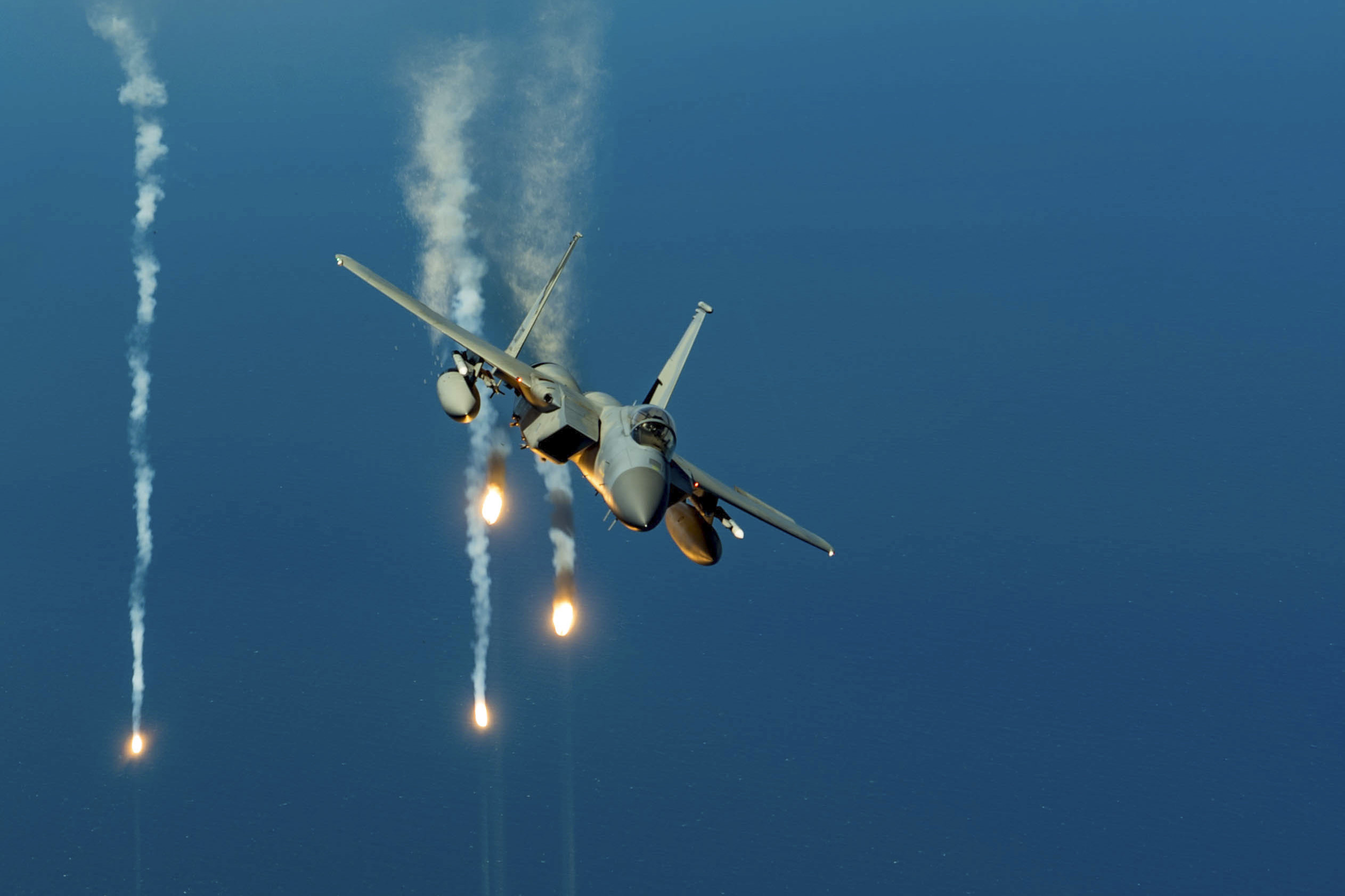
Airmen refuel an Air Force KC-10 and four F-15s during Nexus Dawn over Travis Air Force Base, Calif., April 27, 2021. The exercise is designed to test airmen’s ability to generate, employ and sustain air operations in a simulated combat environment.

Corps Course


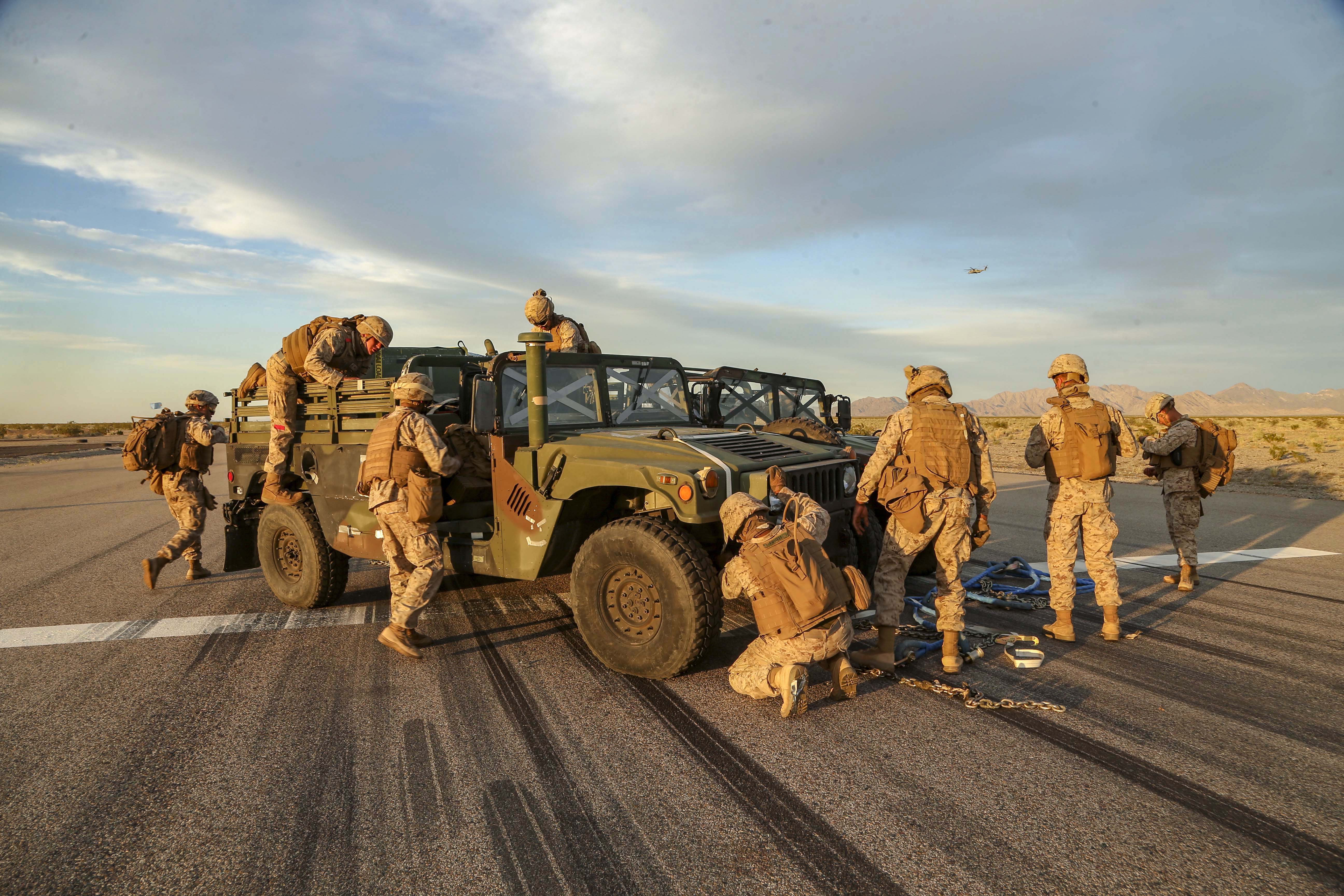
Marines conduct helicopter support team operations during a weapons and tactics instructor course near Yuma, Ariz., March 29, 2021.

Department of Defense Expands Access to Military Exchanges

 April 29, 2021


The Department of Defense announced today the expansion of access to military exchanges.

Starting May 1, 2021, DOD and Coast Guard appropriated fund and nonappropriated fund civilian employees are authorized to shop at military exchange stores in the United States and the U.S. territories and possessions. Online exchange access will also be available for active and retired DOD and Coast Guard appropriated fund and nonappropriated fund civilian employees by mid-October. This shopping access does not include the purchase of military uniforms, tobacco products or alcohol.   

Previous in-store exchange access for DOD and Coast Guard civilian employees was limited to those on service agreements overseas (i.e., in foreign countries and the U.S. territories and possessions) and access was limited to overseas exchanges. The expansion will allow all DOD and Coast Guard civilian employees to shop in exchange stores in the United States and the U.S. territories and possessions.

“Every shopper of the exchange helps improve the military community and the benefit for service members and their families,” said Patricia “Patty” Montes Barron, deputy assistant secretary of defense for military community and family policy. “We welcome our DOD and Coast Guard civilian employees to take advantage of the convenience and familiarity of military exchanges. Shopping at our military exchanges is a quality of life experience that serves the community in ways no other commercial entity does.”

Online exchange access will be available later this year for all active and retired DOD and Coast Guard civilian employees with a U.S. mailing address, including territories and possessions and APO and FPO addresses. Online exchanges are not permitted to ship to local addresses in foreign countries.

To learn more about military exchange access, visit the commissaries and exchanges webpage on the Military OneSource website.

About Military Community and Family Policy 

Military Community and Family Policy is directly responsible for establishing and overseeing quality-of-life policies and programs that help our service members, their families and survivors be well and mission-ready. Military OneSource is the gateway to programs and services that support the everyday needs of the 5.2 million service members and immediate family members of the military community. These Department of Defense services can be accessed 24/7/365 around the world.

Moving Tanks




Paul Martinez, a heavy equipment operator assigned to the 60th Aerial Port Squadron, moves oxygen tanks in a warehouse at Travis Air Force Base, Calif., April 27, 2021. The United States, through the U.S. Agency for International Development, donated 440 oxygen cylinders and regulators, 1 million N95 masks and 1 million COVID-19 rapid diagnostic kits to help India fight COVID-19.

Securing Oxygen Cylinders

Airman 1st Class Fernando Beltran, a cargo specialist assigned to the 60th Aerial Port Squadron, secures oxygen cylinders to a pallet in a warehouse at Travis Air Force Base, Calif., April 28, 2021. The United States, through the U.S. Agency for International Development, donated 440 oxygen cylinders and regulators, 1 million N95 masks and 1 million COVID-19 rapid diagnostic kits to help India fight COVID-19.


Making A Move


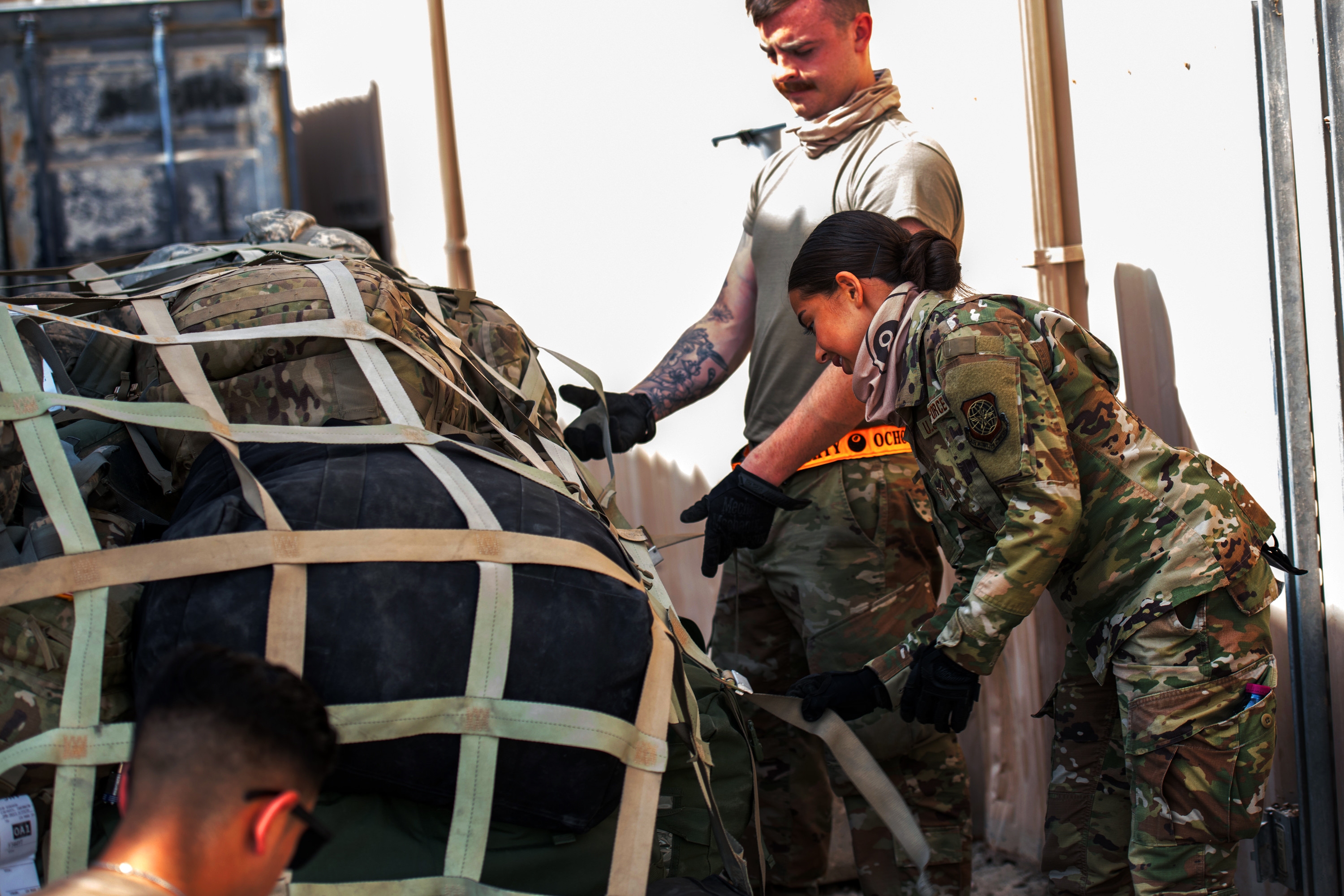
Air Force Senior Airman Miranda Petti, a passenger representative assigned to the 8th Expeditionary Air Mobility Squadron, helps palletize luggage for a flight at Al Udeid Air Base, Qatar, March 19, 2021.

Defense Official Says Partnerships Vital to Holding Russia Accountable in Eurasia

 April 29, 2021 | BY David Vergun , DOD News

Russian influence and meddling in nations around the Mediterranean and the Middle East have been characterized as destabilizing and opportunistic and pose concerns for regional security and stability, according to a Defense Department official.

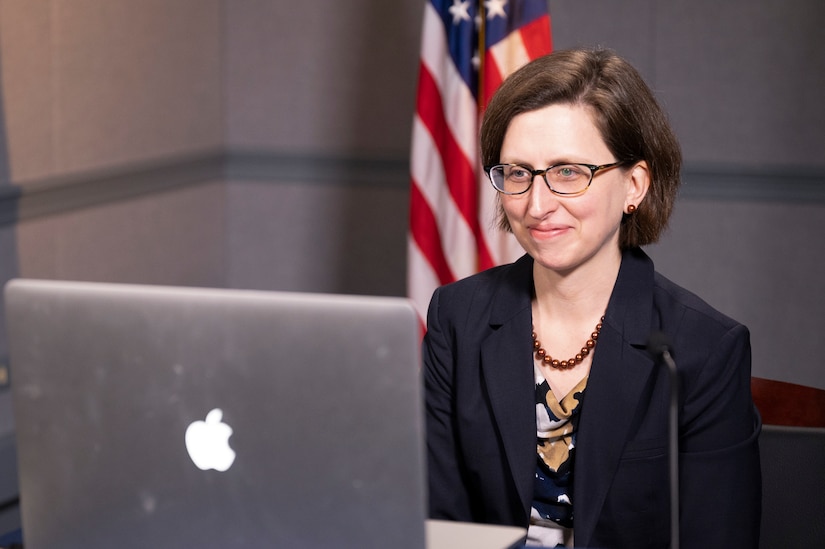
Laura K. Cooper, deputy assistant secretary of defense for international security affairs for Russia, Ukraine, Eurasia, said that as Russian influence and military capability in the region grow, allies and partners — particularly NATO — become incredibly important in holding Russia accountable. 

A woman looks at a laptop screen; a U.S. flag is in the background.

"We are determined to impose costs for Russia's destabilizing behavior," Cooper told an Atlantic Council panel.

"The way that the U.S. is approaching security cooperation is through developing very long-term strategic partnerships that involve training and education and operations that we work on together. This approach is quite fundamental to all of the allies and partners of the region," she said. 

Cooper noted that the U.S. is not seeking to escalate tensions. "And we are seeking to have a more stable relationship with Russia, so this inevitably involves dialogue."
Cooper said it's important to watch Russia's actions, rather than just to listen to its words. Noting that Russia has agreed to remove its forces from Libya, she said the U.S. is waiting to see what happens. "We will be watching closely to see if that actually occurs," she said.

An aircraft is refueled by another aircraft in mid-air.

"From a policy perspective, we have to be measured and realistic about the actual impact of those transactional relationships," she said.

Russia has appeared from time-to-time to play the role of peacemaker in the region, but that isn't really fooling anyone, she said. "I think countries of the region recognize how much this is to burnish Russia's image, and how, in many cases, prolonging instability and prolonging conflict actually suits Moscow's goals," Cooper said. 

"So, I think we have to give some credit to our allies and partners and their ability to be clear-eyed about this," she continued. 

For example, Cooper noted that there is an inherent tension between Russia's desire to support a relationship with Iran and at the same time to cozy up to Arab countries and Israel. "This inherent tension is not lost on any of the parties in the region. And so I think that's really important at the outset. We don't want to overhype the influence or overhype the threat. That's where we're really clear in our conversations with allies and partners about situations in which Russia's military-to-military cooperation, in particular, does impact our relationship," she said.

For example, the sale of a Russian S-400 air defense system to Turkey resulted in a clear and decisive action on the part of the United States in removing Turkey from the F-35 advanced aircraft program, she said.

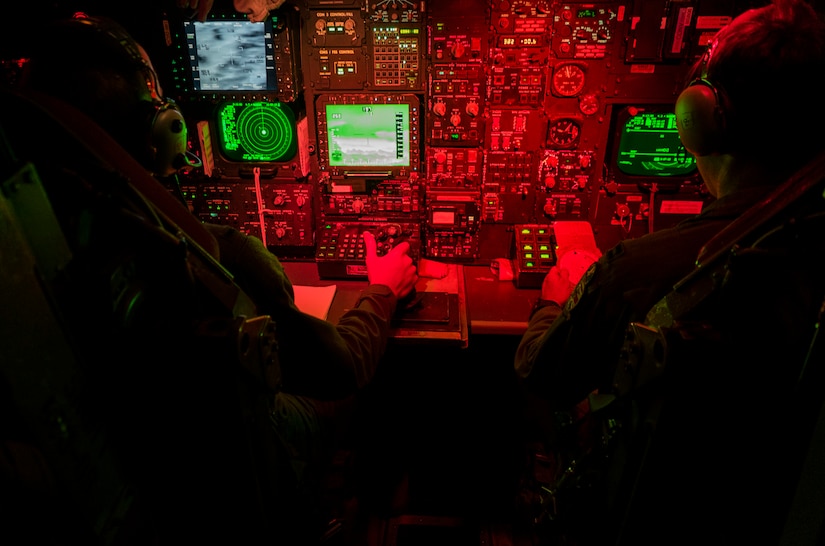
Two people operate radar and navigation controls.

That being said, Turkey remains an important NATO ally and removal of the F-35 program was an example of a measured, balanced and tailored approach, she said.

Cooper said that the strong U.S. military presence in the Mediterranean region will continue as it has for many decades. "That is something that, perhaps, we take for granted, but it's an important source of our ability to protect our national security interests and also to cooperate as part of the NATO alliance." 

The other piece is U.S. investments in humanitarian assistance in the region, which completely dwarfs anything that Russia is doing in that space, she said.

For example, in Syria, the U.S. has been working with the United Nations to invest in reconstruction and humanitarian assistance, while Russian actions in this regard have been to line the pockets of cronies in the Kremlin, she said. 

Park Cleanup


Army Capt. Mathew Schmidt helps remove weeds at Zama Yatoyama Park during an Earth Day event near Camp Zama, Japan, April 22, 2021.

New Recruits


Recruits wait to receive a voluntary COVID-19 vaccination in the Pacific Fleet Drill Hall at Recruit Training Command, Great Lakes, Ill., April 26, 2021. The event, a collaboration with medical staff from the Captain James A. Lovell Federal Health Care Center and Recruit Training Command, gave 180 recruits an opportunity to receive the vaccine. More than 40,000 recruits train annually at the Navy's only boot camp.

Soldier Signals


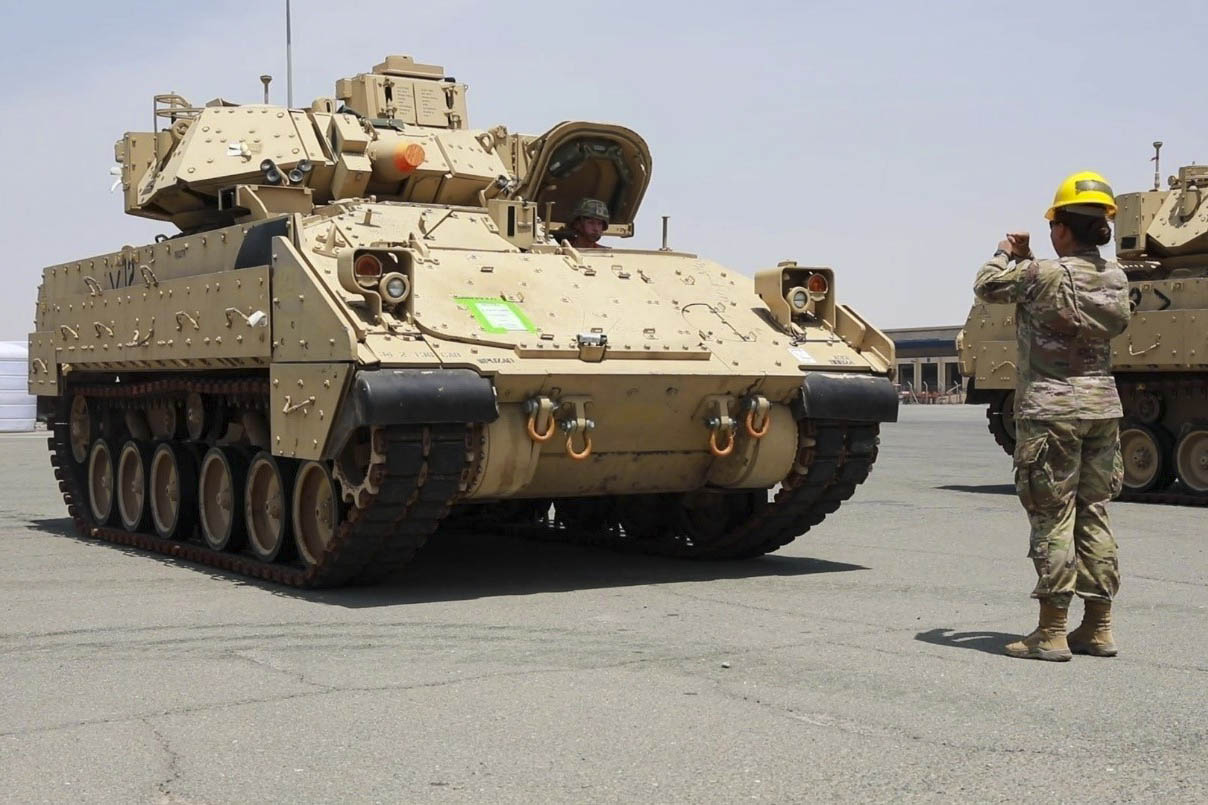
Army Capt. Shayna Taylor guides the driver of an M2/A2 Bradley Fighting Vehicle during training in Yanbu, Saudi Arabia, April 20, 2021.

Bass Bliss


A soldier plays bass during a ceremony to recognize community volunteers at Fort Bliss, Texas, April 22, 2021.


Flag Officer Announcements

 April 29, 2021


Secretary of Defense Lloyd J. Austin III announced today that the president has made the following nominations:

Capt. Dennis E. Collins has been nominated for appointment to the rank of rear admiral (lower half).  Collins is currently serving as officer in charge, Navy Reserve, U.S. Indo-Pacific Command, Detachment 401, Camp H.M. Smith, Hawaii.

Capt. Bradley D. Dunham has been nominated for appointment to the rank of rear admiral (lower half).  Dunham is currently serving as chief of staff, Navy Reserve, U.S. Fleet Forces Command, Norfolk, Virginia.

Capt. Mark F. Haigis has been nominated for appointment to the rank of rear admiral (lower half).  Haigis is currently serving as commanding officer, Navy Reserve, Naval Leadership and Ethics Center, Newport, Rhode Island.  

Capt. Scott W. Ruston has been nominated for appointment to the rank of rear admiral (lower half).  Ruston is currently serving as deputy commander, Navy Region Southwest Reserve Component Command, San Diego, California. 

Capt. Douglas W. Sasse III has been nominated for appointment to the rank of rear admiral (lower half).  Sasse is currently serving as commanding officer, Navy Reserve, Fourth Fleet, Mayport, Florida.

Capt. Michael J. Schwerin has been nominated for appointment to the rank of rear admiral (lower half).  Schwerin is currently serving as commanding officer, Navy Reserve, Officer Training Command, Newport, Rhode Island.

Capt. David R. Storr has been nominated for appointment to the rank of rear admiral (lower half).  Storr is currently serving as manager, Navy Reserve, Rapid Research and Development Detachment, Patuxent River, Maryland.

Wednesday, April 28, 2021

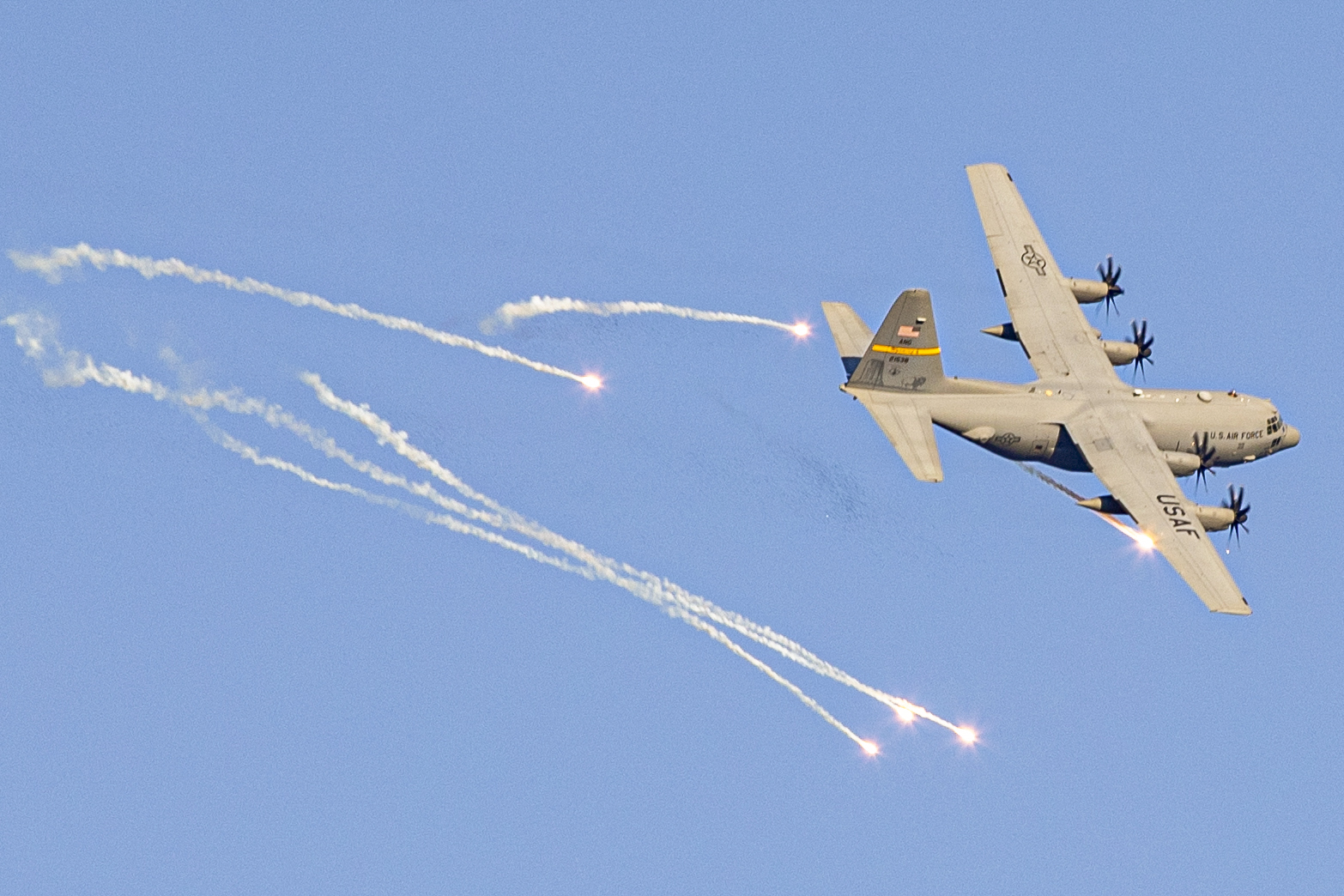
Flare Flight


An Air Force C-130 Hercules fires off flares during Southern Strike at Camp Shelby Joint Forces Training Center, Miss., April 25, 2021. More than 2,000 service members participate in the annual training exercise which is designed to increase combat readiness.

Colorful Ops


Soldiers fire 105mm howitzers during night operations at Fort Chaffee, Ark., April 24, 2021.

Motivational Marines


Marines participate in a motivational run at Marine Corps Recruit Depot San Diego, April 28, 2021.

Expert Eye Work


Soldiers test proficiency in basic infantry and tasks to earn the Expert Infantryman Badge or Expert Soldier Badge at Schofield Barracks, Hawaii, April 27, 2021.

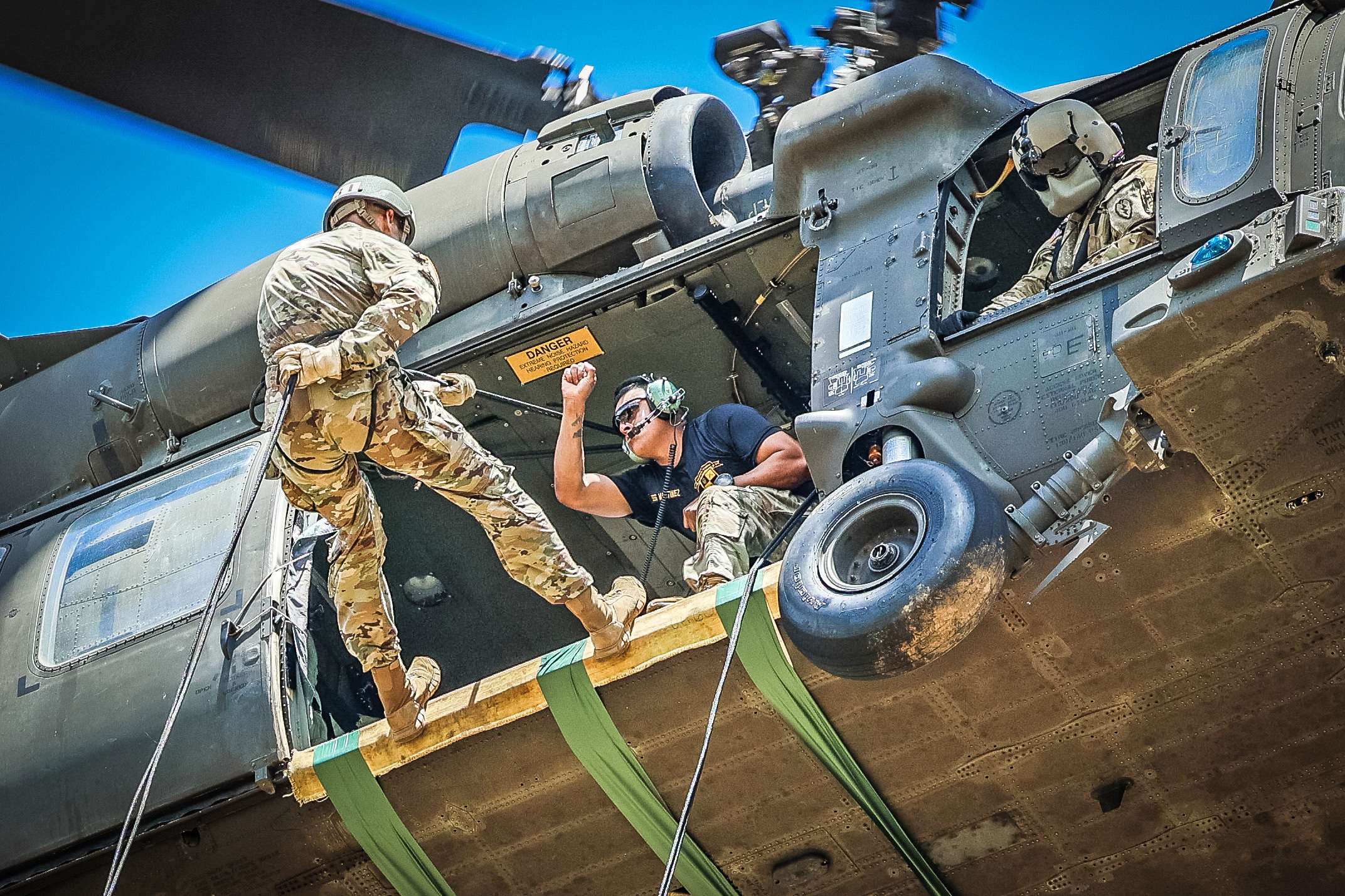
Rappel Ready

Soldiers rappel from a UH-60 Black Hawk during a 10-day air assault course at 25th Schofield Barracks, Hawaii, April 22, 2021.

Island Install


A sailor installs a large flange near the island of Diego Garcia, April 19, 2021.

Howitzer Fire


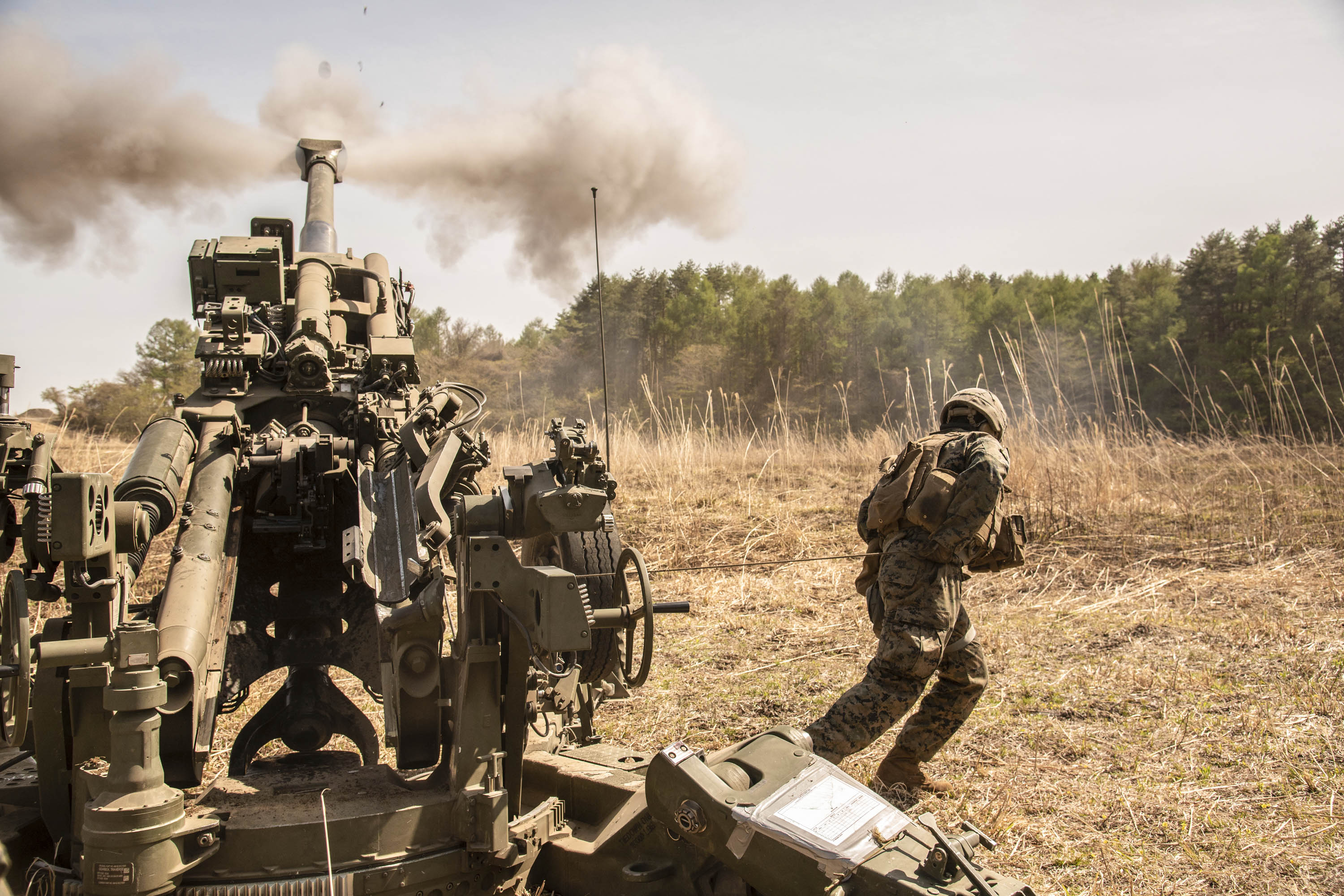
A Marine fires an M777A2 howitzer during an artillery relocation training program at Combined Arms Training Center Camp Fuji, Japan, April 23, 2021.

Expert Extraction


An Air Force HH-60W Jolly Green II prepares to extract Marines during Pacific Pioneer at Kin Blue training area in Okinawa, Japan, April 20, 2021. The exercise demonstrates the Marine Corps' ability to establish and sustain expeditionary advanced bases with survivable force protection, practice naval integration and position long range precision fires and tactical logistics nodes across littoral regions in support of naval operations.