Friday, January 15, 2021

Admiral Says U.S. Aims to Expand Competitive Space in Latin America

 Jan. 15, 2021 | BY David Vergun , DOD News

Two key concepts of the National Defense Strategy are partnerships and expanding the competitive space in all domains — and that's what the Defense Department is doing in the U.S. Southern Command and globally, said Navy Adm. Craig S. Faller.

Faller, commander of Southcom, said yesterday that those efforts include training and education with partner nations, security cooperation, fighting transnational criminal organizations, stopping illegal fishing, exercises, personnel exchanges, planning and intelligence sharing and having a military presence there to assist and reassure.

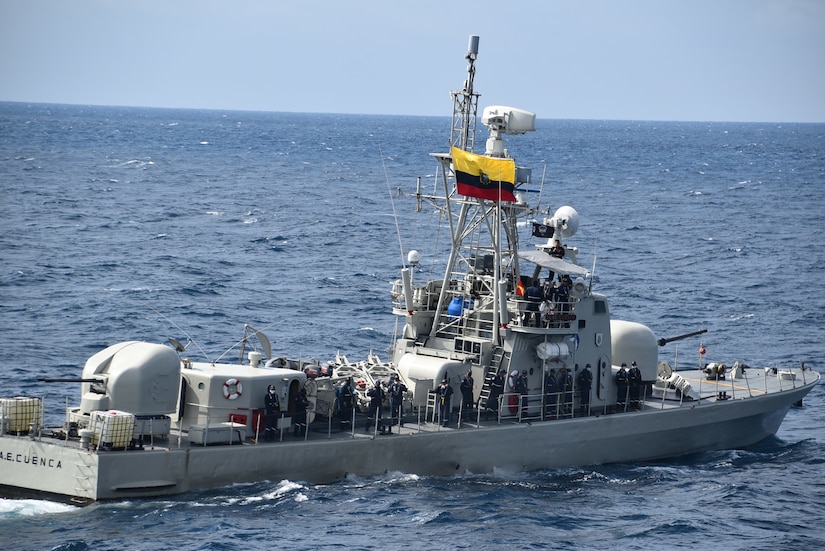
A ship sails on the sea.

It's in everyone's interest in this hemisphere to have partners with strong military capabilities, Faller told virtual attendees of the Surface Navy Association Annual National Symposium.

He said one example is Colombia, which has a cutting-edge military force. Colombians are also producing quality vessels in their shipyards and selling them to other nations in South America and the Far East. Brazil, as well, has invested in a capable navy.

Chile, Colombia, Brazil, Argentina, Ecuador, Panama, Peru, Dominican Republic, Uruguay and other nations, including NATO allies, have taken part in the annual UNITAS exercises, he said.

Ecuador led UNITAS in 2020, despite COVID-19 and budget challenges that  had caused the country to be absent from the global scene for over a decade.

"Our ability to target threats doubled," Faller said. "And our partner capacity went from about 48% to 60%. So, we've got to take care of today's threats to expand the competitive space."

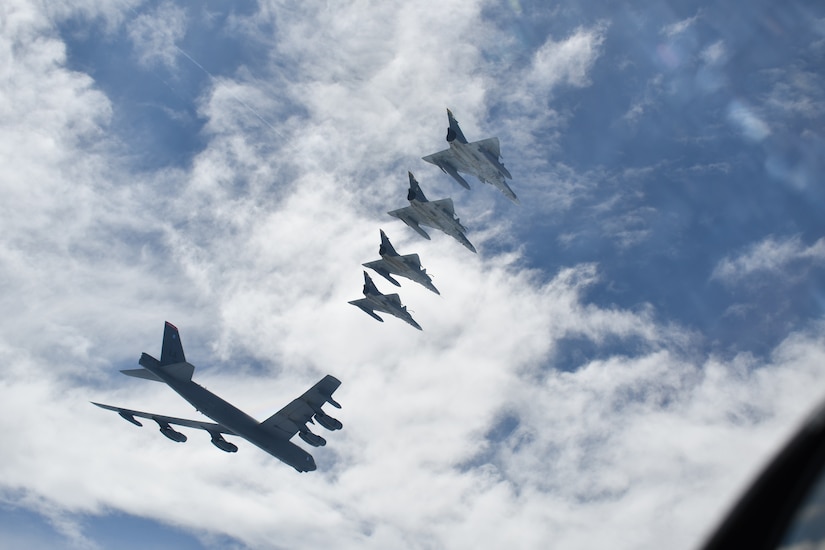
One large and four small airplanes fly in the sky.
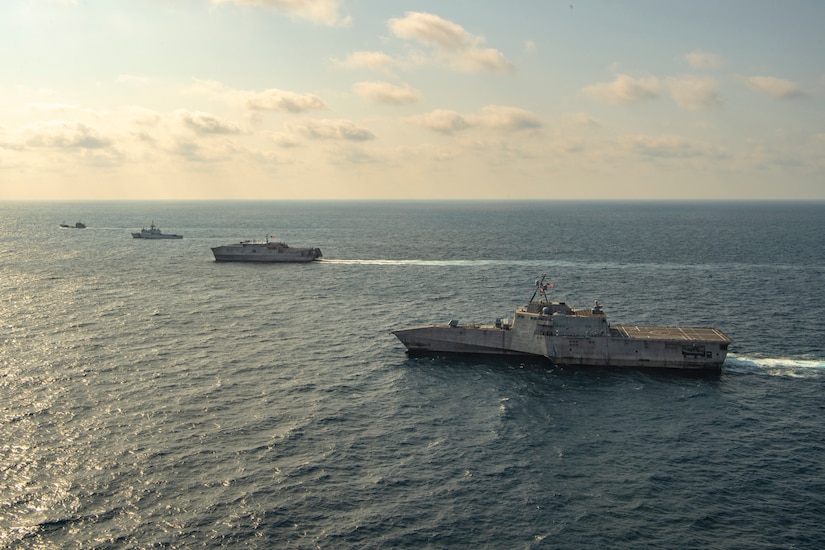
Four ships sail the sea.

Humanitarian missions are also an important aspect of strengthening partnerships, he said.

In November, a Category 4 and 5 hurricane slammed into Central America, and the DOD along with the Coast Guard assisted in saving more than 1,000 lives.

Additionally, the two Navy hospital ships routinely make port calls in Southcom, he added. They're treating many patients and spreading goodwill.

Faller said partnerships are important for everyone in this hemisphere.

China remains a significant threat to this hemisphere and is seeking deep-water ports in El Salvador, Jamaica and elsewhere, and the Chinese are trying to exert control over the Panama Canal. They're also trying to gain access to inland waterways in Brazil and neighboring countries through tugboat and dredging contracts, he said.

Chinese fishing fleets are harvesting illegal catches in many areas of Southcom, he added.

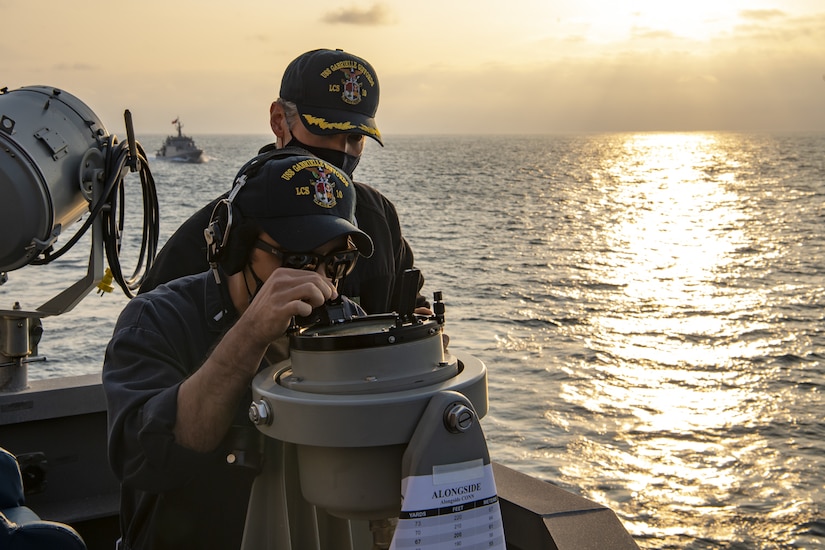
Lt. j.g. Timothy Wenholz, assigned to the Independence-class littoral combat ship USS Gabrielle Giffords (LCS 10), uses a bearing circle in preparation for a replenishment-at-sea (RAS) with the  Chilean Navy replenishment oiler CNS Almirante Montt (AO-52) Nov. 7, 2020.

The Chinese are also trying to sell their 5G network equipment, which is also a threat to security, he said.

Besides China, Russia, Iran, Cuba and Nicaragua are trying to destabilize democracies in the area and are spreading disinformation and engaging in criminal activities, he said.

Therefore, it's in the interest of partners in this hemisphere to remain united and to work together to maintain peace and prosperity for all, he said, noting that, after Asia, Latin America is the United States' largest trading partner.

Press Gaggle With Acting Secretary Miller En Route to Washington, D.C.

 Jan. 14, 2021

Acting Secretary of Defense Chris Miller

ACTING SECRETARY OF DEFENSE CHRISTOPHER C. MILLER:  Okay, are you guys ready? My statement is just, I made some notes. I went out, you know, met with the General VanHerck today, and his team.  Key tasks were, one, kind of get an update on, um, state of homeland defense, two, make sure that we were synced on not just the inauguration threat, because that’s really like…but at this point there’s a machine that’s cranking on that, but just made it…wanted to talk about the rest of the country, you know, and uh, then listened to his team on the stuff that they’re doing.  They’re doing some really, really innovative stuff about, you know, competition and how we do things below the threshold of armed conflict, which I think is kind of really, really important.  And, uh, it’s kind of the future of the department, even though a lot of people just want to continue doing the same old thing again and again. I think that’s the definition of insanity, isn’t it? Oh, did I say that out loud? Uh, so, and then, one of our key things that we wanted to do when we got here was, recognize transnational threats, counter narcotics, human trafficking, all that stuff, which, for the longest time was like, oh we have a program for this, a program for…It’s all…it’s…you all know at this point it’s international. Fentanyl coming in from China, has a component with human smuggling and all that. And one of the things we wanted to try to do was, kind of…not refocus, but there was a concern that we probably went too far on focusing on INDO-PACOM and China, trying to bring it back a little bit, recognize like, wow, NORTHCOM, SOUTHCOM, even AFRICOM has some real, significant challenges and also, just to recognize, hey, we probably need to look at these things globally as opposed to, you know, one, one area. So I had a really good conversation about that with him. And that was kind of the intent. Let’s see…I think I covered all my talking points.

[Crosstalk]

Q: So the D.C. Guard, said that on the 12th, they got authorization to be armed in support of the Capitol Police, protect the Capitol, members of Congress.  How was that authority passed down? From whom to whom…

ASD MILLER: Right, right, very typical, very standard, typical thing. I felt strongly that, you know, it’s easier to just keep everything at my level and, like, I own it all, but that’s not how we work.  And, at least, my upbringing was, you want to get your authorities.  I have responsibility for everything, remember, if something goes wrong, I own it.  Completely, 110 percent.  But the authorities, you want to push down, where the people on the ground that are seeing things happen—when I’m sitting at the Pentagon, or in my plane. So I made that decision to push it down to, uh, Secretary of the Army McCarthy, who’s kind of down there on the ground, so that they could move faster. 

Q: Is that the call that you took during the briefing at the Tennessee National Guard?

A/SEC. MILLER: I don’t remember.

Q: Gen Fenton had a phone, came up and you were talking, and he said, was that…

A/SEC. MILLER: I think it was.

[Crosstalk]

A/SEC. MILLER: Oh yeah, right, so that was…you know, some people, some of the lawyers were like, oh my gosh, don’t do it, I’m like no, we trust our people, you gotta have them have what they need to move faster.  And then, of course, and then my thing is like, you’ve got your left and your right limits.  If you’re not comfortable, call me, I’ll give you some guides, but otherwise, get going and move faster.  Yeah?

Q: Are you seeking any additional authorities for NORTHCOM for next week?

A/SEC. MILLER: No, they got everything they need. That was one of the conversations that we had.  “Hey do you need anything?”…We talked through some scenarios, obviously.  Yes ma’am?

Q: Um, yeah so I guess…at NORTHCOM, like what were you hoping to see?  What…

A/SEC. MILLER: Uh, I needed to look the commander in the eye, because, you know, the president, SecDef, me…I, whatever the correct English is, you guys can clean that up.  Should have paid more attention in high school.  My wife would be ashamed of me not knowing the proper preposition—and then, uh General VanHerck.   So, you know, you just, I said it before, you can have VTCs all day long, you know, but you wanna, like, I wanted to look the guy in the eye and get a sense for his soul and I think he probably needed to do that for me as well. So, you know, that was why I really felt it important to go out and sit down and have a cup of coffee with him, talk about it, small group, think through it, make sure we, kinda, had that mind meld.

Q: What’s the most important thing that you’ve learned about Russian activity beneath the threshold of armed conflict?

A/SEC. MILLER: Russian?  I think they’re extremely…uh…I have professional respect for how they do things…I think they’re played a really bad hand of card very, very well.  Declining population, single -- single source of economic revenue through natural resources.  I kind of, you know, like professionally I’m like, wow, they’re doing pretty well, and they’re using a lot of irregular warfare concepts, information, all this stuff, in a way that, you know, like…good on them.

[Crosstalk]

Q: What is the most…the biggest challenge for the Department of Defense to fix, that you’ve learned about?

A/SEC. MILLER: The biggest?

Q: Yeah

A/SEC. MILLER: What do I think?  I think it’s changing our mindset that is focused on…everybody says, ‘oh, all we’ve been focusing on is counter violent extremism, and the Chinese stole a march on us’…Historians will figure that one out…I think it’s not accurate.  I think the biggest thing is, we have to come out of the mindset of the Cold War.  I know we had that period, but big -- big units, big high-dollar weapons systems, you know, just this huge enormous complex.  I think the key thing we need to do is we need to start paying attention.  That’s why it was so cool at NORTHCOM, like, since they don’t get a lot of money, guess where they put their emphasis?  What’s between your ears.  And the information environment, domain awareness, using commercial stuff, you know, public-private partnership.  That’s the future, you know.  But still, it’s like no, we need to buy this many more…and those programs, you see them.  Trillions of dollars over the course of…I’m like, come on.  So I still think we have a hangover on a lot of that…high tech, very expensive weapons systems.  And we need to go smaller, swarmy, mass over…quantity over quality, in some cases.  That was my thinking.

[Crosstalk]

Q: I wanted to ask you…Joint Strike Fighter?

A/SEC. MILLER: Which one? F-35?

Q:  Yep…say nothing of the littoral combat ship.  It’s like the list of flawed acquisition programs…seems endless to me.  What is your takeaway about these programs and the Pentagon’s acquisition process?

A/SEC. MILLER: I so…I mean, I cannot wait to leave this job, believe me. But part of me is like, I would have loved to have gotten involved in the acquisition process and try…and you know, talk about wicked problem.  I wanted to take that one on….F-35s, the case study.  Although, I gotta tell you, yesterday we were talking to some guy, some lieutenant colonel, or colonel, said ‘what are you flying?’ Said ‘F-35,’ I was like that’s a piece of…and he was like…and he laughed, and I was like, ‘no seriously, tell me about it,’ and he was…an F-16 guy, F-35, he said…’unbelievable aircraft,’ I’m not…I…that investment, for…that capability, that we’re never supposed to use, ‘well, we have to deter, blah blah bluh blah…Are we fifth generation?  You know we…I think it’s hilarious, you know, right now, you know, ‘well we need to invest in the sixth generation,’ I’m like, we have created a monster, but you know that.

Q:  Thank you.
Statement From Acting Secretary of Defense Christopher Miller on Announcement of DOD Inspector General Investigation

 Jan. 15, 2021

"The American people deserve transparency about the events at the U.S. Capitol on January 6th, 2020. The DoD IG Report will be but one of many efforts to provide that transparency and the Department will do everything it can to ensure that review is fulsome, thorough, and holds parties to account.  We are proud of the efforts of DoD personnel to secure the Capitol on January 6th when called upon on and throughout the Presidential Inaugural events next week."

DOD Aims to Bring Industrial Base Back to U.S., Allies

 Jan. 15, 2021 | BY C. Todd Lopez , DOD News

While the defense industrial base is healthy, there are single points of failure and dependencies on overseas suppliers that must be addressed, the undersecretary of defense for acquisition and sustainment said.

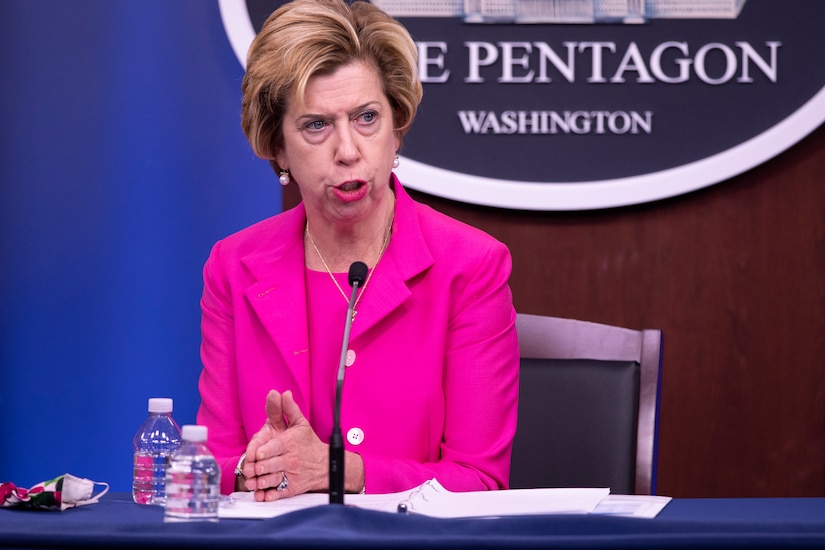
A woman sits at a table. Behind her is a sign that reads “The Pentagon - Washington.”

"Over a period of years, we have offshored many, many sources of supply," Ellen M. Lord said during an online discussion Thursday with the Hudson Institute. "It's not for one reason; it's for a variety of reasons, whether it be regulations, whether it be labor costs, whether it be government support of different industries."

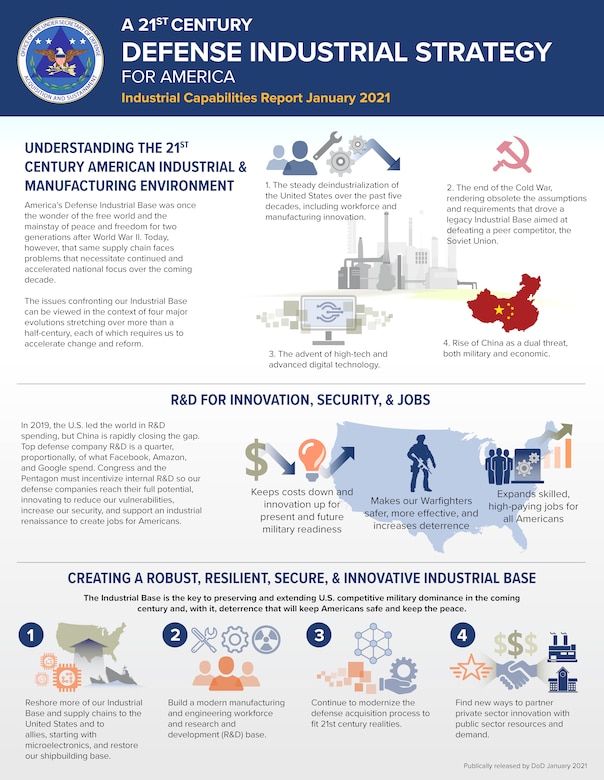
The deindustrialization of the U.S. over the last 50 years, the end of the Cold War and the focus it gave the U.S. on defeating the Soviet Union, digital technology and the rise of China have all created challenges to national defense.

In the newly released Fiscal Year 2020 Industrial Capabilities Report to Congress, Lord said the department looked into those challenges and their effects on the defense industrial base and proposed key actions to address them.

A series of information graphics illustrates challenges to the U.S. defense industrial base and solutions for how to meet those challenges.


"What we did in this report was try to really capture those risks, look at the opportunities and come up with some specific steps that we can really take to reform how we go about looking at that supply chain and, in the endgame, really get capability downrange to the warfighter as quickly and cost-effectively as possible," she said.

First, Lord said, the U.S. must re-shore more of its industrial base — bring it back to the U.S. and U.S. allies.

"There are a couple [of] key areas there with shipbuilding, as well as microelectronics — fundamental to our capability," she said.

Development of a modern manufacturing and engineering workforce along with a more robust research and development base is also critical. Declines in U.S. science, technology, engineering and mathematics education and industrial jobs hurt the ability of the defense industrial base to innovate, Lord said.

"We want to make sure that we have modern manufacturing and engineering expertise," she said. "We do not have nearly the number of scientists and engineers as China has. We need to make sure that we develop our talent to be able to leverage on these critical areas."

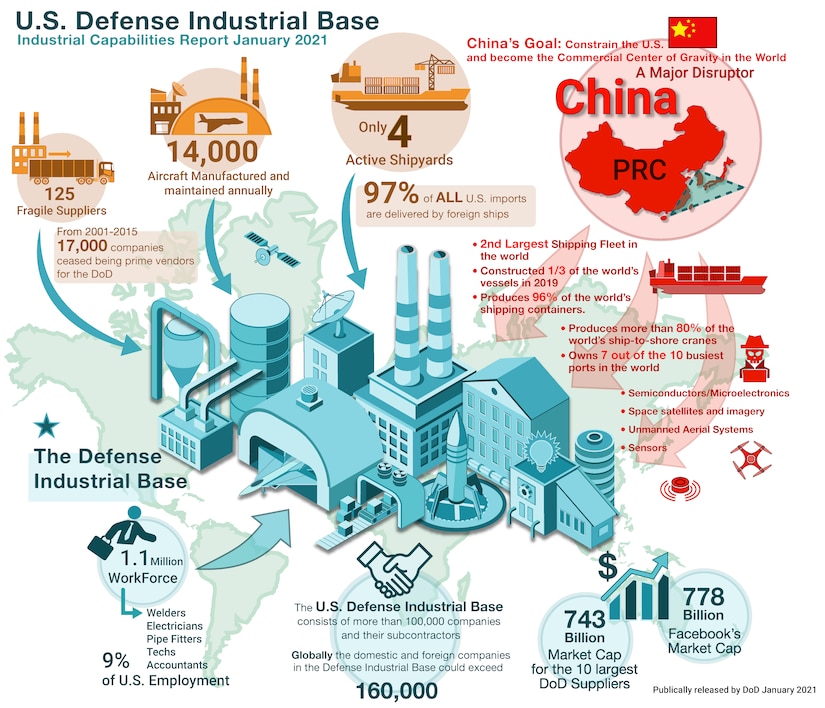
A graphic illustrates the capabilities of the U.S. industrial base and the disruptive effects of China's industrial base.

The department must also reform and modernize the defense acquisition process to better meet the realities of the 21st century, Lord said.

"We've started with a number of those, but there's much further to go," she said. "We want to make sure that our traditional defense industrial base is widened to get all of those creative, innovative companies. We know the small companies are where most of our innovation comes from, and the barriers to entry — sometimes to getting into the Department of Defense — are rather onerous."

Lord said part of modernizing and reforming defense acquisition is the recently announced Trusted Capital Marketplace, which will match potential defense suppliers — many of them small companies that have never done business with DOD — with the investors they need to keep operating and innovating. The Trusted Capital Marketplace will vet investors to ensure foreign ownership, control and influence is nonexistent.

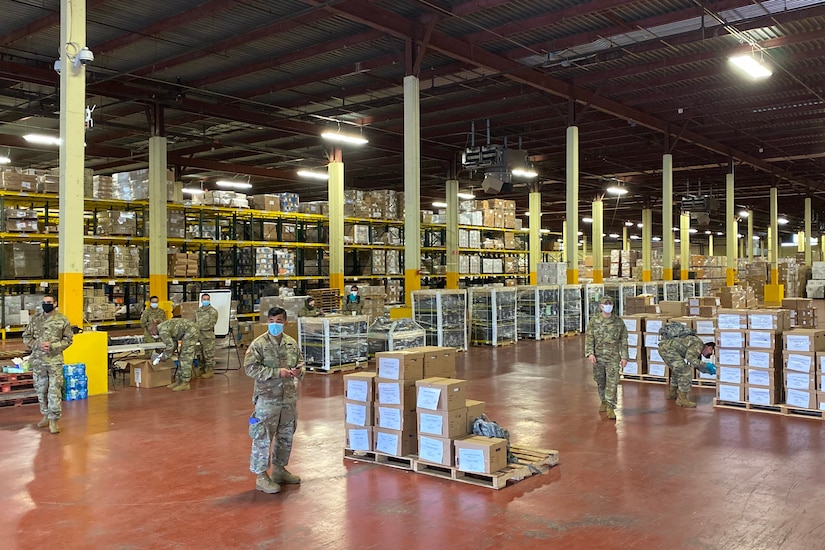
Service members work in a large warehouse.

Finally, Lord said, the department must find new ways to partner private sector innovation with public sector resources and demand.

"We, as the government, I believe, need to work with industry to make sure that we diversify that industrial base and, also, that we much more quickly translate technological capability into features of current platforms and weapon systems, as well as incorporate it in new ones," Lord said.

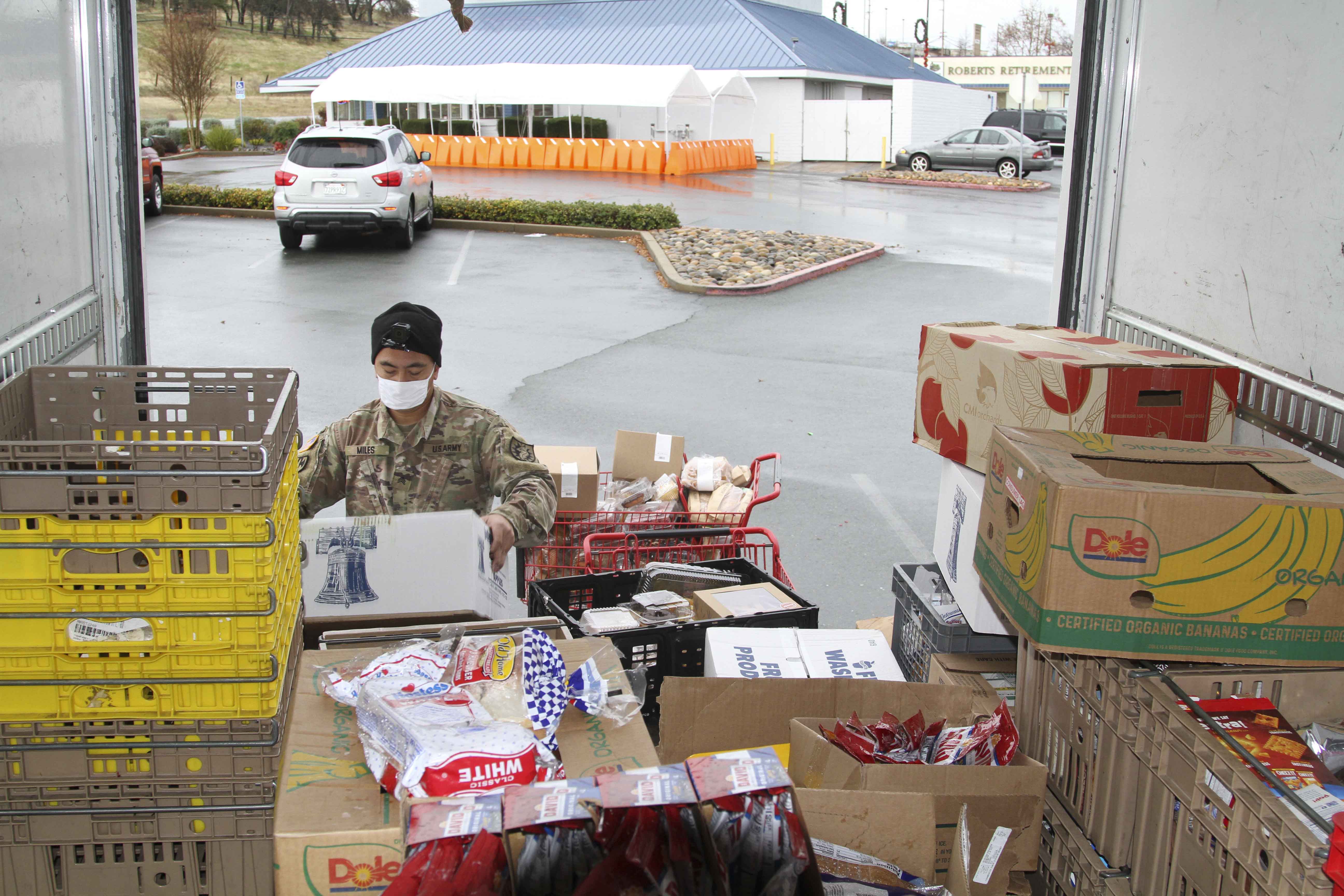
Food Sort


Army National Guard Sgt. Joseph Miles sorts perishables and nonperishables for a food bank in Jackson, Calif., Jan. 14, 2021. Guardsmen assist at food banks throughout California as part of the state’s COVID-19 response.

Changing Middle East Situation Means Changes for Israel

 Jan. 15, 2021 | BY Jim Garamone , DOD News

In a sign of the changing political environment in the Middle East, the United States military will move Israel from the U.S. European Command's area of responsibility to that of the U.S. Central Command, DOD officials announced today.

The move is part of unified command plan changes. 

When the Reagan administration set up Centcom in 1983, officials left Israel as part of Eucom. Arab nations, except Egypt, did not recognize the Jewish state. U.S. military coordination in the region — including multilateral exercises and operations — would have been complicated. 

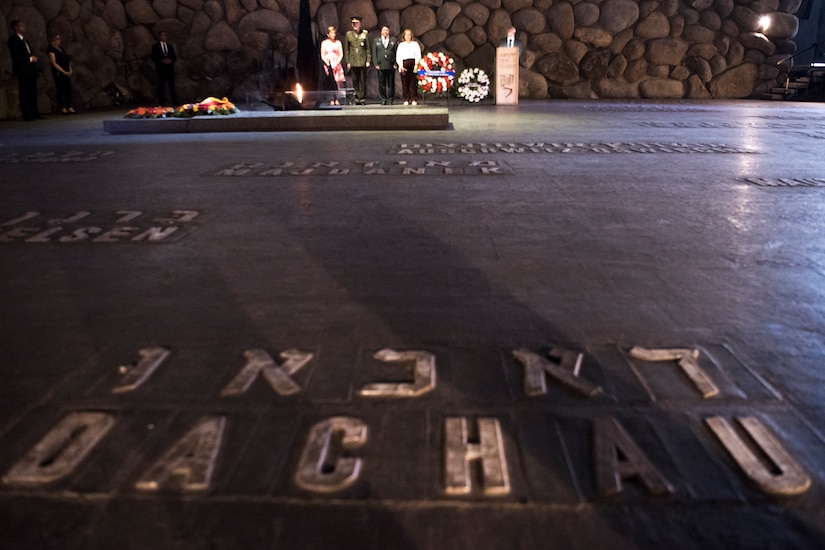
Two men dressed in military uniforms and two women stand beside two wreaths and a flame at a memorial.

But as a result, Israel — though surrounded by nations that were in Centcom's area of operations — worked through the Eucom's headquarters in Stuttgart, Germany.

Eucom and Centcom, of course, consulted often.

The need for this set-up has changed. Jordan joined Egypt in recognizing Israel in 1994, and those were the only two Arab countries that recognized Israel until last year when the Abraham Accords were signed at the White House. Bahrain, the United Arab Emirates, Morocco and Sudan recognized Israel and opened full, diplomatic relations with the nation.

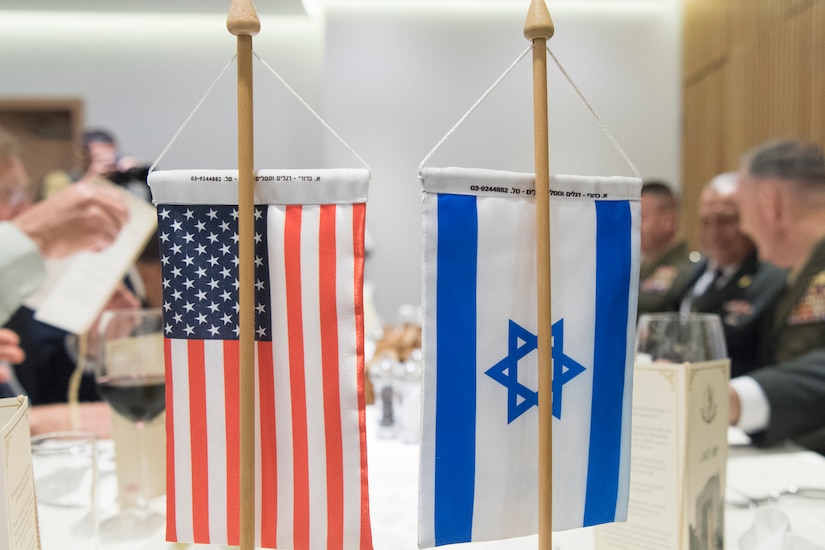
Small U.S. and Israeli flags are on stands that sit on a conference table.

"The easing of tensions between Israel and its Arab neighbors subsequent to the Abraham Accords has provided a strategic opportunity for the United States to align key partners against shared threats in the Middle East," DOD officials said in a written release. "Israel is a leading strategic partner for the United States, and this will open up additional opportunities for cooperation with our U.S. Central Command partners while maintaining strong cooperation between Israel and our European allies."

Water Wings


Air Force Cadet 2nd Class Emily Bardak performs the butterfly stroke during the Women's Quad Meet at the U.S. Air Force Academy’s Cadet Natatorium in Colorado Springs, Colo., Jan. 9, 2021.

Fuji Fire


A Marine fires a .50-caliber machine gun during Fuji Viper at Combined Arms Training Center Camp Fuji, Japan, Jan. 13, 2021. The exercise allows infantry units to maintain their lethality and proficiency in infantry and combined arms tactics.

Soldier Support


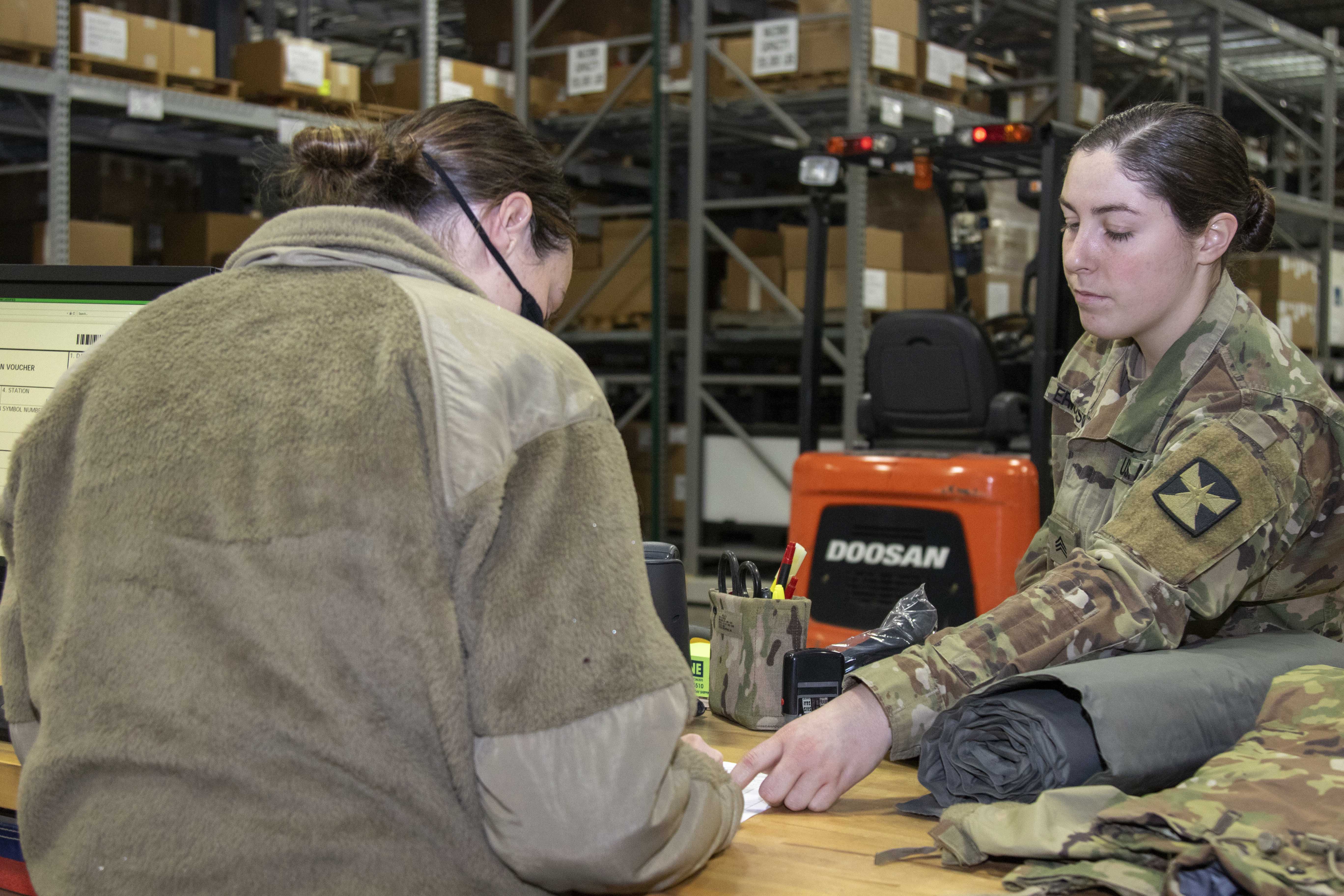
A Minnesota National Guardsman signs out gear in Little Falls, Minn., Jan. 14, 2021, while preparing to support local law enforcement for Inauguration Day in Washington D.C.

Marine Markmanship


Marines participate in an advanced marksmanship competition during Exercise Fuji Viper at Combined Arms Training Center, Camp Fuji, Japan, Jan. 13, 2021.

Dili Delivery


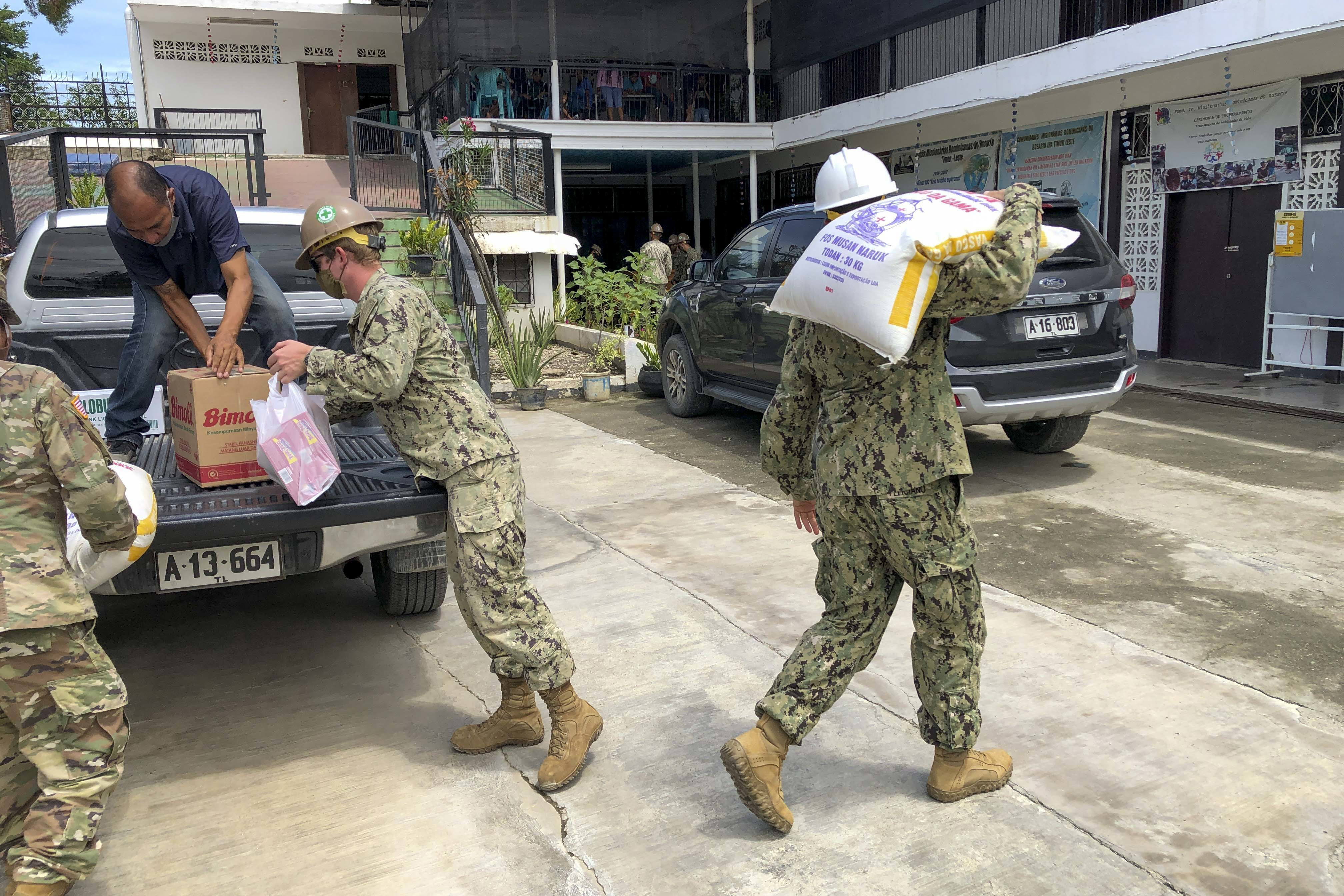
Navy Seabees deliver food to an orphanage in Dili, Timor-Leste, Jan. 6, 2021. Seabees are deployed across the Indo-Pacific conducting humanitarian missions to support U.S. and partner nations in the region.

Department of Defense Statement on Unified Command Plan Change

 Jan. 15, 2021


The United States has made a change to the Unified Command Plan.  The 2020 UCP shifts Israel from the U.S European Command area of responsibility to the U.S. Central Command area of responsibility.  DOD reviews the UCP every two years and reassesses all boundaries and relationships against the operational environment. We structure boundaries to best mitigate risk and protect U.S interests and partners.

The easing of tensions between Israel and its Arab neighbors subsequent to the Abraham Accords has provided a strategic opportunity for the United States to align key partners against shared threats in the Middle East. Israel is a leading strategic partner for the United States, and this will open up additional opportunities for cooperation with our U.S. Central Command partners while maintaining strong cooperation between Israel and our European allies.

Hercules Maintenance


Air Force airmen perform scheduled maintenance on a C-130H Hercules at Great Falls, Mont., Jan. 10, 2021.

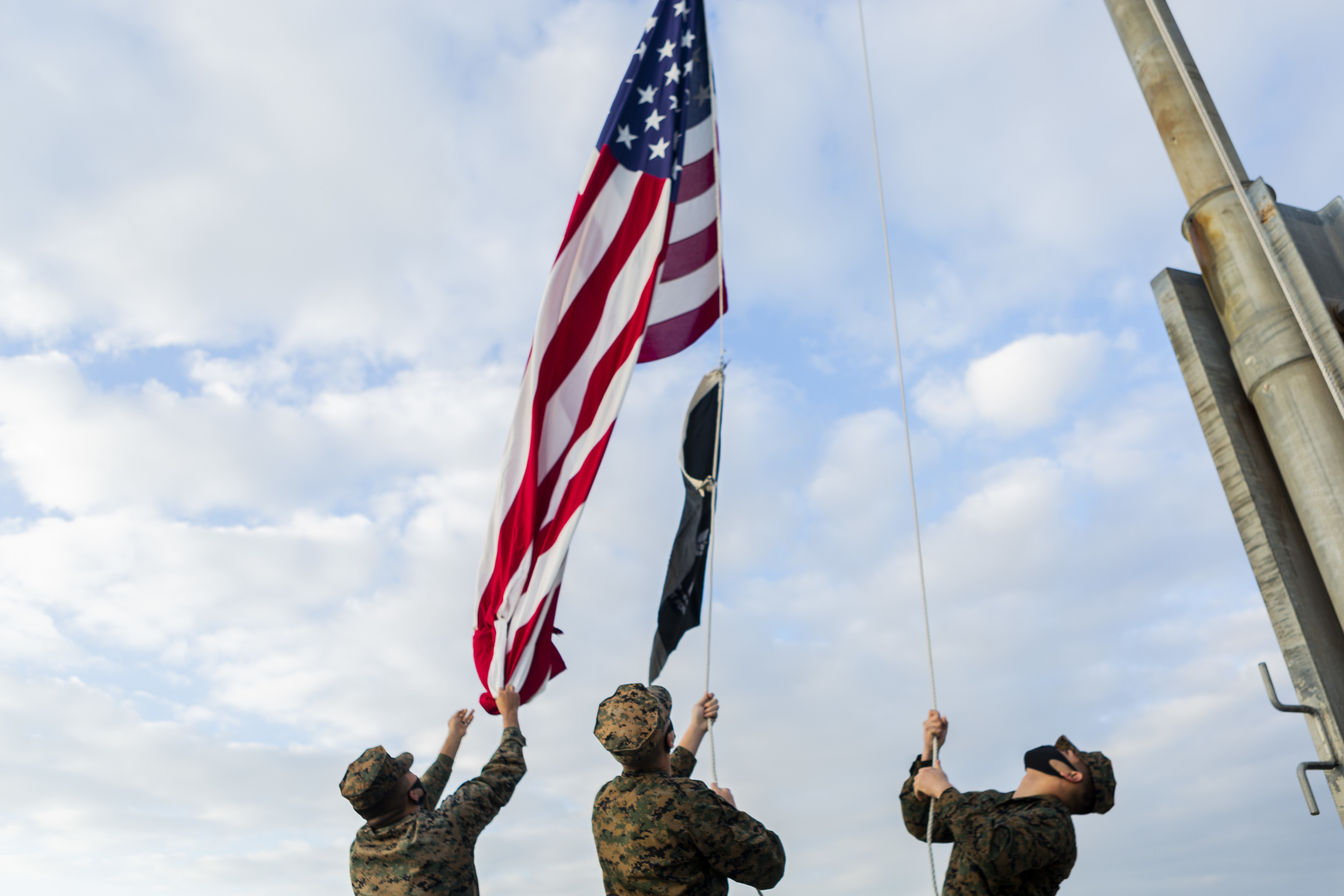
Morning Colors


Marines raise the American flag at Camp Foster, Okinawa, Japan, Jan. 13, 2021. The Marines were performing their daily duties of executing a ceremonial flag raising alongside Japanese security guards. The ceremony with the host nation symbolizes the cooperation and joint effort of American and Japanese forces throughout Japan.

DOD Announces New Director for the George C. Marshall European Center for Security Studies

 Jan. 15, 2021


The Defense Department is proud to announce the appointment of retired Air Force Maj. Gen. Barre R. Seguin as the new Director for the George C. Marshall European Center for Security Studies in Garmisch-Partenkirchen, Germany.  Seguin retired in October 2020 after more than 30 years of active service.  He succeeds retired Army Lt. Gen. Keith W. Dayton who has served in the position for more than ten years.  Dayton’s current term will end on May 31, 2021.

Seguin was commissioned a Second Lieutenant in 1988 through the Reserve Officers’ Training Corps after graduating from the State University of New York at Potsdam.  During his time on active duty, Seguin held leadership positions both in the U.S. and abroad, including six assignments in Europe, one of which was as a Fellow with the Marshall Center.  His final assignment in the Air Force was as the Deputy Chief of Staff for Strategic Employment for Supreme Headquarters Allied Powers Europe.  Seguin’s assignments with NATO, SHAPE and U.S. Africa Command ensures he is uniquely qualified for the role of Director. 

The Marshall Center was established in November 1992 by former Secretary of Defense Dick Cheney.  On December 2, 1994 the Marshall Center officially became a German-American partnership between EUCOM and the German Ministry of Defense.

The mission of the Marshall Center is to enable solutions to regional and transnational security challenges through capacity building, access and a globally connected network.  The Marshall Center contributes to security cooperation with tailored, professional education and research, dialogue, and the persistent, thorough and thoughtful examination of issues that confront our region and the world both today and in the years ahead.

The Department wants to express its gratitude to retired Lt. Gen. Dayton for his continued service and leadership over the last ten years as the Director and wishes him well in future endeavors.

Load Competition


Air Force airmen secure a training munition during a weapons load competition at Barksdale Air Force Base, La., Jan. 8, 2021. Two weapons load crews competed to see who could load four 2,000 pound bombs fastest, safest, and most efficiently.

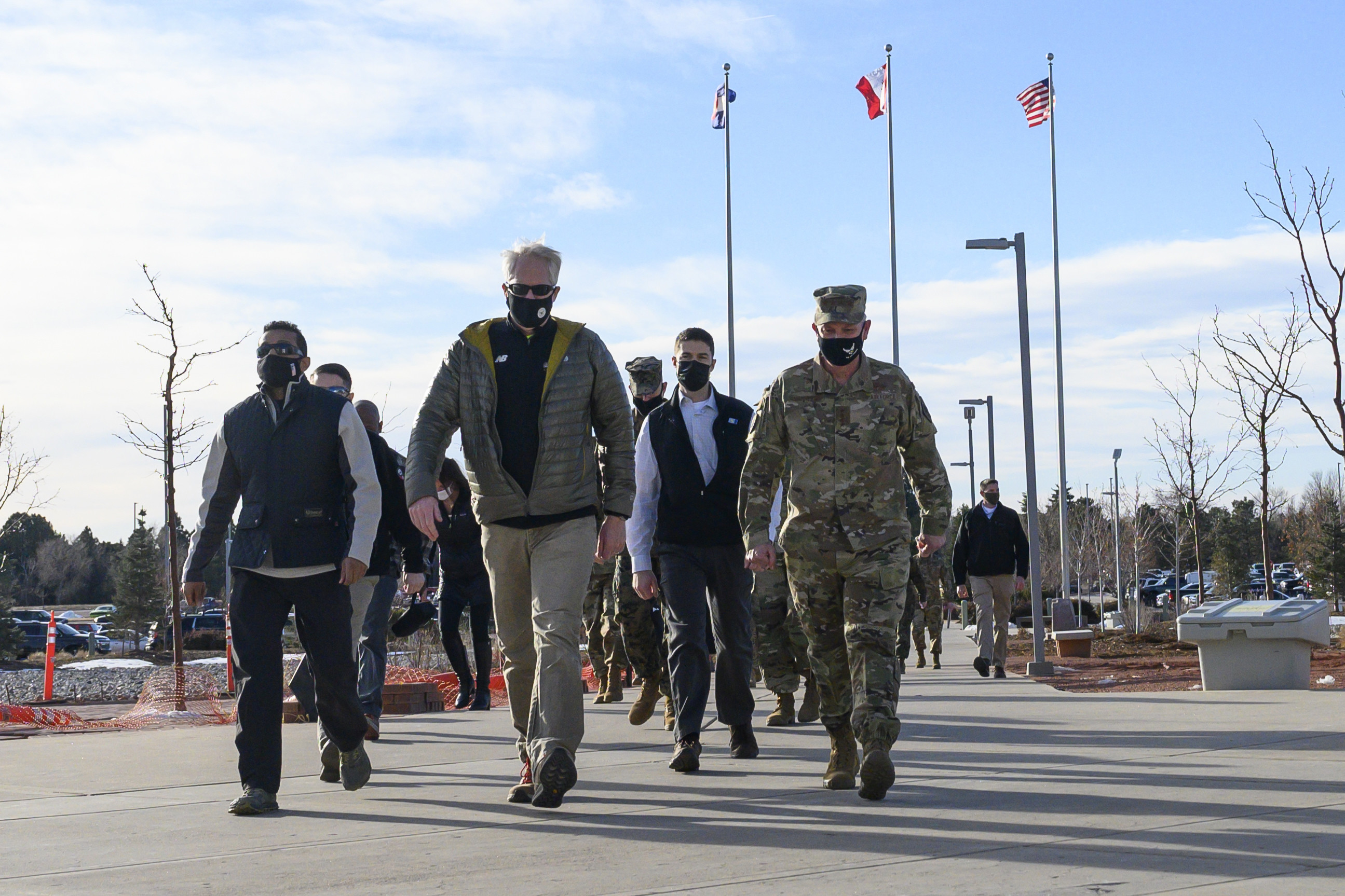
Northcom Visit


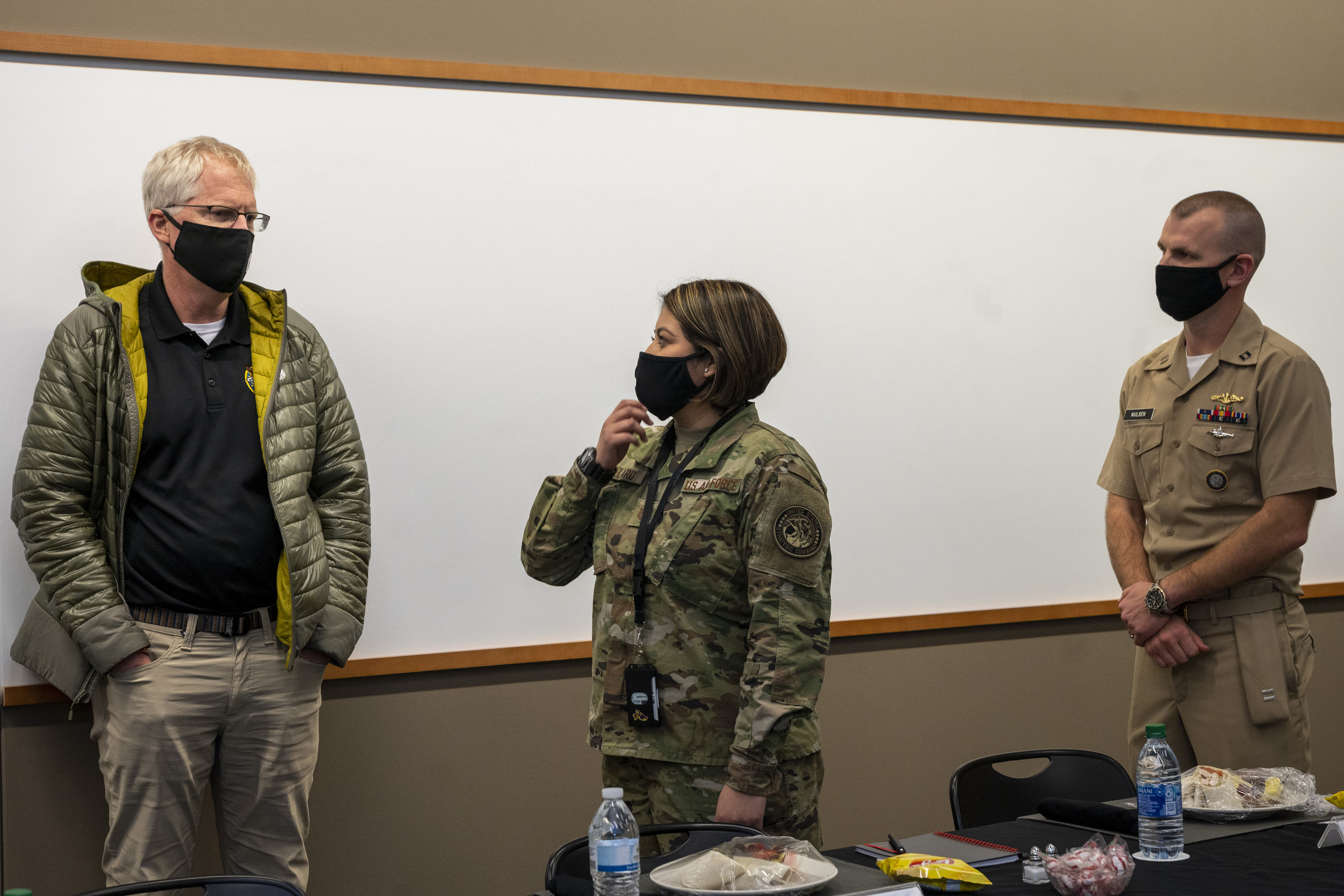
Acting Defense Secretary Chris Miller walks with the commander of North American Aerospace Defense Command and U.S. Northern Command, Air Force Gen. Glen VanHerck, at Northcom headquarters, Peterson Air Force Base, Colo., Jan. 14, 2021.

Aircraft Carrying Supplies for Emergency Field Hospital Lands at Plant 42

 Jan. 15, 2021 | BY Giancarlo Casem

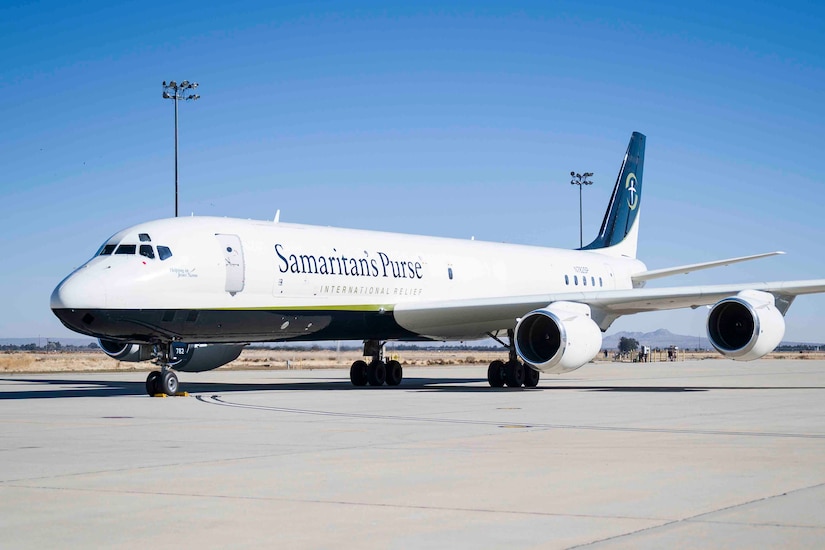
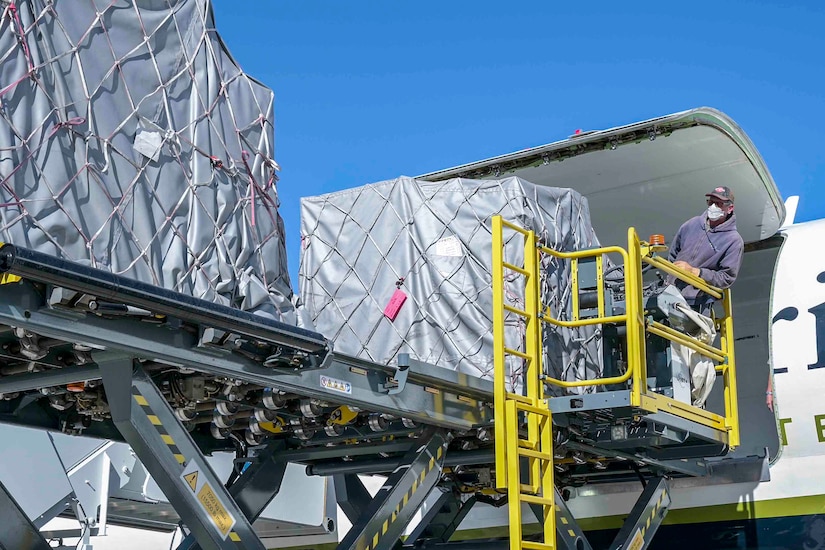
A DC-8 cargo aircraft from Samaritan's Purse landed at NASA Armstrong Flight Research Center, Edwards Air Force Base carrying supplies for the construction of an emergency field hospital at Antelope Valley Hospital in Lancaster, California.

The field hospital will be set up to support the Antelope Valley community by treating COVID-19 patients. The effort is spearheaded by Samaritan's Purse, a faith-based humanitarian aid organization that has provided physical aid to victims of war, poverty, natural disasters, disease and famine.

An aircraft taxis on an airstrip.

To support the effort, Air Force Plant 42 in Palmdale has allowed use of its airfield for delivery of the initial components as well as resupply missions. The 412th Test Wing leadership at Edwards Air Force Base, California, has also requested for volunteers to help staff the emergency field hospital.

"Plant 42 is often referred to as the 'downtown' Air Force. Our location puts us strategically in the heart of the Lancaster/Palmdale communities in the Aerospace Valley," said Dr. David Smith, Air Force Plant 42 director. "As such, our personnel and more importantly our thousands of mission partners call this home. We are delighted to extend medical care to our community as it directly impacts our 'home team' area of operations. This care facility also directly supports our own personnel's medical needs, which in turn directly support the warfighter."

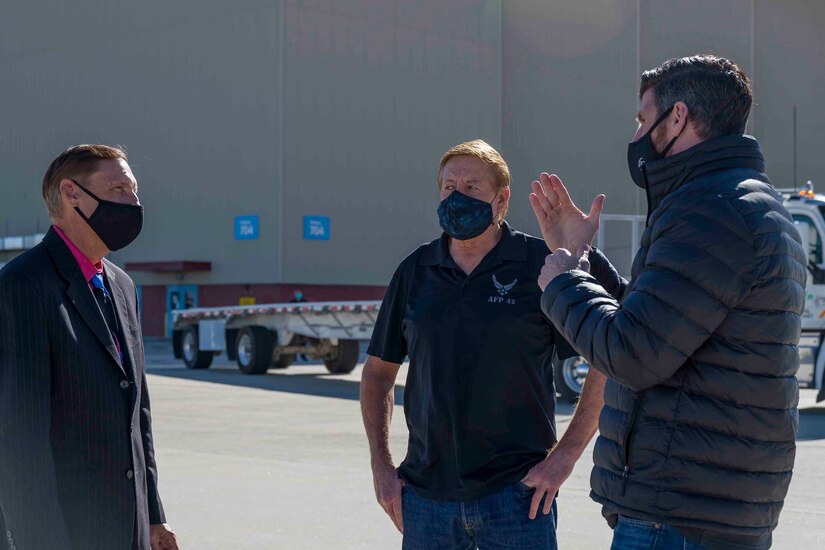
Three men in face masks have a conversation.

Samaritan's Purse's Assistant to the Vice President of Programs and Government Relations, Edward Graham, was accompanied by Plant 42 and NASA Armstrong leadership as the DC-8 arrived and its contents were off-loaded by NASA and Samaritan's Purse crews. They have partnered with Lancaster Baptist Church and Antelope Valley Hospital to construct the 70-bed field hospital. The field hospital will serve COVID-19-positive patients who do not need the support of a ventilator.

Plant 42 is no stranger to supporting the local community, from providing support to STEM engagements at local schools to executing mutual aid for major wildland fires and nearby vehicle accidents, Smith explained.

A man offloads supplies from an aircraft.

"The entire Plant 42 team is delighted to support our community. This is our home, so the dedication and selfless service from our personnel and our mission partners is most satisfying," Smith said. "Service is a core value of our Air Force, and the folks at the plant exemplify this valued characteristic."

(Giancarlo Casem is assigned to the 412th Test Wing.)

Mortar Cleaning


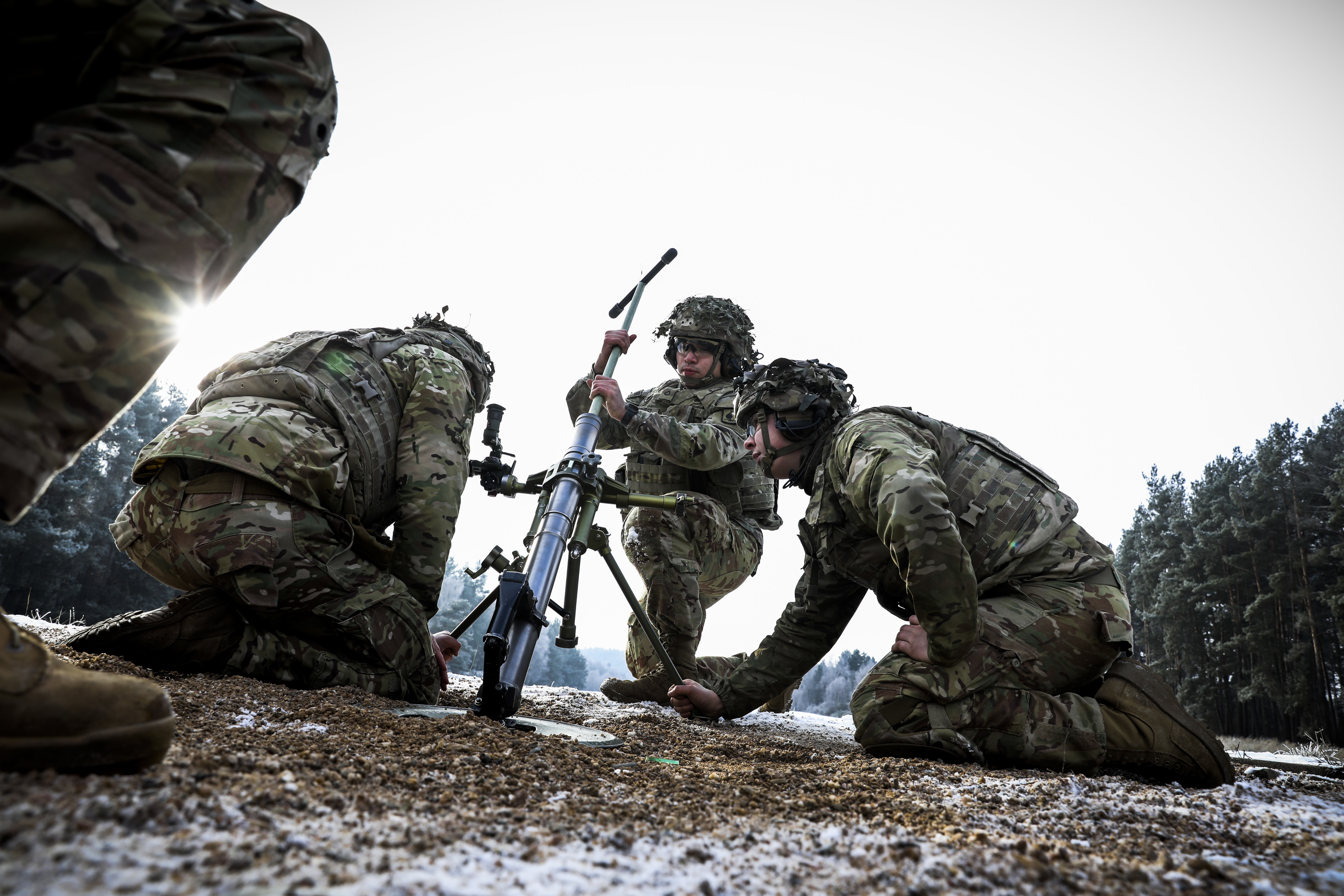
Paratroopers clean a 60mm mortar during a live-fire exercise at Grafenwoehr Training Area, Germany, Jan. 11, 2021.

Thursday, January 14, 2021

Largest Multi-Site Distribution Complex in DOD Delivers for Operation Warp Speed

Jan. 14, 2021 | BY Dawn Bonsell , Defense Logistics Agency

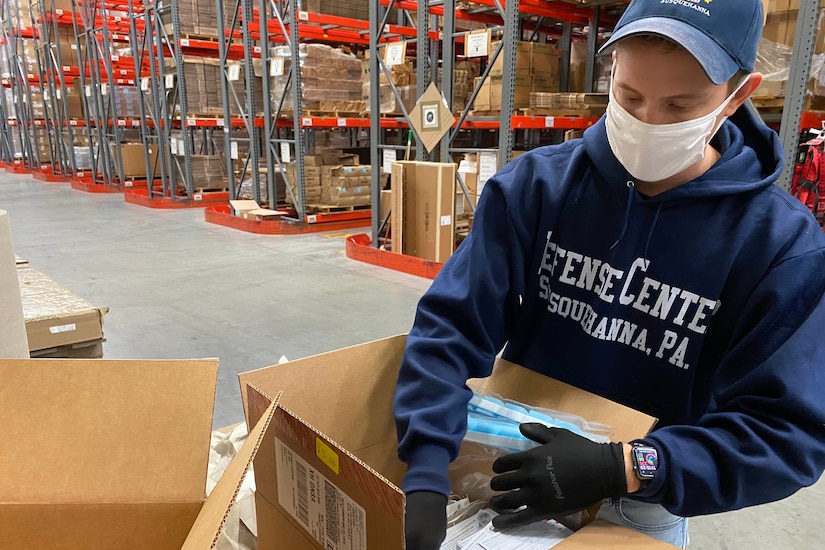
As part of Operation Warp Speed's mission to develop and distribute COVID-19 vaccine, Defense Logistics Agency Distribution began shipping Moderna COVID-19 vaccine to Defense Department employees outside the continental U.S., the deployed U.S. Navy Fleet and a limited number of locations within the continental U.S., Dec. 22.

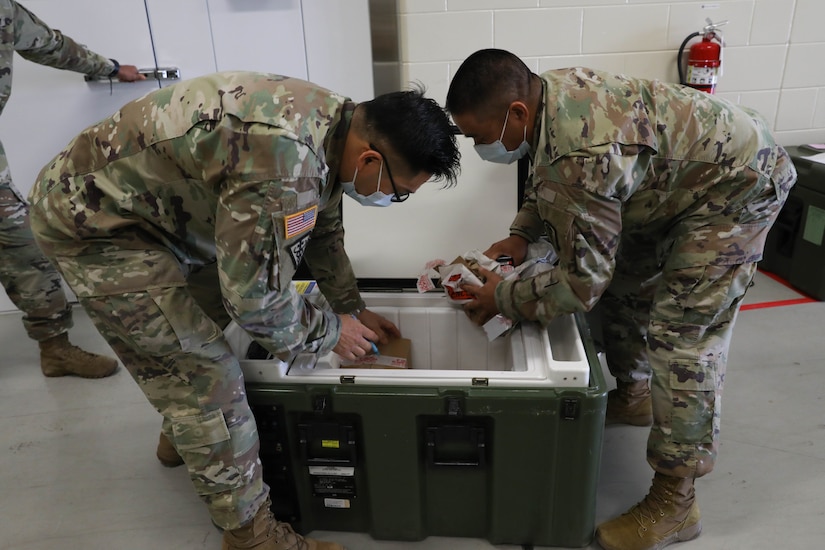
Two male servicemembers remove medical supplies from a cooler.
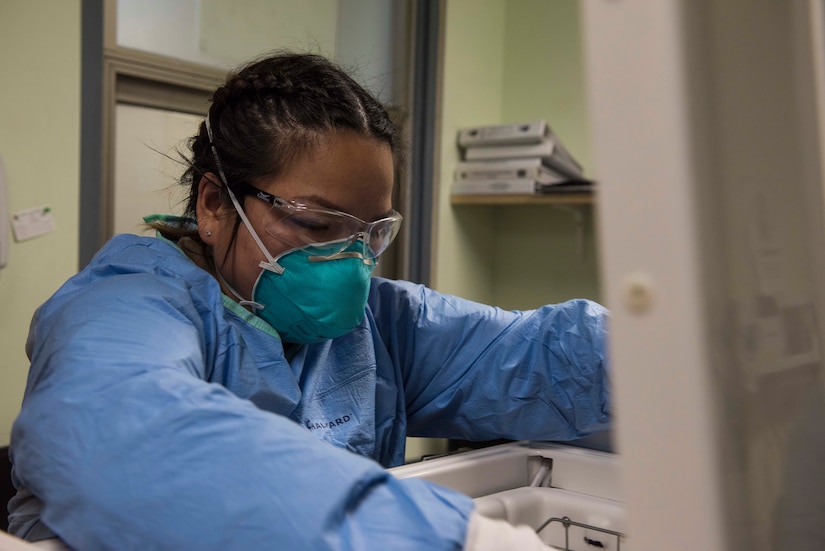
A female servicemember removes vaccines from a cooler.


"I couldn't be prouder of the DLA Distribution team. They're working tirelessly to get the vaccine out as quickly as possible while maintaining the -20 degrees Celsius temperature required to sustain the vaccine's validity," DLA Distribution Commander Marine Corps Brig. Gen. Keith D. Reventlow said. 

As the Defense Department's storage and distribution provider, DLA Distribution has six U.S.-based and four overseas distribution centers capable of handling the temperature-sensitive cargo. While DLA Distribution has delivered the seasonal flu vaccine to the military for 20 years, the COVID-19 vaccine mission requires additional measures to sustain the proper temperature. Refrigerated trucks, dry-ice, gel packs, specialized cold-chain management training for employees and specialized cold gear including insulated suits, gloves, face masks and boots are provided for employees to wear while working with the shipments inside the temperature-controlled storage containers.

A woman wearing personal protective equipment opens a cooler.
A man packs boxes with medical supplies.


Initial Moderna COVID-19 vaccine and ancillary kit shipments containing gloves, needles, syringes, alcohol wipes, sharps containers, bandaids, gauze and tape have successfully arrived at three U.S. Forces Korea locations, Naval Hospital Yokosuka, Japan, Naval Base Health Clinic Bahrain, three DOD locations in Germany, two in Belgium and several locations within the continental U.S. Medical staff and other key personnel are now being inoculated during the initial distribution. Patients will be administered two identical doses of the COVID-19 vaccine, separated by 28 days, in accordance with the U.S. Food and Drug Administration and manufacturer medical guidelines.

Training Exercise


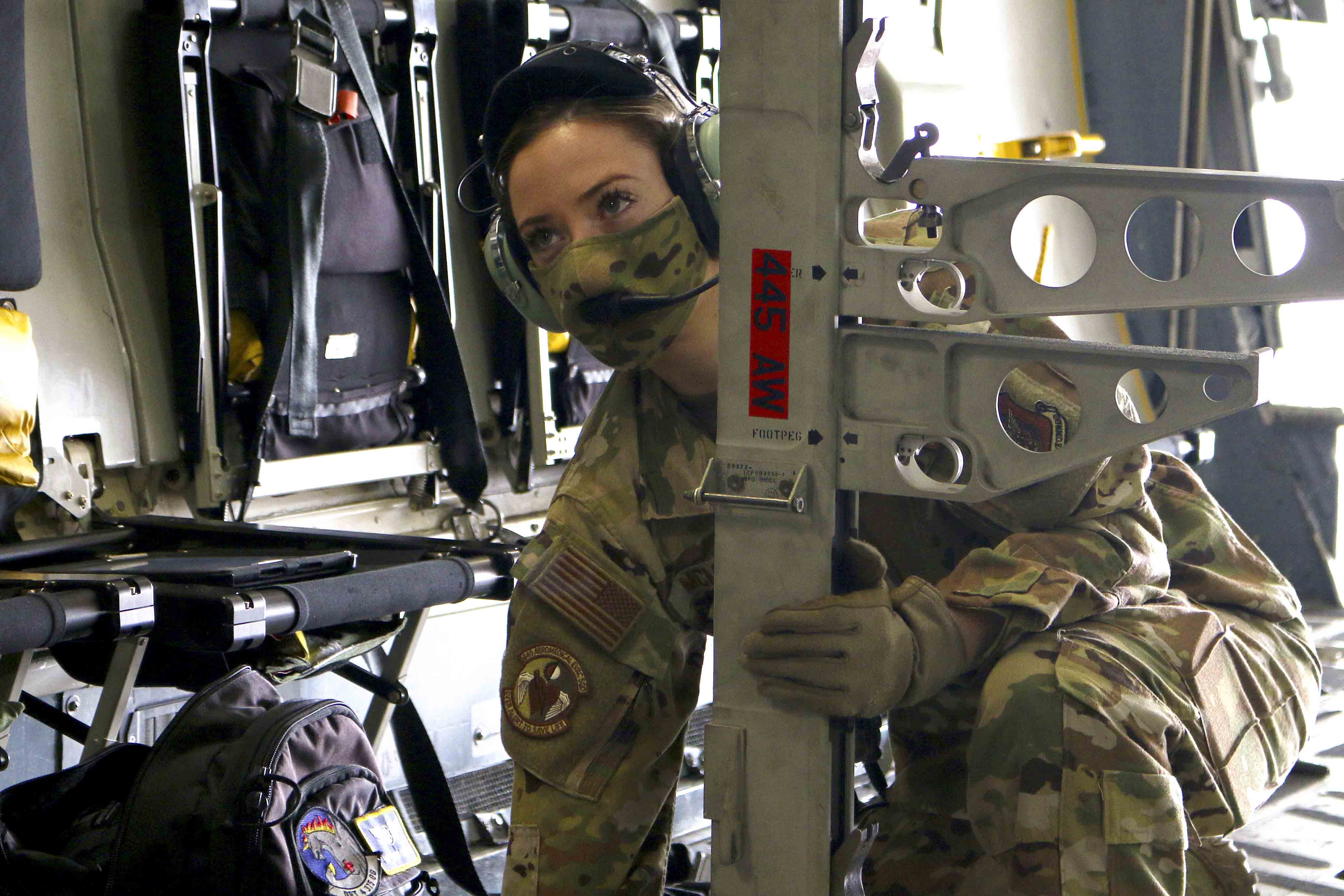
Air Force Staff Sgt. Amanda McMillan sets up a racking system during a training exercise inside a C-17 Globemaster III at Wright-Patterson Air Force Base, Ohio, Jan. 9, 2021.

Leaders Meeting


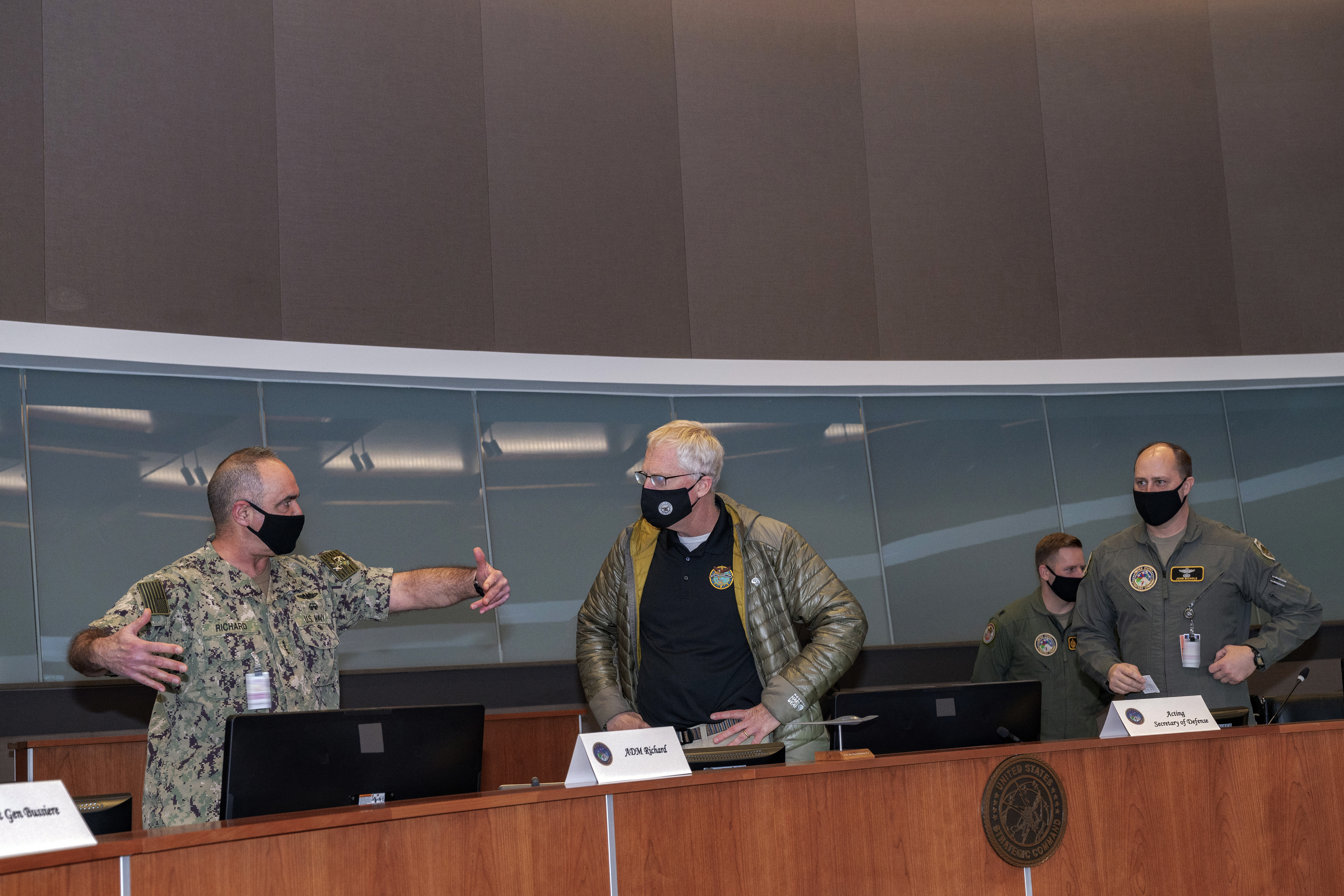
Acting Defense Secretary Chris Miller meets with the commander of U.S. Strategic Command, Navy Adm. Charles ‘Chas’ Richard, at STRATCOM Headquarters, Offutt Air Force Base, Neb., Jan. 13, 2021.

Sneak Peek


Soldiers prepare for a controlled detonation at Grafenwoehr Training Area, Germany, Jan. 13, 2021.

Miller Establishes Task Force to Aid Gold Star Families

 Jan. 14, 2021 | BY Jim Garamone , DOD News

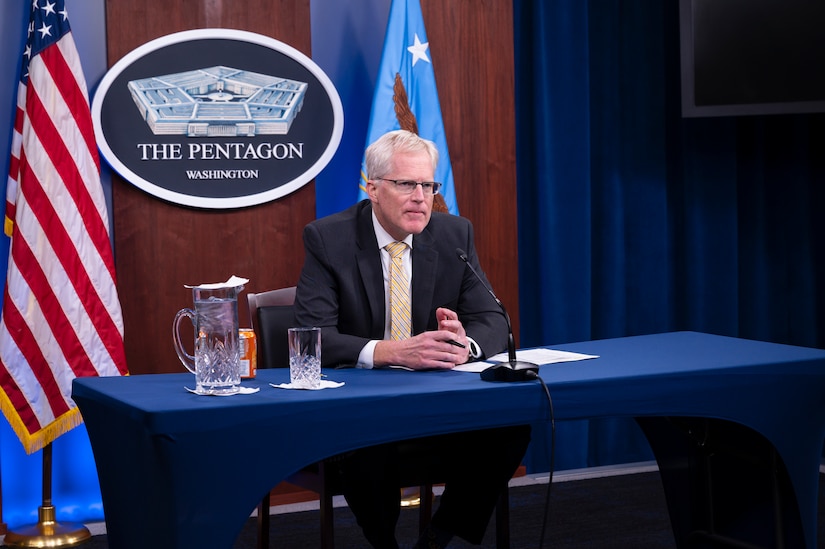
Acting Defense Secretary Chris Miller virtually sat down with Gold Star families recently to discuss how the Defense Department can better support them.

Miller signed a memo in December 2020, designed to implement programs recognizing the sacrifices of these families and preserve the legacies of those killed. 

A man sits at desk and speaks into a microphone. A plaque saying “The Pentagon” and two flags are behind him.

"I was tremendously honored and humbled to sit with and listen to our Gold Star Family members," Miller said in a written statement. "They've taken personal tragedies and turned them into powerful stories of hope and healing for others."

Miller established the DOD Casualty Assistance Task Force to address concerns of Gold Star families and suggestions from them. Miller and his team coordinated closely with the office of the undersecretary of defense for personnel and readiness on the task force. 

"Taking care of our Gold Star Families is one of my top priorities; and I am focused on outcomes and actions to ensure that we are doing our utmost to support them," the acting secretary said.

Miller praised efforts within DOD to assist Gold Star families. 

The families come from diverse backgrounds and situations and include moms, dads, husbands, wives who had a son/daughter/wife/husband killed in action, killed in training or by suicide.

DOD Releases List of Additional Companies, In Accordance with Section 1237 of FY99 NDAA

 Jan. 14, 2021


Today, the Department of Defense released the names of additional “Communist Chinese military companies” operating directly or indirectly in the United States in accordance with the statutory requirement of Section 1237 of the National Defense Authorization Act for Fiscal Year 1999, as amended.  

The Department is determined to highlight and counter the People’s Republic of China’s (PRC) Military-Civil Fusion development strategy, which supports the modernization goals of the People’s Liberation Army (PLA) by ensuring its access to advanced technologies and expertise acquired and developed by even those PRC companies, universities, and research programs that appear to be civilian entities.  

The Department released its initial list of companies to Congress in June 2020 and will continue to update the list with additional entities as appropriate.

For the latest list, click here.

For previous lists, click here, here and here.

Four-Minute Float


Marine Corps recruits prepare to execute the four-minute float during basic swim qualification at Marine Corps Recruit Depot Parris Island, S.C. Jan. 13, 2021.

Getting Prepared


Army Sgt. Jason Grant, a medic assigned to the 224th Medical Company Area Support of the Maryland Army National Guard, prepares a COVID-19 vaccine at Regency Stadium in Waldorf, Md., Jan. 9, 2021. The Maryland National Guard mobile vaccination support teams assist with administering vaccines and providing logistical support to local health departments.

Preparing A Vaccine



Army Spc. Kailee Soares prepares a dose of the COVID-19 vaccine during a drive to vaccinate Hawaii National Guardsmen assigned to the COVID-19 response in the town of Hanapepe on Hawaii's Kauai island, Jan. 12, 2021. The Hawaii National Guard's Joint Task Force continued its COVID-19 vaccinations of soldiers and airmen assigned to support Kauai County. The vaccines and the National Guard medical team were airlifted to Kauai County via a Hawaii Army National Guard Black Hawk.

Demon Flex


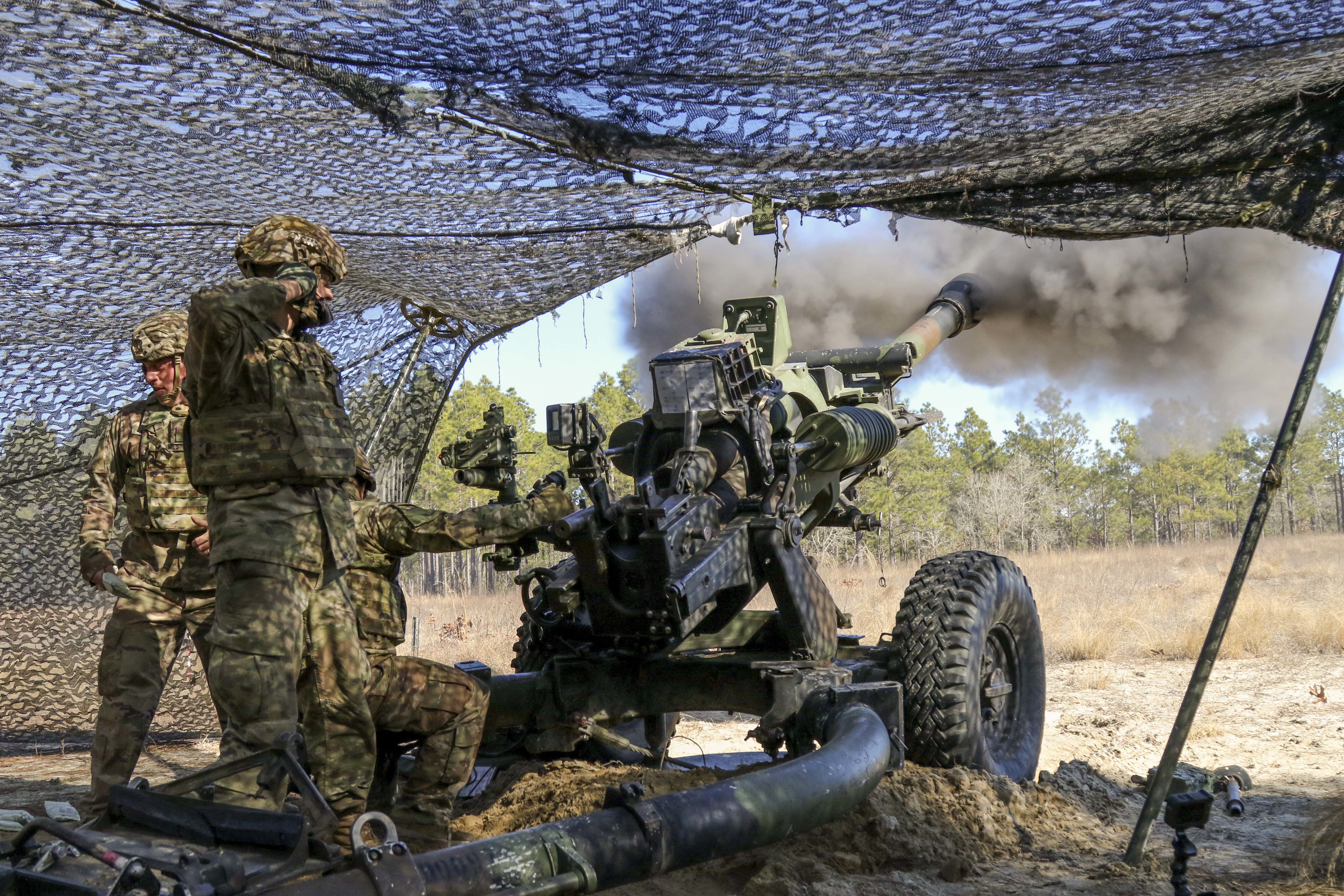
Soldiers fire an M119A3 howitzer during Operation Demon Flex at Fort Bragg, N.C., Jan. 12, 2021. The live-fire exercise builds crew drill proficiencies in order to fight near-peer adversaries.

Alaskan Winter


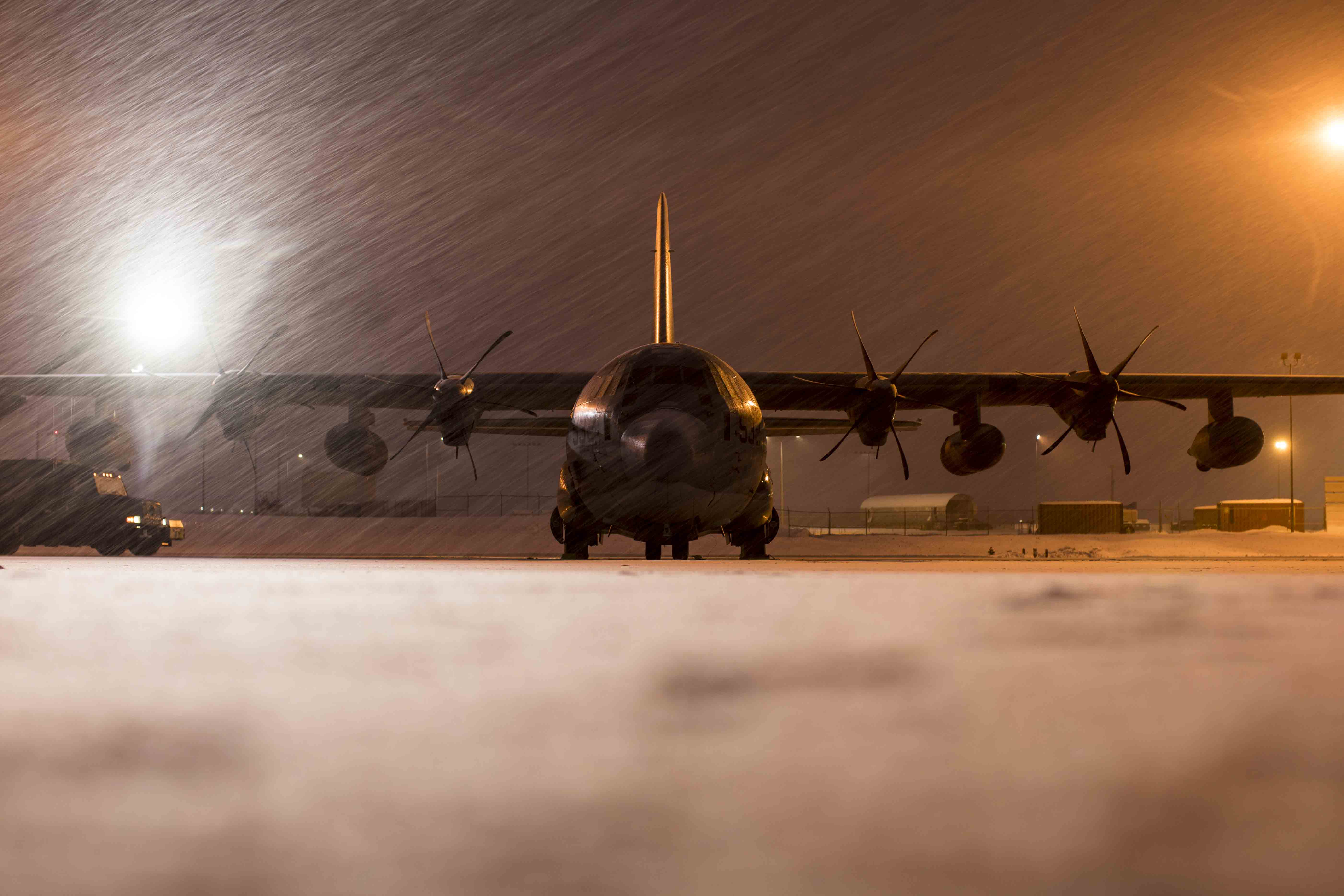
Marines de-ice a KC-130J Super Hercules aircraft before takeoff at Joint Base Elmendorf-Richardson, Alaska, Dec. 9, 2020.

COVID-19 Screening


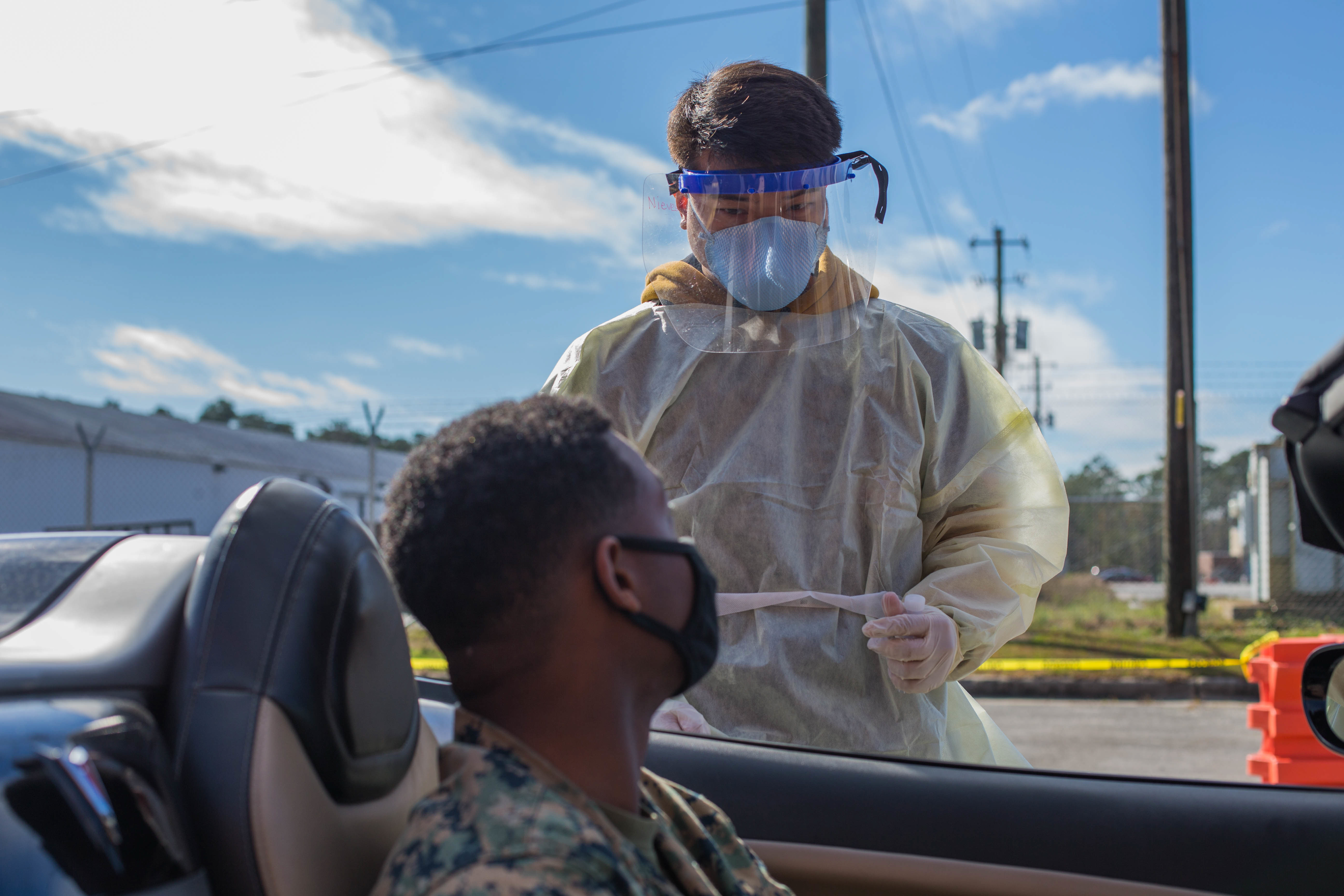
Navy Seaman Christian Monieno, assigned to the Naval Medical Center Camp Lejeune, N.C., prepares to conduct a COVID-19 screening on Marine Corps Cpl. Menelik Collins, a combat photographer assigned to the Communication Strategy and Operations Company, II Marine Expeditionary Force Information Group, at the new Combined Respiratory Aid Station, Jan. 8, 2021.

Homecoming Hug


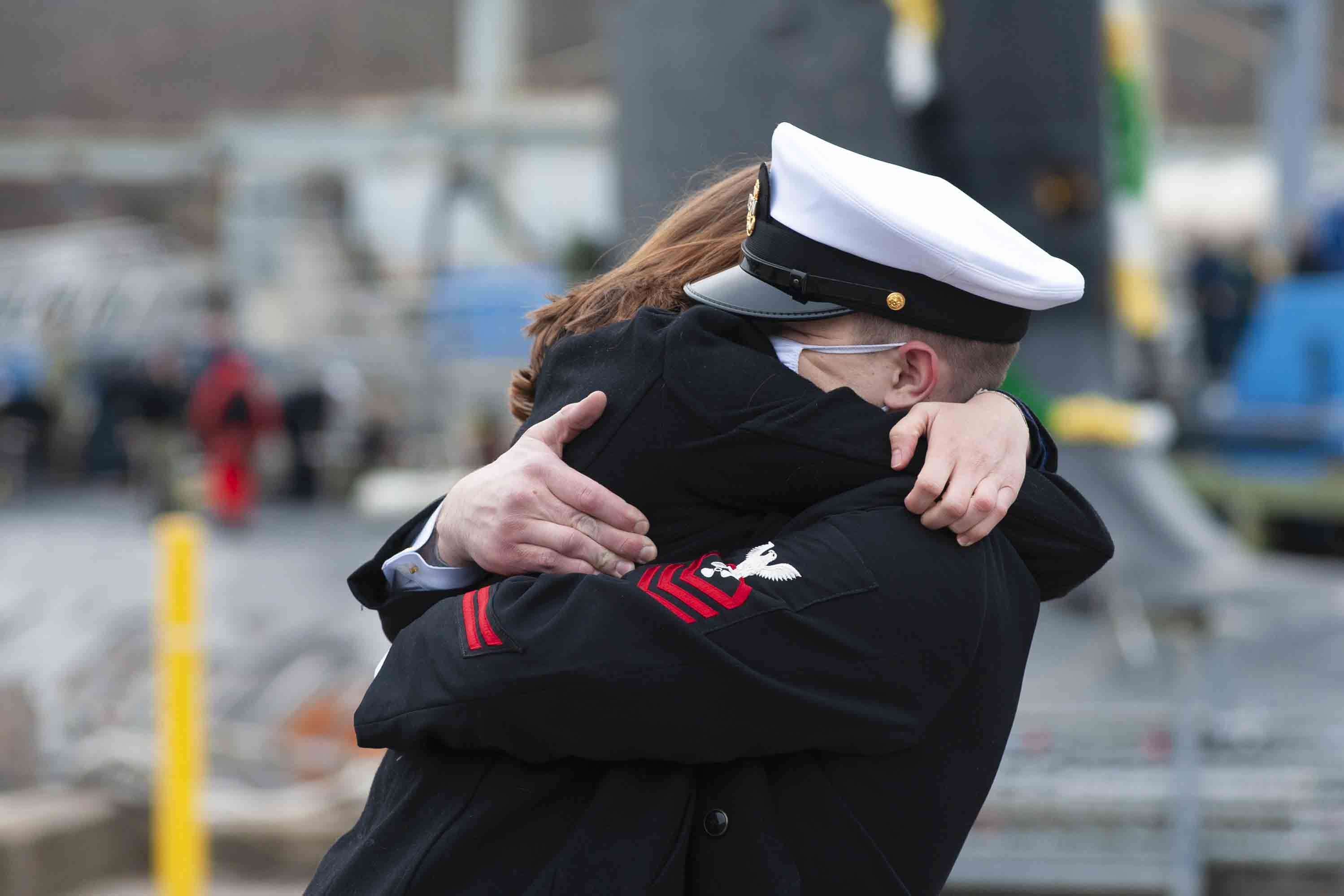
Navy Chief Petty Officer Colin Peffley hugs a loved one after the USS North Dakota returned to Naval Submarine Base New London in Groton, Conn., Jan. 11, 2021, following a six-month deployment.

Sanitizing the Area


Army Pfc. Charles Santos, assigned to the Guam National Guard, sanitizes the observation area at the Okkodo High School COVID-19 vaccination site in Dededo, Jan. 13, 2021.

No Place in DOD for Extremism, White Supremacy, Officials Say

 Jan. 14, 2021 | BY Jim Garamone , DOD News

There is no place in the Defense Department for those who espouse extremist views, DOD officials said today.

Simply put, we will not tolerate extremism of any sort in DOD."
Gary Reed, the director for defense intelligence and counterintelligence, law enforcement and security

In wake of the siege of the U.S. Capitol January 6, Defense Department officials reemphasized the department has zero tolerance for service members or employees engaged in extremism, white supremacy or who belong to organizations that look to overturn the U.S Constitution.

{mediax:2]

"We … are doing everything we can to eliminate extremism in the Department of Defense," Gary Reed, the director for defense intelligence and counterintelligence, law enforcement and security, said. "DOD policy expressly prohibits military personnel from actively advocating supremacist, extremist or criminal gang doctrine, ideology or causes."

All military personnel, including those in the reserve components, have undergone background investigations and are subject to continuous evaluation, Reed said. "Simply put, we will not tolerate extremism of any sort in DOD," he said.

Reed statements come on the heels of the extraordinary memo from the members of the Joint Chiefs of Staff. That memo reminded service members of their oath to "support and defend the Constitution of the United States against all enemies, foreign and domestic."

Domestic extremists invaded the U.S. Capitol on January 6, trying to derail Congress from counting the votes of the Electoral College. That mostly symbolic vote declared Joseph Biden won the 2020 election and will be the next president of the United States on Jan. 20.

Some in the crowd that broke into the Capitol were military veterans, and news reports said there may have been active duty members in the crowd as well. 

The department works diligently to ensure that those who espouse extremist views do not end up in the services, senior DOD officials said speaking on background. 

Officials examine those who wish to join the military, speaking to family, friends, teachers, workmates and more before they are allowed to pledge their oath to the Constitution, one official said. Still, some may get in and the department has continuous training and observation to detect these people.

"We work very closely with the FBI to identify any current or former military personnel engaged in domestic extremist behaviors," the official said.

Some military personnel are seduced by the violent militia behavior. "You've seen many examples of that in this country over the years of these militias becoming armed and active," the official said. "Then (there is) another domain within this phenomenon (of those) that are racially or ethnically motivated."

The rise of extremism in the general population affects the department, the official said. "There has been a resurgence of white supremacy and white nationalist activity over the past five or six years," he said. "The 2017 rally in Charlottesville was probably the largest gathering of white supremacy in this country in decades."

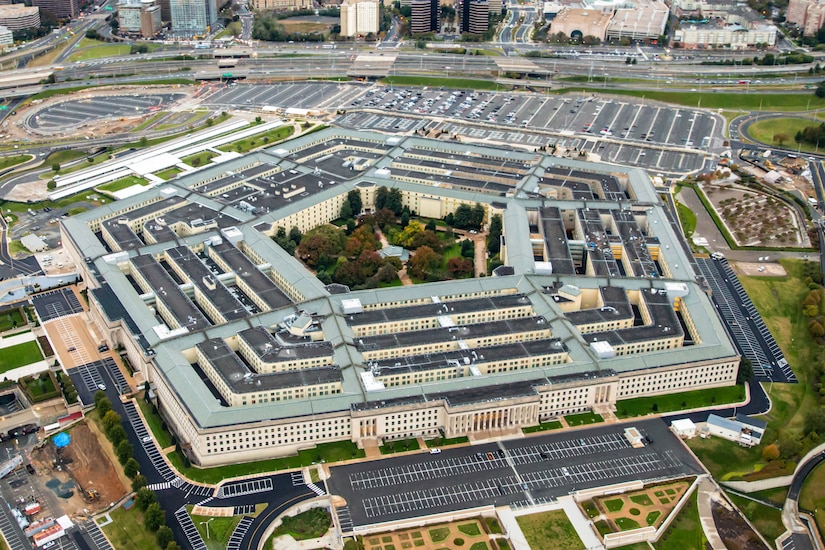
Pentagon Aerial

He noted that there are private studies that show since 2001, right-wing extremists are responsible for more deaths in the U.S. than any other type of extremist group. 

These groups actively seek to recruit military members to their causes. Other groups "actually encourage their members to join the military, for purposes of acquiring skills and experience," the official said.

Officials said Acting Defense Secretary Chris Miller has ordered a review of all policies, laws or regulations concerning participation by service members in extremist organizations. 

"This review will result in a report and recommendations concerning any initiatives we could put forward to more effectively prohibit extremists or hate group activity," the official said.

Falcon Force


Air Force Falcon basketball guard Briana Autrey-Thompson attempts a layup against the Boise State University Broncos during a home game at the U.S. Air Force Academy's Clune Arena in Colorado Springs, Colo., Jan. 8, 2021.

Miller Conversation


Acting Defense Secretary Chris Miller meets with service members at U.S. Strategic Command, Offutt Air Force Base, Neb., Jan. 13, 2021.

DOD Releases Industrial Capabilities Report

 Jan. 14, 2021


The Department of Defense (DOD) released the Fiscal Year 2020 Industrial Capabilities Report today.

The FY20 Industrial Capabilities Report transcribes the defense department’s priority industrial base risks and vulnerabilities; major developments and impacts of the coronavirus pandemic; and industrial base investments and initiatives executed in the previous fiscal year. The report promotes a strategy for a robust, resilient, secure, and innovative industrial base, which will require a substantial commitment of capital investment and resources, and continuation of the reforms undertaken in the past several years.

The full report can be viewed here and accompanying infographics can be found here and here.

Wiesbaden Trace Team Evolves As Pandemic Continues

 Jan. 14, 2021 | BY Lisa Bishop

A stable, organizational approach and committed team members allow the U.S. Army Garrison Wiesbaden, Germany, trace team to continue responding to the changing demands of the COVID-19 pandemic.

Less than a year ago, the trace team didn't exist. There was no Army job description, office space or bank of telephones to serve its workforce.

Garrison military units detailed soldiers from a variety of backgrounds to establish the team back in March 2020 in order to combat the first wave of the pandemic. At the time, five teams were spread across the Wiesbaden installation manning phones and collecting information.

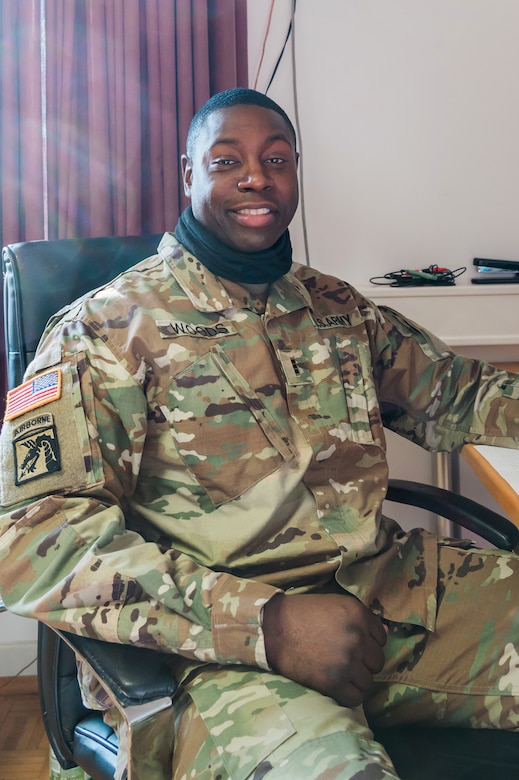
A seated soldier smiles for the camera.

According to Army Chief Warrant Officer 3 Maurice Woods, the current trace team officer in charge, there were no formulated tactics and procedures in the initial days.

"When we first started, it was a growing process," he said. 

Questions, according to Woods, like how to collect information, store data and methods for pushing information out to decision makers and the public have been resolved. 

Newer trace team members like Air Force Airman 1st Class Ustav Poudyal, analyst, are now assigned for 60-day details after they've completed training.

A seated airman smiles for the camera.

"This time has been really beneficial for me in terms of my career development," he said. "I really haven't had a chance to have exposure to a lot of joint environments." Assigned in November, he decided to extend his time with the team.

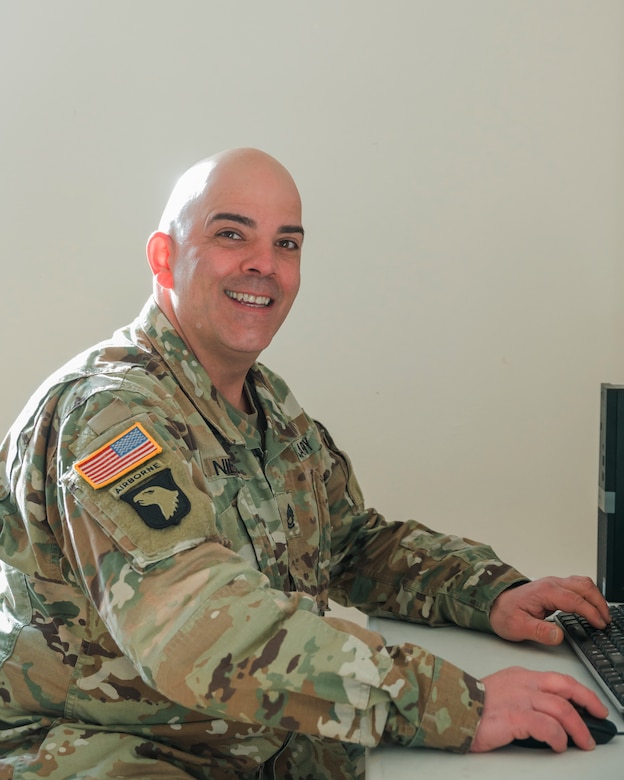
Army Sgt. 1st Class Christopher Nies, airspace noncommissioned officer from Headquarters and Headquarters Battalion, is completing his second appointment with the team.

"The second time they called and asked if I could come back, I did it without hesitation," he said. "I really find pleasure in doing this job; I feel like I'm a part of a bigger picture."

With his current rotation, Nies sees the organizational changes, including its hierarchical structure. Divided into Alpha, Bravo and Charlie sections, Nies has recently become the officer in charge for the Charlie section.

"I have some junior enlisted soldiers underneath me," he said. He is focusing on developing his leadership skills around how his crew operates.

A seated soldier smiles for the camera.

The section strategy is one of the tactics that reflected the learning gained from experience, Woods said.  By having three sections in their own apartment/office space, they can flexibly schedule for weekends and reduce the risk of exposure to COVID-19.

Change remains the biggest challenge they face, according to Woods. He said the constant shift in host nation and Army-wide policies means his team must be ready to make adjustments to their tactics and procedures. He pointed to the recent reduction of quarantine from 14 to 10 days as an example.

Nies said, "Be patient with us; be patient with the whole situation. Keeping up with the changes is really probably the most challenging part."

As for the team members, when they finish their rotation on the trace team, they return to their normal military assignment with the caveat that they can be called back when needed. Clearly, for some, they feel the calling to stay.

Woods said, "I volunteered to stay on; I like what the mission does; I felt like I was making a difference for the garrison overall."

(Lisa Bishop is assigned to the U.S. Army Garrison Wiesbaden.)

Partnerships Key to Space Force Delivering Warfighting Capabilities

 Jan. 14, 2021 | BY David Vergun , DOD News

The Space Force is responsible for delivering space capability to the joint and coalition forces, including such items as navigation, timing, electromagnetic operations, orbital warfare, GPS, missile warning, satellite communications and launch space domain awareness.

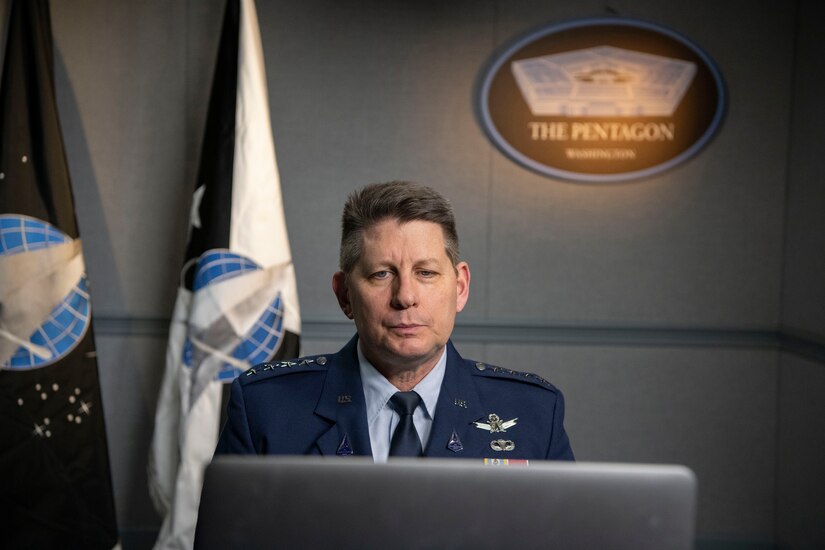
A man in a military uniform, sitting at a computer, is speaking during a virtual meeting.

Many of those capabilities have been forward deployed to the Middle East and other areas for some time, said Space Force Gen. David D. Thompson, the vice chief of space operations, who provided virtual remarks yesterday to the Association of Old Crows, regarding space operations.

To continue to provide these and future capabilities, it is important that the Space Force has an effective and digitally fluent workforce that's adequately trained and educated to operate systems and networks in the cyberspace domain in a cyber-secure manner, he said.

Thompson stressed the service's reliance on partnerships.

Five Marines work on a satellite dish.

The Space Force relies on the commercial sector for innovative ideas, prototypes and experimentation, he said. They can design, develop, build and field them rapidly.

The idea of prototyping quickly involves some risk of failure. But even failure can lead to solutions that spiral development, he added.

Partnerships with the joint force, combatant commands and Defense Department agencies is also important, he said.

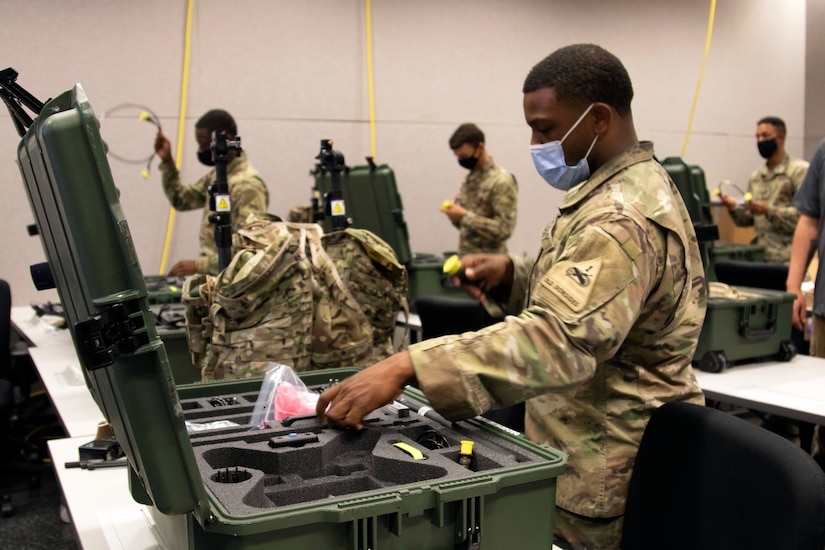
Soldiers inventory communications gear.

"We have enduring relationships with the National Reconnaissance Office and the rest of the intelligence community," he said. "We not only need to maintain those but deepen those as well, especially because we're now partners with them in the need to defend and protect these capabilities from threats."

The United States can no longer afford to go it alone when it comes to space capabilities, Thompson said.

"We see nations who want to grow and evolve their space capabilities, who want to use them for economic purposes, who want to use them for civil and public safety purposes, who also want to use them for national security purposes. We see a lot of common ground with them and a lot of common interests," he said.

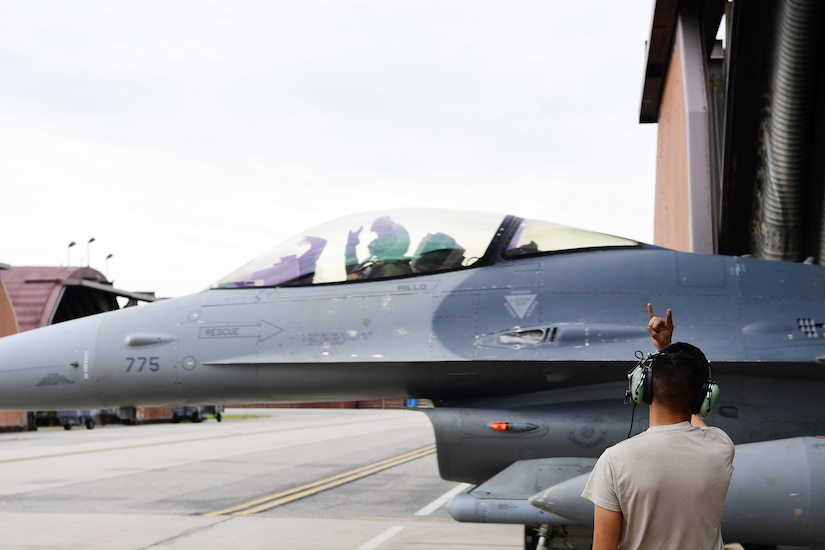
A jet departs a hangar in preparation for  take-off.

Traditional Space Force partners have been Canada, Australia, the United Kingdom and New Zealand, he said. Over the last few years, partnerships with France, Germany, Japan and South Korea have been expanding, along with a number of NATO nations such as Norway.

Partnerships with Brazil, Argentina, Chile and other nations, particularly in the Indo-Pacific region are also on the horizon.