Thursday, October 29, 2020

During COVID-19, Use of Non-Medical Family Counselling Remains Strong

 Oct. 29, 2020 | BY C. Todd Lopez , DOD News

During the COVID-19 pandemic-related lockdowns, the use of counseling support, such as what's available through Military OneSource has continued to rise — something that's actually been happening since before lockdowns began in March, said Lee Kelley, the director of Military Community Support Programs.

"We've seen a steady increase in Military OneSource utilization of non-medical counseling that has continued throughout COVID-19, but did not start at the onset of COVID-19," Kelley said, adding that during COVID-19, the lockdowns and the pandemic itself have increasingly shown up as stressors in counseling sessions.
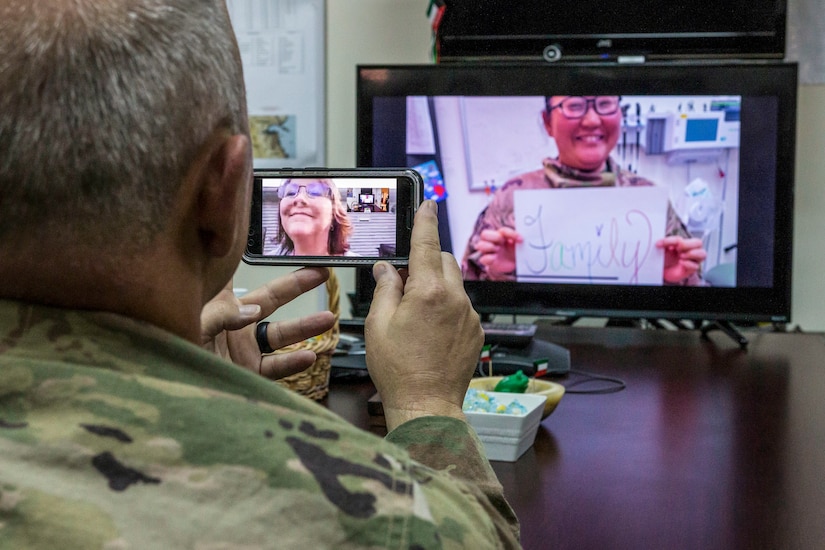
A soldier holds up a phone that has his wife on screen, while looking at a person on another screen who holds a sign that says "Family"

The Military OneSource program has always provided non-medical counseling, Kelley said, for such issues related to military life that are under the threshold of what would be needed for a mental health diagnosis. Included in issues covered there, Kelley said, are relationships, anger, communications issues, grief and loss, for instance. The non-medical counseling provided through Military OneSource can be provided face-to-face, she said, but more often it's provided via telephone or video.

The related Military and Family Life Counseling Program, on the other hand, has always been face-to-face. That is, Kelley said, until COVID-19 closed down so many resources.

"What happened during COVID-19 was [that] a demand signal immediately went up from our military community, service members and families around the globe," Kelley said. "[They said] ... we don't want to lose the capability of the counseling support provided by the Military and Family Life Counseling Program. So the program quickly transitioned in a matter of days to provide telehealth support ... so that same counselor that you knew from your child's school, you were then able to connect with via video."
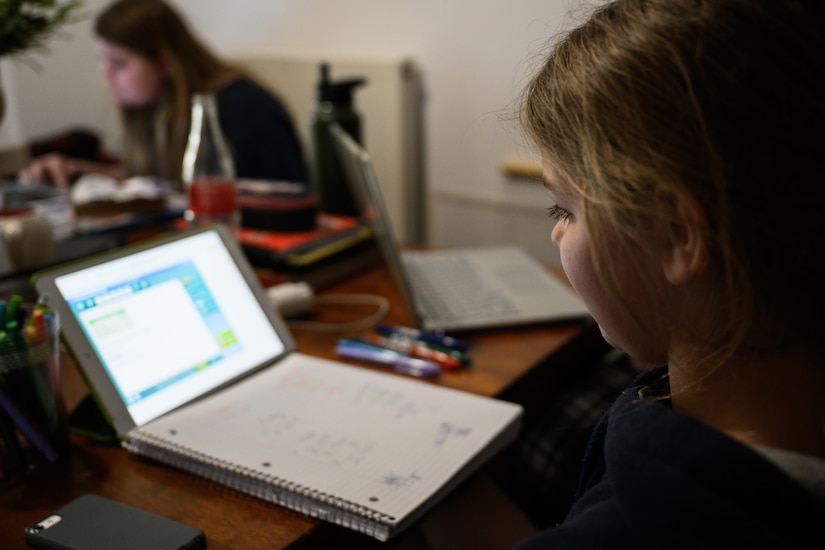
A young girl sits at a kitchen table and looks at a laptop computer screen.  In the background, a young woman also looks at a computer screen.

Kelley said a commonality between both counseling programs is that the most frequent topic for personnel seeking assistance from both services is relationship issues.

"That's the top issue people seek non-medical counseling through our programs for: relationship support," she said.

As a result, Kelley said, Military Community Support Programs has created a new program to focus specifically on highlighting the issue.
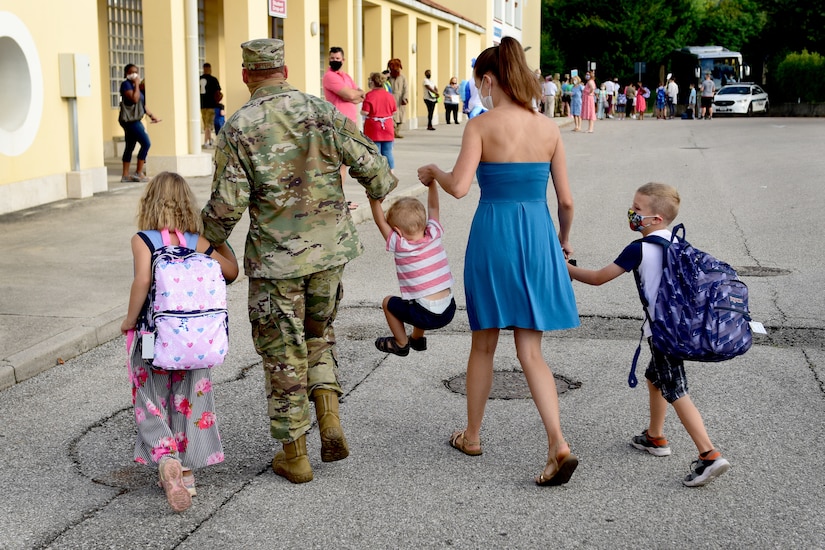
Three children and their parents hold hands as they walk together.

"We've been focused on a public-facing relationship campaign to help pull back the curtain on what relationship support looks like for couples in the military," she said. "And we're looking internally at how we provide that relationship support to determine how we can do it in the most effective manner possible."

No Rise in Domestic Abuse

While there have been some reports in the civilian community of a rise in reports of domestic abuse during COVID-19, the same hasn't happened in the military community, defense leaders said.

"Certainly, we see the news and we know that in the civilian community there are increases in the number of reports," said Carolyn Stevens, the director of the Office of Military Family Readiness Policy. "We are not currently seeing that within our military services. In fact, the number of reports now are very similar to the reports a year ago this time."
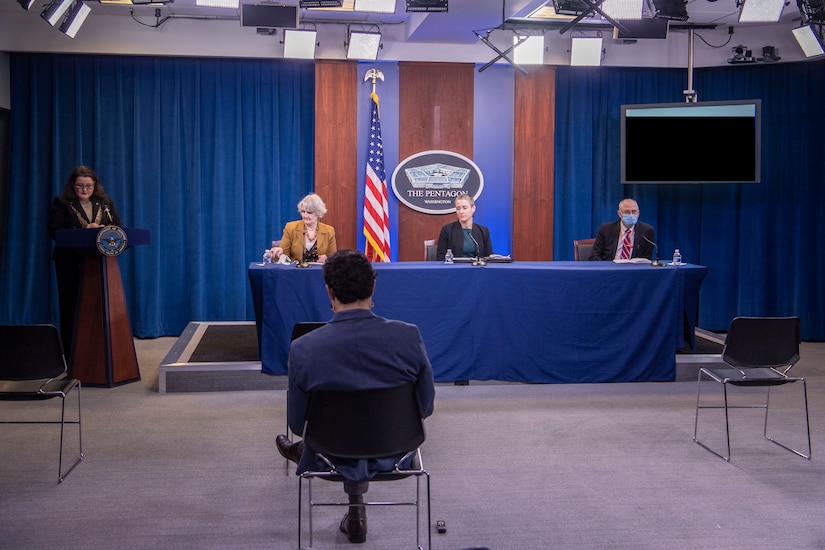
Three people sit at a long table. A woman stands at a lectern. In the foreground, a man sits in a chair, facing them.

Nevertheless, she said, because there have been reports of such an increase in civilian communities, the department needs to keep an eye on the issue.

"We are concerned ... and this is an issue that we do need to maintain watch [on]," she said.

Military Mission


Soldiers exit an M2 Bradley Fighting Vehicle to head to a meeting with town elders while supporting Operation Inherent Resolve in Syria, Oct. 25, 2020.

Nasopharyngeal Swab


Army Spc. Chris Rodriguez, with the 996th Area Support Medical Company, and Army Spc. Nicholas Martinelli, with the 2nd, 285th Aviation Battalion, conducts training for medical personnel at a local Scottsdale, Ariz. nursing home that will soon facilitate a COVID-19 point-of-care testing system to nursing home residents and visitors, Oct. 27, 2020. The Arizona National Guard has activated more than 800 Arizona citizen soldiers and airmen to support community needs during this emergency response.

Community Service


Arizona National Guard service members prepare boxes of groceries for delivery to area residents at a food bank in Stanfield, Ariz., Oct. 28, 2020. Arizona citizen soldiers and airmen continue to support community needs during this state of emergency response.

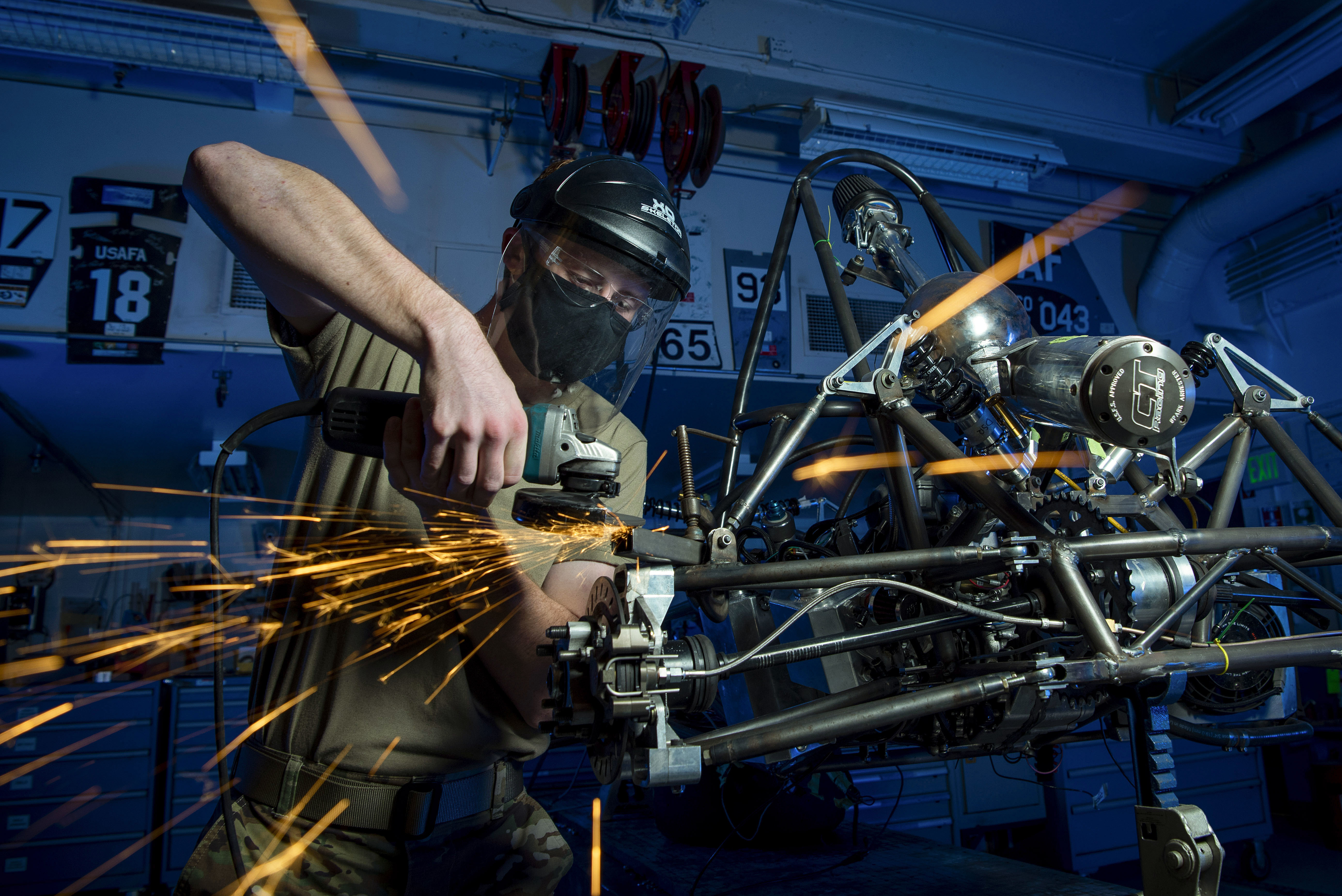
Sparks Fly


Air Force Cadet 1st Class Joseph Way uses an angle grinder on a race car at the U.S. Air Force Academy in Colorado Springs, Colo., Oct. 27, 2020.

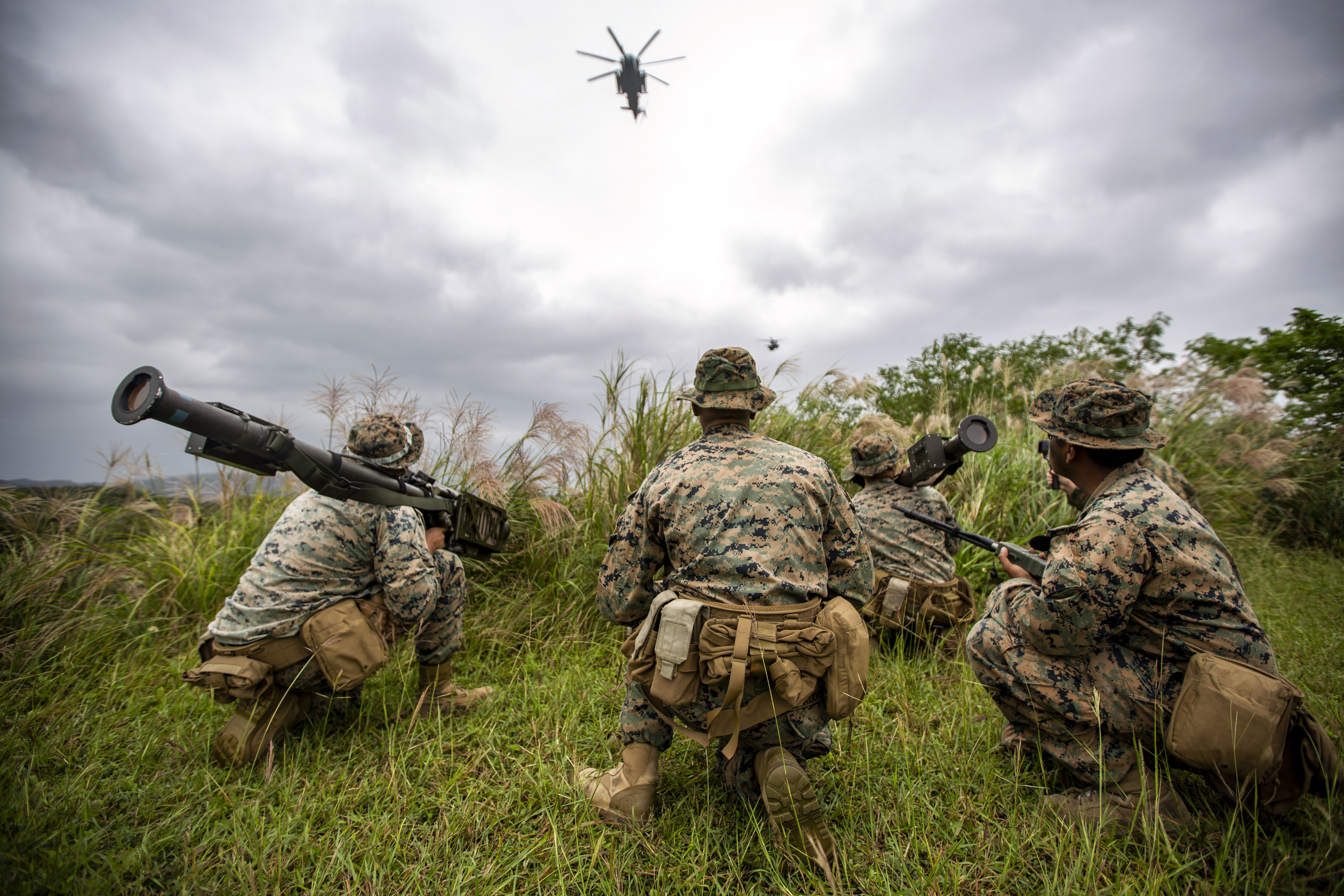
Helicopter Watch


Marines track CH-53E Super Stallion helicopters using a Tracking Head Trainer, a weapon system used for training, in Okinawa, Japan, Oct. 23, 2020.

Response Ready


Sailors respond to a simulated casualty during training aboard the USS Gerald R. Ford in Norfolk, Va., Oct. 26, 2020.

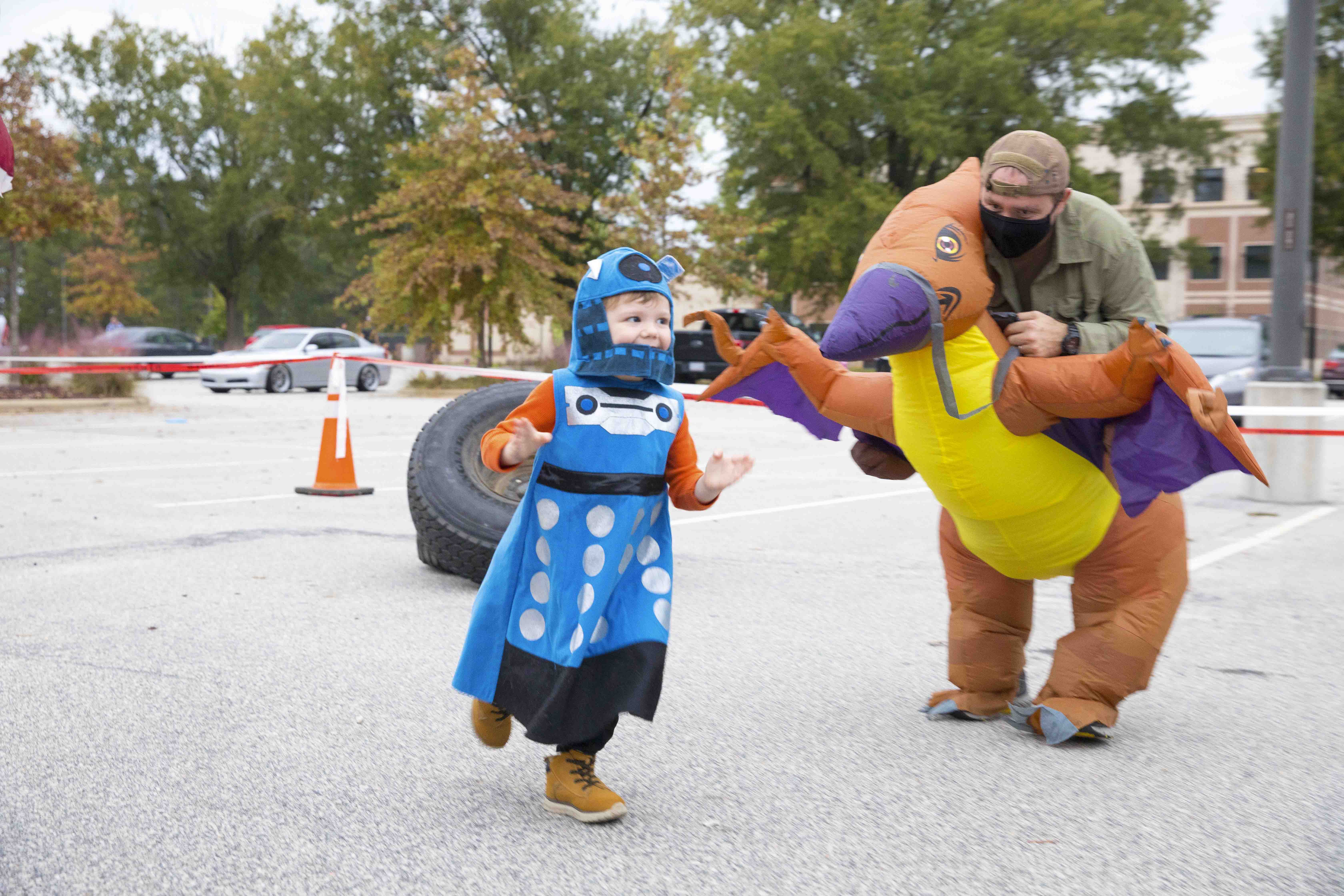
Haunted Halloween


A military child participates in a Halloween event at Fort Bragg, N.C., Oct. 28, 2020.

Wednesday, October 28, 2020

Dolly Repairs


Sailors perform maintenance on a spotting dolly aboard the aircraft carrier USS Nimitz during security operations in the Persian Gulf, Oct. 27, 2020.

Food Distribution


Connecticut Army National Guardsman Staff Sgt. Samantha Sheehan loads a box of groceries for a family at a drive-thru food distribution point for the Farmers to Families Program in New Haven, Conn., Oct. 27, 2020.

Chairman Honors WWII Army Nurse, Others

Oct. 28, 2020 | BY David Vergun , DOD News

Medics, corpsmen, pararescuemen, doctors, nurses and other military medical personnel were honored at a ceremony yesterday.

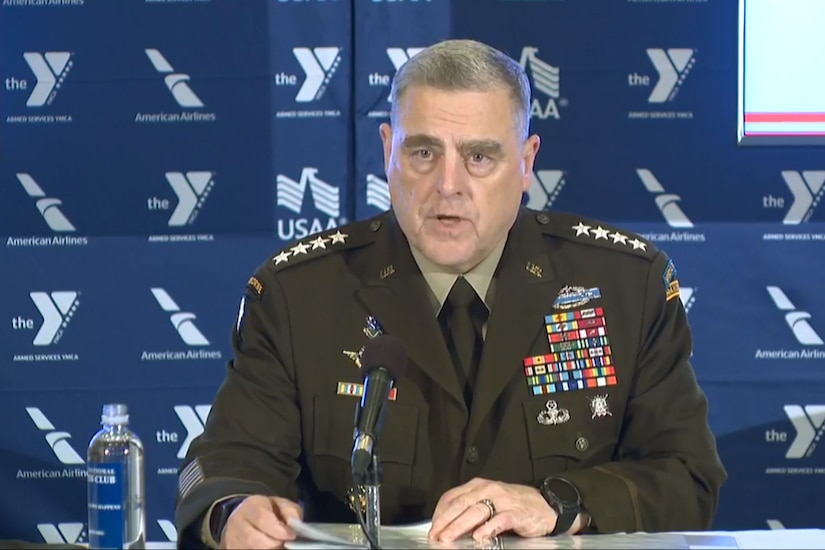
Chairman of the Joint Chiefs of Staff Army Gen. Mark A. Milley spoke at the Armed Services YMCA's 14th annual Angels of the Battlefield Awards ceremony in Washington, D.C.

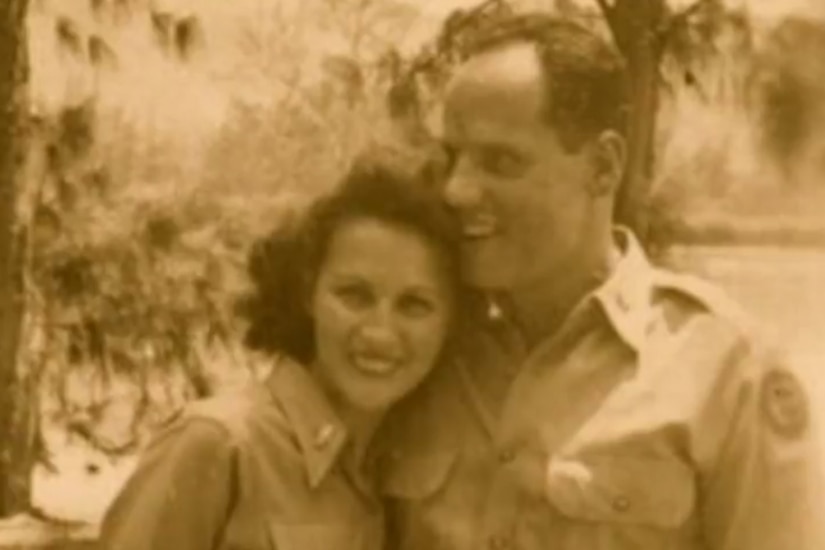
A couple poses for a photo.

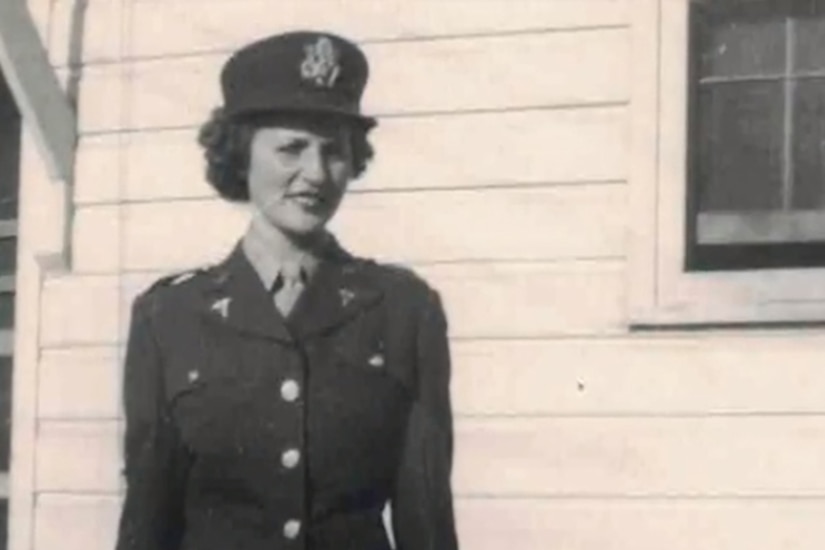
Former Army 2nd Lt. Regina Benson, a member of the Army Nurse Corps during World War II, was one of those honored at the ceremony. She's the oldest military nurse at age 100.

Benson worked countless hours in Army hospitals in the Pacific Theater from 1944 to 1946, including the Battle of Okinawa and the occupation of Japan following the end of the war, Milley said.

"She knows that her most significant act of mercy was simply, in her words, 'to hold the hand of the young soldier, sailor, airman or Marine who's about to pass so they would not die alone.'"

The chairman mentioned that "war is a terrible thing. But it's people like Regina Benson [and others] who bring a bit of humanity to an otherwise brutal, bloody battlefield."

A woman wearing a military uniform poses for a photo.

Milley then presented the Angel of Honor Award to Benson.

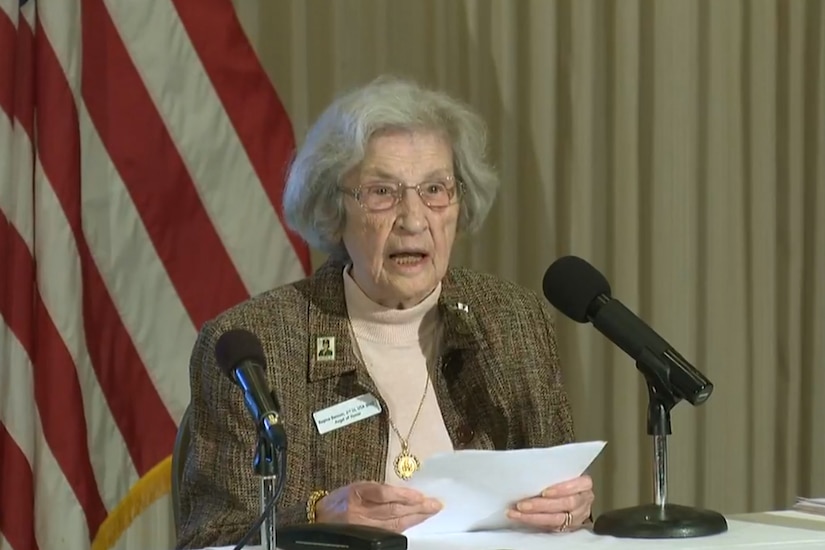
"I was delighted and jumping for joy when the war was over and I could go back home and get married and go to work as a nurse," Benson said after accepting the award.

"I'm proud that I was part of World War II serving our country and ensuring the freedom we have today," she said. "It saddens me to think of how many lives were lost. But I made sure my patients never died alone. I was always there with them so that I could tell their mothers that they did not die alone.
"I accept this award not for myself but on behalf of all the medical personnel who served in World War II," she said. "None of us deserved medals. We just did what millions of Americans did. We worked together, fought together and served together for our nation and for our freedom. It was a unique time of American unity and spirit that sadly may never be equaled again."
A woman speaks into a microphone.

Milley also recounted the history of heroic actions by many other medical personnel on the battlefields of this nation's wars.

Retired Army Staff Sgt. Ronald J. Shurer II died a few hours before yesterday's ceremony. Milley mentioned that Shurer, a Special Forces medic, earned the Medal of Honor for his heroic actions to save the lives of at least seven soldiers, despite being wounded and under intense enemy fire, during the Battle of Shok Valley, April 6, 2008, in Afghanistan's Nuristan province.

"He's an incredible recent example of an angel of the battlefield," Milley added.

An officer in a uniform speaks at a virtual ceremony.

The chairman said both of his parents served during World War II; his mother in a Navy hospital in Seattle, Washington, treating the wounded coming back from the Pacific Theater. His father was a Navy corpsman with the 4th Marine Division on Kwajalein, Saipan, Tinian and Iwo Jima, "saving many lives during some of the bloodiest battles in American history."

Milley also mentioned that his wife Hollyanne has been a nurse for 35 years. "She spent countless hours comforting the wounded and has grieved with the families of our fallen. She proudly represents the faithful service and sacrifice of all of our family members who are heroes in their own right and a core strength of our military's resolve and skill."

Evacuation Demo


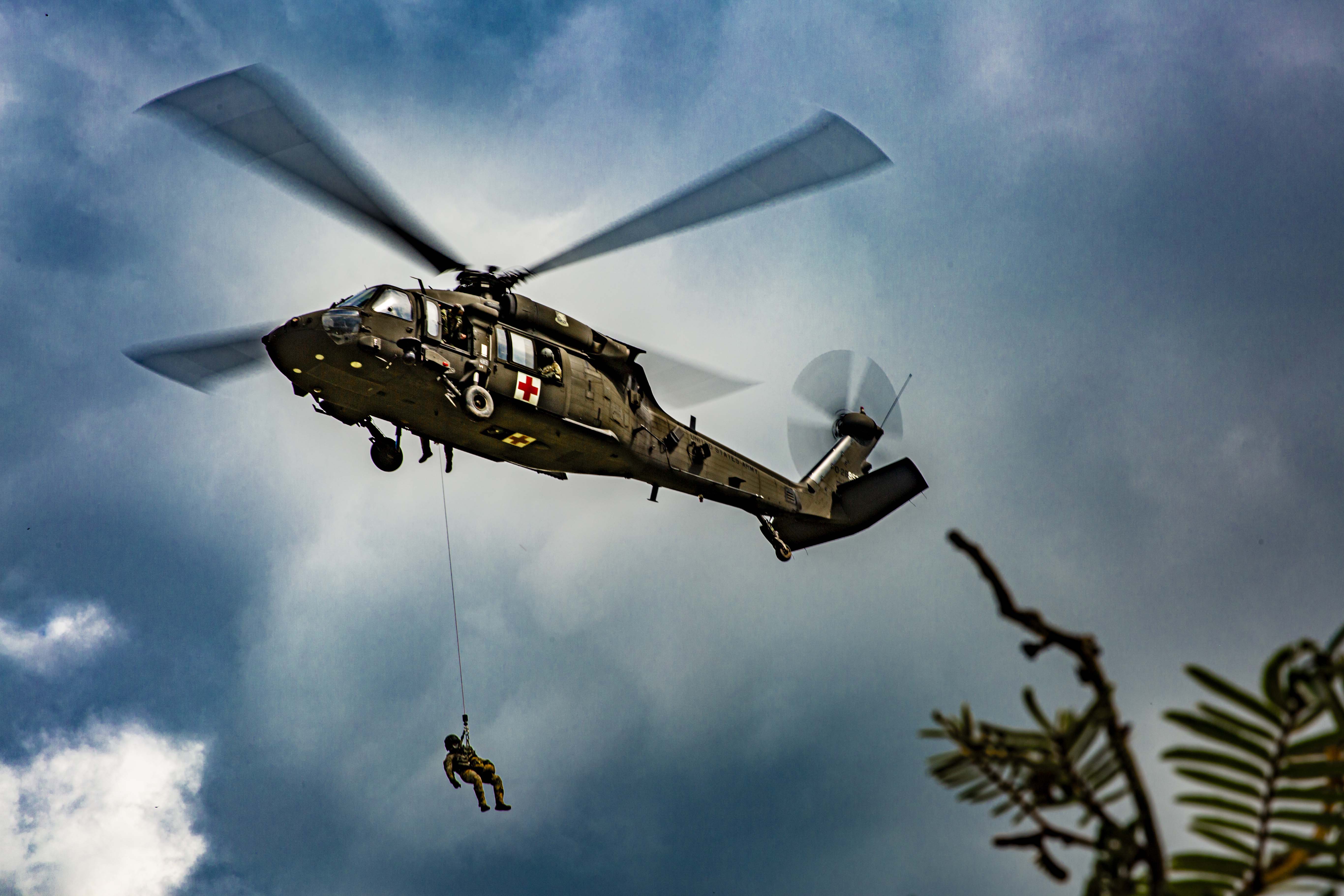
Soldiers demonstrate a medical evacuation during a joint exercise in Zambrano, Honduras, Oct. 22, 2020.

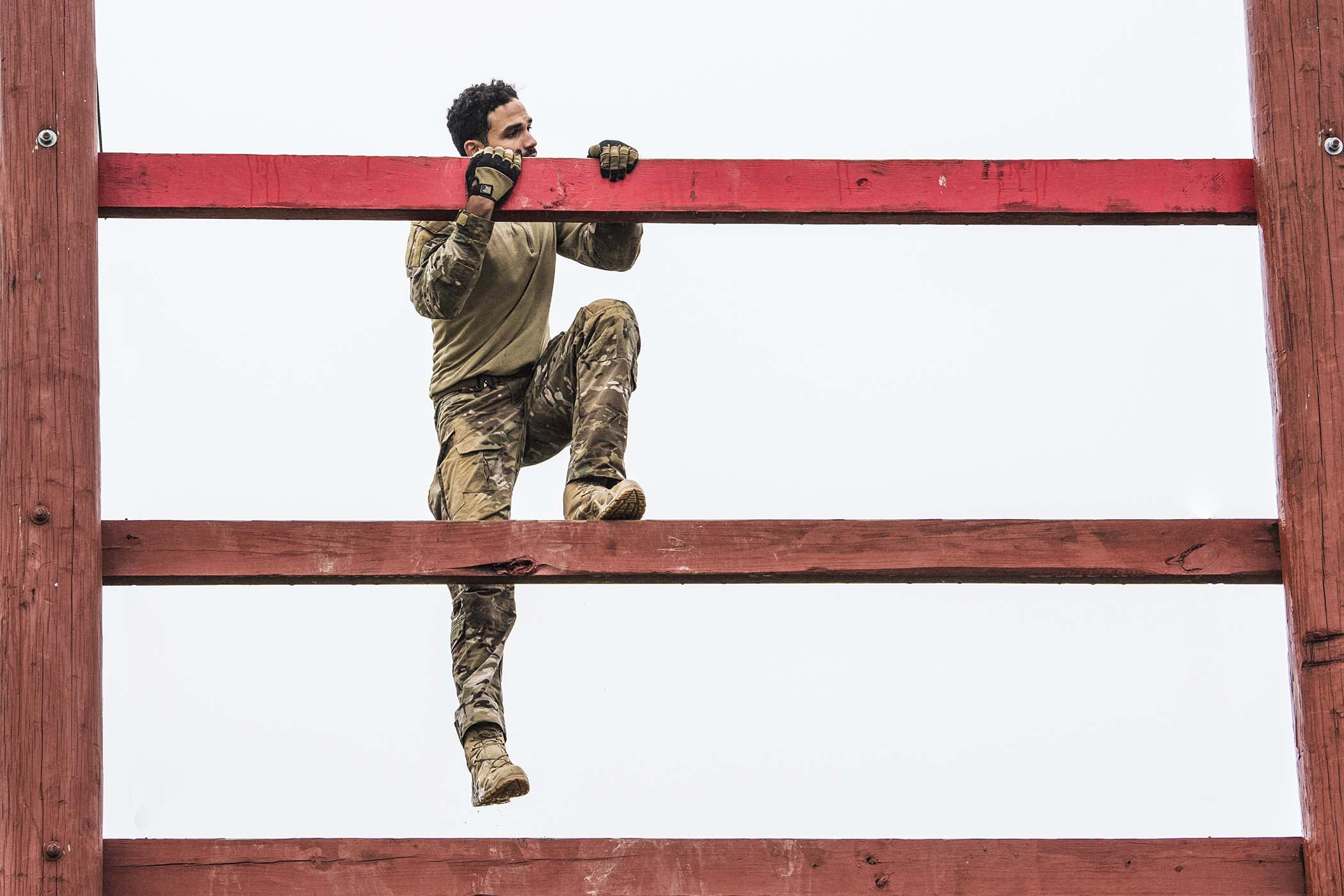
Lightning Challenge


An airman climbs down an obstacle course ladder during the 2020 Lightning Challenge at Fort Hood, Texas, Oct. 26, 2020.

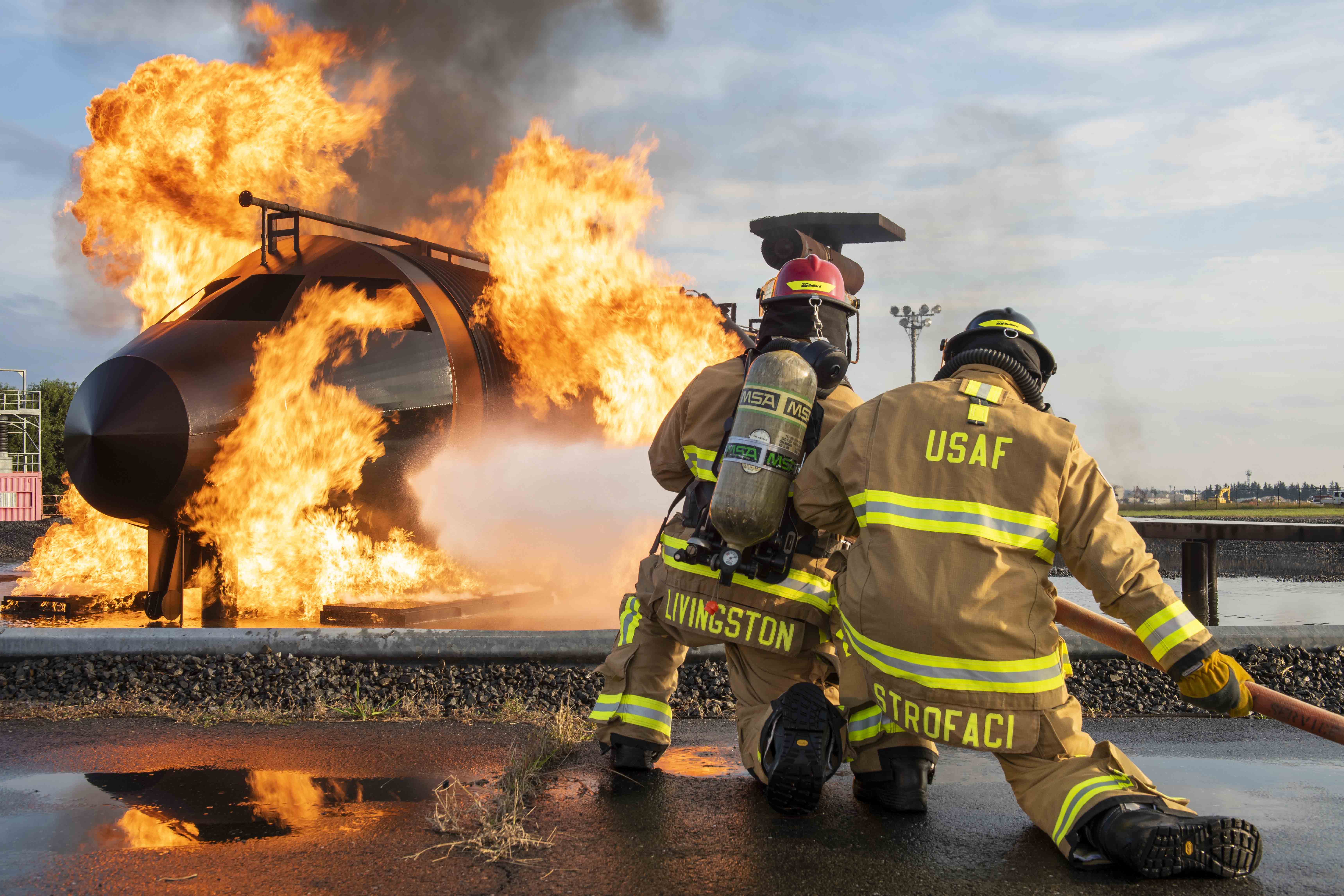
Fire Training


Air Force Staff Sgt. Dillon Livingston, left, and Senior Airman Jade Strofaci participate in live-fire training at Yokota Air Base, Japan, Oct. 27, 2020.

Salute Symmetry


Marines salute during a ceremony honoring Marine Corps hero Lt. Gen. Lewis B. “Chesty” Puller and his wife, Virginia Montague Evans, at their gravesites in Saluda, Va., Oct. 23, 2020. Marines visit the site annually to honor Puller, the most decorated Marine in history.

Happy Homecoming


An Air Force F-15E Strike Eagle aircrew member reunites with loved ones at Royal Air Force Lakenheath, England, Oct. 16, 2020, upon returning from a six-month deployment supporting U.S. Air Force Central Command

U.S., India Meeting Looks to Deepen Cooperation

 Oct. 28, 2020 | BY Jim Garamone , DOD News

The U.S. and India Two-plus-Two Conference among the defense and foreign affairs leaders of both nations has charted just how far cooperation between the two democracies has come, said a senior defense official speaking on background.

The meeting — held in New Delhi — was among Defense Secretary Dr. Mark T. Esper, Secretary of States Mike Pompeo, Minister of Foreign Affairs Dr. S. Jaishankar and Indian Defense Minister Rajnath Singh.

Four men sit outside at a table in front of U.S. and Indian flags.


"The two-plus-two this year was an opportunity to reflect on what we've done, assess the current situation where more work is needed and then identify key deliverables in 2021 to advance the relationship," said the official after the meeting. 

It was the third meeting at this level between the two nations.

Prior to the meeting — held at the Hyderabad House in New Delhi — Esper and Singh sat down to substantive discussions in the Indian Ministry of Defense. Esper and Pompeo also spoke with Prime Minister Narendra Modi.

The centerpiece meeting covered a number of areas in the defense relationship. In military-to-military cooperation, the men discussed how to "operationalize" the logistics agreement. They also talked about assigning liaison officers to both countries, in areas that would deepen cooperation.

The U.S. Central Command and U.S. Indo-Pacific Command were two areas in the U.S. military discussed. 

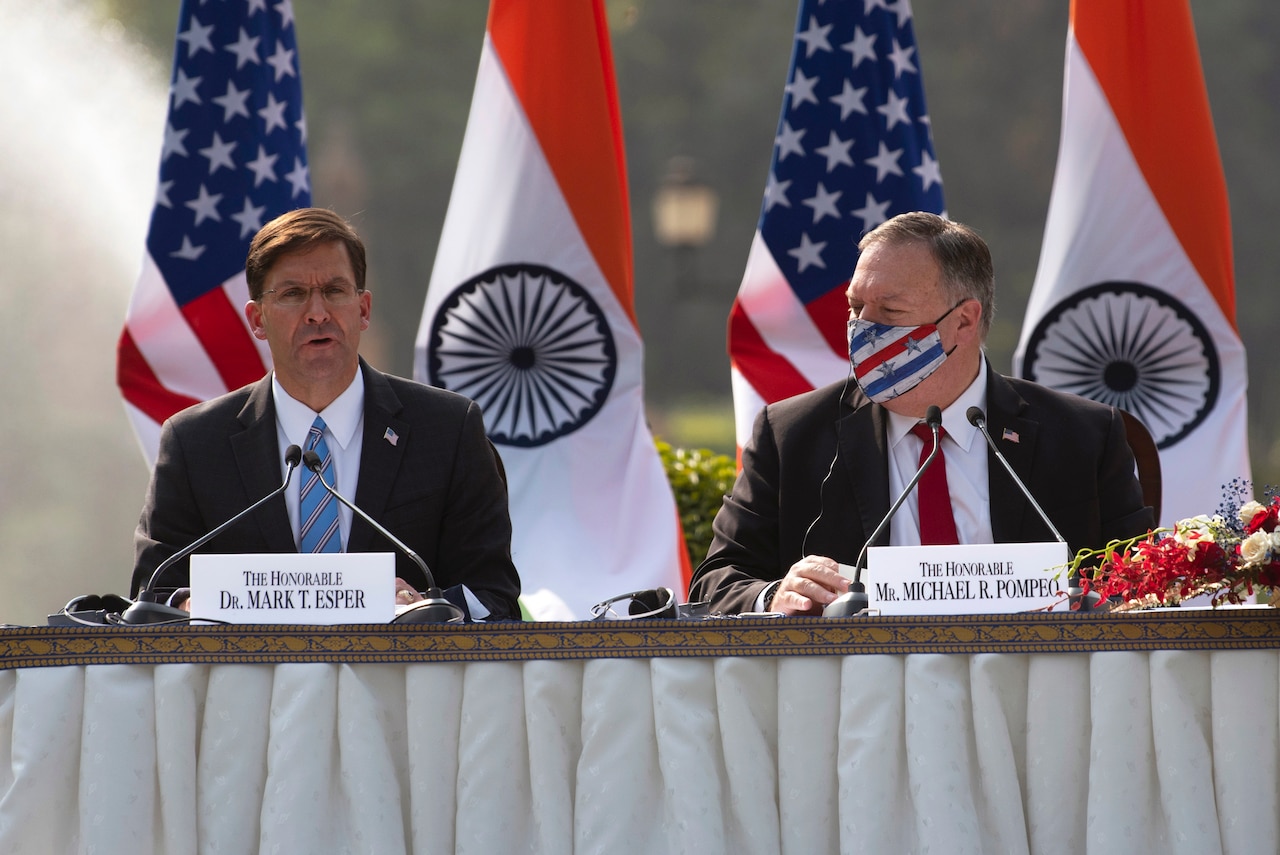
Defense Secretary Dr. Mark T. Esper sits and speaks at a table as Secretary of State Michael R. Pompeo looks on.

Another discussion point was information sharing and secure communications. "We spent a good bit of time talking about the Basic Exchange Cooperation Agreement, which was a key milestone today. It was signed today," the official said. "They also identified areas in 2021, where we'd like to further information sharing at the service level and at the joint level."

Secure communications was part of this discussion and both nations want to further the process and deepen the capability across services and at the leadership level. 

Another part of the discussion centered on new areas of cooperation both in the region and in the new military domains of cyber and space, the official said. 

The official was quick to say that although the relationship is deepening, it is not an alliance. "India has a policy of strategic autonomy, which we honor," he said. "That means they want to preserve their independence and how they manage their foreign policy."
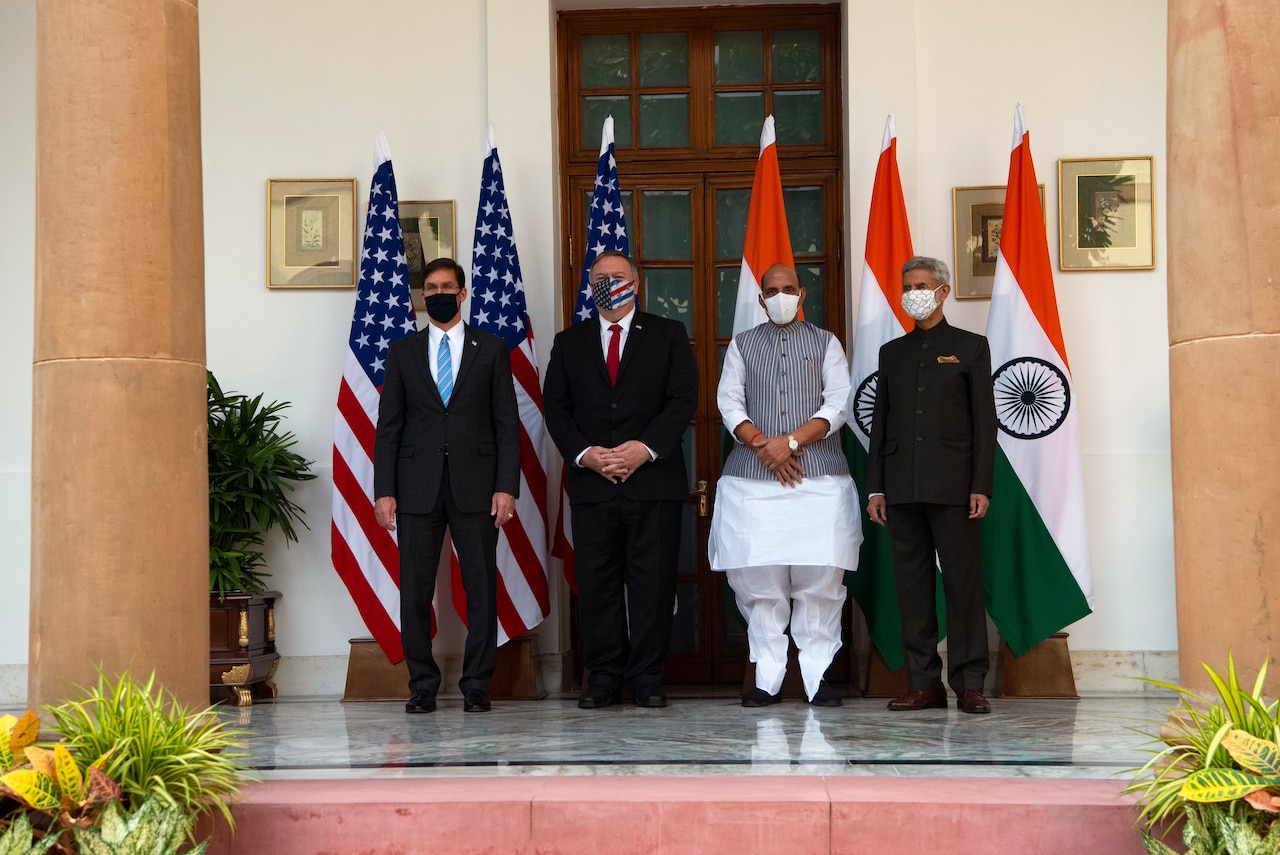
Four men wearing masks pose for a photo in front of the U.S. and Indian flags.

Still, India is part of a group called the Quad countries — India, Japan, Australia and the United States. There have been a number of meetings among defense officials from these nations, the most recent being in Tokyo earlier this year. "These meetings reflect a growing acknowledgment of shared interests," he said. They cover security, but they also cover economic and — in the time of COVID-19 – medical interests. 

"There is no discussion of [the Quad] becoming an alliance anytime in the near future," the official said. "It is really a … mechanism to organize lines of effort across … some of the largest players in the Indo-Pacific."

The United States will host the next two-plus-two meeting.

U.S. Needs Global Posture for Future Advantage

 Oct. 28, 2020 | BY Terri Moon Cronk , DOD News

The United States faces a future of multiple adversaries and near-peer competitors with all domains contested. The nation must ensure a solid global posture now, the commander of the U.S. Transportation Command said.

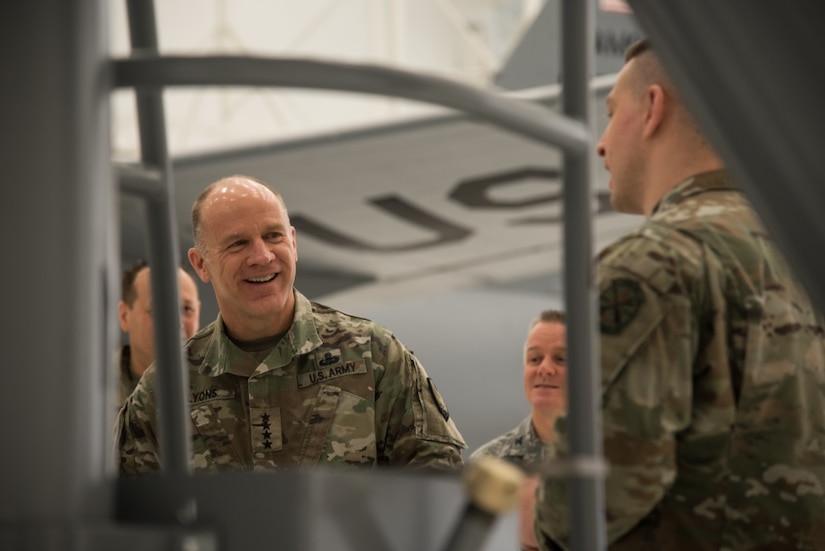
Army Gen. Stephen R. Lyons spoke at the Airlift/Tanker Association's virtual seminar series today and said such a posture must give the United States positional advantage, as well as physical, psychological and temporal advantage over our adversaries through rapid response.

An army general smiles. His face is framed by military equipment in the foreground. Other soldiers stand near the general.

"That is the essence of Transcom and Air Mobility Command," he said. "[We've also] got to think differently about the future [and] force design that will be informed by a concept or doctrine. The force of design and force to development are future forces [that] must be smaller, lethal and all-domain capable."
The five warfighting domains comprise cyber, space, air, ground and sea.

Lyons noted the United States must move away from the paradigm of moving the entire city of St. Louis from the continental United States to a location overseas and spending the time building combat power to attack. "We must be more sophisticated in our all-domain warfare," he added. 

The nation must integrate the sustainment of a joint warfighting function across all of our fighting functions, he said, all the way up to the strategic and operational level.

Service members stand near a bus and a military vehicle. It is dark outside.

Following his emphasis on the structures that must change, the general turned to what he believes will not change.

"[While] the future is certainly unknown, unknowable and ever-changing, I would say Transcom's purpose will always be enduring. Our ability to project the Joint Force global distances at our time and place of choosing presents multiple options for leadership."

In addition, Lyons said, our warfighting framework remains constant. 

The idea of a global posture for building capacity operates within that posture. Command and control nodes that allow us to allocate scarce resources to the highest of the defense secretary's priorities is a sound framework of which we can continue to innovate within the framework, he said. 
That applies whether it is with rocket cargo or any number of initiatives in artificial intelligence or machine learning, as we continue to evolve and become better in our decision making and our ability to protect and sustain the force, Lyons added. 
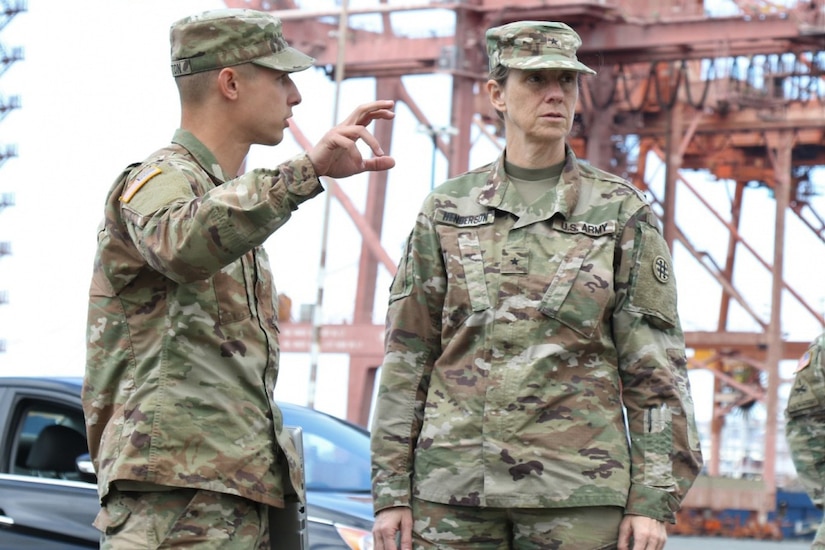
Two soldiers stand in front of a black car. One, a high-ranking officer, is looking away from the other as he gestures to something in the distance.
Another aspect that's not changing is people, the commander said. "People are, and have always been, our number one key competitive advantage [that] we will always need as all adaptive leaders of character, [who are] willing to step forward in a crisis and protect this great American experiment in democracy."

But every one of us who wears the military cloth has a common bond, Lyons said. "We understand teamwork, hard work and higher purpose. We understand that the characterization of success is not about us. It's not about how much we make. It's about the team. It's about serving a greater purpose."

It's really the value of our great joint force, he said, adding it's no surprise why, in poll after poll, the military profession is held in such high regard. 

"We will always embrace our service values. We always demonstrate service before self and never break the trust with the American public," Lyons said.

Awaiting Sunrise


A Marine awaits sunrise in a simulated enemy advance guard position during training at Marine Corps Air Ground Combat Center Twentynine Palms, Calif., Oct. 22, 2020.

School Work


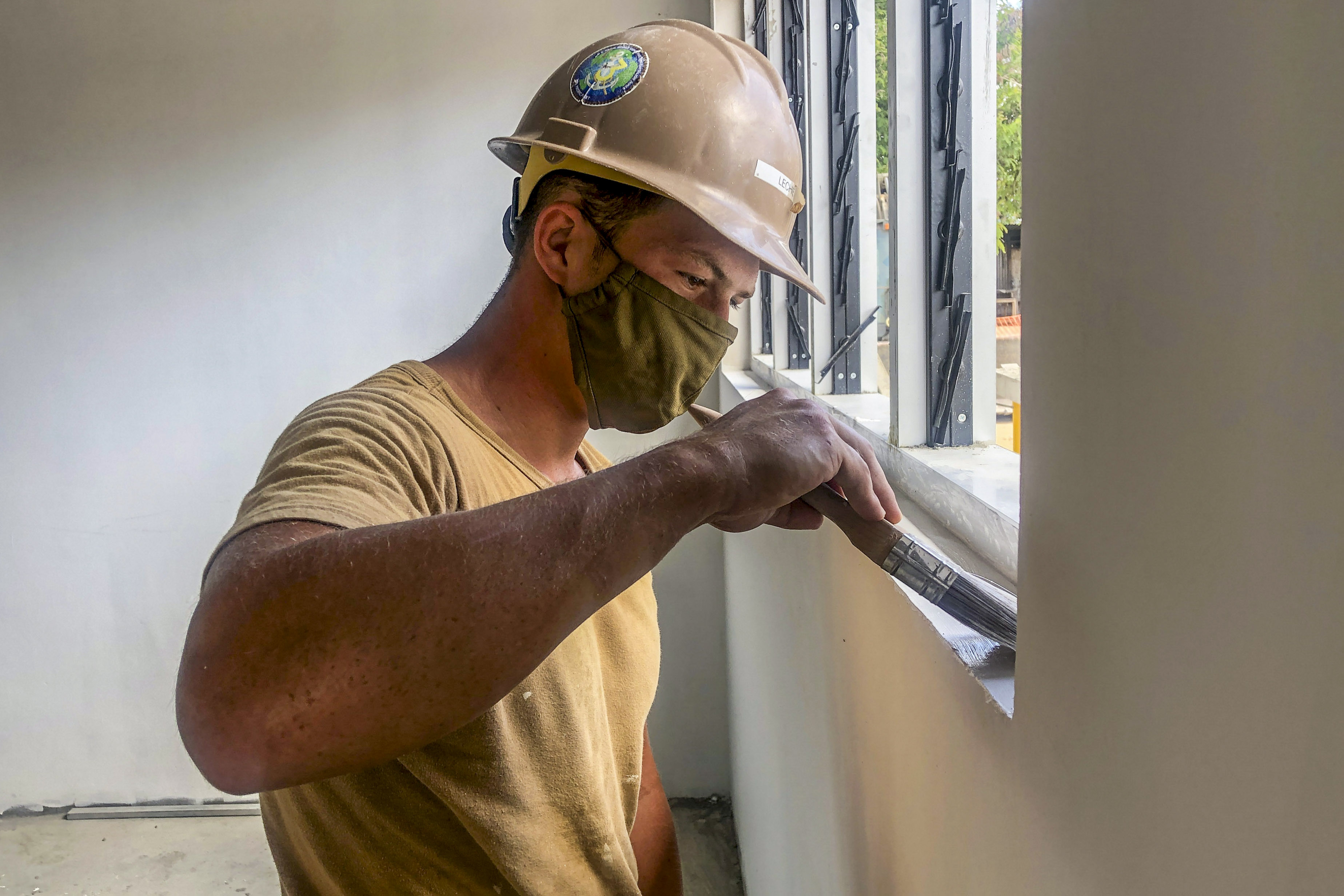
Navy Seaman Colby Leche helps paint the Vila Nova three-room schoolhouse in Baucau, East Timor, Oct. 23, 2020.


Sailors Conduct COVID-19 Specimen Collection for Deploying Submariners

 Oct. 28, 2020 | BY Naval Medical Forces Atlantic

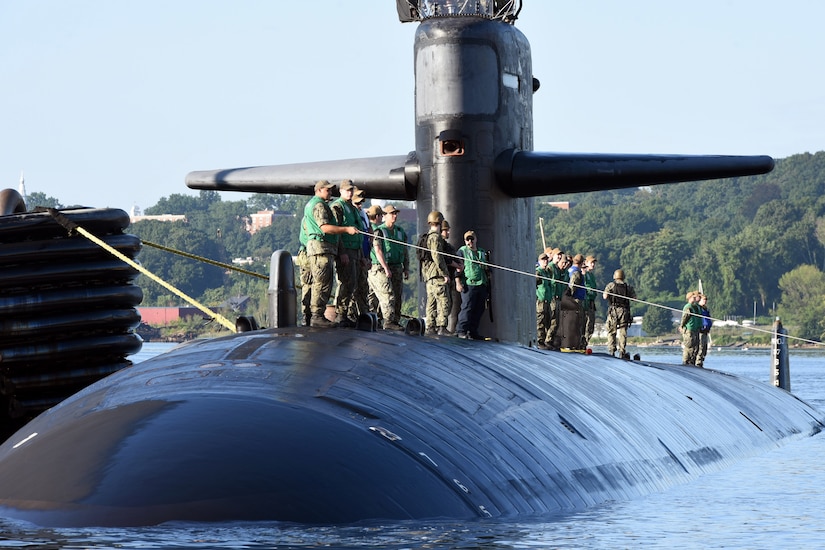
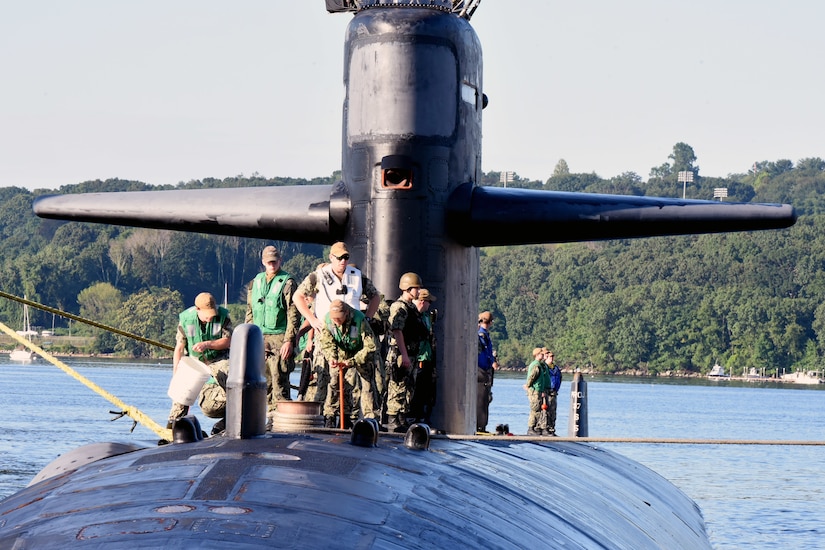
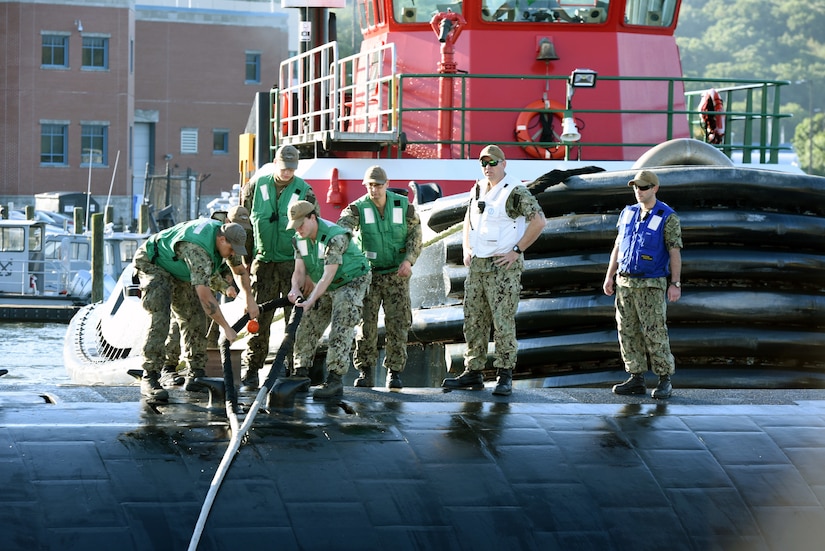
A team of 14 sailors from Navy Medicine Readiness and Training Unit Groton in Newport, Rhode Island, conducted a pilot program to collect COVID-19 specimen samples for 165 sailors preparing to deploy from Naval Submarine Base New London, Connecticut. 

Sailors stand on top of a submarine while two of them hold a looped line.

An NMRTU official said, the unique conditions on a submarine, including close quarters, limited medical resources and the absence of external aid necessitates thorough testing in advance to ensure the highest quality of force health underway. While each vessel has an independent duty corpsman to provide healthcare for its crew, an IDC does not have the resources to handle a task of this caliber alone. The infrastructure and support of NMRTU Groton, therefore, proved essential to the submarine force's operational readiness.

Corpsmen protected in full personal protective equipment met sailors lined up at the testing site entrance to conduct pre-screening. After answering a symptoms and travel questionnaire and completing temperature checks, sailors were cleared for entry and directed to their designated sampling station. Subsequent tests were conducted pier side. 

The close coordination resulted in all 165 sailors being tested for COVID-19 in a timely and efficient manner, helping to ensure mission capability of the unit while minimizing safety hazards to the crew and testers, an official with the NMRTU said. Support and direct partnership with Naval Submarine Base New London were critical to ensuring all issues and logistical concerns were quickly identified and resolved. Following the testing, the corpsmen and operational leadership were able to apply lessons learned to execute a second round of tests in a third of the time with the same operational readiness outcome. 

This rapid-cycle feedback and course correction is a prime example of how Navy Medicine uses high reliability concepts to enhance its performance and keep warfighters in the fight, the official NMRTU noted.

Sailors stand on top of a submarine while one of them holds a line and another holds a bucket.

Navy Medicine Readiness and Training Command New England supports a variety of naval medical platforms in addition to providing expert medical care at Naval Health Clinic New England, which is the health care system for the Navy in the Northeast Region, providing primary and specialty care services to more than 70,000 beneficiaries.

Tuesday, October 27, 2020

Keen Sword


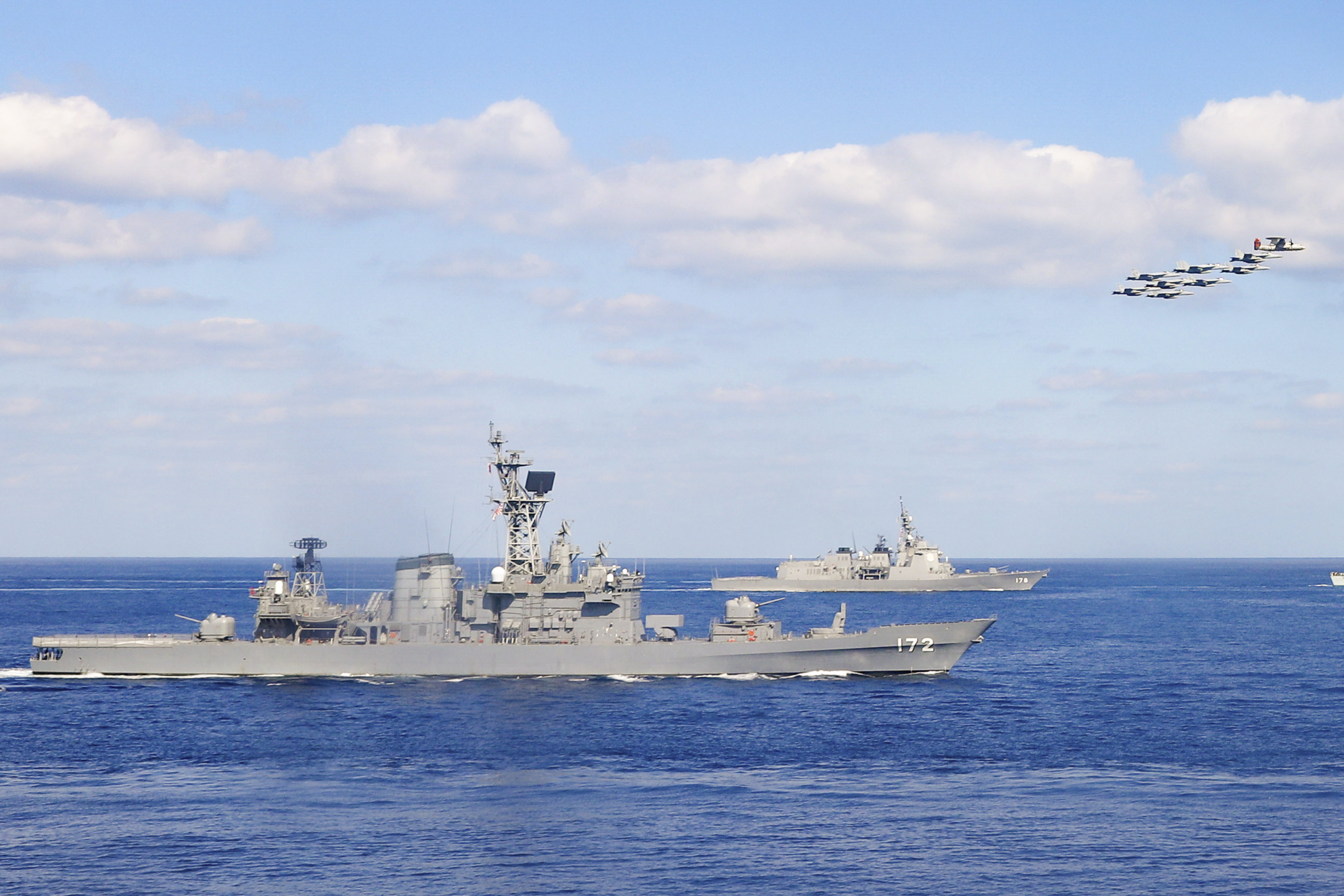
U.S. Navy, U.S. Marine Corps, Japan Maritime Self-Defense Force and Japan Air Self-Defense Force aircraft fly in formation above Japanese and Canadian vessels during Keen Sword in the Philippine Sea, Oct. 26, 2020. The exercise is conducted with joint and bilateral partners to enhance long-range interception capabilities.

Viper View


Airmen sit inside an F-16 Viper during an event with leaders at Shaw Air Force Base, S.C., Oct. 22, 2020.

Desert Drama


Marines participate in a regimental air assault course during training at Marine Corps Air Ground Combat Center Twentynine Palms, Calif., Oct. 23, 2020.

Site Prep


Soldiers set up a training site in Aomori, Japan, Oct. 26, 2020, during Keen Sword/Orient Shield, an exercise with joint and bilateral partners to enhance long-range interception capabilities.

Catapult Crew


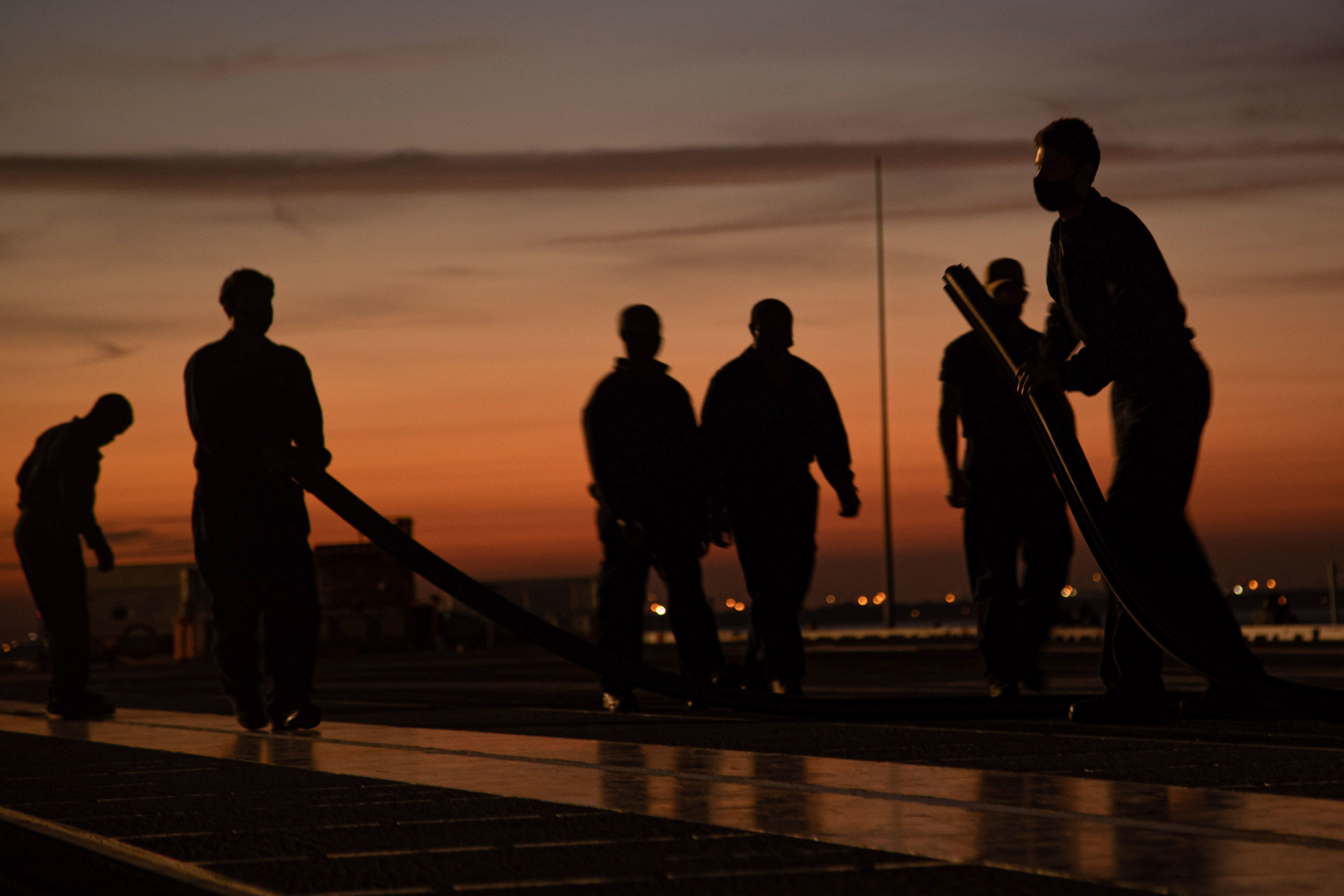
Sailors secure a catapult aboard the USS Gerald R. Ford at the Naval Station Norfolk, Va., Oct. 22, 2020.

Orange Ops


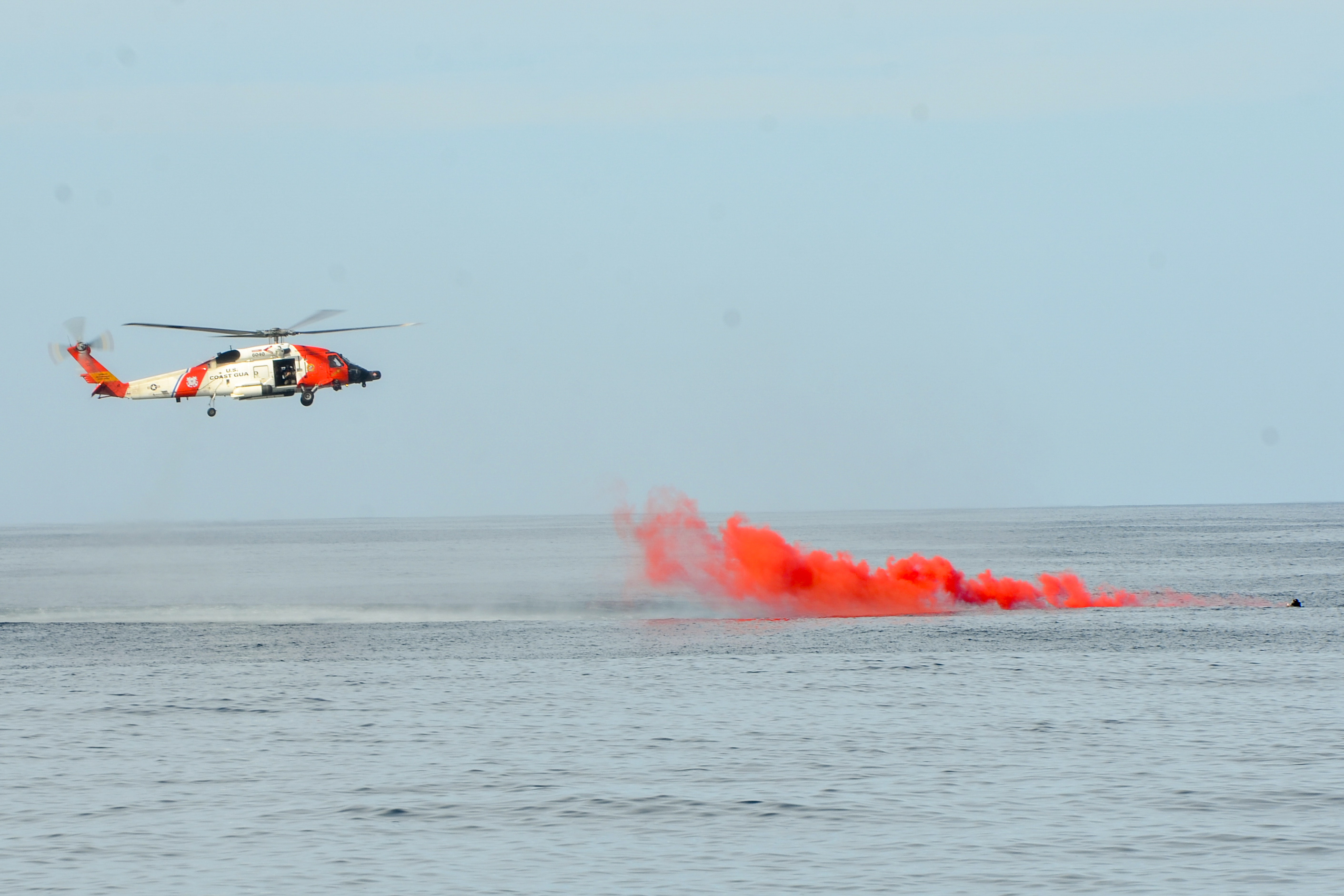
A Coast Guard MH-60T Jayhawk pilot flies near an MK-124 smoke and illumination signal during a joint Coast Guard, Navy and Air Force search and rescue exercise near Virginia Beach, Va., Oct. 22, 2020.

Esper Praises Results of U.S., Indian Meeting

Oct. 27, 2020 | BY Jim Garamone , DOD News

U.S. and Indian leaders made more progress today on building what Defense Secretary Dr. Mark T. Esper called "one of the most consequential relationships for the United States in this century."

Secretary of State Michael R. Pompeo, Indian Minister of External Affairs Dr. S. Jaishankar, and Indian Defense Minister Rajnath Singh joined Esper for the so-called "two-plus-two" meeting in New Delhi. 

The meeting — held in the beautiful Edwin Lutyens-designed Hyderabad House — was a chance for the two nations to check the progress of previous agreements. It also was a chance for the leaders to continue to build the defense relationship across a range of areas. These areas include regional security cooperation, defense information sharing and defense sales, the secretary said.

"As the world confronts a global pandemic and growing security challenges, the United States-India partnership is more important than ever to ensure security, stability and prosperity to the region and the world," Esper said at the conclusion of the talks.

It has only been 15 years since the first U.S.-India defense framework agreement. The defense ties are a pillar for the overall relationship between the United States and India. 

Based on our shared values and common interests, we stand shoulder-to-shoulder in support of a free and open Indo-Pacific for all...''
Defense Secretary Dr. Mark T. Esper

Esper called the signing of the Basic Exchange and Cooperation Agreement important as it is the last of the foundational defense agreements between the two countries. "This enables greater geospatial information sharing between our two armed forces," he said.

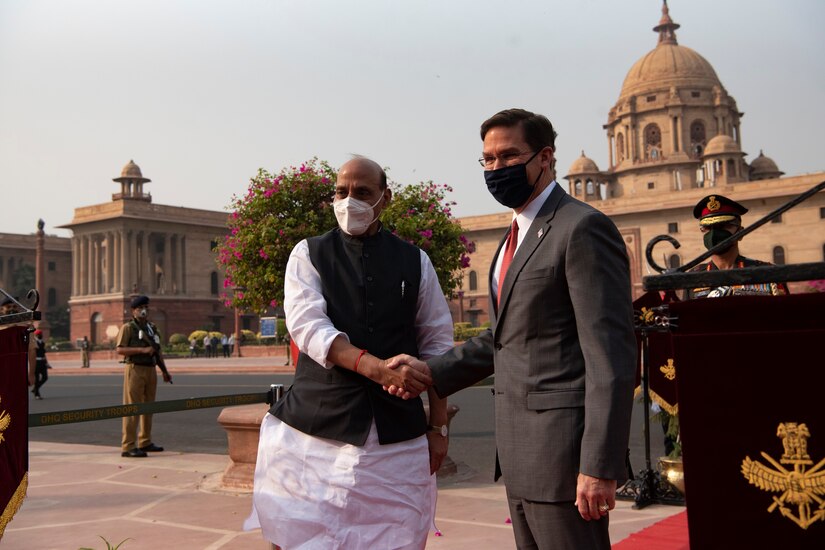
Defense Secretary Dr. Mark T. Esper shakes hands with Indian Defense Minister Rajnath Singh.

"Based on our shared values and common interests, we stand shoulder-to-shoulder in support of a free and open Indo-Pacific for all, particularly in light of increased aggression and destabilizing activities by China," the secretary said.

China confronted India over the summer along its disputed border. Twenty Indian soldiers were killed.

Esper and Pompeo also visited with Indian Prime Minister Narendra Modi. The men discussed the COVID-19 response and security and defense cooperation.

The two-plus-two meeting reaffirmed America's commitment to a comprehensive and forward-looking defense partnership with India. The men discussed concrete ways to expand regional security cooperation, military-to-military interactions and defense trade relationships 

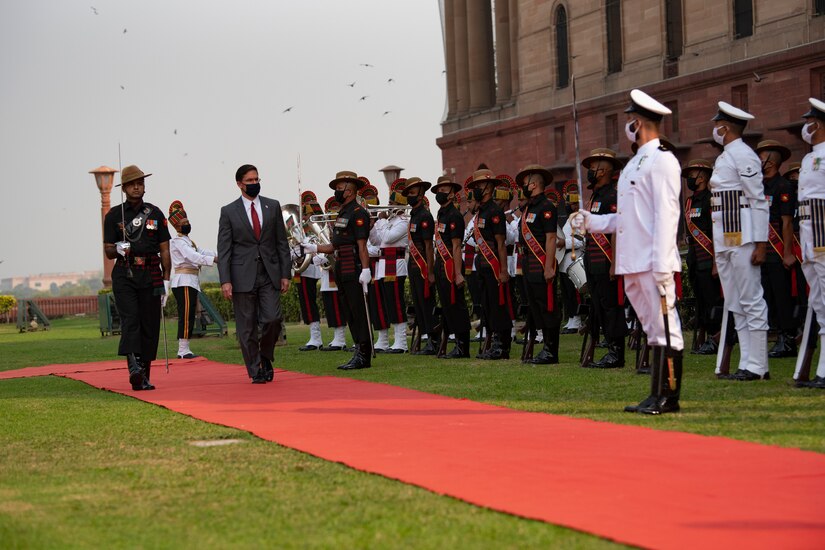
Two men walk on a red carpet in front of troops.

Helping in the region includes bilateral defense cooperation in the Indian Ocean region, Southeast Asia and the broader Indo-Pacific. One example of this cooperation was the combined exercise by the Indian navy and the USS Nimitz carrier strike group in July. The two nations have also exchanged military liaisons to strengthen coordination and ties between military staffs. 

The two nations are also working toward establishing new cyber and space dialogues to increase cooperation in domains where both countries face emerging threats, Esper said.

The four men also discussed engagement with like-minded nations, like Japan and Australia, to advance maritime security, humanitarian aid, disaster relief and other common interests across the region.

Esper praised India's recent decision to include Australia in the upcoming Malabar naval exercise among Indian, American and Japanese forces. He said it reflects the acknowledgment of the importance of working multilaterally to address global challenges.

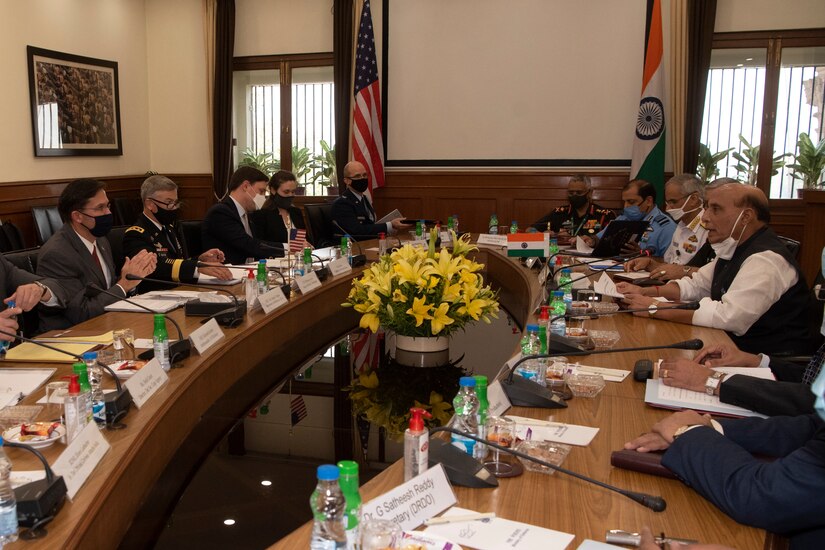
Defense Secretary Dr. Mark T. Esper meets with Indian officials around a large table.

He said he would like to see this grow. "We have a lot of existing exercises right now," the secretary said earlier in his trip. "We would like to multilateralize more things."

The engagement between the Indian and U.S. militaries is strong and moving in the right direction, he said. Earlier in the trip, Esper said the navy-to-navy cooperation is fairly strong. We are looking to build more army-to-army and air force-to-air force opportunities," he said.

U.S. and Indian defense trade and technology cooperation continues to grow. Esper noted that India acquired Apache and Seahawk helicopters earlier this year. "We look forward to advancing sales for other key defense platforms including fighter aircraft and unmanned aerial systems," he said.

Pharmacy Service


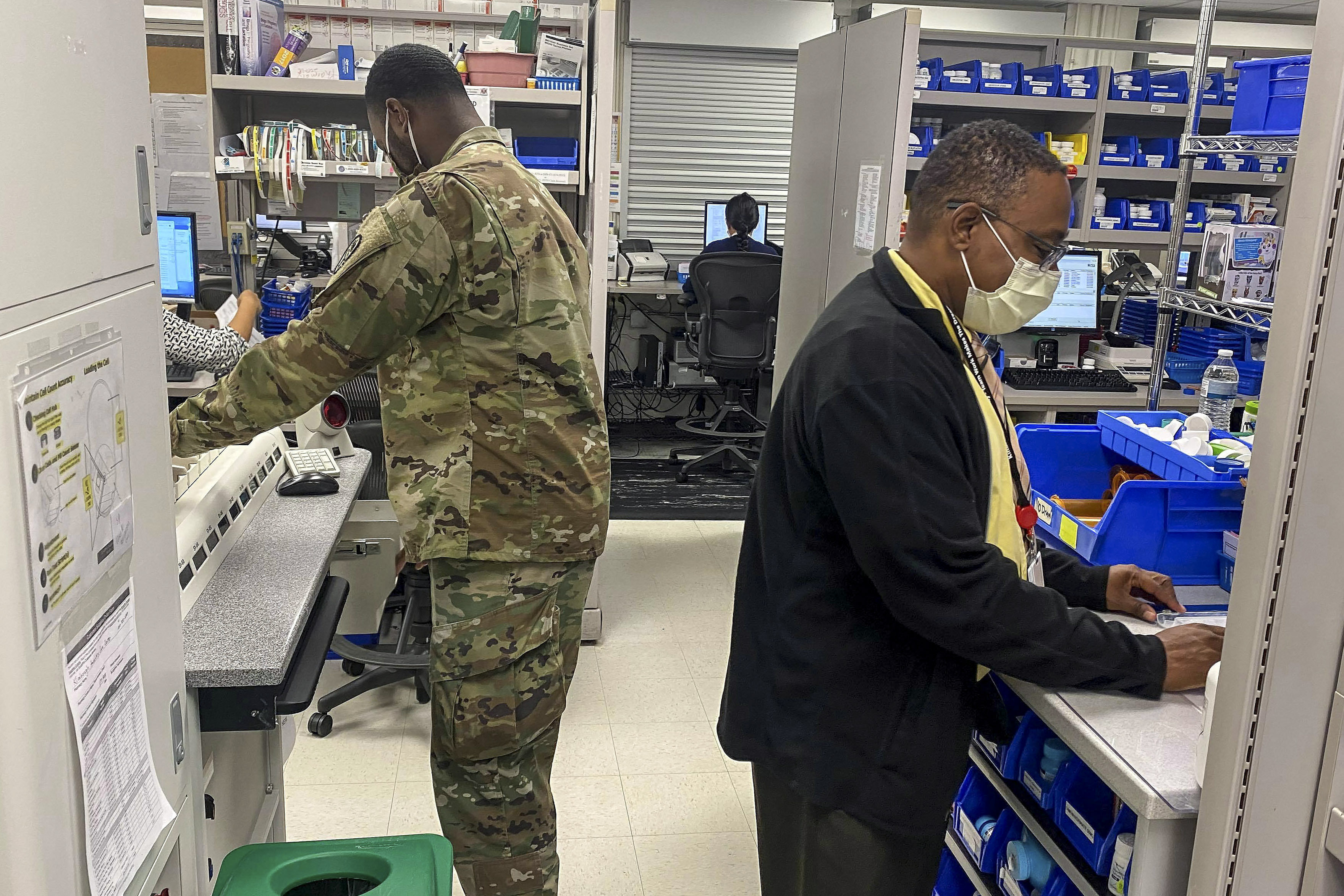
Kimbrough Ambulatory Care Center pharmacy personnel work at Fort Meade, Md., Oct. 15, 2020. The coronavirus pandemic changed how Kimbrough provides pharmacy services to beneficiaries through the implementation of curbside pharmacy services.

Sports Heroes Who Served: Baseball Legend Pauses Career for WWII

 Oct. 27, 2020 | BY David Vergun , DOD News

Sports Heroes Who Served is a series that highlights the accomplishments of athletes who served in the U.S. military.

Robert "Bob" William Andrew Feller was a renowned pitcher for the Cleveland Indians from 1936 to 1941 and from 1945 to 1956.

A baseball player pitches a ball.

During his 18 seasons, he pitched 3,827 innings with a win-loss record of 266-162. He pitched 279 complete games, 44 shutouts and had a 3.25 earned run average.

He was an eight-time All-Star and helped the Indians win the 1948 World Series.

Baseball great Ted Williams called Feller "the fastest and best pitcher I ever saw during my career."

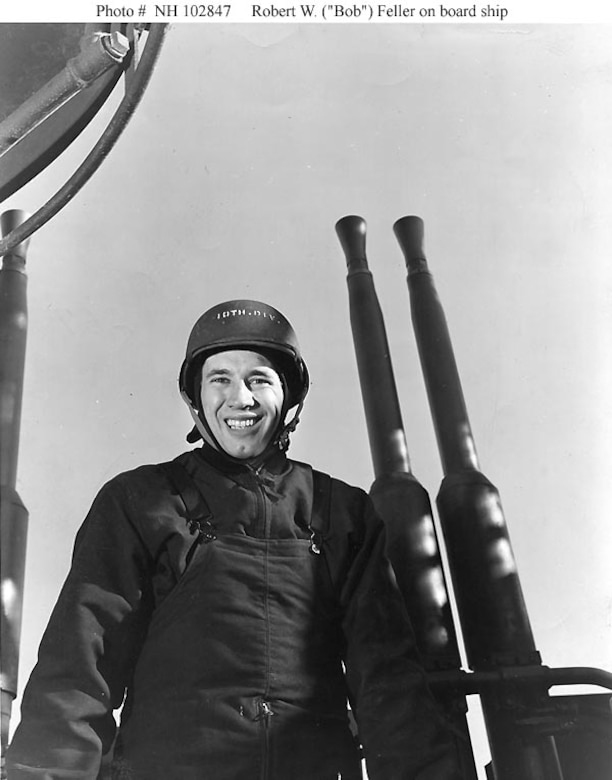
A sailor stands beside a gun.

Feller most likely would have boosted the Indians' scoreboard even more, except for America's entry into World War II after the attack on Pearl Harbor, Hawaii, on Dec. 7, 1941.

After learning of the attack, Feller, then 23, decided that the right thing to do would be to serve. "The last thing on my mind right then was playing baseball. I immediately decided to enlist in the United States Navy," he said decades later. "People today don't understand, but that's the way we felt in those days. We wanted to join the fighting."

On Dec. 9, 1941, he gave up the chance to earn $100,000 with the Indians and became the first professional athlete to join the Navy after Pearl Harbor.

In 1942, after basic training, Feller was stationed at Norfolk Naval Station, Virginia. He found time there to pitch for the base's Bluejackets baseball team, which went 92-8 that year.

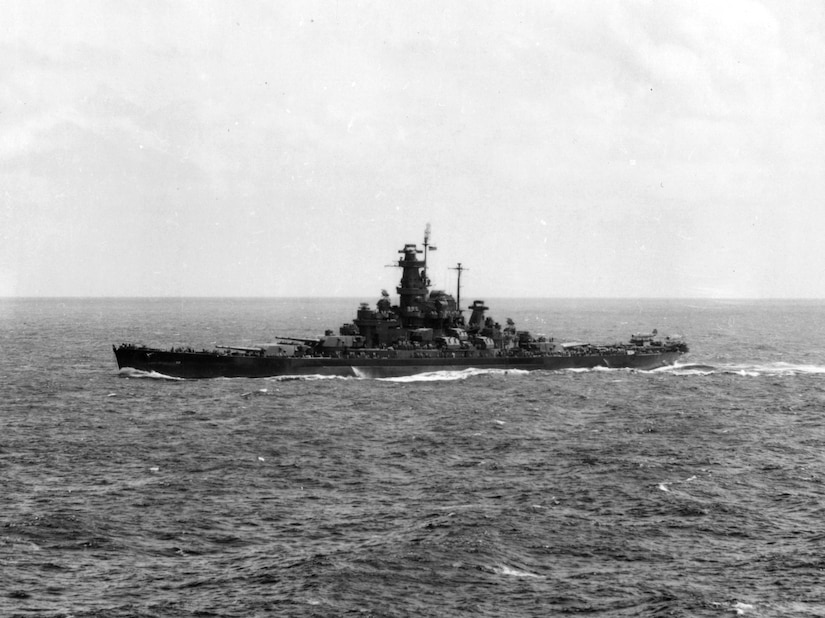
Feller then served as a gun captain on the battleship USS Alabama. In 1943, they sailed in the North Atlantic in support of combat operations in Europe.

A ship sails at sea.

In August 1943, they departed for the Pacific Theater. 

During that time through the spring of 1944, the Alabama served as a carrier task force escort, protecting the carriers from surface and air attacks. The ship also bombarded Japanese positions, fought off enemy aircraft, and, in some cases, supported amphibious landings on Betio, Makin, Nauru, Kwajalein, Roi-Namur, Truk, Saipan, Tinian, Guam, Palau, Yap, Ulithi, Woleai and other islands.

The Alabama then took part in the Philippines campaign from September through  December 1944, including providing support for the landing at Leyte Gulf in the Philippines in October 1944 and operations against Japanese-occupied Taiwan.

On Dec. 17, while the fleet was refueling at sea, Typhoon Cobra swept through the area, battering the fleet. Heavy seas caused the ship to roll up to 30 degrees and the typhoon was responsible for sinking three other destroyers in the task force, though the Alabama emerged with only minor damage.

In January 1945, the Alabama departed the Western Pacific for an overhaul at the Puget Sound Naval Shipyard in Washington, ending Feller's combat tour.


He spent the rest of the war at the Great Lakes Naval Training Station, Illinois, as an instructor. Feller also found time to manage the installation's baseball program, and he even pitched for the team.

Feller was honorably discharged as a chief petty officer on Aug. 22, 1945.

In 2010, Feller died at age 92.

U.S. Secretaries of Defense and State, Indian Ministers of Defense and External Affairs Provide Remarks at the Beginning of the U.S.-India 2+2 Ministerial Dialogue

 Oct. 27, 2020

Secretary of Defense Mark Esper, Secretary Michael R. Pompeo, Indian Minister of Defense Rajnath Singh, And Indian Minister of External Affairs Subrahmanyam Jaishankar

FOREIGN MINISTER RAJNATH SINGH:  (Via interpreter)  Mr. Mike Pompeo, Secretary of State, Dr. Mark Esper, Secretary of Defense, my esteemed colleague Dr. S. Jaishankar, distinguished members of the two delegations, a very warm welcome to both of the secretaries and your delegations.  Thank you for traveling all the way to New Delhi when traveling is still considered quite risky.

Thank you for your personal commitment to the India-USA partnership.  We are meeting today at an extraordinary time.  This pandemic is something that we have never experienced in our lifetime.  Our economies have suffered losses.  People have been affected by the pandemic, and a number of those have succumbed, which is a number that is far from insignificant.  We have implemented the whole-of-government approach to take industrial and service outputs back to normalcy.  We are providing relief to all those badly impacted by the pandemic.  We have to quickly make up for the losses as economic downturn will have both domestic and external consequences.

Excellencies, in the area of defense we are challenged by reckless aggression on our northern borders – (inaudible).

SECRETARY MIKE POMPEO:  Thank you very much.  It’s an honor to be here with you (inaudible) for the third 2+2 (inaudible) all three.  Our friendship and commitment to a free and open Indo-Pacific was clearly, clearly highly on display when we were in Tokyo this past week and a half for the Quad meeting that Minister Jaishankar and I had with our Australian and Japanese friends earlier this month.

Today is real opportunity for two great democracies like ours to grow closer, as I said on my trip to India last year when I called for a new age of ambition in our relationship.  I think we’ve delivered on that over this past year.  There is much more work to do for sure.

We have a lot to discuss today, from cooperating on defeating the pandemic that originated in Wuhan, to confronting the Chinese Communist Party’s threats to security and freedom, to promoting peace and stability throughout the region.

Together our two countries are building a better future for our people based on our shared set of values and our cultures, our defense ties, our scientific collaboration, and mutual prosperity.  I thank you for your leadership to each of you to build what ought to be a defining partnership of democracies in the 21st century.  Thank you.

SECRETARY MARK T. ESPER:  Minister Singh, Minister Jaishankar, I am honored to be here with you alongside Secretary Pompeo for our third 2+2 Ministerial Dialogue.  Today we meet in the midst of public health, economic, and security challenges around the globe, which the partnership between our two nations has better prepared us to address and deter.

This year marks the 15th anniversary of the first U.S.-India Defense Framework and our third 2+2 Ministerial.  We have strengthened our defense and security partnership considerably since then, especially over the past year, during which we advanced our regional security, military-to-military, and information-sharing cooperation.  Our focus now must be on institutionalizing and regularizing our cooperation to meet the challenges of the day and uphold the principles of a free and open Indo-Pacific well into the future.

Today I look forward to discussing key opportunities to expand our efforts on regional security concerns and to advance our defense priorities, to include increasing information sharing and mutual logistics operations between our militaries.

To my Indian colleagues, thank you again for your gracious hospitality and friendship as we continue to strengthen this most consequential partnership between the world’s two largest democracies.  Thank you both.

MINISTER SUBRAHMANYAM JAISHANKAR:  (Inaudible) Secretary Pompeo, Secretary Esper, dear colleagues, it is a great pleasure to welcome the American delegation to India for the third 2+2 meeting between us.  As foreign minister, I attach great importance to this particular format of our interaction for three reasons.

First, we live in a more uncertain world with much greater stresses and sharper fault lines.  For most countries, that means giving security a greater salience in their foreign policy.  As major powers, this is even more so in our case.

Second, over the last two decades, our bilateral relationship has grown steadily in its substance, assets, and significance.  The accompanying comfort levels today enable us to engage much more intensively on matters of national security.  This format is clearly tailored for that purpose.

Third, at a time when it is particularly important to uphold a rules-based international order, the ability of India and the United States to work closely in defense and foreign policy has a larger resonance.

Together we can make a real difference when it comes to regional and global challenges, whether it is in respecting territorial integrity, promoting maritime domain awareness, counterterrorism, or creating prosperity.  I am therefore looking forward to our discussions today, and I am sure they will be very productive and fruitful.  Thank you.

Monday, October 26, 2020

Sunset Security


A Marine provides security around an MV-22 Osprey during aerial embarkation drills in Kuwait, Oct. 22, 2020.

Global Thunder


Air Force Senior Airman Enrique Cabrera prepares munitions for Global Thunder at White Air Force Base, Mo., Oct. 20, 2020. The annual field training and command post exercise also assess joint operations readiness.

Scenic Sail


The guided missile destroyer USS Halsey conducts routine operations in the Pacific Ocean, Oct. 24, 2020.

Show and Tell


U.S. Marines demonstrate the use of a High Mobility Artillery Rocket System to U.S. sailors at Camp Fuji, Japan, Oct. 21, 2020.

Marine Maneuver


Marines in Polaris M-RZR vehicles exit an aerial raid training operation at Marine Corps Base Camp Pendleton, Calif., Oct. 20, 2020.

Joint Ops


Marines and sailors train with European troops during Operation Lisa Azul at Naval Station Rota, Spain, Oct. 21, 2020.