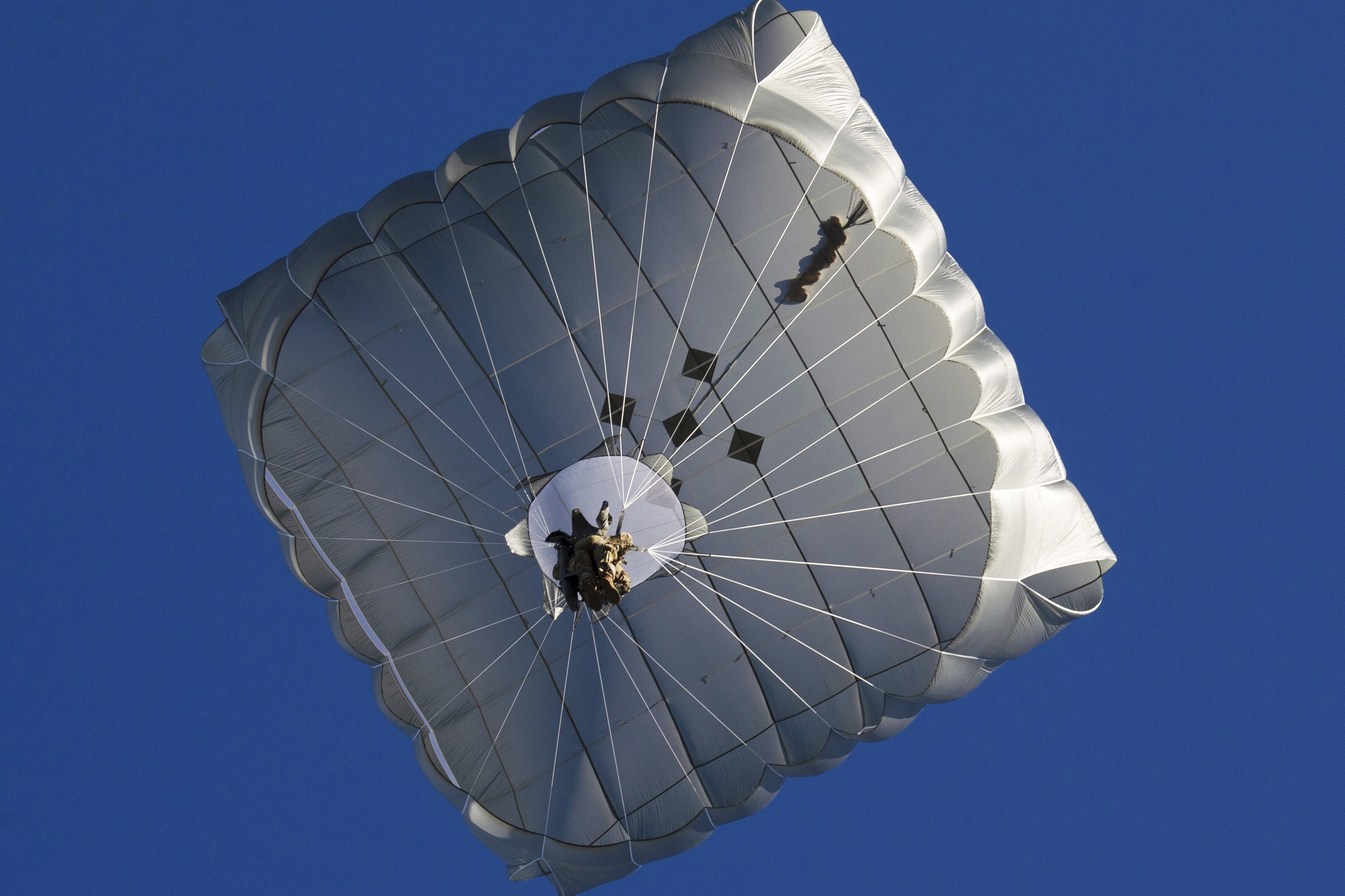
An Army paratrooper descends over the Malemute Drop Zone at Joint Base Elmendorf-Richardson, Alaska, Oct. 22, 2020.
An Army paratrooper descends over the Malemute Drop Zone at Joint Base Elmendorf-Richardson, Alaska, Oct. 22, 2020.
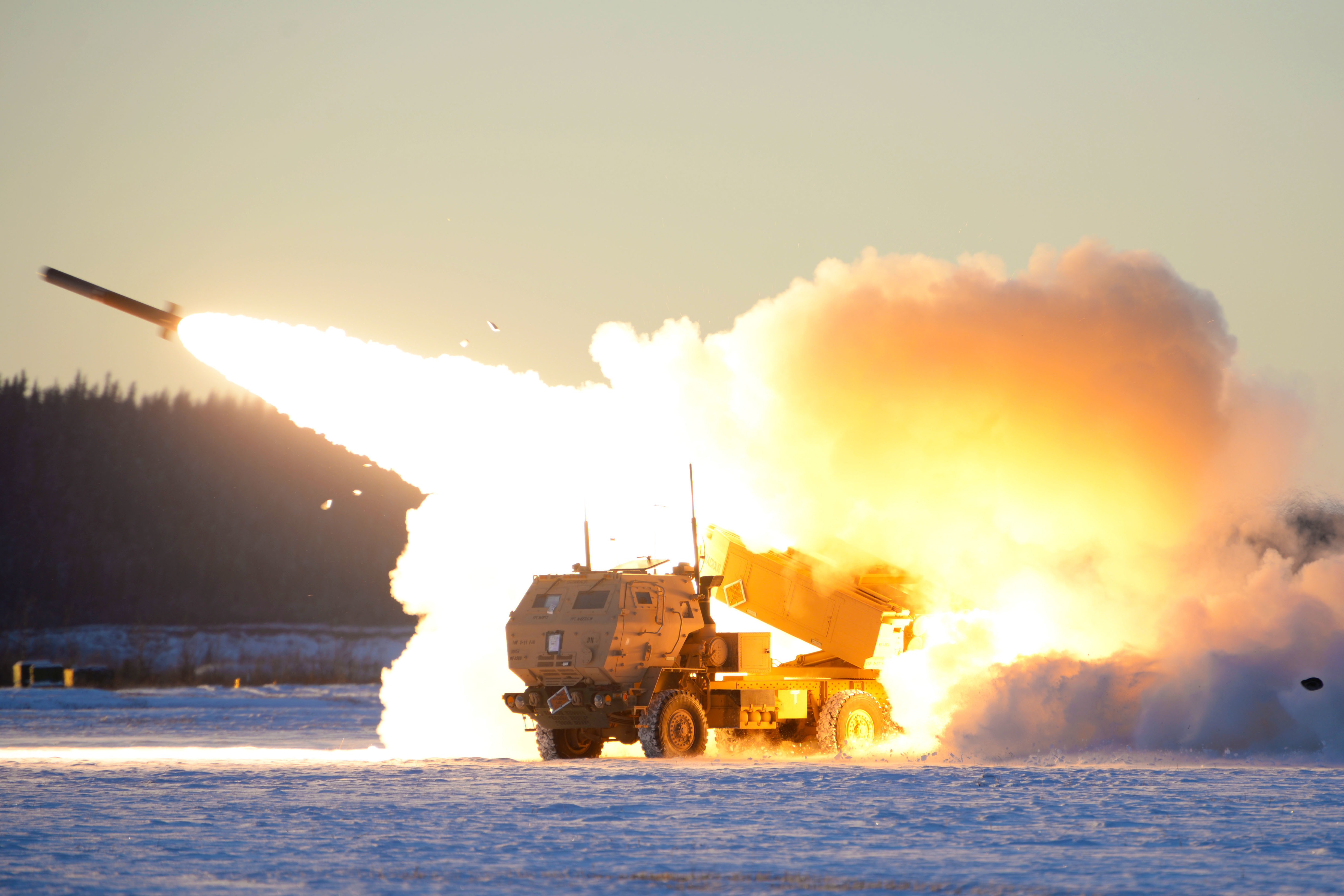
An Army M142 High Mobility Artillery Rocket System launches ordnance during Exercise Red Flag-Alaska at Fort Greely, Alaska, Oct. 22, 2020. The exercise focuses on rapid infiltration and exfiltration to minimize the chance of a counterattack.

Soldiers board an Army CH-47 Chinook helicopter during a Joint Force Entry exercise at Fort Polk, La., Oct. 22, 2020. Soldiers certified for deployment to build interoperability with key allies and partners.
Oct. 26, 2020
Secretary of Defense Mark T. Esper met today with Indian Minister of Defense Rajnath Singh ahead of the U.S.-India 2+2 Ministerial Dialogue in New Delhi, India. Secretary Esper and Minister Singh applauded the strength of the defense relationship between the United States and India, and reinforced their commitment to deepening military-to-military cooperation, including joint-service cooperation; increasing secure communications capabilities; and enhancing mutual logistics engagements. Secretary Esper and Minister Singh commended the conclusion of the Basic Exchange and Cooperation Agreement during the visit, and welcomed the expansion of information-sharing. From collaborating on emerging technologies to advancing defense trade priorities, Secretary Esper and Minister Singh agreed to continue to work in partnership to address pressing global security challenges.
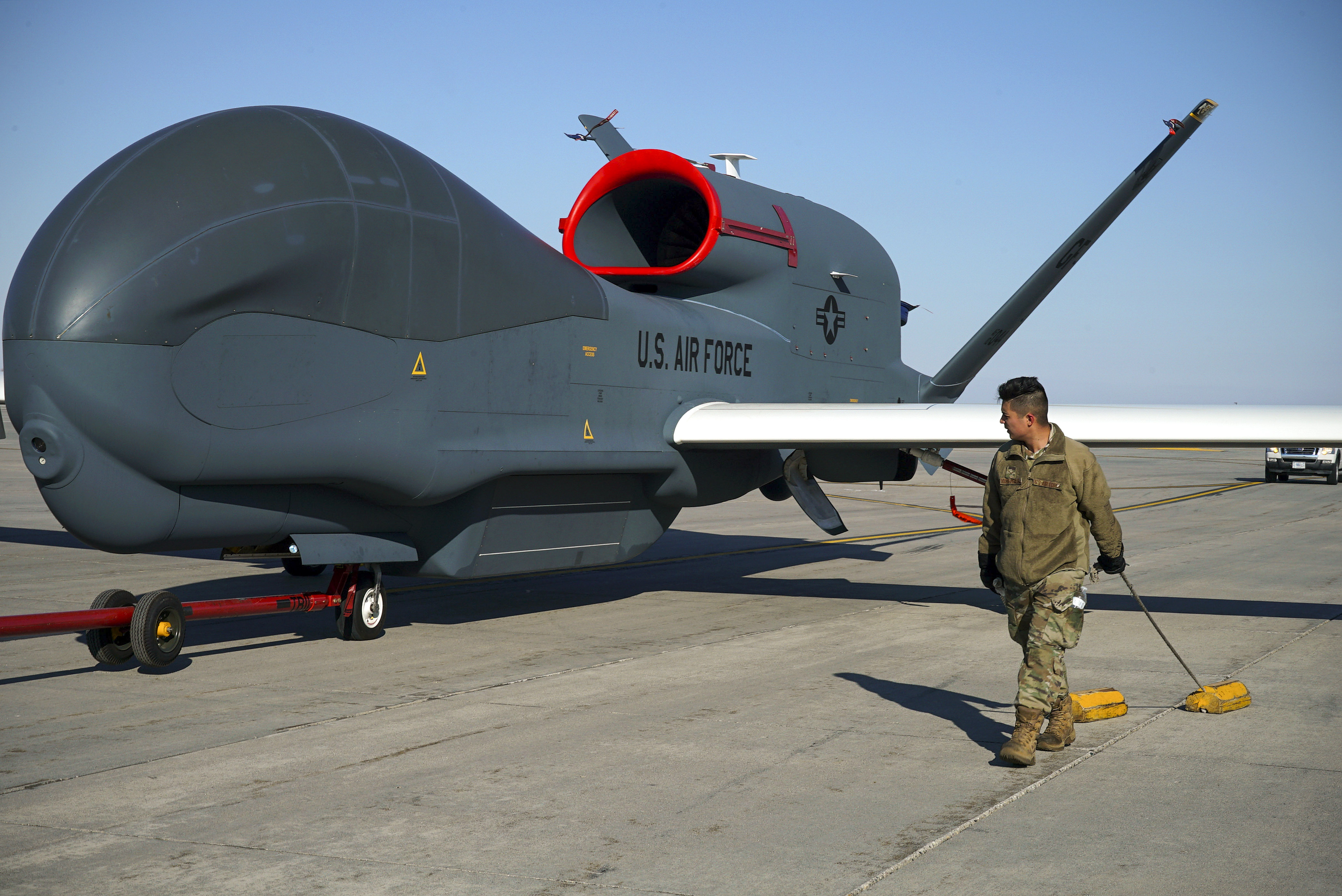
Air Force Airman 1st Class Bryant Vides-Perlera pulls chocks beside an RQ-4 Global Hawk remotely piloted aircraft as it’s towed across the flightline at Grand Forks Air Force Base, N.D., Oct. 23, 2020.

Air Force Staff Sgt. Devin Mazza, a tactical air control party specialist assigned to the 3rd Air Support Operations Squadron, prepares to jump from a C-17 Globemaster III aircraft during nighttime airborne training at Joint Base Elmendorf-Richardson, Alaska, Oct. 20, 2020. Special warfare airmen assigned to the squadron conducted the training to demonstrate short-notice mission readiness in the Arctic environment.

Navy Petty Officer 3rd Class Jonathan Chamian signals from the forecastle aboard the guided-missile destroyer USS John S. McCain to the dry cargo and ammunition ship USNS Alan Shepard during a replenishment in the South China Sea, Oct. 22, 2020.

An Air Force F-35A Lightning II flies with two Royal Australian Air Force F-35As over the Grand Canyon in Arizona during a flight to celebrate the partnership between the two services, Oct. 8, 2020.
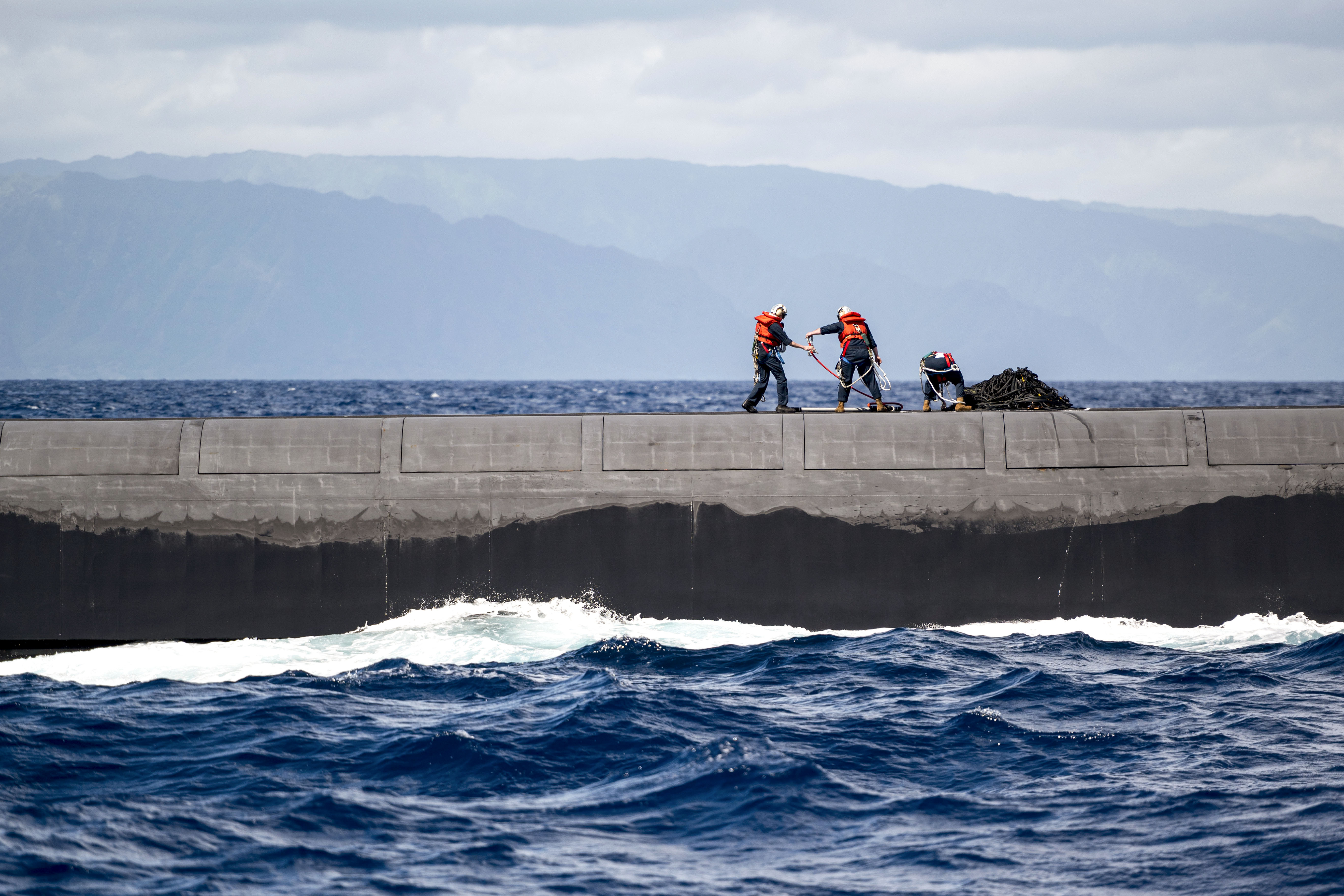
Sailors aboard the ballistic missile submarine USS Henry M. Jackson recover a payload delivered by a helicopter in the Pacific Ocean near the Hawaiian Islands, Oct. 20, 2020.
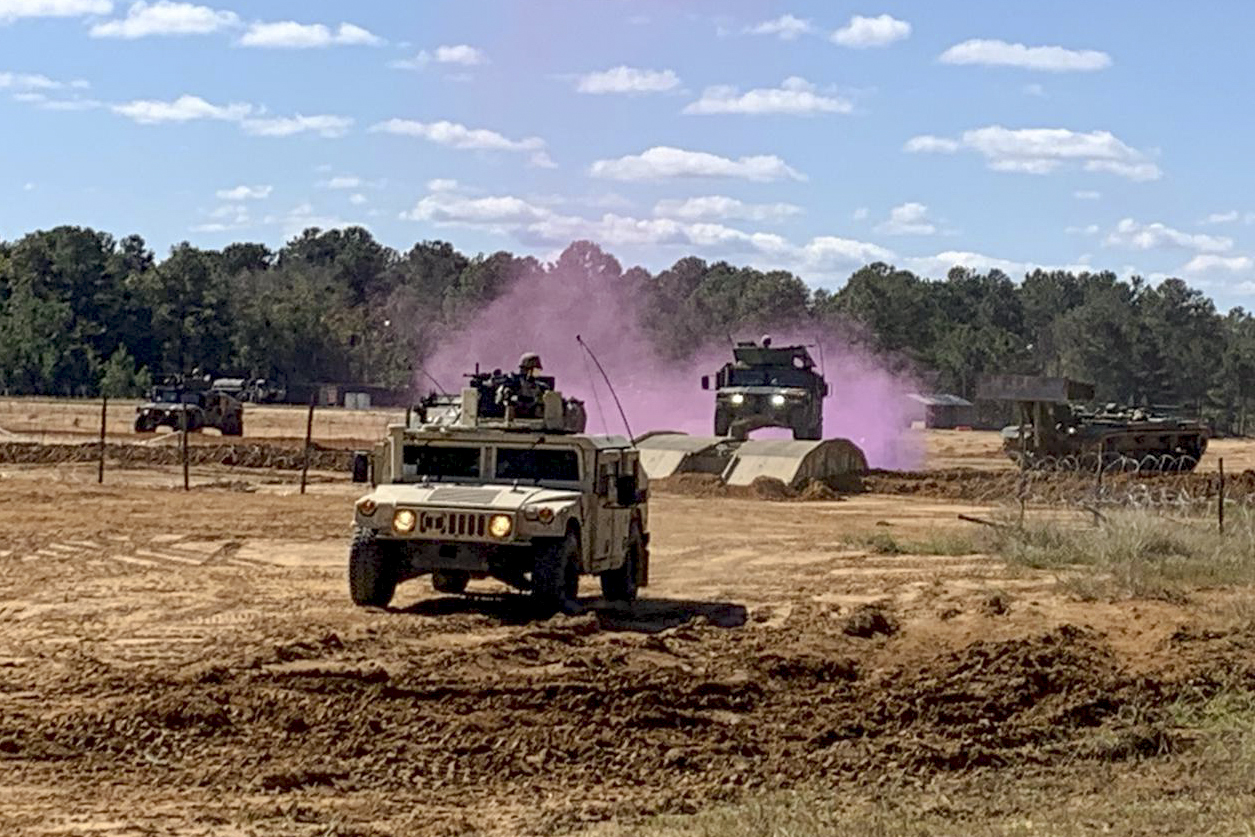
South Carolina Army National Guardsmen conduct joint gap-crossing training, Oct. 17, 2020.
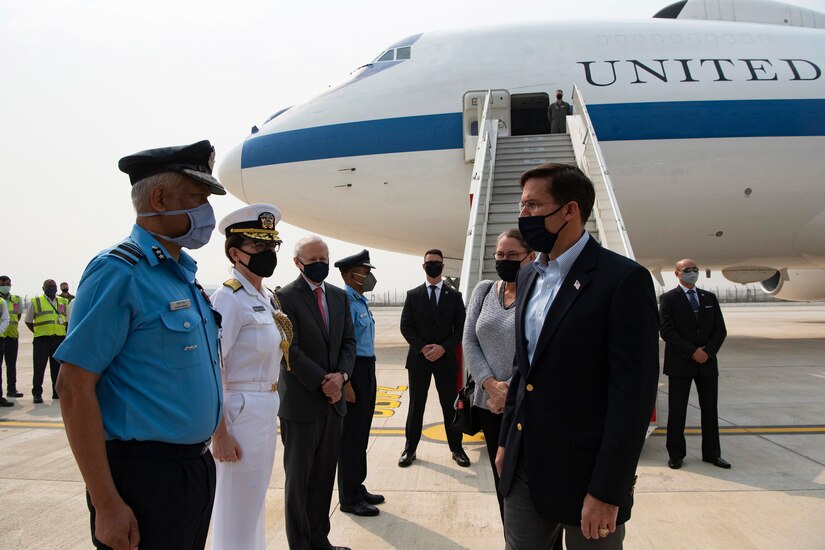
"Two-plus-two" refers to the U.S. secretary of state and defense secretary meeting with their counterparts in India. This is the third meeting at this level, and it's the second for Defense Secretary Dr. Mark T. Esper.
The U.S. and Indian relationship has warmed considerably and the increased frequency and candor of these meetings is a reflection of this. "The two-plus-two ministerial will serve as a capstone to review our many accomplishments, as well as lay down next steps for the U.S.-India comprehensive, global strategic partnership," an administration official said.
India and the United States cooperate in economic, diplomatic and information areas, and the military cooperation between the two nations is also increasing.
Given China's increasingly aggressive behavior from Africa to the Himalayas to the South China Sea to Oceania, it is crucial that like-minded states oppose Chinese Communist Party efforts to reshape the international order in its favor.
China has committed to changing the international order put in place in the wake of World War II that stopped major power confrontation. The international order is based on respect for the sovereignty of all nations, large and small. The existing order has benefited all nations of the Indo-Pacific region including China, which has grown to be the world's second-largest economy under the protections of the existing system.

Indonesia, Sri Lanka, Vietnam, Brunei, Malaysia, Singapore and more are affected by the Chinese push to change the norms in the region. U.S. treaty allies — including Australia, New Zealand, Japan, South Korea, Thailand and the Philippines — are also affected. The Chinese actions have raised alarms across the region, and they are pushing the democracies to work together to oppose the Chinese vision for the Indo-Pacific.
Cooperation between the United States and India goes beyond mere opposition to China. The U.S. and Indian militaries cooperate in humanitarian relief missions. They share intelligence and information on terror groups, and they work together to oppose transnational criminal groups.
India and the U.S. will discuss pandemic response, maritime security, cybersecurity, quality infrastructure, counterterrorism and other areas.
The defense cooperation between the two nations is foundational. "The defense relationship with India right now is currently at its best in recent memory," said another administration official participating on the call. "The progress we've made since India became a major defense partner in 2016, is remarkable."
Investments in the bilateral defense relationship from both sides in previous years have set the foundation for the accomplishments this year that may be announced in the coming weeks. "We solidified our strategic alignment and confirmed the need to work together and promote a free and open Indo-Pacific for the benefit of all countries in the region," the official said.
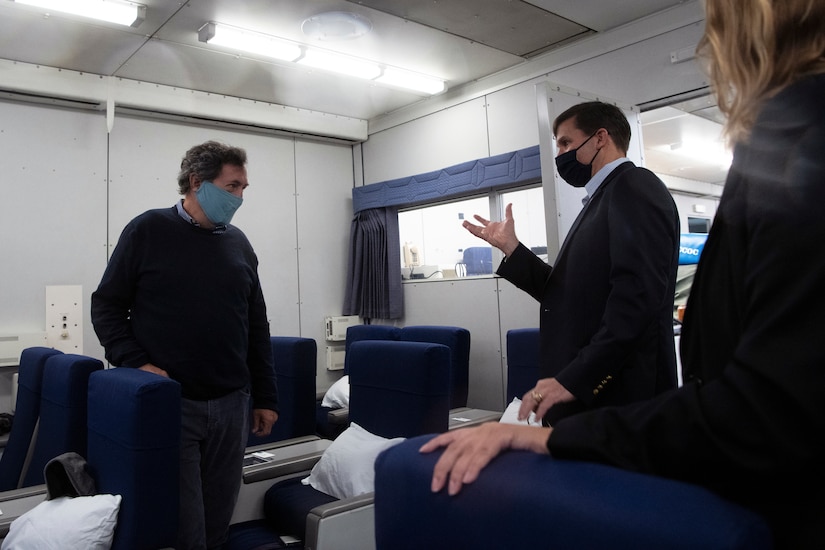
Broadly the U.S. and Indian defense ministers will discuss regional security cooperation. "We're working to enhance maritime security across the Indian Ocean region by coordinating security cooperation and building partner capacity with regional countries," the administration official said. "India announced just this week that it was inviting Australia, along with the U.S .and Japan, to the Malabar naval exercise in November.
"This invitation signals not only a strategic convergence between quadrilateral partners, but a recognition that regional security requires strengthening allies and partnerships and working multilateral on issues of mutual concern."
The U.S., India relationship requires information sharing. The two nations have an agreement that will allow for expanded geospatial information sharing between the respective armed forces. "We're also seeking to expand secure communication capabilities between our respective militaries, as well as between our foreign defense ministries," he said.
Military-to-military interactions are key. "We're working to build greater interoperability by increasing the sophistication of our combined exercises," the official said. The United States has placed liaison officers with Indian forces, and the Indians have placed officers at the U.S. Indo-Pacific Command and U.S. Central Command. "We also hope to confirm two additional Indian liaison officer placements in the near term to expand counterterrorism cooperation," he said.
The United States is interested in defense trade. Earlier this year, India acquired Apache and Seahawk helicopters, and the U.S. is seeking to advance sales for several other defense platforms to include fighter aircraft and UAVs, the official said.
Oct. 24, 2020 | , DOD News
U.S. military personnel won't be administering any COVID-19 vaccines to the American people once the vaccines are approved for use. But the U.S. military will lend it's experienced hand in logistics to ensure the vaccine is available across the nation, said Paul Mango, the deputy chief of staff for policy at the Department of Health and Human Services.

"The overwhelming majority of Americans will get a vaccine that no federal employee, including the Department of Defense, has touched," Mango said during a Friday teleconference regarding Operation Warp Speed, the DOD and HHS effort to find a vaccine for COVID-19. "That said ... we have the best logisticians in the world at the Department of Defense, working in conjunction with the CDC, to guide ... every logistical detail you could possibly think of."
That effort, Mango said, involves things such as needles, syringes, swabs, adhesive bandages, dry ice and trucks, for instance.
"Gen. [Gustave F. Perna], and his team ... are guiding all of that with scores of folks from both the CDC and the DOD," Mango said. "We will have an operation center that will tell us at any given time exactly where every dose of vaccine is."
Those operations centers, he said, will be similar to those set up for things like hurricanes.

"We're going to have one just for vaccines that Gen. Perna, his team and the CDC are going to man 24 hours a day," Mango said. "They will know where every vaccine dose is. If a vaccine dose is at risk of expiring, they will guide the movement of that to someplace else."
What Mango also said, however, is that federal military personnel will not be involved in touching the vaccine or administering it to Americans. He did add that if state governors want their own National Guard personnel to be involved as part of a state-run effort, they will do that at their discretion.
"The federal military will not be involved in moving any doses or injecting any vaccines," he said.
Right now, there are six vaccine candidates that must be evaluated in clinical trials, and volunteers are needed to participate in those trials, said Dr. Matt Hepburn, vaccine lead for Operation Warp Speed.
"We are anticipating large-scale clinical trials — 30,000 patients each for these products," Hepburn said. "Therefore, we do need more people to be willing to sign up... if people are looking for a way that they can help us, help us as a nation, fight this pandemic, one of the ways they can do that is volunteer for these clinical trials."
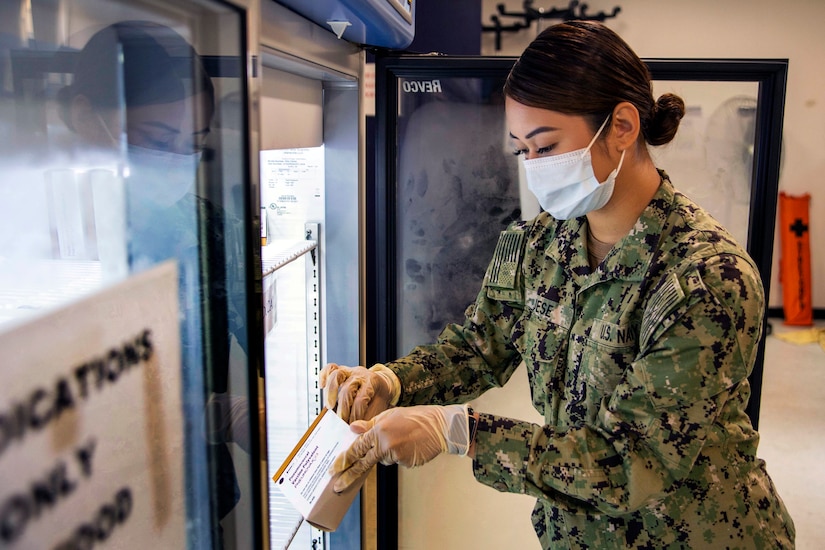
While more are needed to participate in trials for vaccine candidates, many have already signed up. Dr. Jerome Adams, the U.S. surgeon general, said he's been impressed, so far, with the diversity of the candidates who've volunteered, and he said such diversity is important in a vaccine trial.
Vaccine candidate developer Moderna, for instance, announced it had completed enrollment on its Phase 3 clinical trial. Of the 30,000 participants, 37% are part of minority populations, with over 10% from African-American communities, Adams said.
"We want to applaud the recruitment outreach that's been done by Moderna," Adams said. "They were able to turn around what were initially low minority participation rates by removing barriers and meeting folks where they are and by harnessing relations with researchers who have long-standing trust with minority communities. ... We need this to continue for other trials."
Adams said those wishing to participate in trials for one of the COVID-19 vaccines can do so by visiting coronavirus.gov.
Operation Warp Speed is a partnership between the DOD and HHS. Specific HHS components involved include the CDC, the Food and Drug Administration, the National Institutes of Health and the Biomedical Advanced Research and Development Authority.
The U.S. military goes to extraordinary lengths to protect civilians on the battlefield, but sometimes casualties occur.
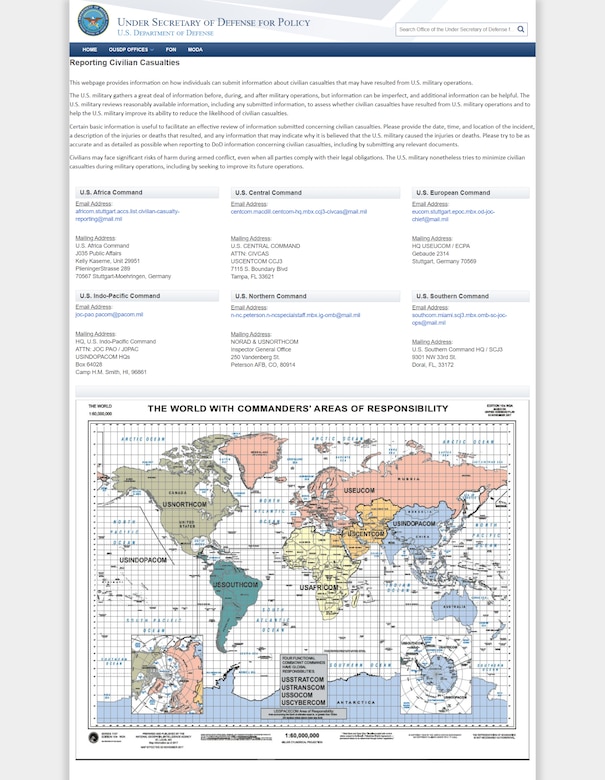
The department has now created a website so people can report information on civilian casualties.
The webpage lists the email and postal mailing addresses of the combatant commands so those with information on civilian casualties can contact the commands. Currently, the website language is only English, but officials are looking at ways to and broaden the reach of the effort.
Killing or wounding civilians is never the intended outcome of war, defense officials have repeatedly stressed. It goes against the ethos of the military as well as the laws of war. It's not at all consistent with U.S. tactical, operational or strategic objectives. The U.S. military is always looking to mitigate the potential for civilian harm of any kind, when conducting military operations.
"I know firsthand from my own experience that — beyond losing one of our own in battle — a commander feels nothing more painfully than the accidental loss of civilian life," said Anthony Tata, who is performing the duties of the deputy undersecretary of defense for policy. "We are therefore actively working to advance our ability to mitigate civilian harm, and to respond when it occurs. As part of these efforts, it is critical that we ensure that members of the public are able to provide the Defense Department with information regarding incidents in which U.S. military operations may have [resulted in the injury or death of] civilians."
"Civilians often endure intense suffering in war," said Stephanie Hammond, the acting deputy assistant secretary of defense for stability and humanitarian affairs. "It is a tragic and sobering fact that we take very seriously. That is why the U.S. has continued to demonstrate leadership in employing the latest technologies to mitigate civilian harm, and continues to advance our ability to prevent civilian harm when possible and to respond when it occurs."
But civilian casualties are a part of conflict. In the past, weapons were crude and not that accurate. During World War II, if bombers got their weapons within the same grid square as the target, it was considered extremely successful.
Today, the United States has the guided munitions and the intelligence apparatus to hit targets precisely. This lessens the risk of civilian casualties. It does not, however, eliminate them.
Killing or injuring civilians today is usually the result of incomplete or faulty intelligence. It could also be because of a vague or wrong description of a target.
"It is important that we assess the outcomes of U.S. military operations, including inadvertent effects on civilians," Tata said. "This helps us to understand the outcomes of our operations, acknowledge when our operations result in civilian casualties and learn from our experiences to reduce the likelihood of future civilian harm from our operations."
No other country goes to these lengths to prevent civilian casualties, said defense officials. Close allies operating with the United States in Afghanistan, Iraq and Syria are taking note of U.S. efforts in this realm.
The webpage is just a start. The Defense Department is developing a comprehensive department-wide policy on civilian harm mitigation and response. It will be the first of its kind, Hammond said.
The website can be found at: https://policy.defense.gov/OUSDP-Offices/Reporting-Civilian-Casualties/.
Oct. 23, 2020
Secretary of Defense Dr. Mark T. Esper will travel to India and other countries in the region, October 25 – 29.
In New Delhi, Secretary of State Michael Pompeo and Secretary Esper and their Indian counterparts will lead the third annual U.S.-India 2+2 Ministerial Dialogue to advance the U.S.-India Comprehensive Global Strategic Partnership and expand cooperation to promote stability and prosperity in the Indo-Pacific and the world.

Air Force Capt. David Cotter, a pilot assigned to the 1st Reconnaissance Squadron, sits in the cockpit of a U-2 Dragon Lady at Beale Air Force Base, Calif., Oct. 14, 2020.
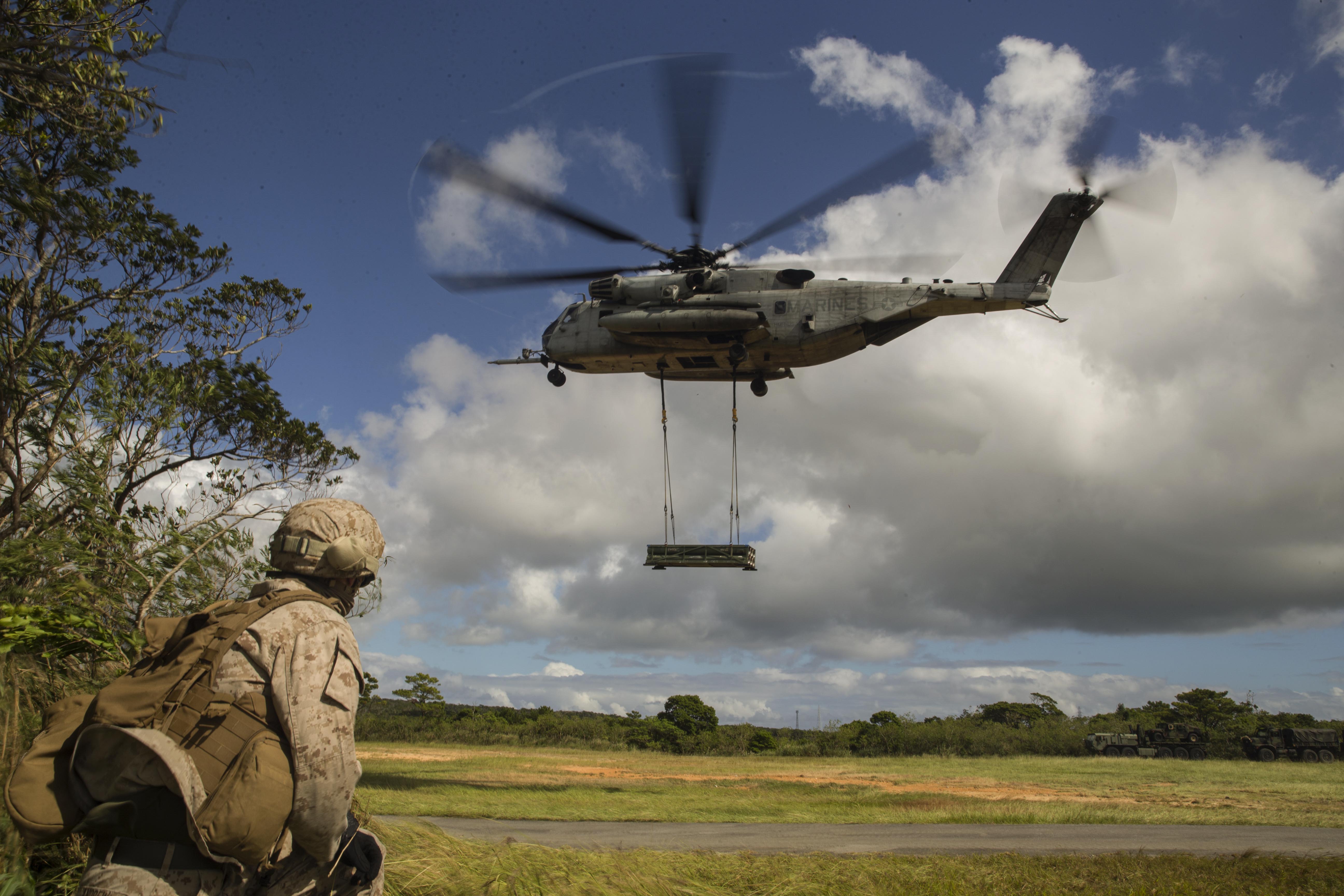
Marine Corps Lance Cpl. Muneeb Ajlouni watches a CH-53 Sea Stallion take off with a High Mobility Artillery Rocket System during training in Okinawa, Japan, Oct. 19, 2020.

Air National Guard Spc. Carlos Gracia unloads boxes of food during COVID-19 response efforts in Tucson, Ariz., Oct. 22, 2020.

Air Force Senior Airman Theresa Braak and military working dog Sam negotiate a window obstacle in the obedience yard at Dover Air Force Base, Del., Oct. 8, 2020.
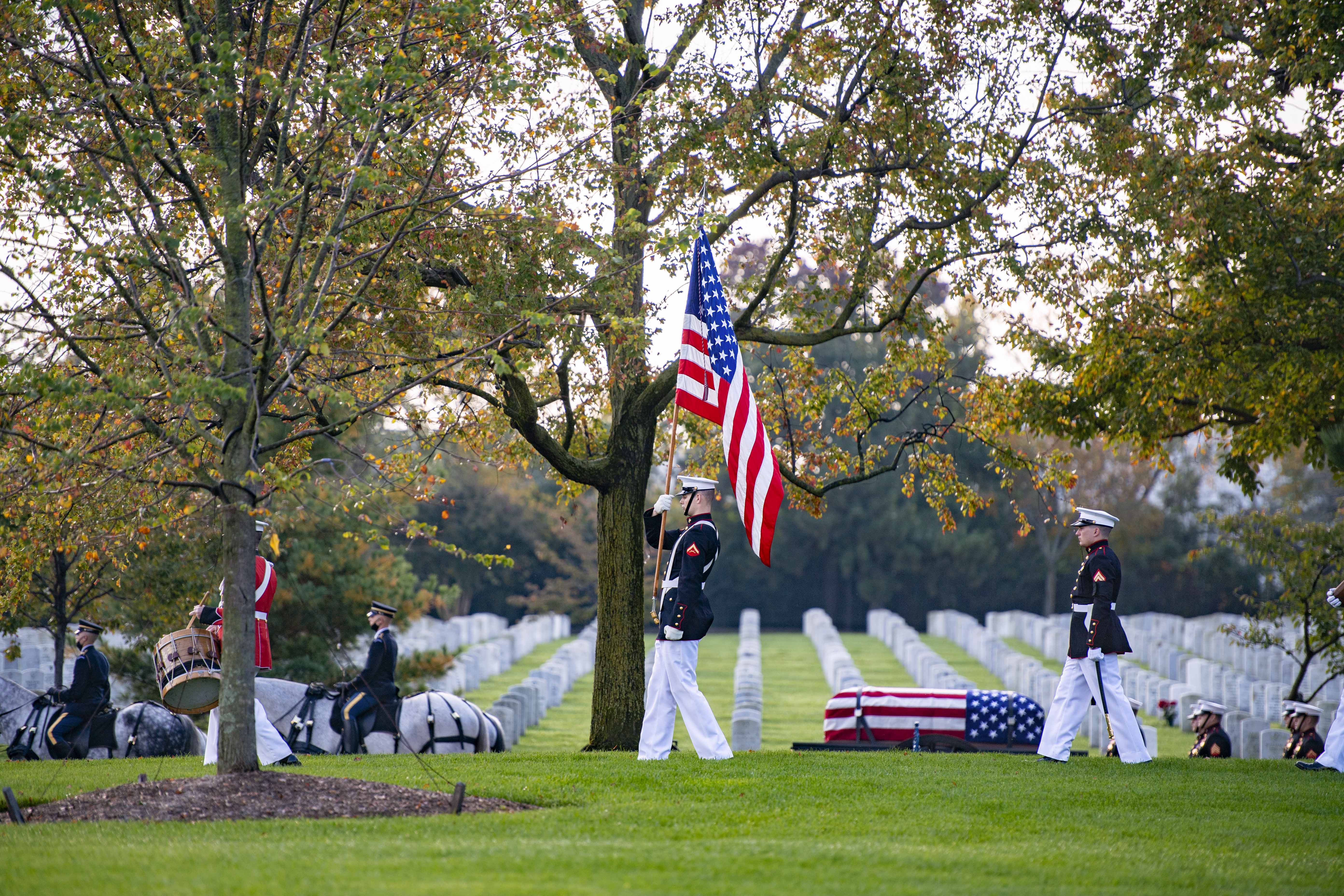
Soldiers assigned to the 3rd U.S. Infantry Regiment, known as “The Old Guard,” and members of “The President’s Own” U.S. Marine Band conduct modified military funeral honors with funeral escort for Marine Corps Reserve Pvt. 1st Class Charles Miller at Arlington National Cemetery, Va., Oct. 23, 2020. Miller was killed in 1943 during the World War II Battle of Tarawa. His remains were recovered in 2009 and positively identified in 2020.
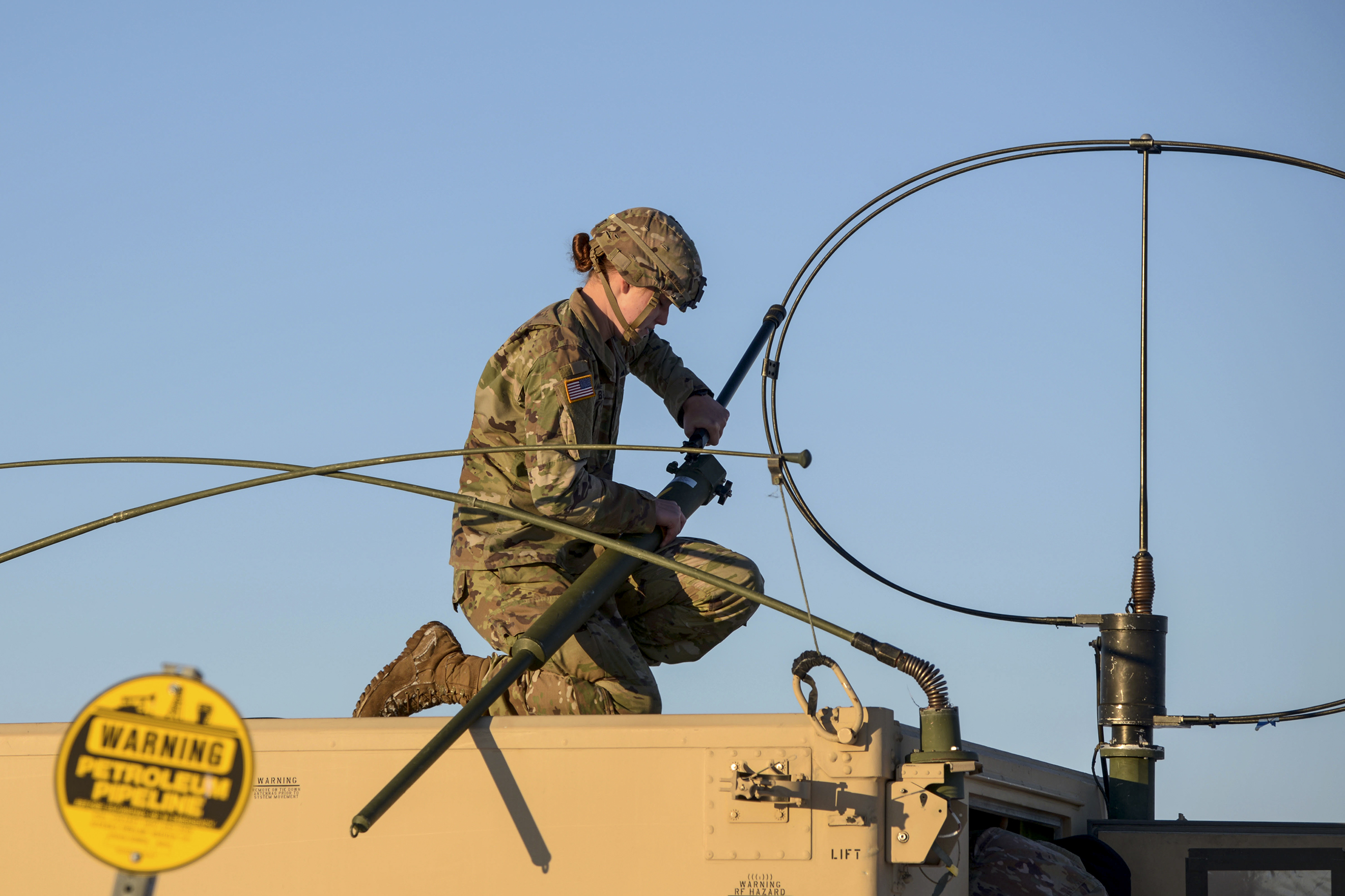
A soldier attaches long-range radio equipment to a Humvee at Fort Greely, Alaska, Oct. 22, 2020.
Oct. 23, 2020
Secretary of Defense Dr. Mark T. Esper provided remarks during the second day of the NATO Defense Ministerial today. His remarks focused on NATO’s ongoing missions, readiness, the importance of presenting a credible deterrent, and ensuring the Alliance can fight and win should deterrence fail.
On Afghanistan, the Secretary offered our thoughts and prayers for the Romanian soldiers who were wounded outside of Kandahar Airfield on October 21 in an IED attack, and noted that the attack is under investigation by Resolute Support. The Secretary thanked Allies for their continued commitment to the mission, and expressed encouragement by the progress in the peace process despite the challenges. The Secretary noted that the high level of violence by the Taliban jeopardizes this historic opportunity for peace. Secretary Esper assured the NATO defense ministers that the U.S. will continue to consult with Allies and partners on changes in force posture to ensure the Alliance can adjust together, and when the time is right, leave together.
On Iraq, the Secretary reiterated the U.S. commitment to the enduring defeat of ISIS and long-term regional stability. He welcomed an expanded role for the NATO Mission Iraq, and noted the importance of the safety and security of our diplomatic and military personnel.
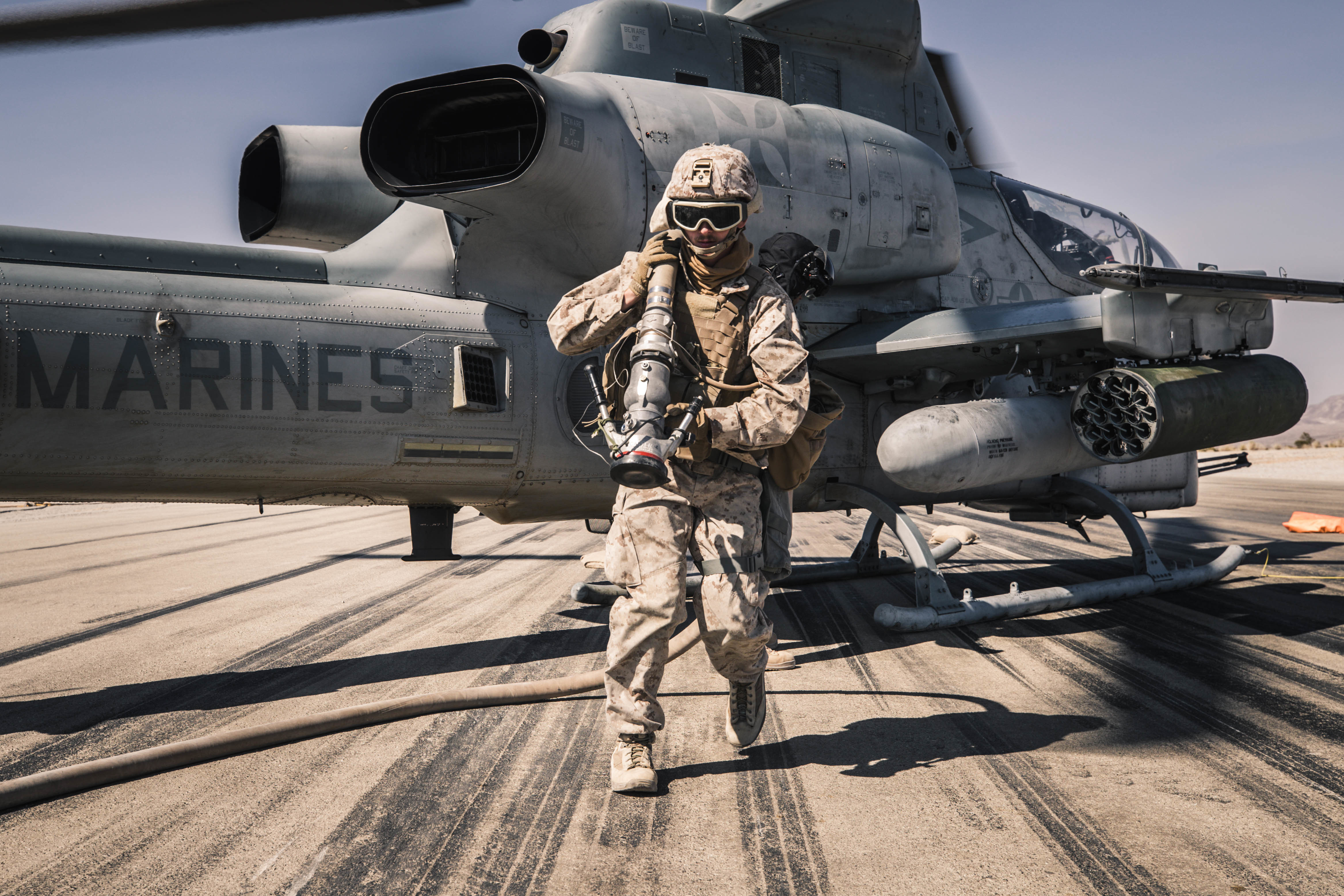
Marine Corps Lance Cpl. Austin Carroll refuels an AH-1Z Viper during training at Marine Air Ground Combat Center Twentynine Palms, Calif., Oct. 16, 2020.
Oct. 23, 2020 | , DOD News
The Army has multiple enterprise financial management IT systems, some decades old, that account for the majority of the service's financial, acquisition, and logistic transactions. These systems communicate transactions in a variety of ways through a complex architecture, but that communication is far from perfect. When a financial system communicates inconsistent or no data to another system, it creates a problem that requires human intervention.
"One of our consistent issues within Army financial management is caused by our large portfolio of legacy systems executing hundreds of thousands of transactions per week with one another,'' said Jonathan Moak, who serves as Army's principal deputy assistant secretary for financial management and comptroller within the Office of the Assistant Secretary of the Army, Financial Management and Comptroller (ASA (FM&C)). ''Incorrect information is often generated or reflected in a system during these constant transactions, which can create the issue called an unmatched transaction.''

The Army experienced somewhere between two and three million of these unmatched transactions (UMTs) in the 2019 fiscal year, driven by its multiple enterprise system, each built with different requirements. These UMTs, all of which need correcting, have included inaccurate data of obligations for financial payments and issues with the mismatching fields between a financial and logistics supply system.
"It's a big problem...with a total value of several billion dollars,'' said Moak. ''These mismatches lead to a general lack of accountability, funds control, and have a negative impact on buying power – all of which are critical to auditability."
Before the Army can be deemed auditable, a majority of these UMTs must be resolved. Resolving just one UMT is a labor intensive process that can take multiple hours. Since there are currently millions of UMTs that need resolving, the problem cannot be solved by manual labor alone.
The Army is building the requirements to field a core enterprise system where UMTs are not created in the first place. In the interim, Moak said that a team led by Chase Levinson in ASA (FM&C) has implemented robotic process automation, or RPA, to help resolve UMTs as they occur.
RPA is an automation tool where RPA ''bots'' follow the strict business rules given to them by developers. "RPA relies on conditional statements that say if you see this, then do this, which requires a well-defined process with very clear rules to fix a UMT,'' said Levinson.
However, Levinson said that some UMTs do not always have a clear path to resolution, which means that when the RPA bot can't resolve the UMT, humans still have to fix them manually.
According to Moak, continuing this process with UMTs is not an optimal use of manpower, which can be redirected to higher-level financial management operations and analysis by implementing a more effective solution.
''Our priority is to give the right tools to our workforce to accomplish the mission at the greatest level of efficiency,'' said Moak.
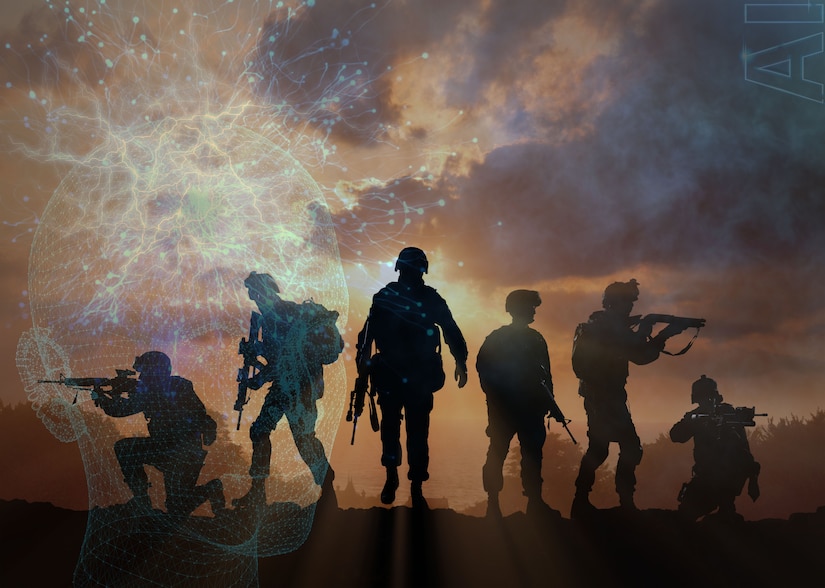
To further add to its capabilities to solve the UMT problem within its financial management enterprise, the Army turned to the Joint Artificial Intelligence Center and the Defense Innovation Unit.
While the Army was already using robotic process automation as a partial solution, a new solution, driven by artificial intelligence, could be even better. A well-trained AI-driven solution would better be able to deal with the variety of nuances that crop up due to the large number of financial systems the Army uses and the wide variety of transactions that take place.
"The Army came to us with this issue, saying that they had tried to do some initial modeling to automatically resolve these errors without human intervention, but hadn't been successful" said Rachael Martin, Mission Chief for Business Process Transformation at the Joint Artificial Intelligence Center.
Martin said the Army wanted to know if there was anything JAIC could do to help them not only build out a capability to help resolve problems with UMTs, but also have the capacity to do a better job in the future building predictive models and unburden human analysts from unnecessary work.
Martin said JAIC worked with the Defense Innovation Unit to identify existing best practices in the industry that might help the Army fix the problem with UMTs. She also said that at the same time, the Comptroller within the Office of the Secretary of Defense became interested in the effort, as OSD had problems similar to those of the Army.
"We were able to leverage the resources we allocated to support the Army to bring in a similar use case from Comptroller, and do some really innovative industry competition," Martin said. "We awarded contracts to two different companies with different approaches to building a UMT model so that we could test both and find the most promising solution.''
It was DIU that put out a request for industry solutions. The DIU, with headquarters in Silicon Valley, maintains relationships with best-in-breed vendors focused on solving similar problems for commercial customers from across the country and can quickly bring the best of what's happening in the commercial world to the Defense Department.

"When DIU put out requests for solution briefs, we received over 50 from commercial AI companies. And from there, they were down-selected through a couple of different rounds, and used demonstrations to help us down-select and interview them," said Eric Dorsey, the government contractor who is the project manager on the DIU team. "It finally came down to two companies to award what's called prototype contracts."
Now, each of those companies has been assigned to work with either the Army or the OSD comptroller to find an AI-driven solution to solve problems like the Army has with UMTs, Dorsey said.
The two companies will have about six months to accomplish their work, Dorsey added.
"Using machine logic, which is more sophisticated than RPA — the goal is to solve up to 70% of these UMTs automatically and correct them," Dorsey said. "The result is we could save millions of labor hours for the Army and the DOD each year."
After six months of work, around mid-March 2021, both companies will have completed their work with the Army and the OSD comptroller and will have working prototypes. The Army and comptroller will then go into field trials and decide, ultimately, if they want to go into production with the product, Dorsey said.
"We're hoping to take lessons learned with these efforts and scale to the other branches of the military — Navy, Air Force, Marines — to also help them solve some of their unmatched transaction problems in their accounting system," he said.
While the work of the JAIC and DIU may eventually help multiple services and the OSD, Moak said bringing in AI assets for financial work is going to be a necessity for the Army going forward.
''Our collaboration with DIU and JAIC on this effort is a tremendous opportunity for Army financial management, and will hopefully inspire others,'' said Moak. ''Applying these innovative tools now allows us to shift our focus to optimize our systems environment, and building a core enterprise system — a sustainable solution for improving financial operations.''


Air Force Brig. Gen. Jeffrey Pennington, Fourth Air Force commander, greets two airmen following training at the Tactics and Leadership Nexus, Dover Air Force Base, Del., Oct. 17, 2020.

Marine Corps Staff Sgt. Austin Blocker and Army Sgt. 1st Class Richard Walton, service members attached to the Defense POW/MIA Accounting Agency, place a flag on a casket during a disinterment ceremony at the National Memorial Cemetery of the Pacific in Honolulu, Oct. 19, 2020. The ceremony was part of the agency’s efforts to disinter and identify the remains of unknown service members lost during World War II.

Air National Guard Spc. Carlos Gracia and Staff Sgt. Ronnie Lazar unload food to be distributed to residents in Tucson, Ariz. Oct. 22, 2020, while supporting COVID-19 response efforts.
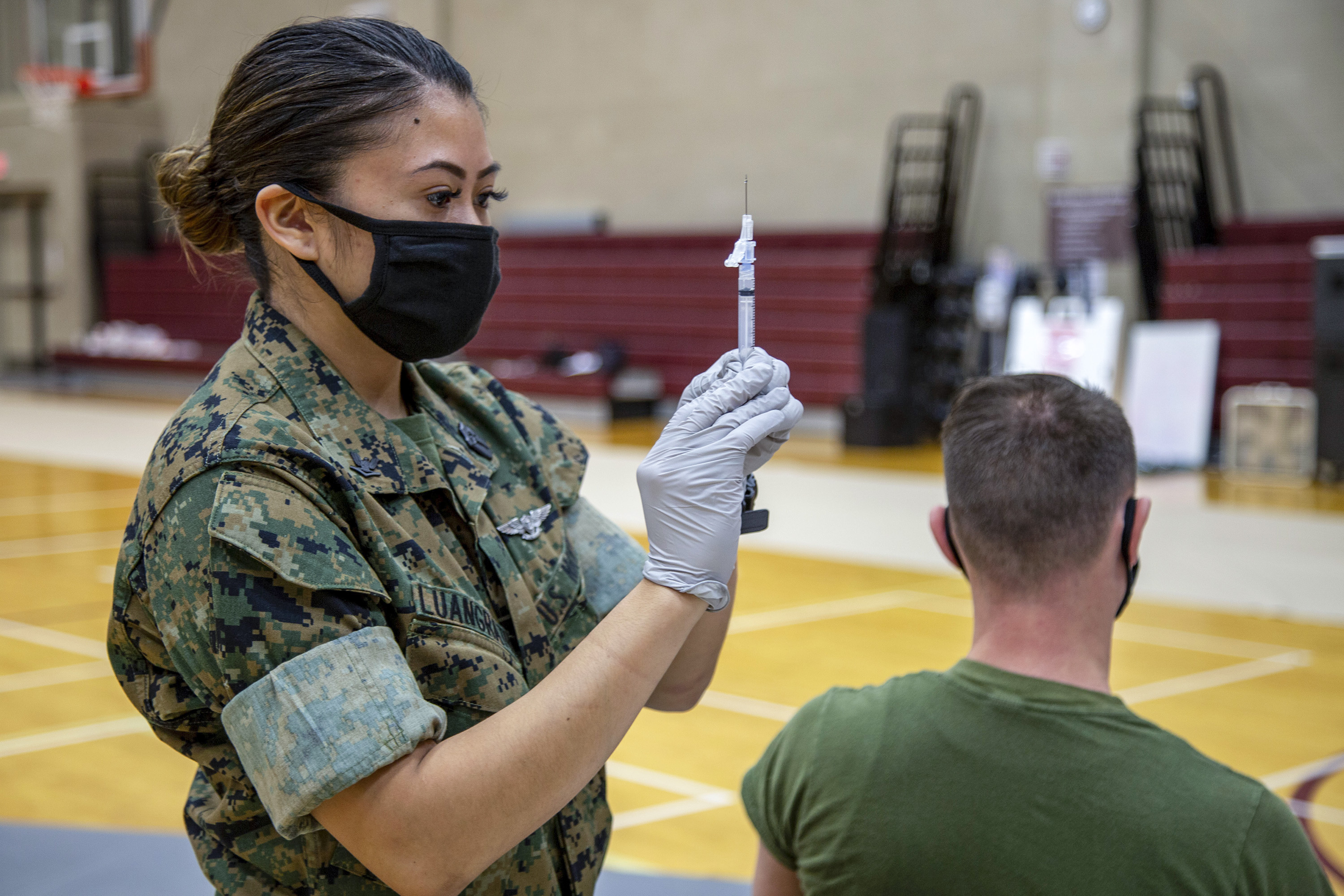
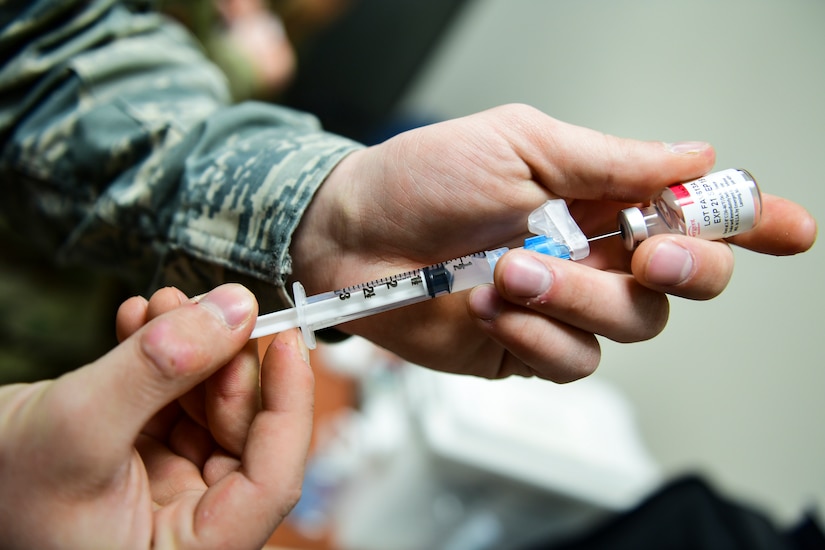
Navy Petty Officer 3rd Class Sheila Laungrath, a hospital corpsman, prepares to administer the flu vaccine to a Marine at Marine Corps Air Station New River, N.C., Oct. 22, 2020. The station’s medical clinic has COVID-19 mitigation measures in place while providing the flu vaccine.
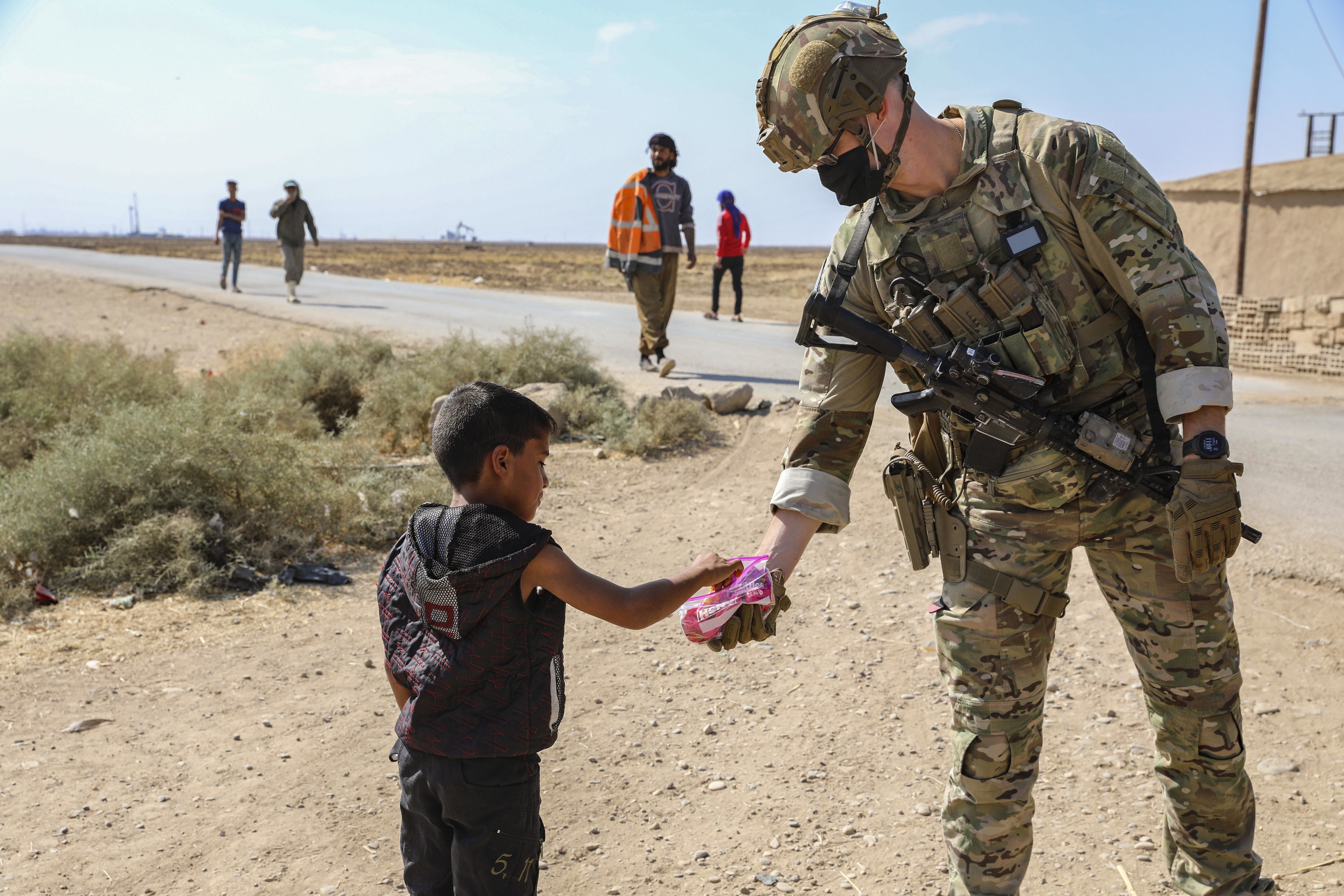
A soldier interacts with a child while meeting with villagers in northeastern Syria, Oct. 15, 2020. The soldiers are supporting Operation Inherent Resolve.

Dr. Dan Angelini, a research biologist at the Army's Combat Capabilities Development Command Chemical Biological Center, loads the lung chip into its medium supply system known as a "pod" at Aberdeen Proving Ground, Md., Oct. 21, 2020.

Marines participate in a close-air support training mission at Combined Arms Training Center Camp Fuji, Japan, Oct. 20, 2020.

Arizona National Guardsmen prepare boxes of groceries to be delivered to area residents at a kosher food bank in Phoenix, Ariz., Oct. 21, 2020. The Arizona National Guard has activated more than 800 citizen soldiers and airmen to support the community during the pandemic emergency response.
Oct. 22, 2020
Chief Pentagon Spokesman Jonathan Rath Hoffman provided the following readout:
Secretary of Defense Dr. Mark T. Esper met with Israeli Minister of Defense Benjamin Gantz at the Pentagon today.
The two leaders discussed the security and stability of the Middle East, as well as the United States’ long-standing and continuing commitment to maintaining Israel’s qualitative military edge.
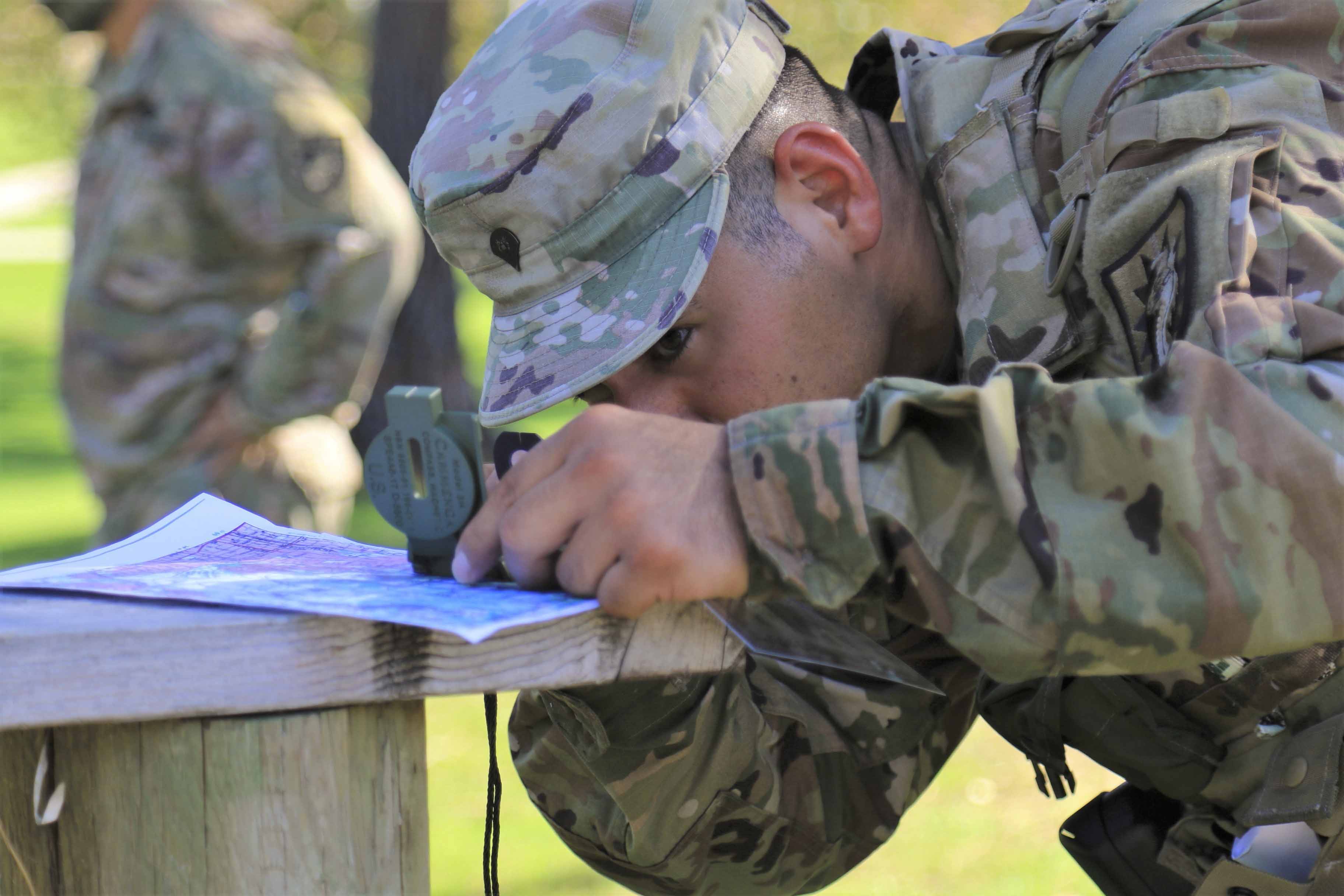
Army Spc. Uriel Deniz participates in the land navigation course of the 224th Sustainment Brigade Best Warrior Competition in San Dimas, Calif., Oct. 16, 2020.

Marine Corps Staff Sgt. Ruben Arzate lowers a payload from an MV-22B Osprey to the ballistic missile submarine USS Henry M. Jackson around the Hawaiian Islands, Oct. 21, 2020.

The USS Iwo Jima fires a rolling airframe missile during surface warfare advanced tactical training in the Atlantic Ocean, Oct. 18, 2020.

Marine Corps Maj. David Cole II, right, and Cpl. Trevor Meegan exit an MV-22B Osprey during an exercise in Ajo, Ariz., Oct. 9, 2020.
Oct. 22, 2020
Secretary of Defense Dr. Mark T. Esper participated in his sixth NATO Defense Ministerial as the U.S. Defense Secretary today, providing remarks during a session where Allies focused on strengthening deterrence and defense, and improving resilience.
The Secretary focused on strengthening deterrence and defense, equitable burden sharing, and Alliance unity, using the Department’s new initiative, the “Guidance for Development of Alliances and Partnerships,” as a guide for the discussion.
The Secretary discussed challenges posed by increased Russian aggression, including concerns over their growing missile capabilities. He also addressed the risks of depending on the People’s Republic of China for technology and critical infrastructure as they continue to undermine the international global order.
Secretary Esper welcomed the progress that Allies have made towards acquiring and strengthening conventional capabilities. He also emphasized the importance of fulfilling NATO-assigned capability targets to ensure NATO has the ready forces and equipment necessary to deter and counter any threat.
Secretary Esper reiterated the importance of all Allies meeting the goals of the 2014 Wales Defense Investment Pledge, including spending two percent of GDP on defense, even as the Alliance faces challenging economic times during the COVID pandemic. He also welcomed the announcement that 2020 marks the sixth consecutive year of increased Allied defense spending.
Secretary Esper reaffirmed the U.S. commitment to and confidence in the NATO Alliance as we confront the security challenges of the 21st century.
Oct. 22, 2020 |
To achieve our National Defense Strategy goals, the Defense Department must increase the pace by which critical technologies are integrated into the force. According to officials with the Director of Defense Research and Engineering (Advanced Capabilities) and Joint Staff, Joint Force Integration Cell, the Deputy Director for Engineering, in the Office of the Under Secretary of Defense for Research and Engineering, is working with stakeholders from the Joint Staff and services to implement mission engineering methodologies to facilitate technology integration aligned with future Joint Force needs.
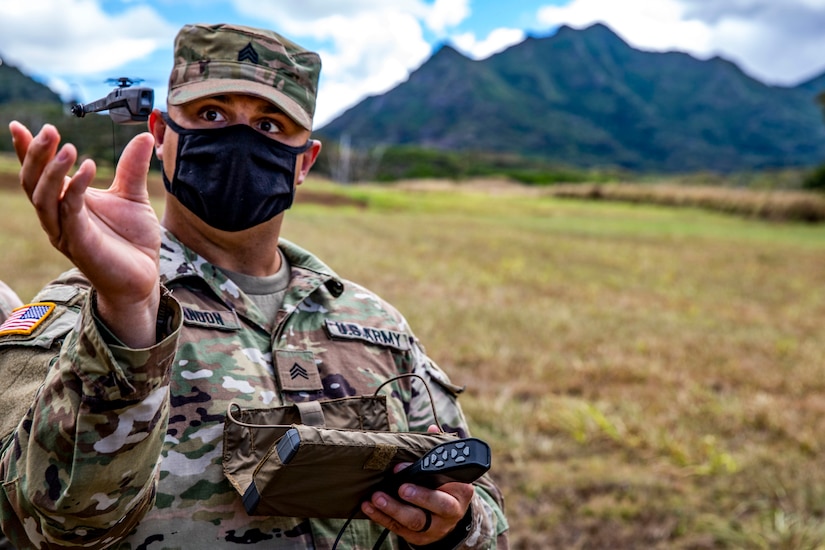
Where systems engineering helps "build things right," ME ensures we are "building the right things." ME, as defined in the forthcoming DoD Mission Engineering Guide being released by R&E, is "the deliberate planning, analyzing, organizing, and integrating of current and emerging operational and system capabilities to achieve desired warfighting mission effects." The officials said ME analyzes systems and systems of systems in an operational mission context to evaluate capability solutions, advise on the development of requirements and inform technology investment decisions.
Officials added that R&E is currently involved in various activities aligned to the National Defense Strategy modernization areas and in support of the Joint Staff. R&E's ME framework focuses on desired activities and effects rather than the current pipeline of programs and systems, using mission capability as the measuring stick to make it easier to decide on technology investments. It provides a systematic method to analyze, communicate, and compare joint warfighting concepts. It starts by defining and inputting the activities, assumptions, dependencies, threats and gaps within a concept's "mission area" future scenario. Then, using metrics and other indicators, it examines mission threads and effects-chains to quantify improvement and expose gaps between current and future technologies through tradeoff analysis.

The R&E is working with the Joint Staff and other stakeholders to apply this methodology to help guide the Joint Warfighting Concept (JWC), said the officials. The JWC's supporting concepts are emerging, threat-informed constructs to codify globally integrated operations encompassing all-domain maneuver warfare — supported by leading-edge concepts in command and control, joint fires, information assurance and contested logistics — enhanced by integrated capabilities in space, cyber, and electromagnetic spectrum dominance. By setting the JWC in a common analytical framework, it can validate (or invalidate) assumptions and untangle complex and intertwined dependencies. Mission blueprints and enterprise architectures are the products that capture these dependencies, future constructs, and performance needs.
Additionally, R&E co-chairs the Joint All Domain Command Control (JADC2) Research and Engineering/Reference Architecture Working Group. R&E, in coordination with J6, is conducting ME to apply analytical and technical rigor in a mission context to identify JADC2 capabilities and requirements and inform investment decisions for research and development initiatives. The results will support the development of the JADC2 reference architecture which provides the foundation to connect distributed sensors, shooters and data across all domains to all forces, the officials added.
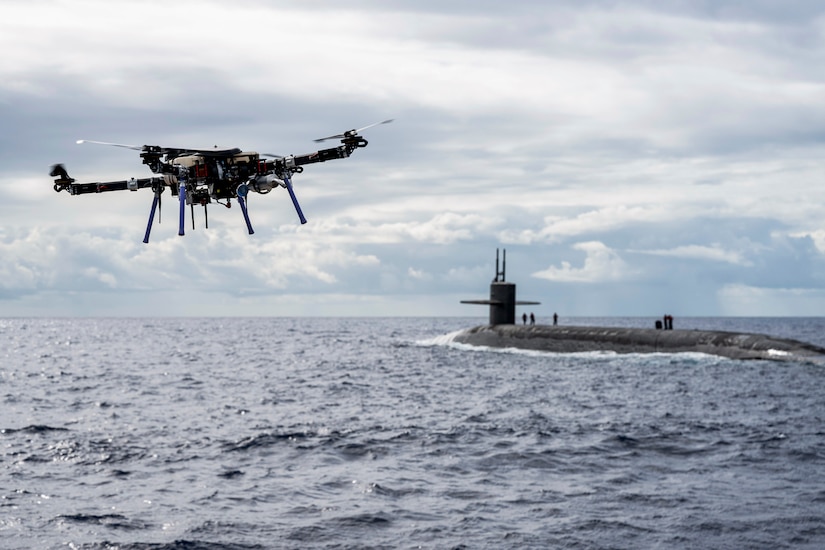
ME products are already making a significant impact by providing data-driven "mission blueprints," as well as government reference architectures that help decision makers ensure research, technology and programs converge in the proper timeframes. The officials said that applied to JADC2, FNC3 and other technical focus areas, the R&E's principal directors for modernization can apply ME to guide the maturation of capabilities that deliver the highest mission efficacy and mission return on investment.
The officials said to face the challenges of this century, and give U.S. warfighters the technological edge they need to effectively confront near-peer competitors, the Defense Department must embrace a new approach to joint capability modernization. ME and related tools like the ME Framework will help instill engineering rigor into the technology and acquisition pipelines, with the promise of keeping U.S. forces relevant and dominant in the rapidly evolving battlespace of the coming decades.
Oct. 22, 2020 | , DOD News
During an impromptu press conference, Defense Secretary Dr. Mark. T. Esper reaffirmed the U.S. commitment to maintain Israel's qualitative superiority in weapons sales.
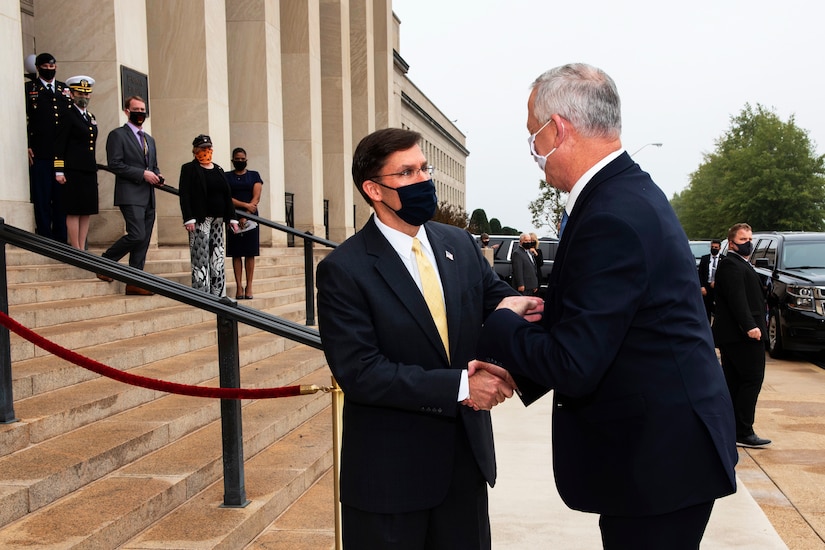
Esper repeated the American commitment after meeting with Israeli Defense Minister Benny Gantz in the Pentagon. It was the second visit of the future Israeli prime minister to the Pentagon in less than a month.
"It was important for me once again to reaffirm the special relationship between our two countries, the commitment we made to Israel security that's based on our shared values, our shared history and the commonalities between our two peoples," Esper said. " I want to thank you for your personal efforts in the past few weeks, and I want to state again, how committed we are to Israel's qualitative military edge when it comes to defense sales, and our commitment to Israel security, which has been long-standing and guaranteed and ironclad."
Gantz thanked the secretary for the guarantees and praised the bipartisan consensus around aid to Israel. "I want to thank the American administration for supporting it," Gantz said. "Now that we are entering an era of good and positive normalization processes in the Middle East, which actually can face aggressive Iran over all the region. This … continued cooperation, I would say, is so very important."
Oct. 22, 2020 |
Dover Air Force Base is the first Air Mobility Command base to conduct an event known as Ready EAGLE, or readiness exercises and assessments in a goal-oriented learning environment.

The base's Medical Contingency Response Program team and other units of the 436th Medical Group participated in Ready EAGLE.
First developed in 2019, Ready EAGLE is an initiative developed by the Air Force Medical Service preparedness and response oversight committee to reinvigorate installation medical response programs.
"Ready EAGLE is about developing the confidence and skill set to enhance our response capability," Lt. Col. Kristen Carter, commander of the 436th Medical Support Squadron, said. "It's designed as a crawl-walk-run program with seminars, equipment reviews and tabletops leading to a full-scale exercise at the end of the week, all designed to enhance our response capability."
Ready EAGLE implements robust, hands-on tools and training in support of full-spectrum medical readiness, Air Force Maj. Harold Brown, 436th Medical Support Squadron medical readiness officer, said. Brown and his readiness team facilitated the Ready EAGLE visit.
"We've been working with our [major command point-of-contact] and our Ready EAGLE team for over a year, and my readiness office has been working diligently with the base, wing and our counterparts at [the] MAJCOM to make sure this is a success," Brown said.
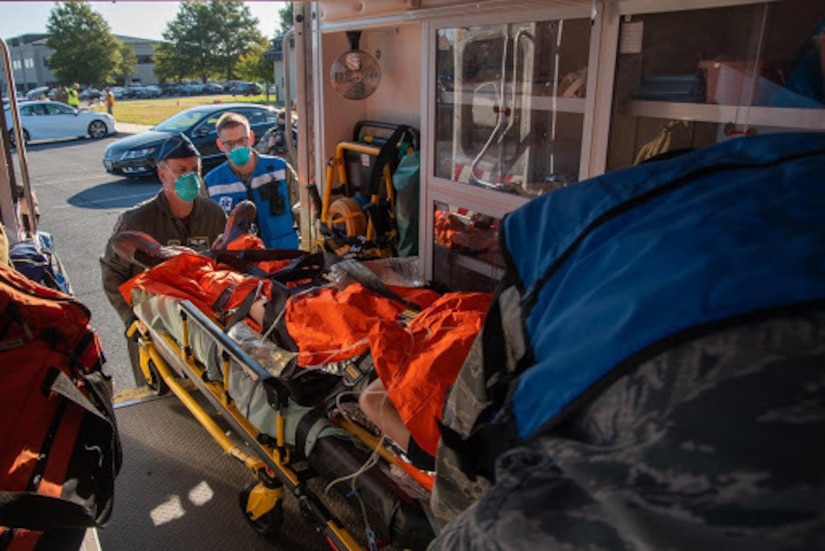
Airmen who participated gained skills in patient decontamination, patient tracking, triage, disease containment and much more.
Ready EAGLE prepares the Air Force's medical assets for installation medical response to all hazards, including chemical, biological, radiological and nuclear incidents.
"Training, lesson plans and other tools … give Air Force medics the ability to have the confidence and the cohesion that we need so much," Martin Schelling, Air Mobility Command medical emergency manager, said. "So, as you go from Air Force facility to Air Force facility, it is the same skills and the same program."
The COVID-19 pandemic presented new challenges while planning Ready EAGLE. Participants wore masks and socially distanced themselves to help mitigate the risk of exposure to COVID-19.
"The COVID-19 crisis has dynamically changed our entire world," Schelling said. "When we were confronted with this crisis, we naturally wanted to rely on our planning and training that we had performed for years. We've had to go on a six- or seven-month hiatus from doing hands-on exercises and training."
To mitigate the risk of COVID-19, the 436th Medical Group ensured that all participants wore masks and provided larger venues to allow for social distancing.
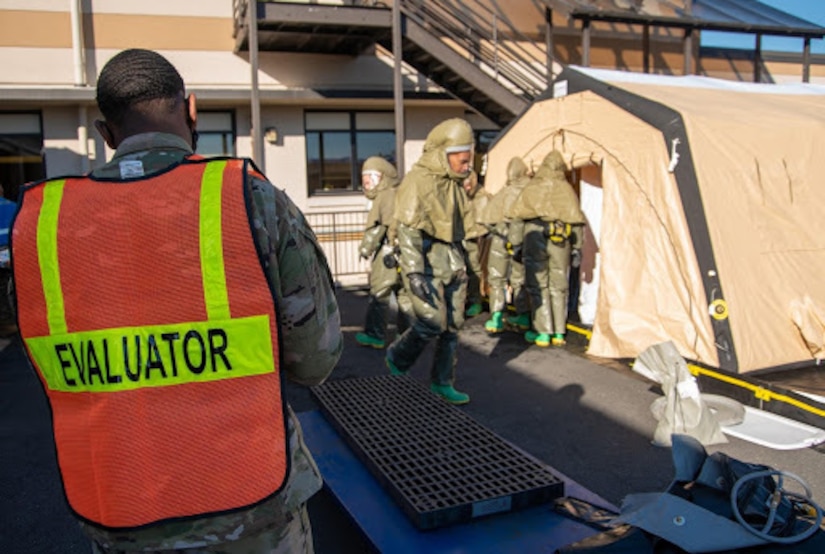
The 436th Medical Group even implemented COVID-19 response scenarios
into Ready EAGLE, including a public health training session that
addresses outbreak investigation procedures.
Ready EAGLE was a collaborative effort that required help from volunteers throughout the base.
"With an event of this magnitude, there are a lot of moving parts,"
Brown said. "Some of the challenges include securing the locations for
the breakout sessions and finding volunteers. We've reached out across
the wing to help with these challenges."
After considerable planning, collaboration and adjustments to COVID-19,
Dover Air Force Base and other participating bases have found a way to
continue preparing for its medical readiness.
"Ready EAGLE is the best way … to take our Air Force medics to a new level," Schelling said.
Oct. 21, 2020 | , DOD News
Lee Kelley, the director of the military community support programs, discussed the need for such programs during a recent interview.
Kelley is intimately familiar with the problem having been detailed to serve as the deputy director for the Defense Suicide Prevention Office. In studying the complex nature of suicide, the Defense Department has found that relationships are a top contributing factor.
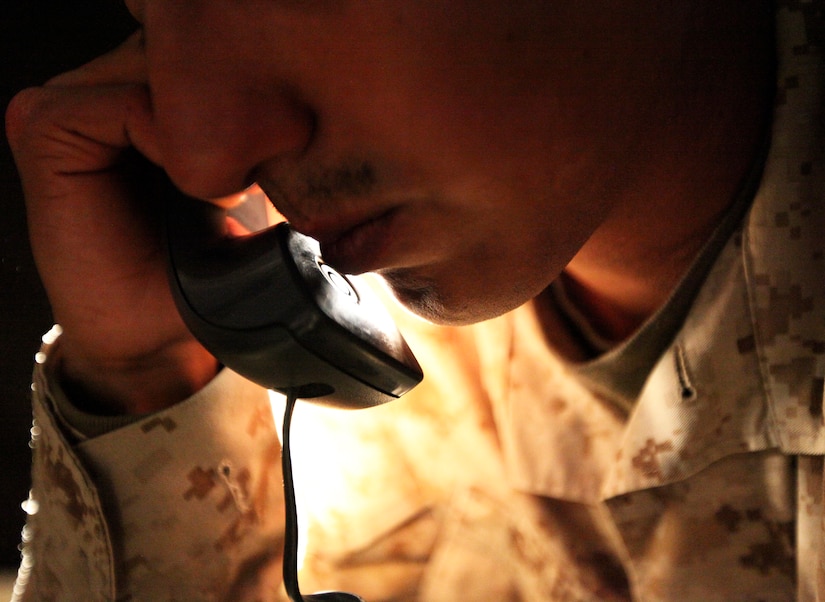
Beyond that, "relationships are the top reason that service members and families seek non-medical counseling through some of the programs that I work with," she said.
Kelley went back to her regular job and gathered a group of experts to examine the type of relationship support being provided to the community across the DOD around the world. "Through the course of this deep dive group, research was brought up about different relationship interventions that have shown promising results in the military community," she said.
The relationship campaign for service members and military families has been launched.
In the civilian world, most couples have families nearby or a network of friends they can confide in, Kelley said . There are churches or medical personnel they can turn to. Many times in the military situation, service members may feel there is no support group.
But there is, Kelley says, and she wants service members to know they are not alone, and there are ways to get that support.
"First of all, we want them to know that they should be comfortable seeking support through our counselors," she said. "What we're doing as a first part of the campaign is pulling back the curtain on what relationship support looks like. What is it? What does it even look like to sit down with a counselor? What kinds of questions are they going to ask me? Does it mean my relationships [are] over if I sit down with a counselor or ask for help?"
Service providers, like the military and family life counselors, will post on social media to talk about what relationship support looks like, what it sounds like, what it feels like, with the end goal being to normalize the experience of seeking help for a relationship, she said.
The second phase of the program is to define what skills an individual can build on to find success in relationships or recover when a relationship doesn't work out, she said.
Kelley is clear-eyed about what can be accomplished. She knows that break-ups happen. "The worst thing that we can hear is that we may have a junior enlisted service member on the East Coast, and their significant other breaks up with them via text message from the other side of the country," she said. "We don't want that service member to feel alone. We don't want that service member to feel like there's no tomorrow. There are alternatives."
And service members and their families are responding. In fiscal 2019, counsellors conducted more than 260,000 relationship sessions through the military and family life counseling program. The program is accessible "to all of our active duty, National Guard and Reserve service members and families, regardless of activation status from anywhere around the world," Kelley said.
COVID-19 has forced some changes, and telehealth counseling is part of the process. Kelley said there has been an uptick in couples seeking counseling since the start of the pandemic, but it is continuing the rise the office saw in previous years. COVID-19 is also forcing couples to confront their problems in ways they might not have done in the past, she said.
Information is at Military OneSource at 1-800-342-9647. There is also an opportunity for a live chat on the website, militaryonesource.mil.


 Posts
All Comments
Posts
All Comments
Posts
All Comments
Posts
All Comments


