Saturday, April 18, 2020

Air Mobility Command Battle Staff Directs Around-the-Clock COVID Fight Support


April 16, 2020 | BY AIR FORCE 2ND LT. EMMA QUIRK

A small group of experts continues to work around the clock at Scott Air Force Base, Illinois, overseeing Air Mobility Command's contribution to Defense Department operations in the COVID-19 pandemic fight and arming mobility airmen with clear guidance on executing operations safely and effectively.

''We've been sprinting since [Air Force Gen. Maryanne Miller, the AMC commander] activated our CBS on March 4,'' said Air Force Maj. Gen. Samuel ''Bo'' Mahaney, AMC chief of staff.

''With clear instruction to provide a single, 24/7 cell of experts who can ensure uninterrupted rapid global mobility amidst the COVID-19 pandemic, these experts have produced more than 40 battle staff directives that offer guidance to our airmen on everything from aircraft decontamination to patient movement to timely reporting of COVID-19 cases on our installations,'' Mahaney said. ''With masks donned, these unsung heroes inside the CBS have toiled around the clock to ensure we continue to help those in need during these difficult times.''

Under Mahaney's direction and led by a colonel, the CBS is composed of civilian and military experts from across the headquarters staff, representing an array of specialties such as medical, logistics, operations, public affairs, security and liaisons from AMC's 618th Air Operations Center, to name a few. This collaborative team has provided expertise, networking and unique perspectives to solving problems, answering urgent tasks and disseminating time-critical information.

Early on, the CBS anticipated a shift toward virtual operations. When the governor of Illinois announced a statewide shelter-in-place order March 20, the team was already postured for the shift.

''Once Scott Air Force Base followed suit by implementing reduced manning operations, the CBS adjusted accordingly to protect the mission-essential personnel who continue to maintain a physical presence in work centers,'' said Air Force Col. John Platte, one of the first CBS directors to lead daily operations. ''To remain connected while abiding by social distancing procedures, we've done whatever [was] necessary to maintain robust communications across the battle staff and headquarters while keeping our people safe, to include staggered shifts and utilizing teleconference calls, collaboration platforms and other technology.''

As the CBS manages operations and responds to a steady flow of requests for information, several operational planning teams and working groups have labored away in adjacent rooms to develop in-depth plans and options for some of the more complex mobility issues AMC has faced during the pandemic.

''The CBS has been, and continues to be, critical to providing operational planning teams and working groups with information,'' said Air Force Col. Russel Frantz, who provided subject matter expertise to a team focused on aeromedical evacuation. ''This data was used to plan for and execute AMC's first Transport Isolation System patient movement, work contracts for the next-generation airborne isolation system known as the Portable Bio-Containment Module, and help leadership understand COVID-19 impacts to training and readiness.''

Among its more pressing tasks, the CBS was directed early on to develop guidance on how to continue conducting cargo and passenger movement and aeromedical evacuation missions in and through high-risk areas while remaining mindful of the growing risk that contagious passengers or patients might be aboard those missions.

''Our 24/7 OPTs have provided solutions on a variety of issues, including aircraft decontamination and the movement of contagious patients onboard pressurized, military aircraft,'' Frantz said. ''We've developed similar guidance and procedures before on a limited basis during contingencies like the 2014 Ebola outbreak, but never of this scale and scope. Our detailed plans and directives have allowed AMC to continue to conduct airlift and [aeromedical evacuation] missions across the globe in support of the joint force, our partners and allies.''

Under the direction of Air Force Brig. Gen. Joel Jackson, AMC deputy director for operations, and operational planning group director Air Force Col Scott Minton, the CBS and its supporting operational planning teams helped to plan and establish a Transport Isolation System operation staged out of Ramstein Air Base, Germany. Additionally, within hours of the CBS publishing an operational planning team effort to develop AMC's patient movement plan, a C-17 Globemaster III aircrew and medical support specialists stepped to their aircraft at Ramstein in the dark of night – with patient movement plan in hand – to execute the first operational employment of the system and the first movement of COVID-19 positive patients aboard a pressurized military aircraft.

The April 10 AE mission validated the efforts of the AMC planners who designed Transport Isolation System operations and the patient movement plan by safely transporting three infected U.S. contractors from Afghanistan to Ramstein. They are now receiving care at nearby Landstuhl Regional Medical Center.

''I'm immensely proud of what these airmen have done through around-the-clock operations,'' Mahaney said. ''Working long hours with a sense of urgency, their efforts providing guidance and resources to keep our AMC airmen safe as they carry out the mobility mission across the globe, from passenger terminal specialists checking those seeking to fly aboard our gray tails, to security forces airmen checking identification at the gate.''

As guidance is provided by the CBS, AMC units often provide formal and real-time feedback to the CBS director so they can revise to better meet the needs of the force. ''The men and women out executing the guidance we provide are our eyes and ears,'' said Air Force Col. Patrick Winstead, who pulled 10 shifts as CBS director. ''We depend on their feedback to make sure what we are providing is conducive to mission success.'' He added that overall, feedback has been constructive and positive.

Though the duty hours may have changed for some, a constant state of readiness is nothing new to mobility airmen. AMC routinely responds to emerging requirements for airlift across the globe so the command is poised to support the whole-of-government effort to combat the COVID-19 outbreak.

''It is crucial we keep everything moving across the globe,'' Mahaney said. ''Mobility airmen continue to safely execute rapid global mobility, and Headquarters AMC is no exception. We’re doing everything possible to ensure our airmen on the ground and in the skies are able to still conduct mobility operations in light of the elevated risk COVID-19 presents to our airmen and operations.''

(Air Force 2nd Lt. Emma Quirk is assigned to Headquarters Air Mobility Command.)

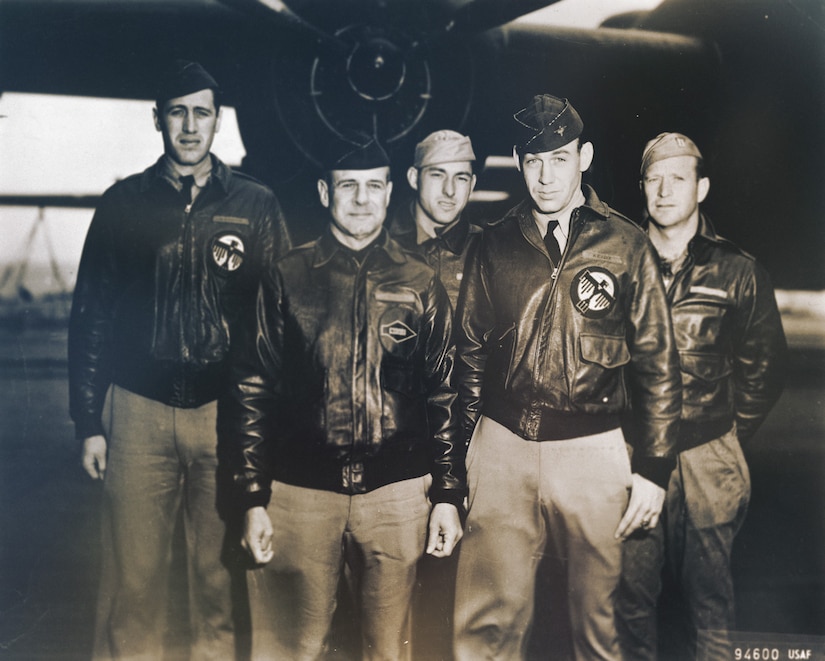
Doolittle Raid on Japan 78 Years Ago Buoyed American Spirits


April 18, 2020 | BY David Vergun , DOD News

The April 18, 1942, Doolittle Raid on Japan early in WorldWar II bolstered American spirits just months after the surprise attack on Pearl Harbor and the loss of the U.S. territories of Guam and the Philippines.

The other goals of the mission were to bomb Japanese war industries and to lower the morale of the Japanese people.

The problem was that the U.S. didn't have long-range strategic bombers that could take off from Hawaii on their bombing run to Japan and then return. So with the help of the Navy, a plan was hatched.

The Army Air Force's North American B-25B Mitchell was selected as the best bomber available that could take off from an aircraft carrier. The commander of the raid, Army Lt. Col. Jimmy Doolittle, planned to fly his squadron from a carrier to the Soviet city of Vladivostok after the bombing run.

But they would not return to the carrier. B-25B tests showed that it had difficulty landing on the deck of a carrier, as it was meant to be a land-based runway aircraft. Also, the carrier group could get out of harm's way quickly enough, as enemy planes and ships were anticipating such an attack and had positioned vessels at sea to spot U.S. warships. The bombers also lacked radar.

Although the Soviet Union was a U.S. ally against Germany, it had signed a nonaggression pact with Japan, so it declined an offer to participate.

To get within range of Japan, the plan was to sail the carrier USS Hornet within 400 miles of mainland Japan, launch the 16 aircraft with a crew of 80 airmen and quickly sail out of harm's way, along with the carrier Enterprise; a cruiser; eight destroyers and two oilers.

However, when the task force was 750 miles from Japan, they were spotted by a Japanese patrol vessel, which the cruiser USS Nashville, promptly sank. However, the patrol vessel had time to radio a warning to the Japanese military, so the decision was made to launch the 16 B-25B's immediately and get out of the area as quickly as possible.

Six hours after launch, the aircraft bombed military and industrial targets in Tokyo and other large cities on the main island of Honshu.

Of the 16 planes, 15 crash-landed in China and one aircraft, which was low on fuel, landed in the Soviet Union, which was closer. Crew members from that plane were detained because the rules of neutrality were such that the men couldn’t be returned. However, they all managed to escape.

In total, three crew members were killed in action. Another three were executed by the Japanese, and one died in captivity. This was considered a relatively low fatality rate for such a risky mission.

One of the survivors, Doolittle, received the Medal of Honor in 1942 from President Franklin D. Roosevelt.

One of those who was captured by the Japanese, Army 2nd Lt. George Barr, was treated horribly while in custody, and at one point was near death. After the war and after recovery, he returned to Japan as a missionary, serving there for 30 years.

The Doolittle Raid, while doing relatively minor damage to Japan, did serve to greatly boost the morale of the American people, which was the primary aim.

USS Vermont becomes latest Virginia-class fast-attack submarine in service


April 18, 2020

The U.S. Navy commissioned USS Vermont (SSN 792), the 19th Virginia-class attack submarine, today, April 18, 2020.

Although the traditional public commissioning ceremony was cancelled due to public health safety and restrictions of large public gatherings, the Navy commissioned USS Vermont administratively and transitioned the ship to normal operations. Meanwhile, the Navy is looking at a future opportunity to commemorate the special event with the ship’s sponsor, crew and commissioning committee.

“This Virginia-class fast-attack submarine will continue the proud naval legacy of the state of Vermont and the ships that have borne her name,” said Acting Secretary of the Navy James E. McPherson. "I am confident the crew of this cutting edge platform will carry on this tradition and confront the challenges of today's complex world with the professionalism and dedication our nation depends on from warriors of the silent service.”

Vice Adm. Daryl Caudle, commander, Submarine Forces, said Vermont’s entry to service marks a new phase of American undersea warfare dominance for a global Submarine Force that is ready to deter, defend and defeat threats to our nation, allies, and rules-based international order.

“This warship carries on a proud Vermont legacy in naval warfare and unyielding determination stretching back to the birth of our nation,” Caudle said. “To her crew, congratulations on completing the arduous readiness training to enter sea trials and prepare this ship for battle. I am proud to serve with each of you! Stand ready to defend our nation wherever we are threatened – honoring your motto – FREEDOM AND UNITY. May God bless our Submarine Force, the people of Vermont, and our families! From the depths, we strike!”

The ship’s sponsor, Ms. Gloria Valdez, former deputy assistant secretary of the Navy (Ships), offered her gratitude to everyone who played a role in delivering USS Vermont to service. She said she is proud to represent the crew and the first Block IV Virginia-class submarine to enter service.

“I am very proud of the sailors and families of USS Vermont who worked so hard to bring her to life, and also feel extremely grateful to everyone who played a role preparing her to defend our nation for generations to come,” Valdez said. “I look forward to commemorating this special occasion together with the crew in the future.”

Vermont's commanding officer, Cmdr. Charles W. Phillips III, highlighted Vermont's accomplishments over the past several weeks getting through initial sea trials. The hard work and dedication of the entire team during the past few years was evident in the successful execution of at-sea testing. He said he is especially thankful to the crew and their families, ship sponsor Ms. Valdez, and the USS Vermont Commissioning Committee, led by Ms. Debra Martin, for all their hard work and support of the crew.

"We recognize just how important the submarine force is during this era of great power competition. As part of the nation's maritime asymmetric advantage over our competitors, we are ready to perform whatever duty is most needed. The crew is hungry to hone our skills at-sea and become an effective fighting unit, and we will work tirelessly to justify the nation's confidence in us. Today marks the culmination of six years of dedicated work by the men and women who constructed the nation's newest and most capable warship. We are all honored to be part of this historic moment," Phillips said. "We are also grateful for the families who have supported our sailors through the long process of bringing this warship to life and dedicated their time with patriotism and selfless devotion."

USS Vermont is the third U.S. Navy ship to bear the name of the “Green Mountain State.” The first Vermont was one of nine 74-gun warships authorized by Congress in 1816. The second Vermont, Battleship No. 20, was commissioned in 1907 and first deployed in December of that same year as part of the “Great White Fleet.” She was decommissioned June 30, 1920.

Vermont is a flexible, multi-mission platform designed to carry out the seven core competencies of the submarine force: anti-submarine warfare; anti-surface warfare; delivery of special operations forces; strike warfare; irregular warfare; intelligence, surveillance and reconnaissance; and mine warfare.

The submarine is 377 feet long, has a 34-foot beam, and will be able to dive to depths greater than 800 feet and operate at speeds in excess of 25 knots submerged. The ship’s construction began in May 2014, and it will provide the Navy with the capabilities required to maintain the nation's undersea superiority well into the 21st century. It is the first the first of 10 Virginia-class Block IV submarines. Block IV submarines incorporate design changes focused on reduced total ownership cost. By making smaller-scale design changes, the Navy will increase the length of time between maintenance stops and increase the number of deployments.