Tuesday, June 06, 2023

Iron Union: Enhancing Military Cooperation Between U.S. and Emirati Forces


In the United Arab Emirates, U.S. and Emirati troops joined forces in the highly anticipated exercise, Iron Union. Through dense smoke and intense challenges, they showcased their synchronized movements and tactical prowess while clearing simulated objectives. This collaborative exercise aimed to strengthen the capabilities of both nations' forces and enhance their ability to effectively operate together in combined squads. The scenario-based training provided valuable insights into interoperability and highlighted the importance of seamless coordination in facing common adversaries.

Karelian Lock 23: Enhancing Readiness and Interoperability through U.S.-Finnish Joint Military Exercises


 Soldiers skillfully maneuver a Bradley fighting vehicle across the rugged terrain of Pahkajarvi Training Area in Finland during the intense Karelian Lock 23 exercise on May 31, 2023. This joint training opportunity brings together U.S. and Finnish forces, fostering collaboration, enhancing military readiness, and promoting interoperability between partner nations. Through force-on-force engagements, these dedicated soldiers strengthen their skills and forge valuable bonds, ensuring they are prepared for any challenge that lies ahead.

V Corps DCG welcomes heroes to 79th anniversary observance


Maj. Gen. Jeff Broadwater, deputy commanding general, V Corps, talks with U.S. Army WWII veteran, and former V Corps Soldier, Jake Larson at a welcoming ceremony for 42 WWII veterans during D-Day 79 commemorations June 1, 2023, in Douville, France. While we will never know the countless acts of heroism that occurred on D-Day, we remain forever indebted to the “Greatest Generation” for their selfless service and sacrifice in defense of global peace and security. (U.S. Army photo by, Spc. Joshua Zayas 4th Infantry Division) (Spc. Joshua Zayas)

U.S. Defense Official Affirms Commitment to Middle East Amidst Troop Withdrawals and Shift in Focus

In an interview with the Jerusalem Post, Deputy Assistant Secretary of Defense for the Middle East, Dana Stroul, emphasized the United States' continued commitment to the Middle East, despite recent troop withdrawals from Afghanistan and Iraq. With over 30,000 troops stationed across the region, the U.S. remains actively engaged in important activities to ensure regional stability and address evolving threats. While the U.S. has shifted its focus to the Indo-Pacific region, Stroul reassured allies that the military force presence in the Middle East has not diminished. She highlighted the ongoing concern regarding Iran's nuclear ambitions and affirmed President Biden's commitment to preventing Iran from acquiring a nuclear weapon. Stroul emphasized the significance of diplomatic efforts supported by a credible military option, with Defense Secretary Austin ready to provide military plans and options if required. The strong partnership between the U.S. and Israel was also underscored, with both countries actively deepening their military cooperation through intelligence sharing, joint exercises, and strategic collaboration. The recent successful conclusion of the Juniper Oak 23.2 military exercise between the U.S. and Israel showcased their preparedness and sent a clear message to both allies and adversaries in the region. Overall, the U.S. remains steadfast in its commitment to the Middle East, working closely with regional partners to address challenges and promote stability.

D-Day Commeration


Army 1st Sgt. Christopher Kenney salutes during the national anthems played at a D-Day 79 ceremony in Picauville, France, June 1, 2023.

Sunday, June 04, 2023

The History and Development of the United States Marine Corps Drill Team


The United States Marine Corps Drill Team is an iconic and highly respected ceremonial unit within the Marine Corps. Renowned for their precision and discipline, the Drill Team showcases the highest standards of military drill and serves as a symbol of excellence for the entire Marine Corps. In this article, we will delve into the rich history and development of the United States Marine Corps Drill Team, exploring its origins, evolution, and the rigorous training that makes them an elite force in the world of military drill.

Origins of the Marine Corps Drill Team: The roots of the Marine Corps Drill Team can be traced back to the early years of the Marine Corps. Drill and ceremony have always been essential components of military training, ensuring discipline, cohesion, and attention to detail among the troops. However, it was not until the 1930s that the concept of a specialized drill team within the Marine Corps began to take shape.

Development and Evolution: In 1934, under the command of Major General John H. Russell, the first official Marine Corps Drill Team was formed. Initially, the team consisted of 50 Marines and was known as the "Russell's Rifles." Their precision and flawless execution of drill movements quickly gained attention and admiration, earning them a reputation as the epitome of military drill excellence.

Over the years, the Marine Corps Drill Team continued to evolve and refine their performances. They introduced new and intricate drill movements, incorporating bayonet-tipped rifles, swords, and other ceremonial elements. The team's dedication to perfection and their commitment to upholding the highest standards of discipline and professionalism propelled them to the forefront of military drill worldwide.

Training and Selection Process: Becoming a member of the Marine Corps Drill Team is no easy feat. Marines who aspire to join the team undergo a rigorous selection process. Candidates must demonstrate exceptional physical fitness, discipline, and mastery of basic drill movements. Only the most highly skilled and disciplined Marines are selected to represent the Marine Corps as part of the Drill Team.

Once selected, the Marines undergo intensive training, honing their skills and perfecting their drill movements. Countless hours are spent practicing and rehearsing to achieve the level of precision and synchronization for which the Drill Team is renowned. The demanding training regimen instills discipline, teamwork, and a deep sense of pride in every member of the team.

Performances and Impact: The United States Marine Corps Drill Team performs at numerous high-profile events, both nationally and internationally. Their performances include military ceremonies, parades, sporting events, and public demonstrations. Each display of precision and discipline not only pays tribute to the Marine Corps but also serves as an inspiration to audiences, showcasing the dedication and professionalism of the men and women in uniform.

The Marine Corps Drill Team's performances have left a lasting impact on spectators and have become an iconic representation of the Marine Corps' commitment to excellence. Their flawless execution of intricate drill movements, combined with the distinctive sound of bayonet-tipped rifles striking in unison, creates a visual and auditory spectacle that captures the attention and admiration of all who witness it.

Conclusion: The United States Marine Corps Drill Team stands as a testament to the Marine Corps' core values of honor, courage, and commitment. Through their relentless training and unwavering dedication, the members of the Drill Team embody the highest standards of military drill and serve as ambassadors of the Marine Corps. Their precision, discipline, and unwavering professionalism leave a lasting impression on all who witness their performances, reflecting the Marine Corps' legacy of excellence in every movement.

Friday, June 02, 2023

Remembering Valor: Cabbage Patch Square and the Battle of Carentan

U.S. and allied forces, World War II veterans and guests participate in the Cabbage Patch Memorial Ceremony in Carentan, France, June 2, 2023. The Cabbage Patch Square is where 79 years ago, U.S. paratroopers began the bloody, close combat battle to liberate the city of Carentan.

Preserving the Legacy of Heroism in the Heart of Normandy

Nestled in the historic region of Normandy, France, lies a place of profound significance - Cabbage Patch Square. This small square holds great historical importance as it was the site of intense fighting during the Battle of Carentan, a pivotal moment in World War II. Today, Cabbage Patch Square stands as a living testament to the bravery and sacrifice of those who fought to liberate Europe.

The Battle of Carentan, which took place from June 10 to June 15, 1944, was a critical engagement between American paratroopers and German forces during the larger Normandy Campaign. Carentan, a strategic town situated between Utah Beach and Omaha Beach, held immense value in securing the Allied foothold in Normandy.

Cabbage Patch Square, located at the heart of Carentan, was an essential objective for both sides during the battle. It was named after the nearby Cabbage Patch Farm, which became a significant rallying point for American forces. The square itself became a key focal point of intense combat as American paratroopers, specifically the 101st Airborne Division, valiantly defended their positions against determined German resistance.

The battle for Cabbage Patch Square was characterized by fierce street-to-street fighting, with American soldiers engaged in close-quarter combat against well-entrenched German defenders. The square became a symbol of the valor and determination displayed by the American forces as they sought to secure Carentan and maintain the momentum of the D-Day invasion.

Today, Cabbage Patch Square serves as a poignant memorial to the soldiers who fought and fell during the Battle of Carentan. The square's significance lies not only in its historical context but also in its role as a gathering place for remembrance and reflection. Visitors can explore the square and its surrounding areas, retracing the footsteps of those who fought bravely in defense of freedom.

The square itself bears witness to the scars of war, with plaques and memorials commemorating the sacrifices made by both American and German forces. These tributes serve as a stark reminder of the human cost of conflict and the importance of cherishing peace.

Adjacent to Cabbage Patch Square is the Carentan War Museum, which offers a deeper understanding of the Battle of Carentan and its impact on the local community. The museum showcases artifacts, exhibits, and personal stories that provide a comprehensive view of the battle and the experiences of those involved. It stands as a testament to the resilience of the human spirit and the enduring legacy of those who fought.

Visiting Cabbage Patch Square and the Carentan War Museum allows visitors to connect with the past, paying homage to the sacrifices made by the soldiers who fought for freedom. It is a solemn reminder of the bravery and selflessness that shaped the course of history.

The preservation of Cabbage Patch Square and the efforts to honor the memory of the Battle of Carentan are a testament to the enduring gratitude and respect held by the local community and beyond. Events and ceremonies held at the square serve as a unifying force, bringing together people from different nations to remember and honor the sacrifices of the past.

As time passes, it becomes increasingly important to preserve and share the stories of the Battle of Carentan and the significance of Cabbage Patch Square. By doing so, we ensure that the bravery and sacrifices of those who fought will never be forgotten, and that the lessons learned from this pivotal moment in history continue to guide us towards a future of peace and understanding.

 In the heart of Normandy, Cabbage Patch Square stands as a living testament to the valor and resilience displayed during the Battle of Carentan. It is a place where history comes alive, inspiring us to remember, reflect, and appreciate the courage and sacrifice of those who fought for freedom. Let us honor their memory and strive for a world where conflicts are resolved through dialogue and understanding.

Combat King II


Air Force personnel jump out of an HC-130J Combat King II during training over Djibouti, May 9, 2023.

Former U.S. Air Force Officer Sentenced: Unveiling the Breach of National Security Secrets

Former U.S. Air Force Lieutenant Colonel, Robert L. Birchum, was sentenced to three years in federal prison and fined $25,000 by U.S. District Judge Kathryn Kimball Mizelle in Tampa, FL. Birchum pleaded guilty to unlawfully possessing and retaining classified documents related to national defense on February 21, 2023.

During his 29-year career in the Air Force, Birchum held various intelligence positions, working with classified information for prominent agencies such as the Joint Special Operations Command and the Office of the Director of National Intelligence. Despite having entered into agreements to protect classified information, Birchum violated these obligations.

In 2017, law enforcement discovered that Birchum had knowingly taken over 300 classified files and documents, including more than 30 labeled as Top Secret, from authorized locations. He stored these materials in unauthorized places such as his home, overseas officer's quarters, and a storage pod in his driveway. Among the confiscated items were two documents on a thumb drive found at Birchum's residence, containing sensitive information about the National Security Agency's capabilities, collection methods, and vulnerabilities of targets. Both documents were classified as Top Secret/SCI, and their unauthorized release posed a grave threat to national security.

U.S. Attorney Roger Handberg emphasized the serious risk that Birchum's actions posed to national security, thanking law enforcement partners for their commitment to safeguarding the nation. FBI Tampa Special Agent in Charge David Walker highlighted the FBI's dedication to protecting the secrets of the U.S. Intelligence community and ensuring the security of the country.

The case was investigated by the U.S. Air Force Office of Special Investigations and the FBI. Assistant U.S. Attorney Cherie L. Krigsman of the Middle District of Florida, along with Trial Attorney Evan N. Turgeon from the National Security Division's Counterintelligence and Export Control Section, prosecuted the case.

This sentencing serves as a reminder of the government's determination to pursue individuals who knowingly endanger national security and the critical importance of upholding classified information protocols.

Wednesday, May 31, 2023

DOD Announces New Security Assistance Package for Ukraine

 May 31, 2023 | By Joseph Clark

The Defense Department has revealed a significant security assistance package for Ukraine, aimed at bolstering the country's defenses against Russian airstrikes targeting critical infrastructure. Valued at up to $300 million, this latest package marks the 39th drawdown of DOD equipment for Ukraine since August 2021.

The announcement comes in response to Russia's recent drone attacks on Ukraine's civilian infrastructure, even far from the front lines. "Russia has continued to wage a brutal, completely unprovoked war against Ukraine, launching yet more airstrikes and bombarding Ukrainian cities across the country," stated National Security Council spokesman John F. Kirby during a briefing at the White House.

Russian aggression has included 17 separate air assaults on Ukraine's capital, Kyiv, in May alone, causing harm to civilians and critical civilian infrastructure. In light of these attacks, the United States is committed to providing Ukraine with the necessary support to enhance its defense capabilities.

The security assistance package includes additional munitions for Patriot air defense systems, Avenger air defense systems, Stinger antiaircraft systems, and AIM-7 missiles for air defense. Moreover, it encompasses more artillery and antiarmor capabilities, as well as precision aerial munitions and other essential items.

Since Russia's invasion in February 2022, the Biden administration has committed over $37.6 billion in security assistance to Ukraine. This highlights the unwavering support of the United States and its allies in aiding Ukraine's defense.

Secretary of Defense Lloyd J. Austin III emphasized the urgent need to help Ukraine safeguard its skies during the recent meeting of the Ukraine Defense Contact Group. Ground-based air defense was identified as one of Ukraine's top priorities. Austin stated, "In recent weeks, Russia has intensified its sordid bombardment of Ukrainian cities and infrastructure. And the Kremlin's cruelty only underscores Ukraine's need for a stronger, layered ground-based air defense architecture."

Under the U.S. leadership, the Ukraine Defense Contact Group, which consists of over 50 countries dedicated to Ukraine's defense, has convened 12 meetings since the Russian invasion. Austin reiterated the United States' unwavering commitment to supporting Ukraine, expressing that the contact group is determined to do even more in aiding Ukraine's fight for freedom.

As tensions persist in the region, the security assistance package underscores the United States' commitment to Ukraine's security and its firm stance against Russian aggression.

Sunday, May 28, 2023

The U.S. Army Petroleum Center: Fueling the Force for Mission Success

The U.S. Army Petroleum Center (USAPC) plays a vital role in supporting the operational readiness and success of the U.S. Army. As a specialized organization within the Army, the USAPC is responsible for managing and ensuring the availability, quality, and efficient distribution of petroleum products to meet the needs of military operations worldwide. Let's explore the important functions and contributions of the U.S. Army Petroleum Center.

Established in 1976, the USAPC is headquartered at Fort Lee, Virginia, and falls under the command of the U.S. Army Quartermaster School. The center's mission is to provide petroleum-related support to the Army, including the development of doctrine, training, and oversight of petroleum operations across the force. Its overarching goal is to ensure that the Army's fuel requirements are met effectively and efficiently, enabling the execution of critical missions.

One of the primary functions of the USAPC is to train and educate soldiers in petroleum operations. The center offers a comprehensive range of courses, from basic fuel handling and storage to advanced training for fuel system repair technicians and petroleum supply specialists. These courses equip soldiers with the necessary knowledge and skills to handle various aspects of petroleum operations, including storage, distribution, and quality control. By maintaining a highly trained workforce, the USAPC ensures that the Army has personnel capable of safely and effectively managing fuel resources in diverse operational environments.

In addition to training, the USAPC conducts research and development activities to enhance fuel-related capabilities and technologies within the Army. This includes exploring alternative energy sources, improving fuel efficiency, and implementing innovative methods for fuel storage and distribution. Through collaboration with industry partners and academia, the USAPC stays at the forefront of advancements in petroleum technology, enabling the Army to adapt to evolving energy requirements and environmental considerations.

Furthermore, the USAPC plays a crucial role in overseeing petroleum logistics and supply chain management for the Army. It establishes policies and procedures for the storage, handling, and distribution of fuel resources, ensuring compliance with safety standards and regulatory requirements. The center collaborates with various Army units, contractors, and industry partners to optimize fuel delivery and support operational requirements, both in garrison and during deployments. By maintaining a robust and reliable fuel supply chain, the USAPC contributes to the overall readiness and sustainability of the Army.

The USAPC also works closely with other military branches, governmental agencies, and international partners to coordinate petroleum-related activities and foster interoperability. Through joint exercises and cooperative agreements, the center promotes efficient fuel operations and facilitates seamless integration of fuel support across the joint force. This collaborative approach enhances the Army's ability to operate alongside sister services and coalition partners in complex operational environments.

In conclusion, the U.S. Army Petroleum Center plays a critical role in ensuring the Army's fuel readiness and operational success. Through its training, research, logistics management, and collaborative efforts, the USAPC enables the Army to effectively and efficiently meet its fuel requirements, supporting the readiness and sustainability of the force. As military operations continue to evolve, the USAPC remains dedicated to staying ahead of emerging challenges and advancing petroleum capabilities to fuel the force for mission success.

Saturday, May 27, 2023

Decoding Military Units: Understanding the Distinction between Battalions and Regiments

In military terminology, a battalion and a regiment are both organizational units, but they differ in terms of size, composition, and command structure. Here's an explanation of the difference between a battalion and a regiment:

Battalion:

  • Size: A battalion is typically a mid-sized military unit, consisting of a few hundred to around a thousand soldiers, depending on the specific military branch and country.
  • Composition: A battalion is composed of several companies or equivalent subunits, such as rifle companies, support companies, or specialized platoons. It may include various combat arms and support elements, depending on the mission and function of the unit.
  • Command Structure: A battalion is commanded by a lieutenant colonel or a similar rank officer, who is responsible for leading and managing the unit's operations, training, and administration. The battalion commander reports to higher-ranking officers within the military hierarchy.

Regiment:

  • Size: A regiment is a larger military unit than a battalion, typically consisting of several battalions. The exact size of a regiment can vary depending on the military branch and country. It may range from a few hundred to a few thousand soldiers.
  • Composition: A regiment is made up of multiple battalions or equivalent subunits, such as infantry battalions, artillery battalions, or armored battalions. These battalions operate together under the umbrella of the regiment, sharing a common identity and mission.
  • Command Structure: A regiment is commanded by a colonel or a similar rank officer, who serves as the regimental commander. The colonel oversees the operations, training, and administration of the regiment, coordinating the efforts of the subordinate battalions. The regimental commander reports to higher-ranking officers within the military hierarchy.

Overall, the key differences between a battalion and a regiment lie in their size, composition, and command structure. While a battalion is a smaller unit comprising several companies, a regiment is a larger unit consisting of multiple battalions. The battalion is led by a lieutenant colonel, while the regiment is commanded by a colonel. These units play distinct roles within the military's organizational structure and contribute to the overall effectiveness and operational capabilities of the armed forces.

Friday, May 26, 2023

Remembering the Fallen: A Journey Through the Evolution of Memorial Day

Navy Petty Officer Justin Knight places a flag on a grave at Jacksonville National Cemetery, Fla

Memorial Day, observed annually on the last Monday of May, is a significant holiday in the United States. It serves as a solemn reminder of the sacrifices made by the men and women who gave their lives in service to their country. This day holds deep historical and cultural significance, marking a time for remembrance, reflection, and gratitude. In this article, we will delve into the history of Memorial Day, tracing its origins, evolution, and the traditions associated with this poignant day of commemoration.

Origins of Memorial Day

The origins of Memorial Day can be traced back to the aftermath of the American Civil War. The war, which lasted from 1861 to 1865, claimed the lives of an estimated 620,000 soldiers from both the Union and Confederate sides. As the war came to an end, communities across the nation began to honor their fallen soldiers in various ways.

One significant precursor to Memorial Day was the establishment of national cemeteries. In 1862, President Abraham Lincoln signed the Homestead Act, which granted land for national cemeteries to be established. These cemeteries provided a final resting place for soldiers who had perished in battle.

In May 1865, a few weeks after the end of the Civil War, a group of freed slaves in Charleston, South Carolina, organized a ceremony to honor Union soldiers who had died in a Confederate prison camp. They exhumed the bodies from a mass grave and gave them a proper burial, decorating the graves with flowers and holding a procession. This act of remembrance is considered one of the earliest Memorial Day observances.

Evolution and Official Recognition 

The observance of Memorial Day gradually spread throughout the United States, with various communities and organizations holding their own ceremonies to remember fallen soldiers. The holiday gained momentum and became known by different names, such as Decoration Day and Remembrance Day, in different regions of the country.

On May 5, 1868, General John A. Logan, the commander-in-chief of the Grand Army of the Republic, issued General Order No. 11, designating May 30 as a day to decorate the graves of fallen soldiers. The first national commemoration took place that same year at Arlington National Cemetery, where flowers were placed on the graves of both Union and Confederate soldiers.

Over time, Memorial Day became more widely recognized and respected. In 1971, the Uniform Monday Holiday Act was passed, moving Memorial Day from its traditional date of May 30 to the last Monday in May. This change aimed to create a three-day weekend and encourage more Americans to observe and participate in Memorial Day activities.

Traditions and Observances

Memorial Day has become a day of profound symbolism and heartfelt tributes. Various traditions and observances have emerged to honor the fallen and ensure their sacrifice is never forgotten.

One significant tradition is the Decoration of Graves, where families and volunteers visit cemeteries to place flags, flowers, and wreaths on the graves of fallen soldiers. This act of remembrance serves as a visual representation of gratitude and respect.

Parades are another prominent feature of Memorial Day celebrations. Communities across the country organize parades with marching bands, military units, veterans' organizations, and other groups to honor the service and sacrifice of those who died in service.

In recent years, the "National Moment of Remembrance" has been observed at 3:00 p.m. local time on Memorial Day. This moment encourages all Americans to pause for one minute in silent reflection or prayer to honor the fallen.

Memorial Day also serves as a time for families and friends to gather for picnics, barbecues, and other social gatherings. While these activities may seem unrelated to the somber nature of the holiday, they bring people together and foster a sense of community and unity—a reflection of the freedom and values for which fallen soldiers fought.

Conclusion

Memorial Day stands as a testament to the sacrifices made by brave men and women who selflessly served their country. From its humble origins as a commemoration for Civil War soldiers to its modern-day observances, this day holds great significance in the hearts of Americans.

It is crucial to remember that Memorial Day is not merely a holiday for sales, barbecues, or a day off work. It is a time to reflect on the cost of freedom and to honor those who paid the ultimate price for our nation's ideals.

As we participate in the various traditions and observances of Memorial Day, let us remember the stories of the fallen, their courage, and their unwavering commitment. May we carry their memory in our hearts throughout the year and strive to uphold the principles for which they fought.

Memorial Mission


Navy Petty Officers 2nd Class Robert Harley, left, Justin Knight, front right, and Tania Banks place flags at a cemetery in Jacksonville, Fla., May 25, 2023, in preparation for Memorial Day.

Arctic Angels


Army paratroopers assigned to the 11th Airborne Division, also known as the “Arctic Angels,” jump from a KC-130J Hercules in honor of Spartan Memorial Week at the Malemute Drop Zone, Joint Base Elmendorf-Richardson, Alaska, May 24, 2023. The paratroopers carried the nametapes of 77 fallen comrades who made the ultimate sacrifice during deployments to Afghanistan and Iraq.

Idaho National Guardsmen conduct a Memorial Day

Idaho National Guardsmen conduct a Memorial Day ceremony in Boise, Idaho, May 25, 2023. The ceremony is held annually to honor fallen state guardsmen

Thursday, May 25, 2023

Honoring the Fallen: "Flags In" Tradition Marks 75th Anniversary at Arlington National Cemetery


A solemn tribute to remember and honor America's heroes on Memorial Day

Arlington, Virginia - As Memorial Day approaches, the hallowed grounds of Arlington National Cemetery bear witness to a timeless tradition that has come to symbolize the nation's gratitude and remembrance. Against the backdrop of solemnity and reverence, a soldier meticulously places American flags at headstones, ensuring each fallen hero is honored and remembered. Today, as the nation commemorates the 75th anniversary of the tradition known as "Flags In," we reflect on the enduring significance of this poignant act of tribute.

"Flags In" is an annual event that takes place at Arlington National Cemetery, a place of eternal rest for thousands of American service members who made the ultimate sacrifice for their country. Since its inception in 1948, the tradition has served as a poignant reminder of the courage, sacrifice, and dedication demonstrated by those who have laid down their lives in defense of freedom.

This year's "Flags In" event holds special significance as it marks three-quarters of a century of honoring fallen heroes. As the nation gathers to pay homage to these brave men and women, the act of placing American flags at each headstone represents a heartfelt gesture of remembrance, ensuring that the memory of those who made the ultimate sacrifice lives on.

The meticulousness with which each flag is placed reflects the profound respect and gratitude that our nation holds for its fallen heroes. The rows of fluttering flags, stretching as far as the eye can see, create a poignant and powerful sight, reminding us of the tremendous sacrifices made by service members and their families.

The soldiers who participate in "Flags In" approach their task with solemnity and reverence. With precision and care, they navigate the cemetery's expansive landscape, stopping at each grave marker to ensure that no hero is forgotten. Their dedication to this solemn duty is a testament to the unwavering commitment to honoring those who have served and sacrificed for the nation.

The timing of "Flags In" aligns with Memorial Day, a national observance dedicated to remembering and honoring the men and women who have died in military service. It serves as a poignant reminder to all Americans of the true meaning behind this holiday - a time to reflect, pay tribute, and express gratitude for the freedoms we enjoy, made possible by the sacrifices of our fallen heroes.

As visitors walk through Arlington National Cemetery during this time, they witness the visual impact of the "Flags In" tradition. The sea of red, white, and blue flags waving in the breeze serves as a poignant reminder of the countless lives lost in service to the nation and the deep debt of gratitude we owe them.

"Flags In" at Arlington National Cemetery stands as a powerful symbol of unity and reverence, transcending differences and reminding us of the common values that bind us as a nation. It is a solemn and sacred tradition that renews our commitment to honor the memory of those who have given their all for our freedom.

On this 75th anniversary of "Flags In," let us pause and reflect on the selflessness, courage, and sacrifice of our fallen heroes. As we enjoy the freedoms they fought to protect, may we never forget their legacy and may we strive to live lives worthy of their sacrifice.

As Memorial Day dawns, let us remember and honor all those who have paid the ultimate price in service to our nation. Their sacrifice will forever be etched in our hearts, and their memory will continue to inspire generations to come.

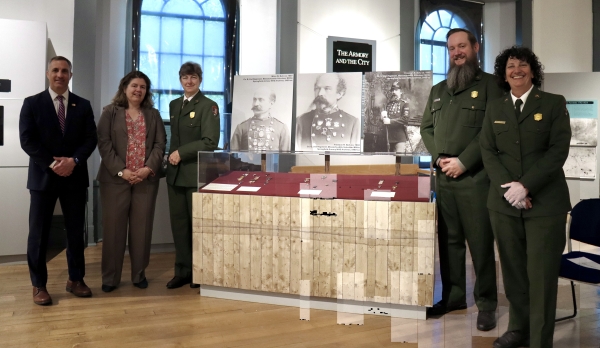
Late-19th Century Marksmanship Medals Returned to Springfield Armory in Ceremony


BOSTON - In a ceremony held earlier today, the United States Attorney's Office for the District of Massachusetts, the Boston Division of the Federal Bureau of Investigation (FBI), and the National Park Service (NPS) marked the return of late-19th century marksmanship medals that had been missing from the Springfield Armory for decades.

The medals, totaling 24 in number, were unlawfully removed from the Springfield Armory, a national historic site located in Springfield, Massachusetts, in the 1990s. During the ceremony, United States Attorney Rachael S. Rollins highlighted the importance of preserving these artifacts for the benefit of the public and emphasized the collaborative efforts between the FBI, NPS, and her office's Asset Recovery Unit in successfully recovering and returning the medals to their rightful home.

Joseph R. Bonavolonta, Special Agent in Charge of the FBI's Boston Division, expressed the significance of returning these treasured medals, emphasizing the loss experienced by visitors who were unable to view these historically significant pieces of military history during their absence. He further underscored the FBI's commitment to combatting theft and the sale of stolen historical property.

Kirsten Talken-Spaulding, Deputy Regional Director of the National Park Service, expressed gratitude for the federal law enforcement officers' efforts and expressed satisfaction in having the medals returned to their rightful owners, the American people. She acknowledged the expertise of the federal employees at the Springfield Armory in preserving these artifacts for future generations.

The marksmanship medals were originally awarded to Milan Bull and Freeman Bull, members of the Massachusetts Volunteer Militia in the late 1800s. The daughter and niece of Freeman Bull and Milan Bull had donated the medals to the Springfield Armory in 1944.

The investigation into the missing medals began in October 2021 when a collector contacted Curator Alex MacKenzie at the Springfield Armory inquiring about the marksmanship medals. Upon cross-referencing the collector's items with the Armory's collection, it was discovered that numerous items matching the collector's description had been missing since the 1990s.

Subsequently, the FBI seized the medals. It is important to note that embezzling, stealing, or knowingly converting government property, as well as selling or disposing of government property without authority, is a violation of federal law.

In July 2022, the United States Attorney's Office filed a civil forfeiture action against the medals. This action allowed third parties to assert claims to the property, which had to be resolved before the medals could be forfeited to the United States and returned to their rightful owners. Following the conclusion of the forfeiture case, the Department of Justice granted the National Park Service's petition for remission, facilitating the return of the medals.

The announcement regarding the return of the medals was made by U.S. Attorney Rollins, FBI SAC Bonavolonta, and NPS Deputy Regional Director Talken-Spauling. Assistant U.S. Attorney Carol E. Head, Chief of Rollins' Asset Recovery Unit, prosecuted the civil forfeiture action.

The Springfield Armory National Historic Site, established by George Washington, is the nation's first armory and operated from 1794 to 1968. The site comprises historic grounds, buildings, and the world's largest historic American military firearms collection. For further information about the site, interested individuals can call (413) 734-8551, visit the website at www.nps.gov/spar, or follow the Facebook page at www.facebook.com/sparnhs.

Secretary of Defense Lloyd J. Austin III Highlights International Support for Ukraine's Defense Efforts at the 12th Ukraine Defense Contact Group

In a powerful virtual gathering, Secretary of Defense Lloyd J. Austin III addressed the 12th meeting of the Ukraine Defense Contact Group, expressing gratitude to participants from around the world for their unwavering commitment to Ukraine's defense. The meeting served as a platform to discuss the progress made in Ukraine's fight against Russian aggression and to announce significant contributions from various countries.

Secretary Austin commenced by acknowledging the unity displayed among the members of the Contact Group, emphasizing their shared determination to support Ukraine's cause. He revealed that the United States has recently committed an additional $1.8 billion in security assistance to Ukraine, demonstrating a long-term commitment to bolstering Ukraine's defense capabilities.

The Secretary disclosed specific components of the assistance package, including equipment such as HIMARS ammunition, anti-tank systems, and laser-guided rockets. Moreover, the United States pledged to provide combat enablers such as heavy equipment transport and armored bridging systems. Additionally, air-defense systems, munitions, and 155-millimeter artillery rounds were included in the support package.

Highlighting the collective efforts of the Contact Group, Secretary Austin noted the recent commitments made by Germany, Denmark, and France. Germany pledged to provide Ukraine with Leopard tanks, ammunition, combat drones, and more, amounting to nearly $3 billion. Denmark announced a significant package encompassing air defense support and combat enablers, while France committed to providing light tanks and armored vehicles. These contributions address Ukraine's immediate needs and underline the sustained resolve of the Contact Group.

Secretary Austin emphasized that the assistance provided aims to make a real-time difference, as the United States and other Contact Group members continue to work closely to fulfill Ukraine's defense requirements. The Secretary highlighted the successful training programs undertaken, including the training of nine motorized and mechanized brigades. He also announced the forthcoming joint effort, led by the United States and its allies, to train Ukrainian pilots on fourth-generation aircraft, including F-16s, further enhancing Ukraine's air force capabilities.

The Secretary expressed his appreciation for the unity demonstrated by the Contact Group, emphasizing the pivotal role played by ground-based air-defense systems in safeguarding Ukrainian skies and civilian infrastructure. Notably, the Patriot air-defense system, provided by the United States, Germany, and the Netherlands, has proven effective in defending against Russian missile attacks. The Contact Group has also supplied other critical air-defense systems such as IRIS-T and NASAMS.

Addressing the media, Secretary Austin outlined the agenda for the meeting, which included briefings from Ukraine's representatives and discussions on accelerating industrial production for critical defense systems. He emphasized the need to explore innovative ways to enhance industrial capacity to meet Ukraine's defense requirements.

In closing, Secretary Austin reiterated the high stakes involved in Ukraine's defense, underscoring the justness of the cause and the unwavering determination to stand up for Ukraine's sovereignty and freedom. The meeting concluded with the Secretary giving the media an opportunity to depart.

The 12th Ukraine Defense Contact Group meeting showcased the united front presented by international partners in support of Ukraine's fight against aggression. As Ukraine continues its struggle, the commitments made by participating nations emphasize their enduring dedication to Ukraine's defense and their shared vision of a sovereign and secure Ukraine.

Tuesday, May 23, 2023

September Food Drive for Marine Corps Families

More than 22,000 active-duty military families, 213,000 National Guardsmen/Reservists, and over 1.2 million Veterans face the challenge of food insecurity. In response to this pressing need, the Pelican Pantry was established by the Armed Services YMCA at 29 Palms Marine Corps Base. It serves as a supplementary food source for Marine and Navy families.

In February 2022, the San Dimas Rotary and various community groups, including those from as far as Georgia, came together for a Food Drive to support the pantry. The initiative successfully collected and delivered over four tons of food and raised over $4000.

While this achievement was commendable, it also shed light on the ongoing issue of food security among military families and veterans. Concerns arose among the participating groups about the future—what would happen when the supplies from the previous drive eventually ran out? Where would the families of the 10,000 Marines and 1,000 sailors at 29 Palms seek support? To address this challenge, Rotary sponsored the establishment of the Rotary Club of Military Family Support (Satellite Club).

On May 21, 2022, eight community members joined forces and formed the Satellite Club. The following week, the Satellite Club received its official charter from Rotary International. On June 18th, the Satellite Club members were inducted into Rotary. In March 2023, the Satellite Club successfully organized its first drive, resulting in the collection of more than five tons of food and nearly $15,000 in donations. The Satellite Club plans to hold two drives annually, with the next one scheduled for September 30, 2023.

The initial meeting to kickstart the upcoming food drive will take place on Wednesday, September 24, 2023, at 6 PM via Zoom. To obtain the Zoom link, please send an email to sandimasrotary@gmail.com.