Sunday, May 21, 2023

Next Generation Squad Weapons: Revolutionizing the U.S. Army's Combat Capabilities

The U.S. Army constantly seeks to enhance its combat capabilities, and the development of Next Generation Squad Weapons (NGSW) represents a significant step forward in modernizing its infantry forces. The NGSW program aims to replace the aging M4 carbine and M249 Squad Automatic Weapon (SAW) with advanced, state-of-the-art weapons. This article explores the key features, benefits, and implications of the Next Generation Squad Weapons for the United States Army.

The Next Generation Squad Weapons program introduces several key features and advancements that enhance the capabilities of infantry soldiers. These include:

  1. Advanced Firepower: The NGSW incorporates advanced technologies to increase the firepower and lethality of infantry squads. It focuses on both individual weapons and squad automatic weapons, providing soldiers with superior range, accuracy, and stopping power.

  2. Weapon Modularity: The NGSW emphasizes modularity, allowing soldiers to configure their weapons based on mission requirements. This flexibility enables easy adaptation to different combat scenarios, ranging from close quarters battles to long-range engagements.

  3. Integrated Fire Control: The new weapons feature advanced fire control systems that enhance accuracy and effectiveness. These systems incorporate improved optics, target acquisition capabilities, and ballistic calculators, enabling soldiers to engage targets with precision and efficiency.

  4. Ammunition Innovation: The NGSW program includes the development of new ammunition types, such as specialized armor-piercing rounds and advanced airburst munitions. These ammunition innovations increase the soldiers' ability to neutralize enemy threats and adapt to different battlefield conditions.

The adoption of Next Generation Squad Weapons brings several benefits and implications for the U.S. Army's infantry forces:

  1. Increased Lethality: The NGSW's advanced firepower, coupled with improved accuracy and range, provides infantry squads with increased lethality on the battlefield. This enhanced capability enables soldiers to engage enemy forces at longer distances and neutralize threats more effectively.

  2. Improved Situational Awareness: The integration of advanced fire control systems and optics enhances soldiers' situational awareness, enabling them to quickly identify and engage targets with precision. This enhanced awareness reduces the risk of fratricide and improves overall mission effectiveness.

  3. Enhanced Soldier Mobility: The NGSW program aims to reduce the weight carried by individual soldiers while maintaining or even increasing firepower. Lighter weapons and ammunition allow soldiers to maneuver more efficiently, improving their mobility and endurance during extended operations.

  4. Adaptability and Mission Flexibility: The modularity of the NGSW enables soldiers to customize their weapons based on mission requirements. This adaptability enhances their effectiveness in various combat environments and ensures optimal performance in different scenarios, from urban combat to open-field engagements.

  5. Technological Advancements: The development of Next Generation Squad Weapons drives technological advancements that have broader implications beyond infantry capabilities. It fosters innovations in materials, manufacturing processes, optics, sensors, and ammunition, benefiting the defense industry and potentially leading to civilian applications.

The Next Generation Squad Weapons program represents a significant leap forward in the U.S. Army's efforts to modernize its infantry forces. The advanced features, increased firepower, and modularity of these weapons enhance the lethality, mobility, and situational awareness of soldiers on the battlefield.

The adoption of Next Generation Squad Weapons aligns with the Army's vision of maintaining a technological edge and equipping its forces with state-of-the-art capabilities. As the program progresses, ongoing research and development, rigorous testing, and close collaboration with industry partners will be crucial to ensure the successful implementation of these advanced weapons.

By incorporating Next Generation Squad Weapons into its combat arsenal, the U.S. Army aims to empower its infantry forces with the tools and capabilities needed to face the evolving challenges of modern warfare, ultimately ensuring the safety and success of soldiers on the ground.

Saturday, May 20, 2023

The Importance of Hearing Protection in Firearm Safety: Safeguarding Your Ears and Enjoying Shooting Responsibly


Firearm safety encompasses a range of essential practices to ensure responsible and secure shooting experiences. While many aspects of firearm safety are well-known, the significance of hearing protection often goes overlooked. This article emphasizes the crucial role of hearing protection in firearm safety. It explores the potential risks of exposure to loud gunshot noise, discusses the types of hearing protection available, and highlights the importance of incorporating hearing protection into every shooting activity.

Understanding the Risks

The discharge of firearms produces intense noise levels that can pose a significant risk to hearing health. A single gunshot can reach sound levels of 140 decibels (dB) or higher, which exceeds the safe limit for human exposure. Prolonged or repeated exposure to such high levels of noise can cause permanent hearing damage, including hearing loss and tinnitus.

Types of Hearing Protection

Effective hearing protection is available in various forms, each offering different levels of noise reduction. The two primary categories of hearing protection are earmuffs and earplugs.

  1. Earmuffs: Earmuffs, also known as ear defenders, consist of ear cups that cover the entire ear. They create a physical barrier between the ear and the surrounding noise. Earmuffs are highly effective in reducing noise levels, providing substantial protection in shooting environments. They are relatively easy to use and are suitable for individuals who may have difficulty inserting earplugs properly.

  2. Earplugs: Earplugs are inserted into the ear canal to create a seal that blocks and reduces sound transmission. They come in various types, including disposable foam plugs, reusable silicone or rubber plugs, and custom-molded plugs. Earplugs are compact, portable, and offer varying degrees of noise reduction, depending on the type and fit.

Both earmuffs and earplugs have their advantages and can be used in combination for even greater protection. Dual protection offers an extra layer of defense, especially in situations where noise levels are extremely high or during prolonged exposure to loud sounds.

Incorporating Hearing Protection 

Incorporating hearing protection into shooting activities is paramount for safeguarding your ears and maintaining long-term hearing health.

  1. Education and Awareness: Educate yourself and others about the potential risks of noise-induced hearing loss. Make hearing protection a routine and non-negotiable aspect of shooting activities.

  2. Selecting Appropriate Hearing Protection: Choose hearing protection that suits your needs and preferences. Ensure that it provides adequate noise reduction and fits properly, creating a secure seal to minimize sound leakage.

  3. Proper Usage: Wear hearing protection consistently and correctly during all shooting-related activities. This includes when participating in target practice, hunting, or attending shooting events. Remember that even a single gunshot can cause irreversible damage.

  4. Communication and Situational Awareness: It is essential to strike a balance between hearing protection and maintaining situational awareness. In situations where communication is crucial, such as during training exercises or hunting with a group, consider using electronic earmuffs or earplugs that allow for ambient sounds to be heard while still providing protection against loud noises.

  5. Encouraging Others: Spread awareness about the importance of hearing protection among fellow shooters, friends, and family. Encourage responsible behavior and make hearing protection a social norm within the shooting community.

Hearing protection is a vital aspect of firearm safety that should never be overlooked or underestimated. The intensity of gunshot noise can cause irreversible damage to your hearing health. By incorporating appropriate hearing protection, such as earmuffs or earplugs, into all shooting activities, you can significantly reduce the risk of noise-induced hearing loss. Prioritizing hearing protection not only preserves your own hearing but also sets an example for others, promoting responsible shooting practices and ensuring a safer and more enjoyable shooting experience for all.

Friday, May 19, 2023

The Evolution of the Military Rifle: From Muskets to Modern Firearms

 The military rifle has played a crucial role in shaping the outcomes of conflicts throughout history. From the early days of muskets and smoothbore firearms to the advanced and sophisticated rifles used by modern armed forces, the evolution of military rifles has been a story of constant innovation, technological advancements, and the quest for enhanced firepower, accuracy, and reliability. This article explores the fascinating journey of the military rifle, tracing its development, key milestones, and the impact it has had on warfare.

Early Firearms and the Transition to Rifling

The origins of the military rifle can be traced back to the late Middle Ages, with the emergence of early firearms such as matchlocks, wheellocks, and flintlocks. These firearms, while rudimentary in design and lacking accuracy, represented a significant departure from traditional weapons like longbows and pikes.

The 18th century witnessed a significant development with the introduction of rifling, which involved the addition of spiral grooves inside the barrel. This innovation imparted spin to the bullet, greatly improving its accuracy and range. The Pennsylvania or Kentucky rifle, with its distinctive long barrel and rifled bore, became a symbol of the American frontier and showcased the potential of rifled firearms.

The Era of Bolt-Action Rifles
 

The mid-19th century marked a pivotal moment in the evolution of military rifles with the advent of bolt-action designs. The introduction of breech-loading mechanisms, coupled with advancements in metallurgy and cartridge technology, revolutionized warfare.

One of the most influential rifles of this era was the Dreyse Needle Gun, adopted by the Prussian Army in the 1840s. It featured a bolt-action mechanism that allowed for rapid reloading, significantly increasing the rate of fire compared to muzzle-loading firearms.

The introduction of smokeless powder in the late 19th century brought further improvements to military rifles. This new propellant, which produced less smoke and fouling, allowed for better visibility on the battlefield. Rifles like the Mauser Model 1898, Lee-Enfield, and the Springfield 1903 emerged as dominant forces during World War I, showcasing the accuracy and reliability of bolt-action designs.

Semi-Automatic and Selective-Fire Rifles

The early 20th century witnessed the rise of semi-automatic and selective-fire rifles, introducing a new level of firepower and versatility. The semi-automatic rifles allowed for the automatic reloading of cartridges after each shot, eliminating the need for manual bolt manipulation.

One of the notable examples was the M1 Garand, adopted by the United States Army in 1936. It provided soldiers with a rapid-fire capability and a reliable self-loading mechanism, significantly increasing the firepower of individual soldiers on the battlefield.

The introduction of the select-fire capability further enhanced the role of rifles in modern warfare. The German Sturmgewehr 44, developed during World War II, became the precursor to the modern assault rifle concept. It combined intermediate cartridges with the ability to switch between semi-automatic and fully automatic fire, offering greater control and adaptability in combat situations.

Modern Military Rifles

The post-World War II era brought about a new generation of military rifles, characterized by improved ergonomics, lightweight materials, and advanced sighting systems. The assault rifle concept gained prominence, with rifles like the AK-47 and the M16 becoming iconic symbols of the Cold War.

The AK-47, designed by Mikhail Kalashnikov, offered simplicity, ruggedness, and reliability in harsh environments. Its robust design, combined with the availability of ammunition and ease of use, made it a favored weapon among insurgent forces and militaries around the world.

The M16, initially developed for the U.S. military, introduced new technologies such as composite materials, lighter cartridges, and improved ergonomics. Its selective-fire capability, combined with the development of smaller cartridges like the 5.56x45mm NATO, enabled soldiers to carry more ammunition while maintaining controllable recoil.

In recent years, advancements in materials, optics, and firearm accessories have further enhanced the capabilities of modern military rifles. The integration of modular systems, such as the Picatinny rail, has allowed for the attachment of various accessories, including optics, lasers, and tactical grips, improving accuracy and customization.

Additionally, advancements in ammunition technology, such as armor-piercing rounds and expanding projectiles, have expanded the versatility and effectiveness of modern military rifles in various combat scenarios.

The evolution of the military rifle has been a testament to human ingenuity and the continuous pursuit of technological advancements. From the early muskets to the sophisticated rifles of today, each generation of firearms has sought to enhance firepower, accuracy, and reliability on the battlefield.

The development of rifling, bolt-action designs, semi-automatic mechanisms, and selective-fire capabilities has shaped the tactics and strategies employed by armed forces worldwide. Modern military rifles embody the culmination of centuries of innovation and provide soldiers with advanced features, improved ergonomics, and enhanced lethality.

As technology continues to progress, we can anticipate further advancements in military rifles, including improved materials, enhanced sighting systems, and even greater adaptability. The evolution of the military rifle remains an ongoing process, driven by the ever-evolving needs of armed forces and the quest for military superiority.

Wednesday, May 17, 2023

On Overview of Military Firearms

 Military firearms play a crucial role in the armed forces, serving as essential tools for defense, combat, and maintaining national security. These weapons are designed with specific characteristics to meet the demands of military operations, providing soldiers with firepower, accuracy, reliability, and adaptability on the battlefield. Let's explore some key aspects of military firearms:

  1. Assault Rifles: Assault rifles are the primary firearms used by military forces. They are designed to offer a balance between effective range, firepower, and portability. These rifles are typically chambered in intermediate calibers, such as 5.56x45mm NATO, and feature select-fire capability, allowing soldiers to switch between semi-automatic and fully automatic fire modes.

  2. Battle Rifles: Battle rifles are larger and more powerful than assault rifles, often chambered in full-power rifle calibers like 7.62x51mm NATO. These firearms offer increased range and stopping power but are typically heavier and have higher recoil. Battle rifles are primarily used by designated marksmen or in situations where longer-range engagements are expected.

  3. Submachine Guns: Submachine guns (SMGs) are compact firearms designed for close-quarters combat. They are chambered in pistol calibers, such as 9x19mm Parabellum, and offer a high rate of fire with controllable recoil. SMGs are often employed by special forces, vehicle crews, and in urban combat scenarios.

  4. Light Machine Guns: Light machine guns (LMGs) are designed to provide sustained automatic fire, typically chambered in intermediate rifle calibers. They are equipped with larger-capacity magazines or belts and feature a quick-change barrel to mitigate overheating during prolonged engagements. LMGs play a crucial role in providing suppressive fire and supporting infantry maneuvers.

  5. Sniper Rifles: Sniper rifles are precision firearms used by specially trained marksmen for long-range engagements. They are chambered in high-powered rifle calibers, such as .308 Winchester or .338 Lapua Magnum, and feature specialized optics, ergonomic stocks, and adjustable triggers to enhance accuracy. Sniper rifles are vital for intelligence gathering, target elimination, and counter-sniper operations.

  6. Shotguns: Shotguns serve multiple purposes in the military, including breaching doors, crowd control, and close-range engagements. They can fire a variety of ammunition, such as buckshot, slugs, or less-lethal rounds, making them versatile tools for specialized operations.

  7. Sidearms: Military sidearms, typically semi-automatic pistols, are secondary firearms carried by soldiers for personal defense and as a backup to their primary weapon. These pistols are usually chambered in common pistol calibers like 9x19mm or .45 ACP.

  8. Specialized Firearms: Military forces also employ specialized firearms such as grenade launchers, machine guns, anti-material rifles, and anti-tank weapons to address specific threats and operational requirements.

It is important to note that the use and deployment of military firearms are governed by strict rules of engagement and international conventions, with a focus on minimizing civilian casualties and adhering to the principles of proportionality and distinction.

Military firearms continue to evolve, incorporating advanced technologies such as modular designs, enhanced ergonomics, optics, suppressors, and improved materials to increase effectiveness, accuracy, and reliability. Extensive training, proper maintenance, and responsible use are crucial for military personnel to maximize the capabilities of these firearms and ensure mission success.

Tuesday, May 16, 2023

Ten Worst Military Movies

  1. Battlefield Earth (2000) - While not specifically a military movie, it features a dystopian world and a struggle against an alien race. It received overwhelmingly negative reviews for its poor storytelling, acting, and special effects.

  2. Pearl Harbor (2001) - Despite its impressive visuals, this film received criticism for its melodramatic plot and historical inaccuracies, taking liberties with real events and overshadowing the actual historical significance of the attack.

  3. The Guardian (2006) - Although it focuses on the United States Coast Guard, the film was criticized for its clichéd storyline, predictable plot twists, and lack of authenticity in portraying the training and operations of the Coast Guard.

  4. Delta Force 2: The Colombian Connection (1990) - This action film was heavily panned for its unrealistic portrayal of military operations and its stereotypical depiction of characters and cultures.

  5. Navy SEALs (1990) - Despite a strong cast, this film was criticized for its weak screenplay, excessive machismo, and a lack of depth in character development.

  6. G.I. Jane (1997) - While it attempted to tackle issues of gender inequality in the military, this film was criticized for its unrealistic depiction of Navy SEAL training and its reliance on clichés and stereotypes.

  7. Green Zone (2010) - While praised for its performances, this film received criticism for its fictionalized portrayal of events during the Iraq War and its simplistic approach to complex political and military issues.

  8. The Alamo (2004) - This historical war film faced backlash for its inaccurate depiction of the Battle of the Alamo, including misrepresentation of key figures and events.

  9. Behind Enemy Lines II: Axis of Evil (2006) - A direct-to-video sequel, it received criticism for its low-budget production, weak acting, and predictable storyline, failing to live up to the original film.

  10. Stealth (2005) - Although it combines military action and advanced technology, this film was panned for its nonsensical plot, poorly developed characters, and overreliance on CGI effects.

Monday, May 15, 2023

Hunting on U.S. Military Bases

 Hunting on U.S. military bases offers a unique opportunity that combines recreation, conservation, and the preservation of military land. Many military installations across the United States provide designated areas for hunting, allowing service members, veterans, and their families to engage in this traditional outdoor pursuit.

Hunting on military bases not only serves as a recreational activity but also plays a crucial role in wildlife management and conservation efforts. These installations often encompass vast tracts of land that support diverse ecosystems and wildlife populations. By allowing hunting, military bases can maintain balanced ecosystems by managing animal populations and mitigating potential risks associated with overpopulation.

Additionally, hunting on military bases contributes to the overall readiness and resilience of service members. It provides an opportunity for them to hone their marksmanship skills, practice discipline, and reinforce core military values such as patience, respect for nature, and responsible firearm use. These skills and values are transferrable to their military duties, enhancing their effectiveness as defenders of the nation.

Military installations typically implement strict hunting regulations and safety protocols to ensure the well-being of participants and prevent any potential conflicts with ongoing military activities. These regulations may include designated hunting areas, specific hunting seasons, permitted hunting methods, and licensing requirements. By adhering to these rules, hunters contribute to the overall safety and security of the military base.

Moreover, hunting on military bases fosters a sense of camaraderie and community among service members and their families. It provides an opportunity for veterans and active-duty personnel to bond over shared outdoor experiences and create lasting memories. The hunting community on military bases often supports one another, sharing knowledge, experiences, and best practices, which further strengthens the sense of unity among those involved.

It is important to note that hunting on military bases is not solely limited to recreational purposes. In some cases, the harvest of game animals through hunting can provide a sustainable source of food for military personnel. This practice aligns with the principles of self-reliance and resourcefulness, allowing service members to connect with the land and appreciate the benefits of a well-managed ecosystem.

In conclusion, hunting on U.S. military bases offers a multifaceted experience that blends recreation, wildlife management, and military values. By allowing hunting within established regulations, military installations promote conservation, foster skills relevant to military duties, build community, and provide an avenue for service members to engage with the natural environment. Hunting on military bases represents a harmonious balance between the preservation of military land and the enjoyment of this time-honored outdoor tradition

Sunday, May 14, 2023

A Brief History of the Military Police


Military police, also known as MP, have played an essential role in the military for centuries. They are responsible for maintaining order and discipline among military personnel, enforcing laws and regulations, and ensuring the safety and security of military installations and personnel. In this article, we'll take a look at the history of military police and how they have evolved over time.

The earliest forms of military police can be traced back to the Roman Empire, where the Praetorian Guard acted as a specialized police force tasked with maintaining law and order in the military. The Praetorian Guard was created by the Roman Emperor Augustus in 27 BC, and its primary function was to protect the Emperor and the imperial palace. However, they also played a role in maintaining discipline among the troops and enforcing military law.

In medieval Europe, military police were known as "provosts," and their duties included maintaining discipline among the troops, enforcing military law, and investigating crimes committed by military personnel. The provost system was later adopted by the British Army, which established a Corps of Military Police in 1855. The Corps of Military Police was primarily responsible for maintaining discipline among the troops, preventing desertion, and investigating crimes committed by soldiers.

During World War I, the role of military police expanded significantly as armies became larger and more complex. Military police were responsible for traffic control, maintaining order among the civilian population, and enforcing military law. They also played a critical role in intelligence gathering, counterintelligence, and counterterrorism.

In the United States, the military police system was established in 1941 with the creation of the Military Police Corps. The Military Police Corps was responsible for law enforcement, security, and criminal investigation within the Army. During World War II, the Military Police Corps played a significant role in maintaining order and security in military installations and in occupied territories. They also provided security for military convoys and transport systems.

During the Korean War, the Military Police Corps was responsible for maintaining order and security in the combat zone. They also played a critical role in ensuring the safety and security of the civilian population in Korea. In Vietnam, the Military Police Corps played a similar role, providing security for military installations, convoys, and transport systems. They also assisted in training the South Vietnamese police force.

In the 1970s and 1980s, the role of military police continued to expand as armies became more specialized and complex. Military police were responsible for providing security for nuclear weapons and other sensitive materials, as well as conducting counterterrorism operations. They also played a critical role in supporting peacekeeping and humanitarian operations around the world.

Today, military police continue to play an essential role in modern warfare. They are responsible for maintaining order and discipline among military personnel, enforcing military law, and providing security for military installations and personnel. They also assist in intelligence gathering, counterintelligence, and counterterrorism operations.

In recent years, the role of military police has become even more critical as armies have increasingly become involved in peacekeeping and humanitarian operations around the world. Military police are responsible for providing security and maintaining order in areas of conflict, as well as ensuring the safety and security of civilians.

In conclusion, military police have a long and storied history dating back to the Roman Empire. Over time, the role of military police has evolved to meet the changing needs of modern warfare. Today, military police continue to play an essential role in maintaining order and discipline among military personnel, enforcing military law, and providing security for military installations and personnel. They are a vital component of any modern military force and will undoubtedly continue to play an essential role in future conflicts

Saturday, May 13, 2023

Ten Largest Militaries in the World


Here are the ten largest militaries in the world by active military personnel as of 2021, according to Global Firepower:

  1. China - 2,035,000
  2. India - 1,395,100
  3. United States - 1,346,300
  4. North Korea - 1,280,000
  5. Russia - 1,013,628
  6. Pakistan - 653,800
  7. South Korea - 599,000
  8. Iran - 523,000
  9. Vietnam - 482,000
  10. Egypt - 438,500

It's important to note that military strength cannot be solely determined by the number of active military personnel, as it depends on a variety of factors such as training, technology, and strategy. Additionally, some countries may have large reserve or paramilitary forces that could increase their overall military strength.

Friday, May 12, 2023

Top Ten Military Movies

  1. Saving Private Ryan (1998) - directed by Steven Spielberg, this World War II epic follows a group of American soldiers who embark on a dangerous mission to rescue a paratrooper behind enemy lines.

  2. Apocalypse Now (1979) - directed by Francis Ford Coppola, this Vietnam War movie stars Martin Sheen as an Army captain on a mission to assassinate a renegade colonel played by Marlon Brando.

  3. Platoon (1986) - directed by Oliver Stone, this Vietnam War movie portrays the harrowing experiences of a young soldier played by Charlie Sheen who is caught in the middle of a bitter conflict between his fellow troops.

  4. Black Hawk Down (2001) - directed by Ridley Scott, this action-packed movie tells the story of an elite group of U.S. soldiers who are sent into Somalia to capture a warlord but become trapped in a deadly firefight.

  5. Full Metal Jacket (1987) - directed by Stanley Kubrick, this Vietnam War movie follows a group of Marine recruits through boot camp and into the battlefield.

  6. The Hurt Locker (2008) - directed by Kathryn Bigelow, this movie tells the story of an Army bomb squad unit in Iraq and the psychological toll it takes on its members.

  7. The Bridge on the River Kwai (1957) - directed by David Lean, this classic World War II movie stars Alec Guinness as a British colonel who becomes obsessed with building a bridge for his Japanese captors.

  8. Glory (1989) - directed by Edward Zwick, this Civil War movie tells the story of the first all-black regiment to fight for the Union army.

  9. The Thin Red Line (1998) - directed by Terrence Malick, this movie explores the nature of war and its effects on soldiers during the battle for Guadalcanal in World War II.

  10. Letters from Iwo Jima (2006) - directed by Clint Eastwood, this movie tells the story of the battle for Iwo Jima from the perspective of Japanese soldiers, offering a unique and insightful look at the conflict.

Thursday, May 11, 2023

What is the Best Military Uniform?

The best military uniforms are a matter of personal opinion, but some uniforms stand out due to their unique design and historical significance. Here are a few examples:

  1. The United States Marine Corps Dress Blues: The Marine Corps Dress Blues is one of the most iconic and recognizable military uniforms in the world. It features a dark blue coat with red trim, white trousers, and a white belt. The uniform is worn for ceremonial occasions and formal events and is a symbol of the Corps' proud traditions and history.

  2. The British Army's Household Division Ceremonial Dress: The Household Division Ceremonial Dress is worn by the British Army's elite regiments, including the Grenadier Guards, Coldstream Guards, Scots Guards, Irish Guards, and Welsh Guards. The uniform is made up of a red tunic with black and gold trim, white trousers, and a black bearskin cap. It is worn for state occasions, including the Changing of the Guard at Buckingham Palace.

  3. The French Foreign Legion Uniform: The French Foreign Legion Uniform is one of the most recognizable military uniforms in the world. It features a white kepi cap, blue coat, and red trousers. The uniform is a symbol of the Legion's history and its reputation as one of the most elite fighting forces in the world.

  4. The German Army's Flecktarn Camouflage: The German Army's Flecktarn Camouflage is one of the most effective military uniforms for woodland environments. The pattern features a combination of brown, green, and black spots that blend in with the natural surroundings. The uniform is used by the German Army and has been adopted by several other countries, including Norway and Poland.

  5. The Russian Army's Dress Uniform: The Russian Army's Dress Uniform is one of the most impressive military uniforms in the world. It features a dark blue tunic with gold trim, white trousers, and a black peaked cap with a red star. The uniform is worn for formal events and is a symbol of the Russian Army's proud traditions and history.

While these are just a few examples, military uniforms serve a variety of functions beyond their appearance. They often symbolize a country's history and traditions, and can also provide practical benefits such as camouflage and protection in combat situations. Additionally, uniforms help to foster a sense of unity and pride among military personnel, and can serve as a powerful reminder of the sacrifices made by those who have served their country.

Tuesday, May 09, 2023

Top Ten in Military Slang

 FUBAR: stands for "F***ed Up Beyond All Recognition" and is used to describe a situation that has gone completely wrong.

  1. SNAFU: stands for "Situation Normal: All F***ed Up" and is used to describe a situation that is chaotic or disorderly.
  2. Charlie Foxtrot: refers to a situation that is a complete mess or chaotic, with the initials CF representing the profane version.
  3. BOHICA: stands for "Bend Over, Here It Comes Again" and is used to describe a situation where someone is about to face a difficult or unpleasant task or experience.
  4. POG: stands for "Person Other than Grunt" and is used to refer to non-combat personnel, such as those who work in administrative or support roles.
  5. Hooah: a term used to show agreement or enthusiasm, often used in response to an order or command.
  6. Semper Fi: short for "Semper Fidelis," which means "always faithful" in Latin, and is the motto of the United States Marine Corps.
  7. Roger: a term used to acknowledge receipt of a message or an order, meaning "message received and understood."
  8. Snipe: a slang term for a Navy sailor who works in the engineering department, especially in the engine room.
  9. Shammer: a term used to describe someone who is shirking their duties or avoiding work.

Monday, May 08, 2023

Should You Enlist in the Military?


Enlisting in the military is a noble and honorable decision that can provide individuals with valuable opportunities for personal growth, education, and service to their country. Joining the military allows individuals to be part of a community that is dedicated to defending their country and protecting its citizens. It is a chance to learn new skills, gain experience, and develop leadership qualities that can benefit individuals both in the military and in civilian life. 

 One of the most significant benefits of enlisting in the military is the opportunity for education and training. The military offers a wide range of programs and benefits that can help individuals further their education and gain new skills. Many military jobs provide training and experience in areas such as technology, engineering, medicine, and logistics, which can translate into valuable career opportunities outside of the military.

Enlisting in the military also provides individuals with a strong sense of purpose and fulfillment. Serving in the military means being part of a team that is dedicated to a greater cause. It involves sacrificing personal interests for the good of the team and the country. This sense of purpose can be incredibly rewarding and can lead to a strong sense of pride and camaraderie. In addition to personal benefits, enlisting in the military can also provide individuals with the opportunity to make a positive impact on their community and their country. 

Serving in the military means taking on responsibilities that directly contribute to the safety and security of the nation. It involves defending the freedoms and rights that we all cherish, and protecting the lives of our fellow citizens. This sense of service can be incredibly fulfilling and can leave a lasting impact on individuals and their communities. Of course, enlisting in the military is not for everyone. It requires a significant commitment and sacrifice, both in terms of time and personal liberties. However, for those who feel called to serve, joining the military can be an incredibly rewarding and life-changing decision. It provides individuals with a chance to be part of something greater than themselves, to make a positive impact on the world, and to gain valuable skills and experience that can benefit them throughout their lives. 

 In conclusion, enlisting in the military can be an excellent decision for those who are looking for a way to serve their country, gain valuable experience and training, and make a positive impact on their community. It offers individuals the opportunity to be part of a noble and honorable profession that is dedicated to defending our nation and protecting our freedoms. While it is not for everyone, for those who feel called to serve, it can be a deeply fulfilling and rewarding experience.

Thursday, October 07, 2021

Humvee Security


Marines run to provide security for a Humvee during a training exercise at Camp Pendleton, Calif., Sept. 22, 2021. The Marines were participating in an Improvised Explosive Device training exercise to learn skills needed to avoid and react to IEDs.

High Flying Birds


The Thunderbirds, the Air Force's flight demonstration squadron, perform at the California Capital Air Show in Mather, Calif., Sept. 26, 2021.

Defense Counterintelligence and Security Agency Director William K. Lietzau Provides an On-the-Record, Off-Camera Briefing on DCSA's Continuous Vetting Program

 Oct. 5, 2021

William K. Lietzau, Director, Defense Counterintelligence and Security Agency

STAFF: Good afternoon, everyone. Welcome to today's roundtable. We're going to have Director Bill Lietzau from DCSA to give a brief statement here about our continuous vetting announcement that you all should have a news release about. After that, we're going to take questions. 

So I would ask you to please just raise your hand if you have a question for us. We have a number of folks participating with us on Zoom, as well, so we'll include them. And when you do get called on, please just identify yourself by name and outlet so that Director Lietzau knows who he's talking to. And we'll answer as many questions as we can.

The roundtable is scheduled to last for a half hour today and it is all on the record. So with that and no further ado, Director Lietzau.

DCSA DIRECTOR WILLIAM K. LIETZAU: Thanks, Chris, and thank you all for being here and helping me communicate this, I think, important and good news to your audiences and the American public. I'm going to read my opening remarks, which is a little bit different for me, but in the interest of time and to leave as much time as we can for questions.

I'm just happy -- I was told there's only one person in here, so I'm happy there's more -- (Laughter) to hear this news cause I do think it's a good news story. I -- as you just heard, my name's William K. Lietzau. I'm Director of the Defense Counterintelligence and Security Agency. For those of you who aren't tracking it, DCSA was established two years ago, almost exactly, with the merger of the legacy Defense Security Service, with the DOD Consolidated Adjudication Facility and the National Background Investigation Bureau from the Office of Personnel Management.

We are the largest dedicated security organization in the U.S. government and we provide some of the most critical functions in national security, including delivering a trusted workforce, protecting America's industry, critical technology and supply chains, and providing enterprise-wide security education, training and certification.

Now, that's why we refer to ourselves as America's gatekeeper. Even though I said I was going to read my opening remarks, I will just go off a little bit with a note of pride that the gatekeeper function, the employees in DCSA, that function is not thought to be a particularly glamorous one but it's clearly an important one, and DCSA's team has been hitting it out of the park since the merger. I realize I just mixed metaphors, with the gatekeeper and baseball, but all right, I'll go back to the written remarks.

Well before DCSA's stand up in 2019, U.S. policymakers worked to design a reformed personnel vetting policy based on a single secure vetting system for the country. The central component to that system is the continuous vetting of individuals in positions of trust who require a security clearance. That policy, called Trusted Workforce 2.0, is the culmination of a whole of government personnel reform effort that is overhauling the vetting process.

This includes replacing periodic reinvestigations every five to 10 years with a continuous vetting program, ensuring a trusted workforce in real time through automated records checks and interagency information sharing.

DCSA has been charged with implementing this continuous vetting policy by building and designing the processes and secure information technology needed to deliver it. Today, I can announce that DCSA has reached full enrollment of the DOD national security population into a continuous vetting program. This includes uniformed service members, civilians and defense contractors from industry.

This is a significant step in the effort to enhance the trustworthiness of our federal workforce and ensure we have even greater confidence in the individuals we trust to protect our national security. To get this done, DCSA designed a program to enroll DOD personnel into an initial version of the continuous vetting system, offering continuous record checks of the most high value data sources. DCSA has offered this service outside of DOD, as well, and today, we have 30 agencies enrolled, outside of DOD. 
Continuous record checks means that issues of risk and concerns regarding an individual's trustworthiness, that it may have taken years to discover previously, can now be identified and addressed in real time.

This step removes the requirement for periodic reinvestigations by applying a risk-managed approach with select automated records checks. But what we're announcing today is only one step in the direction of full Trusted Workforce 2.0 implementation, which will include more data categories and more sources of information, and as a result, also an increased IT capability to assist with the substantial triaging and analytical work that you can imagine would be necessary for the many checks.

Ultimately, in the full Trusted Workforce 2.0 framework, CV, Continuous Vetting, will fully replace periodic reinvestigations with real time, continuous vetting. So what does all this mean as a practical matter? I'd like to share two examples with you.

In one instance just two months ago our team received a CV alert that generated from a criminal data check. The alert identified a fugitive arrest warrant for attempted murder, felonious assault and other charges related to an incident which had occurred only a day before we received the CV alert. 

We validated the alert and immediately shared the information with relevant security, insider threat and law enforcement points of contact. Coordination of this alert and cooperation with service -- between service component and law enforcement authorities resulted in apprehending the subject. The key is that the alert information, developed through the DCSA Continuous Vetting system, was received and validated five and a half years before the subject's next periodic reinvestigation.

In the second case, an alert was generated from terrorism checks on January in January of 2021, just three days after the subject was enrolled in Continuous Vetting. This alert identified that the subject was under active investigation by another government agency for potential terrorism activities, including planned targeting of United States facilities and ties to known or suspected terrorists.

DCSA validated the alert and immediately shared the with the subject's insider threat and counterintelligence points of contact the existence of the alert. Further, DCSA efforts ultimately resulted in the arrest of the subject, who is now pending prosecution. Again, the alert information developed through the DCSA CV program was received and validated eight years before the subject's next scheduled periodic reinvestigation.

So the bottom line is that continuous vetting is working. It was a good policy to put in place. It's been implemented in its initial stages in a way that is making a difference and it's helping DCSA deliver a trusted workforce.

So with that, again, I thank you for being here. DCSA is proud of the work we're doing to deliver the trusted workforce the country demands and deserves. And I'm happy to take your questions.

Ma'am? I'm I supposed to pick people?

STAFF: You can certainly do that, sir.

Q: Caitlin Doornbos with Stars and Stripes. I'm wondering if you can talk a little bit more about the risk factors in the records that you're (inaudible) that are being continually analyzed.

MR. LIETZAU: So we look at data sources. And it is an evolving system. So this is kind of an initial stage. We're calling it Trusted Workforce 1.25. We have plans to get to 1.5 and 2.0. And what you have is an increasing array of data sources and categories.

The categories include criminal checks, suspicious financial transactions, travel records in foreign travel records, different terrorism and counterterrorism databases, public records, credit bureau reports, and then eligibility requirements that are associated with the agency or department that the person was in. 

So those are the categories and then there's a number of different data sources. And the categories are fairly permanent in policy but we're always looking for better data sources to give us a bigger picture and then we're always looking for better analytical approaches and leveraging IT systems to be able to get from a point of an alert to is this something actionable that we should be doing something about? And that process, obviously is significant.

If I think of this agency generally, if we go to investigations -- let's back up for a minute from Continuous Vetting which is the new development -- in investigations alone, DCSA ingests about 10,000 investigation requests per working day. So this something that's done at scale. This isn't individuals who we're seeing with something in the back window that gave some concern. So we have to be able to do this at scale.

That is a difficult enough process. But if you imagine, then, taking 3.6 million to 4.1 million people, depending DOD versus the whole of the U.S. government that DCSA is cognizant over. And then looking at regular, automated, sometimes daily data checks as the data comes in and you have to identify is it the right person. Is that the person that we have in our databases or is that a different Jeff Smith? And is that new piece of information something we've already looked at before or adjudicated before?

So when you think about the scale of that -- go back to my earlier comment about 10,000 investigations a day, that's for things that we've already identified need to be investigated. Now, we're talking automated checks. It's a large amount of data. And so we have to build the IT systems and processes to be able to handle that data.

Yes, ma'am?

Q: A couple of follow-ups on that -- Tara Copp with Defense One. So you're going to have what sounds like an enormous data collection task of this regular pulling of the population from all these different databases. Are you going to be doing hiring? How are you going to have the infrastructure to be able to process all of this?

And then secondly, you mentioned that -- in one of the examples the individual was flagged by your system in January 2021 because of a wanted arrest or wanted -- you know, suspicion of -- of whatever he's doing. Was this person involved in the Capitol -- the attack on the Capitol on January 6th and is that why they popped?

MR. LIETZAU: Okay, so going to your second question first because it's in my brain. No, it was -- it was a different case. 

But for instance, if somebody were to be arrested as part of the Capitol -- that is something that would hit Continuous Vetting. In fact, in the industrial security side of the house I'm the one who signs off on removing someone's eligibility in instances like that. And so that certainly can and I believe did come up back in January.

With respect to the processing of all this data, you're absolutely right. And that was my little inject of a pride point for the DCSA labor force. These are dedicated, patriotic Americans that are working at DCSA. They're never going to have a TV show about them, but they are very much interested in having a trusted workforce for the U.S. government.

And so, while this organization was coming together and merging to become what's now DCSA, and we're in a pretty significant transformation process, we're also looking at what processes make sense to be able to check all these categories. 

And I can tell you right now, for a subset of the categories which have the least chaff, if you will -- the least, you know, false hits and things like that. That subset, we can do manually using trained personnel and with analytical capabilities. And they are are using a triaging system where they can go through that small number of hits and work through the cases. 

But, of course, they can't do that with a pretty substantial database with some -- some IT tools that allow them to do an initial screening. What we're trying to build though ultimately is not so much a workforce hiring, which we are in the process of doing. We've built up the continuous vetting workforce. It's in place. Every time I visit, there are more people there than there were the last time I visited. 

But but besides building up that workforce, what we're doing is we're building something called the National Background Investigation Service, NBIS, a IT system which was designed to replace the OPM legacy IT system that was hacked. Besides replacing that system, we're building it to be able to cut back on the workload of those people doing the triage and the analytical work so that the computer-aided capabilities will help us be able to reduce the workforce. If we did all of this with simply a manual workforce, the cost would be astronomical. So we have to be comparing IT systems. 

Q: Just one quick follow-up, if I may. You said that, you know, it sounds like this workforce is going to continue growing. Do you anticipate that the number of databases that you tap will also grow? Do you see your agency ever having a role in looking at social media for potentially like extremists views or behavior as part of the overall vetting? 

MR. LIETZAU: Yes and yes. We will clearly be continuing to grow in these areas. I do see more data sources coming online. I know which ones we're bringing online now, but there is no doubt there might be others that come up. And we already have several pilot programs we're working on to look at the value of social media and how you can look at it, whether it's an event-driven look at social media, whether it's a regular continuous look at some social media, or whether it's a one time when their investigated look at social media. There is different ways you could use some of the social media search capabilities that are out there. We are still right now analyzing how much value we think there is in that. 

Ma'am. 

Q: Sylvie Lanteaume, AFP. You spoke about CV alerts. How does it work exactly? Can you give us an example why you are alerted, what happens? And also how do you reconcile this vetting with the freedom of expression of people who work for the government? 

MR. LIETZAU: Yes, that's a great set of complicated questions that we could talk about for a long time. But I will give you the kind of summary answer. Essentially how it happens is we ingest someone into our continuous vetting system where we put in ttheir personal data so we know who we're looking at, you know, various criteria so that a computer can hopefully identify that this is the Jeff Smith that got the DUI last night is not the Jeff Smith who we don't care about, or vice versa. 

So we have them ingested in a system. And then they're ingested into data sources that automatically report to our team on a -- depends on the type of data source how frequently -- for instance, a credit report might be every six months, whereas a specific suspicious financial transaction might be more frequently, criminal check might be whenever it happens and so that sends to our team in Continuous Vetting the fact that this happened. 

That team then takes it with whatever other analytic capabilities we've built into the IT system yet -- and that's changing hopefully on a regular basis, we're improving it -- and they use that to then look at the person's previous records and say "have we dealt with this before?" We send it to the unit where they're from. They look at it and see if they've dealt with it before and then determine if more investigative action needs to take place to address it. So it becomes manual and we're trying to automate it as much as we can, but, you know, the initial stages are fairly manual, then it gets more automated. 

With respect to freedom of expression, you're kind of delving into, like, a social media category a little bit. And I think in that regard, I kind of push that question off onto the policymakers. We are the implementors of those policies. 

We are looking at where we can use social media to identify problems but we have adjudicative guidelines that our adjudication team uses when they're determining if somebody should keep their clearance or not have their clearance. And so those are the guidelines that drive us, not any particular comment made or political speech. Those issues aren't really at the forefront for us yet because we're looking at the kinds of categories I mentioned to determine if there's a risk for that person to continue to hold a clearance.

So I think those questions you're asking -- freedom of speech -- those are absolutely appropriate questions and privacy questions, as well, that are all going to be dealt with over time as we kind of incrementally move forward in this.

Sir?

Q: Yes, thanks. Sort of following up -- my name is Tom Squiteri, I'm with Talk Media News. You said a couple of things before and I want to repeat them, to make sure I heard them clearly.

At one point, you said something like "we get about 10,000 requests per day," and then a couple minutes later, you said "areas that we have identified." To -- to me, I'm a little confused -- are you -- you – do you have in your database now, everybody from DOD? This is -- these are the -- this is my question -- how -- are you -- do you wait until an agency requests "could you check on Jeff Smith for us?" to do that, or is this continuously vetting of DOD people -- "no, no, no, that's OK, we'll get a look at the E-Ring today and vet those people?" 

MR. LIETZAU: Yeah.

Q: That's -- in other words, do you start -- are you proactive in your own or you're reactive or both? Does that -- does that make sense?

MR. LIETZAU: Yeah, it absolutely does, and I realize I probably caused that question a little bit. They're a little bit different issues. My 10,000 comment is just cause it's a nice, even number that I've been able to remember, and that's the number ... 

Q: (Inaudible)…that number for my boss, just for my next raise.

(LAUGHTER)

MR. LIETZAU: It -- it -- that is investing -- that's -- that would exist apart from continuous vetting. Those investigations that come in every day are everything from "this person needs a top secret clearance to be able to do the work that they need to do in the Pentagon" ... 

Q: OK.

MR. LIETZAU: ... to "we have a childcare worker on the southern border and we need to do a quick check on their background."

Q: ... that would be -- in other words, like Tara's example, that the January -- that was a specific request to look at this individual? That would be that kind of thing?

MR. LIETZAU: Yeah, but it wasn't based on an event. It's usually based on they're going to join the workforce. So your first time coming in the workforce, you get that kind of investigation. Then, I have a pool of somewhere 12 to 15 million that have suitability clearances and probably about four million who have national security clearances, like at secret or top secret.

Within that pool, that's the pool that, right now, we are doing Continuous Vetting on. And so that is automatic. So the policy is such that if you're the Army, you can't say to DCSA "hey, we want to do an initial investigation of these, you know, 100 recruits to see if they're good soldiers and should we bring them in as recruits and give them a secret eligibility so they can be in the Army."

Once they tell us "here's the 100 people, we want to recruit them, put them in the Army, do a background," that's one of the 10,000. We do an investigation. Once we do that investigation, even now, as we're doing it, we're ingesting them into Continuous Vetting.

So in the past, 15 years ago, that person might get a secret clearance eligibility assigned to them, and 10 years later, we'll reinvestigate to see if they still should have it. Today, we're doing that same investigation but then we're going to kick off Continuous Vetting.

Q: OK, so that -- that does answer it. And then the -- the -- if I may, just to follow up a little bit on that -- so I got that, you get -- you get them. And once you're in the pool, you're doing the Continuous Vetting of them. How often would that happen then without any kind of triggering incident? So look at me, let's say, or, you know -- how often would I be vetted or anybody who was in that pool?

MR. LIETZAU: All -- all the time.

Q: All -- all -- well ... 

MR. LIETZAU: So it's -- so it's automated and it depends on the check that it -- so that's where your credit might get checked every six months, but if you've got a DUI, we're going to find out the next day.

Q: So a DUI would come in and -- and trigger or flip -- it -- send out a red flag and you'd say "oh, let's look at Jeff Smith, he got a DUI?"

MR. LIETZAU: Exactly.

Q: OK, thank you very much. I appreciate your patience on ... 

MR. LIETZAU: Sure -- sure.

And I know you've been (waiting ?).

Q: Meghann Myers, Military Times. So how does this work in with DOD's efforts to monitor extremist behavior, extremist ties? And you mentioned this a little bit but what kind of security clearances and job descriptions, job levels would be covered under this? Because clearly it's not every single person who works in the building or every single person who's in uniform necessarily, it would be different levels for different clearance requirements.

MR. LIETZAU: Yeah, so it's a -- so the monitoring extremism ties, it's -- it's directly related. We're -- we obviously are in our adjudicative standards and have, for years, been looking at extremist behavior of different sorts. And so clearly, the efforts at finding extremist behaviors are very much related to Continuous Vetting.

There's other programs -- I just came here from down the road at our -- what we call our DITMAC, Defense Insider Threat -- help me out.

(LAUGHTER)

... Management Center, DITMAC, D-I-T-M-A-C. That's the insider threat hub that collects from 43 other DOD insider threat facilities, specifically looking for maybe a more event-driven look at potential extremist behavior. So Continuous Vetting is unquestionably a benefit for identifying potential movement in the direction of extremist behavior. 

In terms of how many people, right now, we're looking at the -- the DOD people -- well, it's more than DOD. I said it's gone outside. The way the policy in the U.S. government works, you're not required to use DCSA, there are other providers, but we're the 95 percent solution. So all of DOD's people with national security clearances, which does include everyone in uniform, are in our Continuous Vetting program, and then other agencies -- like I said, as of yesterday it was 27, today it's 28 plus two more are enrolled but haven't actually enrolled any people yet. So this is growing every day as people say, oh this thing's successful.

We're going to enroll our agency as well. I think our biggest -- I think the FAA is the largest, we have the VA that's also enrolled, GSA, HHS, several other agencies have joined us. So that number will grow, but DOD has the lion’s share of people who have national security clearances. 

Now, eventually this should go to the broader set of government workers that have suitability clearances and hopefully we will -- we will learn as we go. But again, to do that kind of growth I also need to be at the same time building the IT architecture that can support it. And so, it's a question of managing this growth. 

Q: (inaudible) on just -- on Meghann’s question, so with the databases you've got -- now you've got -- you said about seven, how are you flagging an extremist now? Or is that there's something lacking and that's why it needs to be expanded? 

And then just secondly, what are the issues that I didn't get use, just DoD’s policy on PPI and how are you going to safeguard all of this through this massive database and (inaudible) expansion?

MR. LIETZAU: Ok, that is not a quick question.

Q: I know, sorry.

MR. LIETZAU: That's (inaudible). But in fact we -- so first of all it's not seven databases. It's seven categories of data and the databases are often not our databases. We're going out to various agencies, some we pay for, some we are from the U.S. government and they're free. Some are from the U.S. government and people are thinking that we can charge for this. And I deal with those things all the time. Don't quote on that, maybe we charge for this part.

So it is a number of data sources. But then -- I wrote down what you said -- oh, in terms of flagging extremists, what we're still using is we're flagging anything that hits one of the adjudicated guidelines and I probably should have them here for you and I could find them, but I don't have them at my fingertips. 

But these are the adjudicated guidelines and would include tendency toward anti-American activities or terrorist activities or extremist behaviors. That's part of the essence of what we've been doing for years. So in that regard it's not new. It's not like we said, oh, we didn't care about extremists before let's start looking at extremists. What we're doing is recognizing that that is a particular area of threat today. 

And so, there's a little bit more focused attention to it. But there's no particular database that's an extremist category database. There's all of them that give us indicators that someone could -- and that's, in fact, the group that I just left, the Insider Threat Management Team, where you have behavioral scientists and things like that looking at what are the indicators that somebody may be heading in a wrong direction. 

PPI is something we're very focused on all the time. So you can imagine what was the big -- I said we're going to build this NBIS program which is going to assist the continuous vetting team in triaging and analyzing lots of data. 

Well, remember that NBIS computer system that's going to do that was originally put in place to replace the 1987 system that OPM has that was breached. That -- I now own that system. It is up and running. It's the one that's ingesting 10,000 investigation requests of some sort every day. But it's fragile and we're replacing that at the same time. 

And we're replacing it partly because when that data breach occurred, PPI went out the door and so you can rest assured that the most secure unclassified system that we can put in place that is accessible by right now we have 120 government agencies that are our customers and maybe 10,000 companies in industry, that system is as secure as you can make it to protect against leakage of PPI.

STAFF: Sir, we do have time for one more question. Before we take one from the floor and apologies, we should check with the control room and see if anyone's calling in through Zoom that's connecting might have a question for us. And we'll do that now. 

MR. LIETZAU: I forgot about the Zoom part.

STAFF: (inaudible).

Q: Hi.

STAFF: Go right ahead with your question.

Q: Yes, great. I’m Pat Tucker from Defense One, can you talk a little bit about the third party contractors that you are -- might be using or plan to use in the future to help you with this process?

MR. LIETZAU: I can. We use a number of contractors and they have different roles. We use contractors to help us and ultimately we look for things that are inherently governmental functions or done by government employees. And then on some other things we can contract it out. 

For example, adjudicating whether somebody should keep their clearance or get a clearance or whatever, that's an inherently governmental function. But some of the background checks that might have to be done in an initial investigation can sometimes be done by contractors. And there's a split. 

Again, there's also contractors who help us do some analytic work but not make decisions when they're collecting the CT hits, we have contractors who are -- who are collecting data and assisting us in kind of filtering through it. 

And then we're also using contractors to help us build the IT systems to put in place. And again, we're doing it so carefully for PPI reasons, so that no one contractor has the code or the capability to later kind of breach the system or get at those things. So that's how we're using. We're using contractors in numerous capacities. 

Q: Well, are the contractors able to make recommendations for adjudication? Or are they able to like make briefs that have bullet points saying like this is the areas of concern that we detect in and then that passes to adjudication, but there's already a series of bullet points that might influence decision making or something like that?

MR. LIETZAU: There would be certainly nothing to stop a contractor from doing that and the dynamic on the team is such that that -- there's no one who's got to worry that, oh my goodness I see something of concern and I can't get the word out. But on the other hand the process is set up so that that's going to happen on its own anyway. 

The government employees there are doing the analytical work then determining what additional investigative work might be needed before an adjudication can take place. Or do we need to take immediate action and maybe pull somebody's access to classified material or their eligibility. And at this stage that's the primary thing that we're looking at, is access to classified material. 

And then it eventually gets to an adjudicator. So along that route there's plenty of opportunity for any contractor to raise any concerns they see, though they're probably not in a position where they're looking at the holistic picture the way an adjudicator would. 

STAFF: And with that we're going to have to conclude today's roundtable.

MR. LIETZAU: I feel bad because this lady had her hand up the whole time. I feel like I've hit all the hands if I can give her a chance.

STAFF: Sir, it's your round table. Absolutely.

MR. LIETZAU: I tried to hit all the hands that were up and I know you had yours up ma'am.

Q: (inaudible) AWPS News. Thank you for taking my question. So big database and the public that hears about this, I can hear already some of the worry that people might express. Are you going to ever, at some point, collect biometric data and archive that? Are there plans for that?

MR. LIETZAU: No, that's a great question. Thanks for ending me on a very controversial topic, sort of like going into PII. But no, I think -- well to some degree we already do. To some, for instance, fingerprints are part of a clearance process and we're building into the IT systems with a view toward the future, the ability to collect biometric data. 

But all of the concerns that you can imagine are ones that we work through and policy people are working through. And this is where I happily step back and say we're the ones who implement. The benefit is we're the ones who actually bring across the finish line a more trusted workforce but a lot of the difficult policy questions are which my metric data is appropriate to have in a database is something that I'm usually differing to other folks in this building and outside this building for. 

But what I can assure you is that we're putting in place the protections so that what happened back in 2015 or so with the loss of data and it doesn't happen today that we do keep as trusted a workforce as we can possibly have for the United States government.

And that we ensure that trusted workforce is trusted in as a responsible manner as we can. So we will -- we will not be allowing data to leak, not while I'm here.

Q: Thank you.

MR. LIETZAU: With that, thank you.

STAFF: Thank you all very much. If you have any follow-up questions, feel free to contact myself, Chris Bentley, or your rep as well.

Shoot and Move


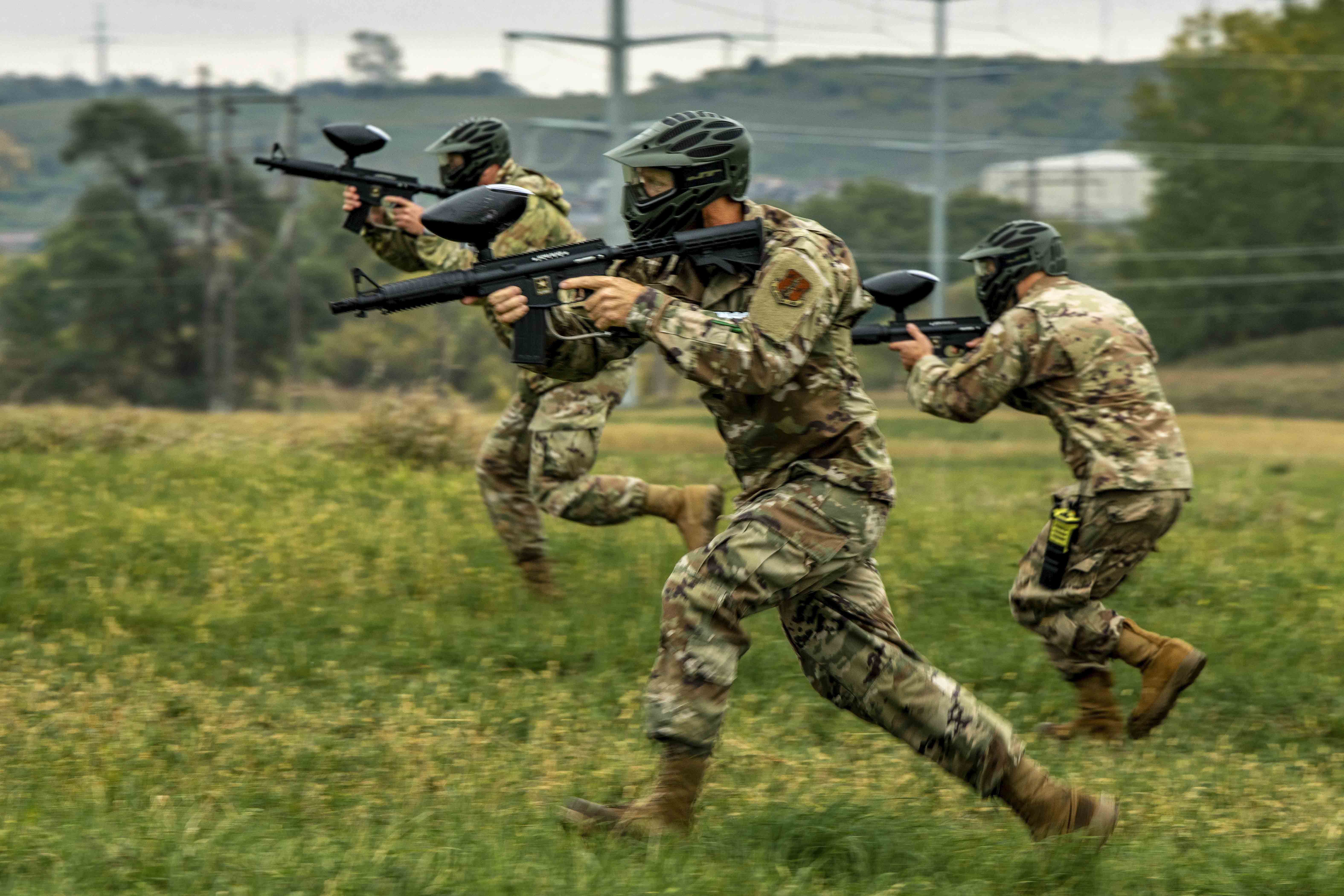
Airmen practice shoot, move and communicate drills during training, Oct. 2, 2021.

Fuel Check


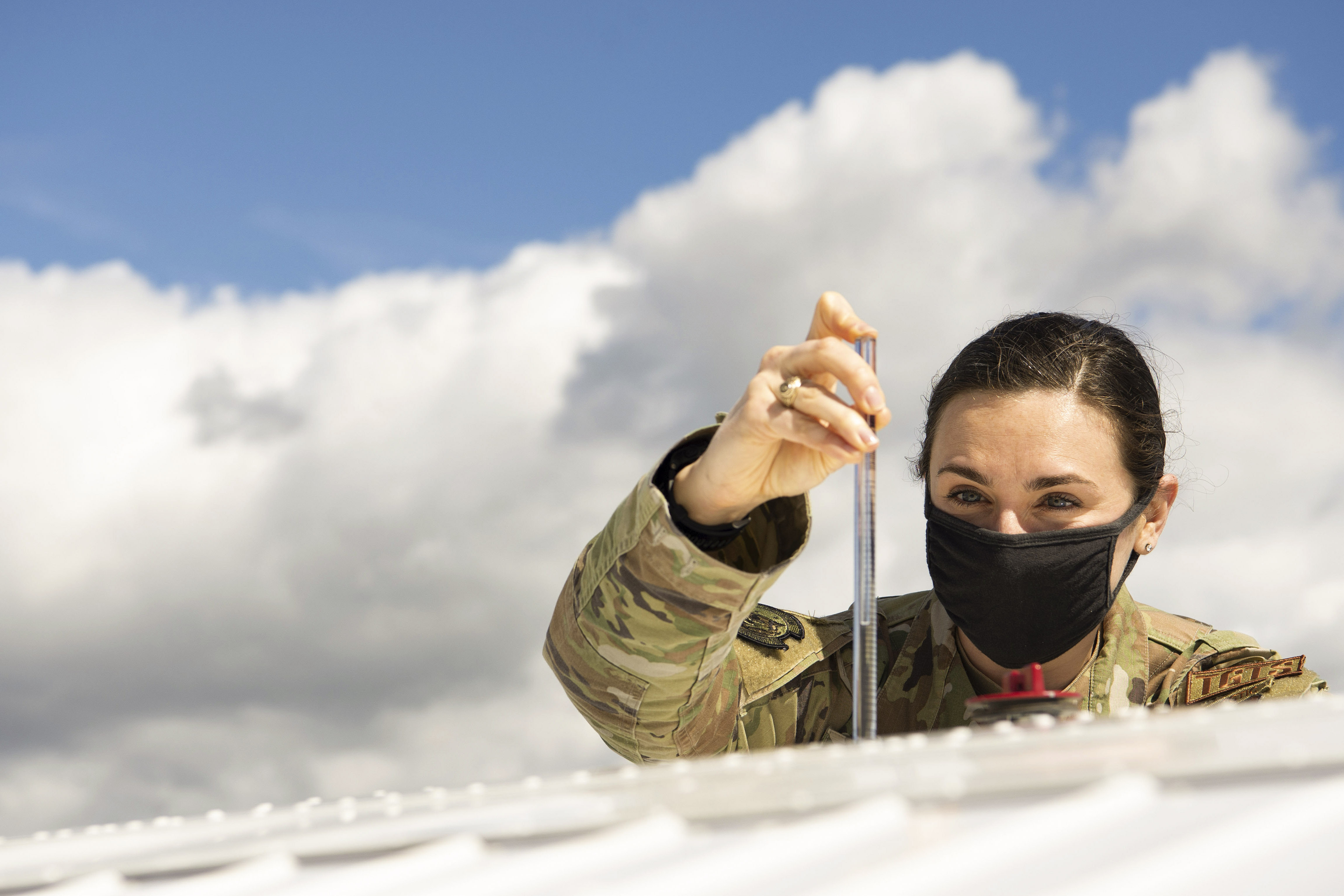
Air Force Senior Airman Alexandra Abney checks the fuel quantity of an aircraft in Columbus, Ind., Sept. 23, 2021.

Missile Launch


A RIM-116A rolling airframe missile launches during a live-fire exercise aboard the USS Kearsarge in the Atlantic Ocean, Sept. 30, 2021.

Smoky Scene


A soldier conducts registration and calibration for the M777A2 howitzer weapon system in Syria, Sept. 30, 2021.

COVID-19 Vaccine


The 21st Theater Sustainment Command provides COVID-19 vaccinations to Afghan evacuees at Rhine Ordnance Barracks in Kaiserslautern, Germany, Sept. 26, 2021. More than 2,400 Afghan evacuees received the vaccine as they prepare for onward movement.