Tuesday, December 01, 2020

Fit Test


Air Force 2nd Lt. Kathleen Alejandro, a member of 96th Medical Group, Eglin Air Force Base, Fla., has a “fit test” for her N95 mask during orientation at the North Dakota Department of Health in Bismarck, N.D., Nov. 22, 2020. A “fit test” tests the seal between the respirator face piece and the wearer’s face. After completing the “fit test” and receiving all of the proper protective gear, the Air Force nurses will integrate into the North Dakota hospitals as part of the Defense Department’s ongoing joint service virus response efforts.

Getting Sanitized


Army CH-47 Chinook crew members assigned to the 1st Battalion, 228th Aviation Regiment, Joint Task Force-Bravo, sanitize after transporting a pregnant COVID-positive patient in Guatemala City, Nov. 27, 2020. The CH-47 Chinook crew members took COVID-19 safety precautions to get the patient to a properly equipped medical facility.

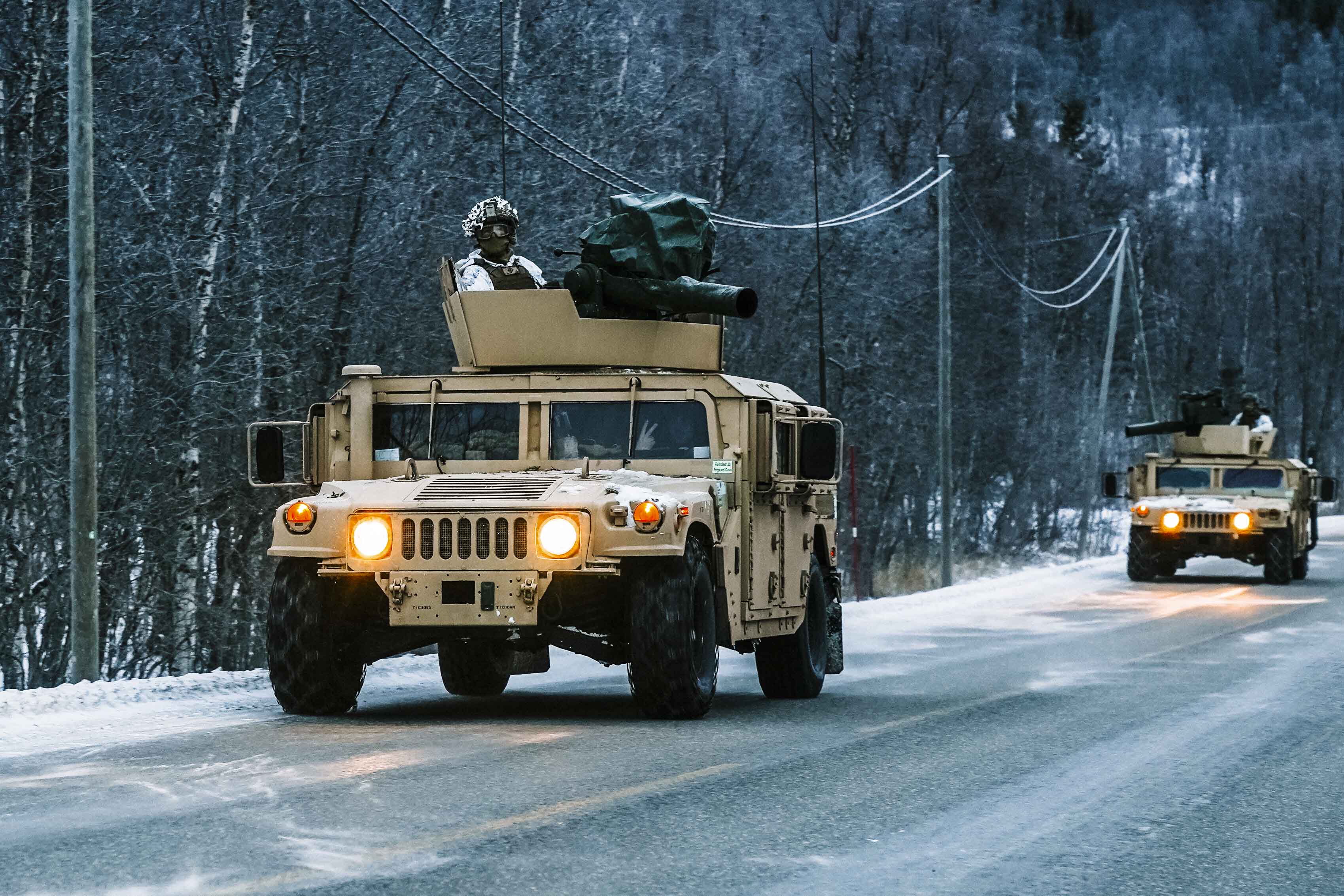
Reindeer Convoy


Marines ride in a convoy in Setermoen, Norway, Nov. 26, 2020, during Reindeer II, a bilateral training exercise.

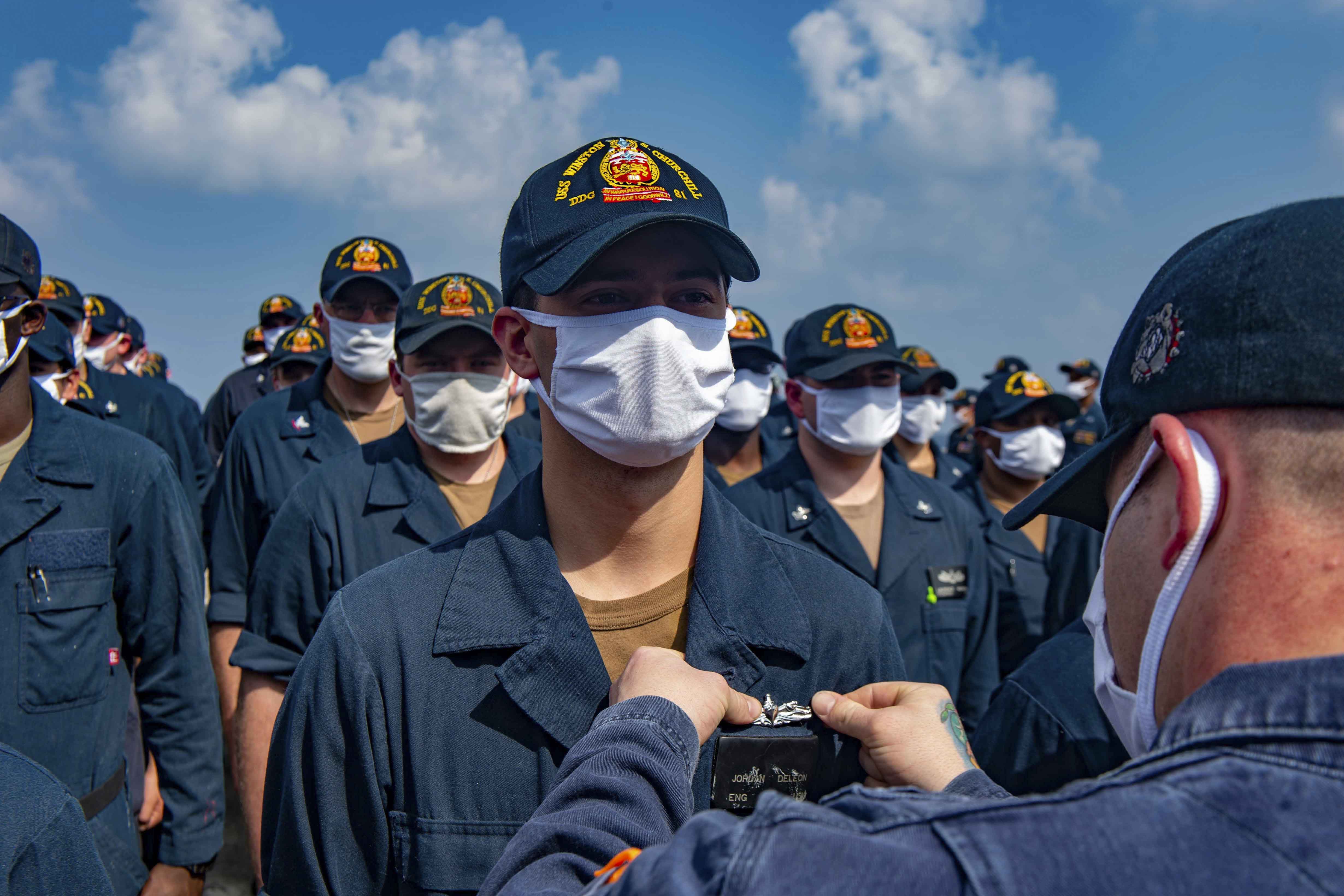
Pinning Ceremony


A sailor receives an enlisted surface warfare specialist qualification pin aboard the USS Winston S. Churchill in the Gulf of Aden, Nov. 29, 2020.

Hose Down


A firefighter battles a fire at Marine Corps Base Camp Pendleton, Calif., Nov. 30, 2020. The fire burned about 5 acres and didn't damage buildings in the area.

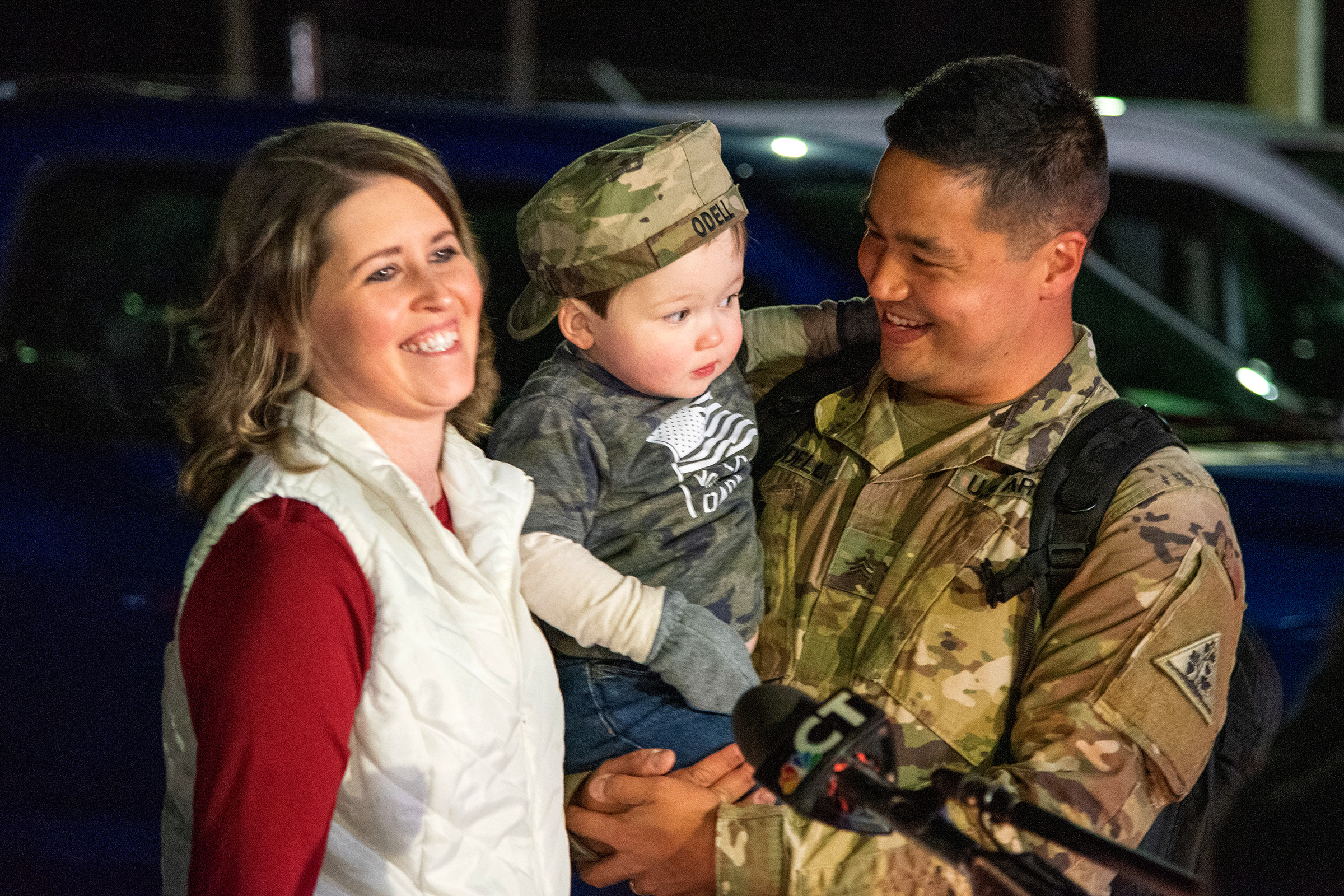
Family Reunion


Army Sgt. Joshua Odell spends time with his family after returning from deployment to the U.S Southern Command area of responsibility to Windsor Lock, Conn., Nov. 24, 2020. His unit was deployed for most of 2020.

Face of Defense: From N.Y.'s Finest to Special Warfare Airman

 Dec. 1, 2020 | BY Katie Lange , DOD News

If being a New York City police detective wasn't cool enough, imagine that your side hustle is in special warfare, embedding with troops across the world to help execute air strikes and other direct offensive air operations.

Seems like a character in an action movie, right? 

For Air Force Tech Sgt. Bill Reed from the New Jersey Air National Guard, it's real life. Reed, 39, was one of many New Yorkers deeply affected by the events of Sept. 11, 2001, so he decided to serve both his city and his country. 

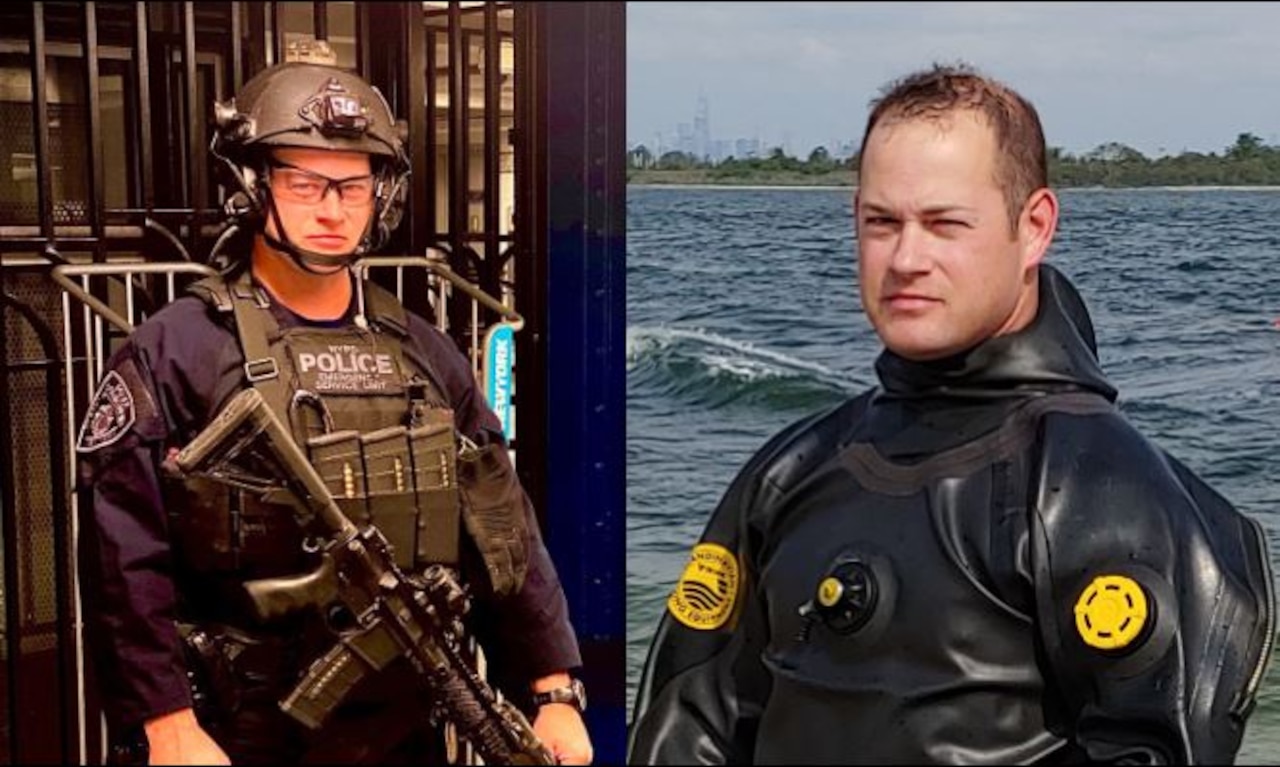
A man on the left wears a helmet and other combat-style gear while holding an automatic weapon; on the right, a man stands by the water in a SCUBA suit.

New Jersey Air National Guard Tech. Sgt. Bill Reed
Job Title: Tactical Air Control Party Craftsman
Hometown: Babylon, New York
Stationed: Atlantic City Air National Guard Base, New Jersey
Unit: 227th Air Support Operations Squadron

For his ''day job,'' Reed is a New York City detective working with the Emergency Service Unit – basically, the tactical and technical team that's called in when the regular patrol officers need help. That job often complements his duties in the military, where he's called on when needed as an Air Force Special Warfare Tactical Air Control Party specialist.

Not sure what that is? Reed explains his duties in the Q&A below and details some of his most interesting experiences from each career – the stories he can talk about, anyway. 

When it comes to both jobs, let's just say that pretty much anything – from SCUBA diving to rappelling, rescuing flood victims and protecting world dignitaries — is on the table. 

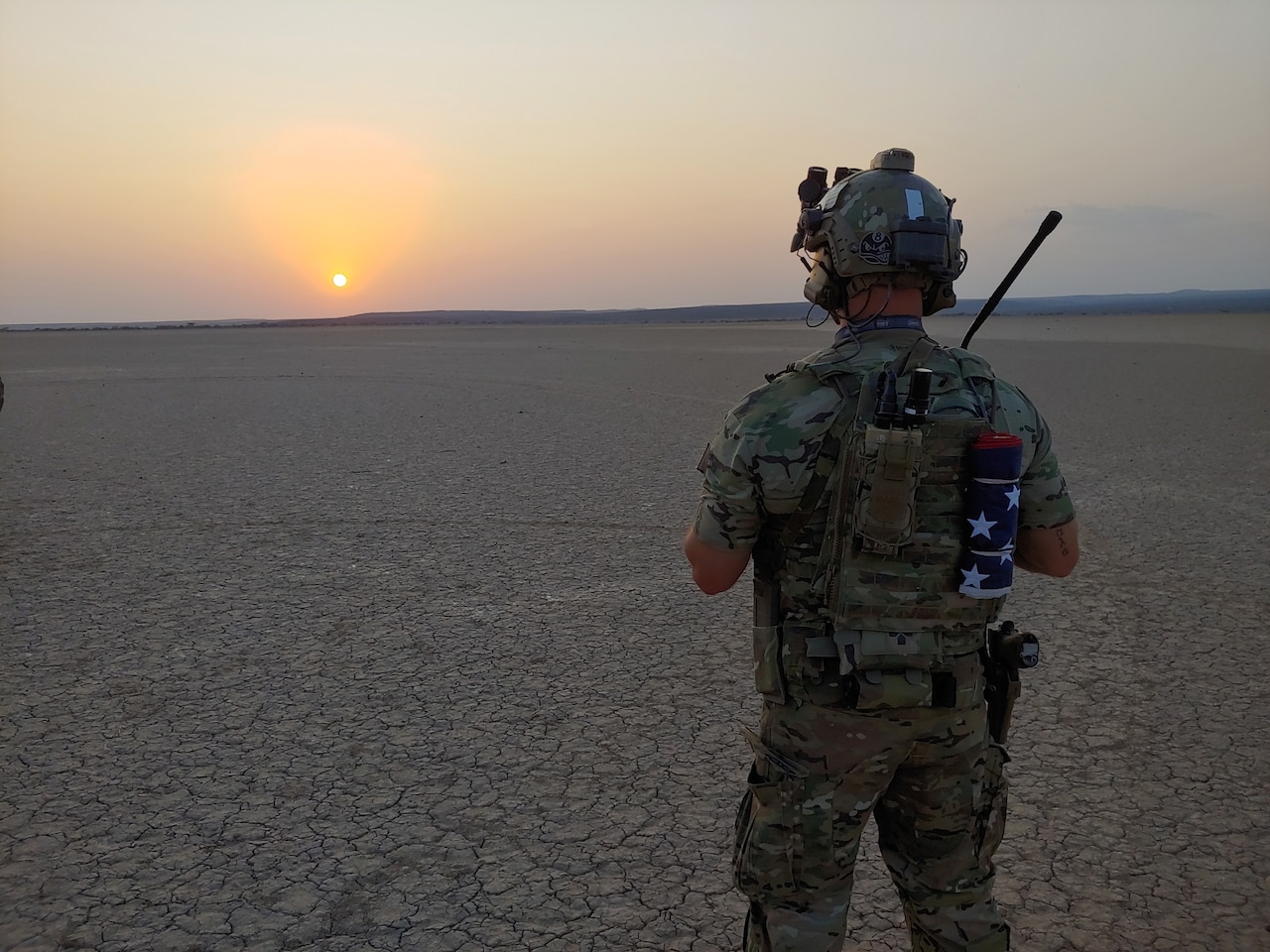
A man is seen from behind staring toward the sunset; in front of him, the ground is dry and cracked.

Why did you join the Air National Guard? Were you active-duty prior? 

I enlisted into the Air National Guard in October 2009. I was prior Army Reserve, having enlisted in the Delayed Entry Program out of high school. I went on active-duty after my freshman year of college, but in those pre-9/11 days, I soon realized that my MOS [military occupational specialty] and unit left me unsatisfied and unchallenged. So, after my time in the Army Reserve was up, I separated. I moved back to New York from my college town, and, in 2005, I began my career with the New York City Police Department.

Even with the satisfaction and stability my new profession gave me — particularly in a post-9/11 NYC — I still felt like I needed to serve my country in a different way, and I really missed the military. The events of Sept. 11, 2001, affected me in such a profound way. I knew that I had to go back in the military, but the question was, to do what? At that time, I didn't know much about the Air Force or Air National Guard and didn't really consider it an option. But, coincidentally, I became friends with a former Marine, and I mentioned to him that I was looking at going back into the military. He told me that he was in the Air National Guard and that he just recently transferred to a new unit in New Jersey. He said that he was a TACP — Tactical Air Control Party — and gave me a basic rundown of the job. It sounded cool and up my alley, but I needed to do my research. Within 24 hours, I got back to him and said, ''I am 100% in! What do I have to do?''

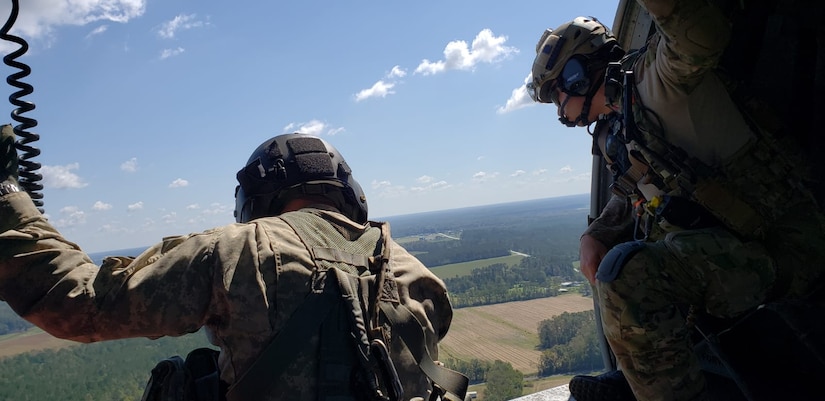
Two men look out onto farmland from an open helicopter door.

What was it about being a TACP that drew you in?  

I love that TACP training was hard and very selective. I love that you need to use your brain in tactical situations. I love that you integrate and operate with Army and Marine ground maneuver and special operations units. I love that TACPs direct the action of combat aircraft engaged in close-air support and other offensive air operations from a forward position. I love that physical fitness and weapons proficiency are as important as radio communications, map imagery and mission planning. I wanted to be the guy who could conduct air strikes against hostile targets that are in close proximity to friendly forces and that require detailed integration of each air mission with the fire and movement of those forces. 

What are some of the missions you've been part of? 

Most recently, in 2019, I was deployed to Combined Joint Task Force-Horn of Africa, specifically the 82d Expeditionary Rescue Squadron of the 449th Air Expeditionary Group. Our primary mission was to provide joint terminal attack controller capabilities 24/7 to ensure tactical power projection in the area of operations. Basically, we provided the link between ground units and air assets in East Africa. The major way we did so was in support of the East Africa Response Force, an Army infantry company from the 101st Airborne Division dedicated to responding to potential crises. Plus, we sustained Guardian Angel/Tactical Air Control Party team integration in our Combined Joint Operations Area, which synced the personnel rescue & recovery mission of the squadron pararescuemen with our precision strike, intelligence, surveillance and reconnaissance and communication capabilities. As the noncommissioned officer in charge of the TACP Detachment, I also often coordinated with outstations regarding ISR assets and JTAC integration, and I also contributed to the CJTF-HOA operational planning team. 

A person attached to a tether looks up while being pulled into a hovering helicopter.

What drew you to the New York Police Department? 

I've been a New York City cop since July 2005, and I got promoted to detective in 2014. Not to sound cliché, but I like helping people and I like catching the bad guy. One time, as a kid, I remember discovering my bike was stolen. I was furious — mostly mad at the fact that someone took what was mine with no regard for my welfare or how hard my family may have worked for that bike. That moment always stuck with me. I wanted to be the guy who could find a kid's stolen bike one day, catch the criminal and bring him to justice. Then there was 9/11 — seeing the 23 NYPD officers who paid the ultimate sacrifice and the civilians who just showed up to work [to] have their lives cut short due to the savage acts of terrorists. In hindsight, that day not only forever changed policing in NYC, but it forever changed me.

In your 15 years with the NYPD, what's been the path of your career? 

I started my career as a rookie on a foot post in one of the most violent crime-ridden precincts in North Brooklyn. That assignment made me learn real fast how to become an effective cop. I then went on to patrol in a busy neighboring precinct for over six years. There, I worked a patrol sector car, moved up to a plainclothes anti-crime team that focused on felonies, and then spent a year working a gang intelligence detail. After that, I had the privilege of being assigned to the Detective Bureau, where I investigated cases within the same precinct I previously patrolled.

In 2016, I tried out and was selected for assignment to the NYPD Emergency Service Unit , where I currently work. In short, we are the department's tactical and technical rescue team. We're trained in special weapons and tactics for various rescues, hazmat situations and other intense operations. We're also emergency medical technicians and emergency psychological technicians. 

A man in an NYPD helmet talks to someone through an open window.

Does the NYPD use your special military skills? 

Of course. Certainly, those with special skills are more attractive than others when applying for specialty units. For example, a military explosive ordnance disposal tech would be well-suited for the bomb squad, or a helicopter pilot would be well-suited for the aviation unit. My military skills and experience make me better at my job in the ESU, which is to handle situations that your typical patrol officer cannot. An adage is that when the public needs help, they call 911; when the police need help, they call ESU. 

We deal with a vast array of jobs such as conducting high-risk searches, negotiating barricade situations, diving to recover evidence or to conduct water rescues, dignitary protection, counterterrorism and helping suicidal people on a bridge or building — almost anything you can think of. I have responded to such incidents as the West Side terror attack, where an ISIS-inspired man used a rental truck to kill eight people on Halloween in 2017. On the other hand, I've also coerced kittens out of car engines, fished fallen keys from storm drains and changed tires on a horse trailer.

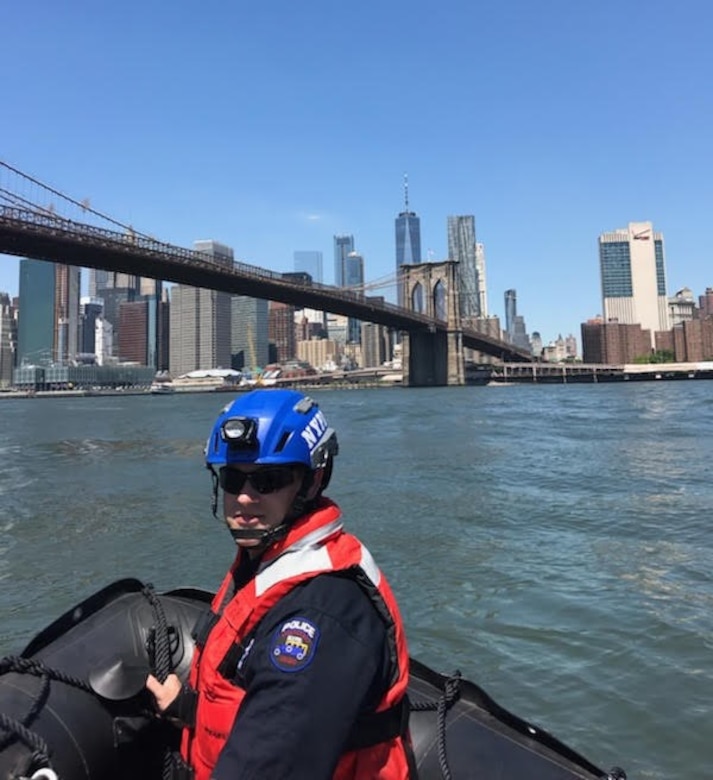
A man floats in a boat near a bridge; a city skyline is in the background.

Do you find your military and police work to be similar or different? 

Sometimes yes, sometimes no. One example of a similarity is how I manage communications. When I entered into TACP training, I had already been a police officer for about five years, so I was no stranger to stressful situations requiring clear and concise communications. While on a TACP mission, I would typically have two radios actively using two different frequencies, with several more programmed. I'd be in contact with aircraft and the ground commander or other parties. I could also be receiving and viewing video downlink feeds from an overhead aircraft's sensor.

In ESU, particularly if I am the operator of our large response vehicle, I act as the command and control node. I handle all comms from the local precinct and the citywide special operations division radio frequencies, as well as the inter-team frequency used by my team members. All requests for additional assets — including coordinating with our aviation, harbor or canine units – goes through me. If the job is in an underground subway station, tunnel or large building, that adds to the communications complexity, but being a TACP makes that aspect of my police job seem second nature.

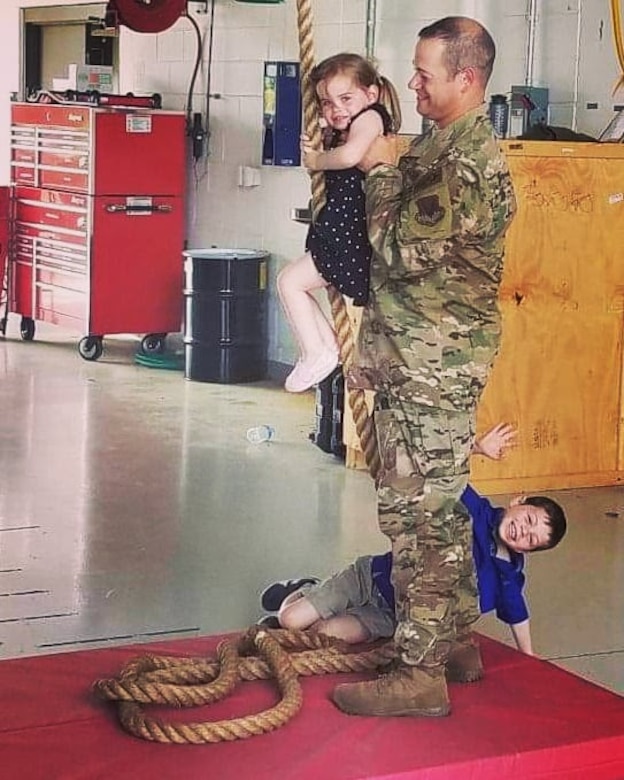
An airman lifts a small girl, who is grasping a large rope that dangles from above. A small boy waves to the camera from beside the man's feet.

Do you think your police experience makes you a better National Guardsman? 

Yes, absolutely. I interact with the public and handle stressful, often dangerous, situations for a living. When it comes to simply being a good Guardsman, I try to combine the three Air Force core values with my experiences to be someone the public, fellow service members and my family can look up to. By bringing my police experience to my squadron, I try to enable ancillary skills, so that when it comes time to conduct domestic operations, such as humanitarian relief after a natural disaster, the squadron as a whole can be more effective. 

Do your fellow Guardsmen ever ask for advice because of your ''day job?''

Yes, absolutely again. I can't tell you how many times I've fielded questions from fellow Guardsmen — often junior airmen and junior soldiers I've met — regarding my job, or how they should go about becoming a police officer. My squadron has quite a few members besides me who are also in law enforcement careers, including big city cops, suburban cops, state troopers and federal agents. We all have varying degrees of experience and have all dealt with our own different situations. Needless to say, we have a lot to talk about, and it makes for great company.

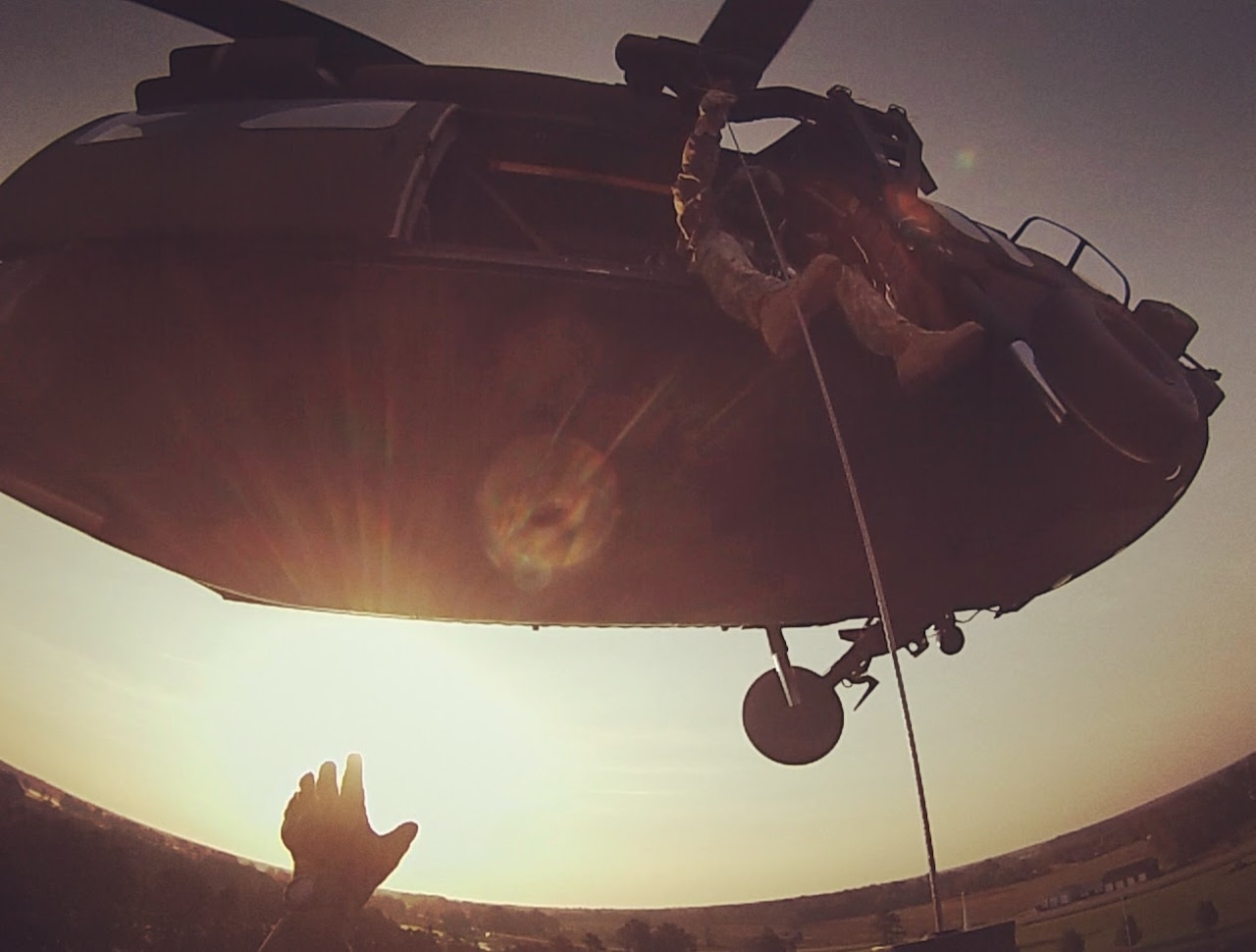
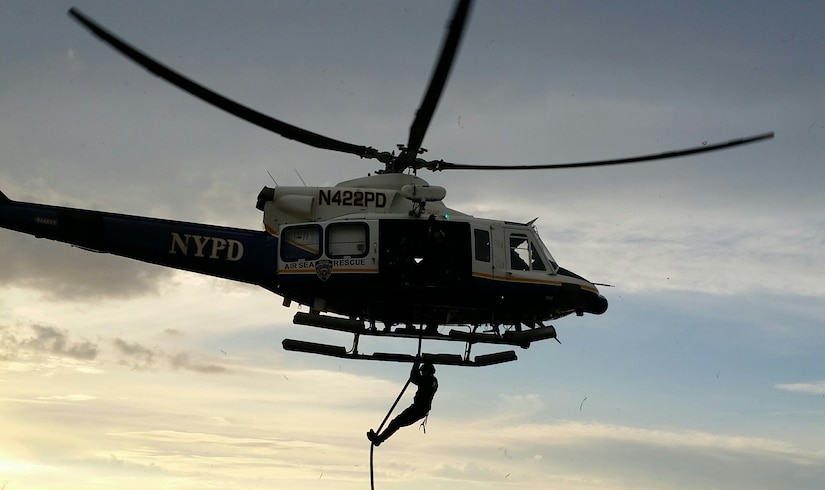
A man hangs from a rope attached to a hovering helicopter.

What's one of the coolest experiences you've had as a cop?

Being a New York City cop is like having a front-row ticket to the greatest show on Earth, and being in ESU is like having the backstage pass. Climbing to the top of the Brooklyn Bridge was one cool, yet practical, experience. Seeing the rest of the city from that point of view is pretty awesome. Another cool experience was conducting joint high-rise rescue training with the Fire Department of New York, which required me to rappel from an NYPD helicopter to assess the condition of a rooftop prior to having a second helicopter land to insert firefighters.

One more cool experience was during the 2015 United Nations General Assembly. It's a huge event that happens in NYC every year, but that year [it] also coincided with Pope Francis' first visit to NYC and his UNGA address. That year, as a Detective Bureau member trained in close dignitary protection, I teamed up with a Secret Service detail to safeguard a particular foreign country's president for the duration of his stay. I either met or was shoulder-to-shoulder with dozens of heads of state from around the world. 

What's one of the coolest experiences you've had in the Air National Guard?

In September 2018, Hurricane Florence hit North Carolina particularly bad, which caused devastating floods over large areas of the state. I'm a member of the New Jersey Joint Helicopter Search & Rescue Team, too. As an Air National Guardsman, I use those skills as a hoist rescue specialist alongside FEMA and soldiers with the Army National Guard. Our team got activated to respond. I ended up conducting over 25 flight hours in support of search & rescue, damage assessment, patient transfer, emergency resupply and emergency personnel movement missions. That experience with that awesome team helping Americans here at home was one of the most gratifying things I've ever done.

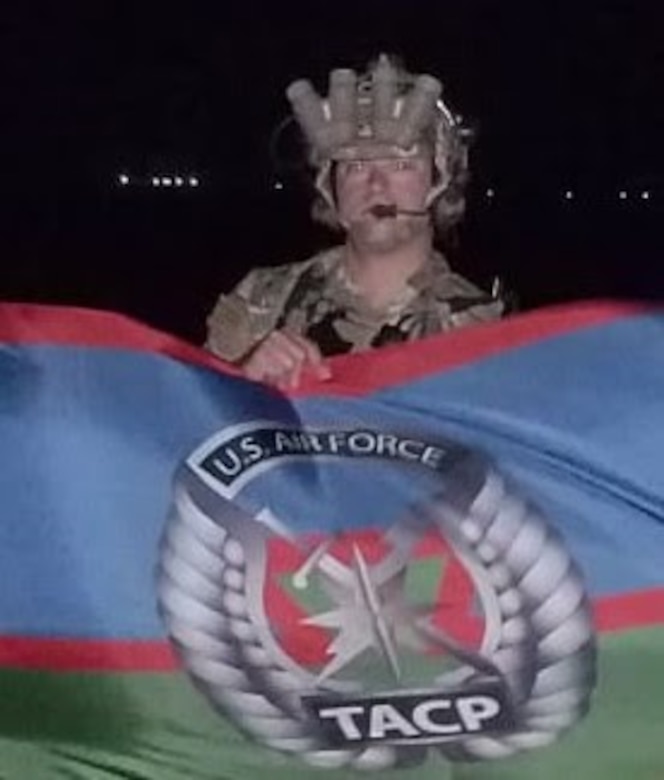
A man in night-vision gear holds up a U.S. Air Force flag.

You work with all military branches. What have you learned about the different services? 

Yes, all branches … except I have not worked with the Space Force, yet! Every branch has their own traditions, customs, quirks and intricacies, but it is very apparent that, at the end of the day, we're all on the same team. 

Tell me about some of your experiences working with partner nations.

My first experience working with another nation's military was at Fort Bragg in 2015 during Operation Toy Drop. It's the world's largest multinational airborne training exercise that lets paratroopers participate with partner nations, which also resulted in the award of foreign jump wings. I had a great experience jumping with the Germans and earned the German Parachutist Badge. The exercise was also a fundraiser for needy children at Christmas.

In 2018, during Exercise Northern Strike — one of the military's largest annual joint combined arms live-fire exercises — I worked on a small TACP team with Latvian counterparts for two weeks. That was a phenomenal experience, and many new friends were made because of it. 

During my 2019 deployment, I often worked with the French military in Djibouti. In addition to conducting live-fire weapons familiarization and close-air support training with them, I was honored to have participated in an airborne jump they hosted on St. Michael's Day, when I earned the French Parachutist Badge.

Having the experience of working with various partner nations and seeing how our skills and abilities complement each other reassures me that we can capably continue to fight the good fight as allies.

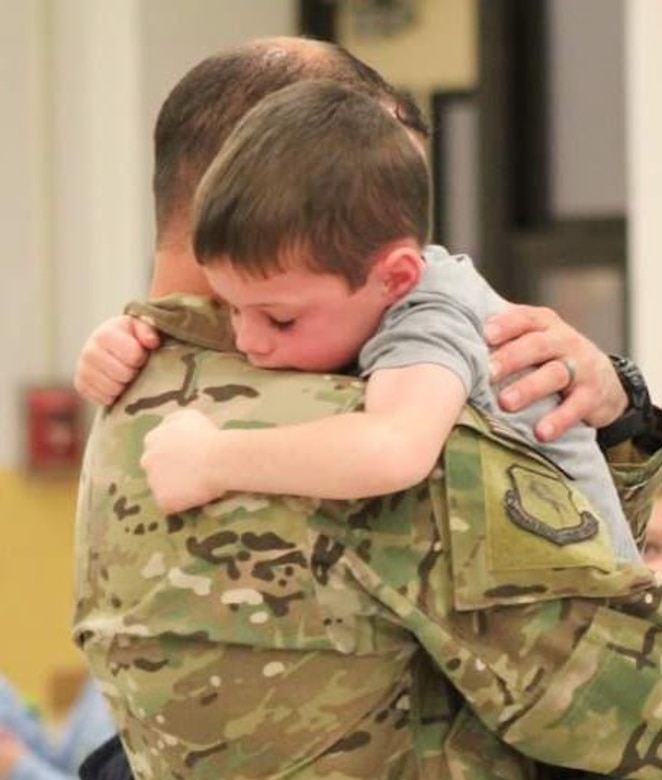
A small boy hugs his father.

Police officers can have weird schedules. Is that ever a problem with your Air National Guard schedule? 

Yes, although thanks to the understanding of my unit leadership, we make it work. For example, if I worked until midnight the night before a drill day, my ANG duty day would be adjusted, especially because my door-to-door distance is 160 miles. My police department work schedule also usually includes two or three weekdays off, so I've often used those days to go down to my ANG unit, most often to take advantage of live-fly air at the range or to take part in scheduled proficiency jumps. Maintaining proficiencies to stay a current and qualified JTAC is a very important aspect of being a TACP — that's what doctrinally and legally recognizes you as being capable and authorized to perform terminal attack control. 

When you're not crime-fighting and serving the ANG, what do you like to do for fun?

Spending time with my wife, 8-year-old son and 4-year-old daughter is paramount. In the summer, we are at our local beach at almost every opportunity. We also love taking a week or two to rent a cabin upstate or in Maine to relax, hike, fish and enjoy the outdoors. Watching my son play on his sports teams also gives me a ton of pride and joy. In the winter, I like to go skiing at every chance. And, regardless of the time of year, sometimes just spending the day at home doing stuff around the house is what's in order.

Sports Heroes Who Served: Heisman Trophy Winners Served During WWII

 Dec. 1, 2020 | BY David Vergun , DOD News

Sports Heroes Who Served is a series that highlights the accomplishments of athletes who served in the U.S. military.

Sports stories generally lend themselves to superlatives. A story about back-to-back Heisman Trophy winners from West Point who served in World War II and who starred as themselves in a post-war movie almost writes itself. Felix Anthony "Doc" Blanchard and Glenn Davis couldn't have made this up.

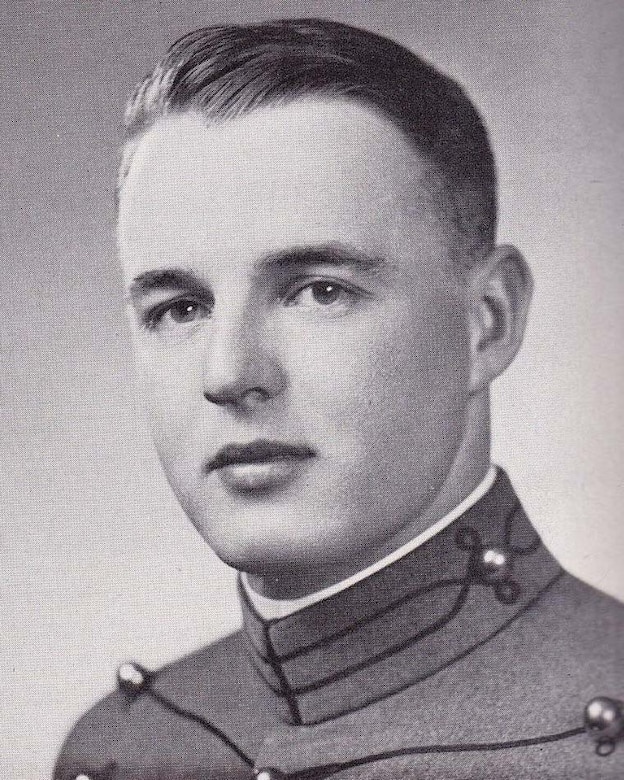
A man in a military uniform poses for a photo.

Despite his nickname, Felix Anthony "Doc" Blanchard was never a doctor. He got the moniker because his father was a physician.

But Blanchard and his father shared a love of football and the talent and physical prowess needed to succeed at the game. Blanchard's father, who was also named Felix, had played college football at Tulane University and Wake Forest University.

The younger Blanchard was snapped up by the Tar Heels in 1942, and after playing just one season, he was drafted into the Army in 1943. He was stationed in a chemical warfare unit in New Mexico, but he soon got noticed by the U.S. Military Academy at West Point, New York, which enrolled him in 1944.

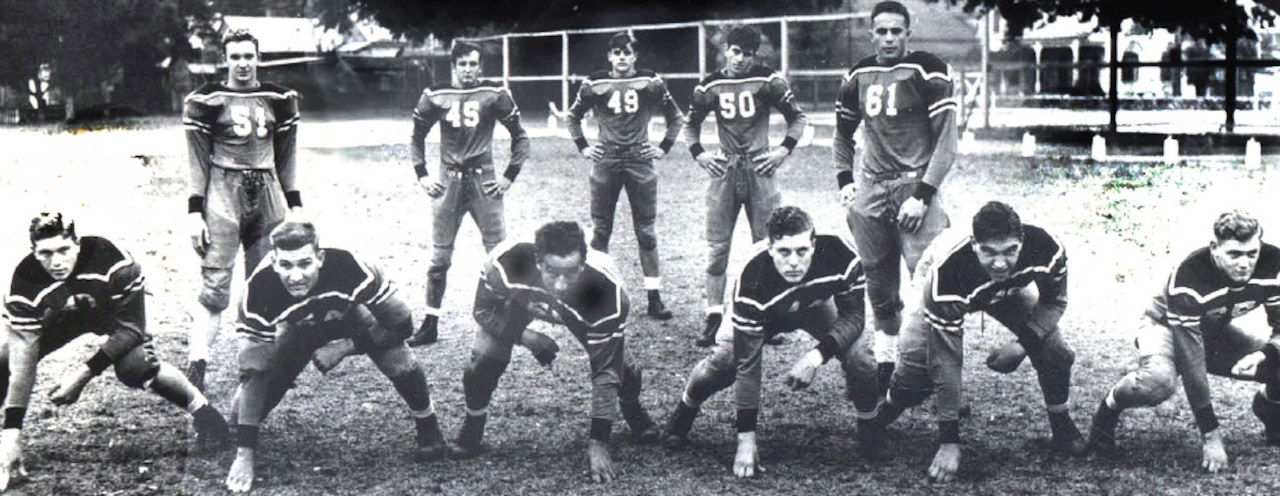
A football team poses for a photo.

During his three years (1944 to 1946) playing football as offensive fullback at the academy, the Black Knights compiled an amazing 27-0-1 record; the team was undefeated, except for a tied game against Notre Dame.

Besides playing fullback, Blanchard also filled in as a placekicker, punter and linebacker on defense.

During his time with the Black Knights, Blanchard teamed up with halfback Glenn Davis to form one of the most lethal rushing combinations in football history. As a result of their partnership, Blanchard acquired the nickname "Mr. Inside," and Davis became known as "Mr. Outside."

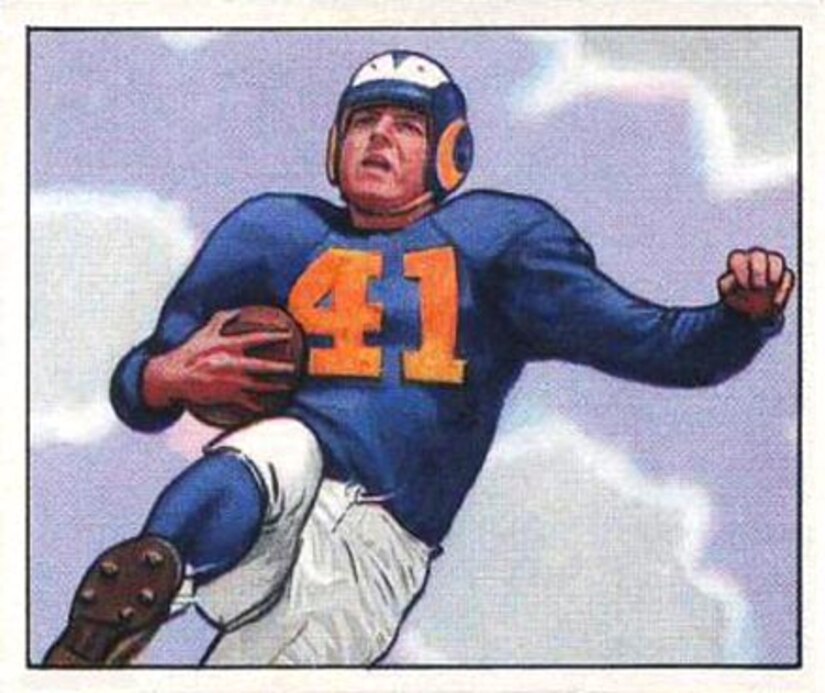
A football player leaps into the air cradling a football in his arm.

In 1945, Blanchard was bestowed with college football's most prestigious honor, the Heisman Trophy. The following year, Davis earned that trophy, as well.

In 1946, Blanchard was selected third overall in the 1946 National Football League Draft by the Pittsburgh Steelers, receiving a lucrative offer of $130,000.

Instead, he chose to make a career in the Air Force beginning in 1947, where he trained to become a fighter pilot.

During a routine mission in 1959, Blanchard's F-100 Super Sabre developed a fuel leak and caught on fire. Rather than bailing out and risking that his jet would fly into a village, he remained with the stricken aircraft and landed safely at Royal Air Force Station Wethersfield near London, England.

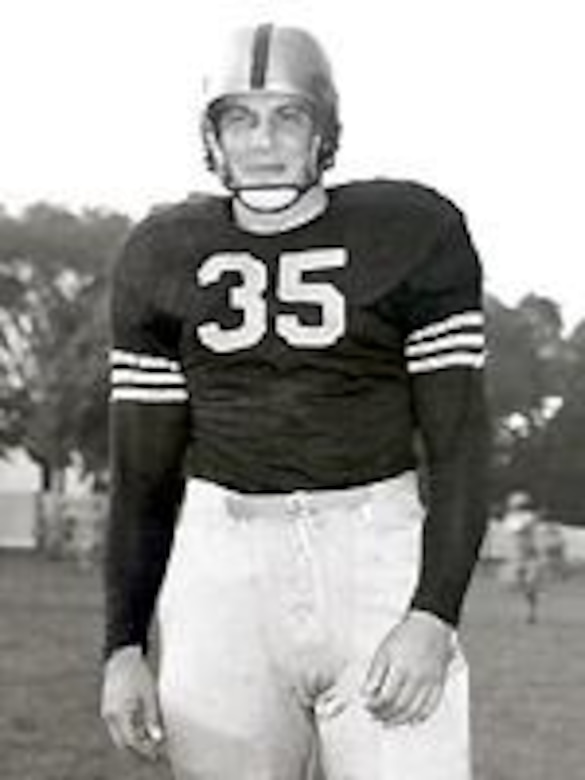
A man in a football uniform and helmet poses for a photo.

He flew fighter aircraft during the Korean and Vietnam wars. During the Vietnam War, from 1968 to 1969, he flew 84 missions over North Vietnam.

In 1971, Blanchard retired from the Air Force as a colonel.

Davis, Blanchard's Black Knight's teammate, went on to play for the Los Angeles Rams in 1950 and 1951.

Beyond service to their country, beyond college football's most prestigious award, both Blanchard and Davis racked up another lifetime achievement: Each played himself in the 1947 movie "The Spirit of West Point."

Troops Bring Taste of Home to Community With Thanksgiving Deliveries

 Dec. 1, 2020 | BY LAURA KREIDER

As per tradition, Thanksgiving is a holiday spent with family and friends. This year, due to the COVID-19 pandemic, these traditions were adjusted to adhere to mitigation measures and safety protocols.

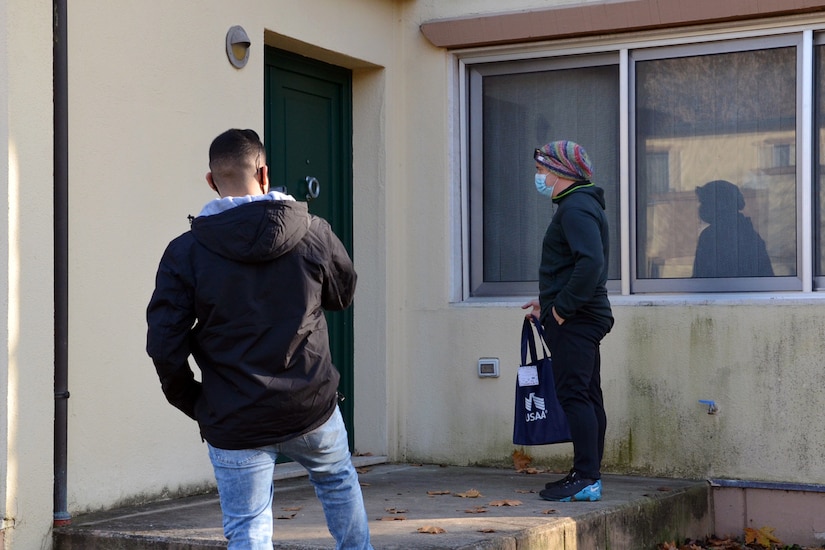
Two men wearing face masks deliver food.

Even though social distancing was necessary, that didn't prevent people who were in quarantine from receiving a traditional Thanksgiving meal.

"Several agencies on the installation [Caserma Ederle], with the help of community volunteers, are coming together to prepare the to-go meals," Army Col. Daniel Vogel, U.S. Army Garrison Italy commander, said two days before Thanksgiving during the biweekly virtual town hall.

The volunteers helped prepare and serve approximately 200 patrons during the Thanksgiving celebration, including the single and unaccompanied soldiers on Caserma Ederle, and families who were in the hotel while searching for their new home or preparing to leave for their next assignment.

"For our families who are in quarantine at Villaggio, our amazing BOSS [Better Opportunities for Single Soldiers] program will deliver a Thanksgiving meal. We want to ensure that no one goes without a traditional Thanksgiving meal," he added.
 
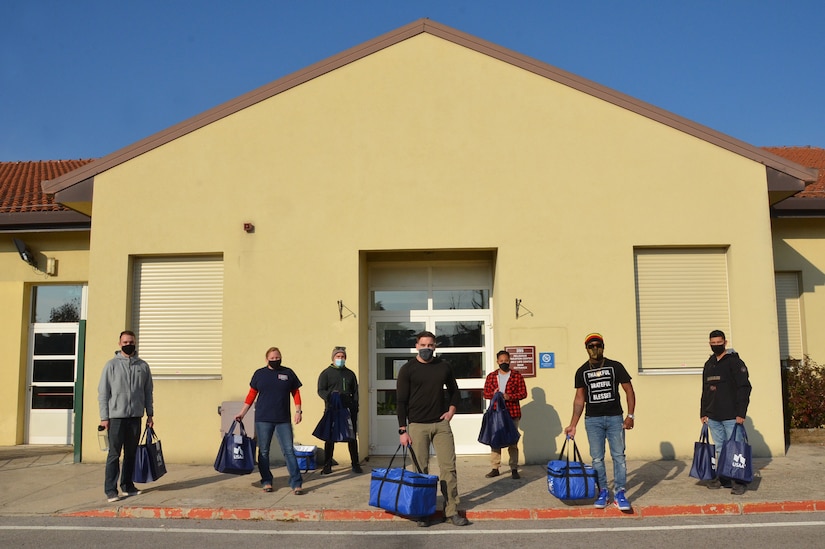
The BOSS program volunteers delivered approximately 20 Thanksgiving to-go meals to soldiers and families quarantined in Villaggio Army Family Housing, Nov. 26, 2020.

The meals included freshly prepared turkey, mashed potatoes, stuffing, gravy, green bean casserole, cranberry sauce, rolls, and, of course, pie.

"I would like to thank all the organizations that have stepped up to lend a hand and bring a taste of home to our community," Vogel said.

Soldier pose with meal bags.

 
The agencies involved in preparing these to-go meals and other safe dining possibilities for the Vicenza military community included the Commander's Readiness and Resiliency Council, Better Opportunities for Single Soldiers, USO, Religious Support Office and the Vicenza Community Club.
 
"Providing the community with a taste of home and feeling of appreciation is extremely important during this time of year," Samantha Storch, USO Vicenza manager, said. "As we all know, COVID-19 has created many challenges for everyone in the Vicenza military community this year. Service members and families are unable to travel home for the holidays, and there are limitations on gathering with friends. So, many will be spending the holiday alone, and this can lead to a feeling of isolation.".

Storch explained that the USO worked to bring everyone an opportunity to enjoy a home-cooked meal, see the welcoming staff and volunteers, and also receive a deep appreciation for the sacrifices they make by serving in the Army. 

"We hope this will brighten the Thanksgiving holiday for those here in our community," Storch said.

Preparation for this event began about two months prior.

"We started planning meetings at the beginning of October and continued throughout the month and into November. We planned for the estimated number of service members and families, then created a list of food items and containers we would need for the event. Next, came requests for volunteers to support in order to execute preparation the day before and on the day of Thanksgiving. With the families in quarantine, we worked with other organizations to coordinate delivery of the meals," Storch added.

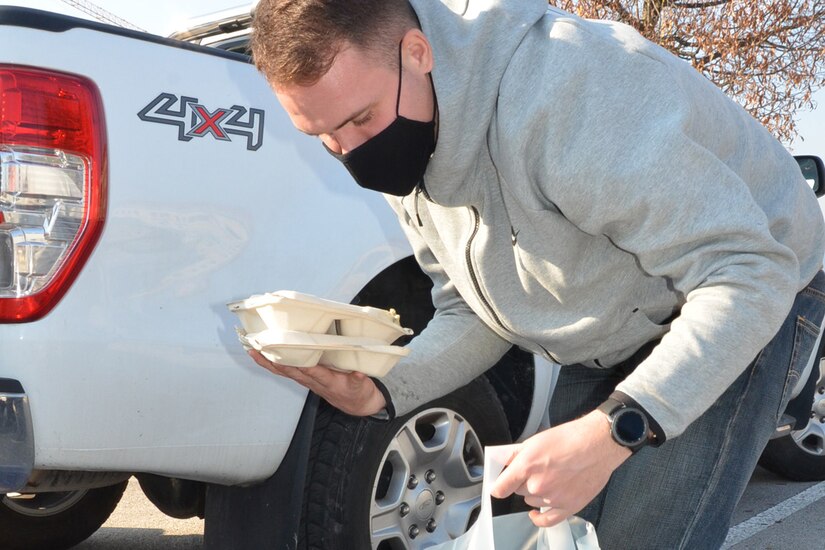
A man adds food to meal bags.

BOSS is not new to community service, which is one of the three pillars of their program.
 
"I believe that it is important to keep our community connected especially during the pandemic, and hopefully this will make those families feel like they belong to our community," Army Sgt. Joseph Nuttall, BOSS advisor, said while on his way to Villaggio with his group of volunteers.
 
One of the recipients who received a meal from BOSS was Army Spc. Eric Day, who recently arrived in Vicenza.

"I didn't know this was happening," Day said. "It was a very nice surprise."

(Laura Kreider is assigned to U.S. Army Garrison Italy)

Log Line


Marine Corps recruits participate in log drills at Marine Corps Recruit Depot, San Diego, Nov. 30, 2020.

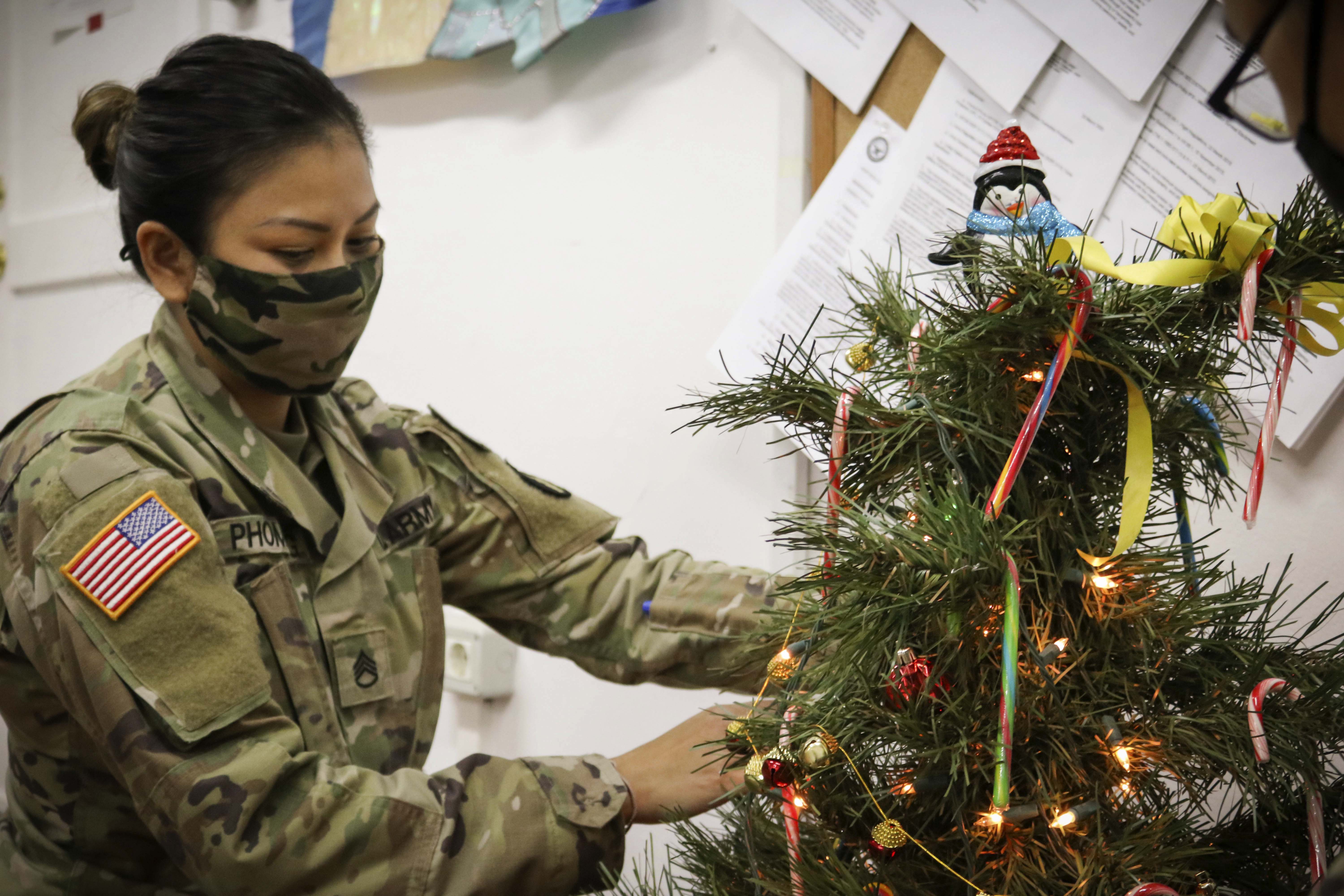
Deck the Halls


Army Staff Sgt. Angel Phompong, an Iowa National Guardsman, decorates a Christmas tree at Camp Bondsteel, Kosovo, Nov. 30, 2020.

Force Fire


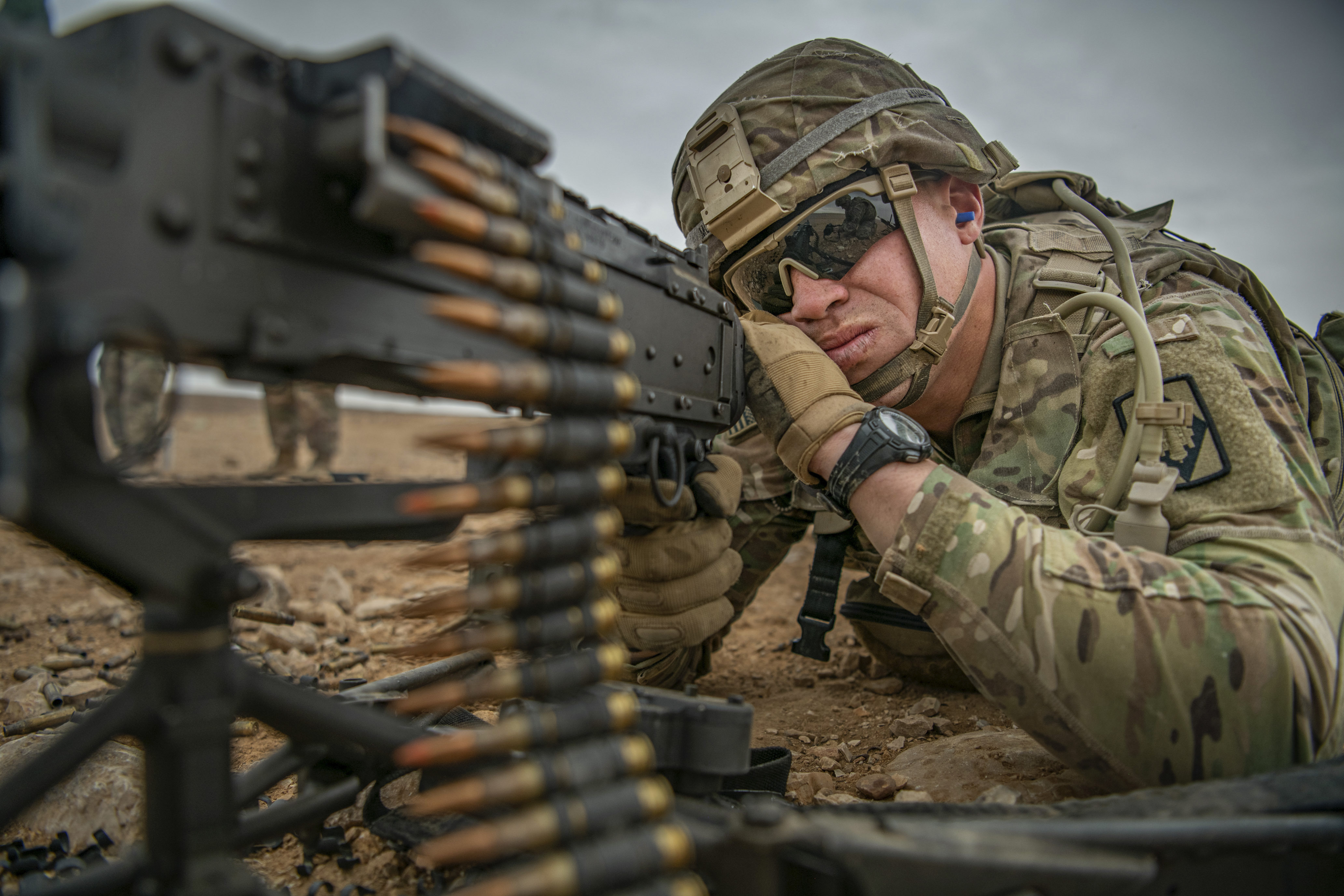
Army Staff Sgt. Dakota Montgomery fires a machine gun while deployed for Operation Spartan Shield and Operation Inherent Resolve in the Middle East, Nov. 28, 2020.

COVID-Related Telework Accelerates DISA's Zero-Trust Adoption

 Dec. 1, 2020 | BY C. Todd Lopez , DOD News

The incredible increase in telework within the Defense Department as a result of COVID-19-related social distancing requirements has provided U.S. adversaries more attack surface to cause harm to defense networks. This, among other factors, has increased the department's focus on zero trust architecture, the director of the Defense Information Systems Agency said.

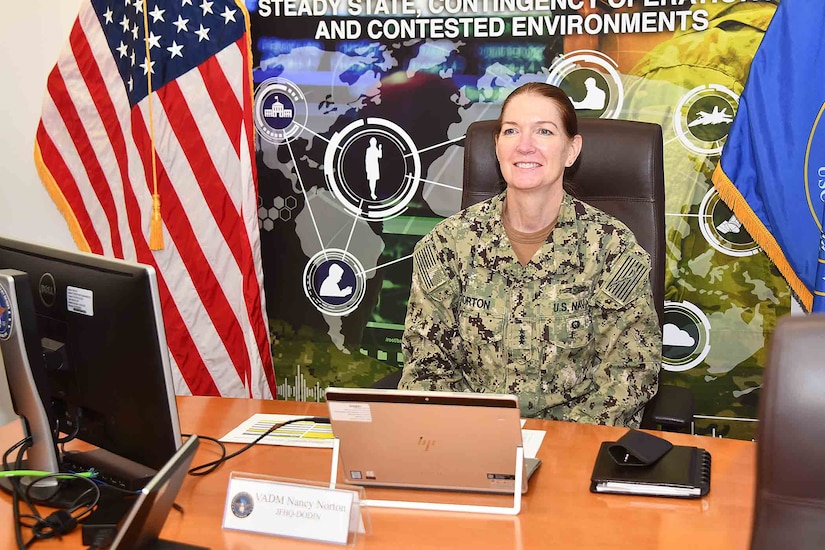
A sailor sits at a desk behind a computer.
"The move to maximum telework has also accelerated a cybersecurity paradigm shift that we will outline in our upcoming 'zero trust' reference architecture," said Vice Adm. Nancy A. Norton during a keynote address today at the Armed Forces Communications and Electronics Association's virtual TechNetCyber 2020 conference.
Under the "zero trust" model, Norton said, DISA makes the assumption that the DOD's internal networks are as hostile as external networks.

"We are being attacked in the cyber domain constantly, with state and non-state actors generating more than a billion cyber events a month on our networks across every DOD component around the world," Norton said.

To defend against that, Norton said, the defense department must get better at defending its network. That's something DISA and Joint Force Headquarters Department of Defense information networks are working on.

"We are moving towards more micro-segmentation in this cybersecurity model with zero trust," she said. "It will apply to our data and critical resources from our data centers to our mobile devices."

A man uses a computer in his home.

As a naval officer, Norton used the compartmentalization within a ship or submarine to prevent flooding as an example of how a network can be protected against attack from adversaries.

"Segmenting critical assets ensures that when — not if, but when — your network is compromised, the damage is limited, the loss of data is limited and your mission is assured," Norton said. "In a traditional perimeter defense model to network defense, if an adversary got through the perimeter, they would have free rein throughout the network. We wouldn't want a [similar] ship design that would allow one flooded compartment to sink a warship."

Norton said the paradigm change for zero trust comes through three principles. 

The first of those is to never trust, but always verify.

"It ensures that all users and devices are treated as untrusted and everything is authenticated and explicitly authorized to the least privilege required using dynamic security policies," she said.

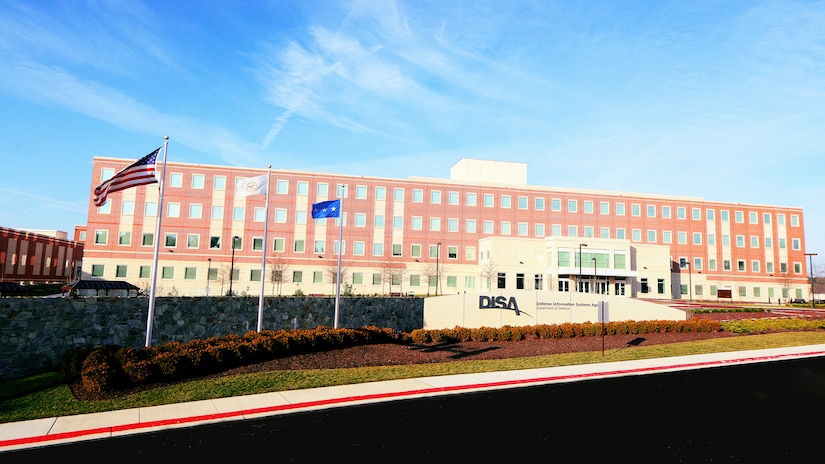
A brick building sits under a blue sky. In front, a wall is inscribed with “DISA” and “Defense Information Systems Agency.”

Second, she said, that users will always assume a breach of security and will intentionally operate and defend as if an adversary is already present inside the IT environment.

"We will scrutinize each request for access, users, devices and data flows using a deny by default approach and logging and inspecting all traffic," she said.

Finally, the third principle is to verify explicitly, she said.

"All resources must be consistently accessed in a secure manner using multiple attributes to build confidence levels for appropriate access to resources," she said. "With zero trust, we will affect every arena of our cyber domain, allowing us to shield our data better by closing every compartment in the ship."

Monday, November 30, 2020

Soaring Soldiers


Soldiers participate in Operation Full Tang Soaring at Novo Selo Training Area, Bulgaria, Nov. 16, 2020. Troops trained weeklong for air assaults, attack and security missions, flight operations and soldier movement.

Culture Day


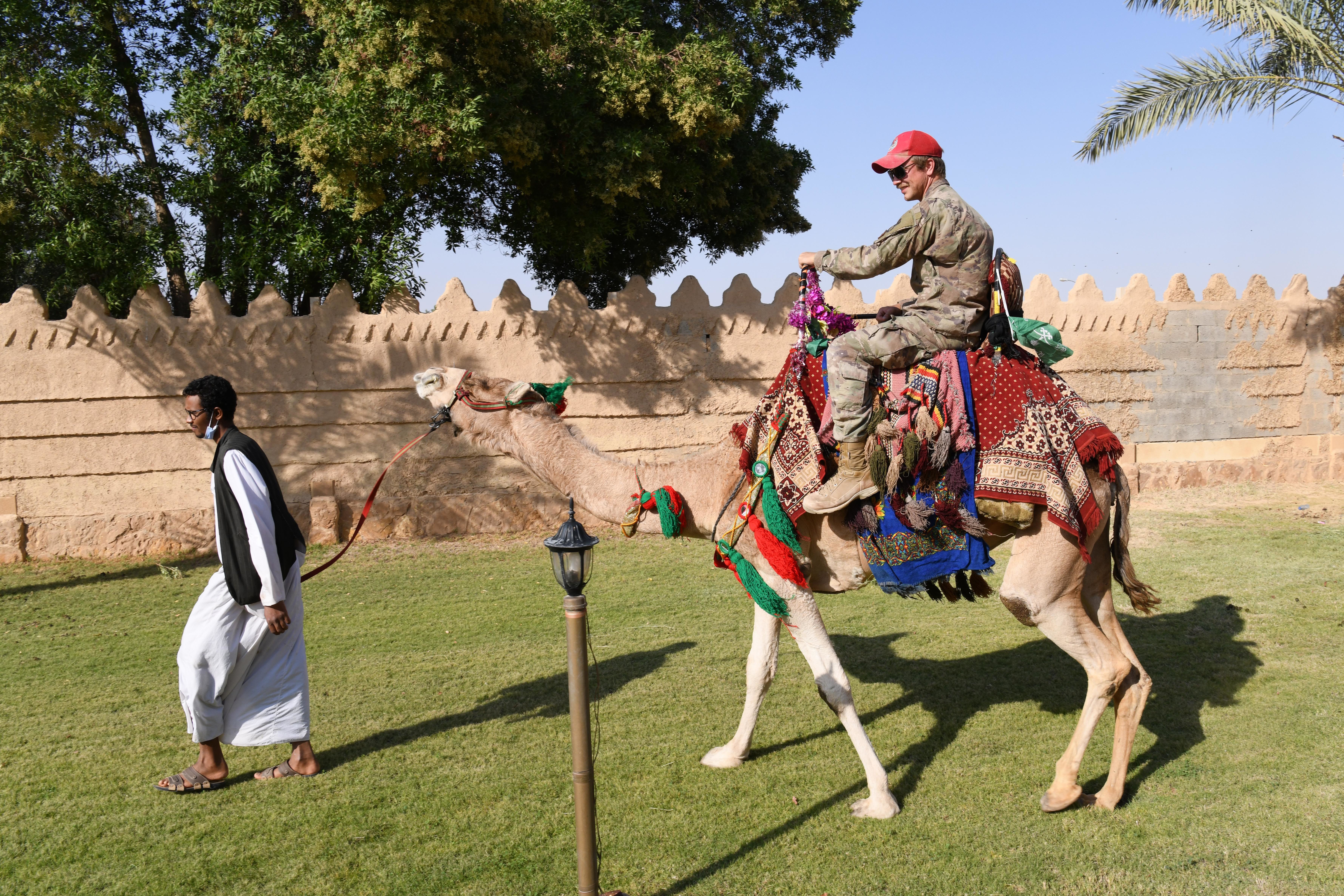
A service member rides a camel during Saudi Culture Day at Prince Sultan Air Base, Saudi Arabia, Nov. 19, 2020. The event provided the opportunity for military personnel to immerse themselves in local culture and learn more about the history of Saudi Arabia.

Aquatic Actions


Marine Corps Staff Sgt. Mitchell Howroyd, left, and Cpl. Trenton Frost participate in a martial arts instructor course at Camp Lejeune, N.C., Nov. 25, 2020. The course tests skill, mental discipline, warrior spirit and warfighting mentality.

Raven Ready


Army Staff Sgt. Warren Mohan launches a Raven unmanned aircraft system during training at Fort Polk, La., Nov. 10, 2020.

General Officer Assignments

 Nov. 30, 2020


The Chief of Staff of the Army announces the following general officer assignments:

Lt. Gen. Mark C. Schwartz, U.S. Security Coordinator, Israel-Palestinian Authority, Israel, to commander, North Atlantic Treaty Organization Special Operations Headquarters, Belgium.

Maj. Gen. Joseph P. McGee, director, Talent Management Task Force, Office of the Deputy Chief of Staff, G-1, U.S. Army, Washington, D.C., to commanding general, 101st Airborne Division (Air Assault) and Fort Campbell, Fort Campbell, Kentucky.

Army National Guard

Maj. Gen. Richard F. Johnson, deputy director, Army National Guard, Arlington, Virginia, to commanding general, First Army Division West, Fort Hood, Texas.

Defense Department's Annual Housing Satisfaction Survey Begins Soon

 Nov. 30, 2020

W. Jordan Gillis, assistant secretary of defense for sustainment and the Defense Department's chief housing officer, is inviting DOD housing residents to participate in the department's annual housing satisfaction survey, which is scheduled to launch in December. 

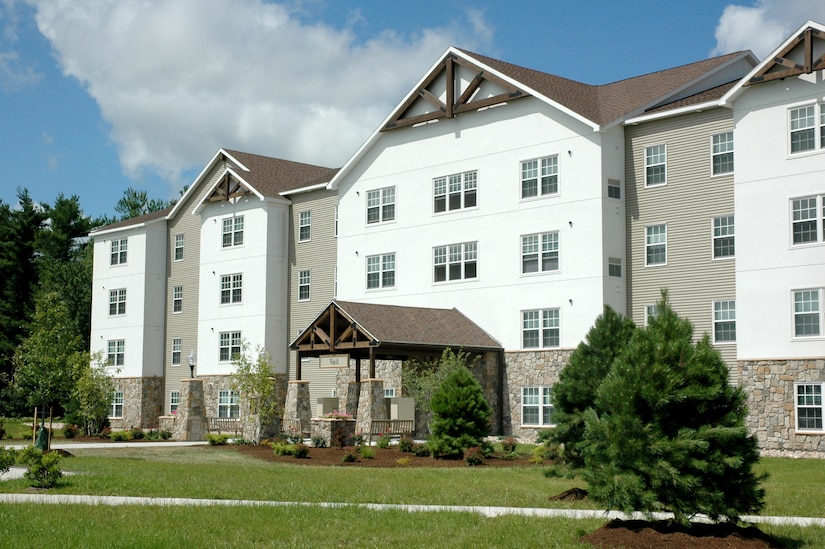
An apartment building.

Each year, DOD, working through the military departments, surveys current residents of government-owned, government-leased, or privatized family housing and current residents of privatized unaccompanied housing. The goal is to obtain feedback regarding their living experience.  

Survey participation is voluntary, and Gillis encourages residents to share their views about their current housing, resident services and community amenities. According to Gillis, "Resident feedback is important to help the department improve the quality of housing and customer care available to residents."

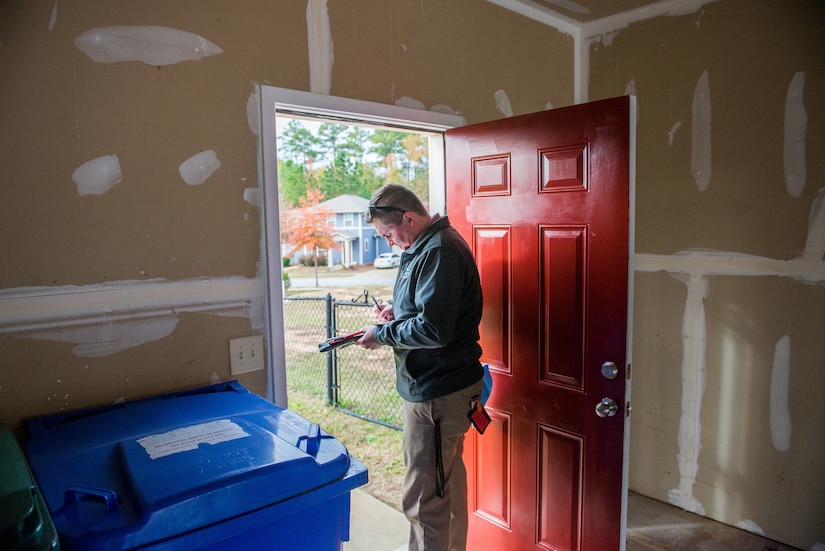
A man makes notes on a clipboard while standing in a doorway.

A link to the survey* will be sent via email to each household by one of the two third-party consulting firms administering the feedback collection, tabulation and analysis on the department's behalf. Only one person per address will receive the invitation email. All respondent information will be kept confidential. It will not be linked to the overall feedback results shared with DOD or the results that DOD shares with privatized housing companies or other stakeholders.

The survey results will help inform plans for near-term and future improvements to housing, resident services and community amenities. Gillis emphasized the importance of getting the perspectives of service members and families so the department can provide them with a better quality of life through improved housing and community services. 

A white van drives in front of a row of homes.

Each military service will announce the specific date in December when its survey will launch; each survey will remain open for responses for at least 45 days. Residents of DOD government-owned, government-leased or privatized housing should contact their installation's military housing office if they have questions or need technical support, or if their household does not receive an email containing a survey link by Dec. 18.

*OMB Control Number: 0704-0553; OMB Exp. Date: 03/31/2022

Garrison's Access Control System Helps With Quarantine Efforts

 Nov. 30, 2020 | BY Keith Pannell

Anyone who had to quarantine for two weeks since the COVID-19 pandemic started can tell you that quarantining is not fun.

After the German government put the quarantine in place, U.S. Army Europe-Africa followed suit. In fact, USAREUR-A has kept its quarantine at 14 days, with no testing out, even after the host nation has dropped the German quarantine to 10 days with a negative test.

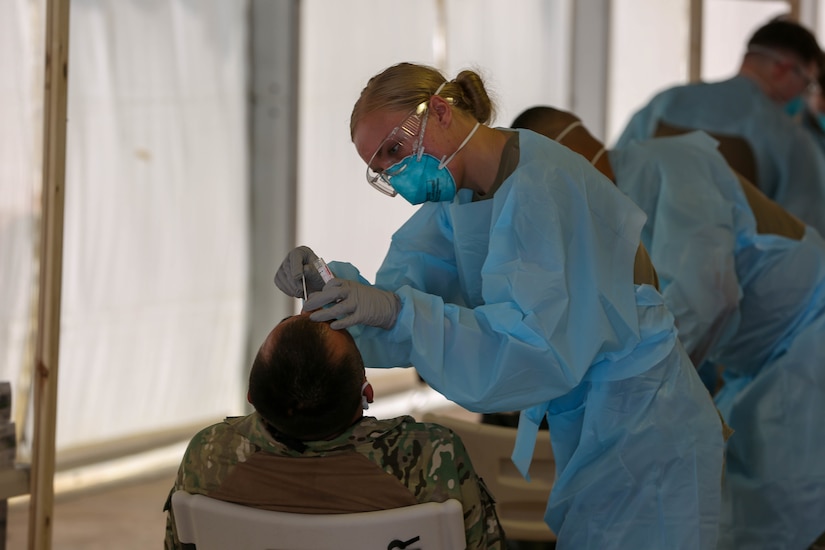
A soldier wearing protective gear leans over a man to conduct a COVID test.

Those who are quarantining are not supposed to break that restriction - not for appointments, not for groceries and not because they're feeling cooped up.

"If a soldier is notified by Team Trace they have tested positive for COVID-19, they will go on quarantine for 14 days," said Army Maj. Chase Crabtree, U.S. Army Garrison Rheinland-Pfalz director of emergency services.  "Unfortunately, sometimes around day 10 or 11, they might start to feel cooped up and think about getting out of the barracks or the house."

Crabtree said he completely understands the temptation to go for a walk, to the commissary and post exchange, or go for a Doner kebab or a Big Mac, but leaving quarantine would be a bad idea.

"For the overall health and safety of the community, it's imperative that if you're COVID-19 positive or you're on restriction of movement as a close contact, that you stay in quarantine," Crabtree said. "If you need assistance, you have a chain of command. You have support groups and sponsors who can go out and get groceries, or who can run a few errands for you, but you need to make the right decision and stay home or in your lodging room when you're quarantined."

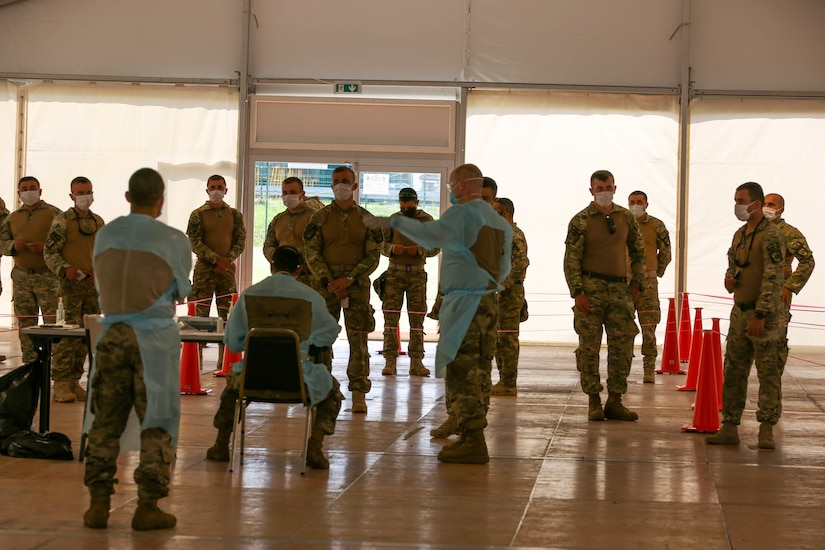
Soldiers wearing face masks wait at a COVID screening station.

When a person is put on quarantine, their information is given to the garrison directorate of emergency services for input into the installation access control system. Finding a soldier, Army civilian or family member who breaks quarantine is as simple as a common access card, or CAC.

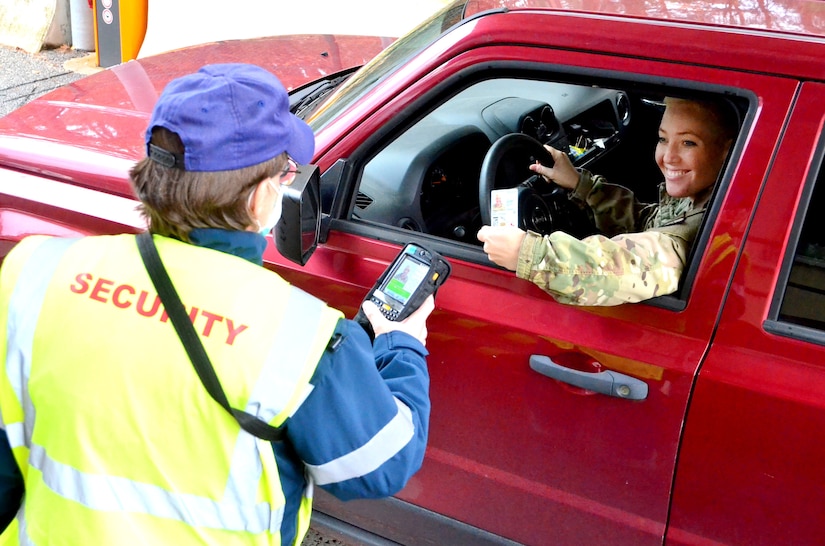
"Anytime the Pond guards at the gates scan a CAC, it brings up a photo of the individual who belongs to that card, of course," said Kristen Luoma, USAG RP installation control officer. "It also brings up a colored band. Green means you're good to go, and red means you've been flagged for some reason."

Luoma said there's no health privacy violation for the quarantined person as the red indicator only signifies the individual is archived, or flagged, for some reason. If that happens, the gate guards call that person's chain of command and turn them over to the unit.

Louma said a person can be archived for several things. A commander can ask the directorate of emergency services to archive a soldier thought to be at risk, or someone may have reported a lost or stolen ID card. Once it's input into the system, every guard with a scanner at any U.S. military entry gate in Europe will know if an individual is archived.

A security guard scans the access card of a soldier sitting in a red truck.

"If we come across someone who is archived, we put their information in what we call a raw data file. They don't go on the daily blotter, but it is an electronic record that they broke quarantine," Crabtree said.

Crabtree said punishment for quarantine violations is up to the owning organization's chain of command and could range from a verbal reprimand to Uniformed Code of Military Justice actions.

(Keith Pannell is assigned to U.S. Army Garrison Rheinland-Pfalz)